




Blind Parameter Estimation Method for PSK-Modulated Frequency-Hopping Signals Based on Improved Maximum Likelihood
-
摘要: 跳频信号参数盲估计是跳频通信侦察对抗的关键技术。针对现有盲估计方法在估计精度与处理数字调制信号方面存在不足以及计算复杂度较高的问题,该文提出基于改进最大似然(ML)的相移键控(PSK)调制跳频信号参数盲估计方法。首先,基于短时傅里叶变换从持续多个跳频周期的PSK调制跳频信号中截取仅含单次跳频的短切片;然后,基于ML估计方法的代价函数,从短切片中提取适配ML估计模型的信号,克服传统基于ML的估计方法处理含PSK调制的信号时模型失配的问题;最后,提出一种加权迭代求解方法,实现跳频频率与跳频时刻的稳健估计。该方法摆脱了基于传统时频分析及压缩感知的估计框架约束,且计算复杂度较低。仿真结果表明,该方法可以同时实现PSK调制跳频信号跳频频率与跳频时刻的高精度估计。Abstract:
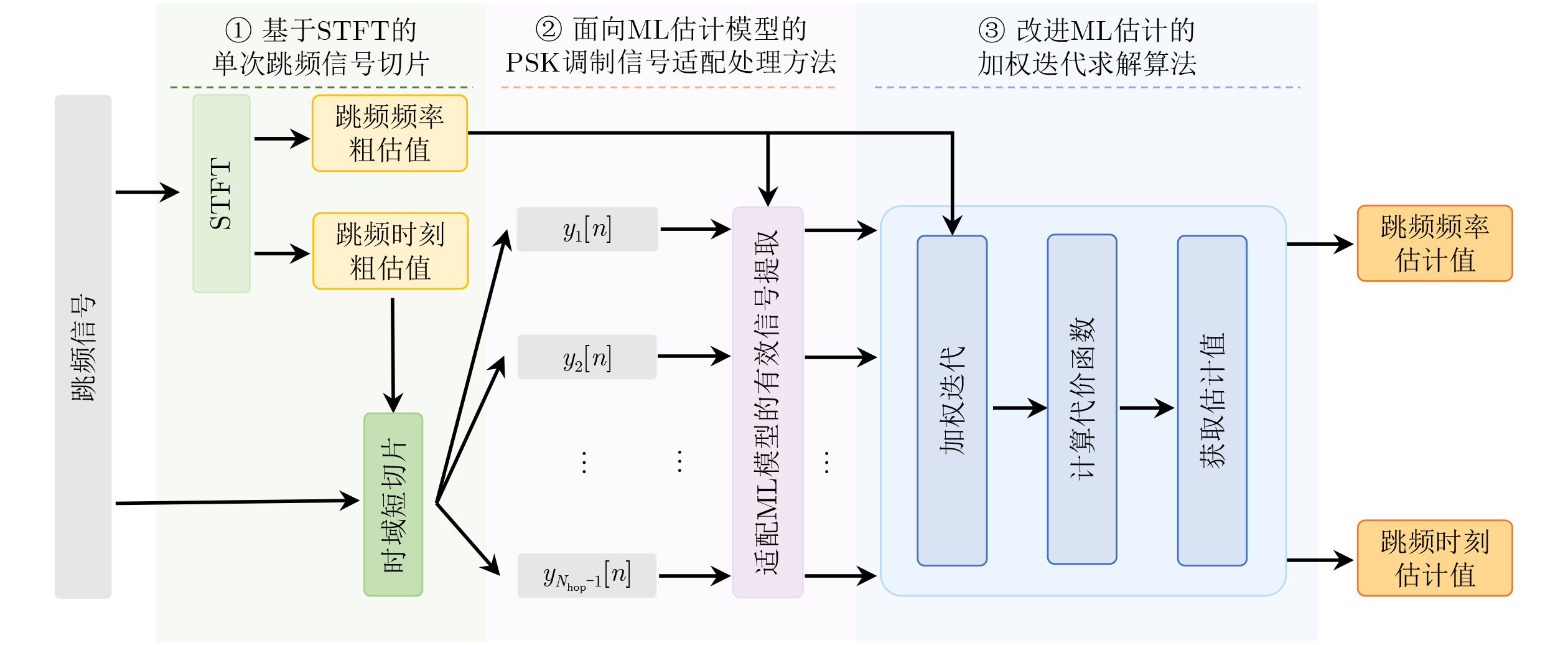
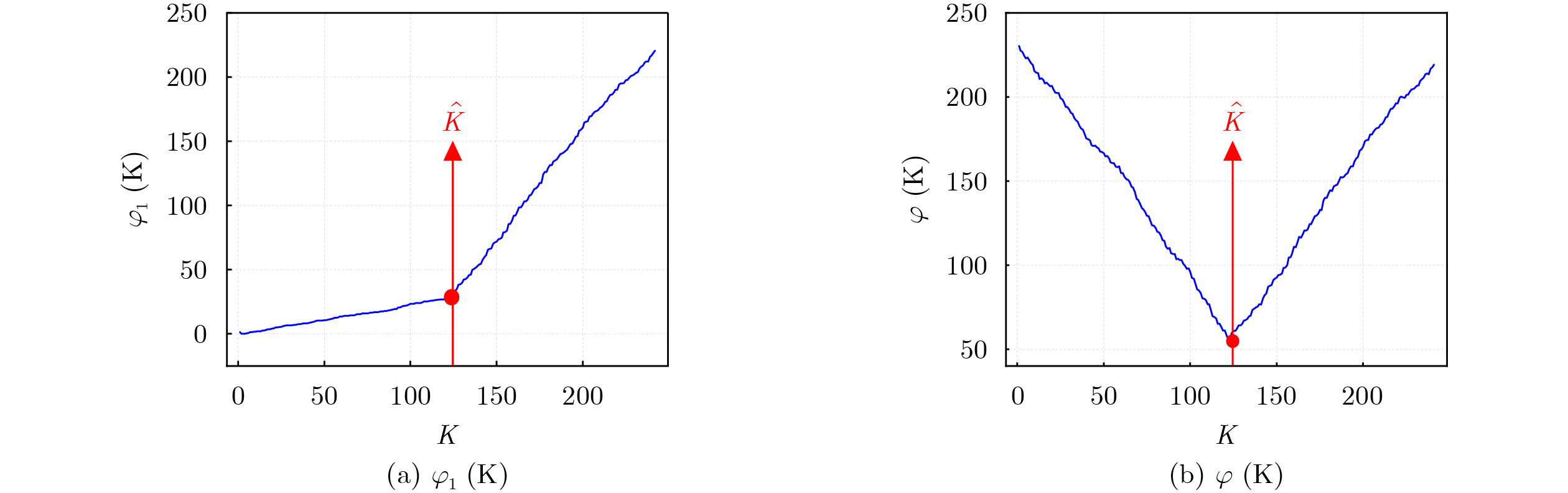
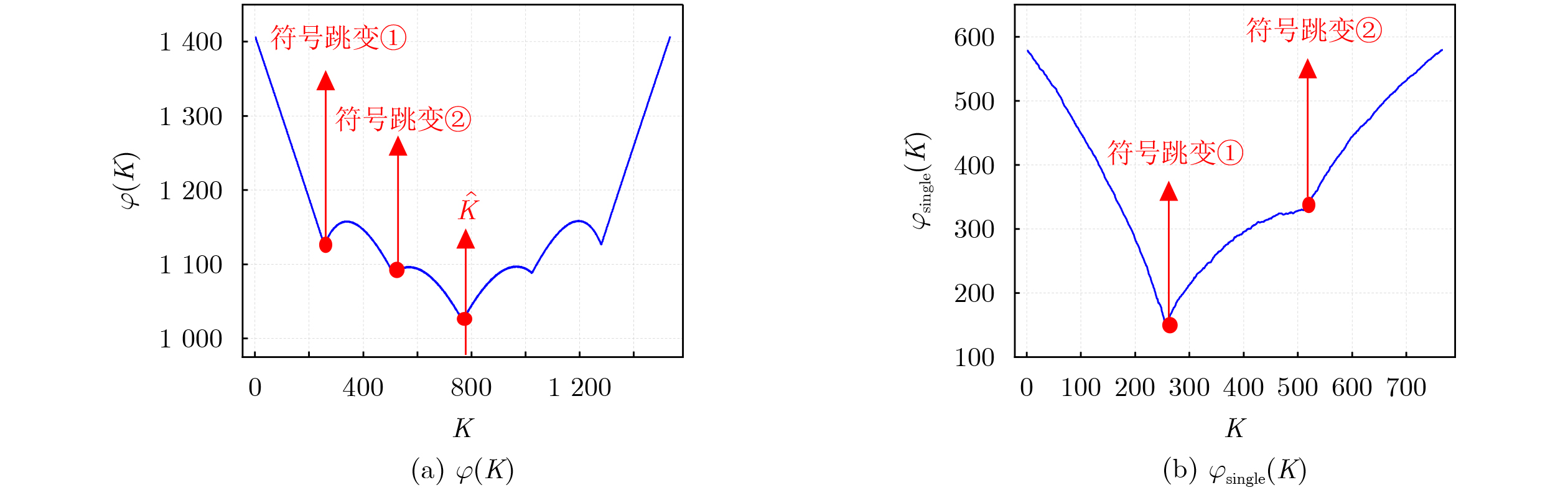
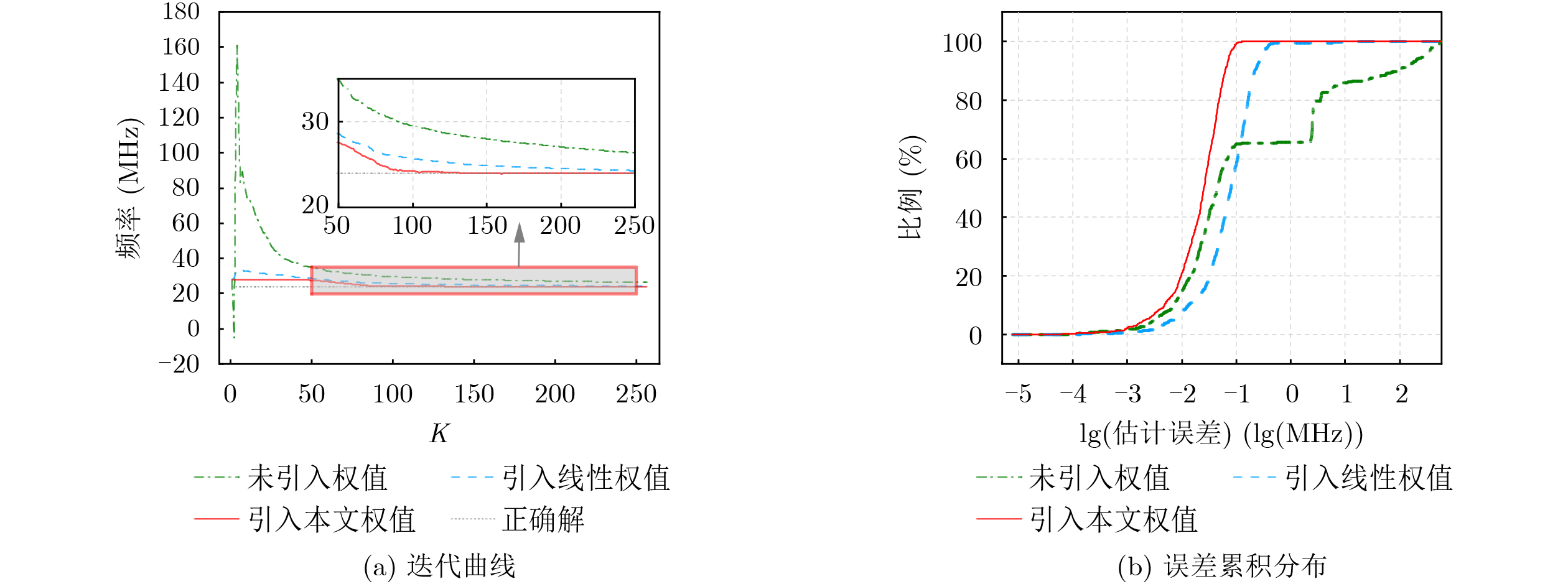
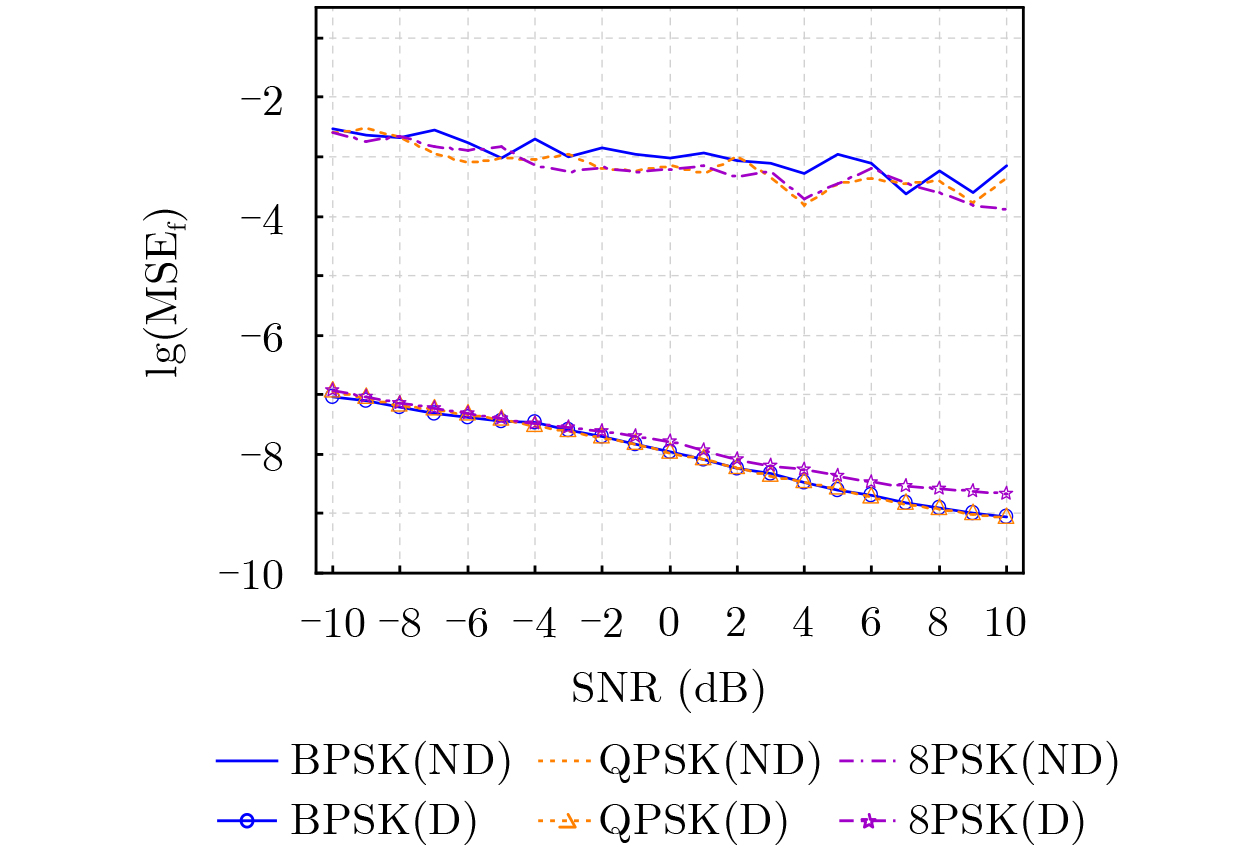
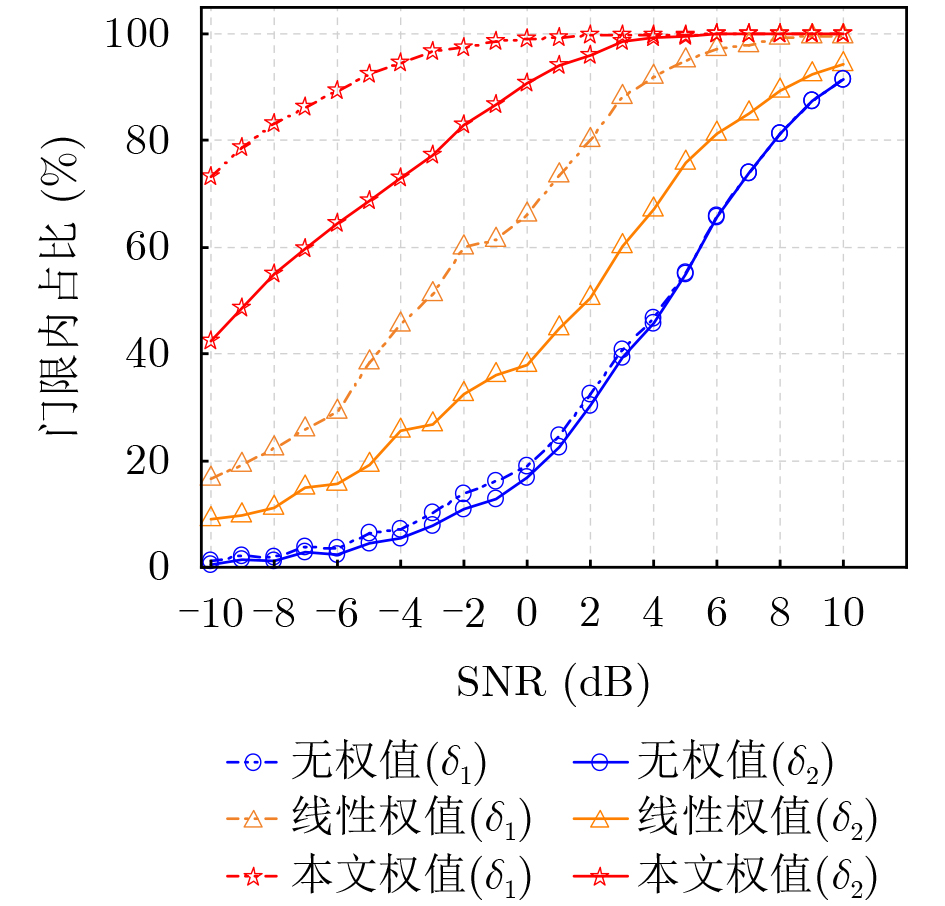
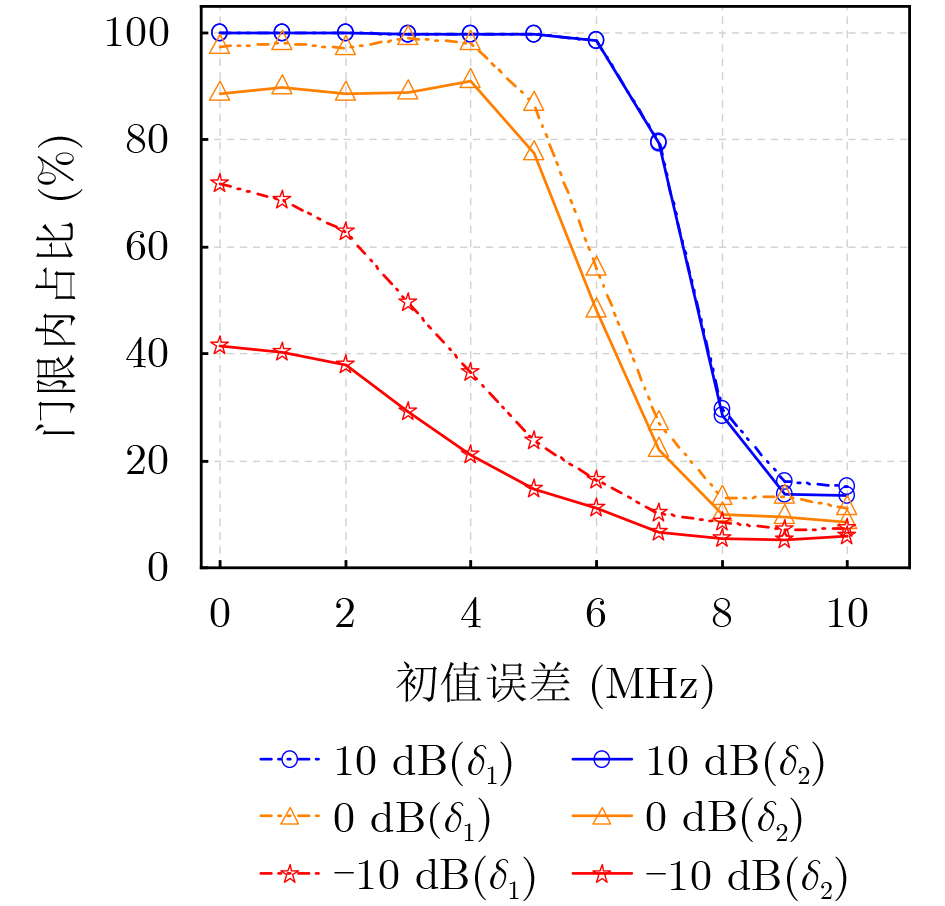
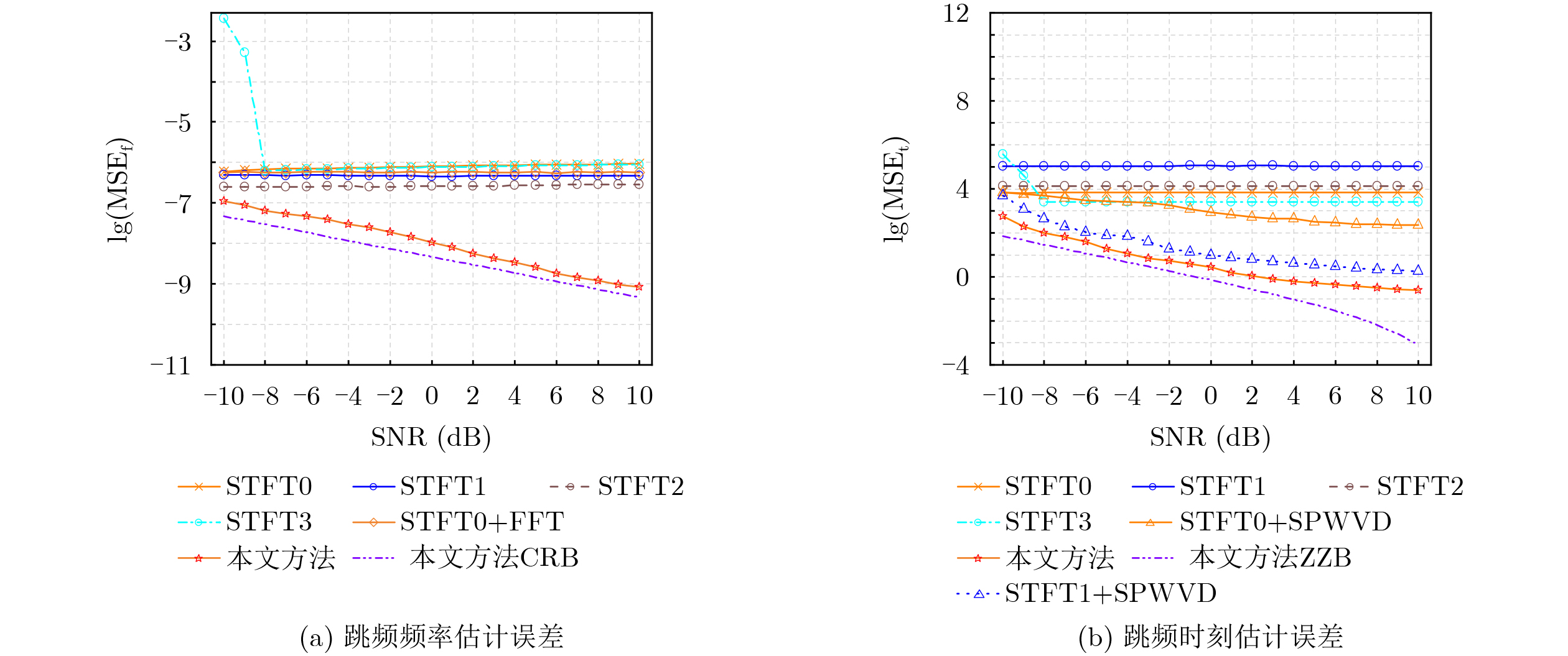
Objective Blind parameter estimation of non-cooperative Frequency-Hopping (FH) signals is a key task in electronic reconnaissance and countermeasure systems. Estimation methods based on time-frequency analysis typically suffer from limited resolution or high computational cost. Methods based on compressive sensing also rely heavily on consistency between the predefined dictionary and the actual signal characteristics, and their estimation accuracy is often degraded by grid mismatch or modulation-induced energy dispersion. Maximum Likelihood (ML)-based methods provide high theoretical estimation accuracy at relatively low computational cost. However, existing studies usually assume an ideal unmodulated signal model with a single frequency transition. Therefore, severe model mismatch can arise when these ML-based methods are applied to digitally modulated FH signals, including Phase-Shift Keying (PSK)-modulated signals, or to signals containing multiple frequency transitions. In addition, conventional iterative solutions in ML-based methods may diverge or converge to suboptimal solutions. To address these issues, an improved ML-based method is proposed for blind parameter estimation of PSK-modulated FH signals. Methods To process received multi-hop signals, a signal-slicing method based on the Short-Time Fourier Transform (STFT) is proposed to extract slices that contain individual frequency transitions. To reduce the model mismatch caused by digital modulation in conventional ML-based methods, a model-matching signal extraction method based on the ML objective function is developed for PSK-modulated FH signals. Furthermore, a weighted iterative algorithm is designed for ML estimation to improve convergence and enable robust estimation of FH parameters. Results and Discussions To verify the effectiveness of the model-matching signal extraction method, ablation experiments are conducted under several modulation schemes, including Binary PSK (BPSK), Quadrature PSK (QPSK), and 8-ary PSK (8PSK). The results show that the proposed method (Group D) significantly reduces the Mean Square Error (MSE) of hopping-frequency estimation compared with the method without the proposed extraction procedure (Group ND). These findings indicate that the proposed method effectively reduces model mismatch ( Fig. 5 ). Simulation results also show that the designed weighted iterative algorithm provides better convergence than linear weighting and unweighted schemes (Fig. 6 ). The algorithm tolerates moderate initial frequency errors under the tested conditions, although its sensitivity increases as the Signal-to-Noise Ratio (SNR) decreases (Fig. 7 ). Comparative experiments with representative existing methods also show that the proposed method achieves higher estimation accuracy (Fig. 8 ).Conclusions An improved ML-based method is proposed for blind parameter estimation of PSK-modulated FH signals. By using an STFT-based signal-slicing method, the applicability of the ML-based estimator is extended to continuous multi-hop signals. To reduce the model mismatch caused by PSK modulation, a model-matching signal extraction method is developed to isolate valid signal segments that satisfy the ML model. Furthermore, a weighted iterative algorithm with a dynamic weighting function is proposed to address the instability of the conventional iterative ML solver. Simulation results show that the proposed method reduces model mismatch, improves convergence, and tolerates moderate initial frequency errors under the tested conditions. High estimation accuracy is achieved for both hopping frequency and hopping time. -
1 适配ML模型的有效信号提取
初始化:时域短切片$ {y}_{i}[n] $,跳频频率粗估计值$ \hat f_{i-1}^{\mathrm{c}},\hat f_{i}^{\mathrm{c}} $,$ i=1,2,\cdots,N_{\mathrm{hop}}-1 $ (1) 构造信号模板$ {T}_{1}\left[n\right]=\exp \left\{\mathrm{j}2\text{π} f_{i-1}^{\mathrm{c}}nT_\text{s}\right\},{T}_{2}\left[n\right]=\exp \left\{\mathrm{j}2\text{π} f_{i}^{\mathrm{c}}nT_\text{s}\right\} $ (2) 求解$ {K}_{\min }=\arg \underset{K}{\min } \varphi \left(K\right) $ (3) 基于模板互相关对$ {K}_{\min } $进行类型判别 (4) 若判为符号跳变,则截取不含该符号跳变的信号并返回步骤(2) (5) 若判为频率跳变,根据$ {K}_{\min } $将信号划分为不含频率跳变的子段 (6) 对于每个子段的$ {\varphi }_{\text{single}}(K) $获取其最小值索引 (7) 在$ {\hat{\omega }}_{1},{\hat{\omega }}_{2} $的邻域搜索使$ \text{SS}{\mathrm{E}}_{0} $最小的频率值,并计算$ \Delta \text{BIC} $ (8) 若$ \Delta \text{BIC}< 0 $,更新子段为该时刻与$ {K}_{\min } $之间的信号,返回步骤(6);否则保留当前子段结果 (9) 提取从跳频前子段起点到跳频后子段终点的信号 输出:与ML估计模型相匹配的有效信号  下载: 导出CSV
表 1 计算复杂度
计算环节 本文方法 文献[17]方法 STFT $ O({N}_{{\mathrm{o}}}\mathrm{\lg } {N}_{\text{win}}) $ $ O({N}_{{\mathrm{o}}}\mathrm{\lg } {N}_{\text{win}}) $ 后续处理 $ O\left(\left({N}_{\text{cut}}+G\right)\mathrm{\lg } \left({N}_{\text{cut}}+G\right)\right)+O(M_{\text{ML}}^{2}) $ $ O(N_{\text{cut}}^{2}\mathrm{\lg } {N}_{\text{cut}}) $ 总复杂度 $ O\left({N}_{{\mathrm{o}}}\mathrm{\lg } {N}_{\text{win}}\right)+O\left(\left({N}_{\text{cut}}+G\right)\mathrm{\lg } \left({N}_{\text{cut}}+G\right)\right)+O(M_{\text{ML}}^{2}) $ $ O\left({N}_{{\mathrm{o}}}\mathrm{\lg } {N}_{\text{win}}\right)+O(N_{\text{cut}}^{2}\mathrm{\lg } {N}_{\text{cut}}) $
下载: 导出CSV
-
[1] LI Li, KANG Bochao, TAN Qinggui, et al. Photon-assisted ultrawideband frequency-hopping signal receiving scheme[J]. IEEE Transactions on Microwave Theory and Techniques, 2025, 73(11): 9312–9323. doi: 10.1109/TMTT.2025.3584780. [2] XIE Jingyang, LI Wentao, XIAO Yongran, et al. Integrated sensing and communications for frequency-hopping MIMO systems using chirp-extended waveform[J]. IEEE Internet of Things Journal, 2025, 12(24): 55211–55226. doi: 10.1109/JIOT.2025.3622230. [3] 王诗雨, 汪西明, 可臻怡, 等. 无人机通信多模抗干扰: 融合二维迁移强化学习的协同决策方法[J]. 电子与信息学报, 2025, 47(11): 4200–4210. doi: 10.11999/JEIT250566.WANG Shiyu, WANG Ximing, KE Zhenyi, et al. Multi-mode anti-jamming for UAV communications: A cooperative mode-based decision-making approach via two-dimensional transfer reinforcement learning[J]. Journal of Electronics & Information Technology, 2025, 47(11): 4200–4210. doi: 10.11999/JEIT250566. [4] JIANG Yinghai and LIU Feng. Adaptive joint carrier and DOA estimations of FHSS signals based on knowledge-enhanced compressed measurements and deep learning[J]. Entropy, 2024, 26(7): 544. doi: 10.3390/e26070544. [5] YANG Yuxiao, XU Chang, ZHAO Xinyue, et al. Joint estimation method for space–time frequency parameters of frequency-hopping network station in the case of low-quality data[J]. Computer Communications, 2025, 241: 108234. doi: 10.1016/j.comcom.2025.108234. [6] 张东伟, 梁晓龙, 王鹏, 等. 多跳频信号参数单通道盲估计算法[J]. 华中科技大学学报: 自然科学版, 2023, 51(6): 152–159,165. doi: 10.13245/j.hust.230624.ZHANG Dongwei, LIANG Xiaolong, WANG Peng, et al. Single channel blind estimation algorithm for parameters of multiple frequency-hopping signals[J]. Journal of Huazhong University of Science and Technology: Natural Science Edition, 2023, 51(6): 152–159,165. doi: 10.13245/j.hust.230624. [7] JIN Yan and LIU Jie. Parameter estimation of frequency hopping signals based on the Robust S-transform algorithms in alpha stable noise environment[J]. AEU-International Journal of Electronics and Communications, 2016, 70(5): 611–616. doi: 10.1016/j.aeue.2016.01.019. [8] ZENG Zhengzhi, JIANG Chunshan, ZHOU Yuanming, et al. A time–frequency domain analysis method for variable frequency hopping signal[J]. Sensors, 2024, 24(19): 6449. doi: 10.3390/s24196449. [9] 王欣怡, 刘满国, 李柯达, 等. 基于图像处理与时频分析的跳频信号频率估计算法[J]. 弹箭与制导学报, 2024, 44(3): 81–86. doi: 10.15892/j.cnki.djzdxb.2024.03.011.WANG Xinyi, LIU Manguo, LI Keda, et al. Frequency estimation algorithm of frequency-hopping signal based on image processing and time-frequency analysis[J]. Journal of Projectiles, Rockets, Missiles and Guidance, 2024, 44(3): 81–86. doi: 10.15892/j.cnki.djzdxb.2024.03.011. [10] ANGELOSANTE D, GIANNAKIS G B, and SIDIROPOULOS N D. Estimating multiple frequency-hopping signal parameters via sparse linear regression[J]. IEEE Transactions on Signal Processing, 2010, 58(10): 5044–5056. doi: 10.1109/TSP.2010.2052614. [11] ZHAO Lifan, WANG Lu, BI Guoan, et al. Robust frequency-hopping spectrum estimation based on sparse Bayesian method[J]. IEEE Transactions on Wireless Communications, 2015, 14(2): 781–793. doi: 10.1109/TWC.2014.2360191. [12] 金艳, 周磊, 姬红兵. 基于稀疏时频分布的跳频信号参数估计[J]. 电子与信息学报, 2018, 40(3): 663–669. doi: 10.11999/JEIT170525.JIN Yan, ZHOU Lei, and JI Hongbing. Parameter estimation of frequency-hopping signals based on sparse time-frequency distribution[J]. Journal of Electronics & Information Technology, 2018, 40(3): 663–669. doi: 10.11999/JEIT170525. [13] KO C C, ZHI Wanjun, and CHIN F. ML-based frequency estimation and synchronization of frequency hopping signals[J]. IEEE Transactions on Signal Processing, 2005, 53(2): 403–410. doi: 10.1109/TSP.2004.840703. [14] FU K C and CHEN Y F. Subspace-based algorithms for blind ML frequency and transition time estimation in frequency hopping systems[J]. Wireless Personal Communications, 2016, 89(2): 303–318. doi: 10.1007/s11277-016-3364-z. [15] LI Yixing and WANG Furong. Parameter estimation of frequency hopping signals based on maximum likelihood and orthogonal matching pursuit[C]. 2022 International Conference on Autonomous Unmanned Systems (ICAUS 2022), Singapore, Singapore, 2023: 3397–3406. doi: 10.1007/978-981-99-0479-2_313. [16] 张盛魁, 姚志成, 何岷, 等. 改进时频脊线的跳频参数盲估计算法[J]. 系统工程与电子技术, 2019, 41(12): 2885–2890. doi: 10.3969/j.issn.1001‐506X.2019.12.30.ZHANG Shengkui, YAO Zhicheng, HE Min, et al. Blind estimation algorithm for frequency hopping parameters of improved time-frequency ridge[J]. Systems Engineering and Electronics, 2019, 41(12): 2885–2890. doi: 10.3969/j.issn.1001‐506X.2019.12.30. [17] 付卫红, 胡展. 一种混合网台跳频参数盲估计算法[J]. 北京邮电大学学报, 2019, 42(4): 57–63. doi: 10.13190/j.jbupt.2018-281.FU Weihong and HU Zhan. Blind parameter estimation of hybrid networking frequency-hopping[J]. Journal of Beijing University of Posts and Telecommunications, 2019, 42(4): 57–63. doi: 10.13190/j.jbupt.2018-281. [18] WANG Yu, ZHANG Chaozhu, and JING Fulong. Frequency-hopping signal parameters estimation based on orthogonal matching pursuit and sparse linear regression[J]. IEEE Access, 2018, 6: 54310–54319. doi: 10.1109/ACCESS.2018.2871723. -

 下载:
下载:


图(8) / 表(2)
计量
- 文章访问数: 707
- HTML全文浏览量: 393
- PDF下载量: 45
- 被引次数: 0
