




GNN-driven Beamforming and Resource Allocation for RIS-assisted MISO-OFDMA Multi-group Multicast System
-
摘要: 该文针对可重构智能表面(RIS)辅助的多输入单输出-正交频分多址(MISO-OFDMA)系统,围绕提升频谱效率这一核心需求,开展子载波分配、基站主动波束赋形与RIS被动波束赋形的联合优化研究。为解决传统优化方法在多变量耦合场景下计算复杂、易陷入局部最优的问题,提出一种模型驱动的图神经网络(GNN)方案。该方案将通信物理模型嵌入网络架构设计,实现从信道特征到多优化变量的端到端映射,无需依赖复杂迭代求解。仿真结果表明:与传统基准算法相比,所提方案不仅提高了系统的频谱效率,还显著降低了系统的计算复杂度。同时,在用户组数动态变化和基站传输功率调整等场景下仍保持良好鲁棒性,具备实际部署潜力。Abstract:
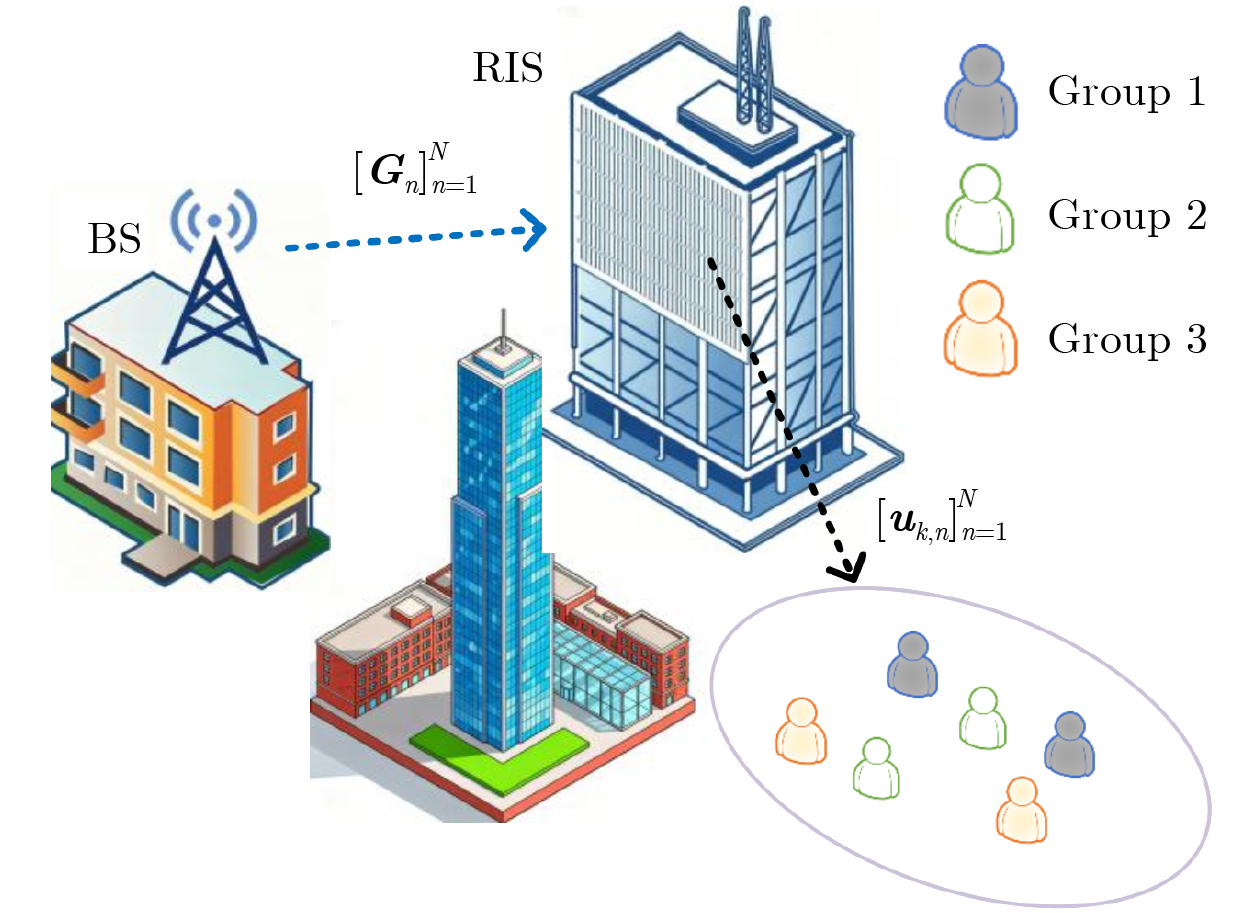
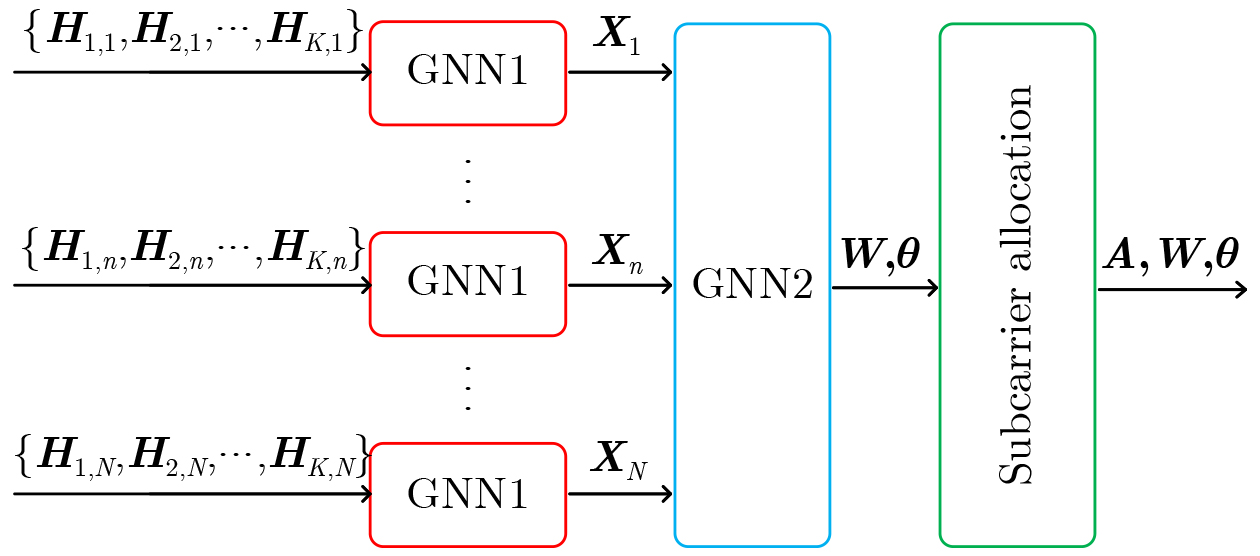
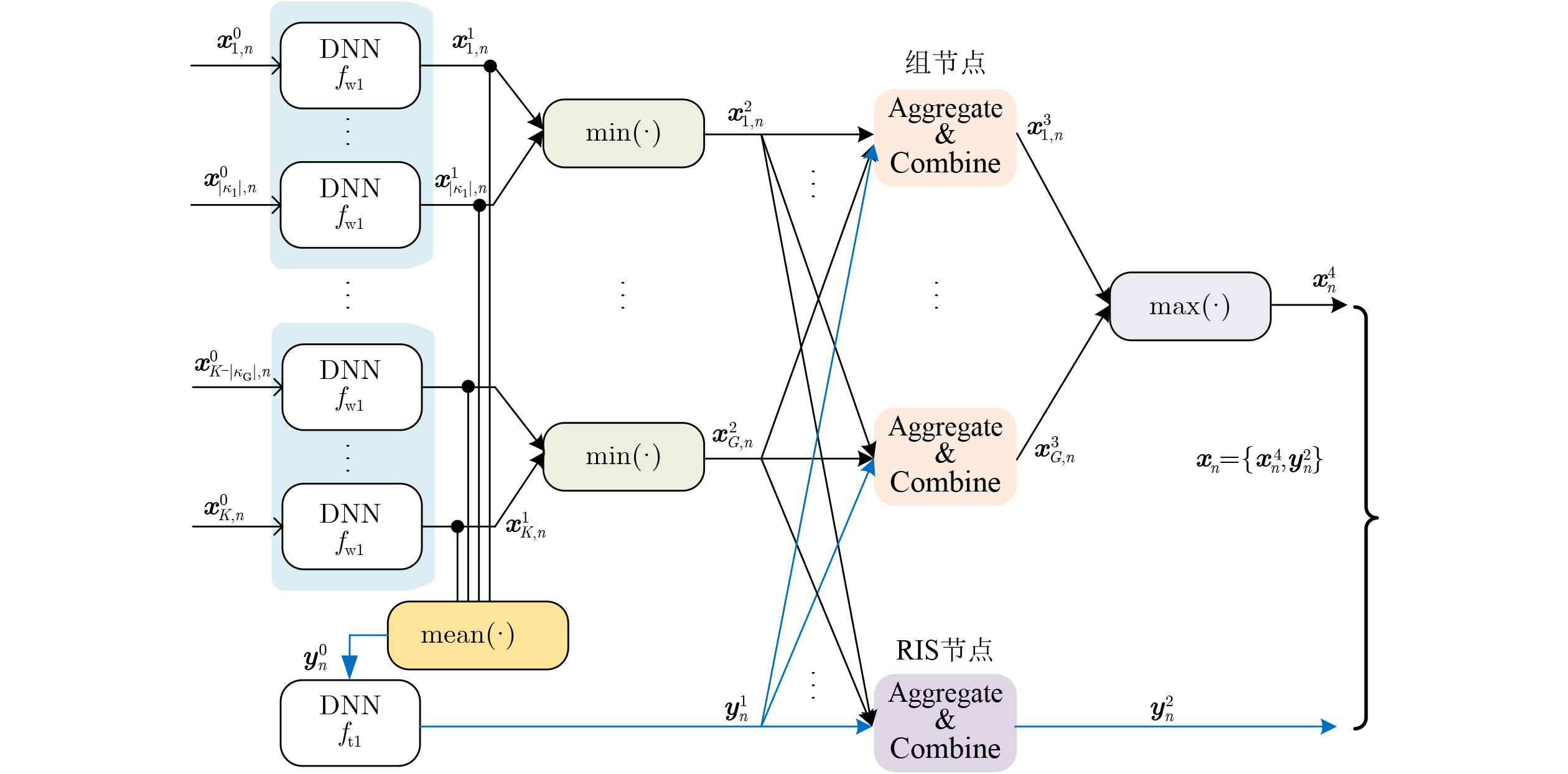
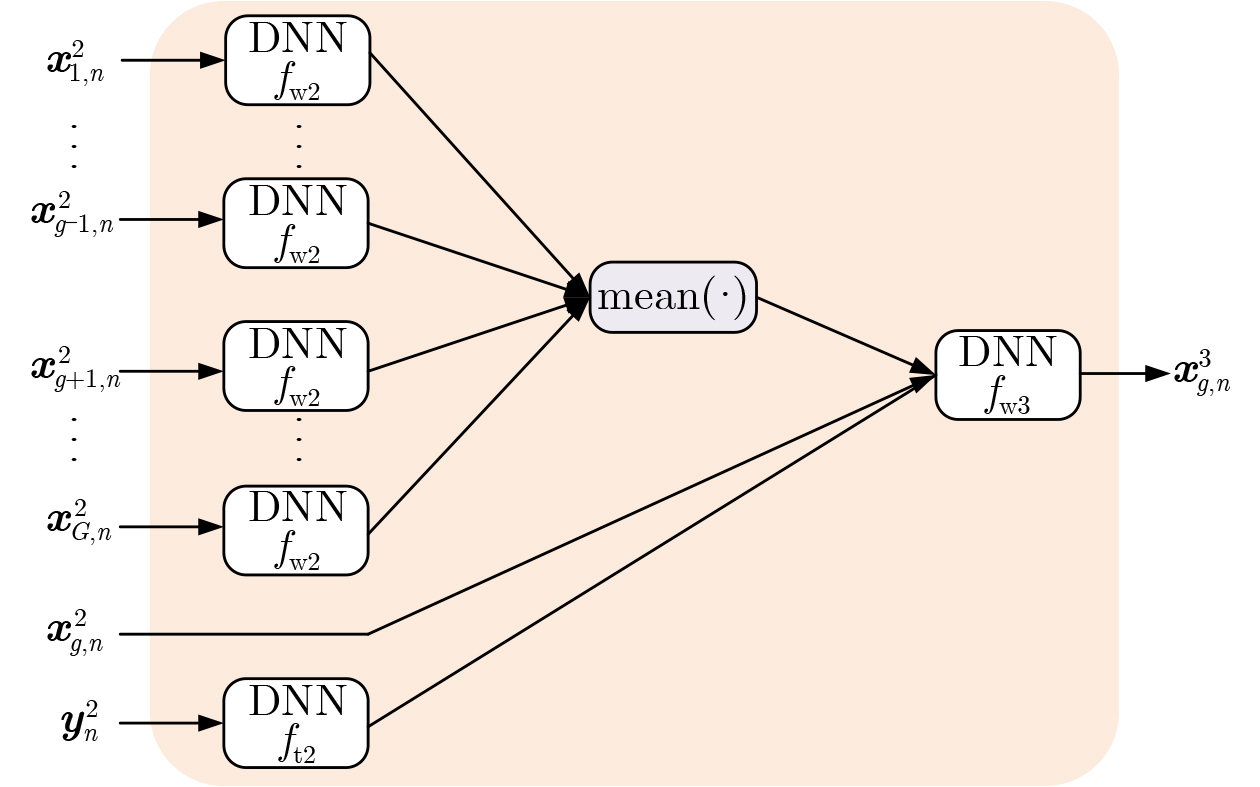
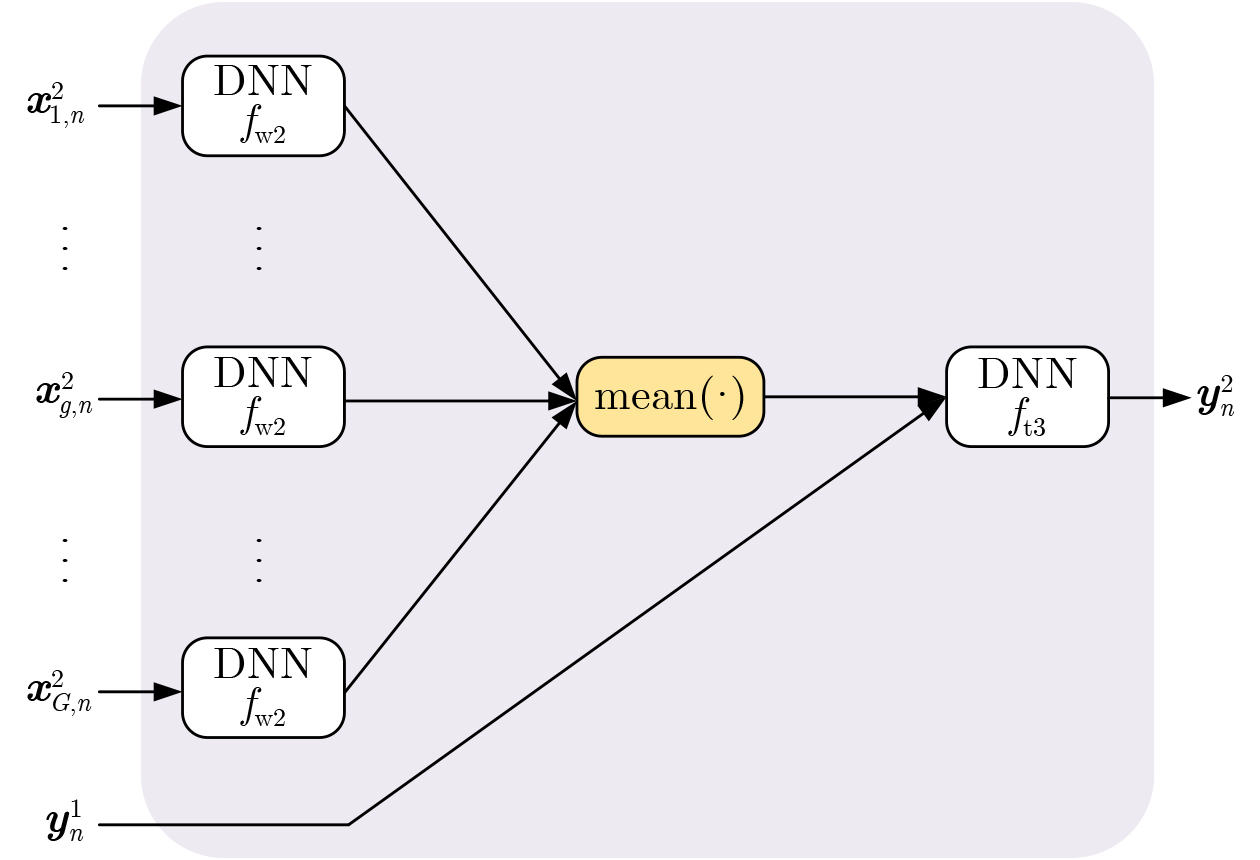
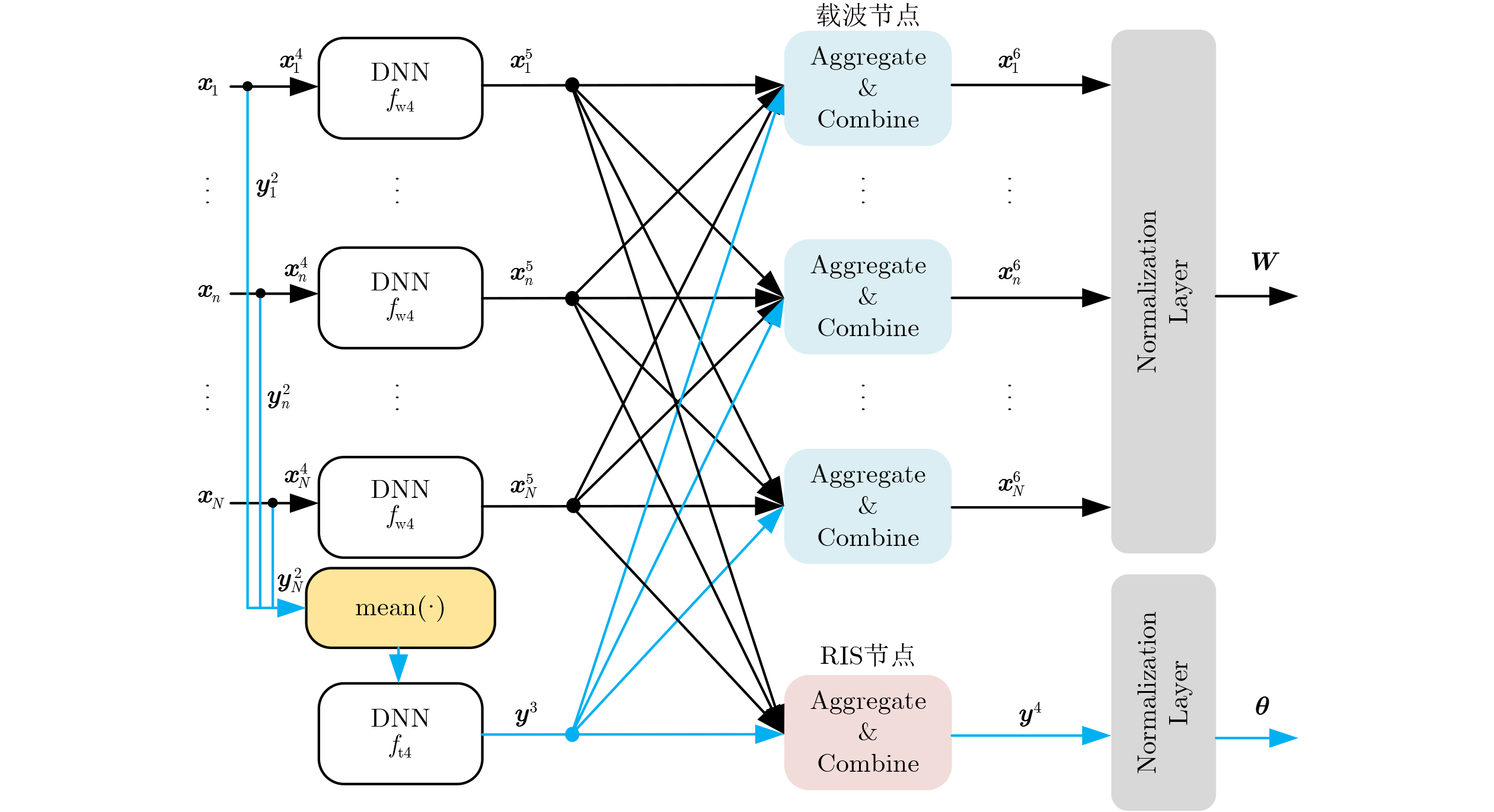
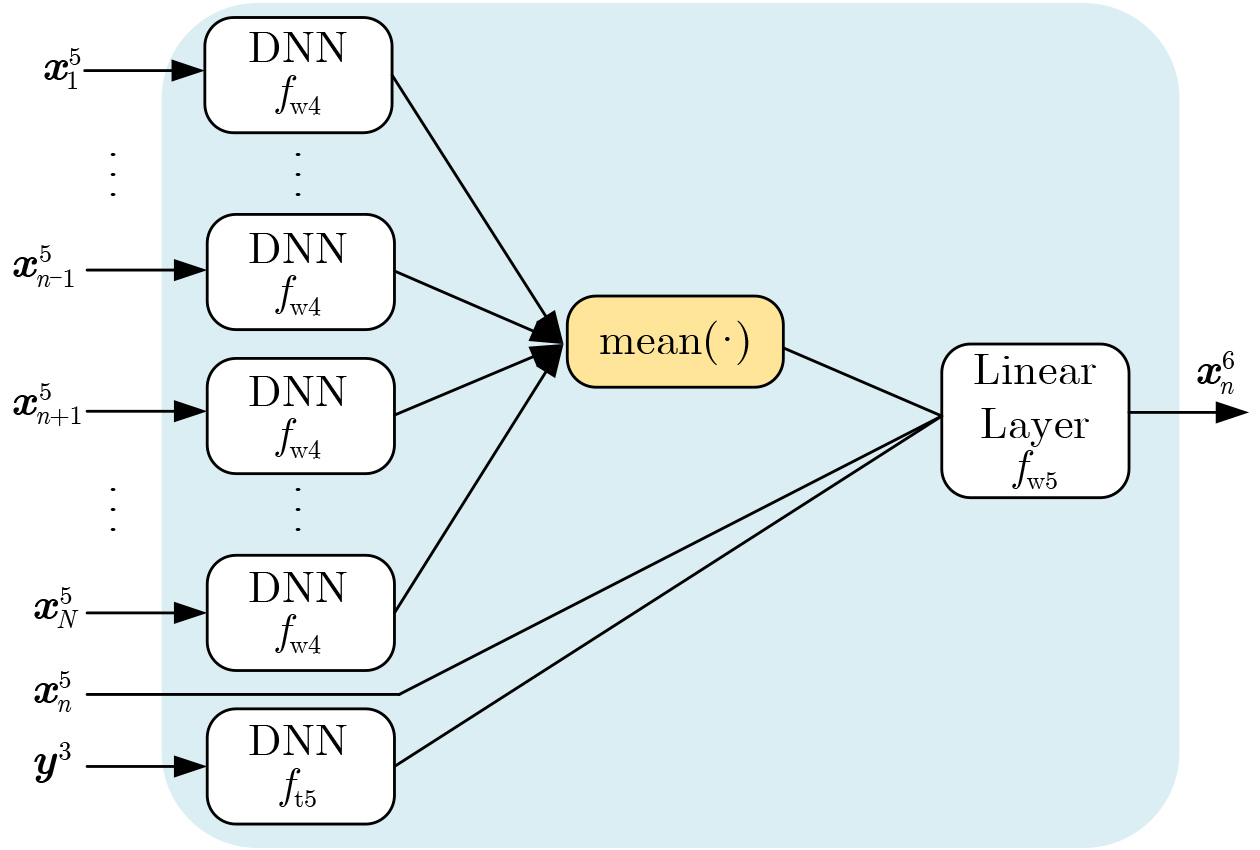
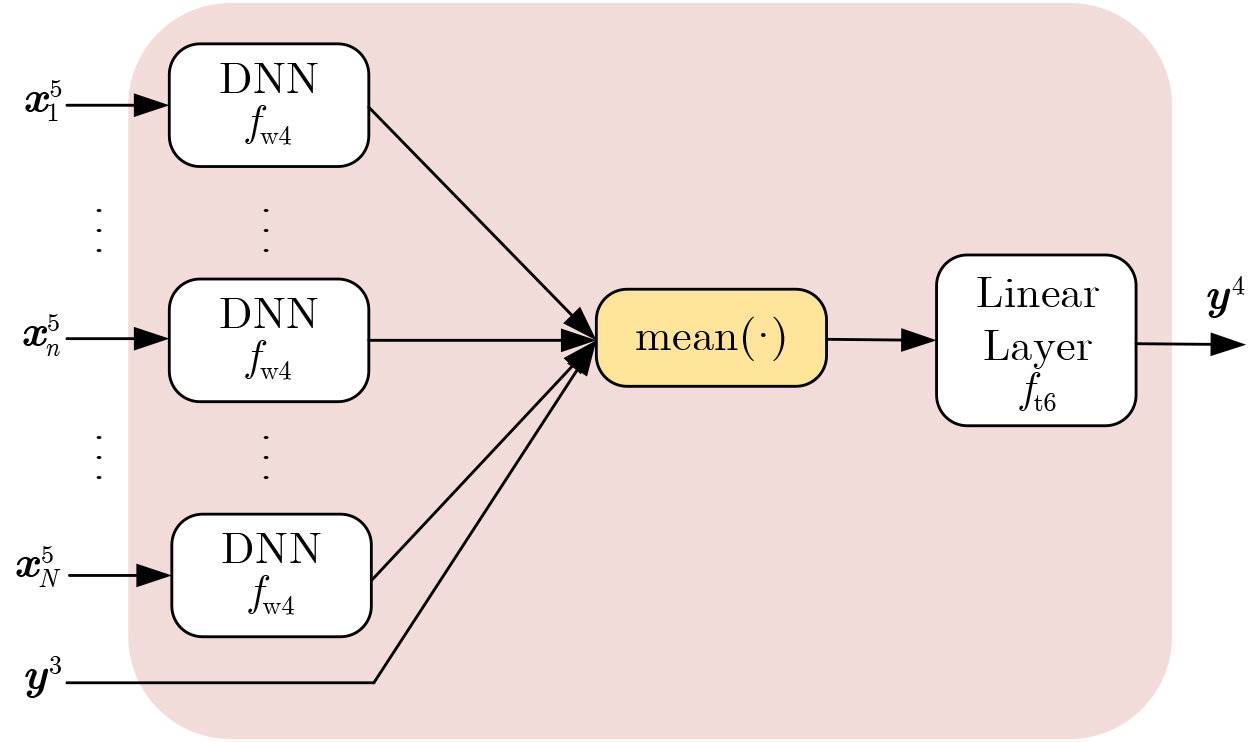
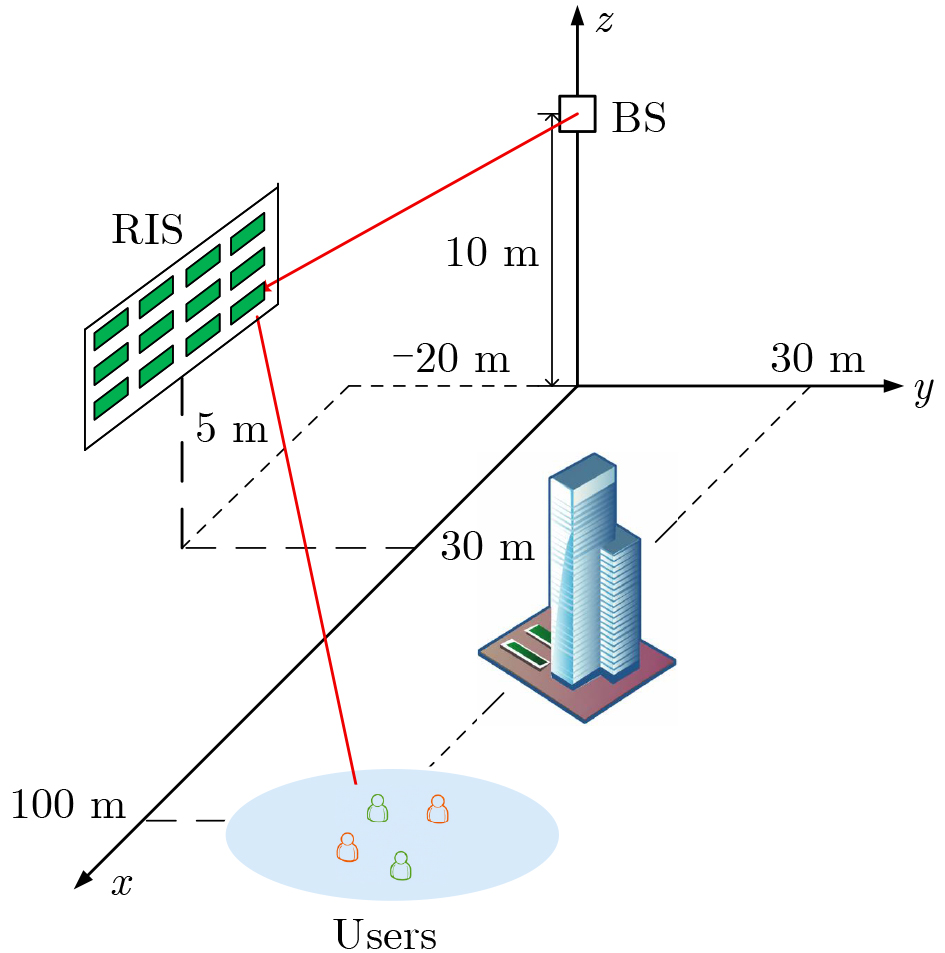
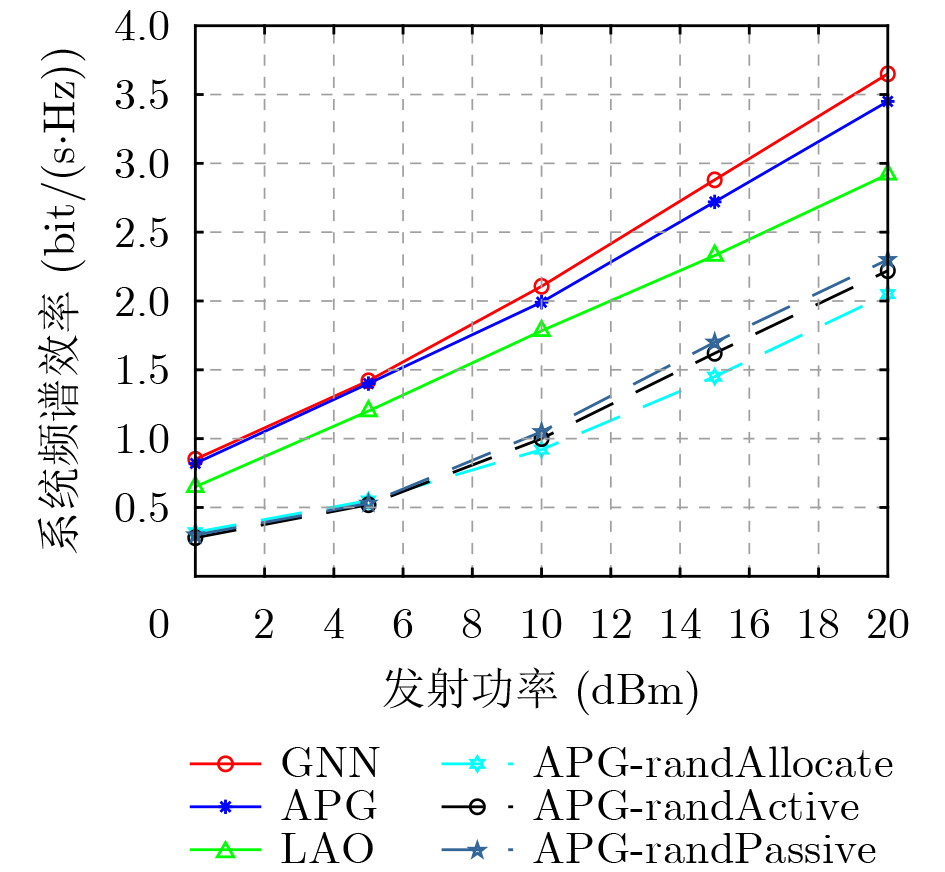
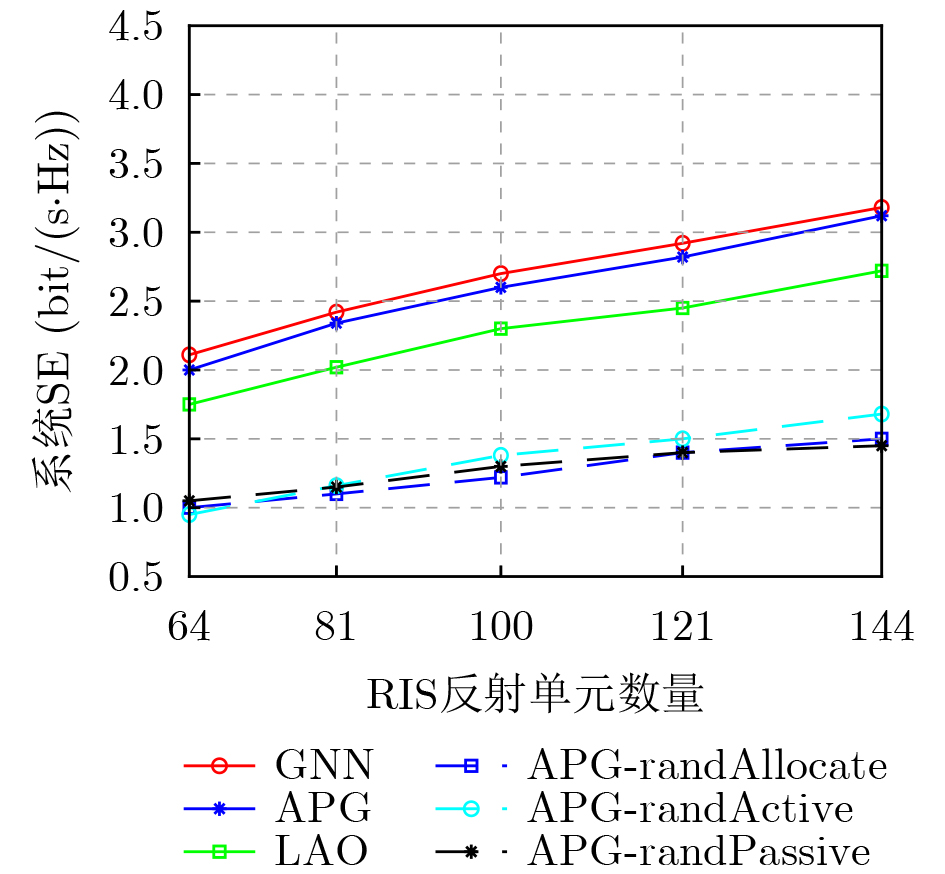
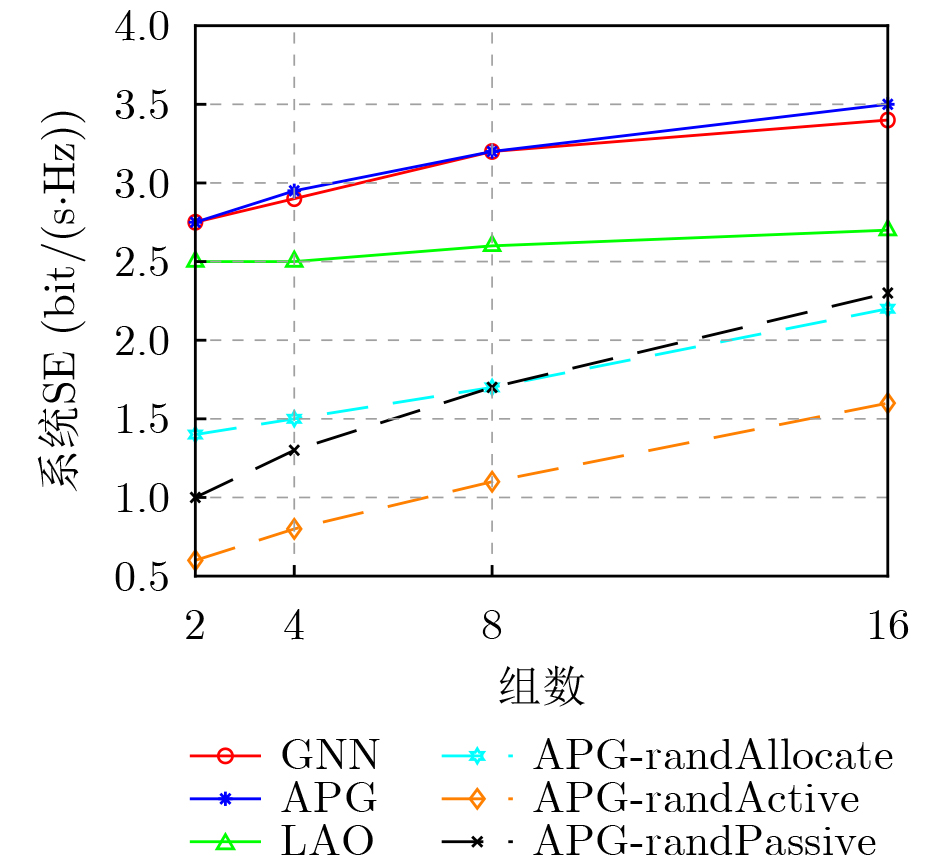
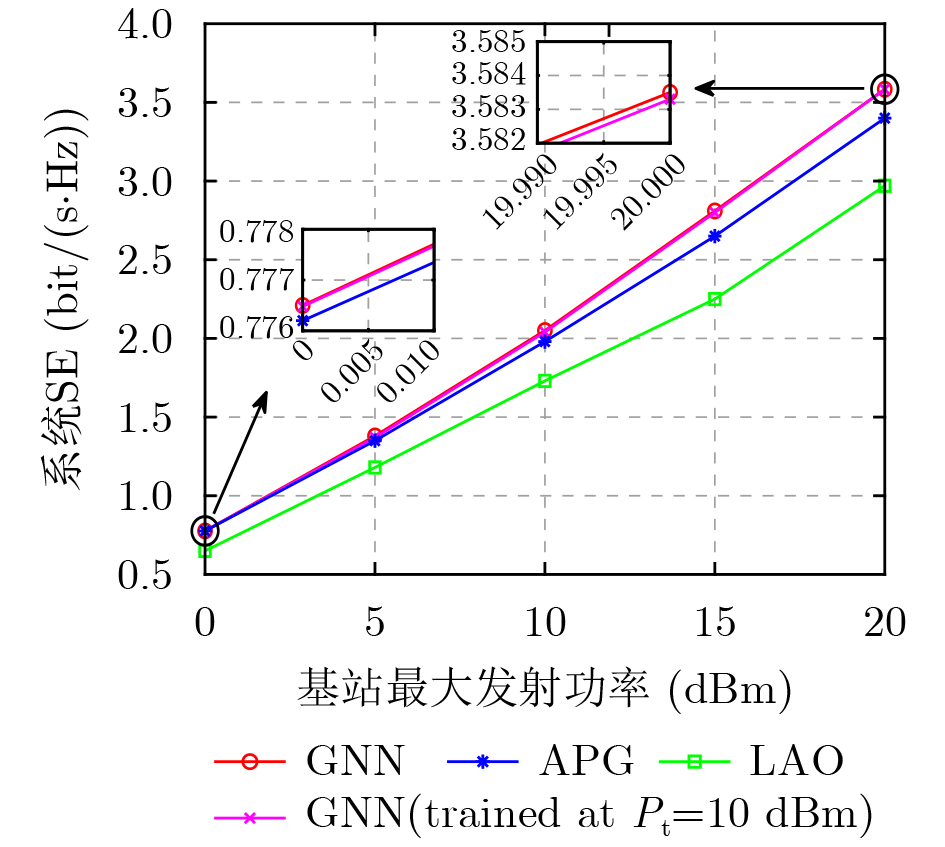
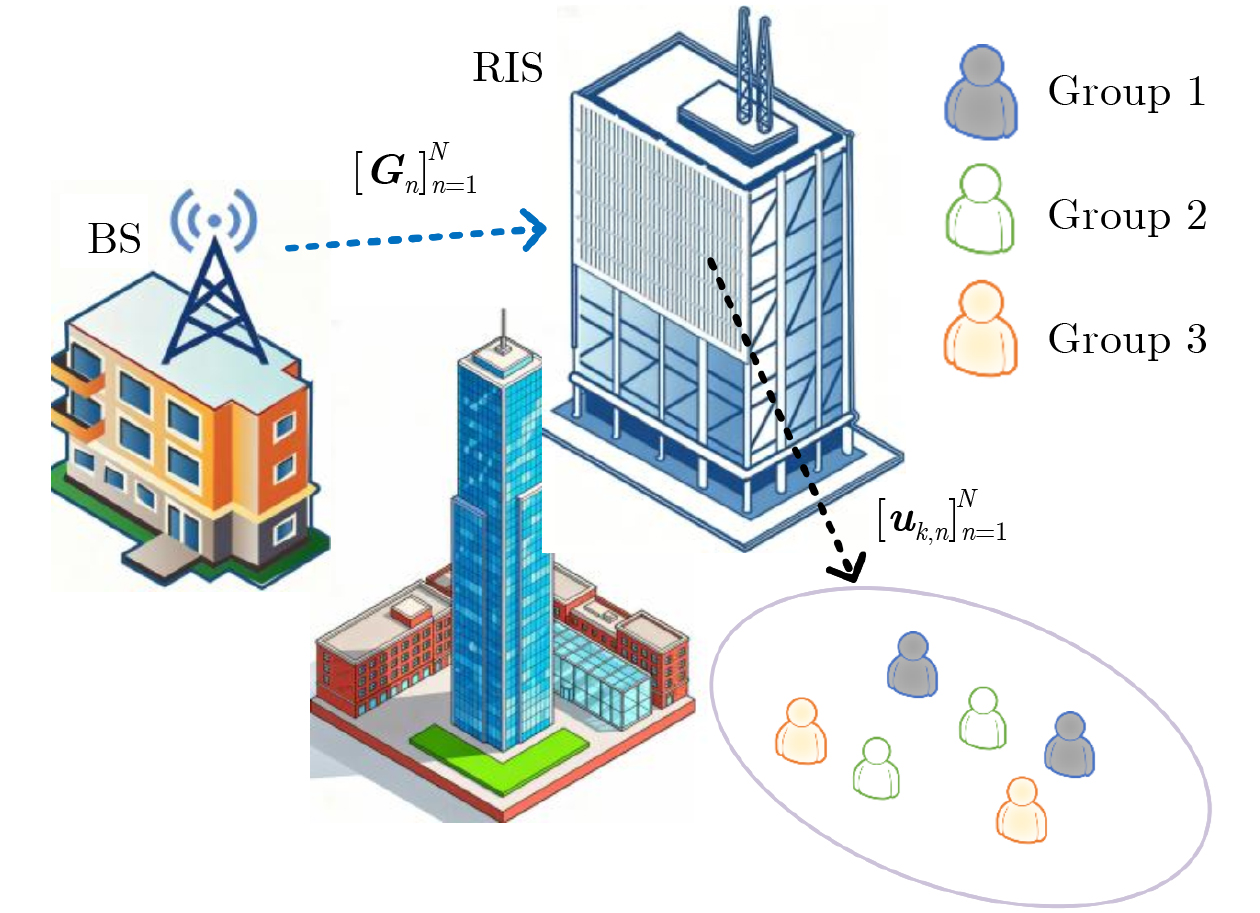
Objective Reconfigurable Intelligent Surfaces (RISs) have strong potential to improve coverage and Spectral Efficiency (SE) in future wireless networks. However, when RISs are applied to wideband Multiple-Input Single-Output Orthogonal Frequency Division Multiple Access (MISO-OFDMA) systems, their practical benefits are limited by two key challenges. First, RIS reflection coefficients may not match the frequency-selective channel conditions across all subcarriers. Second, subcarrier allocation, Base Station (BS) active beamforming, and RIS passive beamforming are strongly coupled. These challenges become more serious in multi-group multicast scenarios, where shared data streams increase inter-group interference. Therefore, this article proposes a Graph Neural Network (GNN)-driven optimization framework to maximize the system SE through joint active beamforming, passive beamforming, and subcarrier allocation. Methods To address the optimization difficulty caused by the strong coupling among subcarrier allocation, BS active beamforming, and RIS passive beamforming, this work develops a model-driven GNN optimization framework. The objective is to maximize the system SE. First, a complete system model containing the BS, RIS, and multi-group multicast users is established ( Fig 1 ). The formulation includes practical constraints, such as the BS transmit power limit, the unit-modulus constraint of RIS elements, and the binary constraint on subcarrier allocation. To satisfy the multicast requirement, the SE of each group is defined as the minimum SE among all users in that group. This definition further increases the non-convexity of the optimization problem.The first component of the proposed network, GNN1 (Fig 3 ), contains an initialization layer and a message-update layer. For each subcarrier $ n\in \mathcal{N} $, every user is modeled as a node, and the input to GNN1 is the set of channel matrices $ \left\{{\mathbf{H}}_{k,n},k\in \mathcal{K}\right\} $. Because standard GNNs process real-valued features, each complex channel vector is decomposed into its real and imaginary parts and used as the node feature representation. Group-level aggregation (Fig. 4 ) and RIS-level aggregation (Fig. 5 ) are then performed. GNN2 (Fig 6 ) takes the subcarrier-wise embeddings generated by GNN1 as input and constructs an expanded graph with group nodes (Fig. 7 ) and an RIS node (Fig. 8 ). By aggregating messages among subcarrier nodes, group nodes, and the RIS node, GNN2 fuses cross-subcarrier information and captures the global coupling among system components. Based on the integrated representation, GNN2 outputs the BS active beamforming matrix and RIS passive beamforming vector. Output-layer normalization is used to satisfy the physical constraints. Finally, given the beamforming parameters, subcarrier allocation is performed using the maximum-SE criterion. The learning objective is defined as maximizing the total SE.Results and Discussions The proposed GNN algorithm consistently outperforms all random benchmark schemes, including APG-randAllocate, APG-randActive, and APG-randPassive, across the full transmit power range from 0 to 20 dBm. This advantage indicates that the proposed method can dynamically handle subcarrier allocation and joint active and passive beamforming optimization. It also maintains stable and superior performance under large transmit-power variations. Overall, the system SE of all schemes increases monotonically with BS transmit power because higher transmit power improves the received signal-to-noise ratio and increases the achievable rate. Compared with the benchmark methods, the GNN adaptively coordinates BS active beamforming and RIS passive beamforming at different power levels and better uses the reflection gain provided by the RIS. Therefore, the GNN maintains a consistent performance advantage across the full power range. Even in the high-power region, it outperforms APG and LAO, which further verifies its robustness ( Fig. 10 ).When the number of RIS elements varies, the GNN maintains a clear performance advantage over both APG and LAO. In general, the system SE increases with the number of RIS elements because a larger RIS provides higher array gain and improves the equivalent channel conditions. According to the numerical results, the proposed GNN achieves a spectral efficiency of 2.066 5 bit/(s·Hz), which is approximately 7.46% and 3.79% higher than those of LAO and APG, respectively. Meanwhile, the average computational time of the GNN is only about 0.007 5 s, which is approximately 4% of that required by the benchmark methods. These results demonstrate that the proposed GNN effectively uses the performance gain provided by RIS scaling and achieves a good balance between system performance and computational complexity (Fig. 11 andTable 2 ).The relationship between system SE and the number of user groups is then examined under fixed settings for the number of transmit antennas and users. The generalization ability of the proposed GNN is further evaluated by training the model at a fixed transmit power and testing it over a wide transmit power range from 0 to 20 dBm. The training and testing curves almost overlap, indicating that the proposed GNN generalizes well to unseen transmit power levels. Across the full power range, the GNN consistently outperforms the LAO and APG benchmarks, further confirming its robustness and adaptability under different transmission conditions (Fig. 13 ).Conclusions For the RIS-assisted MISO-OFDMA system, this paper formulates a joint optimization problem for subcarrier allocation, BS active beamforming, and RIS passive beamforming to maximize the system SE. A model-driven GNN method is proposed to solve this problem. Comparative experiments with benchmark algorithms are conducted to validate the proposed method. The results demonstrate that the proposed GNN algorithm consistently outperforms LAO and APG in overall performance. It also exhibits strong robustness under different numbers of user groups and transmit power settings, which supports its potential for practical deployment in complex engineering scenarios. -
1 最大化SE准则
输入:每个子载波上所有组的SE$ \{{R}_{g,n},\forall g\in \mathcal{G},\forall n\in \mathcal{N}\} $ 输出:载波分配矩阵$ \boldsymbol{A} $ 1:初始化: $ n=1,\ \boldsymbol{A}={{\textit{0}}} $ 2:while $ n\leq N $ do 3:$ g=\arg {\max }_{u\in \mathcal{G}}\{{R}_{u,n}\} $ 4:$ {\alpha }_{g,n}=1 $ 5:$ n=n+1 $ 6:end while  下载: 导出CSV
表 1 GNN网络参数
函数 参数量 函数 参数量 $ {f}_{\text{tl}} $ $ 6N\mathrm{_t}\times2M+2M $ $ {f}_{\text{tl}} $ $ 2MN\mathrm{_t}\times6N_{\mathrm{t}}+6N_{\mathrm{t}} $ $ {f}_{\text{t2}} $ $ 2M\times2N\mathrm{_t}+2N\mathrm{_t} $ $ {f}_{\text{w2}} $ $ 6N\mathrm{_t}\times2N_{\mathrm{t}}+2N\mathrm{_t} $ $ {f}_{\text{t3}} $ $ (2M+2N\mathrm{_t})\times M+M $ $ {f}_{\text{w3}} $ $ 10N\mathrm{_t}\times4N_{\mathrm{t}}+4N\mathrm{_t} $ $ {f}_{\text{t4}} $ $ M\times M+M $ $ {f}_{\text{w4}} $ $ 4N\mathrm{_t}\times4N_{\mathrm{t}}+4N\mathrm{_t} $ $ {f}_{\text{t5}} $ $ M\times2N\mathrm{_t}+M $ $ {f}_{\text{w5}} $ $ 4N_{\mathrm{t}}\times2N_{\mathrm{t}}+2N\mathrm{_t} $ $ {f}_{\text{t6}} $ $ (M+2N\mathrm{_t})\times2M+2M $
下载: 导出CSV
表 2 算法在线运行时间及性能比较
算法 时间(s) SE (bit/(s·Hz)) 性能 GNN 0.007 5 2.066 5 94.07 LAO 0.259 6 1.923 1 87.54 APG 0.204 6 1.991 1 90.64
下载: 导出CSV
-
[1] SANG Jian, YUAN Yifei, TANG Wankai, et al. Coverage enhancement by deploying RIS in 5G commercial mobile networks: Field trials[J]. IEEE Wireless Communications, 2024, 31(1): 172–180. doi: 10.1109/MWC.011.2200356. [2] 陈真, 杜晓宇, 唐杰, 等. 基于深度强化学习的RIS辅助通感融合网络: 挑战与机遇[J]. 电子与信息学报, 2024, 46(9): 3467–3473. doi: 10.11999/JEIT240086.CHEN Zhen, DU Xiaoyu, TANG Jie, et al. DRL-based RIS-assisted ISAC network: Challenges and opportunities[J]. Journal of Electronics & Information Technology, 2024, 46(9): 3467–3473. doi: 10.11999/JEIT240086. [3] 费丹, 陈晨, 郑鹏, 等. 基于智能超表面的室内覆盖增强技术研究与实验验证[J]. 电子与信息学报, 2022, 44(7): 2374–2381. doi: 10.11999/JEIT220068.FEI Dan, CHEN Chen, ZHENG Peng, et al. Research and experimental verification of reconfigurable intelligent surface in indoor coverage enhancement[J]. Journal of Electronics & Information Technology, 2022, 44(7): 2374–2381. doi: 10.11999/JEIT220068. [4] 徐勇军, 徐然, 周继华, 等. 面向窃听用户的RIS-MISO系统鲁棒资源分配算法[J]. 电子与信息学报, 2022, 44(7): 2253–2263. doi: 10.11999/JEIT211537.XU Yongjun, XU Ran, ZHOU Jihua, et al. Robust resource allocation algorithm for RIS-assisted MISO systems with eavesdroppers[J]. Journal of Electronics & Information Technology, 2022, 44(7): 2253–2263. doi: 10.11999/JEIT211537. [5] 曾嵘, 邵智敏. 零前缀OFDM中智能反射表面环境下干扰抑制算法研究[J]. 电子与信息学报, 2022, 44(7): 2358–2365. doi: 10.11999/JEIT211389.ZENG Rong and SHAO Zhimin. Research on interference suppression algorithm in reconfigurable intelligent surface environment in ZP-OFDM[J]. Journal of Electronics & Information Technology, 2022, 44(7): 2358–2365. doi: 10.11999/JEIT211389. [6] WU Qingqing and ZHANG Rui. Intelligent reflecting surface enhanced wireless network via joint active and passive beamforming[J]. IEEE Transactions on Wireless Communications, 2019, 18(11): 5394–5409. doi: 10.1109/TWC.2019.2936025. [7] GUO Huayan, LIANG Yingchang, CHEN Jie, et al. Weighted sum rate maximization for reconfigurable intelligent surface aided wireless networks[J]. IEEE Transactions on Wireless Communications, 2020, 19(5): 3064–3076. doi: 10.1109/TWC.2020.2970061. [8] FENG Keming, LI Xiao, HAN Yu, et al. Joint beamforming optimization for reconfigurable intelligent surface-enabled MISO-OFDM systems[J]. China Communications, 2021, 18(3): 63–79. doi: 10.23919/JCC.2021.03.006. [9] MA Yu, ZHOU Xingyu, LI Xiao, et al. Unsupervised learning-based joint resource allocation and beamforming design for RIS-assisted MISO-OFDMA systems[J]. IEEE Transactions on Cognitive Communications and Networking, 2026, 12: 2251–2264. doi: 10.1109/TCCN.2025.3592931. [10] YUE Mingyang, LIU Lei, and YUAN Xiaojun. RIS-aided multiuser MIMO-OFDM with linear precoding and iterative detection: Analysis and optimization[J]. IEEE Transactions on Wireless Communications, 2023, 22(11): 7606–7619. doi: 10.1109/TWC.2023.3253699. [11] DING Chunxia, JIN Weijie, LI Xiao, et al. Multi-group Multicasting using reconfigurable intelligent surfaces: A deep learning approach[J]. IEEE Transactions on Wireless Communications, 2025, 24(6): 5337–5351. [12] CHEN Hongzhi, MI De, CLERCKX B, et al. Joint power and subcarrier allocation optimization for multigroup multicast systems with rate splitting[J]. IEEE Transactions on Vehicular Technology, 2020, 69(2): 2306–2310. doi: 10.1109/TVT.2019.2957994. [13] CHEN Zhengchuan, CHEN Li, TIAN Zhong, et al. Ergodic rate of reconfigurable intelligent surface-assisted multigroup multicast system[J]. IEEE Transactions on Vehicular Technology, 2023, 72(4): 5485–5490. doi: 10.1109/TVT.2022.3228794. [14] TAO Meixia, LIANG Yingchang, and ZHANG Fan. Resource allocation for delay differentiated traffic in multiuser OFDM systems[J]. IEEE Transactions on Wireless Communications, 2008, 7(6): 2190–2201. doi: 10.1109/TWC.2008.060882. [15] FAROOQ M, KUMAR V, JUNTTI M, et al. On the achievable rate of IRS-assisted multigroup multicast systems[C]. 2022 IEEE Global Communications Conference, Rio de Janeiro, Brazil, 2022: 5844–5849. doi: 10.1109/GLOBECOM48099.2022.10001087. -

 下载:
下载:

图(13) / 表(3)
计量
- 文章访问数: 791
- HTML全文浏览量: 341
- PDF下载量: 123
- 被引次数: 0
