




A Miniaturized Steady-State Visual Evoked Potential Brain-Computer Interface System
-
摘要: 脑机接口(BCI)正从实验室走向日常应用,其发展的核心瓶颈在于如何在不依赖笨重设备和同步线缆的前提下,实现高性能的脑电采集。现有无线系统难以在同步精度与系统微型化、无硬件束缚之间取得兼顾。为此,该文研制了一种采集端微型化且无需同步线缆的稳态视觉诱发电位(SSVEP)脑机接口系统。该系统采用分布式微型节点架构,将重量仅3.7 g、体积仅为3.05 cm3的微型采集节点隐蔽佩戴于头发间。在无需专用同步硬件、仅使用少量电极且在非屏蔽普通室内环境下,搭建了40指令的在线SSVEP解码系统。结果显示,系统达到了(95.00±2.04)%的识别准确率与(147.24±30.52) bit/min的峰值信息传输速率。该研究为开发真正可穿戴的下一代脑机接口提供了可行的系统级解决方案。Abstract:
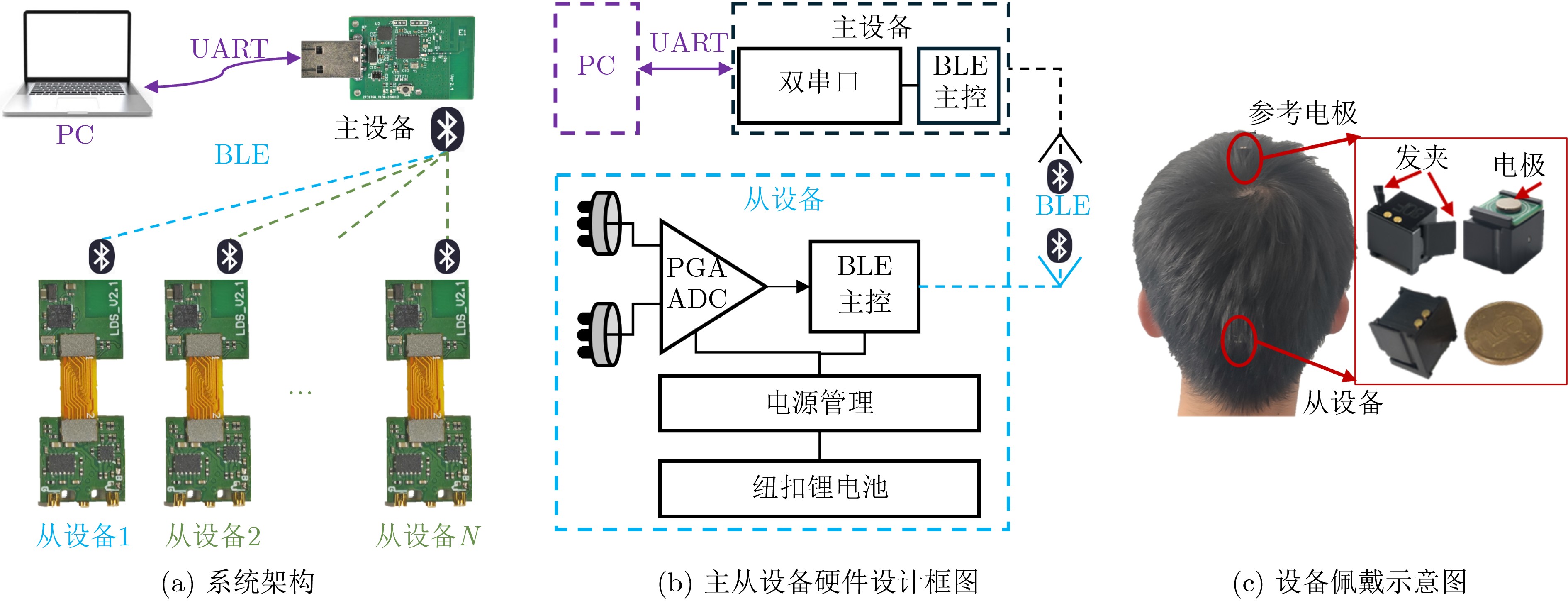
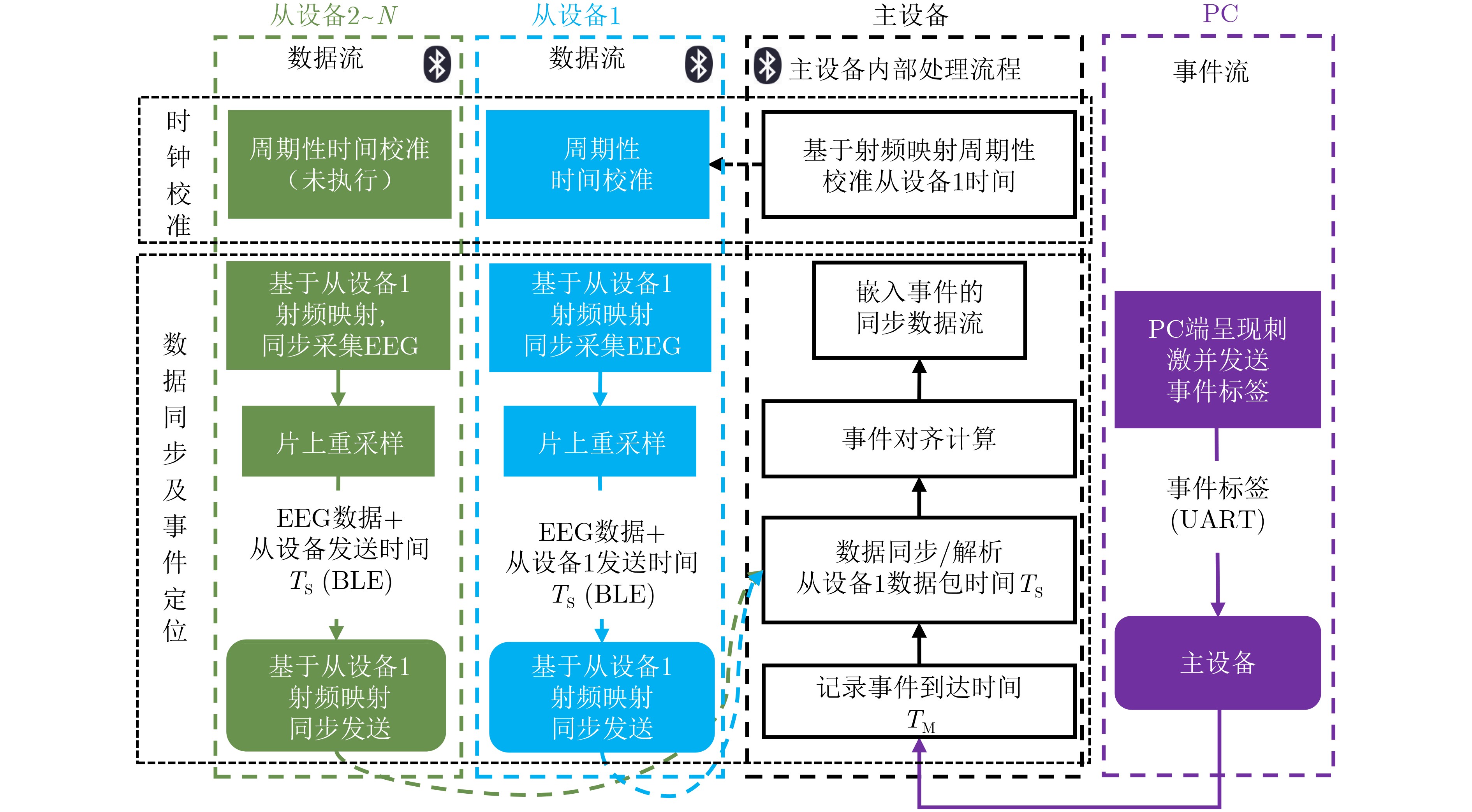
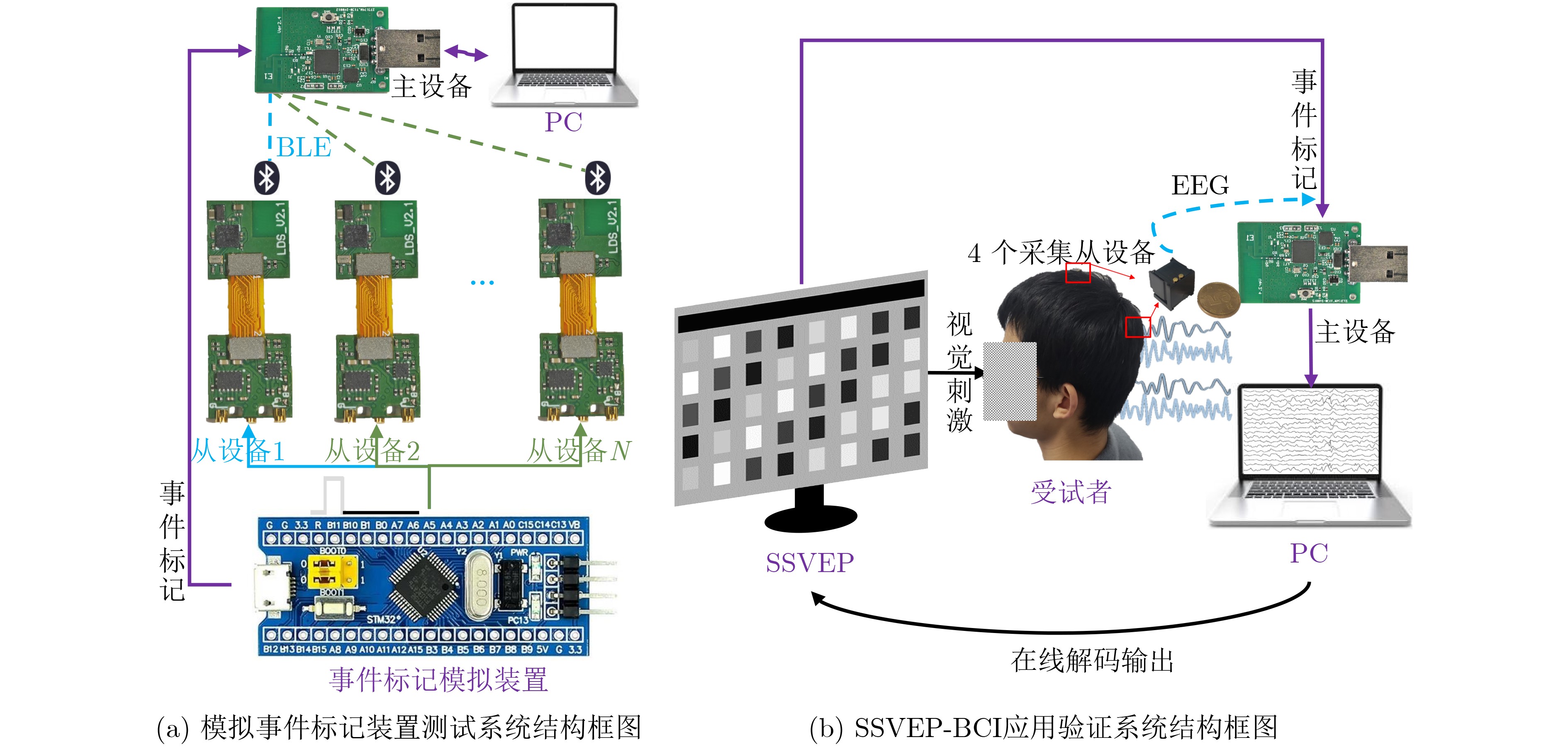
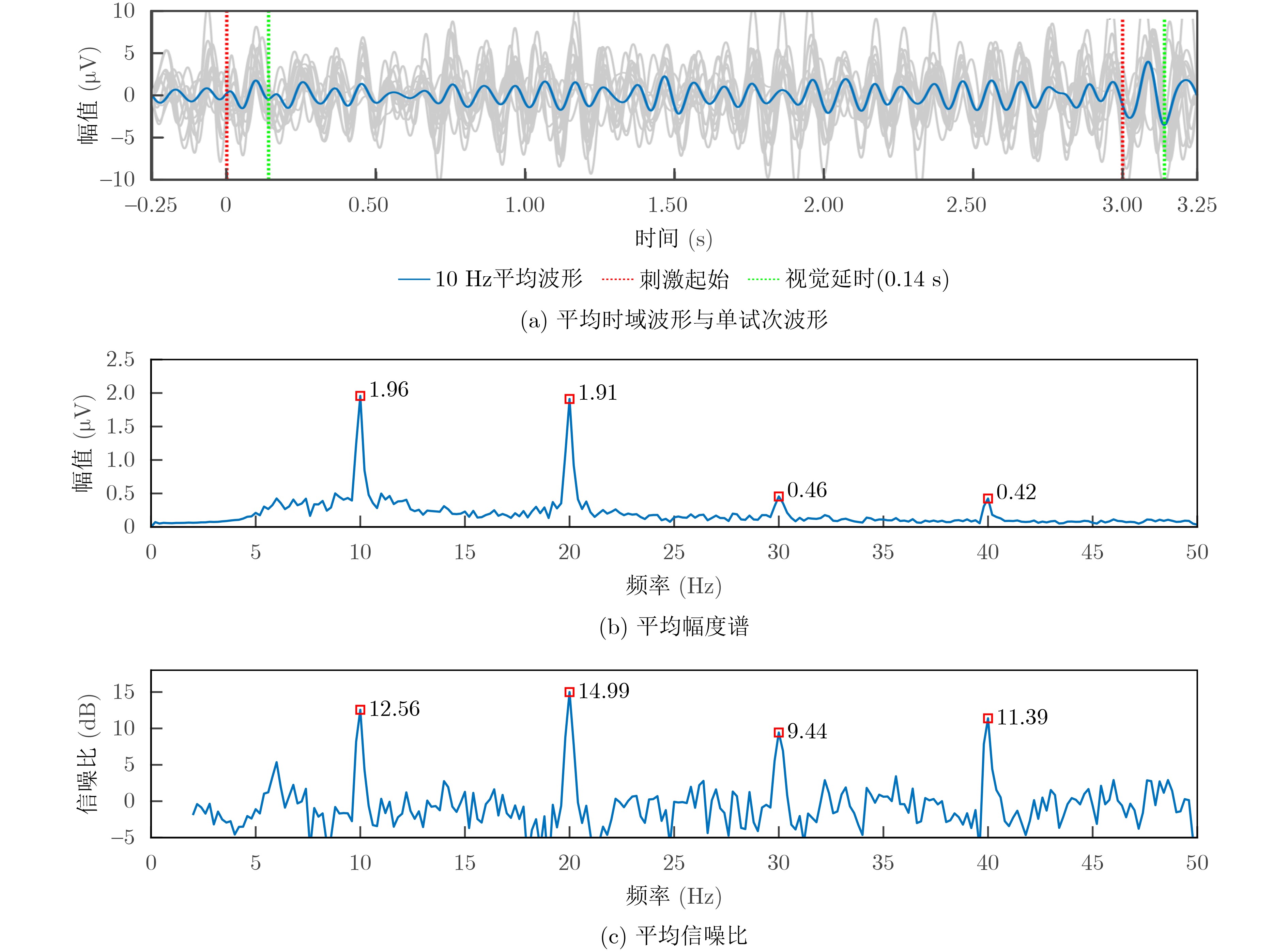
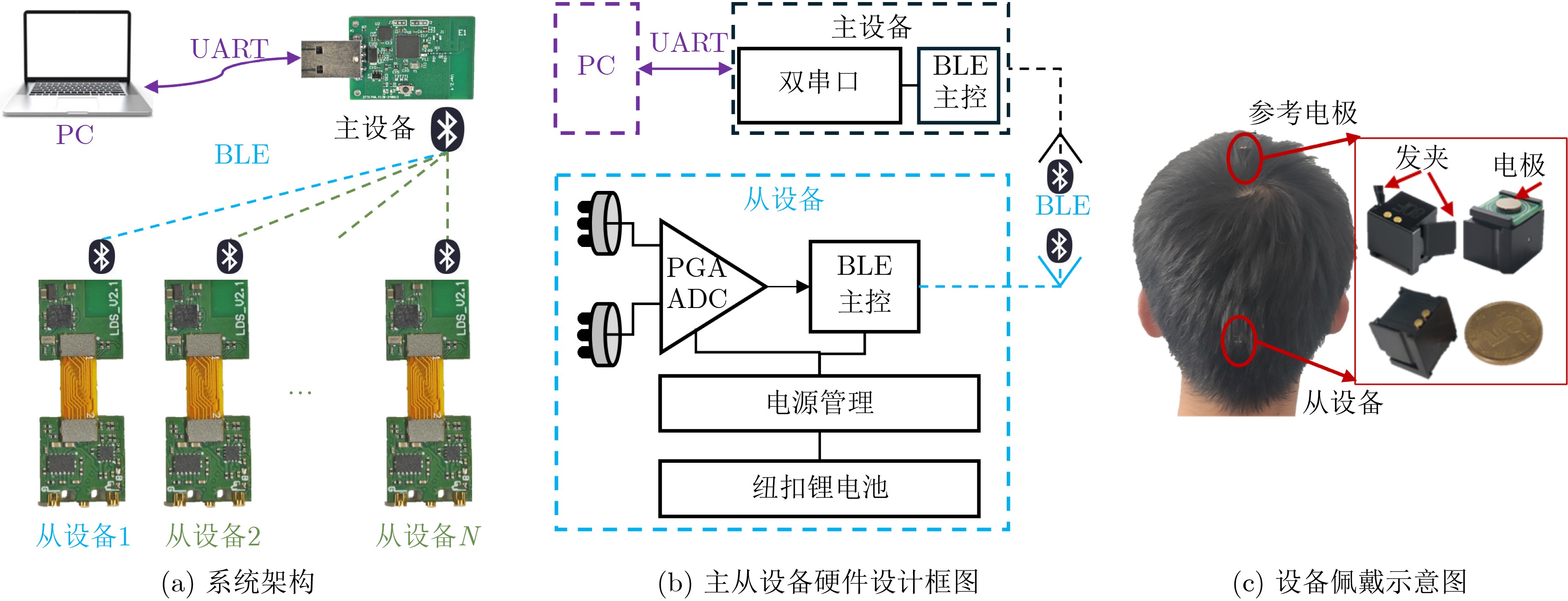
Objective The practical use of Brain-Computer Interface (BCI) systems in daily settings is limited by bulky acquisition hardware and the cables required for stable performance. Although portable systems exist, achieving compact hardware, full mobility, and high decoding performance at the same time remains difficult. This study aims to design, implement, and validate a wearable Steady-State Visual Evoked Potential (SSVEP) BCI system. The goal is to create an integrated system with ultra-miniaturized and concealable acquisition hardware and a stable cable-free architecture, and to show that this approach provides online performance comparable with laboratory systems. Methods A system-level solution was developed based on a distributed architecture to support wearability and hardware simplification. The core component is an ultra-miniaturized acquisition node. Each node functions as an independent EEG acquisition unit and integrates a Bluetooth Low Energy (BLE) system-on-chip (CC2640R2F), a high-precision analog-to-digital converter (ADS1291), a battery, and an electrode in one encapsulated module. Through an optimized 6-layer PCB design and stacked assembly, the module size was reduced to 15.12 mm × 14.08 mm × 14.31 mm (3.05 cm3) with a weight of 3.7 g. Each node uses one active electrode, and all nodes share a common reference electrode connected by a thin short wire. This structure reduces scalp connections and allows concealed placement in hair using a hair-clip form factor. Multiple nodes form a star network coordinated by a master device that manages communication with a stimulus computer. A cable-free synchronization strategy was implemented to handle timing uncertainties in distributed wireless operation. Hardware-event detection and software-based clock management were combined to align stimulus markers with multi-channel EEG data without dedicated synchronization cables. The master device coordinates this process and streams synchronized data to the computer for real-time processing. System evaluation was conducted in two phases. Foundational performance metrics included physical characteristics, electrical parameters (input-referred noise: 3.91 mVpp; common-mode rejection ratio: 132.99 dB), and synchronization accuracy under different network scales. Application-level performance was assessed using a 40-command online SSVEP spelling task with six subjects in an unshielded room with common RF interference. Four nodes were placed at Pz, PO3, PO4, and Oz. EEG epochs (0.14$ \sim $3.14 s post-stimulus) were analyzed using Canonical Correlation Analysis (CCA) and ensemble Task-Related Component Analysis (e-TRCA) to compute recognition accuracy and Information Transfer Rate (ITR). Results and Discussions The system met its design objectives. Each acquisition node achieved an ultra-compact form factor (3.05 cm3, 3.7 g) suitable for concealed wear and provided more than 5 hours of battery life at a 1 000 Hz sampling rate. Electrical performance supported high-quality SSVEP acquisition. The cable-free synchronization strategy ensured stable operation. More than 95% of event markers aligned with the EEG stream with less than 1 ms error ( Fig. 4 ), meeting SSVEP-BCI requirements. This stability supported the quality of recorded neural signals. Grand-averaged SSVEP responses showed clear and stable waveforms with precise phase alignment (Fig. 5 ). The signal-to-noise ratio at the fundamental stimulation frequency exceeded 10 dB for all 40 commands (Fig. 6 ). In the online spelling experiment, the system showed strong decoding performance. With the e-TRCA algorithm and a 3-s window, the average accuracy was (95.00 ± 2.04)%. The system reached a peak ITR of (147.24 ± 30.52) bit/min with a 0.4-s data length (Fig. 7 ). Comparison with existing SSVEP-BCI systems (Table 1 ) indicates that, despite constraints of miniaturization, cable-free use, and four channels, the system achieved accuracy comparable with several cable-dependent laboratory systems while offering improved wearability.Conclusions This work presents a wearable SSVEP-BCI system that integrates ultra-miniaturized hardware with a distributed cable-free architecture. The results show that coordinated hardware and system design can overcome tradeoffs between device size, user mobility, and decoding capability. The acquisition node (3.7 g, 3.05 cm3) supports concealable wearability, and the synchronization strategy provides reliable cable-free operation. In a realistic environment, the system produced online performance comparable with many cable-dependent setups, achieving 95.00% accuracy and a peak ITR of 147.24 bit/min in a 40-target task. Therefore, this study provides a practical system-level solution that supports progress toward wearable high-performance BCIs. -
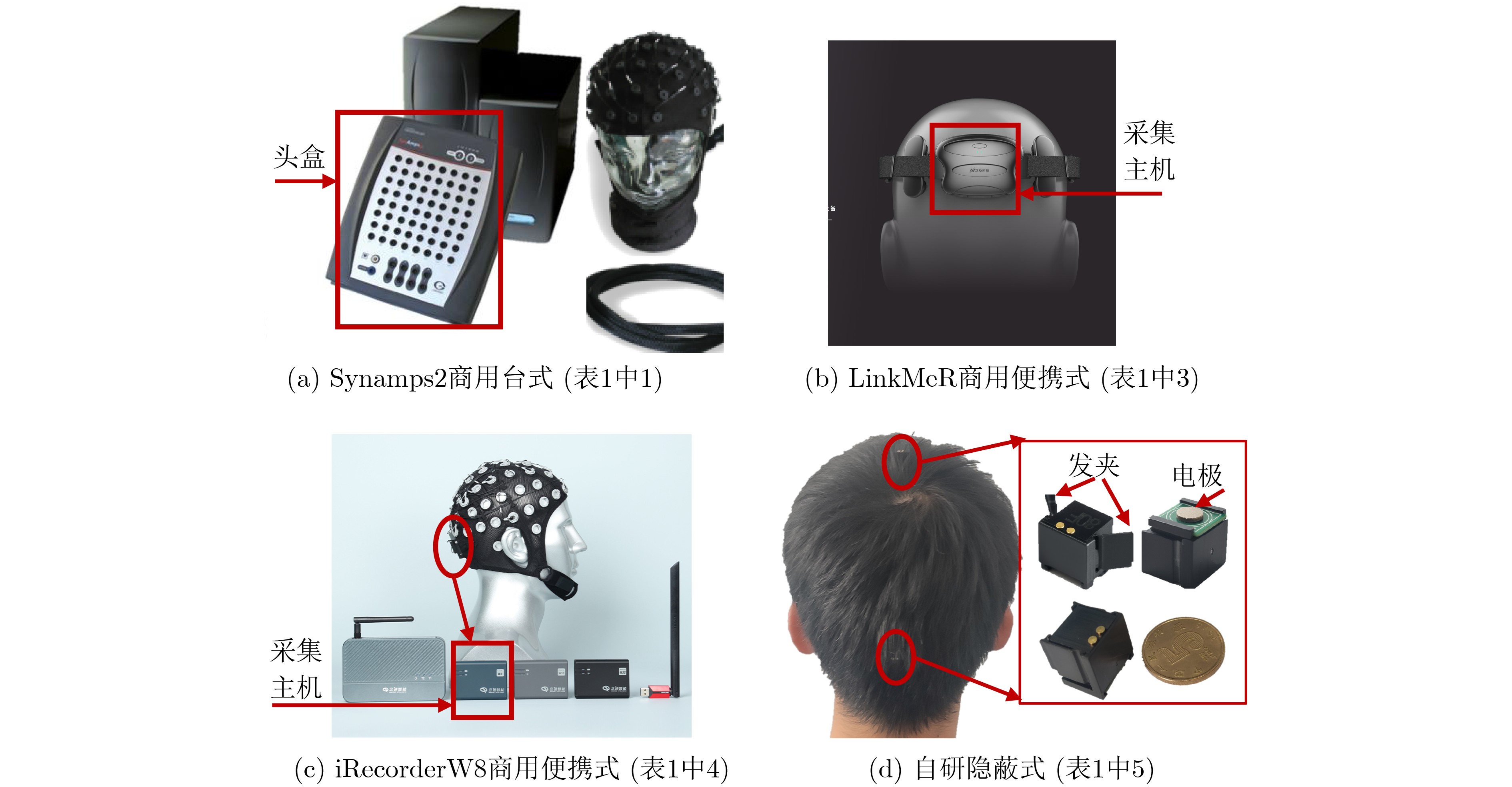
表 1 不同SSVEP-BCI系统的性能对比
序号 研究 设备 体积(cm3);重量(g) 输入噪声
(μVpp)同步方式/
精度(ms)指令数 使用电极
数量(个)算法:ITR(bit/min)(峰值时间(s));
正确率(%)(样本时长(s))1 文献[6] Synamps2
商用台式体积834;重量 1500
(仅头盒)0.5 TTL/- 40 9(64导) CCA:267(0.5 s);
91.04%(0.5 s)2 文献[18] ESPW308
商用便携式-/- - 未提及/- 40 4 OACCA:98.46(1.4 s);
91.40%(3.0 s)3 文献[19] LinkMeR
商用便携式体积-;重量75
(仅采集主机)- 未提及/<1 9 8 FBCCA:47.01(2.0 s);
82.22%(3.0 s)4 文献[20] iRecorder W8
商用便携式体积116;重量110
(仅采集主机)<1 额外硬件/≤1 48 8 FBCCA-C:126.11(1.6 s);
85.49%(3 s)5 本文 自研
隐蔽式体积12.2;重量16.3
(4个采集设备+参考电极)3.91 无线/≤1 40 4(可扩展8) eTRCA:147.24(0.4 s);
95.00%(3.0 s)注:对比设备的体积与重量数据为其采集主机参数,未包含电极、脑电帽等佩戴套件;本文数据为4个采集从设备与参考电极的总和。  下载: 导出CSV
-
[1] LIU Yingjie, ZHANG Ye, ZHONG Yifei, et al. Favoritism or bias? Cooperation and competition under different intergroup relationships: Evidence from EEG hyperscanning[J]. Cerebral Cortex, 2024, 34(4): bhae131. doi: 10.1093/cercor/bhae131. [2] CAROLLO A and ESPOSITO G. Hyperscanning literature after two decades of neuroscientific research: A scientometric review[J]. Neuroscience, 2024, 551: 345–354. doi: 10.1016/j.neuroscience.2024.05.045. [3] 张力新, 周鸿展, 王东, 等. 脑机接口中脑电图-近红外光谱联合分析进展研究[J]. 电子与信息学报, 2024, 46(3): 790–797. doi: 10.11999/JEIT230257.ZHANG Lixin, ZHOU Hongzhan, WANG Dong, et al. Research progress of electroencephalography-near-infrared spectroscopy combined analysis in brain-computer interface[J]. Journal of Electronics & Information Technology, 2024, 46(3): 790–797. doi: 10.11999/JEIT230257. [4] MIHAJLOVIC V, GRUNDLEHNER B, VULLERS R, et al. Wearable, wireless EEG solutions in daily life applications: What are we missing?[J]. IEEE Journal of Biomedical and Health Informatics, 2015, 19(1): 6–21. doi: 10.1109/JBHI.2014.2328317. [5] 肖晓琳, 辛风然, 梅杰, 等. 自适应脑机接口研究综述[J]. 电子与信息学报, 2023, 45(7): 2386–2394. doi: 10.11999/JEIT220707.XIAO Xiaolin, XIN Fengran, MEI Jie, et al. A review of adaptive brain-computer interface research[J]. Journal of Electronics & Information Technology, 2023, 45(7): 2386–2394. doi: 10.11999/JEIT220707. [6] CHEN Xiaogang, WANG Yijun, NAKANISHI M, et al. High-speed spelling with a noninvasive brain-computer interface[J]. Proceedings of the National Academy of Sciences of the United States of America, 2015, 112(44): E6058–E6067. doi: 10.1073/pnas.1508080112. [7] LARSEN O F P, TRESSELT W G, LORENZ E A, et al. A method for synchronized use of EEG and eye tracking in fully immersive VR[J]. Frontiers in Human Neuroscience, 2024, 18: 1347974. doi: 10.3389/fnhum.2024.1347974. [8] RAO Zuguang, ZHU Junbiao, LU Zilin, et al. A wearable brain-computer interface with fewer EEG channels for online motor imagery detection[J]. IEEE Transactions on Neural Systems and Rehabilitation Engineering, 2024, 32: 4143–4154. doi: 10.1109/TNSRE.2024.3502135. [9] NISO G, ROMERO E, MOREAU J T, et al. Wireless EEG: A survey of systems and studies[J]. NeuroImage, 2023, 269: 119774. doi: 10.1016/j.neuroimage.2022.119774. [10] CHUANG C H, LU Shaowei, CHAO Yiping, et al. Near-zero phase-lag hyperscanning in a novel wireless EEG system[J]. Journal of Neural Engineering, 2021, 18(6): 066010. doi: 10.1088/1741-2552/ac33e6. [11] DEPOLLI M, VERDEL N, and KOSEC G. Offline synchronization of signals from multiple wireless sensors[J]. IEEE Sensors Journal, 2025, 25(4): 7079–7094. doi: 10.1109/JSEN.2024.3519905. [12] ZENIL M S C, LÓPEZ A A, MENDOZA G R P, et al. Evaluation of communication protocols for medical device interoperability: BLE and ZigBee[C]. 2023 Mexican International Conference on Computer Science, Guanajuato, Mexico, 2023: 1–6. doi: 10.1109/enc60556.2023.10508654. [13] 蔡雨, 许敏鹏, 钟子平, 等. 一种低功耗蓝牙通信的数据同步方法及电子设备[P]. 中国, 116133108A, 2023.CAI Yu, XU Minpeng, ZHONG Ziping, et al. Data synchronization method for low-power-consumption Bluetooth communication and electronic equipment[P]. CN, 116133108A, 2023. [14] MEI Jie, LUO Ruixin, XU Lichao, et al. MetaBCI: An open-source platform for brain-computer interfaces[J]. Computers in Biology and Medicine, 2024, 168: 107806. doi: 10.1016/j.compbiomed.2023.107806. [15] MEHDIZAVAREH M H, HEMATI S, and SOLTANIAN-ZADEH H. Enhancing performance of subject-specific models via subject-independent information for SSVEP-based BCIs[J]. PLoS One, 2020, 15(1): e0226048. doi: 10.1371/journal.pone.0226048. [16] 陈强, 陈勋, 余凤琼. 基于独立向量分析的脑电信号中肌电伪迹的去除方法[J]. 电子与信息学报, 2016, 38(11): 2840–2847. doi: 10.11999/JEIT160209.CHEN Qiang, CHEN Xun, and YU Fengqiong. Removal of muscle artifact from EEG data based on independent vector analysis[J]. Journal of Electronics & Information Technology, 2016, 38(11): 2840–2847. doi: 10.11999/JEIT160209. [17] WOLPAW J R, BIRBAUMER N, MCFARLAND D J, et al. Brain-computer interfaces for communication and control[J]. Clinical Neurophysiology, 2002, 113(6): 767–791. doi: 10.1016/S1388-2457(02)00057-3. [18] 李晓东, 曹翔, 王俊霖, 等. 可穿戴式稳态视觉诱发电位脑机接口在现实场景下的性能评估[J]. 生物医学工程学杂志, 2025, 42(3): 464–472. doi: 10.7507/1001-5515.202310069.LI Xiaodong, CAO Xiang, WANG Junlin, et al. Performance evaluation of a wearable steady-state visual evoked potential based brain-computer interface in real-life scenario[J]. Journal of Biomedical Engineering, 2025, 42(3): 464–472. doi: 10.7507/1001-5515.202310069. [19] 朱艺森, 季洲宇, 李舒然, 等. 面向智慧医疗的便携式稳态视觉诱发电位脑机接口系统[J]. 生物医学工程学杂志, 2025, 42(3): 455–463. doi: 10.7507/1001-5515.202412051.ZHU Yisen, JI Zhouyu, LI Shuran, et al. A portable steady-state visual evoked potential brain-computer interface system for smart healthcare[J]. Journal of Biomedical Engineering, 2025, 42(3): 455–463. doi: 10.7507/1001-5515.202412051. [20] XIONG Bang, WAN Bo, HUANG Jiayang, et al. Joint frequency-phase-chirp modulation of high-frequency VEPs towards user-friendly and high-capacity BCIs[J]. Biomedical Signal Processing and Control, 2026, 113: 109122. doi: 10.1016/j.bspc.2025.109122. -

 下载:
下载:




图(8) / 表(1)
计量
- 文章访问数: 1672
- HTML全文浏览量: 602
- PDF下载量: 125
- 被引次数: 0
