




Battery Pack Multi-fault Diagnosis Algorithm Based on Dual-Perspective Spectral Attention Fusion
-
摘要: 随着新能源汽车的快速发展,其使用规模不断扩大,电池组故障的概率和严重程度随之增加,迫切需要高效的故障诊断方法。近年来,尽管基于深度学习的电池故障诊断方法已取得显著进展,但现有研究在内短路(ISC)、传感器噪声、传感器漂移及荷电状态(SOC)不平衡故障的多故障下的工况的覆盖性以及故障间耦合关系的挖掘方面仍存在不足。针对既有挑战,该文提出一种双视角频谱注意力融合算法。该算法由两大核心模块组成:一是双视角分词模块,负责全链路捕捉电池组的时空信息;二是频谱注意力机制,负责非平稳特征处理与长期依赖挖掘。这种特征工程与频域分析的深度结合,有效增强了模型的故障诊断鲁棒性。所提方法在联邦城市驾驶循环(FUDS)、城市测功机行驶工况(UDDS)和补充联邦测试程序(US06)3种典型工况下的诊断性能均显著优于现有主流算法,其平均精确率提升了10.98%,召回率提升了12.64%,F1分数提升了13.84%,准确率提升了13.45%。此外,该文设计并实施了系统的消融实验与鲁棒性分析,对比了各核心模块对模型整体性能的贡献机理,同时充分验证了所提方法在复杂噪声环境下的抗干扰能力与鲁棒性。该文所提双视角频谱注意力框架不仅提升了多故障诊断性能,也为复杂时空特征建模提供了新思路,为提升汽车安全性提供新的方案。Abstract:
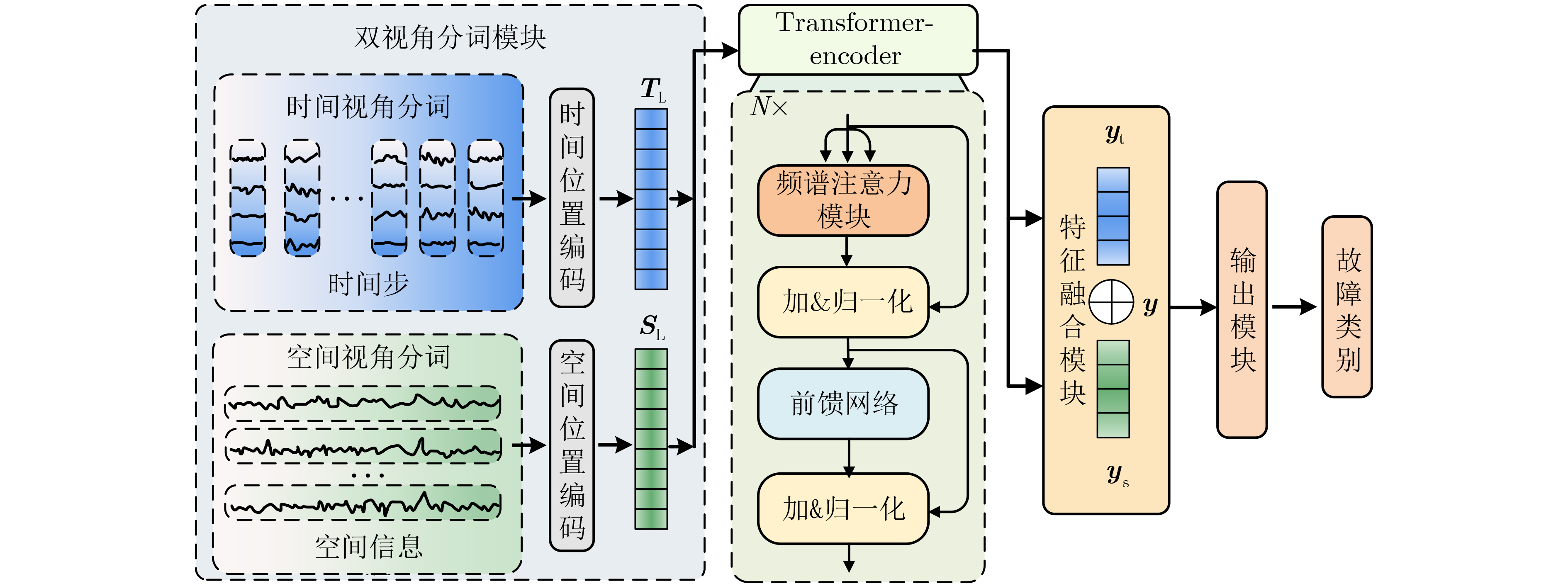
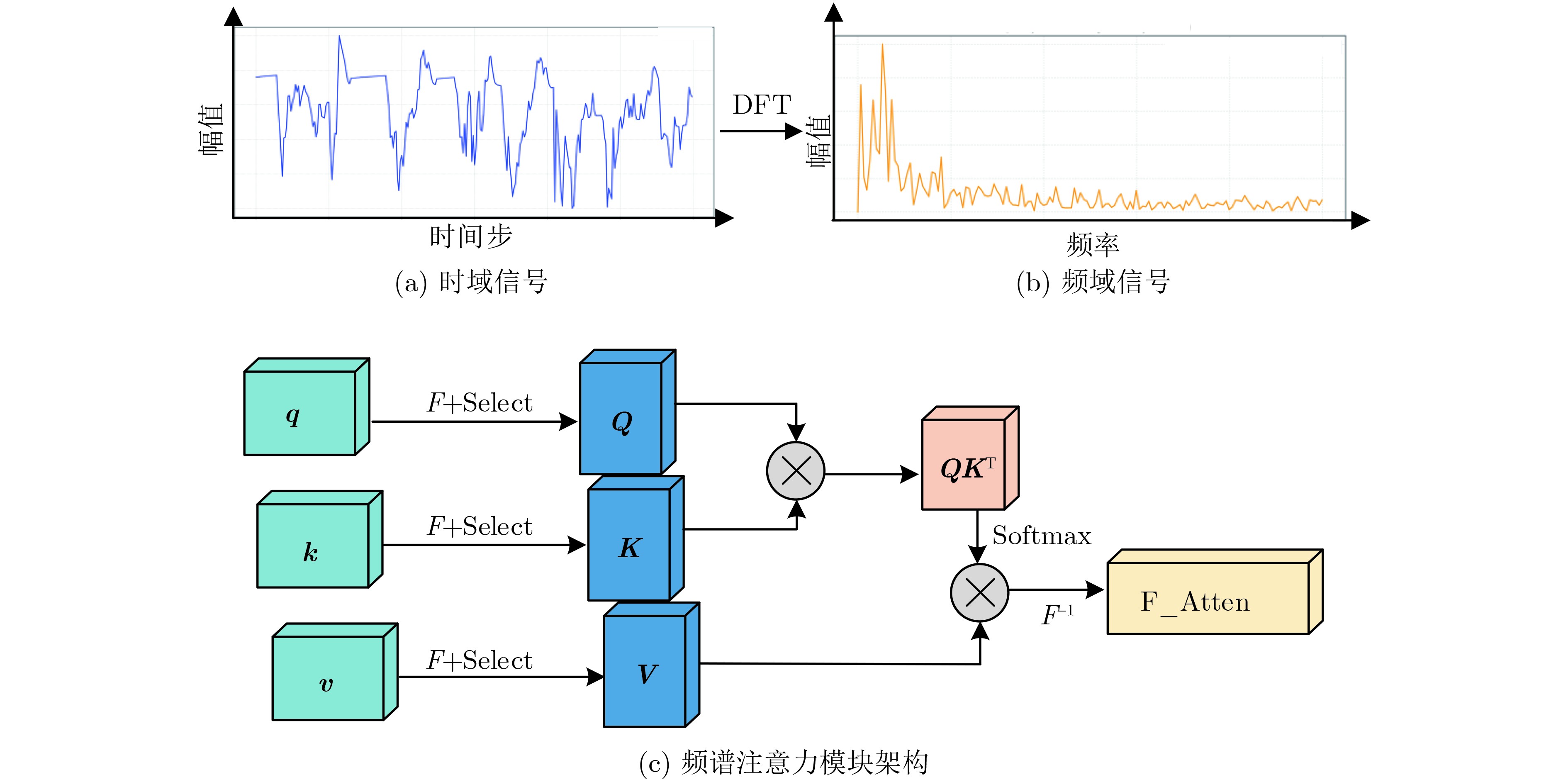
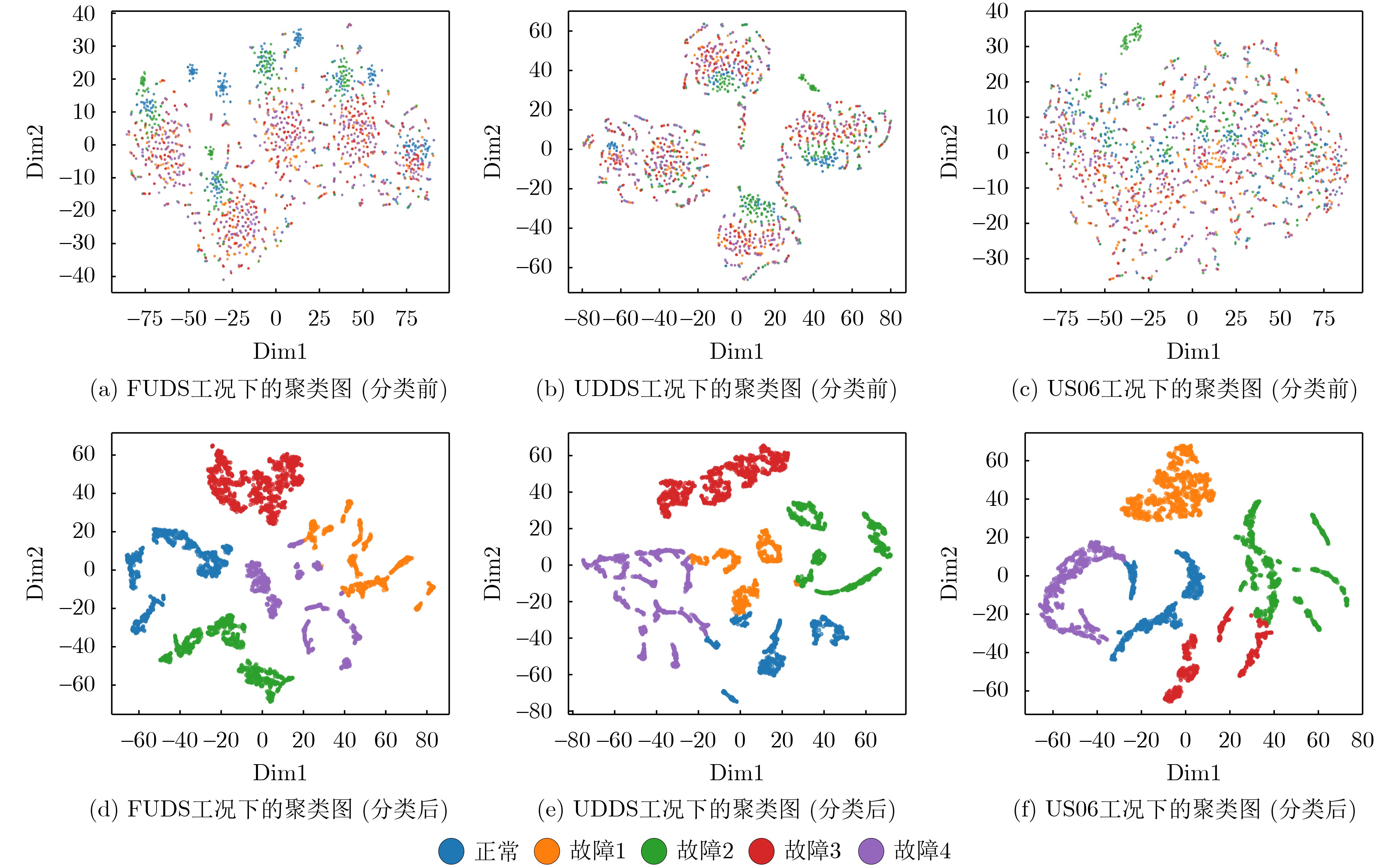
Objective With the rapid growth of electric vehicles and their widespread deployment, battery pack faults have become more frequent, creating an urgent need for efficient fault diagnosis methods. Although deep learning-based approaches have achieved notable progress, existing studies remain limited in addressing multiple fault types, such as Internal Short Circuit (ISC), sensor noise, sensor drift, and State-Of-Charge (SOC) inconsistency, and in modeling the coupling relationships among these faults. To address these limitations, a multi-fault diagnosis algorithm for battery packs based on dual-perspective spectral attention is proposed. A dual-perspective tokenization module is designed to extract spatiotemporal features from battery data, whereas a spectral attention mechanism addresses non-stationary time-series characteristics and captures long-term dependencies, thereby improving diagnostic performance. Methods To improve spatiotemporal feature extraction and fault diagnosis performance, a dual-perspective spectral attention fusion algorithm for battery pack multi-fault diagnosis is proposed. The overall architecture consists of four core modules ( Fig. 3 ): a dual-perspective tokenization module, a spectral attention module, a feature fusion module, and an output module. The dual-perspective tokenization module applies positional encoding to jointly model temporal and spatial dimensions, enabling comprehensive spatiotemporal feature representation. When combined with the spectral attention mechanism, the capability of the model to handle non-stationary characteristics is strengthened, leading to improved diagnostic performance. In addition, to address the lack of comprehensive publicly available datasets for battery pack fault diagnosis, a new dataset is constructed, covering ISC, sensor noise, sensor drift, and SOC inconsistency faults. The dataset includes three operating conditions, FUDS, UDDS, and US06, which alleviates data scarcity in this research field.Results and Discussions Experimental results indicate that the proposed method improves average precision, recall, F1 score, and accuracy by 10.98%, 12.64%, 13.84%, and 13.45%, respectively, compared with existing optimal fault diagnosis methods. Comparison experiments under different operating conditions ( Table 6 ) support this conclusion. Conventional convolutional neural network methods perform well in local feature extraction; however, fixed-size convolution kernels are not well suited to time features with varying frequencies, which limits long-term temporal dependency modeling and global feature capture. Recurrent neural network-based methods show reduced computational efficiency when large-scale datasets are processed. Transformer-based models face constraints in spatial feature extraction and in representing temporal variations. By contrast, the proposed algorithm addresses these limitations through an integrated architectural design. Ablation experiments demonstrate the contribution of each module to overall performance (Table 7 ), and the complete framework improves average F1 score and accuracy by 8.86% and 9.31%, respectively, compared with ablation variants. Robustness analysis under simulated noise conditions (Table 8 ) shows that the proposed method achieves accuracy improvements ranging from 49.95% to 124.34% over baseline methods at noise levels from –2 dB to –8 dB, indicating strong noise resistance.Conclusions A multi-fault diagnosis algorithm for battery packs is presented that integrates dual-perspective tokenization and spectral attention to combine spatiotemporal and spectral information. The dual-perspective tokenization module performs tokenization and positional encoding along temporal and spatial axes, which improves spatiotemporal representation. The spectral attention mechanism strengthens modeling of non-stationary signals and long-term dependencies. Experiments under FUDS, UDDS, and US06 driving cycles show that the proposed method outperforms existing multi-fault diagnosis approaches, with average gains of 13.84% in F1 score and 13.45% in accuracy. Ablation studies confirm that both modules contribute substantially and that their combination enables effective handling of complex time-series features. Under high-noise conditions (–2 dB, –4 dB, –6 dB, and –8 dB), the method also shows improved robustness, with accuracy gains of 49.95%, 90.39%, 112.01%, and 124.34%, respectively, compared with baseline methods. Several limitations remain. First, the data are mainly derived from laboratory simulations, and further validation under real-world operating conditions is required. Second, the effect of fault severity on battery management system hierarchical decision making has not been fully addressed, and future work will focus on establishing a fault severity grading strategy. Third, physical interpretability requires further improvement, and subsequent studies will explore the integration of equivalent circuit models or electrochemical mechanism models to balance diagnostic accuracy and interpretability. -
Key words:
- Multi-fault diagnosis /
- Lithium-ion battery pack /
- Spectral attention
-
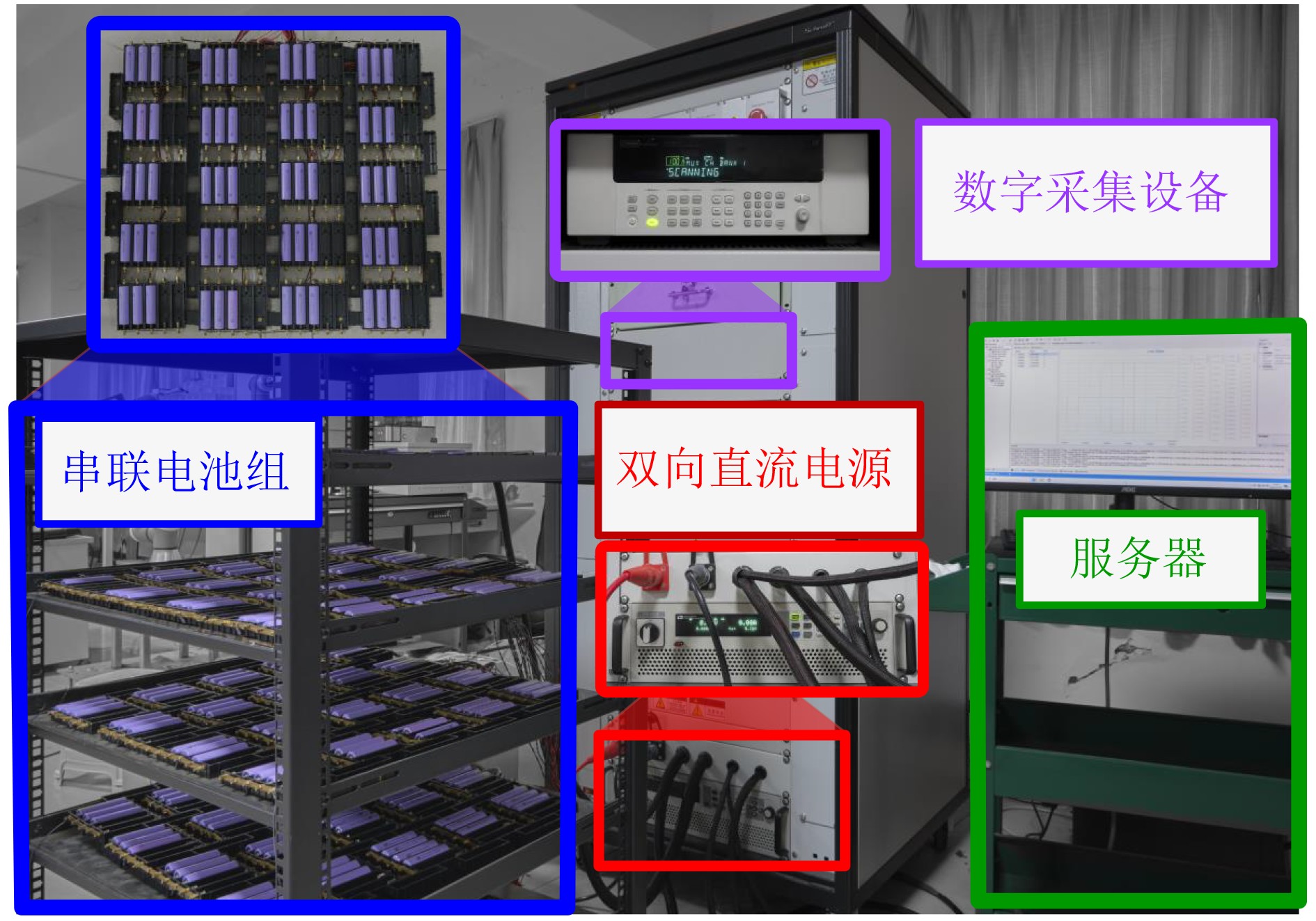
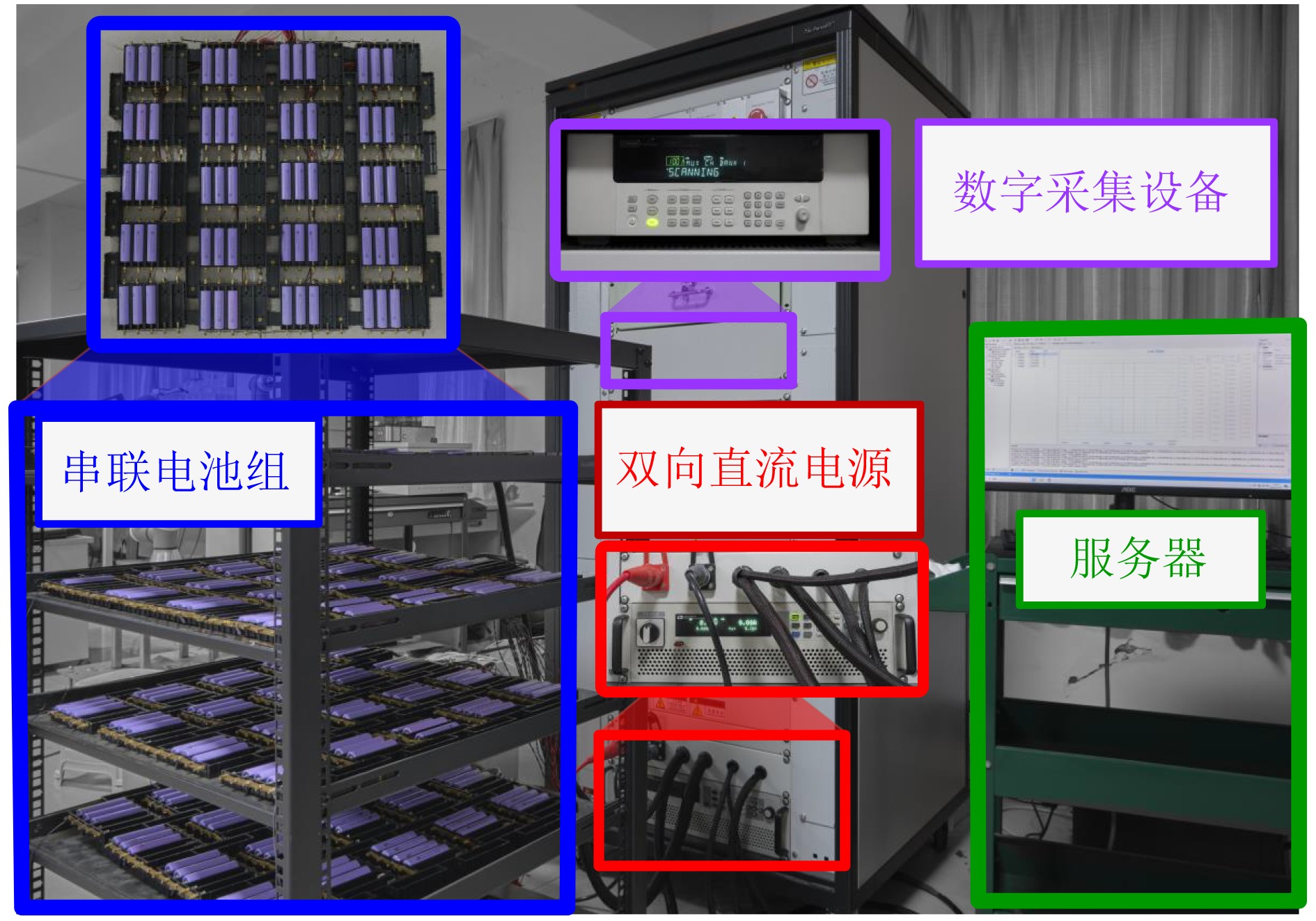
表 1 实验设备参数
设备名称 类型 参数 高精度数字采集设备 KEYSIGHT 34980A 采样频率:10 Hz;
测量精度:0.1%可控双向直流电源 ITECH IT6012-500-80 模式:恒压模式
初始电压:4.2 V串联电池组 ITR18650-2600P 标称容量:2 000 mAh  下载: 导出CSV
表 3 FUDS, UDDS, US06工况下训练和测试数据
名称 数据量 训练集 测试集 正常 13707 × 32000 × 3 ISC故障 13707 × 32000 × 3 传感器噪声故障 13707 × 32000 × 3 传感器漂移故障 13707 × 32000 × 3 SOC不平衡故障 13707 × 32000 × 3 总计 68535 × 310000 × 3
下载: 导出CSV
1 双视角频谱注意力融合算法
输入:电池组归一化时序数据 Xenc (BatchSize, SeqLen,
NumCells)输出: 预测类别概率 Output 1: TL = DataEmbedding(Xenc) 2: yt = FreqEncoder(TL) 3: Xperm = Permute(Xenc [0, 2, 1]) 4: SL = PatchEmbedding(Xperm) 5: ys = FreqEncoder (SL) 6: y = Concatenate(yt, ys) 7: Output = Projection(y) 8: return Output
下载: 导出CSV
表 4 模型超参数设置
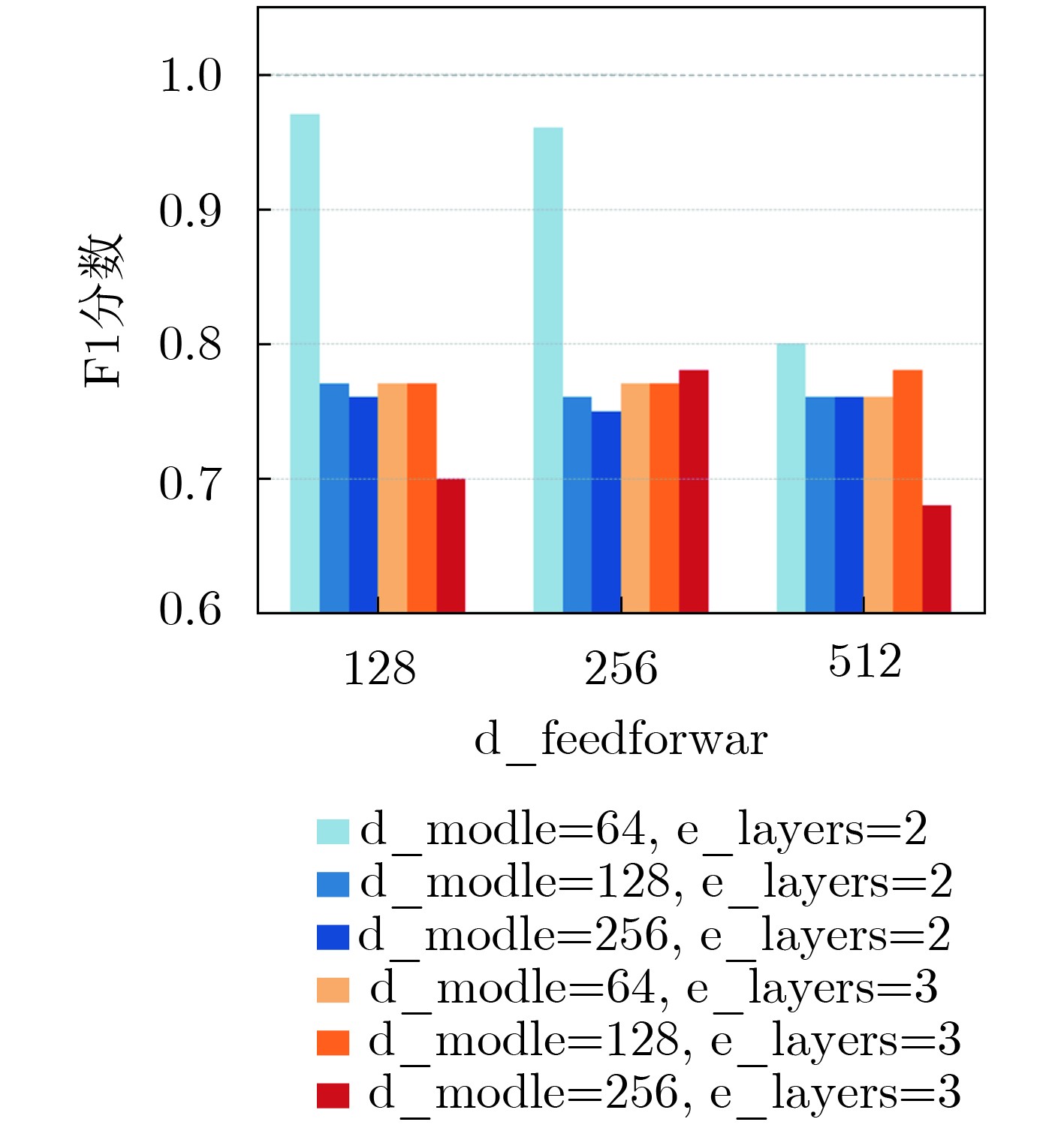
超参数 值 滑动窗长度 300 Batch_size大小 64 Epoch大小 20 d_model 64 d_feedforward 128 e_layers 2 学习率 0.001 优化器 Adam
下载: 导出CSV
表 5 对比方法模型超参数设置
模型 超参数设置 文献[21] Batch_size: 128;epochs: 20;滑动窗长度:300;BatchNorm: True;Number: 1 000 ;Normal: True文献[25] 网络深度10层特征提取 (5×Conv, 5×Pool) + 2层分类(FC, Softmax);卷积核大小64, 32, 32, 16, 16(按顺序);
池化核数量16, 64, 128, 128, 128(按顺序);池化策略 第1次: 16 (步幅),后续4次: 2(步幅)文献[26] 使用野马优化器寻找最优参数 文献[27] Batch_size: 16;Epoch: 50;学习率:0.001;权重衰减: 0.000 1
下载: 导出CSV
表 6 不同工况下的对比实验(%)
模型 FUDS UDDS US06 精确率 召回率 F1分数 准确率 精确率 召回率 F1分数 准确率 精确率 召回率 F1分数 准确率 文献[21] 92.672 92.422 91.672 91.412 91.223 90.133 90.062 90.123 93.412 93.482 92.862 92.452 文献[25] 79.63 78.88 78.40 78.87 79.53 79.90 77.37 77.75 75.42 75.05 75.18 75.03 文献[26] 90.083 84.89 83.86 84.89 89.76 85.17 84.07 85.05 89.01 83.44 82.10 83.44 文献[27] 89.77 90.983 89.423 88.713 93.162 90.402 89.613 90.402 90.693 93.103 91.503 90.323 本文模型 97.471 97.461 97.441 97.451 98.151 98.081 98.101 98.071 95.561 95.311 95.061 94.891 注:上标“1,2,3”分别代表第1、第2和第3。
下载: 导出CSV
表 7 不同工况下的消融实验(%)
模型 FUDS UDDS US06 精确率 召回率 F1分数 准确率 精确率 召回率 F1分数 准确率 精确率 召回率 F1分数 准确率 时间+频谱注意力 91.973 90.183 89.883 89.993 91.223 90.133 90.063 90.123 92.013 90.79 90.753 90.793 空间+频谱注意力 81.69 86.77 82.39 81.05 83.41 86.10 82.56 82.07 85.98 91.573 88.23 85.79 时间+空间视角 92.792 92.352 91.702 91.492 94.792 93.902 93.692 93.672 94.552 94.292 94.422 94.292 本文模型 97.471 97.461 97.441 97.451 98.151 98.081 98.101 98.071 95.561 95.311 95.431 94.891 注:上标“1,2,3”分别代表第1、第2和第3。
下载: 导出CSV
表 8 噪声鲁棒性实验(%)
模型 SNR FUDS UDDS US06 –2 dB –4 dB –6 dB –8 dB –2 dB –4 dB –6 dB –8 dB –2 dB –4 dB –6 dB –8 dB 文献[21] 80.602 74.112 60.222 52.432 79.732 75.502 64.752 48.922 78.662 68.892 57.142 48.322 文献[25] 43.31 28.77 20.85 19.56 41.11 27.33 22.02 21.33 42.20 31.11 22.92 20.97 文献[26] 55.26 37.09 26.39 19.97 58.97 40.41 28.74 19.62 59.74 38.82 27.94 18.05 文献[27] 57.163 43.583 43.543 24.763 59.833 46.983 46.243 23.713 62.763 42.233 40.963 25.403 本文模型 85.021 81.011 71.051 55.571 81.861 74.011 72.161 58.911 89.411 81.191 66.481 52.341 注:上标“1,2,3”分别代表第1、第2和第3。
下载: 导出CSV
-
[1] SUN Zhenyu, WANG Zhenpo, LIU Peng, et al. Relative entropy based lithium-ion battery pack short circuit detection for electric vehicle[C]. The 2020 IEEE Energy Conversion Congress and Exposition (ECCE), Detroit, USA, 2020: 5061–5067. doi: 10.1109/ECCE44975.2020.9235755. [2] ZHEN Chanzwen, CHEN Ziqiang, and HUANZ D. A novel sensor fault diagnosis method for lithium-ion battery system using hybrid system modeling[C]. The Condition Monitoring and Diagnosis (CMD), Perth, Australia, 2018: 1–5. doi: 10.1109/CMD.2018.8535711. [3] YANG Ruixin, XIONG Rui, HE Hongwen, et al. A fractional-order model-based battery external short circuit fault diagnosis approach for all-climate electric vehicles application[J]. Journal of Cleaner Production, 2018, 187: 950–959. doi: 10.1016/j.jclepro.2018.03.259. [4] YANG Ruixin, XIONG Rui, and SHEN Weixiang. Experimental study on external short circuit and overcharge of lithium-ion battery packs for electric vehicles[C]. The 4th International Conference on Green Energy and Applications (ICGEA), Singapore, Singapore, 2020: 1–6. doi: 10.1109/ICGEA49367.2020.241506. [5] SCHMID M, KNEIDINGER H G, and ENDISCH C. Data-driven fault diagnosis in battery systems through cross-cell monitoring[J]. IEEE Sensors Journal, 2021, 21(2): 1829–1837. doi: 10.1109/JSEN.2020.3017812. [6] LIU Hanxiao, LI Liwei, DUAN Bin, et al. Multi-fault detection and diagnosis method for battery packs based on statistical analysis[J]. Energy, 2024, 293: 130465. doi: 10.1016/j.energy.2024.130465. [7] ZHU Xiaoqing, WANG H, WANG Xue, et al. Internal short circuit and failure mechanisms of lithium-ion pouch cells under mechanical indentation abuse conditions: An experimental study[J]. Journal of Power Sources, 2020, 455: 227939. doi: 10.1016/j.jpowsour.2020.227939. [8] ZHENG Yuejiu, LU Yifan, GAO Wenkai, et al. Micro-short-circuit cell fault identification method for lithium-ion battery packs based on mutual information[J]. IEEE Transactions on Industrial Electronics, 2021, 68(5): 4373–4381. doi: 10.1109/TIE.2020.2984441. [9] LI Fang, MIN Yongjun, ZHANG Yong, et al. Towards general and efficient fault diagnosis: A novel framework for multi-fault cross-domain diagnosis of lithium-ion batteries in real-world scenarios[J]. Energy, 2025, 334: 137825. doi: 10.1016/j.energy.2025.137825. [10] HU Xiaosong, ZHANG Kai, LIU Kailong, et al. Advanced fault diagnosis for lithium-ion battery systems: A review of fault mechanisms, fault features, and diagnosis procedures[J]. IEEE Industrial Electronics Magazine, 2020, 14(3): 65–91. doi: 10.1109/MIE.2020.2964814. [11] MACHLEV R. EV battery fault diagnostics and prognostics using deep learning: Review, challenges & opportunities[J]. Journal of Energy Storage, 2024, 83: 110614. doi: 10.1016/j.est.2024.110614. [12] 张照娓, 郭天滋, 高明裕, 等. 电动汽车锂离子电池荷电状态估算方法研究综述[J]. 电子与信息学报, 2021, 43(7): 1803–1815. doi: 10.11999/JEIT200487.ZHANG Zhaowei, GUO Tianzi, GAO Mingyu, et al. Review of SoC estimation methods for electric vehicle Li-ion batteries[J]. Journal of Electronics & Information Technology, 2021, 43(7): 1803–1815. doi: 10.11999/JEIT200487. [13] ZHAO Yiwen, DENG Junjun, LIU Peng, et al. Enhancing battery durable operation: Multi-fault diagnosis and safety evaluation in series-connected lithium-ion battery systems[J]. Applied Energy, 2025, 377: 124632. doi: 10.1016/j.apenergy.2024.124632. [14] NAHA A, KHANDELWAL A, HARIHARAN K S, et al. On-board short-circuit detection of Li-ion batteries undergoing fixed charging profile as in smartphone applications[J]. IEEE Transactions on Industrial Electronics, 2019, 66(11): 8782–8791. doi: 10.1109/TIE.2018.2889623. [15] SEO M, GOH T, PARK M, et al. Detection method for soft internal short circuit in lithium-ion battery pack by extracting open circuit voltage of faulted cell[J]. Energies, 2018, 11(7): 1669. doi: 10.3390/en11071669. [16] XIONG Rui, SUN Wanzhou, YU Quanqing, et al. Research progress, challenges and prospects of fault diagnosis on battery system of electric vehicles[J]. Applied Energy, 2020, 279: 115855. doi: 10.1016/j.apenergy.2020.115855. [17] 高明裕, 蔡林辉, 孙长城, 等. 一种基于斯皮尔曼秩相关结合神经网络的电池组内部短路故障检测算法[J]. 电子与信息学报, 2022, 44(11): 3734–3747. doi: 10.11999/JEIT210975.GAO Mingyu, CAI Linhui, SUN Changcheng, et al. An internal short circuit fault detecting of battery pack based on spearman rank correlation combined with neural network[J]. Journal of Electronics & Information Technology, 2022, 44(11): 3734–3747. doi: 10.11999/JEIT210975. [18] LAO Zhenpeng, HE Deqiang, JIN Zhenzhen, et al. Few-shot fault diagnosis of turnout switch machine based on semi-supervised weighted prototypical network[J]. Knowledge-Based Systems, 2023, 274: 110634. doi: 10.1016/j.knosys.2023.110634. [19] JI Xiaoyue, CHEN Yi, WANG Junfan, et al. Time-frequency hybrid neuromorphic computing architecture development for battery state-of-health estimation[J]. IEEE Internet of Things Journal, 2024, 11(24): 39941–39957. doi: 10.1109/JIOT.2024.3448350. [20] YU Quanqing, LI Jianming, CHEN Zeyu, et al. Multi-fault diagnosis of lithium-ion battery systems based on correlation coefficient and similarity approaches[J]. Frontiers in Energy Research, 2022, 10: 891637. doi: 10.3389/fenrg.2022.891637. [21] CAI Linhui, WANG Han, DONG Zhekang, et al. A multi-fault diagnostic method based on category-reinforced domain adaptation network for series-connected battery packs[J]. Journal of Energy Storage, 2023, 60: 106690. doi: 10.1016/j.est.2023.106690. [22] SHEN Xiaowei, LUN Shuxian, LI Ming. Multi-fault diagnosis of electric vehicle power battery based on double fault window location and fast classification[J]. Electronics, 2024, 13(3): 612. doi: 10.3390/electronics13030612. [23] ZHOU Juan, WU Zonghuan, ZHANG Shun, et al. A fault diagnosis method for power battery based on multiple model fusion[J]. Electronics, 2023, 12(12): 2724. doi: 10.3390/electronics12122724. [24] ZHAO Hongyu, ZHANG Chengzhong, XU Liang, et al. A deep neural network for multi-fault diagnosis of battery packs based on an incremental voltage measurement topology[J]. Energy, 2025, 316: 134590. doi: 10.1016/j.energy.2025.134590. [25] WANG Xin, MAO Dongxing, and LI Xiaodong. Bearing fault diagnosis based on vibro-acoustic data fusion and 1D-CNN network[J]. Measurement, 2021, 173: 108518. doi: 10.1016/j.measurement.2020.108518. [26] YANG Guanghua, LIU Yuexiao, LI Na, et al. Intelligent fault diagnosis method of capacitor voltage transformer based on recurrent neural network[C]. The 4th International Conference on Computer Engineering and Application (ICCEA), Hangzhou, China, 2023: 412–416. doi: 10.1109/ICCEA58433.2023.10135307. [27] LIU Xuyang, CAI Hongchang, ZHOU Zihan, et al. Enhancing multi-type fault diagnosis in lithium-ion battery systems: Vision transformer-based transfer learning approach[J]. Journal of Power Sources, 2024, 624: 235610. doi: 10.1016/j.jpowsour.2024.235610. [28] YUAN Haitao, LI Changlong, ZHOU Mingyang, et al. Multi-fault diagnosis for lithium-ion batteries under diverse operating conditions based on multi-source domain generalization[J]. Energy, 2025, 335: 138230. doi: 10.1016/j.energy.2025.138230. [29] MA Mina, LI Xiaoyu, GAO Wei, et al. Multi-fault diagnosis for series-connected lithium-ion battery pack with reconstruction-based contribution based on parallel PCA-KPCA[J]. Applied Energy, 2022, 324: 119678. doi: 10.1016/j.apenergy.2022.119678. [30] DONG Zhekang, GU Shenyu, ZHOU Shiqi, et al. Periodic segmentation transformer-based internal short circuit detection method for battery packs[J]. IEEE Transactions on Transportation Electrification, 2025, 11(1): 3655–3666. doi: 10.1109/TTE.2024.3444453. [31] WANG Jiayang, ZHANG Xinhao, HAI Yifeng, et al. MDGN: Circuit design of memristor-based denoising autoencoder and gated recurrent unit network for lithium-ion battery state of charge estimation[J]. IET Renewable Power Generation, 2024, 18(3): 372–383. doi: 10.1049/rpg2.12809. [32] KANG Yongzhe, DUAN Bin, ZHOU Zhongkai, et al. A multi-fault diagnostic method based on an interleaved voltage measurement topology for series connected battery packs[J]. Journal of Power Sources, 2019, 417: 132–144. doi: 10.1016/j.jpowsour.2019.01.058. [33] GRABOW J, KLINK J, ORAZOV N, et al. Triggering and characterisation of realistic internal short circuits in lithium-ion pouch cells—a new approach using precise needle penetration[J]. Batteries, 2023, 9(10): 496. doi: 10.3390/batteries9100496. [34] 毛琳, 张海新, 何志伟, 等. 一种电池相平面结合Conformer-BiGRU网络的电池内短路故障诊断方法[J]. 电子与信息学报, 2025, 47(10): 4031–4043. doi: 10.11999/JEIT250313.MAO Lin, ZHANG Haixin, HE Zhiwei, et al. A battery internal-short-circuit fault diagnosis method combining battery phase plane with Conformer-BiGRU network[J]. Journal of Electronics & Information Technology, 2025, 47(10): 4031–4043. doi: 10.11999/JEIT250313. [35] DONG Zhekang, YANG Mengjie, WANG Junfan, et al. PFFN: A parallel feature fusion network for remaining useful life early prediction of lithium-ion battery[J]. IEEE Transactions on Transportation Electrification, 2025, 11(1): 2696–2706. doi: 10.1109/TTE.2024.3427334. -

 下载:
下载:



图(7) / 表(9)
计量
- 文章访问数: 1184
- HTML全文浏览量: 727
- PDF下载量: 86
- 被引次数: 0
