




Research on Recognition Method in Mixture Scenarios of Ships and Floating Targets
-
摘要: 在雷达海上探测场景中,当舰船与漂浮目标处于同一距离单元中,形成信号混叠的混合体目标时,如何实现混合体中单个目标的准确识别,当前仍未得到有效解决。针对该问题,该文提出一种基于模态重构与时频域差异特征的海上目标识别方法。不同于将混合体目标整体处理的传统思路,该方法采用变分模态分解(VMD)有效分离混合体中的多普勒通道,针对虚假模态和目标信息碎片化表达问题,提出基于能量约束的模态滤波方法和基于频谱一致性的模态聚类方法,实现多目标场景下回波模态重构处理。在此基础上,分别从图像层面和数据层面出发,提取微多普勒频率全变差(VF)和主多普勒通道等级熵(REDDC ) 两个识别特征,对目标的微多普勒和混乱度差异进行量化表征与联合识别。结果表明,所提算法在2~4级海况条件下对混合体中各目标的平均识别准确率达97.32%,整体性能优于已有方法。Abstract:
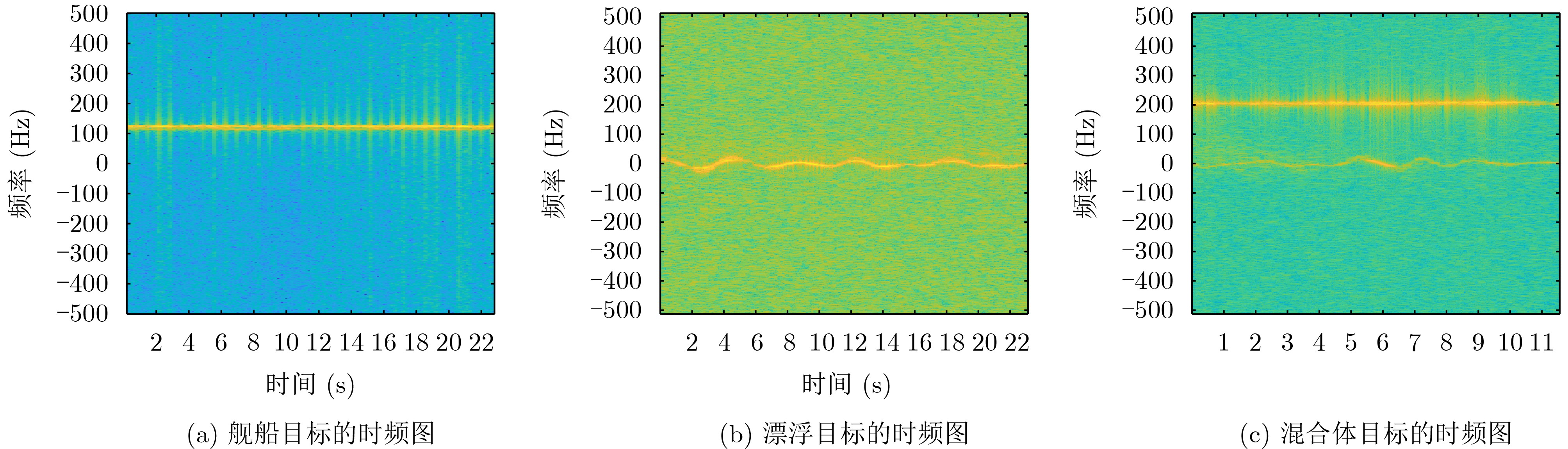
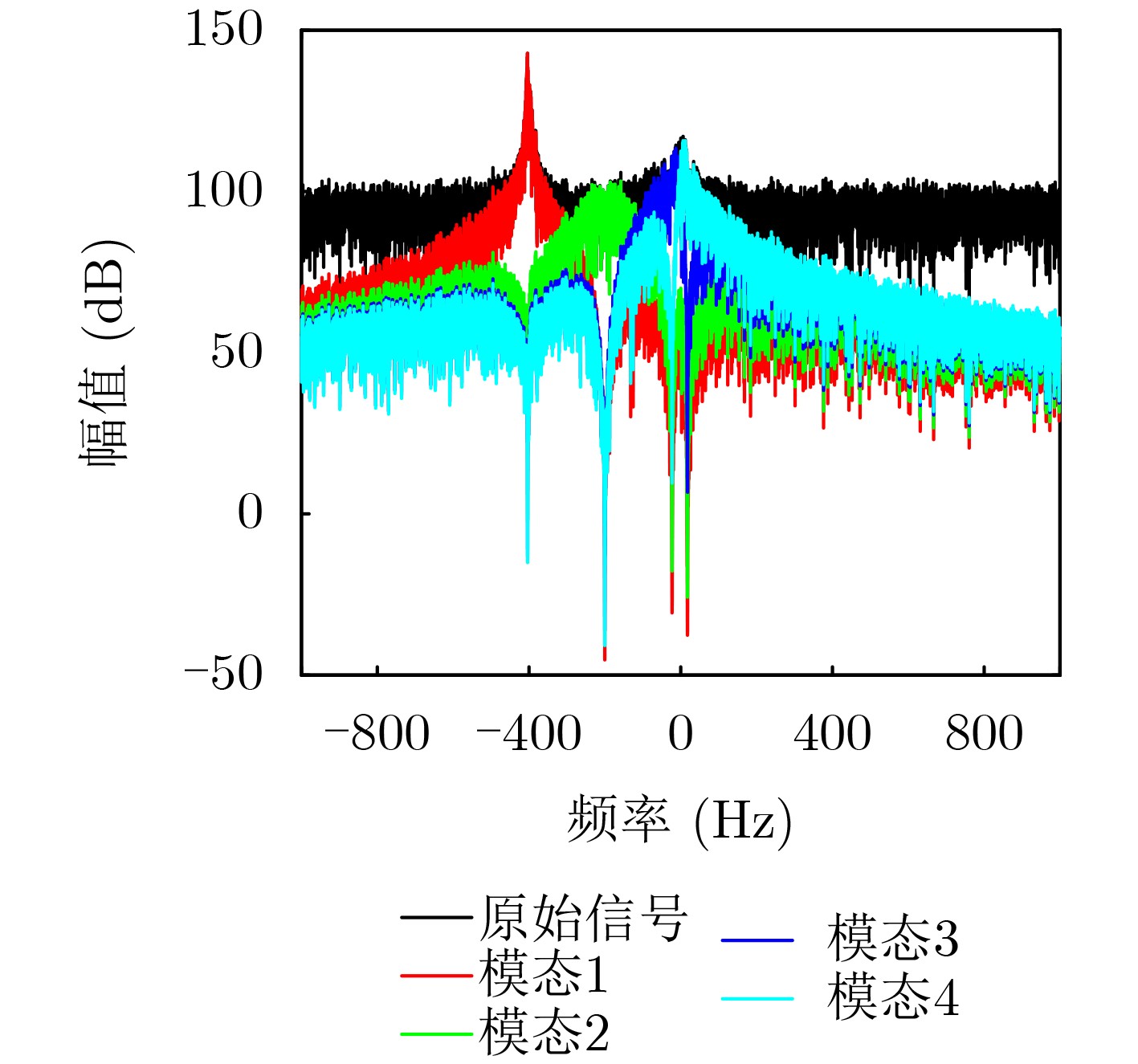
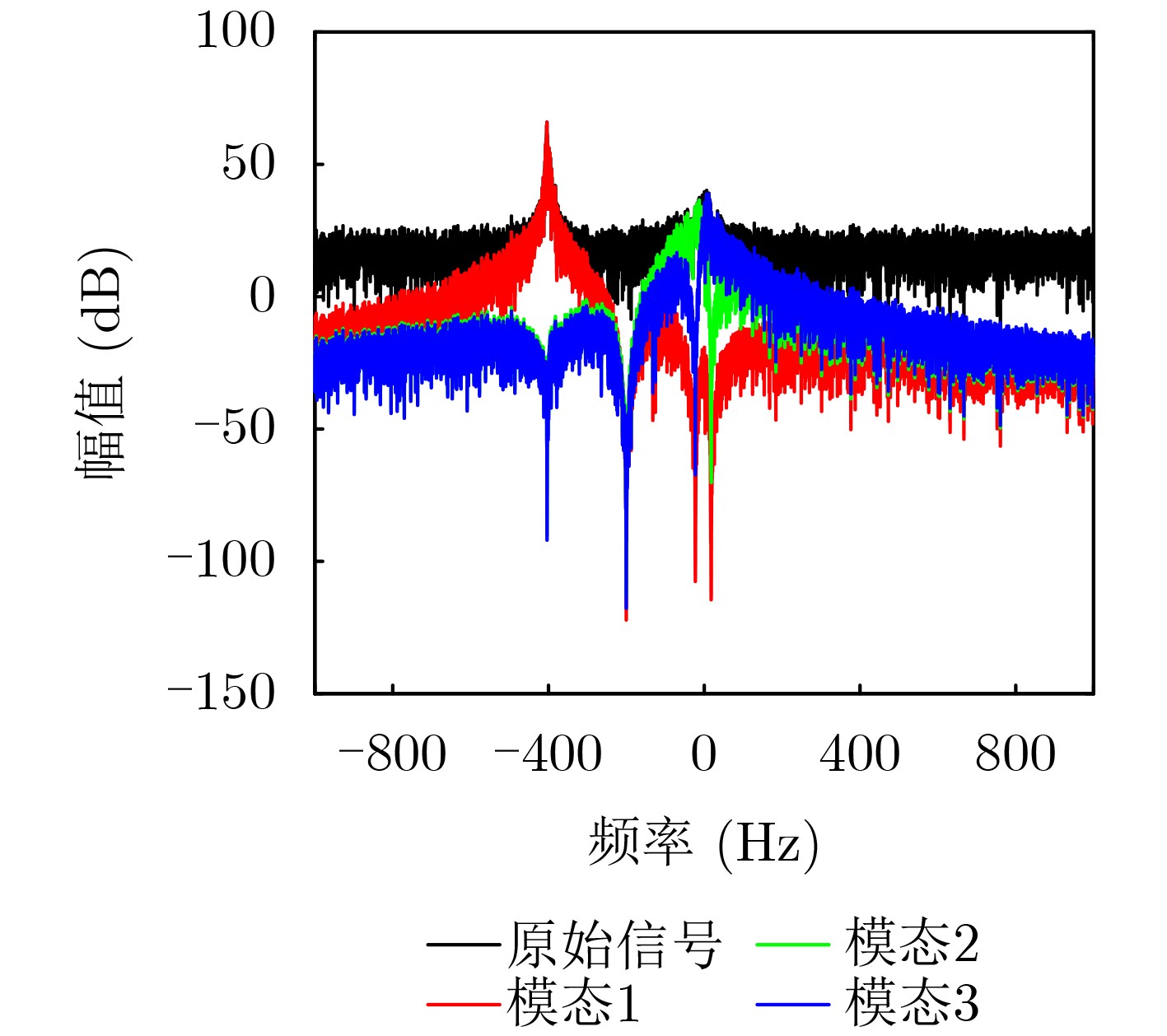
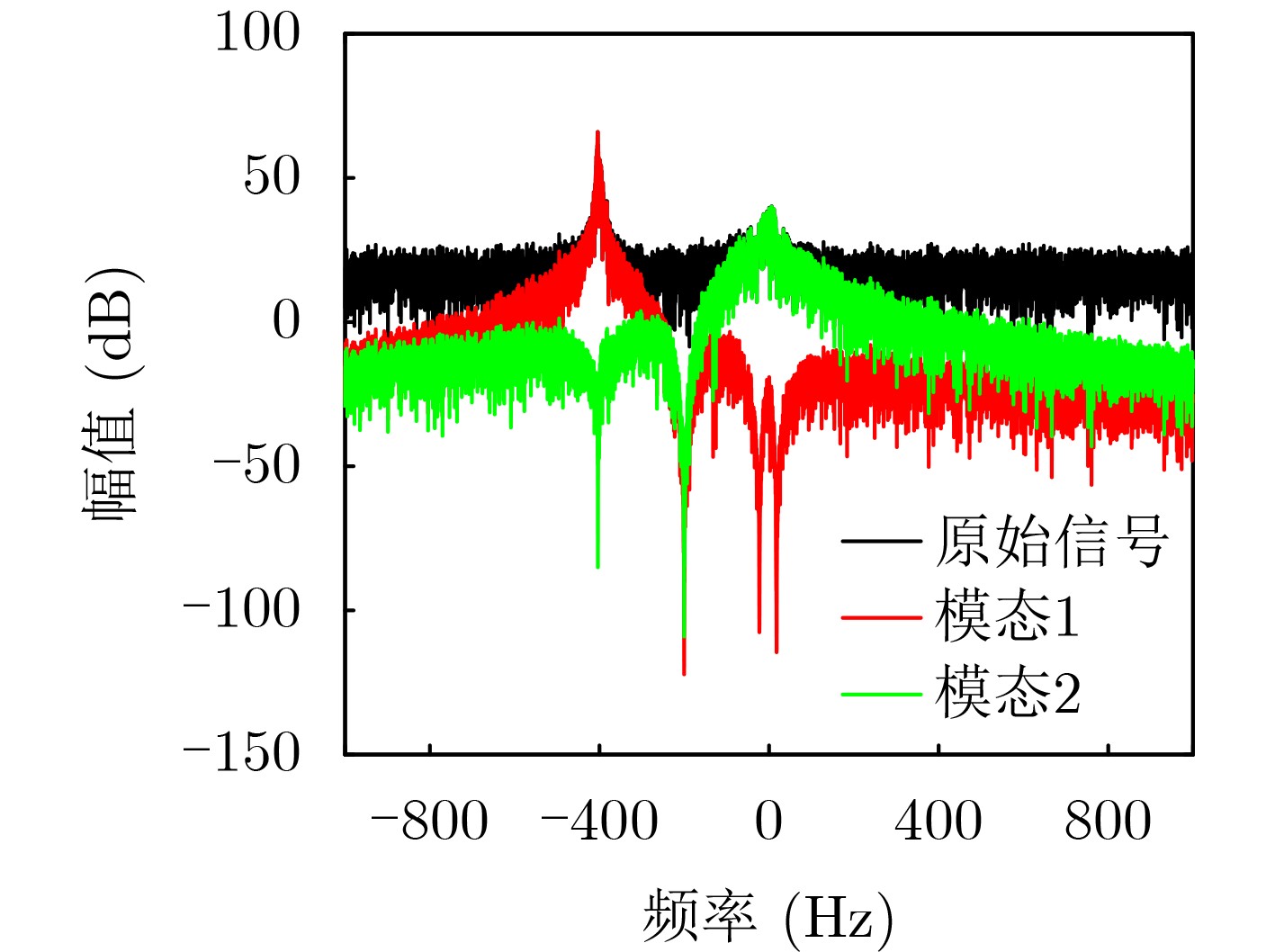
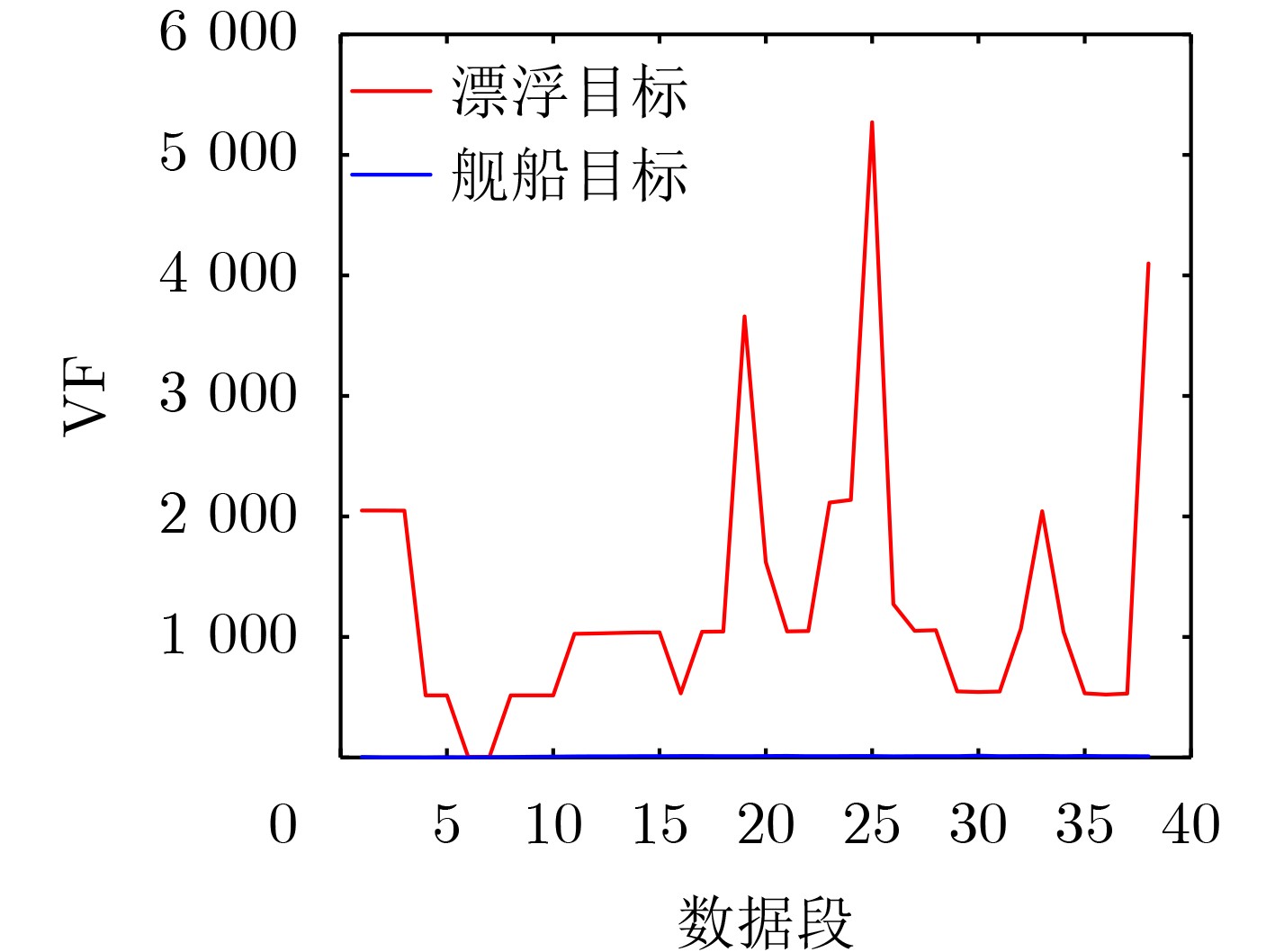
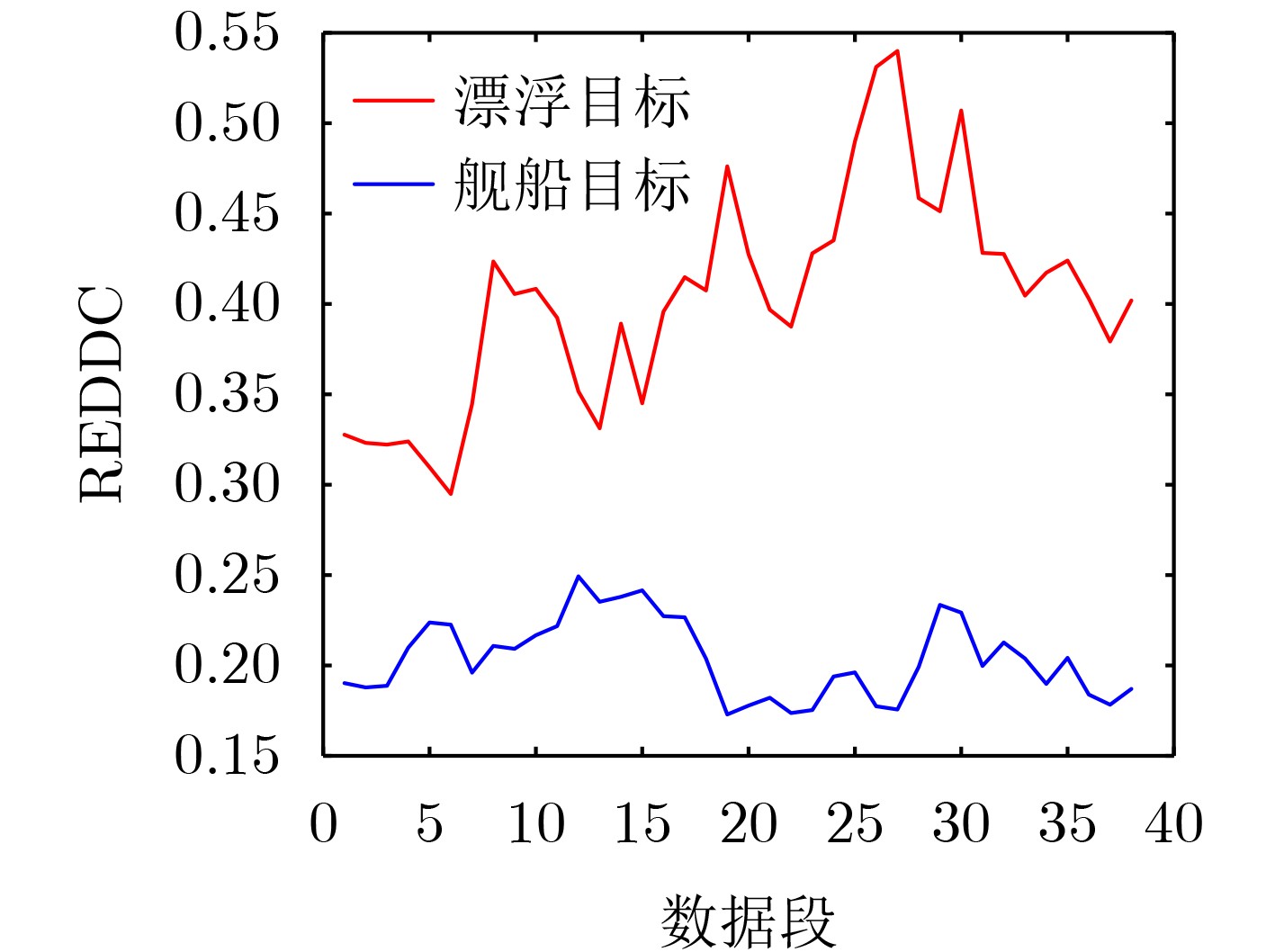
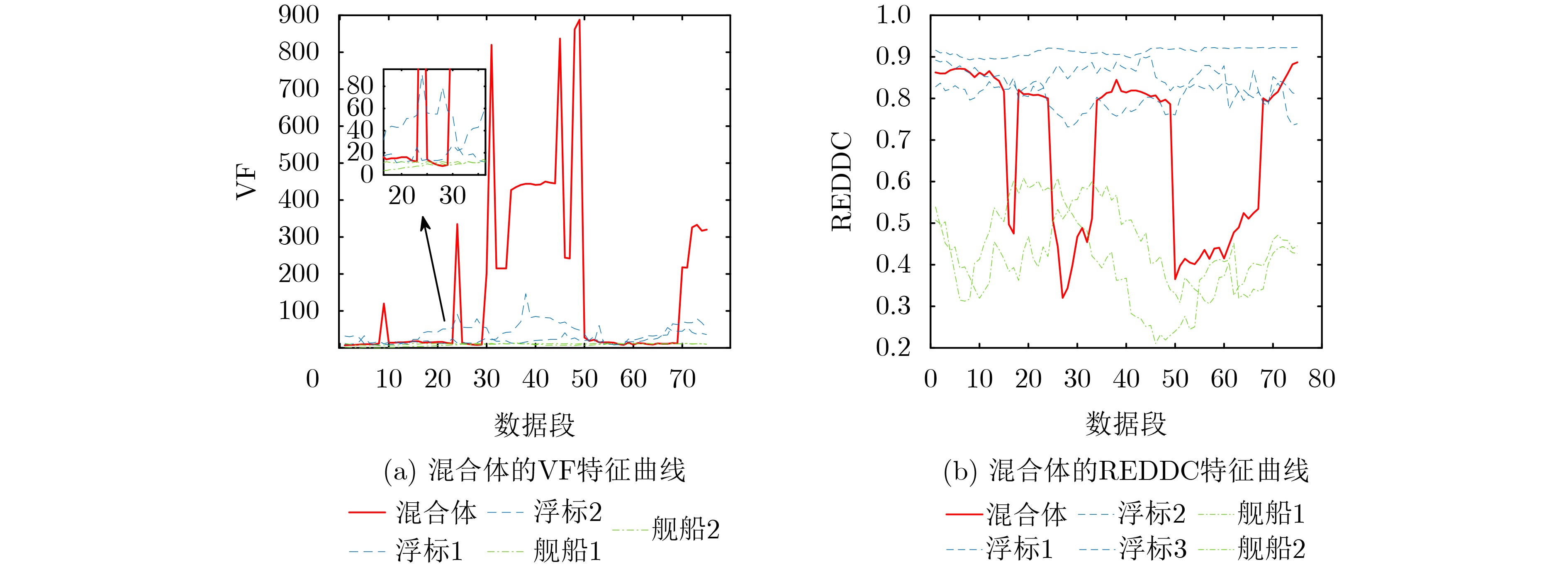
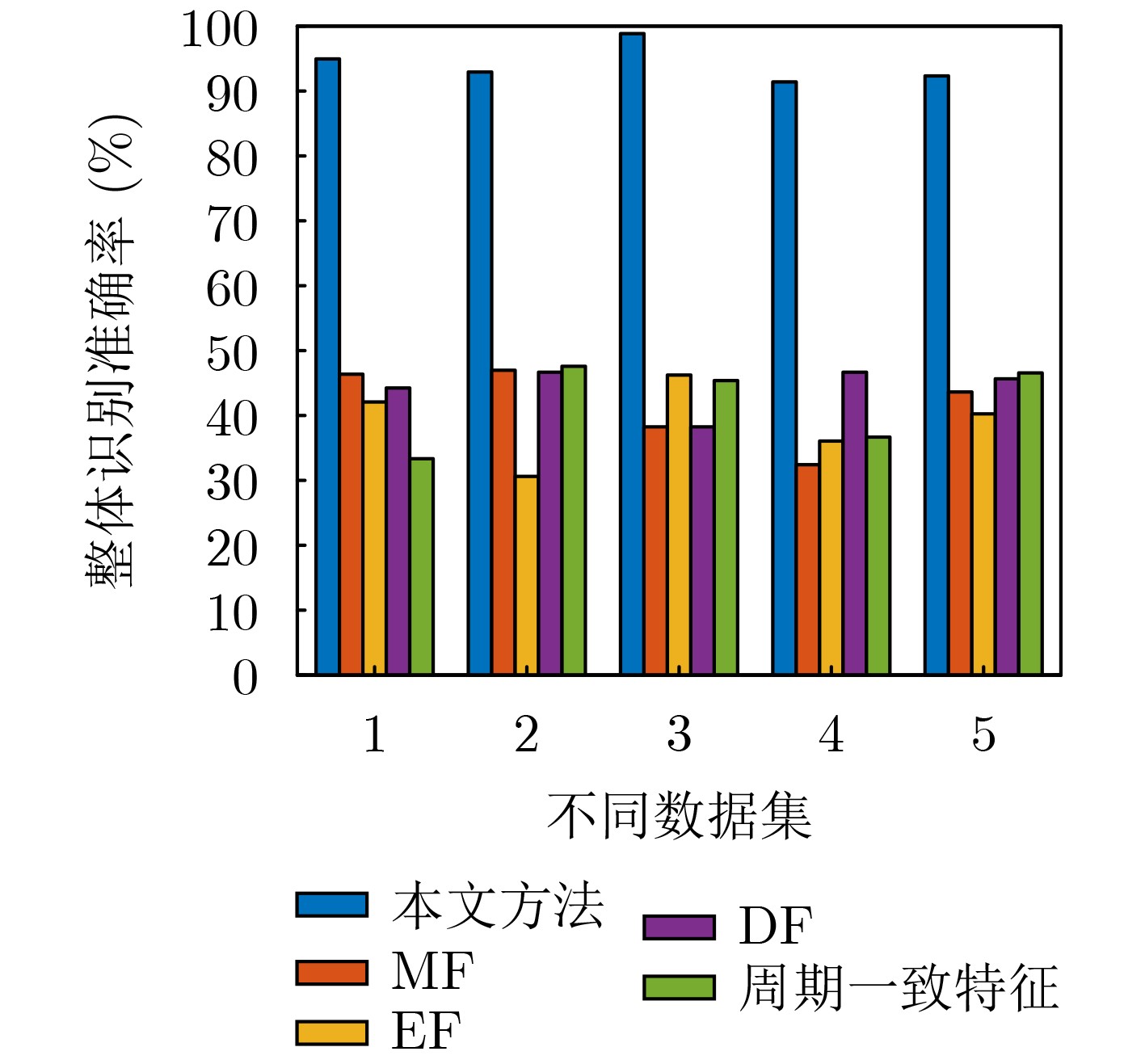
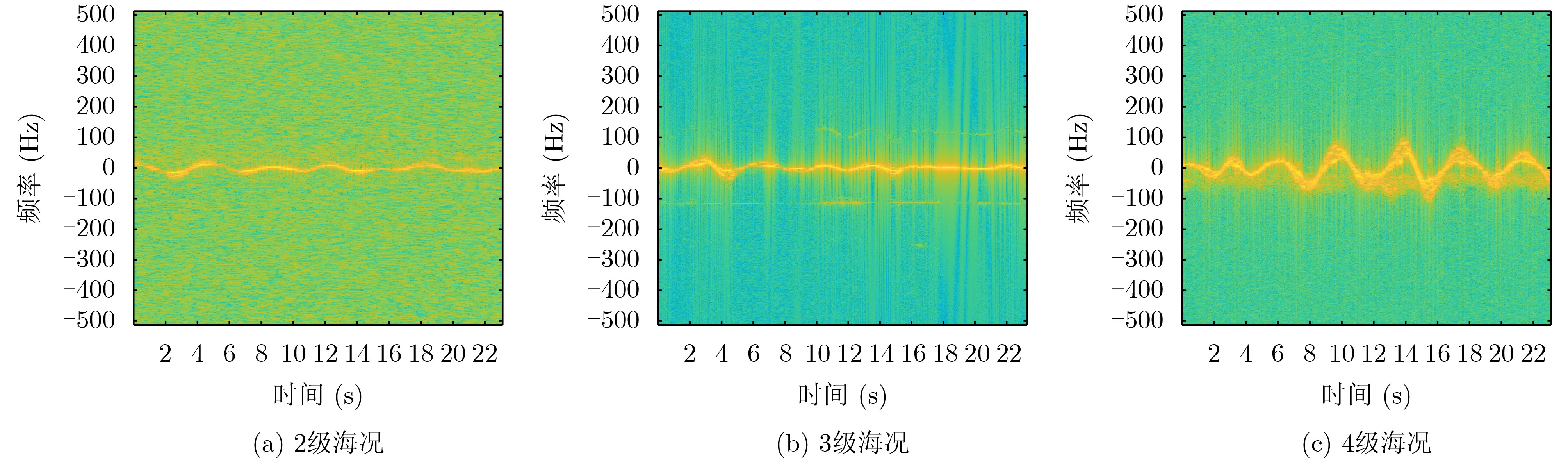
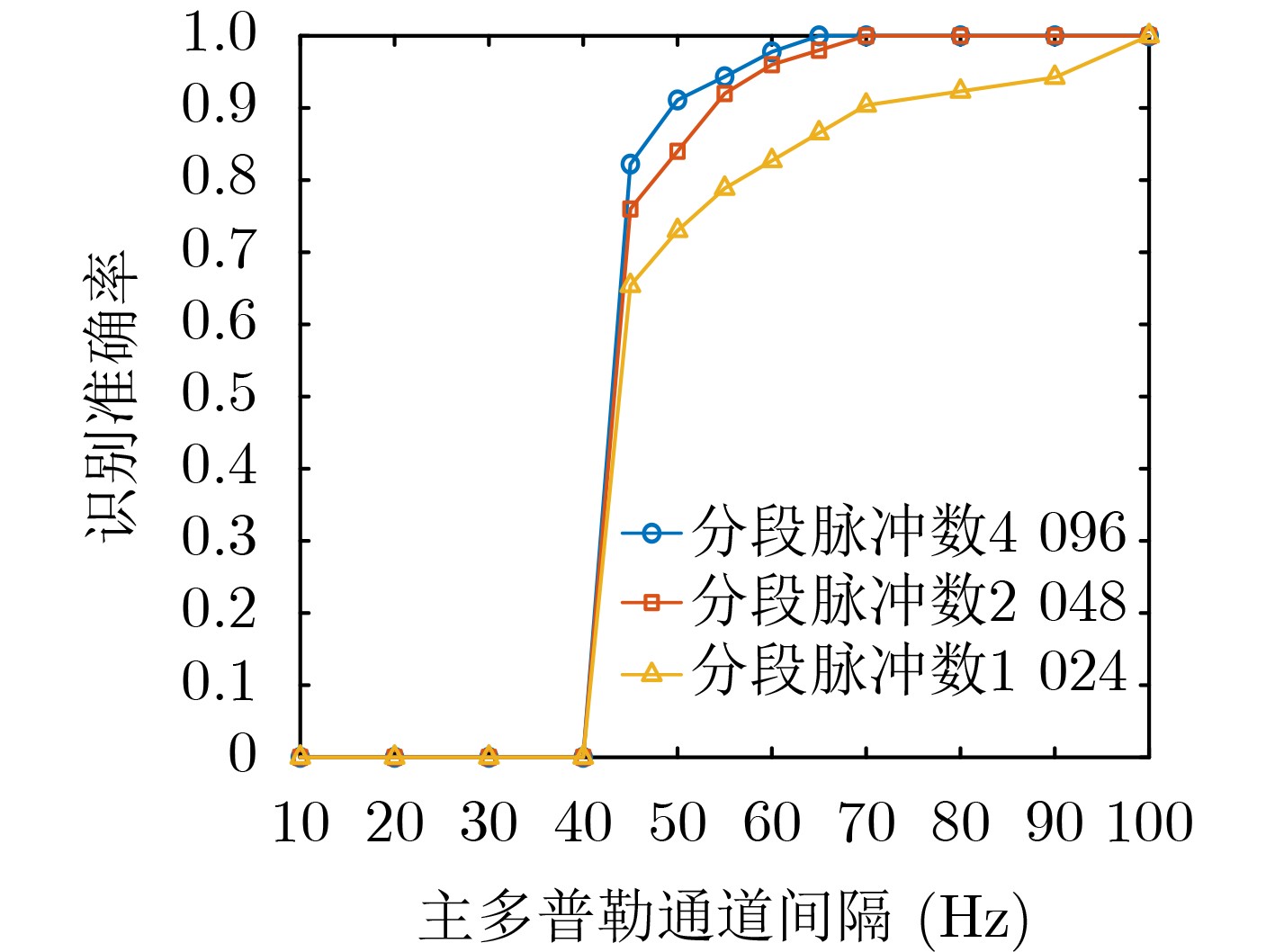
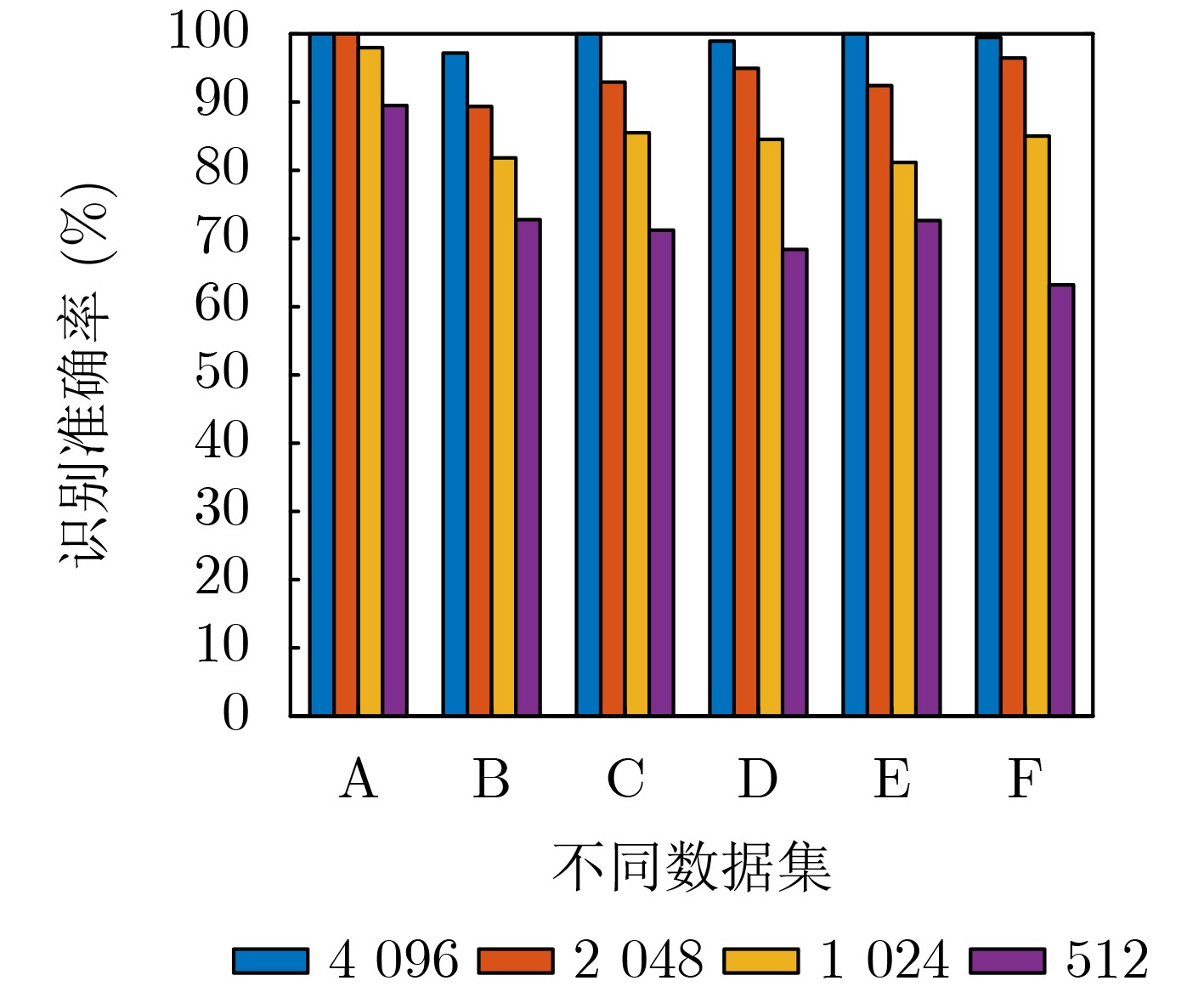
Objective In radar maritime target detection scenarios, when two or more targets are located within the same range cell, mixture echoes are generated, such as echoes containing both ships and floating targets. Existing target recognition methods exhibit notable limitations in these scenarios because they typically focus on the Doppler channel with the strongest energy in the time-frequency domain. To address this issue, a target recognition method that integrates mode reconstruction and time-frequency features is proposed. The aim is to distinguish individual targets without prior knowledge of whether the received echoes contain mixture targets, thereby avoiding reliance on high range resolution or multipolarization information. Methods The core idea is to introduce Variational Mode Decomposition (VMD) to decompose radar echoes into multiple modal components, thereby enabling Doppler-channel separation. To address spurious modes and the fragmented representation of a single target across multiple modes after decomposition, an energy-constrained mode filtering method and a spectral-consistency-based mode clustering method are proposed for effective mode selection and reconstruction. Based on the reconstructed signals, time-frequency differences between ships and floating targets are analyzed in terms of micromotion and signal complexity. Features are extracted from two perspectives: motion stability and the disorder degree of energy distribution, referred to as VF and REDDC features, respectively. These features enable accurate identification of individual targets. Results and Discussions Experiments are conducted using X-band radar measured data under sea states 2~4 ( Table 1 andTable 2 ). The results show that the proposed method achieves an average recognition accuracy of 97.32% in mixture scenarios. This performance significantly exceeds that of the existing four-feature recognition method (Table 3 ) and other advanced methods (Fig. 9 ). The effect of frequency separation between different targets is further examined. When the time-frequency ridge spacing exceeds 70 Hz, the recognition accuracy reaches 97.93% (Fig. 11 ). This result also provides empirical guidance for selecting an appropriate clustering threshold during the mode reconstruction stage. When mixture scenarios change to single-target scenarios due to relative motion, the proposed method achieves an average recognition accuracy of 93.34%. This value is 4.62% higher than that of the existing four-feature method (88.72%) (Table 4 ). Additional analysis indicates that the observation duration used for feature extraction should be no less than 0.25 s to maintain the expected recognition accuracy (Fig. 12 ).Conclusions This study examines recognition problems in maritime multi-target mixture scenarios. VMD is applied to separate the constituent components of mixture echoes. To address spurious modes and fragmented representation of target information across multiple modes, an energy-constrained mode filtering method and a spectral-consistency-based mode clustering method are proposed. VF and REDDC features are extracted from the perspectives of structural characteristics and signal complexity. A Support Vector Machine (SVM) classifier is then used for target recognition. Performance analysis confirms that the proposed method effectively identifies each constituent target in mixture echoes and maintains strong recognition performance in single-target scenarios. Future work will improve computational efficiency and real-time capability by optimizing the stopping criteria of VMD iterations and will further examine the application boundaries of the method using measured data under higher sea states. -
表 1 雷达相关参数
雷达参数 参数值 频率范围(GHz) 9.3~9.5 带宽(MHz) 25 距离分辨率(m) 6 发射峰值功率(W) 50 脉冲重复频率(kHz) 2 天线长度(m) 2 水平波束宽度(°) 1.2  下载: 导出CSV
表 2 实测数据基本信息
编号 文件名 海况 是否含混合体 目标距离单元 脉冲数 浪高(m) 浪向(°) 1 2024052715210617 2 是 2216 23,120 0.32 63 2 2024051711025339 2 是 3107 23,120 0.43 63 3 2022111518000013 3 是 621 20,790 1.10 126 4 2022111411080008 4 是 235 27,100 1.80 345 5 2022111306172401 4 是 419 131,072 1.90 283 A 2024060209175350 2 否 1245 /76323,120 0.25 63 B 2024060209500720 2 否 3129 /2510 23,120 0.25 63 C 2024061209165746 2 否 954/ 3105 23,120 0.20 63 D 2024051710545925 2 否 2546 /2990 23,120 0.43 63 E 2024051710591023 3 否 604/675 23,120 0.79 129 F 2024052715273745 3 否 579/506 23,120 1.03 129
下载: 导出CSV
表 3 混合体目标识别性能
数据集
编号测试
样本数本文方法 4特征识别方法 TP FN FP TN 准确率 TP FN FP TN 准确率(%) 1 50 48 2 0 50 98.00 22 1 1 26 48.00 2 50 47 3 0 50 97.00 34 4 0 12 46.00 3 44 44 0 1 43 98.86 25 0 1 18 48.86 4 59 59 0 3 56 97.45 30 3 1 25 46.61 5 75 72 3 4 71 95.30 41 2 2 30 47.30
下载: 导出CSV
表 4 单目标识别性能
数据集
编号测试
样本数本文方法 4特征识别方法 TP FN FP TN 准确率(%) TP FN FP TN 准确率(%) A 198 96 0 6 96 96.97 81 18 0 99 90.91 B 198 88 6 12 92 90.91 77 22 6 93 85.86 C 198 96 2 7 93 95.45 89 1 0 99 94.95 D 198 93 6 6 93 93.94 77 22 3 96 87.37 E 198 92 8 7 91 92.42 77 22 9 90 84.34 F 198 88 10 9 91 90.40 90 9 13 86 88.89
下载: 导出CSV
-
[1] 关键. 雷达海上目标特性综述[J]. 雷达学报, 2020, 9(4): 674–683. doi: 10.12000/JR20114.GUAN Jian. Summary of marine radar target characteristics[J]. Journal of Radars, 2020, 9(4): 674–683. doi: 10.12000/JR20114. [2] 丁昊, 唐天宇, 曹政, 等. 基于多尺度排列熵特征的海上漂浮目标识别方法[J/OL]. 系统工程与电子技术, https://link.cnki.net/urlid/11.2422.TN.20250730.1543.004, 2025.DING Hao, TANG Tianyu, CAO Zheng, et al. Identification method of maritime floating targets based on multiscale permutation entropy features[J/OL]. Systems Engineering and Electronics, https://link.cnki.net/urlid/11.2422.TN.20250730.1543.004, 2025. [3] RU Hongtao, XU Shuwen, HE Qi, et al. Marine small floating target detection method based on fusion weight and graph dynamic attention mechanism[J]. IEEE Transactions on Geoscience and Remote Sensing, 2023, 61: 5111511. doi: 10.1109/TGRS.2023.3332127. [4] 李思维. 基于微多普勒特性的低慢小目标识别方法研究[D]. [硕士论文], 电子科技大学, 2024. doi: 10.27005/d.cnki.gdzku.2024.000875.LI Siwei. Research on LSS target recognition based on micro-Doppler characteristics[D]. [Master dissertation], University of Electronic Science and Technology of China, 2024. doi: 10.27005/d.cnki.gdzku.2024.000875. [5] 黄小红, 贺夏, 辛玉林, 等. 基于时频特征的低分辨雷达微动多目标分辨方法[J]. 电子与信息学报, 2010, 32(10): 2342–2347. doi: 10.3724/SP.J.1146.2009.0314.HUANG Xiaohong, HE Xia, XIN Yulin, et al. Resolving multiple targets with micro-motions based on time-frequency feature with low-resolution radar[J]. Journal of Electronics & Information Technology, 2010, 32(10): 2342–2347. doi: 10.3724/SP.J.1146.2009.0314. [6] CUI Kaibo, WANG Wei, CHEN Xi, et al. A kind of method of anti-corner reflector interference for millimeter wave high resolution radar system[C]. 2016 Progress in Electromagnetic Research Symposium (PIERS), Shanghai, China, 2016: 1900–1906. doi: 10.1109/PIERS.2016.7734824. [7] 王罗胜斌, 吴国庆, 徐振海, 等. 雷达极化域变焦角反组合体对抗方法: 抗质心式干扰[J]. 电子学报, 2022, 50(12): 2957–2968. doi: 10.12263/DZXB.20221139.WANG Luoshengbin, WU Guoqing, XU Zhenhai, et al. Radar polarization modulation countermeasures for combined corner reflector: Anti centroid jamming[J]. Acta Electronica Sinica, 2022, 50(12): 2957–2968. doi: 10.12263/DZXB.20221139. [8] 黄孟俊, 陈建军, 赵宏钟, 等. 海面角反射器干扰微多普勒建模与仿真[J]. 系统工程与电子技术, 2012, 34(9): 1781–1787. doi: 10.3969/j.issn.1001-506X.2012.09.06.HUANG Mengjun, CHEN Jianjun, ZHAO Hongzhong, et al. Micro-Doppler modeling and simulating of corner reflector in sea surface[J]. Systems Engineering and Electronics, 2012, 34(9): 1781–1787. doi: 10.3969/j.issn.1001-506X.2012.09.06. [9] 苏宁远, 陈小龙, 关键, 等. 基于卷积神经网络的海上微动目标检测与分类方法[J]. 雷达学报, 2018, 7(5): 565–574. doi: 10.12000/JR18077.SU Ningyuan, CHEN Xiaolong, GUAN Jian, et al. Detection and classification of maritime target with micro-motion based on CNNs[J]. Journal of Radars, 2018, 7(5): 565–574. doi: 10.12000/JR18077. [10] 许述文, 白晓惠, 郭子薰, 等. 海杂波背景下雷达目标特征检测方法的现状与展望[J]. 雷达学报, 2020, 9(4): 684–714. doi: 10.12000/JR20084.XU Shuwen, BAI Xiaohui, GUO Zixun, et al. Status and prospects of feature-based detection methods for floating targets on the sea surface[J]. Journal of Radars, 2020, 9(4): 684–714. doi: 10.12000/JR20084. [11] 姜星宇, 刘宁波, 丁昊, 等. 雷达海杂波时频谱特性分析[J]. 海军航空工程学院学报, 2019, 34(5): 413–417. doi: 10.7682/j.issn.1673-1522.2019.05.003.JIANG Xingyu, LIU Ningbo, DING Hao, et al. Time-frequency spectrum analysis of radar sea clutter[J]. Journal of Naval Aviation University, 2019, 34(5): 413–417. doi: 10.7682/j.issn.1673-1522.2019.05.003. [12] 王晓亮, 王聪生, 施宇翔, 等. 雷达低信噪比旋翼无人机与飞鸟分类方法[J/OL]. 北京航空航天大学学报, https://doi.org/10.13700/j.bh.1001-5965.2024.0585, 2025.WANG Xiaoliang, WANG Congsheng, SHI Yuxiang, et al. The classification method of multirotor drones and flying birds under low signal-to-noise ratio for radar[J/OL]. Journal of Beijing University of Aeronautics and Astronautics, https://doi.org/10.13700/j.bh.1001-5965.2024.0585, 2025. [13] 程昊, 刘卫平, 赵婵娟, 等. 面向子带分解的非均匀抽取均衡算法[J]. 计算机测量与控制, 2024, 32(7): 260–266. doi: 10.16526/j.cnki.11-4762/tp.2024.07.038.CHENG Hao, LIU Weiping, ZHAO Chanjuan, et al. Non-uniform extraction equalization algorithm for sub-band decomposition[J]. Computer Measurement & Control, 2024, 32(7): 260–266. doi: 10.16526/j.cnki.11-4762/tp.2024.07.038. [14] 尚书宏, 曹亮, 鲁伟. 基于小波变换特征提取的脱介筛故障诊断算法[J]. 中国安全科学学报, 2023, 33(S2): 233–237. doi: 10.16265/j.cnki.issn1003-3033.2023.S2.0020.SHANG Shuhong, CAO Liang, and LU Wei. A delamination-screen fault diagnosis algorithm based on wavelet-transform feature extraction[J]. China Safety Science Journal, 2023, 33(S2): 233–237. doi: 10.16265/j.cnki.issn1003-3033.2023.S2.0020. [15] 胡锡坤, 金添. 基于自适应小波尺度选择的生物雷达呼吸与心跳分离方法[J]. 雷达学报, 2016, 5(5): 462–469. doi: 10.12000/JR16103.HU Xikun and JIN Tian. Adaptive wavelet scale selection-based method for separating respiration and heartbeat in bio-radars[J]. Journal of Radars, 2016, 5(5): 462–469. doi: 10.12000/JR16103. [16] 李中余, 桂亮, 海宇, 等. 基于变分模态分解与优选的超高分辨ISAR成像微多普勒抑制方法[J]. 雷达学报(中英文), 2024, 13(4): 852–865. doi: 10.12000/JR24043.LI Zhongyu, GUI Liang, HAI Yu, et al. Ultrahigh-resolution ISAR micro-Doppler suppression methodology based on variational mode decomposition and mode optimization[J]. Journal of Radars, 2024, 13(4): 852–865. doi: 10.12000/JR24043. [17] 丁昊, 朱晨光, 刘宁波, 等. 高海况条件下海面漂浮小目标特征提取与分析[J]. 海军航空大学学报, 2023, 38(4): 301–312. doi: 10.7682/j.issn.2097-1427.2023.04.001.DING Hao, ZHU Chenguang, LIU Ningbo, et al. Feature extraction and analysis of small floating targets in high sea conditions[J]. Journal of Naval Aviation University, 2023, 38(4): 301–312. doi: 10.7682/j.issn.2097-1427.2023.04.001. [18] 祝振宁, 钟志贤, 王广斌, 等. 滚动轴承故障特征提取的VMD-IMCKD参数优化方法[J]. 噪声与振动控制, 2025, 45(6): 147–153, 168. doi: 10.3969/j.issn.1006-1355.2025.06.023.ZHU Zhenning, ZHONG Zhixian, WANG Guangbin, et al. Method of fault feature extraction for rolling bearings based on parameter optimization of VMD-IMCKD[J]. Noise and Vibration Control, 2025, 45(6): 147–153, 168. doi: 10.3969/j.issn.1006-1355.2025.06.023. [19] 刘高辉, 席宏恩. 改进变分模态分解与多特征的通信辐射源个体识别方法[J]. 电子与信息学报, 2024, 46(10): 4044-4052. doi: 10.11999/JEIT231348LIU Gaohui and XI Hongen. Individual identification method for communication emitters based on improved variational modal decomposition and multiple features[J]. Journal of Electronics & Information Technology, 2024, 46(10): 4044-4052. doi: 10.11999/JEIT231348 [20] DRAGOMIRETSKIY K and ZOSSO D. Variational mode decomposition[J]. IEEE Transactions on Signal Processing, 2014, 62(3): 531–544. doi: 10.1109/TSP.2013.2288675. [21] 吕方方. 海面目标动态回波仿真与特性分析[D]. [硕士论文], 西安电子科技大学, 2019. doi: 10.27389/d.cnki.gxadu.2019.002034.LV Fangfang. Dynamic echo simulation and characteristic analysis of sea surface targets[D]. [Master dissertation], Xidian University, 2019. doi: 10.27389/d.cnki.gxadu.2019.002034. [22] LI Yuxing, JIANG Xinru, and WU Junxian. Rating entropy and its multivariate version[J]. Mechanical Systems and Signal Processing, 2025, 226: 112368. doi: 10.1016/j.ymssp.2025.112368. [23] 彭海. 皮尔逊相关系数应用于医学信号相关度测量[J]. 电子世界, 2017(7): 163. doi: 10.19353/j.cnki.dzsj.2017.07.129.PENG Hai. Application of the Pearson correlation coefficient to correlation measurement of medical signals[J]. Electronics World, 2017(7): 163. doi: 10.19353/j.cnki.dzsj.2017.07.129. [24] 史丽佼, 李明华. 国铁企业工务系统线路通过总重对劳动生产率的影响因素研究[J]. 铁道经济研究, 2025(4): 88–96. doi: 10.20162/j.cnki.issn.1004-9746.2025.04.11.SHI Lijiao and LI Minghua. Research on the influencing factors of total line passing weight on labor productivity in track engineering sector of national railway enterprises[J]. Railway Economics Research, 2025(4): 88–96. doi: 10.20162/j.cnki.issn.1004-9746.2025.04.11. [25] 刘宁波, 丁昊, 黄勇, 等. X波段雷达对海探测试验与数据获取年度进展[J]. 雷达学报, 2021, 10(1): 173–182. doi: 10.12000/JR21011.LIU Ningbo, DING Hao, HUANG Yong, et al. Annual progress of the sea-detecting X-band radar and data acquisition program[J]. Journal of Radars, 2021, 10(1): 173–182. doi: 10.12000/JR21011. [26] 丁昊, 刘宁波, 董云龙, 等. 雷达海杂波测量试验回顾与展望[J]. 雷达学报, 2019, 8(3): 281–302. doi: 10.12000/JR19006.DING Hao, LIU Ningbo, DONG Yunlong, et al. Overview and prospects of radar sea clutter measurement experiments[J]. Journal of Radars, 2019, 8(3): 281–302. doi: 10.12000/JR19006. [27] 赵越, 陈之纯, 纠博, 等. 一种基于时频分析的窄带雷达飞机目标分类特征提取方法[J]. 电子与信息学报, 2017, 39(9): 2225–2231. doi: 10.11999/JEIT161204.ZHAO Yue, CHEN Zhichun, JIU Bo, et al. Narrowband aircraft targets feature extraction and classification based on time-frequency analysis[J]. Journal of Electronics & Information Technology, 2017, 39(9): 2225–2231. doi: 10.11999/JEIT161204. [28] 李郝亮, 陈思伟. 海面角反射体电磁散射特性与雷达鉴别研究进展与展望[J]. 雷达学报, 2023, 12(4): 738–761. doi: 10.12000/JR23100.LI Haoliang and CHEN Siwei. Electromagnetic scattering characteristics and radar identification of sea corner reflectors: Advances and prospects[J]. Journal of Radars, 2023, 12(4): 738–761. doi: 10.12000/JR23100. [29] YU Hengli, CAO Zheng, WANG Guoqing, et al. A classification method for marine surface floating small targets and ship targets[J]. IEEE Journal on Miniaturization for Air and Space Systems, 2024, 5(2): 94–99. doi: 10.1109/JMASS.2024.3372116. -

 下载:
下载:

图(12) / 表(4)
计量
- 文章访问数: 791
- HTML全文浏览量: 443
- PDF下载量: 66
- 被引次数: 0
