




A Risk-modulated Learning Framework for Physical-layer RFIDAuthentication under Dynamic Interference
-
摘要: 动态干扰环境下,射频识别(RFID)耦合认证的物理层特征易受金属反射、多径效应影响,导致传统静态建模方法识别稳定性不足。针对此问题,该文提出风险调控学习识别框架(RMLIF),构建“风险感知-物理调节-特征重构-分类判定”的闭环机制。该框架创新性在于:(1)建立随机微分方程(SDE)信道模型,通过漂移项、扩散项与冲击项协同刻画动态干扰,证明解存在唯一性定理;(2)设计目标导向自适应风险(TDAR)调节算法,理论上保证风险指数单调收敛与扰动稳定性,等效实现分类边界间隔放大;(3)提出识别风险指数(RRI)与信干噪比(SINR)的指数映射关系,构建低维压缩特征空间,并推导出泛化误差界与样本复杂度界。基于通用软件无线电外设(USRP)N2000平台的实验表明,在无/小/中/大铜片干扰场景下,RMLIF识别准确率均达90%以上,较传统方法平均提升10%~20%,验证了理论分析的正确性与工程应用价值。Abstract:
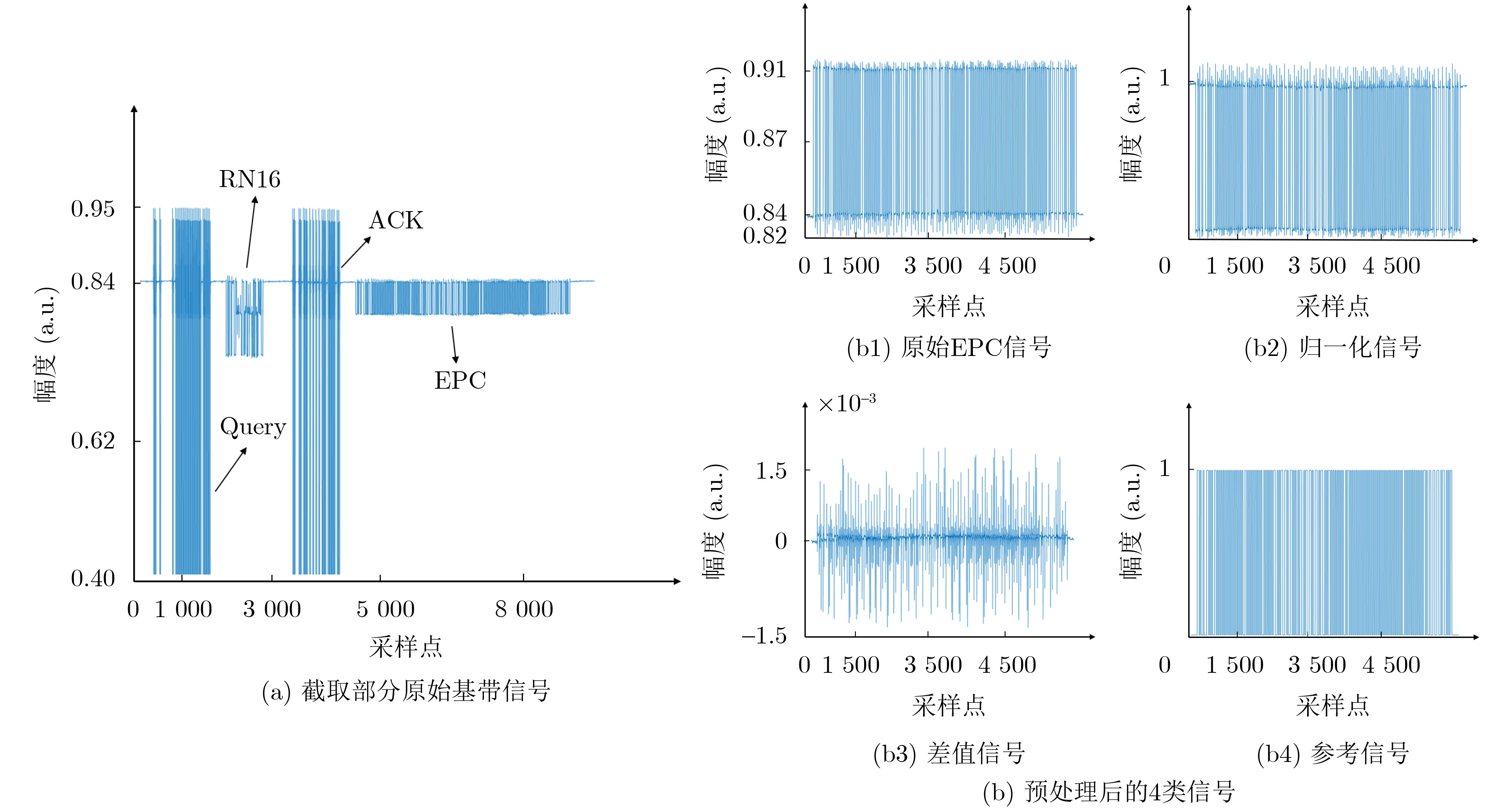
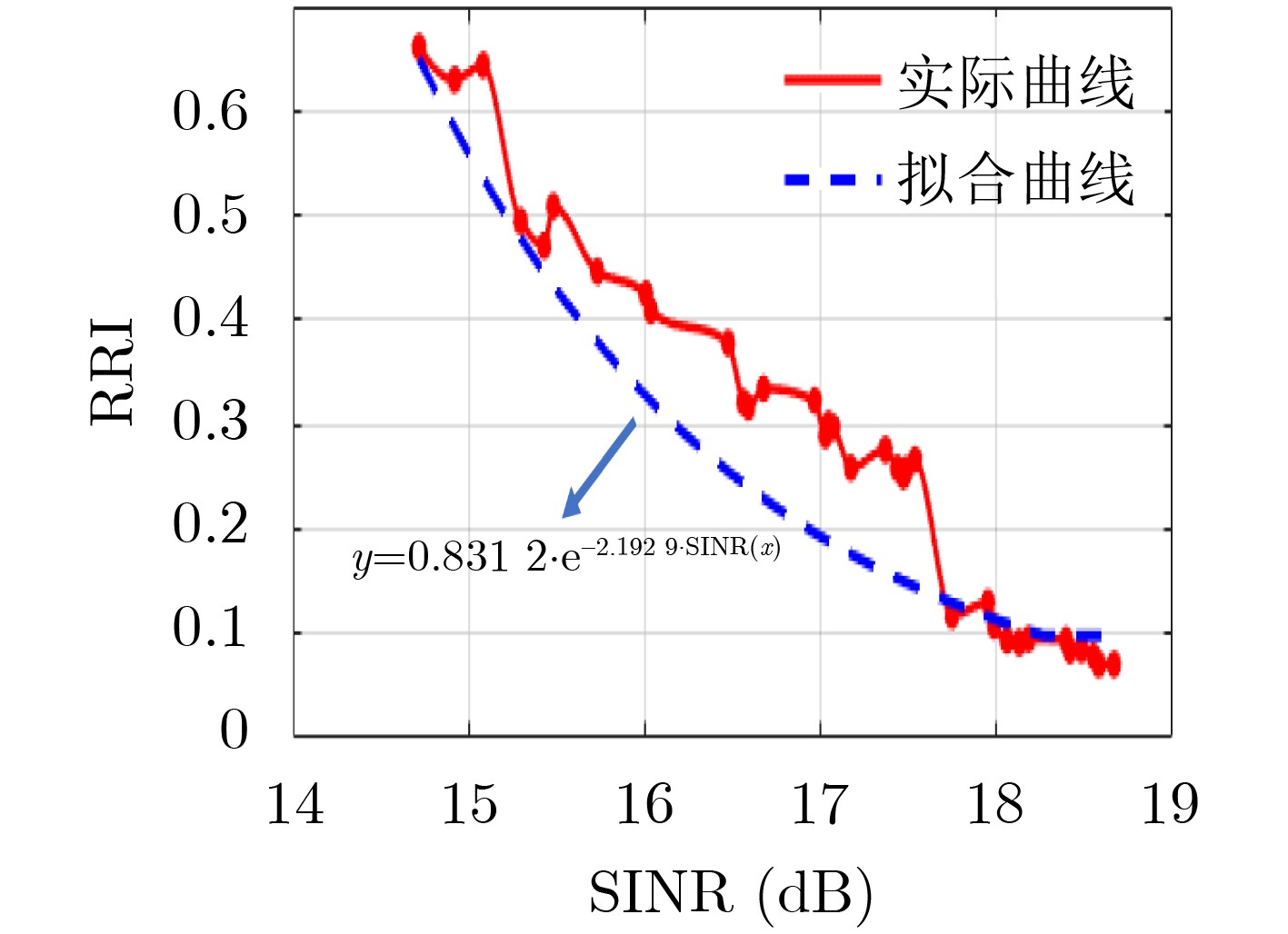
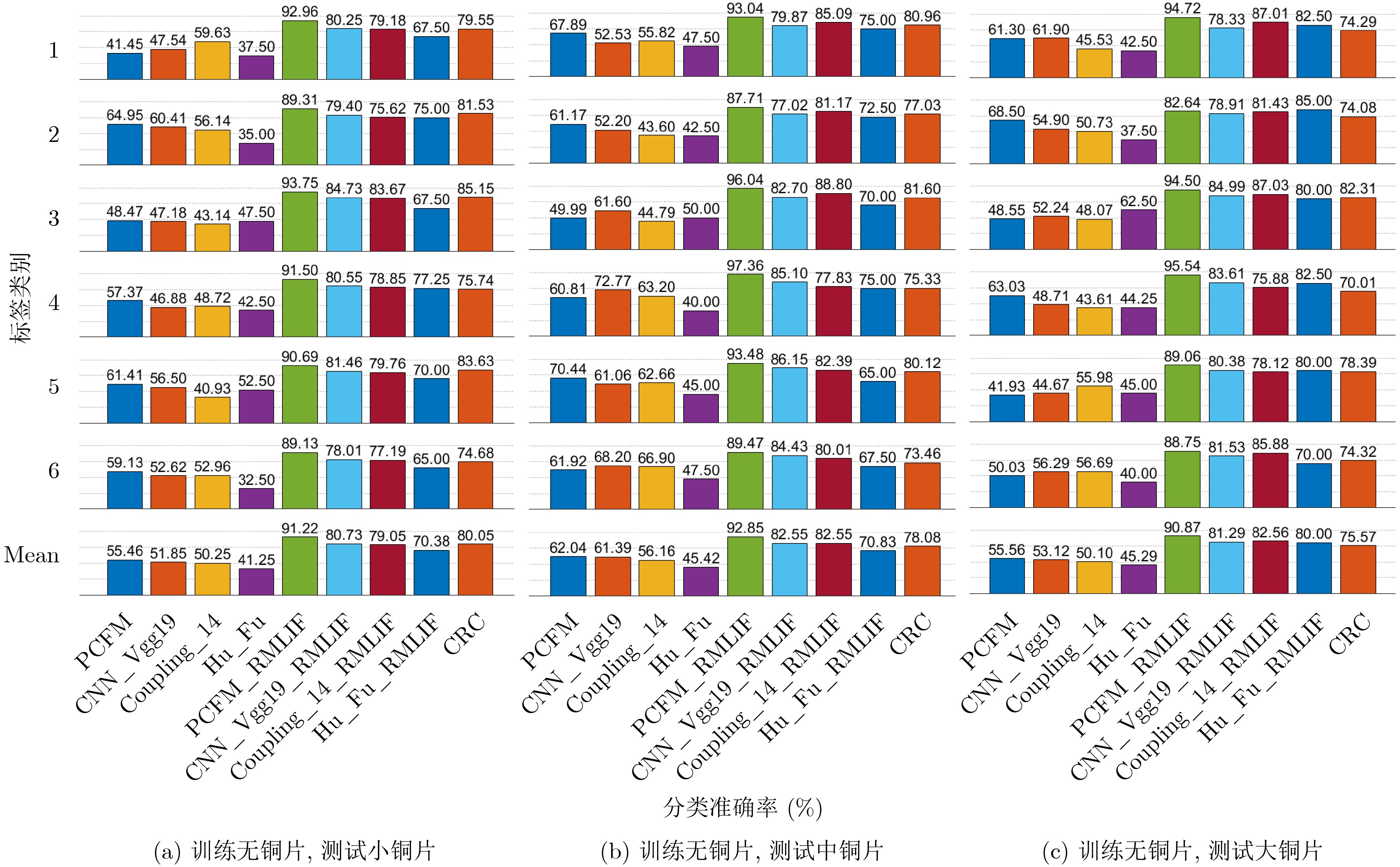
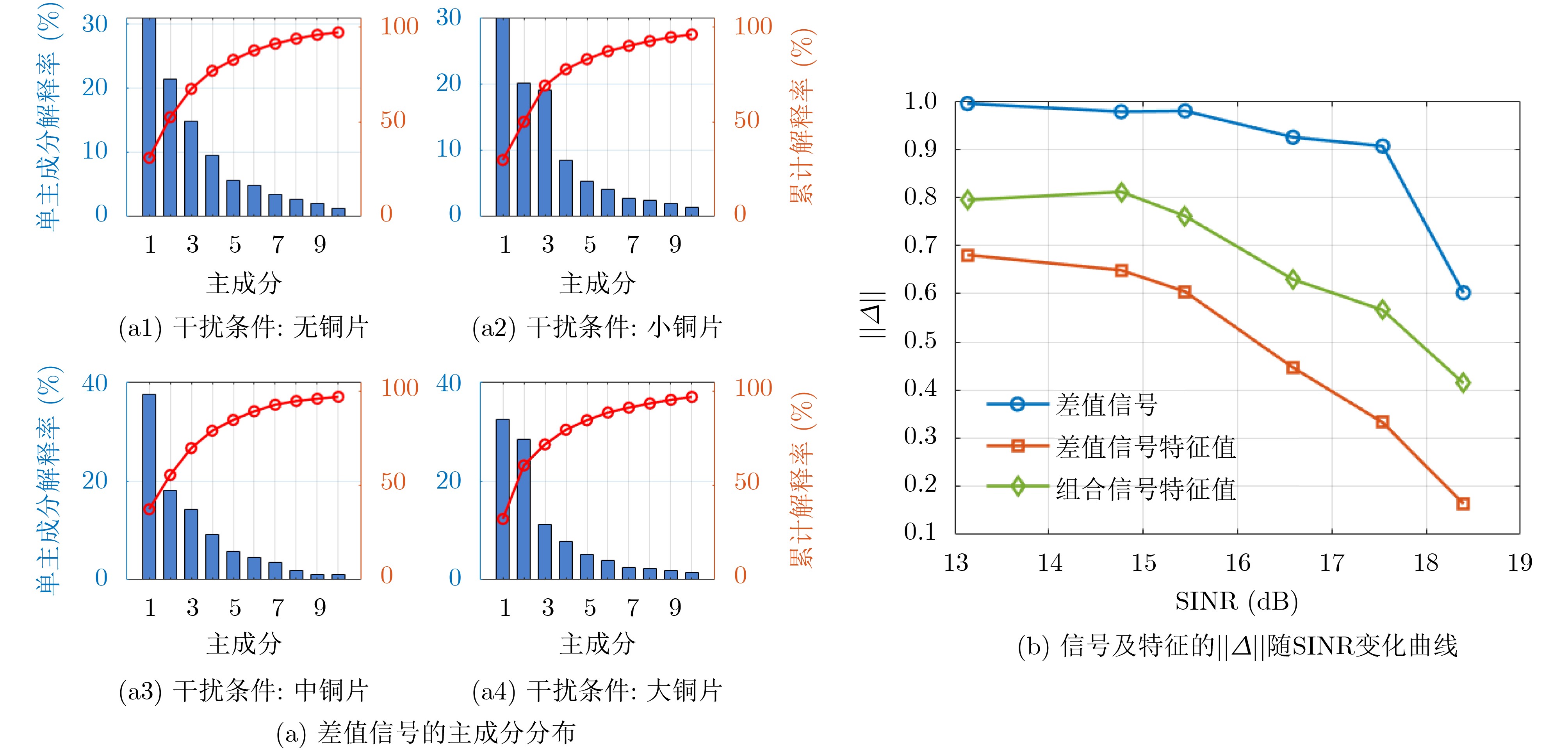
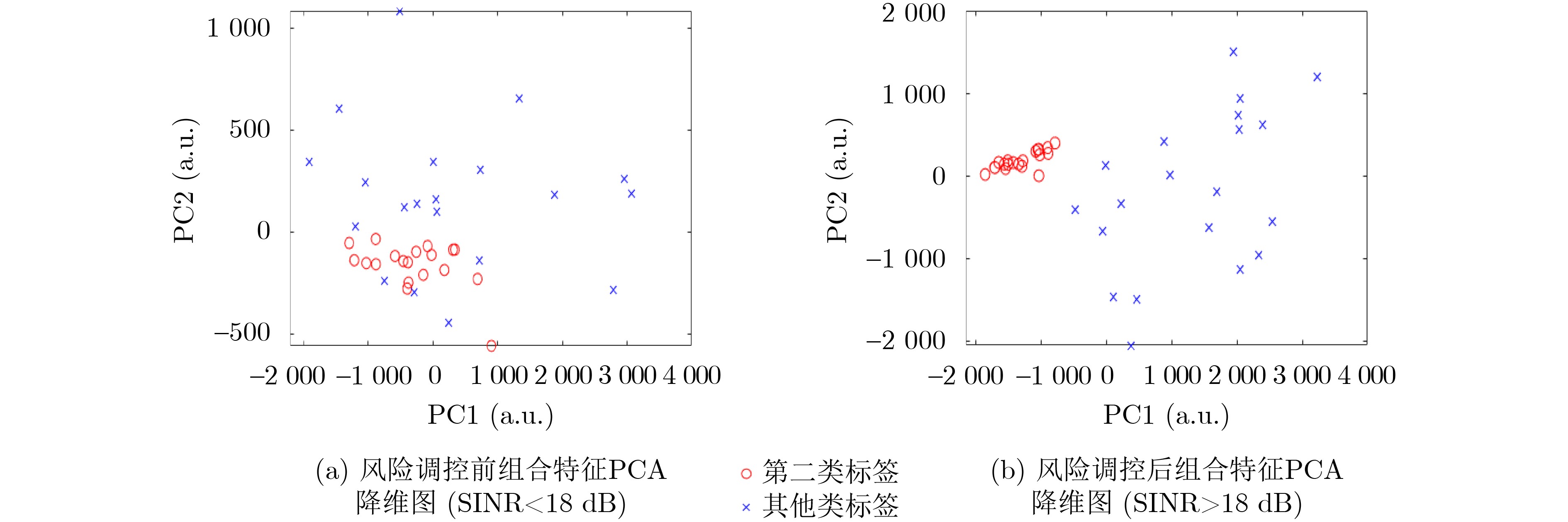
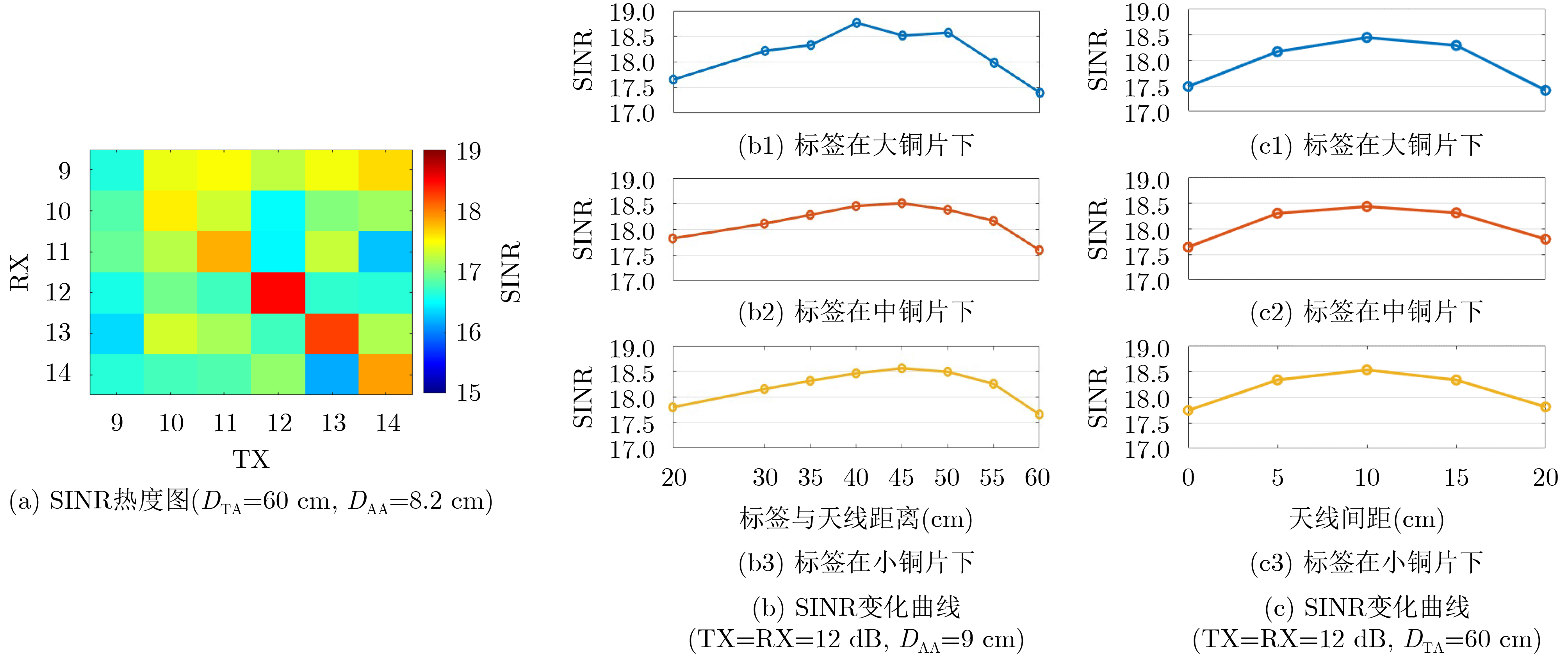
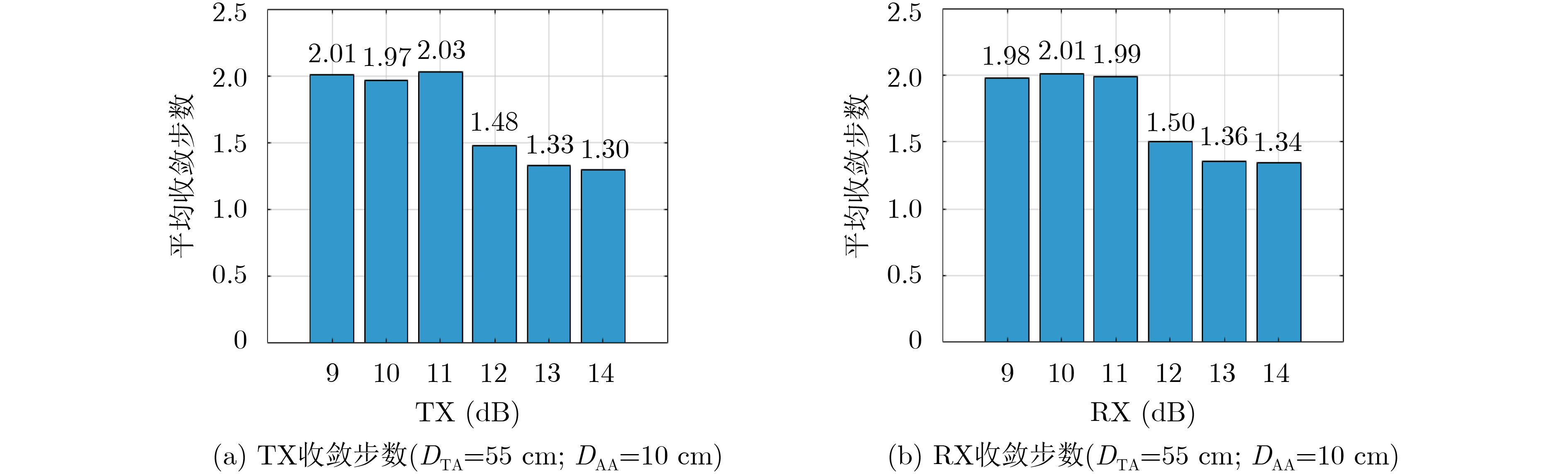
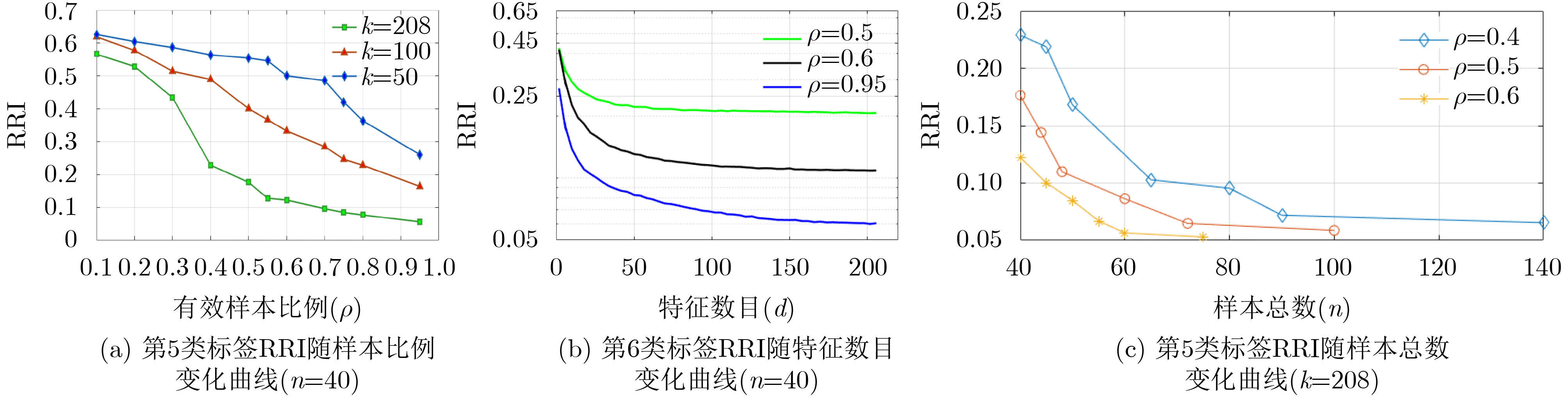
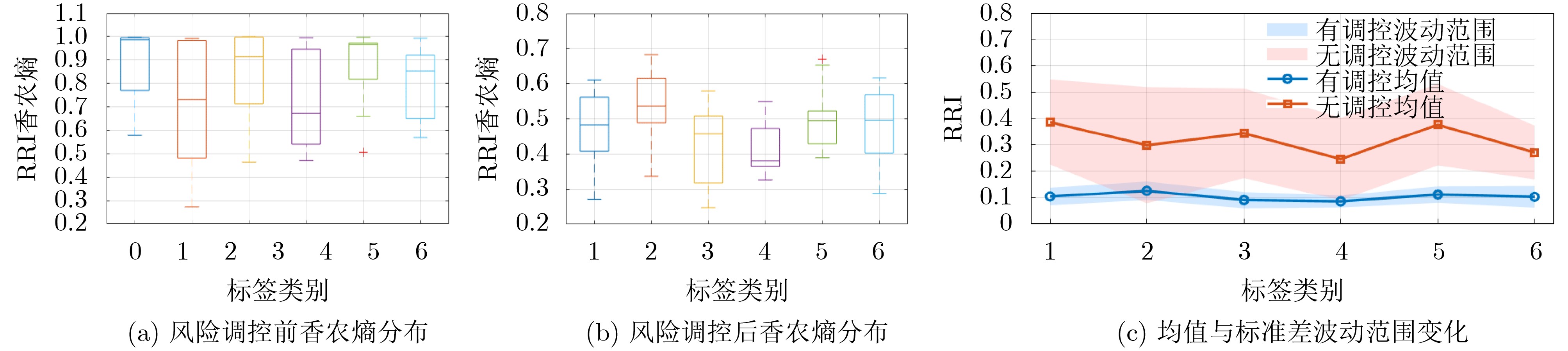
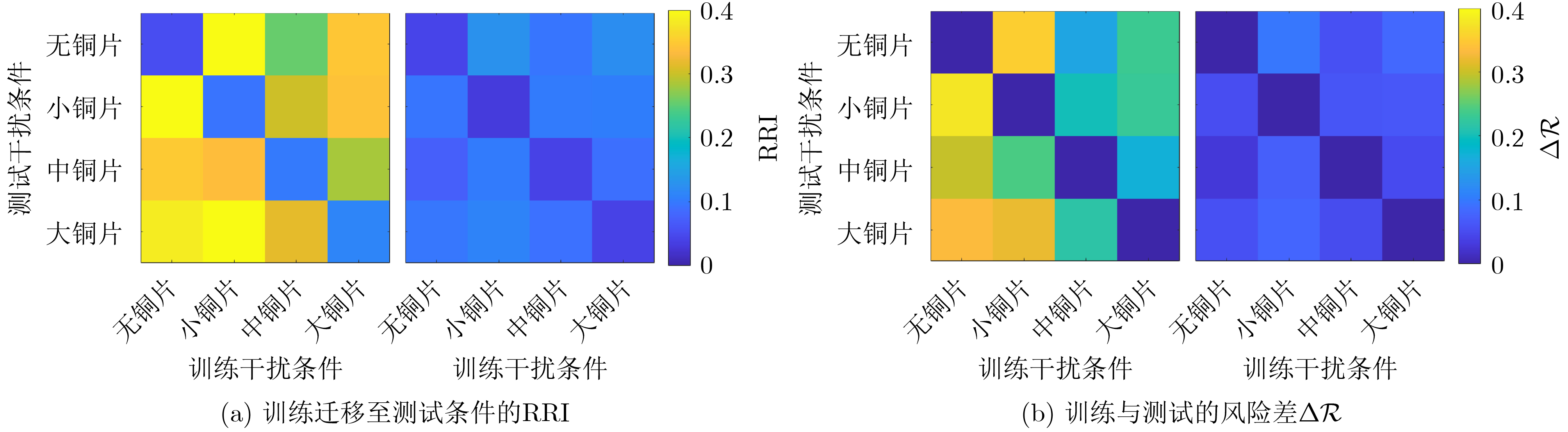
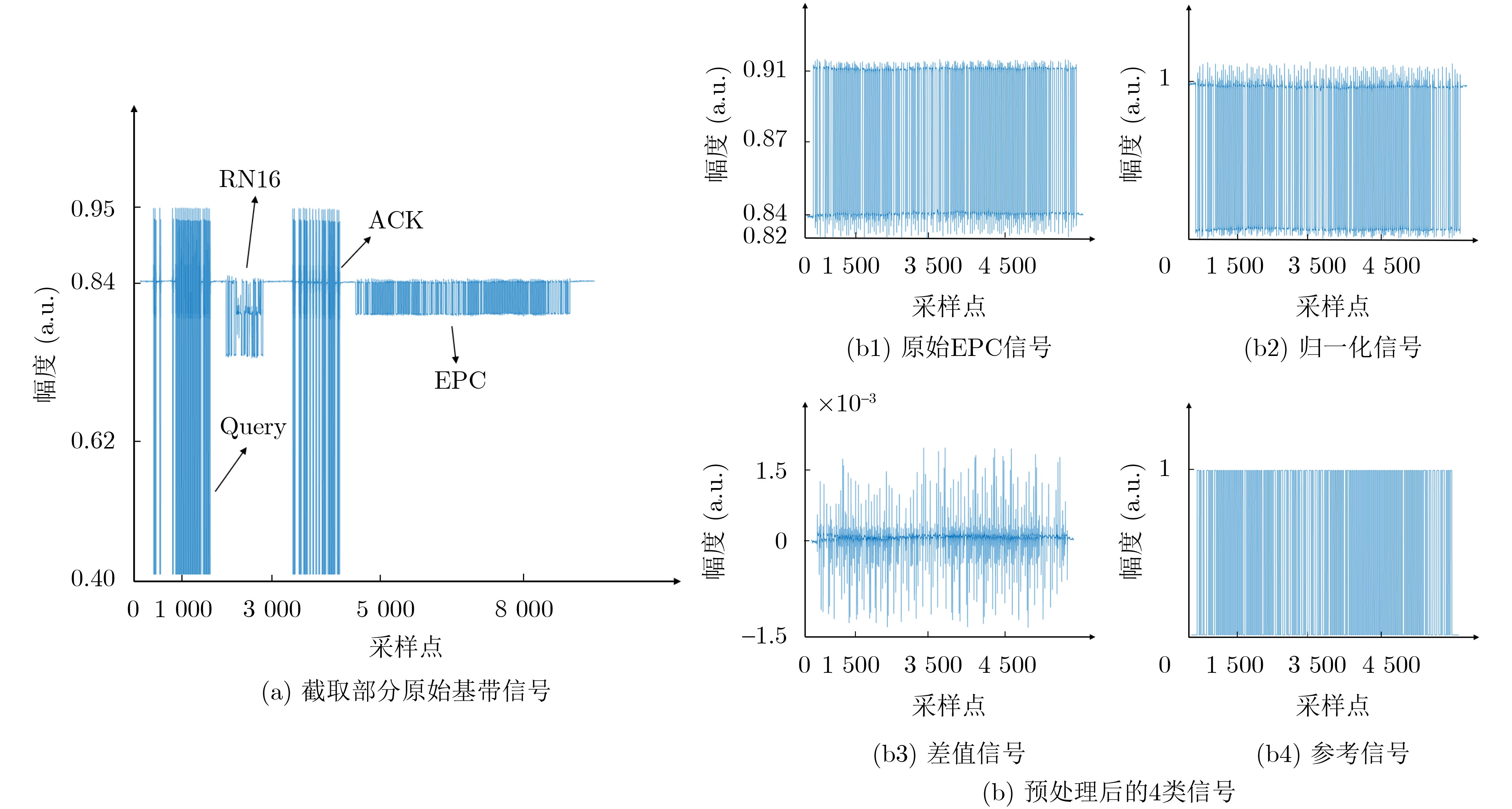
Objective Dynamic interference and metallic reflections severely affect the reliability of coupled Radio Frequency IDentification (RFID) authentication. Conventional static models cannot adapt to time-varying noise and multipath effects, which leads to unstable recognition. To address this problem, this paper proposes a Risk-Modulated Learning Identification Framework (RMLIF) that integrates stochastic channel modeling, adaptive risk regulation, and risk-regularized classification. The aim is to achieve stable and interpretable physical-layer authentication under nonstationary interference, thereby improving the anti-counterfeiting reliability of RFID systems. Methods A Stochastic Differential Equation (SDE)-based coupled channel model is first established to jointly characterize drift, diffusion, and impulsive interference (Eq.(1)), and the existence and uniqueness of its solution are proved. A Target-Driven Adaptive Risk (TDAR) algorithm is then designed to dynamically adjust physical-layer parameters based on the Recognition Risk Index (RRI). The RRI is derived from classification posterior probabilities (Eq.(3)), and its exponential mapping to the Signal-to-Interference-plus-Noise Ratio (SINR) is characterized analytically (Eq.(11), Fig. 3 ), which enables real-time risk estimation and closed-loop control. For feature representation, a difference-based compressive feature modeling method is used to capture the perturbation between normalized and reference signals (Fig. 1 ), and Theorem 1 establishes the stability of the compressed mapping. Parallel steady-state and perturbation feature paths are further designed (Table 1 ), and their joint robustness is proved in Corollary 4. In addition, the framework shows that TDAR regulation is equivalent to a risk-regularized classification process (Theorem 3), which effectively enlarges the classification margin without modifying the classifier structure.Results and Discussions Theoretical analysis derives the generalization error bound, sample complexity, and robustness limits (Theorems 4~7), showing that filtering high-risk samples reduces redundancy and improves learning efficiency. The Asymptotic Real Risk Index (ARRI) is further defined to explain long-term convergence and structural self-consistency (Theorem 8). Experiments conducted on a USRP N2000 platform (Table 3) use six types of EPC C1 Gen2 tags under four interference conditions, namely no copper plate and small, medium, and large copper plates ( Fig. 4 ). Compared with conventional methods, including Coupling_14, Hu_Fu, CNN_Vgg19, and PCFM, the corresponding RMLIF-enhanced versions achieve clear gains in classification accuracy (Fig. 5 ). In all no/small/medium/large copper-plate interference scenarios, the proposed framework achieves accuracy above 90%, with an average improvement of 10%~20% over traditional methods. PCFM_RMLIF achieves the best overall performance. PCA visualization confirms the stability of the compressed features (Fig. 6 ) and the clearer class separation after risk regulation (Fig. 7 ). The TDAR algorithm converges rapidly, generally within two iterations (Fig. 9 ). As the effective sample ratio and feature dimension increase, the RRI decreases monotonically (Fig. 10 ), in agreement with Theorem 6. Entropy analysis (Fig. 11 ) shows that risk regulation reduces system uncertainty and improves stability. Cross-condition tests further verify the robustness and generalization ability of the framework (Fig. 12 ).Conclusions This paper develops a unified risk-modulated learning framework for physical-layer RFID authentication under dynamic interference. The RMLIF framework combines SDE-based channel modeling, adaptive TDAR regulation, and compressive feature reconstruction into a closed-loop mechanism that links physical signals with recognition risk. Both theoretical analysis and experimental results show that risk-driven regulation effectively suppresses disturbance, improves feature separability, and reduces generalization error. The proposed approach achieves high accuracy, rapid convergence, and strong robustness, and provides an effective solution for dynamic RFID anti-counterfeiting authentication. -
1 风险感知算法
输入:读写器的信道响应信号x 输出:估计值SINR(x) 步骤: (1) 由x计算期望信号$\overline {\boldsymbol{x}} $及归一化信号$\tilde {\boldsymbol{x}} $ (2) 计算耦合差分信号$ \delta {{{\boldsymbol{x}}}} = \tilde {\boldsymbol{x}}- \overline {\boldsymbol{x}} $ (3) 计算风险指数代理指标SINR(x)≈10lg$(\|\overline {\boldsymbol{x}}\|_2^2/\|\delta {\boldsymbol{x}}\|_2^2) $  下载: 导出CSV
2 目标导向算法
输入:调节参数向量${\boldsymbol{\theta}} _t $,风险代理阈值$\tau^{\prime} $ 输出:小风险参数${\boldsymbol{\theta}}^*$ 步骤: (1) 初始化参数${\boldsymbol{\theta}}_{t=0} $和$\alpha_{t=0} $为随机值,dt=0为正方向 (2) 由算法1计算SINRt=0,若SINRt=0≥$\tau^{\prime} $跳至式(6) (3) 增益调节和空间补偿:${\boldsymbol{\theta}}_{t+1}={\boldsymbol{\theta}}_t+ \alpha_t{\boldsymbol{d}}_t$, t=t+1 (4) 由算法1计算当前SINRt,若SINRt ≥$\tau^{\prime} $跳至式(6) (5) 若 SINRt<SINRt–1,则设dt=–dt–1回至式(3) (6) ${\boldsymbol{\theta}}^* ={\boldsymbol{\theta}}_t$,结束
下载: 导出CSV
表 1 特征映射
特征映射 $ \varphi_{\mathrm{compress}}(\cdot) $ $ \varphi_{\mathrm{steady}}(\cdot) $ 处理信号 差分信号$\delta {\boldsymbol{x}} $ 原始响应${\boldsymbol{x}} $,参考信号$\overline {\boldsymbol{x}} $,标准化信号$\tilde {\boldsymbol{x}} $ 特征描述 时域特征:均值,方差,标准差,第2中心距,最大自相关,香农熵,偏度,峭度,最大值,最小值,峰峰值,整流平均值,均方根,波形因子,峰值因子,脉冲因子,裕度因子 频域特征:重心频率,频率方差,频率标准差,均方频率,均方根频率,谱峭度均值,谱峭度标准差,谱峭度偏度,谱峭度峭度
下载: 导出CSV
3 RMLIF算法
输入:读写器接收信号$ \mathbf{x} $ 输出:分类标签$ \widehat{y} $ 步骤: (1) 参数调节:由算法2进行参数调节得到小风险参数 $ {\mathbf{\theta }}^{*} $ (2) 特征值:由表1的特征映射$ \phi (\cdot ) $计算特征 (3) 分类:将步骤(2)中的特征值输入至分类器得到分类标签$ \widehat{y} $
下载: 导出CSV
表 2 USRP系统参数
参数 描述 主板 USRP N2000 子板 RXF900 天线数量 2 天线类型 圆极化天线 增益 7 dBic 链路频率 40 kHz 最大查询次数 1 000次 编码 FM0编码 传输功率 17.8 dBm 发射振幅 0.1 采样频率 1 000 kHz
下载: 导出CSV
表 3 标签类型与厂商
类型 标签型号 厂商 1 Alien9654 深圳骐宝科技 2 Alien9654 南京陆加壹科技 3 Alien9662 深圳骐宝科技 4 Alien9662 广州网源电子 5 Alien9662 南京陆加壹科技 6 Alien9640 广州网源电子
下载: 导出CSV
-
[1] TAJ S, IMRAN A S, KASTRATI Z, et al. IoT-based supply chain management: A systematic literature review[J]. Internet of Things, 2023, 24: 100982. doi: 10.1016/j.iot.2023.100982. [2] BERTONCINI C, RUDD K, NOUSAIN B, et al. Wavelet fingerprinting of radio-frequency identification (RFID) tags[J]. IEEE Transactions on Industrial Electronics, 2012, 59(12): 4843–4850. doi: 10.1109/tie.2011.2179276. [3] WANG Ge, CAI Haofan, QIAN Chen, et al. Hu-Fu: Replay-resilient RFID authentication[J]. IEEE/ACM Transactions on Networking, 2020, 28(2): 547–560. doi: 10.1109/tnet.2020.2964290. [4] ZHANG Manman, LI Peng, BAO Shanjun, et al. A secondary nondestructive detection method of liquid concentration for RFID tag array with mutual coupling[J]. IEEE Transactions on Mobile Computing, 2025, 24(9): 9202–9221. doi: 10.1109/tmc.2025.3559487. [5] 徐勇军, 李晶, 骆东鑫, 等. 近场通信物理层安全技术综述[J]. 电子与信息学报, 2025, 47(11): 4129–4143. doi: 10.11999/JEIT250336.XU Yongjun, LI Jing, LUO Dongxin, et al. A survey on physical layer security in near-field communication[J]. Journal of Electronics & Information Technology, 2025, 47(11): 4129–4143. doi: 10.11999/JEIT250336. [6] 唐晓刚, 冯俊豪, 张斌权, 等. 基于射频指纹的卫星测控地面站身份识别方法[J]. 电子与信息学报, 2023, 45(7): 2554–2560. doi: 10.11999/JEIT220804.TANG Xiaogang, FENG Junhao, ZHANG Binquan, et al. Satellite telemetry track and command ground station identification method based on RF fingerprint[J]. Journal of Electronics & Information Technology, 2023, 45(7): 2554–2560. doi: 10.11999/JEIT220804. [7] GRIFFIN J D and DURGIN G D. Complete link budgets for backscatter-radio and RFID systems[J]. IEEE Antennas and Propagation Magazine, 2009, 51(2): 11–25. doi: 10.1109/MAP.2009.5162013. [8] RAPPAPORT T S. Wireless Communications: Principles and Practice[M]. 2nd ed. London: Persons Education, 2010: 135–140. [9] GOLDSMITH A. Wireless Communications[M]. New York: Cambridge University Press, 2005: 175–201. [10] ORFANIDIS S J, RAMACCIA D, and TOSCANO A. Electromagnetic Waves and Antennas[M]. New Brunswick: Rutgers University, 2002: 86–107. [11] SALEEM A, ZHANG Xingqi, XU Yan, et al. A critical review on channel modeling: Implementations, challenges and applications[J]. Electronics, 2023, 12(9): 2014. doi: 10.3390/electronics12092014. [12] RASMUSSEN C E and WILLIAMS C K I. Gaussian Processes for Machine Learning[M]. Cambridge: MIT Press, 2006: 105–126. [13] XU Wenkang, XIAO Yongbo, LIU An, et al. Joint scattering environment sensing and channel estimation based on non-stationary Markov random field[J]. IEEE Transactions on Wireless Communications, 2024, 23(5): 3903–3917. doi: 10.1109/TWC.2023.3312451. [14] CANDES E J and WAKIN M B. An introduction to compressive sampling[J]. IEEE Signal Processing Magazine, 2008, 25(2): 21–30. doi: 10.1109/MSP.2007.914731. [15] DONOHO D L. Compressed sensing[J]. IEEE Transactions on Information Theory, 2006, 52(4): 1289–1306. doi: 10.1109/TIT.2006.871582. [16] 杨立君, 孔文杰, 陆海涛, 等. 原子空间稀疏分解驱动的RIS辅助毫米波MIMO系统密钥生成机制[J]. 电子与信息学报, 2025, 47(4): 1066–1075. doi: 10.11999/JEIT240885.YANG Lijun, KONG Wenjie, LU Haitao, et al. A key generation method based on atomic norm minimization for reconfigurable intelligent surface-assisted millimeter wave MIMO communication systems[J]. Journal of Electronics & Information Technology, 2025, 47(4): 1066–1075. doi: 10.11999/JEIT240885. [17] LIANG Wei, XIE Songyou, ZHANG Dafang, et al. A mutual security authentication method for RFID-PUF circuit based on deep learning[J]. ACM Transactions on Internet Technology (TOIT), 2022, 22(2): 34. doi: 10.1145/3426968. [18] SOKOUDJOU J J F, GARCÍA-CARDARELLI P, REZOLA A, et al. Chipless RFID tag detection based on continuous wavelet transform and convolutional neural networks[J]. IEEE Transactions on Microwave Theory and Techniques, 2025, 73(9): 6260–6274. doi: 10.1109/TMTT.2025.3559537. [19] GUO Chuan, PLEISS G, SUN Yu, et al. On calibration of modern neural networks[C]. The 34th International Conference on Machine Learning, Sydney, Australia, 2017: 1321–1330. [20] MURPHY K P. Probabilistic Machine Learning: An Introduction[M]. Cambridge: MIT Press, 2022: 577–599. [21] GUILLORY D, SHANKAR V, EBRAHIMI S, et al. Predicting with confidence on unseen distributions[C]. The IEEE/CVF International Conference on Computer Vision, Montreal, Canada, 2021: 1114–1124. [22] SHARMA A, DEVARAJAN H, GOVINDARAJAN S, et al. High-confidence classification of partial discharge acoustic signals using Bayesian networks for uncertainty quantification[J]. IEEE Transactions on Instrumentation and Measurement, 2025, 74: 3506511. doi: 10.1109/TIM.2025.3529048. [23] MADRY A, MAKELOV A, SCHMIDT L, et al. Towards deep learning models resistant to adversarial attacks[C]. 6th International Conference on Learning Representations, Vancouver, Canada, 2018. [24] ZHAO Weimin, ALWIDIAN S, and MAHMOUD Q H. Adversarial training methods for deep learning: A systematic review[J]. Algorithms, 2022, 15(8): 283. doi: 10.3390/a15080283. [25] 胡钰林, 喻鑫岚, 高伟, 等. 低时延工业物联网中移动边缘计算的安全性与可靠性联合优化[J]. 电子与信息学报, 2025, 47(10): 3492–3504. doi: 10.11999/JEIT250262.HU Yulin, YU Xinlan, GAO Wei, et al. Security and reliability-optimal offloading for mobile edge computing in low-latency industrial IoT[J]. Journal of Electronics & Information Technology, 2025, 47(10): 3492–3504. doi: 10.11999/JEIT250262. [26] WU Haifeng, PU Chongrong, GAO Wei, et al. Cognitive risk control for physical-layer RFID Counterfeit tag identification[J]. IEEE Transactions on Instrumentation and Measurement, 2023, 72: 8007115. doi: 10.1109/TIM.2023.3328075. [27] WU Haifeng, WANG Siyuan, PU Chongrong, et al. Enhancing counterfeit RFID tag classification through distance based cognitive risk control[J]. Scientific Reports, 2025, 15(1): 4150. doi: 10.1038/s41598-025-87809-8. [28] EVANS L C. An Introduction to Stochastic Differential Equations[M]. Providence: American Mathematical Society, 2013: 37–52. [29] BEN AMAR E, BEN RACHED N, TEMPONE R, et al. Stochastic differential equations for performance analysis of wireless communication systems[J]. IEEE Transactions on Wireless Communications, 2025, 24(5): 4040–4054. doi: 10.1109/TWC.2025.3536615. [30] KAY S M. Fundamentals of Statistical Signal Processing: Detection Theory[M]. Englewood Cliffs: Prentice-Hall PTR, 1998: 60–74. [31] BENVENISTE A, MÉTIVIER M, and PRIOURET P. Adaptive Algorithms and Stochastic Approximations[M]. Berlin: Springer, 1990: 6–16. [32] BARTLETT P L and MENDELSON S. Rademacher and Gaussian complexities: Risk bounds and structural results[J]. Journal of Machine Learning Research, 2002, 3: 463–482. -

 下载:
下载:



图(12) / 表(6)
计量
- 文章访问数: 853
- HTML全文浏览量: 344
- PDF下载量: 56
- 被引次数: 0
