




Shallow-Water Geoacoustic Parameter Inversion Using Stokes Parameters and an Attention-Enhanced Multi-Task U-Net
-
摘要: 浅海地声参数对水声传播特性的分析具有重要作用,然而,传统的反演方法在实际应用中面临计算复杂度和成本较高以及对模型准确性依赖性较强等问题。为此,该文提出一种基于矢量声场Stokes极化参数与注意力增强多任务U-Net的地声参数反演方法。针对单矢量水听器各通道所接收的信号实施warping变换处理,把将提取到的各阶简正波信号经计算和归一化后所得的Stokes参数作为网络输入特征;构建多任务U-Net神经网络模型,采用共享编码器与多分支独立预测纵波声速等地声参数,同时引入通道和空间注意力机制,增强关键特征提取能力并抑制无关特征;此外,采用多任务不确定性加权损失函数实现各地声参数反演任务的自适应平衡,使得反演结果更准确。200组测试集数据的仿真结果表明,引入注意力机制后模型预测波动范围降低,整体反演精度与稳定性均有所提升,该反演方法受模型参数失配影响较小,展现出较强的鲁棒性。进一步的海事实验数据验证表明,所提方法在实际浅海环境下的地声参数反演中具有高效性和可靠性。Abstract:
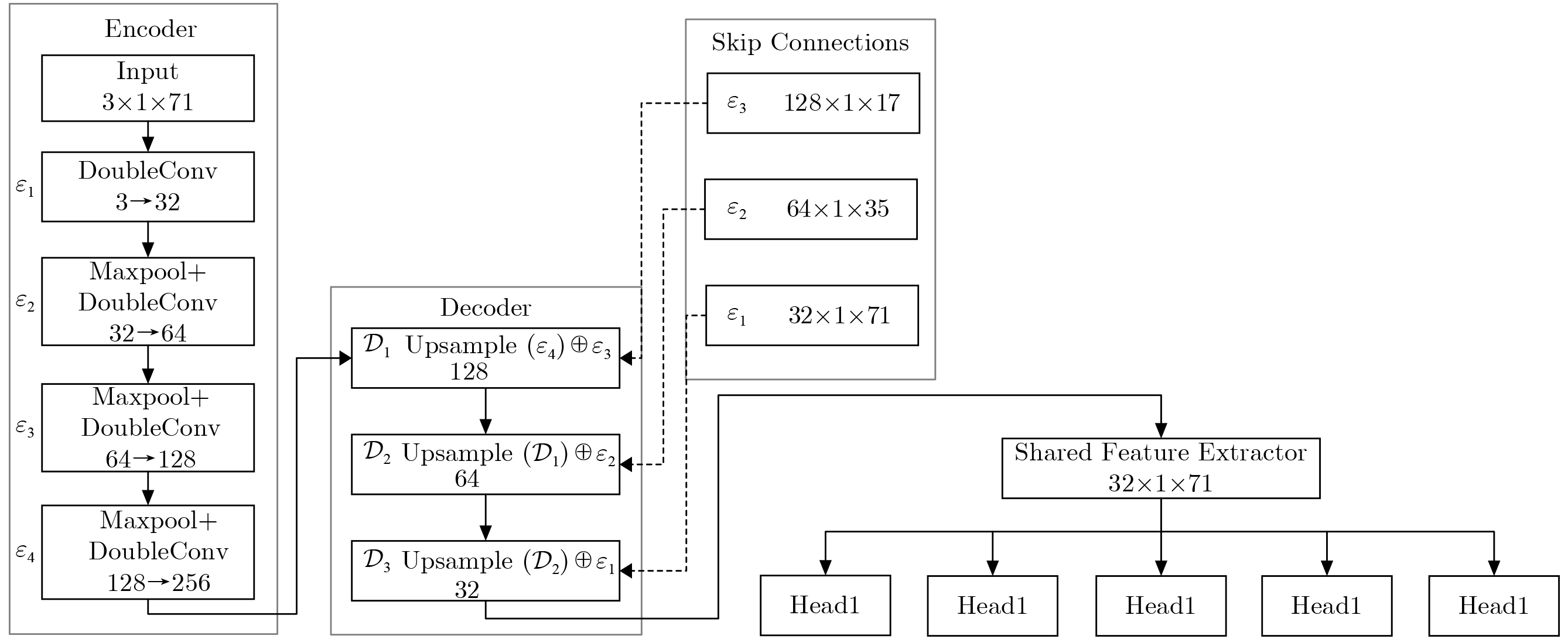
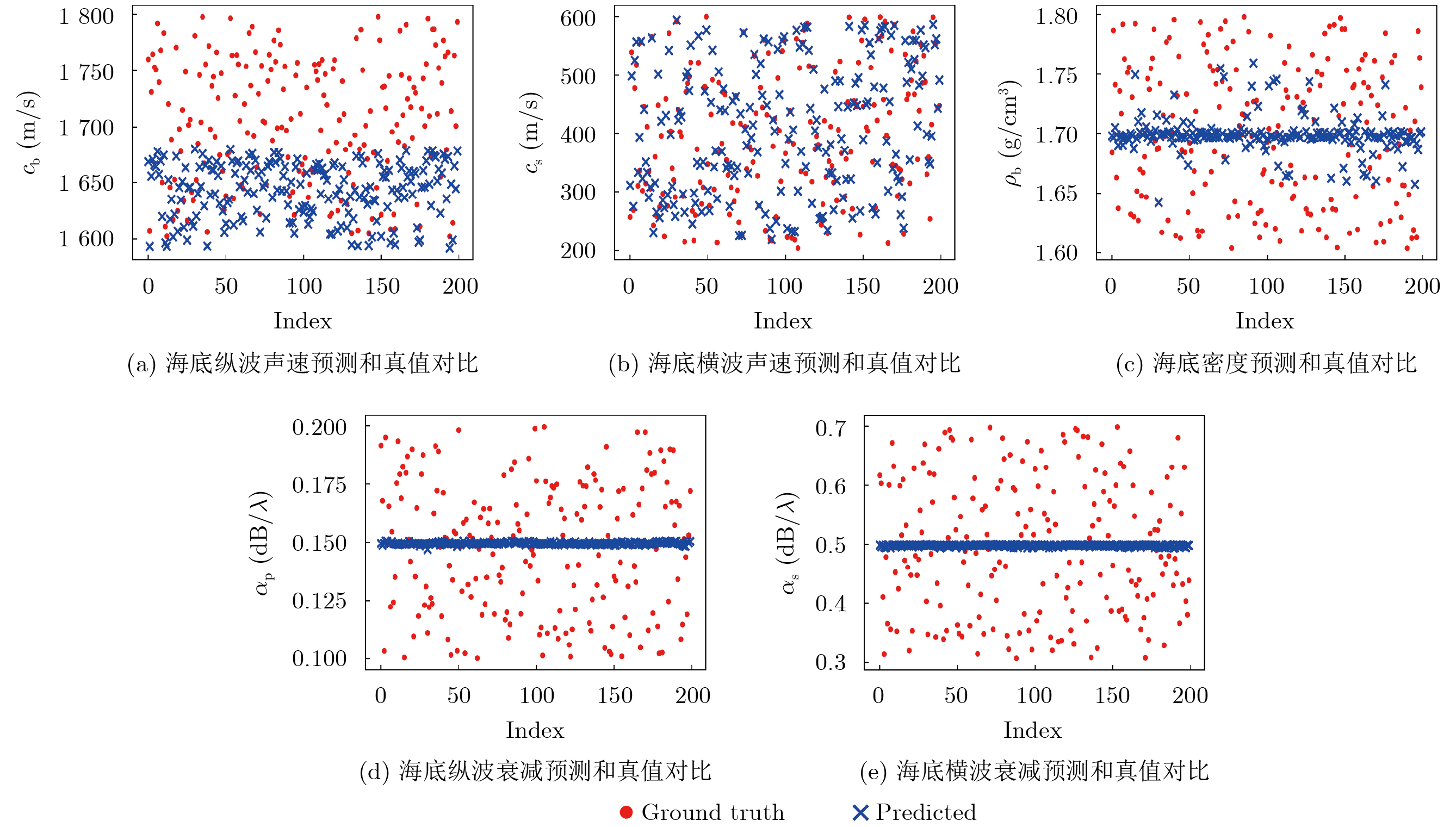
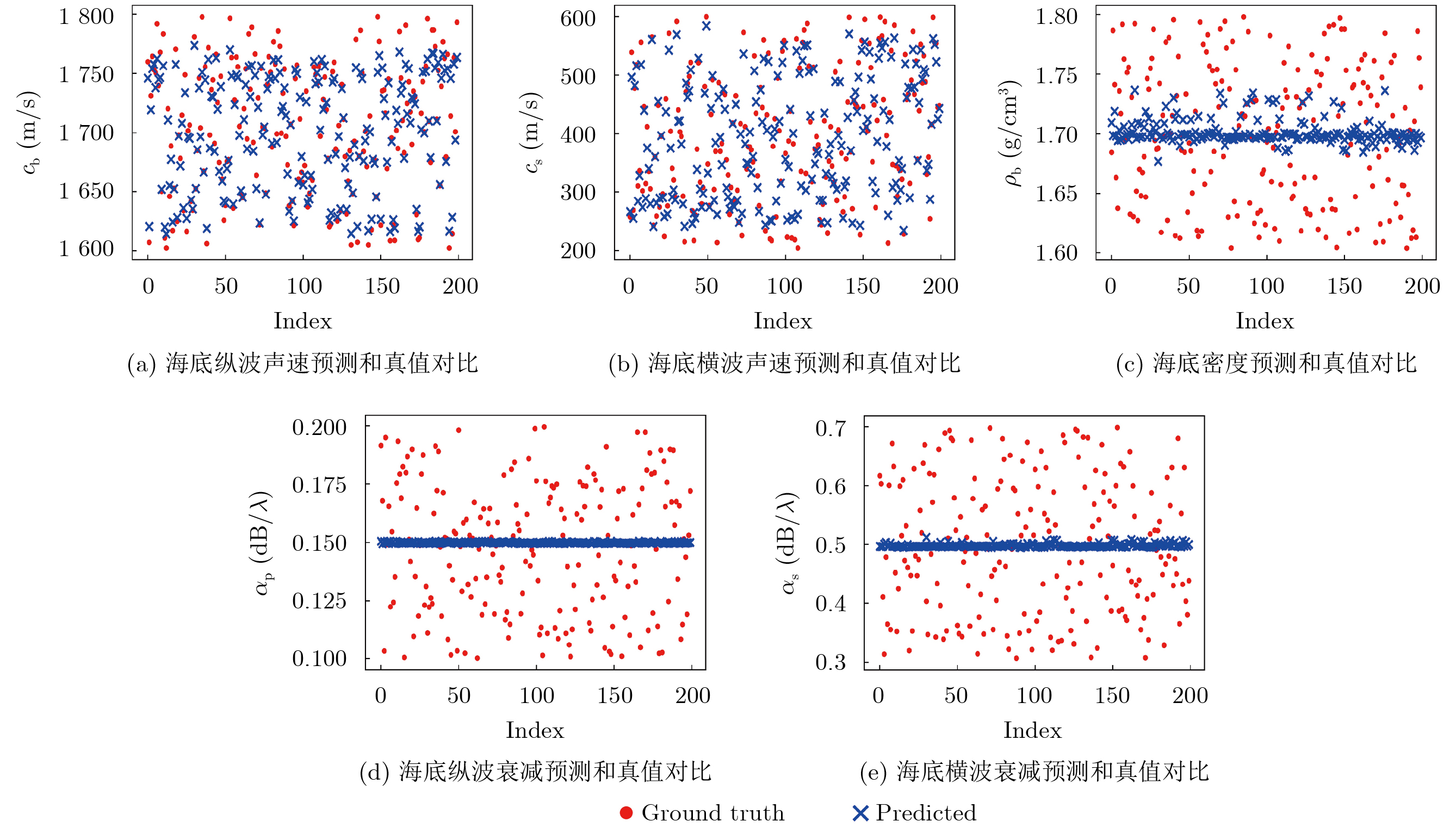
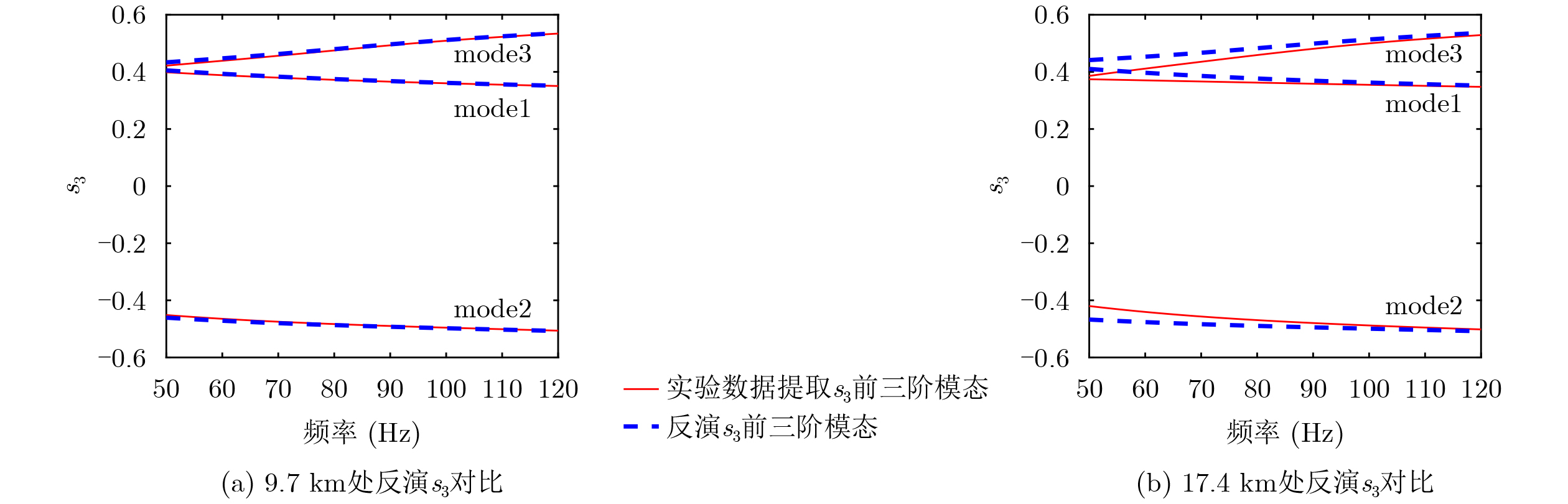
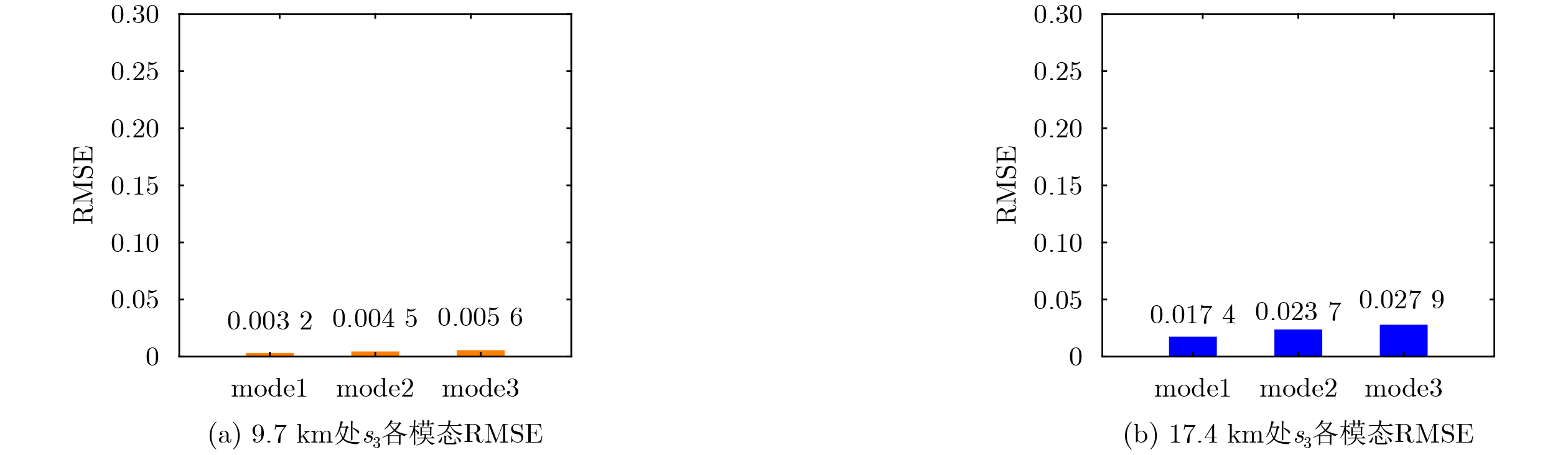
Objective Geoacoustic parameters in shallow water are critical for characterizing underwater acoustic propagation. Traditional inversion methods, however, are limited by high computational complexity, high cost, and strong dependence on the accuracy of environmental models. To address these issues, an efficient and robust inversion method is proposed to improve the reliability and stability of shallow-water geoacoustic parameter estimation while preserving computational efficiency. Methods This method is developed from the Stokes parameters of the vector acoustic field. Signals received by a single vector hydrophone are processed with a warping transform to separate and extract the normal modes propagating in a shallow-water waveguide. The extracted signals are then used to calculate the Stokes parameters, which are normalized and used as input features for the inversion model. An attention-enhanced multi-task U-Net is constructed with a shared encoder and multiple prediction branches to estimate key geoacoustic parameters, including compressional wave velocity, shear wave velocity, density, compressional wave attenuation, and shear wave attenuation. In addition, channel attention and spatial attention, together with a multi-task loss function with uncertainty weighting, are used to improve feature extraction and adaptively balance the different parameter inversion tasks. Results and Discussions The attention mechanism is shown to suppress fluctuations in model predictions and to improve the accuracy and stability of geoacoustic parameter inversion. When 200 test samples are evaluated, the mean absolute percentage errors of both compressional wave velocity and seabed density remain below 5% ( Table 3 ). After the attention mechanism is introduced, the errors in compressional wave velocity and seabed density are further reduced to below 3% (Table 5 ), which indicates improved prediction accuracy for these key parameters. The proposed method is also shown to be insensitive to parameter mismatch and to have strong robustness to environmental variation. Furthermore, the method is validated with measured data from a shallow-water region in the northern South China Sea, and its effectiveness and reliability in practical applications are confirmed (Table 6 andFig. 9 ). These results show that the attention-enhanced multi-task U-Net effectively captures critical features from the Stokes parameters and yields more stable and accurate geoacoustic parameter estimation in shallow-water environments.Conclusions The inversion method based on the Stokes parameters and an attention-enhanced multi-task U-Net effectively improves the accuracy and stability of shallow-water geoacoustic parameter estimation and shows strong performance in the prediction of compressional wave velocity, shear wave velocity, and density. However, limitations remain in the inversion of seabed attenuation. Future work should focus on improving feature extraction methods and network architecture and on testing the applicability of the method under more complex marine conditions. -
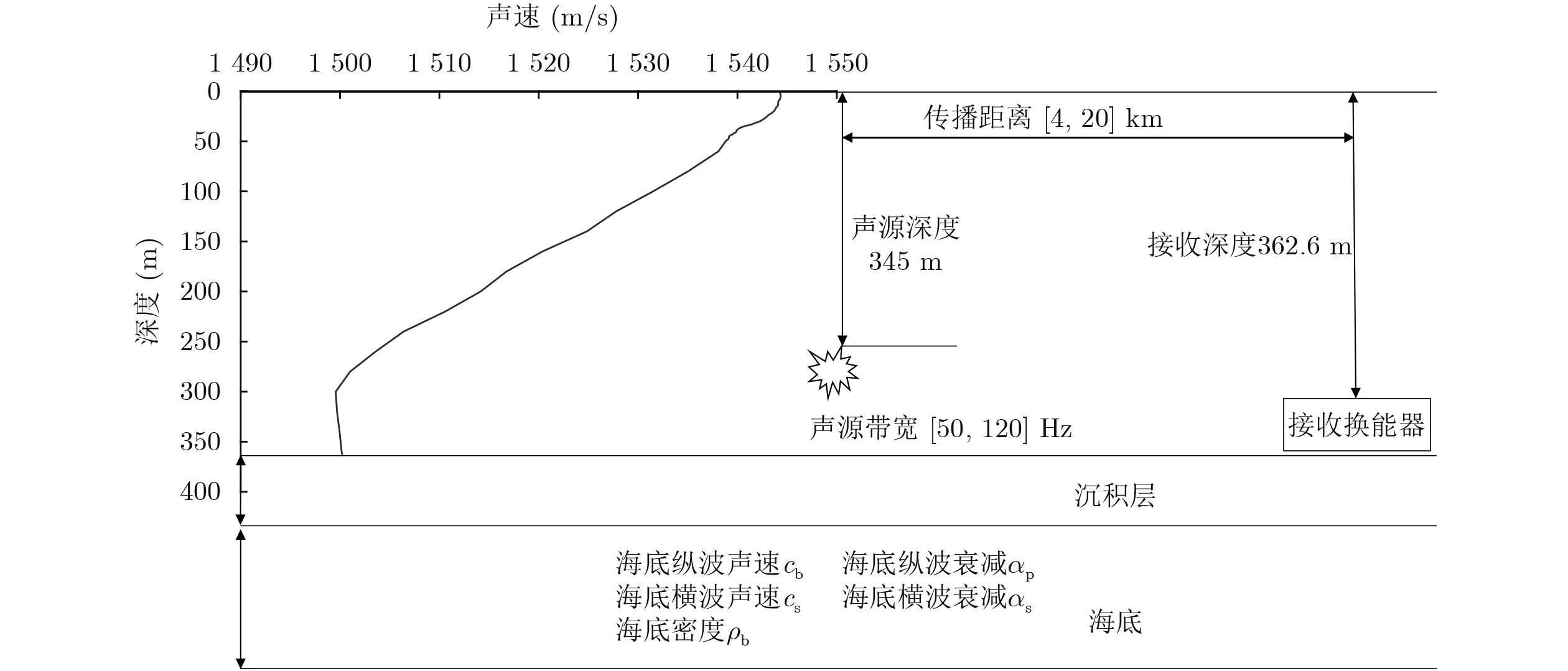
表 1 浅海波导仿真环境参数及地声参数反演范围与步长设置
待反演参数 参考值 搜索范围 步长 海底纵波声速$ {c}_{\mathrm{b}} $ (m/s) 1800 [ 1600 ,1800 ]1 海底横波声速$ {c}_{\mathrm{s}} $ (m/s) 400 [200,600] 1 海底密度$ {\rho }_{\mathrm{b}} $ (g/cm3) 1.7 [1.6,1.8] 0.1 海底纵波衰减$ {\alpha }_{\mathrm{p}} $ (dB/λ) 0.15 [0.1,0.2] 0.01 海底横波衰减$ {\alpha }_{\mathrm{s}} $ (dB/λ) 0.5 [0.3,0.7] 0.01  下载: 导出CSV
表 2 测试集的模型评估结果MAE
参数 MAE 海底纵波声速$ {c}_{\mathrm{b}} $ (m/s) 60.931 海底横波声速$ {c}_{\mathrm{s}} $ (m/s) 27.415 海底密度$ {\rho }_{\mathrm{b}} $ (g/cm3) 0.051 海底纵波衰减$ {\alpha }_{\mathrm{p}} $ (dB/λ) 0.024 海底横波衰减$ {\alpha }_{\mathrm{s}} $ (dB/λ) 0.098
下载: 导出CSV
表 3 测试集的模型评估结果MAPE(%)
参数 MAPE 海底纵波声速$ {c}_{\mathrm{b}} $ 3.521 海底横波声速$ {c}_{\mathrm{s}} $ 7.825 海底密度$ {\rho }_{\mathrm{b}} $ 3.023 海底纵波衰减$ {\alpha }_{\mathrm{p}} $ 17.337 海底横波衰减$ {\alpha }_{\mathrm{s}} $ 21.323
下载: 导出CSV
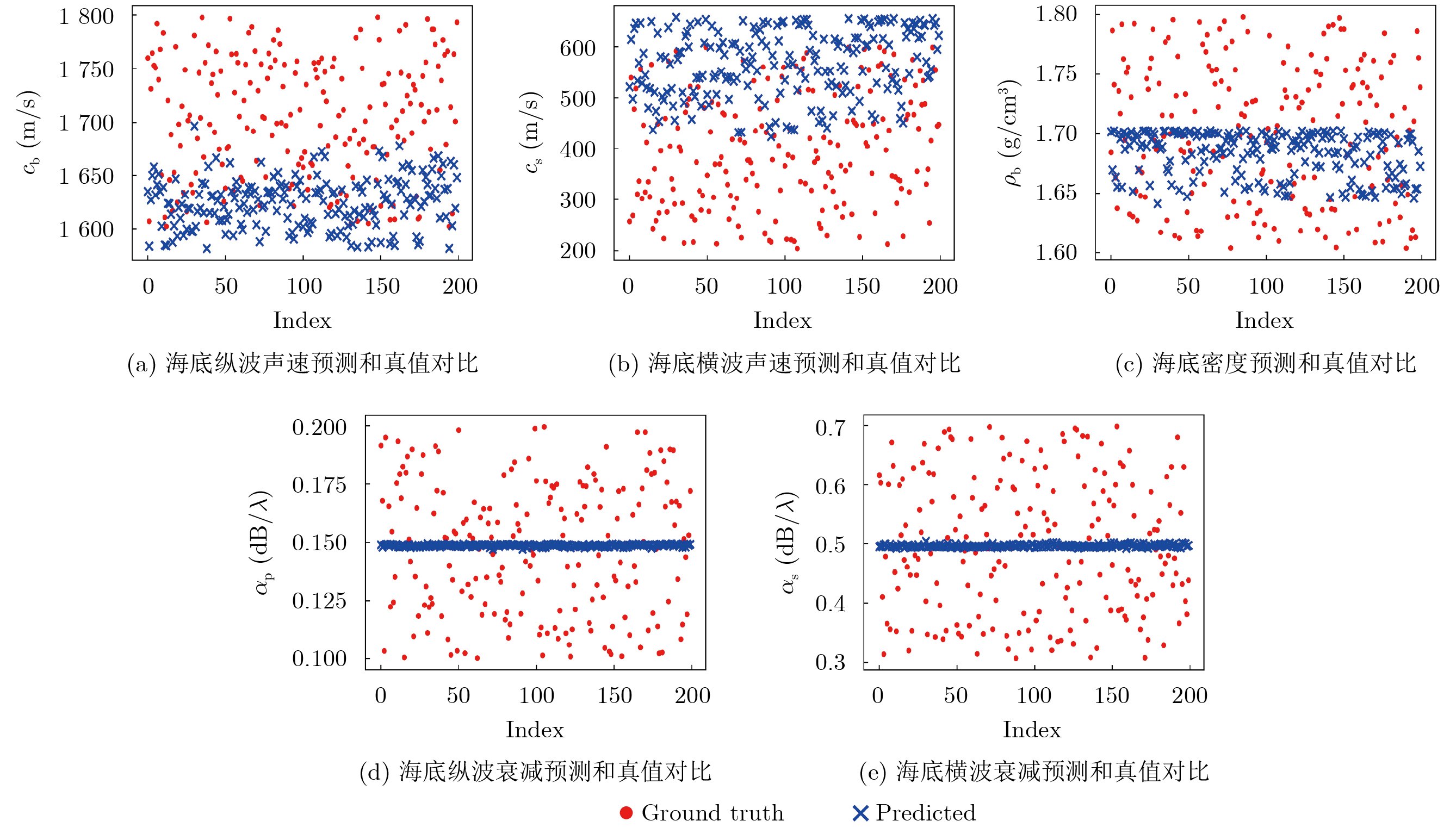
表 4 不同模型测试集MAE结果对比
参数 U-Net CBAM-U-Net TCN 海底纵波声速$ {c}_{\mathrm{b}} $ (m/s) 60.931 9.828 79.696 海底横波声速$ {c}_{\mathrm{s}} $ (m/s) 27.415 19.205 168.026 海底密度$ {\rho }_{\mathrm{b}} $ (g/cm3) 0.051 0.050 0.052 海底纵波衰减$ {\alpha }_{\mathrm{p}} $ (dB/λ) 0.024 0.024 0.025 海底横波衰减$ {\alpha }_{\mathrm{s}} $ (dB/λ) 0.098 0.099 0.099
下载: 导出CSV
表 5 不同模型测试集MAPE(%)结果对比
参数 U-Net CBAM-U-Net TCN 海底纵波声速cb 3.521 0.570 4.615 海底横波声速cs 7.825 5.347 49.772 海底密度ρb 3.023 2.945 3.009 海底纵波衰减αp 17.337 17.407 17.450 海底横波衰减αs 21.323 21.409 21.412
下载: 导出CSV
表 6 实验数据上的反演结果
距离
(km)方法 cb cs
(m/s)ρb αp
(dB/$ \lambda $)αs
(dB/$ \lambda $)(m/s) 误差(%) (g/cm3) 误差(%) 9.7 U-Net 1652.72 3.10 442.57 1.67 1.76 0.15 0.50 CBAM 1622.80 1.23 430.63 1.71 0.59 0.14 0.46 17.4 U-Net 1660.81 3.60 448.65 1.74 2.35 0.16 0.54 CBAM 1630.56 1.71 440.01 1.69 0.59 0.15 0.49 匹配场 1603.10 - - 1.70 - - -
下载: 导出CSV
-
[1] GORDIENKO V A. Vektorno-fazovye metody v akustike[M]. Moskva: Nauka, 1989. [2] KUZNETSOV G N and STEPANOV A N. Interference and phase structure of the low-frequency vector-scalar field in shallow water for variable reception or transmission depths[J]. Physics of Wave Phenomena, 2015, 23(4): 279–291. doi: 10.3103/S1541308X15040068. [3] DAHL P H and DALL’OSTO D R. Vector acoustic analysis of time-separated modal arrivals from explosive sound sources during the 2017 seabed characterization experiment[J]. IEEE Journal of Oceanic Engineering, 2020, 45(1): 131–143. doi: 10.1109/joe.2019.2902500. [4] 朱军, 祝捍皓, 屈科, 等. 声速分布对浅海低频声场空间相关的影响研究[J]. 声学技术, 2019, 38(4): 376–381. doi: 10.16300/j.cnki.1000-3630.2019.04.003.ZHU Jun, ZHU Hanhao, QU Ke, et al. Influences of velocity profiles on the spatial correlation of low-frequency sound field in shallow water[J]. Technical Acoustics, 2019, 38(4): 376–381. doi: 10.16300/j.cnki.1000-3630.2019.04.003. [5] 杨健敏, 王佳惠, 乔钢, 等. 水声通信及网络技术综述[J]. 电子与信息学报, 2024, 46(1): 1–21. doi: 10.11999/JEIT230424.YANG Jianmin, WANG Jiahui, QIAO Gang, et al. Review of underwater acoustic communication and network technology[J]. Journal of Electronics & Information Technology, 2024, 46(1): 1–21. doi: 10.11999/JEIT230424. [6] 王春涛, 马树青, 孟洲, 等. 基于光纤矢量水听器的声场涡旋统计特性分析[C]. 声学学会水声学分会2019年学术会议论文集, 南京, 中国, 2019: 275–277.WANG Chuntao, MA Shuqing, MENG Zhou, et al. Research on the vortex statistical characteristics of the acoustic field based on the optic fiber vector hydrophone[C]. Proceedings of the 2019 Annual Conference of the Underwater Acoustics Branch of the Acoustical Society of China, Nanjing, China, 2019: 275–277. [7] 翟铎, 李风华, 张波, 等. 利用机会运动声源的水平阵地声反演[J]. 声学学报, 2023, 48(4): 761–773. doi: 10.15949/j.cnki.0371-0025.2023.04.026.ZHAI Duo, LI Fenghua, ZHANG Bo, et al. Geoacoustic inversion with a horizontal array making use of an opportunity moving source[J]. Acta Acustica, 2023, 48(4): 761–773. doi: 10.15949/j.cnki.0371-0025.2023.04.026. [8] 董阳, 朴胜春. 基于声压敏感核的水下声场地声参数敏感性分析[J]. 声学学报, 2024, 49(5): 913–926. doi: 10.12395/0371-0025.2023054.DONG Yang and PIAO Shengchun. Sensitivity analysis of geoacoustic parameters in underwater acoustic field based on pressure sensitivity kernel[J]. Acta Acustica, 2024, 49(5): 913–926. doi: 10.12395/0371-0025.2023054. [9] GERSTOFT P. Inversion of seismoacoustic data using genetic algorithms and a posteriori probability distributions[J]. The Journal of the Acoustical Society of America, 1994, 95(2): 770–782. doi: 10.1121/1.408387. [10] LI Zhenglin, ZHANG Renhe, YAN Jin, et al. Geoacoustic inversion by matched-field processing combined with vertical reflection coefficients and vertical correlation[J]. IEEE Journal of Oceanic Engineering, 2004, 29(4): 973–979. doi: 10.1109/JOE.2004.834172. [11] 郝望, 段睿, 杨坤德. 联合简正波水波和底波频散特性的贝叶斯地声参数反演[J]. 物理学报, 2023, 72(5): 054303. doi: 10.7498/aps.72.20221717.HAO Wang, DUAN Rui, and YANG Kunde. Bayesian geoacoustic parameter inversion based on dispersion characteristics of normal mode water wave and ground wave[J]. Acta Physica Sinica, 2023, 72(5): 054303. doi: 10.7498/aps.72.20221717. [12] STEINBERG B Z, BERAN M J, CHIN S H, et al. A neural network approach to source localization[J]. The Journal of the Acoustical Society of America, 1991, 90(4): 2081–2090. doi: 10.1121/1.401635. [13] 秦炜, 冯海泓, 徐楚林. 基于多任务密集连接网络的目标定位方法[J]. 声学技术, 2025, 44(5): 781–791. doi: 10.16300/j.cnki.1000-3630.24020501.QIN Wei, FENG Haihong, and XU Chulin. A target localization method based on multi-task densely connected neural networks[J]. Technical Acoustics, 2025, 44(5): 781–791. doi: 10.16300/j.cnki.1000-3630.24020501. [14] PICCOLO J, HARAMUNIZ G, and MICHALOPOULOU Z H. Geoacoustic inversion with generalized additive models[J]. The Journal of the Acoustical Society of America, 2019, 145(6): EL463–EL468. doi: 10.1121/1.5110244. [15] VAN KOMEN D F, NEILSEN T B, HOWARTH K, et al. Seabed and range estimation of impulsive time series using a convolutional neural network[J]. The Journal of the Acoustical Society of America, 2020, 147(5): EL403–EL408. doi: 10.1121/10.0001216. [16] FENG Sheng, ZHU Xiaoqian, MA Shuqing, et al. GIT: A transformer-based deep learning model for geoacoustic inversion[J]. Journal of Marine Science and Engineering, 2023, 11(6): 1108. doi: 10.3390/jmse11061108. [17] VARDI A and BONNEL J. End-to-end geoacoustic inversion with neural networks in shallow water using a single hydrophone[J]. IEEE Journal of Oceanic Engineering, 2024, 49(2): 380–389. doi: 10.1109/JOE.2023.3331423. [18] BONNEL J, FLAMANT J, and DAVID R, et al. Polarization of ocean acoustic normal modes[J]. The Journal of the Acoustical Society of America, 2021, 150(3): 1897–1911. doi: 10.1121/10.0006108. [19] ZHANG Kailong, LI Xiaoman, WANG Xinning, et al. Inversion of sediment parameters in shallow water waveguides using polarization characteristics of vector acoustic fields[J]. Journal of Theoretical and Computational Acoustics, 2025, 33(3): 2550005. doi: 10.1142/s2591728525500057. [20] 张凯龙. 联合深度学习和矢量极化特性的浅海沉积层参数反演[D]. [硕士论文], 江苏科技大学, 2025. doi: 10.27171/d.cnki.ghdcc.2025.000734.ZHANG Kailong. Inversion of shallow water sedimentary layer parameters by combining deep learning and vector polarization characteristics[D]. [Master dissertation], Jiangsu University of Science and Technology, 2025. doi: 10.27171/d.cnki.ghdcc.2025.000734. [21] 李佳蔚, 鹿力成, 郭圣明, 等. warping变换提取单模态反演海底衰减系数[J]. 物理学报, 2017, 66(20): 204301. doi: 10.7498/aps.66.204301.LI Jiawei, LU Licheng, GUO Shengming, et al. Inversion of seabed attenuation by using single mode extracted by warping transform[J]. Acta Physica Sinica, 2017, 66(20): 204301. doi: 10.7498/aps.66.204301. -

 下载:
下载:

图(10) / 表(6)
计量
- 文章访问数: 948
- HTML全文浏览量: 533
- PDF下载量: 85
- 被引次数: 0
