




Genetic-algorithm-optimized All-metal Metasurface for Cross-band Stealth via Low-cost Computer Numerical Control Fabrication
-
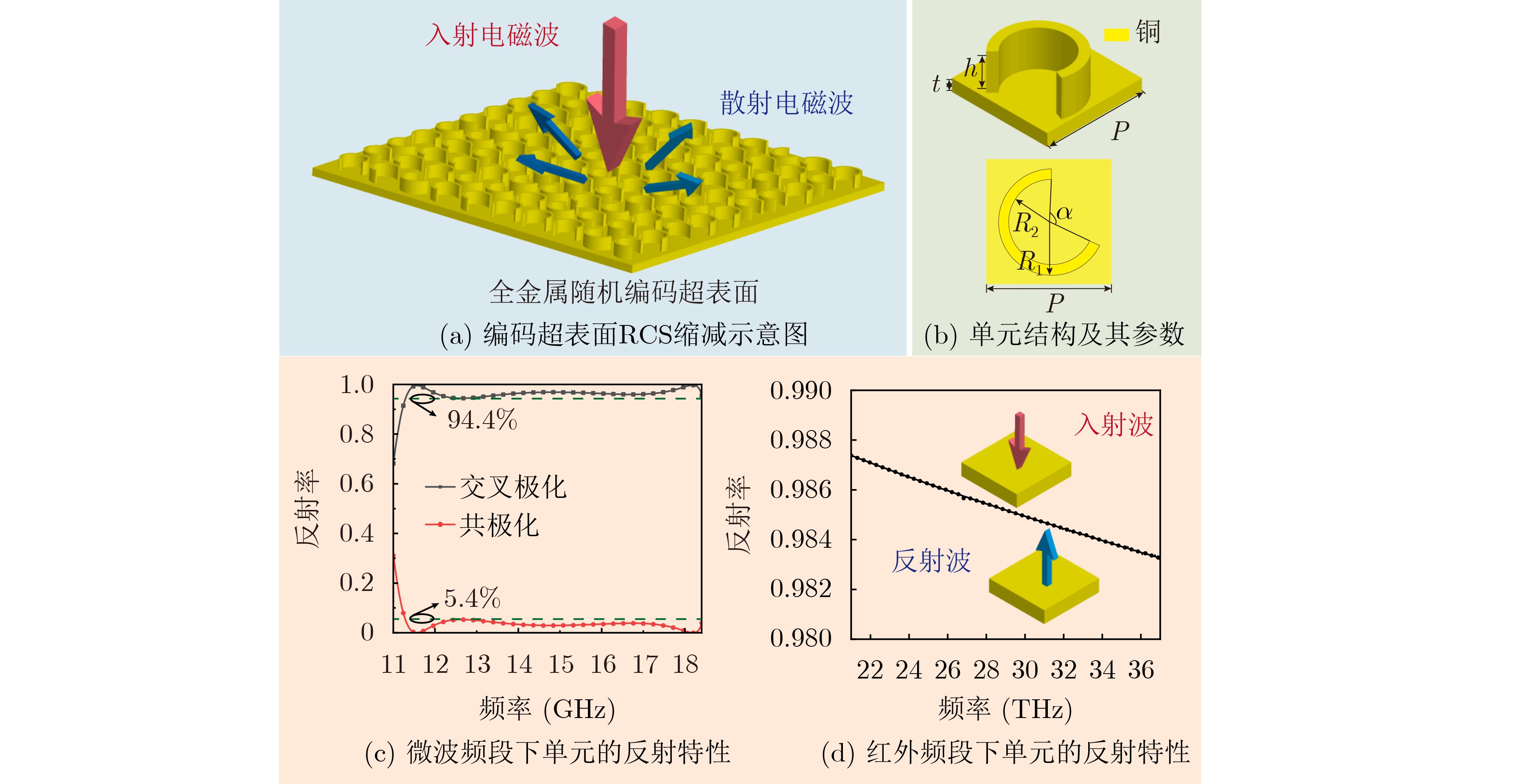
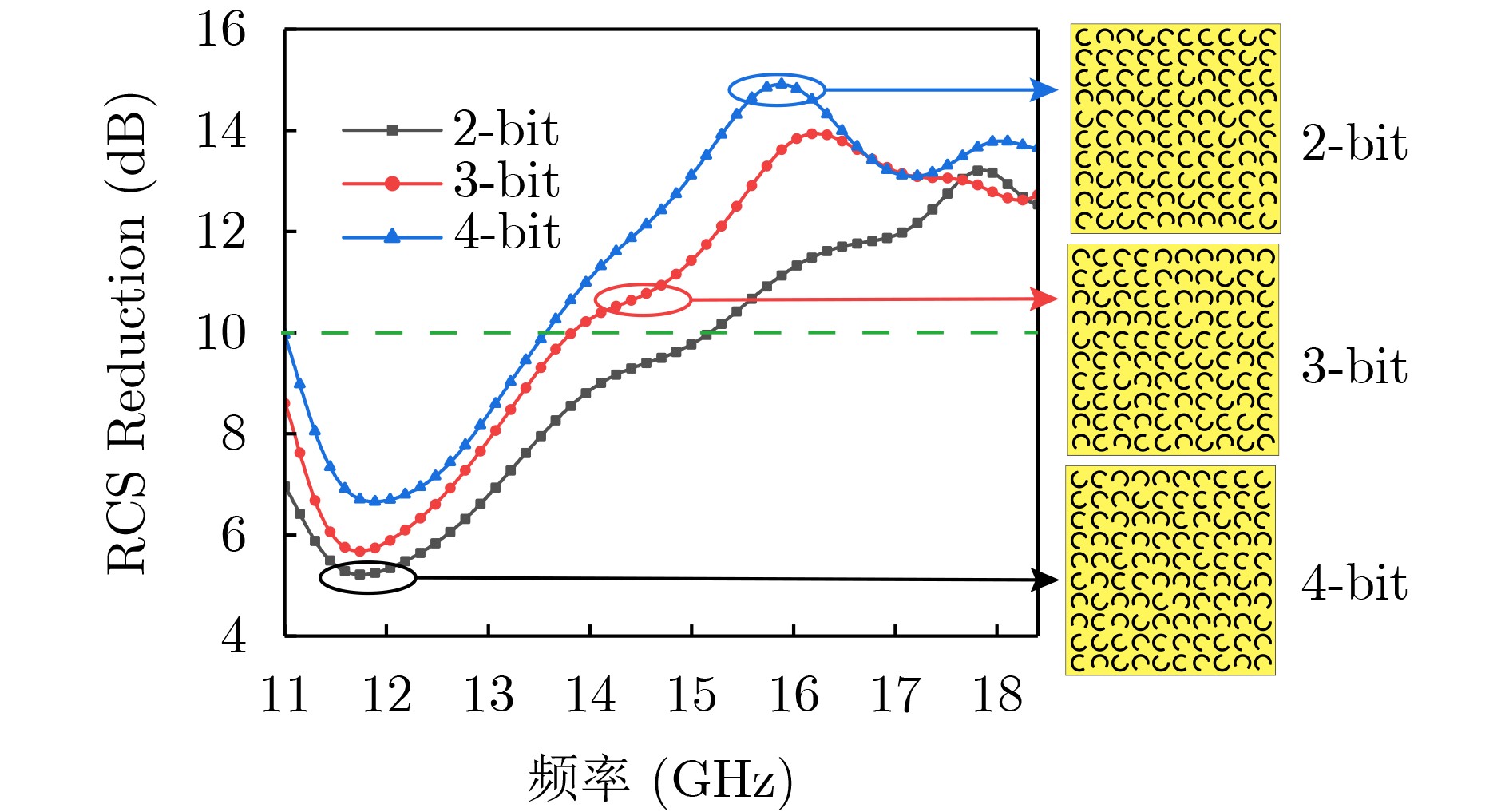
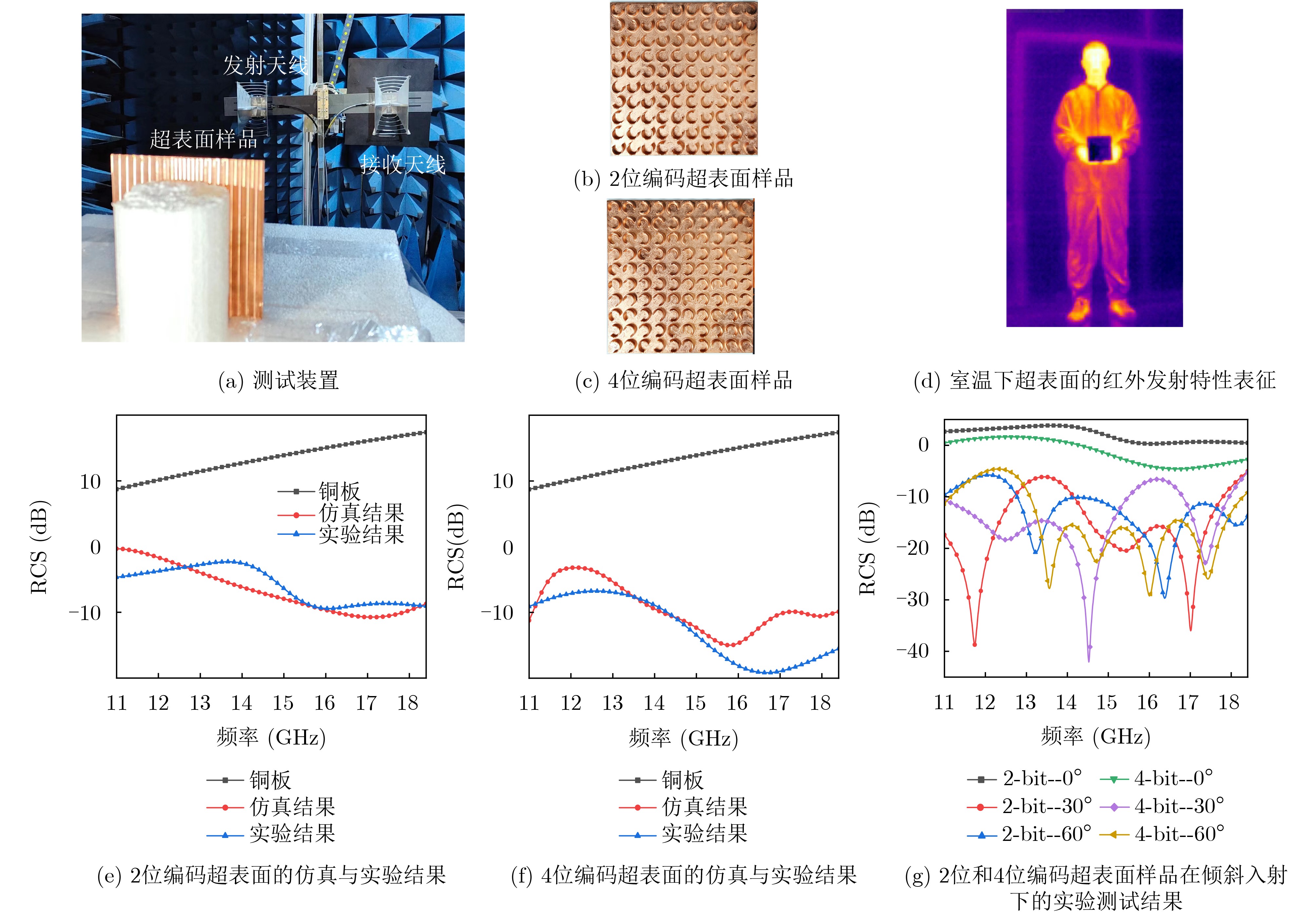
摘要: 该文通过单一材料平台集成宽带微波散射(7.4 GHz带宽)与被动红外抑制,为跨波段隐身提供了一种解决方案,克服了传统隐身材料同时兼顾微波吸收与热管理之间的设计挑战。该文提出一种新型全金属随机编码超表面,实现了跨波段隐身功能,兼具微波频段雷达散射截面(RCS)缩减和红外隐身效果。该超表面整体采用铜结构,通过计算机数控(CNC)加工制造,相比传统复合材料设计,消除了界面脱层的风险。同时,其单一材料构造使其能够同时调控微波散射特性和红外辐射特性。该结构通过遗传算法优化相位分布后,在11$ \sim $18.4 GHz频段(73%带宽)内实现了超过10 dB的RCS缩减,在14.7 GHz频点处的最大抑制效果超过15 dB,相关结果已通过仿真和微波暗室测试验证。该全金属结构在8$ \sim $14 μm红外波段展现出超过99.9%的红外反射率,且通过商业红外成像仪热成像实验证实其被动红外隐身能力,显示出在多光谱隐身应用中的潜力。所制造的原型结构尺寸为150×150 mm2,包含10×10的单元阵列,在最大达60°的线极化斜入射角下仍保持良好的结构稳定性,验证了其在贴合式应用中推广的可行性。Abstract:
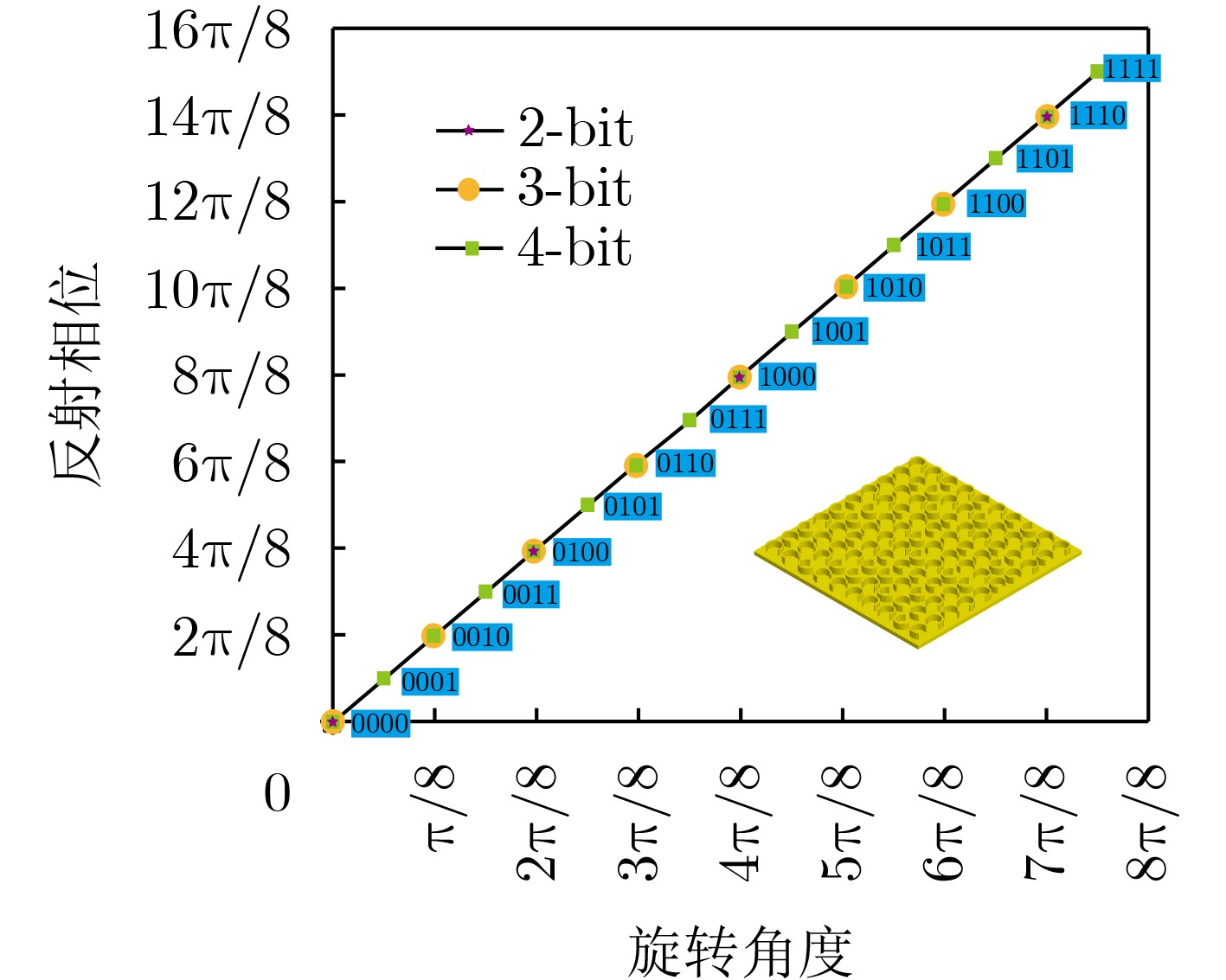
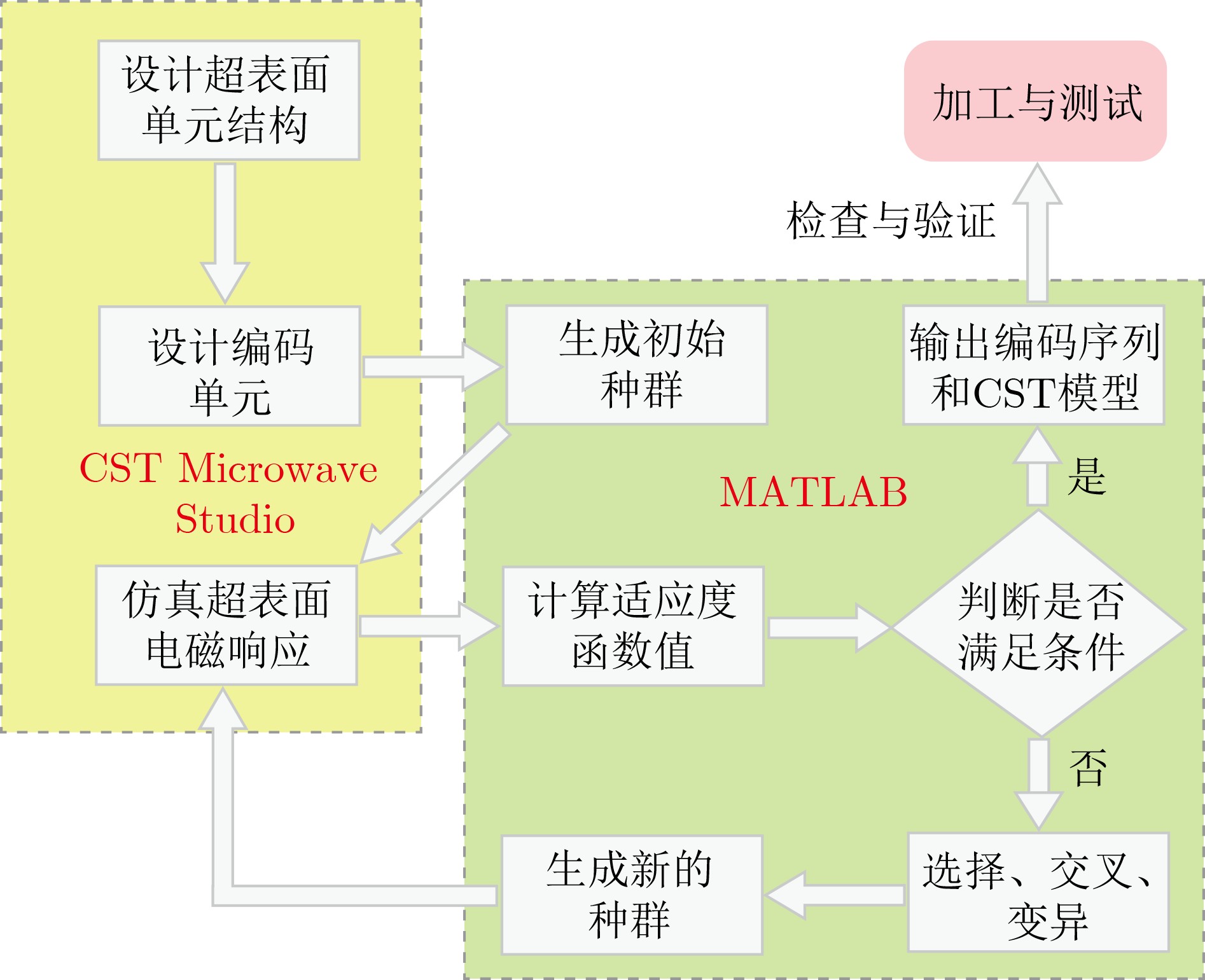
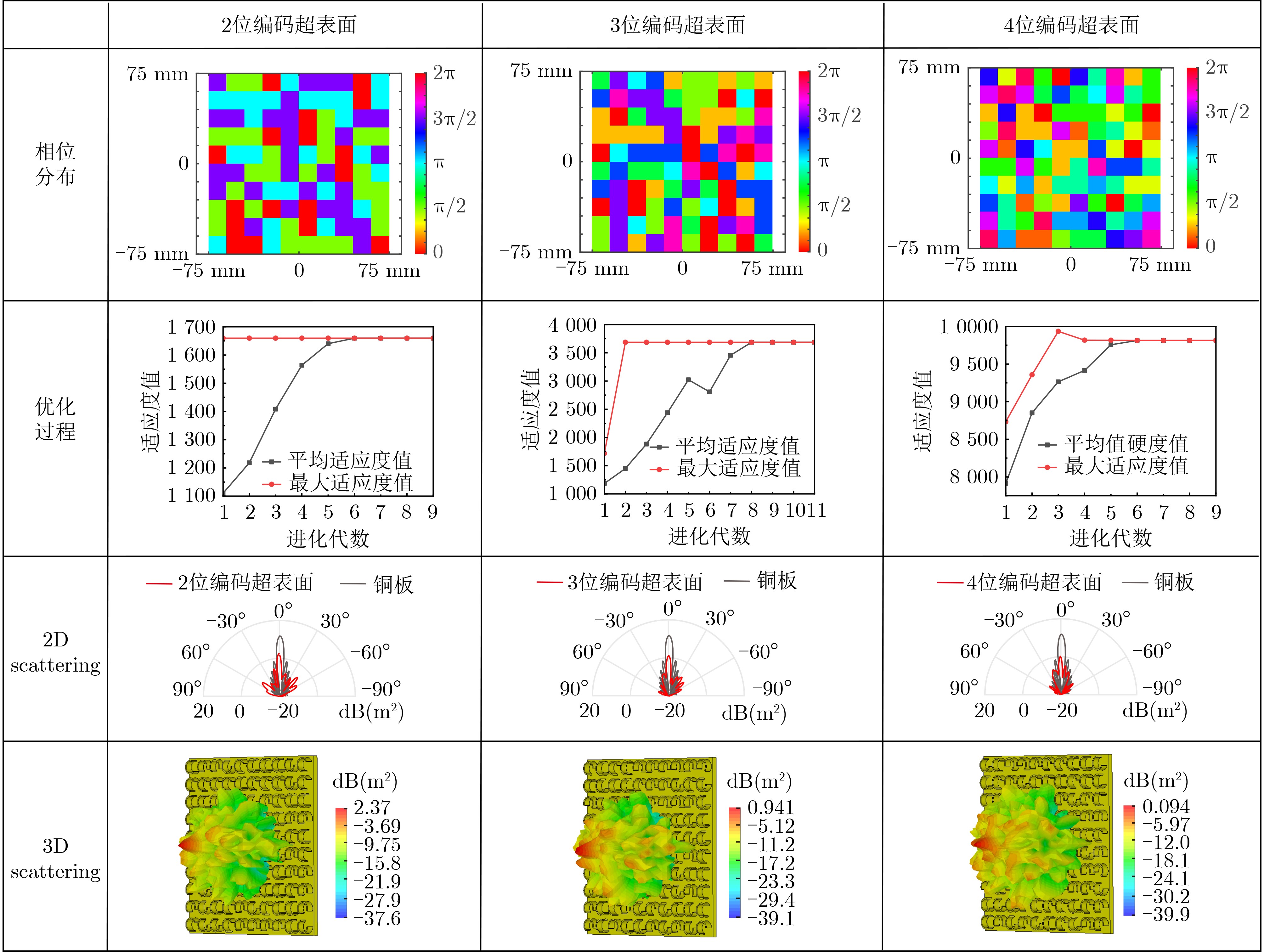
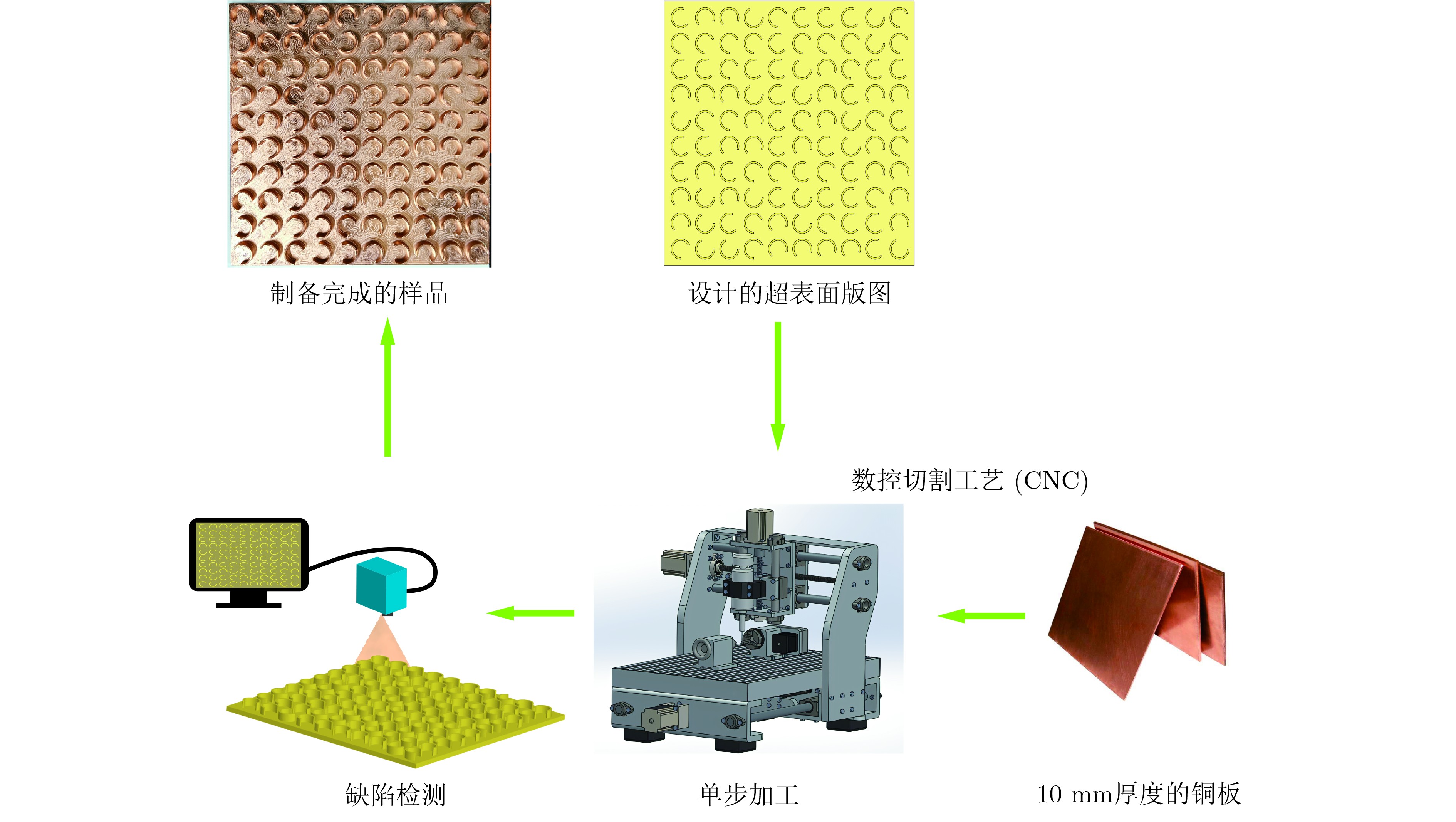
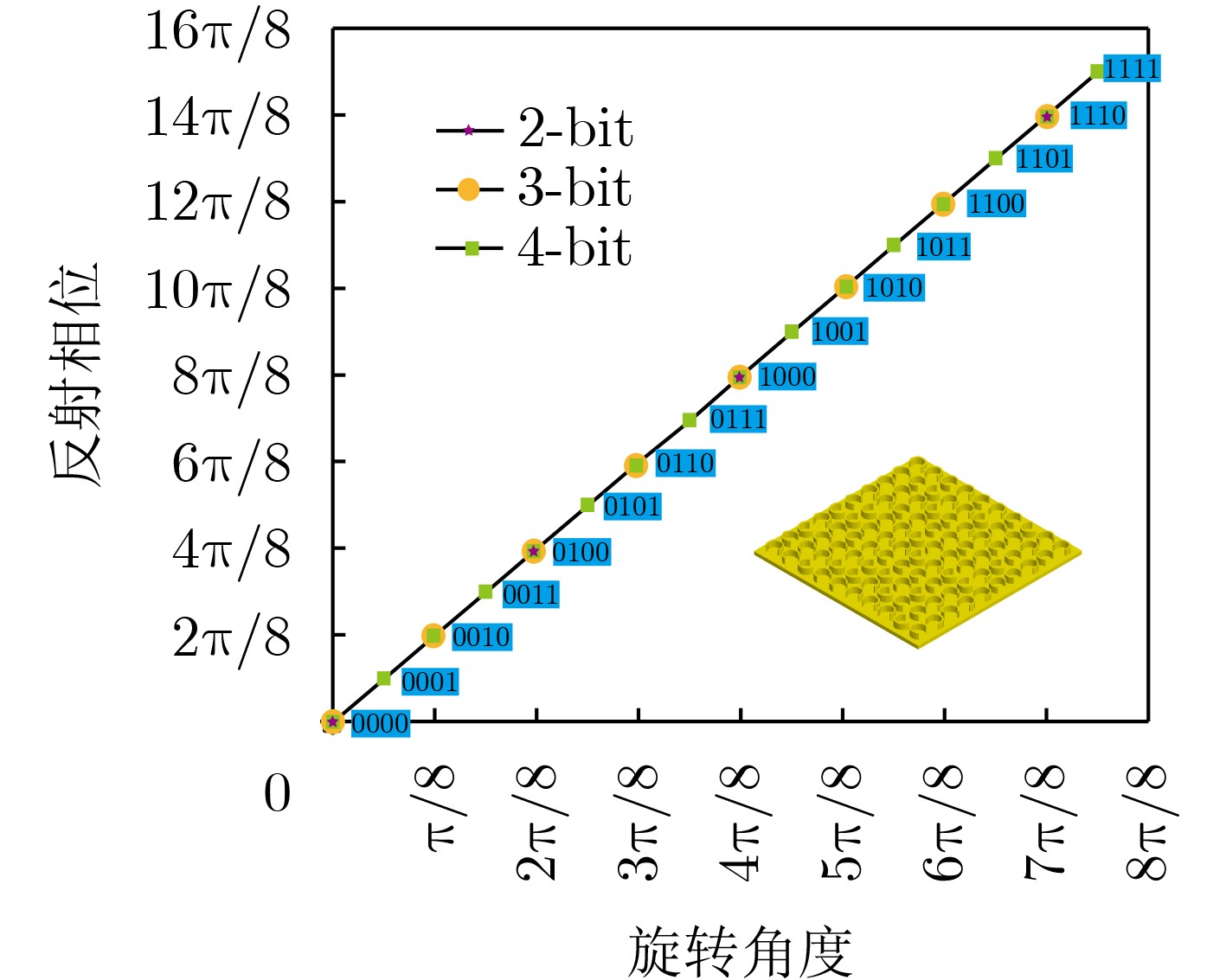
Objective Traditional electromagnetic stealth materials face the practical challenge of achieving both microwave absorption and infrared stealth. Conventional solutions, including geometric optimization and multilayer composite coatings, often suffer from narrow bandwidth, complex fabrication, and limited cross-band compatibility. This study proposes a genetic algorithm-optimized all-metal random coding metasurface that enables concurrent broadband Radar Cross Section (RCS) reduction and low infrared emissivity on a monolithic metallic platform, thereby addressing these practical limitations. Methods Monolithic all-metal C-shaped resonant units are employed. The design is based on the Pancharatnam-Berry geometric phase, in which the reflection phase is regulated by the rotation angle of the unit. Coding schemes of 2-bit, 3-bit, and 4-bit are implemented, corresponding to 4, 8, and 16 discrete phase states. A MATLAB-CST co-simulation framework is established. CST extracts unit responses using the Finite Element Method (FEM), whereas MATLAB applies a genetic algorithm to optimize the phase distribution for scattering energy diffusion. All-metal metasurface prototypes (150×150 mm2, 10×10 array) are fabricated using Computer Numerical Control(CNC) cutting. Results and Discussions Genetic algorithm optimization converges within 6~8 generations. Increasing the number of coding bits enhances phase randomness. The 4-bit metasurface achieves an average 10 dB RCS reduction over 11$ \sim $18.4 GHz. Simulation results agree with anechoic chamber measurements under oblique incidence angles from 0° to 60°. Infrared imaging confirms the low emissivity of the metallic surface. Compared with conventional composite or multilayer structures, the all-metal design simplifies fabrication, prevents interfacial mismatch, and improves structural stability. The metasurface demonstrates broadband, wide-angle, and cross-band stealth performance. Conclusions This study presents a genetic algorithm-optimized all-metal random coding metasurface that achieves cross-band stealth compatibility. The design addresses the persistent challenge of realizing both microwave performance and thermal management in conventional stealth materials. Three main technical contributions are demonstrated. (1)The monolithic copper structure provides greater than 99.9% infrared reflectivity in the 8$ \sim $14 μm band, verified by FLIR imaging, and achieves an average 10 dB RCS reduction over 11$ \sim $18.4 GHz. (2)The single-material configuration removes the risk of delamination. The CNC-fabricated prototype maintains structural integrity under 60° oblique incidence and reduces fabrication cost by approximately 78% compared with lithographic processing. (3)The co-simulation optimization framework converges within eight generations for 4-bit coding, enabling broadband scattering manipulation over 7.4 GHz. The proposed metasurface combines fabrication reliability, cost efficiency, and dual-band stealth capability. These characteristics provide a practical basis for large-scale deployment in military stealth systems and satellite platforms that require multispectral concealment and long-term structural durability. -
Key words:
- Coding metasurface /
- Cross-band stealth /
- Inverse design /
- Low-cost fabrication
-
表 1 本工作的对比参考文献
文献 相对带宽(%) RCS缩减带宽(GHz) 最大RCS缩减效果(dB) 结构类型 入射角度(°) 是否跨波段 [36] 31.25 5.4~7.4 20 MIM 0~45 否 [37] 9.09 10.5~11.5 13 MIM NO 否 [38] 28.32 6.94~9.23 35.5 MIM 0~40 否 [39] 31.31 9.26~12.87 19.4 MIM NO 否 [40] 35.46 14.84~19.35 / ITO/I/ITO NO 是 [41] 11.58 5.8~8.3 约19 IR-ECD NO 是 本文 32.18 11~18.4 15 All-Metal 0~60 是  下载: 导出CSV
-
[1] RAN Yuzhou, SHI Lihua, WU Shuran, et al. Optically transparent ultrawideband electromagnetic stealth metasurface for microwave absorption and scattering[J]. IEEE Antennas and Wireless Propagation Letters, 2022, 21(12): 2412–2416. doi: 10.1109/LAWP.2022.3194724. [2] 王谦喆, 何召阳, 宋博文, 等. 射频隐身技术研究综述[J]. 电子与信息学报, 2018, 40(6): 1505–1514. doi: 10.11999/JEIT170945.WANG Qianzhe, HE Zhaoyang, SONG Bowen, et al. Overview on RF stealth technology research[J]. Journal of Electronics & Information Technology, 2018, 40(6): 1505–1514. doi: 10.11999/JEIT170945. [3] YOUSSEF N N. Radar cross section of complex targets[J]. Proceedings of the IEEE, 1989, 77(5): 722–734. doi: 10.1109/5.32062. [4] HOSSAIN M B, FARUQUE M R I, ISLAM M T, et al. Triple band microwave metamaterial absorber based on double E-shaped symmetric split ring resonators for EMI shielding and stealth applications[J]. Journal of Materials Research and Technology, 2022, 18: 1653–1668. doi: 10.1016/j.jmrt.2022.03.079. [5] WU Yue, TAN Shujuan, ZHAO Yue, et al. Broadband multispectral compatible absorbers for radar, infrared and visible stealth application[J]. Progress in Materials Science, 2023, 135: 101088. doi: 10.1016/j.pmatsci.2023.101088. [6] GUO Lei, FANG Haiting, SUN Yuxiang, et al. A low-profile and broadband pattern-reconfigurable dielectric resonator antenna with wide spatial coverage[J]. IEEE Transactions on Antennas and Propagation, 2023, 71(10): 8296–8301. doi: 10.1109/TAP.2023.3293013. [7] GUO Lei, LI Xuwang, SUN Wenjian, et al. Designing and modeling of a dual-band rectenna with compact dielectric resonator antenna[J]. IEEE Antennas and Wireless Propagation Letters, 2022, 21(5): 1046–1050. doi: 10.1109/LAWP.2022.3157322. [8] 王文涛, 黄家露. 基于有源对消的装甲目标被动毫米波隐身技术研究[J]. 电子与信息学报, 2022, 44(12): 4178–4184. doi: 10.11999/JEIT210944.WANG Wentao and HUANG Jialu. Research on passive millimeter-wave stealth technology based on active cancellation for armored target[J]. Journal of Electronics & Information Technology, 2022, 44(12): 4178–4184. doi: 10.11999/JEIT210944. [9] ZHANG Chengyun, ZHANG Bingfeng, GE Shuangkang, et al. Compatible metasurface for ultra-wideband radar and switchable infrared stealth[J]. Optics Express, 2024, 32(18): 31359–31374. doi: 10.1364/OE.533691. [10] HU Jie, BANDYOPADHYAY S, LIU Yuhui, et al. A review on metasurface: From principle to smart metadevices[J]. Frontiers in Physics, 2021, 8: 586087. doi: 10.3389/fphy.2020.586087. [11] WANG Hailin, MA Huifeng, CHEN Mao, et al. A reconfigurable multifunctional metasurface for full-space control of electromagnetic waves[J]. Advanced Functional Materials, 2021, 31(25): 2100275. doi: 10.1002/adfm.202100275. [12] 胡杰, 唐紫依, 蓝翔, 等. 基于相变材料 Ge2Sb2Se4Te1 的可切换边缘检测与聚焦成像超表面[J]. 光电工程, 2023, 50(8): 220284. doi: 10.12086/oee.2023.220284.HU Jie, TANG Ziyi, LAN Xiang, et al. Switchable edge detection and imaging based on a phase-change metasurface with Ge2Sb2Se4Te1[J]. Opto-Electronic Engineering, 2023, 50(8): 220284. doi: 10.12086/oee.2023.220284. [13] 马依泽, 李春树, 马鑫, 等. 基于超表面的极化转换和雷达散射截面缩减设计[J]. 光电工程, 2025, 52(10): 250183. doi: 10.12086/oee.2025.250183.MA Yize, LI Chunshu, MA Xin, et al. Design of polarization conversion and radar cross-section reduction based on metasurfaces[J]. Opto-Electronic Engineering, 2025, 52(10): 250183. doi: 10.12086/oee.2025.250183. [14] KHAN H A, MAJEED A, ZAHRA H, et al. Transparent conformal metasurface absorber for ultrawideband radar cross section reduction[J]. Journal of Physics D: Applied Physics, 2024, 57(13): 135105. doi: 10.1088/1361-6463/ad1951. [15] LI Yanling, XU Jianfeng, LIU Fuhai, et al. Broadband achromatic transmission stealth cloak based on all dielectric metasurfaces[J]. Physica Scripta, 2024, 99(7): 075536. doi: 10.1088/1402-4896/ad5803. [16] SHI Haoyang, TIAN Jie, CHEN Nengfu, et al. Wideband high-efficiency scattering reduction in a graphene based optically transparent and flexible metasurface[J]. Carbon, 2024, 225: 119150. doi: 10.1016/j.carbon.2024.119150. [17] LIU Yahong and ZHAO Xiaopeng. Perfect absorber metamaterial for designing low-RCS patch antenna[J]. IEEE Antennas and Wireless Propagation Letters, 2014, 13: 1473–1476. doi: 10.1109/LAWP.2014.2341299. [18] GUO Yuan, DUAN Yuping, LIU Xiaoji, et al. Construction of rGO/MOF-derived CNTs aerogel with multiple losses for multi-functional efficient electromagnetic wave absorber[J]. Carbon, 2024, 230: 119591. doi: 10.1016/j.carbon.2024.119591. [19] YANG Xuan, XUAN Lixin, MEN Weiwei, et al. Carbonyl iron/glass fiber cloth composites: Achieving multi-spectrum stealth in a wide temperature range[J]. Chemical Engineering Journal, 2024, 491: 151862. doi: 10.1016/j.cej.2024.151862. [20] CHEN Wei, DUAN Yuping, GU Shude, et al. Resonator-free metamaterials based on ferromagnetic dielectrics for mandatory microwave loss and compact stealth cloaks[J]. Advanced Materials, 2025, 37(39): 2507366. doi: 10.1002/adma.202507366. [21] DUAN Yuping, XIA Chenyang, CHEN Wei, et al. A bio-inspired broadband absorption metamaterial: Driven by dual-structure synergistically induced current vortices[J]. Journal of Materials Science & Technology, 2025, 206: 193–201. doi: 10.1016/j.jmst.2024.03.053. [22] GUO Yuan, DUAN Yuping, GU Shude, et al. Carbon nanocoils-assisted formation of tunable pore graphene aerogels for lightweight broadband microwave absorption, thermal insulation, and antifreeze devices[J]. Small, 2025, 21(10): 2412270. doi: 10.1002/smll.202412270. [23] LI Zerui, DUAN Yuping, LIU Xiaoji, et al. Strategy-induced strong exchange interaction for enhancing high-temperature magnetic loss in high-entropy alloy powders[J]. Advanced Functional Materials, 2025, 35(44): 2507152. doi: 10.1002/adfm.202507152. [24] LIU Xiaoji, DUAN Yuping, WU Nan, et al. Modulating electromagnetic genes through Bi-phase high-entropy engineering toward temperature-stable ultra-broadband megahertz electromagnetic wave absorption[J]. Nano-Micro Letters, 2025, 17(1): 164. doi: 10.1007/s40820-024-01638-4. [25] ZHAO Yi, CAO Xiangyu, GAO Jun, et al. Broadband low-RCS metasurface and its application on antenna[J]. IEEE Transactions on Antennas and Propagation, 2016, 64(7): 2954–2962. doi: 10.1109/TAP.2016.2562665. [26] CUI Tiejun, QI Meiqing, WAN Xiang, et al. Coding metamaterials, digital metamaterials and programmable metamaterials[J]. Light: Science & Applications, 2014, 3(10): e218. doi: 10.1038/lsa.2014.99. [27] XI Yan, JIANG Wen, WEI Kun, et al. Wideband RCS reduction of microstrip antenna array using coding metasurface with low Q resonators and fast optimization method[J]. IEEE Antennas and Wireless Propagation Letters, 2022, 21(4): 656–660. doi: 10.1109/LAWP.2021.3138241. [28] XU Guoqing, KANG Qianlong, ZHANG Xizheng, et al. High-performance long-wavelength infrared Switchable stealth based on In3SbTe2 metasurface[J]. International Journal of Thermal Sciences, 2025, 207: 109392. doi: 10.1016/j.ijthermalsci.2024.109392. [29] WANG Lei, DONG Jian, ZHANG Wenjie, et al. Deep learning assisted optimization of metasurface for multi-band compatible infrared stealth and radiative thermal management[J]. Nanomaterials, 2023, 13(6): 1030. doi: 10.3390/nano13061030. [30] PANG Huifang, DUAN Yuping, HUANG Lingxi, et al. Research advances in composition, structure and mechanisms of microwave absorbing materials[J]. Composites Part B: Engineering, 2021, 224: 109173. doi: 10.1016/j.compositesb.2021.109173. [31] KNOTT E F, SHAEFFER J F, and TULEY M T. Radar Cross Section[M]. 2nd ed. Raleigh: SciTech Publishing, 2004: 241. [32] SALISBURY J W, WALD A, and D’ARIA D M. Thermal-infrared remote sensing and Kirchhoff's law: 1. Laboratory measurements[J]. Journal of Geophysical Research: Solid Earth, 1994, 99(B6): 11897–11911. doi: 10.1029/93JB03600. [33] ZHANG Ming, ZHANG Najiao, DONG Peng, et al. All-metal coding metasurfaces for broadband terahertz RCS reduction and infrared invisibility[J]. Photonics, 2023, 10(9): 962. doi: 10.3390/photonics10090962. [34] LAMBORA A, GUPTA K, and CHOPRA K. Genetic algorithm- A literature review[C]. 2019 International Conference on Machine Learning, Big Data, Cloud and Parallel Computing (COMITCon), Faridabad, India, 2019: 380–384. doi: 10.1109/COMITCon.2019.8862255. [35] SONG Rongguo, SI Yunfa, QIAN Wei, et al. Investigation of MXene nanosheets based radio-frequency electronics by skin depth effect[J]. Nano Research, 2024, 17(4): 3061–3067. doi: 10.1007/s12274-023-6127-7. [36] LIU Xiao, GAO Jun, XU Liming, et al. A coding diffuse metasurface for RCS reduction[J]. IEEE Antennas and Wireless Propagation Letters, 2017, 16: 724–727. doi: 10.1109/LAWP.2016.2601108. [37] SAIFULLAH Y, WAQAS A B, YANG Guomin, et al. Multi-bit dielectric coding metasurface for EM wave manipulation and anomalous reflection[J]. Optics Express, 2020, 28(2): 1139–1149. doi: 10.1364/OE.383214. [38] HAN Xinmin, XU Haojun, CHANG Yipeng, et al. Multiple diffuse coding metasurface of independent polarization for RCS reduction[J]. IEEE Access, 2020, 8: 162313–162321. doi: 10.1109/ACCESS.2020.3021650. [39] FU Changfeng, HAN Lianfu, LIU Chao, et al. Combining pancharatnam–berry phase and conformal coding metasurface for dual-band RCS reduction[J]. IEEE Transactions on Antennas and Propagation, 2022, 70(3): 2352–2357. doi: 10.1109/TAP.2021.3112618. [40] XU Cuilian, WANG Binke, YAN Mingbao, et al. An optically transparent sandwich structure for radar-infrared bi-stealth[J]. Infrared Physics & Technology, 2020, 105: 103108. doi: 10.1016/j.infrared.2019.103108. [41] ZHANG Zekui, ZHANG Leipeng, REN Zichen, et al. Multifunctional ultrathin metasurface with a low radar cross section and variable infrared emissivity[J]. ACS Applied Materials & Interfaces, 2024, 16(16): 21109–21117. doi: 10.1021/acsami.4c01798. -

 下载:
下载:


图(9) / 表(1)
计量
- 文章访问数: 906
- HTML全文浏览量: 605
- PDF下载量: 76
- 被引次数: 0
