




A Frequency-Aware and Spatially Constrained Network for Ship Instance Segmentation in SAR Images
-
摘要: 针对合成孔径雷达(SAR)图像中舰船实例分割面临的目标尺度变化大、分布不均匀以及背景环境复杂等难题,该文设计了一种频域感知与空间信息约束网络,通过充分挖掘和融合深度网络中SAR图像不同尺度特征信息,增强目标特征表达能力,进而提高SAR图像舰船目标实例分割精度。首先,在主干网络中构建频域感知网络单元,将特征图在频域编码为特征向量,以获取目标频域特征信息,提高网络对舰船目标与背景特征的判别能力;其次,构建选择性特征聚合网络,通过将高层语义信息聚合到低层特征中,引导网络选择性关注图像重要特征,实现不同尺度特征图的有效聚合;最后,提出一种空间信息约束的掩模损失函数,通过预测掩模与目标间的质心位置和方向偏差,引导模型参数更新,进一步提高舰船目标实例分割精度。实测数据集上的实验结果表明,所提方法对复杂背景中的舰船目标具有较好的实例分割性能和泛化能力。Abstract:
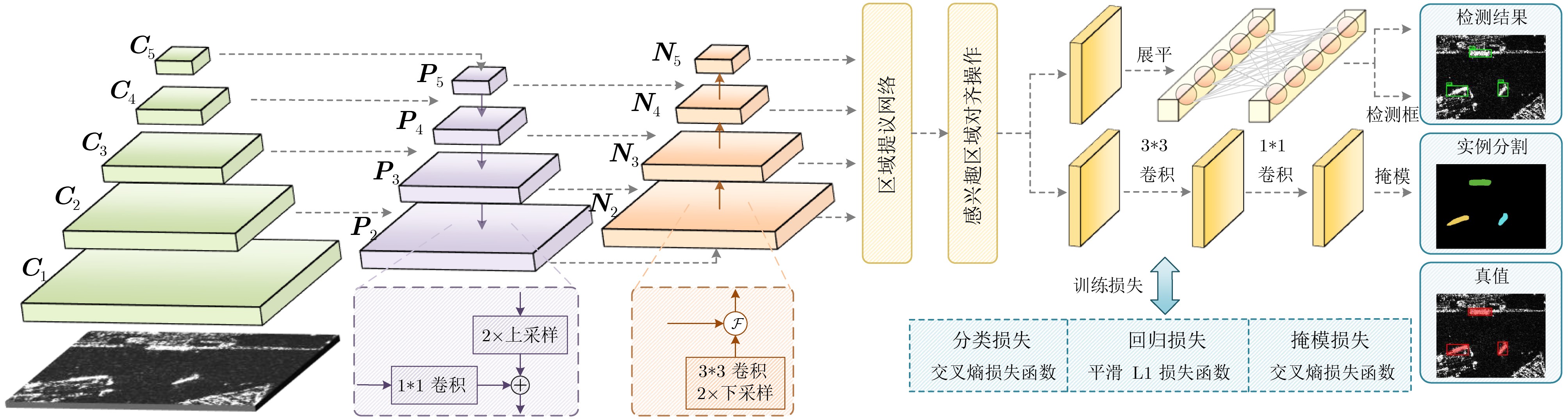
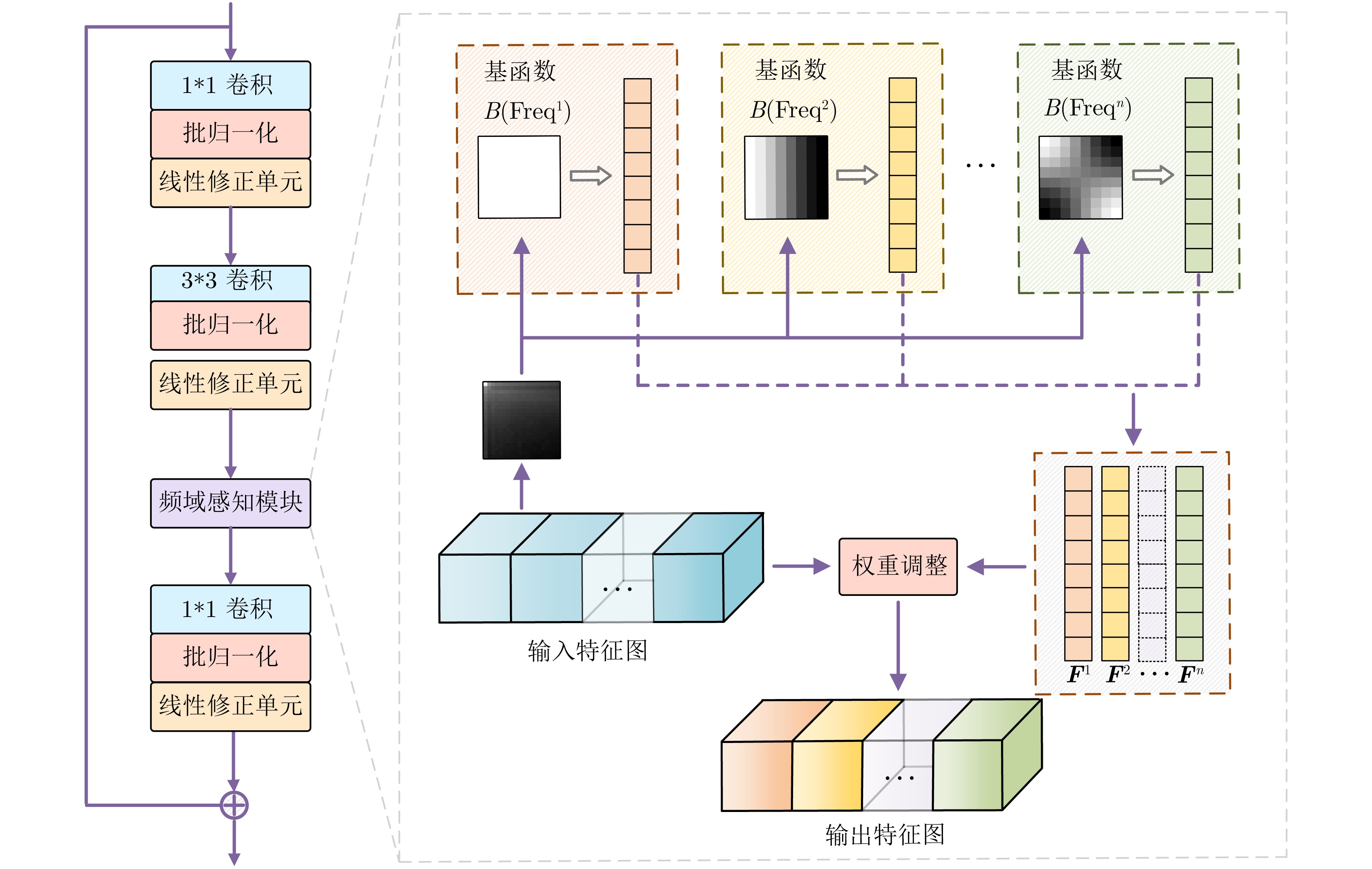
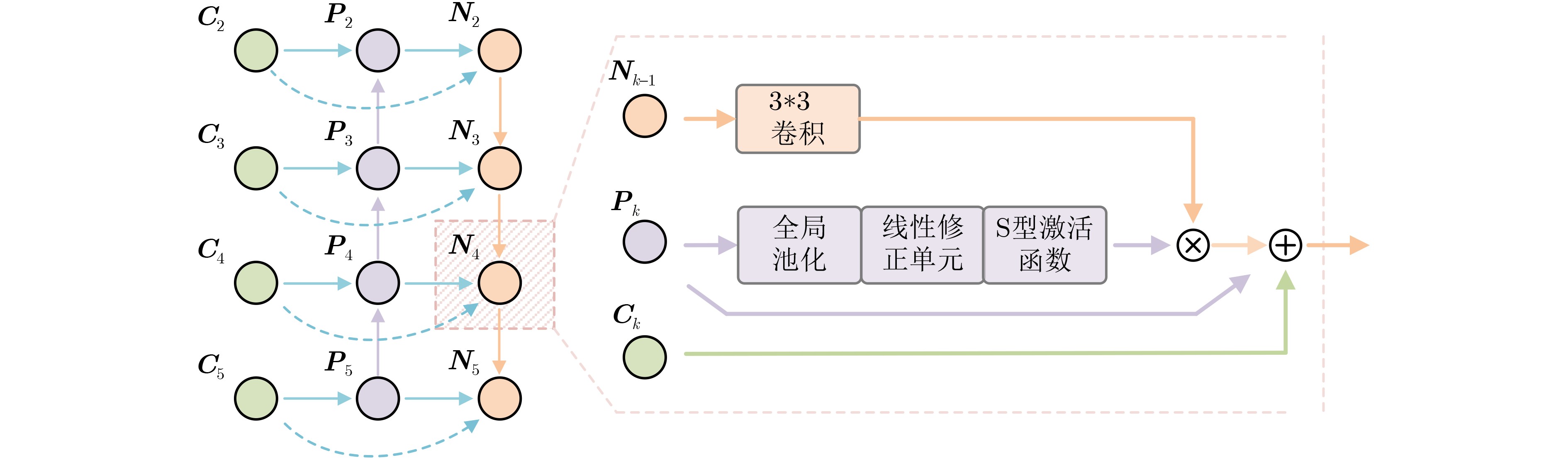
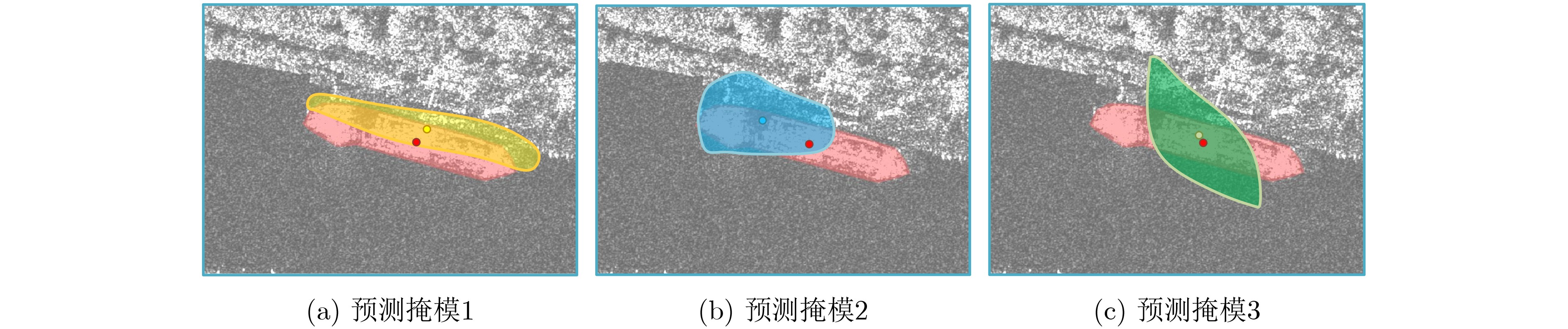
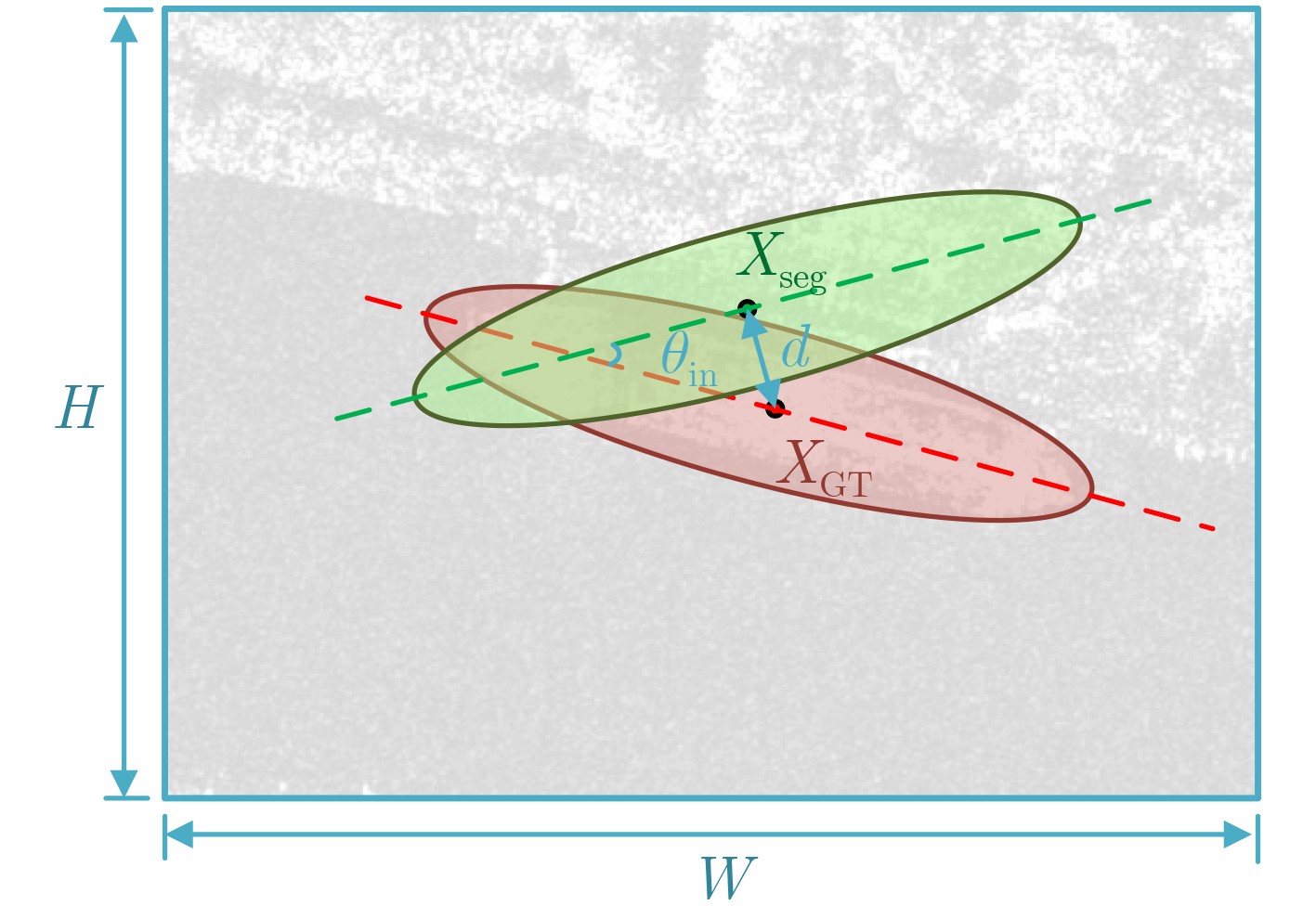
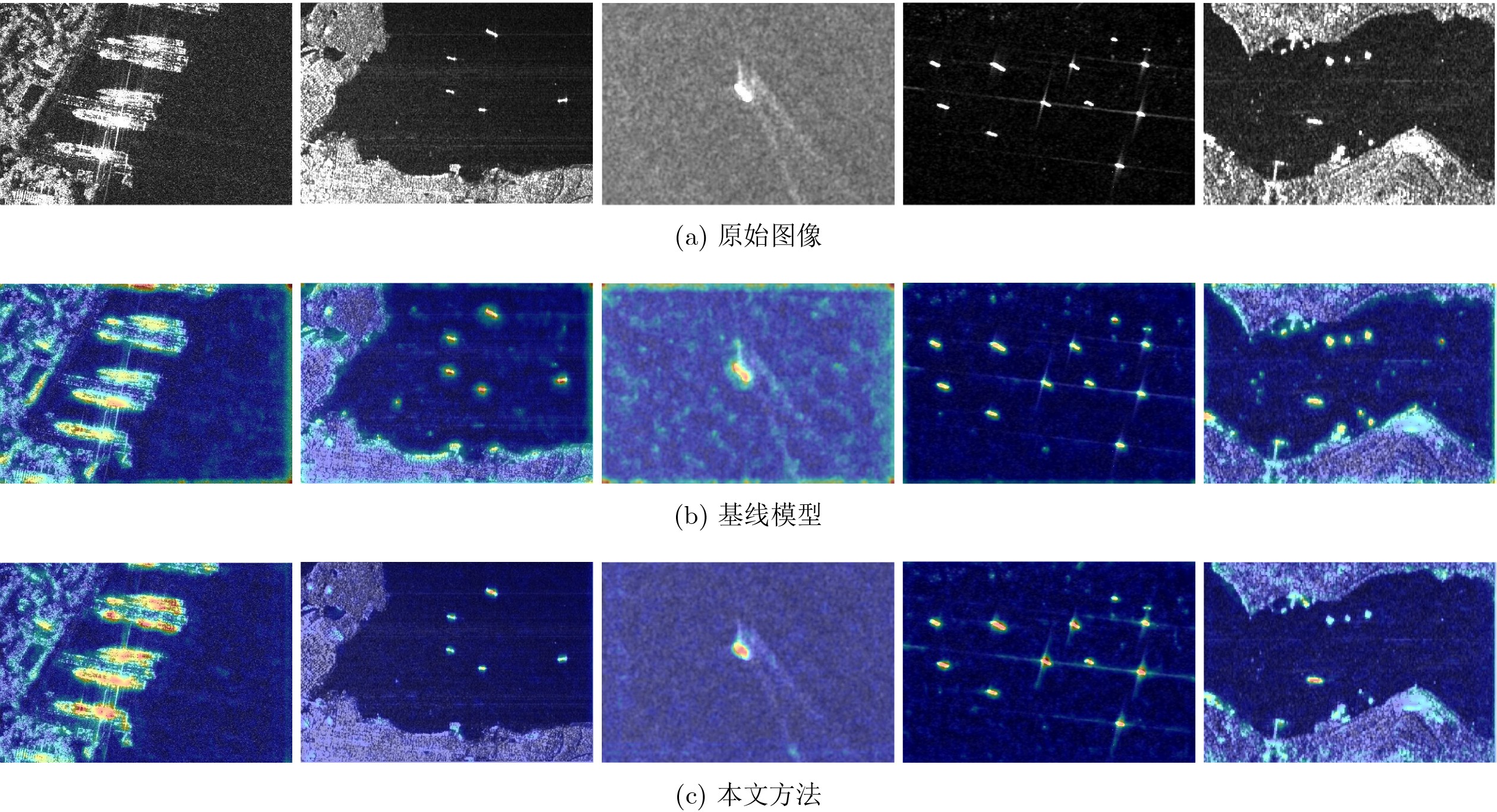
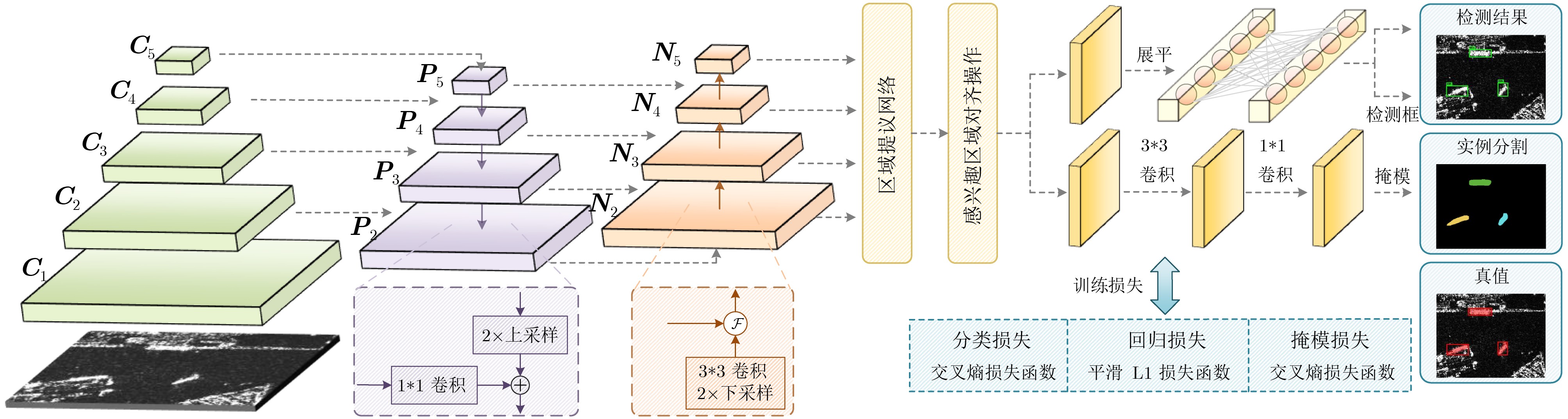
Objective With the development of Synthetic Aperture Radar (SAR) imaging technology, ship instance segmentation in SAR images has become an important research direction in radar signal processing. Unlike traditional optical image segmentation tasks, SAR images reflect target backscatter intensity and usually contain objects with diverse scales and irregular spatial distributions, which poses significant challenges for ship instance segmentation. Although recent studies have achieved notable progress, existing networks do not fully exploit frequency features and spatial information of targets, resulting in classification and localization errors. To address this limitation, a frequency-aware and spatially constrained network is proposed to extract frequency features and spatial information from multiscale representations, thereby improving feature representation and instance segmentation accuracy in SAR images. Methods For input SAR images, a frequency-aware backbone network is first applied to extract frequency features at different scales. Features from the first four stages of the backbone network are then processed by a selective feature pyramid network to guide the model to focus on the most informative regions and to fuse multiscale features effectively. After enhanced multiscale features are obtained, a region proposal network is employed to generate candidate target proposals. These features and proposals are subsequently fed into a segmentation head with spatial information constraints to produce final instance segmentation results. The frequency-aware backbone network encodes multiscale features in the frequency domain, which strengthens feature extraction for ship targets. Based on image semantic information, the selective feature pyramid network enables effective attention to informative regions and integration of features across scales. In addition, a spatially constrained mask loss function is designed to update model parameters under constraints of centroid distance and directional deviation between predicted masks and ground-truth targets. Results and Discussions The effectiveness and robustness of the proposed network are validated on two public datasets, SSDD and HRSID. For the SSDD dataset, P, R, F1, AP0.5, AP0.75, and AP0.5:0.95 metrics are used for evaluation. Quantitative and qualitative comparisons ( Figures 6 and7 ,Table 1 ) indicate that the proposed network improves feature extraction and feature integration for SAR images, which enables more accurate segmentation of ships with different scales in complex backgrounds. For the HRSID dataset, AP0.5, AP0.75, and AP0.5:0.95 are reported for quantitative comparison. The results (Table 3 ) demonstrate strong adaptability and generalization capability across different datasets and application scenarios in ship instance segmentation tasks. Additionally, ablation experiments (Table 2 ) confirm the contribution of each module of the proposed network to segmentation performance improvement in SAR images.Conclusions A frequency-aware and spatially constrained network for ship instance segmentation in SAR images is proposed. The frequency-aware backbone network enhances feature perception for SAR imagery, whereas the selective feature pyramid network guides attention toward informative regions and improves segmentation of ship targets at different scales. The segmentation head incorporates spatial information constraints into the mask loss function, which yields more accurate instance segmentation results. Experimental results on the SSDD and HRSID datasets show that the proposed method outperforms existing approaches and achieves improved effectiveness and generalization capability for ship instance segmentation in SAR images. -
表 1 不同目标实例分割算法在SSDD数据集上的实验结果(%)
模型 P R F1 AP0.5 AP0.75 AP0.5:0.95 Mask R-CNN 91.5 85.0 88.1 90.1 64.9 55.2 PANet 97.2 90.2 93.6 93.2 77.6 60.9 Mask Scoring R-CNN 95.6 91.7 93.6 93.8 79.7 62.7 YOLOv8 90.9 85.7 88.2 92.5 54.7 52.5 YOLOv11 89.8 89.1 89.4 93.8 59.9 54.0 本文方法 96.3 94.7 95.5 96.6 81.8 64.2  下载: 导出CSV
表 2 不同模块消融实验(%)
算法 FAN-block SFAN 空间信息约束 AP0.5 AP0.75 AP0.5:0.95 消融算法1 - √ √ 95.6 81.6 63.7 消融算法2 √ - √ 95.7 81.3 63.4 消融算法3 √ √ - 96.1 81.1 63.7 本文方法 √ √ √ 96.6 81.8 64.2
下载: 导出CSV
-
[1] ZHOU Zheng, ZHAO Lingjun, JI Kefeng, et al. A domain-adaptive few-shot SAR ship detection algorithm driven by the latent similarity between optical and SAR images[J]. IEEE Transactions on Geoscience and Remote Sensing, 2024, 62: 5216318. doi: 10.1109/TGRS.2024.3421512. [2] 吴一凡, 黄丽佳, 严朝保, 等. 面向GEO SAR图像的海上区域运动目标检测方法[J]. 电子与信息学报, 2025, 47(6): 1723–1733. doi: 10.11999/JEIT240906.WU Yifan, HUANG Lijia, YAN Chaobao, et al. A moving target detection method for GEO SAR image in maritime areas[J]. Journal of Electronics & Information Technology, 2025, 47(6): 1723–1733. doi: 10.11999/JEIT240906. [3] 周奕辰, 王勇, 丁文钧. 天基ISAR的高动态多普勒空间目标态势感知算法[J]. 电子与信息学报, 2025, 47(11): 4296–4306. doi: 10.11999/JEIT250667.ZHOU Yichen, WANG Yong, and DING Wenjun. Highly dynamic Doppler space target situation awareness algorithm for spaceborne ISAR[J]. Journal of Electronics & Information Technology, 2025, 47(11): 4296–4306. doi: 10.11999/JEIT250667. [4] DONG Tiancheng, WANG Taoyang, LI Xuefei, et al. A large ship detection method based on component model in SAR images[J]. IEEE Journal of Selected Topics in Applied Earth Observations and Remote Sensing, 2025, 18: 4108–4123. doi: 10.1109/JSTARS.2024.3514898. [5] 王勇, 张博雅. 基于特征融合和定位增强的SAR图像舰船目标检测方法[J]. 系统工程与电子技术, 2025, 47(11): 3586–3597. doi: 10.12305/j.issn.1001-506X.2025.11.08.WANG Yong and ZHANG Boya. Ship target detection method in SAR images based on feature fusion and location enhancement[J]. Systems Engineering and Electronics, 2025, 47(11): 3586–3597. doi: 10.12305/j.issn.1001-506X.2025.11.08. [6] 孟祥伟. SAR图像中舰船目标恒虚警率检测技术的研究[J]. 电子与信息学报, 2024, 46(9): 3739–3748. doi: 10.11999/JEIT231436.MENG Xiangwei. Research on constant false alarm rate detection technique for ship in SAR image[J]. Journal of Electronics & Information Technology, 2024, 46(9): 3739–3748. doi: 10.11999/JEIT231436. [7] IERVOLINO P and GUIDA R. A novel ship detector based on the generalized-likelihood ratio test for SAR imagery[J]. IEEE Journal of Selected Topics in Applied Earth Observations and Remote Sensing, 2017, 10(8): 3616–3630. doi: 10.1109/JSTARS.2017.2692820. [8] TIAN Chaoyang, LIU Dacheng, XUE Fengli, et al. Faster and lighter: A novel ship detector for SAR images[J]. IEEE Geoscience and Remote Sensing Letters, 2024, 21: 4002005. doi: 10.1109/LGRS.2024.3351132. [9] LI Zhongzheng, DONG Hairong, ZHANG Liye, et al. MLANet: A robust ship segmentation network based on multilevel multiattention feature fusion for complex maritime background environments[J]. IEEE Sensors Journal, 2024, 24(24): 42404–42416. doi: 10.1109/JSEN.2024.3485967. [10] 王磊, 张斌, 吴奇鸿. RCSA-YOLO: 改进YOLOv8的SAR舰船实例分割[J]. 计算机工程与应用, 2024, 60(18): 103–113. doi: 10.3778/j.issn.1002-8331.2401-0445.WANG Lei, ZHANG Bin, and WU Qihong. RCSA-YOLO: Improved SAR ship instance segmentation of YOLOv8[J]. Computer Engineering and Applications, 2024, 60(18): 103–113. doi: 10.3778/j.issn.1002-8331.2401-0445. [11] LI Wentao, WANG Xinyu, XU Haixia, et al. PLDF-S3: Pseudo-label-driven framework for offshore to inshore unsupervised SAR image ship segmentation[J]. IEEE Geoscience and Remote Sensing Letters, 2025, 22: 4011505. doi: 10.1109/LGRS.2025.3595937. [12] WEI Shunjun, ZENG Xiangfeng, ZHANG Hao, et al. LFG-Net: Low-level feature guided network for precise ship instance segmentation in SAR images[J]. IEEE Transactions on Geoscience and Remote Sensing, 2022, 60: 5231017. doi: 10.1109/TGRS.2022.3188677. [13] LIU Li, ZHANG Shuo, and HU Mingtao. MFE-Net: A novel multiscale feature enhancement network for SAR ship instance segmentation[J]. IEEE Geoscience and Remote Sensing Letters, 2025, 22: 1504305. doi: 10.1109/LGRS.2025.3569712. [14] 张天文, 张晓玲, 邵子康, 等. 基于掩模注意型交互的SAR舰船实例分割[J]. 系统工程与电子技术, 2024, 46(3): 831–838. doi: 10.12305/j.issn.1001-506X.2024.03.08.ZHANG Tianwen, ZHANG Xiaoling, SHAO Zikang, et al. Mask attention interaction for SAR ship instance segmentation[J]. Systems Engineering and Electronics, 2024, 46(3): 831–838. doi: 10.12305/j.issn.1001-506X.2024.03.08. [15] ZHANG Qiang and HAN Zhen. DRSNet: Rotated-ROI ship segmentation for SAR images based on dual-scale cross attention[J]. IEEE Geoscience and Remote Sensing Letters, 2024, 21: 4012805. doi: 10.1109/LGRS.2024.3420251. [16] KE Xiao, ZHANG Xiaoling, and ZHANG Tianwen. GCBANet: A global context boundary-aware network for SAR ship instance segmentation[J]. Remote Sensing, 2022, 14(9): 2165. doi: 10.3390/rs14092165. [17] CHEN Man, WANG Tianfeng, XU Chengcheng, et al. Gradient prior guidance and image adaptation enhancement for semi-supervised SAR ship instance segmentation[J]. IEEE Sensors Journal, 2024, 24(21): 36216–36229. doi: 10.1109/JSEN.2024.3467030. [18] JIANG Mingda, GU Lingjia, LI Xiaofeng, et al. Ship contour extraction from SAR images based on faster R-CNN and Chan–Vese model[J]. IEEE Transactions on Geoscience and Remote Sensing, 2023, 61: 5203414. doi: 10.1109/TGRS.2023.3247800. [19] KONG Weiming, ZHANG Yun, HUA Qinglong, et al. EGS-YOLO: Edge-guided semantic decoupling and Gaussian aggregation for lightweight SAR ship instance segmentation[C]. The 2025 IEEE Radar Conference, Krakow, Poland, 2025: 373–378. doi: 10.1109/RadarConf2559087.2025.11204995. [20] HE Kaiming, GKIOXARI G, DOLLÁR R, et al. Mask R-CNN[C]. The 2017 IEEE International Conference on Computer Vision, Venice, Italy, 2017: 2980–2988. doi: 10.1109/ICCV.2017.322. [21] REN Shaoqing, HE Kaiming, GIRSHICK R, et al. Faster R-CNN: Towards real-time object detection with region proposal networks[J]. IEEE Transactions on Pattern Analysis and Machine Intelligence, 2017, 39(6): 1137–1149. doi: 10.1109/TPAMI.2016.2577031. [22] HUANG Zhaojin, HUANG Lichao, GONG Yongchao, et al. Mask scoring R-CNN[C]. The 2019 IEEE/CVF Conference on Computer Vision and Pattern Recognition, Long Beach, USA, 2019: 6402–6411. doi: 10.1109/CVPR.2019.00657. [23] LIN T Y, DOLLÁR P, GIRSHICK R, et al. Feature pyramid networks for object detection[C]. The 2017 IEEE Conference on Computer Vision and Pattern Recognition, Honolulu, USA, 2017: 936–944. doi: 10.1109/CVPR.2017.106. [24] LIU Shu, QI Lu, QIN Haifang, et al. Path aggregation network for instance segmentation[C]. The 2018 IEEE/CVF Conference on Computer Vision and Pattern Recognition, Salt Lake City, USA, 2018: 8759–8768. doi: 10.1109/CVPR.2018.00913. [25] REZATOFIGHI H, TSOI N, GWAK J, et al. Generalized intersection over union: A metric and a loss for bounding box regression[C]. The 2019 IEEE/CVF Conference on Computer Vision and Pattern Recognition, Long Beach, USA, 2019: 658–666. doi: 10.1109/CVPR.2019.00075. [26] ZHENG Zhaohui, WANG Ping, LIU Wei, et al. Distance-IoU loss: Faster and better learning for bounding box regression[C]. The 34th AAAI Conference on Artificial Intelligence, New York, USA, 2020: 12993–13000. doi: 10.1609/aaai.v34i07.6999. [27] GEVORGYAN Z. SIoU loss: More powerful learning for bounding box regression[J/OL]. arXiv preprint arXiv: 2205.12740, 2022. doi: 10.48550/arXiv.2205.12740. [28] HE Kaiming, ZHANG Xiangyu, REN Shaoqing, et al. Deep residual learning for image recognition[C]. The 2016 IEEE Conference on Computer Vision and Pattern Recognition, Las Vegas, USA, 2016: 770–778. doi: 10.1109/CVPR.2016.90. [29] QIN Zequn, ZHANG Pengyi, WU Fei, et al. FcaNet: Frequency channel attention networks[C]. The 2021 IEEE/CVF International Conference on Computer Vision, Montreal, Canada, 2021: 763–772. doi: 10.1109/ICCV48922.2021.00082. [30] ZHANG Tianwen, ZHANG Xiaoling, LI Jianwei, et al. SAR Ship Detection Dataset (SSDD): Official release and comprehensive data analysis[J]. Remote Sensing, 2021, 13(18): 3690. doi: 10.3390/rs13183690. [31] WEI Shunjun, ZENG Xiangfeng, QU Qizhe, et al. HRSID: A high-resolution SAR images dataset for ship detection and instance segmentation[J]. IEEE Access, 2020, 8: 120234–120254. doi: 10.1109/ACCESS.2020.3005861. -

 下载:
下载:


图(7) / 表(3)
计量
- 文章访问数: 589
- HTML全文浏览量: 366
- PDF下载量: 69
- 被引次数: 0
