




A Neural Network-Based Robust Direction Finding Algorithm for Mixed Circular and Non-Circular Signals Under Array Imperfections
-
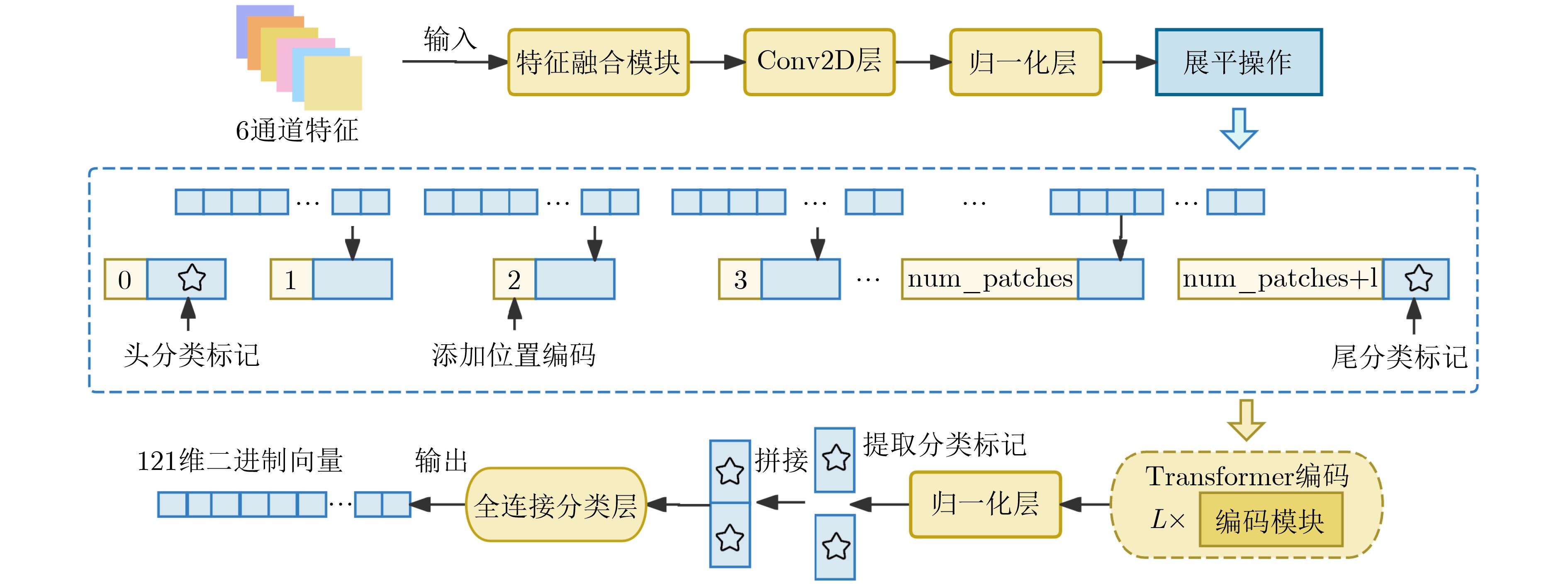
摘要: 针对阵列误差影响下圆和非圆信号混合入射的波达方向(DOA)估计问题,该文提出一种基于改进视觉转换器(ViT)模型的鲁棒测向算法。该算法通过构建6通道类图像输入架构,融合接收信号的协方差矩阵实部、虚部、相位、幅值及非圆扩展特性,利用梯度掩码机制实现核心特征与辅助特征的自适应融合,充分提取并挖掘了非圆信号伪协方差矩阵中蕴含的额外信息;同时改进传统ViT模型结构,增加特征融合及卷积模块,并设计前后双分类标记注意力机制,增强模型对信号的学习能力和适应性。实验结果表明,该算法在低信噪比、圆与非圆信号混合及多种阵列误差共存等复杂场景下,相比于现有方法展现出了更好的鲁棒性和测向精度。此外,该算法对快拍数变化及未知调制类型的信号亦表现出良好的适应性与稳定性,为复杂环境中的波达方向估计提供了一种新的有效方法。
-
关键词:
- 波达方向估计 /
- 多类型圆与非圆混合信号 /
- 多种阵列误差 /
- 多特征融合 /
- Vision Transformer模型
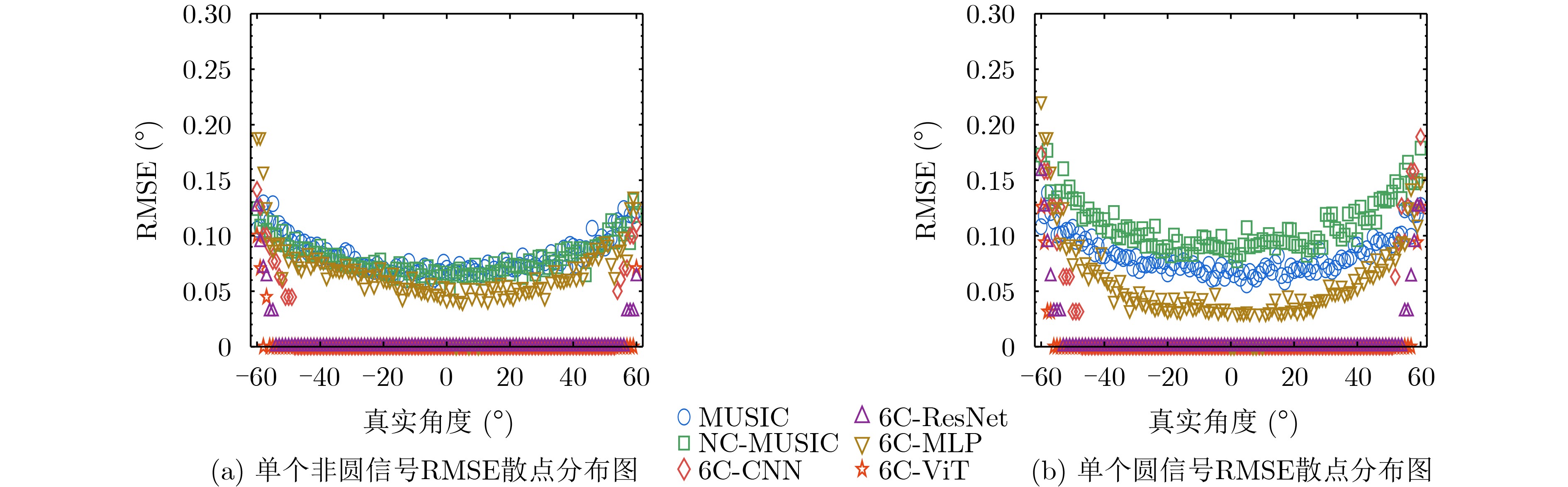
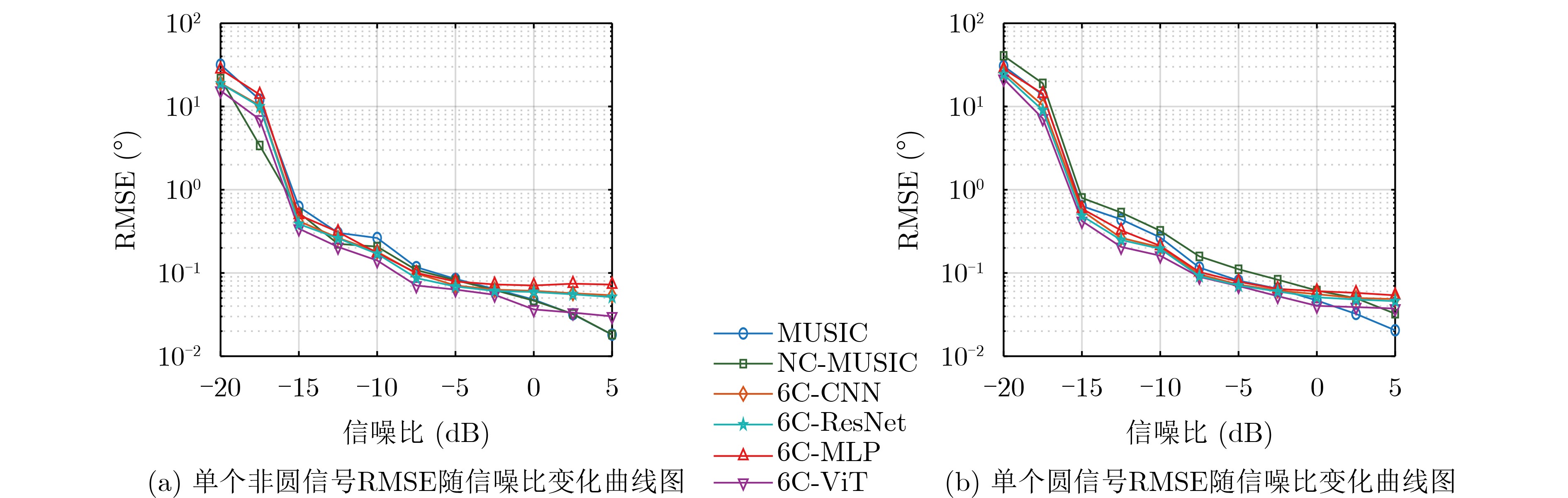
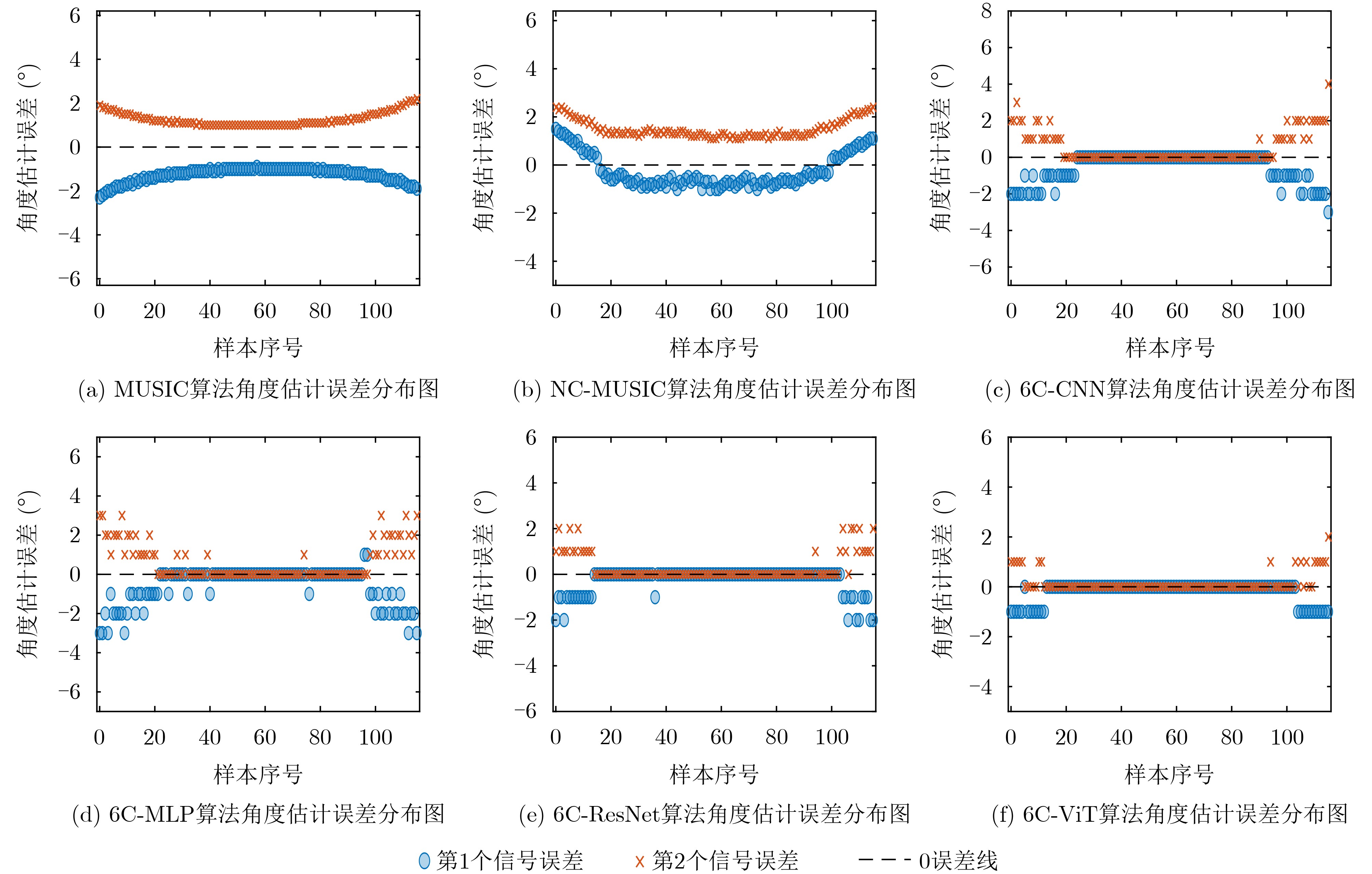
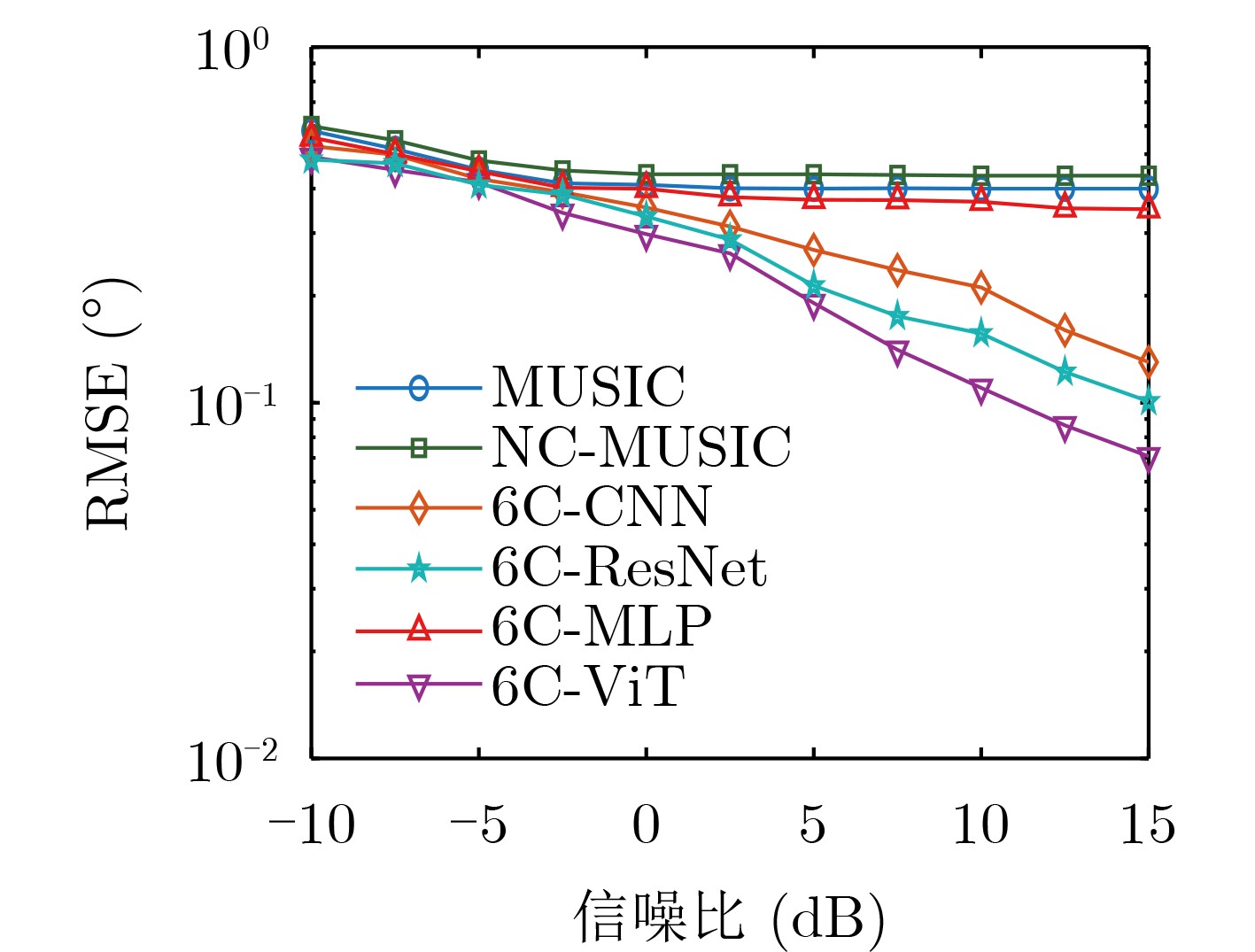
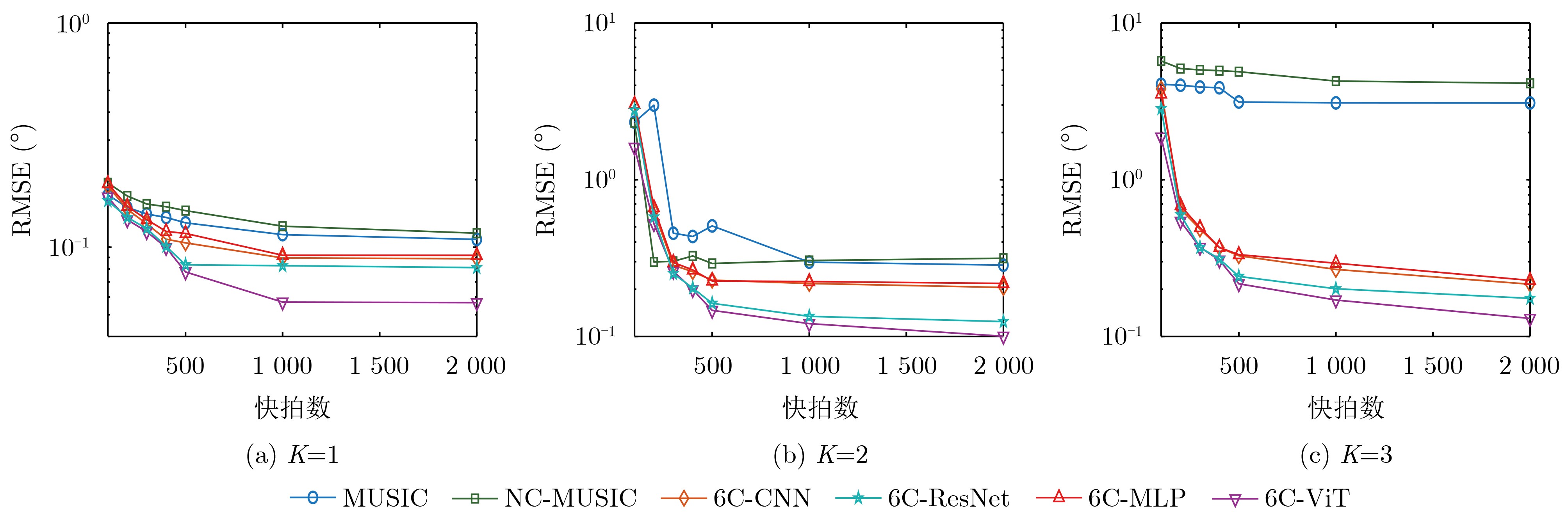
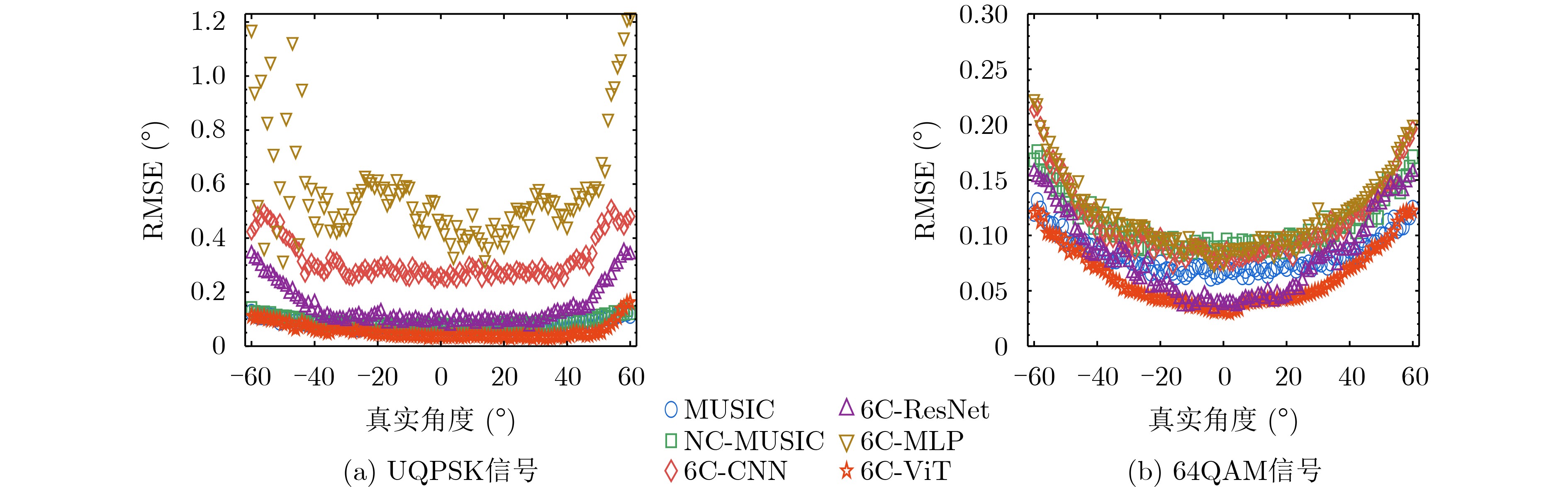
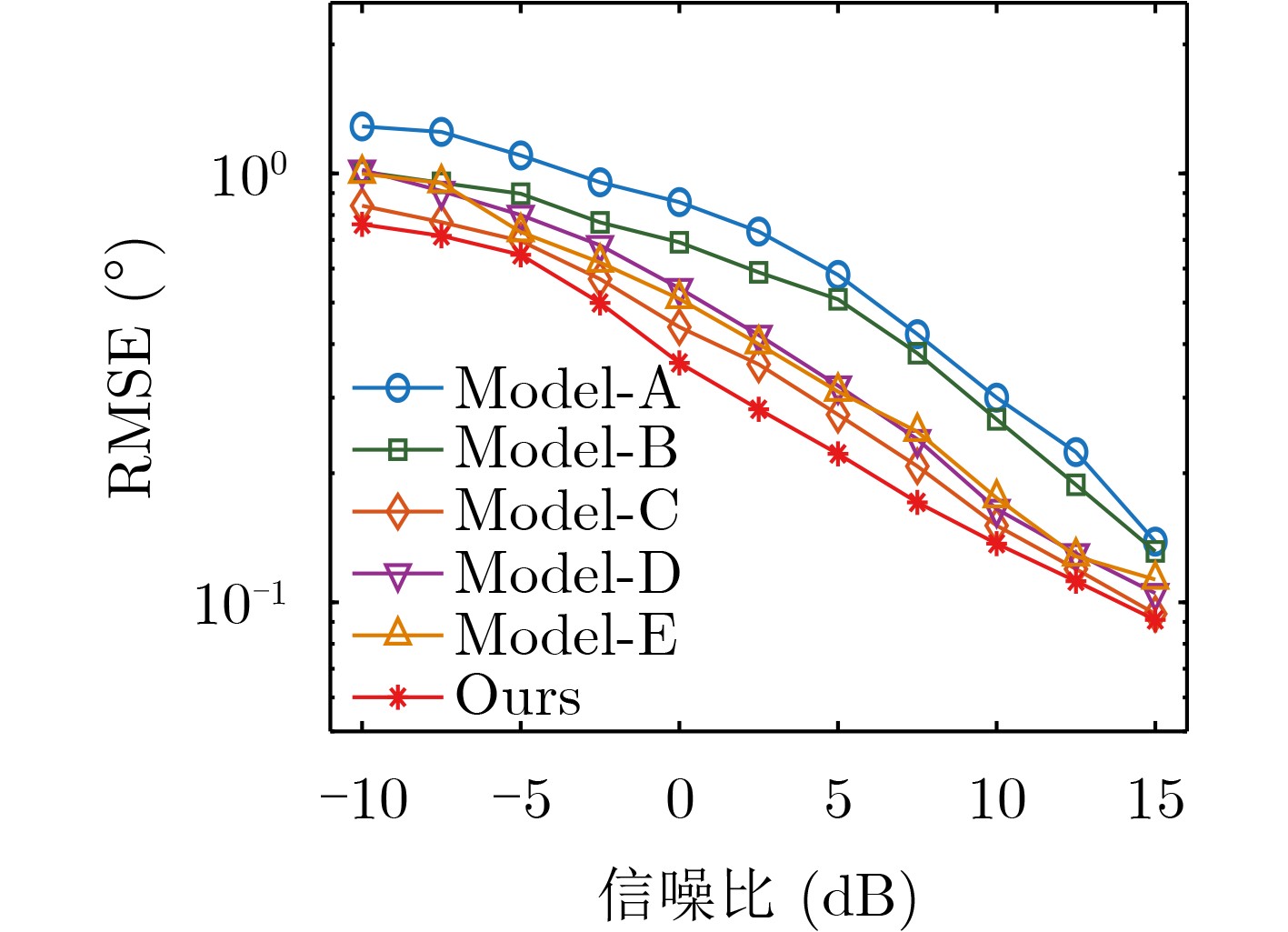
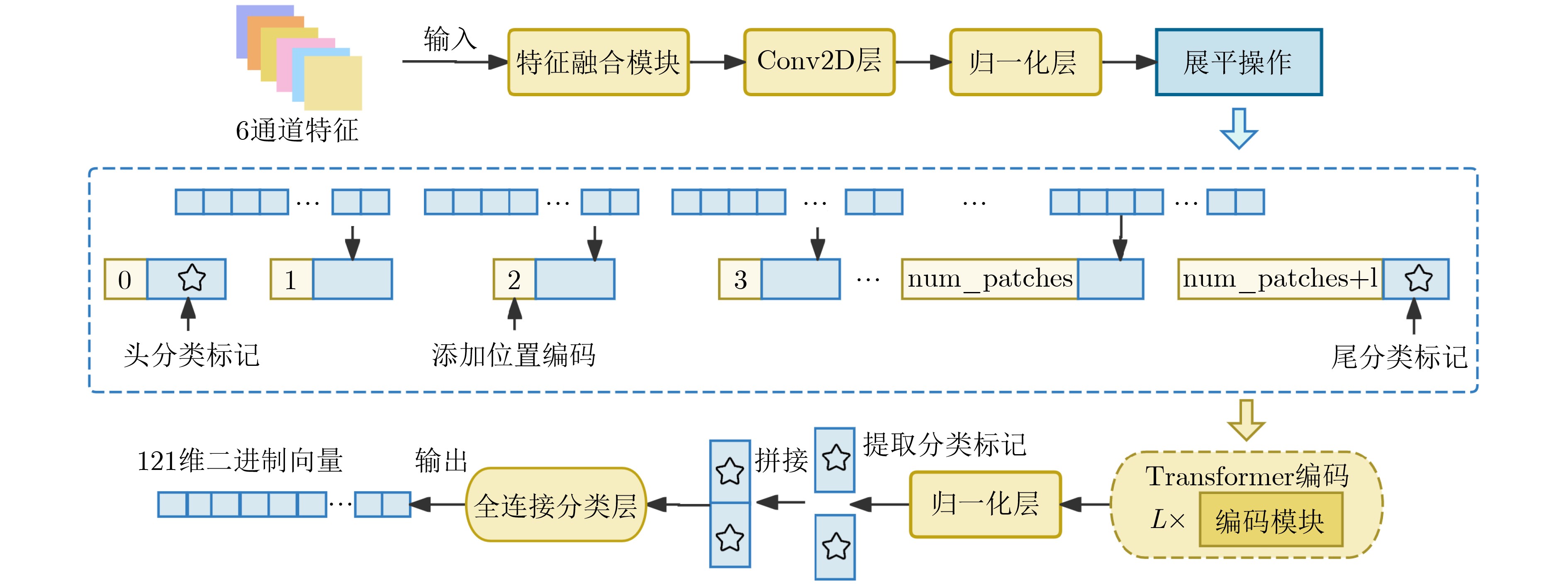
Abstract:Objective Direction Of Arrival (DOA) estimation is affected by low Signal-to-Noise Ratios (SNR), the coexistence of Circular Signals (CSs) and Non-Circular Signals (NCSs), and multiple forms of array imperfections. Conventional subspace-based estimators exhibit model mismatch in such environments and show reduced accuracy. Although neural-network methods provide data-driven alternatives, the effective use of the distinctive statistical properties of NCSs and the maintenance of robustness against diverse array errors remain insufficiently addressed. The objective is to design a DOA estimation algorithm that operates reliably for mixed CSs and NCSs in the presence of array imperfections and provides improved estimation accuracy in challenging operating conditions. Methods A robust DOA estimation algorithm is proposed based on an improved Vision Transformer (ViT) model. A six-channel image-like input is first constructed by fusing features derived from the covariance matrix and pseudo-covariance matrix of the received signal. These channels include the real component, imaginary component, magnitude, phase, magnitude ratio reflecting the NCS characteristic, and the phase of the pseudo-covariance matrix. A gradient-masking mechanism is introduced to adaptively fuse core and auxiliary features. The ViT architecture is then modified: the standard patch-embedding module is replaced with a convolutional layer to extract local information, and a dual-class-token attention mechanism, placed at the sequence head and tail, is designed to enhance feature representation. A standard Transformer encoder is used for deep feature learning, and DOA estimation is performed through a multi-label classification head. Results and Discussions Extensive simulations are carried out to assess the proposed algorithm (6C-ViT) against MUSIC, NC-MUSIC, a Convolutional Neural Network (6C-CNN), a Residual Network (6C-ResNet), and a MultiLayer Perceptron (6C-MLP). Performance is evaluated using Root Mean Square Error (RMSE) and angular estimation error under different operating conditions. Under single-source scenarios with low SNR and no array errors, 6C-ViT achieves near-zero RMSE across most angles and shows minor edge deviations ( Fig. 2 ). It maintains the lowest RMSE across the SNR range from –20 dB to 5 dB (Fig. 3 ), indicating good generalization to unseen SNR levels. In dual-source scenarios containing mixed CS and NCSs under array errors, 6C-ViT shows clear advantages. Its estimation errors fluctuate slightly around zero, whereas competing techniques present larger errors and pronounced instabilities, especially near array edges (Fig. 4 ). Its RMSE decreases steadily as SNR increases and reaches below 0.1° at high SNR, while traditional approaches saturate around 0.4° (Fig. 5 ). Robust behavior is further observed across different numbers of signal sources (K = 1, 2, 3) and snapshot counts (100 to 2 000). 6C-ViT preserves high accuracy and stability under these variations, whereas other methods show marked degradation or instability, most evident at low snapshot counts or with multiple sources (Fig. 6 ). When evaluated using unknown modulation types, including UQPSK with a non-circularity rate of 0.6 and 64QAM, under array errors, 6C-ViT continues to produce the lowest RMSE across most angles (Fig. 7 ), demonstrating strong generalization capability. Ablation studies (Fig. 8 ) confirm the contributions of the six-channel input, the gradient masking module, the convolutional embedding, and the dual class token mechanism. The complete configuration yields the highest accuracy and the most stable performance.Conclusions Strong robustness is demonstrated in complex scenarios that contain mixed CS and NCSs, multiple array imperfections, low SNR, and closely spaced sources. By fusing multi-dimensional features of the received signal and using an enhanced Transformer architecture, the algorithm attains higher estimation accuracy and improved generalization across different signal types, error conditions, snapshot counts, and noise levels compared with subspace- and neural-network-based baselines. The method provides a reliable DOA estimation solution for demanding practical environments. -
表 1 模型超参数选择
参数名称 参数选取 参数名称 参数选取 图像大小 16×16 学习率衰减因子 0.05 卷积核大小 2$* $2 权重衰减 0.05 卷积核数量 243 Dropout率 0.2 Transformer层数 6 Attention Dropout率 0.2 注意力头数 9 Drop Path率 0.2 MLP扩展比率 4.0 优化器类型 AdamW 训练轮数 120 Adam Beta1 0.9 批量大小 90 Adam Beta2 0.999 初始学习率 3e–4 分类类别数 121  下载: 导出CSV
表 2 算法复杂度对比表
FLOPs Params 6C-CNN 9.649 87×107 2.819 75×107 6C-MLP 2.001 98×106 1.001 28×106 6C-ResNet 3.656 42×107 1.820 41×106 6C-ViT 4.822 30×108 4.351 52×106
下载: 导出CSV
表 3 消融实验对比模型配置表
对比模型编号 配置 Model-A 标准ViT+3通道输入(实部、虚部、相位) Model-B 标准ViT+6通道输入 Model-C 标准ViT+6通道输入+梯度掩码 Model-D 传统ViT+3通道输入+卷积(CNN)嵌入层 Model-E 传统ViT +3通道输入+前后双分类标记 本文 传统ViT +6通道输入+梯度掩码+ CNN嵌入层+
前后双分类标记
下载: 导出CSV
-
[1] 张小飞, 李建峰, 徐大专, 等. 阵列信号处理及MATLAB实现[M]. 2版. 北京: 电子工业出版社, 2020: 7–11.ZHANG Xiaofei, LI Jianfeng, XU Dazhuan, et al. Array Signal Processing and MATLAB Implementation[M]. 2nd ed. Beijing: Publishing House of Electronics Industry, 2020: 7–11. [2] 房云飞. 非理想条件下阵列雷达目标参数估计方法研究[D]. [博士论文], 西安电子科技大学, 2023. doi: 10.27389/d.cnki.gxadu.2023.000046.FANG Yunfei. Research on target parameter estimation approaches for array radar under nonideal conditions[D]. [Ph. D. Dissertation], Xidian University, 2023. doi: 10.27389/d.cnki.gxadu.2023.000046. [3] 刘其有, 何瑞, 施伟. 基于深度学习的波达方向估计方法综述[J]. 中国电子科学研究院学报, 2025, 20(1): 1–9. doi: 10.3969/j.issn.1673-5692.2025.01.001.LIU Qiyou, HE Rui, and SHI Wei. Survey of DOA estimation methods based on deep learning[J]. Journal of CAEIT, 2025, 20(1): 1–9. doi: 10.3969/j.issn.1673-5692.2025.01.001. [4] VALLET P, MESTRE X, and LOUBATON P. Performance analysis of an improved MUSIC DoA estimator[J]. IEEE Transactions on Signal Processing, 2015, 63(23): 6407–6422. doi: 10.1109/TSP.2015.2465302. [5] YANG Xuan, ZHENG Guimei, and TANG Jun. ESPRIT algorithm for coexistence of circular and noncircular signals in bistatic MIMO radar[C]. 2016 IEEE Radar Conference, Philadelphia, USA, 2016: 1–4. doi: 10.1109/RADAR.2016.7485149. [6] 黄心月. 超分辨的子空间测向方法研究与稀疏线阵设计[D]. [硕士论文], 中国科学技术大学, 2024. doi: 10.27517/d.cnki.gzkju.2024.002516.HUANG Xinyue. Super-resolution subspace direction of arrival estimation algorithms and sparse linear array design[D]. [Master dissertation], University of Science and Technology of China, 2024. doi: 10.27517/d.cnki.gzkju.2024.002516. [7] 梁国龙, 滕远鑫, 王晋晋, 等. 一种适用于半互质阵的高精度波达方向估计方法[J]. 电子与信息学报, 2024, 46(8): 3228–3237. doi: 10.11999/JEIT231139.LIANG Guolong, TENG Yuanxin, WANG Jinjin, et al. A high precision direction of arrival estimation method applied to semi-coprime arrays[J]. Journal of Electronics & Information Technology, 2024, 46(8): 3228–3237. doi: 10.11999/JEIT231139. [8] HE Guodong, SONG Maozhong, ZHANG Shanshan, et al. GPS sparse multipath signal estimation based on compressive sensing[J]. Wireless Communications and Mobile Computing, 2021, 2021: 5583429. doi: 10.1155/2021/5583429. [9] CHOI Y H. Maximum likelihood based direction estimation for noncircular signals[J]. Signal Processing, 2024, 220: 109434. doi: 10.1016/j.sigpro.2024.109434. [10] 尹洁昕. 基于非圆信号的阵列误差自校正算法研究[D]. [硕士论文], 解放军信息工程大学, 2014.YIN Jiexin. Research on sensor errors auto-calibration algorithms for non-circular signals[D]. [Master dissertation], PLA Information Engineering University, 2014. [11] 刘帅, 许媛媛, 闫锋刚, 等. 泰勒展开与交替投影最大似然结合的离网格DOA估计算法[J]. 电子与信息学报, 2024, 46(8): 3219–3227. doi: 10.11999/JEIT231376.LIU Shuai, XU Yuanyuan, YAN Fenggang, et al. Off-grid DOA estimation algorithm based on Taylor-expansion and alternating projection maximum likelihood[J]. Journal of Electronics & Information Technology, 2024, 46(8): 3219–3227. doi: 10.11999/JEIT231376. [12] CHARGE P, WANG Yide, and SAILLARD J. A root-MUSIC algorithm for non circular sources[C]. 2001 IEEE International Conference on Acoustics, Speech, and Signal Processing, Salt Lake City, USA, 2001: 2985–2988. doi: 10.1109/ICASSP.2001.940276. [13] HUANG Z T, LIU Zhangmeng, LIU Jian, et al. Performance analysis of MUSIC for non-circular signals in the presence of mutual coupling[J]. IET Radar, Sonar & Navigation, 2010, 4(5): 703–711. doi: 10.1049/iet-rsn.2009.0003. [14] 周俐佟. 脉冲噪声下圆与非圆信号共存的DOA估计[D]. [硕士论文], 大连海事大学, 2024. doi: 10.26989/d.cnki.gdlhu.2024.001080.ZHOU Litong. DOA estimation of coexistence of circular and non-circular signals under pulse noise[D]. [Master dissertation], Dalian Maritime University, 2024. doi: 10.26989/d.cnki.gdlhu.2024.001080. [15] GAO Feifei, NALLANATHAN A, and WANG Yide. Improved MUSIC under the coexistence of both circular and noncircular sources[J]. IEEE Transactions on Signal Processing, 2008, 56(7): 3033–3038. doi: 10.1109/TSP.2007.916123. [16] LIU Aifei, LIAO Guisheng, XU Qing, et al. A circularity-based DOA estimation method under coexistence of noncircular and circular signals[C]. 2012 IEEE International Conference on Acoustics, Speech and Signal Processing, Kyoto, Japan, 2012: 2561–2564. doi: 10.1109/ICASSP.2012.6288439. [17] YUE Yaxing, XU Yougen, and LIU Zhiwen. Closed-form two-dimensional DOA and polarization estimation of coexisted circular and noncircular signals[C]. 2021 CIE International Conference on Radar, Haikou, China, 2021: 1556–1560. doi: 10.1109/Radar53847.2021.10028575. [18] 陈开源, 李嘉琪, 张小飞. 圆与非圆信号混合入射下的低复杂度分布式信源DOA估计算法[J]. 信号处理, 2025, 41(5): 958–966. doi: 10.12466/xhcl.2025.05.014.CHEN Kaiyuan, LI Jiaqi, and ZHANG Xiaofei. A low-complexity DOA estimation algorithm for distributed sources under the coexistence of circular and non-circular sources[J]. Journal of Signal Processing, 2025, 41(5): 958–966. doi: 10.12466/xhcl.2025.05.014. [19] ZHANG Xue, ZHENG Zhi, WANG Wenqin, et al. DOA estimation of mixed circular and noncircular sources using nonuniform linear array[J]. IEEE Transactions on Aerospace and Electronic Systems, 2022, 58(6): 5703–5710. doi: 10.1109/TAES.2022.3176602. [20] 郝崇宇. 阵列DOA估计及通道误差校正研究[D]. [硕士论文], 南京信息工程大学, 2023. doi: 10.27248/d.cnki.gnjqc.2023.001621.HAO Chongyu. Research on array DOA estimation and channel error correction[D]. [Master dissertation], Nanjing University of Information Science & Technology, 2023. doi: 10.27248/d.cnki.gnjqc.2023.001621. [21] 邢传玺, 黄廷龙, 谈光枝, 等. 融合空间域维纳滤波与卷积神经网络的水声DOA估计[J]. 电子与信息学报, 2025, 47(10): 3735–3744. doi: 10.11999/JEIT250141.XING Chuanxi, HUANG Tinglong, TAN Guangzhi, et al. Acoustic DOA estimation in underwater environments by integrating spatial domain wiener filtering and convolutional neural networks[J]. Journal of Electronics & Information Technology, 2025, 47(10): 3735–3744. doi: 10.11999/JEIT250141. [22] 郭宇. 基于神经网络的DOA估计方法研究[D]. [博士论文], 北京邮电大学, 2024. doi: 10.26969/d.cnki.gbydu.2024.000094.GUO Yu. Research on DOA estimation methods based on neural networks[D]. [Ph. D. dissertation], Beijing University of Posts and Telecommunications, 2024. doi: 10.26969/d.cnki.gbydu.2024.000094. [23] CHAKRABARTY S and HABETS E A P. Multi-speaker DOA estimation using deep convolutional networks trained with noise signals[J]. IEEE Journal of Selected Topics in Signal Processing, 2019, 13(1): 8–21. doi: 10.1109/JSTSP.2019.2901664. [24] PAPAGEORGIOU G K, SELLATHURAI M, and ELDAR Y C. Deep networks for direction-of-arrival estimation in low SNR[J]. IEEE Transactions on Signal Processing, 2021, 69: 3714–3729. doi: 10.1109/TSP.2021.3089927. [25] LIU Zhangmeng, ZHANG Chenwei, and YU P S. Direction-of-arrival estimation based on deep neural networks with robustness to array imperfections[J]. IEEE Transactions on Antennas and Propagation, 2018, 66(12): 7315–7327. doi: 10.1109/TAP.2018.2874430. [26] XIANG Houhong, CHEN Baixiao, YANG Minglei, et al. Improved direction-of-arrival estimation method based on LSTM neural networks with robustness to array imperfections[J]. Applied Intelligence, 2021, 51(7): 4420–4433. doi: 10.1007/s10489-020-02124-1. [27] ZHENG Shilian, YANG Zhuang, SHEN Weiguo, et al. Deep learning-based DOA estimation[J]. IEEE Transactions on Cognitive Communications and Networking, 2024, 10(3): 819–835. doi: 10.1109/TCCN.2024.3360527. [28] ANDO D A, KASE Y, NISHIMURA T, et al. Deep neural networks based end-to-end DOA estimation system[J]. IEICE Transactions on Communications, 2023, E106. B(12): 1350–1362. doi: 10.1587/transcom.2023CEP0006. [29] LI Jianxiong, SHAO Xingkai, LI Jie, et al. Direction of arrival estimation of array defects based on deep neural network[J]. Circuits, Systems, and Signal Processing, 2022, 41(9): 4906–4927. doi: 10.1007/s00034-022-02011-9. [30] CAI Ruiyan, TIAN Quan, and LUO Yang. DOA estimation based on a deep neural network under impulsive noise[J]. Signal, Image and Video Processing, 2024, 18(1): 785–792. doi: 10.1007/s11760-023-02794-7. [31] KASE Y, NISHIMURA T, OHGANE T, et al. Accuracy improvement in DOA estimation with deep learning[J]. IEICE Transactions on Communications, 2022, E105. B(5): 588–599. doi: 10.1587/transcom.2021EBT0001. [32] SHEN Lingyu, LI Jianfeng, PAN Jingjing, et al. Domain-adaptive direction of arrival (DOA) estimation in complex indoor environments based on convolutional autoencoder and transfer learning[J]. Sensors, 2025, 25(10): 2959. doi: 10.3390/s25102959. [33] QIN Yanhua. Deep networks for direction of arrival estimation with sparse prior in low SNR[J]. IEEE Access, 2023, 11: 44637–44648. doi: 10.1109/ACCESS.2023.3273126. [34] 孙友. 圆和非圆混合信号的DOA估计算法研究[D]. [硕士论文], 南京航空航天大学, 2018. doi: 10.27239/d.cnki.gnhhu.2019.000885.SUN You. Research on DOA estimation algorithm for circular and non-circular mixed signals[D]. [Master dissertation], Nanjing University of Aeronautics and Astronautics, 2018. doi: 10.27239/d.cnki.gnhhu.2019.000885. [35] 李玉洁, 马子航, 王艺甫, 等. 视觉Transformer(ViT)发展综述[J]. 计算机科学, 2025, 52(1): 194–209. doi: 10.11896/jsjkx.240600135.LI Yujie, MA Zihang, WANG Yifu, et al. Survey of vision transformers (ViT)[J]. Computer Science, 2025, 52(1): 194–209. doi: 10.11896/jsjkx.240600135. -

 下载:
下载:

图(8) / 表(3)
计量
- 文章访问数: 1095
- HTML全文浏览量: 524
- PDF下载量: 91
- 被引次数: 0
