




Research on Low Leakage Current Voltage Sampling Method for Multi-cell Series Battery Packs
-
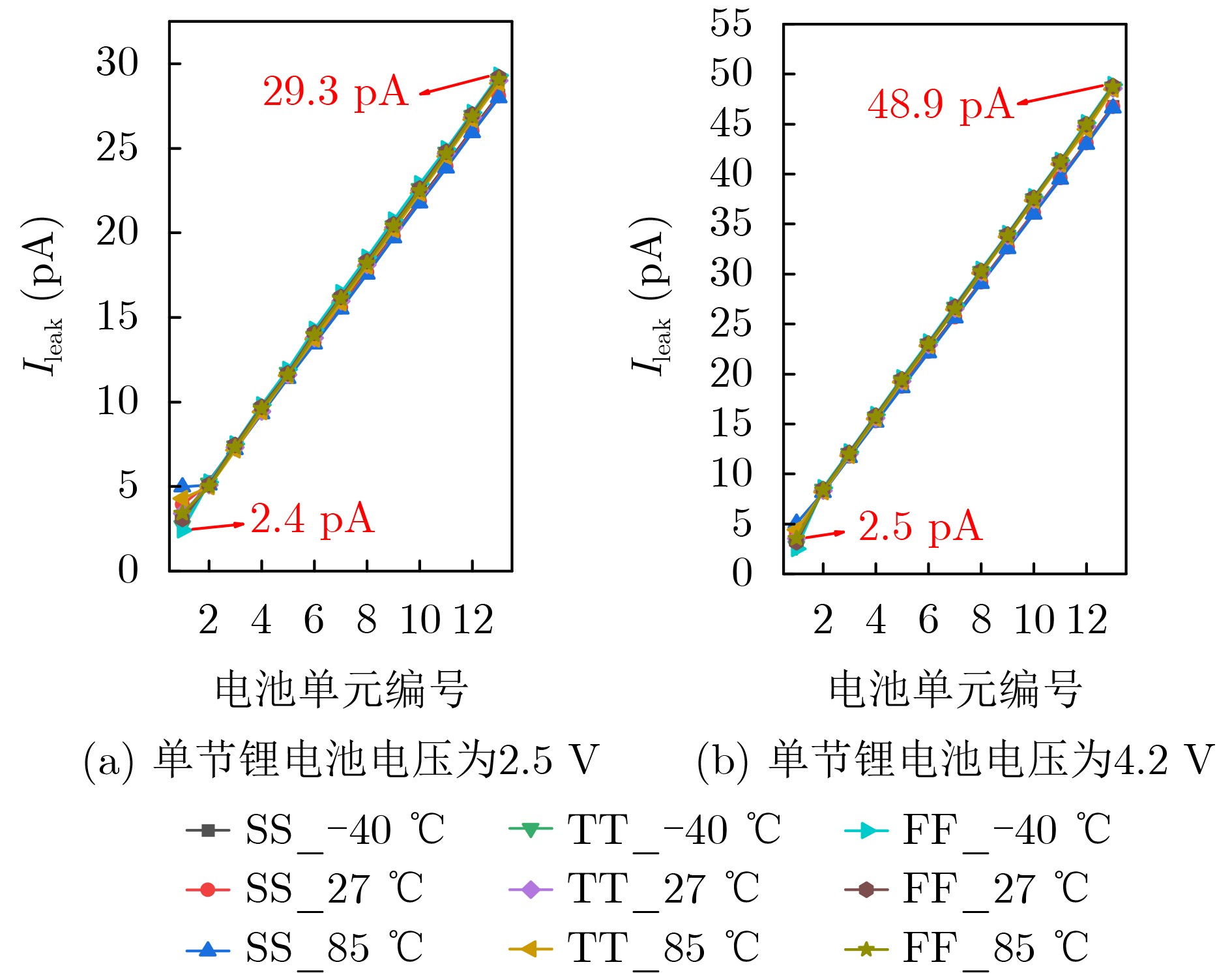
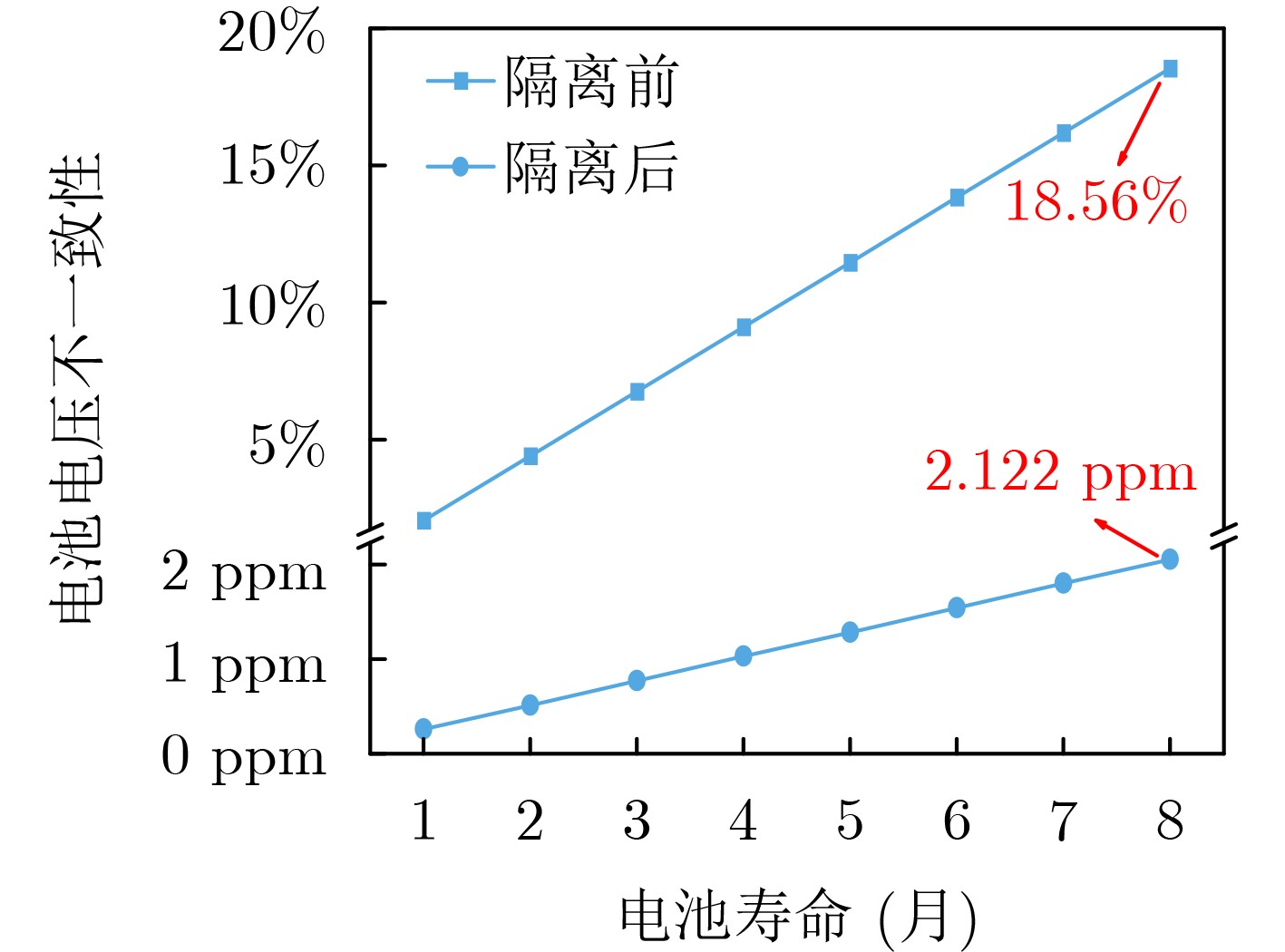
摘要: 针对多节串联电池组采样电路存在通道漏电流导致各节电池电压不一致和影响采样精度的问题,该文提出一种应用于14节串联锂电池的低漏电流电池电压采样方法。通过分析漏电流的产生机制,采用运放隔离有源驱动技术,减小各节电池的通道漏电流,同时为了减小高压MOSFET带来的面积开销,改进了高压域运算放大器。基于0.35 μm高压BCD(Bipolar CMOS DMOS)工艺对电路进行了详细设计和完整性能验证,结果表明,所设计的电池电压采样电路版图面积仅为3.105×0.638 mm2,在不同的温度和工艺角组合下,最大通道漏电流低至48.9 pA。在全面的PVT(Process Voltage Temperature)验证下,电池电压采样最大测量误差小于1.25 mV。该方法将采样过程对电池电压不一致性的影响从18.56%降低至2.122 ppm,为高可靠高精度多节串联电池管理系统提供了有效的解决方案。Abstract:
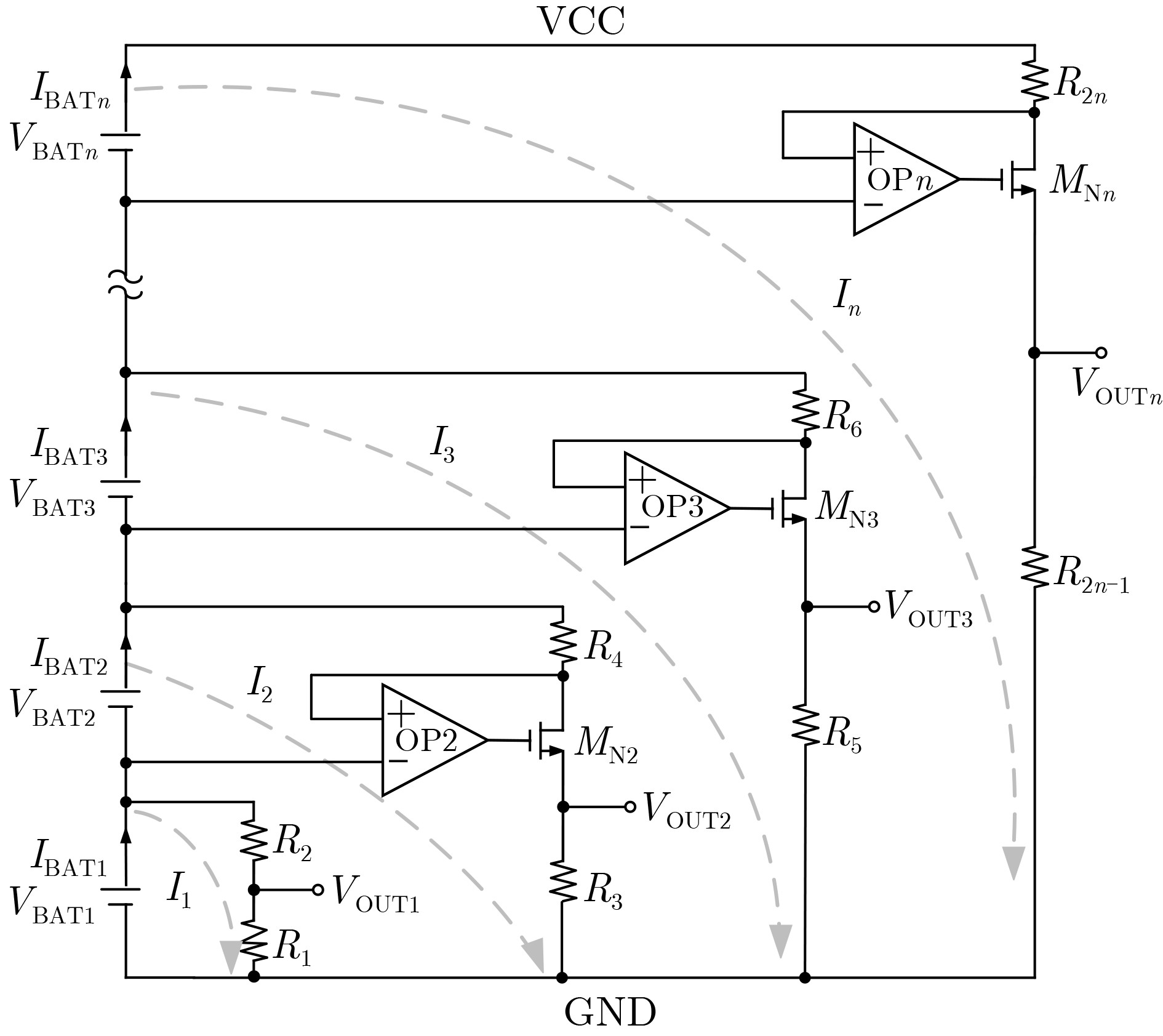
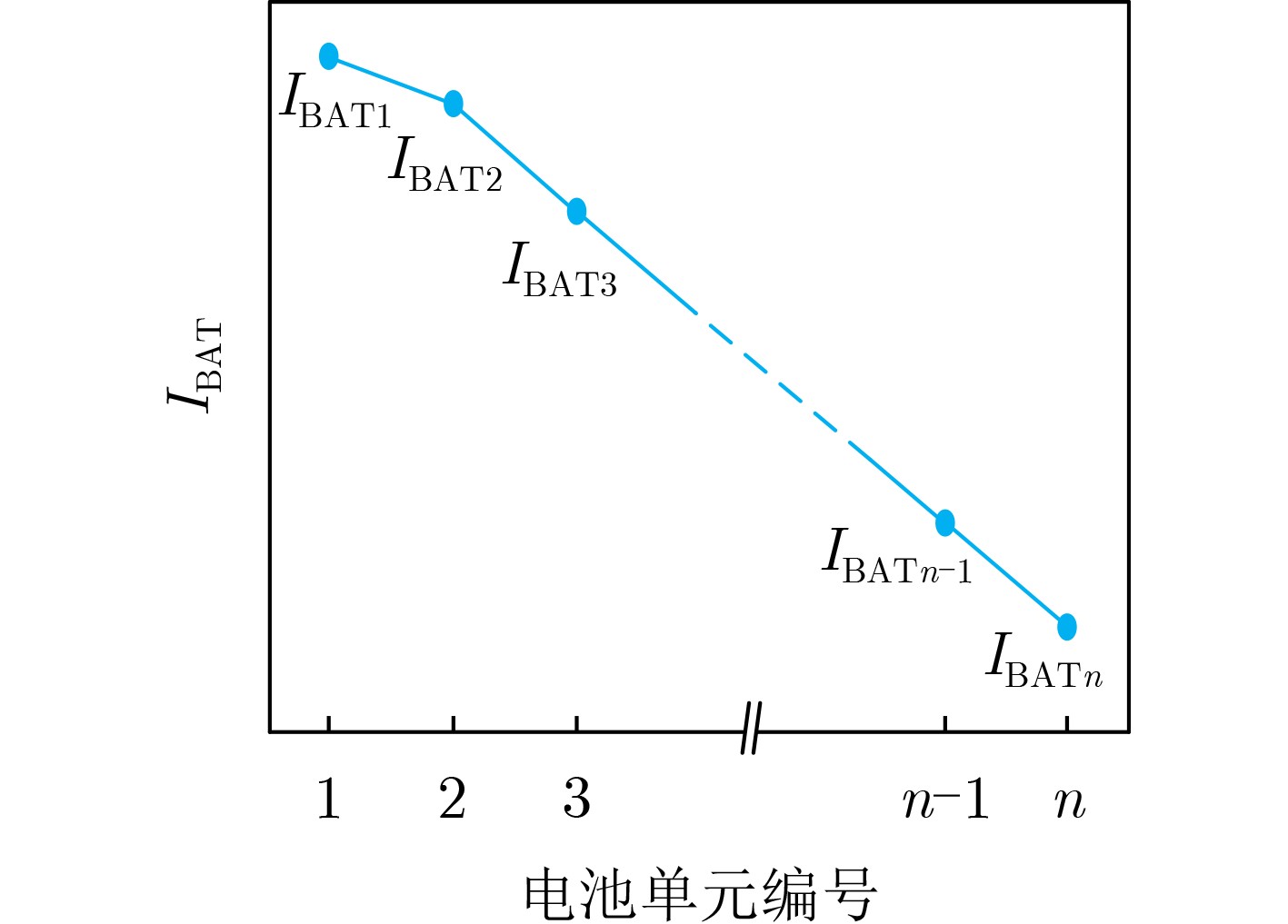
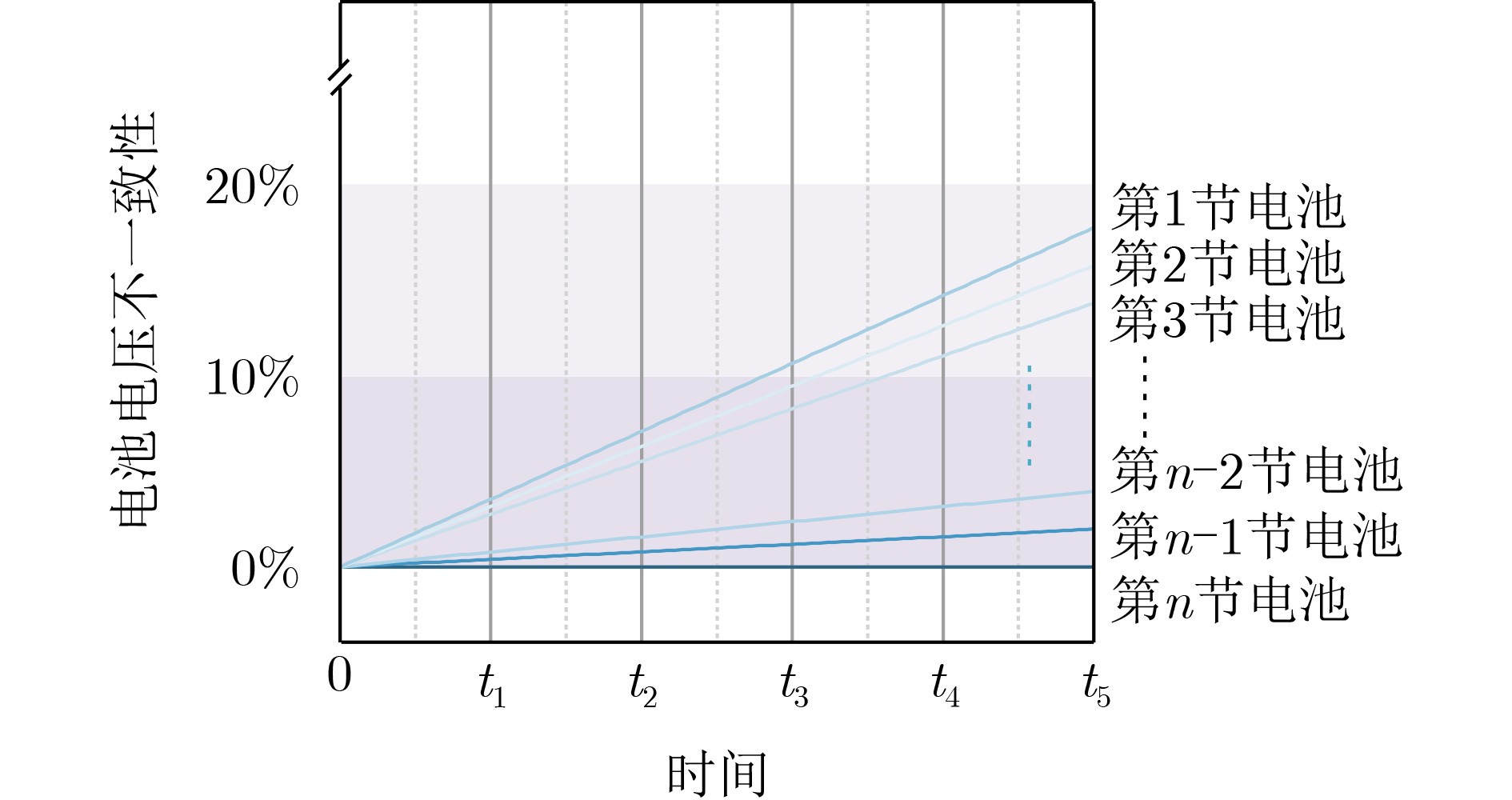
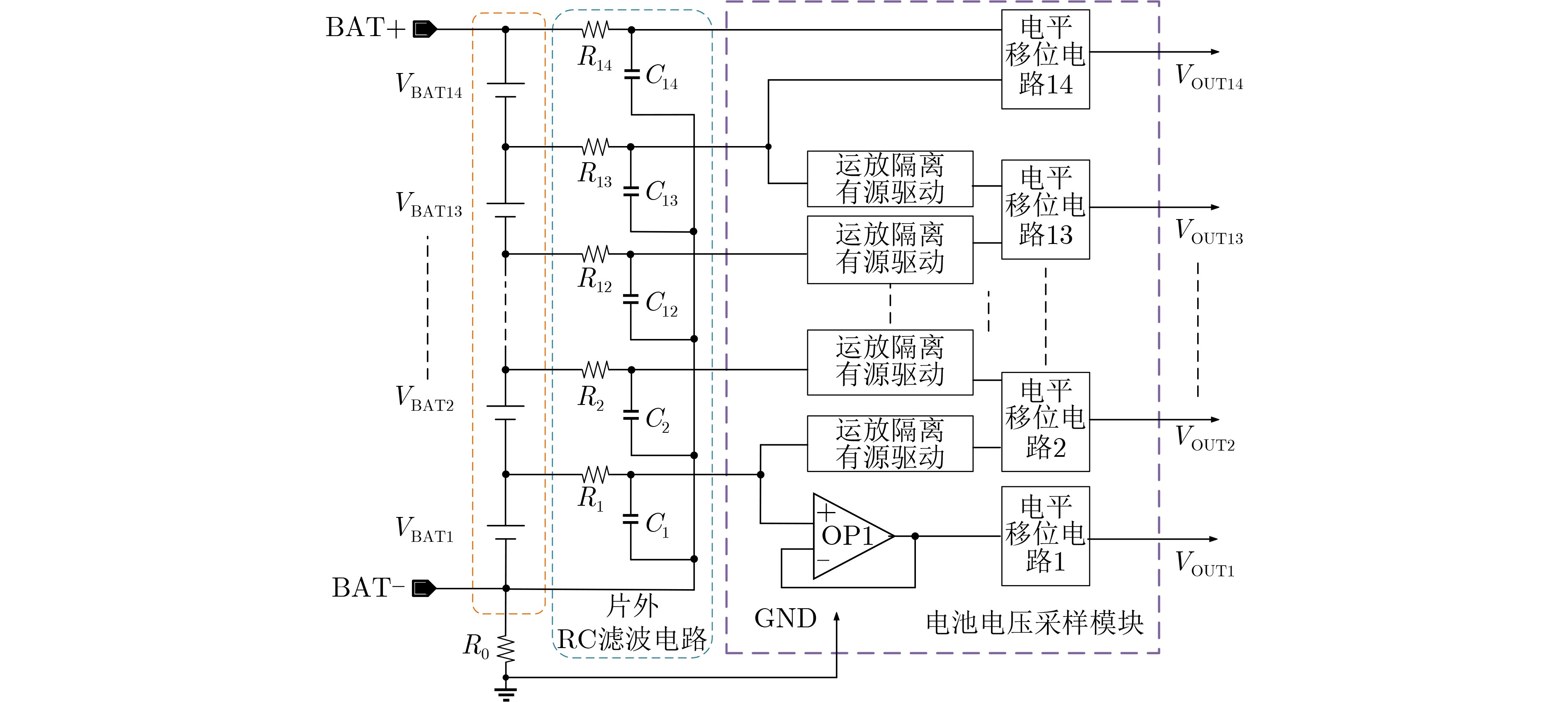
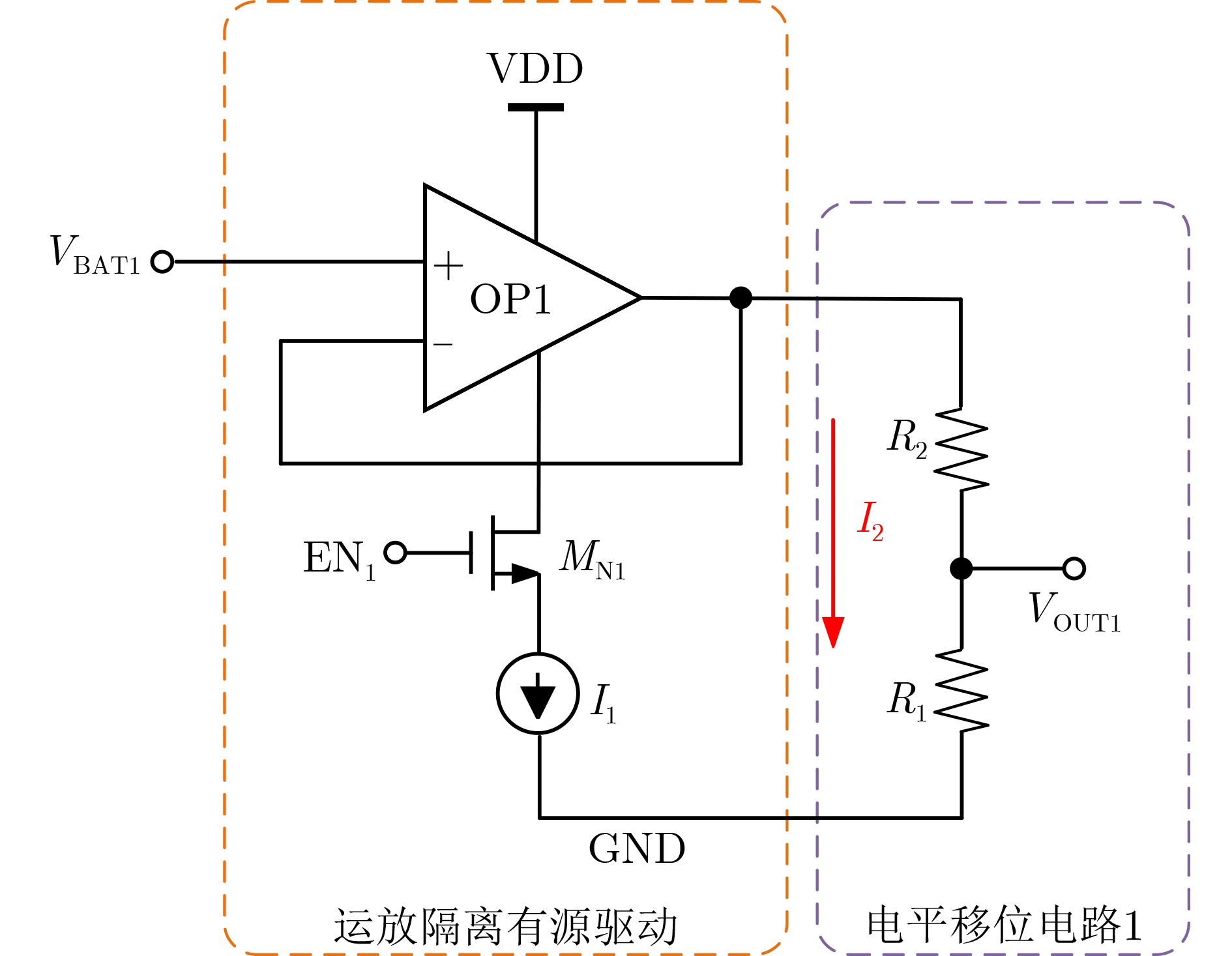
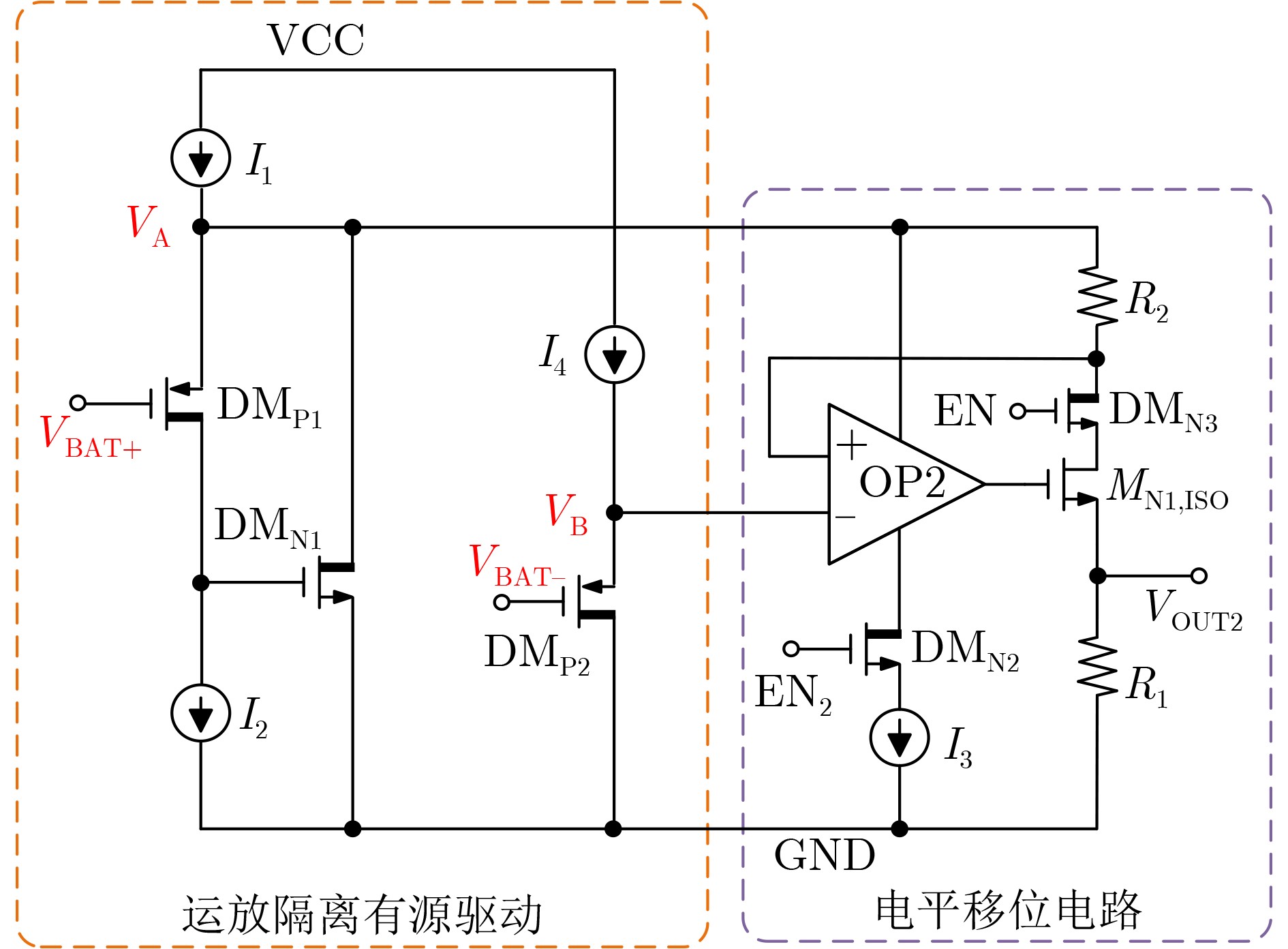
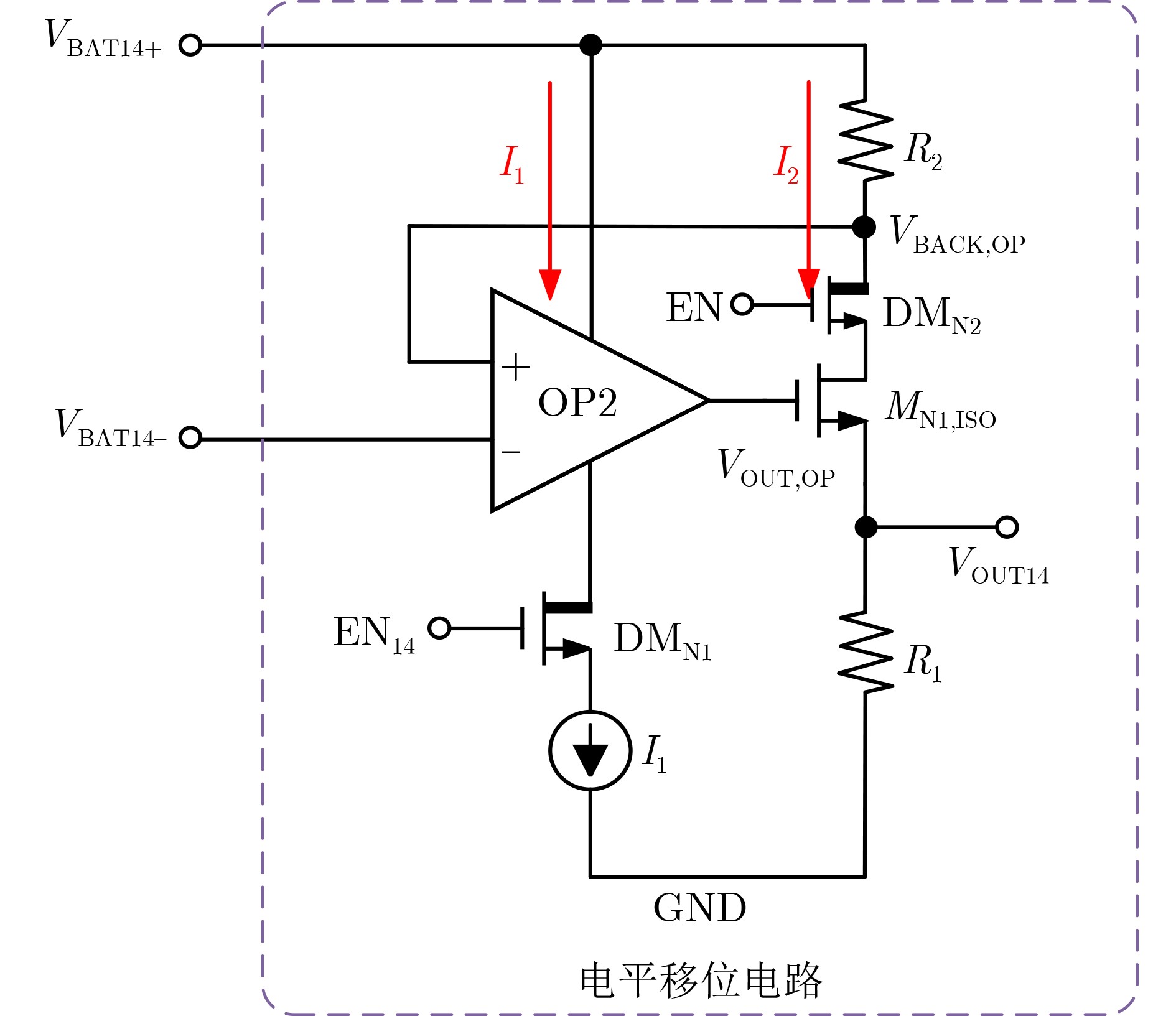
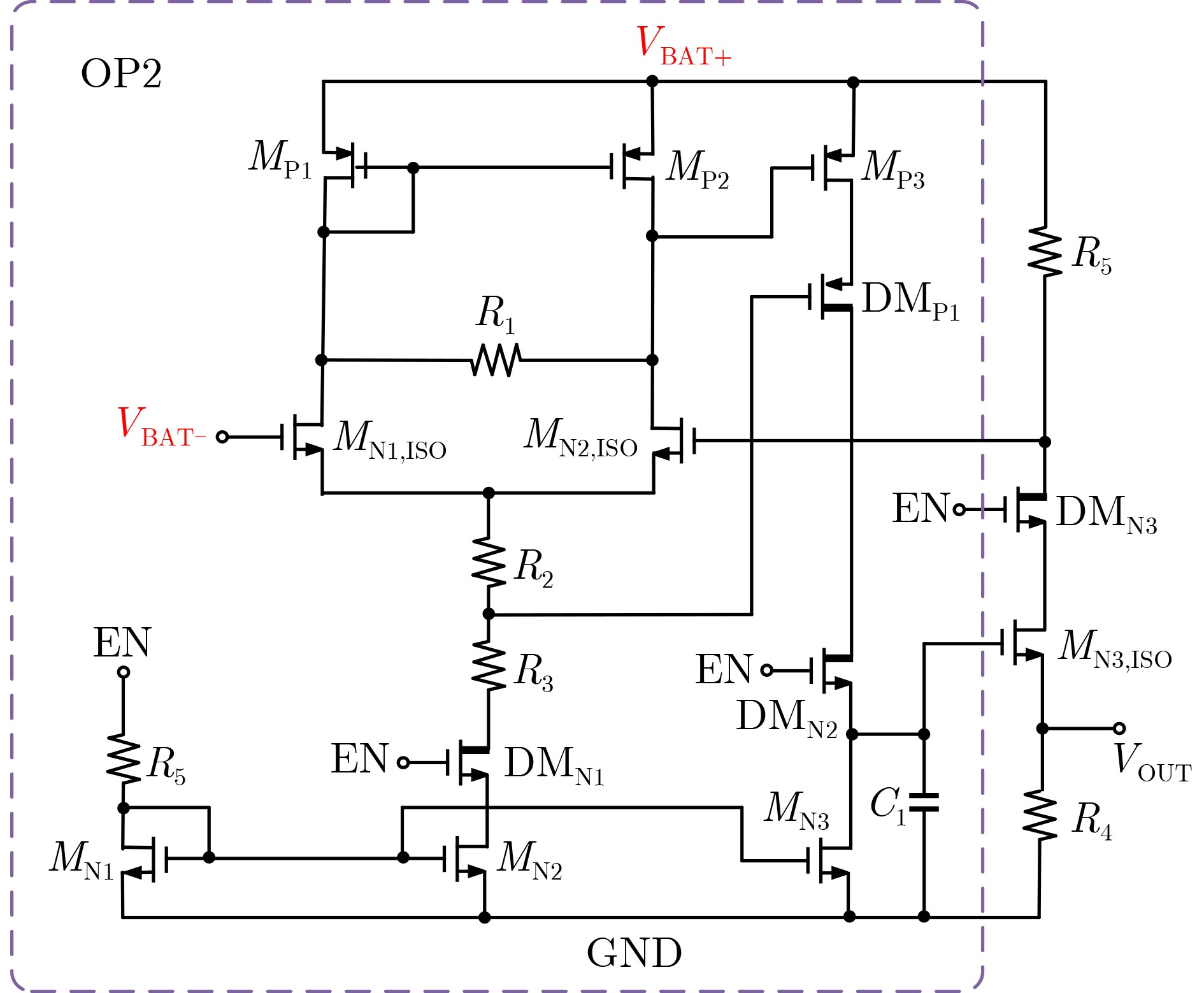
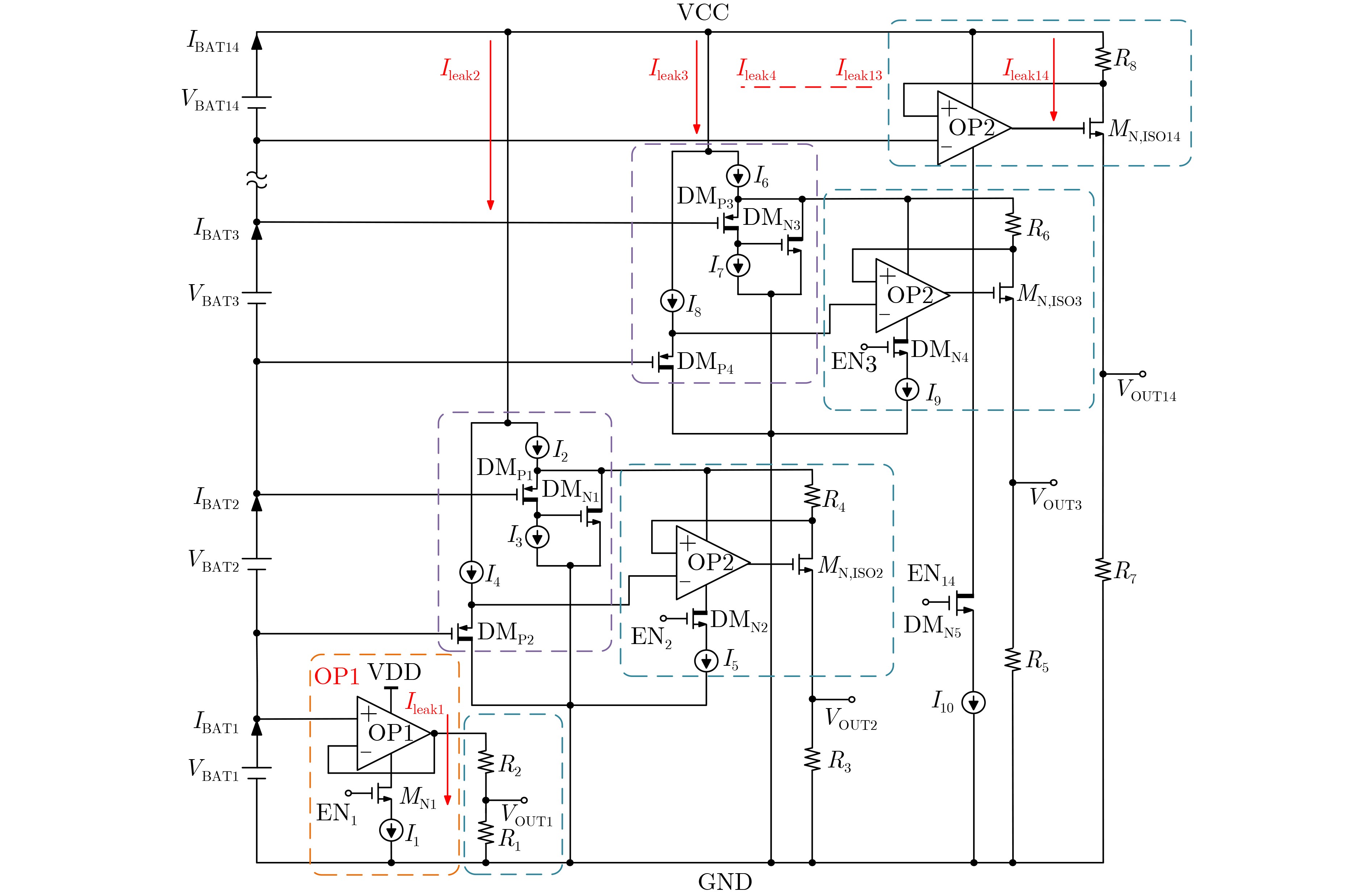
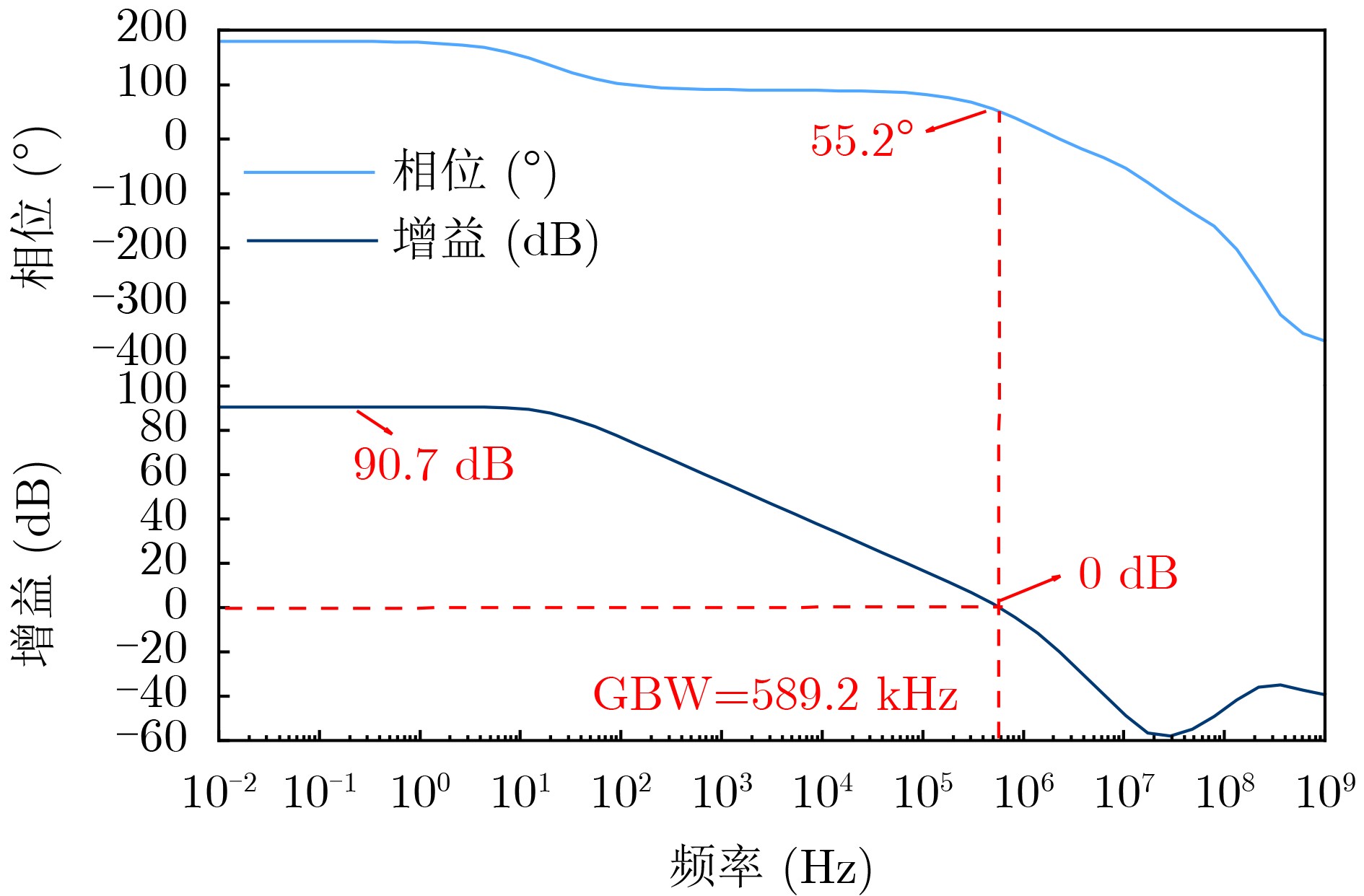
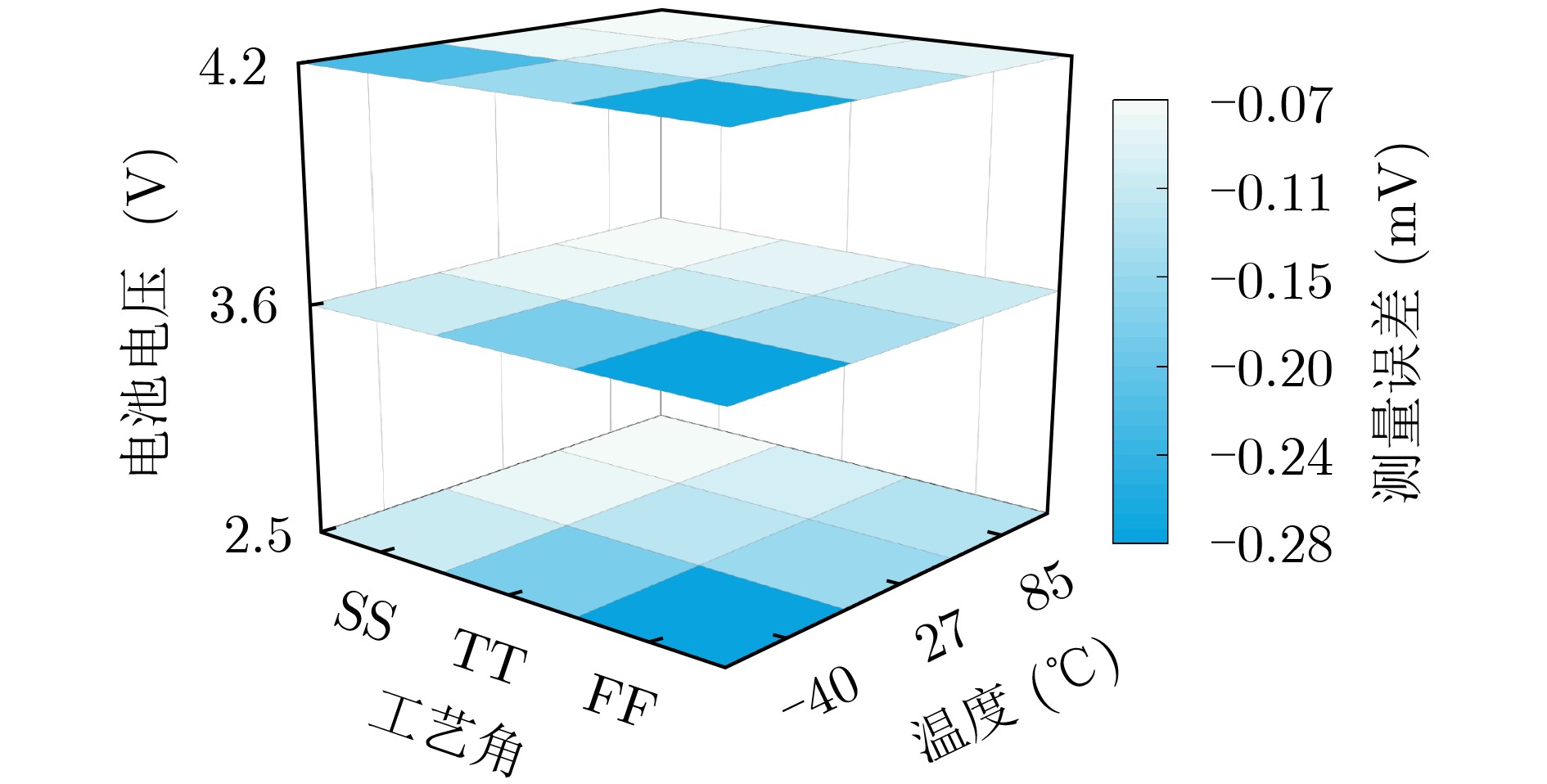
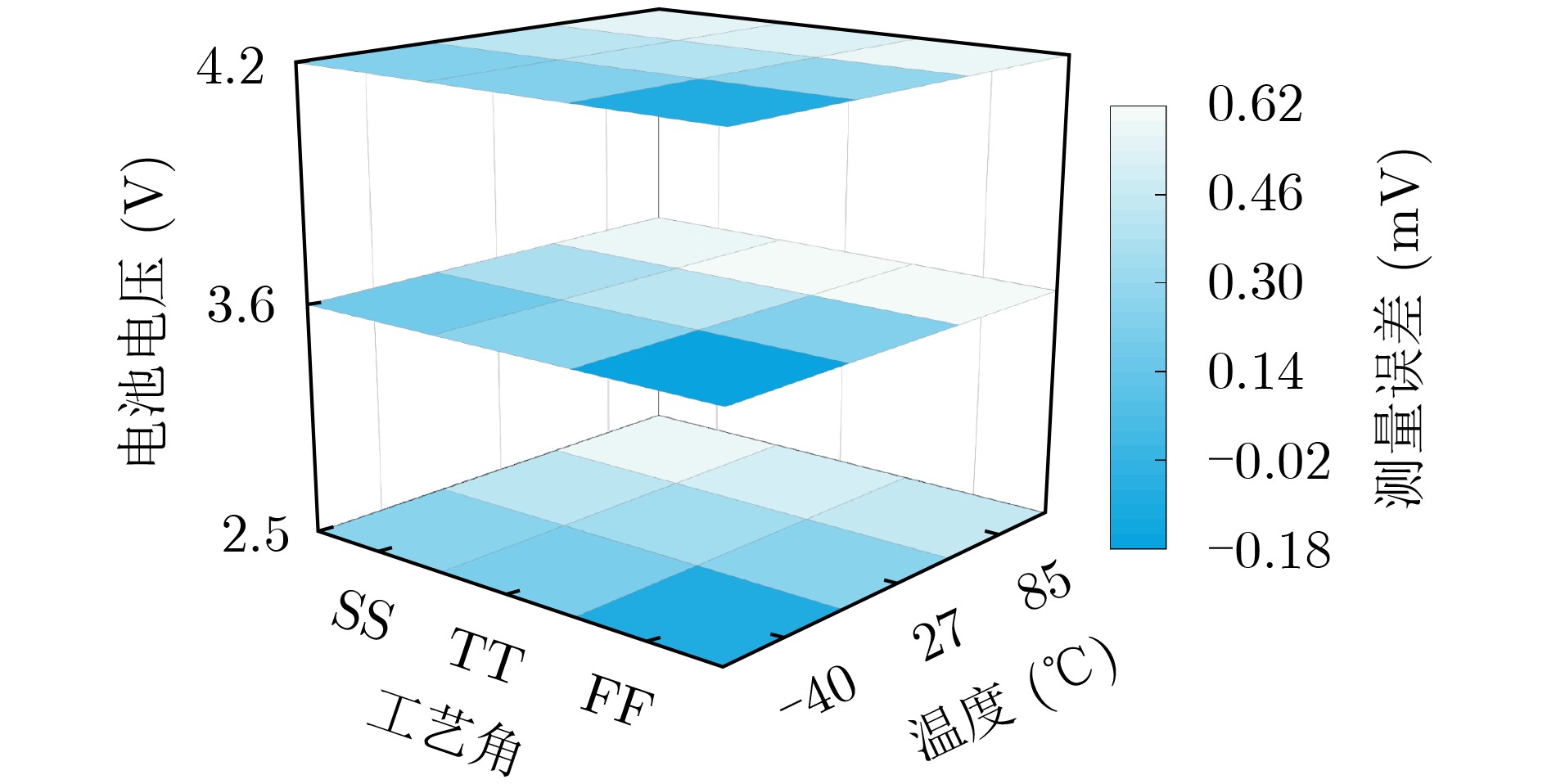
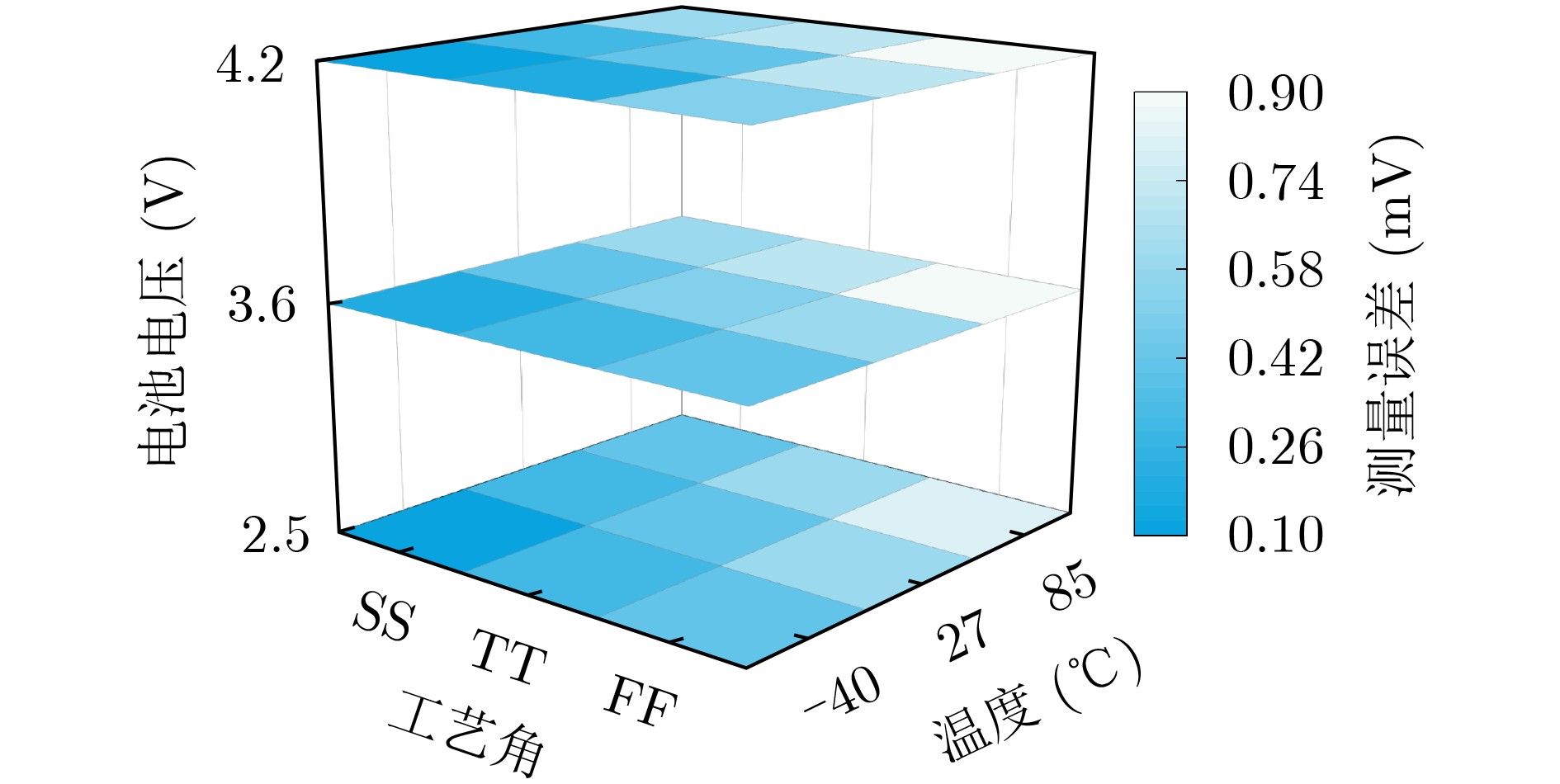
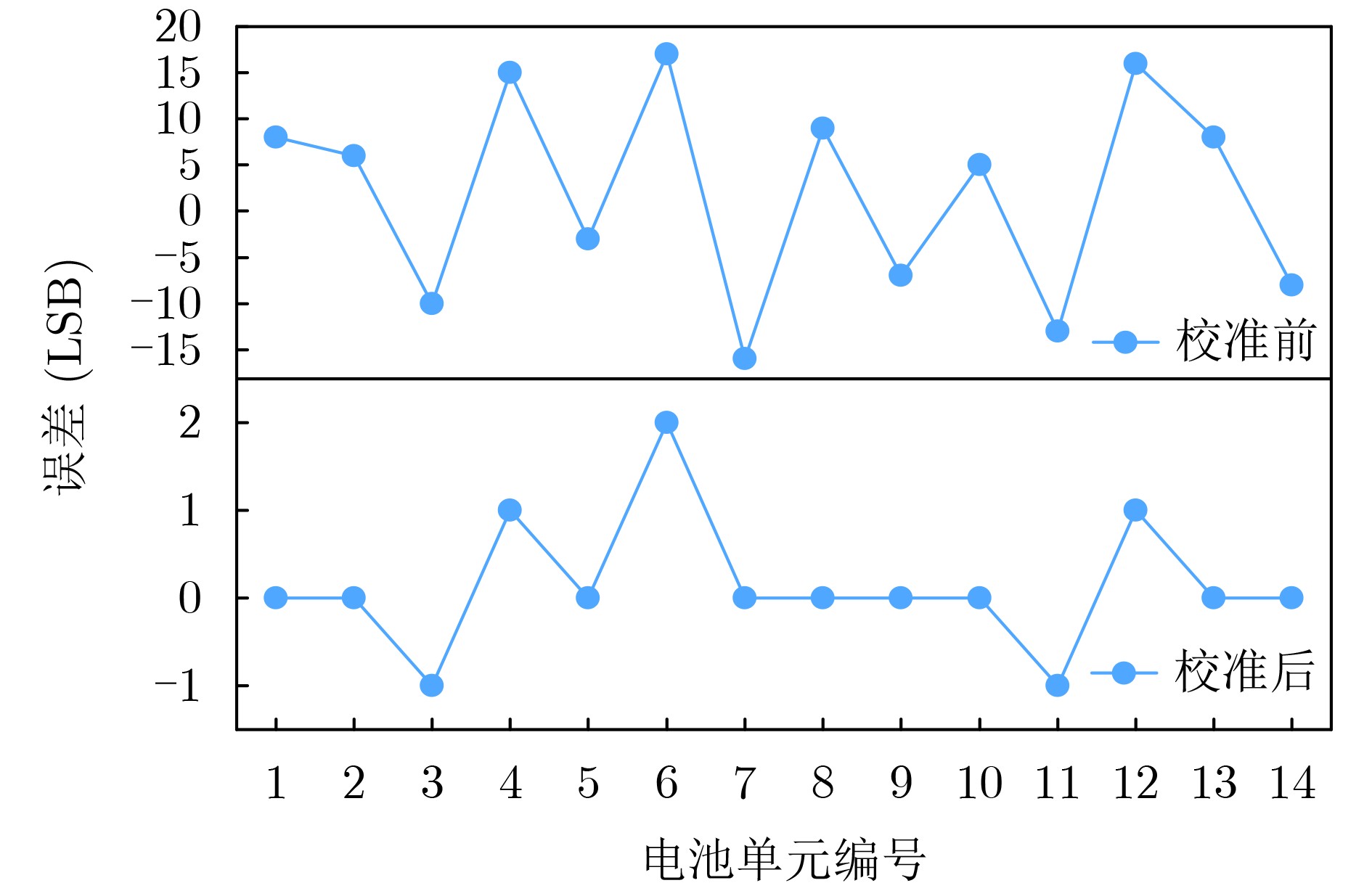
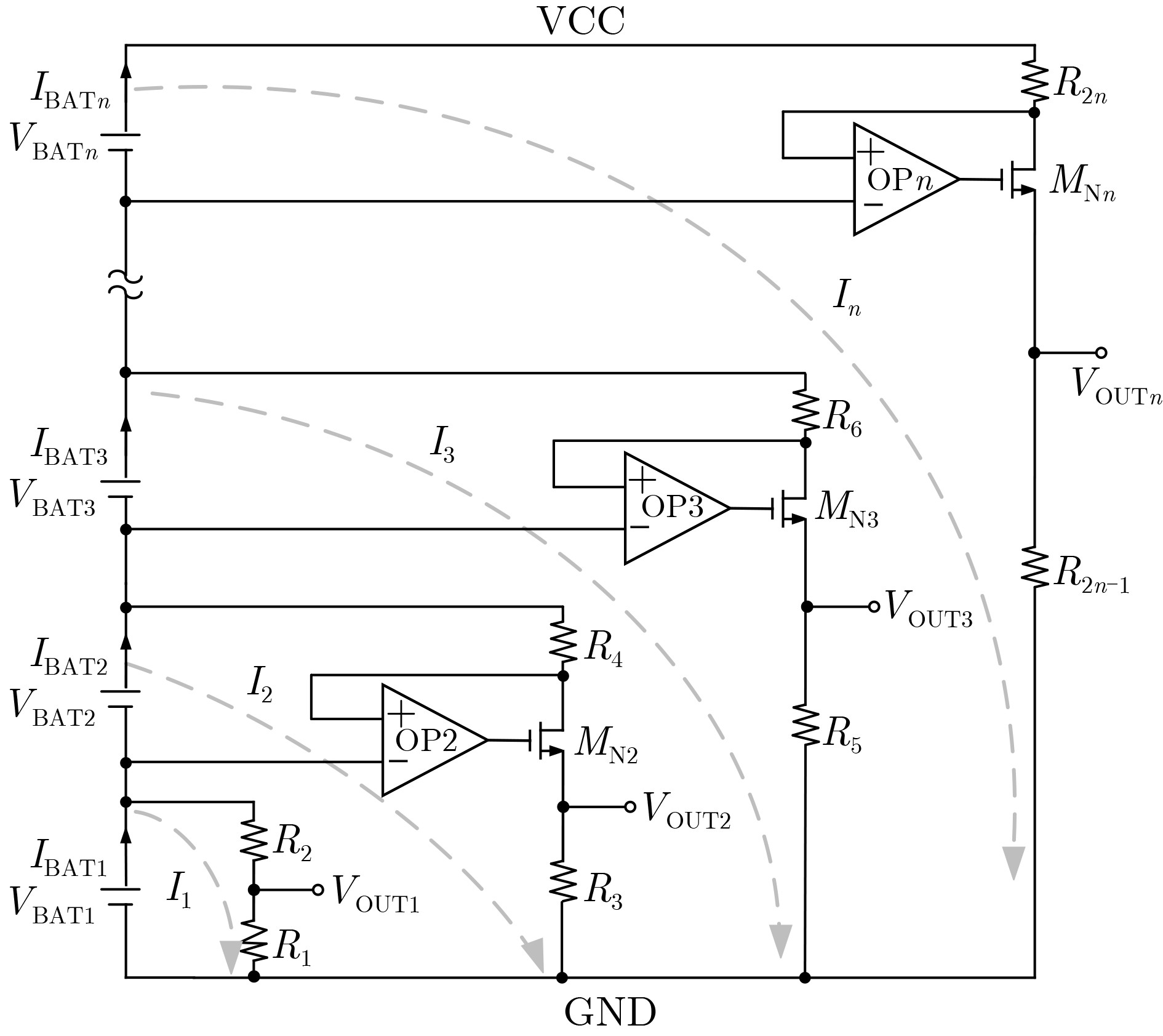
Objective The battery voltage sampling circuit is a key component of the Battery Management Integrated Circuit (BMIC). It performs real-time monitoring of cell voltages, and its performance directly affects the safety of series battery packs. Traditional resistive voltage sampling circuits exhibit channel leakage current, which affects cell-voltage consistency and sampling accuracy. In addition, the level-shifting circuit in the high-voltage domain contains high-voltage operational amplifiers, and the use of many high-voltage MOSFETs increases area overhead. Methods This study proposes a low-leakage-current battery voltage sampling circuit for 14-series lithium batteries. Based on the traditional resistive sampling structure, channel leakage current is reduced to the pA level by designing an operational-amplifier-isolated active-drive technique. Voltage conversion methods are selected according to the voltage domain of each cell group. The first section of the battery uses a unity-gain buffer for isolation and then performs voltage conversion through resistive division. Sections 2 to 13 use operational-amplifier-isolated active driving to follow each cell voltage synchronously, after which the followed voltage is converted to a ground-referenced level through a level-shifting circuit. The voltage sampling process of the highest-section battery draws power from the entire battery stack and does not affect pack consistency; therefore, this section directly adopts the level-shifting circuit for voltage conversion. Results and Discussions The circuit was designed and verified using a 0.35 μm high-voltage BCD process. The overall layout area of the proposed sampling circuit is 3 105 μm × 638 μm ( Fig. 10 ). Verification results show that, across different process corners and temperatures, the maximum channel leakage current after applying the isolated active-drive technique is only 48.9 pA. In contrast, the minimum leakage current of the traditional sampling circuit is 1.169 × 10⁶ pA (Fig. 12 ,Fig. 13 ). The effect of the sampling process on cell-voltage inconsistency is reduced from 18.56% to 2.122 ppm (Fig. 14 ). Under full PVT verification, the maximum measurement error of the proposed sampling circuit is 0.9 mV (Fig. 15 ,Fig. 16 ,Fig. 17 ).Conclusions This study proposes an operational-amplifier-isolated active-drive technique to address the channel leakage issue in traditional resistive voltage sampling circuits, which affects cell-voltage consistency and measurement accuracy. Using the proposed circuit, the maximum channel leakage current is 48.9 pA, the cell-voltage inconsistency is 2.122 ppm, and the maximum measurement error is 1.25 mV. The circuit achieves very low leakage current while maintaining sampling accuracy. The proposed low-leakage-current sampling circuit is suitable for 14-series lithium battery management chips. -
表 1 参数对比
文献[18] 文献[20] 文献[21] 文献[22] 文献[23] 文献[25] 本文 工艺(μm) 0.18 0.18 0.18 0.18 0.18 - 0.35 电池节数 16 4~7 3 17 7 16 14 通道漏电流补偿 - 电流镜
钳位反馈型电流镜
钳位反馈型运算放大器
钳位反馈型运算放大器
钳位反馈型- 运放隔离
有源驱动型最大通道漏电流 16.25 μA 58 nA 20.34 nA 30 nA 30 nA - 48.9 pA 最大测量误差(mV) ±0.21 - - ±2 ±1.92 ±2.8 ±1.25 版图面积(mm2) 3.245×3.112 0.95×0.82 - 2.92×3.23 - - 3.105×0.638 数据类型 S T T T S T S *T表示数据类型为测试数据,S表示数据类型为仿真数据  下载: 导出CSV
-
[1] NIU Huizhe, ZHANG Nan, LU Ying, et al. Strategies toward the development of high-energy-density lithium batteries[J]. Journal of Energy Storage, 2024, 88: 111666. doi: 10.1016/j.est.2024.111666. [2] MALIK G R, REDDY K V T, REDDY Y P K, et al. Future of energy storage: Advancements in lithium-ion batteries and hybrid vehicle technologies[C]. 2024 7th International Conference on Circuit Power and Computing Technologies, Kollam, India, 2024: 1887–1892. doi: 10.1109/ICCPCT61902.2024.10672664. [3] LEI Yu, XU Lulu, CHAN Qingnian, et al. Recent advances in separator design for lithium metal batteries without dendrite formation: Implications for electric vehicles[J]. eTransportation, 2024, 20: 100330. doi: 10.1016/j.etran.2024.100330. [4] TIMILSINA L, BADR P R, HOANG P H, et al. Battery degradation in electric and hybrid electric vehicles: A survey study[J]. IEEE Access, 2023, 11: 42431–42462. doi: 10.1109/ACCESS.2023.3271287. [5] AKYILDIZ A, ERGUN B E, UZUN E, et al. Optimum selection of lithium iron phosphate battery cells for electric vehicles[J]. IEEE Access, 2025, 13: 55070–55080. doi: 10.1109/ACCESS.2025.3553081. [6] PESARAN A A. Lithium-ion battery technologies for electric vehicles: Progress and challenges[J]. IEEE Electrification Magazine, 2023, 11(2): 35–43. doi: 10.1109/MELE.2023.3264919. [7] LI Qingwei and XUE Wenli. A review of feature extraction toward health state estimation of lithium-ion batteries[J]. Journal of Energy Storage, 2025, 12: 115453. doi: 10.1016/j.est.2025.115453. [8] CUI Xiangming, WANG Jingzhao, SUN Shiyi, et al. Safety hazards of lithium metal batteries: From the perspective of lithium dendrites and thermal runaway[J]. Energy & Fuels, 2025, 39(16): 7665–7690. doi: 10.1021/acs.energyfuels.5c00728. [9] PING Ping, REN Xiantong, KONG Depeng, et al. Multi-scale thermal runaway analysis of sodium-ion batteries and comparative safety assessment with lithium-ion batteries[J]. Composites Part B: Engineering, 2025, 302: 112532. doi: 10.1016/j.compositesb.2025.112532. [10] YIN Deyou, NI Jimin, SHI Xiuyong, et al. Dynamic overcharge performance and mechanism of lithium-ion batteries during high-temperature calendar aging[J]. ACS Applied Energy Materials, 2025, 8(6): 3491–3499. doi: 10.1021/acsaem.4c03015. [11] LIU Zijun, HAN Kuihua, ZHANG Qiang, et al. Thermal safety focus and early warning of lithium-ion batteries: A systematic review[J]. Journal of Energy Storage, 2025, 115: 115944. doi: 10.1016/j.est.2025.115944. [12] RAGCHAA B, WU Liji, and ZHANG Xiangmin. A design of fault-tolerant battery monitoring IC for electric vehicles complying with ISO 26262[J]. IEEE Open Journal of Circuits and Systems, 2024, 5: 166–177. doi: 10.1109/OJCAS.2024.3391829. [13] VULLIGADDALA V B, VERNEKAR S, SINGAMLA S, et al. A 7-cell, stackable, Li-ion monitoring and active/passive balancing IC with in-built cell balancing switches for electric and hybrid vehicles[J]. IEEE Transactions on Industrial Informatics, 2020, 16(5): 3335–3344. doi: 10.1109/TII.2019.2953939. [14] YUE Tai, WU Liji, ZHANG Xiangmin, et al. High-precision voltage measurement IP core for battery management SoC of electric vehicles[C]. 2014 12th IEEE International Conference on Solid-State and Integrated Circuit Technology (ICSICT), Guilin, China, 2014: 1–3. doi: 10.1109/ICSICT.2014.7021570. [15] CHEN Zhijian, WU Xinyi, LI Bin, et al. A novel voltage protection method for multi-cell lithium-ion battery protection IC[J]. Journal of Physics: Conference Series, 2022, 2313(1): 012014. doi: 10.1088/1742-6596/2313/1/012014. [16] WU Qi and WU Jiangfeng. High precision voltage sampling circuit for battery management system[C]. 2024 IEEE 7th Advanced Information Technology, Electronic and Automation Control Conference (IAEAC), Chongqing, China, 2024: 713–717. doi: 10.1109/IAEAC59436.2024.10503982. [17] WANG Xiaofei, ZHANG Hong, ZHANG Jianrong, et al. A multi-cell battery pack monitoring chip based on 0.35-µm BCD technology for electric vehicles[J]. IEICE Electronics Express, 2015, 12(12): 20150367. doi: 10.1587/elex.12.20150367. [18] HAO Yunqiang, YI Dongbai, ZHANG Xiaowei, et al. A power management IC used for monitoring and protection of Li-ion battery packs[J]. Journal of Sensors, 2021, 2021: 6611648. doi: 10.1155/2021/6611648. [19] SHI Qianqian, TANG Wei, and LV Qiushuang. A high precision voltage detection circuit for multiple lithium batteries[C]. 2022 7th International Conference on Integrated Circuits and Microsystems (ICICM), Xi'an, China, 2022: 60–66. doi: 10.1109/ICICM56102.2022.10011305. [20] WU Kaikai, WANG Hongyi, CHEN Chen, et al. Battery voltage transfer method for multi-cells Li-ion battery pack protection chips[J]. Analog Integrated Circuits and Signal Processing, 2022, 111(1): 13–24. doi: 10.1007/s10470-021-01836-9. [21] WU Kaikai, WANG Hongyi, CHEN Chen, et al. Improved voltage transfer method for lithium battery string management chip[J]. IET Circuits, Devices & Systems, 2021, 15(7): 649–656. doi: 10.1049/cds2.12060. [22] YOU Yong, ZHU Guangqian, LI Yongyuan, et al. 17-Cell battery monitoring analog front end with high sampling accuracy for battery pack applications[J]. Microelectronics Journal, 2024, 151: 106327. doi: 10.1016/j.mejo.2024.106327. [23] LI Qing, GUO Zhongjie, CHEN Hao, et al. High precision voltage monitoring technology for multi-cell battery management system[C]. 2020 IEEE 15th International Conference on Solid-State & Integrated Circuit Technology, Kunming, China, 2020. doi: 10.1109/ICSICT49897.2020.9278338. [24] 郭仲杰, 巩成军, 陈晅, 等. 应用于电池管理芯片中多通道电压采样不一致性校准方法[P]. 中国, 202410631286.7, 2024.GUO Zhongjie, GONG Chengjun, CHEN Xuan, et al. Multi-channel voltage sampling inconsistency calibration method applied to battery management chip[P]. CN, 202410631286.7, 2024. [25] SLUSE81E. BQ79616-Q1, BQ79616H-Q1, BQ79614-Q1, BQ79612-Q1 Functional Safety-Compliant Automotive 16S/14S/12S Battery Monitor, Balancer and Integrated Hardware Protector [OL]. https://www.ti.com.cn/product/cn/BQ79616-Q1 -

 下载:
下载:



图(19) / 表(1)
计量
- 文章访问数: 772
- HTML全文浏览量: 590
- PDF下载量: 57
- 被引次数: 0
