




A Physics-Constrained Deep Learning Framework for High-Fidelity Sea Clutter Generation under Small-Sample Conditions
-
摘要: 高海况海杂波数据在雷达目标检测性能验证中需求迫切,直接生成具有良好时频特征的高海况海杂波数据难度大。针对这一问题,该文提出融合复数变分自编码对抗网络(Complex Variational AutoEncoder Wasserstein Generative Adversarial Network, CVAE-WGAN)与迁移学习的创新框架。该文首先通过构建复数域深度架构,依托复数卷积核保留信号正交特性,同时结合幅度-相位注意力模块(Amplitude-Phase Attention, APA)增强时频特征提取,并引入复数残差块优化梯度传播。其次,该文设计物理约束导向的损失函数体系,利用时频脊损失捕捉非平稳能量演化轨迹,通过多普勒频带损失强化雷达相干处理特性;提出基于Kullback-Leibler散度(Kullback-Leibler Divergence, KLD)的自适应迁移机制——在源域预训练后,对目标域动态解冻高分布差异层,从而实现跨场景知识迁移。实验验证生成数据在四级海况幅度统计特性、时间相关性和时频特征上均高度逼近实测数据;迁移至五级海况(20%目标域样本)后,仍保持优异的幅度分布与自相关特性,时频物理特征还原能力接近源域水平。消融研究证实APA对相位-幅度联合建模起决定性作用,样本量敏感性测试表明方法在15%目标数据量下性能稳定。该框架通过复数域物理约束与自适应迁移的协同创新,显著提升小样本海杂波生成质量,为雷达抗干扰算法提供可靠数据基础,极端稀缺样本场景的适应性优化将是后续重点。Abstract:
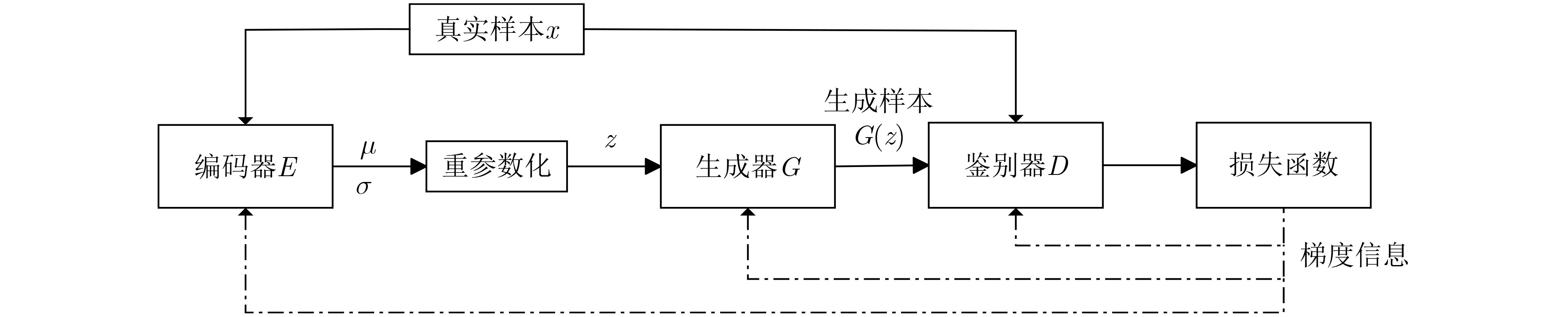
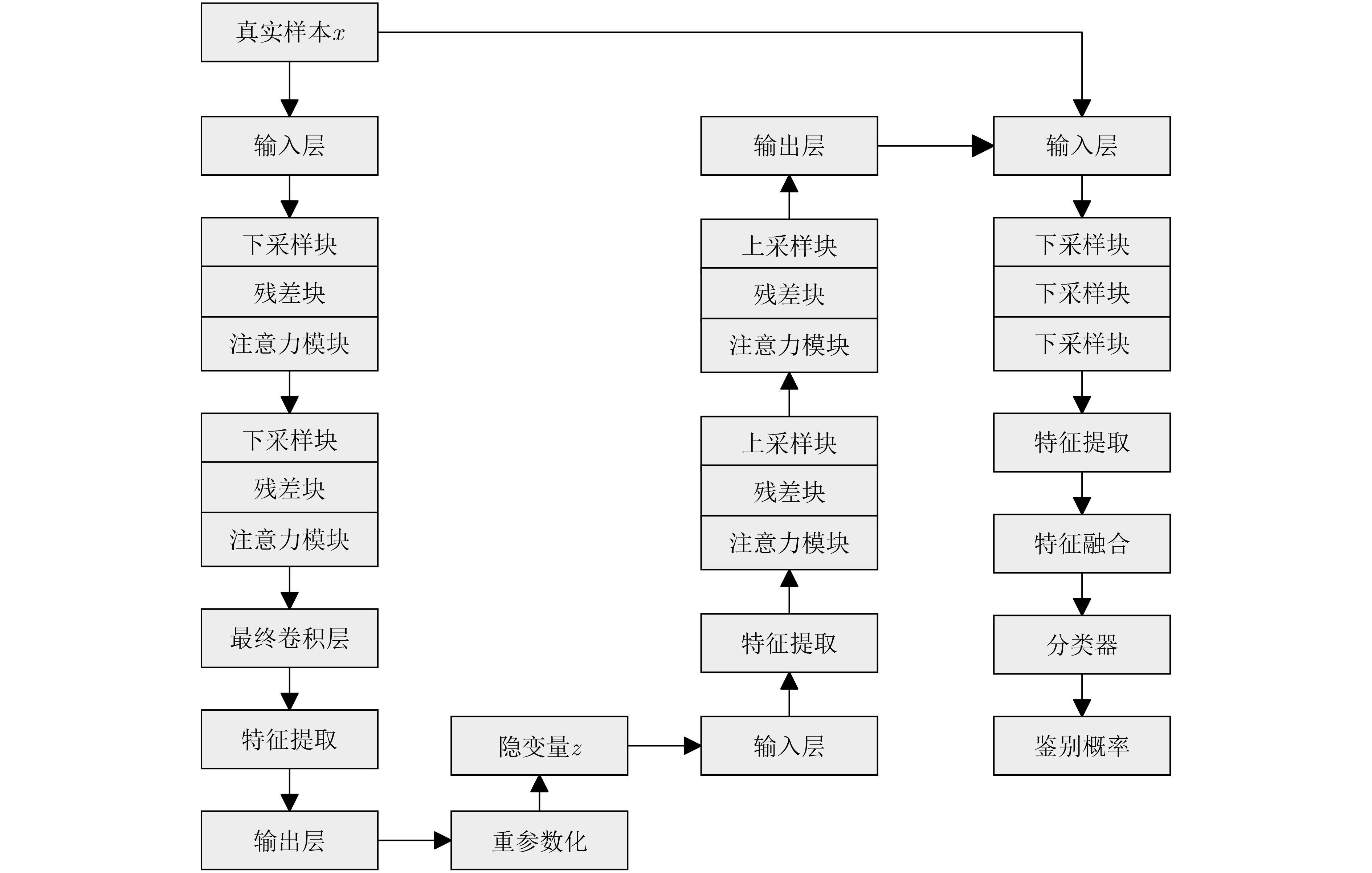
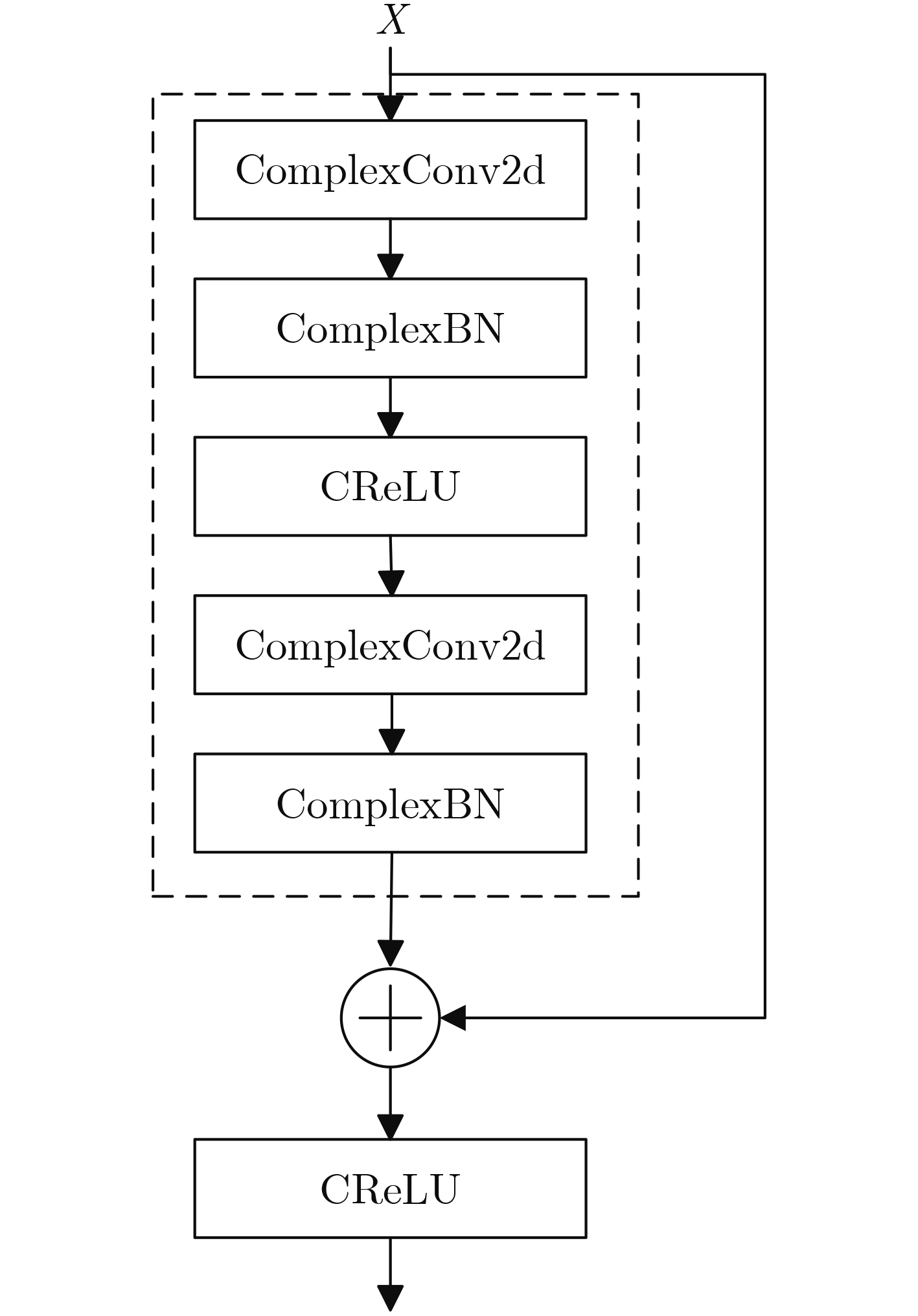
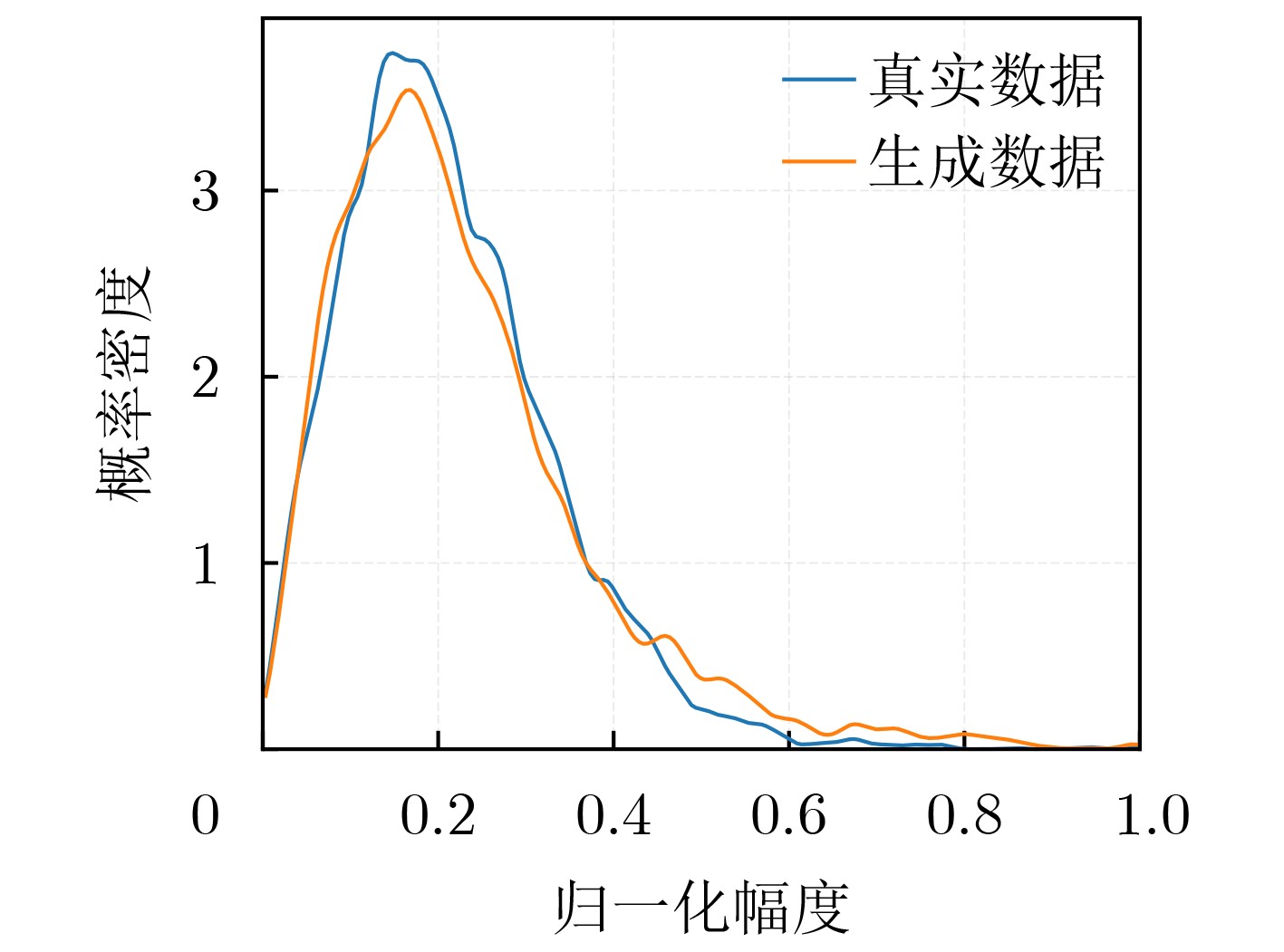
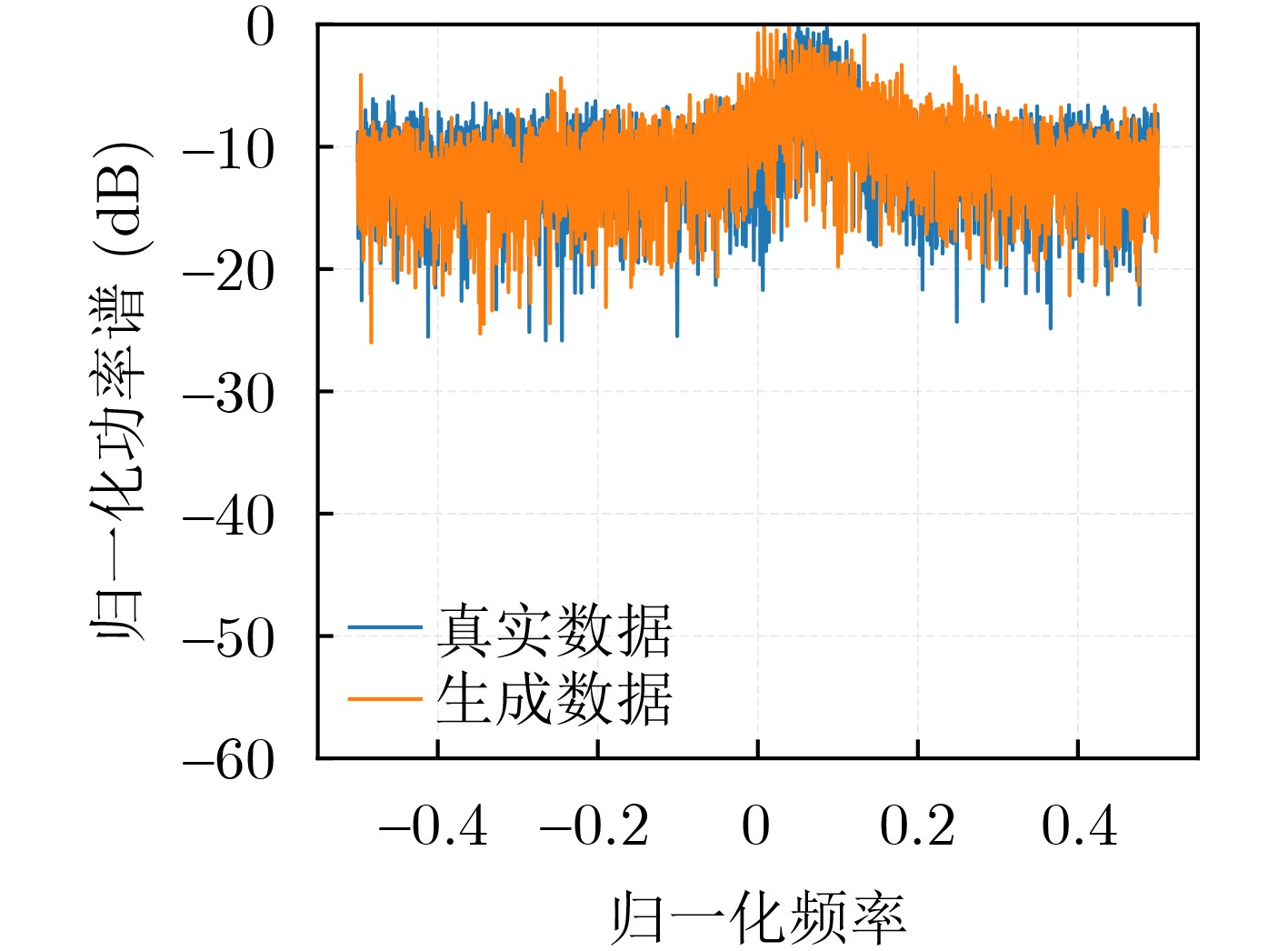
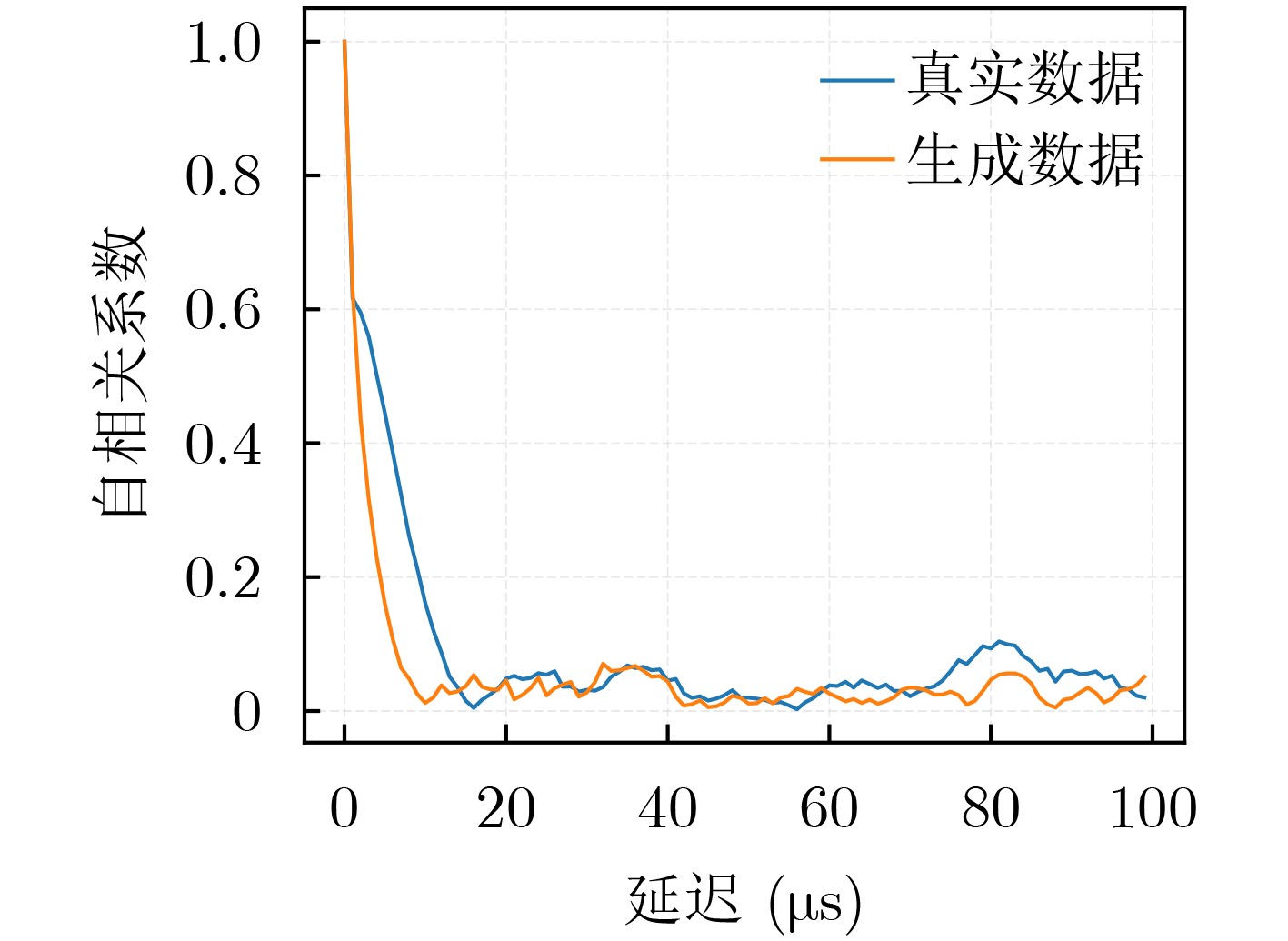
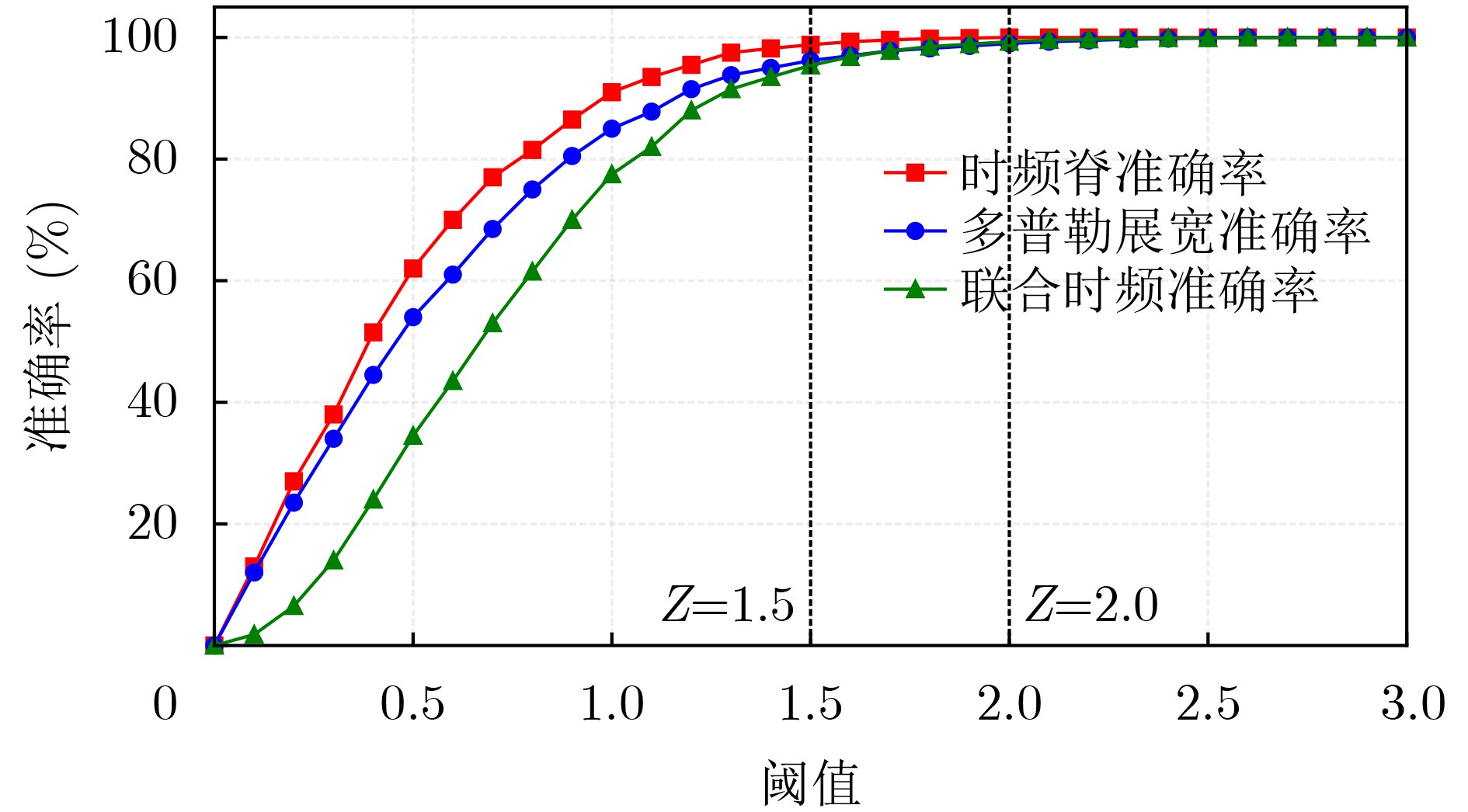
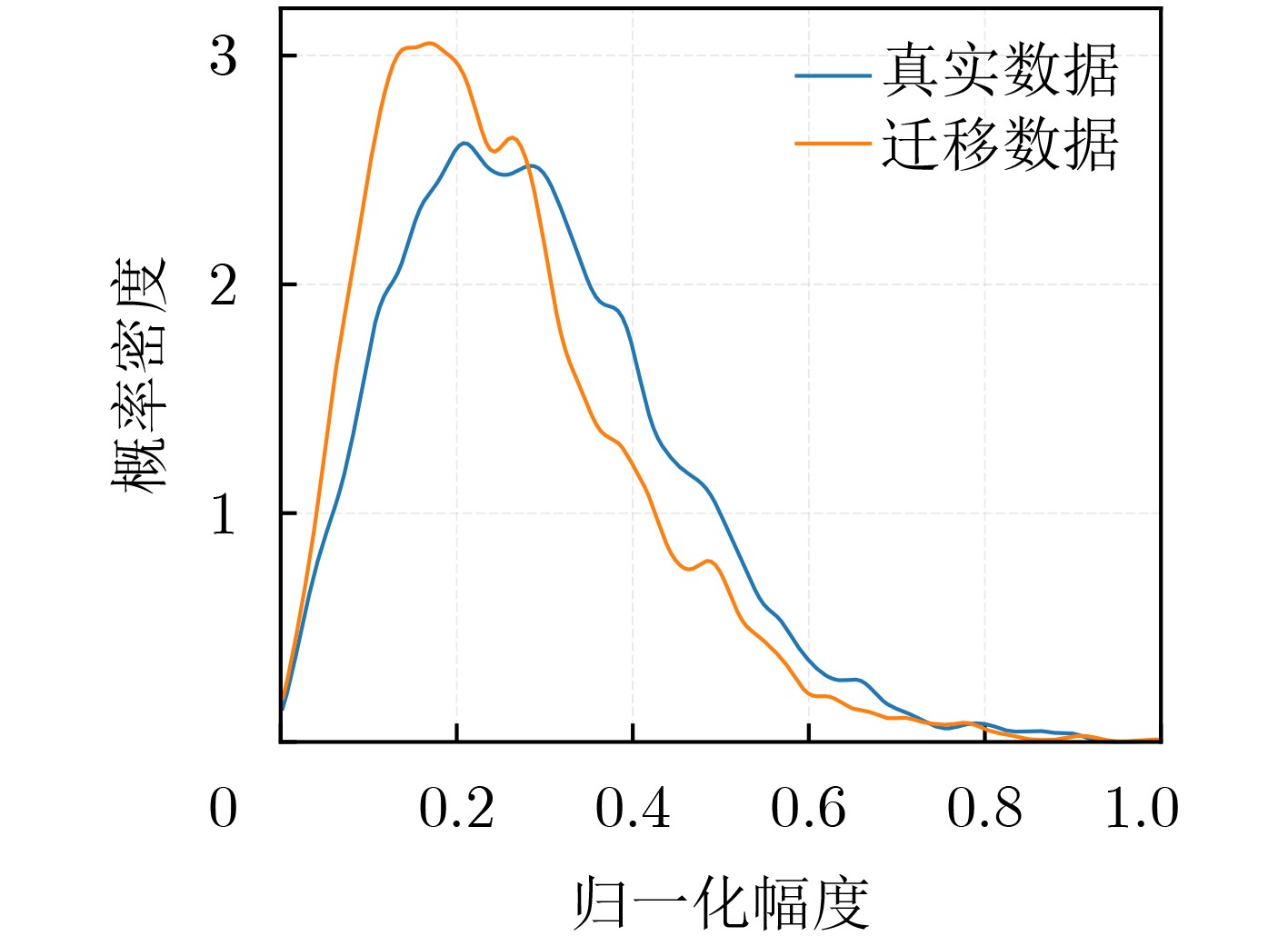
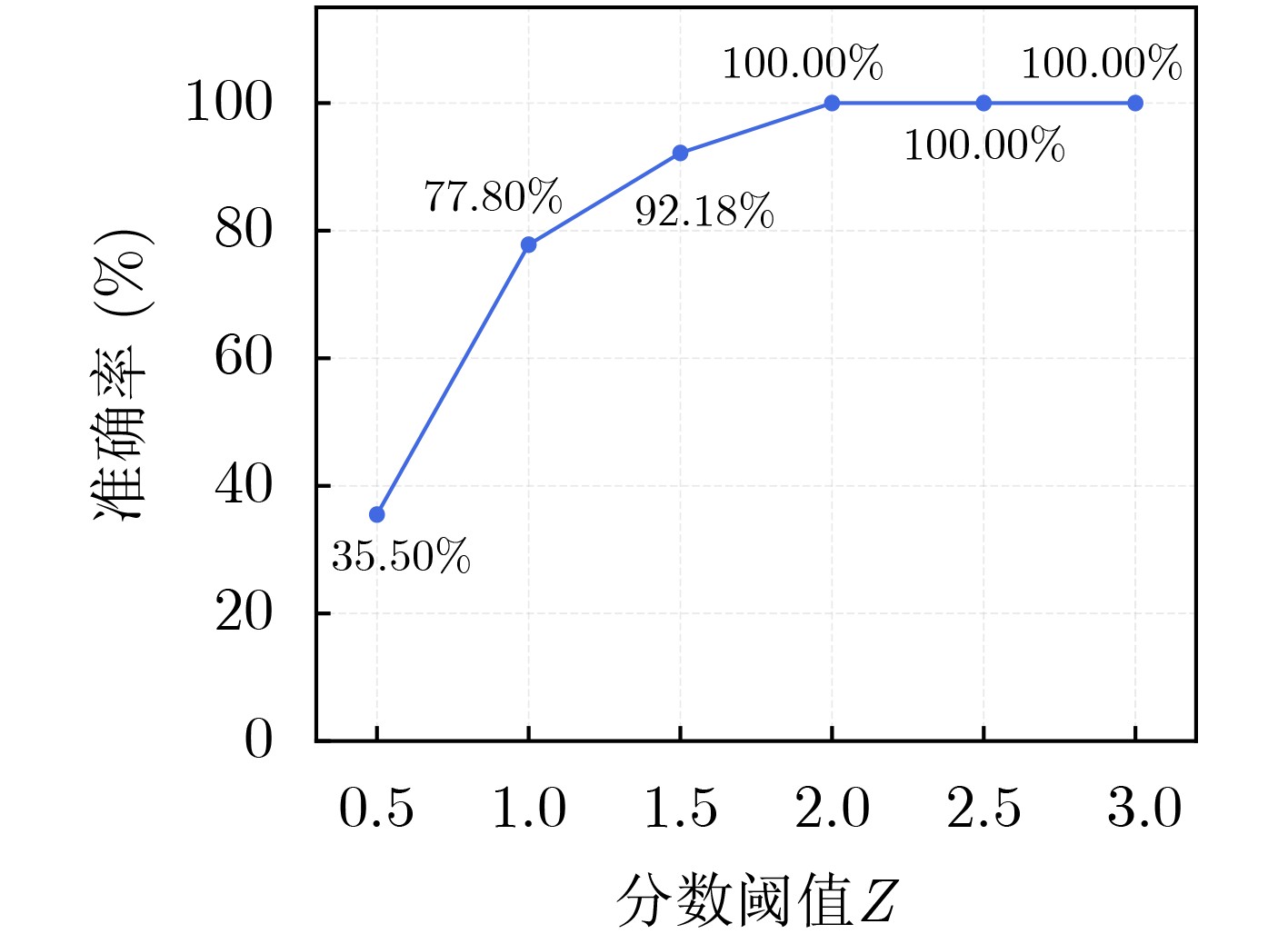
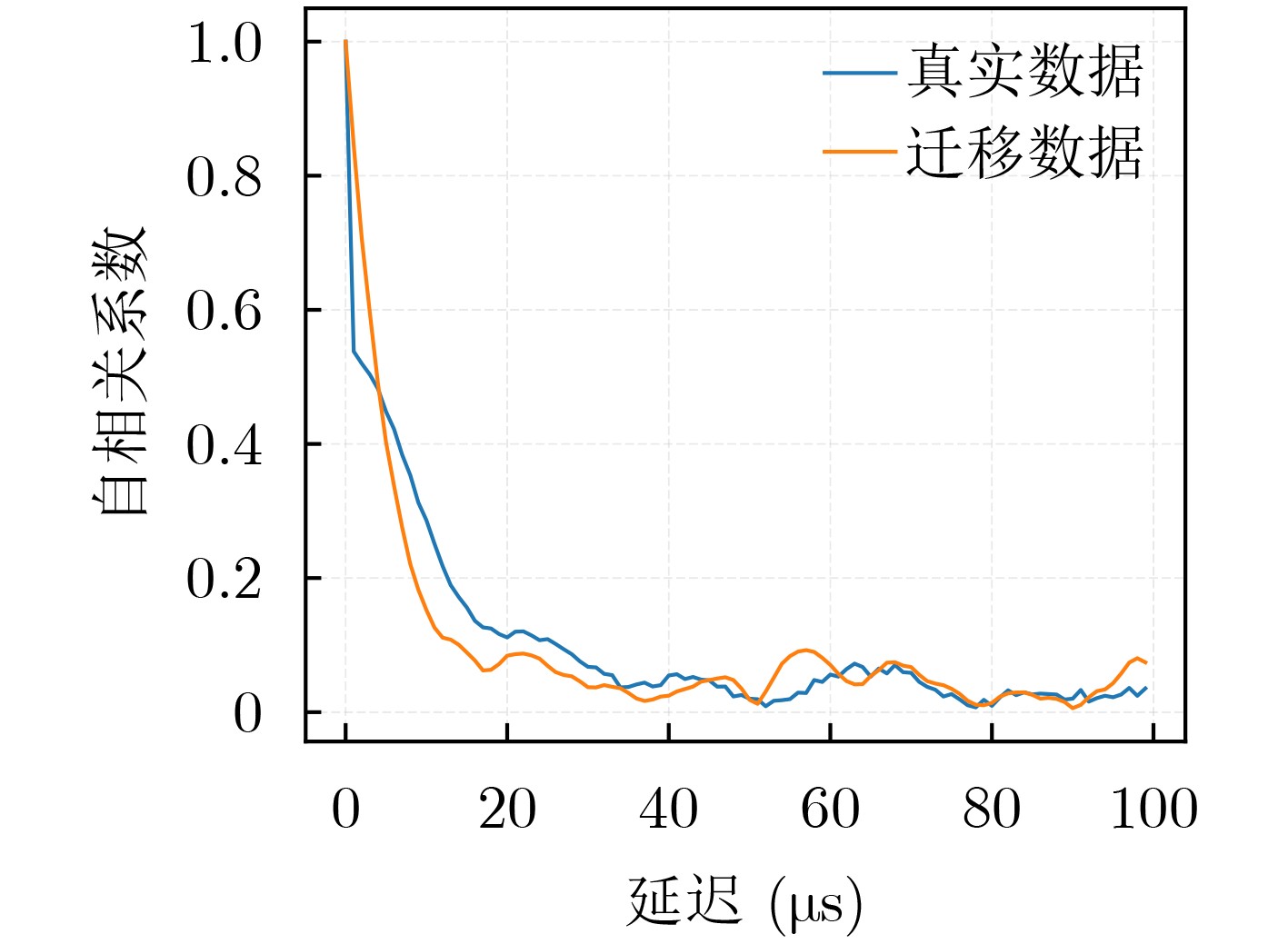
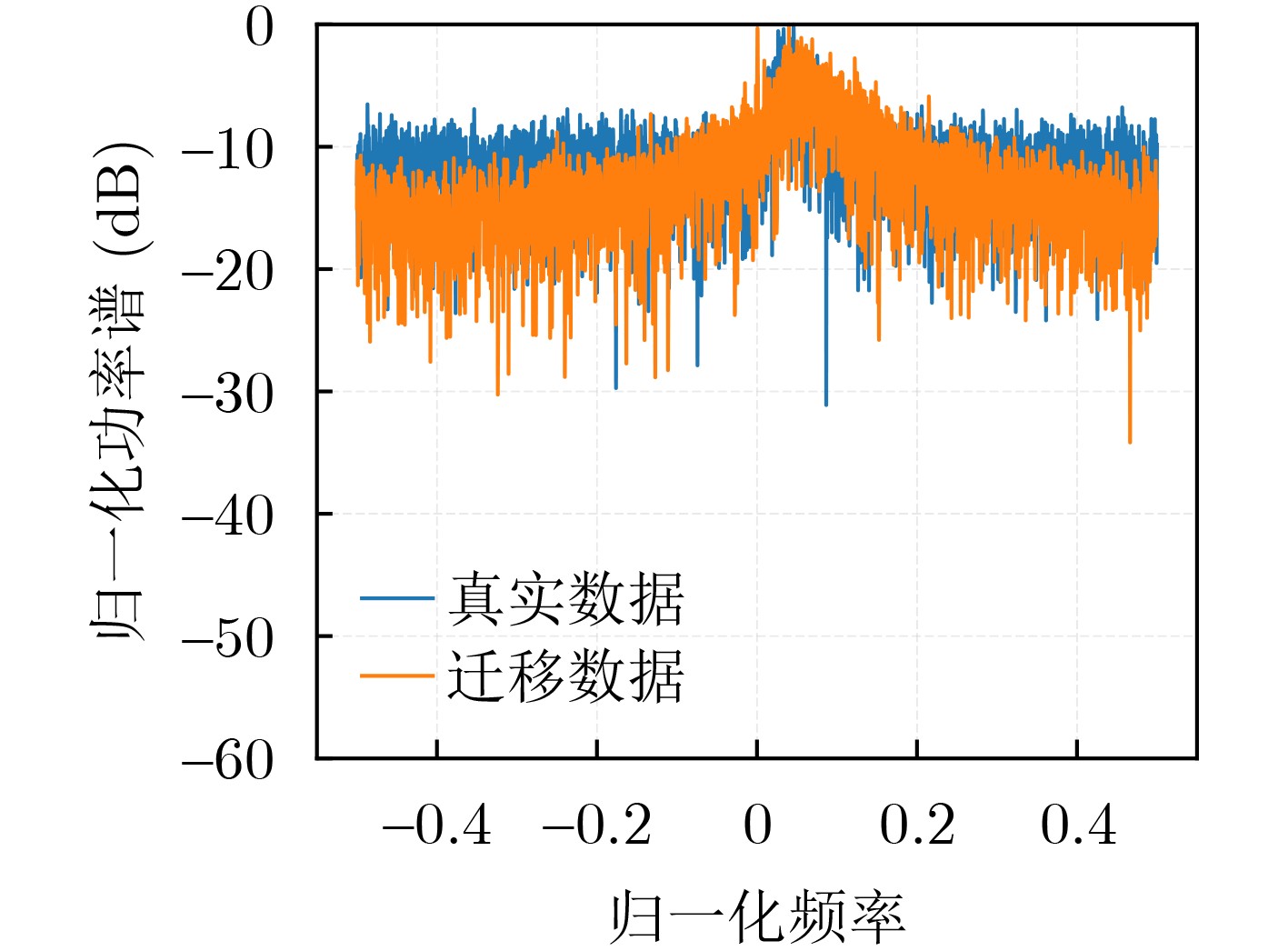
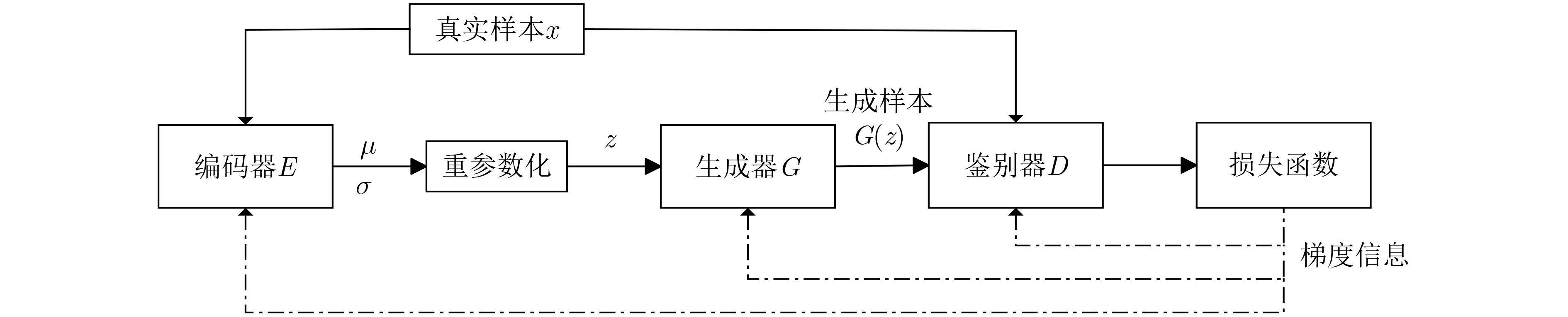
Objective The verification and validation of radar target detection algorithms, especially for maritime surveillance, require high-fidelity synthetic sea clutter data. However, realistic sea clutter generation under high sea-state conditions, such as Sea State 4 and above, remains challenging because sea clutter is nonstationary and non-Gaussian. Traditional statistical models often fail to capture complex time-frequency characteristics, particularly when direct measurements are difficult to obtain. To address small-sample sea clutter generation, this study proposes a physics-constrained deep learning framework with adaptive transfer learning. The aim is to generate high-quality synthetic sea clutter data that closely match measured data and provide a reliable data basis for the development and testing of advanced radar systems. Methods The proposed framework integrates a Complex Variational Autoencoder Wasserstein Generative Adversarial Network (CVAE-WGAN) with transfer learning for high-fidelity sea clutter generation under small-sample conditions. The model operates in the complex domain and jointly processes in-phase and quadrature components, preserving signal orthogonality and phase relationships. An Amplitude-Phase Attention (APA) module is designed to enhance joint amplitude-phase modeling, and complex residual blocks are used to improve gradient propagation and training stability. A physics-constrained loss system, including time-frequency ridge loss and weighted Doppler-band loss, is developed to guide the generated data toward the physical characteristics of sea clutter. To reduce dependence on target-domain samples, an adaptive transfer learning mechanism based on Kullback-Leibler Divergence (KLD) is used to dynamically adjust fine-tuning and support knowledge transfer across different sea-state scenarios. Results and Discussions The proposed CVAE-WGAN framework is evaluated on measured sea clutter datasets and shows strong performance in synthetic data generation. In the source domain, namely Sea State 4, the generated data match the measured data in amplitude statistics, temporal correlation, spectral characteristics, and joint time-frequency characteristics. The probability density function-cosine similarity (PDF-CS) is 0.872 ( Fig. 5 ,Table 1 ), the autocorrelation function-cosine similarity (ACF-CS) is 0.938 2 (Fig. 7 ,Table 1 ), and the spectrum root mean square error (SPEC-RMSE) is 4.537 9 dB (Fig. 6 ,Table 1 ). The joint time-frequency accuracy reaches 95.31% when |z|≤1.5 (Fig. 8 ,Table 1 ). The adaptive transfer learning mechanism is further validated by transferring the pretrained model to Sea State 5 using only 20% of the target-domain samples. The generated clutter maintains a close fit to the measured amplitude distribution (PDF-CS = 0.844 8) (Fig. 9 ,Table 3 ) and shows good autocorrelation characteristics (ACF-CS = 0.955 7) (Fig. 10 ,Table 4 ). Its spectral characteristics are also close to those of the measured data, with SPEC-RMSE = 4.498 2 dB under the 20% target-domain setting (Fig. 11 ,Table 4 ). The joint time-frequency accuracy reaches 77.8% when |z|≤1.0 and 92.18% when |z|≤1.5 (Fig. 12 ,Table 4 ). Ablation experiments show that the APA module is essential for joint amplitude-phase modeling. Removing this module reduces PDF-CS by 17.3% and increases SPEC-RMSE by 25.9% (Table 2 ). The sample-size sensitivity test shows that the method remains stable when the target-domain sample proportion is no less than 15%, with PDF-CS > 0.6 and joint time-frequency accuracy > 82% when |z|≤1.5 (Table 4 ). These results indicate that the proposed method is suitable for sea clutter generation in data-scarce scenarios.Conclusions This study presents a framework for high-fidelity sea clutter generation under small-sample conditions. The framework combines CVAE-WGAN, physics-constrained learning, and adaptive transfer learning. Guided by the proposed loss system, the model effectively captures both the statistical and physical characteristics of high sea-state clutter. The KLD-based adaptive transfer strategy improves cross-sea-state adaptability and supports high-quality data generation with limited target-domain samples. The proposed framework provides a reliable and scalable data basis for the development and testing of radar anti-interference algorithms. Future work will further optimize the method for extremely scarce samples and extend it to other nonstationary radar signal scenarios. -
表 1 模型对比实验表
模型变体 PDF-CS SPEC-RMSE ACF-CS 平均功率误差 Z=1.5 CVAE-WGAN 0.8720 4.5379 dB 0.9382 0.0035 95.31% WGAN-GP 0.7654 6.215 dB 0.8321 0.0421 35.94% 相对提升幅度% ↑13.9 ↓26.9 ↑12.8 ↑3.86 ↑59.37  下载: 导出CSV
表 2 模型消融实验对照表(相对性能百分比)(%)
模型变体 PDF-CS SPEC-RMSE ACF-CS Z=0.5 Z=1.5 完整模型 100 100 100 100 100 无注意力模型 82.7 74.1 87.4 74.8 86.8 无残差模型 92.3 84.9 96.1 86.6 93.6 全基础模型 78.3 65.8 84.8 62.9 79.1
下载: 导出CSV
表 3 五级海况迁移生成性能对比
评估指标 计算方法 平均值 评价标准 PDF-CS 余弦相似度(式(12)) 0.8448 越接近1越好 ACF-CS 余弦相似度 0.9557 越接近1越好 SPEC-RMSE 对数PSD均方根误差(dB) 5.4357 越小越好 时频准确率(Z=1.0) |z|≤0.5的样本比例 77.80% 越大越好 时频准确率(Z=1.5) |z|≤1.0的样本比例 92.18% 越大越好
下载: 导出CSV
表 4 迁移学习不同样本量对性能影响分析
数据集大小
(%)PDF-CS SPEC-RMSE
(dB)ACF-CS Z=1.0
(%)Z=1.5
(%)20 0.8448 4.4982 0.9557 77.80 92.18 15 0.6144 5.4357 0.8889 60.94 82.54 10 0.5039 5.8023 0.8025 56.25 80.95 5 0.2837 6.4458 0.7107 45.31 66.67
下载: 导出CSV
-
[1] WATTS S. Modeling and simulation of coherent sea clutter[J]. IEEE Transactions on Aerospace and Electronic Systems, 2012, 48(4): 3303–3317. doi: 10.1109/TAES.2012.6324707. [2] ZENG Peng, ZHANG Yushi, XIA Xiaoyun, et al. Research on sea clutter simulation method based on deep cognition of characteristic parameters[J]. Remote Sensing, 2024, 16(24): 4741. doi: 10.3390/rs16244741. [3] CUI Jianbo, WANG Yunhua, MI Xiaolin, et al. Investigation on the multidimensional statistical characteristics of sea clutter acquired by a Ku-band radar with variable range resolution[J]. IEEE Transactions on Geoscience and Remote Sensing, 2025, 63: 5103915. doi: 10.1109/TGRS.2025.3564998. [4] MACHHOUR S, KEMKEMIAN S, BRETON P A, et al. Synthetic sea-clutter for long integration processing[C]. 2020 17th European Radar Conference (EuRAD), Utrecht, Netherlands, 2021: 107–110. doi: 10.1109/EuRAD48048.2021.00038. [5] 薛健, 郭妍. 对数正态纹理距离相关性辅助的海杂波背景雷达目标检测方法[J]. 电子与信息学报, 2024, 46(9): 3611–3618. doi: 10.11999/JEIT240123.XUE Jian and GUO Yan. Radar target detection aided by log-normal texture range correlation in sea clutter[J]. Journal of Electronics & Information Technology, 2024, 46(9): 3611–3618. doi: 10.11999/JEIT240123. [6] MELIEF H W, GREIDANUS H, VAN GENDEREN P, et al. Analysis of sea spikes in radar sea clutter data[J]. IEEE Transactions on Geoscience and Remote Sensing, 2006, 44(4): 985–993. doi: 10.1109/TGRS.2005.862497. [7] ZOU Zihao, MA Jingtao, HUANG Penghui, et al. Multichannel sea clutter modeling and clutter suppression performance analysis for spaceborne bistatic surveillance radar systems[J]. IEEE Transactions on Geoscience and Remote Sensing, 2024, 62: 5108424. doi: 10.1109/TGRS.2024.3424562. [8] CHENG Yi, LI Kexin, XIU Chunbo, et al. Simulation of radar sea clutter in correlated generalized compound distribution based on improved ZMNL[J]. IEICE Transactions on Communications, 2024, E107-B(11): 802–808. doi: 10.23919/transcom.2024EBP3032. [9] ZHANG Chi, LIU Genwang, CAO Chenghui, et al. SCA-Net: A network based on multitask learning for sea clutter amplitude distribution prediction of SAR images[J]. IEEE Geoscience and Remote Sensing Letters, 2025, 22: 4006605. doi: 10.1109/LGRS.2025.3550409. [10] 黄琳玹, 何明浩, 郁春来, 等. 融合时序条件生成对抗网络的小样本雷达对抗侦察数据增强[J]. 电子与信息学报, 2025, 47(10): 3723–3734. doi: 10.11999/JEIT250280.HUANG Linxuan, HE Minghao, YU Chunlai, et al. Data enhancement for few-shot radar countermeasure reconnaissance via temporal-conditional generative adversarial networks[J]. Journal of Electronics & Information Technology, 2025, 47(10): 3723–3734. doi: 10.11999/JEIT250280. [11] JIN Taisong, YANG Xixi, YU Zhengtao, et al. WalkGAN: Network representation learning with sequence-based generative adversarial networks[J]. IEEE Transactions on Neural Networks and Learning Systems, 2024, 35(4): 5684–5694. doi: 10.1109/TNNLS.2022.3208914. [12] LUO Wenjie, WANG Pei, WANG Jiahui, et al. The research process of generative adversarial networks[J]. Journal of Physics: Conference Series, 2019, 1176: 032008. doi: 10.1088/1742-6596/1176/3/032008. [13] DASH A, YE J Y, and WANG G L. A review of generative adversarial networks (GANs) and its applications in a wide variety of disciplines: From medical to remote sensing[J]. IEEE Access, 2024, 12: 18330–18357. doi: 10.1109/ACCESS.2023.3346273. [14] 时艳玲, 陶平, 许述文. 基于WGAN-GP-CNN的海面小目标检测[J]. 信号处理, 2024, 40(6): 1082–1097. doi: 10.16798/j.issn.1003-0530.2024.06.009.SHI Yanling, TAO Ping, and XU Shuwen. Small float target detection in sea clutter based on WGAN-GP-CNN[J]. Journal of Signal Processing, 2024, 40(6): 1082–1097. doi: 10.16798/j.issn.1003-0530.2024.06.009. [15] 刘宁波, 董云龙, 王国庆, 等. X波段雷达对海探测试验与数据获取[J]. 雷达学报, 2019, 8(5): 656–667. doi: 10.12000/JR19089.LIU Ningbo, DONG Yunlong, WANG Guoqing, et al. Sea-detecting X-band radar and data acquisition program[J]. Journal of Radars, 2019, 8(5): 656–666. doi: 10.12000/JR19089. [16] 刘宁波, 丁昊, 黄勇, 等. X波段雷达对海探测试验与数据获取年度进展[J]. 雷达学报, 2021, 10(1): 173–182. doi: 10.12000/JR21011.LIU Ningbo, DING Hao, HUANG Yong, et al. Annual progress of the sea-detecting X-band radar and data acquisition program[J]. Journal of Radars, 2021, 10(1): 173–182. doi: 10.12000/JR21011. [17] 关键, 刘宁波, 王国庆, 等. 雷达对海探测试验与目标特性数据获取——海上目标双极化多海况散射特性数据集[J]. 雷达学报, 2023, 12(2): 456–469. doi: 10.12000/JR23029.GUAN Jian, LIU Ningbo, WANG Guoqing, et al. Sea-detecting radar experiment and target feature data acquisition for dual polarization multistate scattering dataset of marine targets[J]. Journal of Radars, 2023, 12(2): 456–469. doi: 10.12000/JR23029. [18] 刘宁波, 李佳, 王国庆, 等. 雷达对海探测试验与目标特性数据获取——海上目标多源观测数据集[J]. 雷达学报(中英文), 2025, 14(3): 754–780. doi: 10.12000/JR25001.LIU Ningbo, LI Jia, WANG Guoqing, et al. Sea-detecting radar experiment and target feature data acquisition for multisource observation dataset of maritime targets[J]. Journal of Radars, 2025, 14(3): 754–780. doi: 10.12000/JR25001. [19] AKINWANDE O, ERDOGAN S, KUMAR R, et al. Surrogate modeling with complex-valued neural nets for signal integrity applications[J]. IEEE Transactions on Microwave Theory and Techniques, 2024, 72(1): 478–489. doi: 10.1109/TMTT.2023.3319835. [20] 刘向丽, 李赞, 陈一丰, 等. 质量图引导的频谱数据高能量区域保真压缩方法[J]. 电子与信息学报, 2025, 47(12): 5203–5213. doi: 10.11999/JEIT250650.LIU Xiangli, LI Zan, CHEN Yifeng, et al. Quality map-guided fidelity compression method for high-energy regions of spectral data[J]. Journal of Electronics & Information Technology, 2025, 47(12): 5203–5213. doi: 10.11999/JEIT250650. [21] ZHU Zhuangdi, LIN Kaixiang, JAIN A K, et al. Transfer learning in deep reinforcement learning: A survey[J]. IEEE Transactions on Pattern Analysis and Machine Intelligence, 2023, 45(11): 13344–13362. doi: 10.1109/TPAMI.2023.3292075. [22] PARK S, YEO D, and BAE J H. Unsupervised learning-based plant pipeline leak detection using frequency spectrum feature extraction and transfer learning[J]. IEEE Access, 2024, 12: 88939–88949. doi: 10.1109/ACCESS.2024.3419147. [23] GULRAJANI I, AHMED F, ARJOVSKY M, et al. Improved training of Wasserstein GANs[C]. The 31st International Conference on Neural Information Processing Systems, Long Beach, USA, 2017: 5769–5779. [24] LEE H, KIM J, KIM E K, et al. Wasserstein generative adversarial networks based data augmentation for radar data analysis[J]. Applied Sciences, 2020, 10(4): 1449. doi: 10.3390/app10041449. -

 下载:
下载:


图(12) / 表(4)
计量
- 文章访问数: 845
- HTML全文浏览量: 601
- PDF下载量: 75
- 被引次数: 0
