




Research on GFRA Preamble Design and Active Device Detection Technology for Short-Packet Communication in LEO Satellite IoT
-
摘要: 在低轨卫星物联网(LEO-IoT)短包通信场景中,大规模设备随机接入过程面临前导码冲突与检测复杂度高的问题。传统随机接入方案受限于导码池容量有限、检测算法效率不足,难以实现海量设备高可靠接入。为此,该文在免授权随机接入(GFRA)框架下提出了一种新的前导码结构和检测方法。首先,构建了一种带循环前缀的叠加前导码结构,在不增加系统时频资源开销的前提下,将导码池容量提升至传统方案的3.2倍,有效缓解了多设备接入场景下的前导码冲突问题。进一步地,针对叠加前导码的检测需求,提出一种基于空闲前导码搜索的动态检测算法,与传统穷举搜索方法相比,该算法在保持99.5%检测准确率的同时,将计算复杂度降低至原方案的18.7%。与压缩感知方法相比,该算法在检测精度和计算复杂度之间取得了优异的平衡,其多项式级的复杂度使其更适合部署在低轨卫星物联网系统中。理论推导证明,所提方案在误码率(BER)为10–5时可实现3.8 dB的系统信干噪比(SINR)增益。仿真验证进一步证明,即使在设备激活率超过80%的高负载场景下,该方案仍能保持低于2%的漏检率,且在异步接入环境下具备良好鲁棒性。Abstract:
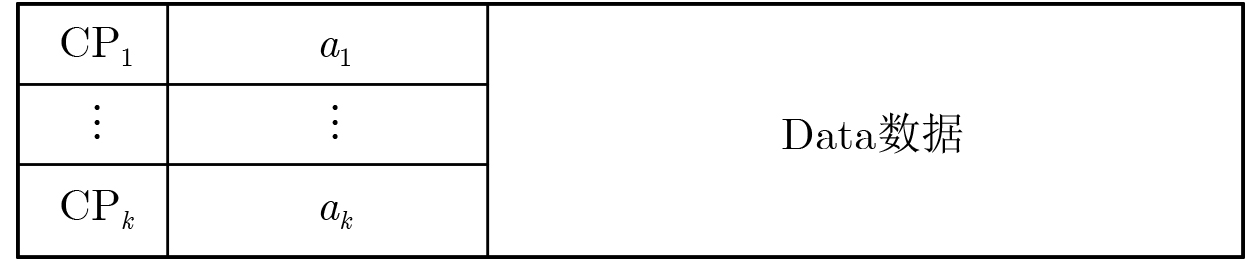
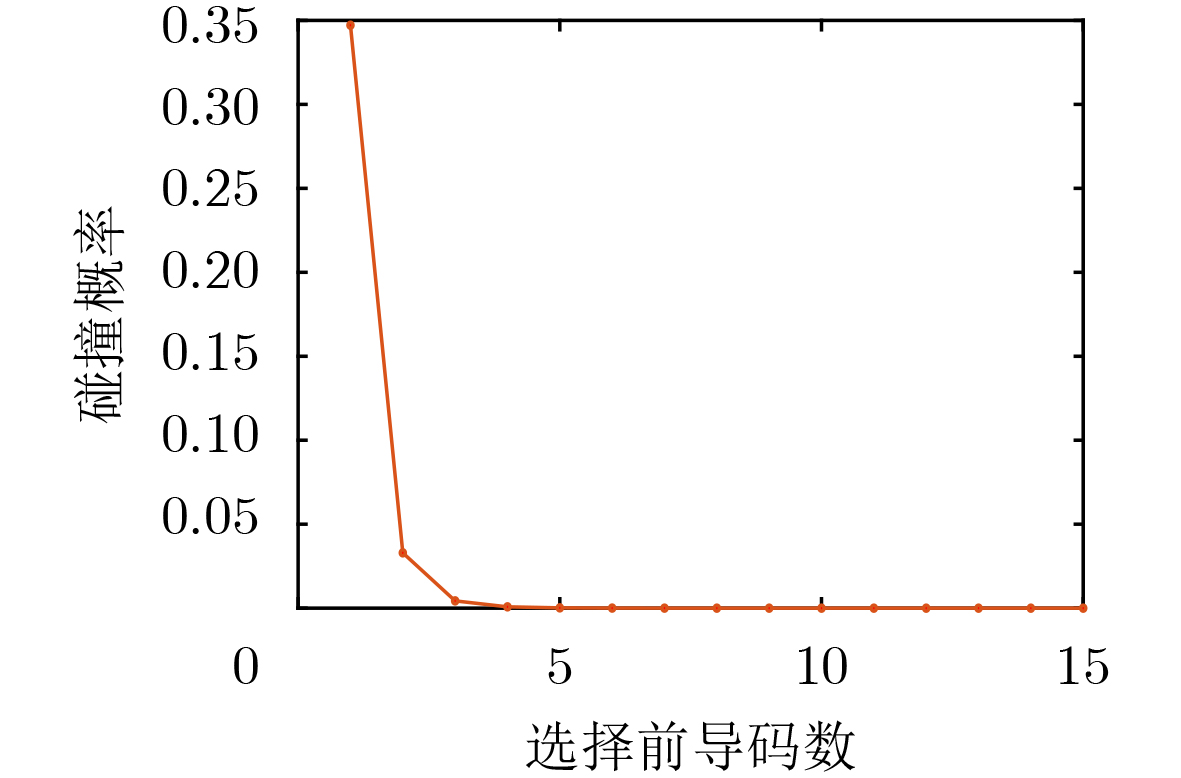
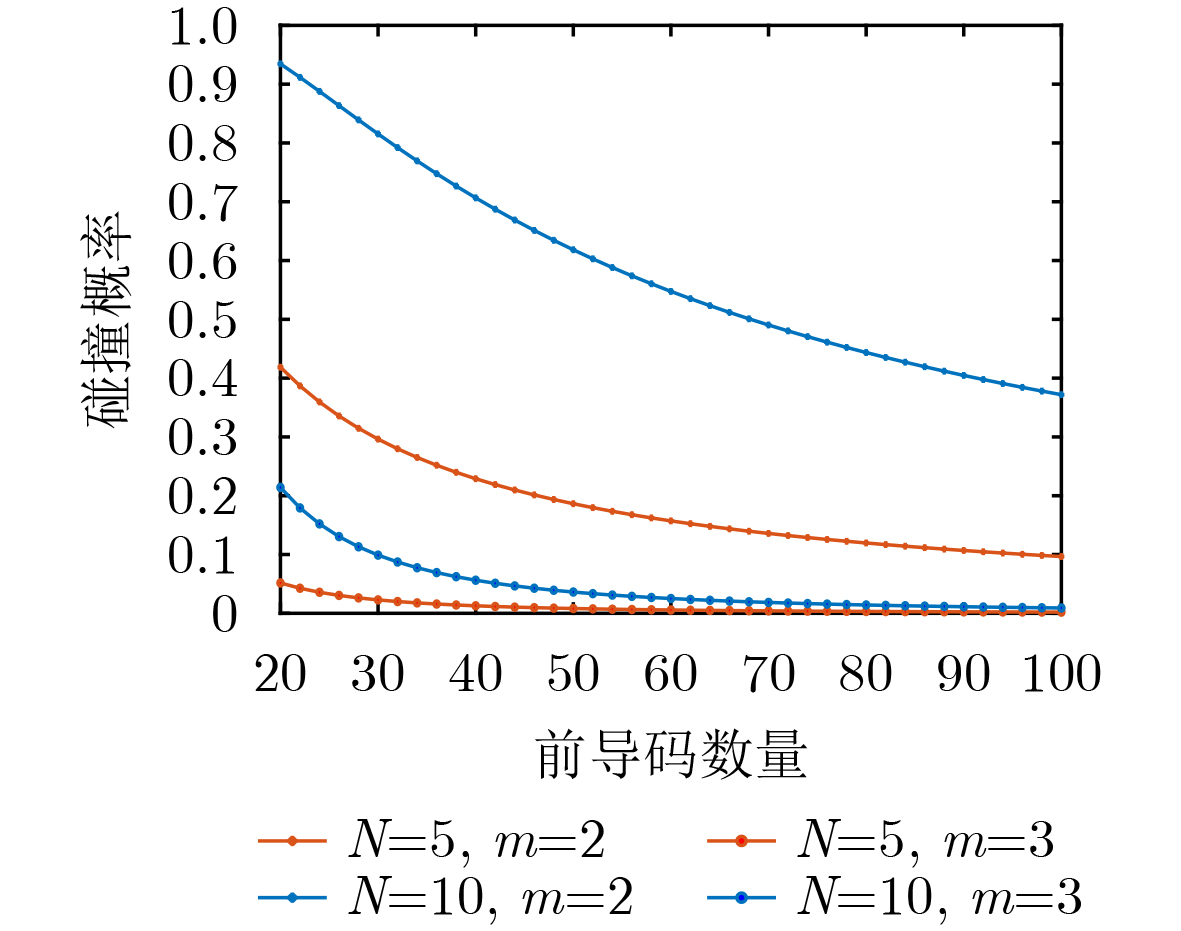
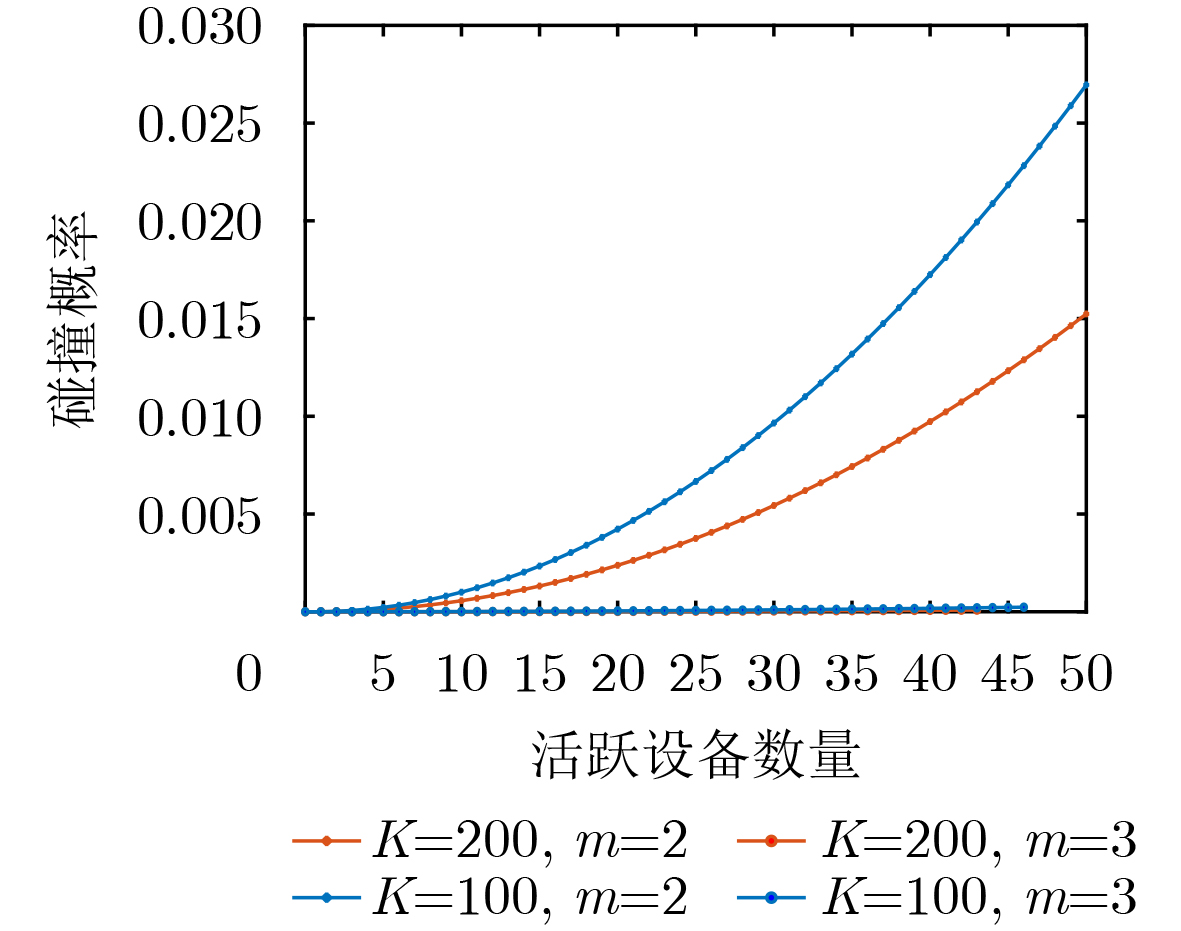
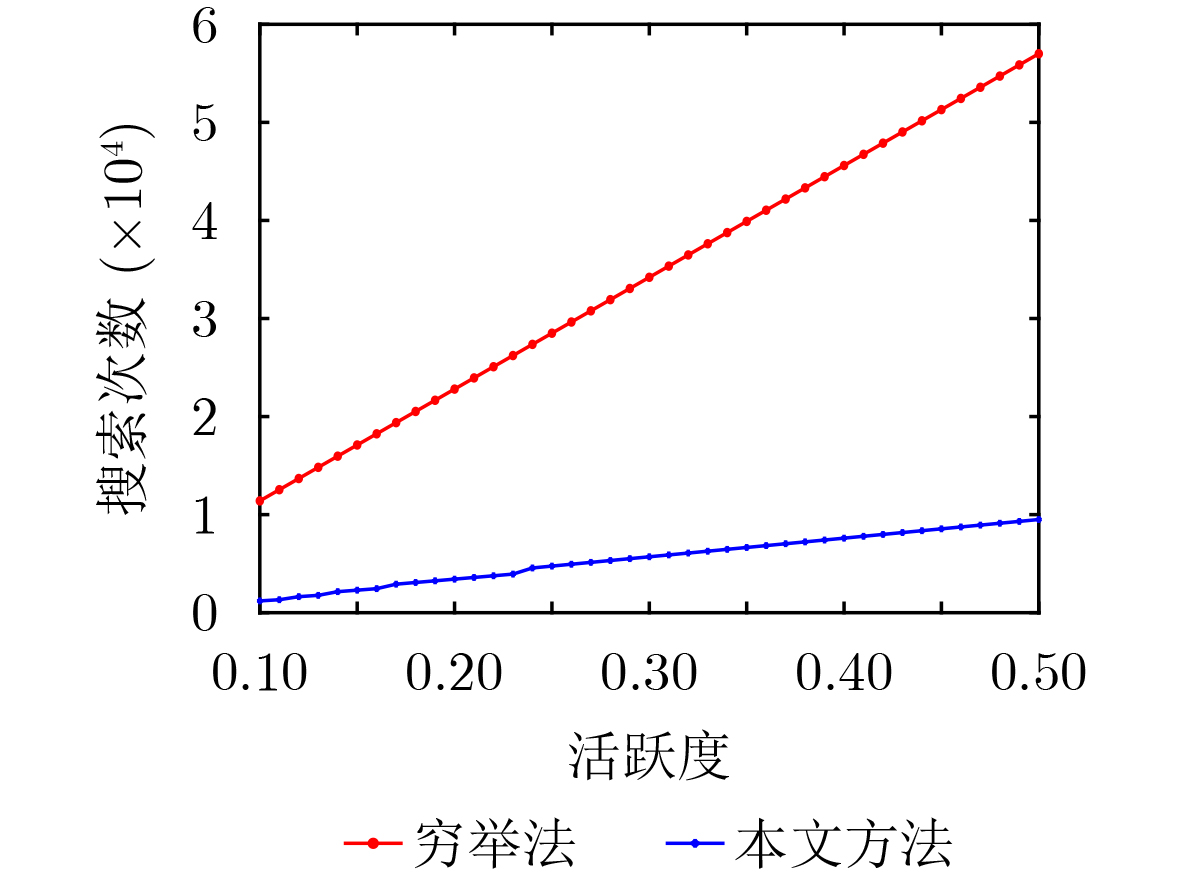
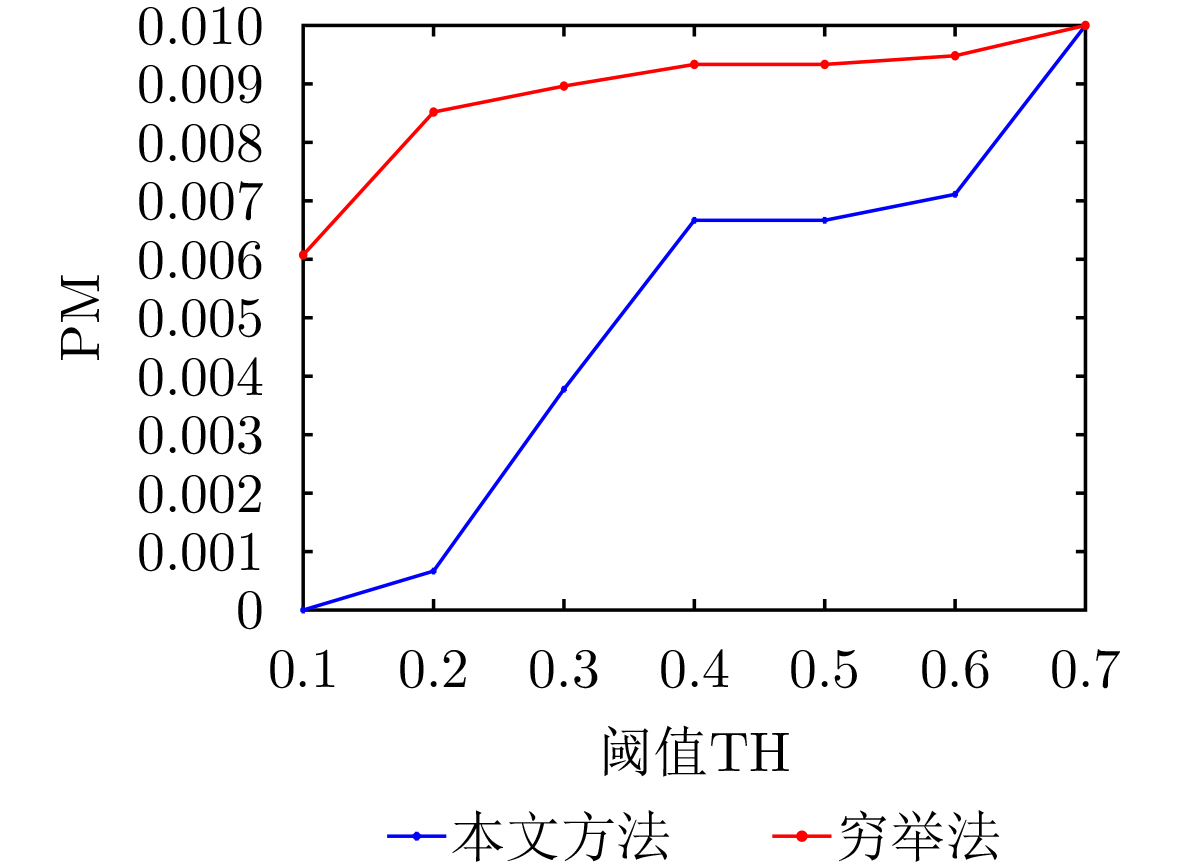
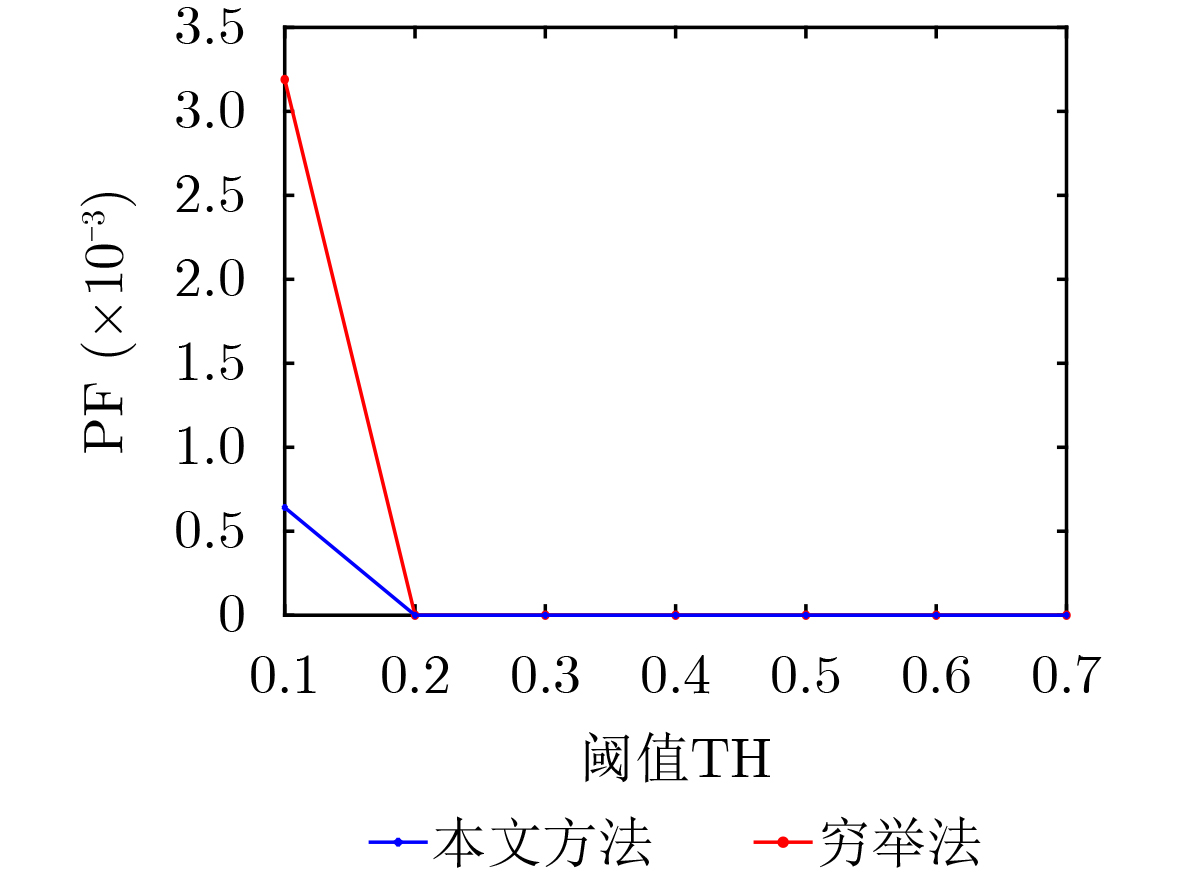
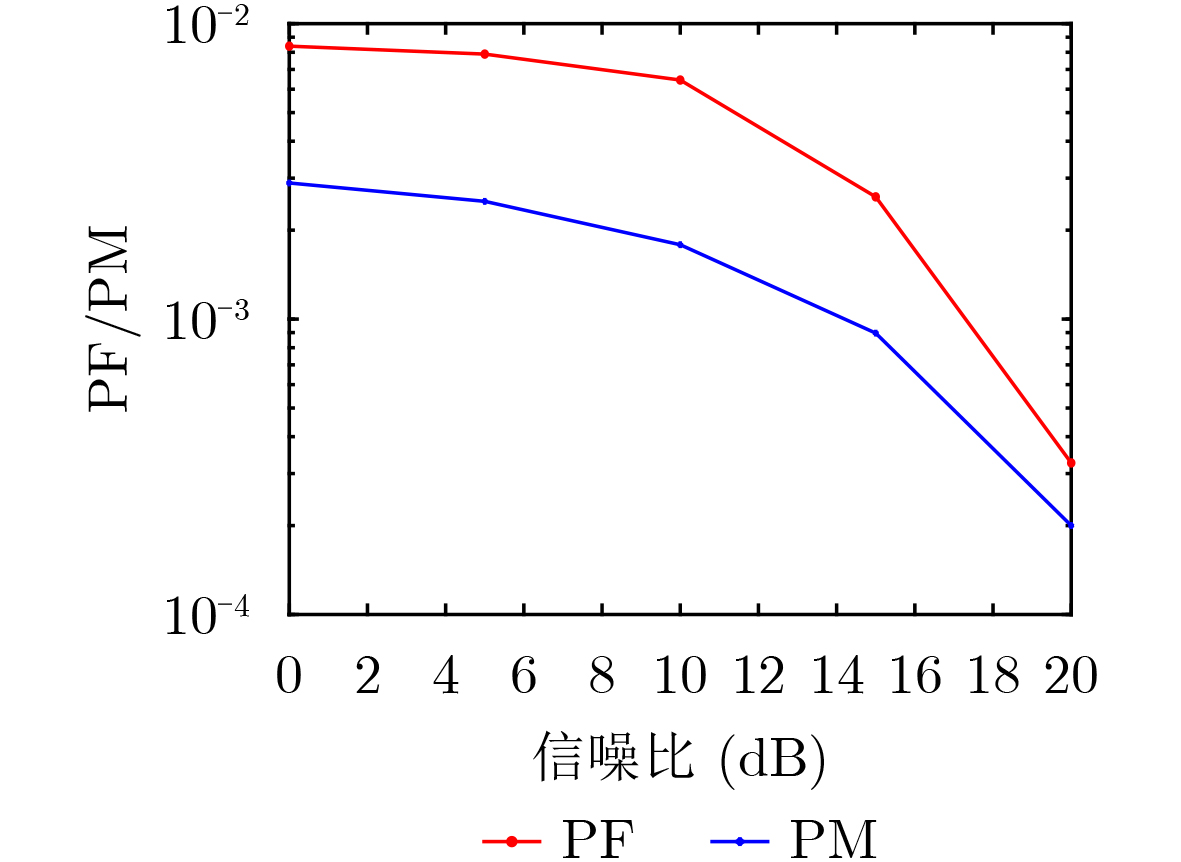
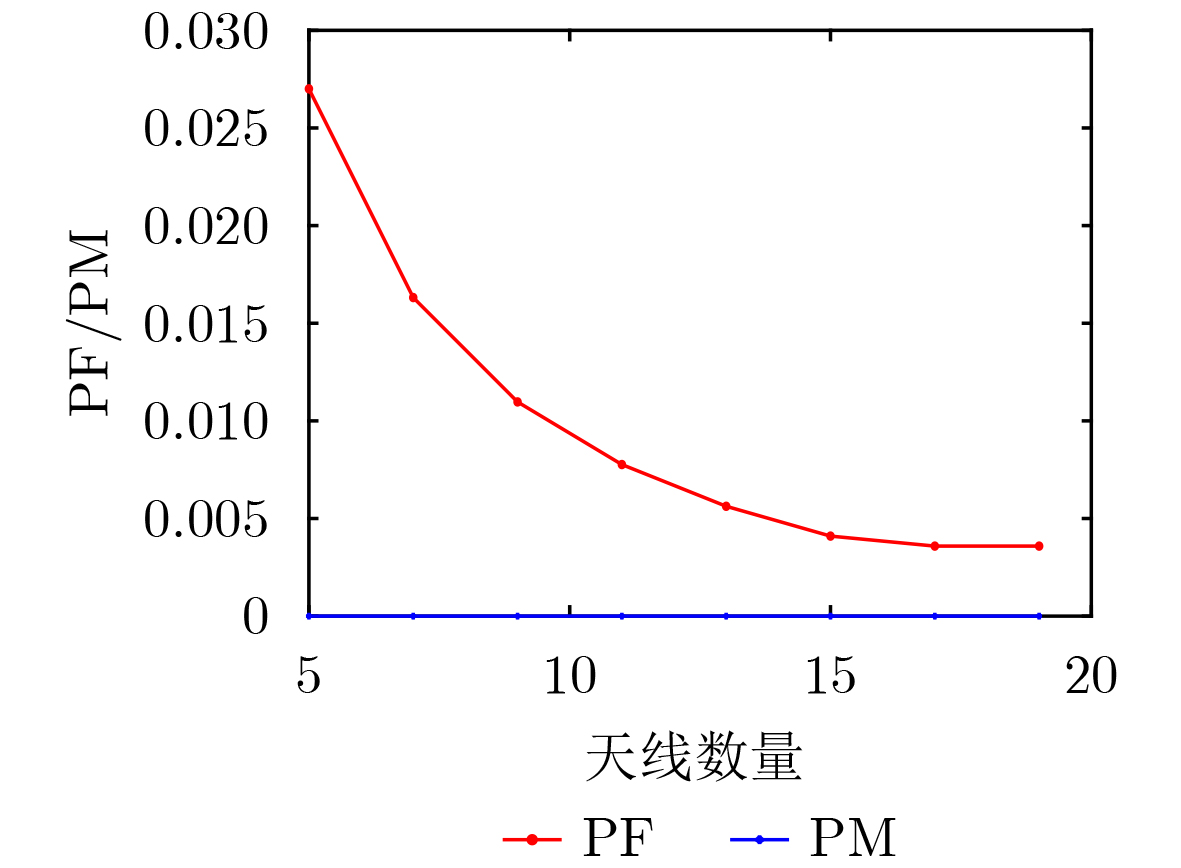
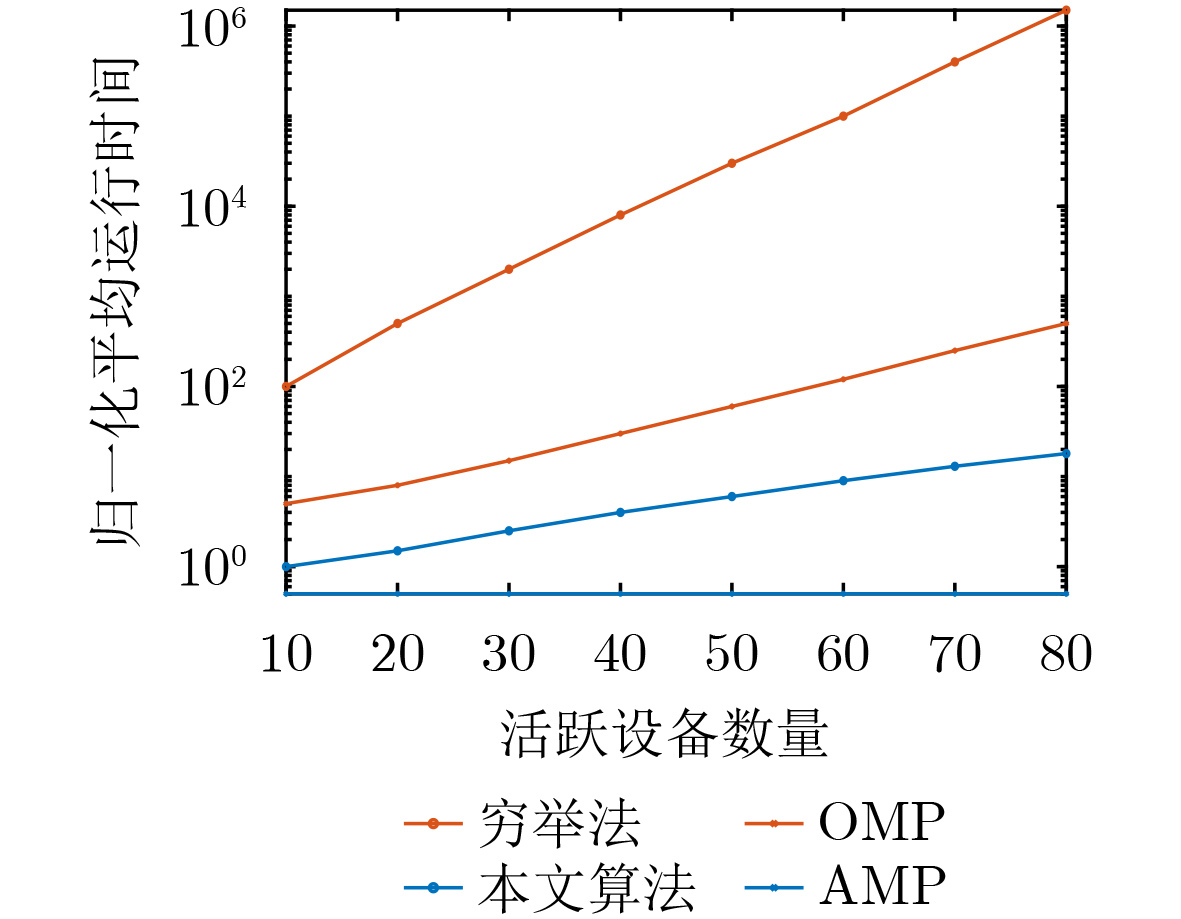
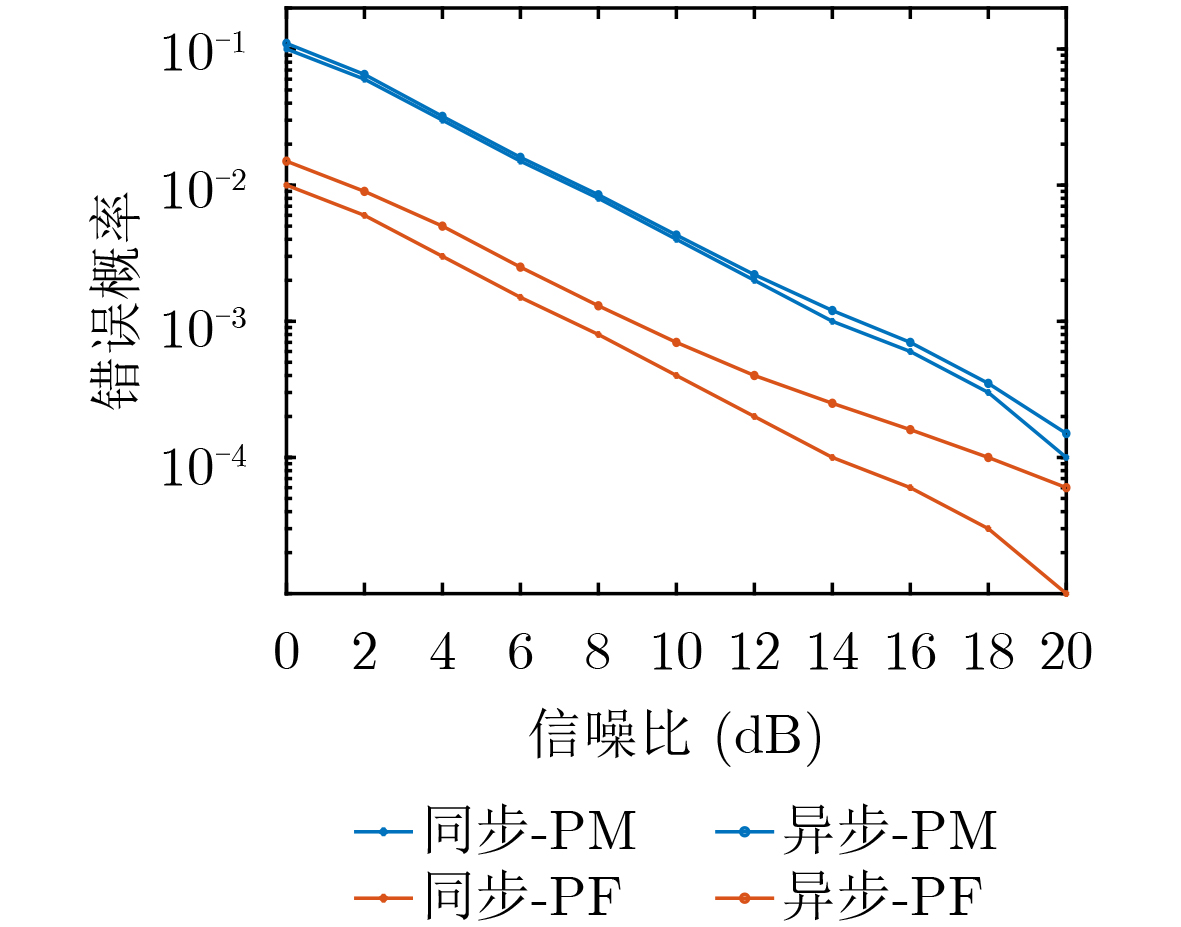
Objective To address preamble collision and high detection complexity in massive device random access for Low-Earth Orbit Satellite Internet of Things (LEO-IoT) short-packet communication, and to overcome the limitations of traditional random access schemes in preamble pool capacity and detection efficiency, thereby enabling highly reliable access for massive devices. Methods A Grant-Free Random Access (GFRA) scheme is adopted, and a three-pilot superimposed preamble structure with a cyclic prefix is constructed. The proposed preamble structure preserves time-frequency resource efficiency and further expands the pilot code pool capacity. To satisfy the detection requirements of superimposed preambles, a dynamic detection algorithm based on idle preamble search is proposed. This algorithm reduces computational complexity and improves detection accuracy. Results and Discussions Under the GFRA mode, a three-pilot superimposed preamble structure with a cyclic prefix is constructed ( Fig. 3 ). The pilot code pool capacity is increased to 3.2 times that of traditional schemes, whereas time-frequency resource efficiency is maintained (Fig. 4 ,Fig. 5 ,Fig. 6 ). For superimposed preamble detection, a dynamic detection algorithm based on idle preamble search is proposed (Algorithm 1 ). Compared with the traditional exhaustive search method, the proposed algorithm reduces computational complexity to 18.7% of the original scheme while maintaining a detection accuracy of 99.5% (Fig. 7 ). Theoretical analysis shows that the proposed scheme achieves a Signal-to-Interference-plus-Noise Ratio (SINR) gain of 3.8 dB at a Bit Error Rate (BER) of 10–5. Simulation results indicate that the miss detection rate remains below 2% when the device activation rate exceeds 80% (Fig. 10 ). Compared with compressed sensing methods, the proposed algorithm provides a more favorable balance between detection accuracy and computational complexity. Its polynomial-level complexity improves practicality for real LEO-IoT systems (Fig. 13 ,Fig. 14 ).Conclusions The proposed superimposed preamble structure and dynamic detection algorithm effectively mitigate preamble collision, significantly reduce detection complexity, and achieve a clear SINR gain with a low miss detection rate. The scheme shows strong performance and robustness under high-load and asynchronous LEO-IoT access conditions, supporting its suitability for practical deployment. -
表 1 不同前导码选择数的性能对比(K=79,N=15,M=10)
前导码选择数l 导码池容量 碰撞概率 检测复杂度(相对值) 误码率(dB) (BER=10–5) 1 79 18.2% 1.0 –2.1 (SINR) 2 3081 0.53% 23.7 0.9 (SINR) 3 24310 2.8×10⁻⁴ 100.0 3.8 (SINR增益) 4 191919 1.1×10⁻⁶ 687.2 3.9 (SINR增益)  下载: 导出CSV
1 基于空闲前导码搜索的动态检测算法
输入:$ K,l,N,M,\beta ,{\mathrm{TH}} $ 1.将去CP后的前导码信号$ {\boldsymbol{Y}}_{{\mathrm{p}}}^{\prime} $与单个前导码$ {{\boldsymbol{a}}}_{l} $进行相关运算得到相关检测结果:$ {{\boldsymbol{g}}}_{l}={{\boldsymbol{Y}}}_{{\mathrm{p}}}{}^{\prime}{{\boldsymbol{a}}}_{l} $ 2.将相关检测结果$ {\left| {{\boldsymbol{g}}}_{l}\right| }^{2} $与阈值$ \beta $进行比较:$ {\left| {{\boldsymbol{g}}}_{l}\right| }^{2} \lt \beta $,得到空闲前导码集合 3.非空闲前导码集合中相关检测结果进行两两内积运算:$ {C}_{ij}={{\boldsymbol{g}}}_{i}{}^{{\mathrm{T}}}\cdot {{\boldsymbol{g}}}_{j} $ 4.将内积与阈值$ \mathrm{TH} $进行比较:$ C_{ij} \lt \mathrm{TH} $,则无活跃设备选择这2个前导码组合 5.此2正交前导码组合与非空闲前导码集合任一正交前导码组成叠加前导码都没有活跃设备选择 6.筛选后的就是活跃设备选择的叠加前导码
下载: 导出CSV
-
[1] WANG Chengxiang, YOU Xiaohu, GAO Xiqi, et al. On the road to 6G: Visions, requirements, key technologies, and testbeds[J]. IEEE Communications Surveys & Tutorials, 2023, 25(2): 905–974. doi: 10.1109/COMST.2023.3249835. [2] 郑灿健, 郑福春. 超可靠低时延短包通信: 重新探索差分调制[J]. 移动通信, 2024, 48(10): 58–63. doi: 10.3969/j.issn.1006-1010.20240820-0001.ZHENG Canjian and ZHENG Fuchun. Ultra-reliable and low-latency short packet communications: Differential modulation revisited[J]. Mobile Communications, 2024, 48(10): 58–63. doi: 10.3969/j.issn.1006-1010.20240820-0001. [3] LE T K, SALIM U, and KALTENBERGER F. An overview of physical layer design for ultra-reliable low-latency communications in 3GPP releases 15, 16, and 17[J]. IEEE Access, 2021, 9: 433–444. doi: 10.1109/ACCESS.2020.3046773. [4] BAI Lin, LIU Jiexun, YU Quan, et al. A collision resolution protocol for random access in massive MIMO[J]. IEEE Journal on Selected Areas in Communications, 2021, 39(3): 686–699. doi: 10.1109/JSAC.2020.3018798. [5] OSTMAN J, DURISI G, STROM E G, et al. Short packets over block-memoryless fading channels: Pilot-assisted or noncoherent transmission?[J]. IEEE Transactions on Communications, 2019, 67(2): 1521–1536. doi: 10.1109/TCOMM.2018.2874993. [6] FERRANTE G C, OSTMAN J, DURISI G, et al. Pilot-assisted short-packet transmission over multiantenna fading channels: A 5G case study[C]. The 52nd Annual Conference on Information Sciences and Systems (CISS), Princeton, USA, 2018: 1–6. doi: 10.1109/CISS.2018.8362303. [7] POLYANSKIY Y, POOR H V, and VERDU S. Channel coding rate in the finite blocklength regime[J]. IEEE Transactions on Information Theory, 2010, 56(5): 2307–2359. doi: 10.1109/TIT.2010.2043769. [8] ÖSTMAN J, LANCHO A, DURISI G, et al. URLLC with massive MIMO: Analysis and design at finite blocklength[J]. IEEE Transactions on Wireless Communications, 2021, 20(10): 6387–6401. doi: 10.1109/TWC.2021.3073741. [9] LANCHO A, DURISI G, and SANGUINETTI L. Cell-free massive MIMO for URLLC: A finite-blocklength analysis[J]. IEEE Transactions on Wireless Communications, 2023, 22(12): 8723–8735. doi: 10.1109/TWC.2023.3265303. [10] KISLAL A O, LANCHO A, DURISI G, et al. Efficient evaluation of the error probability for pilot-assisted URLLC with massive MIMO[J]. IEEE Journal on Selected Areas in Communications, 2023, 41(7): 1969–1981. doi: 10.1109/JSAC.2023.3280972. [11] CAO Jie, ZHU Xu, JIANG Yufei et al. Independent pilots versus shared pilots: Short frame structure optimization for heterogeneous-traffic URLLC networks[J]. IEEE Transactions on Wireless Communications, 2022, 21(8): 5755–5769. doi: 10.1109/TWC.2022.3143002. [12] REN Hong, PAN Cunhua, DENG Yansha, et al. Joint pilot and payload power allocation for massive-MIMO-enabled URLLC IIoT networks[J]. IEEE Journal on Selected Areas in Communications, 2020, 38(5): 816–830. doi: 10.1109/JSAC.2020.2980910. [13] KIM T and CHAE S H. A novel random access framework for uplink cellular IoT: Non-orthogonal preambles and multi-antennas[J]. IEEE Communications Letters, 2020, 24(4): 748–752. doi: 10.1109/LCOMM.2020.2970182. [14] 王阳. 面向免授权接入的用户检测技术研究[D]. [博士论文], 北京邮电大学, 2023. doi: 10.26969/d.cnki.gbydu.2023.003917.WANG Yang. Research on user detection for grant-free random access systems[D]. [Ph. D. dissertation], Beijing University of Posts and Telecommunications, 2023. doi: 10.26969/d.cnki.gbydu.2023.003917. [15] CHOI J. An approach to preamble collision reduction in grant-free random access with massive MIMO[J]. IEEE Transactions on Wireless Communications, 2021, 20(3): 1557–1566. doi: 10.1109/TWC.2020.3034308. [16] YANG Linjie, FAN Pingzhi, MCLERNON D, et al. Data-aided active user detection with false alarm correction in grant-free transmission[J]. IEEE Wireless Communications Letters, 2023, 12(1): 143–147. doi: 10.1109/LWC.2022.3219414. [17] 陈思宇. 基于叠加前导码的免授权随机接入低复杂度检测算法及其性能分析[D]. [硕士论文], 西南交通大学, 2023. doi: 10.27414/d.cnki.gxnju.2023.001494.CHEN Siyu. Low-complexity detection algorithms for grant-free random access based on superimposed preambles and their performance analysis[D]. [Master dissertation], Southwest Jiaotong University, 2023. doi: 10.27414/d.cnki.gxnju.2023.001494. -

 下载:
下载:



图(14) / 表(2)
计量
- 文章访问数: 831
- HTML全文浏览量: 436
- PDF下载量: 48
- 被引次数: 0
