




Lightweight Dual Convolutional Finger Vein Recognition Network Based on Attention Mechanism
-
摘要: 基于深度学习的指静脉识别方法已被广泛应用于生物特征识别领域,然而现有模型普遍存在复杂度与分类性能失衡的问题,难以在内存受限和计算资源稀缺环境下高效完成识别任务。针对上述问题,该文提出了一种融合注意力机制的轻量化双通道卷积神经网络模型。该模型设计有双分支协同架构,旨在分别提取核心特征与辅助特征,从而丰富特征集合并增强网络对远程依赖特征的捕捉能力。通过设计一种并行双重注意力机制,以促进融合特征间的信息交互,引导模型聚焦于高价值信息,学习更具区分度的特征表示。实验结果显示,此模型在USM, HKPU和SDUMLA 3个公开数据集上的识别准确率分别达到99.70%, 98.33%和98.27%,比现有先进方法分别提升7.94%, 21.66%和28.62%,而参数量减少11.35%~60.19%,表明提出的双卷积模型实现了网络规模与识别准确率之间的有效平衡。Abstract:
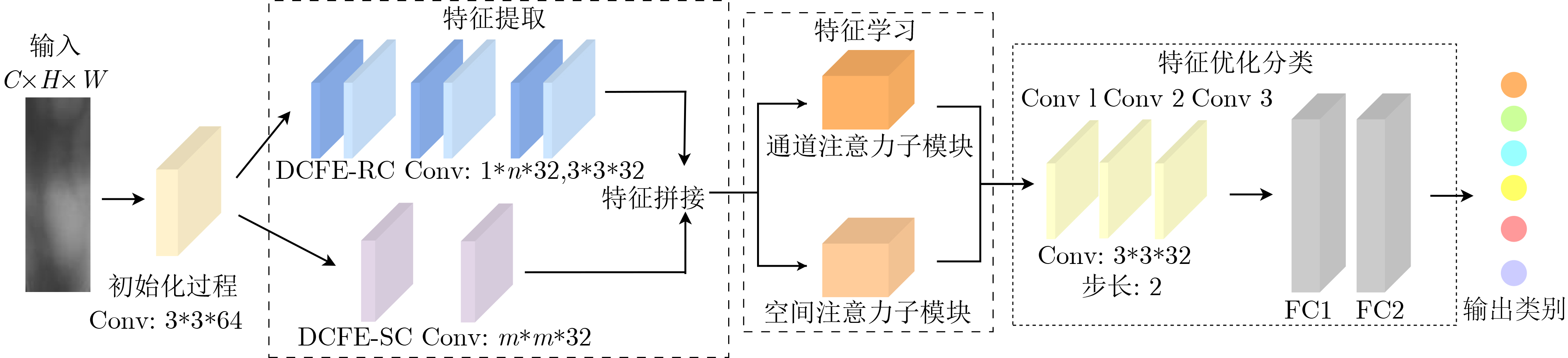
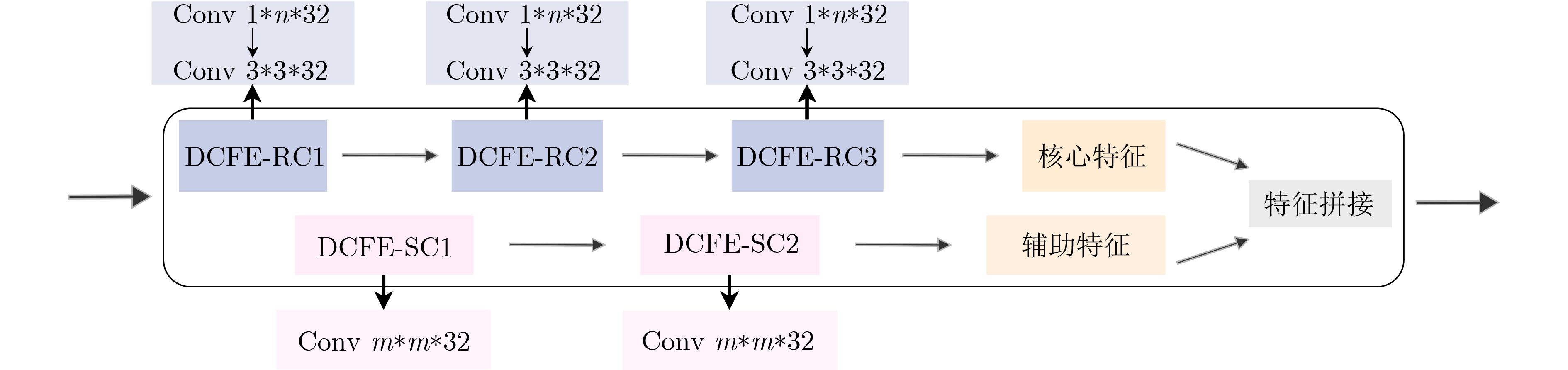
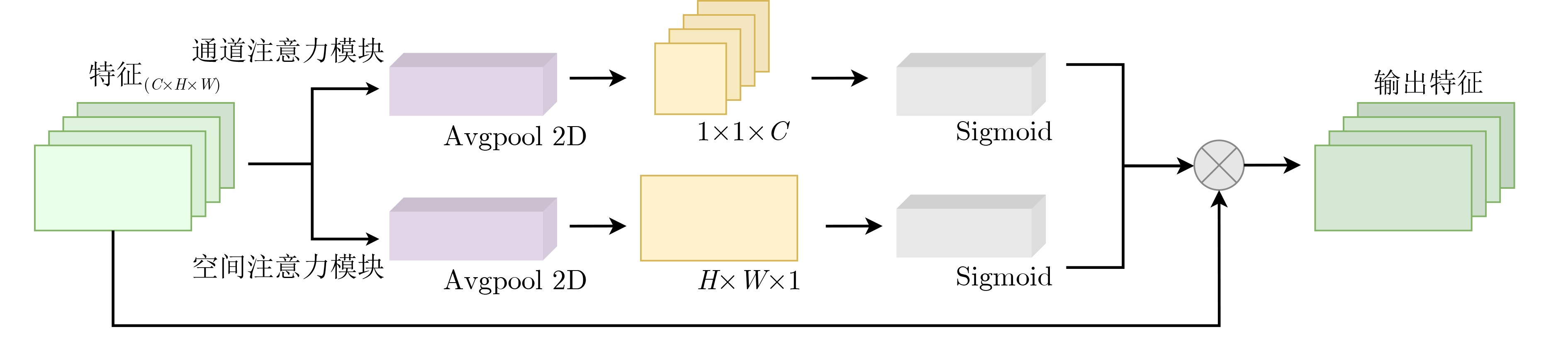
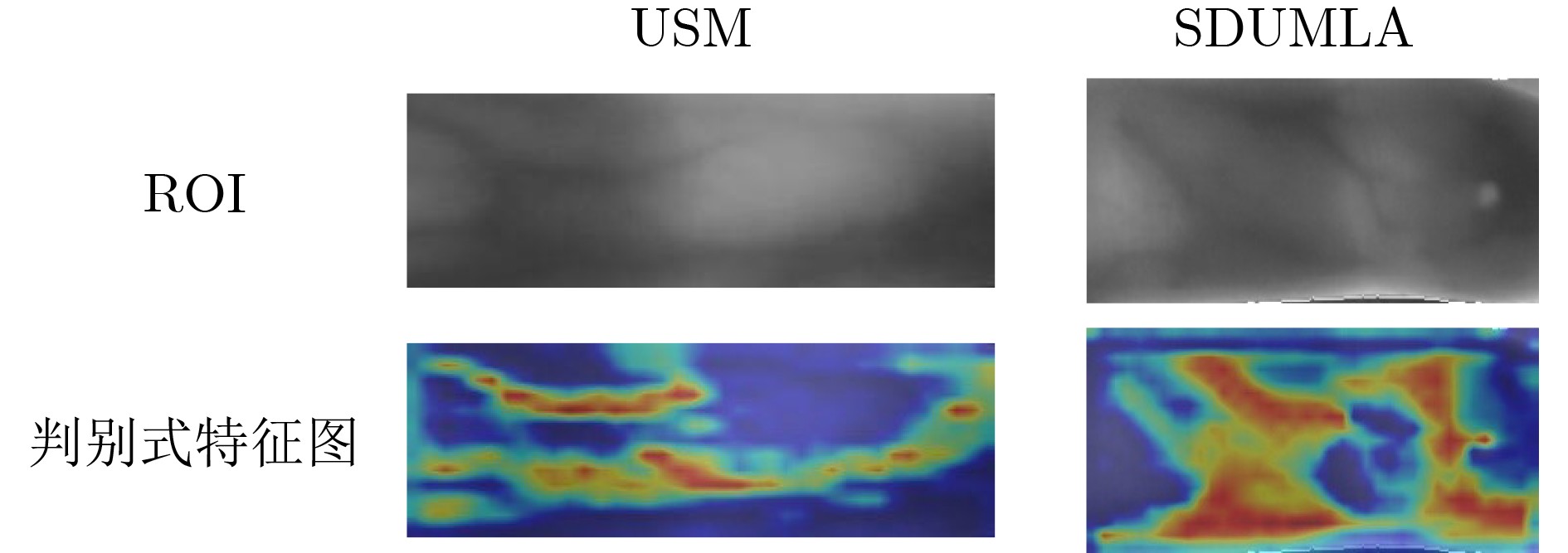
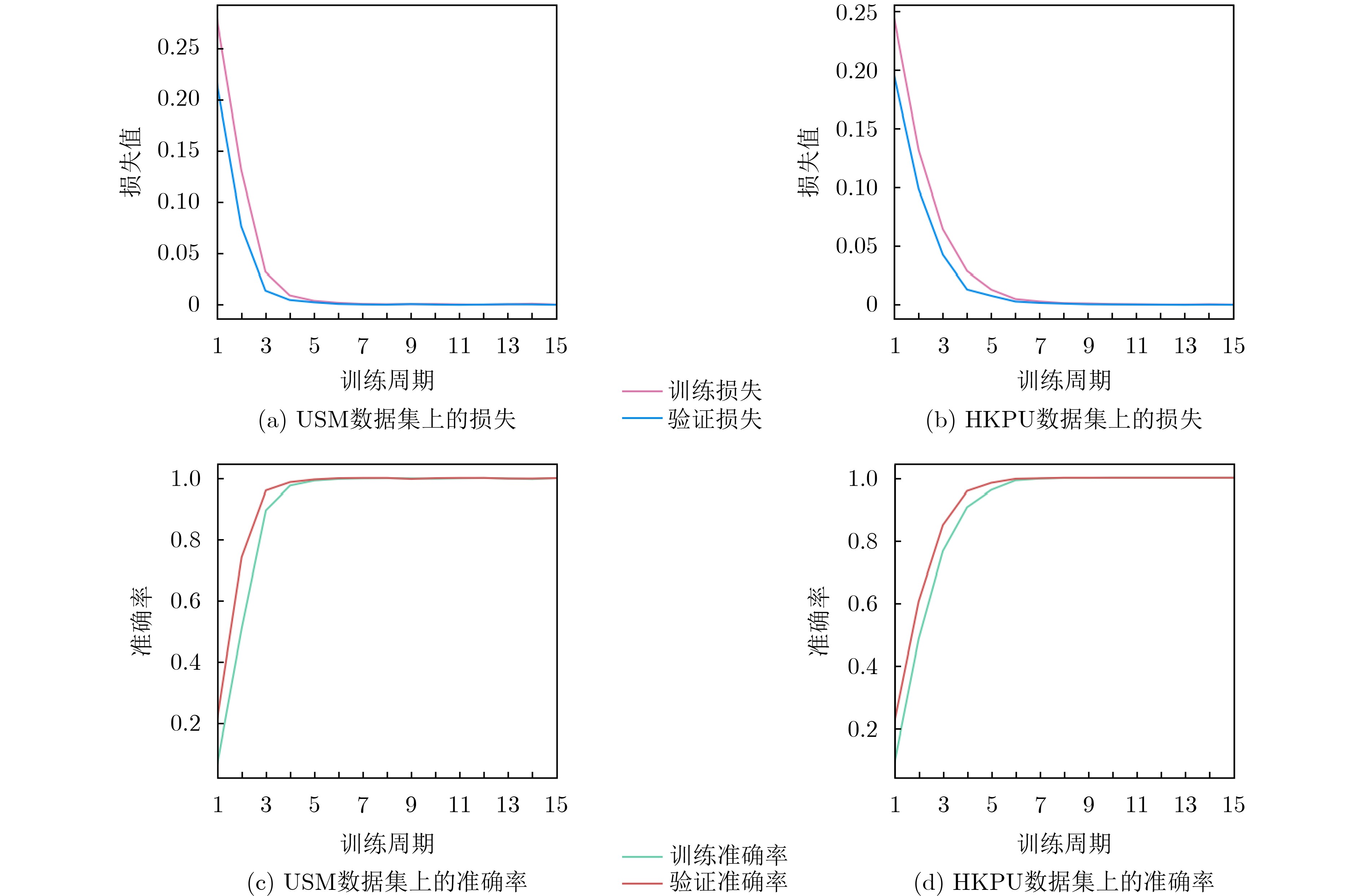
Objective Finger vein recognition is an emerging biometric authentication technology valued for its physiological uniqueness and advantages in in vivo detection. However, mainstream deep learning recognition frameworks still face two challenges. High-precision recognition often depends on complex network structures, which increase parameter counts and hinder deployment in memory-limited embedded devices and edge scenarios with constrained computing resources. Model compression can reduce computational cost but often weakens feature representation, creating a conflict between recognition accuracy and efficiency. To address these issues, a lightweight dual convolutional model integrated with an attention mechanism is proposed. A parallel heterogeneous convolution module and an attention guidance mechanism are designed to extract diverse image features and improve recognition accuracy while preserving a lightweight network structure. Methods The proposed architecture adopts a three-level collaborative mechanism comprising feature extraction, dynamic calibration, and decision fusion. A dual convolutional feature extraction module is constructed using normalized ROI images. This module combines heterogeneous convolution kernels. Rectangular convolution branches with different shapes capture venous topological structures and diameter orientations, whereas square convolution branches employ stacked square kernels to extract local texture details and background intensity distributions. These branches operate in parallel with reduced channel numbers and generate complementary responses through kernel shape diversity. This design reduces parameter scale while improving feature discrimination. A parallel dual attention mechanism is then applied to achieve two-dimensional calibration through joint optimization of channel attention and spatial attention. Channel attention adaptively assigns weights to enhance discriminative venous texture features, whereas spatial attention constructs pixel-level dependency models that focus on effective discriminative regions. A parallel concatenation fusion strategy preserves structural information without introducing additional parameters and improves sensitivity to critical features. Finally, a three-level progressive feature optimization structure is implemented. A convolutional compression module with stride 2 nests multi-scale receptive fields and progressively refines primary features during dimensionality reduction. Two fully connected layers then perform feature space transformation. The first layer applies ReLU activation to form sparse representations, and the final layer applies Softmax for probability calibration. This structure balances shallow underfitting and deep overfitting while maintaining efficient forward inference. Results and Discussions The effectiveness and robustness of the proposed network are evaluated on three public datasets, namely USM, HKPU, and SDUMLA. Recognition accuracy is assessed using the Acc metric. Experimental results ( Table 1 ) show strong recognition performance. Feature visualization heatmaps (Fig. 4 ,Fig. 6 ) confirm that the network extracts complete and discriminative venous features. Training visualizations (Fig. 7 ,Fig. 8 ) show stable loss and accuracy trends, achieving 100% classification performance and demonstrating training reliability and robustness. Quantitative comparisons (Tables 2 and3 ) indicate that the proposed method effectively addresses the trade-off between model complexity and classification performance and achieves superior results across all three datasets. Ablation studies (Table 4 ) further verify the effectiveness of the proposed modules and show significant improvements in finger vein recognition performance.Conclusions A lightweight dual convolutional neural network with an attention mechanism is proposed. The network consists of three core modules: a dual convolutional feature extraction module, a parallel dual-attention module, and a feature optimization classification module. During feature extraction, long-range venous features and background information are jointly encoded through a low-channel parallel design, which substantially reduces parameter counts while improving inter-individual discrimination. The attention module efficiently captures critical venous features without the parameter expansion commonly observed in conventional attention mechanisms. The feature optimization classification module applies progressive feature recalibration, which reduces underfitting and overfitting during stacked dimensionality reduction. Experimental results show recognition accuracies of 99.70%, 98.33%, and 98.27% on the USM, HKPU, and SDUMLA datasets, corresponding to an average improvement of 2.05% over existing state-of-the-art methods. Compared with representative lightweight finger vein recognition approaches, the proposed method reduces parameter scale by 11.35%~60.19%, achieving a balance between model lightening and performance improvement. -
表 1 不同卷积核组合在3个数据集上的识别准确率(%)
矩形卷积核 方形卷积核(USM) 方形卷积核(HKPU) 方形卷积核(SDUMLA) 5$* $5 7$* $7 9$* $9 5$* $5 7$* $7 9$* $9 5$* $5 7$* $7 9$* $9 1$* $3 99.49 99.59 99.39 97.14 97.62 98.33 97.64 97.48 97.80 1$* $5 99.70 99.39 99.49 97.38 97.62 98.10 97.32 97.16 98.27 1$* $7 99.29 99.29 98.78 97.86 97.86 97.62 97.48 97.64 97.80 注:粗体表示所有方案中性能指标的最高值。  下载: 导出CSV
表 2 与其他方法性能指标的对比(%)
方法 Acc(USM) EER(USM) Acc(HKPU) EER(HKPU) Acc(SDUMLA) EER(SDUMLA) AlexNet[12] 97.26 0.10 86.90 3.99 92.45 1.10 VGG16[13] 95.93 0.31 76.67 4.78 78.14 1.73 Liu等人[14] 97.97 0.20 77.14 4.24 69.65 4.56 LALBP[15] 79.47 * 73.10 * 76.89 * MMNBP[16] 83.29 * 75.16 * 80.00 * ViT-Cap[17] 98.33 0.28 96.18 1.66 93.79 1.30 Lu等人[18] 91.76 2.46 90.98 3.89 94.12 0.94 ALA Net[19] 97.74 0.34 97.86 0.32 94.50 0.53 NLNet[20] 98.98 0.48 96.22 0.55 94.30 1.13 ALDCNet 99.70 0.08 98.33 0.28 98.27 0.35 注:粗体表示所有方法中性能指标的最高值。
下载: 导出CSV
表 3 模型参数配置的对比
方法 准确率(%) 卷积核数 操作大小 卷积层数 参数量(M) 时间(ms) AlexNet[12] 97.26 64,192,384,256×2 11$* $11,5$* $5,3$* $3,3$* $3 5 2.454 1.01 VGG16[13] 95.93 64×2,128×2,256×3,512×3,512×3 3$* $3,3$* $3,3$* $3,3$* $3,3$* $3 13 14.714 3.00 Liu等人[14] 97.97 64,64,64,64,64 5$* $5,5$* $5,5$* $5,5$* $5,5$* $5 5 0.412 1.22 ALDCNet 99.70 32×2,32×3,32×3,32×3,64 3$* $3,1$* $5,5$* $5,3$* $3,3$* $3 12 0.164 1.66 注:粗体表示最优值。
下载: 导出CSV
表 4 消融实验(%)
模型 Acc (USM) EER (USM) Acc (HKPU) EER (HKPU) Acc (SDUMLA) EER (SDUMLA) 无PDA 99.09 0.20 97.38 0.52 96.54 0.47 无DCFE-RC 99.29 0.10 97.38 0.48 96.69 0.64 无DCFE-SC 99.39 0.10 97.86 0.48 97.01 0.63 ALDCNet 99.70 0.08 98.33 0.28 98.27 0.35 注:加粗数值表示最优值。
下载: 导出CSV
-
[1] LI Yantao, FAN Chao, QIN Huafeng, et al. Deep reinforcement learning-based feature extraction and encoding for finger-vein verification[J]. IEEE Transactions on Emerging Topics in Computational Intelligence, 2025, 9(1): 522–536. doi: 10.1109/TETCI.2024.3398022. [2] TAN Xiao. Advanced feature extraction algorithms for deep learning in image recognition[C]. 2024 International Conference on Power, Electrical Engineering, Electronics and Control (PEEEC), Athens, Greece, 2024: 1055–1060. doi: 10.1109/PEEEC63877.2024.00195. [3] HUANG Houjun, LIU Shilei, ZHENG He, et al. DeepVein: Novel finger vein verification methods based on deep convolutional neural networks[C]. 2017 IEEE International Conference on Identity, Security and Behavior Analysis (ISBA), New Delhi, India, 2017: 1–8. doi: 10.1109/ISBA.2017.7947683. [4] 何鑫, 陈迅. 基于改进卷积神经网络的指静脉识别[J]. 计算机工程与设计, 2019, 40(2): 562–566. doi: 10.16208/j.issn1000-7024.2019.02.046.HE Xin and CHEN Xun. Finger vein recognition based on improved convolution neural network[J]. Computer Engineering and Design, 2019, 40(2): 562–566. doi: 10.16208/j.issn1000-7024.2019.02.046. [5] HU Hui, KANG Wenxiong, LU Yuting, et al. FV-Net: Learning a finger-vein feature representation based on a CNN[C]. 2018 24th International Conference on Pattern Recognition (ICPR), Beijing, China, 2018: 3489–3494. doi: 10.1109/ICPR.2018.8546007. [6] REN Hengyi, SUN Lijuan, REN Jinting, et al. FV-DDC: A novel finger-vein recognition model with deformation detection and correction[J]. Biomedical Signal Processing and Control, 2025, 100: 107098. doi: 10.1016/j.bspc.2024.107098. [7] BOUCHERIT I, ZMIRLI M O, HENTABLI H, et al. Finger vein identification using deeply-fused convolutional neural network[J]. Journal of King Saud University-Computer and Information Sciences, 2022, 34(3): 646–656. doi: 10.1016/j.jksuci.2020.04.002. [8] WANG Kaixuan, CHEN Guanghua, and CHU Hongjia. Finger vein recognition based on multi-receptive field bilinear convolutional neural network[J]. IEEE Signal Processing Letters, 2021, 28: 1590–1594. doi: 10.1109/LSP.2021.3094998. [9] CHAI Tingting, LI Jiahui, PRASAD S, et al. Shape-driven lightweight CNN for finger-vein biometrics[J]. Journal of Information Security and Applications, 2022, 67: 103211. doi: 10.1016/j.jisa.2022.103211. [10] MOHD ASAARI M S, SUANDI S A, and ROSDI B A. Fusion of band limited phase only correlation and width centroid contour distance for finger based biometrics[J]. Expert Systems with Applications, 2014, 41(7): 3367–3382. doi: 10.1016/j.eswa.2013.11.033. [11] KUMAR A and ZHOU Yingbo. Human identification using finger images[J]. IEEE Transactions on Image Processing, 2012, 21(4): 2228–2244. doi: 10.1109/TIP.2011.2171697. [12] FAIRUZ S, HABAEBI M H, and ELSHEIKH E M A. Finger vein identification based on transfer learning of AlexNet[C]. 2018 7th International Conference on Computer and Communication Engineering, Kuala Lumpur, Malaysia, 2018: 465–469. doi: 10.1109/ICCCE.2018.8539256. [13] NADIR C, ATTALLAH B, and BRIK Y. Finger vein based CNN algorithms for human recognition[C]. 2022 International Conference of Advanced Technology in Electronic and Electrical Engineering, M'sila, Algeria, 2022: 1–6. doi: 10.1109/ICATEEE57445.2022.10093105. [14] LIU Wenjie, LI Weijun, SUN Linjun, et al. Finger vein recognition based on deep learning[C]. 2017 12th IEEE Conference on Industrial Electronics and Applications (ICIEA), Siem Reap, Cambodia, 2017: 205–210. doi: 10.1109/ICIEA.2017.8282842. [15] 黄艳国, 杨训根, 周满国. 基于感兴趣区域的改进型LBP手指静脉识别[J]. 传感器与微系统, 2023, 42(4): 143–147. doi: 10.13873/J.1000-9787(2023)04-0143-05.HUANG Yanguo, YANG Xungen, and ZHOU Manguo. Improved LBP finger vein recognition based on RoI[J]. Transducer and Microsystem Technologies, 2023, 42(4): 143–147. doi: 10.13873/J.1000-9787(2023)04-0143-05. [16] 付华, 李涛, 司南楠. 基于MMNBP的手指静脉识别方法[J]. 传感器与微系统, 2019, 38(5): 45–48. doi: 10.13873/J.1000-9787(2019)05-0045-04.FU Hua, LI Tao, and SI Nannan. Finger vein recognition method based on MMNBP[J]. Transducer and Microsystem Technologies, 2019, 38(5): 45–48. doi: 10.13873/J.1000-9787(2019)05-0045-04. [17] LI Yupeng, LU Huimin, WANG Yifan, et al. ViT-Cap: A novel vision transformer-based capsule network model for finger vein recognition[J]. Applied Sciences, 2022, 12(20): 10364. doi: 10.3390/APP122010364. [18] LU Zhiying, WU Runhao, and ZHANG Jianfeng. Finger-vein feature extraction method based on vision transformer[J]. Journal of Electronic Imaging, 2022, 31(4): 043010. doi: 10.1117/1.JEI.31.4.043010. [19] HUANG Yiwei, MA Hui, and WANG Mingyang. Axially enhanced local attention network for finger vein recognition[J]. IEEE Transactions on Instrumentation and Measurement, 2023, 72: 5020210. doi: 10.1109/TIM.2023.3291785. [20] GUO Zishuo, MA Hui, and LIU Junbo. NLNet: A narrow-channel lightweight network for finger multimodal recognition[J]. Digital Signal Processing, 2024, 150: 104517. doi: 10.1016/j.dsp.2024.104517. -


 下载:
下载:




图(8) / 表(4)
计量
- 文章访问数: 756
- HTML全文浏览量: 337
- PDF下载量: 63
- 被引次数: 0
