Advanced Search
Turn off MathJax
Article Contents
GUAN Yu, ZHANG Huiqiang. An Optimized Multi-Layer Equivalent Source Method for Spatial Continuation of Magnetic Anomalies in the Geomagnetic Background[J]. Journal of Electronics & Information Technology. doi: 10.11999/JEIT250958
Citation: GUAN Yu, ZHANG Huiqiang. An Optimized Multi-Layer Equivalent Source Method for Spatial Continuation of Magnetic Anomalies in the Geomagnetic Background[J]. Journal of Electronics & Information Technology. doi: 10.11999/JEIT250958

An Optimized Multi-Layer Equivalent Source Method for Spatial Continuation of Magnetic Anomalies in the Geomagnetic Background

doi: 10.11999/JEIT250958 cstr: 32379.14.JEIT250958
  • Received Date: 2025-09-23
  • Accepted Date: 2026-01-22
  • Rev Recd Date: 2026-01-22
  • Available Online: 2026-02-11
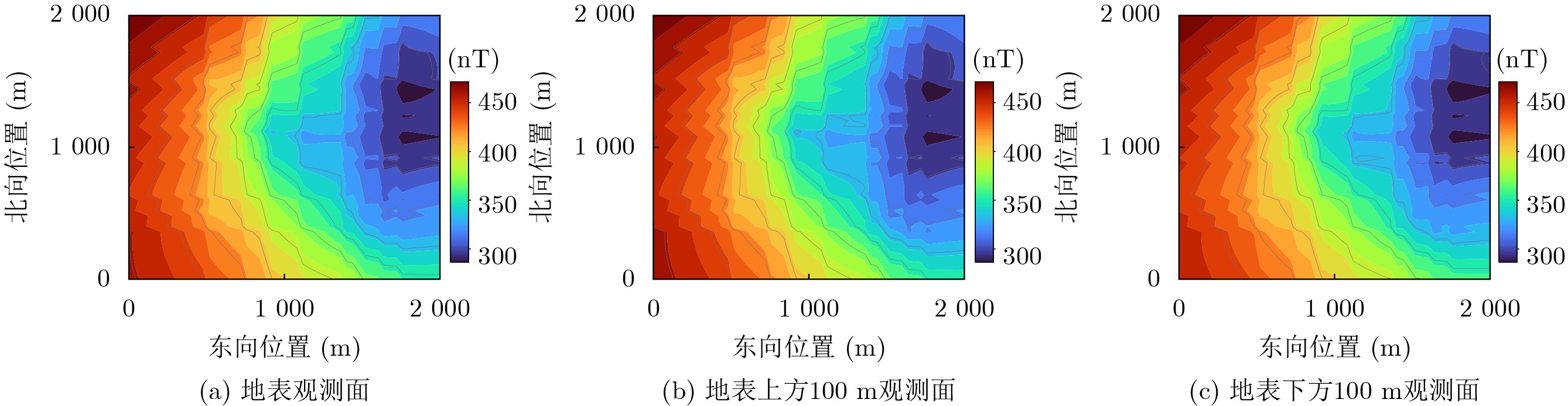
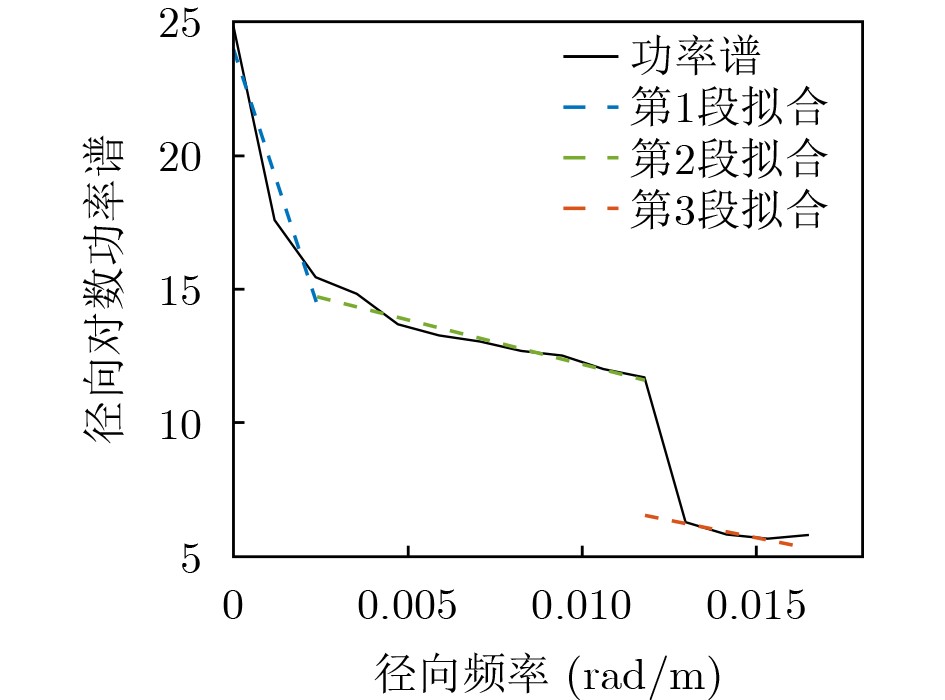
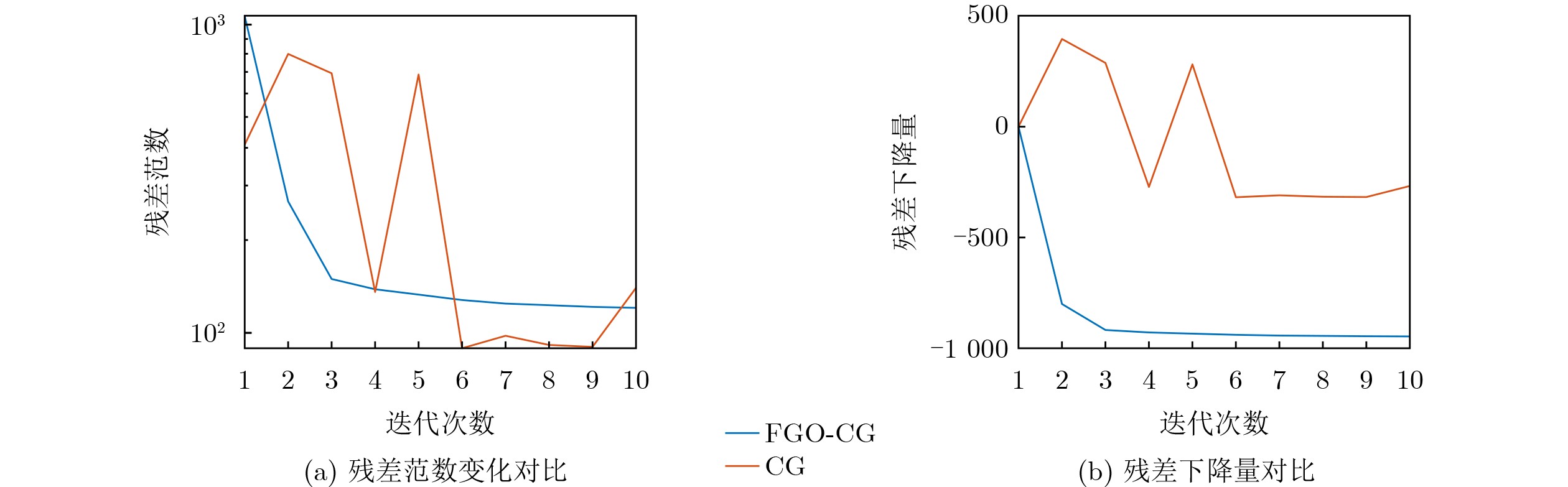
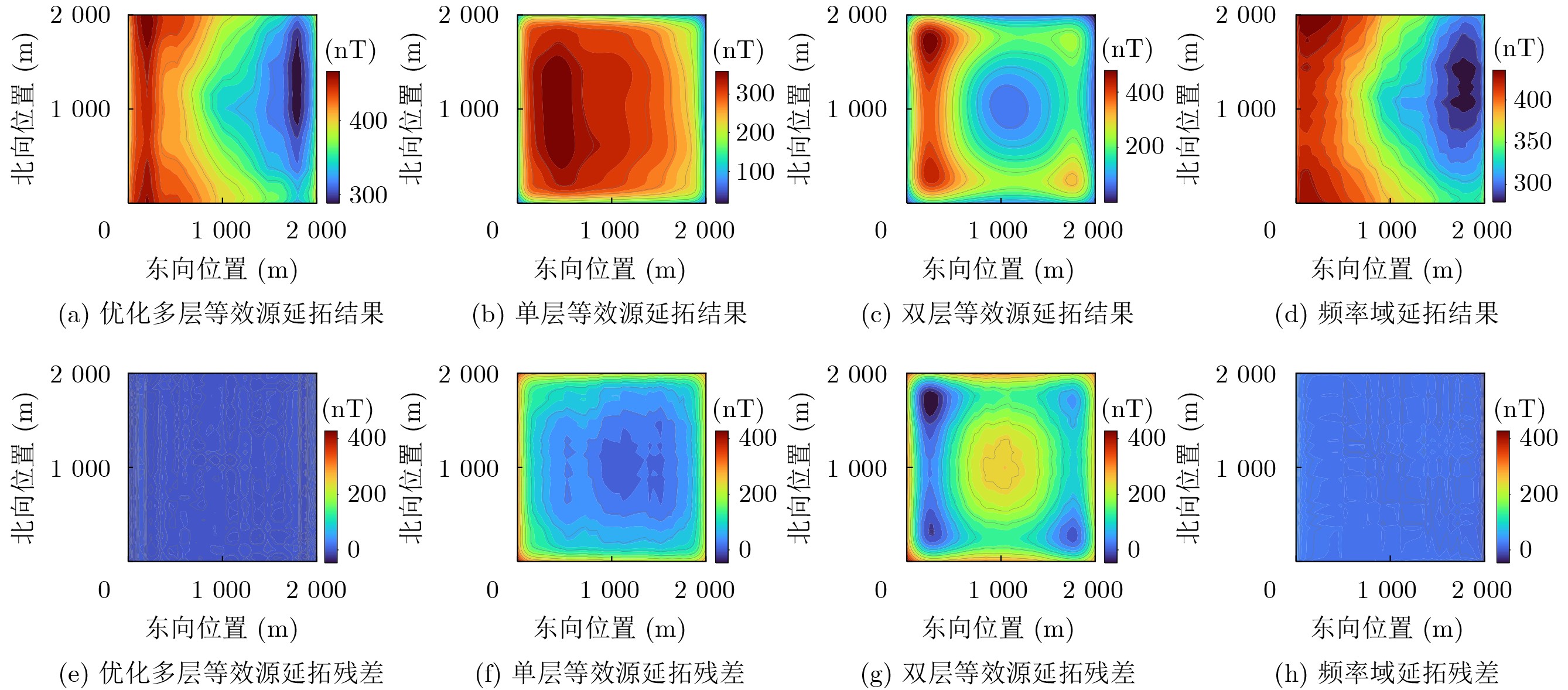
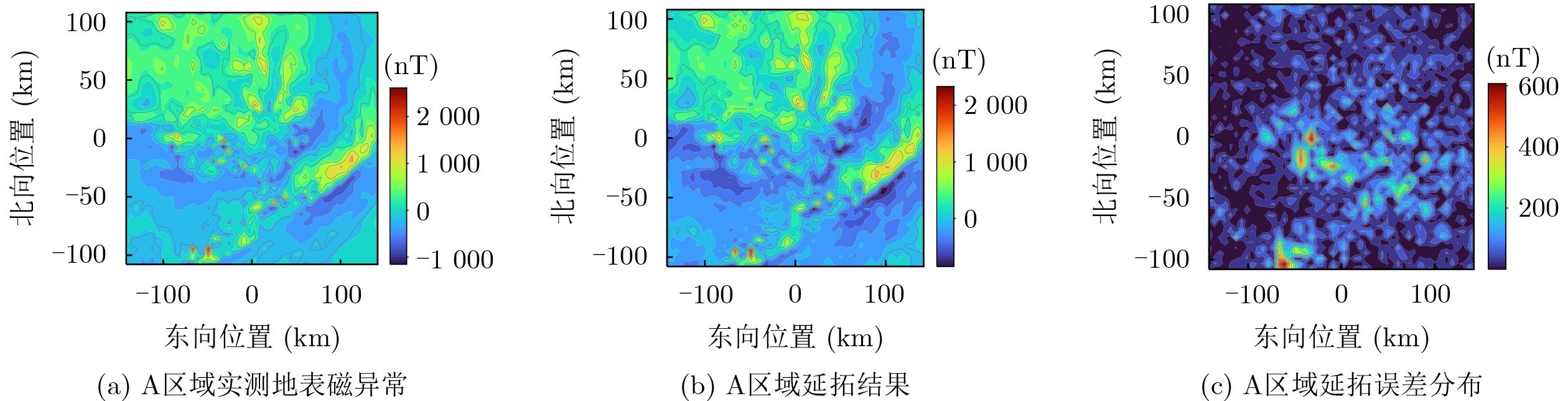
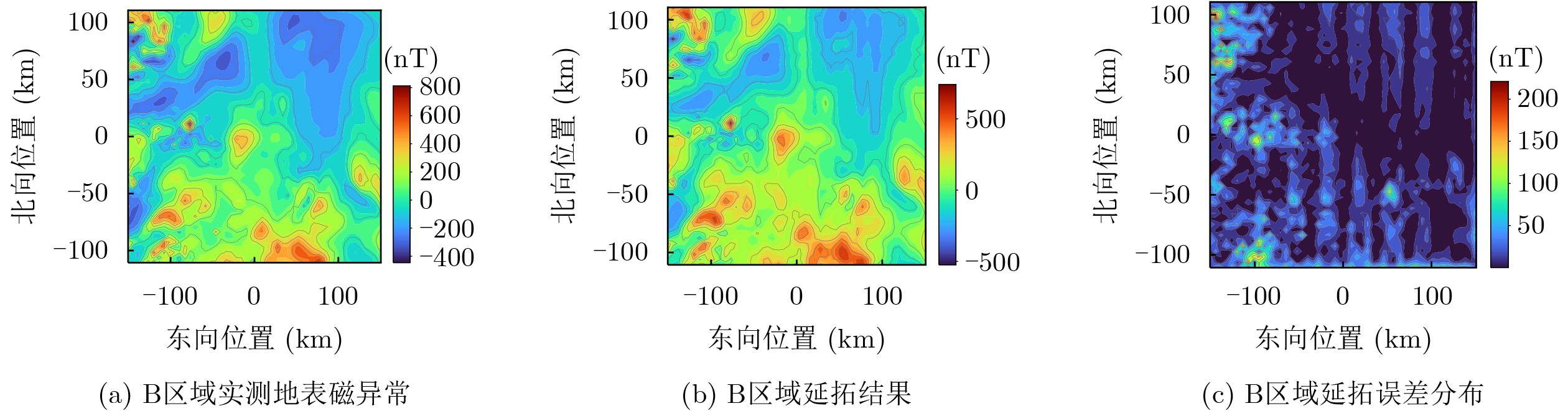
  •   Objective  Spatial continuation of magnetic anomalies is a key technique in potential field data processing and supports geological interpretation and geomagnetic navigation. Existing methods remain limited: frequency-domain approaches are severely ill-posed and amplify high-frequency noise during downward continuation, whereas traditional single-layer equivalent source methods often fail to fit multi-scale anomalies generated by sources at different depths. Although the Multilayer Equivalent Source (MES) model improves depth resolution, its performance is constrained by subjective parameter selection and instability in large-scale inversion, which can lead to the loss of high-frequency structural information. This study proposes an optimized MES method for high-precision continuation in complex geological environments. The method establishes an objective parameterization scheme by combining Radially Averaged Power Spectrum (RAPS) analysis with Variational Mode Decomposition (VMD) to separate sources. It also introduces a collaborative inversion scheme based on the Fungal Growth Optimizer (FGO) and the Preconditioned Conjugate Gradient (PCG) method to adaptively optimize regularization parameters, suppress ill-posedness, and improve reconstruction robustness under noise.  Methods  A four-step technical framework is developed. (1) Model construction: A Multi-layer Equivalent Source (MES) model is formed using uniformly magnetized rectangular prisms to represent subsurface sources. (2) Parameter configuration: An objective scheme combining RAPS and VMD is applied. RAPS estimates average source-layer depths from slope variations in the logarithmic power spectrum. VMD then decomposes the magnetic signal into intrinsic mode functions representing different depths, enabling calculation of layer thickness using the ratio of the Mean Total Horizontal Gradient (MTHD). (3) Collaborative inversion: A robust inversion strategy incorporates FGO into the PCG algorithm. Tikhonov regularization forms the objective function to mitigate ill-posedness, and FGO adaptively searches for optimal hyperparameters, including the regularization parameter, step-size scaling factor, and preconditioner weights, improving solution stability and convergence efficiency. (4) Comprehensive validation: Three evaluations are conducted. A five-prism theoretical model is used to benchmark performance against single-layer, double-layer, and frequency-domain methods. The global EMAG2 magnetic anomaly model with 5% Gaussian noise is applied to assess robustness. Finally, real aeromagnetic data from the Australian magnetic anomaly grid are tested in two sub-regions—a complex tectonic zone (Area A) and a sedimentary basin (Area B)—for downward continuation from 2 000 m to 0 m, using RMSE and GOF as indicators.  Results and Discussions  The performance of the proposed method is validated in three stages. (1) Theoretical model verification: The radial average logarithmic power spectrum (Fig. 3) and VMD analysis (Fig. 4) identify three equivalent source layers, demonstrating the objectivity of the parameter configuration framework. The FGO-optimized inversion accelerates convergence by approximately 5~6 times and reduces the residual norm by 13% compared with the traditional Conjugate Gradient (CG) method (Fig. 7). In the 100 m upward continuation (Fig. 8, Table 4) and downward continuation (Fig. 9, Table 5) tests, the proposed method attains the lowest RMSE and highest GOF, addressing the ill-posedness of frequency-domain methods and the large fitting errors of single- and double-layer models. (2) Robustness analysis: Using the EMAG2 data (Fig. 10), the method demonstrates strong noise resistance. With 5% Gaussian noise added to the 1 000 m observation data, the downward continuation results remain stable and free of noticeable artifacts. Quantitative evaluation (Table 6) yields an RMSE of 7.36 nT and a GOF of 82.65%, confirming robustness in low signal-to-noise conditions. (3) Generalization verification: When applied to Australian magnetic anomaly grid data, two different geological regions are examined (Fig. 11, Fig. 12). In Area B (sedimentary basin), which has smooth gradients, the method achieves high-fidelity reconstruction with a GOF of 84.28% and an RMSE of 29.06 nT. In Area A (complex tectonic zone), despite the exponential decay of high-frequency signals, the method recovers key structural features (GOF = 76.14%), although localized residuals appear in high-gradient areas because of physical limits in field transformation. These findings support the method’s applicability across varied geological textures.  Conclusions  This study proposes a robust spatial continuation method for magnetic anomalies based on an optimized MES framework. By integrating RAPS analysis with VMD, the method establishes an objective parameterization scheme that reduces subjectivity in model construction. The incorporation of the FGO into the inversion algorithm improves convergence speed and stability, mitigating the ill-posedness inherent in downward continuation. Experimental results show that: (1) the method exhibits strong robustness, maintaining high signal fidelity under 5% Gaussian noise, as confirmed by the EMAG2 model tests; and (2) the method has broad geological applicability. In real Australian aeromagnetic grid data, it achieves high-precision reconstruction in deep sedimentary basins (Area B) and recovers major structural features in complex tectonic zones (Area A), outperforming traditional single-layer and frequency-domain methods. A remaining limitation is high memory demand due to storage of large dense kernel matrices. Future work will explore matrix compression or matrix-free inversion strategies to improve computational efficiency for large-scale geomagnetic data processing.
  • loading
  • [1]
    DAMPNEY C N G. The equivalent source technique[J]. Geophysics, 1969, 34(1): 39–53. doi: 10.1190/1.1439996.
    [2]
    BHATTACHARYYA B K and CHAN K C. Reduction of magnetic and gravity data on an arbitrary surface acquired in a region of high topographic relief[J]. Geophysics, 1977, 42(7): 1411–1430. doi: 10.1190/1.1440802.
    [3]
    王万银, 潘作枢, 李家康. 三维高精度重磁位场曲面延拓方法[J]. 物探与化探, 1991, 15(6): 415–422.

    WANG Wanyin, PAN Zuoshu, and LI Jiakang. Continuation methods for curved surface of the three-dimensional high-precision gravity and magnetic potential field[J]. Geophysical and Geochemical Exploration, 1991, 15(6): 415–422.
    [4]
    安玉林, 柴玉璞, 张明华, 等. 曲化平用最佳等效源模型及其单位位场表达式推导的新方法[J]. 地球物理学报, 2013, 56(7): 2473–2483. doi: 10.6038/cjg20130733.

    AN Yulin, CHAI Yupu, ZHANG Minghua, et al. An optimal model of the equivalent source for reduction-to-plane of potential field on uneven surface and the new method to deduce unit potential field expression of the optimal model[J]. Chinese Journal of Geophysics, 2013, 56(7): 2473–2483. doi: 10.6038/cjg20130733.
    [5]
    李端, 陈超, 杜劲松, 等. 多层等效源曲面磁异常转换方法[J]. 地球物理学报, 2018, 61(7): 3055–3073. doi: 10.6038/cjg2018L0362.

    LI Duan, CHEN Chao, DU Jinsong, et al. Transformation of magnetic anomaly data on an arbitrary surface by multi-layer equivalent sources[J]. Chinese Journal of Geophysics, 2018, 61(7): 3055–3073. doi: 10.6038/cjg2018L0362.
    [6]
    高宝龙, 胡正旺, 李端, 等. 多层等效源方法在地面与航空磁异常数据融合中的应用[J]. 地球科学, 2021, 46(5): 1881–1895. doi: 10.3799/dqkx.2020.134.

    GAO Baolong, HU Zhengwang, LI Duan, et al. Fusion of ground and airborne magnetic data using multi-layer equivalent source method[J]. Earth Science, 2021, 46(5): 1881–1895. doi: 10.3799/dqkx.2020.134.
    [7]
    LIU Tianyou, ZENG Xiaoniu, LI Xihai, et al. A nonnegative constrained method for high-precision downward continuation of gravity field data[J]. Journal of Applied Geophysics, 2025, 233: 105625. doi: 10.1016/j.jappgeo.2025.105625.
    [8]
    FENG Jinkai, LI Shanshan, FAN Haopeng, et al. An ACGLSR method for multi-layer equivalent source model inversion[J]. Journal of Applied Geophysics, 2025, 241: 105827. doi: 10.1016/j.jappgeo.2025.105827.
    [9]
    HUANG Shuanglong, QIU Jing, LI Mingyu, et al. 3D inversion of magnetic gradient data based on equivalent source weighting method[J]. AIP Advances, 2024, 14(1): 015057. doi: 10.1063/9.0000768.
    [10]
    ZUO Boxin, HU Xiangyun, WANG Lizhe, et al. Three-dimensional unstructured magnetization vector inversion and modeling of planetary equivalent toroidal currents for Earth’s magnetic field analysis[J]. Journal of Geophysical Research: Solid Earth, 2025, 130(1): e2024JB029224. doi: 10.1029/2024JB029224.
    [11]
    王泽庆, 孟小红, 王俊, 等. 一种改进的等效源模型设置方案[J]. 地球物理学进展, 2022, 37(3): 1189–1196. doi: 10.6038/pg2022FF0337.

    WANG Zeqing, MENG Xiaohong, WANG Jun, et al. Improved equivalent source model setting scheme[J]. Progress in Geophysics, 2022, 37(3): 1189–1196. doi: 10.6038/pg2022FF0337.
    [12]
    GHANBARIFAR S, HOSSEINI S H, GHIASI S M, et al. Joint Euler deconvolution for depth estimation of potential field magnetic and gravity data[J]. International Journal of Mining and Geo-Engineering, 2024, 58(2): 121–134. doi: 10.22059/ijmge.2023.363558.595090.
    [13]
    杨青青, 蒲雪莱, 彭艺, 等. HRIS辅助的分层稀疏重构混合远近场源定位算法[J]. 电子与信息学报, 2025, 47(11): 4220–4230. doi: 10.11999/JEIT250429.

    YANG Qingqing, PU Xuelai, PENG Yi, et al. HRIS-aided layered sparse reconstruction hybrid near-and far-field source localization algorithm[J]. Journal of Electronics & Information Technology, 2025, 47(11): 4220–4230. doi: 10.11999/JEIT250429.
    [14]
    张琪烁, 张文鑫, 高梦宇, 等. 基于双模微波雷达联合雨量计的降雨强度动态反演算法[J]. 电子与信息学报, 2025, 47(11): 4363–4372. doi: 10.11999/JEIT250535.

    ZHANG Qishuo, ZHANG Wenxin, GAO Mengyu, et al. Dynamic inversion algorithm for rainfall intensity based on dual-mode microwave radar combined rain gauge[J]. Journal of Electronics & Information Technology, 2025, 47(11): 4363–4372. doi: 10.11999/JEIT250535.
    [15]
    BLAKELY R J. Potential Theory in Gravity and Magnetic Applications[M]. Cambridge: Cambridge University Press, 1996: 45–50.
    [16]
    TIAN Hongjun, GU Zhiwen, ZHANG Guangda, et al. Exploration of anomaly separation technology of wide-field electromagnetic method[J]. Applied Geophysics, 2024, 21(2): 343–357. doi: 10.1007/s11770-021-0965-4.
    [17]
    刘高辉, 席宏恩. 改进变分模态分解与多特征的通信辐射源个体识别方法[J]. 电子与信息学报, 2024, 46(10): 4044–4052. doi: 10.11999/JEIT231348.

    LIU Gaohui and XI Hongen. Individual identification method for communication emitters based on improved variational modal decomposition and multiple features[J]. Journal of Electronics & Information Technology, 2024, 46(10): 4044–4052. doi: 10.11999/JEIT231348.
    [18]
    ATTOUCH H and LÁSZLÓ S C. Convex optimization via inertial algorithms with vanishing Tikhonov regularization: Fast convergence to the minimum norm solution[J]. Mathematical Methods of Operations Research, 2024, 99(3): 307–347. doi: 10.1007/s00186-024-00867-y.
    [19]
    ABDEL-BASSET M, MOHAMED R, and ABOUHAWWASH M. Fungal growth optimizer: A novel nature-inspired metaheuristic algorithm for stochastic optimization[J]. Computer Methods in Applied Mechanics and Engineering, 2025, 437: 117825. doi: 10.1016/j.cma.2025.117825.
    [20]
    周智文, 河水原, 孟小红, 等. 约束等效源稳定向下延拓方法研究[J]. 地球物理学报, 2022, 65(2): 754–762. doi: 10.6038/cjg2022P0121.

    ZHOU Zhiwen, HE Shuiyuan, MENG Xiaohong, et al. Stable downward continuation of potential field data using an equivalent source method and a constrained strategy[J]. Chinese Journal of Geophysics, 2022, 65(2): 754–762. doi: 10.6038/cjg2022P0121.
    [21]
    李晓杰, 王真理. 正则化等效层重力向下延拓方法[J]. 地球物理学报, 2018, 61(7): 3028–3036. doi: 10.6038/cjg2018L0249.

    LI Xiaojie and WANG Zhenli. A study on gravity field downward continuation using the regularized equivalent-layer method[J]. Chinese Journal of Geophysics, 2018, 61(7): 3028–3036. doi: 10.6038/cjg2018L0249.
  • 加载中

Catalog

    通讯作者: 陈斌, bchen63@163.com
    • 1. 

      沈阳化工大学材料科学与工程学院 沈阳 110142

    1. 本站搜索
    2. 百度学术搜索
    3. 万方数据库搜索
    4. CNKI搜索

    Figures(12)  / Tables(8)

    Article Metrics

    Article views (143) PDF downloads(3) Cited by()
    Proportional views
    Related

    /

    DownLoad:  Full-Size Img  PowerPoint
    Return
    Return