




Low-Complexity Phase Ambiguity Resolution DOA EstimationAlgorithm for Composite Hierarchical Receiving Array Structure
-
摘要: 到达方向(DOA)估计是声纳目标定位的关键环节,随着复杂环境下高精度方向估计需求的不断提升,用于估计的阵元数量也趋向大规模化,这在提高测向精度与分辨率的同时,也导致了传统方向估计算法面临着巨大的计算负担。针对这一问题,该文构建了一种低复杂度复合分级接收阵列结构,并基于此结构提出了两种快速相位模糊消除方法复合分级全局近邻匹配算法和复合分级互相关协方差合并算法。其中,复合分级全局近邻匹配算法充分利用复合分级阵列所形成的各子阵相位差关系和信号源的一致性特征,以较低的计算代价完成模糊解算与角度匹配,但由于未充分考虑所有阵元之间的相关信息,其估计性能存在一定的性能损失;复合分级互相关协方差合并算法首先对复合分级结构进行均分调整。在保持较低计算复杂度的前提下,同时利用组内子阵及组间阵元之间的相关信息,并结合协方差分块处理策略,从而获得更高精度的方向估计。仿真结果表明,所提的两种算法在阵元数量增多的情况下能够显著降低计算压力。其中,复合分级全局近邻匹配算法能够以较低的计算复杂度实现粗略的方向估计,更适用于对实时性要求较高的场景;复合分级互相关协方差合并算法则通过增加少量计算开销,实现了方向估计精度与计算复杂度之间的良好平衡。Abstract:
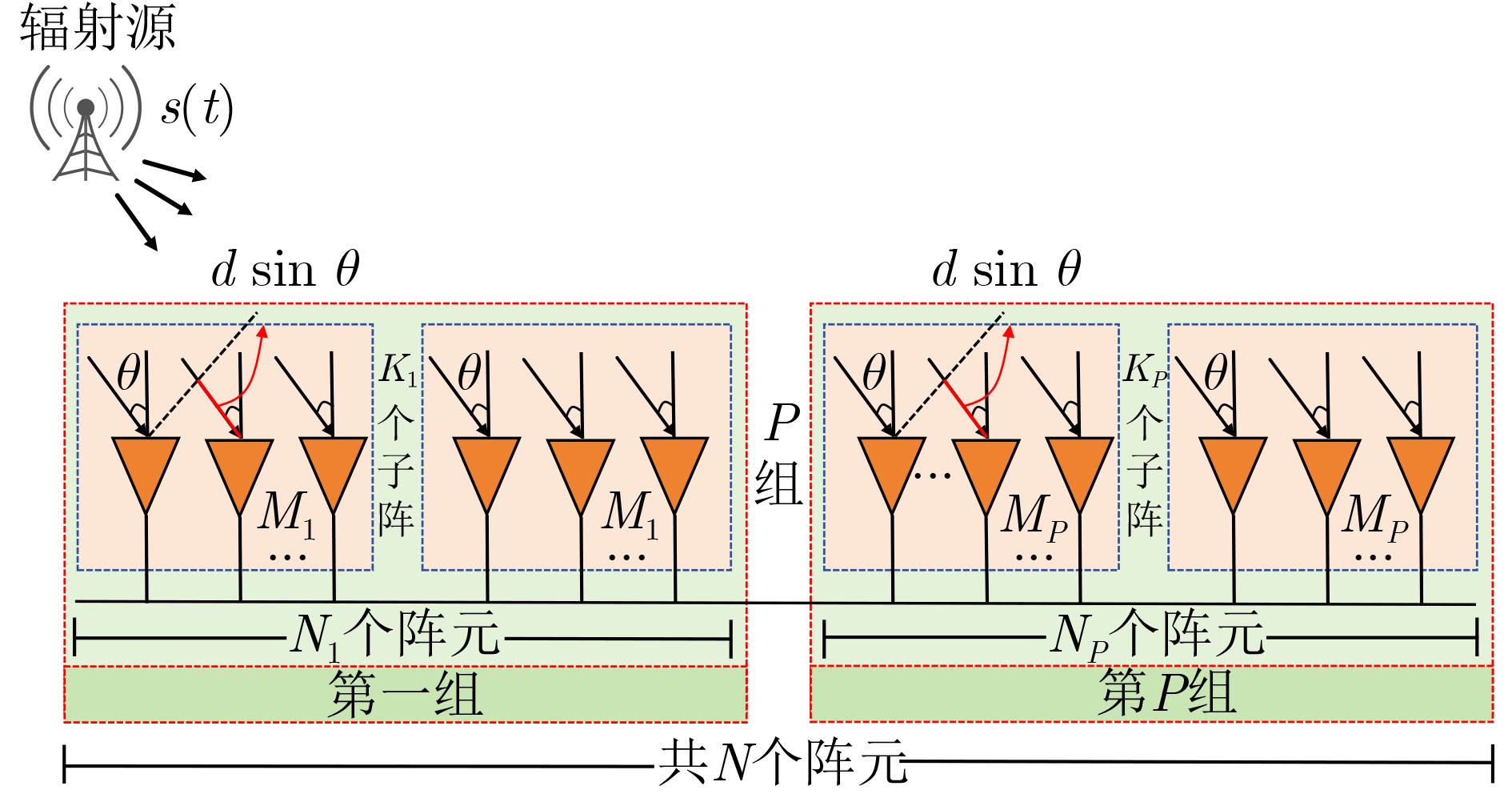
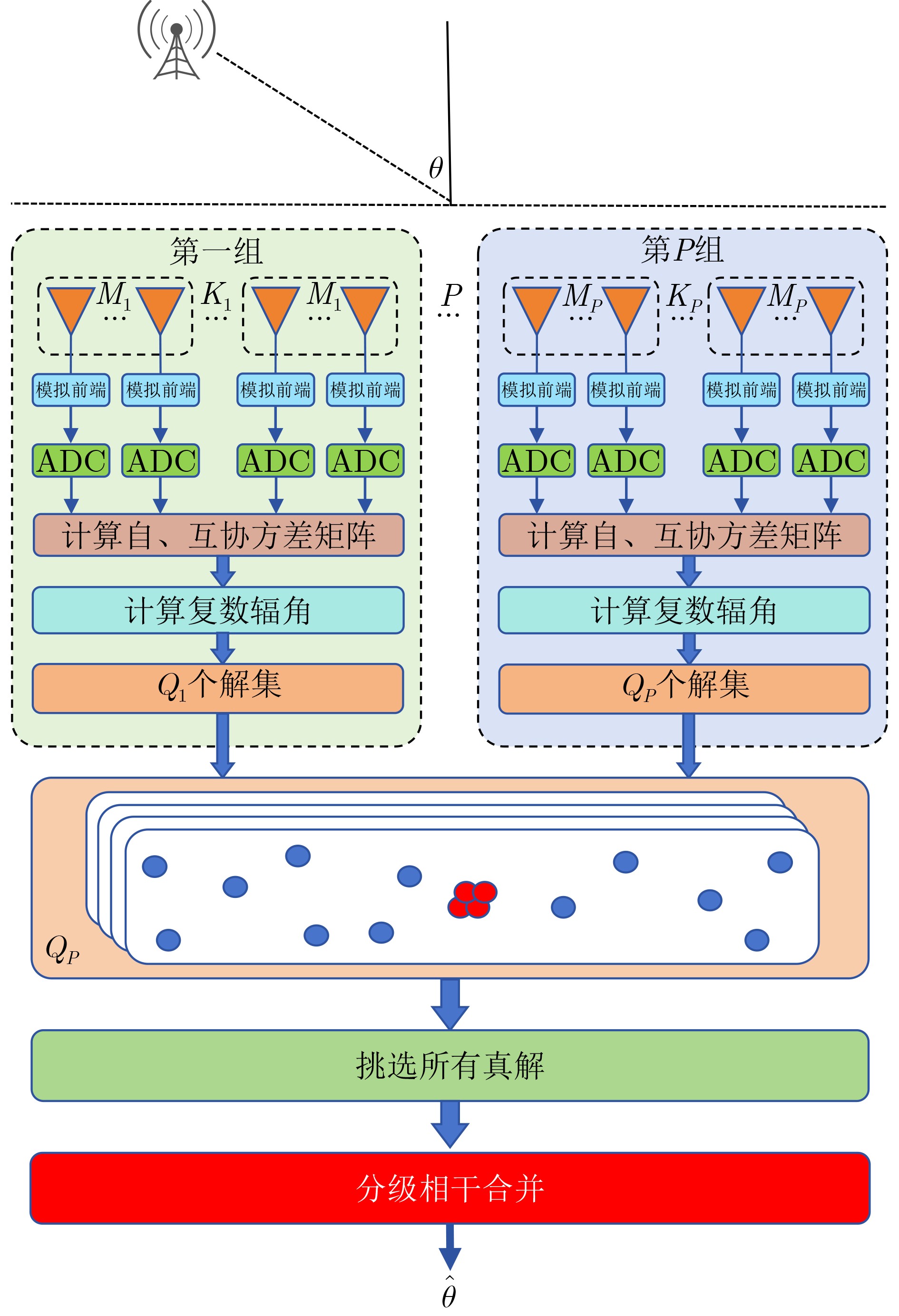
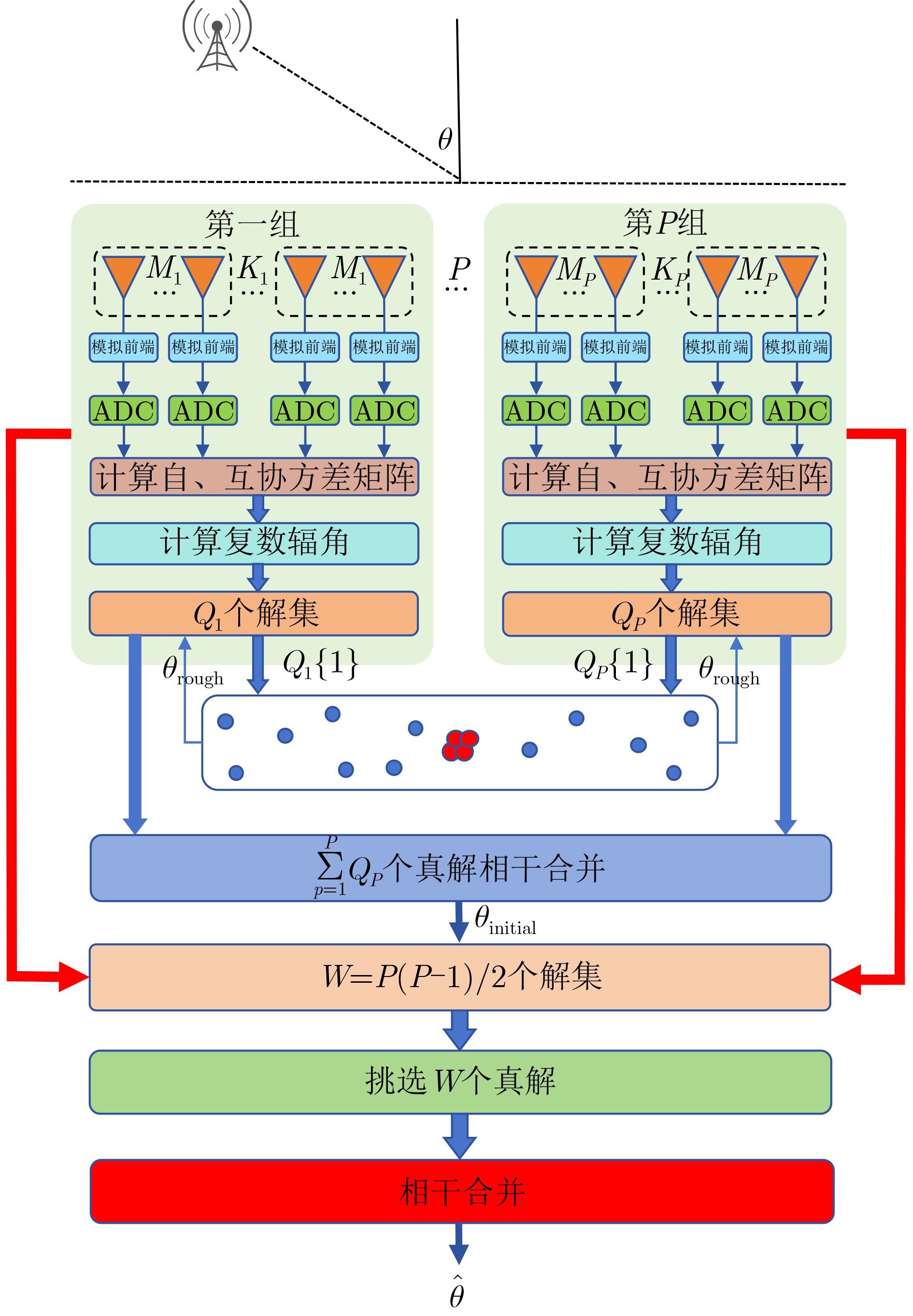
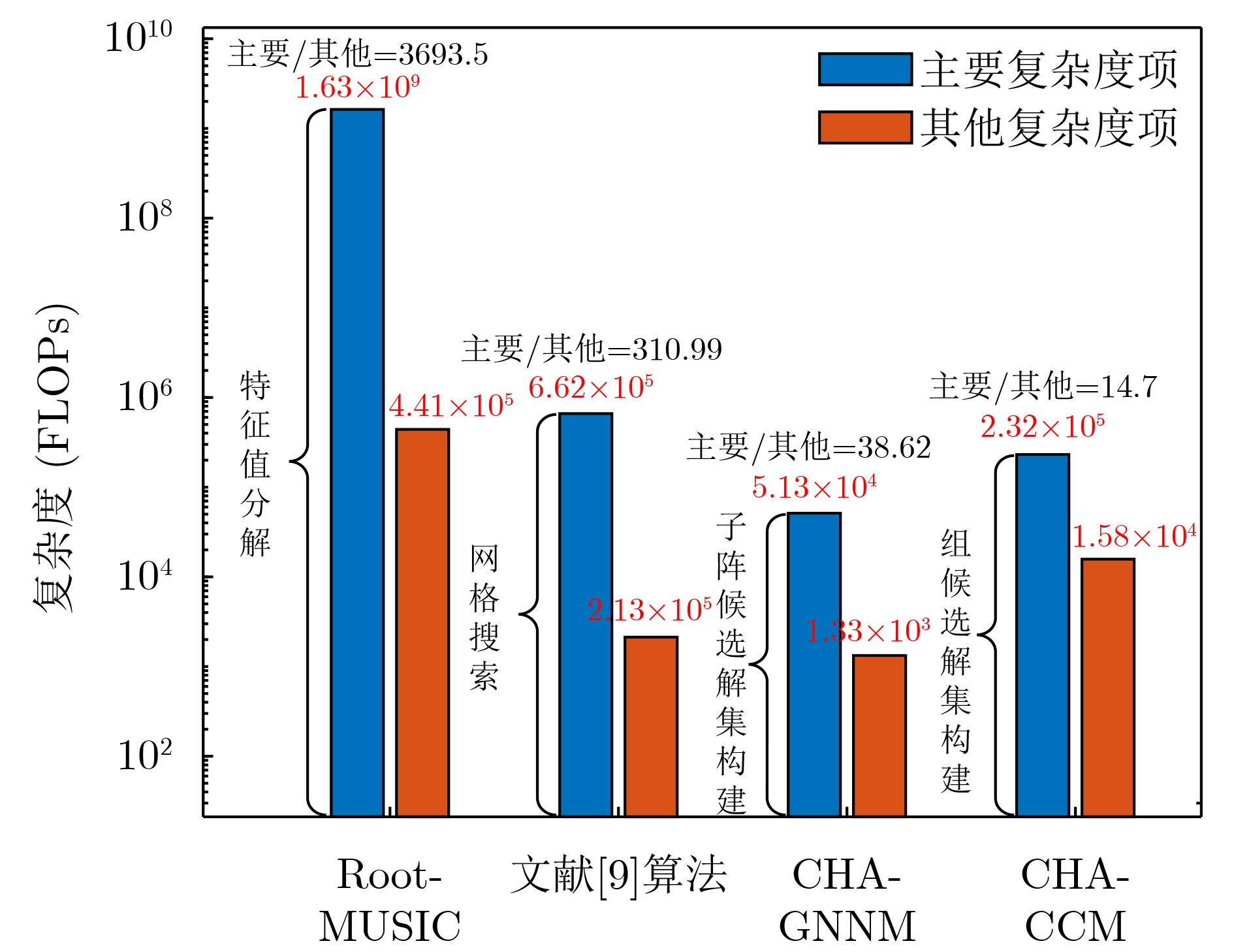
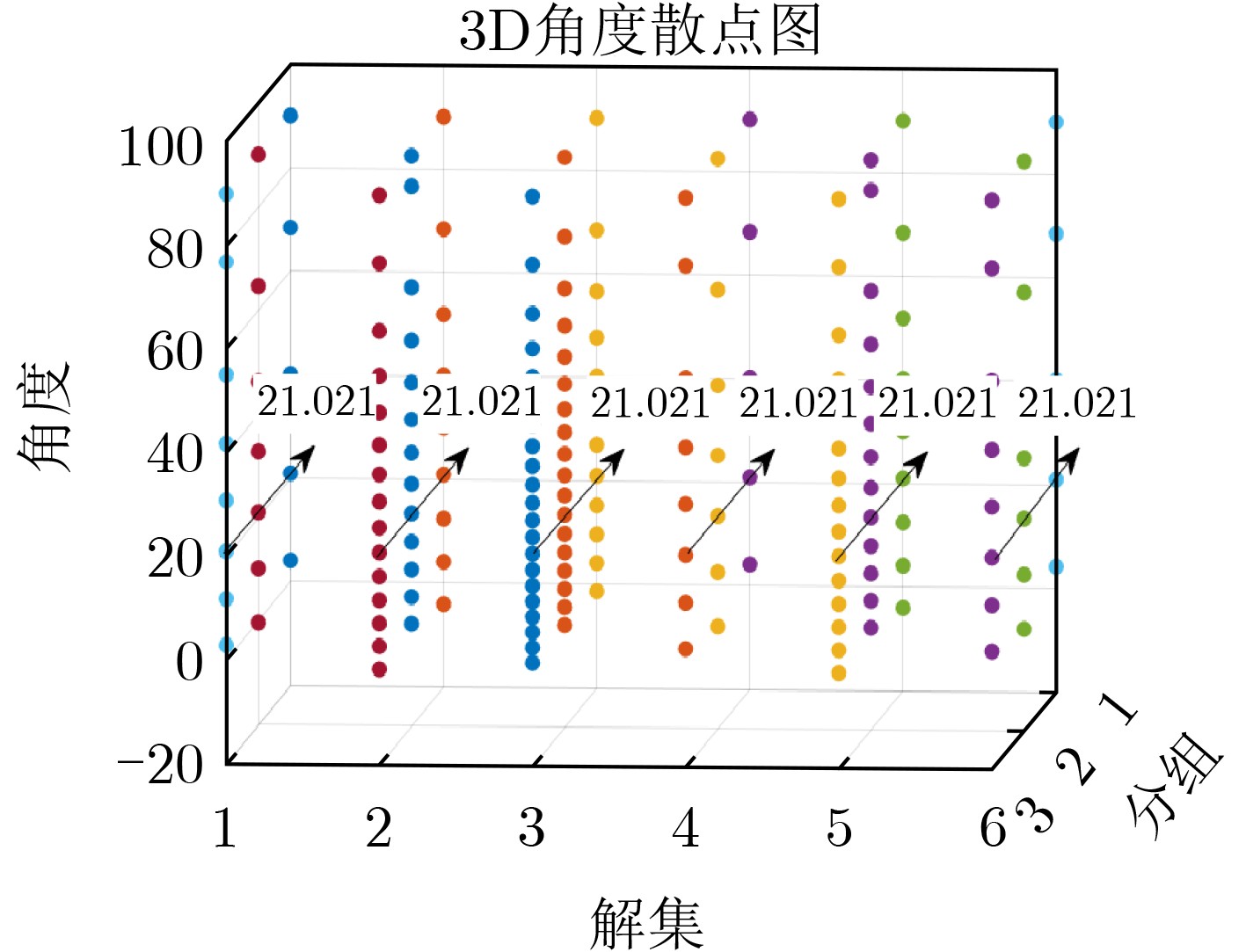
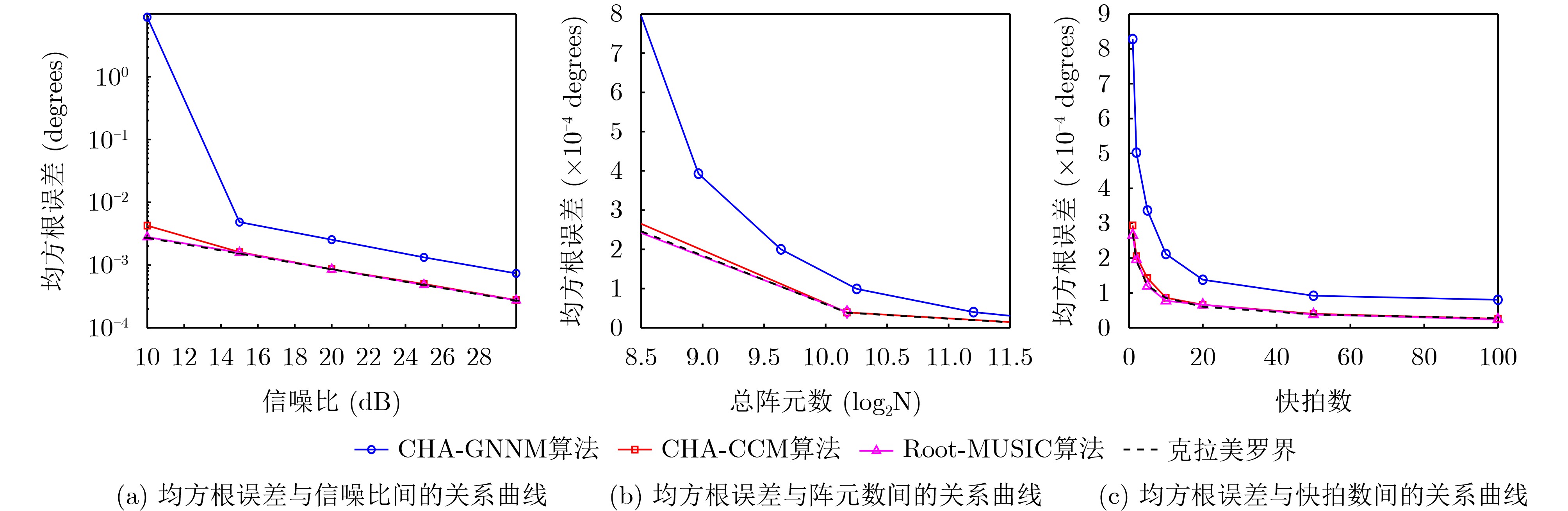
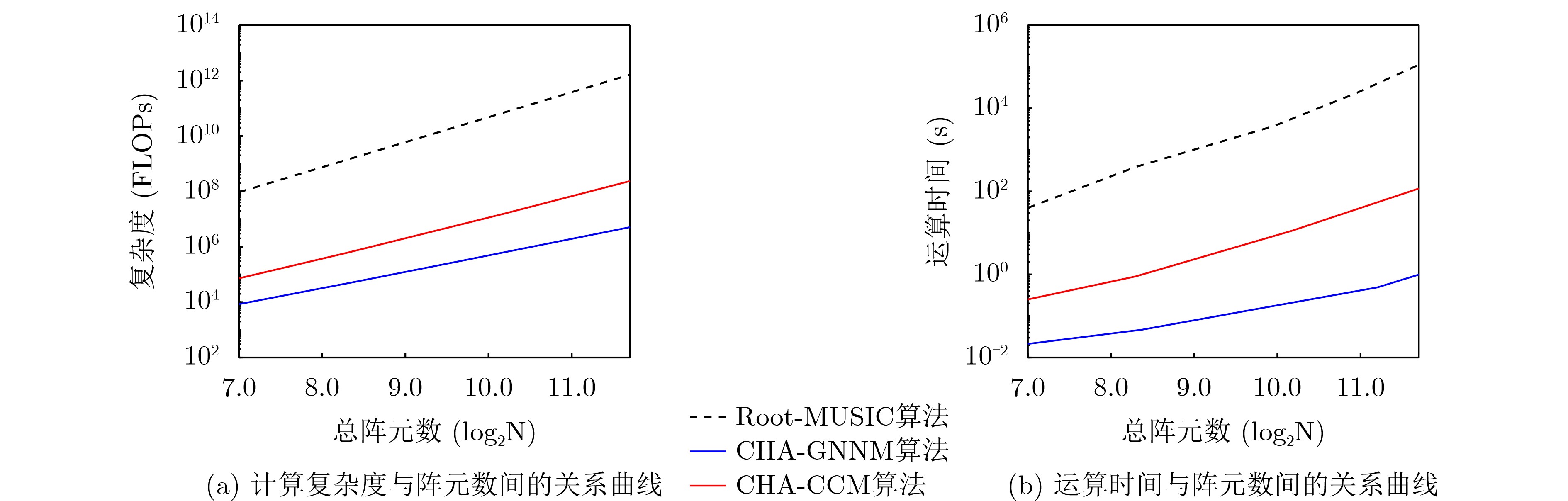
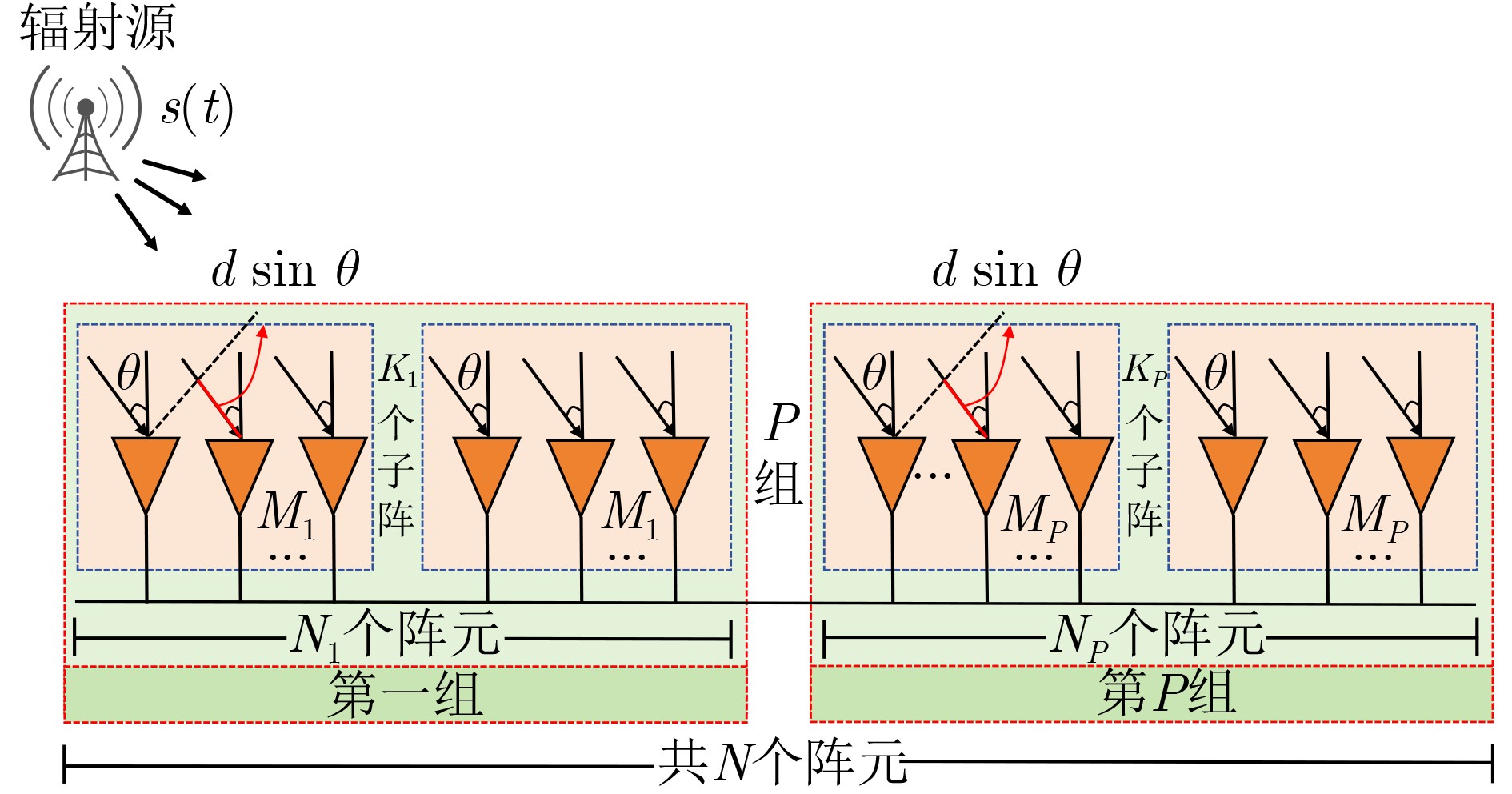
Objective Direction Of Arrival (DOA) estimation is a key technique for sonar target localization. As the demand for high-precision DOA estimation in complex environments continues to increase, the number of array elements used for estimation is steadily growing, leading to massive arrays. Although larger arrays improve DOA estimation accuracy and resolution, they also impose a substantial computational burden on conventional DOA estimation algorithms. To address this issue, a low-complexity composite hierarchical receiving array structure is constructed, and two fast phase ambiguity resolution algorithms are proposed: Composite HierArchical Global Nearest-Neighbor Matching (CHA-GNNM) and Composite HierArchical Cross-Correlation Covariance Merging (CHA-CCM). Methods The CHA-GNNM algorithm constructs multiple candidate solution sets by exploiting the auto-covariance and cross-covariance relationships among the subarrays within each group. The true solution in each candidate solution set is identified through nearest-neighbor matching based on source consistency, and the final DOA estimate is obtained through multilevel coherent combining. This approach achieves phase ambiguity resolution and angle matching with relatively low computational cost. However, because the correlation information among all array elements is not fully exploited, some estimation performance is sacrificed. To improve DOA estimation performance, the CHA-CCM algorithm reorganizes the composite hierarchical structure into evenly partitioned groups, which are regarded as several large subarrays. Multiple large candidate solution sets are first constructed from the cross-correlation relationships among these groups. Each group is then divided into multiple small subarrays, from which additional candidate solution sets are generated using the corresponding auto-covariance and cross-covariance relationships. A coarse DOA estimate is obtained through coprime clustering, followed by a more accurate initial DOA estimate derived from the small candidate solution sets. This initial DOA estimate is subsequently used to eliminate spurious solutions from the large candidate solution sets, yielding the final DOA estimate. Combined with a low-complexity covariance block-processing strategy, this approach avoids computationally expensive operations while improving DOA estimation accuracy. Results and Discussions Simulation results demonstrate that both proposed algorithms substantially reduce the computational burden as the number of array elements increases, while effectively achieving phase ambiguity resolution through the proposed composite hierarchical receiving array structure ( Fig. 5 ). Compared with the conventional Root-MUSIC algorithm, CHA-GNNM achieves coarse DOA estimation with nearly four orders of magnitude lower computational complexity (Fig. 7 ), making it suitable for applications with stringent real-time requirements. In contrast, CHA-CCM requires only a modest increase in computational cost (Fig. 7 ) while achieving DOA estimation performance close to the Cramér-Rao Lower Bound (CRLB) above a certain signal-to-noise ratio threshold (Fig. 6 ). Therefore, a favorable balance is achieved between DOA estimation accuracy and computational complexity.Conclusions To address the rapid increase in computational complexity associated with massive arrays, a composite hierarchical receiving array structure is constructed for efficient DOA estimation. By hierarchically grouping the array elements, the proposed structure provides a new framework for low-complexity DOA estimation. Based on this structure, two fast DOA estimation algorithms are developed. Both algorithms achieve effective phase ambiguity resolution with low computational complexity by exploiting the structural differences among array groups and the consistency of observations from the same source across different groups, thereby enabling rapid DOA estimation. CHA-GNNM primarily exploits the phase relationships among subarrays to perform phase ambiguity resolution and angle matching through a simple computational procedure, making it suitable for applications requiring high computational efficiency and real-time processing. Because the cross-correlation information among all array elements is not fully exploited, some estimation performance is reduced under challenging signal conditions. To overcome this limitation, CHA-CCM reorganizes the composite hierarchical receiving array into evenly partitioned groups while preserving the low-complexity advantage of the hierarchical structure. Group-level cross-correlation information is further exploited so that the intrinsic relationships among different groups are more fully utilized. In addition, the signal processing procedure is simplified by eliminating unnecessary computational steps, thereby improving the robustness and accuracy of DOA estimation while maintaining manageable computational complexity. Compared with CHA-GNNM, CHA-CCM incurs only a small increase in computational cost and achieves a better balance between computational complexity and DOA estimation performance. Overall, the proposed composite hierarchical receiving array structure and the two fast DOA estimation algorithms provide an effective solution for efficient DOA estimation in massive arrays. CHA-GNNM is more suitable for applications with stringent real-time requirements, whereas CHA-CCM is better suited for applications requiring higher DOA estimation accuracy and robustness. The proposed structure achieves efficient phase ambiguity resolution and accurate DOA estimation and provides both theoretical significance and practical value for engineering applications of massive array signal processing. -
表 1 仿真参数表
参数 设定值 总阵元数N 315 分组数P 3组 第1组阵元数$ {N}_{1} $ 105 第1组子阵阵元数$ {M}_{1} $ 3 第2组阵元数$ {N}_{2} $ 105 第2组子阵阵元数$ {M}_{2} $ 5 第3组阵元数$ {N}_{3} $ 105 第3组子阵阵元数$ {M}_{3} $ 7 辐射源角度 21.021o 蒙特卡罗实验次数 1000 次 下载: 导出CSV
-
[1] ETTER P C. Underwater Acoustic Modeling and Simulation[M]. 5th ed. Boca Raton: CRC Press, 2018: 257–259. [2] ZEKAVAT R and BUEHRER R M. Handbook of Position Location[M]. Hoboken: Wiley-IEEE Press, 2012: 320–356. [3] 梁国龙, 滕远鑫, 王晋晋, 等. 一种适用于半互质阵的高精度波达方向估计方法[J]. 电子与信息学报, 2024, 46(8): 3228–3237. doi: 10.11999/JEIT231139.LIANG Guolong, TENG Yuanxin, WANG Jinjin, et al. A high precision direction of arrival estimation method applied to semi-coprime arrays[J]. Journal of Electronics & Information Technology, 2024, 46(8): 3228–3237. doi: 10.11999/JEIT231139. [4] 范旭慧, 王宇翼, 王安义, 等. 鲁棒自适应稀疏阵列波束形成[J]. 电子与信息学报, 2026, 48(1): 202–211. doi: 10.11999/JEIT250952.FAN Xuhui, WANG Yuyi, WANG Anyi, et al. Robust adaptive beamforming for sparse arrays[J]. Journal of Electronics & Information Technology, 2026, 48(1): 202–211. doi: 10.11999/JEIT250952. [5] 商志刚, 曲星昊, 马璐, 等. 水声通信定位一体化研究综述[J]. 声学学报, 2026, 51(2): 465–477. doi: 10.12395/0371-0025.2025322.SHANG Zhigang, QU Xinghao, MA Lu, et al. A review of research on underwater acoustic integrated communication and localization[J]. Acta Acustica, 2026, 51(2): 465–477. doi: 10.12395/0371-0025.2025322. [6] 刘帅, 许媛媛, 闫锋刚, 等. 泰勒展开与交替投影最大似然结合的离网格DOA估计算法[J]. 电子与信息学报, 2024, 46(8): 3219–3227. doi: 10.11999/JEIT231376.LIU Shuai, XU Yuanyuan, YAN Fenggang, et al. Off-grid DOA estimation algorithm based on Taylor-expansion and alternating projection maximum likelihood[J]. Journal of Electronics & Information Technology, 2024, 46(8): 3219–3227. doi: 10.11999/JEIT231376. [7] 高山, 章伟裕, 郭良浩, 等. 分步波束形成和反卷积联合的面阵波达方向估计方法[J]. 声学学报, 2026, 51(3): 878–890. doi: 10.12395/0371-0025.2024011.GAO Shan, ZHANG Weiyu, GUO Lianghao, et al. Direction of arrival estimation jointing two-stage beamforming and deconvolution for an area array[J]. Acta Acustica, 2026, 51(3): 878–890. doi: 10.12395/0371-0025.2024011. [8] JIAO Lulu, YANG Xinghai, QUAN Tianqi, et al. High-precision DOA estimation for underwater acoustic signals based on sparsity adaptation[J]. Frontiers in Marine Science, 2022, 9: 1022494. doi: 10.3389/fmars.2022.1022494. [9] CAO Renzheng, LIU Binyue, GAO Feifei, et al. A low-complex one-snapshot DOA estimation algorithm with massive ULA[J]. IEEE Communications Letters, 2017, 21(5): 1071–1074. doi: 10.1109/LCOMM.2017.2652442. [10] LI Baobao, ZHANG Xiaofei, LI Jianfeng, et al. DOA estimation of non-circular source for large uniform linear array with a single snapshot: Extended DFT method[J]. IEEE Communications Letters, 2021, 25(12): 3843–3847. doi: 10.1109/LCOMM.2021.3120211. [11] YANG Xiao, LIU Licheng, and WANG Yide. A new low complexity DOA estimation algorithm for massive MIMO systems[C]. 2016 IEEE International Conference on Consumer Electronics-China (ICCE-China), Guangzhou, China, 2016: 1–4. doi: 10.1109/ICCE-China.2016.7849735. [12] CHEN Yiwen, JIE Qijuan, ZHANG Yiqiao, et al. Two rapid power iterative DOA estimators for UAV emitter using massive/ultra-massive receive array[J]. Drones, 2023, 7(6): 361. doi: 10.3390/drones7060361. [13] CHEN Yiwen, ZHAN Xichao, SHU Feng, et al. Two low-complexity DOA estimators for massive/ultra-massive MIMO receive array[J]. IEEE Wireless Communications Letters, 2022, 11(11): 2385–2389. doi: 10.1109/LWC.2022.3204173. [14] CHUANG Shengfu, WU Wenrong, and LIU Yenting. High-resolution AoA estimation for hybrid antenna arrays[J]. IEEE Transactions on Antennas and Propagation, 2015, 63(7): 2955–2968. doi: 10.1109/TAP.2015.2426795. [15] SHU Feng, QIN Yaolu, LIU Tingting, et al. Low-complexity and high-resolution DOA estimation for hybrid analog and digital massive MIMO receive array[J]. IEEE Transactions on Communications, 2018, 66(6): 2487–2501. doi: 10.1109/TCOMM.2018.2805803. [16] ZHANG Ruoyu, SHIM B, and WU Wen. Direction-of-arrival estimation for large antenna arrays with hybrid analog and digital architectures[J]. IEEE Transactions on Signal Processing, 2022, 70: 72–88. doi: 10.1109/TSP.2021.3119768. [17] SHU Feng, SHI Baihua, CHEN Yiwen, et al. A new heterogeneous hybrid massive MIMO receiver with an intrinsic ability of removing phase ambiguity of DOA estimation via machine learning[J]. IEEE Transactions on Machine Learning in Communications and Networking, 2025, 3: 17–29. doi: 10.1109/TMLCN.2024.3506874. [18] HUANG Hongji, YANG Jie, HUANG Hao, et al. Deep learning for super-resolution channel estimation and DOA estimation based massive MIMO system[J]. IEEE Transactions on Vehicular Technology, 2018, 67(9): 8549–8560. doi: 10.1109/TVT.2018.2851783. [19] CHEN Yiwen, ZHENG Yuxiang, ZHANG Yiqiao, et al. Deep-learning-aided low-complexity DOA estimators for ultra-massive MIMO overlapped receive array[C]. 2023 IEEE 6th International Conference on Pattern Recognition and Artificial Intelligence (PRAI), Haikou, China, 2023: 1201–1205. doi: 10.1109/PRAI59366.2023.10332046. [20] HU Die, ZHANG Yonghao, HE Lianghua, et al. Low-complexity deep-learning-based DOA Estimation for hybrid massive MIMO systems with uniform circular arrays[J]. IEEE Wireless Communications Letters, 2020, 9(1): 83–86. doi: 10.1109/LWC.2019.2942595. [21] RAO B D and HARI K V S. Performance analysis of root-MUSIC[J]. IEEE Transactions on Acoustics, Speech, and Signal Processing, 1989, 37(12): 1939–1949. doi: 10.1109/29.45540. [22] STOICA P and NEHORAI A. MUSIC, maximum likelihood, and Cramer-Rao bound[J]. IEEE Transactions on Acoustics, Speech, and Signal Processing, 1989, 37(5): 720–741. doi: 10.1109/29.17564. [23] HUNGER R and REPORT T. Floating Point Operations in Matrix-Vector Calculus[M]. München: Technische Universität München, 2007: 5–14. -

 下载:
下载:

图(7) / 表(1)
计量
- 文章访问数: 565
- HTML全文浏览量: 268
- PDF下载量: 24
- 被引次数: 0
