Advanced Search
Turn off MathJax
Article Contents
CAO Dun, BAO Hongsheng, SU Yuan, ZOU Bei, WANG Jin. A Preemptive Task Offloading Strategy for Vehicular Edge Computing in Computing-Power-Constrained Heterogeneous Scenarios[J]. Journal of Electronics & Information Technology. doi: 10.11999/JEIT260924
Citation: CAO Dun, BAO Hongsheng, SU Yuan, ZOU Bei, WANG Jin. A Preemptive Task Offloading Strategy for Vehicular Edge Computing in Computing-Power-Constrained Heterogeneous Scenarios[J]. Journal of Electronics & Information Technology. doi: 10.11999/JEIT260924

A Preemptive Task Offloading Strategy for Vehicular Edge Computing in Computing-Power-Constrained Heterogeneous Scenarios

doi: 10.11999/JEIT260924 cstr: 32379.14.JEIT260924
Funds:  The National Natural Science Foundation of China (62572076, 62473146 and U25A20426), The Hunan Provincial Natural Sclence Foundation (2025JJ20069), The Key Project of Natural Science Foundation of Hunan Province (2024JJ3017)
  • Received Date: 2026-07-03
  • Accepted Date: 2026-11-12
  • Rev Recd Date: 2026-11-12
  • Available Online: 2026-11-20
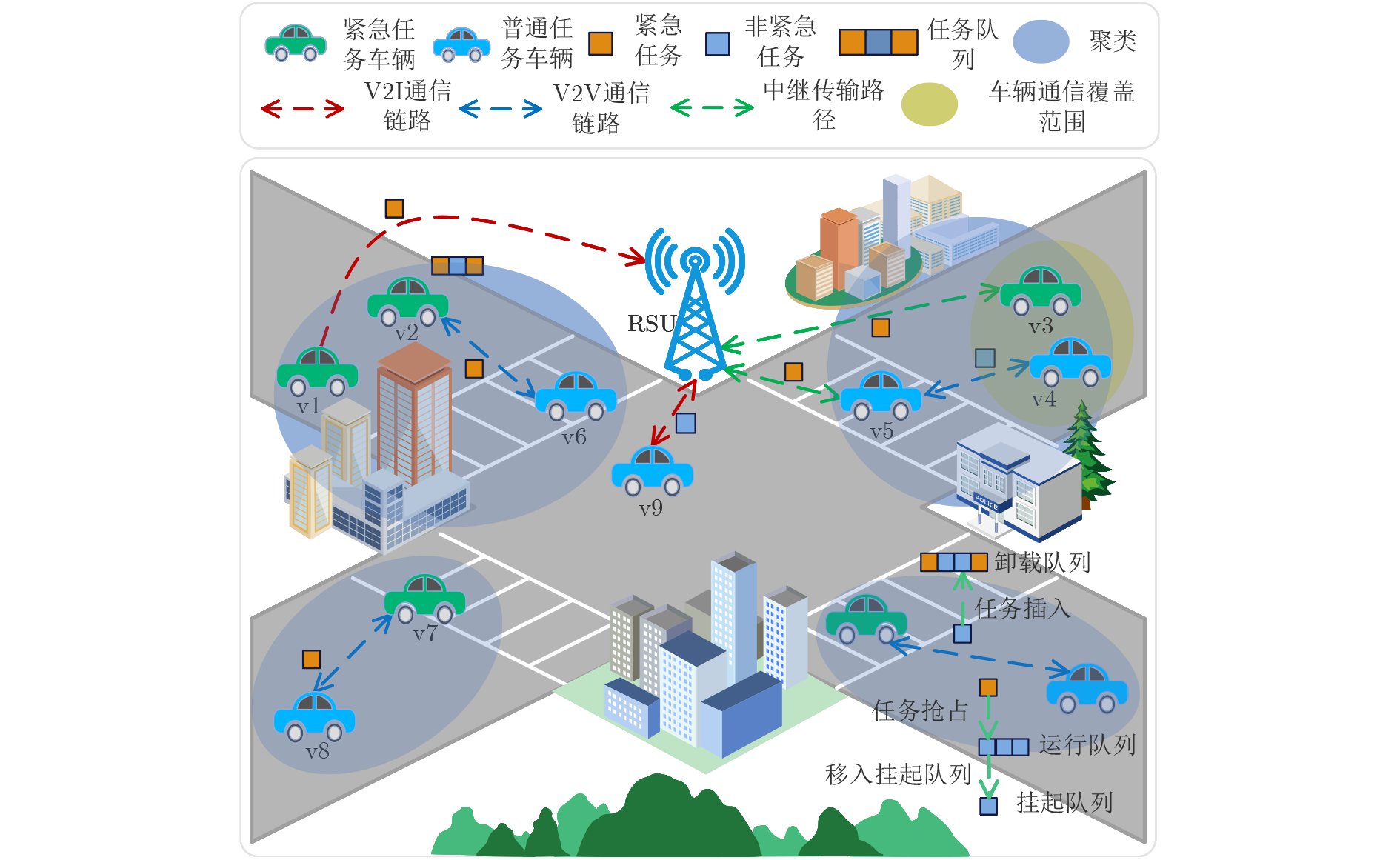
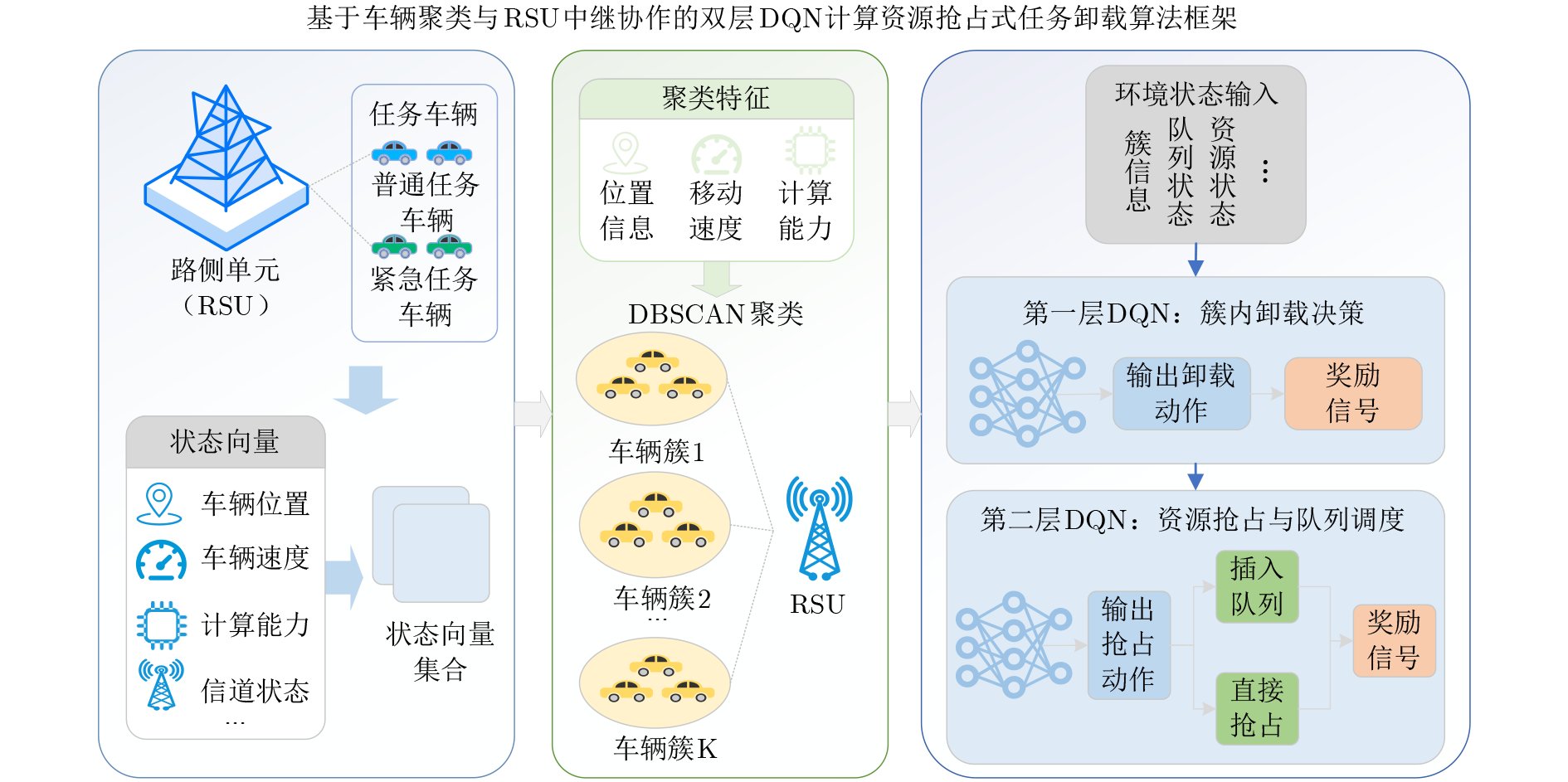
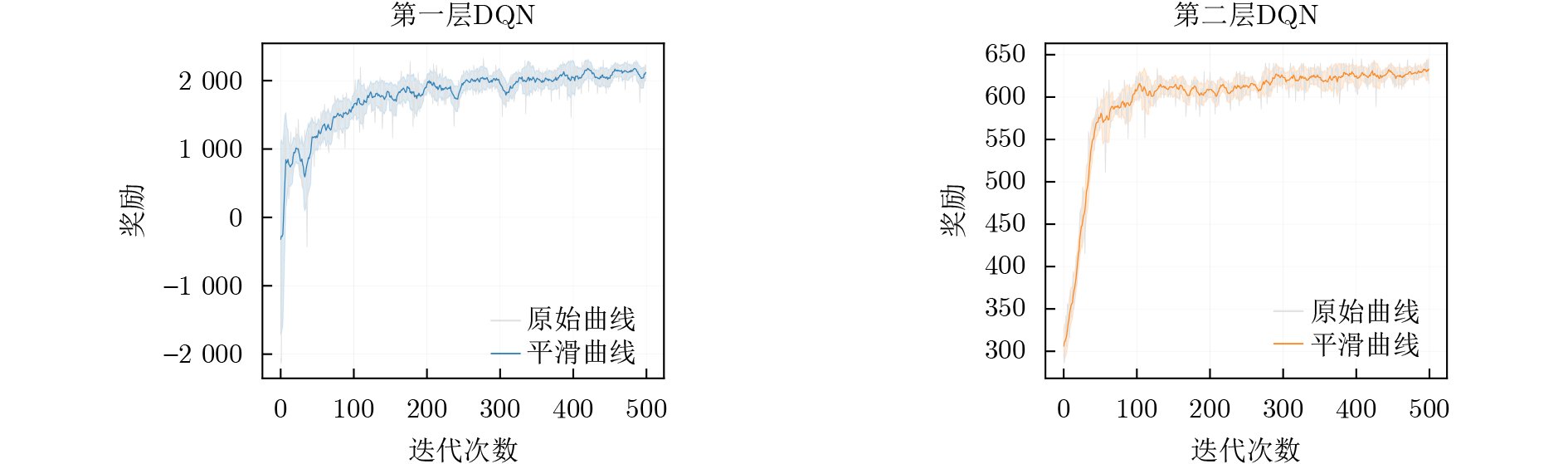
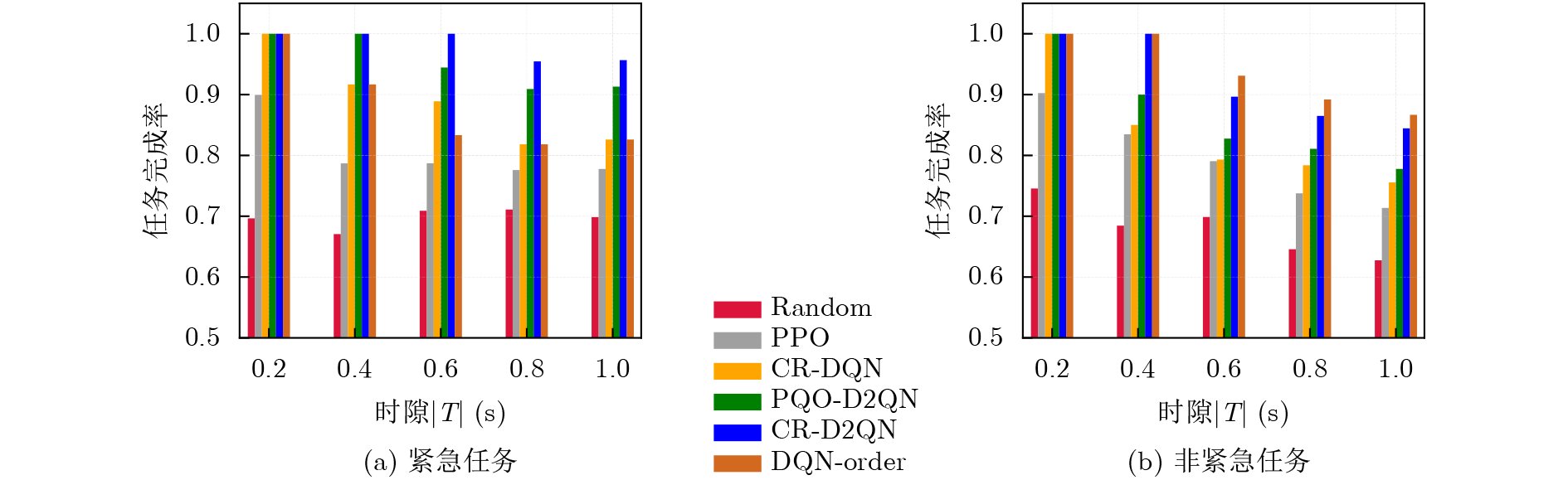
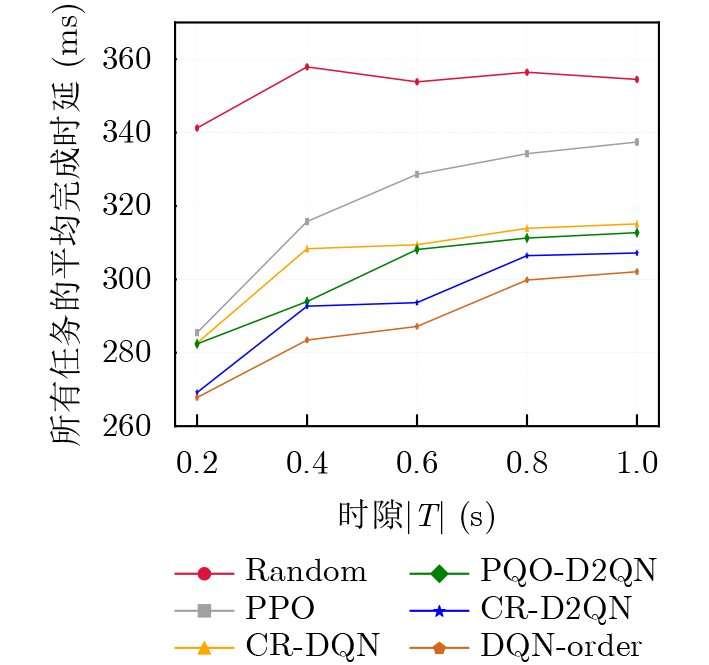
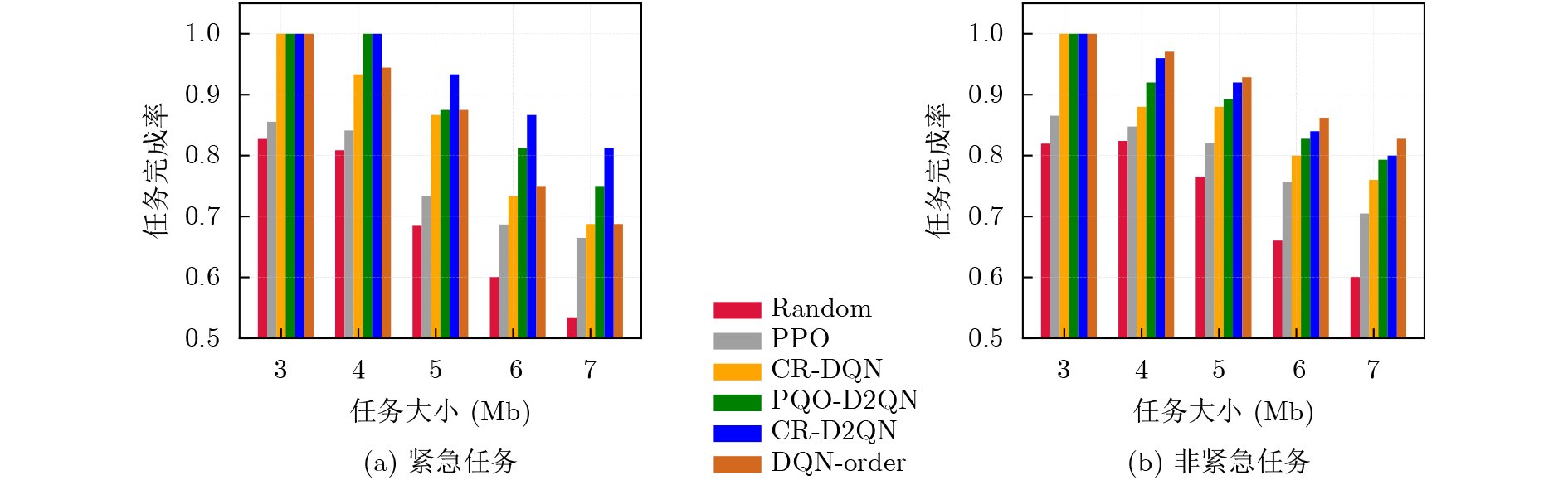
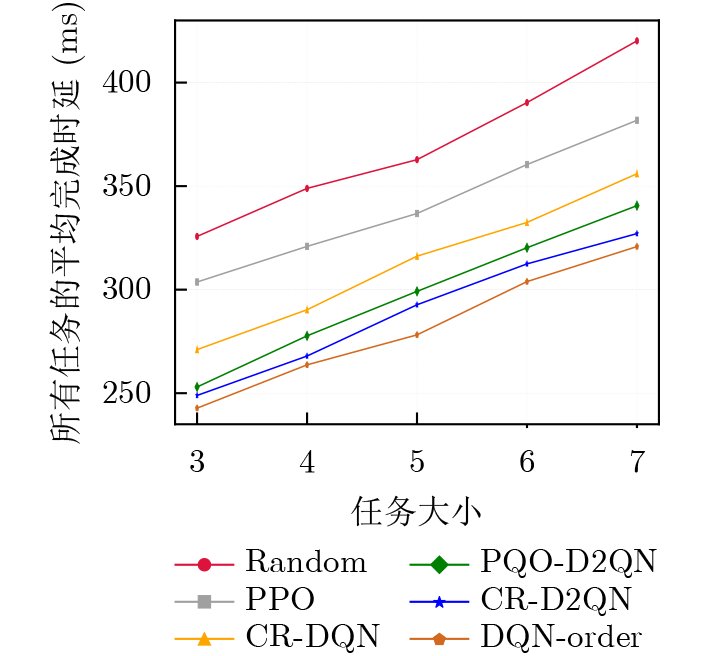
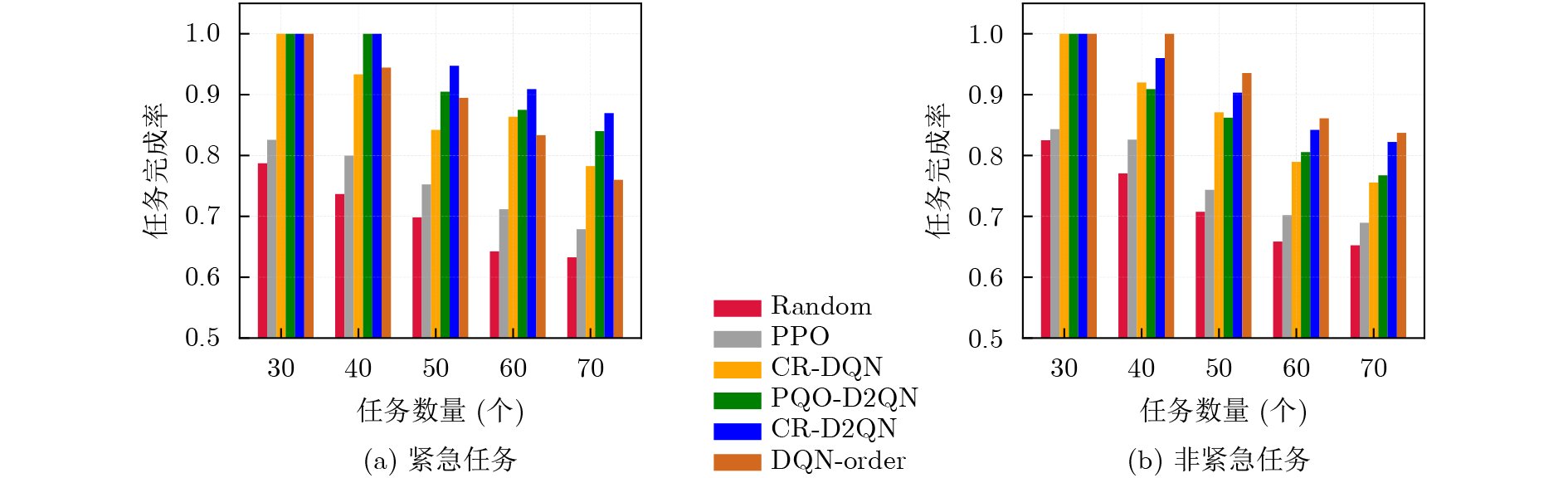
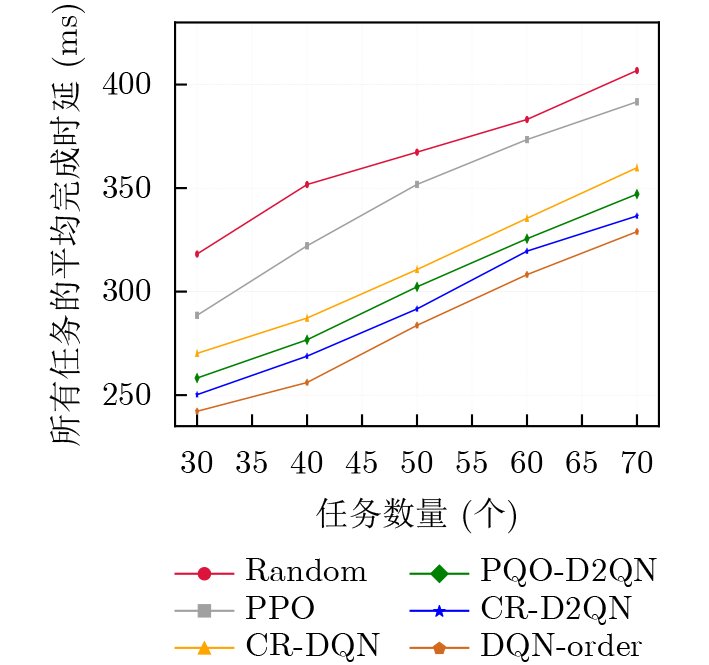
  •   Objective  In Vehicular Edge Computing (VEC) environments, computation-intensive and delay-sensitive tasks impose stringent real-time requirements on the scheduling of computing resources. Conventional non-preemptive scheduling schemes frequently cause urgent tasks to miss their deadlines due to resource contention. However, directly introducing a preemption mechanism into highly dynamic environments presents significant challenges. The high mobility of vehicles can easily cause link disconnections, leading to the failure of preempted tasks. Furthermore, the limited range of vehicle-to-vehicle (V2V) communications makes it difficult to effectively utilize idle computing resources over a wider area. To provide differentiated guarantees and orderly management to ensure timely task completion during the offloading and scheduling process in the Internet of Vehicles, this paper proposes a Dual-layer DQN-based Preemptive Resource Task Offloading Strategy with Vehicle Clustering and Roadside Unit (RSU) Relay Collaboration (CR-D2QN).  Methods  A multi-queue cooperative task management framework is established, comprising offloading, execution and suspended queues. Based on task urgency, this framework dynamically decides whether to preempt a currently executing task and move it to the suspended queue, or insert a new task into the offloading queue. A Density-Based Spatial Clustering of Applications with Noise (DBSCAN) method is then developed to form dynamic vehicle groups, considering vehicle position, velocity and computational capability. This method adaptively creates stable service clusters within VEC, thereby reducing the offloading decision space. Simultaneously, RSU relay forwarding is introduced to overcome the constraints of direct vehicle-to-vehicle communication, thereby enhancing link stability to guarantee the implementation of the preemption mechanism. On this basis, a dual-layer DQN framework is constructed, where the first layer selects the optimal offloading node within the cluster and the second layer determines whether to preempt the computational resources or insert the task into a specific position in the offloading queue at the selected node. The optimization objective is to maximize the system task completion rate subject to the defined constraints.  Results and Discussions  Simulation experiments are conducted using Python 3.8 and the PyTorch framework, with key experimental parameters listed in Table 1 . The proposed CR-D2QN strategy is benchmarked against five baselines including Random, Proximal Policy Optimization (PPO), Clustering and Relaying based on Deep Q-Network (CR-DQN), Resource Preemption and Task Queue Offloading based on Dual-Layer Deep Q-Network (PQO-D2QN) and Deadline-Ordered Deep Q-Network (DQN-order). The evaluation is conducted under varying conditions, including time-slot durations, task sizes and task volumes. As the time-slot duration increases, CR-D2QN maintains the highest urgent task completion rate among all compared strategies (Fig. 4). The average task completion delay of CR-D2QN is lower than that of Random, PPO, CR-DQN and PQO-D2QN, though higher than that of DQN-order (Fig. 5). This is because DQN-order prioritizes tasks with the shortest remaining deadlines to minimize overall waiting time, whereas CR-D2QN sacrifices the latency of non-urgent tasks to ensure the reliability of urgent tasks. Similarly, as task sizes grow, CR-D2QN continues to achieve the highest urgent task completion rate (Fig. 6), while maintaining a low average latency compared to most baselines (Fig. 7). When the task volume increases, these performance advantages are consistently sustained (Fig. 8, 9). These results confirm that the CR-D2QN strategy significantly enhances both resource utilization and scheduling efficiency in dynamic VEC environments.  Conclusions  A Preemptive Task Offloading Strategy named CR-D2QN is proposed for VEC in this work. This strategy integrates vehicle clustering, RSU relay cooperation and the dual-layer DQN-based preemption mechanism. By means of a three-tier queue management framework and a dual-layer reinforcement learning decision architecture, this strategy achieves the cooperative optimization of task offloading and task scheduling. Simulation results demonstrate that CR-D2QN not only guarantees a high completion rate for urgent tasks but also improves the overall system task completion rate while maintaining a low average task completion delay. Future work will extend the strategy to more complex scenarios, including multi-RSU cross-region coordination and unmanned aerial vehicle (UAV)-assisted air-ground integrated vehicular systems.
  • loading
  • [1]
    霍如, 吕科呈, 黄韬. 车联网中路径预测驱动的任务切分与计算资源分配方法[J]. 电子与信息学报, 2025, 47(10): 3658–3669. doi: 10.11999/JEIT250135.

    HUO Ru, LÜ Kecheng, and HUANG Tao. Task segmentation and computing resource allocation method driven by path prediction in internet of vehicles[J]. Journal of Electronics & Information Technology, 2025, 47(10): 3658–3669. doi: 10.11999/JEIT250135.
    [2]
    杨淼焱, 方旭明. 车联网中采用混合分层DRL的无人机辅助移动边缘计算[J]. 电子与信息学报, 2026, 48(4): 1668–1677. doi: 10.11999/JEIT250743.

    YANG Miaoyan and FANG Xuming. UAV-assisted mobile edge computing based on hybrid hierarchical DRL in the Internet of Vehicular[J]. Journal of Electronics & Information Technology, 2026, 48(4): 1668–1677. doi: 10.11999/JEIT250743.
    [3]
    JIANG Qinting, XU Xiaolong, BILAL M, et al. Potential game based distributed IoV service offloading with graph attention networks in mobile edge computing[J]. IEEE Transactions on Intelligent Transportation Systems, 2024, 25(9): 10912–10925. doi: 10.1109/TITS.2024.3369190.
    [4]
    张冰雪, 李希胜, 尤佳. 多接入边缘计算网络中动态资源感知与任务卸载方案设计[J]. 电子与信息学报, 2026, 48(5): 2199–2209. doi: 10.11999/JEIT250640.

    ZHANG Bingxue, LI Xisheng, and YOU Jia. Design of dynamic resource awareness and task offloading schemes in multi-access edge computing networks[J]. Journal of Electronics & Information Technology, 2026, 48(5): 2199–2209. doi: 10.11999/JEIT250640.
    [5]
    CAI Qing, ZHOU Yiqing, LIU Ling, et al. Prioritized assignment with task dependency in collaborative mobile edge computing[J]. IEEE Transactions on Mobile Computing, 2024, 23(12): 13505–13521. doi: 10.1109/TMC.2024.3427380.
    [6]
    MENG Deng, GUO Jianmeng, ZHOU Huan, et al. Incentive-driven partial offloading and resource allocation in vehicular edge computing networks[J]. IEEE Internet of Things Journal, 2025, 12(8): 11023–11035. doi: 10.1109/JIOT.2024.3515075.
    [7]
    QIU Bin, WANG Yunxiao, XIAO Hailin, et al. Deep reinforcement learning-based adaptive computation offloading and power allocation in vehicular edge computing networks[J]. IEEE Transactions on Intelligent Transportation Systems, 2024, 25(10): 13339–13349. doi: 10.1109/TITS.2024.3391831.
    [8]
    LIU Zhixin, GAO Lei, MA Ziyang, et al. Joint task offloading and resource allocation scheme with UAV assistance in vehicle edge computing networks[J]. Computer Networks, 2025, 273: 111746. doi: 10.1016/j.comnet.2025.111746.
    [9]
    王俊华, 罗菲, 高广鑫, 等. 动态车辆网络场景中的协同空地计算卸载和资源优化[J]. 电子与信息学报, 2025, 47(1): 102–115. doi: 10.11999/JEIT240464.

    WANG Junhua, LUO Fei, GAO Guangxin, et al. Collaborative air-ground computation offloading and resource optimization in dynamic vehicular network scenarios[J]. Journal of Electronics & Information Technology, 2025, 47(1): 102–115. doi: 10.11999/JEIT240464.
    [10]
    LUO Quyuan, LUAN T H, SHI Weisong, et al. Heterogeneous task oriented data scheduling in vehicular edge computing via deep reinforcement learning[J]. IEEE Transactions on Vehicular Technology, 2024, 73(12): 19582–19596. doi: 10.1109/TVT.2024.3444815.
    [11]
    GAO Kangyu, SONG Jaeyoung, ZHOU Changjun, et al. Task offloading and scheduling under hard deadlines in vehicular edge computing systems[J]. IEEE Transactions on Vehicular Technology, 2025, 74(6): 10029–10034. doi: 10.1109/TVT.2025.3539885.
    [12]
    UDDIN A, SAKR A H, and ZHANG Ning. Adaptive prioritization and task offloading in vehicular edge computing through deep reinforcement learning[J]. IEEE Transactions on Vehicular Technology, 2025, 74(3): 5038–5052. doi: 10.1109/TVT.2024.3499962.
    [13]
    CHEN Geng, ZHANG Yiming, SONG Zhenghan, et al. Distributed grade-clustering assisted computing offloading optimization for cooperative vehicular-edge networks with near-field communications[J]. IEEE Transactions on Cognitive Communications and Networking, 2026, 12: 4089–4104. doi: 10.1109/TCCN.2025.3593519.
    [14]
    CAO Dun, SU Yuan, WANG Wenqian, et al. A dynamic priority-aware task offloading and resource allocation strategy assisted by RSU-relay in vehicular edge computing[J]. IEEE Open Journal of the Communications Society, 2026, 7: 353–369. doi: 10.1109/OJCOMS.2025.3649533.
    [15]
    RUBLEIN A C, MEHMETI F, MAHON M, et al. Improved methods of task assignment and resource allocation with preemption in edge computing systems[J]. IEEE Transactions on Parallel and Distributed Systems, 2025, 36(9): 1857–1871. doi: 10.1109/TPDS.2025.3583966.
    [16]
    HUANG Tao, QIU Haoxiang, TANG Qinqin, et al. P2TS: A preemptive approach for priority-aware task scheduling in computing power networks[J]. IEEE Transactions on Mobile Computing, 2026, 25(2): 1840–1856. doi: 10.1109/TMC.2025.3606454.
    [17]
    SHANNON C E. A mathematical theory of communication[J]. The Bell System Technical Journal, 1948, 27(3): 379–423. doi: 10.1002/j.1538-7305.1948.tb01338.x.
    [18]
    ZHANG Wenqian, ZHANG Guanglin, MAO Shiwen, et al. Deep-reinforcement-learning-based joint caching and resources allocation for cooperative MEC[J]. IEEE Internet of Things Journal, 2024, 11(7): 12203–12215. doi: 10.1109/JIOT.2023.3333826.
    [19]
    LIAO Zhuofan, YUAN Chuhao, ZHENG Bin, et al. An adaptive deployment scheme of unmanned aerial vehicles in dynamic vehicle networking for complete offloading[J]. IEEE Internet of Things Journal, 2024, 11(13): 23509–23520. doi: 10.1109/JIOT.2024.3385414.
  • 加载中

Catalog

    通讯作者: 陈斌, bchen63@163.com
    • 1. 

      沈阳化工大学材料科学与工程学院 沈阳 110142

    1. 本站搜索
    2. 百度学术搜索
    3. 万方数据库搜索
    4. CNKI搜索

    Figures(9)  / Tables(3)

    Article Metrics

    Article views (23) PDF downloads(2) Cited by()
    Proportional views
    Related

    /

    DownLoad:  Full-Size Img  PowerPoint
    Return
    Return