Advanced Search
Turn off MathJax
Article Contents
WANG Jinjin, ZHAO Mo, JING Jing, WANG Wenbing, LIU Zheng, LI Jinxi, WU Wei, LIU Tieming. Bayesian-Optimized Neural Network Rapid Solver for HEMP Waveform Distribution[J]. Journal of Electronics & Information Technology. doi: 10.11999/JEIT260877
Citation: WANG Jinjin, ZHAO Mo, JING Jing, WANG Wenbing, LIU Zheng, LI Jinxi, WU Wei, LIU Tieming. Bayesian-Optimized Neural Network Rapid Solver for HEMP Waveform Distribution[J]. Journal of Electronics & Information Technology. doi: 10.11999/JEIT260877

Bayesian-Optimized Neural Network Rapid Solver for HEMP Waveform Distribution

doi: 10.11999/JEIT260877 cstr: 32379.14.JEIT260877
  • Received Date: 2026-06-29
  • Accepted Date: 2026-08-26
  • Rev Recd Date: 2026-08-26
  • Available Online: 2026-09-01
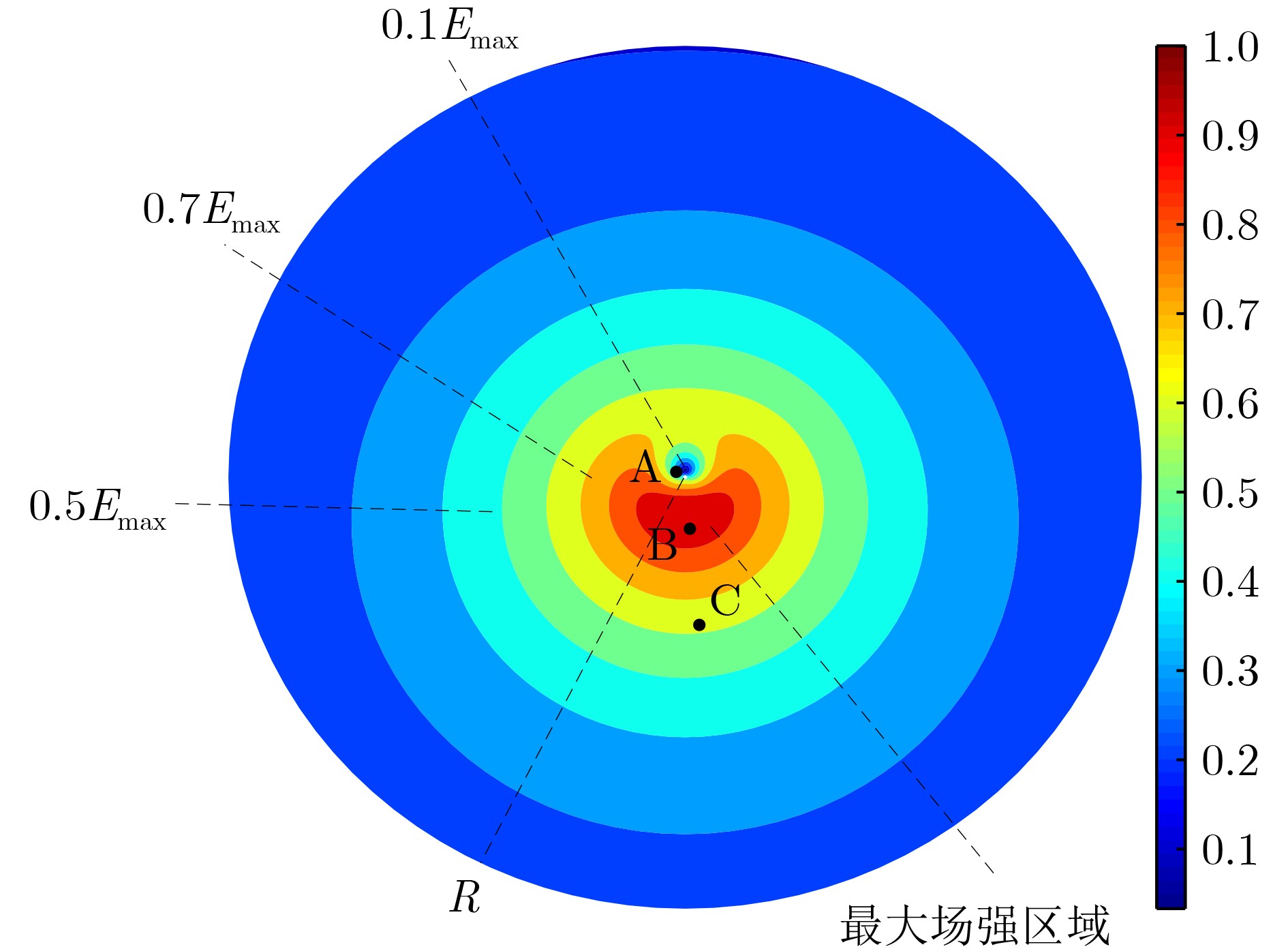
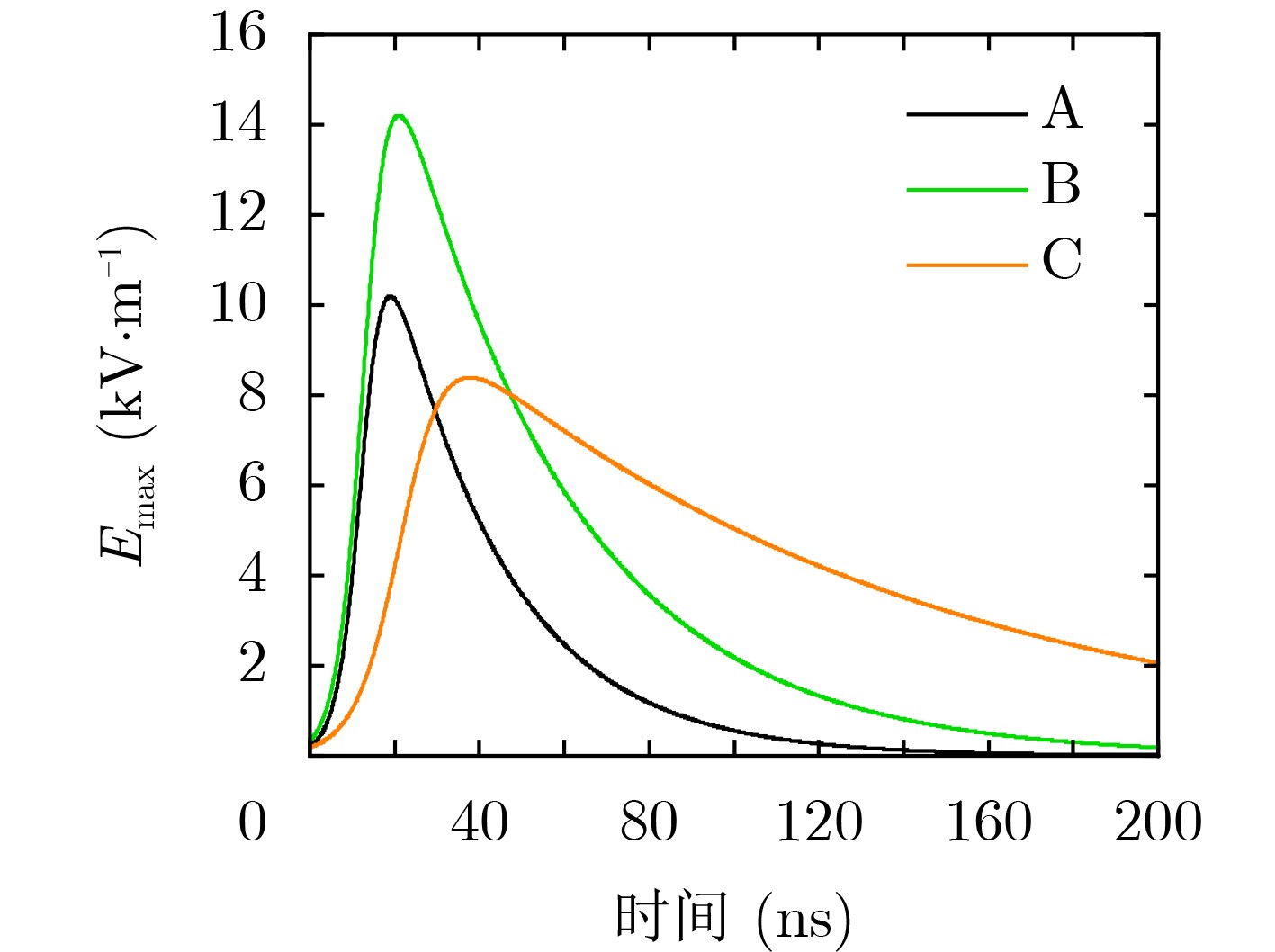
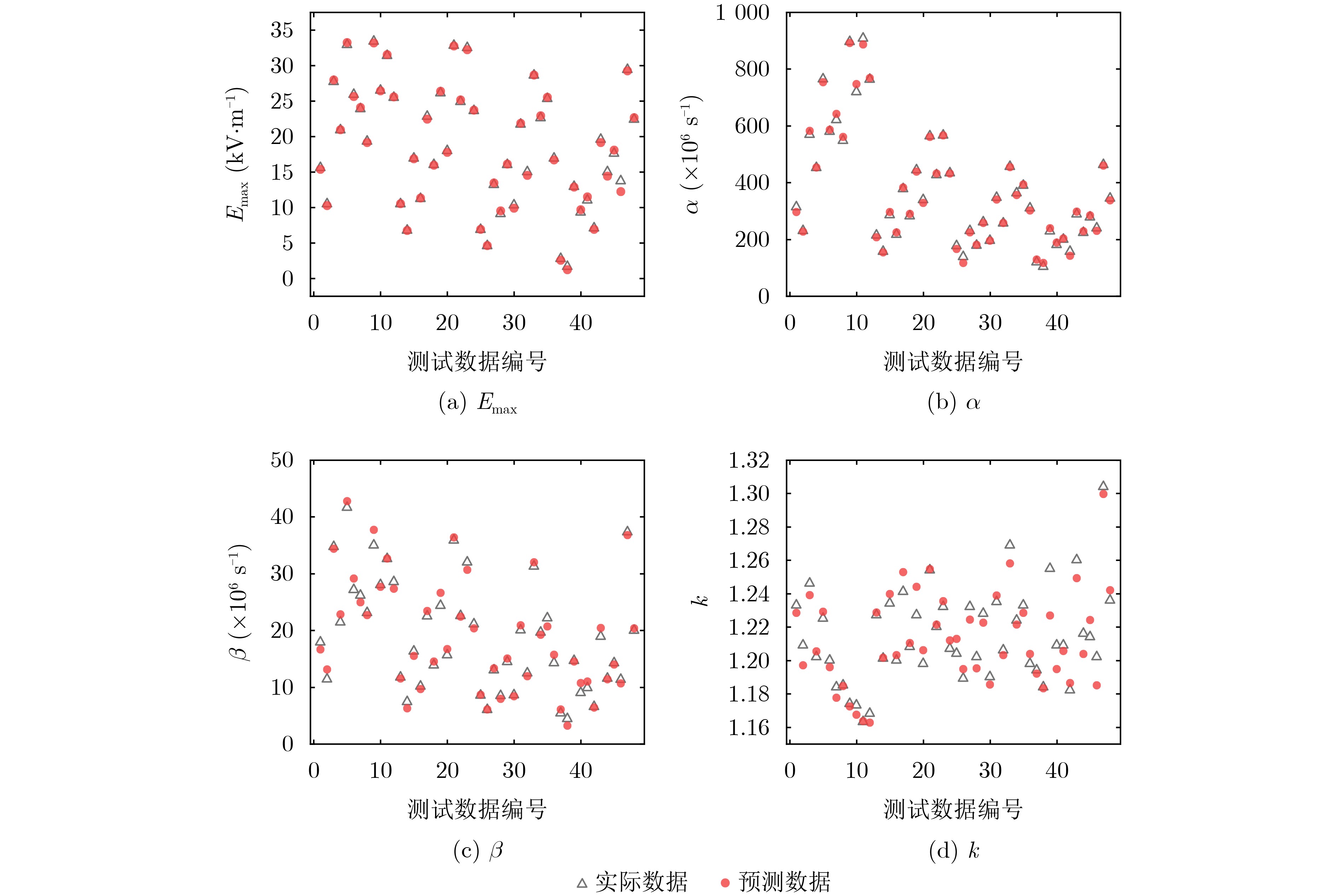
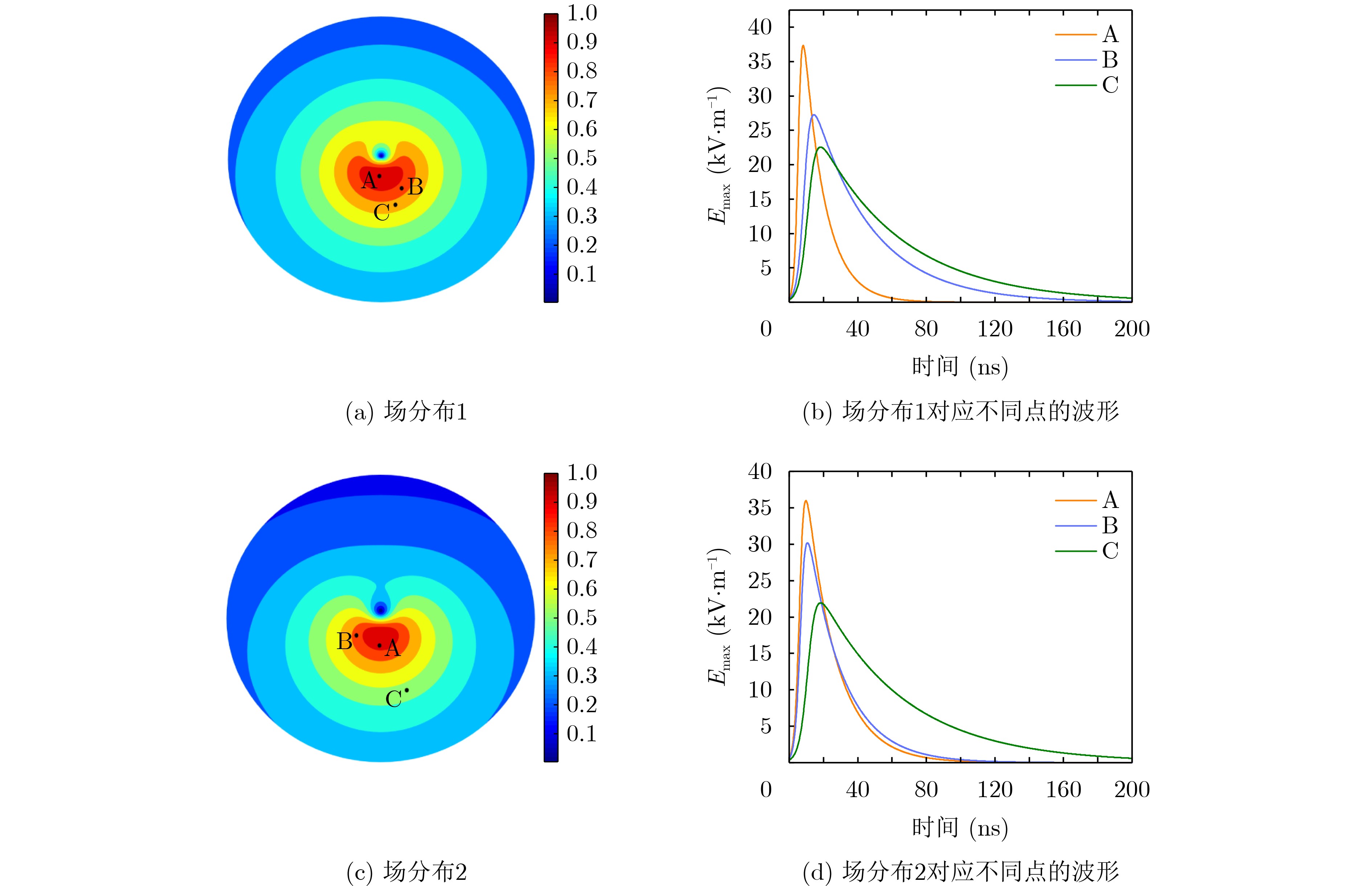
  •   Objective  High-altitude Electromagnetic Pulse (HEMP) covers a wide area and produces strong electric fields. Its potential to damage critical infrastructure presents a major challenge to national electromagnetic security. In the E1 environment, waveform distribution characteristics directly affect protection design. However, system-level effects simulations and protection scheme optimization require numerous waveform calculations. Conventional methods for calculating waveform parameters throughout the coverage area are time-consuming and cannot support real-time calculation of numerous ground-level waveforms across the field distribution. Rapid and accurate calculation of other waveform-function parameters therefore remains a challenge in electromagnetic environment modeling. This limitation restricts the use of rapidly computed HEMP environment results for a given burst scenario in subsequent calculations. The proposed approach addresses the difficulty of integrating conventional numerical calculations into software for online computation. It provides the computational basis for simulation and HEMP damage assessment, enables rapid comparisons of large-scale scenarios, and allows waveform functions for hundreds of different scenarios to be calculated within a few minutes. It therefore provides an efficient tool for rapid HEMP protection design and assessment.  Methods  A Fast Bayesian EMP Solver (FBEMP), based on a multilayer feedforward neural network, is proposed to accelerate HEMP waveform-function calculation. Bayesian optimization is used to determine the number of nodes in each hidden layer, reducing search iterations while maintaining model accuracy. First, the entire physical calculation process is represented as a function, and a multilayer feedforward neural network is constructed to model the mapping from inputs to outputs. Because the hidden-layer node count affects network performance, Bayesian optimization identifies an optimal network configuration within a limited number of iterations, balancing prediction accuracy and model complexity. During surrogate-model construction, an initial dataset is generated, and a Gaussian process is used to represent the distribution of the objective function. An acquisition function guides the selection of subsequent sampling points and dataset updates to identify the optimal hidden-layer node count. Models for Emax, $ \alpha $, $ \beta $, k, and t0 are established sequentially to predict waveform parameters under different conditions. Waveforms are first calculated along the north-south axis. These results are then combined with the angular position of the observation point relative to the ground projection of the burst point to derive HEMP waveform parameters at arbitrary locations.  Results and Discussions  FBEMP combines numerical calculations with a Bayesian-optimized neural network algorithm to predict ground-level HEMP waveform parameters for arbitrary burst heights, gamma-equivalent yields, and locations within specified ranges. Bayesian optimization reduces the number of search iterations required to determine the hidden-layer node count and improves prediction accuracy. The search space for the number of hidden-layer nodes is set to [8, 50] to reduce overfitting and identify an optimal network structure with relatively few nodes. To control training time, the maximum number of Bayesian evaluations is set to 20, approximately half the number of candidate node counts in the search space. The optimal hidden-layer node counts for Emax, $ \alpha $, $ \beta $, k, and t0 are 19, 16, 11, 13, and 10, respectively. The errors between the predicted waveform parameters and the numerical simulation results are below 3.12%. Compared with several other methods, FBEMP achieves the best overall performance across the evaluation metrics. Comparative experiments demonstrate its stability and generalization ability in predicting different waveform parameters. Bayesian optimization uses a probabilistic surrogate model and an acquisition function to establish a mapping between the hidden-layer node count and the validation error. Uncertainty estimates for the predictions guide the selection of subsequent sampling points. The proposed method reduces calculation time from hours to seconds and time complexity from O(n5) to O(n2), supporting large-scale, real-time calculation of HEMP waveform parameters under different scenarios.  Conclusions  A Bayesian-optimized multilayer feedforward neural network method is proposed to model the numerical simulation process of ground-level HEMP waveforms. The method enables rapid calculation of standard waveform functions at all points within the HEMP ground field distribution over the specified range of conditions. Bayesian optimization is used to select the hidden-layer node count, reducing search iterations and improving prediction accuracy. Compared with five other artificial intelligence methods, FBEMP achieves the best overall performance across the evaluation metrics. By combining the neural network models with numerical derivation, waveform functions throughout the coverage area can be calculated for different burst heights, gamma-equivalent yields, longitudes, and latitudes. The method reduces the time complexity of conventional numerical computation from O(n5) to O(n2), and the time required to calculate waveform functions for a given field distribution from hours to seconds. The errors for all parameters are below 3.12%. It enables real-time calculation of waveform functions throughout the HEMP field distribution and has been applied to large-scale, real-time HEMP waveform calculations. By addressing the longstanding computational limitations that previously prevented real-time HEMP environment calculations, the method provides online electromagnetic environment inputs for digital simulation and assessment in HEMP experiments.
  • loading
  • [1]
    ZHONG Haizhe, LIANG Jiantao, LI Hanlin, et al. Environment analysis of high-altitude electromagnetic pulse coupling field in cavity with aperture shielding[J]. IEICE Electronics Express, 2024, 21(24): 20240556. doi: 10.1587/elex.21.20240556.
    [2]
    LEHMAN C A, ROBINETT III R D, WEAVER W W, et al. Bounding case requirements for power grid protection against high-altitude electromagnetic pulses[J]. Energies, 2025, 18(10): 2614. doi: 10.3390/en18102614.
    [3]
    XIE Haiyan, LIU Yu, LI Yong, et al. A prediction model based on artificial neural network for E1 hemp coupling with distribution power lines[J]. IEEE Transactions on Power Delivery, 2022, 37(6): 5337–5344. doi: 10.1109/TPWRD.2022.3176118.
    [4]
    LIU Zheng, WANG Jinjin, MAO Congguang, et al. An efficient way to calculate the conducted environment with the consideration of radiated distribution[C]. 2023 Photonics & Electromagnetics Research Symposium, Prague, Czech Republic, 2023: 1225–1230. doi: 10.1109/PIERS59004.2023.10221431.
    [5]
    程引会, 李进玺, 马良, 等. 高空电磁脉冲环境计算中的自洽方法[J]. 计算物理, 2017, 34(4): 403–408. doi: 10.19596/j.cnki.1001-246x.2017.04.004.

    CHENG Yinhui, LI Jinxi, MA Liang, et al. Self-consistent method in calculation of high-altitude electromagnetic pulse environment[J]. Chinese Journal of Computational Physics, 2017, 34(4): 403–408. doi: 10.19596/j.cnki.1001-246x.2017.04.004.
    [6]
    DONG Ning and XIE Yanzhao. On the self-consistent simulation of high-altitude electromagnetic pulse[J]. IEEE Transactions on Nuclear Science, 2022, 69(9): 2074–2082. doi: 10.1109/TNS.2022.3193586.
    [7]
    程引会, 马良, 李进玺, 等. 确定高空电磁脉冲标准波形参数的频域方法[J]. 现代应用物理, 2014, 5(2): 135–139. doi: 10.3969/j.issn.2095-6223.2014.02.009.

    CHENG Yinhui, MA Liang, LI Jinxi, et al. Frequency-domain method for determining HEMP standard waveform parameters[J]. Modern Applied Physics, 2014, 5(2): 135–139. doi: 10.3969/j.issn.2095-6223.2014.02.009.
    [8]
    王建国. 核爆炸早中期电磁脉冲产生的数值模拟方法[J]. 电波科学学报, 2024, 39(5): 787–796. doi: 10.12265/j.cjors.2024143.

    WANG Jianguo. Numerical simulation method of early-time and intermediate-time electromagnetic pulses generated by nuclear explosions[J]. Chinese Journal of Radio Science, 2024, 39(5): 787–796. doi: 10.12265/j.cjors.2024143.
    [9]
    XIAO Donghai, YANG Chao, YANG Jingcong, et al. Parameter estimation of high-altitude electromagnetic pulse based on physics and data co-supervised neural network[J]. Optics Express, 2025, 33(5): 11800–11818. doi: 10.1364/OE.553410.
    [10]
    XIE Haiyan, DU Taijiao, ZHANG Maoyu, et al. Theoretical and experimental study of effective coupling length for transmission lines illuminated by HEMP[J]. IEEE Transactions on Electromagnetic Compatibility, 2015, 57(6): 1529–1538. doi: 10.1109/TEMC.2015.2463814.
    [11]
    CARCIAGHI F, MAGISTRI S, MANSUETO P, et al. A Bi-objective optimization based acquisition strategy for batch Bayesian global optimization[J]. Computational Optimization and Applications, 2025, 92(1): 81–123. doi: 10.1007/s10589-025-00696-7.
    [12]
    蒋丹萍, 戴紫彬, 刘燕江, 等. 贝叶斯优化驱动的粗粒度可重构密码逻辑阵列设计空间探索方法[J]. 电子与信息学报, 2025, 47(11): 4482–4492. doi: 10.11999/JEIT250624.

    JIANG Danping, DAI Zibin, LIU Yanjiang, et al. Bayesian optimization-driven design space exploration method for coarse-grained reconfigurable cipher logic array[J]. Journal of Electronics & Information Technology, 2025, 47(11): 4482–4492. doi: 10.11999/JEIT250624.
    [13]
    GHRITLAHRE H K and VERMA M. Solar air heaters performance prediction using multi-layer perceptron neural network – a systematic review[J]. Energy Sources, Part A: Recovery, Utilization, and Environmental Effects, 2025, 47(1): 7682–7699. doi: 10.1080/15567036.2021.1923869.
    [14]
    LONGMIRE C L. On the electromagnetic pulse produced by nuclear explosions[J]. IEEE Transactions on Electromagnetic Compatibility, 1978, EMC-20(1): 3–13. doi: 10.1109/TEMC.1978.303688.
    [15]
    KARZAS W J and LATTER R. Detection of the electromagnetic radiation from nuclear explosions in space[J]. Physical Review, 1965, 137(5B): B1369–B1378. doi: 10.1103/PhysRev.137.B1369.
    [16]
    周维新, 高肇岗, 肖宛昂. 面向可穿戴式的基于LSTM神经网络的智能心音异常诊断芯片[J]. 电子与信息学报, 2024, 46(2): 555–563. doi: 10.11999/JEIT230934.

    ZHOU Weixin, GAO Zhaogang, and XIAO Wanang. Intelligent heart sound abnormal diagnosis chip based on LSTM for wearable applications[J]. Journal of Electronics & Information Technology, 2024, 46(2): 555–563. doi: 10.11999/JEIT230934.
    [17]
    杨孟欣, 张青婷, 曾令昕, 等. 面向低轨卫星的时空特征融合LSTM松弛测量方法[J]. 电子与信息学报, 2025, 47(12): 4995–5004. doi: 10.11999/JEIT251146.

    YANG Mengxin, ZHANG Qingting, ZENG Lingxin, et al. A spatio-temporal feature fusion LSTM relaxation measurement method for LEO satellites[J]. Journal of Electronics & Information Technology, 2025, 47(12): 4995–5004. doi: 10.11999/JEIT251146.
    [18]
    WANG Jue and INO F. A general-purpose K-nearest neighbor method with an efficient pruning strategy for GPUs[J]. Journal of Parallel and Distributed Computing, 2026, 207: 105187. doi: 10.1016/j.jpdc.2025.105187.
    [19]
    GE Qiang, XU Dingli, CAI Qiannan, et al. Double filter noise reduction algorithm optimized by RBF neural network for laser absorption spectroscopy[J]. Infrared Physics & Technology, 2025, 145: 105718. doi: 10.1016/j.infrared.2025.105718.
    [20]
    李伟, 陈億, 陈韬, 等. 面向边缘计算的可重构CNN协处理器研究与设计[J]. 电子与信息学报, 2024, 46(4): 1499–1512. doi: 10.11999/JEIT230509.

    LI Wei, CHEN Yi, CHEN Tao, et al. A research and design of reconfigurable CNN co-processor for edge computing[J]. Journal of Electronics & Information Technology, 2024, 46(4): 1499–1512. doi: 10.11999/JEIT230509.
    [21]
    KHRAISAT A, TALUKDER A, UDDIN A, et al. RF-FedAvg: Federated learning-based random forest model for intrusion detection in wireless sensor networks[J]. Cluster Computing, 2025, 28(13): 873. doi: 10.1007/s10586-025-05591-8.
  • 加载中

Catalog

    通讯作者: 陈斌, bchen63@163.com
    • 1. 

      沈阳化工大学材料科学与工程学院 沈阳 110142

    1. 本站搜索
    2. 百度学术搜索
    3. 万方数据库搜索
    4. CNKI搜索

    Figures(5)  / Tables(3)

    Article Metrics

    Article views (302) PDF downloads(16) Cited by()
    Proportional views
    Related

    /

    DownLoad:  Full-Size Img  PowerPoint
    Return
    Return