Advanced Search
Turn off MathJax
Article Contents
XIA Hanghang, HE Tingting, ZHANG Kanglong, YUAN Bo, ZHAO Peng, WANG Gaofeng. A Collaborative Hybrid Algorithm of WHIE-FDTD with CPML and Non-Uniform Grid for Multi-Scale Electromagnetic Structures[J]. Journal of Electronics & Information Technology. doi: 10.11999/JEIT260876
Citation: XIA Hanghang, HE Tingting, ZHANG Kanglong, YUAN Bo, ZHAO Peng, WANG Gaofeng. A Collaborative Hybrid Algorithm of WHIE-FDTD with CPML and Non-Uniform Grid for Multi-Scale Electromagnetic Structures[J]. Journal of Electronics & Information Technology. doi: 10.11999/JEIT260876

A Collaborative Hybrid Algorithm of WHIE-FDTD with CPML and Non-Uniform Grid for Multi-Scale Electromagnetic Structures

doi: 10.11999/JEIT260876 cstr: 32379.14.JEIT260876
Funds:  The Key Laboratory of Intelligent Computing & Signal Processing (Anhui University), Ministry of Education (2026001), The National Natural Science Foundation of China (62501211, U24A20222, 92373202), The Zhejiang Provincial Natural Science Foundation of China (LQ24F010010, LZ24F010006, LD24F010001)
  • Received Date: 2026-06-26
  • Accepted Date: 2026-11-05
  • Rev Recd Date: 2026-10-12
  • Available Online: 2026-11-14
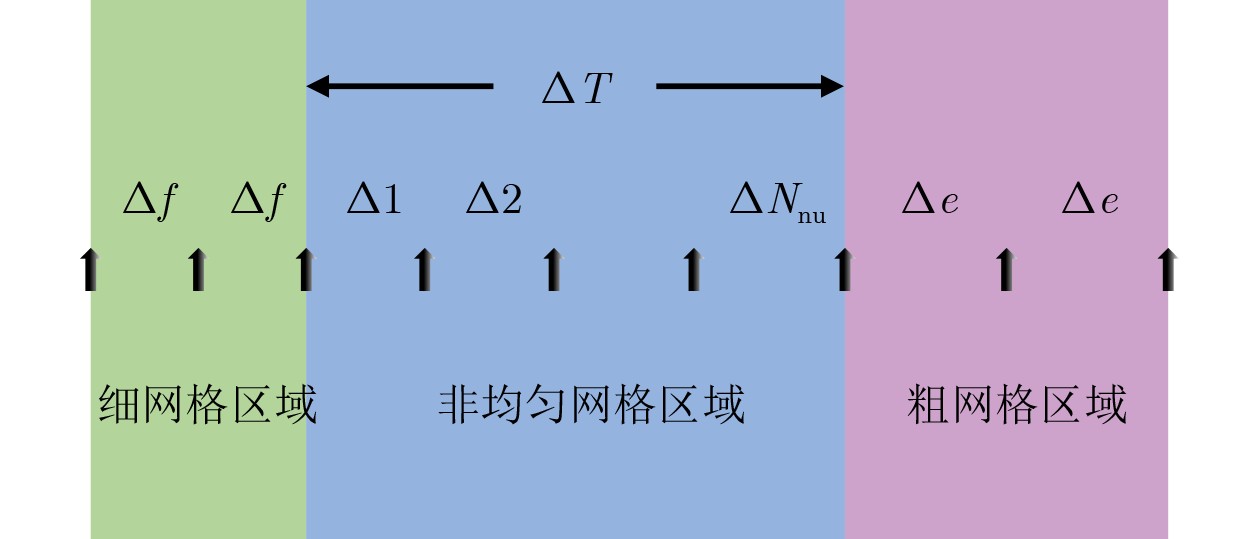
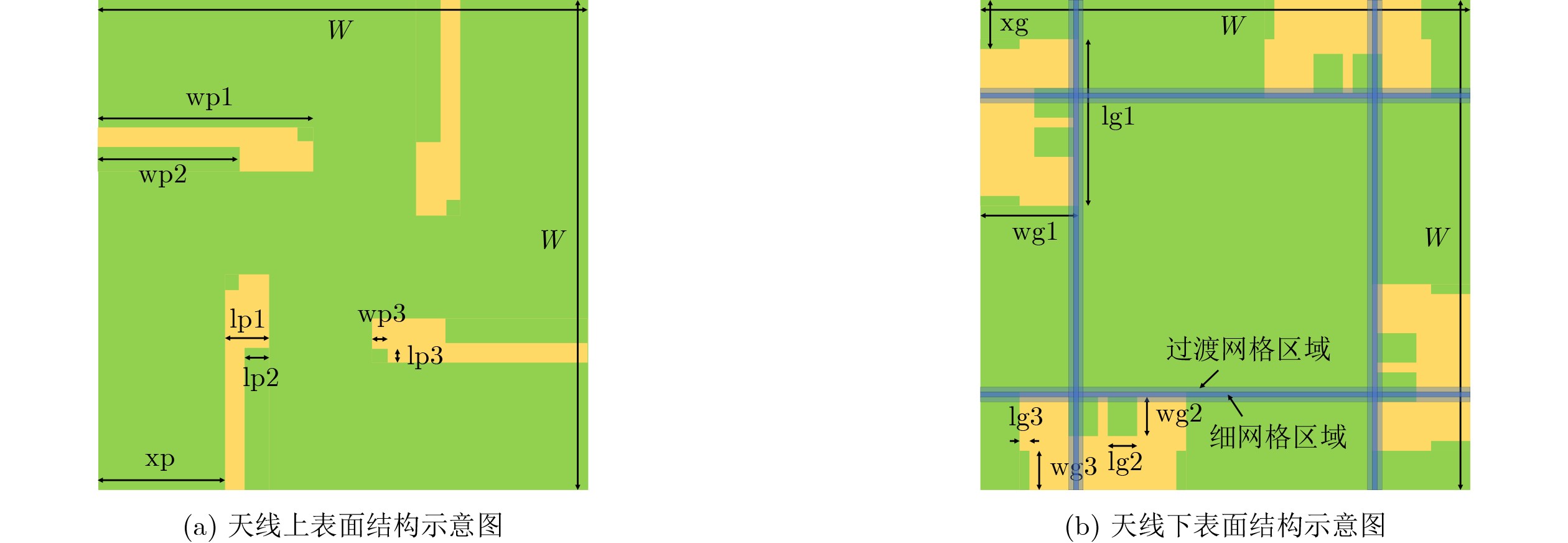
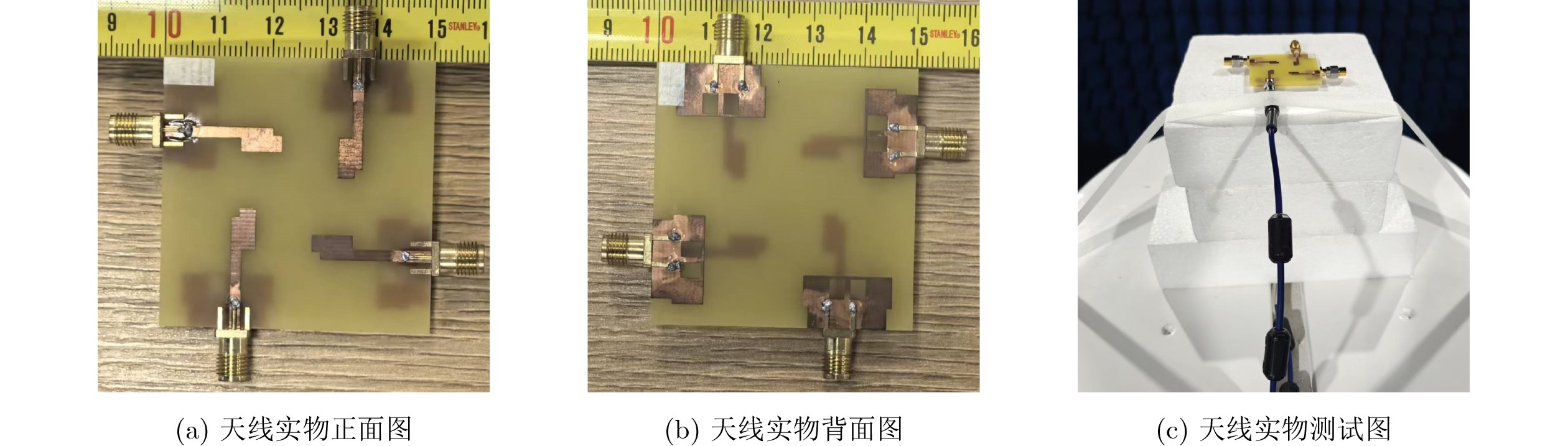
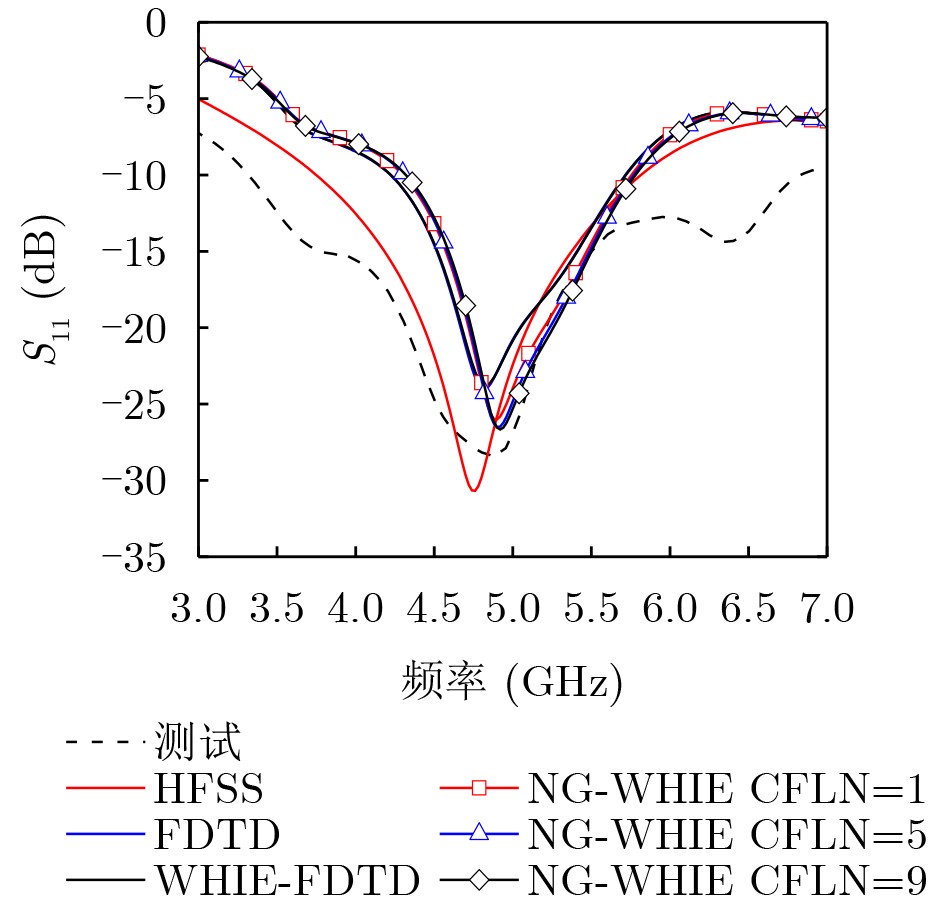
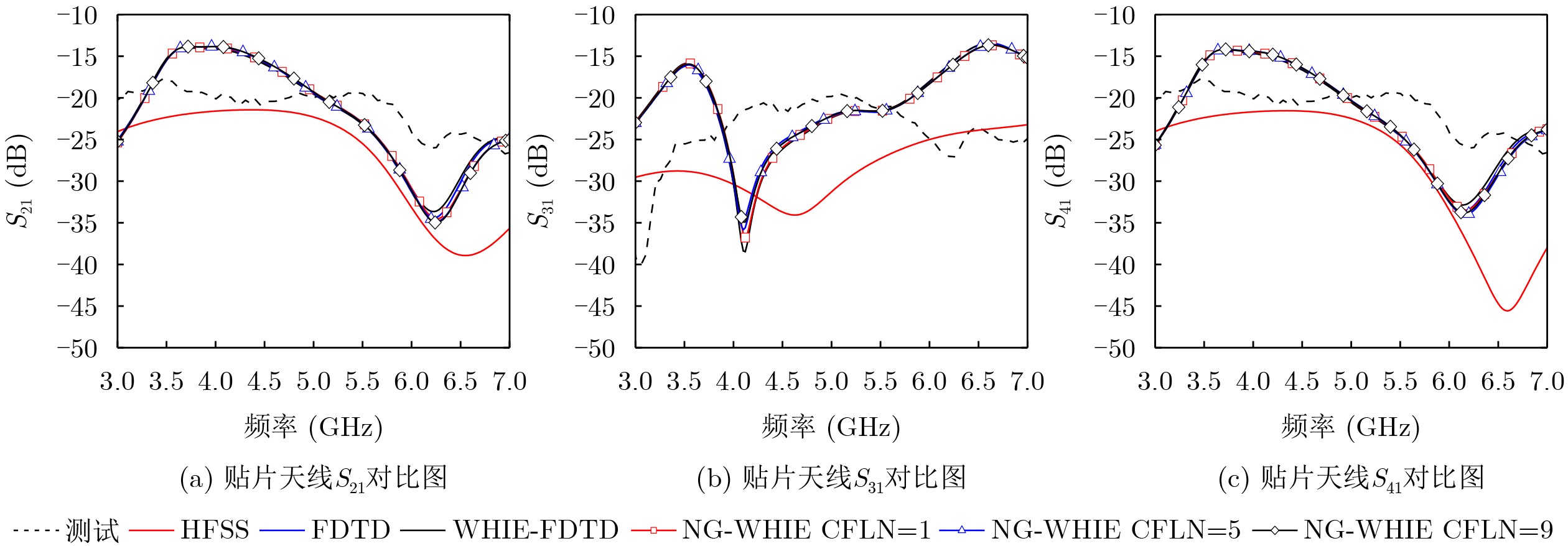
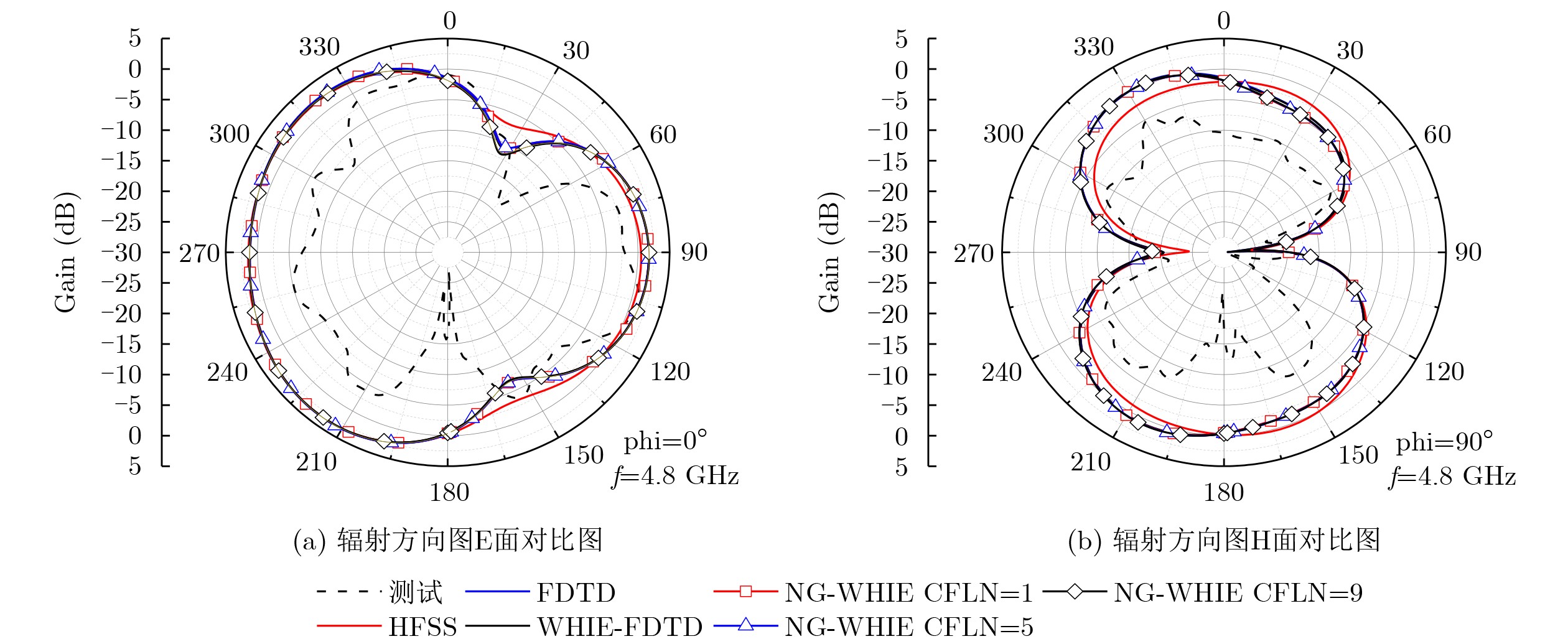
  • The finite-difference time-domain (FDTD) method is the most representative time-domain solution algorithm in the field of computational electromagnetics. However, due to the limitations imposed by the Courant-Friedrichs-Lewy (CFL) condition, it often incurs a high computational cost when solving multi-scale problems. To fully mitigate the impact of the CFL and improve simulation efficiency, this paper proposes a hybrid algorithm solution named NG-WHIE based on the weakly hybrid implicit-explicit FDTD (WHIE-FDTD). By replacing the traditional uniform Yee grid partition with non-uniform grids (NG), only fine grid partitions are set in regions with smaller geometric dimensions. Linearly varying smooth transition grids are set in the regions between fine and coarse grids to reduce the error caused by the grid partition differences, and the convolutional perfect matching layer (CPML) boundary condition is introduced for it. It effectively truncates the reflection of electromagnetic waves after they reach the boundary, reducing the numerical oscillations caused by the reflection of electromagnetic waves. This paper processed and tested a multi-input multi-output (MIMO) patch antenna. Compared with the FDTD method, the calculation results of the high-frequency structure simulation software (HFSS) and the test results, the calculated data of the proposed method show high consistency. The results indicate that this method has extremely high accuracy and robustness, and saves a significant amount of time consumption without significantly consuming additional memory. This provides a new solution for electromagnetic field simulation problems of multi-scale structures.  Objective  The FDTD method is one of the most widely used time-domain numerical techniques in electromagnetic calculations. It is favored because of its direct time-domain solution and its ability to naturally handle broadband and complex electromagnetic problems. However, due to its explicit nature, the conventional FDTD algorithm is subjected to the CFL stability condition, under which the time step is coupled to the smallest spatial grid size in the computational domain. In multi-scale problems, where electrically large regions coexist with fine geometrical details requiring extremely small cells, a prohibitively small global time step is imposed by this constraint. Consequently, excessive computational time is incurred, and simulation efficiency is severely limited. To effectively mitigate the CFL bottleneck, a hybrid algorithm based on the WHIE-FDTD method is proposed in this paper.  Methods  The WHIE-FDTD is based on Maxwell's equations and employs an alternating explicit-implicit scheme, which overcomes the limitations imposed by CFL. Subsequently, by using different perturbation terms, different directions can be obtained as the fine direction of the electromagnetic field iteration equation. This article takes the y direction as an example. Using NG instead of the traditional uniform Yee grid partitioning enables a more scientific spatial discretization. Different-sized grids are adopted for different simulation areas. Only fine grids are used in the structurally detailed areas, while coarse grids are used in the remaining areas. Linearly varying smooth transition grids are set in the transitional areas to reduce the error introduced by the difference in grid partitioning. By introducing the CPML as the absorbing boundary condition, the problem of infinite propagation of electromagnetic waves in the open domain is truncated within a limited simulation space. At the truncation boundary, the absorbing boundary is used instead of the traditional reflective boundary to effectively suppress boundary reflection and reduce the numerical oscillations caused by electromagnetic wave reflection.  Results and Discussions  Taking the MIMO patch antenna as the implementation example, the numerical results show that when CFLN = 1, the S-parameter curve and radiation pattern of the WHIE-FDTD method are highly consistent with the simulation results of the FDTD method and the HFSS software, ensuring the accuracy of the WHIE-FDTD method; after introducing the NG technology, the echo loss depth measured by the NG-WHIE method is approximately 3 dB lower than that of the FDTD method, fully verifying that the NG-WHIE method has higher accuracy than the FDTD method; when CFLN = 9, the results measured by the NG-WHIE method show no divergence trend and exhibit extremely high stability. At the same time, the calculation time was reduced by approximately 61.8%, which strongly demonstrates that this method not only ensures calculation accuracy but also offers extremely high computational efficiency and robustness.  Conclusions  This paper presents a hybrid algorithm, NG-WHIE, based on WHIE-FDTD. By replacing the traditional uniform Yee grid with the NG technology, a more scientific spatial discretization is achieved. By introducing the Convolutionally Perfect Matching Layer (CPML) as the absorbing boundary condition, it effectively suppresses boundary reflections and reduces the numerical oscillations caused by electromagnetic wave reflections. The numerical results show that when CFLN = 1, the S-parameter curve and radiation pattern of the NG-WHIE method are highly consistent with the simulation results from the FDTD method and HFSS software, as well as actual measurements, thereby fully verifying the accuracy of the NG-WHIE method. When CFLN = 9, the results obtained by the NG-WHIE method show no divergence trend and exhibit extremely high stability. At the same time, the computation time has been reduced by approximately 61.8%, demonstrating that this method not only ensures calculation accuracy but also offers extremely high computational efficiency and good robustness.
  • loading
  • [1]
    YEE K. Numerical solution of initial boundary value problems involving Maxwell’s equations in isotropic media[J]. IEEE Transactions on Antennas and Propagation, 1966, 14(3): 302–307. doi: 10.1109/TAP.1966.1138693.
    [2]
    叶志红, 张玉, 鲁唱唱. 端接复杂电路传输线网络的电磁耦合时域并行计算方法[J]. 电子与信息学报, 2024, 46(2): 713–719. doi: 10.11999/JEIT230098.

    YE Zhihong, ZHANG Yu, and LU Changchang. Time domain parallel calculation method for the coupling of transmission line network terminated with complex circuits[J]. Journal of Electronics & Information Technology, 2024, 46(2): 713–719. doi: 10.11999/JEIT230098.
    [3]
    ZHANG Kanglong, ZHAO Peng, WANG Wei, et al. An optimized low-dispersion fundamental weaker HIE-FDTD method[J]. IEEE Antennas and Wireless Propagation Letters, 2024, 23(12): 4159–4163. doi: 10.1109/LAWP.2024.3437184.
    [4]
    张玉贤, 杨子江, 黄志祥, 等. 多层/多孔材料在特定几何剖分下电磁时域有限差分法的散射分析[J]. 电子与信息学报, 2025, 47(11): 4394–4404. doi: 10.11999/JEIT250348.

    ZHANG Yuxian, YANG Zijiang, HUANG Zhixiang, et al. Electromagnetic finite-difference time-domain scattering analysis of multilayered/porous materials in specific geometric meshing[J]. Journal of Electronics & Information Technology, 2025, 47(11): 4394–4404. doi: 10.11999/JEIT250348.
    [5]
    NAMIKI T. A new FDTD algorithm based on alternating-direction implicit method[J]. IEEE Transactions on Microwave Theory and Techniques, 1999, 47(10): 2003–2007. doi: 10.1109/22.795075.
    [6]
    ZHANG Kanglong, WANG Lu, LIU Ruipeng, et al. Low-dispersion leapfrog WCS-FDTD with artificial anisotropy parameters and simulation of hollow dielectric resonator antenna array[J]. IEEE Transactions on Antennas and Propagation, 2021, 69(9): 5801–5811. doi: 10.1109/TAP.2021.3061113.
    [7]
    许杰, 徐珂, 黄志祥. 一种新型的高阶时域有限差分方法[J]. 电子与信息学报, 2020, 42(2): 425–429. doi: 10.11999/JEIT190050.

    XU Jie, XU Ke, and HUANG Zhixiang. A new high order finite difference time domain method[J]. Journal of Electronics & Information Technology, 2020, 42(2): 425–429. doi: 10.11999/JEIT190050.
    [8]
    LIU Shuo, LI Haolin, and TAN E L. On improving accuracy of implicit FDTD methods with transformer-based deep learning network[J]. IEEE Transactions on Antennas and Propagation, 2026, 74(3): 2652–2661. doi: 10.1109/TAP.2025.3643907.
    [9]
    PANDEY A K and SAXENA A K. Development of higher-order CPML boundary conditions for the leapfrog WCS-FDTD method[J]. IEEE Transactions on Antennas and Propagation, 2025, 73(3): 1852–1857. doi: 10.1109/TAP.2024.3511273.
    [10]
    ZHANG Kanglong, ZHAO Peng, CHENG Yifeng, et al. Optimized traditional and leapfrog CDI-FDTD schemes with reduced dispersion and numerical properties analysis[J]. IEEE Transactions on Microwave Theory and Techniques, 2023, 71(11): 4725–4737. doi: 10.1109/TMTT.2023.3269531.
    [11]
    ZHANG Lingpu, LIU Chenshu, FAN Kaihang, et al. A comprehensive study on the stability and implementation of the conformal LCDI-FDTD method[J]. IEEE Transactions on Antennas and Propagation, 2026, 74(6): 5723–5732. doi: 10.1109/TAP.2026.3672970.
    [12]
    王禹, 袁乃昌. 色散媒质中ADI-FDTD的PML[J]. 电子与信息学报, 2005, 27(10): 1677–1680.

    WANG Yu and YUAN Naichang. PML implementation for ADI-FDTD in dispersive media[J]. Journal of Electronics & Information Technology, 2005, 27(10): 1677–1680.
    [13]
    LIU Jiayu, WANG Xianghua, YANG Shunchuan, et al. Unconditionally stable one-step leapfrog ADI-FDTD method for magnetized plasma and graphene-based structures[J]. IEEE Transactions on Antennas and Propagation, 2026, 74(5): 4968–4972. doi: 10.1109/TAP.2026.3662138.
    [14]
    ZHANG Kanglong, WU Yue, LIANG Weibo, et al. Improved leapfrog LOD-FDTD method with controlling parameters[J]. IEEE Microwave and Wireless Components Letters, 2022, 32(4): 269–272. doi: 10.1109/LMWC.2021.3126940.
    [15]
    CHEN Juan and WANG Jianguo. A 3D hybrid implicit-explicit FDTD scheme with weakly conditional stability[J]. Microwave and Optical Technology Letters, 2006, 48(11): 2291–2294. doi: 10.1002/mop.21898.
    [16]
    ZHANG Kanglong, ZHENG Hongxing, WANG Lu, et al. Implementation of convolutional perfectly matched layer for three-dimensional hybrid implicit-explicit finite-difference time-domain method[J]. International Journal of RF and Microwave Computer-Aided Engineering, 2019, 29(7): e21741. doi: 10.1002/mmce.21741.
    [17]
    ZHAI Menglin, JIN Shengling, PEI Rui, et al. A stochastic HIE-FDTD algorithm for modified Lorentz model[J]. IEEE Antennas and Wireless Propagation Letters, 2026, 25(1): 89–93. doi: 10.1109/LAWP.2025.3617979.
    [18]
    WANG Jianbao, WANG Jinlong, ZHOU Bihua, et al. An efficient 3-D HIE-FDTD method with weaker stability condition[J]. IEEE Transactions on Antennas and Propagation, 2016, 64(3): 998–1004. doi: 10.1109/TAP.2015.2513100.
    [19]
    KONG Yongdan, ZHANG Hongyu, and ZHANG Chubin. The application of nearly PML for a weaker HIEFDTD method[C]. 2020 9th Asia-Pacific Conference on Antennas and Propagation (APCAP), Xiamen, China, 2020: 1‒2. doi: 10.1109/APCAP50217.2020.9246138.
    [20]
    FANG Hongtao and KONG Yongdan. The weakly conditionally stable HIE-FDTD method including lumped networks[C]. 2022 IEEE 10th Asia-Pacific Conference on Antennas and Propagation (APCAP), Xiamen, China, 2022: 1‒2. doi: 10.1109/APCAP56600.2022.10069163.
    [21]
    DING Jinchao. Low numerical dispersion 3-D HIE-FDTD methods with weaker stability condition[J]. IEEE Antennas and Wireless Propagation Letters, 2021, 20(7): 1327–1331. doi: 10.1109/LAWP.2021.3079560.
    [22]
    ZHANG Kanglong, XIA Hanghang, ZHAO Peng, et al. Low-dispersion hybrid implicit-explicit leapfrog CDI-FDTD[J]. IEEE Antennas and Wireless Propagation Letters, 2026, 25(9): 3796–3800. doi: 10.1109/LAWP.2026.3718969.
    [23]
    XIAO Kefang, ZHANG Kanglong, JING Wenhao, et al. Efficiency-enhanced HIE-FDTD with nonuniform grid and CPML[J]. Microwave and Optical Technology Letters, 2026, 68(2): e70527. doi: 10.1002/mop.70527.
  • 加载中

Catalog

    通讯作者: 陈斌, bchen63@163.com
    • 1. 

      沈阳化工大学材料科学与工程学院 沈阳 110142

    1. 本站搜索
    2. 百度学术搜索
    3. 万方数据库搜索
    4. CNKI搜索

    Figures(7)  / Tables(2)

    Article Metrics

    Article views (19) PDF downloads(0) Cited by()
    Proportional views
    Related

    /

    DownLoad:  Full-Size Img  PowerPoint
    Return
    Return