Advanced Search
Turn off MathJax
Article Contents
ZHANG Huawei, NIU Yaning, JIANG Zhanjun, LIU Yingting. THz Ultra-Massive MIMO Channel Estimation via a Noise-Conditioned Fixed-Point Network[J]. Journal of Electronics & Information Technology. doi: 10.11999/JEIT260420
Citation: ZHANG Huawei, NIU Yaning, JIANG Zhanjun, LIU Yingting. THz Ultra-Massive MIMO Channel Estimation via a Noise-Conditioned Fixed-Point Network[J]. Journal of Electronics & Information Technology. doi: 10.11999/JEIT260420

THz Ultra-Massive MIMO Channel Estimation via a Noise-Conditioned Fixed-Point Network

doi: 10.11999/JEIT260420 cstr: 32379.14.JEIT260420
Funds:  The National Natural Science Foundation of China(62561037), The Natural Science Foundation of Gansu Province (26JRRA053)
  • Received Date: 2026-04-09
  • Accepted Date: 2026-07-06
  • Rev Recd Date: 2026-07-04
  • Available Online: 2026-07-19
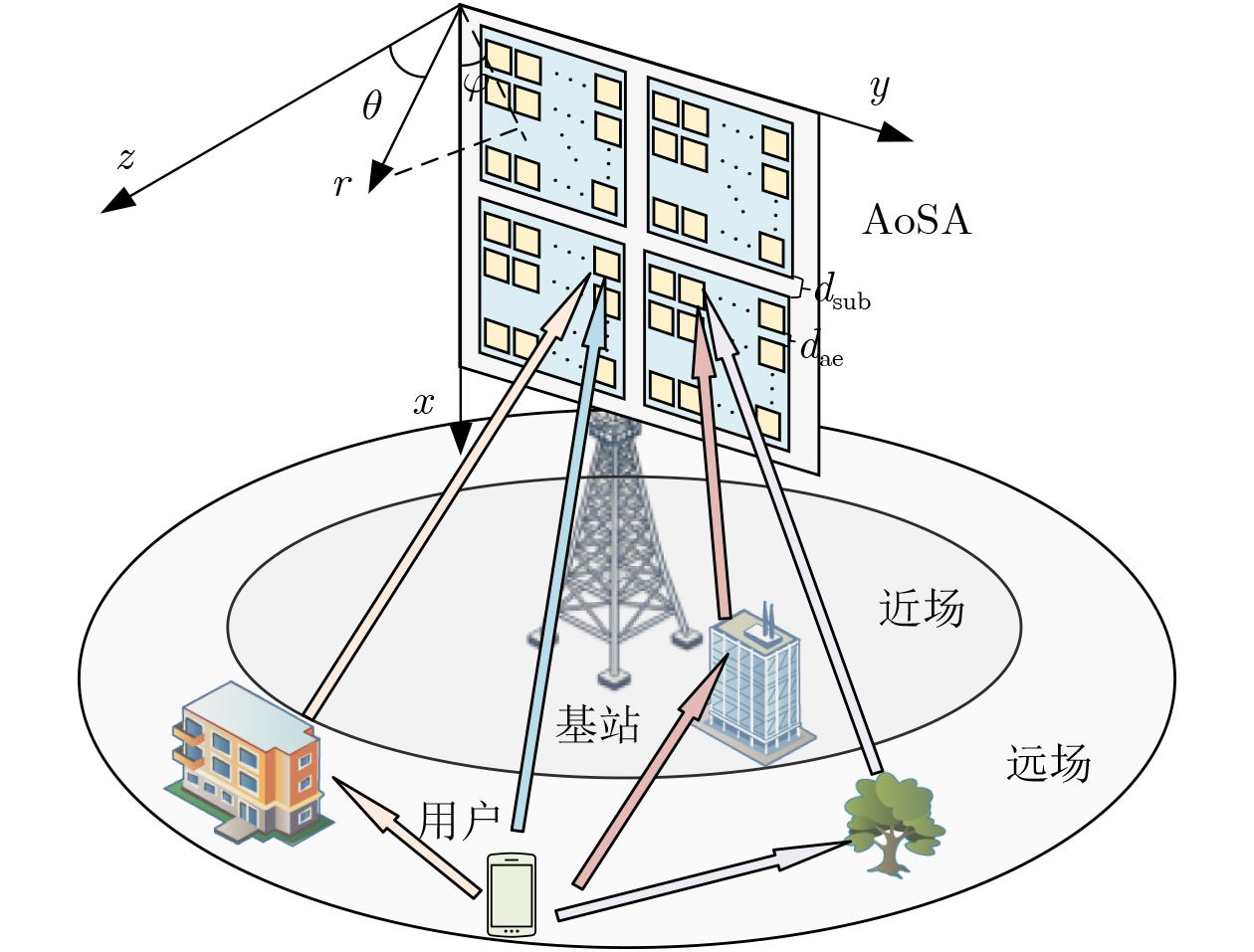
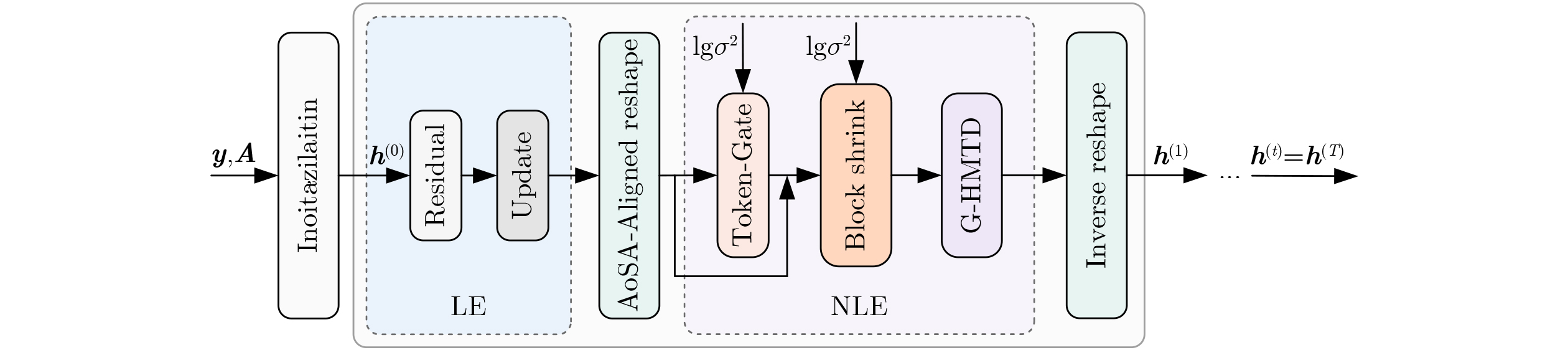
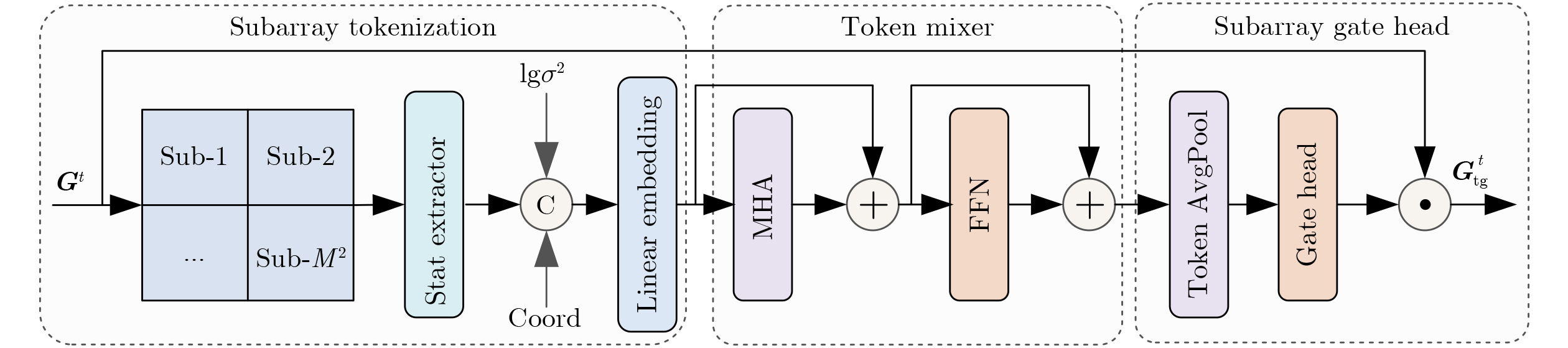
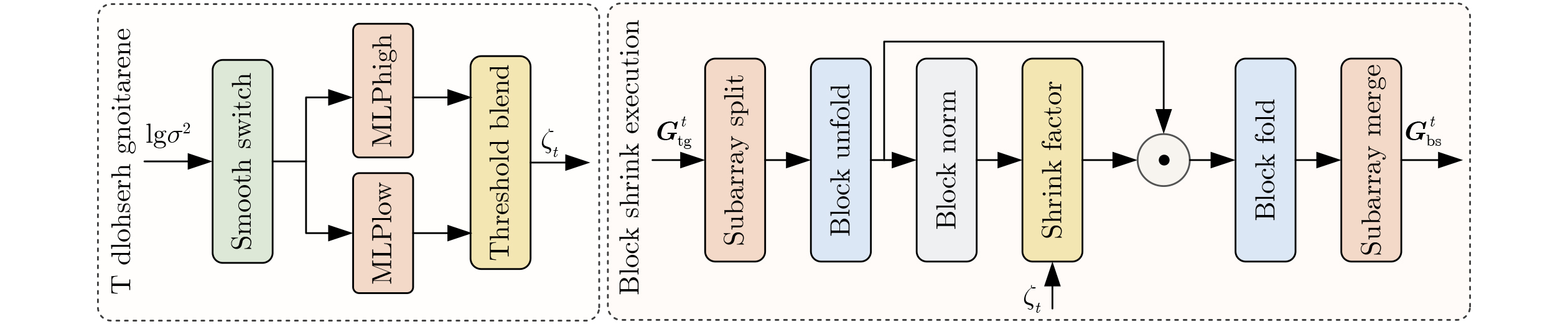
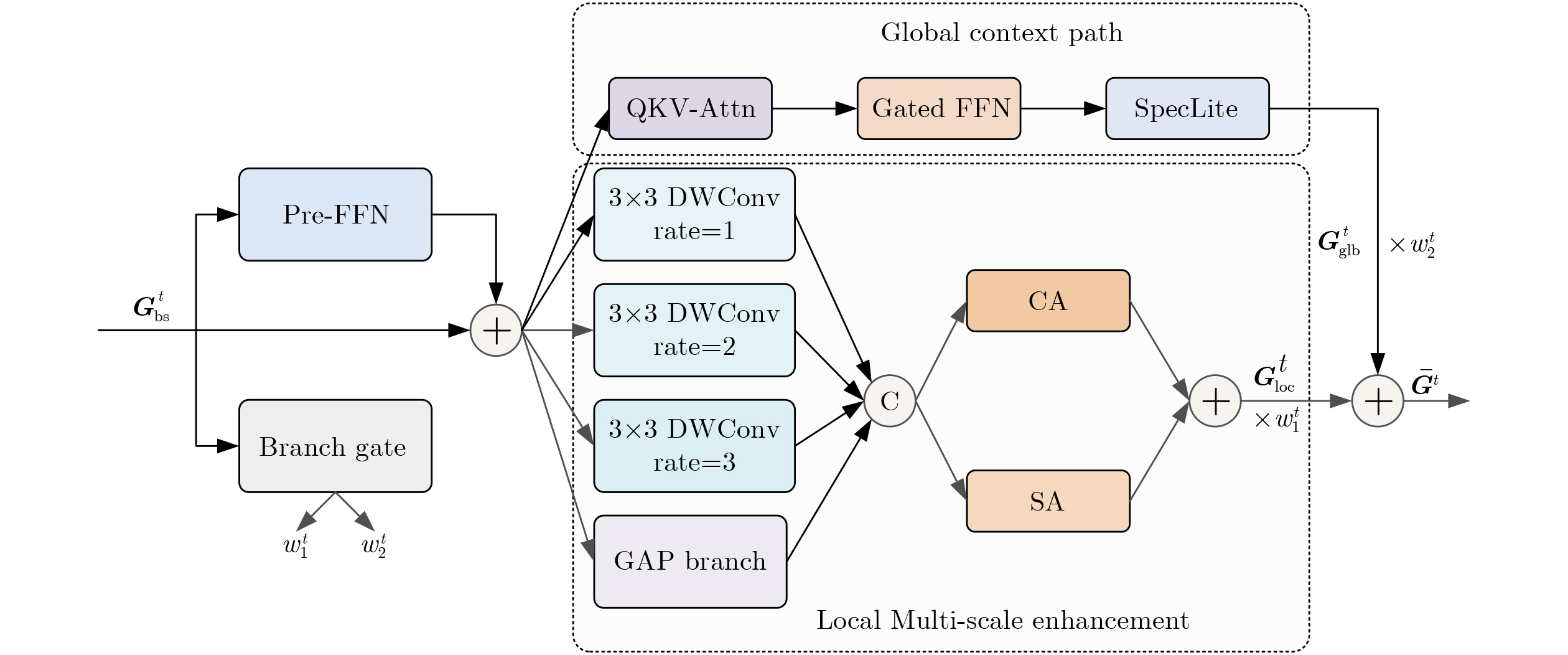
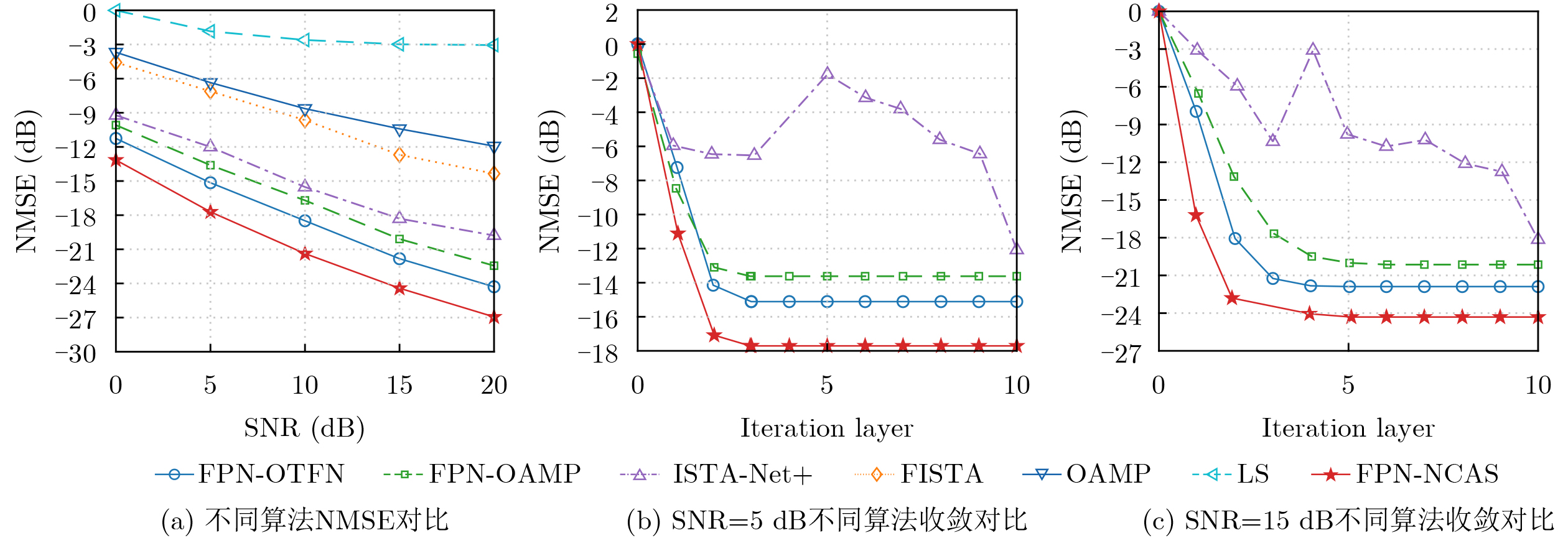
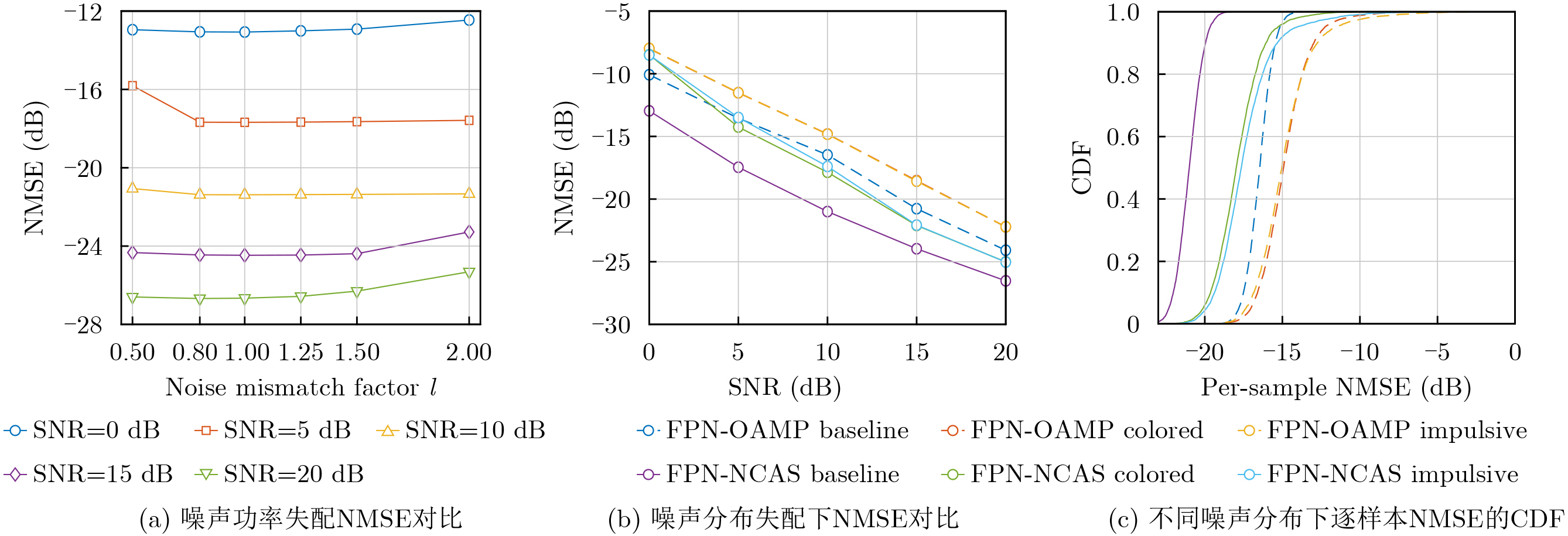
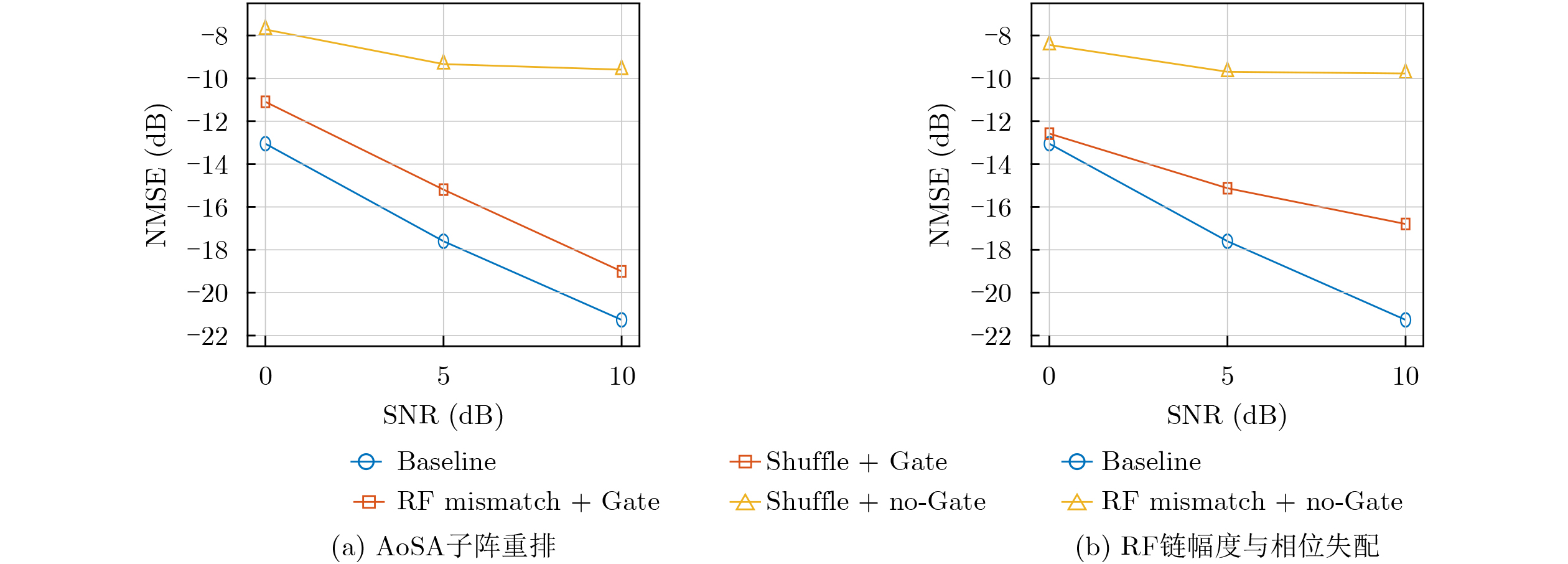
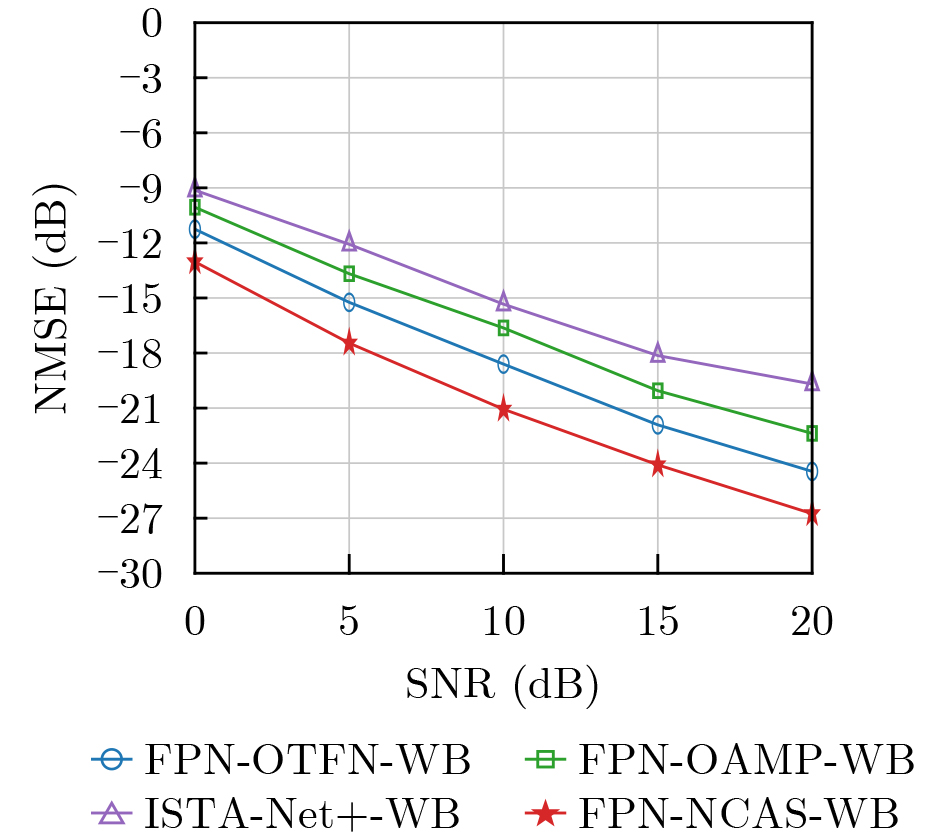
  •   Objective  Terahertz (THz) Ultra-Massive Multiple-Input Multiple-Output (UM-MIMO) systems are expected to support future high-capacity wireless communications. However, accurate channel estimation remains challenging under hybrid near-/far-field propagation and Array-of-SubArrays (AoSA) architectures, where limited Radio-Frequency (RF) chains, low Signal-to-Noise Ratio (SNR), noise uncertainty, and structural perturbations degrade compressed observations. Existing compressed sensing, Bayesian inference, and deep unfolding methods generally rely on fixed statistical assumptions, which limit their cross-SNR generalization under varying noise conditions and statistical mismatches. To address these limitations, this paper proposes a Noise-Conditioned Fixed-Point Network (FPN-NCAS) for robust THz UM-MIMO channel estimation. The proposed method aims to improve estimation accuracy, cross-SNR generalization, robustness, and iterative stability by incorporating noise-aware nonlinear recovery.  Methods  FPN-NCAS is developed within an Orthogonal Approximate Message Passing (OAMP)-based fixed-point unfolding framework. A coarse noise power estimate is obtained from repeated pilot differences and injected into the nonlinear recovery module as an explicit conditioning variable. After each linear update, the vector-domain estimate is reshaped into an AoSA-aligned tensor to exploit subarray-level structural priors. The nonlinear recovery chain consists of three components. Token-Gate performs lightweight subarray-level reliability pre-calibration to suppress unreliable responses under low-SNR and structurally inconsistent conditions. Block Shrink serves as the core noise-conditioned block-sparse proximal operator, in which a smooth dual-threshold mechanism balances strong denoising at low SNR with structural preservation at medium-to-high SNR. G-HMTD(Gated Hybrid Multi-scale Transformer Denoiser) further refines residual errors by combining Local Multi-scale Enhancement and Global Context Modeling. Bridge relaxation and nonlinear residual scaling are also incorporated to improve inter-stage stability.  Results and Discussions  Simulation results demonstrate that FPN-NCAS consistently outperforms LS, OAMP, ISTA-Net+, FPN-OAMP, and FPN-OTFN over the 0~20 dB SNR range (Fig. 6). At SNR = 0 dB, FPN-NCAS achieves Normalized Mean Square Error (NMSE) gains of approximately 3.0 dB and 1.9 dB over FPN-OAMP and FPN-OTFN, respectively. At SNR = 20 dB, the gains increase to approximately 4.5 dB and 2.6 dB (Fig. 6(a)). The convergence curves show that FPN-NCAS reaches a stable plateau after approximately three layers at SNR = 5 dB and five layers at SNR = 15 dB, demonstrating stable fixed-point iterative behavior (Fig. 6(b) and Fig. 6(c)). Analysis of repeated pilots shows that four repeated pilot pairs introduce only 3.13% additional pilot overhead while reducing the relative standard deviation of the coarse noise power estimate to 25.00%. Under moderate noise power mismatch, NMSE degradation remains within 0.3 dB. The proposed method also maintains strong robustness under colored Gaussian noise, impulsive noise, near-/far-field distribution shifts, variation in the number of propagation paths, AoSA subarray shuffling, and RF amplitude/phase mismatch (Fig. 7 and Fig. 8). Ablation studies indicate that Block Shrink provides the largest performance gain, whereas Token-Gate and G-HMTD further improve performance through structural calibration and residual refinement (Fig. 9).  Conclusions  This paper proposes FPN-NCAS for noise-conditioned fixed-point channel estimation in THz UM-MIMO systems. By integrating repeated-pilot-based noise conditioning, AoSA-aware feature reshaping, Token-Gate calibration, Block Shrink recovery, and G-HMTD refinement, the proposed method improves NMSE performance, robustness, and iterative stability under different SNR conditions and non-ideal scenarios. The improved performance is achieved at the cost of higher inference complexity. Future work will focus on lightweight implementations and extensions to wideband, multi-user, and hardware-impaired THz communication systems.
  • loading
  • [1]
    HE Yuanzhi, MA Chensheng, ZHU Zhongbo, et al. Terahertz communication payload architecture for space information networks: Challenges, key technologies, and trends[J]. IEEE Network, 2026, 40(1): 107–114.
    [2]
    JIANG Wei, ZHOU Qiuheng, HE Jiguang, et al. Terahertz communications and sensing for 6G and beyond: A comprehensive review[J]. IEEE Communications Surveys & Tutorials, 2024, 26(4): 2326-2381. doi: 10.1109/COMST.2024.3385908.
    [3]
    HAN Chong, CHEN Yuhang, YAN Longfei, et al. Cross far- and near-field wireless communications in terahertz ultra-large antenna array systems[J]. IEEE Wireless Communications, 2024, 31(3): 148–154.
    [4]
    LIN Cen and LI G Y L. Terahertz communications: An array-of-subarrays solution[J]. IEEE Communications Magazine, 2016, 54(12): 124–131.
    [5]
    SHA Ziyuan and WANG Zhaocheng. Channel estimation and equalization for terahertz receiver with RF impairments[J]. IEEE Journal on Selected Areas in Communications, 2021, 39(6): 1621–1635.
    [6]
    TARBOUSH S, ALI A, and AL-NAFFOURI T Y, et al. Cross-field channel estimation for ultra massive-MIMO THz systems[J]. IEEE Transactions on Wireless Communications, 2024, 23(8): 8619–8635.
    [7]
    YANG Songjie, PENG Yizhou, LYU Wanting, et al. Near-field channel estimation for extremely large-scale terahertz communications[J]. Science China Information Sciences, 2024, 67(9): 192302.
    [8]
    袁正道, 郭亚博, 高大伟, 等. 参数化全息MIMO信道建模及其贝叶斯估计[J]. 电子与信息学报, 2025, 47(11): 4176-4187. doi: 10.11999/JEIT250436.YUAN Zhengdao, GUO Yabo, GAO Dawei, et al. Parametric holographic MIMO channel modeling and its Bayesian estimation[J]. Journal of Electronics & Information Technology, 2025, 47(11): 4176-4187. doi: 10.11999/JEIT250436.
    [9]
    LI Yuanjian and MADHUKUMAR A S. Hybrid near- and far-field THz UM-MIMO channel estimation: A sparsifying matrix learning-aided bayesian approach[J]. IEEE Transactions on Wireless Communications, 2025, 24(3): 1881–1897.
    [10]
    蒲旭敏, 刘雁翔, 宋米雪, 等. 基于模型驱动深度学习的OTFS信道估计[J]. 电子与信息学报, 2024, 46(2): 680-687. doi: 10.11999/JEIT230072.PU Xumin, LIU Yanxiang, SONG Mixue, et al. Orthogonal time frequency space channel estimation based on model-driven deep learning[J]. Journal of Electronics & Information Technology, 2024, 46(2): 680-687. doi: 10.11999/JEIT230072.
    [11]
    GAO Jiabao, CHEN Xiaoming, and LI G Y. Deep unfolding based channel estimation for wideband terahertz near-field massive MIMO systems[J]. Frontiers of Information Technology & Electronic Engineering, 2024, 25(8): 1162–1172.
    [12]
    WANG Kuiyu, GAO Zhen, CHEN Sheng, et al. Knowledge and data dual-driven channel estimation and feedback for ultra-massive MIMO systems under hybrid field beam squint effect[J]. IEEE Transactions on Wireless Communications, 2024, 23(9): 11240–11259.
    [13]
    刘婷, 王媛, 辛元雪. 可重构智能超表面辅助的大规模机器类通信深度学习大规模MIMO信道估计[J]. 电子与信息学报, 2024, 46(10): 4002-4008. doi: 10.11999/JEIT240584.LIU Ting, WANG Yuan, XIN Yuanxue. Deep learning-enhanced massive channel estimation for reconfigurable intelligent surface-aided massive machine-type communication[J]. Journal of Electronics & Information Technology, 2024, 46(10): 4002-4008. doi: 10.11999/JEIT240584.
    [14]
    YU Wentao, SHEN Yifei, HE Hengtao, et al. An adaptive and robust deep learning framework for THz ultra-massive MIMO channel estimation[J]. IEEE Journal of Selected Topics in Signal Processing, 2023, 17(4): 761–776.
    [15]
    HU Zhengdong, HAN Chong, GERSTACKER W, et al. DiffPace: Diffusion-based plug-and-play augmented channel estimation in mmWave and terahertz ultra-massive MIMO systems[J]. IEEE Journal on Selected Areas in Communications, 2026, 44: 2559–2573.
    [16]
    DOVELOS K, MATTHAIOU M, NGO H Q, et al. Channel estimation and hybrid combining for wideband terahertz massive MIMO systems[J]. IEEE Journal on Selected Areas in Communications, 2021, 39(6): 1604–1620.
    [17]
    ZAMIR S W, ARORA A, KHAN S, et al. Restormer: Efficient transformer for high-resolution image restoration[C]. The 2022 IEEE/CVF Conference on Computer Vision and Pattern Recognition, New Orleans, USA, 2022: 5718–5729.
    [18]
    MA Junjie and LI Ping. Orthogonal AMP[J]. IEEE Access, 2017, 5: 2020–2033.
    [19]
    ZHANG Jian and GHANEM B. ISTA-Net: Interpretable optimization-inspired deep network for image compressive sensing[C]. The 2018 IEEE/CVF Conference on Computer Vision and Pattern Recognition, Salt Lake City, USA, 2018: 1828–1837.
    [20]
    于舒娟, 赵阳, 魏玉尧, 等. 超大规模太赫兹系统深度学习信道估计算法[J]. 通信学报, 2025, 46(1): 144–156.

    YU Shujuan, ZHAO Yang, WEI Yuyao, et al. Deep learning channel estimation algorithm for ultra-massive terahertz systems[J]. Journal on Communications, 2025, 46(1): 144–156.
  • 加载中

Catalog

    通讯作者: 陈斌, bchen63@163.com
    • 1. 

      沈阳化工大学材料科学与工程学院 沈阳 110142

    1. 本站搜索
    2. 百度学术搜索
    3. 万方数据库搜索
    4. CNKI搜索

    Figures(10)  / Tables(5)

    Article Metrics

    Article views (171) PDF downloads(4) Cited by()
    Proportional views
    Related

    /

    DownLoad:  Full-Size Img  PowerPoint
    Return
    Return