Advanced Search
Turn off MathJax
Article Contents
QU Wenfeng, YE Yinghui, SHI Liqin, LU Guangyue. Iterative Parameter Estimation Method for Energy Detection Threshold in Ambient Backscatter[J]. Journal of Electronics & Information Technology. doi: 10.11999/JEIT260418
Citation: QU Wenfeng, YE Yinghui, SHI Liqin, LU Guangyue. Iterative Parameter Estimation Method for Energy Detection Threshold in Ambient Backscatter[J]. Journal of Electronics & Information Technology. doi: 10.11999/JEIT260418

Iterative Parameter Estimation Method for Energy Detection Threshold in Ambient Backscatter

doi: 10.11999/JEIT260418 cstr: 32379.14.JEIT260418
Funds:  The National Natural Science Foundation of China(62571430, 62471388, 62301421), The Innovation Capability Support Program of Shaanxi(No.2024ZC-KJXX-016)
  • Received Date: 2026-04-08
  • Accepted Date: 2026-06-29
  • Rev Recd Date: 2026-06-29
  • Available Online: 2026-07-13
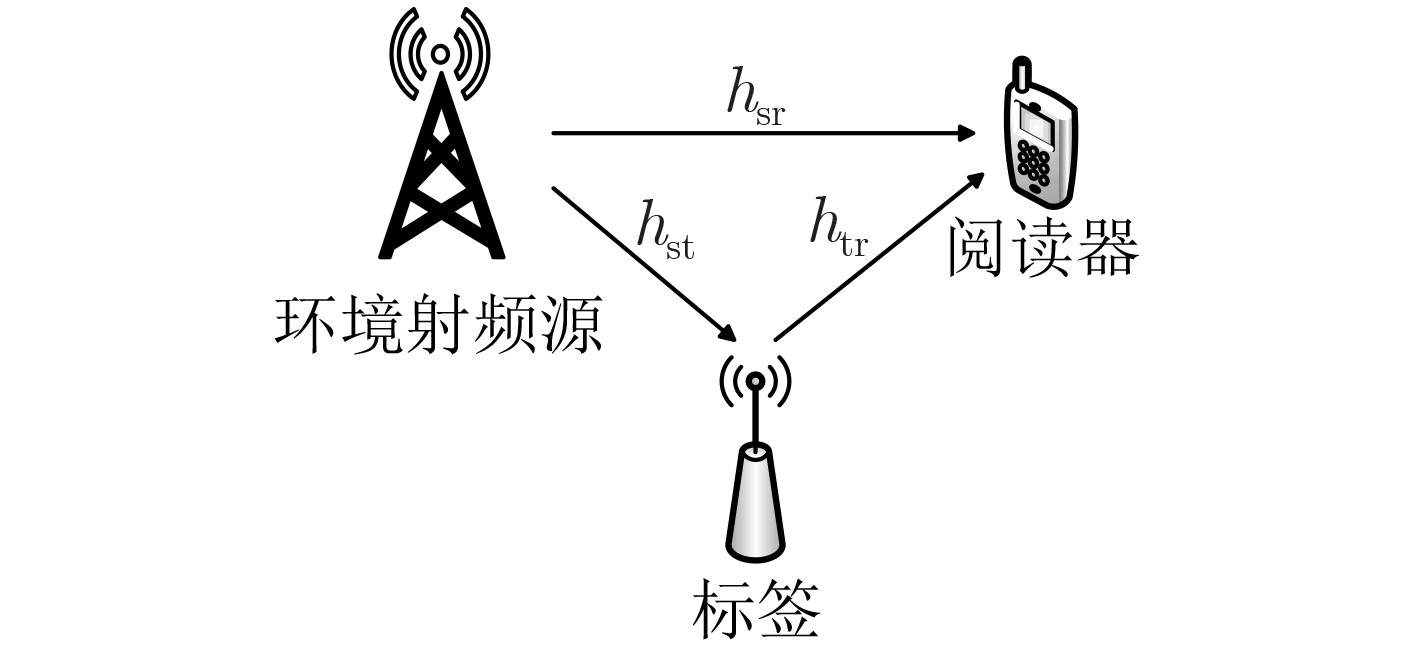
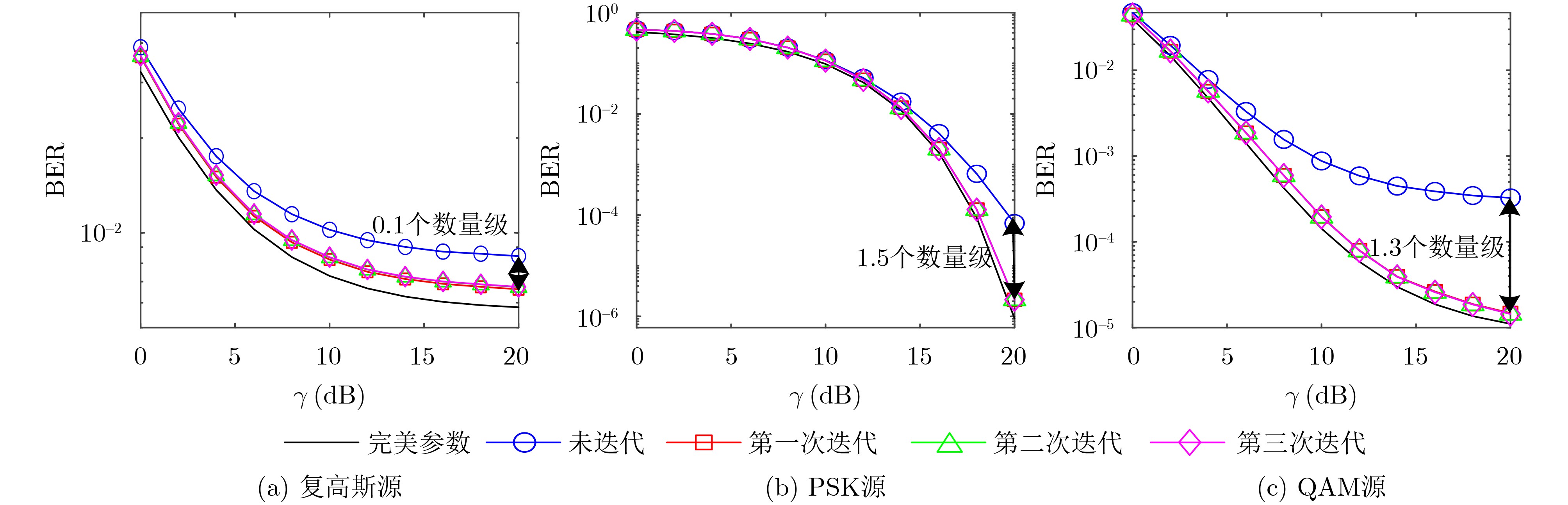
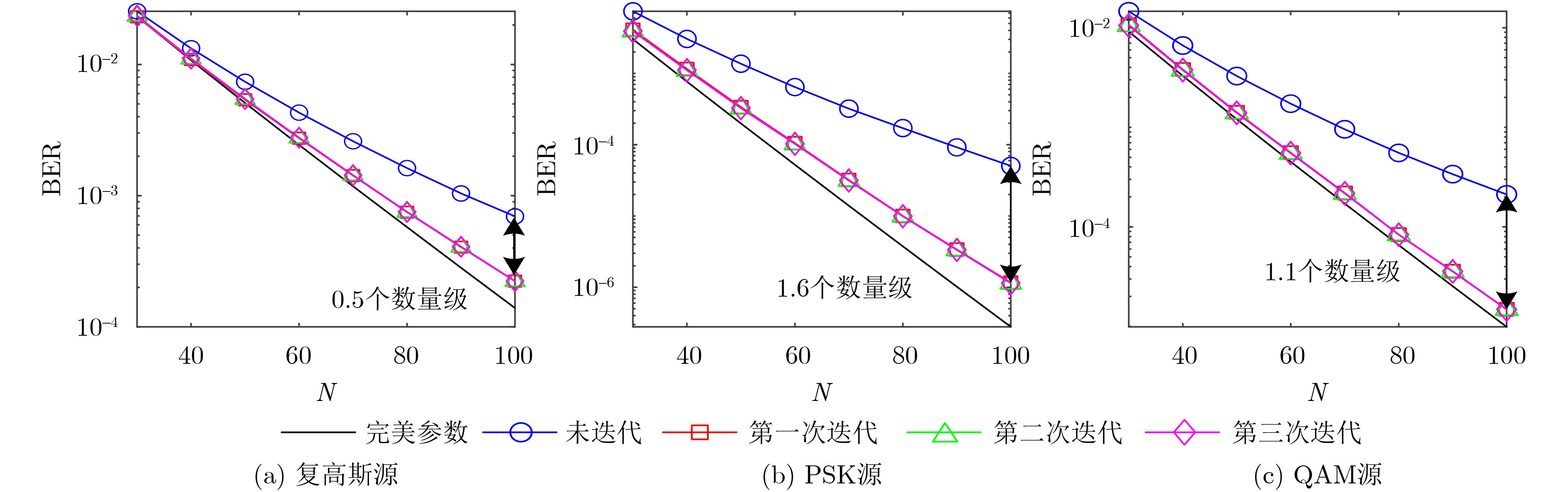
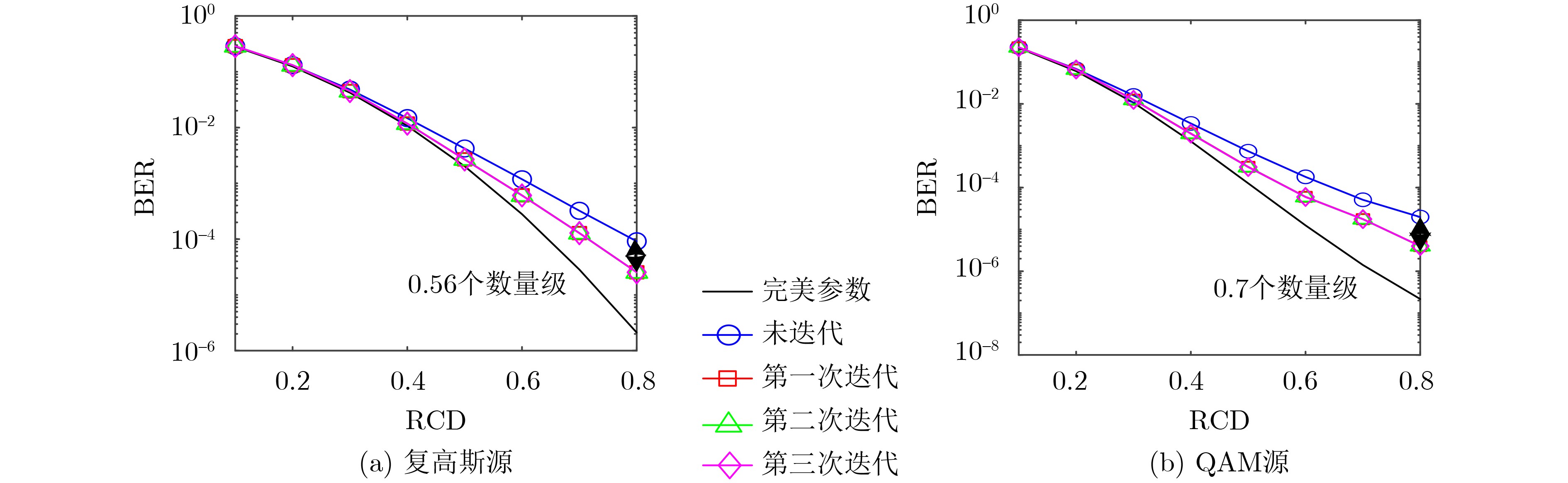
  •   Objective  In Ambient Backscatter Communication (AmBC) systems, a low-complexity energy detector is typically employed by the reader to recover the unknown symbols transmitted by the tag. However, achieving optimal energy detection performance critically depends on the precise setting of the detection threshold. The specific parameters of this threshold are determined by the average powers of the received signals when symbols “1” and “0” are respectively transmitted by the tag. Existing parameter estimation methods assume an equal transmission probability for symbols “1” and “0”"; therefore, the sorted received signal powers are directly divided into two equal groups. Nevertheless, due to the finite number of transmitted symbols, the actual quantities of symbols “1” and “0” are not strictly equal. Consequently, this equal division introduces sample misclassification, causing the estimated threshold to deviate from its optimal value and thereby degrading the overall detection performance of the system. Given that an absolute parity between transmitted symbols “1” and “0” cannot be guaranteed in practical AmBC systems, the traditional sorting-based grouping method fails to satisfy the accuracy requirements of highly reliable communications. Therefore, a parameter estimation method capable of eliminating sample misclassification bias is proposed, which is of paramount importance for breaking through the performance bottlenecks of existing energy detection and facilitating the practical application of AmBC technology.  Methods  To address the misclassification defect inherent in traditional sorting-based grouping parameter estimation methods, a detection threshold parameter estimation method based on iterative updating is proposed. Given that the detection threshold obtained via the sorting-based grouping method can already effectively determine the majority of correct symbols, these initial decision results are extracted as a highly reliable classification basis. Subsequently, the received signal sample set is reclassified to iteratively update the parameters, thereby achieving a progressive correction of the detection threshold. To comprehensively verify the effectiveness and applicability of the proposed iterative estimation method, simulation analyses are conducted under three typical ambient radio frequency source conditions: complex Gaussian, phase-shift keying (PSK), and quadrature amplitude modulation (QAM) sources.  Results and Discussions  Simulation results indicate that under various signal-to-noise ratio (SNR) conditions, compared with the traditional non-iterative sorting-based grouping method, the bit error rate (BER) is significantly reduced and the theoretical lower bound under perfect parameters is approached by the proposed iterative method. At a given SNR, significant performance improvements of approximately 0.1, 1.5, and 1.3 orders of magnitude are achieved by the iterative method under complex Gaussian, phase-shift keying (PSK), and quadrature amplitude modulation (QAM) sources, respectively (Fig. 2). It is demonstrated by this result that misclassified samples are effectively corrected, and the performance loss caused by estimation deviations is reduced by the proposed iterative method. Most importantly, an extremely fast convergence speed is exhibited; a significant performance improvement is obtained with merely the first iteration, which proves that high-precision parameter estimation can be accomplished with extremely low computational overhead. Secondly, under varying numbers of sampling points, BER performance improvements of approximately 0.5, 1.6, and 1.1 orders of magnitude are obtained by the iterative method under complex Gaussian, PSK, and QAM sources, respectively (Fig. 3). It is demonstrated that by utilizing the decision results as a classification basis, the sample size used for parameter estimation is equivalently expanded in a statistical sense. The irreplaceable “compensation” value of the iterative method in small-sample constrained scenarios is thereby strongly confirmed. Finally, under different relative channel difference (RCD) conditions, performance improvements of approximately 0.56 and 0.7 orders of magnitude are realized by the iterative method under complex Gaussian and QAM sources, respectively (Fig. 4). It is revealed by the analysis that as the RCD increases, the degree of separation between the received signal power distributions is enhanced; thus, a solid basis for iterative grouping is provided by the high accuracy of the initial decision. Consequently, a stable positive feedback updating process is formed, and the system detection performance is effectively improved.  Conclusions  To address the issue that the traditional sorting-based grouping parameter estimation method in energy detectors is prone to introducing misclassification bias and degrading detection performance, an iterative updating-based detection threshold parameter estimation method is innovatively proposed. By this method, the decision results obtained from initial parameter estimation are utilized as a reliable classification basis to regroup the received samples, thereby realizing the iterative updating of the detection threshold. Concurrently, the exact theoretical closed-form expressions for the detection threshold and bit error rate under quadrature amplitude modulation sources are derived. It is demonstrated by simulation results that an extremely fast convergence speed is achieved by the proposed method, whereby the parameter estimation bias is effectively eliminated with merely a single iteration. Moreover, excellent robustness is exhibited under small-sample constraints and varying channel conditions. With extremely low additional computational overhead, BER performance improvements by orders of magnitude are achieved by this iterative method. Consequently, a solution with significant engineering application value is provided for the physical layer design of future high-performance and highly reliable practical ambient backscatter communication systems.
  • loading
  • [1]
    3GPP. Study on solutions for ambient IoT (internet of things) in NR[R]. TR 38.769, 2024. (查阅网上资料, 请核对文献类型及格式是否正确).
    [2]
    ZHANG Zhuo, YANG Liang, LEI Hongjiang, et al. Covert communication in RSMA-assisted ambient backscatter communication systems[J]. IEEE Transactions on Wireless Communications, 2025, 24(8): 6566–6579. doi: 10.1109/TWC.2025.3554667.
    [3]
    叶迎晖, 徐瑞, 田雨佳, 等. 反向散射通信技术的研究与发展[J]. 电信科学, 2024, 40(1): 1–23. doi: 10.11959/j.issn.1000-0801.2024001.

    YE Yinghui, XU Rui, TIAN Yujia, et al. Research and development of backscatter communications technology[J]. Telecommunications Science, 2024, 40(1): 1–23. doi: 10.11959/j.issn.1000-0801.2024001.
    [4]
    CHAO Hua, TAO Tao, WANG Yonggang, et al. Architecture evolution for ambient power-enabled IoT in 5G-A and future cellular networks[J]. IEEE Internet of Things Magazine, 2025, 8(3): 48–54. doi: 10.1109/IOTM.001.2400128.
    [5]
    LI Xingwang, WANG Qunshu, ZENG Ming, et al. Physical-layer authentication for ambient backscatter-aided NOMA symbiotic systems[J]. IEEE Transactions on Communications, 2023, 71(4): 2288–2303. doi: 10.1109/TCOMM.2023.3245659.
    [6]
    AL-NAHARI A, JÄNTTI R, MISHRA D, et al. Ambient IoT: Backscatter-based connectivity topologies and outage behavior[J]. IEEE Transactions on Cognitive Communications and Networking, 2026, 12: 2369–2382. doi: 10.1109/TCCN.2025.3586219.
    [7]
    LI Xingwang, ZHAO Mengle, ZENG Ming, et al. Hardware impaired ambient backscatter NOMA systems: Reliability and security[J]. IEEE Transactions on Communications, 2021, 69(4): 2723–2736. doi: 10.1109/TCOMM.2021.3050503.
    [8]
    CUI Ziqi, WANG Gongpu, XU Rongtao, et al. Backscatter communications for green internet of things: Practical prototypes, open challenges, and standardization[J]. IEEE Internet of Things Magazine, 2025, 8(3): 32–39. doi: 10.1109/IOTM.001.2400127.
    [9]
    3GPP. Study on solutions for ambient IoT (internet of things) in NR[R]. TR 38.769, 2024. (查阅网上资料, 请核对文献类型及格式是否正确)(查阅网上资料, 本条文献与第1条文献重复, 请确认).
    [10]
    3GPP. NR; Ambient IoT device radio transmission and reception[R]. TS 38.191, 2025. (查阅网上资料, 请核对文献类型及格式是否正确).
    [11]
    LU Kang, WANG Gongpu, QU Fengzhong, et al. Signal detection and BER analysis for RF-powered devices utilizing ambient backscatter[C]. 2015 International Conference on Wireless Communications & Signal Processing, Nanjing, China, 2015: 1–5. doi: 10.1109/WCSP.2015.7341107.
    [12]
    CHEN Yunfei and FENG Wei. Novel signal detectors for ambient backscatter communications in internet of things applications[J]. IEEE Internet of Things Journal, 2024, 11(3): 5388–5400. doi: 10.1109/JIOT.2023.3305645.
    [13]
    CHEN Jixiang, GUAN Quansheng, RONG Yue, et al. Detections for ambient backscatter communications systems with dynamic sources[J]. IEEE Transactions on Communications, 2025, 73(9): 7941–7951. doi: 10.1109/TCOMM.2025.3548758.
    [14]
    WANG Gongpu, GAO Feifei, FAN Rongfei, et al. Ambient backscatter communication systems: Detection and performance analysis[J]. IEEE Transactions on Communications, 2016, 64(11): 4836–4846. doi: 10.1109/TCOMM.2016.2602341.
    [15]
    TAO Qin, ZHONG Caijun, LIN Hai, et al. Symbol detection of ambient backscatter systems with Manchester coding[J]. IEEE Transactions on Wireless Communications, 2018, 17(6): 4028–4038. doi: 10.1109/TWC.2018.2819188.
    [16]
    QIAN Jing, GAO Feifei, WANG Gongpu, et al. Semi-coherent detection and performance analysis for ambient backscatter system[J]. IEEE Transactions on Communications, 2017, 65(12): 5266–5279. doi: 10.1109/TCOMM.2017.2738001.
    [17]
    CHENG Diancheng, WU Fan, ZHANG Cong, et al. Design and performance of passive virtual MIMO in ambient backscatter communication[J]. IEEE Wireless Communications Letters, 2024, 13(3): 612–616. doi: 10.1109/LWC.2023.3336864.
    [18]
    YE Yinghui, LI Ying, CHU Xiaoli, et al. Symbol detection in ambient backscatter communications under residual time synchronization errors[J]. IEEE Transactions on Communications, 2026, 74: 1669–1685. doi: 10.1109/TCOMM.2025.3635733.
    [19]
    LI Yuxin, LU Guangyue, YE Yinghui, et al. Timing synchronization and symbol detection in ambient backscatter communication[J]. IEEE Transactions on Wireless Communications, 2026, 25: 14212–14225. doi: 10.1109/TWC.2026.3675785.
    [20]
    李莹, 叶迎晖, 施丽琴, 等. 残余时间同步误差下基于分数阶矩的AmBC检测方法[J]. 北京邮电大学学报, 2026, 49(1): 76–82,106. doi: 10.13190/j.jbupt.2025-030.

    LI Ying, YE Yinghui, SHI Liqin, et al. Fractional-order moment-based AmBC detection method under residual time synchronization errors[J]. Journal of Beijing University of Posts and Telecommunications, 2026, 49(1): 76–82,106. doi: 10.13190/j.jbupt.2025-030.
    [21]
    QIAN Jing, GAO Feifei, WANG Gongpu, et al. Noncoherent detections for ambient backscatter system[J]. IEEE Transactions on Wireless Communications, 2017, 16(3): 1412–1422. doi: 10.1109/TWC.2016.2635654.
  • 加载中

Catalog

    通讯作者: 陈斌, bchen63@163.com
    • 1. 

      沈阳化工大学材料科学与工程学院 沈阳 110142

    1. 本站搜索
    2. 百度学术搜索
    3. 万方数据库搜索
    4. CNKI搜索

    Figures(4)

    Article Metrics

    Article views (39) PDF downloads(2) Cited by()
    Proportional views
    Related

    /

    DownLoad:  Full-Size Img  PowerPoint
    Return
    Return