Advanced Search
Turn off MathJax
Article Contents
LIU Yuchen, ZHAO Yaqin, WU Longwen. A Multi-Station Emitter TDOA Deinterleaving Method for Severe Pulse-Loss Environments[J]. Journal of Electronics & Information Technology. doi: 10.11999/JEIT260401
Citation: LIU Yuchen, ZHAO Yaqin, WU Longwen. A Multi-Station Emitter TDOA Deinterleaving Method for Severe Pulse-Loss Environments[J]. Journal of Electronics & Information Technology. doi: 10.11999/JEIT260401

A Multi-Station Emitter TDOA Deinterleaving Method for Severe Pulse-Loss Environments

doi: 10.11999/JEIT260401 cstr: 32379.14.JEIT260401
Funds:  The National Natural Science Foundation of China (62571163, 62571167 and 62071153)
  • Received Date: 2026-04-04
  • Accepted Date: 2026-08-10
  • Rev Recd Date: 2026-08-03
  • Available Online: 2026-08-18
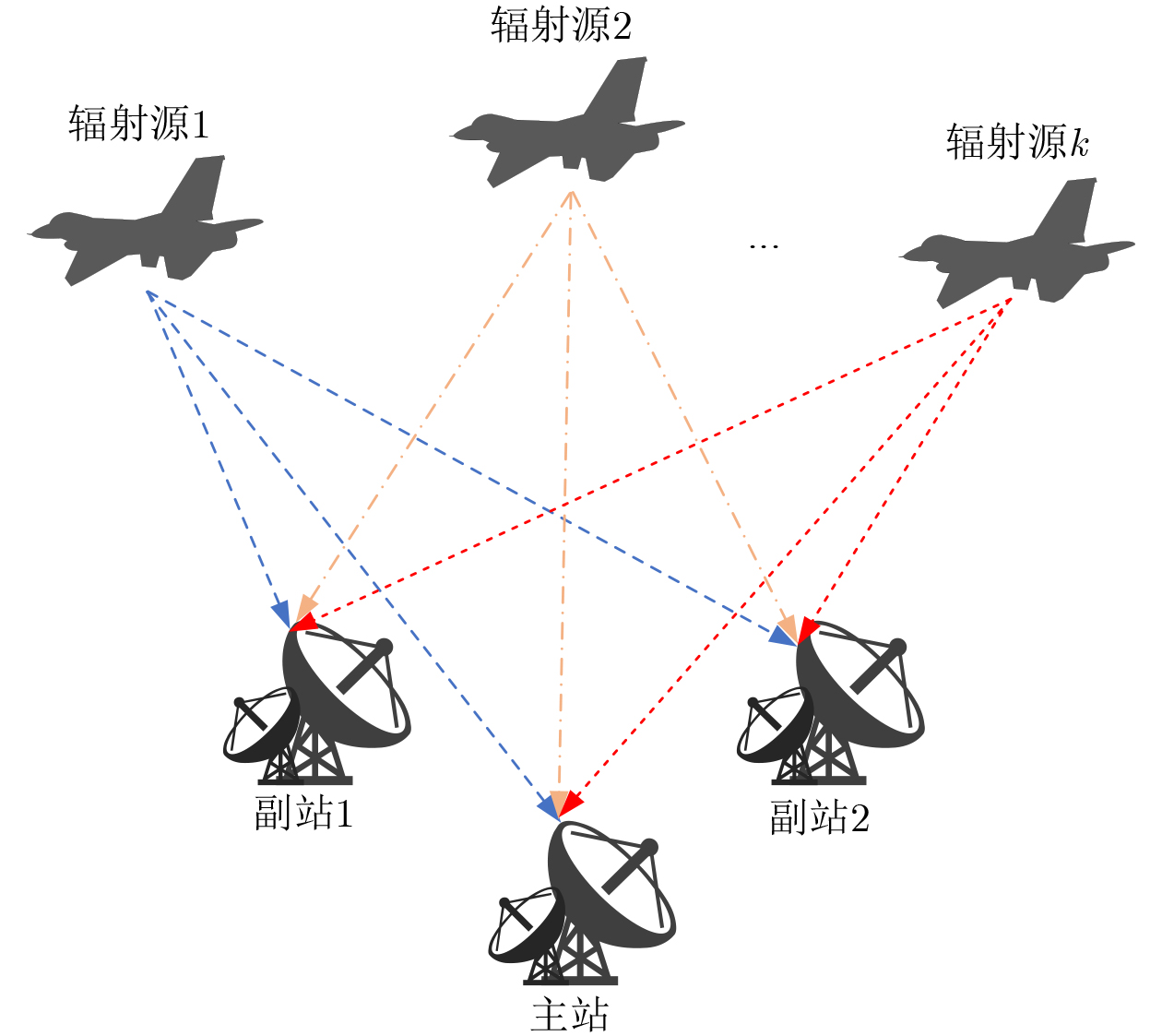
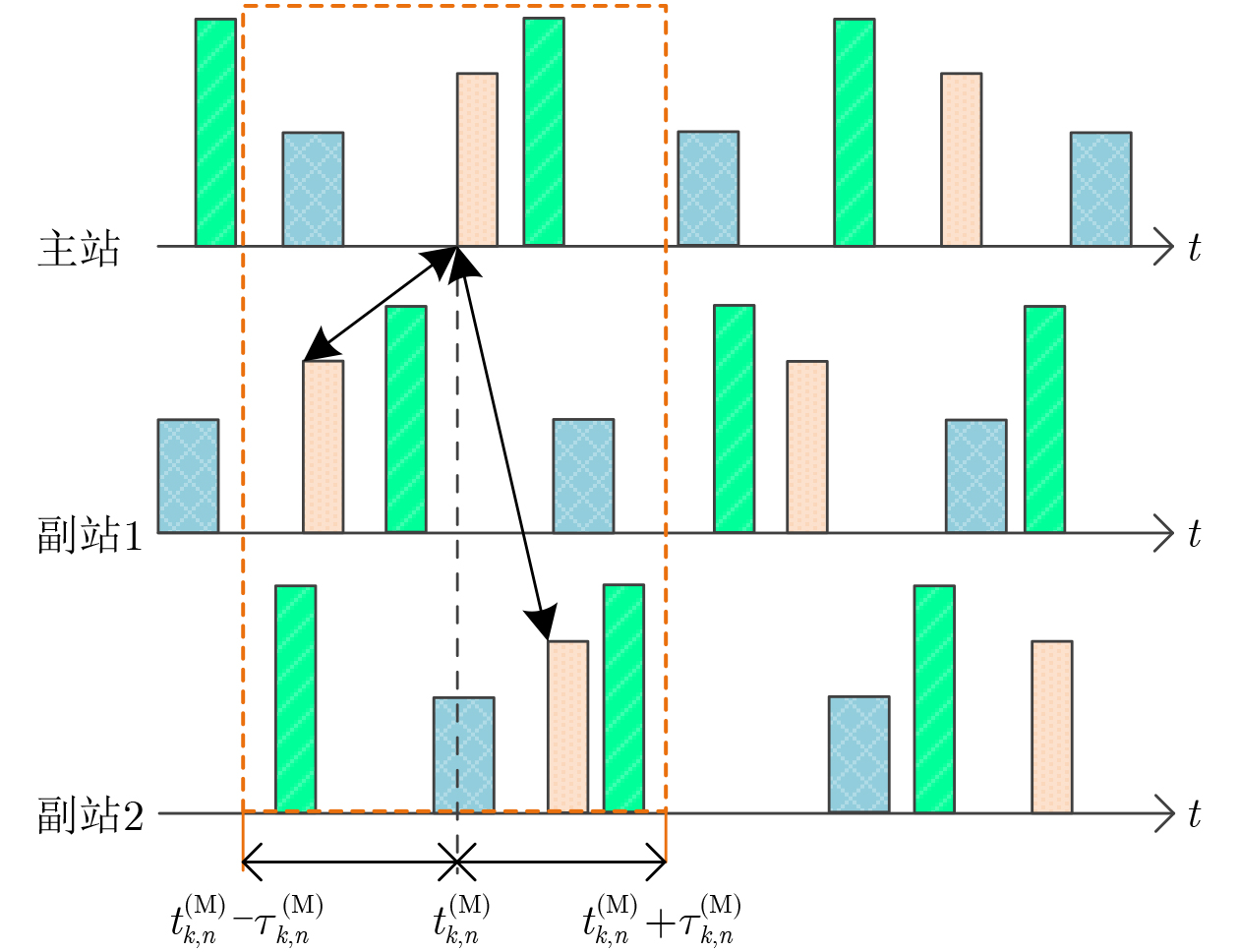
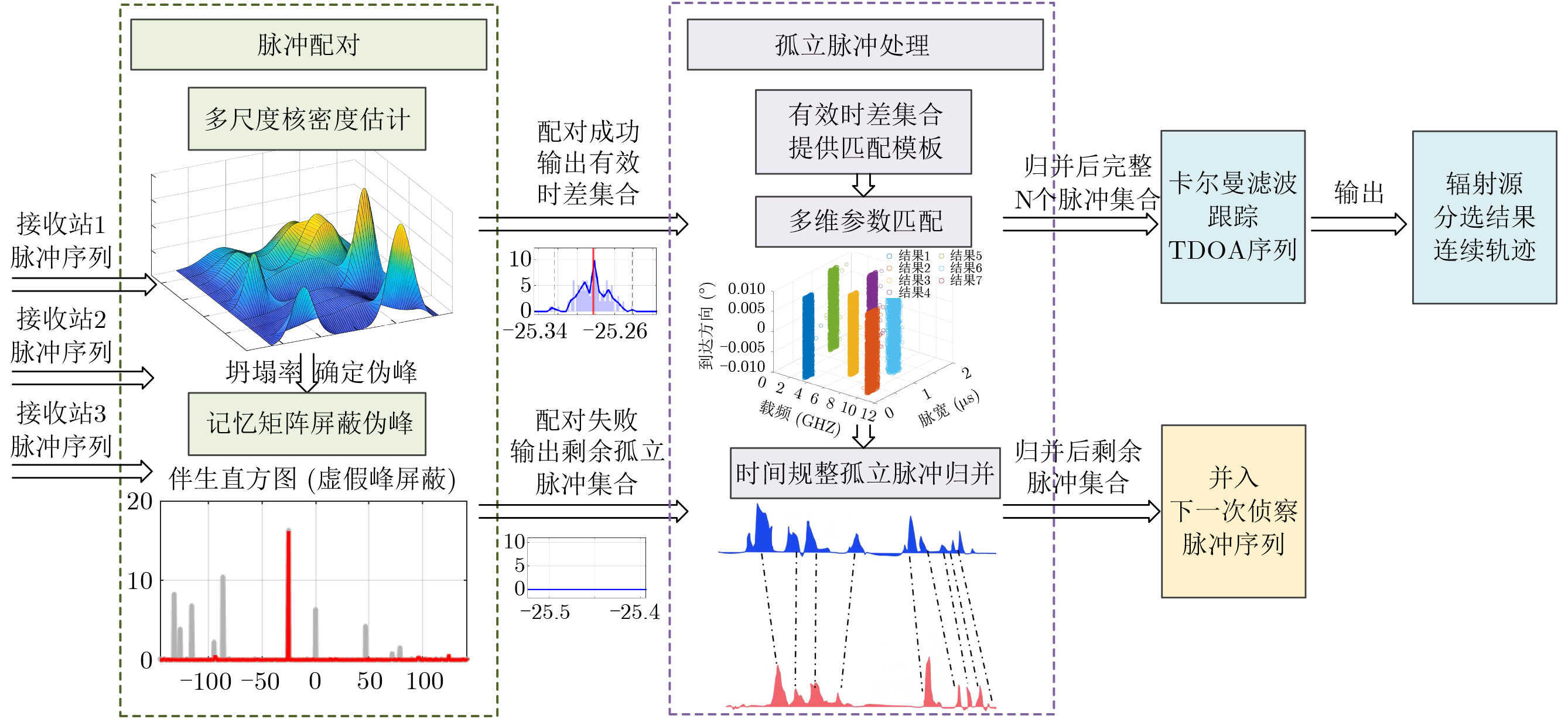
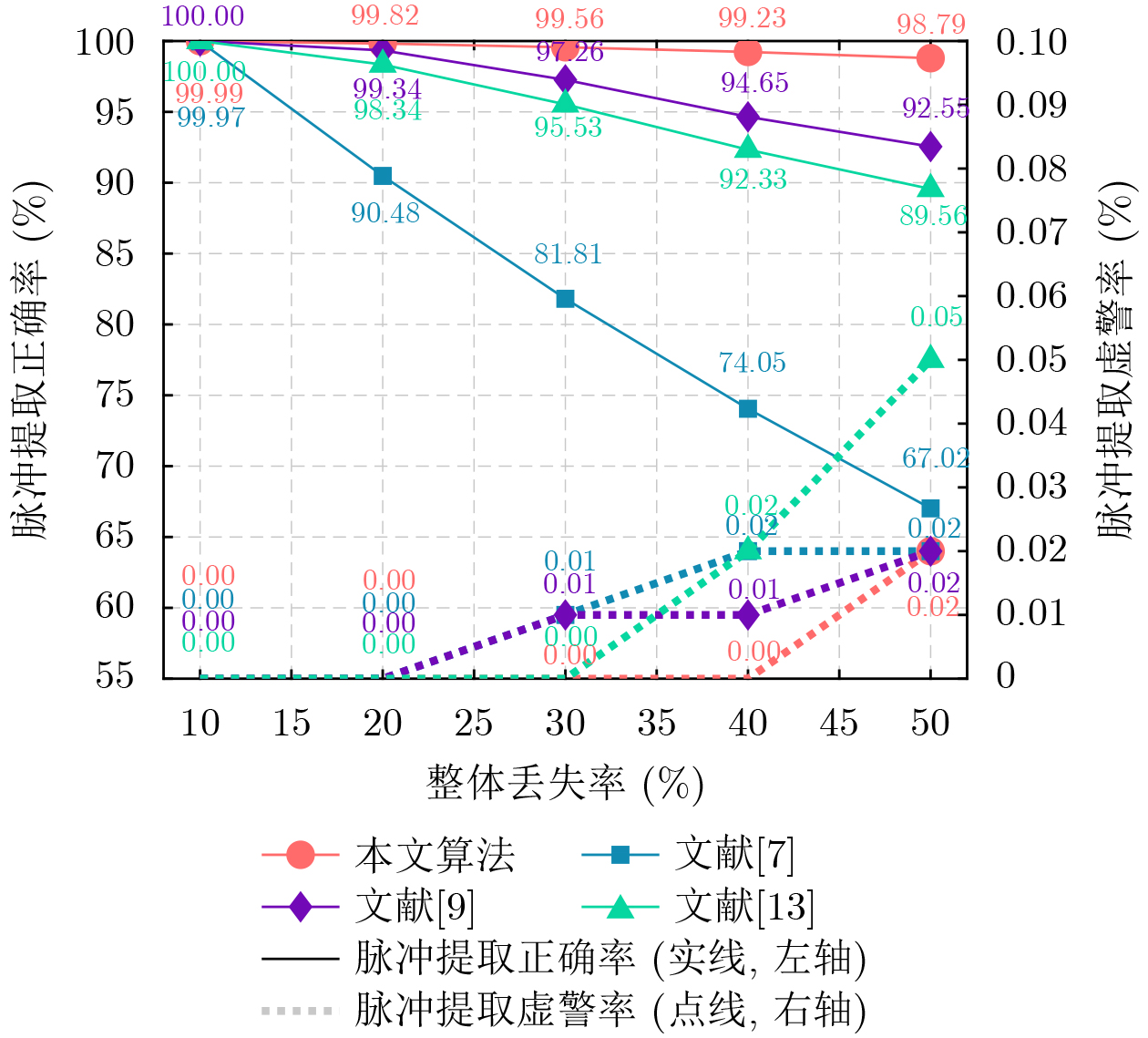
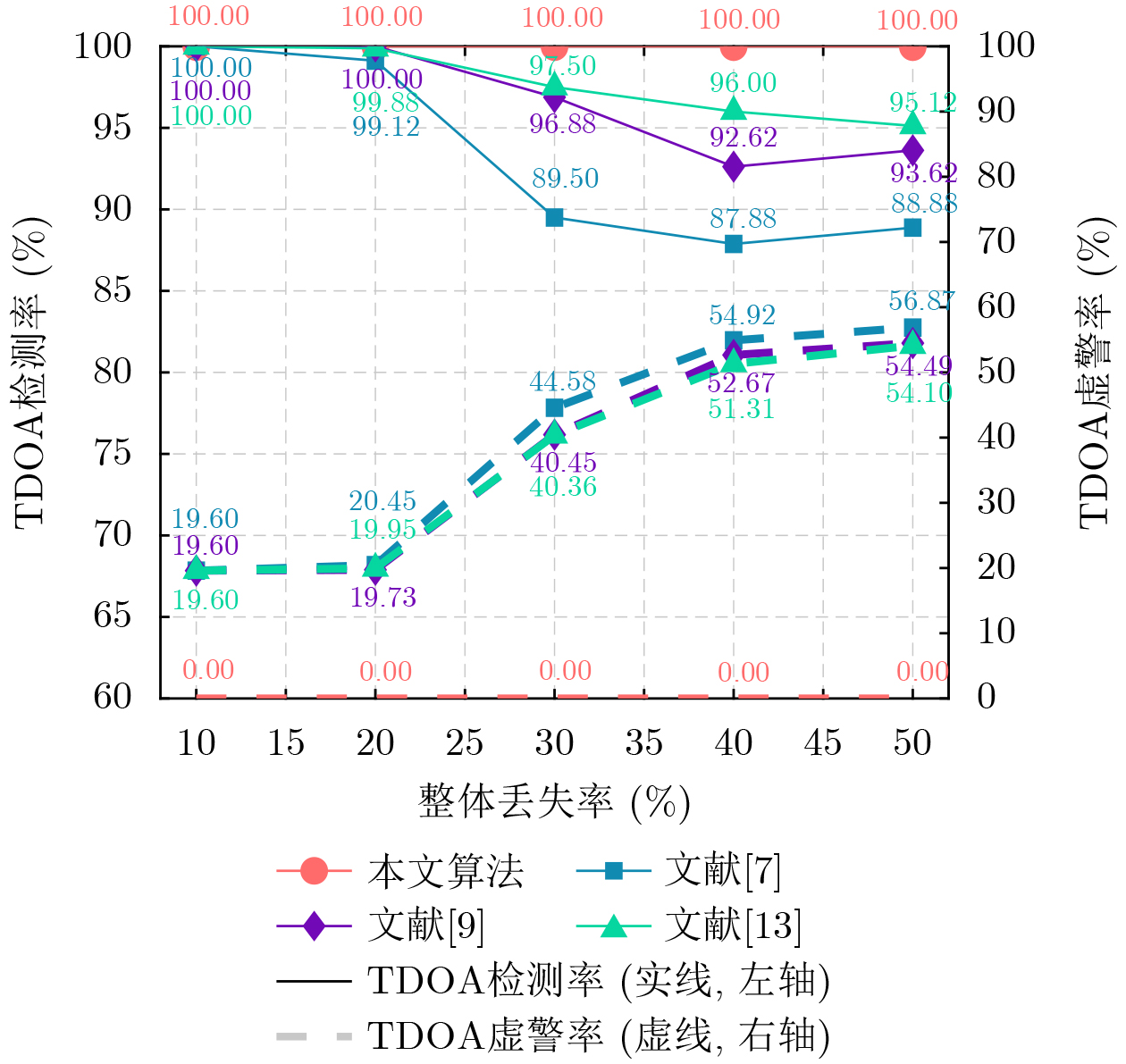
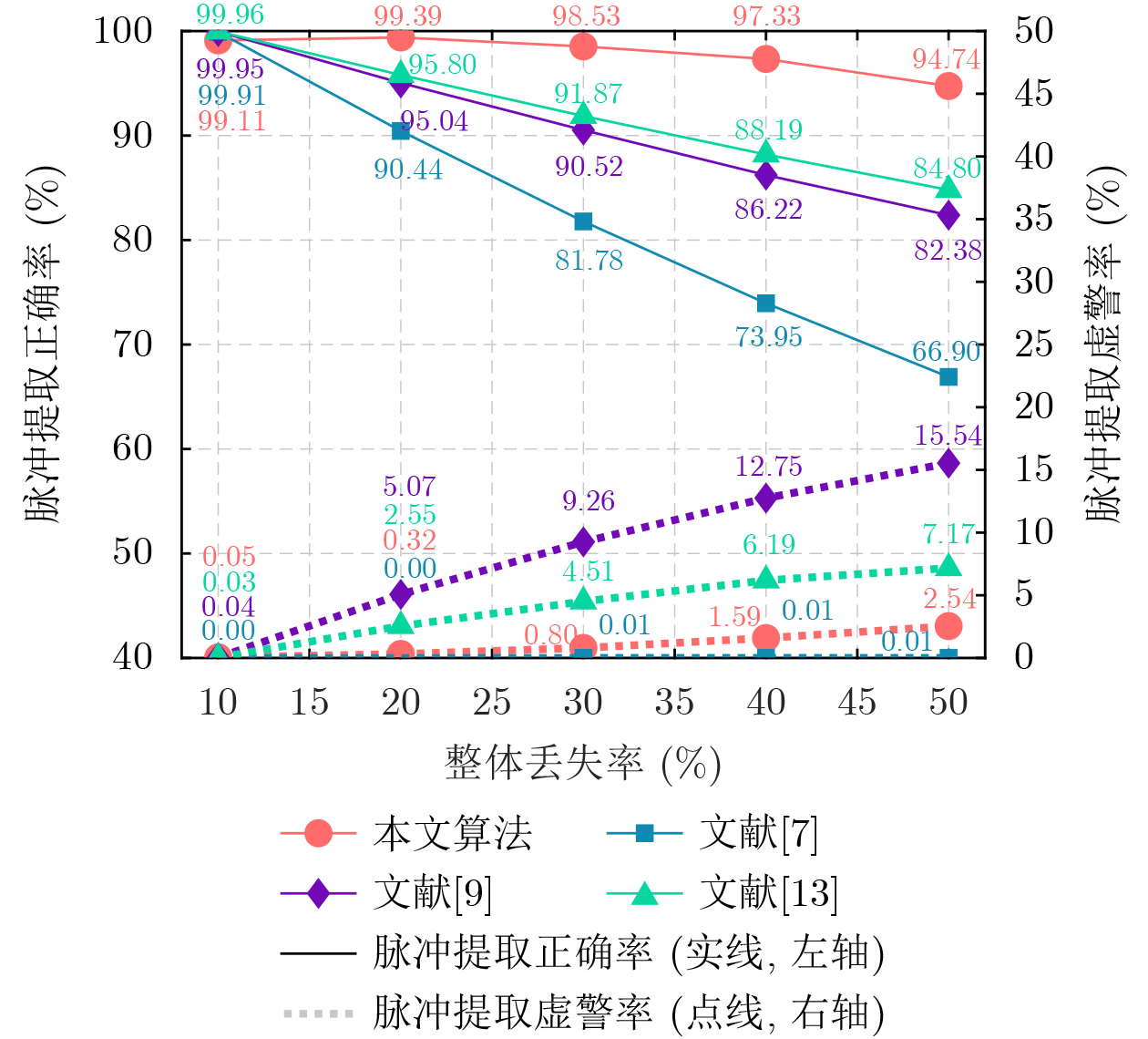
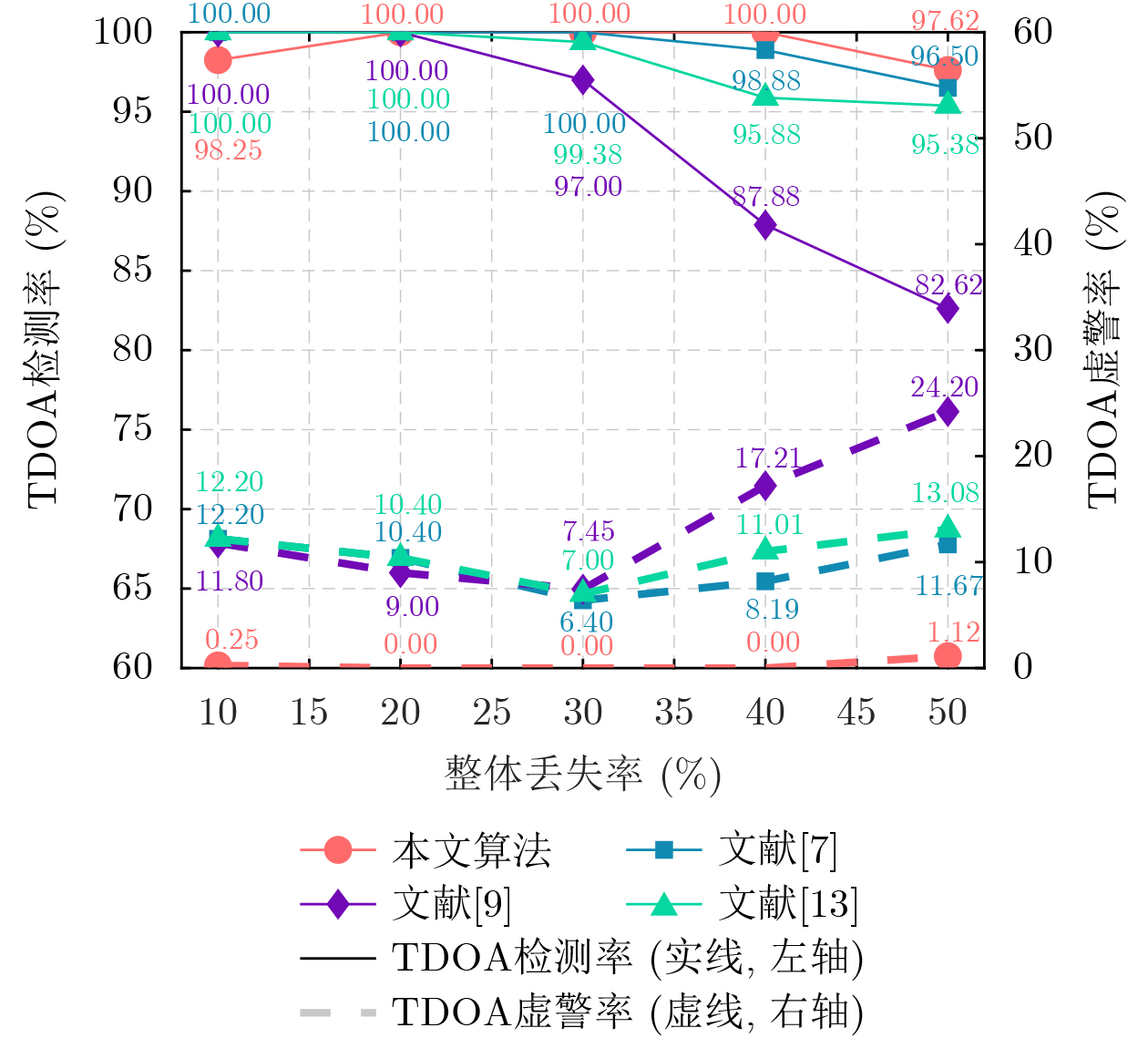
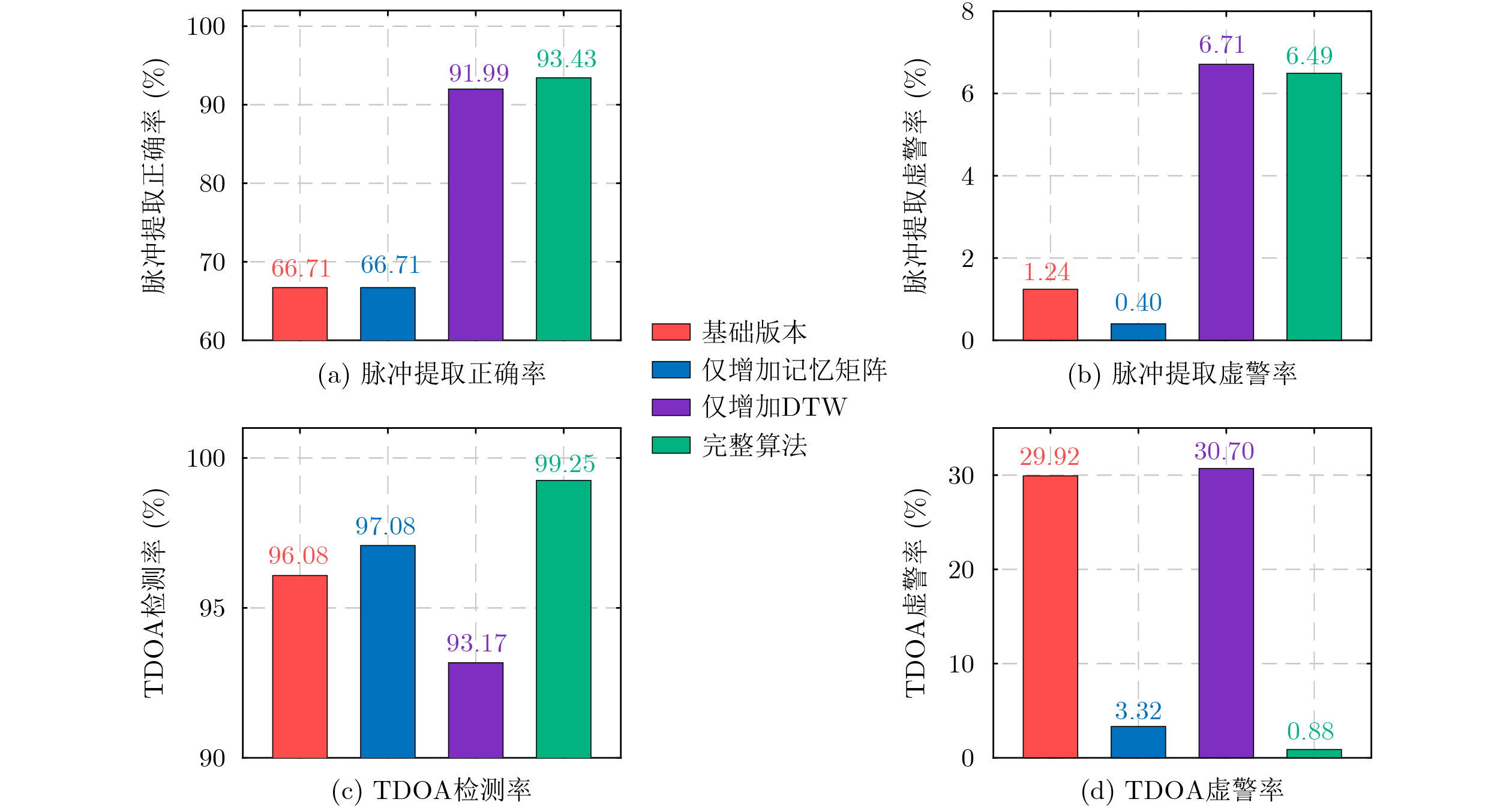
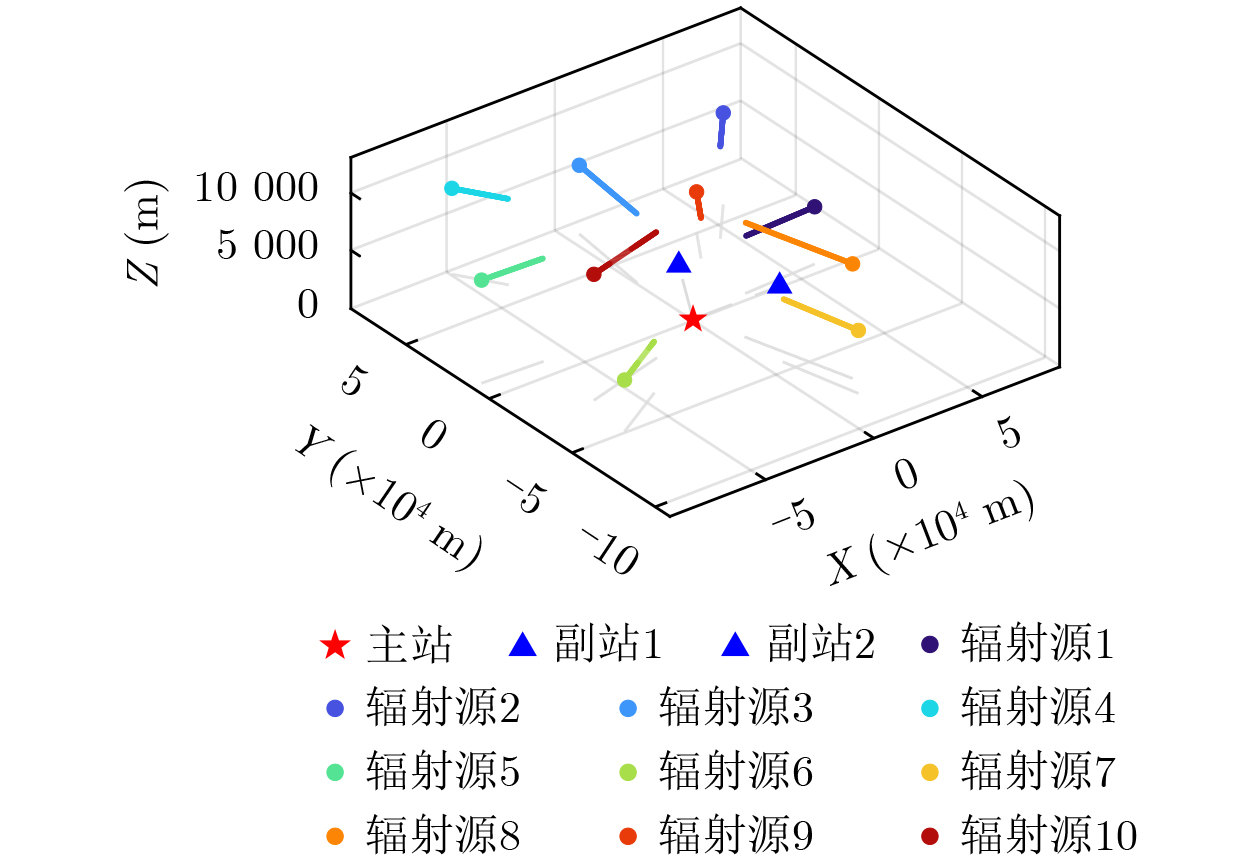
  •   Objective  Modern electronic reconnaissance systems must deinterleave dense and overlapping radar pulse streams in non-cooperative environments. As radar emitters increasingly employ agile waveforms, similar pulse descriptor words, and low-intercept-probability strategies, conventional single-station methods based on carrier frequency, pulse width, and Pulse Repetition Interval (PRI) become less reliable. Multi-station deinterleaving based on Time Difference of Arrival (TDOA) provides a more stable geometric observable, but severe pulse loss still causes sparse cross-station pairing, weak true TDOA peaks, ambiguity-induced spurious peaks, isolated pulses, and fragmented trajectories across time slices. These effects increase false alarms and weaken track continuity. To address these issues, a closed-loop multi-station emitter TDOA deinterleaving method is proposed for severe pulse-loss environments, with Time of Arrival (TOA) sequences used as the core observables.  Methods  A slice-based framework is developed for continuous reconnaissance. Residual unmatched pulses are carried forward by a sliding window to alleviate cross-slice misalignment. First, candidate pulse pairs satisfying geometric TDOA constraints are generated, and pulse descriptor word constraints on carrier frequency and pulse width are used to remove inconsistent pairs. To reduce the sparsity and binning sensitivity of conventional histograms, multiscale Kernel Density Estimation (KDE) is introduced to reconstruct the TDOA density from sparse candidate differences. Gaussian kernels with different bandwidths are fused, and candidate peaks are adaptively extracted using local statistics and peak widths. Second, a dynamic memory matrix is designed to suppress ambiguity-induced spurious peaks in high pulse repetition frequency scenarios. Since dependent spurious peaks collapse after the dominant peak is extracted and removed, a collapse-rate criterion is defined, and the spurious regions are recorded in a memory mask for subsequent iterations. Third, Dynamic Time Warping (DTW) is used to compare incomplete TOA sequences of isolated pulses with extracted pulse sequences, enabling reassignment of unequal-length and incomplete sequences. Finally, a Kalman-filter-based state-space model tracks multi-baseline TDOA trajectories across successive slices. Predicted and observed TDOA residuals are jointly used for association, so intermittent observations can still be linked to the correct track. In this way, the proposed method forms a closed-loop processing chain that links weak-peak reconstruction, spurious-peak suppression, isolated-pulse reassignment, and trajectory association (Fig. 3).  Results and Discussions  Four simulation scenarios are designed: a high pulse repetition frequency scenario dominated by ambiguity-induced spurious peaks, a parameter-overlapping scenario dominated by isolated pulse reassignment, an ablation scenario for evaluating the memory matrix and DTW modules, and a 10-emitter mixed-regime scenario including fixed PRI, staggered, jittered, frequency-agile, pulse-group frequency-agile, frequency-agile jittered-PRI, linear-sliding, and sinusoidal-sliding PRI signals. In the mixed-regime scenario, the total reconnaissance duration is 1 s and the slice duration is 0.1 s. The environmental pulse loss rate is fixed at 10%, and the receiver-specific loss rate increases from 0% to 40%. Both loss rates are calculated with respect to the initial theoretical number of transmitted pulses; therefore, the total loss rate is their sum, ranging from 10% to 50%. The proposed method is compared with an extended TDOA histogram method under constrained criteria, a cloud-model-based multi-station sorting method, and a Dirichlet Process Mixture Model (DPMM)-based method (Table 5). In the high pulse repetition frequency scenario, the proposed method maintains near-zero false alarms by identifying the collapse of dependent spurious peaks and suppressing them through the memory matrix, whereas the comparison methods show severe false alarms (Figs. 4 and 5). In the parameter-overlapping scenario, DTW-based reassignment improves isolated-pulse recovery, while the memory matrix suppresses spurious TDOA peaks. Their combination improves extraction reliability and reduces false alarms (Figs. 6 and 7). The ablation results verify their complementary roles: at a 50% loss rate, the memory matrix reduces the TDOA false alarm rate from 29.92% to 3.32%, DTW increases pulse extraction accuracy from 66.71% to 91.99%, and the complete method achieves a TDOA detection rate of 99.25% with a false alarm rate of 0.88% (Fig. 8). In the 10-emitter mixed-regime scenario, the proposed method achieves a favorable overall trade-off. At an overall pulse loss rate of 50%, its pulse extraction accuracy remains 92.72%, and the TDOA false alarm rate is limited to 7.75%, lower than 35.39%, 35.05%, and 37.58% for the DPMM, cloud-model, and constrained recursive histogram methods, respectively. After cross-slice trajectory association, the mean number of identity switches decreases to 3.83, compared with 10.64, 9.85, and 12.64 for the three comparison methods (Fig. 9 and Table 5).  Conclusions  A closed-loop multi-station emitter TDOA deinterleaving method is proposed for severe pulse-loss environments. By integrating multiscale KDE-based weak peak reconstruction, dynamic memory-matrix-based spurious peak suppression, DTW-based isolated pulse reassignment, and Kalman-filter-based trajectory association, the method addresses the coupled failure mechanisms caused by severe pulse loss. Simulation results demonstrate high extraction accuracy, low TDOA false alarm rates, and strong trajectory continuity in high-loss and mixed-regime scenarios. These results demonstrate the effectiveness of the method under the simulated conditions and indicate its application potential for persistent multi-station passive reconnaissance.
  • loading
  • [1]
    WAN Mengcheng, ZHANG Yu, BAI Yechao, et al. A real-time radar signal sorting method under Bayesian framework with dynamic cluster merging[J]. IEEE Sensors Journal, 2024, 24(17): 27859–27869. doi: 10.1109/JSEN.2024.3431021.
    [2]
    常怀昭, 顾颖彦, 韩蕴智, 等. 面向雷达信号分选的卷积混合多注意力编解码网络[J]. 电子与信息学报, 2025, 47(12): 4887–4895. doi: 10.11999/JEIT251031.

    CHANG Huaizhao, GU Yingyan, HAN Yunzhi, et al. Convolutional mixed multi-attention encoder-decoder network for radar signal sorting[J]. Journal of Electronics & Information Technology, 2025, 47(12): 4887–4895. doi: 10.11999/JEIT251031.
    [3]
    MARDIA H K. New techniques for the deinterleaving of repetitive sequences[J]. IEE Proceedings F (Radar and Signal Processing), 1989, 136(4): 149–154. doi: 10.1049/ip-f-2.1989.0025.
    [4]
    叶成基, 谢坚, 张兆林, 等. 基于联邦学习的多站雷达信号智能分选算法[J]. 电子与信息学报, 2026, 48(6): 2341–2351. doi: 10.11999/JEIT251355.

    YE Chengji, XIE Jian, ZHANG Zhaolin, et al. Intelligent sorting algorithm for multi-station radar signals based on federated learning[J]. Journal of Electronics & Information Technology, 2026, 48(6): 2341–2351. doi: 10.11999/JEIT251355.
    [5]
    马贤同, 罗景青, 孟祥豪. 基于时差的同类辐射源信号分选定位方法[J]. 电子与信息学报, 2015, 37(10): 2363–2368. doi: 10.11999/JEIT141480.

    MA Xiantong, LUO Jingqing, and MENG Xianghao. Signal sorting and positioning method for similar radiation sources based on time difference of arrival[J]. Journal of Electronics & Information Technology, 2015, 37(10): 2363–2368. doi: 10.11999/JEIT141480.
    [6]
    马爽, 吴海斌, 柳征, 等. 基于递归扩展直方图的辐射源时差分选方法[J]. 国防科技大学学报, 2012, 34(5): 83–89. doi: 10.3969/j.issn.1001-2486.2012.05.017.

    MA Shuang, WU Haibin, LIU Zheng, et al. Method for emitter TDOA sorting based on recursive extended histogram[J]. Journal of National University of Defense Technology, 2012, 34(5): 83–89. doi: 10.3969/j.issn.1001-2486.2012.05.017.
    [7]
    刘智鑫, 赵拥军. 约束准则下扩展时差直方图脉冲分选配对方法[J]. 西安电子科技大学学报, 2019, 46(6): 102–111. doi: 10.19665/j.issn1001-2400.2019.06.015.

    LIU Zhixin and ZHAO Yongjun. Pulse sorting and pairing based on the constrained extended TDOA histogram[J]. Journal of Xidian University, 2019, 46(6): 102–111. doi: 10.19665/j.issn1001-2400.2019.06.015.
    [8]
    姜宏志, 赵闯, 胡德秀, 等. 基于时差多参的单脉冲信号实时配对分选[J]. 电子学报, 2021, 49(3): 566–572. doi: 10.12263/DZXB.20191316.

    JIANG Hongzhi, ZHAO Chuang, HU Dexiu, et al. Real-time deinterleaving algorithm for single pulse signal based on TDOAs and multi-parameter information[J]. Acta Electronica Sinica, 2021, 49(3): 566–572. doi: 10.12263/DZXB.20191316.
    [9]
    仇洪冰, 周兰兰, 周陬, 等. 基于云模型的辐射源信号多站分选方法[J]. 电子学报, 2022, 50(10): 2469–2477. doi: 10.12263/DZXB.20210212.

    QIU Hongbing, ZHOU Lanlan, ZHOU Zou, et al. Multi-station sorting method for emitter signal based on cloud model[J]. Acta Electronica Sinica, 2022, 50(10): 2469–2477. doi: 10.12263/DZXB.20210212.
    [10]
    李松炜, 杨松岩, 邓志安, 等. 基于自适应流聚类的多站时差协同信号分选方法[J]. 信号处理, 2024, 40(4): 682–694. doi: 10.16798/j.issn.1003-0530.2024.04.007.

    LI Songwei, YANG Songyan, DENG Zhian, et al. Cooperative signal sorting method based on multi-station TDOA and adaptive stream clustering[J]. Journal of Signal Processing, 2024, 40(4): 682–694. doi: 10.16798/j.issn.1003-0530.2024.04.007.
    [11]
    孟祥豪, 罗景青, 马贤同. 一种基于多站测向和多参数信息的联合分选算法[J]. 控制与决策, 2016, 31(1): 160–164. doi: 10.13195/j.kzyjc.2014.1387.

    MENG Xianghao, LUO Jingqing, and MA Xiantong. Joint sorting algorithm based on direction finding of multiple observation platforms and multi-parameter information[J]. Control and Decision, 2016, 31(1): 160–164. doi: 10.13195/j.kzyjc.2014.1387.
    [12]
    马贤同, 罗景青, 吴世龙. 多站时差与多参数联合分选定位方法[J]. 国防科技大学学报, 2015, 37(6): 78–83. doi: 10.11887/j.cn.201506016.

    MA Xiantong, LUO Jingqing, and WU Shilong. Joint sorting and location method using TDOA and multi-parameter of multi-station[J]. Journal of National University of Defense Technology, 2015, 37(6): 78–83. doi: 10.11887/j.cn.201506016.
    [13]
    陈金立, 王延杰, 樊宇, 等. Dirichlet过程混合模型驱动的多站时差信号分选方法[J]. 电子与信息学报, 2025, 47(10): 3712–3722. doi: 10.11999/JEIT250191.

    CHEN Jinli, WANG Yanjie, FAN Yu, et al. Signal sorting method based on multi-station time difference and Dirichlet process mixture model[J]. Journal of Electronics & Information Technology, 2025, 47(10): 3712–3722. doi: 10.11999/JEIT250191.
    [14]
    LI Huixin, FAN Ruozhou, LIU Jiabin, et al. Multi-station cooperative radar signal deinterleaving based on deep information fusion[C]. Proceedings of 2025 IEEE International Radar Conference (RADAR), Atlanta, USA, 2025: 1–6. doi: 10.1109/RADAR52380.2025.11031922.
    [15]
    XUE Jie, SU Binbin, LIU Yongcai, et al. A multi-receiver pulse deinterleaving method based on SSC-DBSCAN and TDOA mapping[J]. Electronics, 2025, 14(9): 1833. doi: 10.3390/electronics14091833.
    [16]
    ZHAO Yuxin, ZHU Zhanlei, FENG Hancong, et al. Joint pulse association, sorting, and localization of pulse radar signals with cluster reconnaissance[J]. IEEE Transactions on Aerospace and Electronic Systems, 2025, 61(4): 8143–8158. doi: 10.1109/TAES.2025.3543152.
    [17]
    芦阳. 多站协同雷达信号分选算法研究[D]. [硕士论文], 哈尔滨工程大学, 2023. doi: 10.27060/d.cnki.ghbcu.2023.000971.

    LU Yang. Research on radar signal sorting algorithm based on multi-station collaboration[D]. [Master dissertation], Harbin Engineering University, 2023. doi: 10.27060/d.cnki.ghbcu.2023.000971.
  • 加载中

Catalog

    通讯作者: 陈斌, bchen63@163.com
    • 1. 

      沈阳化工大学材料科学与工程学院 沈阳 110142

    1. 本站搜索
    2. 百度学术搜索
    3. 万方数据库搜索
    4. CNKI搜索

    Figures(9)  / Tables(5)

    Article Metrics

    Article views (47) PDF downloads(4) Cited by()
    Proportional views
    Related

    /

    DownLoad:  Full-Size Img  PowerPoint
    Return
    Return