Advanced Search
Turn off MathJax
Article Contents
WANG Zhonggen, WU Chenggang, NIE Wenyan, SUN Yufa. Accelerated Broadband Electromagnetic Scattering Analysis via ACA-Driven Measurement Matrix Interpolation[J]. Journal of Electronics & Information Technology. doi: 10.11999/JEIT260392
Citation: WANG Zhonggen, WU Chenggang, NIE Wenyan, SUN Yufa. Accelerated Broadband Electromagnetic Scattering Analysis via ACA-Driven Measurement Matrix Interpolation[J]. Journal of Electronics & Information Technology. doi: 10.11999/JEIT260392

Accelerated Broadband Electromagnetic Scattering Analysis via ACA-Driven Measurement Matrix Interpolation

doi: 10.11999/JEIT260392 cstr: 32379.14.JEIT260392
Funds:  The National Natural Science Foundation of China (62071004), The Natural Science Research Project of Anhui Educational Committee (2025AHGXZK31006)
  • Received Date: 2026-04-07
  • Accepted Date: 2026-07-03
  • Rev Recd Date: 2026-06-29
  • Available Online: 2026-07-13
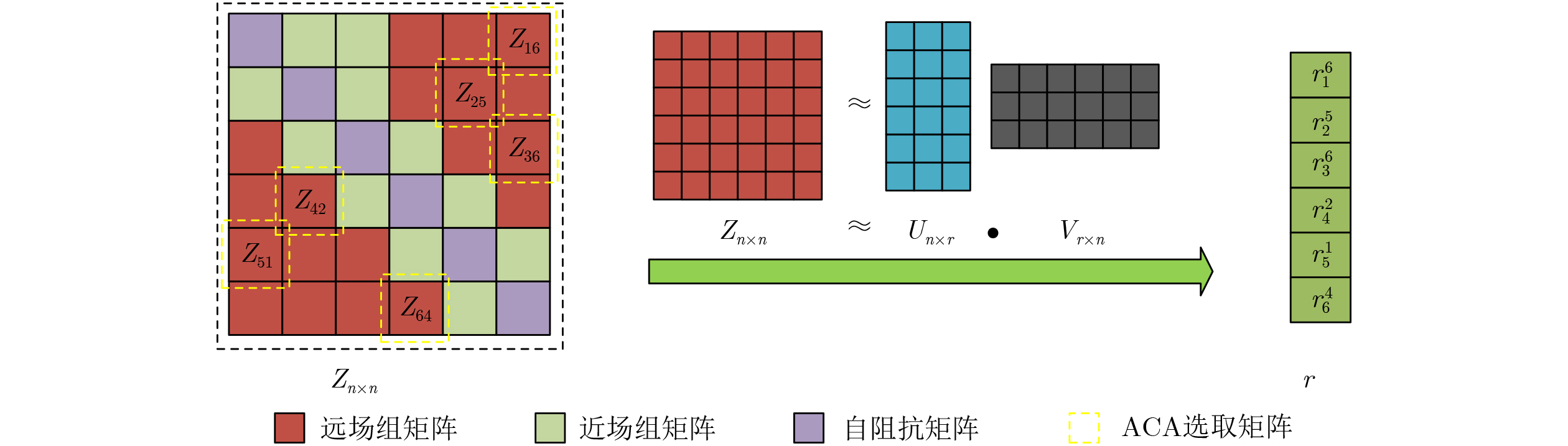
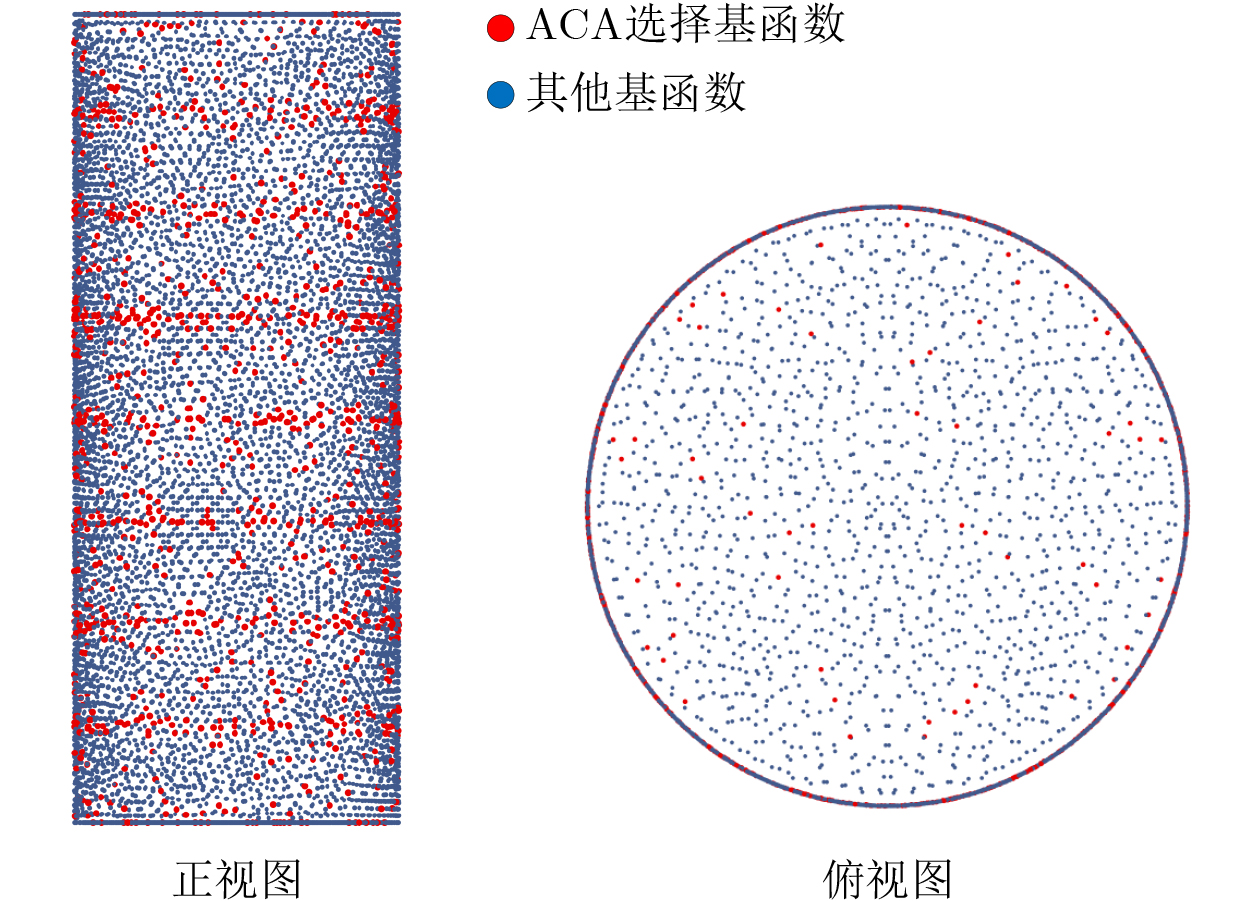
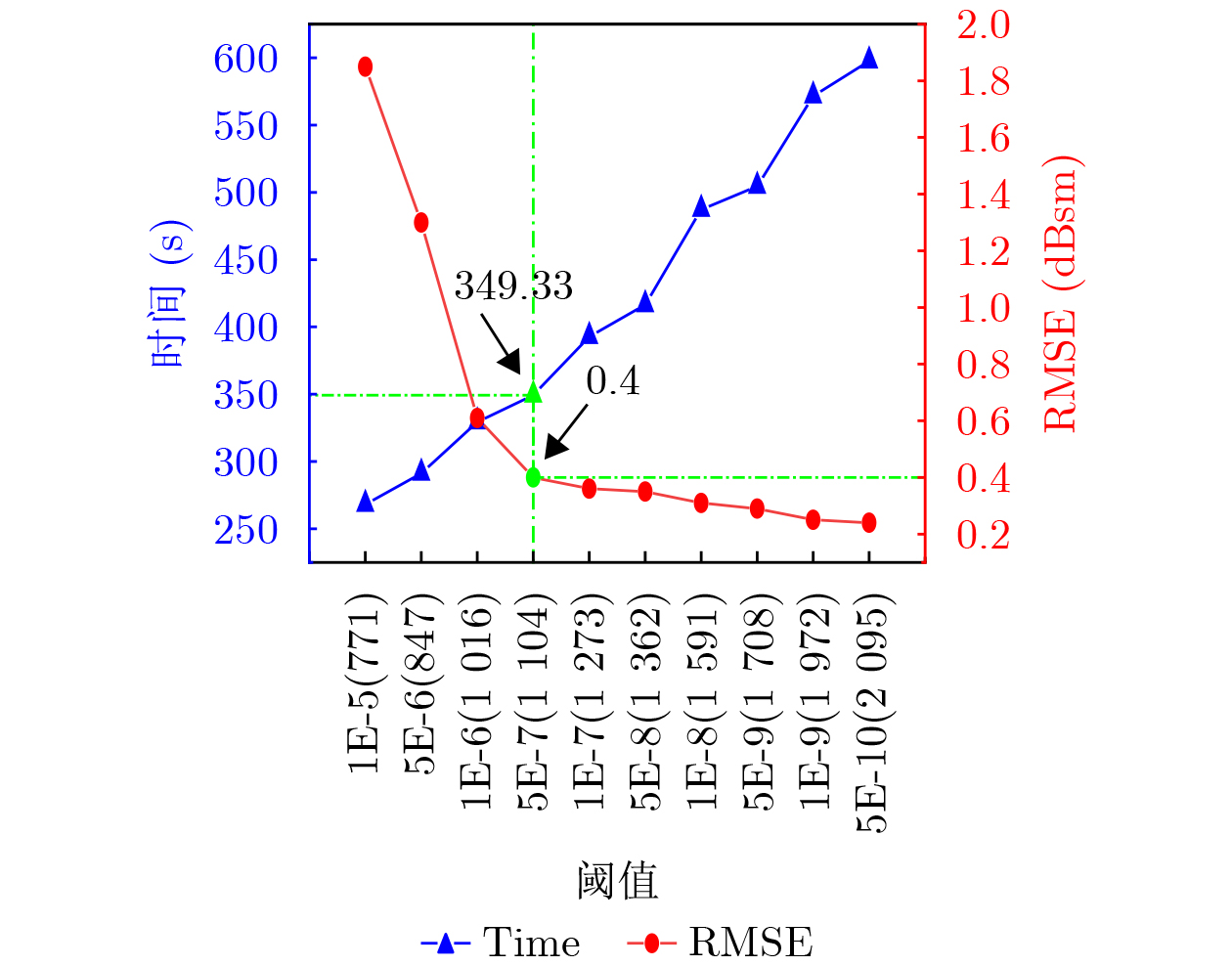
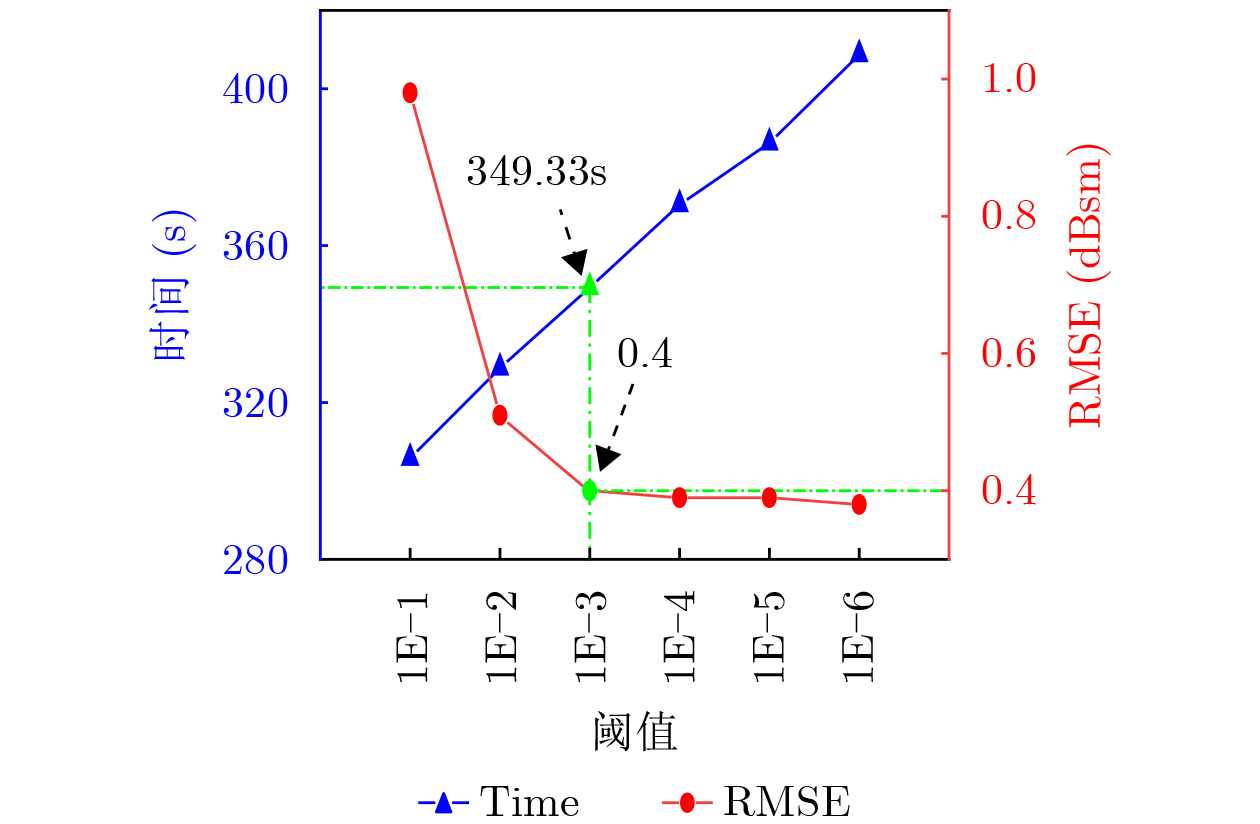
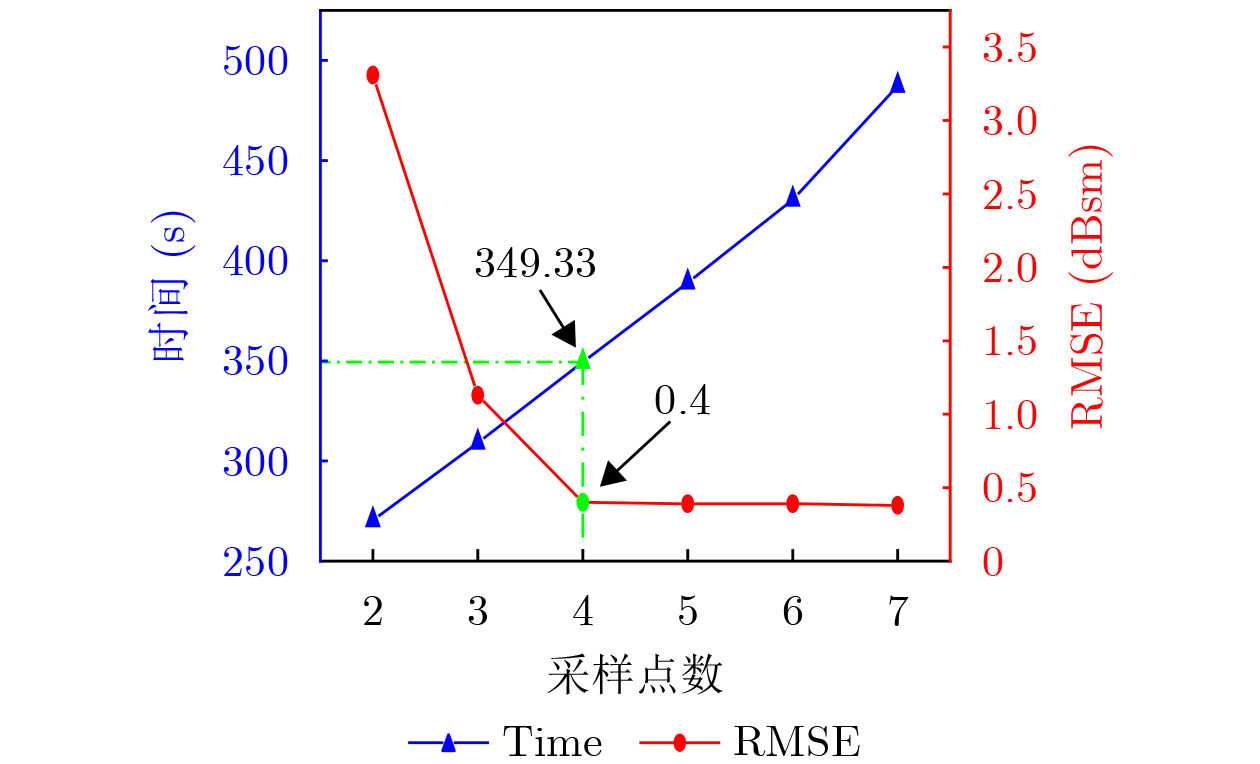
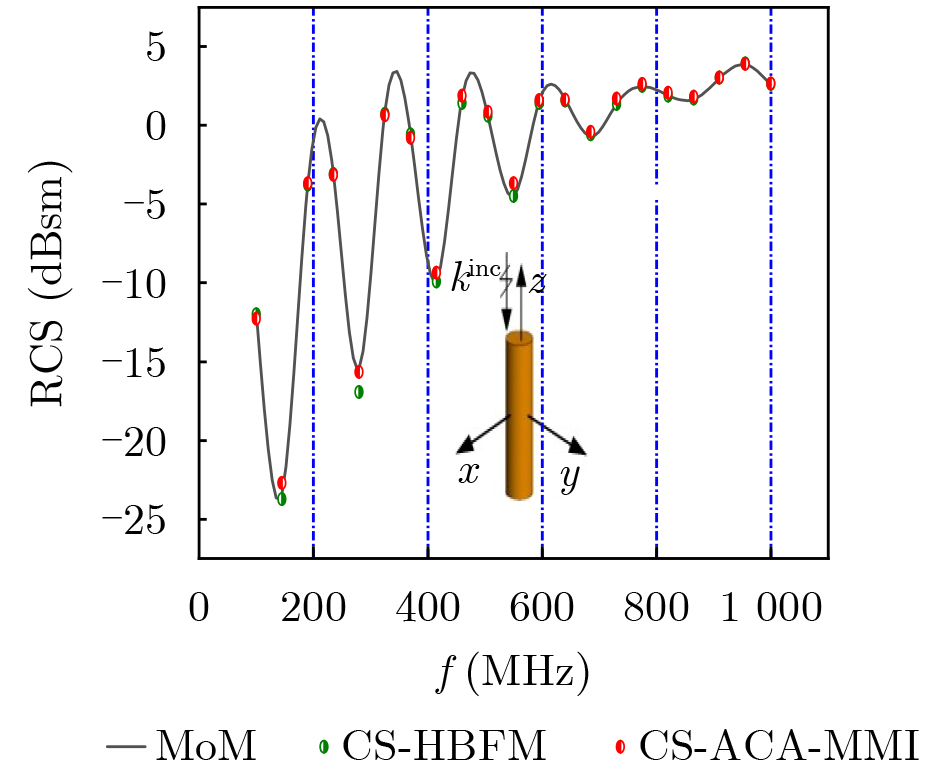
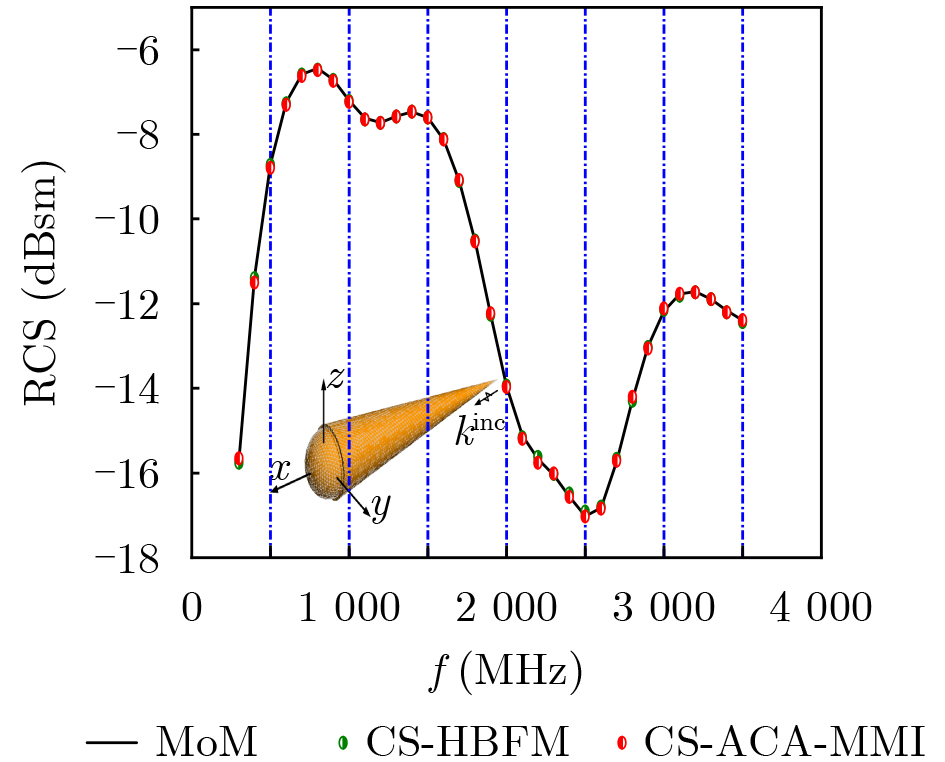
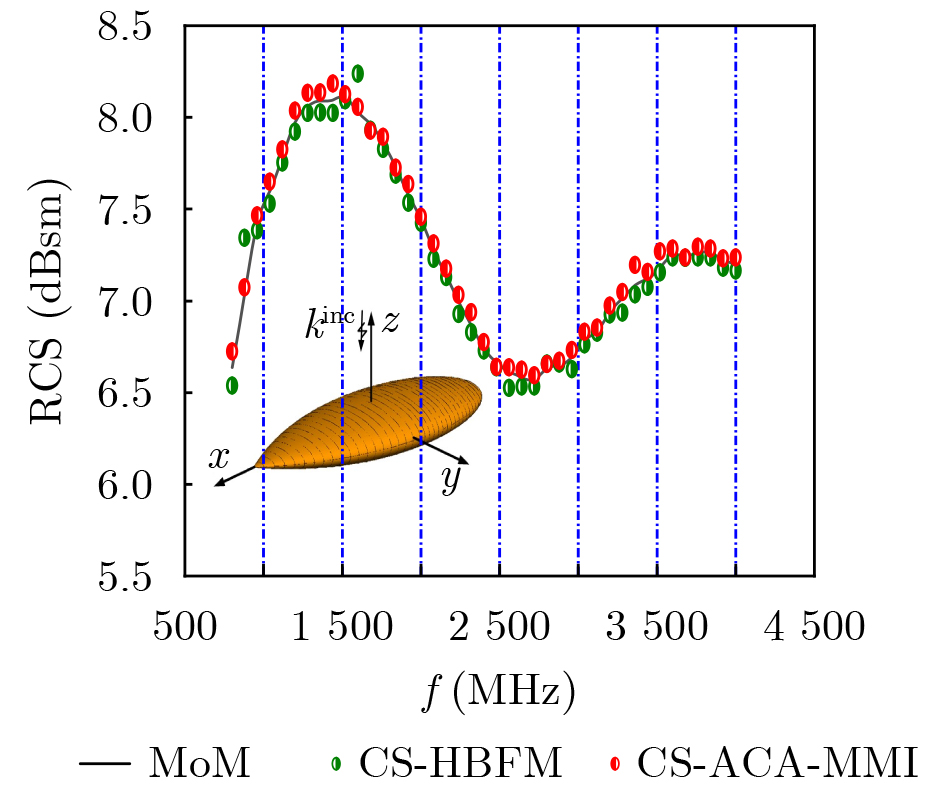
  •   Objective  Broadband electromagnetic scattering is essential in modern fields such as radar target recognition, stealth technologies, and microwave imaging. While the Method of Moments (MoM) provides high accuracy, it incurs substantial computational costs for electrically large or complex targets due to the construction and solution of large-scale impedance matrices. Although acceleration techniques like the Multilevel Fast Multipole Method (MLFMM) and Adaptive Cross Approximation (ACA) have been developed, they still require costly per-frequency recomputations during wideband sweeps. To mitigate this redundancy, techniques such as Asymptotic Waveform Evaluation (AWE), Model-Based Parameter Estimation (MBPE), and impedance matrix interpolation have been introduced. However, AWE suffers from error accumulation in wideband scenarios, MBPE entails high initial sampling costs, and traditional matrix interpolation remains burdened by the need to compute full high-dimensional matrices at sampling points. Recently, Compressive Sensing MoM (CS-MoM) and its derivative, CS-HBFM, have offered promising wideband solutions by utilizing Hyper-Basis Functions (HBFs). By calculating Characteristic Mode Basis Functions (CMBFs) only once at the highest frequency, CS-HBFM eliminates the redundant generation of basis functions. Nevertheless, existing CS-HBFM frameworks rely on non-deterministic random or uniform sampling strategies. Furthermore, they are hindered by large-scale matrix-vector products and the persistent need to reconstruct and solve impedance equations at every frequency step.  Methods  With CS as the basic framework, this study proposes the CS-ACA-MMI accelerated analysis method for broadband electromagnetic scattering, which achieves efficient calculation of broadband scattering through the collaborative acceleration of dual ACA decomposition and low-dimensional measurement matrix interpolation. The specific implementation steps are as follows: First, CMBFs are constructed at the highest frequency point, and the dominant HBFs are selecting significant modes based on the Modal Significance (MS) criterion. ACA low-rank decomposition is performed on the complete impedance matrix at this frequency point to extract deterministic row indices representing the dominant Rao–Wilton–Glisson (RWG) basis functions, which are maintained throughout the frequency sweep to avoid the problem of non-deterministic sampling. Second, Chebyshev-Lobatto nodes are selected to determine four key sampling frequency points, and the low-dimensional measurement matrix of each sampling point is directly filled based on the pre-extracted row indices, circumventing the calculation of the complete high-dimensional impedance matrix, thereby significantly reducing the computational overhead of filling the matrix element-by-element at each frequency point. The measurement impedance elements of the sampling points are corrected by geometric distance, and then the corrected measurement impedance of the target frequency point is obtained via interpolation and further restored to the real measurement impedance, eliminating the redundancy of constructing measurement matrices at each frequency point. Third, a second ACA decomposition is carried out on the far-field impedance component of the interpolated measurement matrix, converting the large-scale far-field matrix-vector product into a low-dimensional matrix product. The near-field part is directly obtained by multiplying the measurement matrix with the basis function, and finally the complete sensing matrix is rapidly assembled. Fourth, the solution of the traditional dense matrix equation is transformed into the solution of an overdetermined equation under the CS framework, and the least square method is adopted to reconstruct the current coefficient, thereby calculating the broadband Radar Cross Section (RCS) of the target, with the Root Mean Square Error (RMSE) used to measure the computational accuracy. Fifth, three typical targets (including simple regular, complex slotted, and electrically large irregular structures) such as a cylinder, a slotted cone, and an almond are selected, with different broadband analysis frequency bands and subdivision parameters set. The broadband RCS is calculated by MoM, CS-HBFM, and CS-ACA-MMI respectively, and the computational accuracy, total calculation time, and memory occupation of the single-frequency point measurement matrix of the three methods are compared and analyzed to verify the effectiveness of the proposed method.  Results and Discussions  Three typical numerical examples, a PEC cylinder, a cone-sphere with a gap and a almond, are used to verify the performance of the CS-ACA-MMI method. The spatial distribution of ACA-extracted row indices shows obvious hotspot clustering at geometric boundaries and structural junctions, which confirms the physical rationality and effectiveness of the deterministic sampling strategy (Fig.2). Parametric studies demonstrate that appropriate ACA thresholds and four sampling points achieve the best balance between computational accuracy and efficiency (Fig.3, Fig.4, Fig.5). The wideband RCS results calculated by the proposed method are in excellent agreement with those from the traditional MoM over the entire frequency band (Fig.6, Fig.7, Fig8). The root-mean-square errors (RMSE) remain very low, verifying the high numerical accuracy of the method. Compared with the conventional CS-HBFM method, the CS-ACA-MMI framework reduces the total computation time by 93.4% for the cylinder, 96.7% for the cone-sphere with a gap and 81% for the almond, respectively (Table 2). The significant improvement in efficiency benefits from deterministic index reuse, low-dimensional measurement matrix interpolation, and dual ACA acceleration, which effectively alleviate the heavy computational burden in wideband frequency-sweeping analysis.  Conclusions  This study successfully develops a CS acceleration framework, CS-ACA-MMI, which integrates ACA with MMI. This framework effectively addresses the bottlenecks of repetitive matrix construction and equation solving in broadband electromagnetic scattering analysis, while overcoming the non-deterministic sampling and high computational/storage overhead inherent in traditional CS-HBFM. The core advantages of CS-ACA-MMI are three-fold: First, by extracting dominant row indices via ACA at the highest frequency and reusing them across the entire band, it ensures a deterministic construction of the measurement matrix and provides a stable physical benchmark for broadband interpolation. Second, the interpolation process is shifted from high-dimensional full impedance matrices to low-dimensional measurement matrices. Combined with Chebyshev-Lobatto node technology, this eliminates the redundant matrix filling at each frequency point. Third, by applying a second ACA decomposition to the far-field components, large-scale matrix-vector products are converted into low-dimensional matrix multiplications, significantly accelerating the sensing matrix construction. Numerical results for various structures (cylinder, cone-sphere with a gap, and almond) demonstrate that CS-ACA-MMI maintains high computational accuracy consistent with the conventional MoM. Meanwhile, the proposed method reduces total computation time by over 81% and cuts single-frequency memory requirements by up to 65%. By only requiring the storage of measurement matrices at a few sampling points, it markedly reduces the overall storage overhead.
  • loading
  • [1]
    HARRINGTON R F. Field Computation by Moment Methods[M]. New York: Macmillan, 1968: 22–57.
    [2]
    CANDES E J, ROMBERG J, and TAO T. Robust uncertainty principles: Exact signal reconstruction from highly incomplete frequency information[J]. IEEE Transactions on Information Theory, 2006, 52(2): 489–509. doi: 10.1109/TIT.2005.862083.
    [3]
    陈新蕾, 邓小乔, 李茁, 等. 金属介质混合目标散射分析的快速偶极子法[J]. 电子与信息学报, 2011, 33(11): 2790–2794. doi: 10.3724/SP.J.1146.2011.00398.

    CHEN Xinlei, DENG Xiaoqiao, LI Zhuo, et al. Electromagnetic scattering by mixed conducting and dielectric objects analysis using fast dipole method[J]. Journal of Electronics & Information Technology, 2011, 33(11): 2790–2794. doi: 10.3724/SP.J.1146.2011.00398.
    [4]
    SONG J M and CHEW W C. Multilevel fast-multipole algorithm for solving combined field integral equations of electromagnetic scattering[J]. Microwave and Optical Technology Letters, 1995, 10(1): 14–19. doi: 10.1002/mop.4650100107.
    [5]
    WANG Zhonggen, DONG Dai, GUO Fei, et al. Fast construction of measurement matrix and sensing matrix with dual adaptive cross approximation[J]. IEEE Antennas and Wireless Propagation Letters, 2025, 24(1): 13–17. doi: 10.1109/LAWP.2024.3481498.
    [6]
    FANG Xiaoxing, HELDRING A, RIUS J M, et al. Nested fast adaptive cross approximation algorithm for solving electromagnetic scattering problems[J]. IEEE Transactions on Microwave Theory and Techniques, 2020, 68(12): 4995–5003. doi: 10.1109/TMTT.2020.3024732.
    [7]
    XU Zhou, WANG Xing, CHEN Lin, et al. Combination of adaptive cross approximation and asymptotic waveform evaluation for efficient analysis of wide-band RCS[J]. IEEE Transactions on Antennas and Propagation, 2025, 73(11): 9648–9653. doi: 10.1109/TAP.2025.3589667.
    [8]
    WANG Xiande and WERNER D H. Improved model-based parameter estimation approach for accelerated periodic method of moments solutions with application to the analysis of convoluted frequency selected surfaces and metamaterials[J]. IEEE Transactions on Antennas and Propagation, 2010, 58(1): 122–131. doi: 10.1109/TAP.2009.2036196.
    [9]
    NEWMAN E and FORRAI D. Scattering from a microstrip patch[J]. IEEE Transactions on Antennas and Propagation, 1987, 35(3): 245–251. doi: 10.1109/TAP.1987.1144084.
    [10]
    LI Weidong, ZHOU Houxing, HONG Wei, et al. An accurate interpolation scheme with derivative term for generating mom matrices in frequency sweeps[J]. IEEE Transactions on Antennas and Propagation, 2009, 57(8): 2376–2385. doi: 10.1109/TAP.2009.2024476.
    [11]
    CHEN Xinlei, ZHANG Liyang, GU Changqing, et al. Wideband Sherman-Morrison-Woodbury formula-based algorithm for electromagnetic scattering problems[J]. IEEE Transactions on Antennas and Propagation, 2023, 71(6): 5487–5492. doi: 10.1109/TAP.2023.3263627.
    [12]
    DONOHO D L. Compressed sensing[J]. IEEE Transactions on Information Theory, 2006, 52(4): 1289–1306. doi: 10.1109/TIT.2006.871582.
    [13]
    SHEN Cunjie, CAO Xinyuan, QI Qi, et al. Underdetermined equation model combined with improved Krylov subspace basis for solving electromagnetic scattering problems[J]. Progress in Electromagnetics Research Letters, 2024, 119: 79–84. doi: 10.2528/PIERL24032101.
    [14]
    WANG Zhonggen, LI Chenwei, SUN Yufa, et al. Fast analysis of broadband electromagnetic scattering problems by combining hyper basis functions-based mom with compressive sensing[J]. IEEE Journal on Multiscale and Multiphysics Computational Techniques, 2024, 9: 84–91. doi: 10.1109/JMMCT.2024.3355976.
    [15]
    CAO Xinyuan, CHEN Mingsheng, QI Qi, et al. Solving electromagnetic scattering problems by underdetermined equations and Krylov subspace[J]. IEEE Microwave and Wireless Components Letters, 2020, 30(6): 541–544. doi: 10.1109/LMWC.2020.2988166.
    [16]
    王仲根, 唐晓菀, 汪强. 应用改进的主要特征基函数快速计算目标宽角度RCS[J]. 电子与信息学报, 2018, 40(3): 573–578. doi: 10.11999/JEIT170499.

    WANG Zhonggen, TANG Xiaowan and WANG Qiang. Fast calculation of wide-angel RCS of objects using improved primary characteristic basis functions[J]. Journal of Electronics & Information Technology, 2018, 40(3): 573–578. doi: 10.11999/JEIT170499.
    [17]
    DU Ping, TONG Ziwen, LIN Hai, et al. Wideband RCS analysis of finite periodic array in the vicinity of object using modified SSED-CBFM and improved FIR[J]. IEEE Antennas and Wireless Propagation Letters, 2025, 24(6): 1447–1551. doi: 10.1109/LAWP.2025.3539657.
    [18]
    OU Mingrui, SUN Yufa, and SHI Chaofan. Compressive sensing enhanced multilevel characteristic basis function method for analyzing electrically large scattering problems[J]. IEEE Antennas and Wireless Propagation Letters, 2024, 23(2): 593–597. doi: 10.1109/LAWP.2023.3330820.
    [19]
    TONG Ziwen, DU Ping, and ZHENG Gang. Characteristic modes analysis of finite periodic array with object using entire domain basis function method and ACA[J]. IEEE Antennas and Wireless Propagation Letters, 2025, 24(5): 1149–1152. doi: 10.1109/LAWP.2025.3527927.
    [20]
    WANG Zhonggen, NIE Wenyan, and LIN Han. Characteristic basis functions enhanced compressive sensing for solving the bistatic scattering problems of three-dimensional targets[J]. Microwave and Optical Technology Letters, 2020, 62(10): 3132–3138. doi: 10.1002/mop.32432.
    [21]
    GAO Yalan, AKBAR M F, and JAWAD G N. Stabilized and fast method for compressive-sensing-based method of moments[J]. IEEE Antennas and Wireless Propagation Letters, 2023, 22(12): 2915–2919. doi: 10.1109/LAWP.2023.3304306.
    [22]
    BERRIOCHOA E, CACHAFEIRO A, DÍAZ J, et al. A note on the rate of convergence for Chebyshev-Lobatto and Radau systems[J]. Open Mathematics, 2016, 14(1): 156–166. doi: 10.1515/math-2016-0015.
  • 加载中

Catalog

    通讯作者: 陈斌, bchen63@163.com
    • 1. 

      沈阳化工大学材料科学与工程学院 沈阳 110142

    1. 本站搜索
    2. 百度学术搜索
    3. 万方数据库搜索
    4. CNKI搜索

    Figures(8)  / Tables(2)

    Article Metrics

    Article views (48) PDF downloads(7) Cited by()
    Proportional views
    Related

    /

    DownLoad:  Full-Size Img  PowerPoint
    Return
    Return