Advanced Search
Turn off MathJax
Article Contents
CONG Pengyu, HAN Shengqian, DENG Mingyu, LIU Shengjie, YANG Chenyang, SHEN Songhui. Impact of Wireless Priors on the Computation and Energy Cost of MU-MIMO Precoding Learning[J]. Journal of Electronics & Information Technology. doi: 10.11999/JEIT260388
Citation: CONG Pengyu, HAN Shengqian, DENG Mingyu, LIU Shengjie, YANG Chenyang, SHEN Songhui. Impact of Wireless Priors on the Computation and Energy Cost of MU-MIMO Precoding Learning[J]. Journal of Electronics & Information Technology. doi: 10.11999/JEIT260388

Impact of Wireless Priors on the Computation and Energy Cost of MU-MIMO Precoding Learning

doi: 10.11999/JEIT260388 cstr: 32379.14.JEIT260388
Funds:  The National Science and Technology Major Project (GXB-2-2025-5)
  • Received Date: 2026-04-01
  • Accepted Date: 2026-07-15
  • Rev Recd Date: 2026-07-15
  • Available Online: 2026-07-25
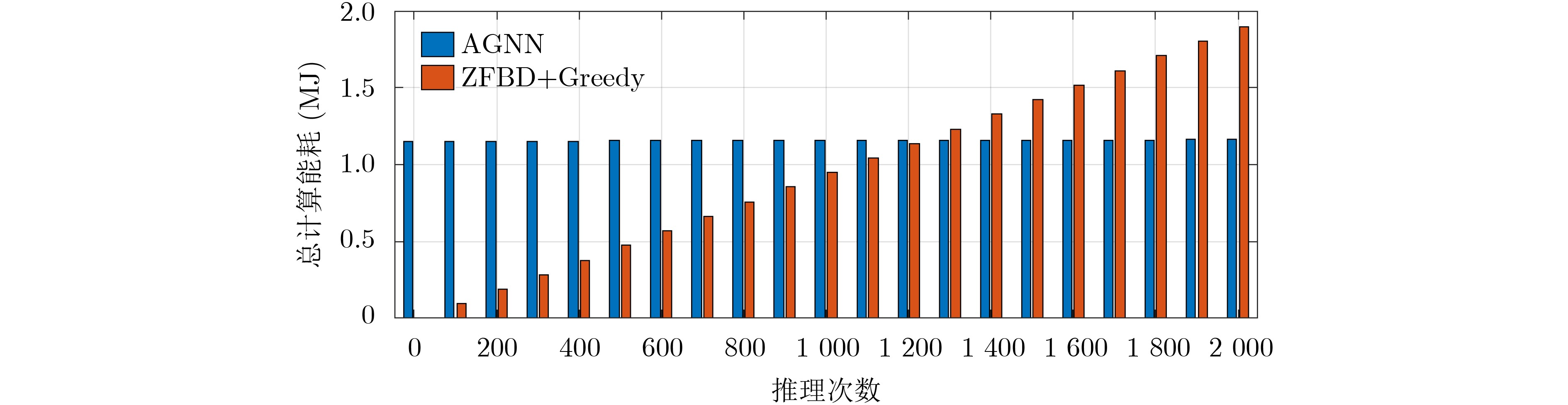
  •   Objective  This paper investigates downlink Multi-User Multi-Input Multi-Output (MU-MIMO) precoding policy learning from the perspectives of computational complexity and energy consumption. Traditional numerical optimization algorithms achieve high performance but exhibit rapidly increasing computational complexity as the numbers of base station antennas and served users increase, leading to high inference latency and energy consumption. In recent years, deep learning has been widely adopted to reduce online computational cost; however, existing evaluations generally rely on training or inference time and FLoating-point OPerations (FLOPs), without direct measurements of energy consumption and power. More importantly, the computational cost of a deep learning model is closely related to network architecture design, which should effectively exploit the wireless prior knowledge of the precoding policy. Therefore, this paper develops a network architecture that matches the multidimensional permutation properties of the precoding policy and systematically investigates how wireless priors affect computational complexity and energy consumption through comprehensive hardware-based measurements and simulations.  Methods  The MU-MIMO precoding policy is formulated as a mapping from multiuser channel information to the optimal precoding matrix under a transmit power constraint. The optimal policy satisfies multidimensional joint permutation equivariance and invariance with respect to user indices, receive antenna indices, and base station antenna indices. To exploit these wireless priors, an Attention-based Graph Neural Network (AGNN) is proposed based on a hypergraph structure, in which the update and aggregation operations satisfy the required equivariance and invariance properties. An attention mechanism is incorporated to model inter-user interference and improve generalization across different numbers of users. For broadband precoding, multi-subcarrier channel information is aggregated at the input layer to construct an expanded feature representation. To quantify computational energy cost, a hardware measurement platform is developed to collect energy consumption and power for the GPU, CPU, and DRAM during both training and inference. Simulations are conducted using 3GPP TR 38.901 Urban Macrocell (UMa) channel datasets with different antenna array sizes and bandwidth configurations. The proposed AGNN is compared with a traditional numerical optimization algorithm based on Zero-Forcing Block Diagonalization (ZFBD) with greedy user pairing and two Transformer-based architectures that satisfy only one-dimensional permutation equivariance.  Results and Discussions  Two major findings are obtained. First, incomplete exploitation of wireless priors results in inferior performance and higher computational cost. In the MU-MISO scenario, the Transformer-based architectures achieve lower spectral efficiency than the ZFBD+Greedy baseline while requiring substantially larger models and higher inference FLOPs than AGNN. By matching the multidimensional permutation properties of the precoding policy, AGNN achieves higher spectral efficiency while reducing inference FLOPs by approximately one order of magnitude. Hardware measurements further demonstrate that AGNN reduces inference energy consumption and power on both the CPU and GPU. Second, in small- and large-scale MU-MIMO scenarios, ZFBD+Greedy increases the system sum rate by 10.9×, whereas inference FLOPs, inference time, and inference energy increase by 79.0×, 21.3×, and 38.6×, respectively. In contrast, AGNN increases the system sum rate by 11.5×, while inference FLOPs increase by only 1.89×. Meanwhile, inference time and inference energy are reduced to 0.03× and 0.20×, respectively. These results demonstrate that exploiting the multidimensional permutation properties of the precoding policy provides an effective approach for reducing computational complexity, inference latency, and energy consumption in large-scale 6G MU-MIMO systems.  Conclusions  This paper investigates the effect of wireless priors on the computational complexity and energy consumption of MU-MIMO precoding learning. By exploiting the multidimensional joint permutation equivariance and invariance of the optimal precoding policy, an AGNN is developed that is well matched to these properties. A hardware-aware measurement platform is established to obtain direct measurements of energy consumption and power for the GPU, CPU, and DRAM during training and inference. Simulations based on 3GPP TR 38.901 UMa channel datasets demonstrate that Transformer-based architectures satisfying only one-dimensional permutation equivariance achieve lower spectral efficiency while incurring substantially higher computational and energy costs. In contrast, AGNN achieves higher spectral efficiency while substantially reducing inference FLOPs, inference time, inference energy consumption, and training complexity. As system size increases, traditional numerical optimization algorithms exhibit much faster growth in computational and energy costs than in system sum rate, whereas the proposed learning method based on wireless priors maintains low inference latency and energy consumption. Overall, exploiting the wireless prior knowledge of the MU-MIMO precoding policy in network architecture design provides an effective solution for computationally efficient and energy-efficient high-dimensional precoding optimization in future 6G networks.
  • loading
  • [1]
    WANG Chengxiang, YOU Xiaohu, GAO Xiqi, et al. On the road to 6G: Visions, requirements, key technologies, and testbeds[J]. IEEE Communications Surveys & Tutorials, 2023, 25(2): 905–974. doi: 10.1109/COMST.2023.3249835.
    [2]
    沈璐瑶, 周星光, 许子乐, 等. 无蜂窝大规模MIMO系统中下行短包传输的叠加导频功率分配[J]. 电子与信息学报, 2026, 48(1): 57–66. doi: 10.11999/JEIT250655.

    SHEN Luyao, ZHOU Xingguang, XU Zile, et al. Power allocation for downlink short packet transmission with superimposed pilots in cell-free massive MIMO[J]. Journal of Electronics & Information Technology, 2026, 48(1): 57–66. doi: 10.11999/JEIT250655.
    [3]
    霍如, 吕科呈, 黄韬. 车联网中路径预测驱动的任务切分与计算资源分配方法[J]. 电子与信息学报, 2025, 47(10): 3658–3669. doi: 10.11999/JEIT250135.

    HUO Ru, LV Kecheng, and HUANG Tao. Task segmentation and computing resource allocation method driven by path prediction in internet of vehicles[J]. Journal of Electronics & Information Technology, 2025, 47(10): 3658–3669. doi: 10.11999/JEIT250135.
    [4]
    邢智童, 李云, 吴广富, 等. 智能反射面辅助的无线通信系统波束赋形及智能反射面相移技术综述[J]. 电子与信息学报, 2026, 48(2): 697–712. doi: 10.11999/JEIT250790.

    XING Zhitong, LI Yun, WU Guangfu, et al. A review on phase rotation and beamforming scheme for intelligent reflecting surface assisted wireless communication systems[J]. Journal of Electronics & Information Technology, 2026, 48(2): 697–712. doi: 10.11999/JEIT250790.
    [5]
    HUANG Zhaohui, WANG Zhaocheng, and HAN Zhu. Graph neural network empowered wireless communications: Fundamentals, state-of-the-art, challenges, and opportunities[J]. IEEE Wireless Communications, 2025, 32(5): 162–168. doi: 10.1109/MWC.002.2400327.
    [6]
    ZHAO Baichuan, GUO Jia, and YANG Chenyang. Understanding the performance of learning precoding policies with graph and convolutional neural networks[J]. IEEE Transactions on Communications, 2024, 72(9): 5657–5673. doi: 10.1109/TCOMM.2024.3388506.
    [7]
    LIU Shengjie, GUO Jia, and YANG Chenyang. Multidimensional graph neural networks for wireless communications[J]. IEEE Transactions on Wireless Communications, 2024, 23(4): 3057–3073. doi: 10.1109/TWC.2023.3305124.
    [8]
    DUAN Yuxuan, GUO Jia, and YANG Chenyang. Learning precoding in multi-user multi-antenna systems: Transformer or graph transformer?[J]. IEEE Transactions on Wireless Communications, 2026, 25: 6284–6300. doi: 10.1109/TWC.2025.3624290.
    [9]
    KASALAEE G, KARKAN A H, FRIGON J F, et al. Compression of site-specific deep neural networks for massive MIMO precoding[C]. IEEE International Conference on Machine Learning for Communication and Networking, Barcelona, Spain, 2025: 1–6. doi: 10.1109/ICMLCN64995.2025.11140523.
    [10]
    HAN Song, POOL J, TRAN J, et al. Learning both weights and connections for efficient neural networks[C]. NIPS'15: Proceedings of the 29th International Conference on Neural Information Processing Systems - Volume 1, Montreal, Canada, 2015: 1135–1143.
    [11]
    LI Chen, TSOURDOS A, and GUO Weisi. A transistor operations model for deep learning energy consumption scaling law[J]. IEEE Transactions on Artificial Intelligence, 2024, 5(1): 192–204. doi: 10.1109/TAI.2022.3229280.
    [12]
    VELIČKOVIĆ P, CASANOVA A, LIÒ P, et al. Graph attention networks[C]. 6th International Conference on Learning Representations ICLR 2018 Conference Track Proceedings, Vancouver, Canada, 2018. doi: 10.17863/CAM.48429.
    [13]
    GUO Jia and YANG Chenyang. A model-based GNN for learning precoding[J]. IEEE Transactions on Wireless Communications, 2024, 23(7): 6983–6999. doi: 10.1109/TWC.2023.3336911.
    [14]
    ZHANG Lin, HAN Shengqian, and YANG Chenyang. Gradient-driven graph neural networks for learning digital and hybrid precoder[J]. IEEE Transactions on Communications, 2026, 74: 706–722. doi: 10.1109/TCOMM.2025.3628767.
    [15]
    SUN Liang and MCKAY M R. Eigen-based transceivers for the MIMO broadcast channel with semi-orthogonal user selection[J]. IEEE Transactions on Signal Processing, 2010, 58(10): 5246–5261. doi: 10.1109/TSP.2010.2053709.
    [16]
    VASWANI A, SHAZEER N, PARMAR N, et al. Attention is all you need[C]. NIPS'17: Proceedings of the 31st International Conference on Neural Information Processing Systems, Long Beach, USA, 2017: 6000–6010.
    [17]
    3GPP. TR 38.901 Study on channel model for frequencies from 0.5 to 100 GHz[S]. Cedex: ETSI, 2025.
    [18]
    3GPP. TS 38.101-1 User Equipment (UE) radio transmission and reception; Part 1: Range 1 standalone[S]. Cedex: ETSI, 2025.
    [19]
    3GPP. TR 36.873 Study on 3D channel model for LTE[S]. Cedex: ETSI, 2017.
    [20]
    ZHU Fenghao, WANG Xinquan, HUANG Chongwen, et al. Robust beamforming for RIS-aided communications: Gradient-based manifold meta learning[J]. IEEE Transactions on Wireless Communications, 2024, 23(11): 15945–15956. doi: 10.1109/TWC.2024.3435023.
  • 加载中

Catalog

    通讯作者: 陈斌, bchen63@163.com
    • 1. 

      沈阳化工大学材料科学与工程学院 沈阳 110142

    1. 本站搜索
    2. 百度学术搜索
    3. 万方数据库搜索
    4. CNKI搜索

    Figures(1)  / Tables(12)

    Article Metrics

    Article views (320) PDF downloads(23) Cited by()
    Proportional views
    Related

    /

    DownLoad:  Full-Size Img  PowerPoint
    Return
    Return