Advanced Search
Turn off MathJax
Article Contents
LIU Quan, ZHAO Weisong, XIAO Na, SONG Yanjun, ZHOU Meng, ZHANG Zhili, WANG Jinhai, WANG Lichong. Co-Frequency Interference Analysis and Dynamic Simulation Validation of Satellite-Direct-to-Device Systems Against Terrestrial IMT Networks in Cross-Border Scenarios[J]. Journal of Electronics & Information Technology. doi: 10.11999/JEIT260263
Citation: LIU Quan, ZHAO Weisong, XIAO Na, SONG Yanjun, ZHOU Meng, ZHANG Zhili, WANG Jinhai, WANG Lichong. Co-Frequency Interference Analysis and Dynamic Simulation Validation of Satellite-Direct-to-Device Systems Against Terrestrial IMT Networks in Cross-Border Scenarios[J]. Journal of Electronics & Information Technology. doi: 10.11999/JEIT260263

Co-Frequency Interference Analysis and Dynamic Simulation Validation of Satellite-Direct-to-Device Systems Against Terrestrial IMT Networks in Cross-Border Scenarios

doi: 10.11999/JEIT260263 cstr: 32379.14.JEIT260263
Funds:  The Key Project of the National Natural Science Foundation of China (62231012), the National Science and Technology Major Project of the Ministry of Industry and Information Technology (MIIT) for Mobile Information Networks (2024ZD1300800)
  • Received Date: 2026-03-09
  • Accepted Date: 2026-06-24
  • Rev Recd Date: 2026-06-17
  • Available Online: 2026-07-02
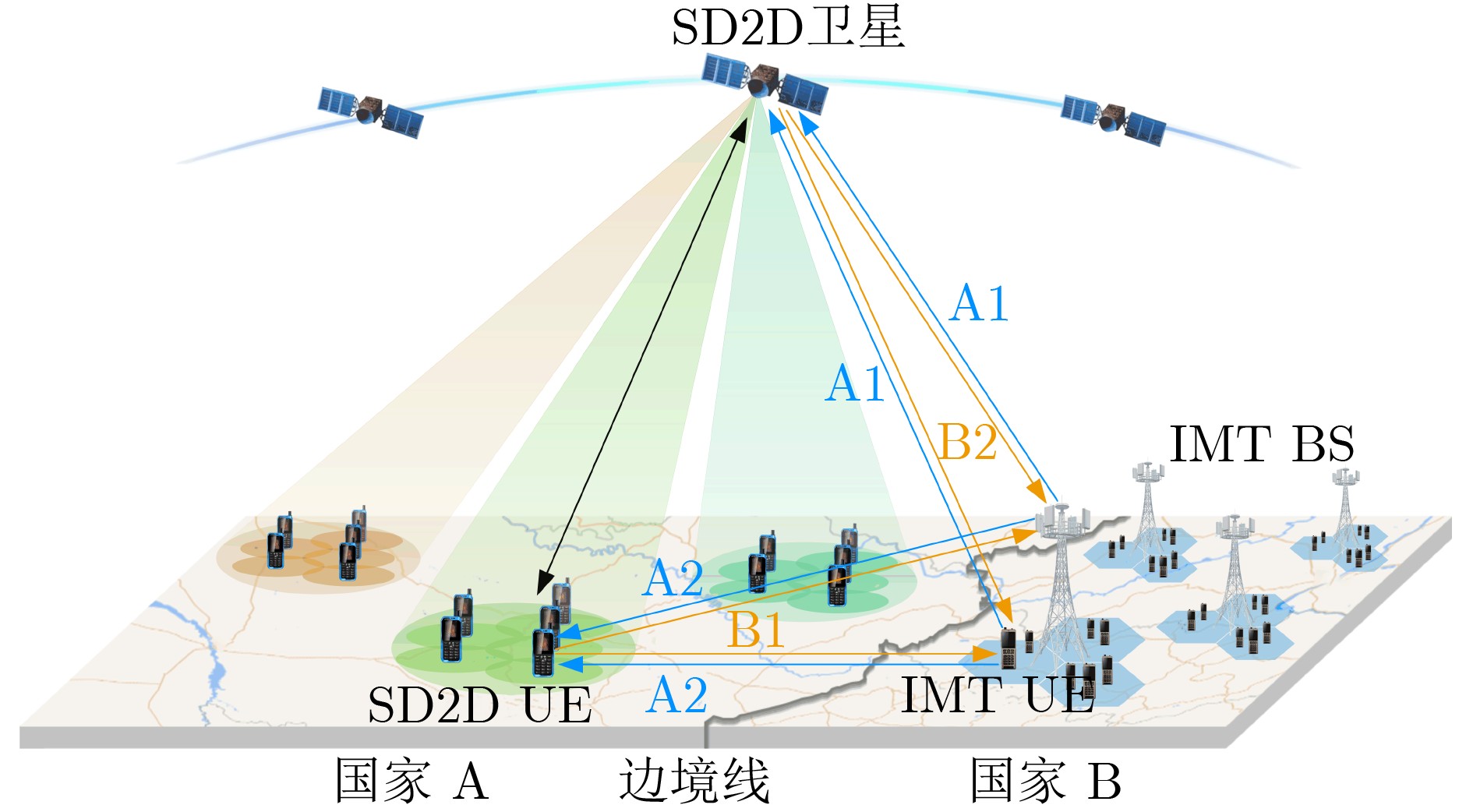
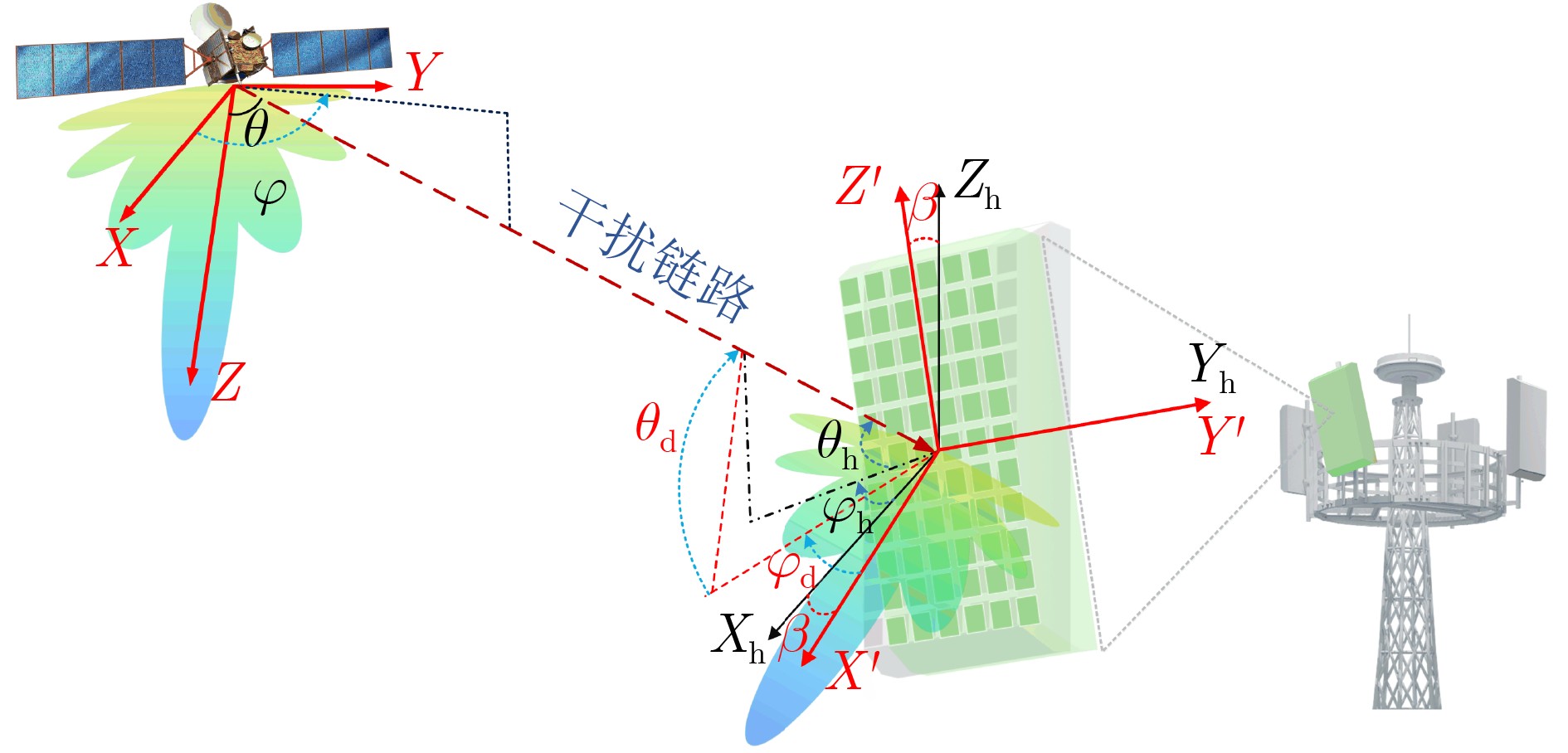
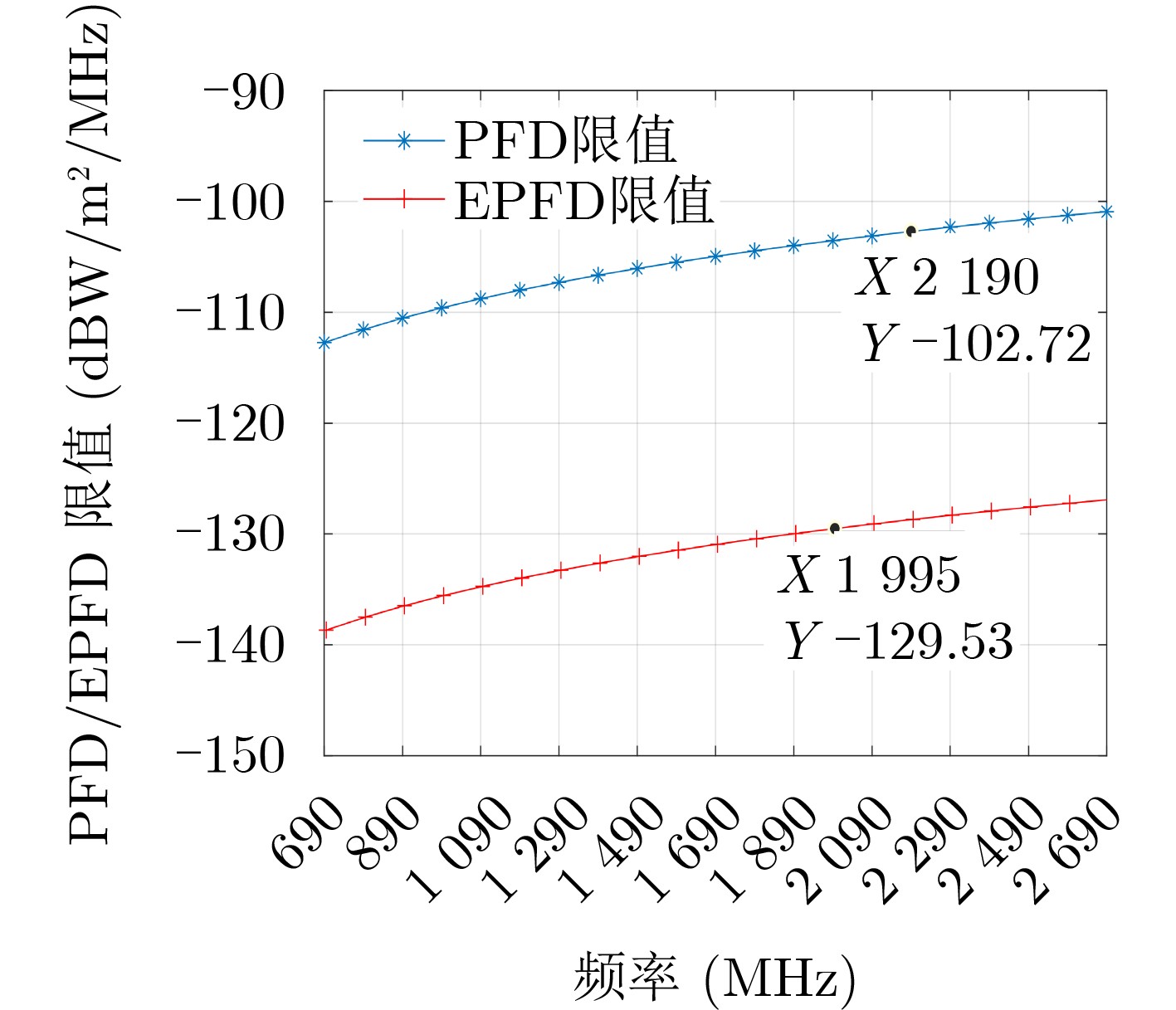
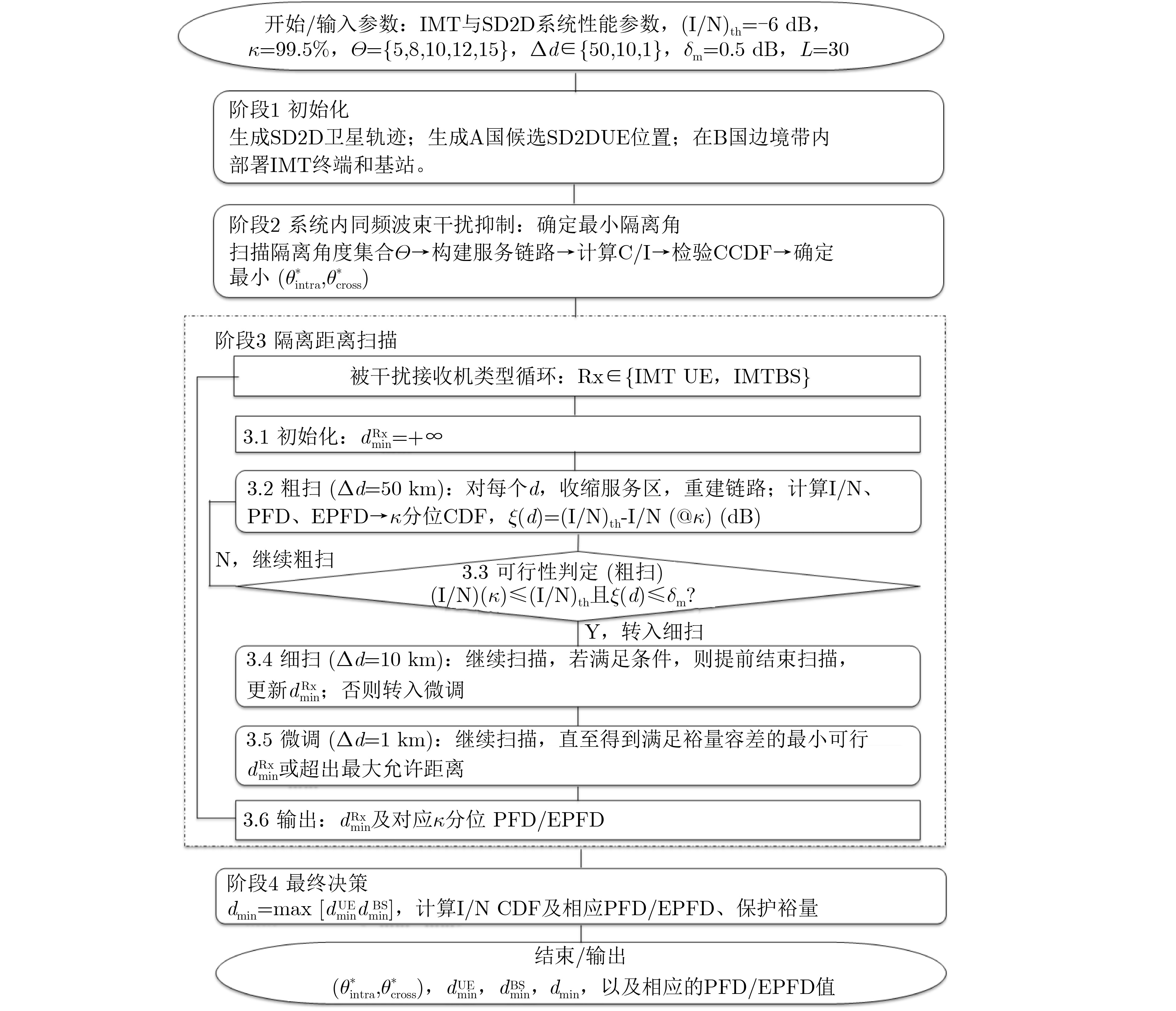
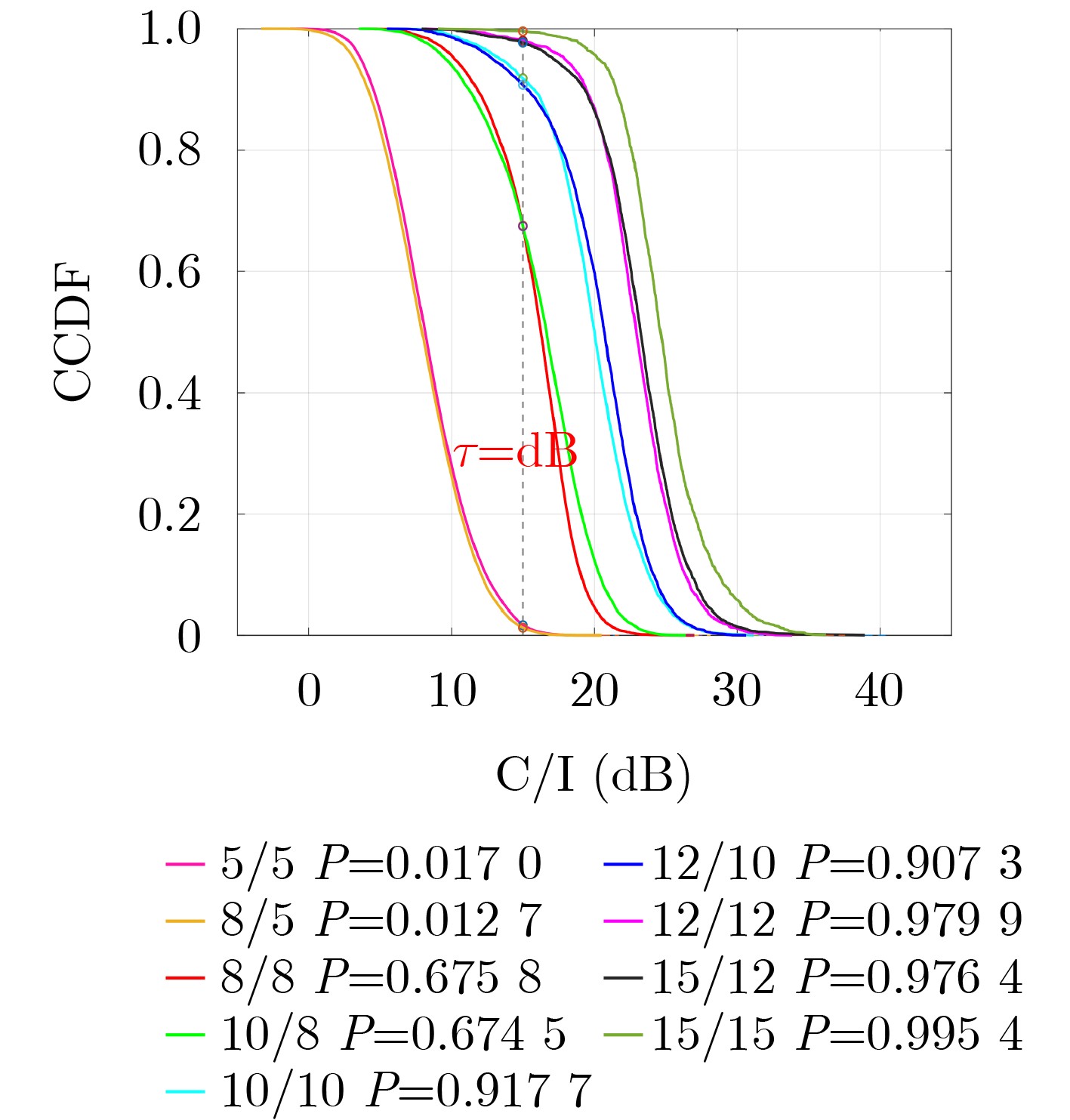
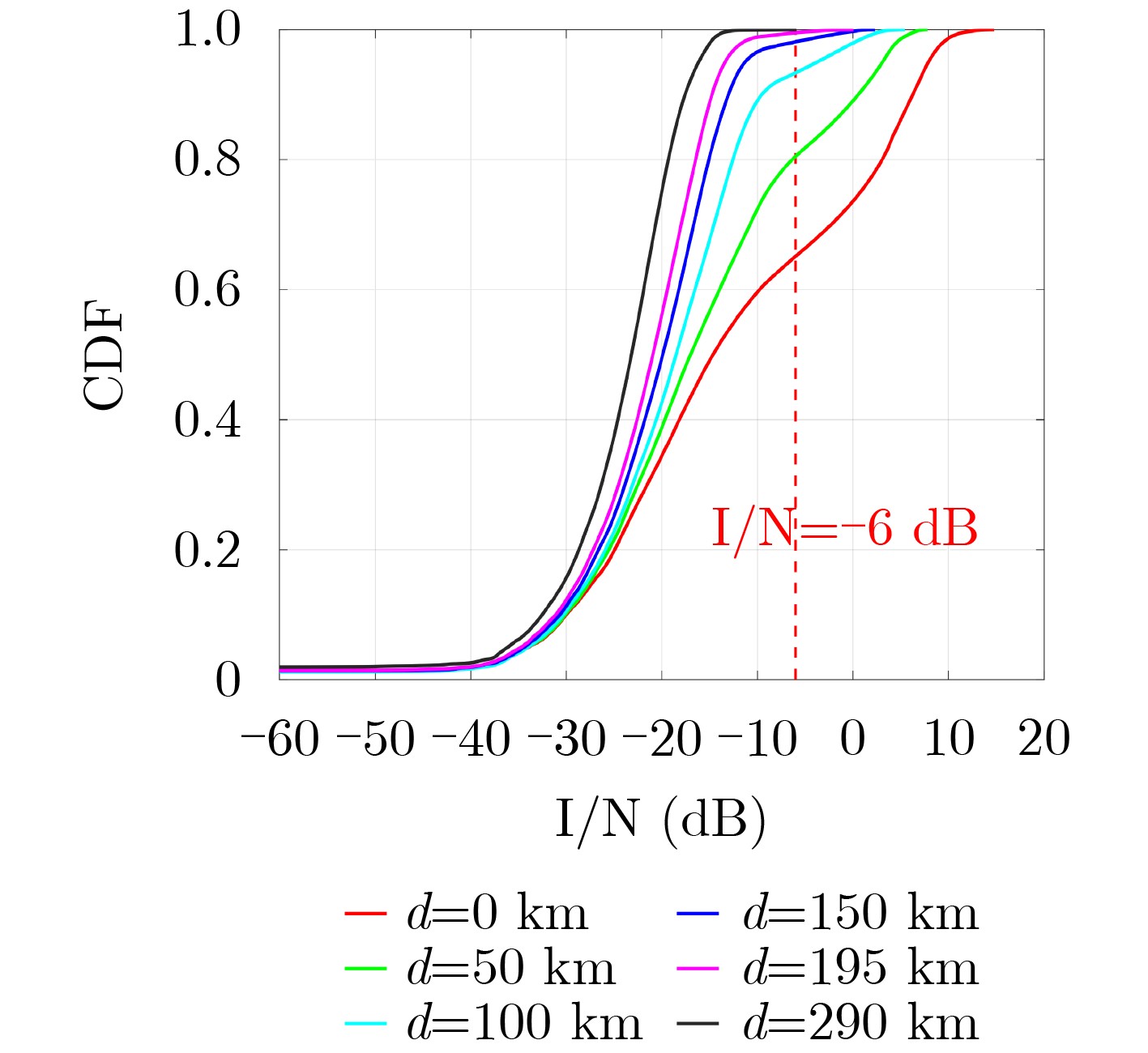
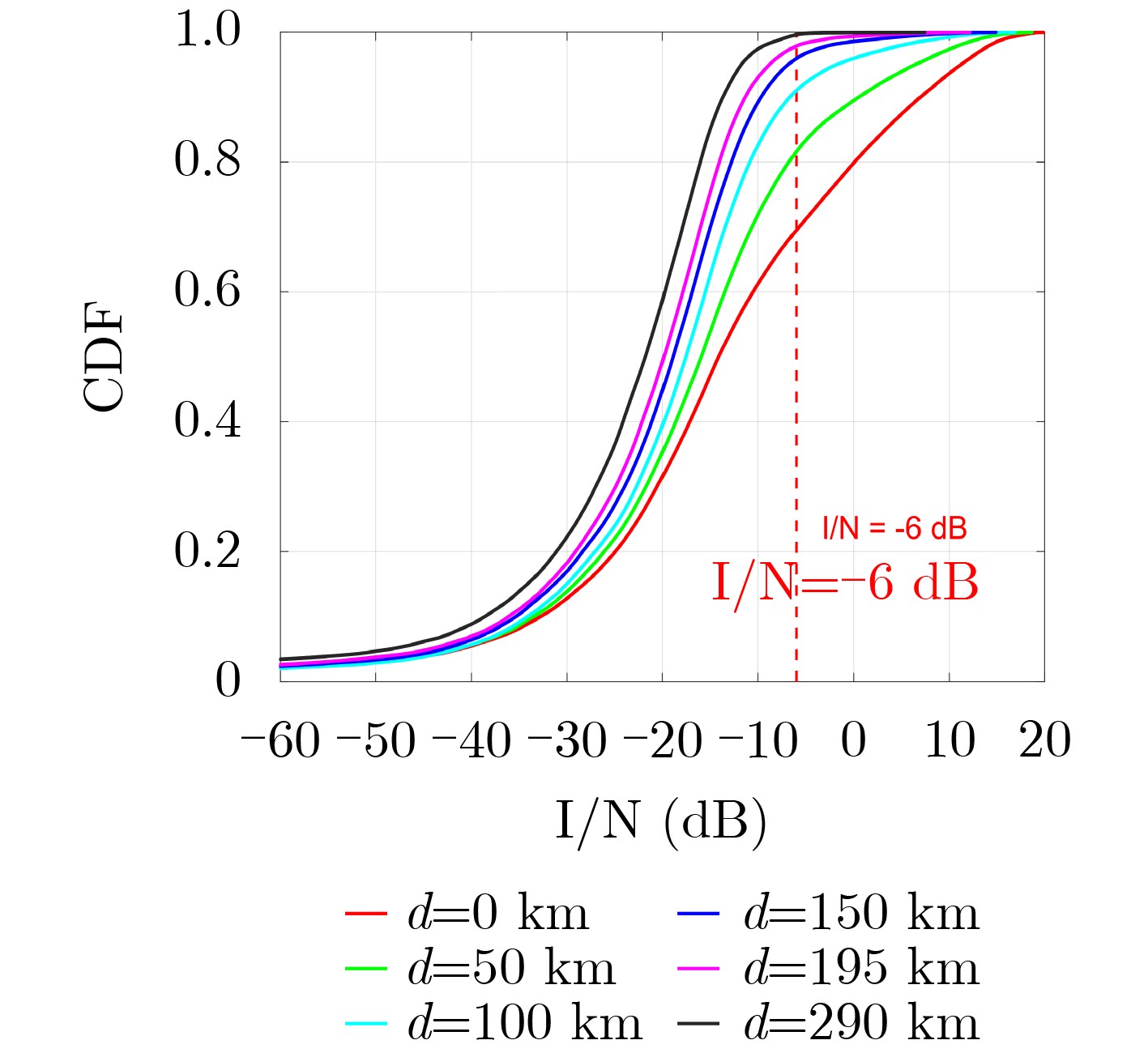
  •   Objective   Satellite-Direct-to-Device (SD2D) systems that reuse terrestrial IMT spectrum may generate harmful downlink interference to incumbent IMT networks in adjacent administrations, especially in cross-border deployments where SD2D downlinks overlap the receiver bands of both IMT user equipment (UEs) and IMT base stations (BSs). Therefore, a practical coexistence methodology is needed to (i) translate IMT receiver protection criteria into explicit power-flux-density (PFD) or equivalent-power-flux-density (EPFD) constraints and (ii) validate these constraints under realistic spatiotemporal dynamics so that they can be mapped to enforceable geographic coordination measures such as border isolation distances. The study focuses on the dominant interference path (SD2D downlink to IMT receivers) and establishes a traceable workflow from deterministic PFD/EPFD limits to dynamic Monte Carlo validation and the resulting minimum border isolation distances.  Methods   A cross-border scenario is modeled where Country A deploys an SD2D system and Country B operates a terrestrial IMT network. Two representative downlink frequencies, 1995 MHz and 2190 MHz, are evaluated for two SpaceX-related configurations, Starlink-1 and Starlink-2. The IMT network is modeled with ITU-R/3GPP-compliant characteristics, using I/N protection criteria with a threshold of −6 dB and a target percentile κ (baseline κ=99.5%) for both IMT UEs and BSs. Satellite transmit antennas use the ITU-R S.1528 reference pattern; IMT-BS receive antennas use the ITU-R F.1336 sector pattern; IMT-UEs are modeled as omnidirectional. A back-lobe blocking attenuation model is applied to both satellite and BS patterns to capture rear-side shielding. Propagation follows the ITU-R P.619 model with free-space loss as a conservative baseline, and an optional clutter-loss term is introduced via a shielding probability. Deterministic protection limits are obtained by back-calculating the maximum permissible aggregate PFD for IMT-UE protection and the maximum permissible aggregate EPFD for IMT-BS protection. A dynamic simulator then validates these limits and searches for the required minimum border isolation distances (Fig.4). Co-channel beam isolation is optimized through the C/I complementary cumulative distribution function (CCDF), and a segmented-search algorithm determines the minimum UE- and BS-side isolation distances together with κ-percentile PFD/EPFD statistics.  Results and Discussions   The deterministic-limit derivation yields a maximum permissible aggregate PFD of −102.72 dBW/m2/MHz at 2190 MHz (IMT-UE) and a maximum permissible aggregate EPFD of −129.53 dBW/m2/MHz at 1995 MHz (IMT-BS) (Fig.3). For Starlink-1, the C/I design target gives a minimum beam-isolation angle pair of (12°, 12°) (Fig.5). Dynamic simulation shows that under the representative baseline setting and the I/N threshold of −6 dB and κ=99.5%, the minimum isolation distance is 195 km for UE-protection and 290 km for BS-protection (Fig.6, Fig.7, Table 4). The coordination distance is therefore 290 km, and the κ-percentile simulated PFD/EPFD matches the deterministic limits with a residual margin below 0.5 dB. For Starlink-2, the optimized isolation angles increase to (15°, 15°), and under the same baseline setting, the required distances rise to 272 km (UE) and 420 km (BS) (Table 5). The baseline distances reported above should be interpreted as representative values under the specified simulation configuration, rather than strictly converged unique results. Stability verification shows that, under different sampling intervals, simulation durations, and random seeds, the UE/BS-side distances mainly fall within 195–210 km/290–300 km for Starlink-1 and 266–290 km/370–420 km for Starlink-2 (Table 7). Sensitivity results for Starlink-1 further show that the isolation distance is governed by the upper tail of the aggregate I/N distribution (Table 6). Tightening κ from 99.5% to 100% increases the UE/BS-side distances from 195/290 km to 304/560 km. Clutter shielding substantially reduces the UE-side distance, e.g., to 173 km at a shielding probability of 0.5, but has little effect on BS protection. Polarization reuse increases the UE/BS-side distances to 222/360 km, while increasing the number of co-channel beams to 16 raises the BS-side distance to 330 km. The minimum service elevation and link-establishment strategy are dominant operational factors: changing the elevation threshold from 10° to 35° shifts the required distances from 340/460 km to 101/150 km, while switching from Sat-MaxElevation to UE-MaxElevation reduces them to 80/180 km.  Conclusions   The proposed workflow converts IMT receiver protection criteria into deterministic PFD/EPFD limits and validates them with a spatiotemporal simulator. Under the I/N threshold of −6 dB and κ=99.5%, the baseline and stability tests jointly indicate representative UE/BS coordination-distance ranges of 195–210 km/290–300 km for Starlink-1 and 266–290 km/370–420 km for Starlink-2, rather than unique, strictly converged values. Sensitivity tests further show that the κ-percentile only changes the statistical criteria for extracting "tail events" from the samples, and clutter shielding mainly benefits UEs, whereas minimum elevation, polarization reuse, co-channel-beam number, and link-establishment strategy can reshape worst-case geometry and drive large (sometimes non-monotonic) changes in the required distances. The framework provides a traceable bridge from receiver criteria to enforceable border coordination measures.
  • loading
  • [1]
    何元智, 肖永伟, 张世杰, 等. 全球泛在连接新模式: 手机直连卫星关键技术及挑战[J]. 电子与信息学报, 2024, 46(5): 1591–1603. doi: 10.11999/JEIT240032.

    HE Yuanzhi, XIAO Yongwei, ZHANG Shijie, et al. A novel pattern for global ubiquitous interconnection: Key technologies and challenges of direct-to-smartphone[J]. Journal of Electronics & Information Technology, 2024, 46(5): 1591–1603. doi: 10.11999/JEIT240032.
    [2]
    HE Yuanzhi, XIAO Yongwei, ZHANG Shijie, et al. Direct-to-smartphone for 6G NTN: Technical routes, challenges, and key technologies[J]. IEEE Network, 2024, 38(4): 128–135. doi: 10.1109/MNET.2024.3383671.
    [3]
    TAHA H, VÁRI P, and LAPSÁNSZKY A. Direct-to-device satellite communications in the European union: Spectrum allocation and regulatory pathways within the ITU framework[J]. IEEE Access, 2025, 13: 190556–190581. doi: 10.1109/ACCESS.2025.3627536.
    [4]
    LIU Quan, WANG Lichong, HOU Rui, et al. Co-frequency interference analysis of satellite-direct-to-device system on terrestrial IMT cellular network[C]. 2025 3rd International Conference on Ubiquitous Communication (Ucom), Hangzhou, China, 2025: 294–298. doi: 10.1109/Ucom67224.2025.11336981.
    [5]
    WP4C Chair and ITU-R. Working document on sharing and compatibility studies under WRC-27 Agenda Item 1.13[R]. 2025. (查阅网上资料, 未找到本条文献信息, 请确认).
    [6]
    WP5D Chair and ITU-R. Working document on studies for the regulatory considerations to protect terrestrial IMT Systems under WRC-27 Agenda Item 1.13[R]. 2025. (查阅网上资料, 未找到本条文献信息, 请确认).
    [7]
    FCC. Single network future: Supplemental coverage from space[R]. 2024. (查阅网上资料, 未找到本条文献信息, 请确认).
    [8]
    Ofcom. Enabling satellite direct to device services in mobile spectrum bands[R]. 2025. (查阅网上资料, 未找到报告编号, 请确认).
    [9]
    3GPP. Non-terrestrial networks (NTN) related RF and coexistence aspects[S]. 2025. (查阅网上资料, 未找到本条文献信息, 请确认).
    [10]
    HEYDARISHAHREZA N, HAN T, and ANSARI N. Spectrum sharing and interference management for 6G LEO satellite-terrestrial network integration[J]. IEEE Communications Surveys & Tutorials, 2025, 27(5): 2794–2825. doi: 10.1109/COMST.2024.3507019.
    [11]
    SHANG Bodong, WANG Zheng, LI Xiangyu, et al. Spectrum sharing in satellite-terrestrial integrated networks: Frameworks, approaches, and opportunities[J]. IEEE Network, 2025: 1–11. doi: 10.1109/MNET.2025.3600150.
    [12]
    PASTUKH A, TIKHVINSKIY V, and DEVYATKIN E. Exploring interference issues in the case of n25 band implementation for 5G/LTE direct-to-device NTN services[J]. Sensors, 2024, 24(4): 1297. doi: 10.3390/s24041297.
    [13]
    PASTUKH A, TIKHVINSKIY V, DYMKOVA S, et al. Challenges of using the L-band and S-band for direct-to-cellular satellite 5G-6G NTN systems[J]. Technologies, 2023, 11(4): 110. doi: 10.3390/technologies11040110.
    [14]
    简晨, 陈媛, 倪文钰. Starlink手机直连卫星系统对地面IMT系统的干扰仿真分析[J]. 中国无线电, 2024(8): 33–38.

    JIAN Chen, CHEN Yuan, and NI Wenyu. Simulation analysis of interference from starlink satellite direct-to-device systems on terrestrial IMT systems[J]. China Radio, 2024(8): 33–38.
    [15]
    ITU-R. Recommendation ITU-R M. 1036–7 Frequency arrangements for implementation of the terrestrial component of International Mobile Telecommunications in the bands identified for IMT in the Radio Regulations[S]. Geneva: ITU-R, 2023.
    [16]
    3GPP. 3GPP TS 38.101–1 V18.9. 0 (2025–04) User Equipment (UE) radio transmission and reception; Part 1: Range 1 Standalone[S]. 3GPP, 2025. (查阅网上资料, 未找到本条文献出版地信息, 请确认).
    [17]
    FCC. FCC approves next-gen satellite constellation[EB/OL]. https://www.fcc.gov/document/fcc-approves-next-gen-satellite-constellation, 2026.
    [18]
    SpaceX. SpaceX MSS system LOA[EB/OL]. https://fccprod.servicenowservices.com/icfs?id=ibfs_application_summary&number=SAT-LOA-20250916-00282, 2026.
    [19]
    ITU-R. Recommendation ITU-R S. 1528 Satellite antenna radiation patterns for non-geostationary orbit satellite antennas operating in the fixed-satellite service below 30 GHz[S]. Geneva: ITU-R, 2001.
    [20]
    WP5D Chair and ITU-R. Characteristics of terrestrial component of IMT for sharing and compatibility studies in preparation for WRC-23[R]. 2021. (查阅网上资料, 未找到本条文献信息, 请确认).
    [21]
    ITU-R. Recommendation ITU-R F. 1336 Reference radiation patterns of omnidirectional, sectoral and other antennas for the fixed and mobile service for use in sharing studies in the frequency range from 400 MHz to about 70 GHz[S]. Geneva: ITU-R, 2019.
    [22]
    ITU-R. Characteristics of terrestrial IMT-Advanced systems for frequency sharing/interference analyses[R]. Report ITU-R M. 2292, 2013.
    [23]
    WU D C F and RUDDUCK R C. Directive gain of circular Taylor patterns[R]. Technical Report 1691–32, 1969.
    [24]
    ITU-R. Recommendation ITU-R P. 619–6 Propagation data required for the evaluation of interference between stations in space and those on the surface of the Earth[S]. Geneva: ITU-R, 2025.
    [25]
    ITU-R. Recommendation ITU-R P. 618–14 Propagation data and prediction methods required for the design of Earth-space telecommunication systems[S]. Geneva: ITU-R, 2023.
    [26]
    ITU-R. Recommendation ITU-R P. 2108–1 Prediction of clutter loss[S]. Geneva: ITU-R, 2021.
    [27]
    ITU. Radio Regulations (Edition of 2024)[M]. Geneva: ITU, 2024.
  • 加载中

Catalog

    通讯作者: 陈斌, bchen63@163.com
    • 1. 

      沈阳化工大学材料科学与工程学院 沈阳 110142

    1. 本站搜索
    2. 百度学术搜索
    3. 万方数据库搜索
    4. CNKI搜索

    Figures(7)  / Tables(7)

    Article Metrics

    Article views (169) PDF downloads(3) Cited by()
    Proportional views
    Related

    /

    DownLoad:  Full-Size Img  PowerPoint
    Return
    Return