Advanced Search
Turn off MathJax
Article Contents
TANG Zhihao, HAN Yuanpeng, ZHANG Hui, SONG Lin, ZHANG Qilin, LIU Yi. Multi-task Lightning Nowcasting with Spatio-temporal Focal Perception and Synergistic Weighted Loss[J]. Journal of Electronics & Information Technology. doi: 10.11999/JEIT260234
Citation: TANG Zhihao, HAN Yuanpeng, ZHANG Hui, SONG Lin, ZHANG Qilin, LIU Yi. Multi-task Lightning Nowcasting with Spatio-temporal Focal Perception and Synergistic Weighted Loss[J]. Journal of Electronics & Information Technology. doi: 10.11999/JEIT260234

Multi-task Lightning Nowcasting with Spatio-temporal Focal Perception and Synergistic Weighted Loss

doi: 10.11999/JEIT260234 cstr: 32379.14.JEIT260234
  • Received Date: 2026-03-05
  • Accepted Date: 2026-06-15
  • Rev Recd Date: 2026-05-31
  • Available Online: 2026-06-19
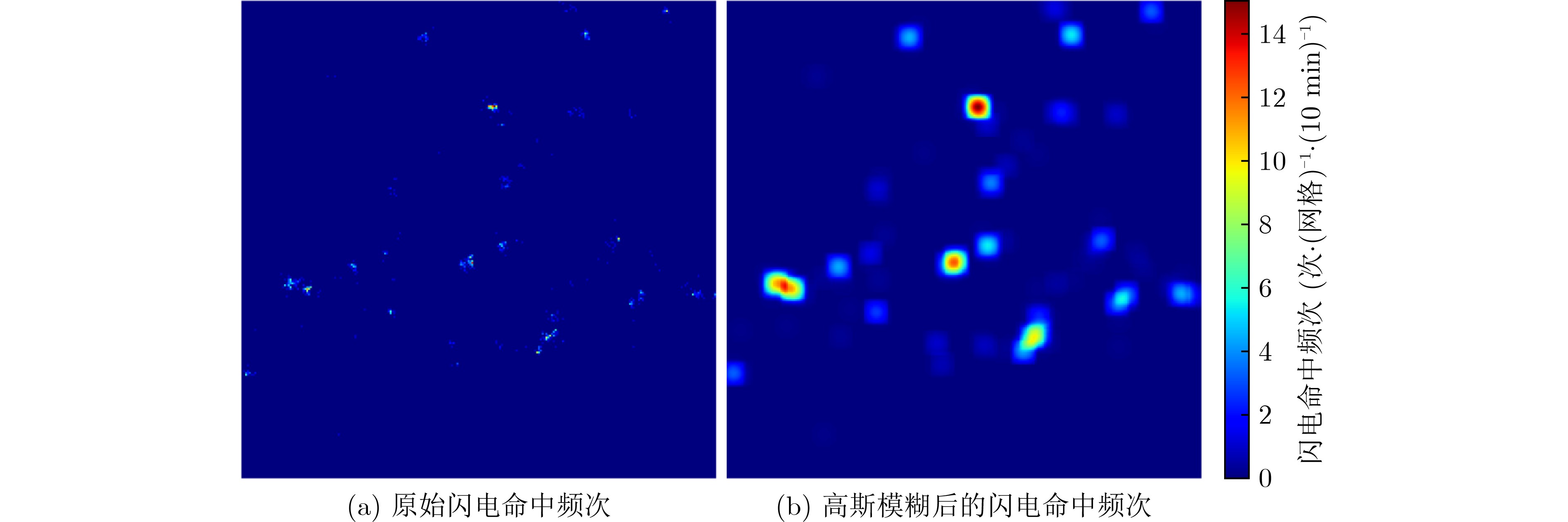
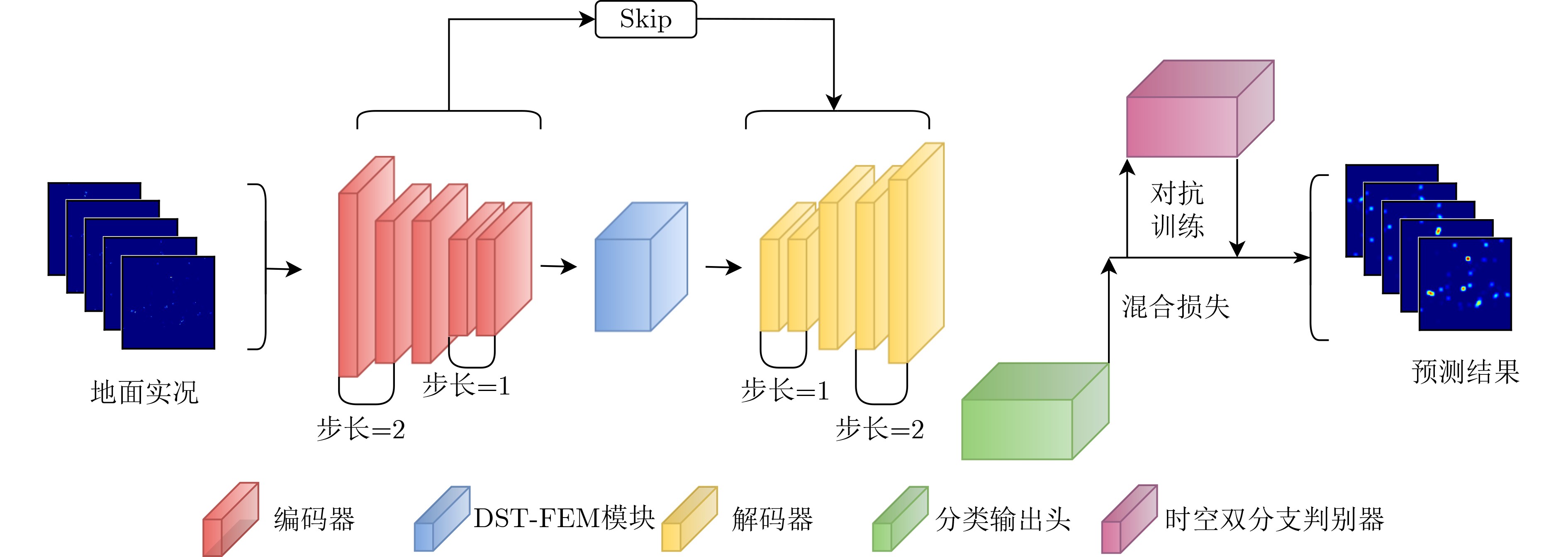
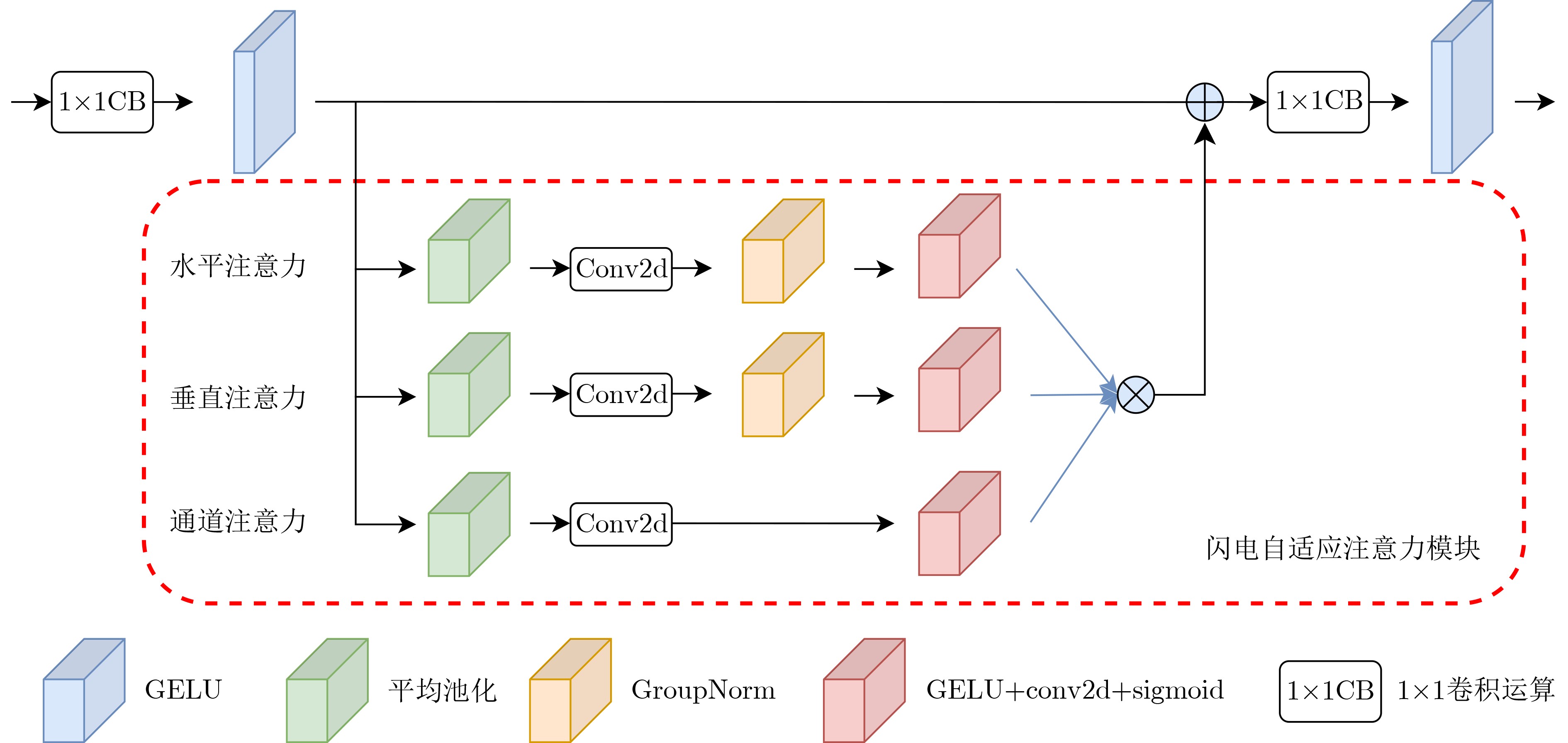
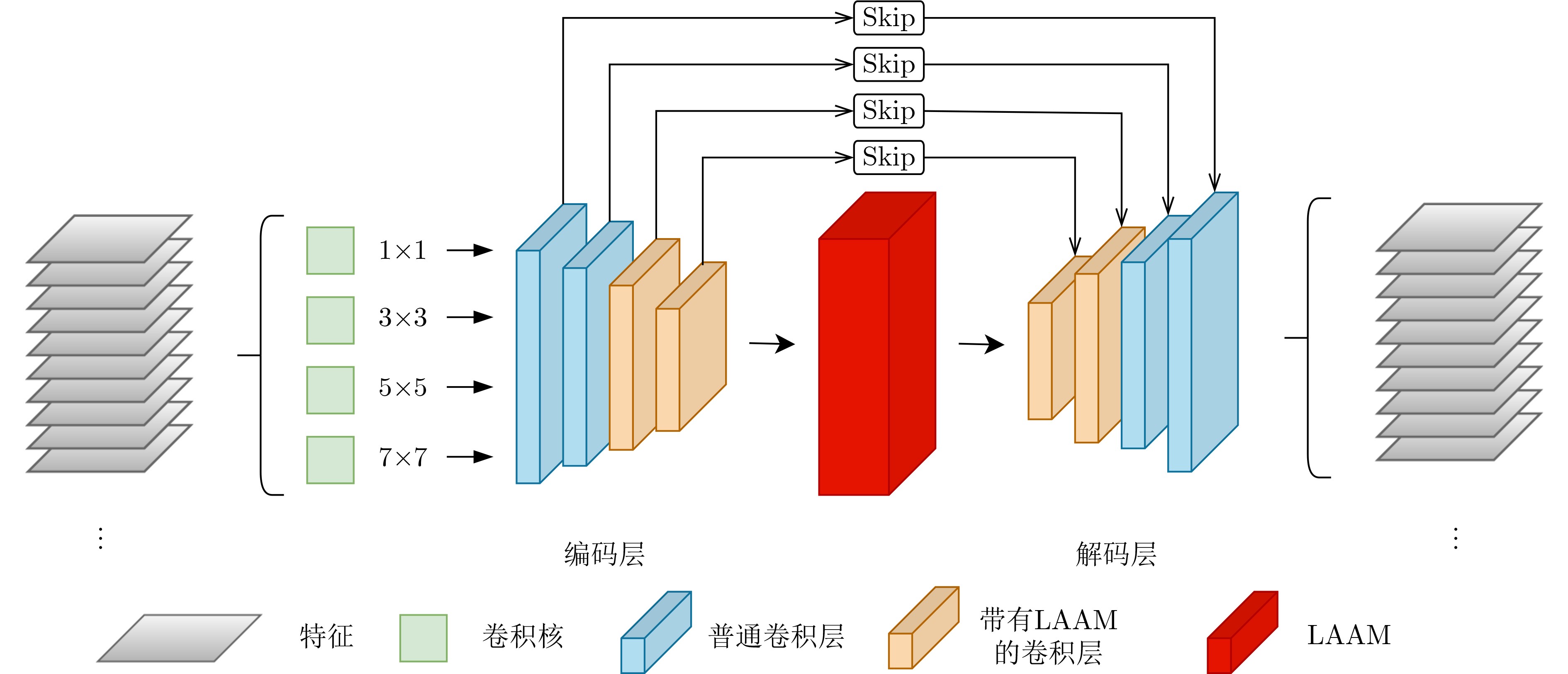
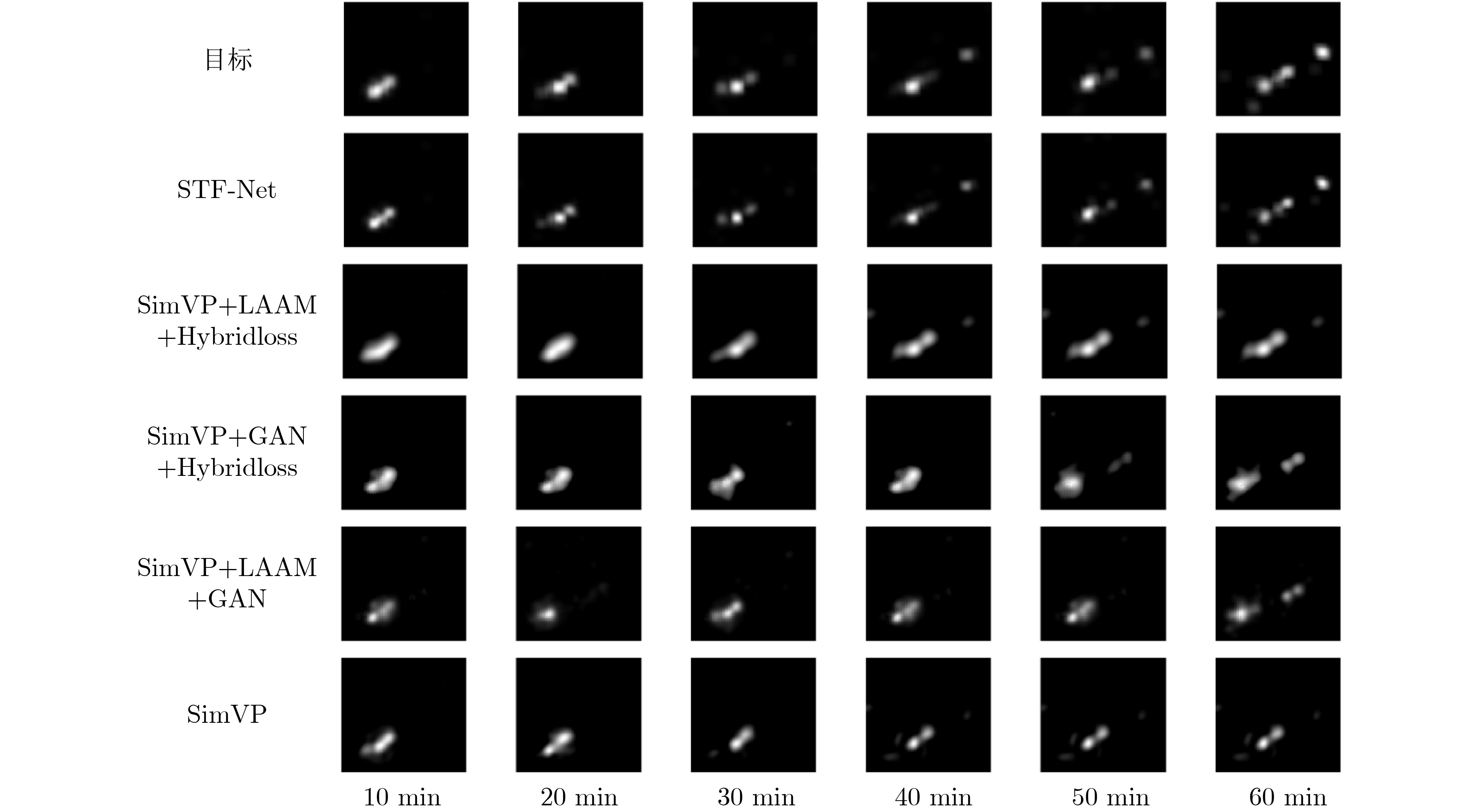
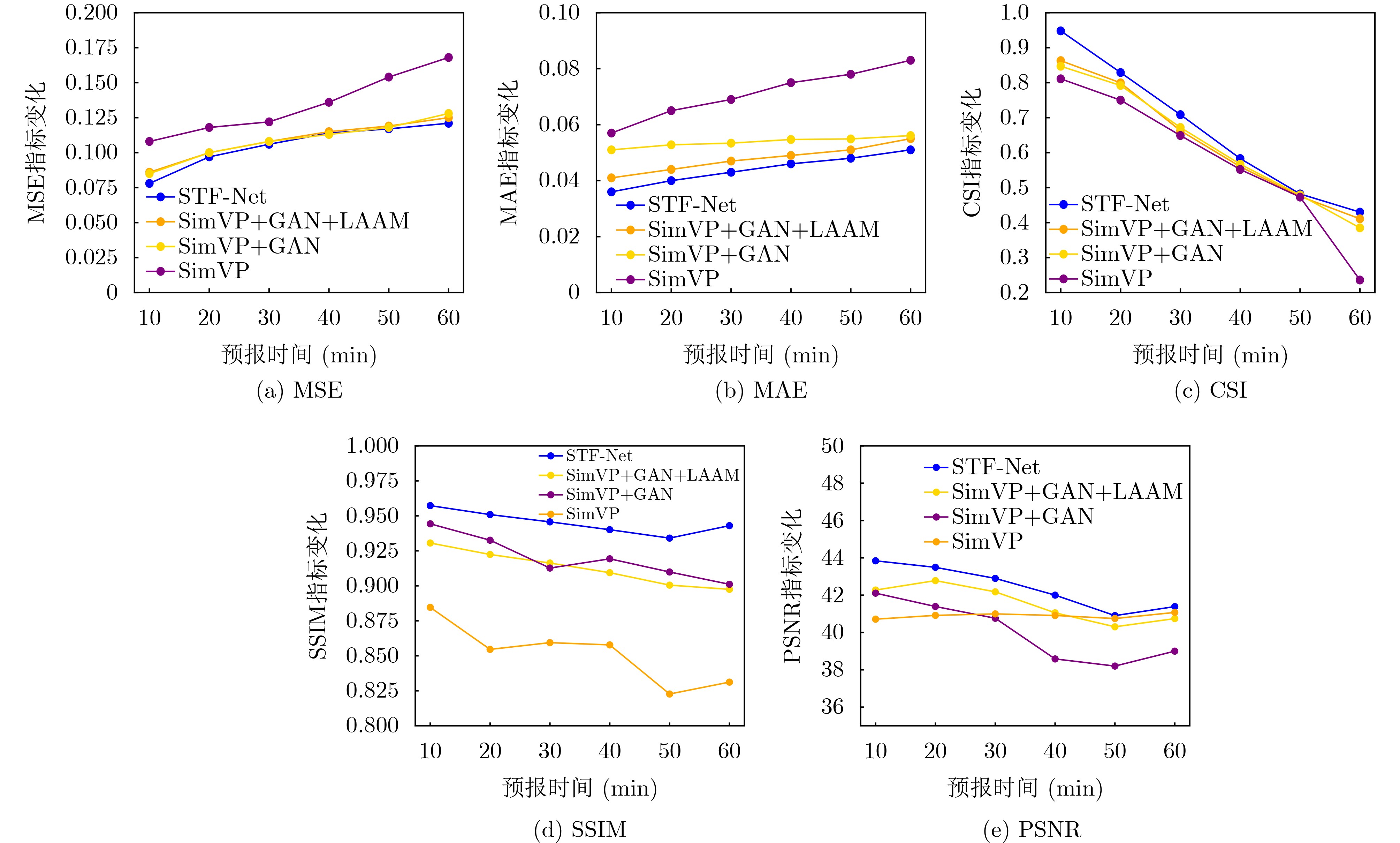
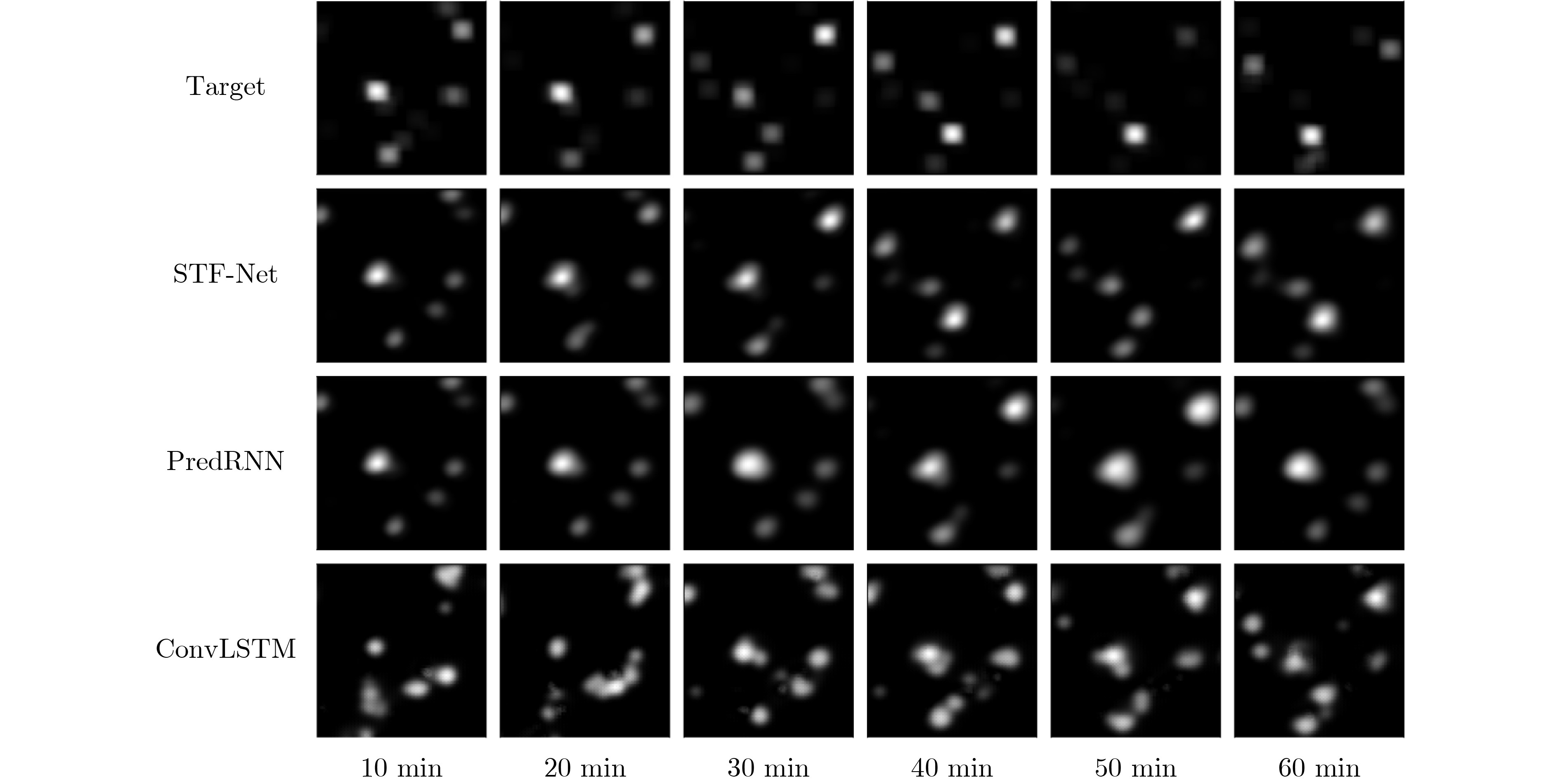
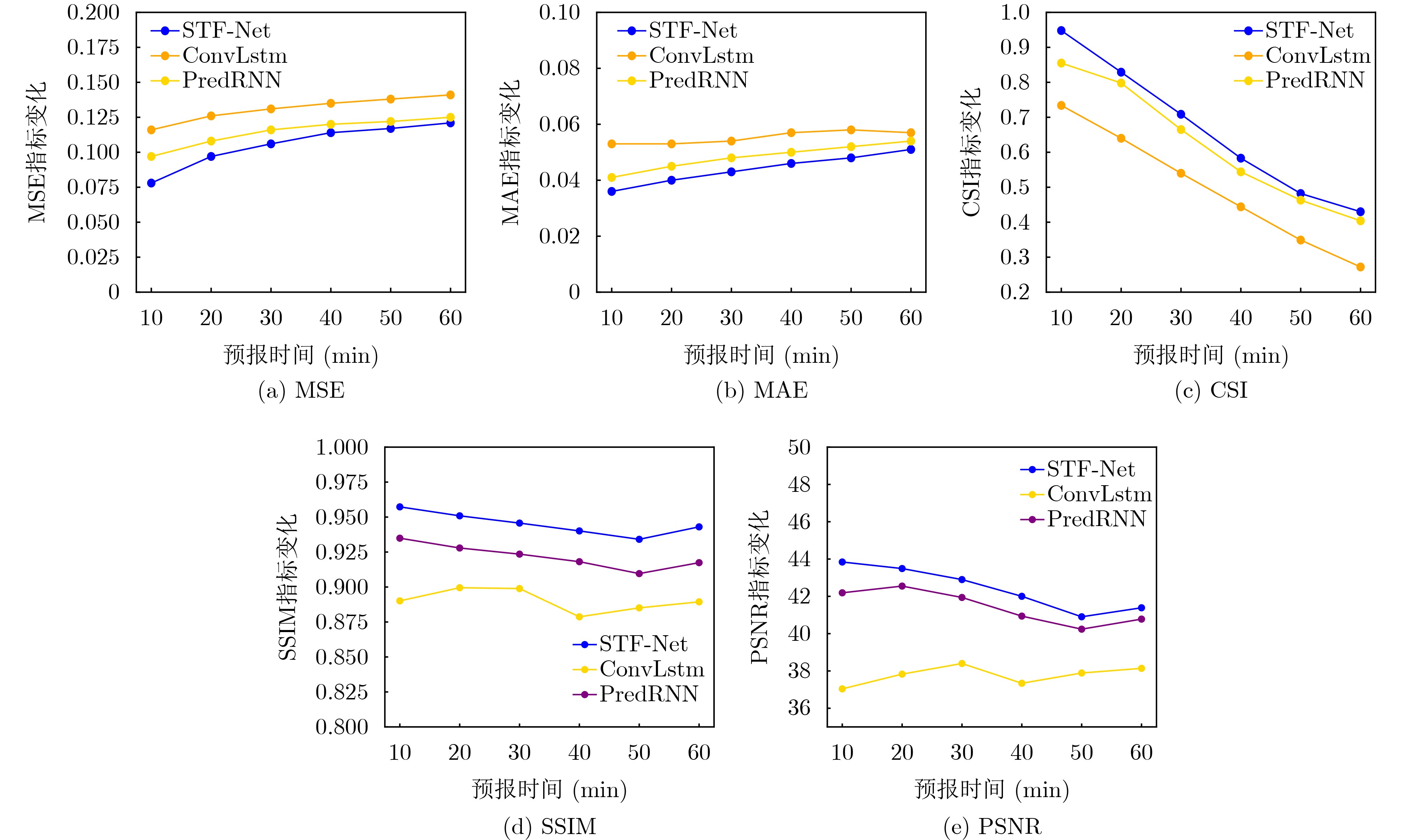
  •   Objective  Lightning nowcasting is essential for early warning systems and for protecting critical infrastructure, including aviation, power grids, and transportation systems. Traditional numerical weather prediction models depend strongly on parameterization schemes and require high computational costs, which limits their use in rapid-update nowcasting. Although deep learning methods have advanced, they still have difficulty handling extreme data sparsity, suffer from serial-computation bottlenecks in recurrent architectures, and mainly focus on binary occurrence prediction rather than the joint optimization of lightning-frequency prediction and regional localization. Moreover, conventional loss functions are easily dominated by extensive non-lightning areas, which biases predictions toward zero or causes excessive false alarms. To address these limitations, a Spatio-Temporal Focal perception and synergistic weighted loss Network (STF-Net) is proposed as a multi-task lightning nowcasting model that jointly predicts lightning frequency and occurrence regions. It integrates three key components: a Lightning Adaptive Attention Module (LAAM) for explicit spatio-temporal dependency modeling, a Spatio-Temporally Weighted Hybrid Loss for data sparsity and imbalance, and a spatio-temporal dual-branch Generative Adversarial Network (GAN) to improve prediction fidelity and temporal coherence.  Methods  STF-Net is built on the SimVP video prediction architecture and adopts an encoder-translator-decoder paradigm. LAAM uses a three-dimensional decoupled attention mechanism along the height, width, and channel dimensions, enabling adaptive focus on convectively sensitive regions while maintaining computational efficiency. The Spatio-Temporally Weighted Hybrid Loss combines Temporally Weighted Mean Squared Error (TW-MSE) for frequency regression and Dual-Weighted Cross-Entropy loss (DWCE) for regional localization. Time-increasing weights are incorporated to improve medium- to long-term forecast robustness (Fig. 5). DWCE integrates static class weights with dynamic grid weights, thereby balancing global class proportions and local lightning-frequency heterogeneity. A spatio-temporal dual-branch GAN, consisting of a spatial PatchGAN discriminator and a temporal three-dimensional convolutional discriminator, is used to improve the textural fidelity and temporal coherence of predicted lightning-frequency fields. The model uses six consecutive historical lightning-frequency frames at 256×256 resolution and 10-min intervals to predict the next six frames, corresponding to a 1-h forecast window. Experiments are conducted on a high-resolution Very Low Frequency Lightning Location Network (VLF-LLN) dataset containing 11,748 images that cover different seasonal and weather conditions. The dataset is split at a ratio of 7:3 for training and testing.  Results and Discussions  Comprehensive evaluation metrics are used, including Mean Squared Error (MSE) and Mean Absolute Error (MAE), which are computed only on lightning pixels; Peak Signal-to-Noise Ratio (PSNR) and Structural Similarity Index Measure (SSIM) for image fidelity; and Probability Of Detection (POD), False Alarm Rate (FAR), and Critical Success Index (CSI) for regional detection. STF-Net achieves a CSI of 0.663 within the 1-h forecast window, representing a 14.5% improvement over the SimVP baseline (0.579). It also reduces FAR from 0.351 to 0.216, corresponding to a relative reduction of 38.5% (Table 1). Ablation studies validate each component. Adding GAN improves CSI to 0.624 and reduces MSE to 0.109. Further incorporation of LAAM increases CSI to 0.629 and yields the highest POD of 0.894. The complete STF-Net with the hybrid loss achieves the best performance, with a CSI of 0.663 and an MSE of 0.105 (Table 1, Fig. 5). The joint prediction of frequency and region is supported by simultaneous improvements in regression metrics (MSE and MAE) and detection metrics (CSI and FAR). Time-step analysis shows that LAAM reduces long-term performance degradation, with STF-Net maintaining the highest CSI compared with SimVP+GAN and SimVP (Fig. 6). Comparative experiments with ConvLSTM and PredRNN further demonstrate the superiority of STF-Net across all lead times. STF-Net consistently achieves higher CSI and lower FAR, and its advantage becomes more evident as the forecast horizon increases (Fig. 7). Its consistent gains in PSNR and SSIM further indicate that the spatio-temporal GAN helps generate coherent, detail-rich predictions. Visualization results show that STF-Net produces structurally clear and continuous lightning-activity regions centered on high-frequency areas. It accurately tracks dynamic evolution patterns, including movement, merging, and splitting, while generating minimal noise in non-lightning regions. These results demonstrate effective collaborative prediction of both frequency magnitude and spatial distribution.  Conclusions  STF-Net is presented as a deep learning model for joint lightning-frequency prediction and regional localization. It explicitly models long-range spatio-temporal dependencies, focuses on critical convective zones, addresses extreme data sparsity and class imbalance, and jointly optimizes frequency regression and regional localization while suppressing false alarms. Its spatio-temporal dual-branch GAN further improves the spatial structural consistency and temporal coherence of predictions. Experimental results show that STF-Net outperforms baseline and state-of-the-art models, achieving a CSI of 0.663, an FAR of 0.216, and the best MSE and MAE values within a 1-h forecast window. The model effectively reduces long-term performance degradation, captures the evolution trends of lightning regions, and generates physically plausible predictions with minimal background noise. This study provides an efficient end-to-end solution for operational lightning nowcasting systems and offers guidance for model design in sparse meteorological spatio-temporal sequence prediction.
  • loading
  • [1]
    MISHRA M, ACHARYYA T, SANTOS C A G, et al. Mapping main risk areas of lightning fatalities between 2000 and 2020 over Odisha state (India): A diagnostic approach to reduce lightning fatalities using statistical and spatiotemporal analyses[J]. International Journal of Disaster Risk Reduction, 2022, 79: 103145. doi: 10.1016/j.ijdrr.2022.103145.
    [2]
    SONG Yang, XU Cangsu, LI Xiaolu, et al. Lightning-induced wildfires: An overview[J]. Fire, 2024, 7(3): 79. doi: 10.3390/fire7030079.
    [3]
    王昊亮, 刘玉宝, 赵天良, 等. 基于数值天气模式及其模式输出的闪电预报研究进展[J]. 地球科学进展, 2017, 32(1): 44–55. doi: 10.11867/j.issn.1001-8166.2017.01.0044.

    WANG Haoliang, LIU Yubao, ZHAO Tianliang, et al. Progress in lightning forecast by using numerical weather models and model outputs[J]. Advances in Earth Science, 2017, 32(1): 44–55. doi: 10.11867/j.issn.1001-8166.2017.01.0044.
    [4]
    PARAMANIK M M R, RABBANI K M G, IMRAN A, et al. Prediction of lightning activity over Bangladesh using diagnostic and explicit lightning parameterizations of WRF model[J]. Natural Hazards, 2024, 120(5): 4399–4422. doi: 10.1007/s11069-023-06355-6.
    [5]
    FEDERICO S, TORCASIO R C, LAGASIO M, et al. A year-long total lightning forecast over Italy with a dynamic lightning scheme and WRF[J]. Remote Sensing, 2022, 14(14): 3244. doi: 10.3390/rs14143244.
    [6]
    BATTAGLIOLI F, GROENEMEIJER P, TSONEVSKY I, et al. Forecasting large hail and lightning using additive logistic regression models and the ECMWF reforecasts[J]. Natural Hazards and Earth System Sciences, 2023, 23(12): 3651–3669. doi: 10.5194/nhess-23-3651-2023.
    [7]
    谈玲, 康瑞星, 夏景明, 等. 融合多源异构气象数据的光伏功率预测模型[J]. 电子与信息学报, 2024, 46(2): 503–517. doi: 10.11999/JEIT230731.

    TAN Ling, KANG Ruixing, XIA Jingming, et al. A photovoltaic power prediction model integrating multi-source heterogeneous meteorological data[J]. Journal of Electronics & Information Technology, 2024, 46(2): 503–517. doi: 10.11999/JEIT230731.
    [8]
    孙强, 赵珂. 嵌入多阶泰勒微分知识的多尺度注意力循环网络深度时空序列预测方法[J]. 电子与信息学报, 2024, 46(6): 2605–2618. doi: 10.11999/JEIT231108.

    SUN Qiang and ZHAO Ke. Multi-scale attention recurrent network with multi-order Taylor differential knowledge for deep spatiotemporal sequence prediction[J]. Journal of Electronics & Information Technology, 2024, 46(6): 2605–2618. doi: 10.11999/JEIT231108.
    [9]
    SHI Xingjian, CHEN Zhourong, WANG Hao, et al. Convolutional LSTM network: A machine learning approach for precipitation nowcasting[C]. The 29th International Conference on Neural Information Processing Systems, Montreal, Canada, 2015: 802–810.
    [10]
    CINTINEO J L, PAVOLONIS M J, and SIEGLAFF J M. ProbSevere LightningCast: A deep-learning model for satellite-based lightning nowcasting[J]. Weather and Forecasting, 2022, 37(7): 1239–1257. doi: 10.1175/WAF-D-22-0019.1.
    [11]
    WANG Yunbo, LONG Mingsheng, WANG Jianmin, et al. PredRNN: Recurrent neural networks for predictive learning using spatiotemporal LSTMs[C]. The 31st International Conference on Neural Information Processing Systems, Long Beach, USA, 2017: 879–888.
    [12]
    黄兴友, 马玉蓉, 胡苏蔓. 基于深度学习的天气雷达回波序列外推及效果分析[J]. 气象学报, 2021, 79(5): 817–827. doi: 10.11676/qxxb2021.041.

    HUANG Xingyou, MA Yurong, and HU Suman. Extrapolation and effect analysis of weather radar echo sequence based on deep learning[J]. Acta Meteorologica Sinica, 2021, 79(5): 817–827. doi: 10.11676/qxxb2021.041.
    [13]
    LI Fengquan, LI Jian, GU Shanqiang, et al. Nowcasting of cloud-to-ground lightning location and frequency based on a deep learning technique[J]. Atmospheric and Oceanic Science Letters, 2025, 19(3): 100607. doi: 10.1016/j.aosl.2025.100607.
    [14]
    任照环, 林锐, 周浩, 等. 基于深度学习模型的雷电落区预报[J]. 热带气象学报, 2024, 40(5): 758–766. doi: 10.16032/j.issn.1004-4965.2024.068.

    REN Zhaohuan, LIN Rui, ZHOU Hao, et al. Lightning strike location prediction using a deep learning model[J]. Journal of Tropical Meteorology, 2024, 40(5): 758–766. doi: 10.16032/j.issn.1004-4965.2024.068.
    [15]
    ARIFIN S, SAKIB N, RAYHAN Y, et al. Lightning prediction under uncertainty: Deeplight with hazy loss[J]. Expert Systems with Applications, 2026, 314: 131586. doi: 10.1016/j.eswa.2026.131586.
    [16]
    KUMAR R, SHARMA T, VAGHELA V, et al. PrecipFormer: Efficient transformer for precipitation downscaling[C]. The 2025 IEEE/CVF Winter Conference on Applications of Computer Vision Workshops (WACVW), Tucson, USA, 2025: 452–460. doi: 10.1109/WACVW65960.2025.00056.
    [17]
    职为梅, 常智, 卢俊华, 等. 面向不平衡图像数据的对抗自编码器过采样算法[J]. 电子与信息学报, 2024, 46(11): 4208–4218. doi: 10.11999/JEIT240330.

    ZHI Weimei, CHANG Zhi, LU Junhua, et al. Adversarial autoencoders oversampling algorithm for imbalanced image data[J]. Journal of Electronics & Information Technology, 2024, 46(11): 4208–4218. doi: 10.11999/JEIT240330.
    [18]
    CAVAIOLA M, CASSOLA F, SACCHETTI D, et al. Hybrid AI-enhanced lightning flash prediction in the medium-range forecast horizon[J]. Nature Communications, 2024, 15(1): 1188. doi: 10.1038/s41467-024-44697-2.
    [19]
    GAO Zhangyang, TAN Cheng, WU Lirong, et al. SimVP: Simpler yet better video prediction[C]. The 2022 IEEE/CVF Conference on Computer Vision and Pattern Recognition, New Orleans, USA, 2022: 3160–3170. doi: 10.1109/CVPR52688.2022.00317.
    [20]
    TIAN Jie, HAN Wei, SUN Haofei, et al. A dual-weighted loss function for lightning nowcasting[J]. Atmospheric and Oceanic Science Letters, 2026, 19(3): 100778. doi: 10.1016/j.aosl.2026.100778.
    [21]
    LI Jie, DAI Bingzhe, ZHOU Jiahao, et al. Preliminary application of long-range lightning location network with equivalent propagation velocity in China[J]. Remote Sensing, 2022, 14(3): 560. doi: 10.3390/rs14030560.
    [22]
    SRIVASTAVA A, LIU Dongxia, XU Chen, et al. Lightning nowcasting with an algorithm of thunderstorm tracking based on lightning location data over the Beijing area[J]. Advances in Atmospheric Sciences, 2022, 39(1): 178–188. doi: 10.1007/s00376-021-0398-2.
    [23]
    周康辉, 郑永光, 蓝渝. 基于闪电数据的雷暴识别、追踪与外推方法[J]. 应用气象学报, 2016, 27(2): 173–181. doi: 10.11898/1001-7313.20160205.

    ZHOU Kanghui, ZHENG Yongguang, and LAN Yu. Flash cell identification, tracking and nowcasting with lightning data[J]. Journal of Applied Meteorological Science, 2016, 27(2): 173–181. doi: 10.11898/1001-7313.20160205.
    [24]
    LIU Yi, WANG Jiale, SONG Yang, et al. Lightning nowcasting based on high-density area and extrapolation utilizing long-range lightning location data[J]. Atmospheric Research, 2025, 321: 108070. doi: 10.1016/j.atmosres.2025.108070.
  • 加载中

Catalog

    通讯作者: 陈斌, bchen63@163.com
    • 1. 

      沈阳化工大学材料科学与工程学院 沈阳 110142

    1. 本站搜索
    2. 百度学术搜索
    3. 万方数据库搜索
    4. CNKI搜索

    Figures(8)  / Tables(2)

    Article Metrics

    Article views (134) PDF downloads(23) Cited by()
    Proportional views
    Related

    /

    DownLoad:  Full-Size Img  PowerPoint
    Return
    Return