Advanced Search
Turn off MathJax
Article Contents
LI Baolong, PAN Wenwei, JIANG Hao, FENG Simeng, WU Qihui. Energy-Efficient Trajectory Planning and Resource Optimization for UAV Relay Communications over Hybrid RF/FSO Links[J]. Journal of Electronics & Information Technology. doi: 10.11999/JEIT260139
Citation: LI Baolong, PAN Wenwei, JIANG Hao, FENG Simeng, WU Qihui. Energy-Efficient Trajectory Planning and Resource Optimization for UAV Relay Communications over Hybrid RF/FSO Links[J]. Journal of Electronics & Information Technology. doi: 10.11999/JEIT260139

Energy-Efficient Trajectory Planning and Resource Optimization for UAV Relay Communications over Hybrid RF/FSO Links

doi: 10.11999/JEIT260139 cstr: 32379.14.JEIT260139
Funds:  National Natural Science Foundation of China (62471223), Youth Science and Technology Talent Promotion Project of Jiangsu Province (JSTJ-2024-392)
  • Received Date: 2026-02-02
  • Accepted Date: 2026-05-12
  • Rev Recd Date: 2026-05-12
  • Available Online: 2026-05-29
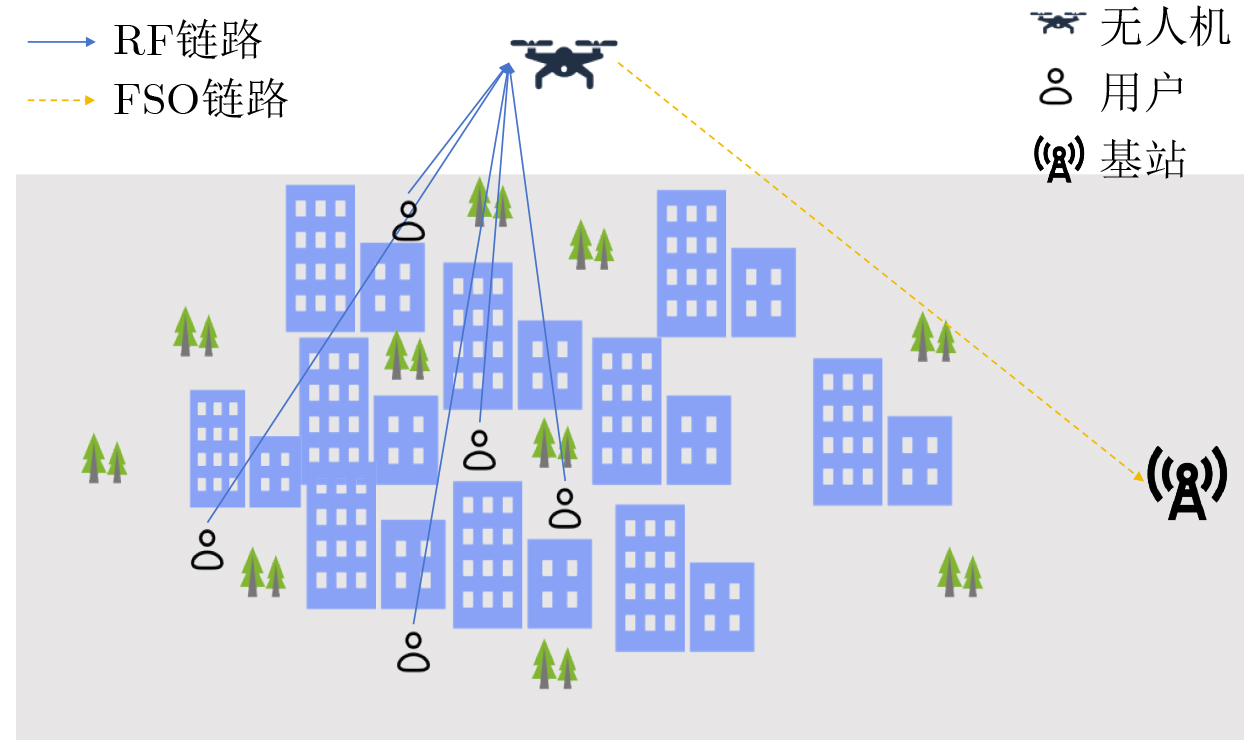
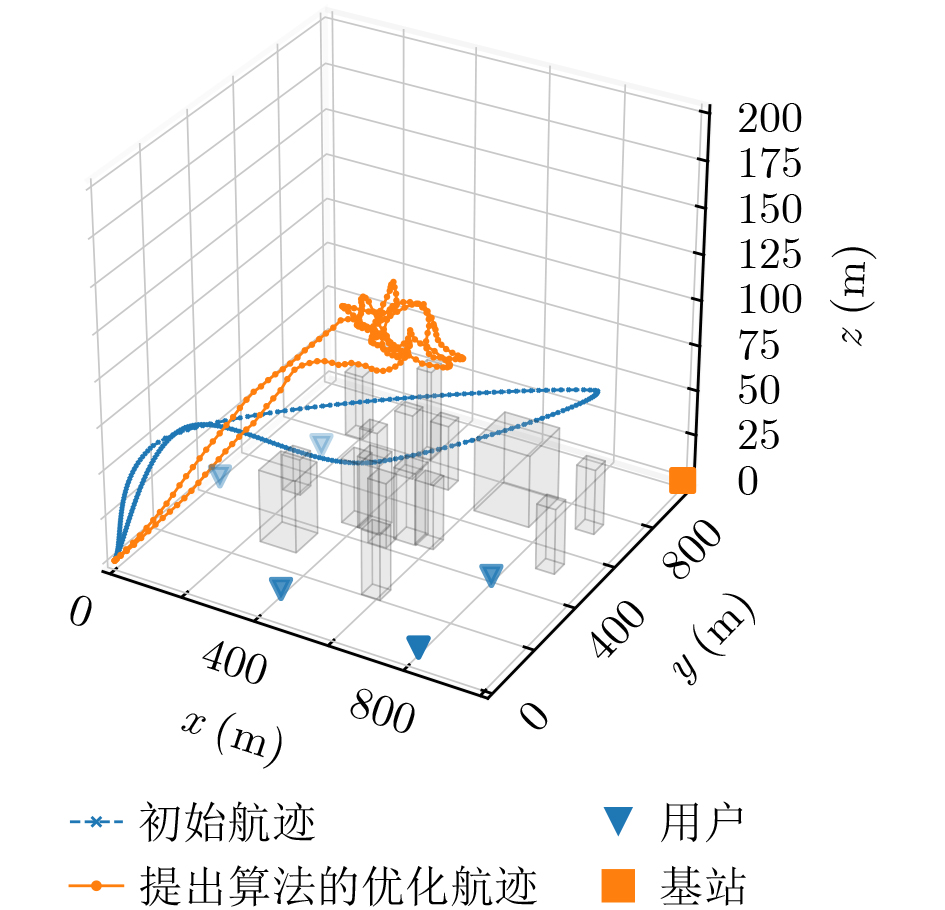
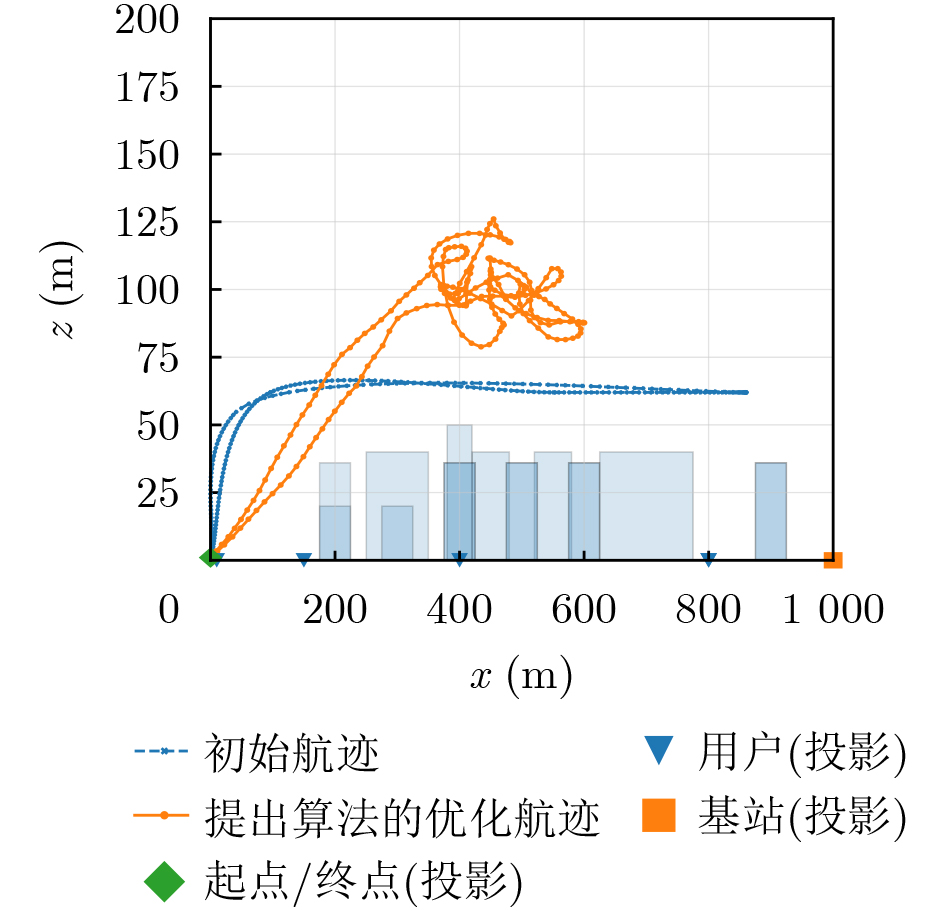
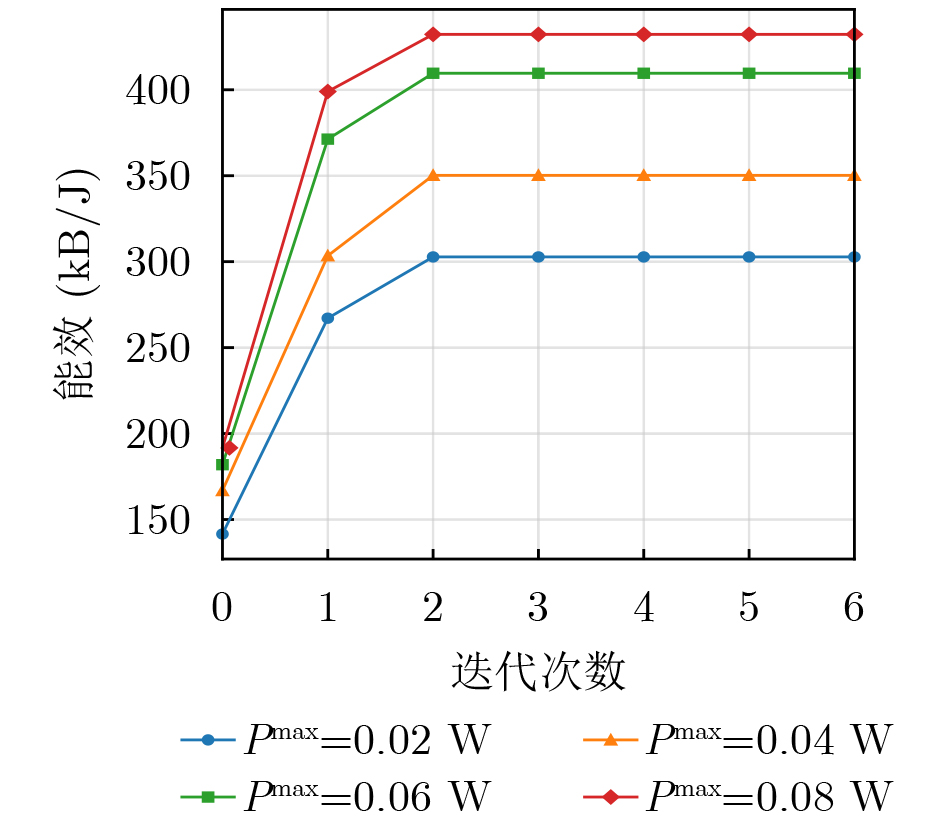
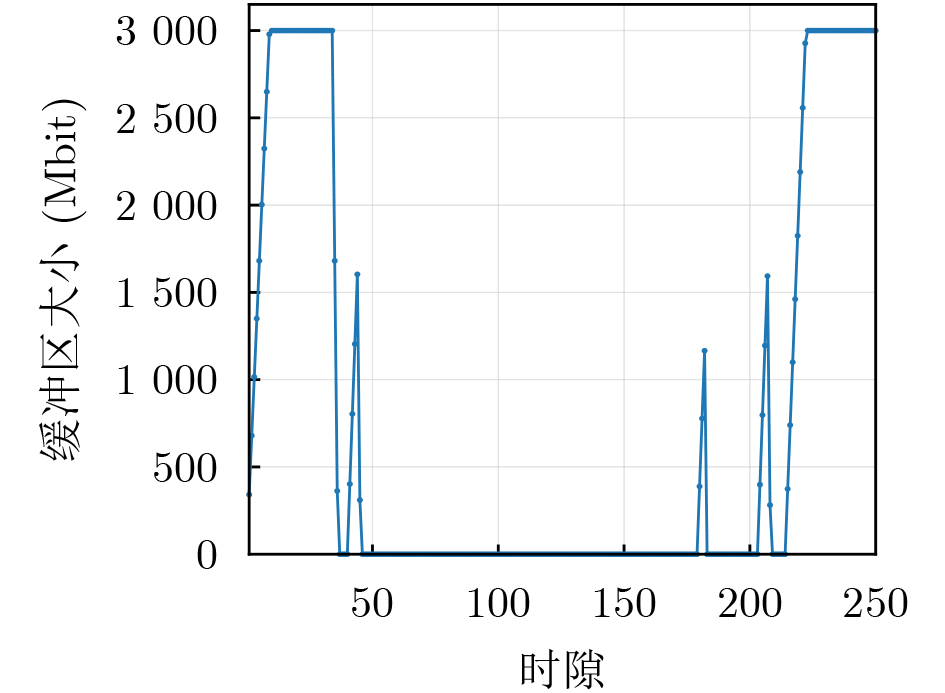
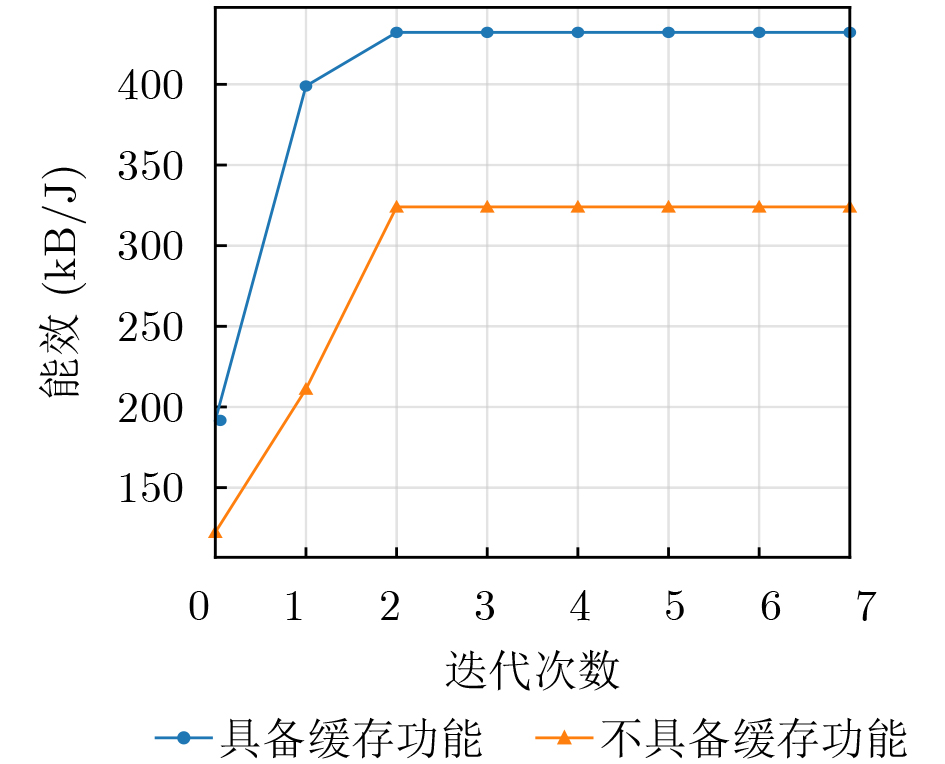
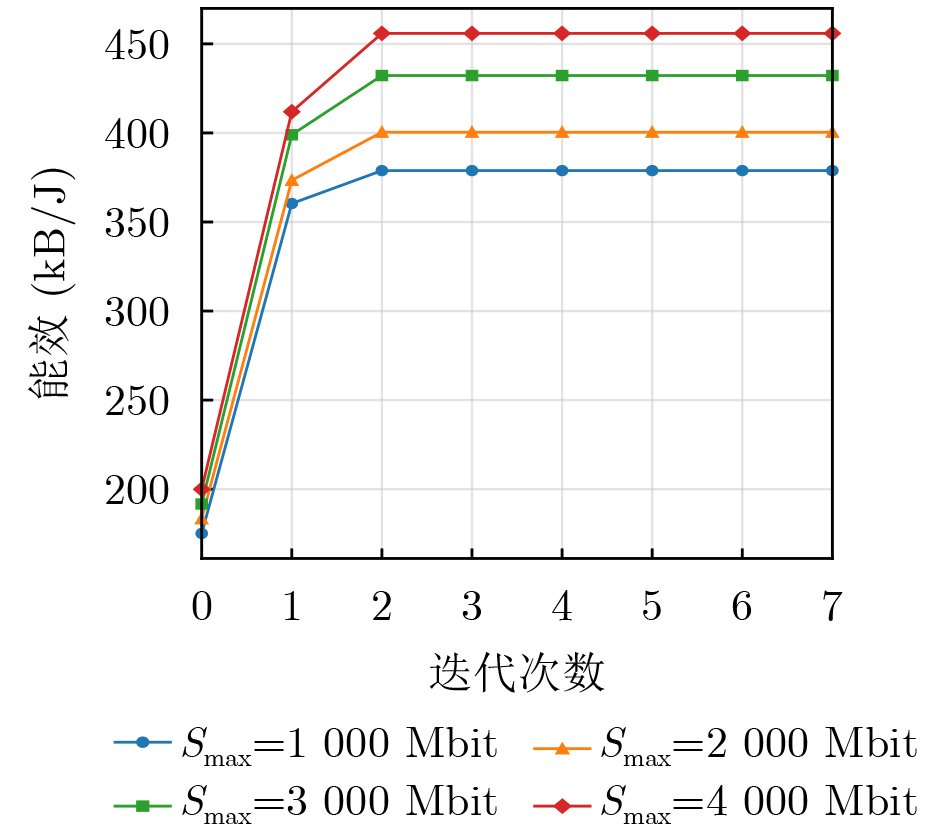
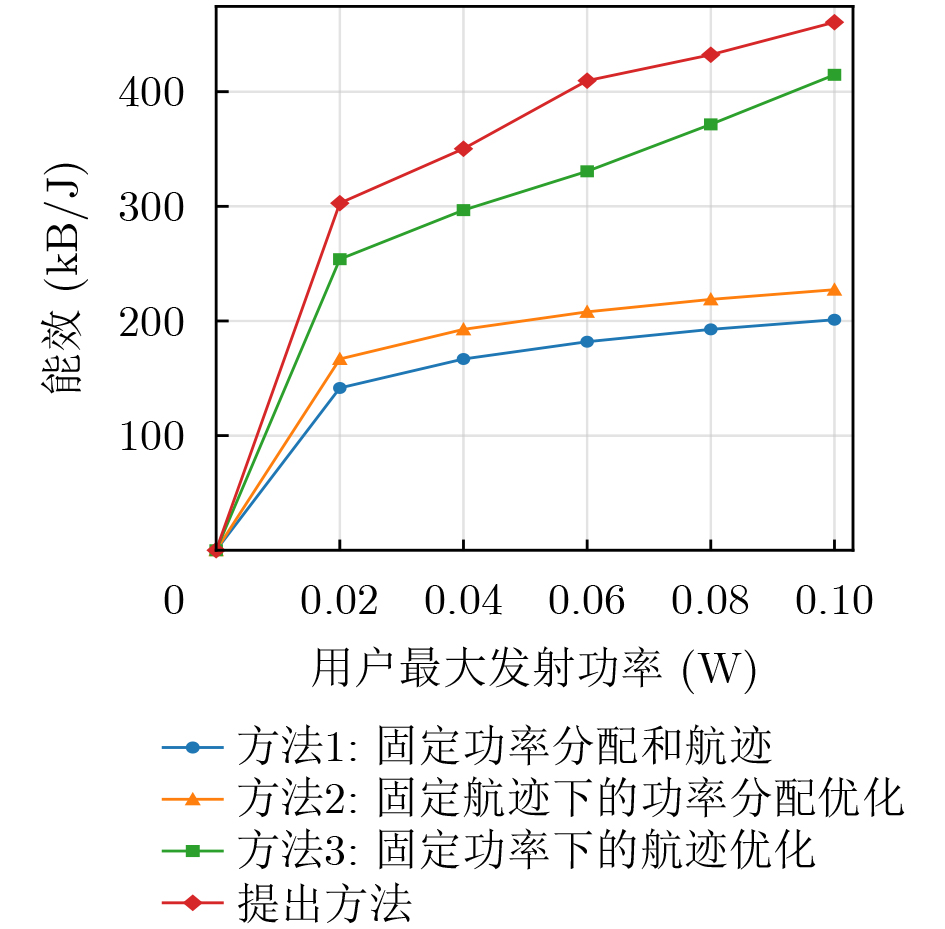
  •   Objective  In low-altitude communication networks, hybrid RF/FSO UAV relaying can effectively alleviate RF spectrum congestion and enhance uplink data aggregation efficiency. However, in obstacle-rich urban environments, FSO backhaul links are highly susceptible to blockage and may experience intermittent outages, resulting in a severe mismatch between the RF uplink arrival rate and the FSO backhaul service rate. Meanwhile, UAV trajectory planning is constrained by obstacle-avoidance and flight dynamics. To address these coupled challenges, this paper investigates an energy-efficiency maximization problem by jointly optimizing multiuser NOMA-based RF access and the UAV’s three-dimensional obstacle-avoiding trajectory, while incorporating buffer-assisted RF/FSO rate decoupling.  Methods  A time-slotted UAV relaying model where multiple ground users upload data to the UAV via an RF link using NOMA is considered in the paper. The UAV decodes the superposed signals using successive interference cancellation (SIC) and determines the decoding order in each slot according to the received power ranking. The successfully received data are then forwarded to the base station (BS) through an FSO backhaul link. Urban blockage is modeled using 3D geometric obstacles, and a visibility test is employed to determine whether each relevant link is in LOS or non-line-of-sight (NLOS), thereby capturing the spatially correlated and time-varying characteristics of the RF access rate and the intermittent FSO backhaul capacity. To suppress the blockage-induced mismatch between uplink and backhaul rates, a finite-capacity buffer is deployed at the UAV. In each slot, the forwardable amount is jointly limited by the instantaneous FSO backhaul capability and the amount of data available in the buffer, while buffer-capacity constraints prevent overflow. System energy efficiency is defined as the ratio of the cumulative data successfully delivered to the BS over the mission horizon to the UAV propulsion energy consumption, where the propulsion power is modeled as a function of the UAV’s velocity and acceleration to reflect the impact of flight dynamics. Under 3D flight-region boundaries, prescribed start, end locations, discrete-time kinematic equations, maximum velocity and acceleration limits, and obstacle collision-avoidance constraints, a non-convex optimization problem is formulated with cross-slot multiuser transmit powers and the UAV 3D trajectory as decision variables. Furthermore, an alternating optimization framework is developed. With a fixed trajectory, the propulsion energy is fixed and maximizing energy efficiency becomes equivalent to increasing the end-to-end successfully forwarded data, yielding a power-optimization subproblem. Due to NOMA coupling and logarithmic rate expressions, this subproblem remains non-convex and is handled via successive convex approximation (SCA). With fixed transmit powers, particle swarm optimization (PSO) is used to search candidate 3D trajectories in a continuous space. To ensure feasibility under strict dynamics and safety constraints, a quadratic-programming (QP) projection is employed to enforce velocity and acceleration constraints, and collision checks are performed on trajectory waypoints and inter-slot line segments to guarantee obstacle-free flight. These two optimization procedures are alternately performed, resulting in a joint design that satisfies flight-dynamics feasibility and collision avoidance while significantly improving energy efficiency.  Results and Discussion   Simulations are conducted in an urban airspace containing multiple users, a BS, and dense 3D obstacles. Blockage causes frequent LOS/NLOS switching as the UAV moves. Figures 2 and 3 present comparisons of the 3D trajectory and its planar projection, respectively. Compared to the initial trajectory, the optimized trajectory exhibits clear detours and necessary altitude adjustments, and achieves collision-free flight while satisfying velocity and acceleration constraints, thus validating the feasibility and safety of the proposed trajectory planning approach. Figure 4 presents the energy-efficiency convergence behavior under different user transmit-power budgets. The proposed alternating optimization typically stabilizes within a small number of outer iterations. Meanwhile, the converged energy efficiency increases with higher power budgets, demonstrating the synergy between power control and trajectory adaptation. Furthermore, Figure 5 depicts the buffer evolution over time. It is observed that the buffer gradually accumulates when the backhaul is blocked or experiences strong fading, and is quickly drained once the UAV enters regions where LOS backhaul becomes available and FSO capacity improves. In order to further quantify the buffering gain, Figure 6 compares the system energy efficiency achieved by the proposed buffering mechanism and the no-buffer scheme. Compared to the no-buffer scheme, the proposed mechanism enables store-and-forward-based temporal smoothing during backhaul interruptions, thereby significantly improving system energy efficiency. Figure 7 illustrates the energy-efficiency convergence behavior under different buffer capacities. It is observed that as the buffer capacity increases, the converged energy-efficiency level is significantly improved. This is because a larger buffer enhances the UAV’s ability to temporarily store incoming data, thereby effectively alleviating data accumulation and transmission blockage when the access-link rate and backhaul-link rate are mismatched or when the backhaul link is constrained. Figure 8 compares the performance of four benchmark schemes, namly a non-optimized baseline, a power optimization scheme, a trajectory optimization scheme, and the proposed joint power-and-trajectory optimization scheme. It is found that the coordinated design of power allocation and obstacle-avoiding trajectory substantially improves end-to-end energy efficiency, and that trajectory optimization often plays a more dominant role under blockage-limited conditions.  Conclusion  The paper investigates a hybrid RF/FSO UAV relaying scheme with NOMA and an onboard buffering mechanism for low-altitude urban communication environments. Given the dense obstacles, frequent blockage, the fragility of FSO links, and stringent flight-dynamics constraints, an energy-efficiency maximization problem is formulated for the joint optimization of multiuser NOMA power allocation and the UAV trajectory. Accordingly, an SCA-based power-allocation method and an obstacle-avoiding trajectory design combining PSO with QP projection are developed. The obtained trajectory satisfies flight-dynamics feasibility and collision-avoidance requirements while significantly improving throughput per unit propulsion energy. Simulation results demonstrate that the planned trajectory can effectively avoid obstacles, and the onboard buffer provides an effective cushion between RF access and FSO backhaul to mitigate rate mismatch. In addition, the proposed method consistently outperforms benchmark schemes in terms of energy efficiency. Meanwhile, the trajectory optimization is shown to be generally more effective than power allocation in improving the overall system performance.
  • loading
  • [1]
    裴二荣, 娄宇涵, 李永刚, 等. 一种面向多任务的无人机辅助的通信网络资源分配与轨迹优化研究[J]. 电子与信息学报, 2024, 46(7): 2748–2756. doi: 10.11999/JEIT230974.

    PEI Errong, LOU Yuhan, LI Yonggang, et al. Research on resource allocation and trajectory optimization of a multitask unmanned aerial vehicles assisted communication network[J]. Journal of Electronics & Information Technology, 2024, 46(7): 2748–2756. doi: 10.11999/JEIT230974.
    [2]
    WEI Qing, CHEN Yingyang, JIA Ziye, et al. Energy-efficient caching and user selection for resource-limited SAGINs in emergency communications[J]. IEEE Transactions on Communications, 2025, 73(6): 4121–4136. doi: 10.1109/TCOMM.2024.3511958.
    [3]
    LIU Yongce, WU Ziyang, and SONG Pengcheng. Online trajectory optimization for UAV-assisted hybrid FSO/RF network with QoS-guarantee[J]. IEEE Communications Letters, 2023, 27(5): 1357–1361. doi: 10.1109/LCOMM.2023.3252725.
    [4]
    李斌, 蔡海晨, 赵传信, 等. 基于计算重用的无人机辅助边缘计算系统能耗优化[J]. 电子与信息学报, 2024, 46(7): 2740–2747. doi: 10.11999/JEIT231061.

    LI Bin, CAI Haichen, ZHAO Chuanxin, et al. Energy optimization for computing reuse in unmanned aerial vehicle-assisted edge computing systems[J]. Journal of Electronics & Information Technology, 2024, 46(7): 2740–2747. doi: 10.11999/JEIT231061.
    [5]
    ZHANG Yalin, GAO Xiaozheng, YUAN Hang, et al. Joint UAV trajectory and power allocation with hybrid FSO/RF for secure space–air–ground communications[J]. IEEE Internet of Things Journal, 2024, 11(19): 31407–31421. doi: 10.1109/JIOT.2024.3419264.
    [6]
    FENG Simeng, LI Nian, LIU Kai, et al. A cross Q-learning assisted resource allocation for user-centric optical wireless communication networks[J]. IEEE Transactions on Green Communications and Networking, 2025, 9(4): 2264–2278. doi: 10.1109/TGCN.2025.3553202.
    [7]
    GUO Wenjng, ZHAN Yueying, TSIFTSIS T A, et al. Performance and channel modeling optimization for hovering UAV-assisted FSO links[J]. Journal of Lightwave Technology, 2022, 40(15): 4999–5012. doi: 10.1109/JLT.2022.3176352.
    [8]
    ZHANG Jiliang, ZHANG Li, and PAN Gaofeng. Outage performance for NOMA-based FSO-RF systems with a dual energy harvesting mode[J]. IEEE Internet of Things Journal, 2023, 10(18): 16076–16086. doi: 10.1109/JIOT.2023.3267136.
    [9]
    JANJI S, SAMORZEWSKI A, WASILEWSKA M, et al. On the placement and sustainability of drone FSO backhaul relays[J]. IEEE Wireless Communications Letters, 2022, 11(8): 1723–1727. doi: 10.1109/LWC.2022.3178546.
    [10]
    HASSAN H, ALTHUNIBAT S, AL-MBAIDEEN A, et al. A survey on hybrid free space optical and radio frequency systems: Classification, progress, observations, and challenges[J]. IEEE Access, 2025, 13: 63994–64060. doi: 10.1109/ACCESS.2025.3558500.
    [11]
    KONG Huaicong, LIN Min, ZHU Weiping, et al. Multiuser scheduling for asymmetric FSO/RF links in satellite-UAV-terrestrial networks[J]. IEEE Wireless Communications Letters, 2020, 9(8): 1235–1239. doi: 10.1109/LWC.2020.2986750.
    [12]
    LI Xiaoyan, LIU Yitong, GUO Shaoai, et al. Robust joint optimization for efficient and reliable FSO/RF satellite-UAV-terrestrial networks with random fading and imperfect channel information[J]. IEEE Internet of Things Journal, 2025, 12(21): 45307–45324. doi: 10.1109/JIOT.2025.3600439.
    [13]
    XU Fang, DUO Bin, XIE Yiyuan, et al. Multi-UAV assisted mixed FSO/RF communication network for urgent tasks: Fairness oriented design with DRL[J]. IEEE Transactions on Vehicular Technology, 2025, 74(1): 1736–1741. doi: 10.1109/TVT.2024.3453333.
    [14]
    XU Fang, XIE Zhijie, HU Kai, et al. Multiantenna UAV-assisted hybrid FSO/RF data collection for IoT: Optimal design for fairness[J]. IEEE Transactions on Aerospace and Electronic Systems, 2025, 61(5): 12376–12386. doi: 10.1109/TAES.2025.3572070.
    [15]
    LEE J H, PARK K H, KO Y C, et al. Throughput maximization of mixed FSO/RF UAV-aided mobile relaying with a buffer[J]. IEEE Transactions on Wireless Communications, 2021, 20(1): 683–694. doi: 10.1109/TWC.2020.3028068.
    [16]
    ZHANG Xiwen, ZHAO Shanghong, WANG Yuan, et al. 3-D trajectory optimization for UAV-assisted hybrid FSO/RF network with moving obstacles[J]. IEEE Transactions on Aerospace and Electronic Systems, 2025, 61(2): 1692–1704. doi: 10.1109/TAES.2024.3462685.
    [17]
    WEI Xinyi, LI Ruoguang, CHEN Yingyang, et al. Coordinated rate-splitting multiple access for emergency UAV-enabled integrated sensing and communication[J]. IEEE Transactions on Cognitive Communications and Networking, 2026, 12: 5999–6015. doi: 10.1109/TCCN.2026.3660777.
    [18]
    HUANG Qiulei, WANG Wei, LU Weidang, et al. Resource allocation for multi-cluster NOMA-UAV networks[J]. IEEE Transactions on Communications, 2022, 70(12): 8448–8459. doi: 10.1109/TCOMM.2022.3220702.
    [19]
    冯斯梦, 张云弈, 刘凯, 等. 低空混合障碍下无人机协同多智能体航迹规划[J]. 电子与信息学报, 2025, 47(5): 1291–1300. doi: 10.11999/JEIT250012.

    FENG Simeng, ZHANG Yunyi, LIU Kai, et al. Collaborative multi-agent trajectory optimization for unmanned aerial vehicles under low-altitude mixed-obstacle airspace[J]. Journal of Electronics & Information Technology, 2025, 47(5): 1291–1300. doi: 10.11999/JEIT250012.
    [20]
    MOON H J, CHAE C B, WONG K K, et al. A generalized pointing error model for FSO links with fixed-wing UAVs for 6G: Analysis and trajectory optimization[J]. IEEE Transactions on Wireless Communications, 2025, 24(7): 5723–5737. doi: 10.1109/TWC.2025.3549062.
    [21]
    ZENG Fanzi, HU Zhenzhen, XIAO Zhu, et al. Resource allocation and trajectory optimization for QoE provisioning in energy-efficient UAV-enabled wireless networks[J]. IEEE Transactions on Vehicular Technology, 2020, 69(7): 7634–7647. doi: 10.1109/TVT.2020.2986776.
    [22]
    FENG Simeng, ZHAO Yidi, KAI Liu, et al. Fine-grained particle swarm optimization for UAV trajectory design in FSO relay communication[C]. 2024 IEEE/CIC International Conference on Communications in China (ICCC), Hangzhou, China, 2024: 2029–2034. doi: 10.1109/ICCC62479.2024.10681835.
    [23]
    MENG Anqi, GAO Xiaozheng, ZHAO Yao, et al. Three-dimensional trajectory optimization for energy-constrained UAV-enabled IoT system in probabilistic LoS channel[J]. IEEE Internet of Things Journal, 2022, 9(2): 1109–1121. doi: 10.1109/JIOT.2021.3079363.
    [24]
    SAMY R, YANG Hongchuan, RAKIA T, et al. Hybrid SAG-FSO/SH-FSO/RF transmission for next-generation satellite communication systems[J]. IEEE Transactions on Vehicular Technology, 2023, 72(11): 14255–14267. doi: 10.1109/TVT.2023.3281256.
    [25]
    XU Guanjun, LU Shuyuan, QU Lin, et al. Outage probability and average BER of UAV-assisted RF/FSO system for space-air-ground integrated networks under angle-of-arrival fluctuations[J]. IEEE Internet of Things Journal, 2024, 11(20): 34009–34023. doi: 10.1109/JIOT.2024.3435458.
    [26]
    NAJAFI M, AJAM H, JAMALI V, et al. Statistical modeling of the FSO fronthaul channel for UAV-based communications[J]. IEEE Transactions on Communications, 2020, 68(6): 3720–3736. doi: 10.1109/TCOMM.2020.2981560.
    [27]
    SONG S, CHOI M, KO D E, et al. Multi-UAV trajectory optimization considering collisions in FSO communication networks[J]. IEEE Journal on Selected Areas in Communications, 2021, 39(11): 3378–3394. doi: 10.1109/JSAC.2021.3088665.
    [28]
    LAPIDOTH A, MOSER S M, and WIGGER M A. On the capacity of free-space optical intensity channels[J]. IEEE Transactions on Information Theory, 2009, 55(10): 4449–4461. doi: 10.1109/TIT.2009.2027522.
    [29]
    QIN Peng, WU Xue, FU Min, et al. Latency minimization resource allocation and trajectory optimization for UAV-assisted cache-computing network with energy recharging[J]. IEEE Transactions on Communications, 2025, 73(8): 5715–5728. doi: 10.1109/TCOMM.2025.3534587.
    [30]
    DING Ruijin, GAO Feifei, and SHEN X S. 3D UAV trajectory design and frequency band allocation for energy-efficient and fair communication: A deep reinforcement learning approach[J]. IEEE Transactions on Wireless Communications, 2020, 19(12): 7796–7809. doi: 10.1109/TWC.2020.3016024.
  • 加载中

Catalog

    通讯作者: 陈斌, bchen63@163.com
    • 1. 

      沈阳化工大学材料科学与工程学院 沈阳 110142

    1. 本站搜索
    2. 百度学术搜索
    3. 万方数据库搜索
    4. CNKI搜索

    Figures(8)  / Tables(4)

    Article Metrics

    Article views (35) PDF downloads(5) Cited by()
    Proportional views
    Related

    /

    DownLoad:  Full-Size Img  PowerPoint
    Return
    Return