Advanced Search
Turn off MathJax
Article Contents
XU Hongbo, MO Minghui, XIN Wei, WANG Shuli, WANG Ji, LI Xingwang, ZHENG Le. Rotatable-Antenna-Aided Near-Field Wideband Integrated Sensing and Communication Systems: Hybrid Beamforming Design[J]. Journal of Electronics & Information Technology. doi: 10.11999/JEIT260023
Citation: XU Hongbo, MO Minghui, XIN Wei, WANG Shuli, WANG Ji, LI Xingwang, ZHENG Le. Rotatable-Antenna-Aided Near-Field Wideband Integrated Sensing and Communication Systems: Hybrid Beamforming Design[J]. Journal of Electronics & Information Technology. doi: 10.11999/JEIT260023

Rotatable-Antenna-Aided Near-Field Wideband Integrated Sensing and Communication Systems: Hybrid Beamforming Design

doi: 10.11999/JEIT260023 cstr: 32379.14.JEIT260023
Funds:  National Natural Science Foundation of China (62571182)
  • Received Date: 2026-01-07
  • Accepted Date: 2026-03-16
  • Rev Recd Date: 2026-03-16
  • Available Online: 2026-04-06
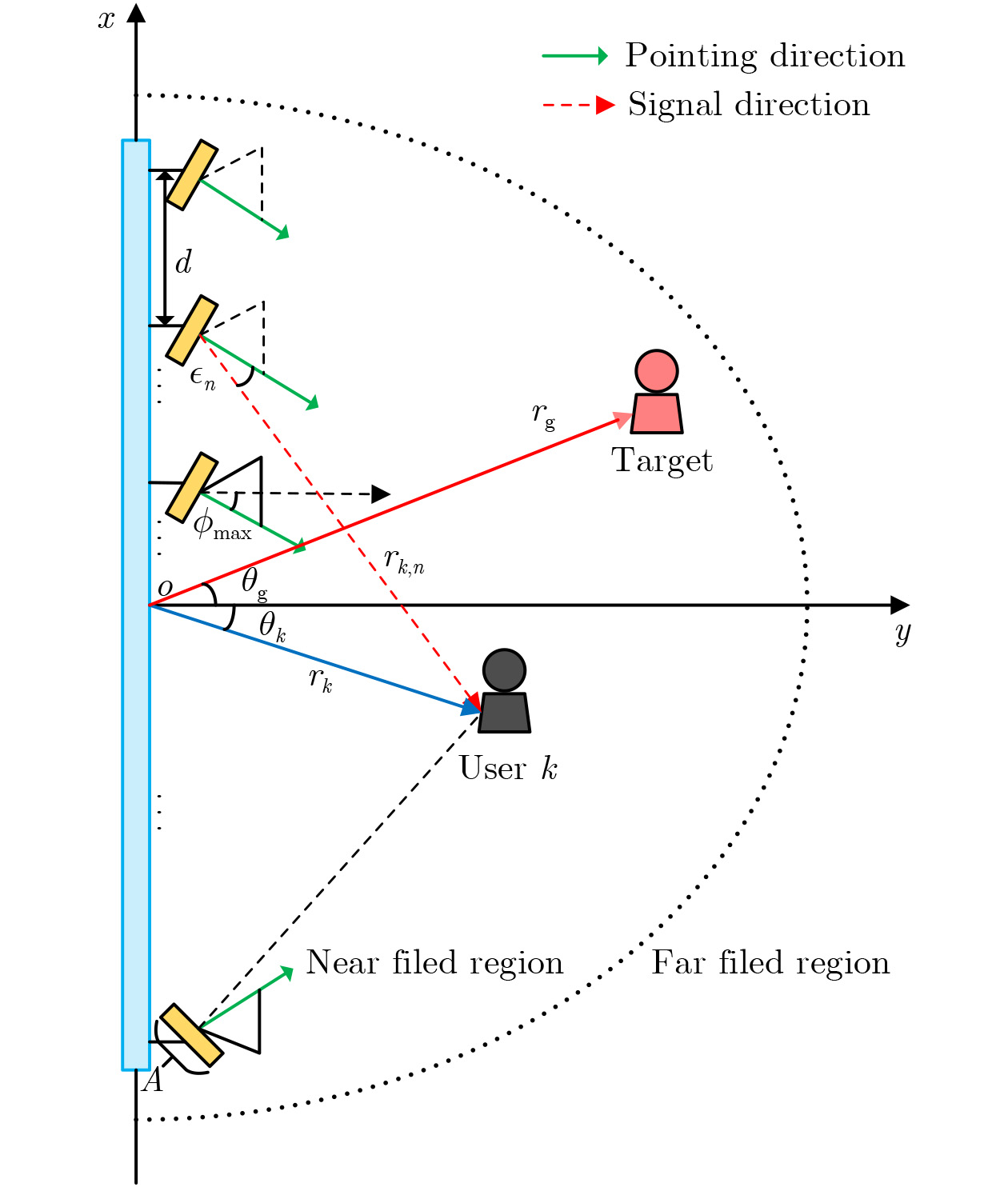
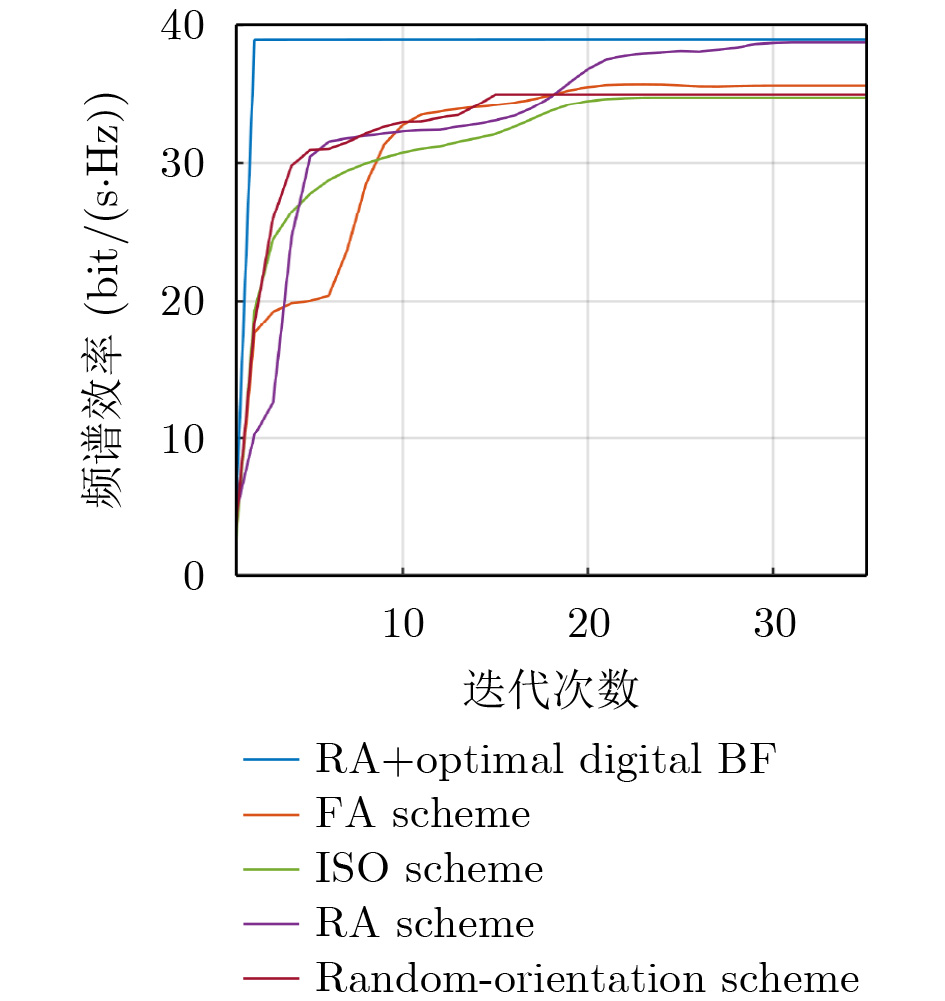
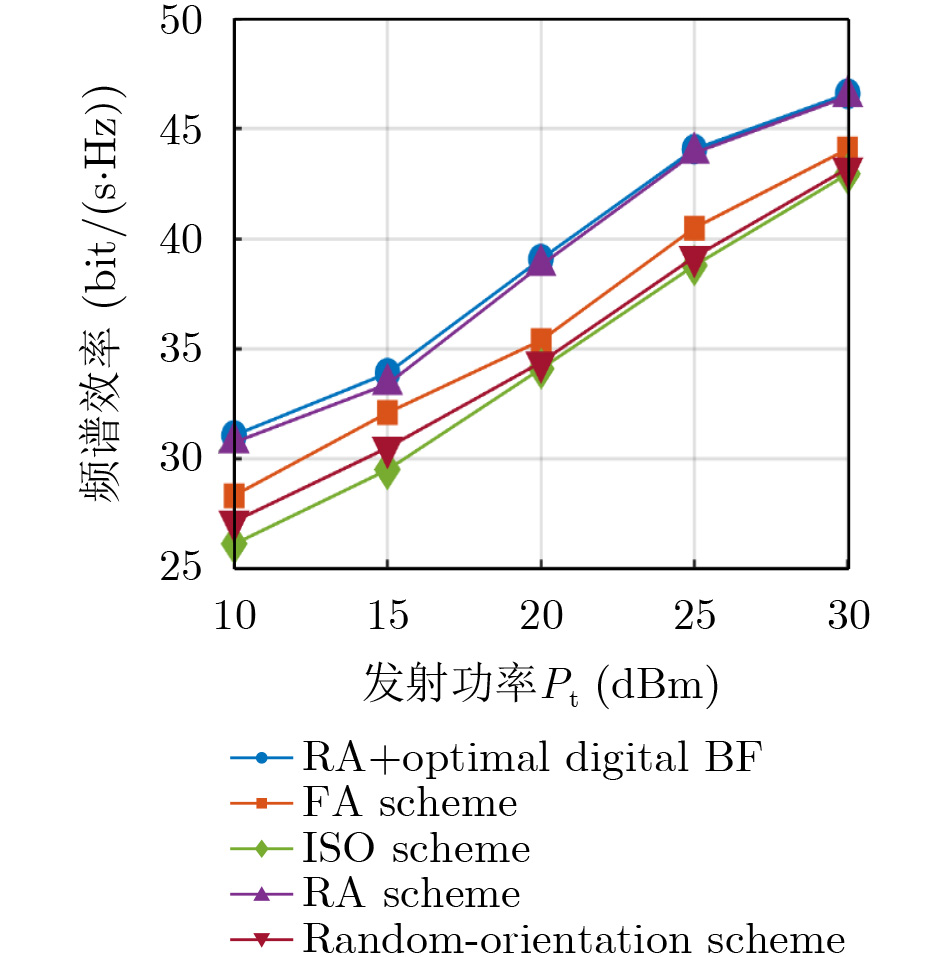
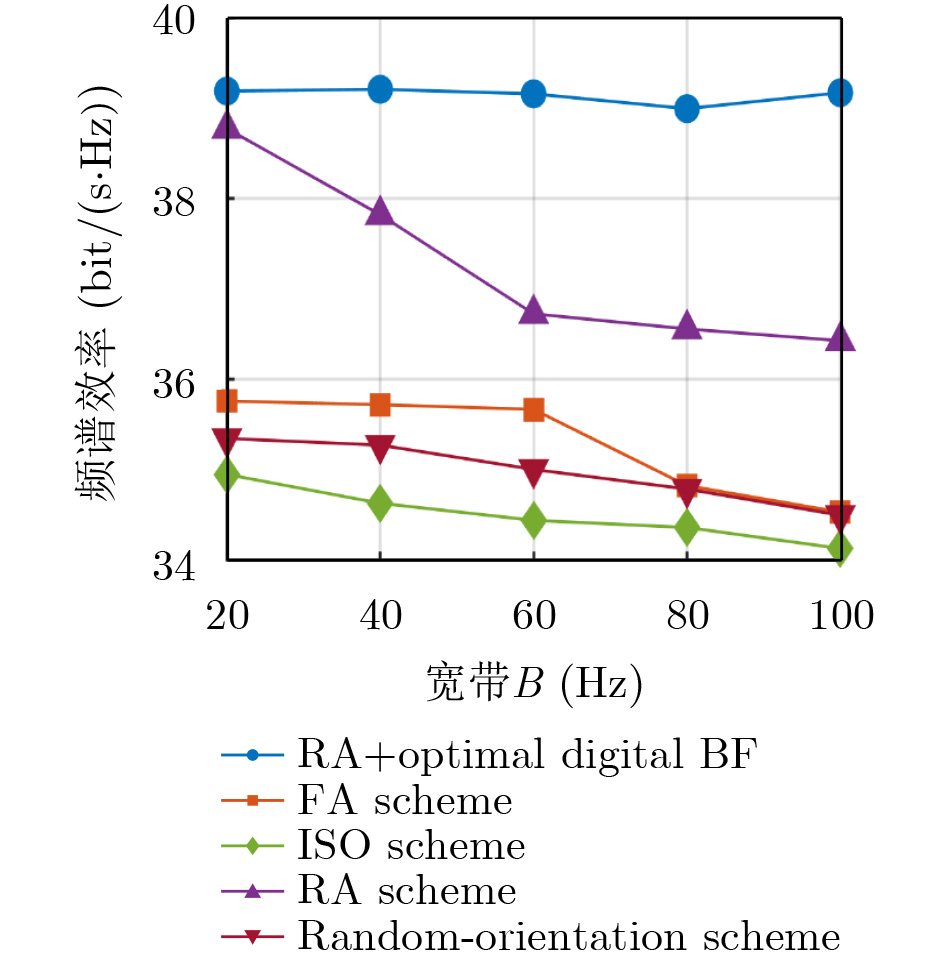
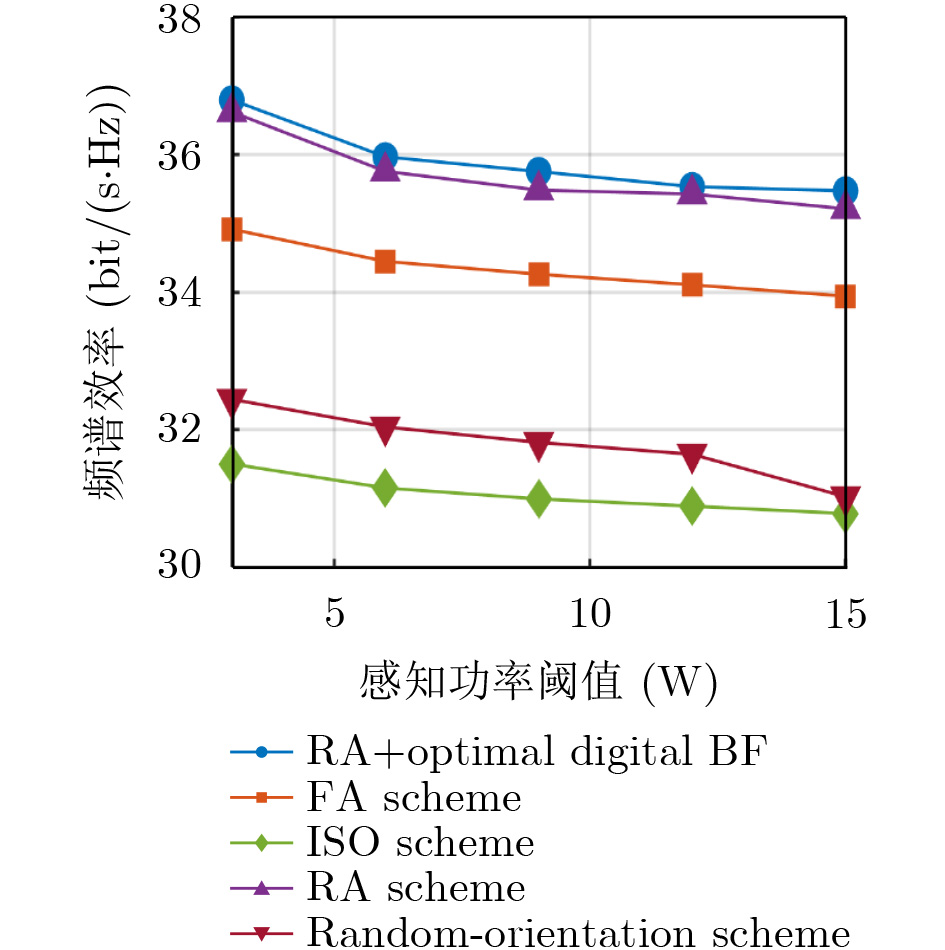
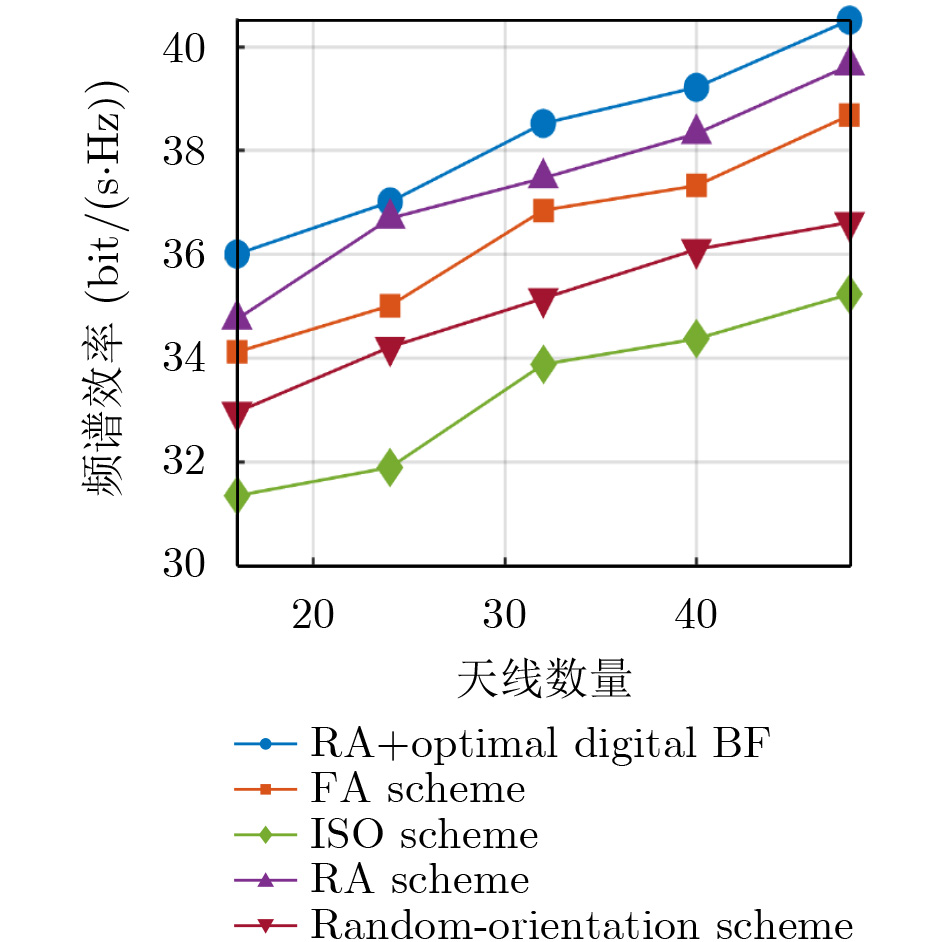
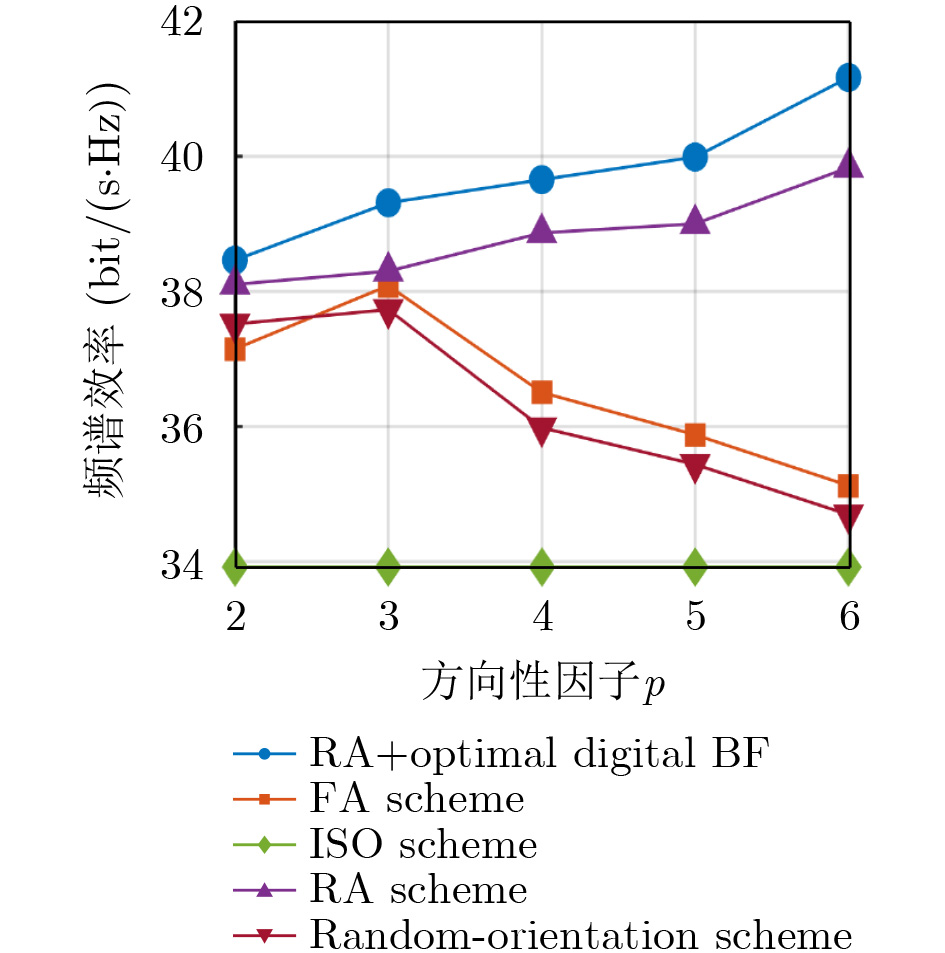
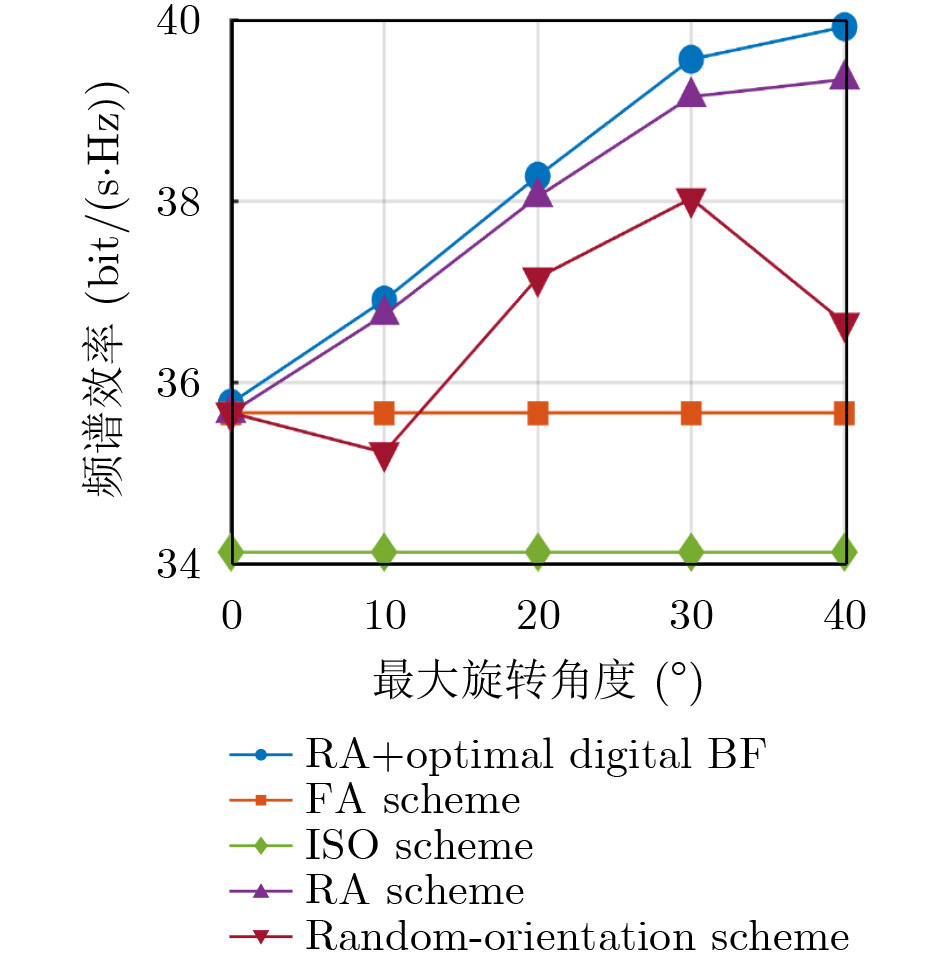
  •   Objective  With the rapid evolution of sixth-generation (6G) mobile communication systems, integrated sensing and communication (ISAC) has emerged as a key enabling paradigm for simultaneously supporting high-precision sensing and high-rate data transmission under limited spectrum resources. In near-field wideband scenarios, however, ISAC systems suffer from several fundamental challenges, including pronounced near-field effects, and wideband beam splitting. These impairments significantly degrade both communication throughput and sensing reliability, especially when conventional fixed-orientation antenna arrays and phase-shifter-based beamforming architectures are employed. Due to their limited spatial adaptability and inherent frequency-independent characteristics, traditional architectures are unable to fully exploit the spatial–frequency degrees of freedom available in near-field wideband channels. Therefore, it is of great importance to develop a new antenna architecture and beamforming framework that can effectively mitigate beam splitting, enhance energy focusing capability, and maintain robustness across wide bandwidths. To address these challenges, a rotatable-antenna-assisted near-field wideband ISAC architecture is investigated, aiming to improve system sum-rate performance while satisfying sensing-related constraints.  Methods  A novel near-field wideband ISAC system architecture assisted by rotatable antennas (RAs) is proposed. By introducing mechanically or electronically adjustable antenna boresight directions, additional angular degrees of freedom are provided at the antenna element level, enabling flexible spatial coverage and adaptive energy focusing. Furthermore, a TTD-based hybrid beamforming architecture is adopted, which provides frequency-dependent phase shifts in the frequency domain to compensate for the frequency-independent characteristics of conventional phase shifters, thereby ensuring consistent beam focusing across all subcarriers and effectively suppressing wideband beam splitting. Based on a spherical-wave near-field channel model that explicitly incorporates propagation distance, angular information, and the orientation gain of rotatable antennas—thereby allowing the array response to depend jointly on both angle and distance and overcoming the limitations of the planar-wave assumption—a joint optimization problem is formulated to maximize the system sum rate, while simultaneously considering transmit power constraints, sensing power thresholds, and physical limitations on antenna rotation angles. To address the formulated non-convex optimization problem, a penalty-based fully digital approximation (PBFDA) algorithm is developed. In each iteration, the orientations of the rotatable antennas are first optimized using a particle swarm optimization (PSO) method to enhance the weighted channel gain. Then, with the antenna orientations fixed, a reduced-dimensional formulation combined with successive convex approximation (SCA) is employed to solve the fully digital beamforming problem. Finally, a block coordinate descent (BCD) algorithm based on manifold optimization is adopted to jointly optimize the analog beamformer, digital beamformer, and TTD units, thereby progressively approximating the fully digital solution, with the three components iteratively updated until convergence is achieved (Algorithm 1–Algorithm 4).  Results and Discussions  Simulation results demonstrate the effectiveness and superiority of the proposed RA-assisted near-field wideband ISAC framework. The convergence behavior of the proposed penalty-based fully digital approximation (PBFDA) optimization algorithm indicates that the objective function monotonically increases and stabilizes within a limited number of iterations, confirming its numerical stability and efficiency (Fig. 2). Compared with conventional fixed-antenna architectures, the proposed RA-based scheme achieves a substantial improvement in system sum rate under the same transmit power constraints (Fig. 3). Furthermore, the impact of system bandwidth on spectral efficiency is investigated. As the system bandwidth increases, TTD-based hybrid beamforming schemes experience weakened frequency-dependent compensation capability due to the limited number of TTD units and the constrained maximum delay, which exacerbates wideband beam splitting and leads to a degradation in spectral efficiency. In contrast, the optimal fully digital beamforming approach enables accurate control over each subcarrier, rendering its spectral efficiency basically not varying with bandwidth (Fig. 4). The trade-off between communication performance and sensing power is also evaluated. As the sensing power threshold increases, the achievable sum rate decreases for all schemes, while the proposed method consistently outperforms the others (Fig. 5). The effects of antenna array size, antenna directivity factor, and maximum rotation angle are further investigated. Increasing the number of antennas improves spectral efficiency due to higher array gain, with the RA-based system consistently outperforming benchmark schemes (Fig. 6). As the antenna directivity factor increases, the RA system leverages adaptive orientation to focus energy toward desired users, achieving continuous performance gains, whereas fixed-orientation and isotropic schemes degrade (Fig. 7). Moreover, enlarging the allowable rotation range provides greater spatial alignment flexibility and further improves system performance (Fig. 8). Overall, the results demonstrate that the proposed architecture enhances near-field energy focusing and achieves performance close to fully digital beamforming with lower hardware complexity.  Conclusions  A rotatable-antenna-assisted near-field wideband ISAC system with a TTD-based fully connected hybrid beamforming architecture is investigated. By jointly exploiting antenna rotation and true time delay, the proposed framework effectively mitigates near-field effects and wideband beam splitting. A penalty-based fully digital approximation (PBFDA) optimization algorithm is developed to address the resulting highly non-convex problem. Numerical results demonstrate that the proposed scheme significantly improves system sum rate under sensing constraints and approaches the performance of fully digital beamforming, validating its effectiveness for near-field wideband ISAC applications.
  • loading
  • [1]
    SHAMEER M and RUTRAVIGNESHWARAN P. A comprehensive survey of IoT security, trust models, and cloud-based solutions for ensuring a secure connected future[C]. Proceedings of 2024 International Conference on Computing and Intelligent Reality Technologies (ICCIRT), Coimbatore, India, 2024: 11–16. doi: 10.1109/ICCIRT59484.2024.10921791.
    [2]
    QU Kaiqian, GUO Shuaishuai, SAEED N, et al. Near-field integrated sensing and communication: Performance analysis and beamforming design[J]. IEEE Open Journal of the Communications Society, 2024, 5: 6353–6366. doi: 10.1109/OJCOMS.2024.3470844.
    [3]
    林粤伟, 张奇勋, 尉志青, 等. 通信感知一体化硬件设计——现状与展望[J]. 电子与信息学报, 2025, 47(1): 1–21. doi: 10.11999/JEIT240012.

    LIN Yuewei, ZHANG Qixun, WEI Zhiqing, et al. Status and prospect of hardware design on integrated sensing and communication[J]. Journal of Electronics & Information Technology, 2025, 47(1): 1–21. doi: 10.11999/JEIT240012.
    [4]
    WANG Xiangrong, ZHAI Weitong, WANG Xianghua, et al. Wideband near-field integrated sensing and communications: A hybrid precoding perspective[J]. IEEE Signal Processing Magazine, 2025, 42(1): 88–105. doi: 10.1109/MSP.2024.3496396.
    [5]
    褚宏云, 杨梦瑶, 黄航, 等. 混合智能反射面辅助的通信感知一体化: 高能效波束成形设计[J]. 电子与信息学报, 2024, 46(6): 2462–2469. doi: 10.11999/JEIT230699.

    CHU Hongyun, YANG Mengyao, HUANG Hang, et al. Hybrid reconfigurable intelligent surface assisted integrated sensing and communication: Energy efficient beamforming design[J]. Journal of Electronics & Information Technology, 2024, 46(6): 2462–2469. doi: 10.11999/JEIT230699.
    [6]
    WANG Xiangrong, ZHAI Weitong, WANG Xianghua, et al. Wideband near-field integrated sensing and communication with sparse transceiver design[J]. IEEE Journal of Selected Topics in Signal Processing, 2024, 18(4): 662–677. doi: 10.1109/JSTSP.2024.3394970.
    [7]
    张若愚, 任红, 陈光毅, 等. MIMO雷达通信一体化: 波束图增益最大化波束成形设计[J]. 电子与信息学报, 2025, 47(3): 687–695. doi: 10.11999/JEIT240631.

    ZHANG Ruoyu, REN Hong, CHEN Guangyi, et al. MIMO dual-functional radar-communication: Beampattern gain maximization beamforming design[J]. Journal of Electronics & Information Technology, 2025, 47(3): 687–695. doi: 10.11999/JEIT240631.
    [8]
    GAO Zhen, WAN Ziwei, ZHENG Dezhi, et al. Integrated sensing and communication with mmWave massive MIMO: A compressed sampling perspective[J]. IEEE Transactions on Wireless Communications, 2023, 22(3): 1745–1762. doi: 10.1109/TWC.2022.3206614.
    [9]
    CONG Jiayi, YOU Changsheng, LI Jiapeng, et al. Near-field integrated sensing and communication: Opportunities and challenges[J]. IEEE Wireless Communications, 2024, 31(6): 162–169. doi: 10.1109/MWC.002.2400033.
    [10]
    WANG Zhaolin, MU Xidong, and LIU Yuanwei. Beamfocusing optimization for near-field wideband multi-user communications[J]. IEEE Transactions on Communications, 2025, 73(1): 555–572. doi: 10.1109/TCOMM.2024.3424244.
    [11]
    WANG Zhaolin, MU Xidong, LIU Yuanwei, et al. TTD configurations for near-field beamforming: Parallel, serial, or hybrid?[J]. IEEE Transactions on Communications, 2024, 72(6): 3783–3799. doi: 10.1109/TCOMM.2024.3370832.
    [12]
    ELBIR A M, CELIK A, and ELTAWIL A M. Near-field hybrid beamforming for terahertz-band integrated sensing and communications[C]. Proceedings of 2023 IEEE Globecom Workshops (GC Wkshps), Kuala Lumpur, Malaysia, 2023: 1117–1122. doi: 10.1109/GCWkshps58843.2023.10464709.
    [13]
    LUO Hongliang, GAO Feifei, YUAN Wanmai, et al. Beam squint assisted user localization in near-field integrated sensing and communications systems[J]. IEEE Transactions on Wireless Communications, 2024, 23(5): 4504–4517. doi: 10.1109/TWC.2023.3319474.
    [14]
    NEW W K, WONG K K, XU Hao, et al. A tutorial on fluid antenna system for 6G networks: Encompassing communication theory, optimization methods and hardware designs[J]. IEEE Communications Surveys & Tutorials, 2025, 27(4): 2325–2377. doi: 10.1109/COMST.2024.3498855.
    [15]
    WONG K K, SHOJAEIFARD A, TONG K F, et al. Fluid antenna systems[J]. IEEE Transactions on Wireless Communications, 2021, 20(3): 1950–1962. doi: 10.1109/TWC.2020.3037595.
    [16]
    ZHU Lipeng, MA Wenyan, and ZHANG Rui. Modeling and performance analysis for movable antenna enabled wireless communications[J]. IEEE Transactions on Wireless Communications, 2024, 23(6): 6234–6250. doi: 10.1109/TWC.2023.3330887.
    [17]
    WU Qingjie, ZHENG Beixiong, MA Tiantian, et al. Modeling and optimization for rotatable antenna enabled wireless communication[C]. Proceedings of ICC 2025-IEEE International Conference on Communications, Montreal, Canada, 2025: 1055–1060. doi: 10.1109/ICC52391.2025.11161853.
    [18]
    LIU Yuanwei, WANG Zhaolin, XU Jiaqi, et al. Near-field communications: A tutorial review[J]. IEEE Open Journal of the Communications Society, 2023, 4: 1999–2049. doi: 10.1109/OJCOMS.2023.3305583.
    [19]
    HE Xiuli, XU Hongbo, ZHANG Guoping, et al. RIS-assisted joint near-field channel estimation and beamforming design based on deep unfolding[J]. IEEE Transactions on Vehicular Technology, 2026, 75(3): 4411–4423. doi: 10.1109/TVT.2025.3612046.
  • 加载中

Catalog

    通讯作者: 陈斌, bchen63@163.com
    • 1. 

      沈阳化工大学材料科学与工程学院 沈阳 110142

    1. 本站搜索
    2. 百度学术搜索
    3. 万方数据库搜索
    4. CNKI搜索

    Figures(8)  / Tables(5)

    Article Metrics

    Article views (182) PDF downloads(30) Cited by()
    Proportional views
    Related

    /

    DownLoad:  Full-Size Img  PowerPoint
    Return
    Return