Advanced Search
Turn off MathJax
Article Contents
ZHOU Xiaobo, ZHANG Fan, SHE Chao, ZHOU Guofei, MENG Jianping. PLS-YOLO: A Lightweight Model for Signal Modulation Recognition[J]. Journal of Electronics & Information Technology. doi: 10.11999/JEIT251377
Citation: ZHOU Xiaobo, ZHANG Fan, SHE Chao, ZHOU Guofei, MENG Jianping. PLS-YOLO: A Lightweight Model for Signal Modulation Recognition[J]. Journal of Electronics & Information Technology. doi: 10.11999/JEIT251377

PLS-YOLO: A Lightweight Model for Signal Modulation Recognition

doi: 10.11999/JEIT251377 cstr: 32379.14.JEIT251377
Funds:  The National Natural Science Foundation of China (52472174), The National Key Research and Development Program of China (2023YFB3208101)
  • Received Date: 2025-12-30
  • Accepted Date: 2026-04-17
  • Rev Recd Date: 2026-04-16
  • Available Online: 2026-05-06
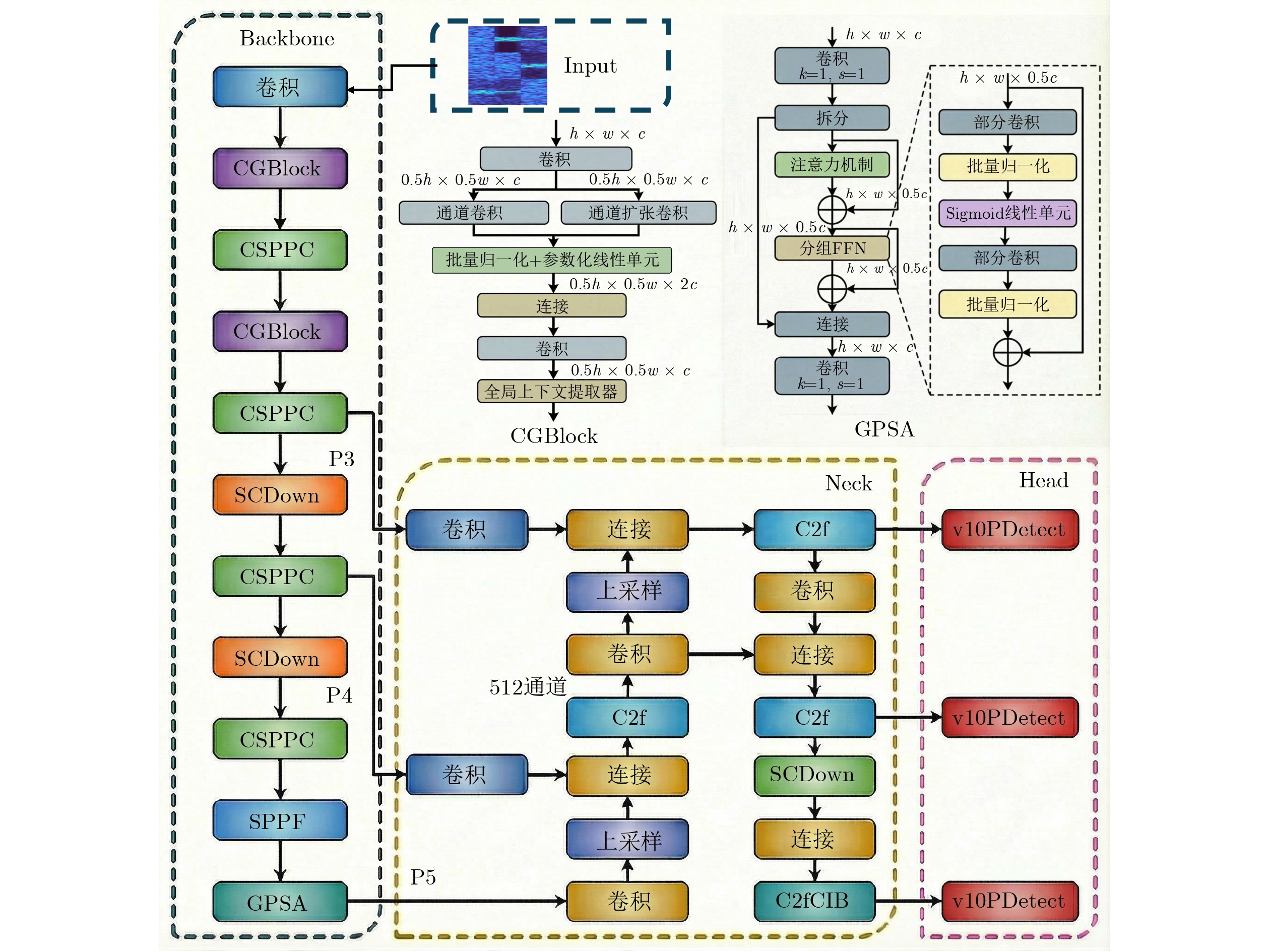
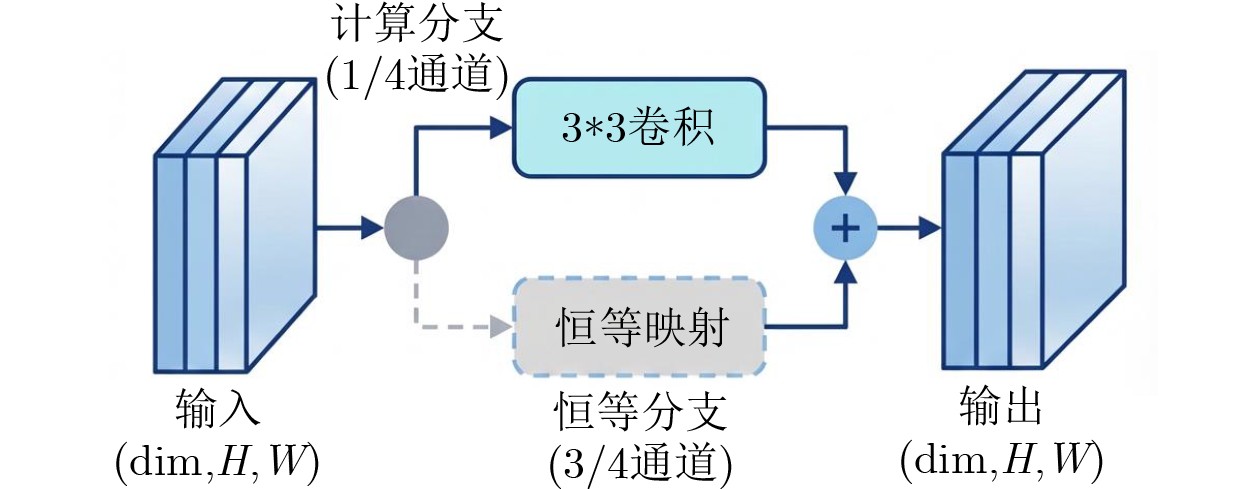
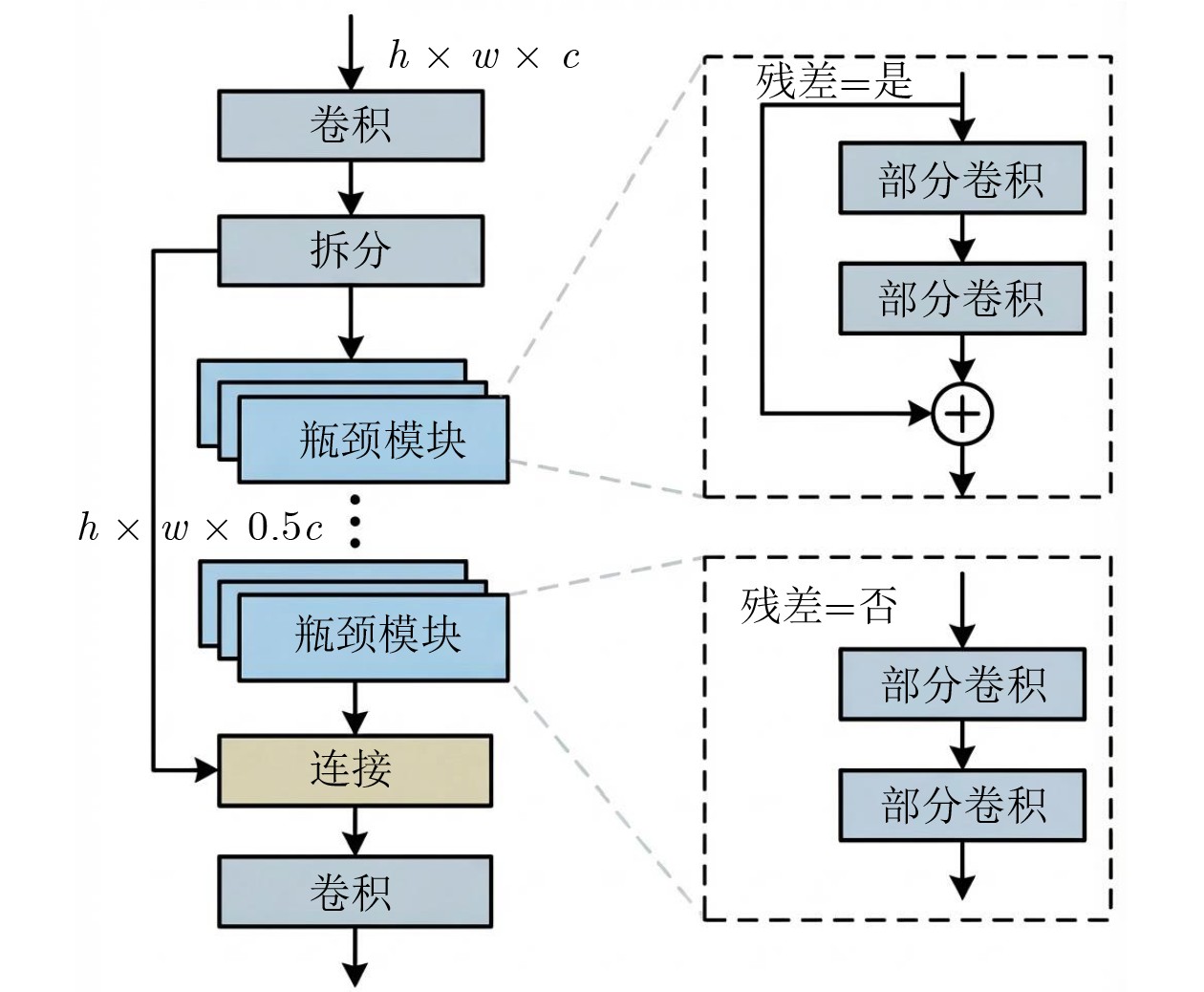
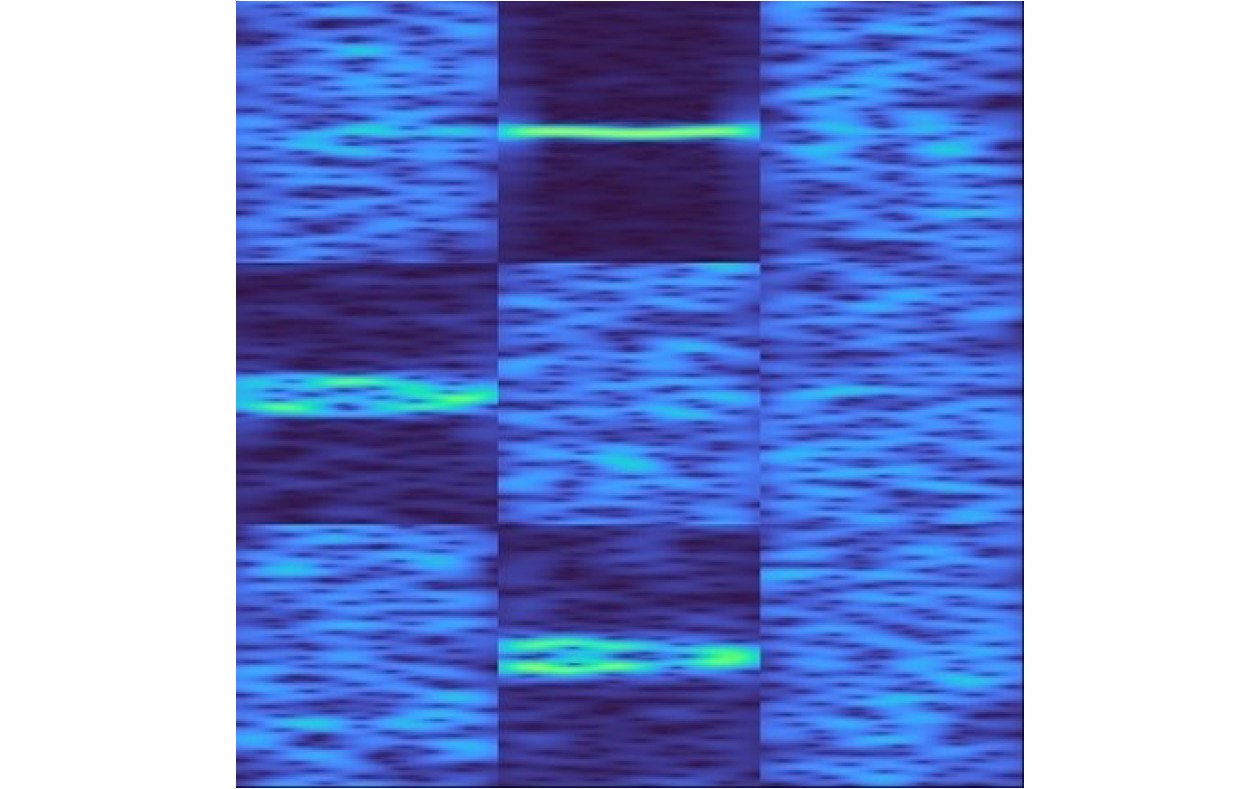
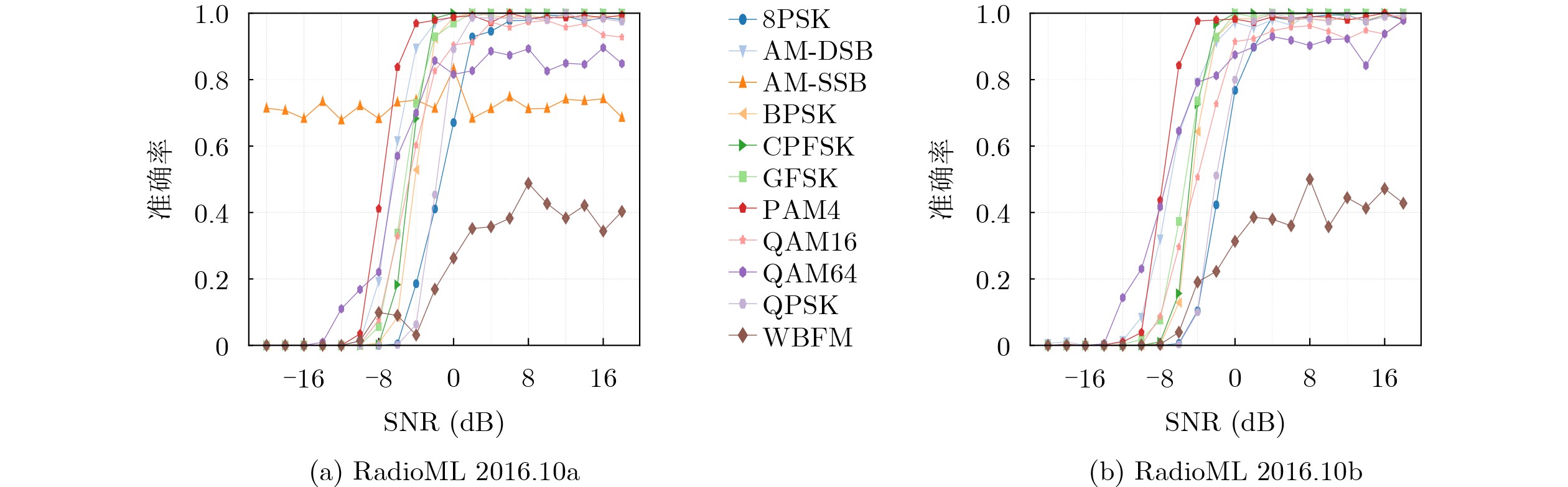
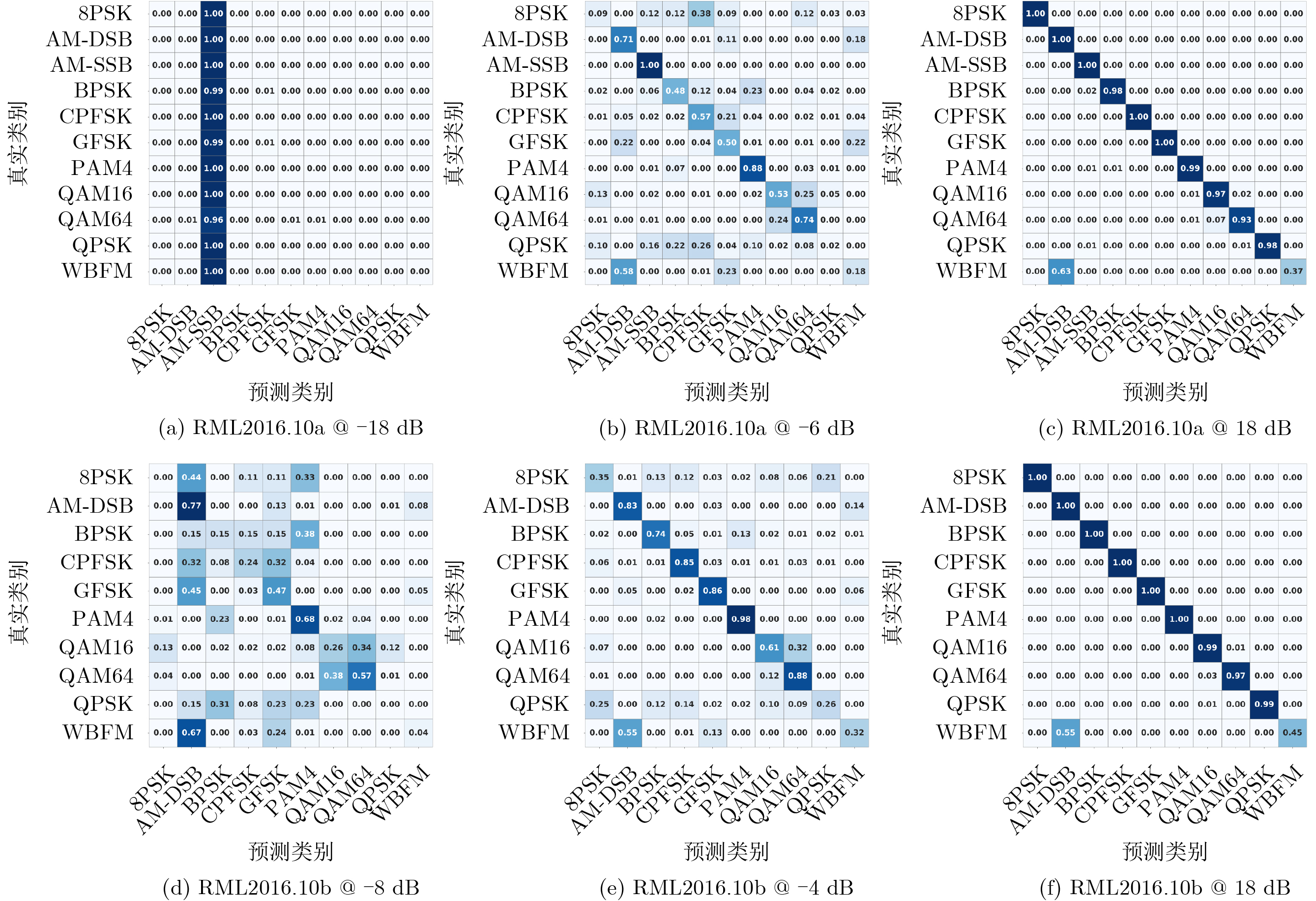
  •   Objective  As wireless communication evolves toward high efficiency, low latency, and ubiquitous connectivity, higher requirements are placed on Automatic Modulation Recognition (AMR) to ensure link reliability in complex electromagnetic environments. Deep learning has improved recognition performance compared with traditional methods, which often rely on subjective feature design and have limited robustness. However, existing YOLO-based AMR models are not fully optimized for specific signal characteristics or practical deployment. These models often have excessive parameters and high computational complexity, which makes them unsuitable for resource-constrained hardware, such as edge nodes and Field-Programmable Gate Arrays (FPGAs), and limits their ability to meet real-time communication requirements. To address these bottlenecks, this paper proposes Precision and Lightweight Structure-YOLO (PLS-YOLO), a lightweight AMR model based on YOLOv10n. By optimizing network channels, replacing core modules, and improving the downsampling mechanism, the proposed model enables efficient integration of modulation signal classification and localization. It also reduces the parameter count and computational complexity, thereby supporting AMR deployment in resource-constrained scenarios.  Methods  The method includes two main stages: dataset preprocessing and PLS-YOLO model construction. In the preprocessing stage, the public RadioML2016.10a and RadioML2016.10b benchmark datasets for signal modulation recognition are used. For In-phase and Quadrature (IQ) signals in these datasets, the Short-Time Fourier Transform (STFT) is used to map one-dimensional temporal signals into two-dimensional time-frequency spectrograms containing phase and amplitude information. This process provides richer feature representations for the model. A random sampling strategy without replacement is then used to stitch individual time-frequency samples into 3×3 composite images (Fig. 4). Target labels matching the input format of YOLO-series models are generated at the same time. The dataset is divided into training, validation, and test sets at a ratio of 7:1.5:1.5 by stratified sampling to ensure consistent signal-type distributions across all subsets. The model is built on YOLOv10n, with targeted improvements designed to balance the parameter count and recognition performance. The C2f module in the original backbone network is replaced with the CSPPC module, which is based on the CSP architecture and consists of feature splitting, Partial Convolution (PConv) processing, and feature fusion. This design reduces parameters while improving recognition performance. The feature dimensionality reduction process in the backbone network is also reconstructed to reduce the increase in computational complexity caused by parameter redundancy. The traditional downsampling module is replaced with CGBlock, which improves the capture of complex modulation signal features by fusing context-aware information. Finally, standard convolutions in the PSA and v10Detect modules are replaced with PConv to further reduce computational complexity and jointly optimize lightweight design and recognition performance.  Results and Discussions  Experimental results on RadioML2016.10a show that PLS-YOLO achieves a mean Average Precision (mAP) of 68.4% within the Signal-to-Noise Ratio (SNR) range of –20 to 18 dB. The mAP increases to 94.3% when SNR ≥ 0 dB. Compared with the baseline YOLOv10n model, PLS-YOLO improves mAP by 0.6%, reduces the parameter count by 47.33%, and decreases computational complexity by 34.15%. Its inference speed also increases by 5 frames per second (fps) (Table 2). These results show that the model effectively balances recognition performance and lightweight deployment by reducing computational cost while improving precision. To verify robustness, additional experiments are conducted on RadioML2016.10b. As shown in Table 4, PLS-YOLO achieves an mAP of 73.30% over the –20 to 18 dB range and 95.4% at SNR ≥ 0 dB. It outperforms mainstream models such as MCNet and LSTM2, confirming its strong recognition performance. Furthermore, Fig. 5 shows that converting IQ data into spectrograms is more suitable for PLS-YOLO recognition of digital modulation signals. By contrast, the recognition performance for analog modulation signals remains limited. Future work should therefore improve feature modeling and recognition capability for analog signals.  Conclusions  This study proposes PLS-YOLO, a lightweight AMR model based on YOLOv10n. To jointly improve modulation recognition performance and model compactness, the network structure is optimized through channel dimensionality reduction, core module replacement, downsampling mechanism improvement, and PConv substitution. These strategies reduce key limitations of existing YOLO-based AMR models, including parameter redundancy, high computational complexity, and limited adaptability to resource-constrained scenarios such as edge nodes and FPGAs. Experiments on the RadioML2016.10a and RadioML2016.10b benchmark datasets show that PLS-YOLO achieves strong overall performance. While integrated signal classification and localization are maintained, both parameter count and computational complexity are substantially reduced compared with the baseline YOLOv10n model, with a clear improvement in recognition performance. The results verify the effectiveness and feasibility of the proposed optimization strategies and provide a practical technical path for AMR implementation. The remaining limitations in analog modulation signal recognition also indicate a clear direction for future research.
  • loading
  • [1]
    郑庆河, 李秉霖, 于治国, 等. 深度学习使能的自动调制分类技术研究进展[J]. 电子与信息学报, 2025, 47(11): 4096–4111. doi: 10.11999/JEIT250674.

    ZHENG Qinghe, LI Binglin, YU Zhiguo, et al. Research progress of deep learning enabled automatic modulation classification technology[J]. Journal of Electronics & Information Technology, 2025, 47(11): 4096–4111. doi: 10.11999/JEIT250674.
    [2]
    ZHANG Bojun. Electromagnetic signal modulation recognition based on subgraph embedding learning[EB/OL]. https://arxiv.org/abs/2508.13474, 2025.
    [3]
    YIN Ziqi, FENG Shanshan, LIU Shang, et al. LIST: Learning to index spatio-textual data for embedding based spatial keyword queries[J]. The VLDB Journal, 2025, 34(3): 23. doi: 10.1007/s00778-024-00886-5.
    [4]
    郑庆河, 刘方霖, 余礼苏, 等. 一种结合小波去噪卷积与稀疏Transformer的调制识别方法[J]. 电子与信息学报, 2025, 47(7): 2361–2374. doi: 10.11999/JEIT241159.

    ZHENG Qinghe, LIU Fanglin, YU Lisu, et al. A modulation recognition method combining wavelet denoising convolution and sparse Transformer[J]. Journal of Electronics & Information Technology, 2025, 47(7): 2361–2374. doi: 10.11999/JEIT241159.
    [5]
    O’SHEA T J, CORGAN J, and CLANCY T C. Convolutional radio modulation recognition networks[C]. Proceedings of the 17th International Conference on Engineering Applications of Neural Networks, Aberdeen, UK, 2016: 213–226. doi: 10.1007/978-3-319-44188-7_16.
    [6]
    MURAT A A and KIRAN M S. A comprehensive review on YOLO versions for object detection[J]. Engineering Science and Technology, an International Journal, 2025, 70: 102161. doi: 10.1016/j.jestch.2025.102161.
    [7]
    周鑫, 何晓新, 郑昌文. 基于图像深度学习的无线电信号识别[J]. 通信学报, 2019, 40(7): 114–125. doi: 10.11959/j.issn.1000-436x.2019167.

    ZHOU Xin, HE Xiaoxin, and ZHENG Changwen. Radio signal recognition based on image deep learning[J]. Journal on Communications, 2019, 40(7): 114–125. doi: 10.11959/j.issn.1000-436x.2019167.
    [8]
    李松璋. 基于深度学习的宽带信号识别技术研究[D]. [硕士论文], 北京交通大学, 2023. doi: 10.26944/d.cnki.gbfju.2023.001608.

    LI Songzhang. Research on broadband radio signal recognition based on deep learning[D]. [Master dissertation], Beijing Jiaotong University, 2023. doi: 10.26944/d.cnki.gbfju.2023.001608.
    [9]
    张红. 基于改进YOLOv5的宽带接收信号检测与调制识别研究[D]. [硕士论文], 西京学院, 2024. doi: 10.27831/d.cnki.gxjxy.2024.000125.

    ZHANG Hong. Research on detection and modulation recognition of wideband received signal based on improved YOLOv5[D]. [Master dissertation], Xijing University, 2024. doi: 10.27831/d.cnki.gxjxy.2024.000125.
    [10]
    CHEN Hui, CHEN Kai, DING Guiguang, et al. Yolov10: Real-time end-to-end object detection[C]. The 38th Conference on Neural Information Processing Systems, Vancouver, Canada, 2024: 107984–108011. doi: 10.52202/079017-3429.
    [11]
    ZOU Yukang and LIU S. Small object detection algorithm based on improved YOLOv10 for traffic sign[J]. Transportation Research Interdisciplinary Perspectives, 2025, 32: 101501. doi: 10.1016/j.trip.2025.101501.
    [12]
    HOU Sizu and WANG Wenyao. Fault-line selection method in active distribution networks based on improved multivariate variational mode decomposition and lightweight YOLOv10 network[J]. Energies, 2024, 17(19): 4958. doi: 10.3390/en17194958.
    [13]
    MEI Junhui and ZHU Wenqiu. BGF-YOLOv10: Small object detection algorithm from unmanned aerial vehicle perspective based on improved YOLOv10[J]. Sensors, 2024, 24(21): 6911. doi: 10.3390/s24216911.
    [14]
    CHEN Jierun, KAO S H, HE Hao, et al. Run, don't walk: Chasing higher FLOPS for faster neural networks[C]. The IEEE/CVF Conference on Computer Vision and Pattern Recognition, Vancouver, Canada, 2023: 12021–12031. doi: 10.1109/CVPR52729.2023.01157.
    [15]
    ZHAO Yi’an, LV Wenyu, XU Shangliang, et al. DETRs beat YOLOs on real-time object detection[C]. The IEEE/CVF Conference on Computer Vision and Pattern Recognition, Seattle, USA, 2024: 16965–16974.
    [16]
    WANG C Y, LIAO H Y M, WU Y H, et al. CSPNet: a new backbone that can enhance learning capability of CNN[C]. The IEEE/CVF Conference on Computer Vision and Pattern Recognition Workshops, Seattle, USA, 2020: 390–391. doi: 10.1109/CVPRW50498.2020.00203.
    [17]
    HUYNH-THE T, HUA C H, PHAM Q V, et al. MCNet: An efficient CNN architecture for robust automatic modulation classification[J]. IEEE Communications Letters, 2020, 24(4): 811–815. doi: 10.1109/LCOMM.2020.2968030.
    [18]
    RAJENDRAN S, MEERT W, GIUSTINIANO D, et al. Deep learning models for wireless signal classification with distributed low-cost spectrum sensors[J]. IEEE Transactions on Cognitive Communications and Networking, 2018, 4(3): 433–445. doi: 10.1109/TCCN.2018.2835460.
    [19]
    ZHANG Fuxin, LUO Chunbo, XU Jialang, et al. An efficient deep learning model for automatic modulation recognition based on parameter estimation and transformation[J]. IEEE Communications Letters, 2021, 25(10): 3287–3290. doi: 10.1109/LCOMM.2021.3102656.
    [20]
    XU Jialang, LUO Chunbo, PARR G, et al. A spatiotemporal multi-channel learning framework for automatic modulation recognition[J]. IEEE Wireless Communications Letters, 2020, 9(10): 1629–1632. doi: 10.1109/LWC.2020.2999453.
    [21]
    ZHANG Jiawei, WANG Tiantian, FENG Zhixi, et al. AMC-Net: An effective network for automatic modulation classification[C]. 2023 IEEE International Conference on Acoustics, Speech and Signal Processing, Rhodes Island, Greece, 2023: 1–5. doi: 10.1109/ICASSP49357.2023.10097070.
    [22]
    CHEN Yantao, DONG Binhong, LIU Cuiting, et al. Abandon locality: Frame-wise embedding aided transformer for automatic modulation recognition[J]. IEEE Communications Letters, 2023, 27(1): 327–331. doi: 10.1109/LCOMM.2022.3213523.
    [23]
    王祯, 刘伟, 卢万杰, 等. 面向低信噪比序列的多模态联合自动调制方式识别方法[J]. 电子与信息学报, 2025, 47(12): 5082–5093. doi: 10.11999/JEIT250594.

    WANG Zhen, LIU Wei, LU Wanjie, et al. Multi-modal joint automatic modulation recognition method towards low SNR sequences[J]. Journal of Electronics & Information Technology, 2025, 47(12): 5082–5093. doi: 10.11999/JEIT250594.
    [24]
    曹洁, 刘锦辉, 宋蓓蓓. 一种轻量化的IQ路信号调制方式识别方法[J]. 无线通信技术, 2024, 33(3): 18–23. doi: 10.3969/j.issn.1003-8329.2024.03.004.

    CAO Jie, LIU Jinhui, and SONG Beibei. A lightweight IQ signal modulation recognition method[J]. Wireless Communication Technology, 2024, 33(3): 18–23. doi: 10.3969/j.issn.1003-8329.2024.03.004.
  • 加载中

Catalog

    通讯作者: 陈斌, bchen63@163.com
    • 1. 

      沈阳化工大学材料科学与工程学院 沈阳 110142

    1. 本站搜索
    2. 百度学术搜索
    3. 万方数据库搜索
    4. CNKI搜索

    Figures(6)  / Tables(4)

    Article Metrics

    Article views (166) PDF downloads(32) Cited by()
    Proportional views
    Related

    /

    DownLoad:  Full-Size Img  PowerPoint
    Return
    Return