Advanced Search
Turn off MathJax
Article Contents
YU Weijia, DU Jianhe, CHEN Yuanzhi, HE Jing, ZHANG Peng, GUAN Yalin. A Tensor Framework for ISAC: Information Fusion Enhanced Channel Estimation and Target Localization[J]. Journal of Electronics & Information Technology. doi: 10.11999/JEIT251371
Citation: YU Weijia, DU Jianhe, CHEN Yuanzhi, HE Jing, ZHANG Peng, GUAN Yalin. A Tensor Framework for ISAC: Information Fusion Enhanced Channel Estimation and Target Localization[J]. Journal of Electronics & Information Technology. doi: 10.11999/JEIT251371

A Tensor Framework for ISAC: Information Fusion Enhanced Channel Estimation and Target Localization

doi: 10.11999/JEIT251371 cstr: 32379.14.JEIT251371
Funds:  The National Natural Science Foundation of China (62501547, 62471444, U2441236)
  • Accepted Date: 2026-05-12
  • Rev Recd Date: 2026-05-12
  • Available Online: 2026-05-29
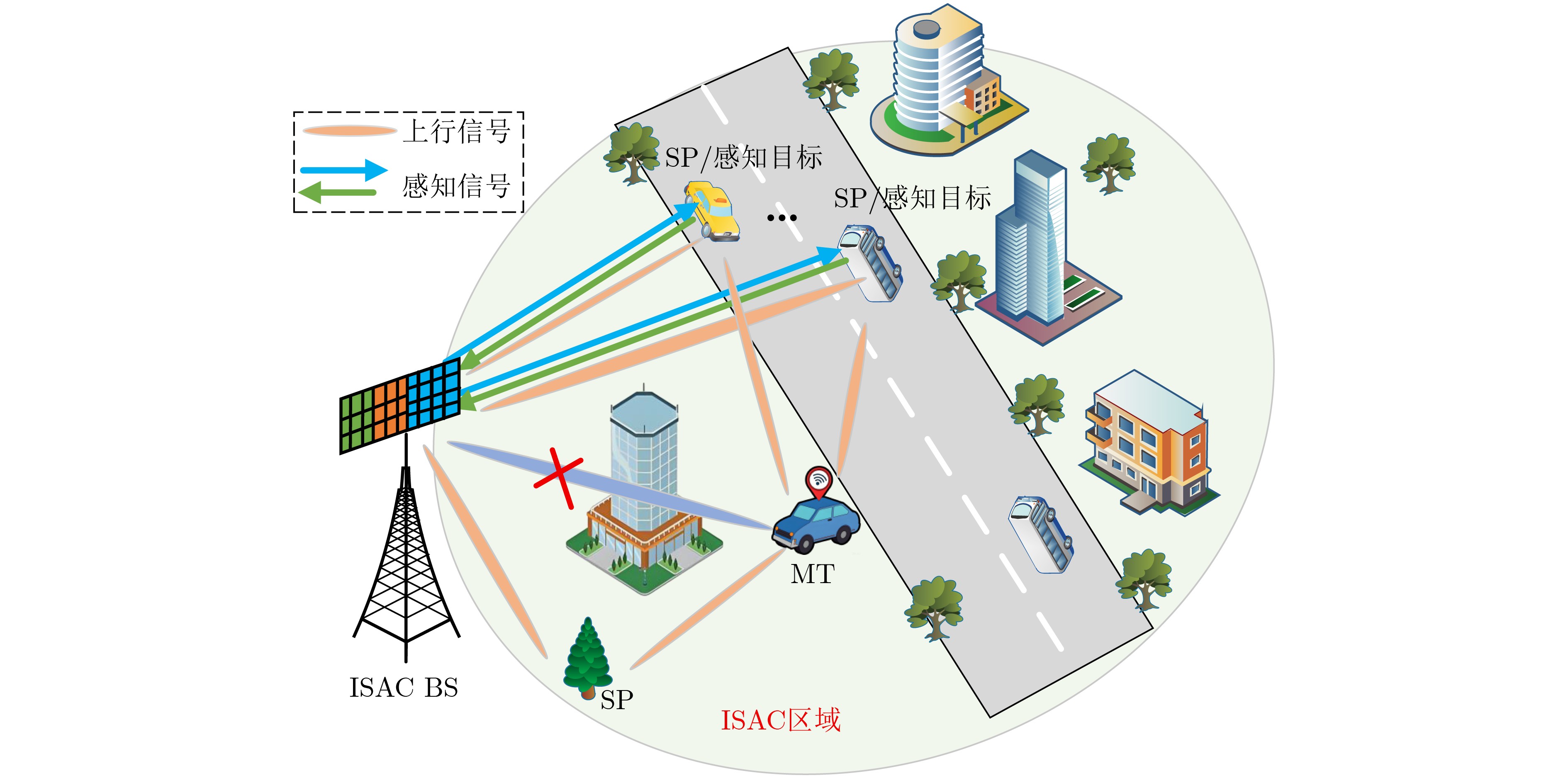
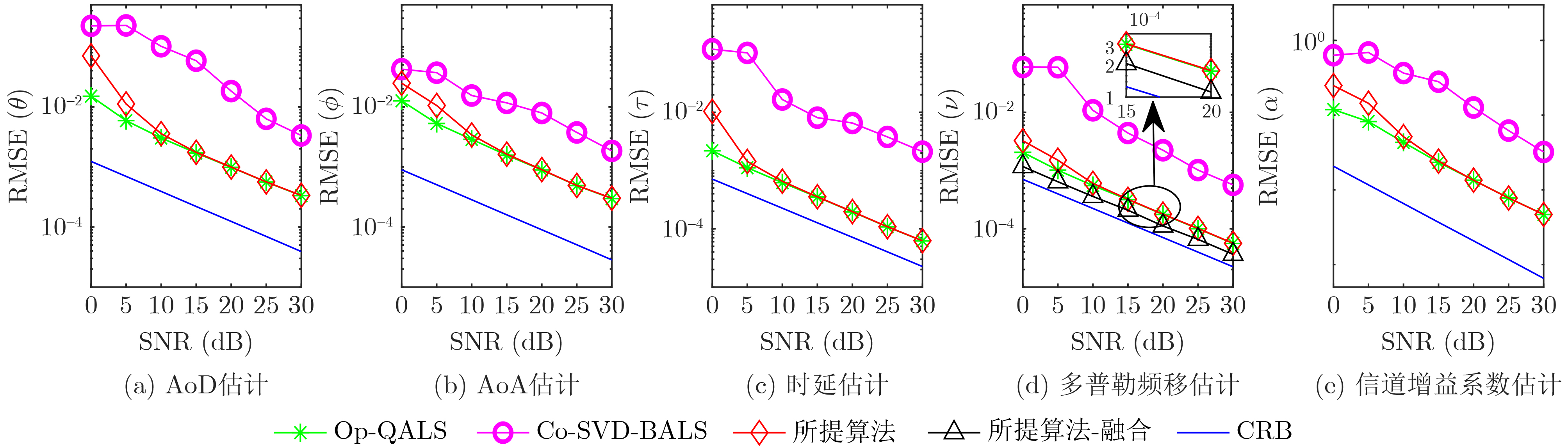
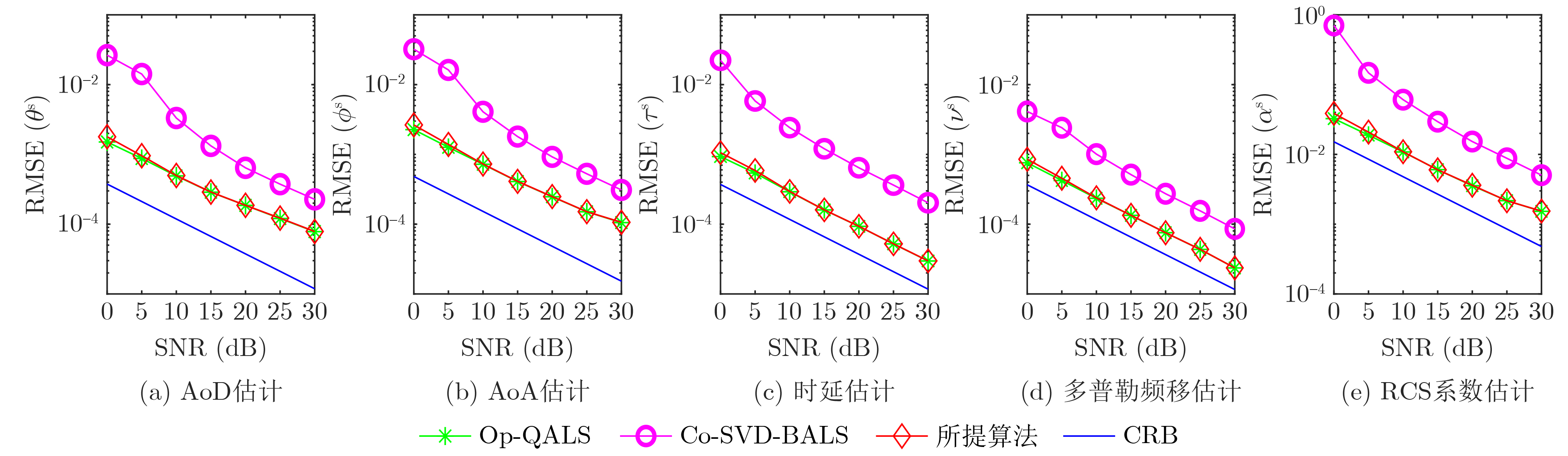
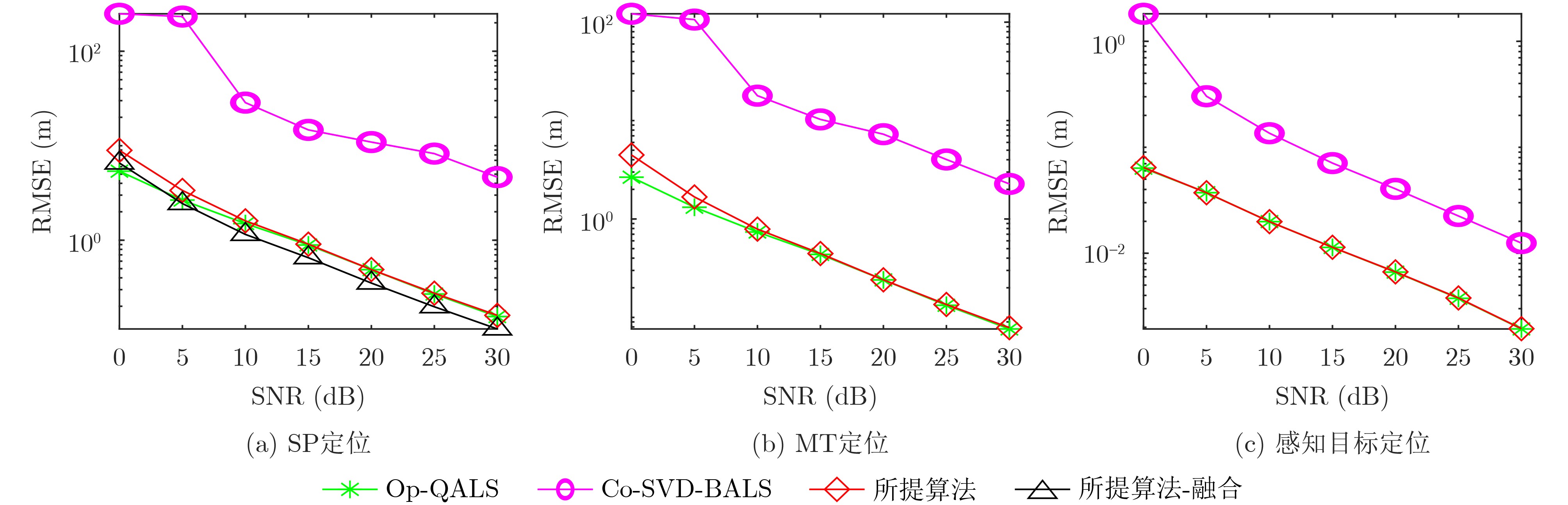
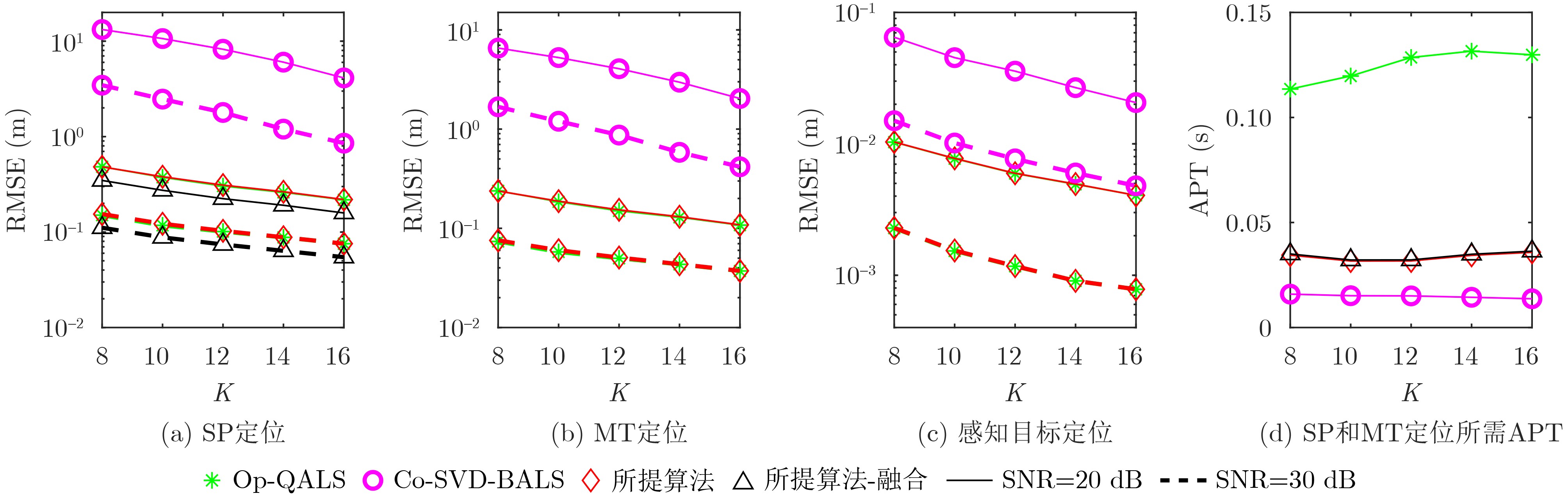
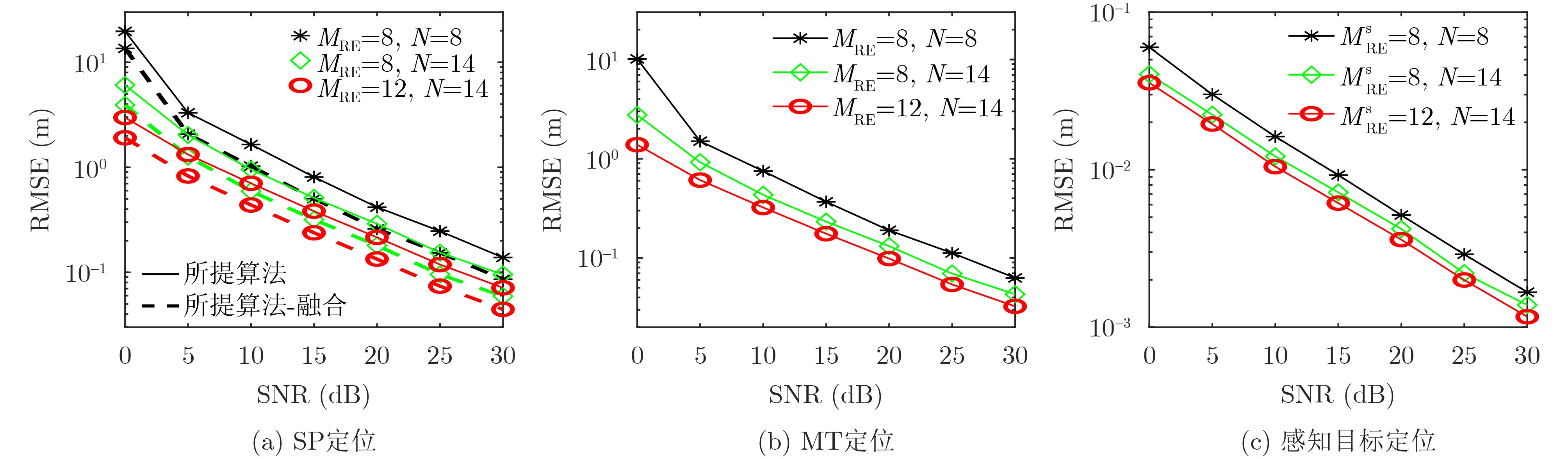
  •   Objective  Communication and sensing systems are evolving toward higher frequency bands, larger antenna arrays, and greater miniaturization, driving their increasing convergence in terms of hardware architecture, channel characteristics, and signal processing. This synergy gives rise to integrated sensing and communication (ISAC), in which the joint estimation of channel and sensing target parameters has become a primary research hotspot. Although existing studies have realized the co-estimation of these two categories of parameters based on a unified tensor framework, several limitations remain. On the one hand, current research focuses primarily on parameter estimation itself, without further transforming the multidimensional estimation results into precise localization of scatterer points (SPs), mobile terminals, and sensing targets, which makes it difficult to achieve a complete spatial characterization of the wireless propagation environment. On the other hand, limited attention has been paid to the fusion mechanism between channel and sensing target parameter information, thereby hampering the further improvement of parameter estimation and localization accuracy.  Methods  To address the problems of parameter estimation and localization for channels/sensing targets in millimeter-wave multiple-input multiple-output ISAC systems, a tensor decomposition algorithm based on information fusion is proposed. First, a unified fourth-order parallel factor model is constructed at the base station for the estimation of uplink channel and sensing target parameters. To reduce computational complexity, the fourth-order tensor model is transformed into a third-order form, and the trilinear alternating least squares method is adopted to estimate the three factor matrices. Furthermore, by exploiting the special structure of a factor matrix, the proposed algorithm incorporates a closed-form decomposition to decouple the coupled factor matrix, from which the angle of departure, angle of arrival, time delay, Doppler shift, and coefficients are extracted from the four estimated factor matrices. On this basis, the localization of mobile transmitter (MT), SPs, and sensing targets is realized separately using geometric relationships, while the estimation accuracy of SPs is effectively improved by fusing the Doppler shift and position information of SPs and sensing targets. Besides, the Cramér-Rao bound is derived to establish a theoretical performance benchmark for the five parameters.  Results and Discussions  The first simulation experiment shows that the proposed algorithm and the Op-QALS algorithm outperform the Co-SVD-BALS algorithm in both channel/sensing target parameter estimation and localization (Fig. 2, Fig. 3, Fig. 4). With information fusion, the proposed algorithm achieves the best performance in Doppler shift and position estimation for SPs (Fig. 2(d), Fig. 4(a)). This is attributed to the fact that both the proposed algorithm and Op-QALS algorithm fully exploit the multi-dimensional structure of the received signal, and the fusion operation further enhances the estimation capability of the proposed algorithm, whereas the Co-SVD-BALS algorithm suffers from severe error accumulation during its stepwise factor matrix estimation. Moreover, the average processing time (APT) required by the proposed algorithm for localization is slightly higher than that of Co-SVD-BALS algorithm, but significantly lower than that of Op-QALS algorithm (Table 1 and Table 2). Therefore, the proposed algorithm achieves excellent parameter estimation and localization performance at a reasonable computational cost. The second simulation experiment shows that under two signal-to-noise ratio levels, the localization accuracy of all algorithms improves gradually with the increase of $ K $, while the proposed algorithm maintains comparable SP and MT localization accuracy to Op-QALS algorithm, but with notably lower APT (Fig. 5). Furthermore, the incorporation of the fusion operation does not significantly increase the APT of the proposed algorithm (Fig. 5(d)). The third simulation experiment indicates that increasing $ {M}_{\mathrm{RE}}\left(M_{\mathrm{RE}}^{\mathrm{s}}\right) $and $ N $ helps enhance the ability of the proposed algorithm to resolve multipath signals, thereby obtaining more precise localization performance (Fig. 6).  Conclusions  This paper proposes a unified tensor framework-based information fusion algorithm for channel/sensing target parameter estimation and localization. By exploiting the Vandermonde structure of a factor matrix, the proposed algorithm maintains estimation accuracy while reducing complexity. Besides, fusion operation further improves SP estimation and localization without significantly increasing computational overhead. Future work will extend the algorithm to more general array configurations and explore higher-order tensor processing in multi-base-station cooperation or multi-user access scenarios.
  • loading
  • [1]
    HE Yihao, PENG Zhendong, LIU Min, et al. Full-order tensor-based parameters estimation and channel reconstruction for heterogeneous Bi-static mmWave ISAC[J]. IEEE Transactions on Vehicular Technology, 2025, 74(12): 19171–19187. doi: 10.1109/TVT.2025.3585612.
    [2]
    SAAD W, BENNIS M, and Chen Mingzhe. A vision of 6G wireless systems: Applications, trends, technologies, and open research problems[J]. IEEE Network, 2020, 34(3): 134–142. doi: 10.1109/MNET.001.1900287.
    [3]
    罗欣, 杜建和, 张耀, 等. 可重构智能表面辅助近场通信感知一体化系统基于嵌套张量的同时定位与通信方法[J]. 电子与信息学报, 2025, 47(4): 979–990. doi: 10.11999/JEIT240566.

    LUO Xin, DU Jianhe, ZHANG Yao, et al. Nested tensor-based simultaneous localization and communication method for RIS-assisted near-field integrated sensing and communication systems[J]. Journal of Electronics & Information Technology, 2025, 47(4): 979–990. doi: 10.11999/JEIT240566.
    [4]
    HAN Kawon, MENG Kaitao, WANG Xiaoyang, et al. Network-level ISAC design: State-of-the-art, challenges, and opportunities[J]. IEEE Journal of Selected Topics in Electromagnetics, Antennas and Propagation, 2025, 1(1): 65–83. doi: 10.1109/JSTEAP.2025.3603139.
    [5]
    WEI Zhiqing, JIA Jinzhu, NIU Yangyang, et al. Integrated sensing and communication channel modeling: A survey[J]. IEEE Internet of Things Journal, 2025, 12(12): 18850–18864. doi: 10.1109/JIOT.2024.3449377.
    [6]
    黄高见, 张盛壮, 丁元, 等. 方向调制多载波通感一体化波形设计研究[J]. 电子与信息学报, 2026, 48(2): 640–650. doi: 10.11999/JEIT250680.

    HUANG Gaojian, ZHANG Shengzhuang, DING Yuan, et al. Research on directional modulation multi-carrier waveform design for integrated sensing and communication[J]. Journal of Electronics & Information Technology, 2026, 48(2): 640–650. doi: 10.11999/JEIT250680.
    [7]
    LI Biwei, WANG Xianbin, and FANG Fang. Maximizing the value of service provisioning in multi-user ISAC systems through fairness guaranteed collaborative resource allocation[J]. IEEE Journal on Selected Areas in Communications, 2024, 42(9): 2243–2258. doi: 10.1109/JSAC.2024.3413973.
    [8]
    ZHAO Zongyao, LIU Zhenyu, JIANG Rui, et al. Joint beamforming for multi-target detection and multi-user communication in ISAC systems[J]. IEEE Transactions on Vehicular Technology, 2025, 74(9): 14938–14942. doi: 10.1109/TVT.2025.3565412.
    [9]
    LIU Haotian, WEI Zhiqing, LI Fengyun, et al. Integrated sensing and communication signal processing based on compressed sensing over unlicensed spectrum bands[J]. IEEE Transactions on Cognitive Communications and Networking, 2024, 10(5): 1801–1816. doi: 10.1109/TCCN.2024.3391307.
    [10]
    ZHANG Xue, ZHENG Zhi, WANG Wenqin, et al. Joint DOD and DOA estimation of coherent targets for coprime MIMO radar[J]. IEEE Transactions on Signal Processing, 2023, 71: 1408–1420. doi: 10.1109/TSP.2023.3267991.
    [11]
    DU Jianhe, YU Weijia, CHEN Yuanzhi, et al. Tensor-based angle estimation for Bistatic MIMO radar systems with Multislot gain-phase error[J]. IEEE Transactions on Aerospace and Electronic Systems, 2023, 59(6): 8411–8427. doi: 10.1109/TAES.2023.3303857.
    [12]
    DUONG N S, NGUYEN Q T, and DINH-THI T M. OMP-based channel estimation with dynamic grid for mmWave MIMO positioning systems[J]. IEEE Communications Letters, 2023, 27(10): 2623–2627. doi: 10.1109/LCOMM.2023.3303453.
    [13]
    ZHOU Zhou, FANG Jun, YANG Linxiao, et al. Low-rank tensor decomposition-aided channel estimation for millimeter wave MIMO-OFDM systems[J]. IEEE Journal on Selected Areas in Communications, 2017, 35(7): 1524–1538. doi: 10.1109/JSAC.2017.2699338.
    [14]
    ZHANG Ruoyu, CHENG Lei, WANG Shuai, et al. Integrated sensing and communication with massive MIMO: A unified tensor approach for channel and target parameter estimation[J]. IEEE Transactions on Wireless Communications, 2024, 23(8): 8571–8587. doi: 10.1109/TWC.2024.3351856.
    [15]
    ZHANG Ruoyu, WU Xiaopeng, LOU Yi, et al. Channel-training-aided target sensing for terahertz integrated sensing and massive MIMO communications[J]. IEEE Internet of Things Journal, 2025, 12(4): 3755–3770. doi: 10.1109/JIOT.2024.3447584.
    [16]
    YANG Tiancheng, HE Dongxuan, HOU Huazhou, et al. A unified tensor-based joint AUD and ISAC parameter estimation with large-scale user access[J]. IEEE Transactions on Cognitive Communications and Networking, 2025, 11(5): 3047–3061. doi: 10.1109/TCCN.2025.3545690.
    [17]
    GUPTA A, GANJI P, SRIVASTAVA S, et al. Data-aided Bistatic sensing and communication for mmWave MIMO-OFDM ISAC systems[J]. IEEE Transactions on Communications, 2025, 73(10): 9720–9734. doi: 10.1109/TCOMM.2025.3562360.
    [18]
    LI Yinchuan, WANG Xiaodong, and DING Zegang. Multi-target position and velocity estimation using OFDM communication signals[J]. IEEE Transactions on Communications, 2020, 68(2): 1160–1174. doi: 10.1109/TCOMM.2019.2956928.
    [19]
    CHEN Xu, FENG Zhiyong, ZHANG J A, et al. Downlink and uplink cooperative joint communication and sensing[J]. IEEE Transactions on Vehicular Technology, 2024, 73(8): 11318–11332. doi: 10.1109/TVT.2024.3373412.
    [20]
    DU Jianhe, HAN Meng, CHEN Yuanzhi, et al. Tensor-based joint channel estimation and symbol detection for time-varying mmWave massive MIMO systems[J]. IEEE Transactions on Signal Processing, 2021, 69: 6251–6266. doi: 10.1109/TSP.2021.3125607.
  • 加载中

Catalog

    通讯作者: 陈斌, bchen63@163.com
    • 1. 

      沈阳化工大学材料科学与工程学院 沈阳 110142

    1. 本站搜索
    2. 百度学术搜索
    3. 万方数据库搜索
    4. CNKI搜索

    Figures(6)  / Tables(3)

    Article Metrics

    Article views (30) PDF downloads(5) Cited by()
    Proportional views
    Related

    /

    DownLoad:  Full-Size Img  PowerPoint
    Return
    Return