Advanced Search
Turn off MathJax
Article Contents
WANG Zhenling, TAO Haihong, WEI Haitao, WANG Zhengyong. Research on Time Slots Aggregation and Topology Aggregation Model for Unmanned Aerial Vehicle Swarm Overall Time Synchronization[J]. Journal of Electronics & Information Technology. doi: 10.11999/JEIT251274
Citation: WANG Zhenling, TAO Haihong, WEI Haitao, WANG Zhengyong. Research on Time Slots Aggregation and Topology Aggregation Model for Unmanned Aerial Vehicle Swarm Overall Time Synchronization[J]. Journal of Electronics & Information Technology. doi: 10.11999/JEIT251274

Research on Time Slots Aggregation and Topology Aggregation Model for Unmanned Aerial Vehicle Swarm Overall Time Synchronization

doi: 10.11999/JEIT251274 cstr: 32379.14.JEIT251274
  • Received Date: 2025-12-01
  • Accepted Date: 2026-01-27
  • Rev Recd Date: 2026-01-27
  • Available Online: 2026-02-12
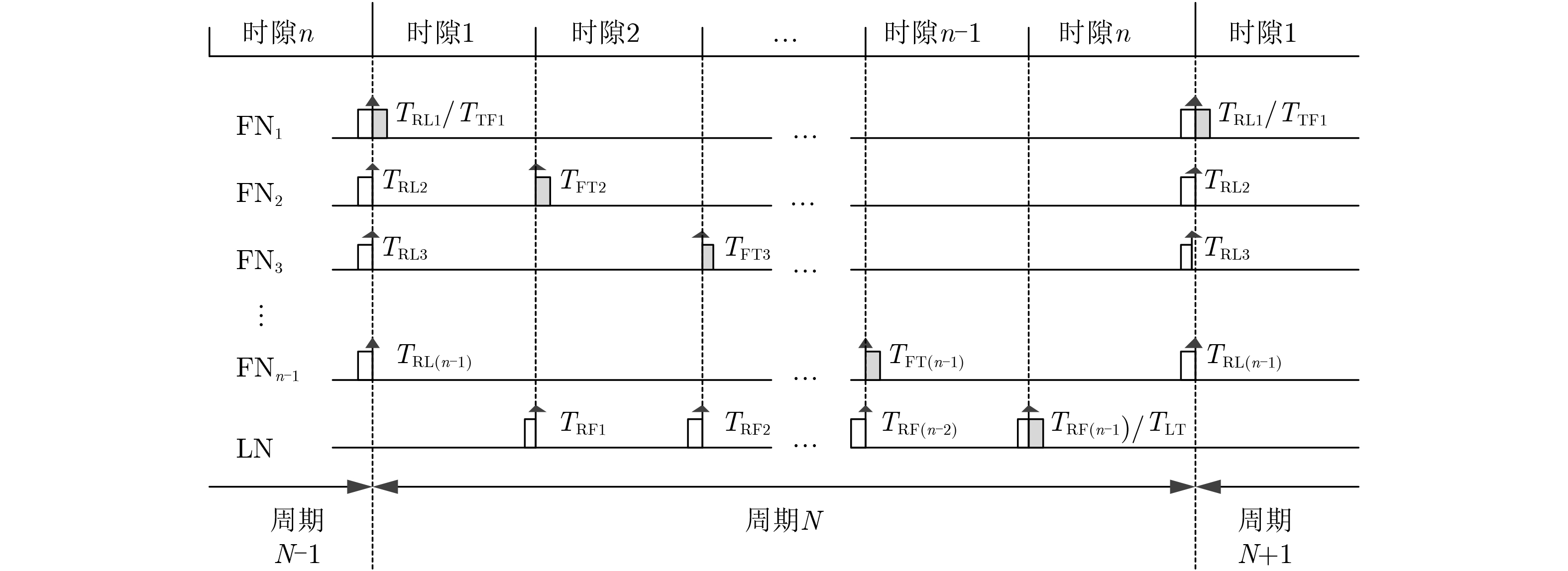
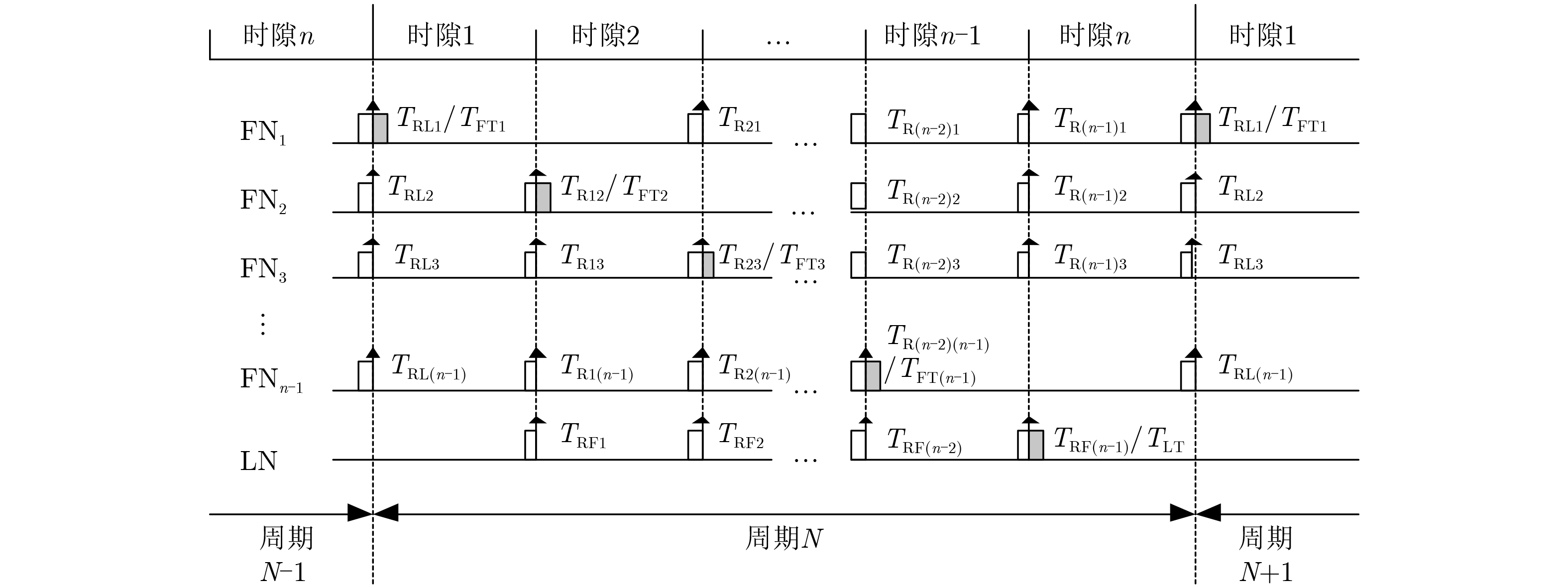
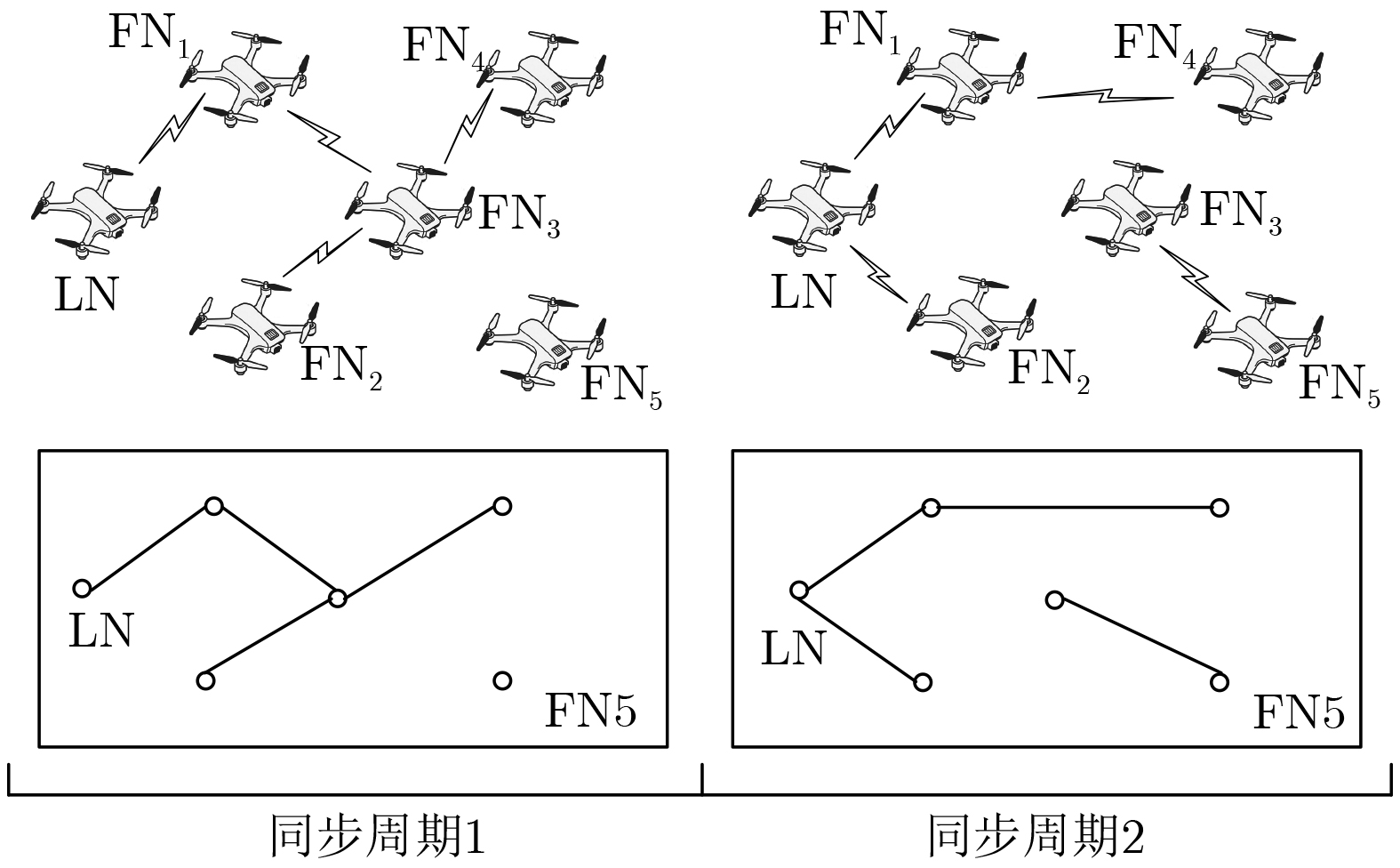
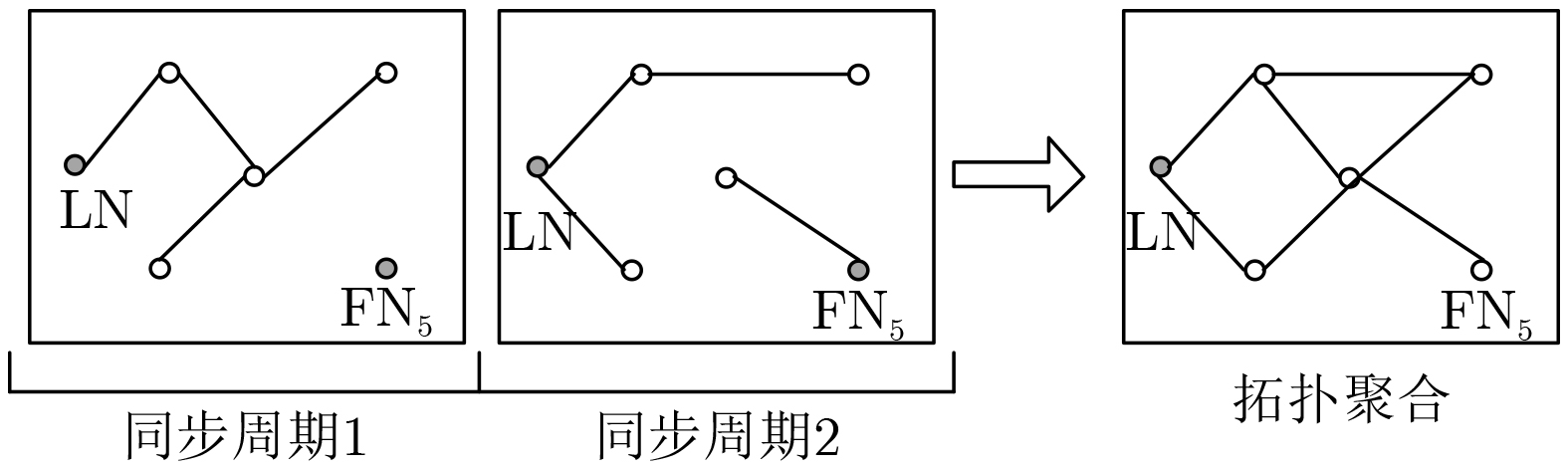
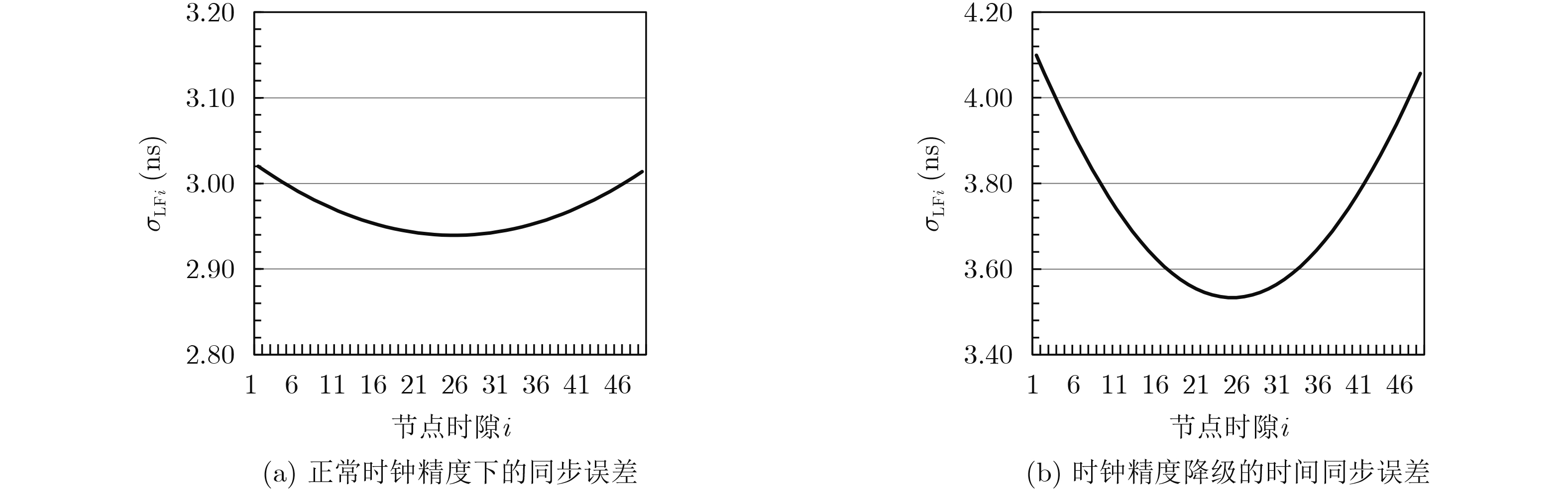
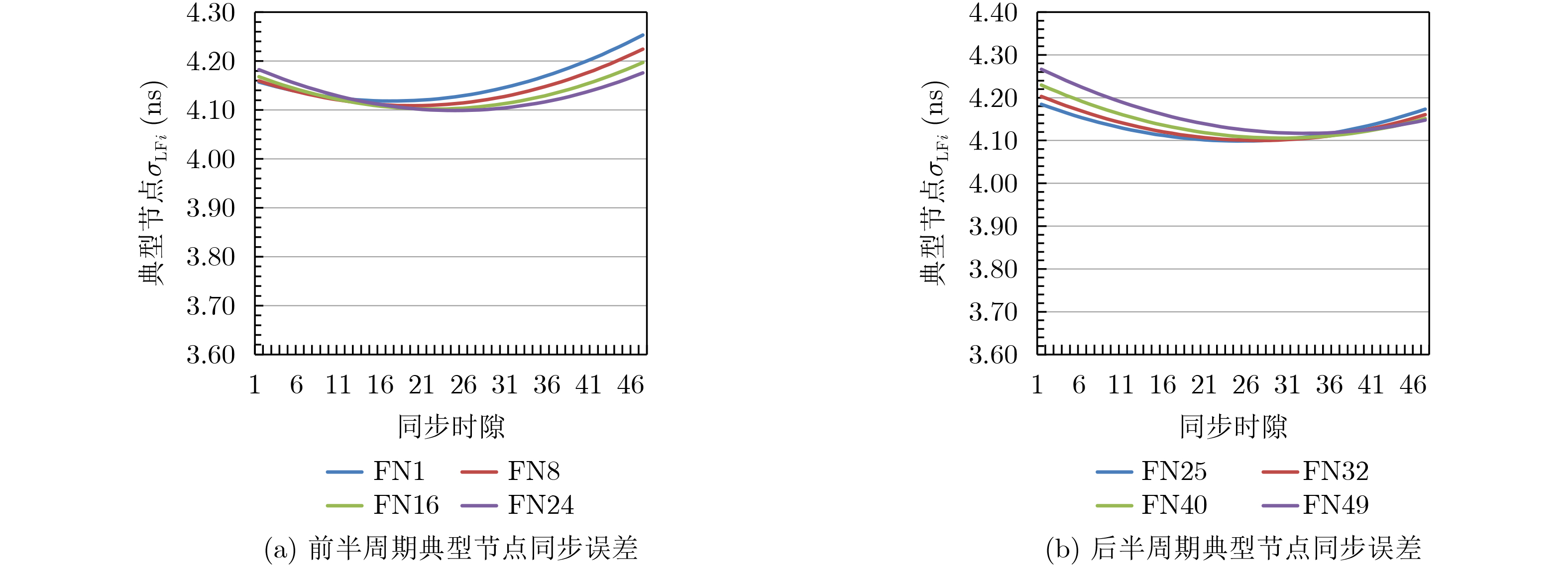
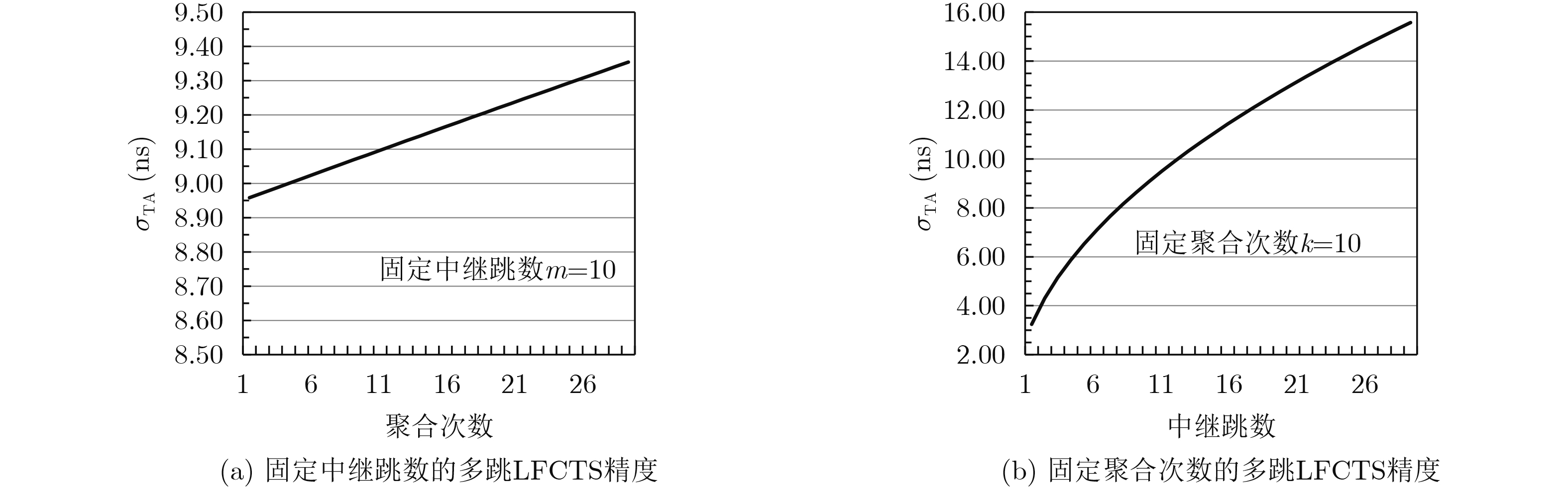
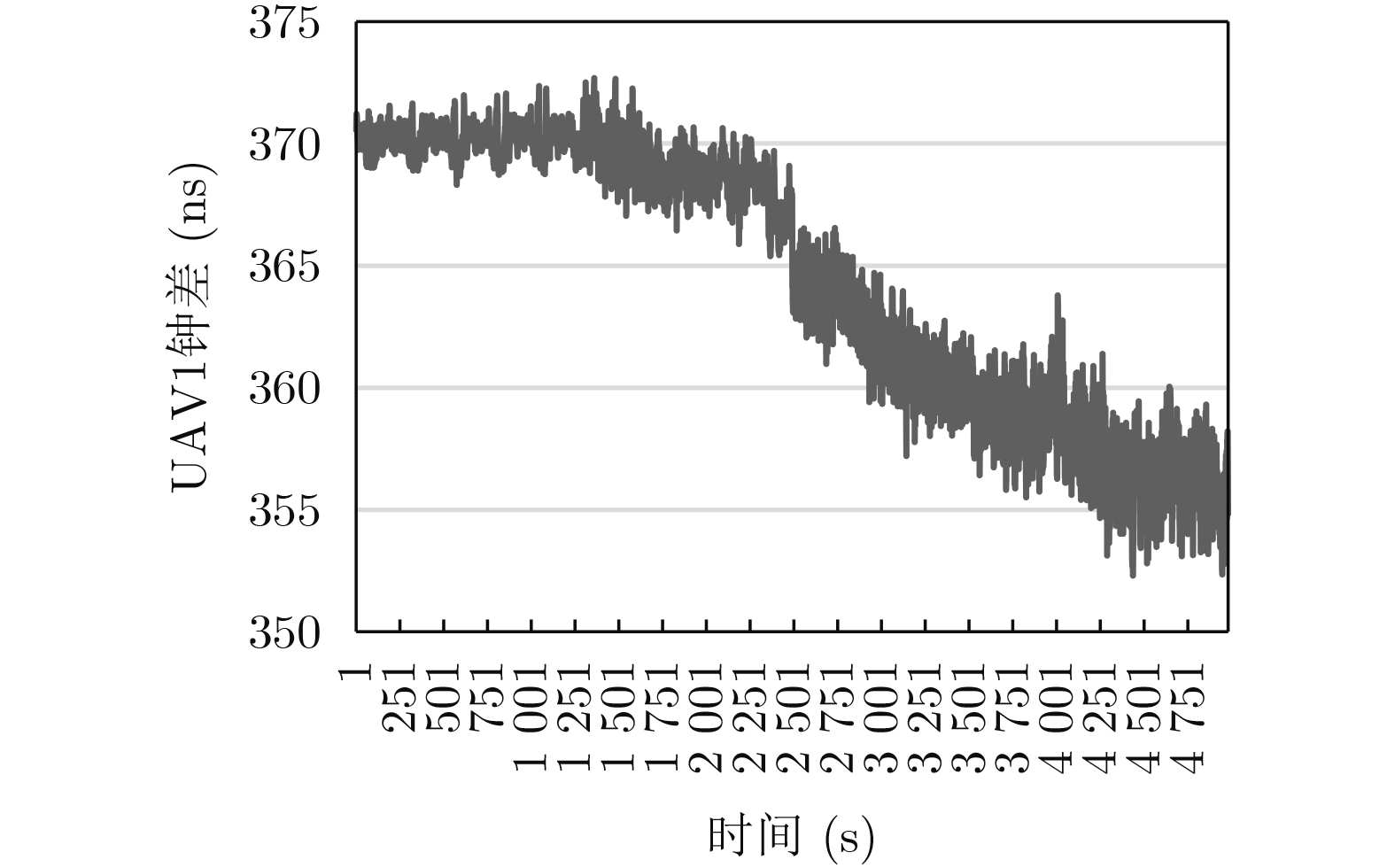
  •   Objective  Unmanned Aerial Vehicle (UAV) swarm are capable of overcoming the technical and performance constraints inherent to individual UAVs and enabling the execution of complex missions that are beyond the reach of single-platform systems. High-precision time synchronization across swarm nodes serves as a critical foundational requirement for core swarm operations, including resource scheduling, cooperative positioning, and multi-node data fusion. However, existing research on time synchronization for UAVs is predominantly confined to optimizing the accuracy of fundamental time synchronization approaches, and there are certain limitations in adapting to the topological changes during UAV swarm formation flights and achieving global synchronization among multiple nodes. As the scale of UAV swarm continues to expand, the connectivity of time comparison links between nodes during the formation flight of UAV swarm exhibits obvious time-varying characteristics, thereby posing challenges to the achievement of continuous, reliable, and precise overall time synchronization. For the scenarios of stable formation flight and formation transformation in different mission phases of UAV swarm, the Observation Time Slot Aggregation (OTSA) model and the Time-Varying Topology Aggregation (TVTA) model have been introduced for effectively enhance the robustness of global time synchronization among UAV swarm nodes and improve the Time Synchronization Accuracy (TSA) to a certain extent. This research aims to provide an effective solution for the Leader-Following Consistency Time Synchronization (LFCTS) of UAV swarm, and offer valuable references for other applications of time synchronization in heterogeneous and distributed systems.  Methods  Compared with the traditional Quasi Real-time Bidirectional Time Comparison (QRBTC) scheme, the time synchronization method based on OTSA model makes full use of all the synchronization signal transmission and reception link resources within every time-slot of the system synchronization period. Based on the "one transmission and multiple receptions" mechanism of all nodes, the Follower Node (FN) can achieve direct synchronization or single-hop indirect synchronization towards Leader Node (LN) in each time slot according to the OTSA model, thereby obtaining tens of times more clock skew observation samples than the traditional QRBTC scheme. The OTSA method not only enhances the robustness of global time synchronization, but also can further conduct secondary data processing through multiple time-slot synchronization samples and achieve a higher TSA than the QRBTC method. Based on the results of LFCTS for the signal synchronization period of system, the TVTA model achieves an expansion from the direct comparison and single-hop indirect comparison of the OTSA model to the cross-period multi-hop comparison, and thereby being able to solve the problem of overall time synchronization instability caused by the time-varying characteristics of the synchronization link relationship during the process of takeoff, assembly and formation transformation of the UAV swarm.  Results and Discussions  All of the time comparison link resources of total time-slot were fully utilized during the synchronization period in the OTSA method (Figure 2). Through the construction of the error model and simulated analysis, in the case of a UAV swarm configuration with 50 nodes and a time slot allocation of 20ms, the time synchronization based on the OTSA model can achieve a single time slot TSA of 4.10 to 4.27ns (Figure 6) and an overall TSA of 2.46 to 2.56 ns within a complete time synchronization period, which is superior to the QRBTC scheme under the same conditions (Figure 5(a)). The TVTA method fully utilizes the cross-period time synchronization comparison relationship to construct a time comparison link for multi-hop paths (Figures 3 and Figure 4). When the FN obtains the external comparison relationships of other nodes through aggregation processing, it can further utilize the one-way or two-way Dijkstra's algorithm to obtain the multi-hop comparison link with optimal connectivity, and complete the time tracing and comparison for LN through edge computing. The error calculation indicates that during the processes of takeoff, assembly, and the transition of triangle formation or rhombus formation, the time synchronization based on the TVTA model can achieve an overall TSA of better than 8.6ns, and which can provide stronger overall time synchronization capabilities.  Conclusions  This paper aims to address the robustness issue of time synchronization in the formation flight of UAV swarm. For the stable formation flight of UAV swarm and the formation transformation scenarios in different mission stages, the OTSA model and TVTA model were proposed, and the error model was constructed as well as the performance was analyzed. The results show that: (1) The OTSA model enhances the robustness of overall time synchronization with directly comparing and single-hop indirect comparison of multiple time slots within a time synchronization period. It can achieve an overall TSA of better than 2.5ns, which performance is outperforming the traditional QRBTC method; (2) The TVTA model achieves overall time synchronization of UAV swarm through multi-hop relay between nodes. Even when the time comparison link is subject to changes, it can still achieve a global time synchronization accuracy of better than 8.6ns. (3) These two methods fully take into account the time-varying characteristics of the comparison links between the nodes of the UAV swarm and which have been confirmed through a small-scale UAV swarm flight tests. These two methods can ensure the robustness and performance and providing necessary guarantees for the close coordination tasks of the UAV swarm. Subsequent research will further proceed with work aimed at practical flight verification, adaptation capabilities in complex scenarios, and improvement of overall accuracy.
  • loading
  • [1]
    王祥科, 刘志宏, 丛一睿, 等. 小型固定翼无人机集群综述和未来发展[J]. 航空学报, 2020, 41(4): 023732. doi: 10.7527/S1000-6893.2019.23732.

    WANG Xiangke, LIU Zhihong, CONG Yirui, et al. Miniature fixed-wing UAV swarms: Review and outlook[J]. Acta Aeronautica et Astronautica Sinica, 2020, 41(4): 023732. doi: 10.7527/S1000-6893.2019.23732.
    [2]
    尹建凤, 张庆君, 刘杰, 等. 国外编队飞行干涉SAR卫星系统发展综述[J]. 航天器工程, 2018, 27(1): 116–122. doi: 10.3969/j.issn.1673-8748.2018.01.016.

    YIN Jianfeng, ZHANG Qingjun, LIU Jie, et al. A review on development of formation flying interferometric SAR satellite system[J]. Spacecraft Engineering, 2018, 27(1): 116–122. doi: 10.3969/j.issn.1673-8748.2018.01.016.
    [3]
    李沛洲, 杨勇, 李术, 等. 时频同步误差影响双基地SAR成像效果的仿真系统设计[J]. 电讯技术, 2024, 64(11): 1826–1835. doi: 10.20079/j.issn.1001-893x.230830002.

    LI Peizhou, YANG Yong, LI Shu, et al. Design of a simulation system for evaluating the influence of time-frequency synchronization error on the imaging effect of Bistatic SAR[J]. Telecommunication Engineering, 2024, 64(11): 1826–1835. doi: 10.20079/j.issn.1001-893x.230830002.
    [4]
    DOU Jie, XU Bing, and DOU Lei. Impact assessment of the asynchronous clocks between reference and user receivers in differential pseudolite navigation system[J]. IEEE Sensors Journal, 2021, 21(1): 403–411. doi: 10.1109/JSEN.2020.3014103.
    [5]
    高宏, 邓志鑫, 王立兵, 等. 空基导航区域增强系统覆盖范围分析[J]. 无线电工程, 2017, 47(2): 45–47, 56. doi: 10.3969/j.issn.1003-3106.2017.02.11.

    GAO Hong, DENG Zhixin, WANG Libing, et al. Coverage analysis of air-based regional augmentation system for BD satellite navigation signal[J]. Radio Engineering, 2017, 47(2): 45–47, 56. doi: 10.3969/j.issn.1003-3106.2017.02.11.
    [6]
    汤新民, 周杨, 鲁其兴, 等. 基于信号到达时间建模的广域多点定位时间同步方法[J]. 电子与信息学报, 2025, 47(5): 1434–1449. doi: 10.11999/JEIT240670.

    TANG Xinmin, ZHOU Yang, LU Qixing, et al. Wide-area multilateration time synchronization method based on signal arrival time modeling[J]. Journal of Electronics & Information Technology, 2025, 47(5): 1434–1449. doi: 10.11999/JEIT240670.
    [7]
    陈聪, 段柏宇, 徐强, 等. 无人机平台运动状态下节点间高精度时间同步[J]. 西安电子科技大学学报, 2024, 51(3): 19–29. doi: 10.19665/j.issn1001-2400.20231207.

    CHEN Cong, DUAN Baiyu, XU Qiang, et al. High precision time synchronization between nodes under motion scenario of UAV platforms[J]. Journal of Xidian University, 2024, 51(3): 19–29. doi: 10.19665/j.issn1001-2400.20231207.
    [8]
    WANG Zhenling, TAO Haihong, HAO Fang, et al. Eliminate dynamic error of A-PNAS high-precision time synchronization using multi-sensor combination[J]. Sensors, 2025, 25(19): 6028. doi: 10.3390/s25196028.
    [9]
    张然, 刘春玲, 程珺炜, 等. 一种适用无人机集群的多段补偿时间同步算法[J]. 计算机仿真, 2021, 38(7): 327–330,474. doi: 10.3969/j.issn.1006-9348.2021.07.070.

    ZHANG Ran, LIU Chunling, CHENG Junwei, et al. A multi-stage compensation bidirectional time synchronization algorithm for UAV cluster[J]. Computer Simulation, 2021, 38(7): 327–330,474. doi: 10.3969/j.issn.1006-9348.2021.07.070.
    [10]
    LI Yong, SONG Chaoming, JIN Depeng, et al. A dynamic graph optimization framework for multihop device-to-device communication underlaying cellular networks[J]. IEEE Wireless Communications, 2014, 21(5): 52–61. doi: 10.1109/MWC.2014.6940433.
    [11]
    LIU Runzi, SHENG Min, LUI K S, et al. Capacity analysis of two-layered LEO/MEO satellite networks[C]. 2015 IEEE 81st Vehicular Technology Conference (VTC Spring), Glasgow, UK, 2015: 1–5. doi: 10.1109/VTCSpring.2015.7145726.
    [12]
    WANG Haocheng, LIN Bin, HAN Xiaoling, et al. A maximum flow algorithm based on undirected storage time aggregated graph for unmanned surface vessel networks[C]. 2024 IEEE/CIC International Conference on Communications in China (ICCC Workshops), Hangzhou, China, 2024: 840–844. doi: 10.1109/icccworkshops62562.2024.10693689.
    [13]
    WANG Gaifang, LI Bo, YANG Hongjuan, et al. An energy-efficient routing algorithm for UAV formation based on time-aggregated graph[J]. China Communications, 2024, 21(11): 28–39. doi: 10.23919/JCC.fa.2024-0214.202411.
    [14]
    蔚保国, 鲍亚川, 魏海涛. 面向时间同步业务的空间信息网络拓扑聚合图模型[J]. 电子与信息学报, 2017, 39(12): 2929–2936. doi: 10.11999/JEIT170252.

    YU Baoguo, BAO Yachuan, and WEI Haitao. Time synchronization service oriented topology aggregation model of space information network[J]. Journal of Electronics & Information Technology, 2017, 39(12): 2929–2936. doi: 10.11999/JEIT170252.
    [15]
    GUO Mingming, WANG Feng, PENG Fei, et al. Design of distributed network clock-synchronization for swarm UAV[C]. 2020 International Conference on Computing and Data Science (CDS), Stanford, USA, 2020: 194–197. doi: 10.1109/CDS49703.2020.00046.
    [16]
    瞿智, 王刚, 王天云, 等. 基于领导跟随一致性的卫星网络时频同步方法[J]. 宇航学报, 2025, 46(3): 589–600. doi: 10.3873/j.issn.1000-1328.2025.03.016.

    QU Zhi, WANG Gang, WANG Tianyun, et al. A time-frequency synchronization method for satellite networks based on leader-following consensus[J]. Journal of Astronautics, 2025, 46(3): 589–600. doi: 10.3873/j.issn.1000-1328.2025.03.016.
    [17]
    赵建霞, 段海滨, 赵彦杰, 等. 基于鸽群层级交互的有人/无人机集群一致性控制[J]. 上海交通大学学报, 2020, 54(9): 973–980. doi: 10.16183/j.cnki.jsjtu.2020.146.

    ZHAO Jianxia, DUAN Haibin, ZHAO Yanjie, et al. Consensus control of manned-unmanned aerial vehicle swarm based on hierarchy interaction of pigeons[J]. Journal of Shanghai Jiaotong University, 2020, 54(9): 973–980. doi: 10.16183/j.cnki.jsjtu.2020.146.
  • 加载中

Catalog

    通讯作者: 陈斌, bchen63@163.com
    • 1. 

      沈阳化工大学材料科学与工程学院 沈阳 110142

    1. 本站搜索
    2. 百度学术搜索
    3. 万方数据库搜索
    4. CNKI搜索

    Figures(8)

    Article Metrics

    Article views (21) PDF downloads(0) Cited by()
    Proportional views
    Related

    /

    DownLoad:  Full-Size Img  PowerPoint
    Return
    Return