Advanced Search
Turn off MathJax
Article Contents
WANG Zeyu, WANG Qingsong. A Morphology-Guided Decoupled Framework for Oriented SAR Ship Detection[J]. Journal of Electronics & Information Technology. doi: 10.11999/JEIT250979
Citation: WANG Zeyu, WANG Qingsong. A Morphology-Guided Decoupled Framework for Oriented SAR Ship Detection[J]. Journal of Electronics & Information Technology. doi: 10.11999/JEIT250979

A Morphology-Guided Decoupled Framework for Oriented SAR Ship Detection

doi: 10.11999/JEIT250979 cstr: 32379.14.JEIT250979
Funds:  The National Natural Science Foundation of China(62273365), Xiaomi Young Talents Program
  • Received Date: 2025-09-24
  • Accepted Date: 2025-12-12
  • Rev Recd Date: 2025-12-12
  • Available Online: 2025-12-25
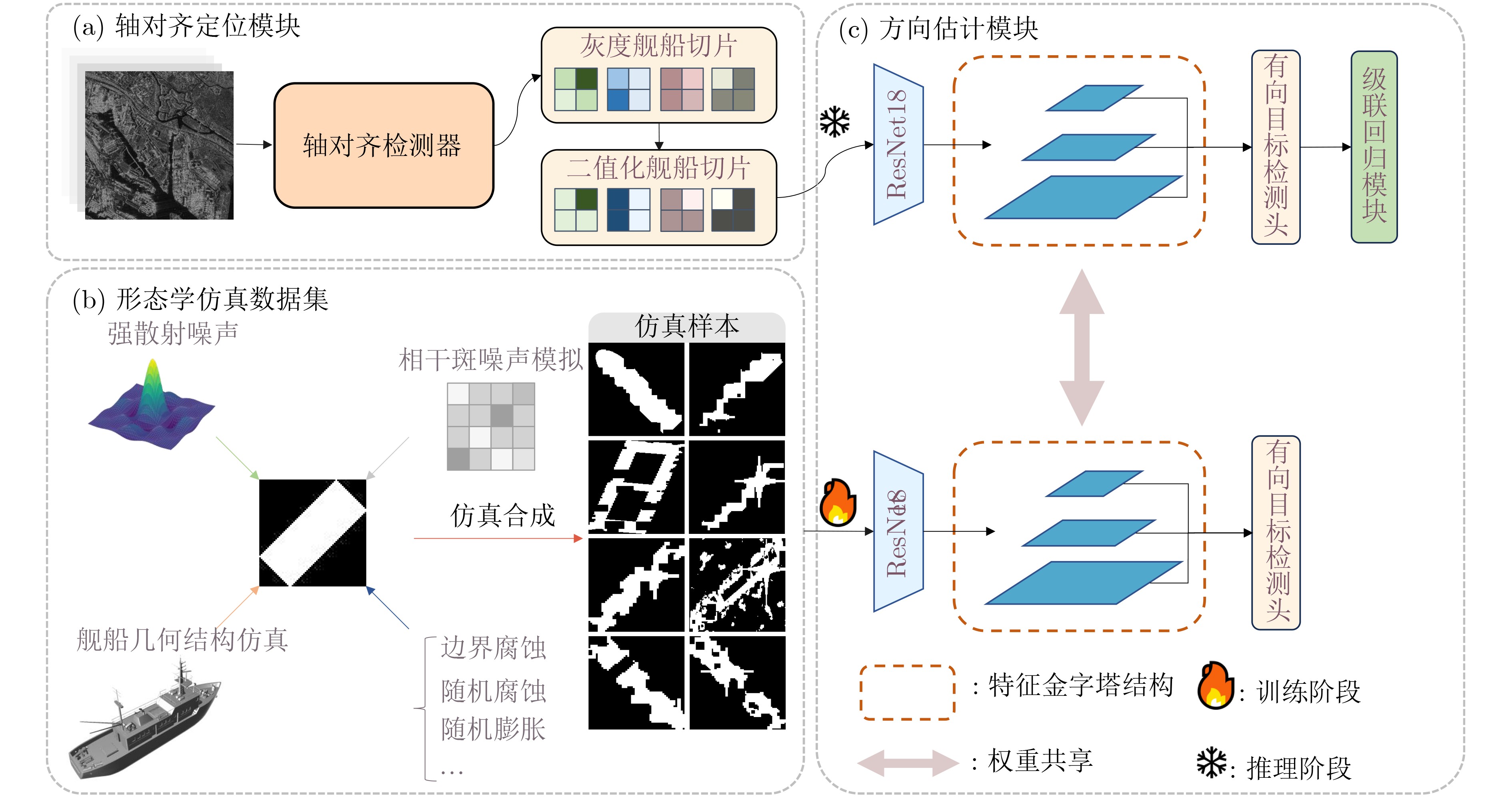
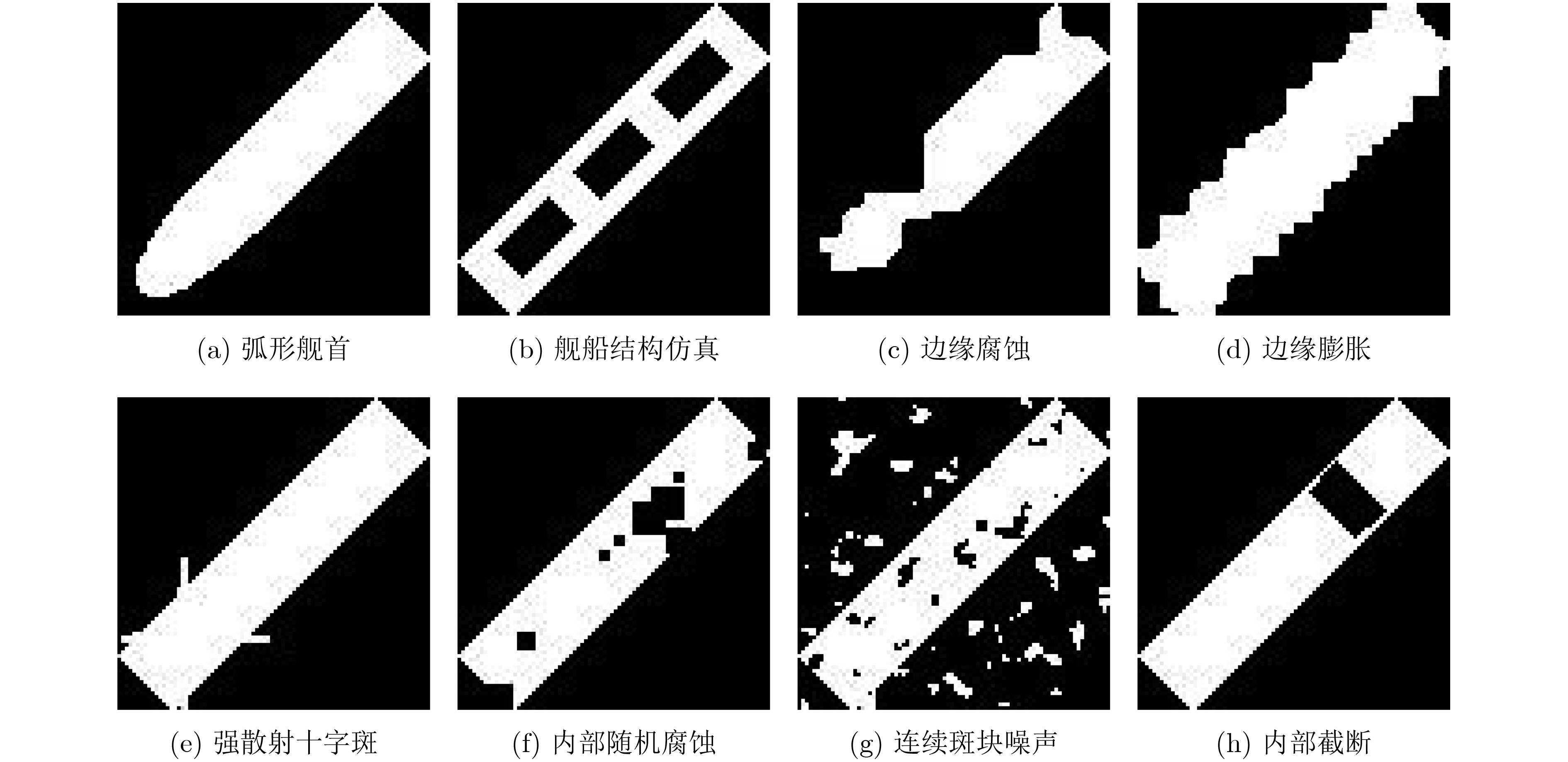
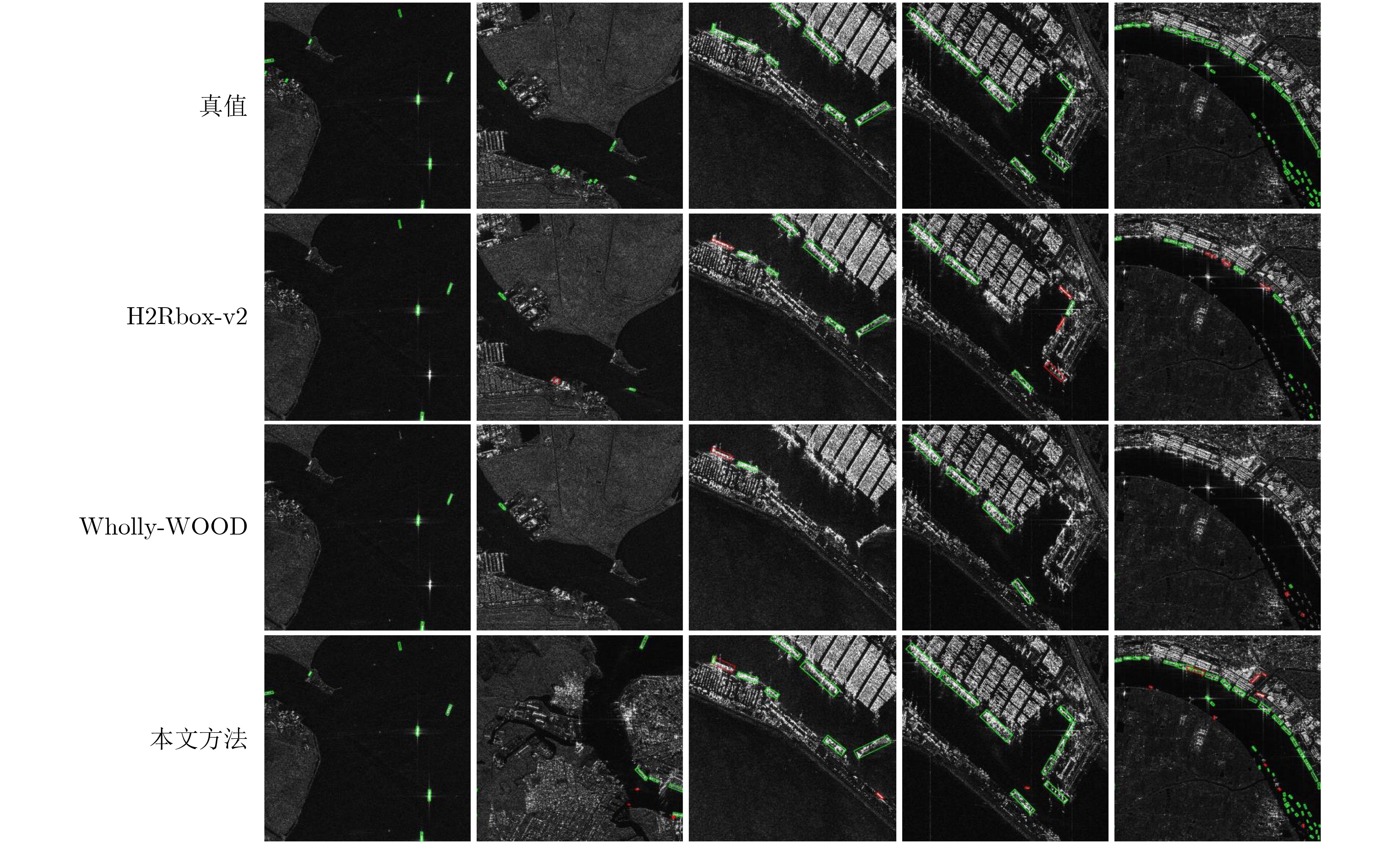
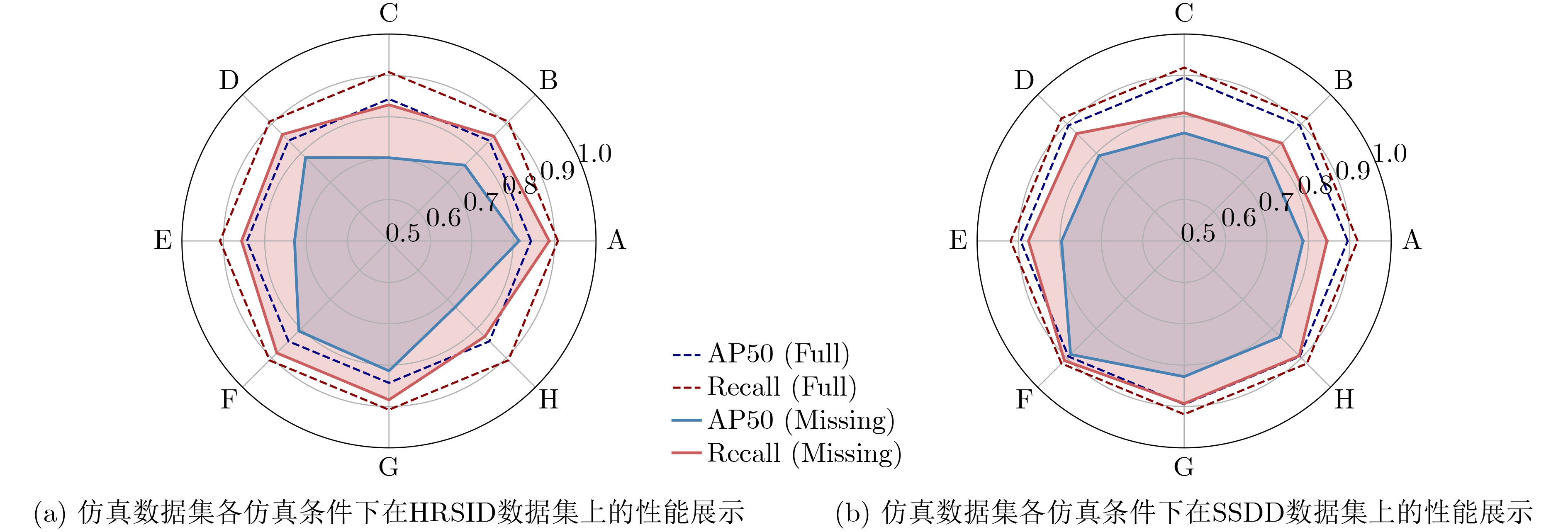
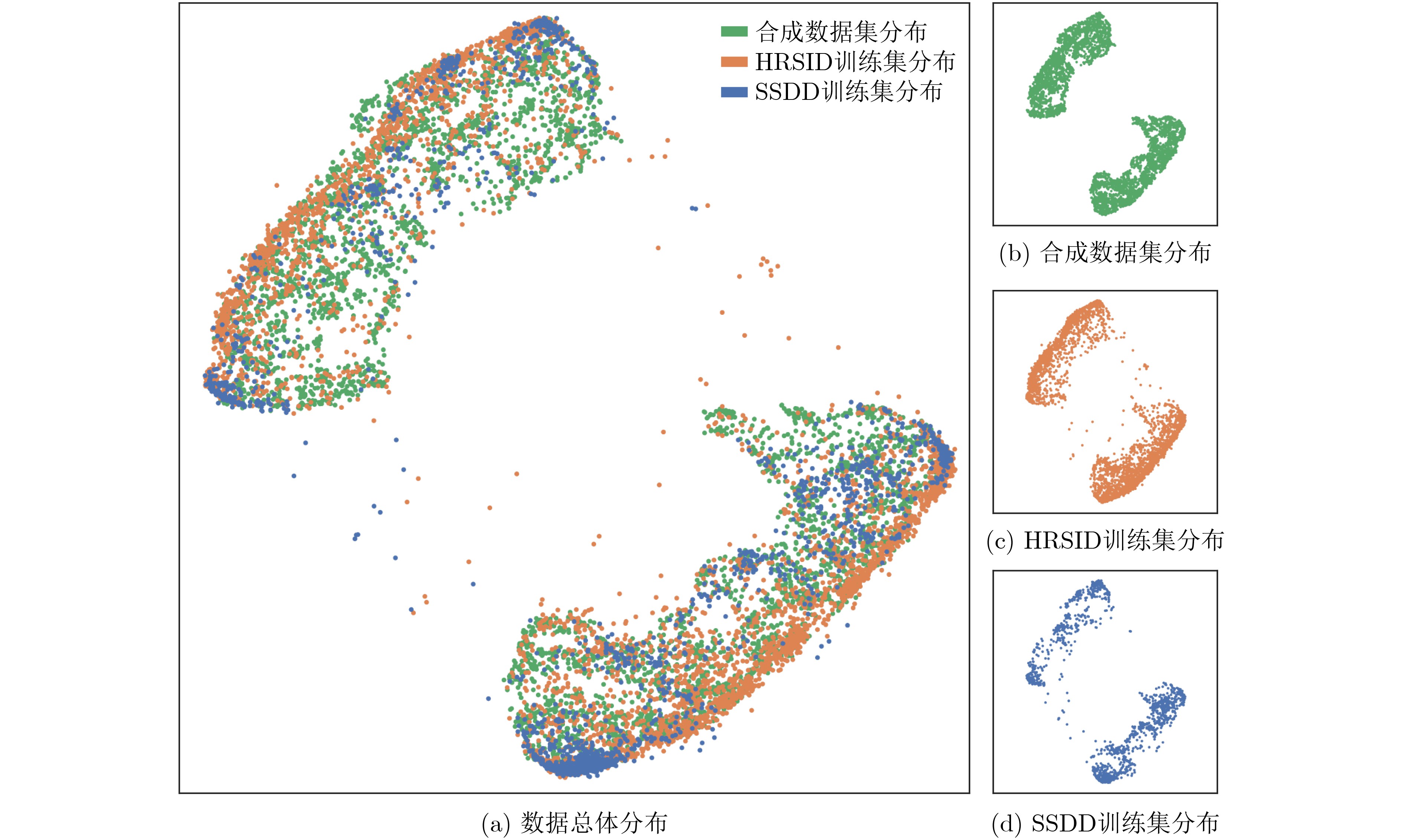
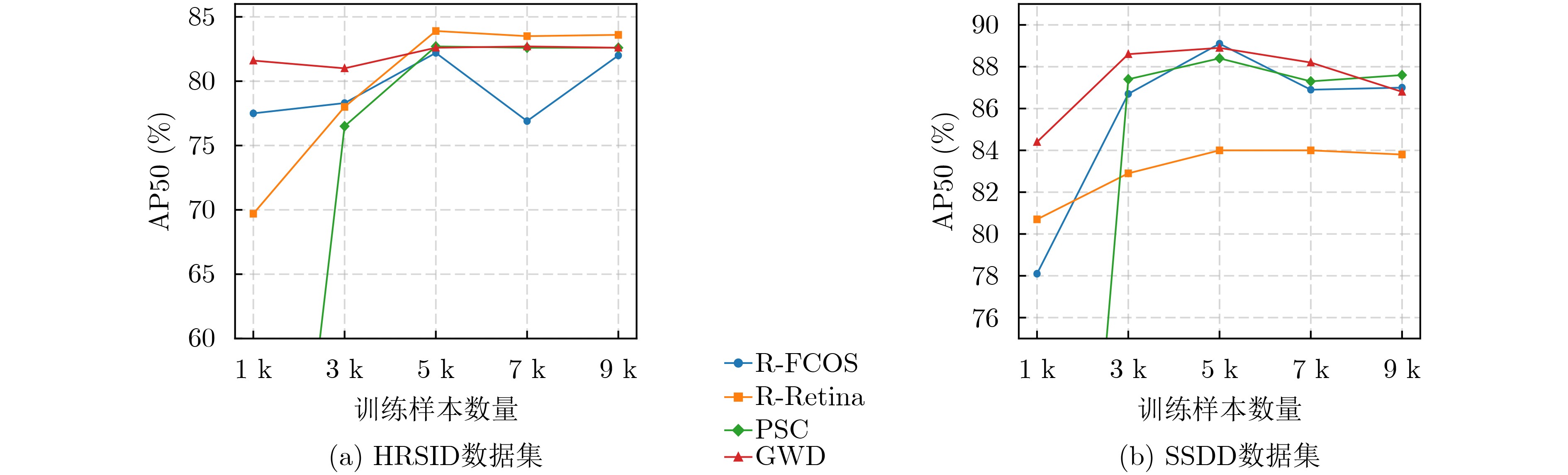
  •   Objective  Synthetic Aperture Radar (SAR) is an indispensable tool in remote sensing, yet the effective detection of ships in SAR imagery remains a significant challenge. Mainstream deep learning methods typically rely on Horizontal Bounding Boxes (HBBs) annotations, which are insufficient for estimating the precise orientation and scale of ships. While Oriented Bounding Boxes (OBBs) provide this data, obtaining accurate OBBs annotations for SAR is prohibitively expensive and often unreliable due to SAR-specific phenomena like speckle noise and geometric distortions. Weakly Supervised Object Detection (WSOD) presents a promising alternative, but existing techniques developed for optical images do not generalize well to the SAR domain. This study departs from the traditional WSOD paradigm to propose a novel, simulation-driven decoupled framework. The objective is to enable existing HBB detectors to predict precise OBBs without structural modification by training a specialized orientation module on a fully-supervised synthetic dataset that mimics core SAR target morphology.  Methods  The proposed method decouples the complex task of oriented object detection into two sequential sub-problems: coarse localization and fine-grained orientation estimation (Fig 1). First, an Axis-aligned Localization Module, consisting of a standard HBBs detection network (e.g., YOLOX), is trained on available HBB labels to identify candidate regions of interest. This stage leverages the high performance of existing detectors to achieve high-recall, coarse localization, outputting a set of image patches containing potential ship targets. Second, to learn orientation without OBBs labels, a large-scale Morphological Simulation Dataset of binary images is constructed. This synthetic dataset forms the core of the method. The process begins with generating simple binary rectangles with randomized aspect ratios and known ground-truth orientations. To simulate the appearance of binarized SAR ship targets, a series of morphological modulations are applied, including edge and regional erosion and dilation to create boundary ambiguity, and the addition of structured “strong scattering cross noise” to mimic SAR artifacts. This yields a large training set of binary images with precise orientation labels. Third, an Orientation Estimation Module, using a lightweight ResNet-18 network, is trained exclusively on this synthetic dataset. It learns to predict an object’s orientation and refine its aspect ratio based purely on shape and contour. During inference, candidate patches from the localization module are binarized and fed into this orientation module. The final Oriented Bounding Box is then generated by fusing the spatial coordinates from the initial HBBs with the predicted angle and refined dimensions.  Results and Discussions  The efficacy of the proposed method is extensively evaluated on two public SAR ship detection benchmarks: HRSID and SSDD. The model is trained using only HBBs annotations, while its performance is evaluated against ground-truth OBBs using the standard Average Precision (AP50) and Recall (R) metrics. The method demonstrates superior performance compared to existing weakly supervised techniques and is competitive with fully supervised ones (Table 1 and Table 2). On the challenging HRSID dataset, the proposed method achieves an AP50 of 84.3% and a recall of 91.9%. This result not only surpasses other weakly supervised methods like H2Rbox-v2 (56.2% AP50) and the method from Yue et al. (81.5% AP50), but also exceeds the performance of several fully supervised algorithms, including R-RetinaNet (72.7% AP50) and S2ANet (80.8% AP50). A similar performance advantage is observed on the SSDD dataset, where the method attains an AP50 of 89.4%, representing a significant improvement over the state-of-the-art weakly supervised result of 87.3%. Visual inspection of the detection results confirms these quantitative findings (Fig 1). The proposed method exhibits a markedly lower rate of missed detections, particularly for small and densely clustered ships, when compared to other weakly supervised approaches. This enhanced robustness is attributed to the high-recall nature of the first-stage localization network combined with the accurate orientation cues learned from the morphological dataset. To address key methodological questions, new experiments were conducted. First, the domain gap between the synthetic and real data was analyzed. A UMAP visualization of the network's high-dimensional features (Fig. 5) shows a high degree of overlap and a similar manifold structure between the two domains, confirming their morphological similarity. Second, a crucial ablation study on the morphological components (Fig 4) demonstrated that each simulation element progressively contributes to the final performance, justifying the high-fidelity simulation process.  Conclusions  This paper presents a novel and effective morphology-guided, decoupled framework for oriented ship detection in SAR images. By decoupling localization and orientation, the framework enables standard HBB detectors to perform high-precision oriented detection without retraining. The central innovation is the fully-supervised morphological simulation dataset, which allows a dedicated module to learn robust orientation features from structural contours, bypassing the challenges of real SAR data. Extensive experiments demonstrate that this approach significantly outperforms existing HBB-supervised methods and is competitive with fully supervised ones. The method's plug-and-play nature highlights its practical value.
  • loading
  • [1]
    DI BISCEGLIE M and GALDI C. CFAR detection of extended objects in high-resolution SAR images[J]. IEEE Transactions on Geoscience and Remote Sensing, 2005, 43(4): 833–843. doi: 10.1109/TGRS.2004.843190.
    [2]
    LENG Xiangguang, JI Kefeng, YANG Kai, et al. A bilateral CFAR algorithm for ship detection in SAR images[J]. IEEE Geoscience and Remote Sensing Letters, 2015, 12(7): 1536–1540. doi: 10.1109/LGRS.2015.2412174.
    [3]
    REN Shaoqing, HE Kaiming, GIRSHICK R, et al. Faster R-CNN: Towards real-time object detection with region proposal networks[J]. IEEE Transactions on Pattern Analysis and Machine Intelligence, 2017, 39(6): 1137–1149. doi: 10.1109/tpami.2016.2577031.
    [4]
    GE Zheng, LIU Songtao, WANG Feng, et al. YOLOX: Exceeding YOLO series in 2021[EB/OL]. https://arxiv.org/abs/2107.08430, 2021.
    [5]
    CHEN Yuming, YUAN Xinbin, WANG Jiabao, et al. YOLO-MS: Rethinking multi-scale representation learning for real-time object detection[J]. IEEE Transactions on Pattern Analysis and Machine Intelligence, 2025, 47(6): 4240–4252. doi: 10.1109/tpami.2025.3538473.
    [6]
    DOSOVITSKIY A, BEYER L, KOLESNIKOV A, et al. An image is worth 16x16 words: Transformers for image recognition at scale[C]. 9th International Conference on Learning Representations, Austria, 2021. (查阅网上资料, 未找到本条文献出版城市信息, 请确认并补充).
    [7]
    YU Yi, YANG Xue, LI Qingyun, et al. H2RBox-v2: Incorporating symmetry for boosting horizontal box supervised oriented object detection[C]. Proceedings of the 37th International Conference on Neural Information Processing Systems, New Orleans, USA, 2023: 2581.
    [8]
    YU Yi, YANG Xue, LI Yansheng, et al. Wholly-WOOD: Wholly leveraging diversified-quality labels for weakly-supervised oriented object detection[J]. IEEE Transactions on Pattern Analysis and Machine Intelligence, 2025, 47(6): 4438–4454. doi: 10.1109/TPAMI.2025.3542542.
    [9]
    HU Fengming, XU Feng, WANG R, et al. Conceptual study and performance analysis of tandem multi-antenna spaceborne SAR interferometry[J]. Journal of Remote Sensing, 2024, 4: 0137. doi: 10.34133/remotesensing.0137.
    [10]
    YOMMY A S, LIU Rongke, and WU Shuang. SAR image despeckling using refined lee filter[C]. 2015 7th International Conference on Intelligent Human-Machine Systems and Cybernetics, Hangzhou, China, 2015: 260–265. doi: 10.1109/IHMSC.2015.236.
    [11]
    KANG Yuzhuo, WANG Zhirui, ZUO Haoyu, et al. ST-Net: Scattering topology network for aircraft classification in high-resolution SAR images[J]. IEEE Transactions on Geoscience and Remote Sensing, 2023, 61: 5202117. doi: 10.1109/tgrs.2023.3236987.
    [12]
    ZHANG Yipeng, LU Dongdong, QIU Xiaolan, et al. Scattering-point-guided RPN for oriented ship detection in SAR images[J]. Remote Sensing, 2023, 15(5): 1411. doi: 10.3390/rs15051411.
    [13]
    PAN Dece, GAO Xin, DAI Wei, et al. SRT-Net: Scattering region topology network for oriented ship detection in large-scale SAR images[J]. IEEE Transactions on Geoscience and Remote Sensing, 2024, 62: 5202318. doi: 10.1109/tgrs.2024.3351366.
    [14]
    YUE Tingxuan, ZHANG Yanmei, WANG Jin, et al. A weak supervision learning paradigm for oriented ship detection in SAR image[J]. IEEE Transactions on Geoscience and Remote Sensing, 2024, 62: 5207812. doi: 10.1109/TGRS.2024.3375069.
    [15]
    WEI Shunjun, ZENG Xiangfeng, QU Qizhe, et al. HRSID: A high-resolution SAR images dataset for ship detection and instance segmentation[J]. IEEE Access, 2020, 8: 120234–120254. doi: 10.1109/access.2020.3005861.
    [16]
    ZHANG Tianwen, ZHANG Xiaoling, LI Jianwei, et al. SAR ship detection dataset (SSDD): Official release and comprehensive data analysis[J]. Remote Sensing, 2021, 13(18): 3690. doi: 10.3390/rs13183690.
    [17]
    ZHOU Yue, YANG Xue, ZHANG Gefan, et al. MMRotate: A rotated object detection benchmark using PyTorch[C]. Proceedings of the 30th ACM International Conference on Multimedia, Lisboa, Portugal, 2022: 7331–7334. doi: 10.1145/3503161.3548541.
    [18]
    LIN T Y, GOYAL P, GIRSHICK R, et al. Focal loss for dense object detection[C]. 2017 IEEE International Conference on Computer Vision, Venice, Italy, 2017: 2999–3007. doi: 10.1109/iccv.2017.324.
    [19]
    YANG Xue, ZHANG Gefan, YANG Xiaojiang, et al. Detecting rotated objects as gaussian distributions and its 3-D generalization[J]. IEEE Transactions on Pattern Analysis and Machine Intelligence, 2023, 45(4): 4335–4354. doi: 10.1109/tpami.2022.3197152.
    [20]
    LI Jianfeng, CHEN Mingxu, HOU Siyuan, et al. An improved S2A-net algorithm for ship object detection in optical remote sensing images[J]. Remote Sensing, 2023, 15(18): 4559. doi: 10.3390/rs15184559.
    [21]
    DING Jian, XUE Nan, LONG Yang, et al. Learning RoI transformer for oriented object detection in aerial images[C]. 2019 IEEE/CVF Conference on Computer Vision and Pattern Recognition (CVPR), Long Beach, USA, 2019: 2844–2853. doi: 10.1109/cvpr.2019.00296.
    [22]
    TIAN Zhi, SHEN Chunhua, CHEN Hao, et al. FCOS: A simple and strong anchor-free object detector[J]. IEEE Transactions on Pattern Analysis and Machine Intelligence, 2022, 44(4): 1922–1933. doi: 10.1109/tpami.2020.3032166.
    [23]
    DUAN Kaiwen, BAI Song, XIE Lingxi, et al. CenterNet++ for object detection[J]. IEEE Transactions on Pattern Analysis and Machine Intelligence, 2024, 46(5): 3509–3521. doi: 10.1109/tpami.2023.3342120.
    [24]
    HE Kaiming, ZHANG Xiangyu, REN Shaoqing, et al. Deep residual learning for image recognition[C]. 2016 IEEE Conference on Computer Vision and Pattern Recognition, Las Vegas, USA, 2016: 770–778. doi: 10.1109/cvpr.2016.90.
    [25]
    LIU Zhuang, MAO Hanzi, WU Chaoyuan, et al. A ConvNet for the 2020s[C]. 2022 IEEE/CVF Conference on Computer Vision and Pattern Recognition, New Orleans, USA, 2022: 11966–11976. doi: 10.1109/cvpr52688.2022.01167.
    [26]
    HEALY J and MCINNES L. Uniform manifold approximation and projection[J]. Nature Reviews Methods Primers, 2024, 4(1): 82. doi: 10.1038/s43586-024-00363-x.
  • 加载中

Catalog

    通讯作者: 陈斌, bchen63@163.com
    • 1. 

      沈阳化工大学材料科学与工程学院 沈阳 110142

    1. 本站搜索
    2. 百度学术搜索
    3. 万方数据库搜索
    4. CNKI搜索

    Figures(6)  / Tables(3)

    Article Metrics

    Article views (40) PDF downloads(0) Cited by()
    Proportional views
    Related

    /

    DownLoad:  Full-Size Img  PowerPoint
    Return
    Return