Advanced Search
Turn off MathJax
Article Contents
LI Yuankun, WANG Ze, ZHANG Qingtian, GAO Bin, WU Huaqiang. NAS4CIM: Tailored Neural Network Architecture Search for RRAM-Based Compute-in-Memory Chips[J]. Journal of Electronics & Information Technology. doi: 10.11999/JEIT250978
Citation: LI Yuankun, WANG Ze, ZHANG Qingtian, GAO Bin, WU Huaqiang. NAS4CIM: Tailored Neural Network Architecture Search for RRAM-Based Compute-in-Memory Chips[J]. Journal of Electronics & Information Technology. doi: 10.11999/JEIT250978

NAS4CIM: Tailored Neural Network Architecture Search for RRAM-Based Compute-in-Memory Chips

doi: 10.11999/JEIT250978 cstr: 32379.14.JEIT250978
Funds:  The National Natural Science Foundation of China (U2341221)
  • Received Date: 2025-09-24
  • Rev Recd Date: 2025-12-31
  • Available Online: 2026-01-09
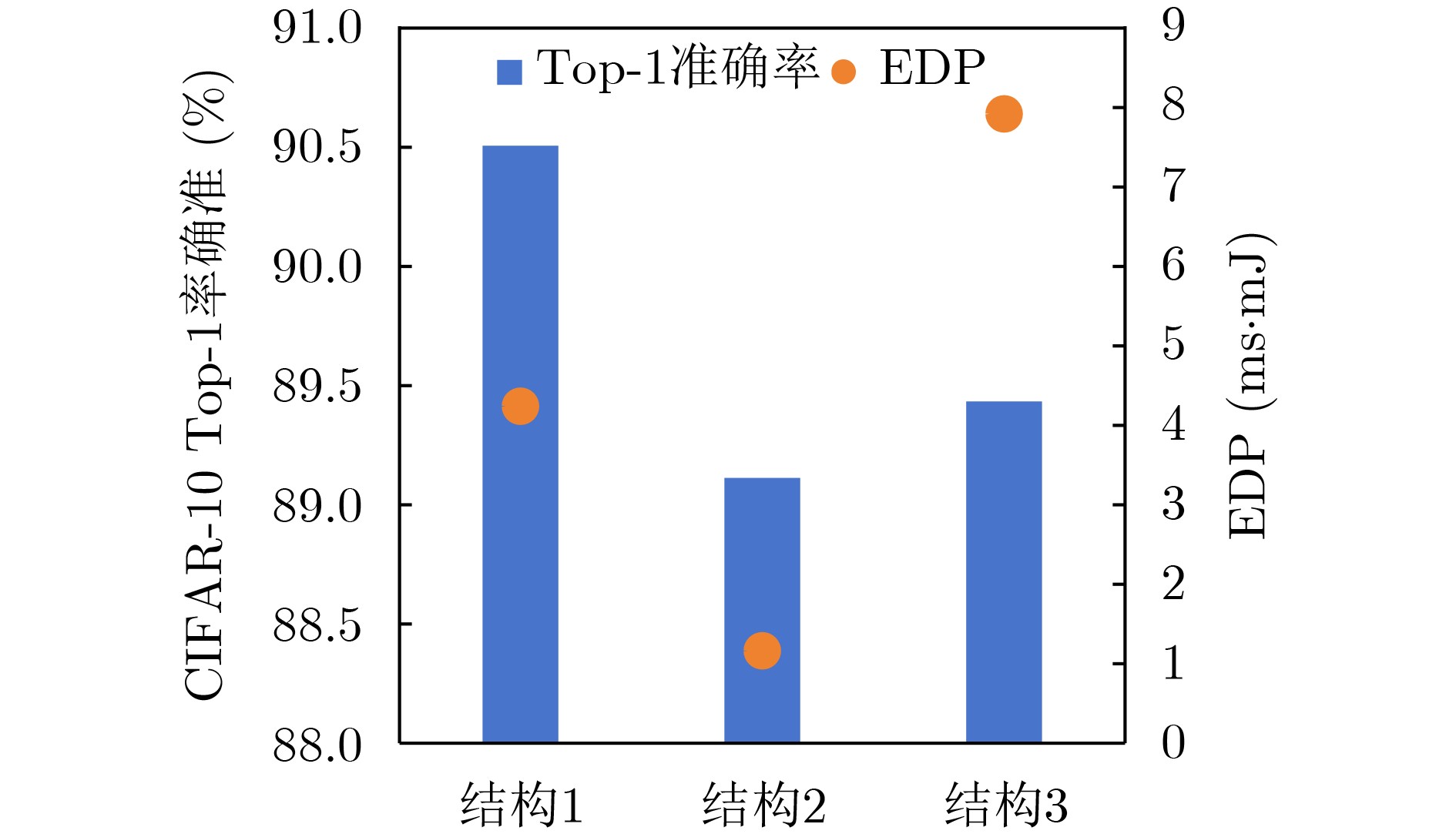
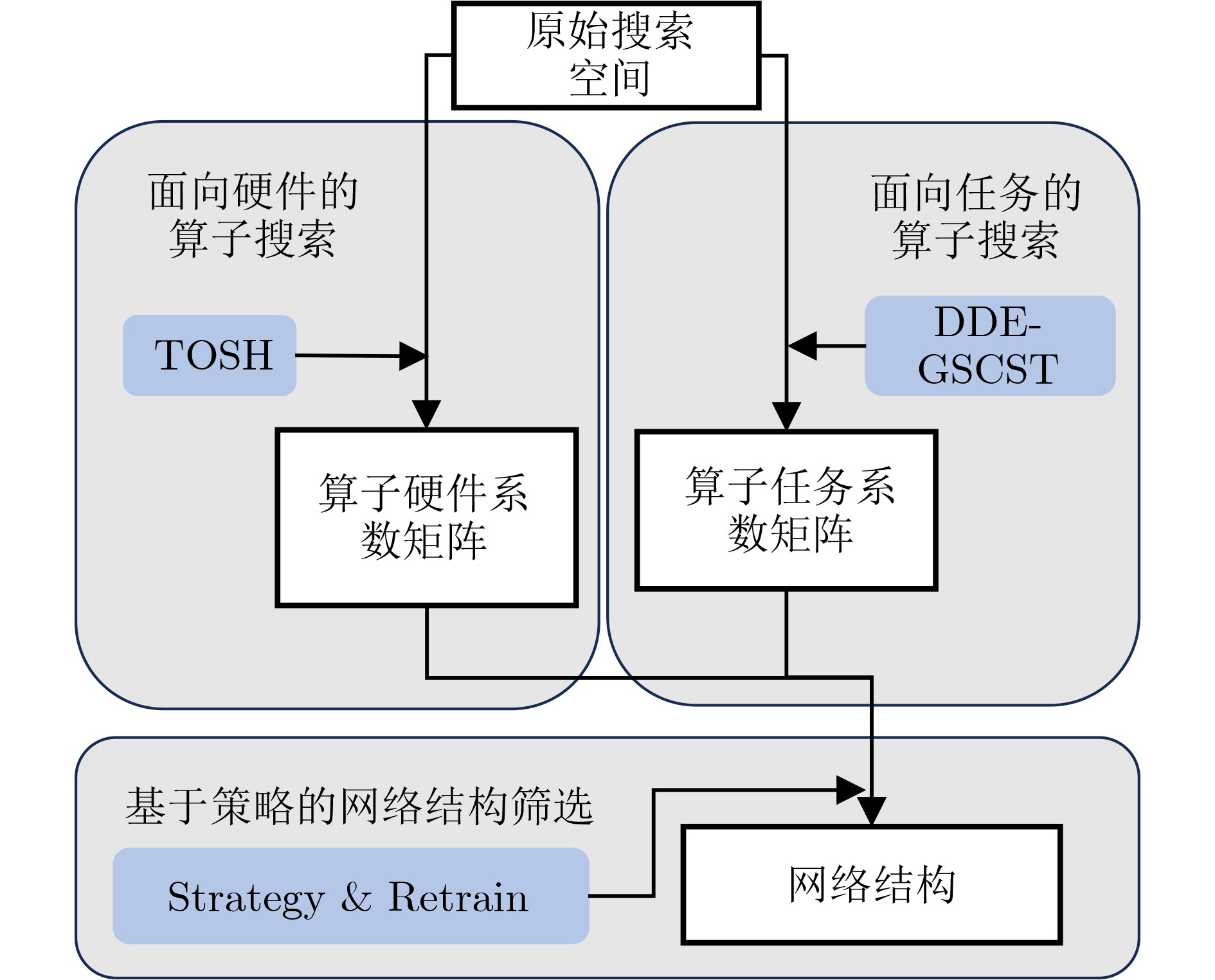
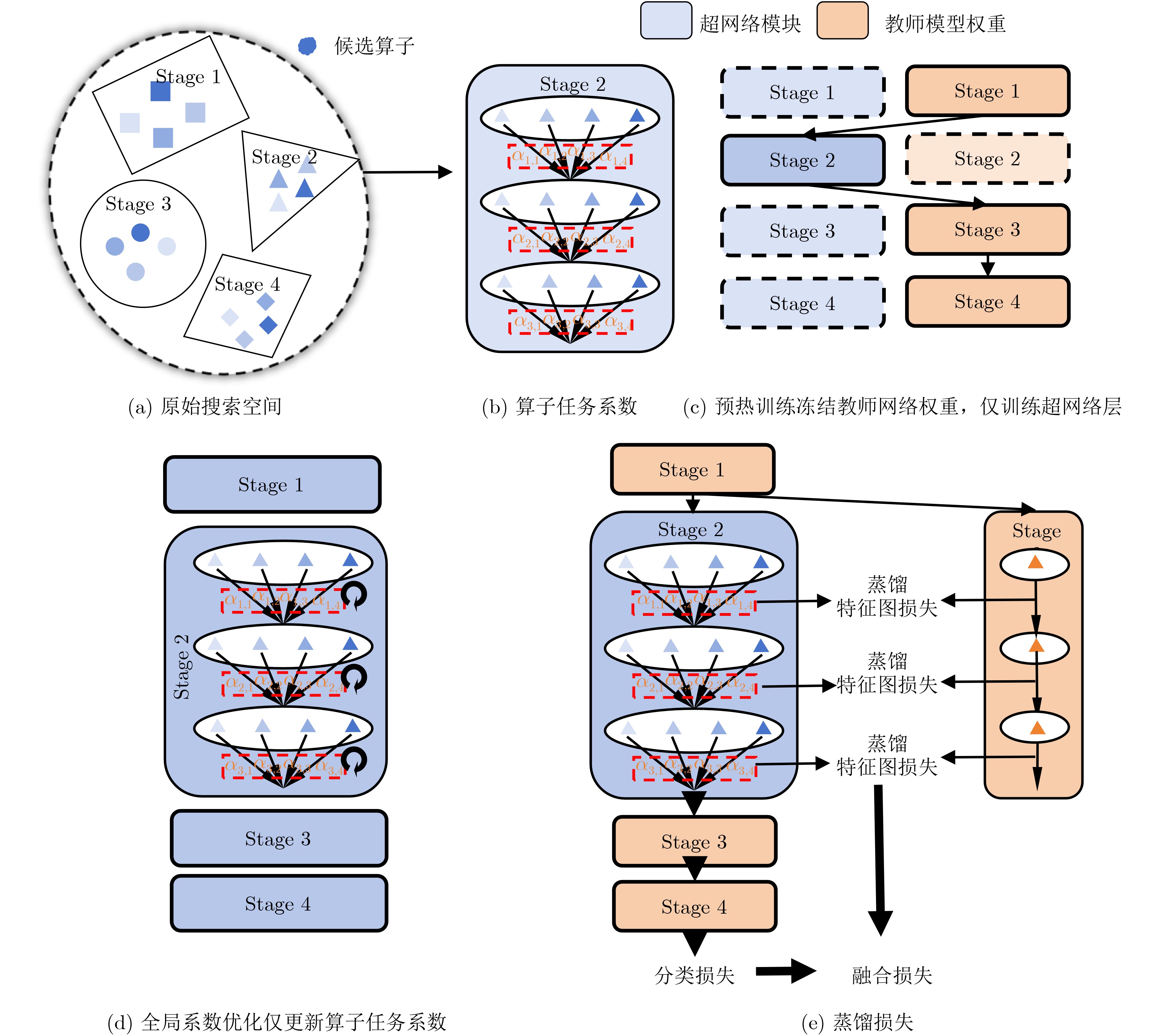
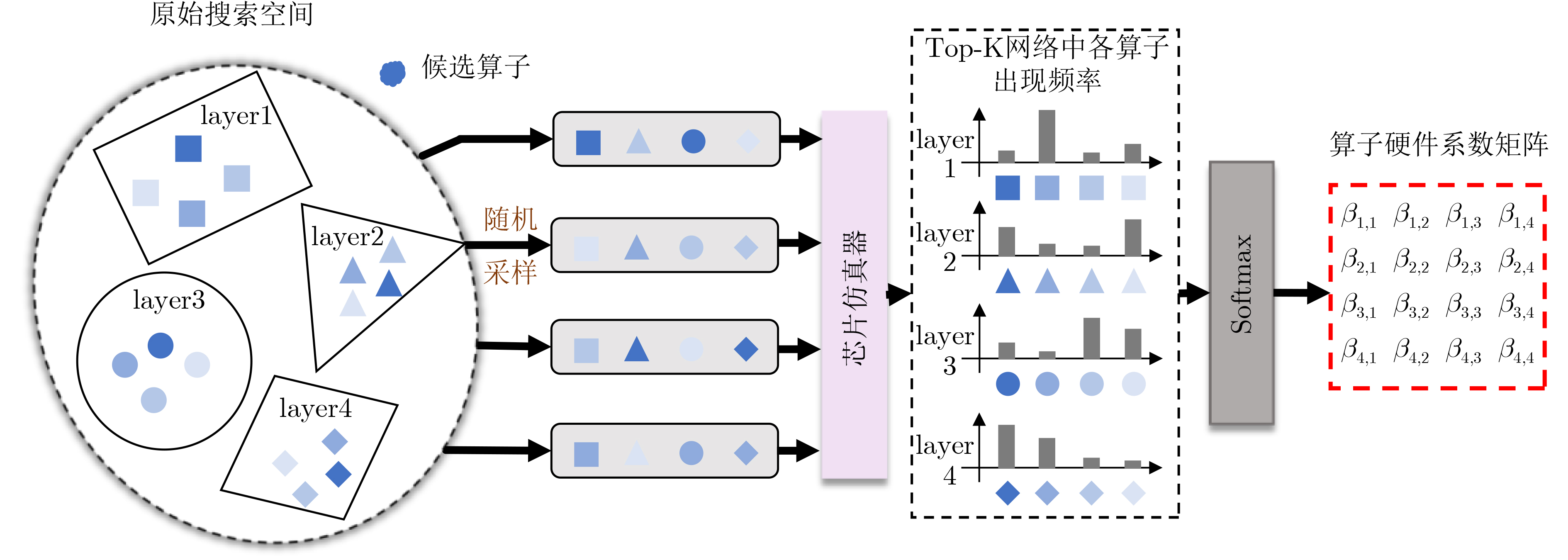
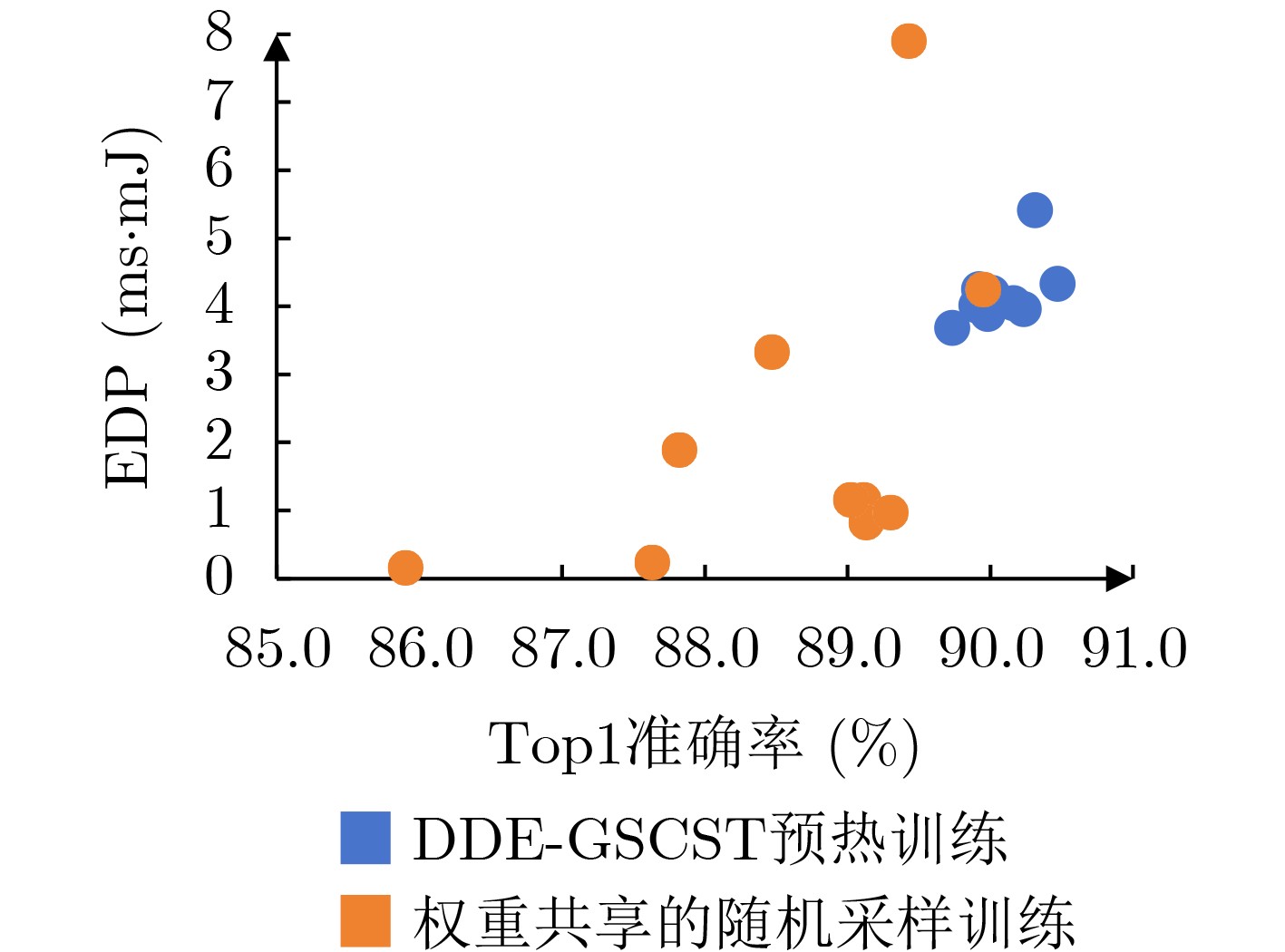
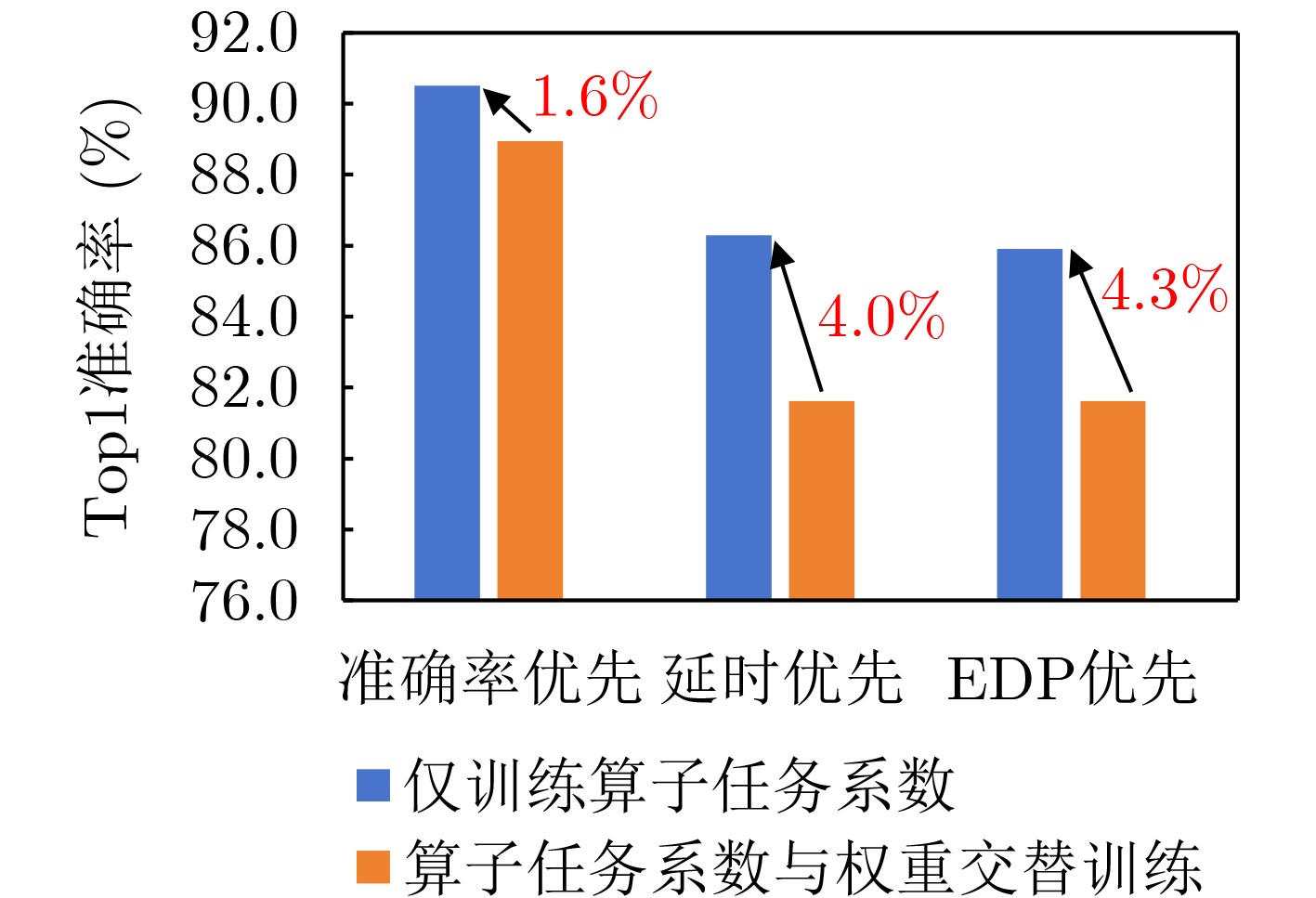
  •   Objective  With the growing demand for on-orbit information processing in satellite missions, efficient deployment of neural networks under strict power and latency constraints remains a major challenge. Resistive Random Access Memory (RRAM)-based Compute-in-Memory (CIM) architectures provide a promising solution for low power consumption and high throughput at the edge. To bridge the gap between conventional neural architectures and CIM hardware, this paper proposes NAS4CIM, a Neural Architecture Search (NAS) framework tailored for RRAM-based CIM chips. The framework proposes a decoupled distillation-enhanced training strategy and a Top-k-based operator selection method, enabling balanced optimization of task accuracy and hardware efficiency. This study presents a practical approach for algorithm–architecture co-optimization in CIM systems with potential application in satellite edge intelligence.  Methods  NAS4CIM is designed as a multi-stage architecture search framework that explicitly considers task performance and CIM hardware characteristics. The search process consists of three stages: task-driven operator evaluation, hardware-driven operator evaluation, and final architecture selection with retraining. In the task-driven stage, NAS4CIM employs the Decoupled Distillation-Enhanced Gradient-based Significance Coefficient Supernet Training (DDE-GSCST) method. Rather than jointly training all candidate operators in a fully coupled supernet, DDE-GSCST applies a semi-decoupled training strategy across different network stages. A high-accuracy teacher network is used to guide training. For each stage, the teacher network provides stable feature representations, whereas the remaining stages remain fixed, which reduces interference among candidate operators. Knowledge distillation is critical under CIM constraints. RRAM-based CIM systems typically rely on low-bit quantization and are affected by device-level noise, under which conventional weight-sharing NAS methods show unstable convergence. Feature distillation from a strong teacher network ensures clear optimization signals for candidate operators and supports reliable convergence. After training, each operator is assigned a task significance coefficient that quantitatively reflects its contribution to task accuracy. Following the task-driven stage, a hardware-driven search stage is performed. Candidate network structures are constructed by combining operators according to task significance rankings and are evaluated using an RRAM-based CIM hardware simulator. System-level hardware metrics, including inference latency and energy consumption, are measured. Complete network structures are evaluated directly, capturing realistic effects such as array partitioning, inter-array communication, and Analog-to-Digital Converter (ADC) overhead. From hardware-efficient networks with superior performance, the selection frequency of each operator is analyzed. Operators that appear more frequently in low-latency and low-energy designs are assigned higher hardware significance coefficients. This data-driven evaluation avoids inaccurate operator-level hardware modeling and reflects system-level behavior. In the final stage, task significance and hardware significance matrices are integrated. By adjusting weighting factors, the framework prioritizes accuracy, efficiency, or a balanced trade-off. Based on the combined evaluation, an optimal operator set is selected to construct the final network architecture, which is then retrained from scratch to refine weights and further improve accuracy while maintaining high hardware efficiency on CIM platforms.  Results and Discussions  NAS4CIM is evaluated on FashionMNIST, CIFAR-10, and ImageNet to demonstrate effectiveness across tasks of different scales. On FashionMNIST, the framework achieves 89.8% Top-1 accuracy in the accuracy-oriented search and an Energy–Delay Product (EDP) of 0.16 in the efficiency-oriented search (Fig. 4). Real-chip experiments on fabricated RRAM macros show close agreement between measured accuracy and simulation results, confirming practical feasibility. On CIFAR-10, NAS4CIM reaches 90.5% Top-1 accuracy in the accuracy-oriented mode and an EDP of 0.16 in the efficiency-oriented mode, exceeding state-of-the-art methods under the same hardware configuration. Under a balanced accuracy–efficiency setting, the framework produces a network with 89.3% accuracy and an EDP of 0.97 (Fig. 3). On ImageNet, which represents a large-scale and more complex classification task, NAS4CIM achieves 70.0% Top-1 accuracy in the accuracy-oriented mode, whereas the efficiency-oriented search yields an EDP of 504.74 (Fig. 5). These results indicate effective scalability from simple to complex datasets while maintaining a favorable balance between accuracy and energy efficiency across optimization settings.  Conclusions  This study proposes NAS4CIM, a NAS framework for RRAM-based CIM chips. Through a decoupled distillation-enhanced training method and a Top-k-based operator selection strategy, the framework addresses instability in random sampling approaches and inaccuracies in operator-level performance modeling. NAS4CIM provides a unified strategy to balance task accuracy and hardware efficiency and demonstrates generality across tasks of different complexity. Simulation and real-chip experiments confirm stable performance and consistency between algorithmic and hardware evaluations. NAS4CIM presents a practical pathway for algorithm–hardware co-optimization in CIM systems and supports energy-efficient, real-time information processing for satellite edge intelligence.
  • loading
  • [1]
    SANTORO G, TURVANI G, and GRAZIANO M. New logic-in-memory paradigms: An architectural and technological perspective[J]. Micromachines, 2019, 10(6): 368. doi: 10.3390/mi10060368.
    [2]
    蔺海荣, 段晨星, 邓晓衡, 等. 双忆阻类脑混沌神经网络及其在IoMT数据隐私保护中应用[J]. 电子与信息学报, 2025, 47(7): 2194–2210. doi: 10.11999/JEIT241133.

    LIN Hairong, DUAN Chenxing, DENG Xiaoheng, et al. Dual-memristor brain-like chaotic neural network and its application in IoMT data privacy protection[J]. Journal of Electronics & Information Technology, 2025, 47(7): 2194–2210. doi: 10.11999/JEIT241133.
    [3]
    江之行, 席悦, 唐建石, 等. 忆阻器及其存算一体应用研究进展[J]. 科技导报, 2024, 42(2): 31–49. doi: 10.3981/j.issn.1000-7857.2024.02.004.

    JIANG Zhixing, XI Yue, TANG Jianshi, et al. Review of recent research on memristors and computing-in-memory applications[J]. Science & Technology Review, 2024, 42(2): 31–49. doi: 10.3981/j.issn.1000-7857.2024.02.004.
    [4]
    李冰, 午康俊, 王晶, 等. 基于忆阻器的图卷积神经网络加速器设计[J]. 电子与信息学报, 2023, 45(1): 106–115. doi: 10.11999/JEIT211435.

    LI Bing, WU Kangjun, WANG Jing, et al. Design of graph convolutional network accelerator based on resistive random access memory[J]. Journal of Electronics & Information Technology, 2023, 45(1): 106–115. doi: 10.11999/JEIT211435.
    [5]
    WAN W, KUBENDRAN R, SCHAEFER C, et al. A compute-in-memory chip based on resistive random-access memory[J]. Nature, 2022, 608(7923): 504–512. doi: 10.1038/s41586-022-04992-8.
    [6]
    邝先验, 桓湘澜, 肖鸿彪, 等. 基于多端忆阻器的组合逻辑电路设计[J]. 电子元件与材料, 2024, 43(8): 1024–1030. doi: 10.14106/j.cnki.1001-2028.2024.1567.

    KUANG Xianyan, HUAN Xianglan, XIAO Hongbiao, et al. Design of combinational logic circuit using multi-terminal memristor[J]. Electronic Components and Materials, 2024, 43(8): 1024–1030. doi: 10.14106/j.cnki.1001-2028.2024.1567.
    [7]
    陈长林, 骆畅航, 刘森, 等. 忆阻器类脑计算芯片研究现状综述[J]. 国防科技大学学报, 2023, 45(1): 1–14. doi: 10.11887/j.cn.202301001.

    CHEN Changlin, LUO Changhang, LIU Sen, et al. Review on the memristor based neuromorphic chips[J]. Journal of National University of Defense Technology, 2023, 45(1): 1–14. doi: 10.11887/j.cn.202301001.
    [8]
    PANDAY D K, SUMAN S, KHAN S, et al. Fabrication and characterization of alumina based resistive RAM for space applications[C]. The IEEE 24th International Conference on Nanotechnology (NANO), Gijon, Spain, 2024: 253–257. doi: 10.1109/NANO61778.2024.10628609.
    [9]
    YAO Peng, WU Huaqiang, GAO Bin, et al. Fully hardware-implemented memristor convolutional neural network[J]. Nature, 2020, 577(7792): 641–646. doi: 10.1038/s41586-020-1942-4.
    [10]
    CAI Han, ZHU Ligeng, and HAN Song. ProxylessNAS: Direct neural architecture search on target task and hardware[C]. The 7th International Conference on Learning Representations (ICLR), New Orleans, USA, 2019.
    [11]
    NEGI S, CHAKRABORTY I, ANKIT A, et al. NAX: Neural architecture and memristive xbar based accelerator co-design[C]. The 59th ACM/IEEE Design Automation Conference (DAC), San Francisco, USA, 2022: 451–456. doi: 10.1145/3489517.3530476.
    [12]
    JIANG Weiwen, LOU Qiuwen, YAN Zheyu, et al. Device-circuit-architecture co-exploration for computing-in-memory neural accelerators[J]. IEEE Transactions on Computers, 2021, 70(4): 595–605. doi: 10.1109/TC.2020.2991575.
    [13]
    YUAN Zhihang, LIU Jingze, LI Xingchen, et al. NAS4RRAM: Neural network architecture search for inference on RRAM-based accelerators[J]. Science China Information Sciences, 2021, 64(6): 160407. doi: 10.1007/s11432-020-3245-7.
    [14]
    SUN Hanbo, ZHU Zhenhua, WANG Chenyu, et al. Gibbon: An efficient co-exploration framework of NN model and processing-in-memory architecture[J]. IEEE Transactions on Computer-Aided Design of Integrated Circuits and Systems, 2023, 42(11): 4075–4089. doi: 10.1109/TCAD.2023.3262201.
    [15]
    KRIZHEVSKY A. Learning multiple layers of features from tiny images[EB/OL]. https://www.cs.toronto.edu/~kriz/learning-features-2009-TR.pdf, 2009.
    [16]
    DENG Jia, DONG Wei, SOCHER R, et al. ImageNet: A large-scale hierarchical image database[C]. The 2009 IEEE Conference on Computer Vision and Pattern Recognition, Miami, USA, 2009: 248–255. doi: 10.1109/CVPR.2009.5206848.
    [17]
    XIAO Han, RASUL K, and VOLLGRAF R. Fashion-MNIST: A novel image dataset for benchmarking machine learning algorithms[EB/OL]. arXiv preprint arXiv: 1708.07747, 2017. doi: 10.48550/arXiv.1708.07747.
    [18]
    HE Kaiming, ZHANG Xiangyu, REN Shaoqing, et al. Deep residual learning for image recognition[C]. The IEEE Conference on Computer Vision and Pattern Recognition (CVPR), Las Vegas, USA, 2016: 770–778. doi: 10.1109/CVPR.2016.90.
    [19]
    LIU Hanxiao, SIMONYAN K, and YANG Yiming. DARTS: Differentiable architecture search[C]. The 7th International Conference on Learning Representations, New Orleans, USA, 2019.
    [20]
    ESSER S K, MCKINSTRY J L, BABLANI D, et al. Learned step size quantization[C]. The 8th International Conference on Learning Representations, Addis Ababa, Ethiopia, 2020.
    [21]
    ZHANG Yibei, ZHANG Qingtian, QIN Qi, et al. An RRAM retention prediction framework using a convolutional neural network based on relaxation behavior[J]. Neuromorphic Computing and Engineering, 2023, 3(1): 014011. doi: 10.1088/2634-4386/acb965.
    [22]
    ZHU Zhenhua, SUN Hanbo, XIE Tongxin, et al. MNSIM 2.0: A behavior-level modeling tool for processing-in-memory architectures[J]. IEEE Transactions on Computer-Aided Design of Integrated Circuits and Systems, 2023, 42(11): 4112–4125. doi: 10.1109/TCAD.2023.3251696.
    [23]
    SHI Yuanming, ZHU Jingyang, JIANG Chunxiao, et al. Satellite edge artificial intelligence with large models: Architectures and technologies[J]. Science China Information Sciences, 2025, 68(7): 170302. doi: 10.1007/s11432-024-4425-y.
  • 加载中

Catalog

    通讯作者: 陈斌, bchen63@163.com
    • 1. 

      沈阳化工大学材料科学与工程学院 沈阳 110142

    1. 本站搜索
    2. 百度学术搜索
    3. 万方数据库搜索
    4. CNKI搜索

    Figures(6)  / Tables(6)

    Article Metrics

    Article views (66) PDF downloads(9) Cited by()
    Proportional views
    Related

    /

    DownLoad:  Full-Size Img  PowerPoint
    Return
    Return