Advanced Search
Turn off MathJax
Article Contents
XU Changding, LIU Shijie, XIAO Changjiang. A Landmark Matching Method Considering Gray-Gradient Dual-Channel Features and Deformation Parameter Optimization[J]. Journal of Electronics & Information Technology. doi: 10.11999/JEIT250953
Citation: XU Changding, LIU Shijie, XIAO Changjiang. A Landmark Matching Method Considering Gray-Gradient Dual-Channel Features and Deformation Parameter Optimization[J]. Journal of Electronics & Information Technology. doi: 10.11999/JEIT250953

A Landmark Matching Method Considering Gray-Gradient Dual-Channel Features and Deformation Parameter Optimization

doi: 10.11999/JEIT250953 cstr: 32379.14.JEIT250953
  • Accepted Date: 2025-12-29
  • Rev Recd Date: 2025-12-29
  • Available Online: 2026-01-04
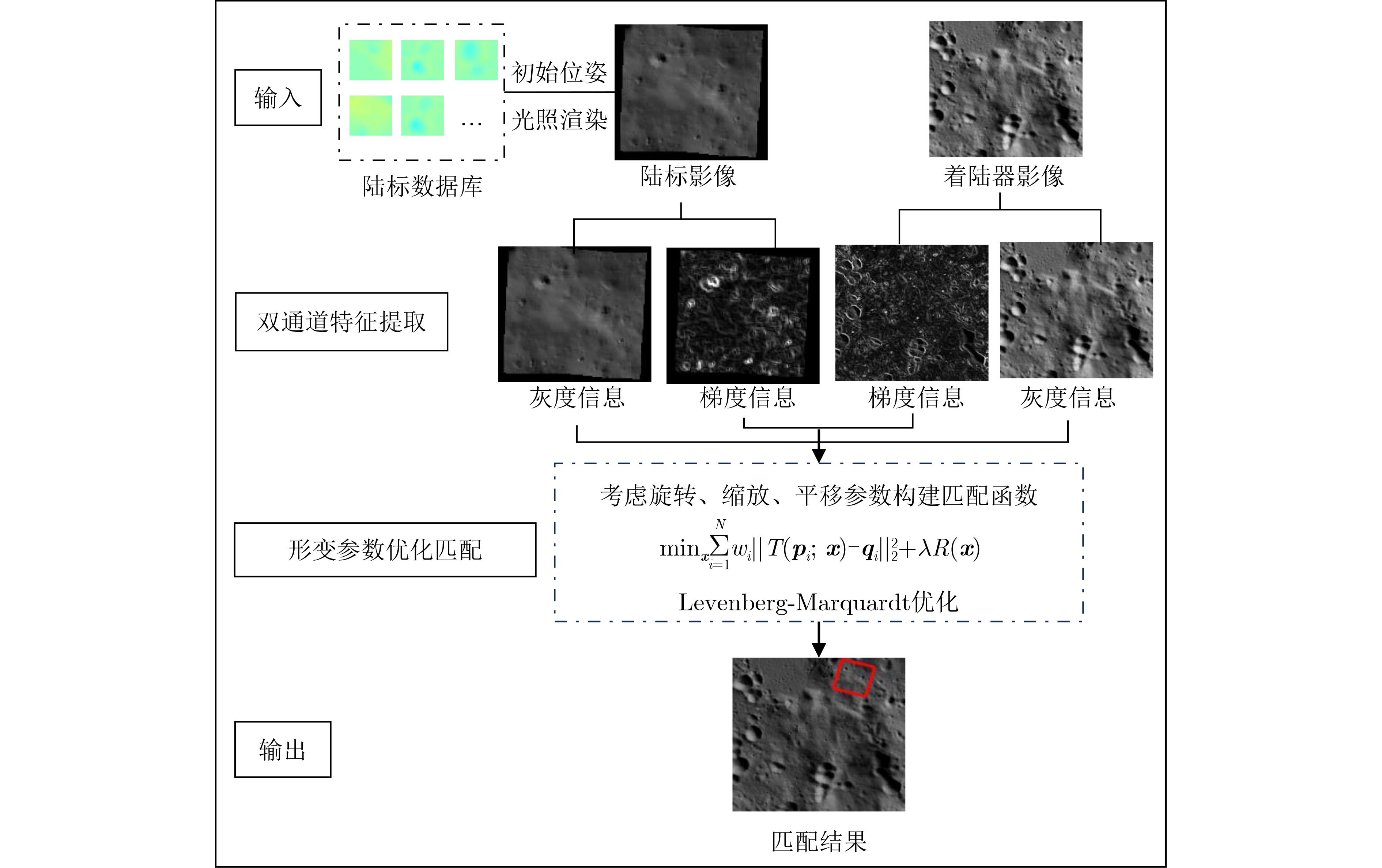
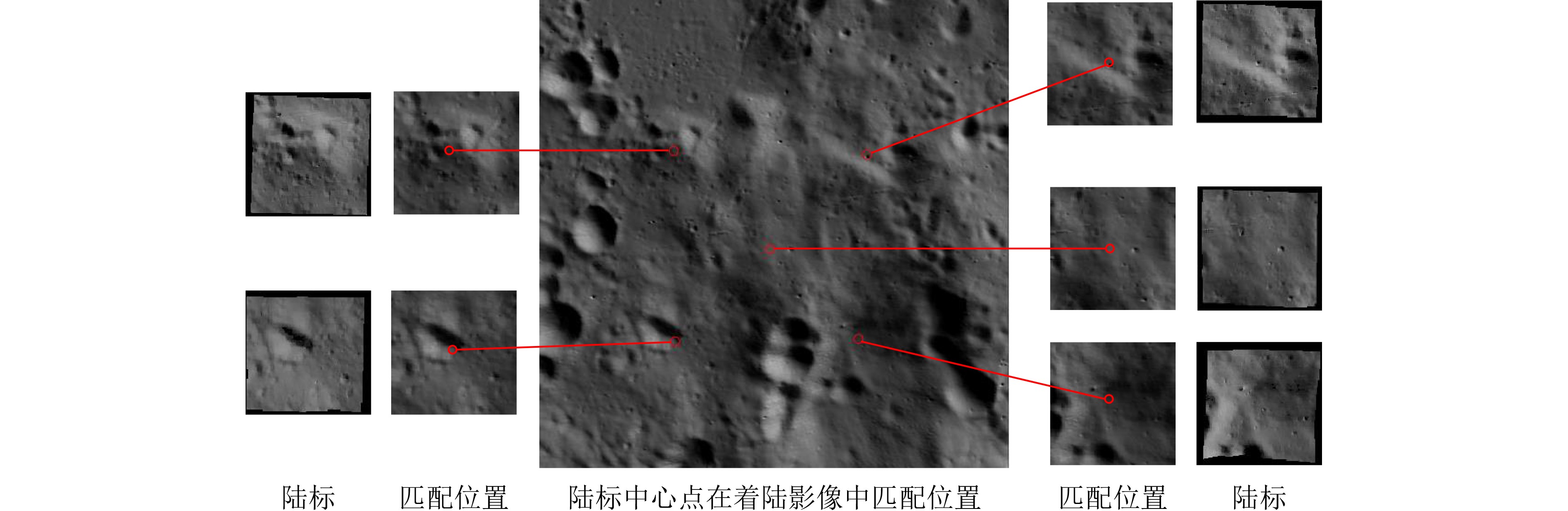
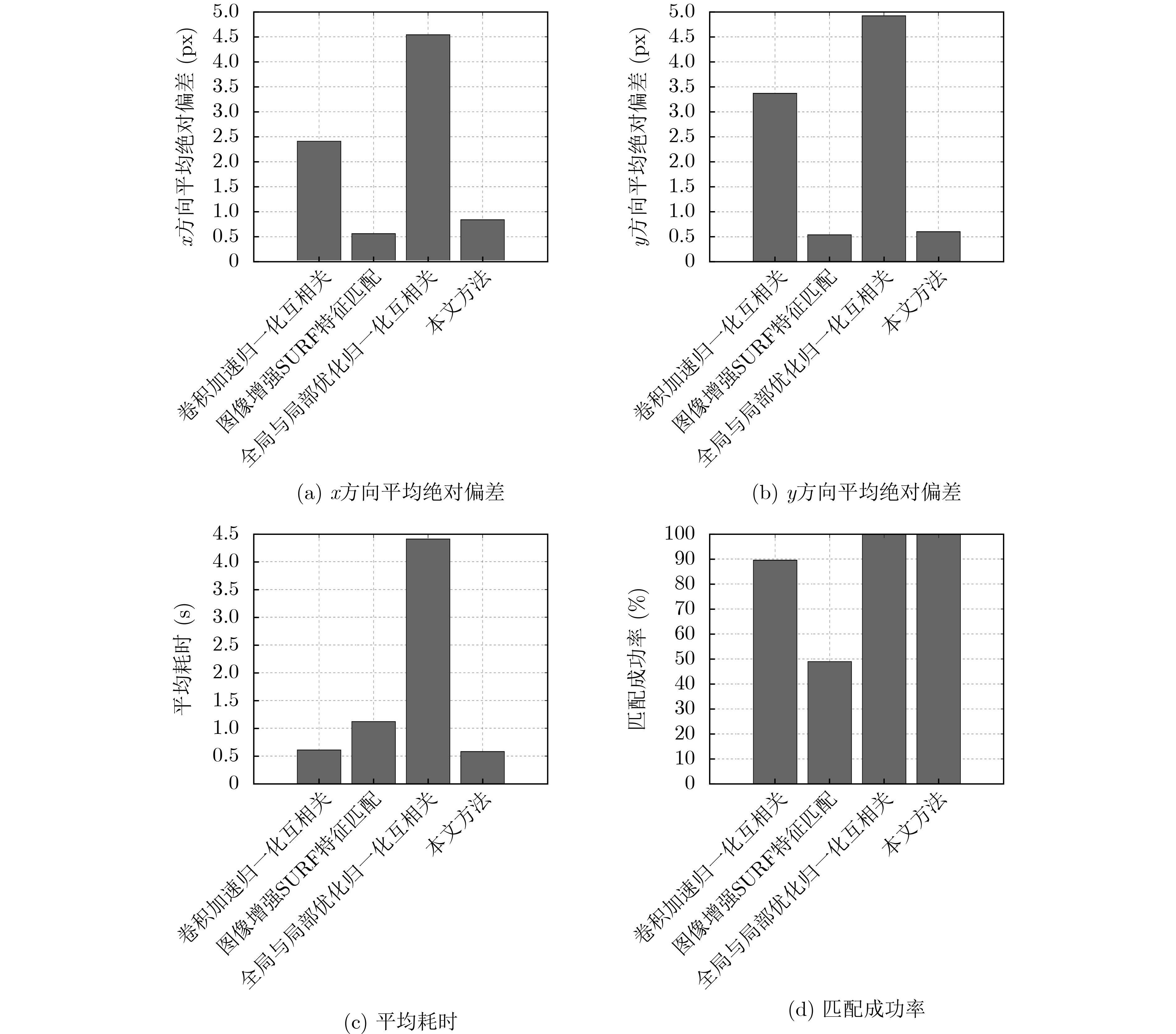
  •   Objective  High-precision optical autonomous navigation is a key technology for the success of deep-space exploration and planetary landing missions. During the descent phase of a lunar lander, communication delays and accumulated errors in the inertial navigation system (INS) can lead to significant positioning deviations, posing serious risks to a safe landing. Matching optical images captured by the lander with pre-stored lunar landmark databases enables the establishment of correspondences between image coordinates and the three-dimensional coordinates of lunar surface features, thereby allowing precise position estimation. However, this process is hindered by dynamic illumination changes on the lunar surface, noise in prior pose information, and the limited computational resources available onboard. Traditional template matching methods are computationally expensive and sensitive to rotation and scale variations, while keypoint-based methods such as SIFT(Scale Invariant Feature Transform) and SURF(Speeded Up Robust Features) suffer from uneven keypoint distribution and illumination changes, resulting in poor robustness. Deep learning-based approaches, including SuperPoint, SuperGlue, and LF-Net, enhance feature detection accuracy but demand considerable computational power, making real-time onboard deployment challenging. To address these issues, this study proposes a landmark matching algorithm that integrates dual-channel features of image intensity and gradient magnitude with deformation parameter optimization, achieving high-precision and real-time landmark matching for lunar optical autonomous navigation.  Methods  The proposed method constructs dual-channel image features by combining gray-level intensity with gradient magnitude representations. Gradient features are obtained using Sobel operators in the horizontal and vertical directions, and the gradient magnitude is calculated as the Euclidean norm of these components. To reduce the influence of local brightness variations and ensure comparability across regions, each feature channel undergoes zero-mean normalization. An adaptive weighting mechanism is then applied, where weights are assigned according to local gradient saliency, and a bias term is added to preserve weak texture information, thereby improving robustness under noisy conditions. The landmark matching task is formulated as a nonlinear least-squares optimization problem. A parameter vector containing rotation, scale, and translation increments relative to the prior pose is defined. The objective function minimizes the weighted sum of squared differences between the dual-channel landmark and image features, with Tikhonov regularization introduced to constrain parameter magnitudes and enhance numerical stability. The Levenberg–Marquardt (LM) algorithm is used to iteratively estimate the optimal deformation parameters. Its adaptive damping factor switches between gradient descent and Gauss–Newton updates, ensuring stable convergence even with large prior pose errors. Iterations terminate when the error norm falls below a predefined threshold or when the maximum number of iterations is reached, yielding the optimal landmark transformation parameters.  Results and Discussions  Experiments were conducted using simulated lunar landing images generated from 60 m-resolution SLDEM(Digital Elevation Model Coregistered with SELENE Data)data with high-fidelity illumination rendering to ensure realistic lighting conditions (Fig. 2). To evaluate matching performance under diverse scenarios, 143 landmarks were synthesized with systematically controlled perturbations in rotation, scale, and translation. Four representative matching methods were selected for comparison, i.e., convolution-accelerated normalized cross-correlation (NCC), SURF feature matching with image enhancement, globally and locally optimized NCC, and the proposed algorithm (Fig. 4). The experimental results reveal distinct trade-offs among the tested methods. Convolution-accelerated NCC achieves a sub-second runtime, demonstrating computational efficiency suitable for real-time applications; however, it suffers from reduced accuracy when faced with gray-level variations and geometric deformations, yielding mean absolute errors of 2.41 px along the x-axis and 4.47 px along the y-axis, with a success rate of 89.51% (Table 1). While SURF feature matching achieves sub-pixel accuracy, yielding mean absolute errors of 0.56 px along the x-axis and 0.54 px along the y-axis, it suffers from a low success rate of 48.95% and second-long runtimes, making it unsuitable for onboard navigation systems with stringent timing requirements. The globally and locally optimized NCC approach exhibits the poorest performance, producing larger errors of 4.54 px along the x-axis and 4.92 px along the y-axis and requiring the longest runtime of 4.41 seconds, despite achieving a 100% success rate. By contrast, the proposed method consistently delivers sub-pixel accuracy comparable to that of SURF, while maintaining a 100 % success rate and a stable runtime of approximately 0.5 s across all test cases. Its robustness against landmark deformation and illumination variability highlights its suitability for challenging operational environments. These findings collectively demonstrate that the proposed algorithm achieves an effective balance between precision, robustness, and computational efficiency, thereby providing a promising and practical solution for real-time optical autonomous navigation during lunar landing missions.  Conclusions  This paper presents a landmark matching algorithm that integrates dual-channel features of grayscale intensity and gradient magnitude with deformation parameter optimization. The method jointly exploits grayscale and gradient information from both the landmark and lander images to construct a matching model that minimizes differences in dual-channel features. Deformation parameters—including rotation, scaling, and translation—are iteratively optimized using the LM algorithm, enabling rapid determination of the landmark’s optimal position within the lander image. Experimental results indicate that the algorithm achieves stable convergence within sub-second runtime, with an average matching error of only 1.03 pixels, even under disturbances in attitude, scale, and position. The proposed approach significantly outperforms traditional single-channel grayscale cross-correlation and SURF-based matching methods. These results confirm the algorithm’s high accuracy, robustness, and real-time capability, offering practical insights for future autonomous lunar optical navigation system design and implementation.
  • loading
  • [1]
    LIN Yangting, YANG Wei, ZHANG Hui, et al. Return to the moon: New perspectives on lunar exploration[J]. Science Bulletin, 2024, 69(13): 2136–2148. doi: 10.1016/j.scib.2024.04.051.
    [2]
    余后满, 饶炜, 张益源, 等. “嫦娥七号”探测器任务综述[J]. 深空探测学报(中英文), 2023, 10(6): 567–576. doi: 10.15982/j.issn.2096-9287.2023.20230119.

    YU Houman, RAO Wei, ZHANG Yiyuan, et al. Mission analysis and spacecraft design of Chang’e-7[J]. Journal of Deep Space Exploration, 2023, 10(6): 567–576. doi: 10.15982/j.issn.2096-9287.2023.20230119.
    [3]
    童小华, 刘世杰, 谢欢, 等. 从地球测绘到地外天体测绘[J]. 测绘学报, 2022, 51(4): 488–500.

    TONG Xiaohua, LIU Shijie, XIE Huan, et al. From Earth mapping to extraterrestrial planet mapping[J]. Acta Geodaetica et Cartographica Sinica, 2022, 51(4): 488–500.
    [4]
    MOURIKIS A I, TRAWNY N, ROUMELIOTIS S I, et al. Vision-aided inertial navigation for spacecraft entry, descent, and landing[J]. IEEE Transactions on Robotics, 2009, 25(2): 264–280. doi: 10.1109/TRO.2009.2012342.
    [5]
    SIMON A B, MAJJI M, RESTREPO C I, et al. A comparison of feature extraction methods for terrain relative navigation[C]. AIAA Scitech 2020 Forum, Orlando, USA, 2020: 0601. doi: 10.2514/6.2020-0601.
    [6]
    胡荣海, 黄翔宇, 徐超. 小天体近距离视觉导航的陆标鲁棒匹配方法[J]. 深空探测学报(中英文), 2022, 9(4): 407–416. doi: 10.15982/j.issn.2096-9287.2022.20220019.

    HU Ronghai, HUANG Xiangyu, and XU Chao. Robust landmark matching method for visual navigation near small bodies[J]. Journal of Deep Space Exploration, 2022, 9(4): 407–416. doi: 10.15982/j.issn.2096-9287.2022.20220019.
    [7]
    华宝成, 李琦, 徐昌定, 等. 嫦娥六号降落图像导航定位技术[J]. 空间控制技术与应用, 2024, 50(6): 57–63. doi: 10.3969/j.issn.1674-1579.2024.06.007.

    HUA Baocheng, LI Qi, XU Changding, et al. Visual navigation and positioning technology for Chang’e-6 descent[J]. Aerospace Control and Application, 2024, 50(6): 57–63. doi: 10.3969/j.issn.1674-1579.2024.06.007.
    [8]
    张成渝, 梁潇, 华宝成, 等. 一种小行星探测陆标导航方法[J]. 空间控制技术与应用, 2021, 47(1): 78–86. doi: 10.3969/j.issn.1674-1579.2021.01.011.

    ZHANG Chengyu, LIANG Xiao, HUA Baocheng, et al. A landmark navigation method for asteroid exploration[J]. Aerospace Control and Application, 2021, 47(1): 78–86. doi: 10.3969/j.issn.1674-1579.2021.01.011.
    [9]
    BAY H, TUYTELAARS T, and VAN GOOL L. SURF: Speeded up robust features[C]. The 9th European Conference on Computer Vision, Graz, Austria, 2006: 404–417. doi: 10.1007/11744023_32.
    [10]
    DETONE D, MALISIEWICZ T, and RABINOVICH A. SuperPoint: Self-supervised interest point detection and description[C]. Proceedings of the IEEE Conference on Computer Vision and Pattern Recognition Workshops, Salt Lake City, USA, 2018: 337–33712. doi: 10.1109/CVPRW.2018.00060.
    [11]
    ONO Y, TRULLS E, FUA P, et al. LF-Net: Learning local features from images[C]. Proceedings of the 32nd International Conference on Neural Information Processing Systems, Montréal, Canada, 2018: 6237–6247.
    [12]
    SARLIN P E, CADENA C, SIEGWART R, et al. From coarse to fine: Robust hierarchical localization at large scale[C]. Proceedings of the IEEE/CVF Conference on Computer Vision and Pattern Recognition, Long Beach, USA, 2019: 12708–12717. doi: 10.1109/CVPR.2019.01300.
    [13]
    WANG Yaqiong, XIE Huan, HUANG Qian, et al. A novel approach for multiscale lunar crater detection by the use of path-profile and isolation forest based on high-resolution planetary images[J]. IEEE Transactions on Geoscience and Remote Sensing, 2022, 60: 4601424. doi: 10.1109/TGRS.2022.3153721.
    [14]
    RONNEBERGER O, FISCHER P, and BROX T. U-Net: Convolutional networks for biomedical image segmentation[C]. The 18th International Conference on Medical Image Computing and Computer-Assisted Intervention, Munich, Germany, 2015: 234–241. doi: 10.1007/978-3-319-24574-4_28.
    [15]
    SZEGEDY C, LIU Wei, JIA Yangqing, et al. Going deeper with convolutions[C]. 2015 IEEE Conference on Computer Vision and Pattern Recognition (CVPR), Boston, USA, 2015: 1–9. doi: 10.1109/CVPR.2015.7298594.
    [16]
    MUHAMMAD U, WANG Weiqiang, CHATTHA S P, et al. Pre-trained VGGNet architecture for remote-sensing image scene classification[C]. 2018 24th International Conference on Pattern Recognition (ICPR), Beijing, China, 2018: 1622–1627. doi: 10.1109/ICPR.2018.8545591.
    [17]
    SAKAI S, KUSHIKI K, SAWAI S, et al. Moon landing results of SLIM: A smart Lander for investigating the moon[J]. Acta Astronautica, 2025, 235: 47–54. doi: 10.1016/j.actaastro.2025.05.047.
    [18]
    LIU Shijie, CHU Guanghan, XU Changding, et al. Lunar crater matching with triangle-based global second-order similarity for precision navigation[J]. IEEE Transactions on Geoscience and Remote Sensing, 2025, 63: 4600817. doi: 10.1109/TGRS.2025.3598104.
    [19]
    LOURAKIS M I A. A brief description of the Levenberg-Marquardt algorithm implemened by Levmar[R]. Foundation for Research and Technology, 2005: 1–6. (查阅网上资料, 未找到本条文献报告编号信息, 请确认).
    [20]
    TONG Xiaohua, HUANG Qian, LIU Shijie, et al. A high-precision horizon-based illumination modeling method for the lunar surface using pyramidal LOLA data[J]. Icarus, 2023, 390: 115302. doi: 10.1016/j.icarus.2022.115302.
    [21]
    张一梵. 基于灰度相关的快速模板匹配算法研究[D]. [硕士论文], 广州大学, 2022. doi: 10.27040/d.cnki.ggzdu.2022.001434.

    ZHANG Yifan. Research on fast template matching algorithm based on gray-level correlation[D]. [Master dissertation], Guangzhou University, 2022. doi: 10.27040/d.cnki.ggzdu.2022.001434. (查阅网上资料,未找到本条文献英文信息,请确认).
    [22]
    张明浩, 杨耀权, 靳渤文. 基于图像增强技术的SURF特征匹配算法研究[J]. 自动化与仪表, 2019, 34(9): 98–102. doi: 10.19557/j.cnki.1001-9944.2019.09.023.

    ZHANG Minghao, YANG Yaoquan, and JIN Bowen. Research on SURF feature matching algorithm based on image enhancement technology[J]. Automation & Instrumentation, 2019, 34(9): 98–102. doi: 10.19557/j.cnki.1001-9944.2019.09.023.
  • 加载中

Catalog

    通讯作者: 陈斌, bchen63@163.com
    • 1. 

      沈阳化工大学材料科学与工程学院 沈阳 110142

    1. 本站搜索
    2. 百度学术搜索
    3. 万方数据库搜索
    4. CNKI搜索

    Figures(5)  / Tables(1)

    Article Metrics

    Article views (18) PDF downloads(0) Cited by()
    Proportional views
    Related

    /

    DownLoad:  Full-Size Img  PowerPoint
    Return
    Return