Advanced Search
Turn off MathJax
Article Contents
MA Yuxuan, ZHANG Feifei, LI Guanghui, TANG Xin, DONG Zhengyang. Multi-Scale Region of Interest Feature Fusion for Palmprint Recognition[J]. Journal of Electronics & Information Technology. doi: 10.11999/JEIT250940
Citation: MA Yuxuan, ZHANG Feifei, LI Guanghui, TANG Xin, DONG Zhengyang. Multi-Scale Region of Interest Feature Fusion for Palmprint Recognition[J]. Journal of Electronics & Information Technology. doi: 10.11999/JEIT250940

Multi-Scale Region of Interest Feature Fusion for Palmprint Recognition

doi: 10.11999/JEIT250940 cstr: 32379.14.JEIT250940
Funds:  The National Natural Science Foundation of China (62372214), Suzhou Science and Technology Project (SGC2021070)
  • Received Date: 2025-09-22
  • Accepted Date: 2025-12-30
  • Rev Recd Date: 2025-12-30
  • Available Online: 2026-01-08
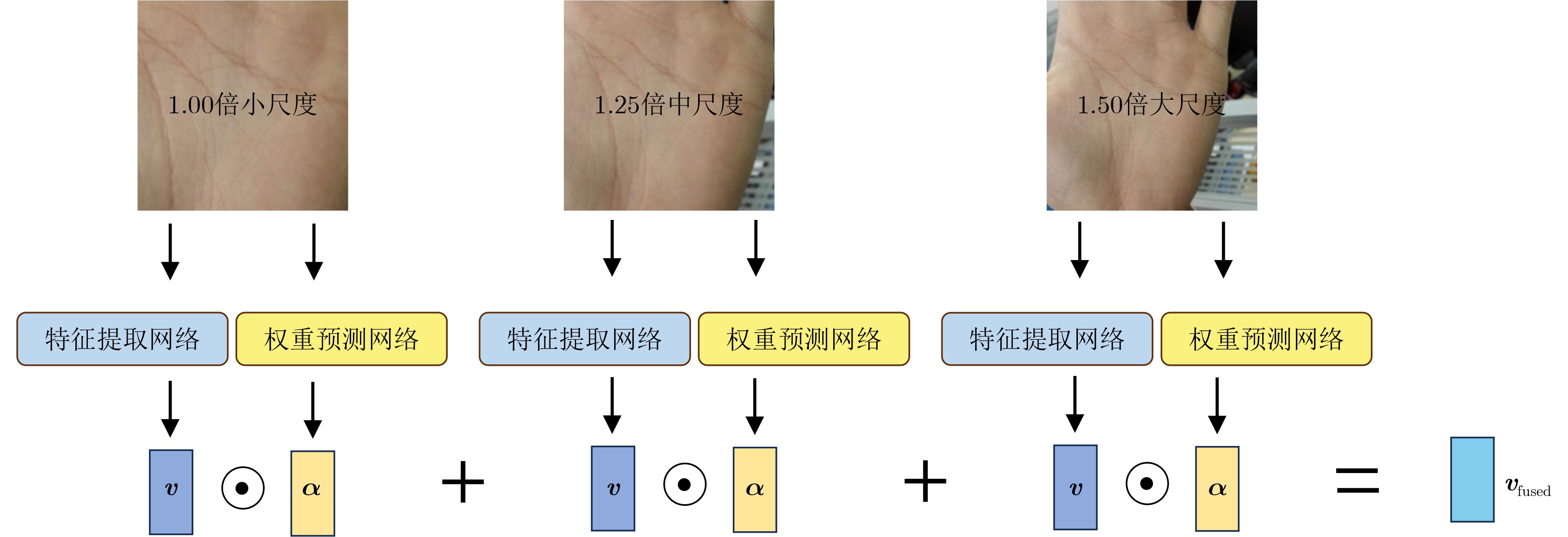
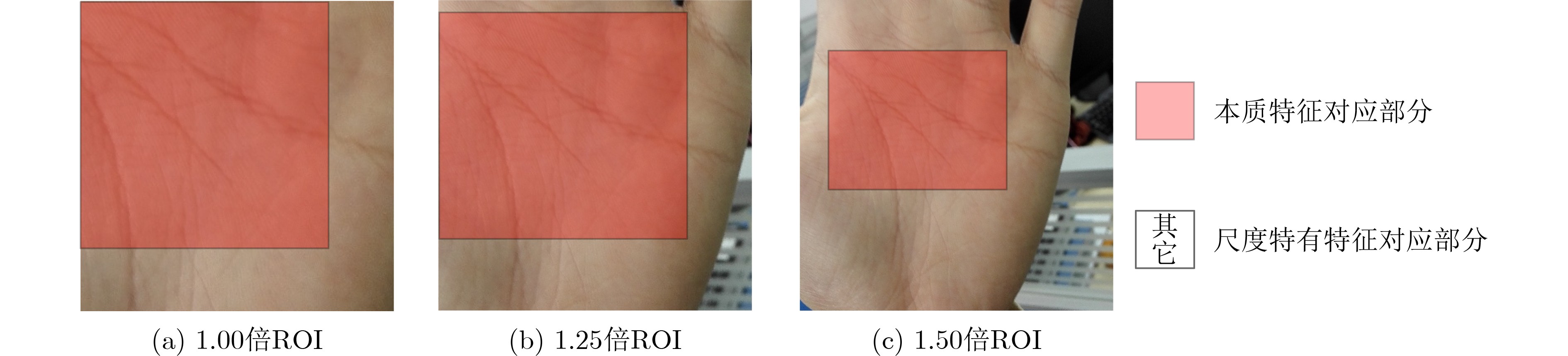
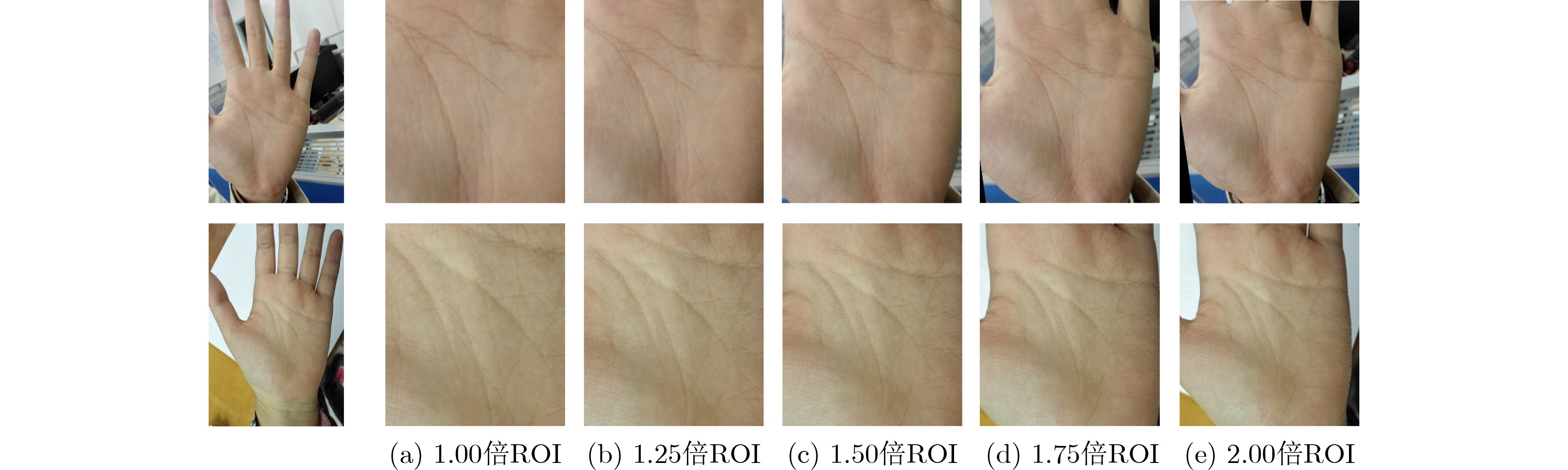
  •   Objective  Accurate localization of the Region Of Interest (ROI) is a prerequisite for high-precision palmprint recognition. In contactless and uncontrolled application scenarios, complex background illumination and diverse hand postures frequently cause ROI localization offsets. Most existing deep learning-based recognition methods rely on a single fixed-size ROI as input. Although some approaches adopt multi-scale convolution kernels, fusion at the ROI level is not performed, which makes these methods highly sensitive to localization errors. Therefore, small deviations in ROI extraction often result in severe performance degradation, which restricts practical deployment. To overcome this limitation, a Multi-scale ROI Feature Fusion Mechanism is proposed, and a corresponding model, termed ROI3Net, is designed. The objective is to construct a recognition system that is inherently robust to localization errors by integrating complementary information from multiple ROI scales. This strategy reinforces shared intrinsic texture features while suppressing scale-specific noise introduced by positioning inaccuracies.  Methods  The proposed ROI3Net adopts a dual-branch architecture consisting of a Feature Extraction Network and a lightweight Weight Prediction Network (Fig. 4). The Feature Extraction Network employs a sequence of Multi-Scale Residual Blocks (MSRBs) to process ROIs at three progressive scales (1.00×, 1.25×, and 1.50×) in parallel. Within each MSRB, dense connections are applied to promote feature reuse and reduce information loss (Eq. 3). Convolutional Block Attention Modules (CBAMs) are incorporated to adaptively refine features in both the channel and spatial dimensions. The Weight Prediction Network is implemented as an end-to-end lightweight module. It takes raw ROI images as input and processes them using a serialized convolutional structure (Conv2d-BN-GELU-MaxPool), followed by a Multi-Layer Perceptron (MLP) head, to predict a dynamic weight vector for each scale. This subnetwork is optimized for efficiency, containing 2.38 million parameters, which accounts for approximately 6.2% of the total model parameters, and requiring 103.2 MFLOPs, which corresponds to approximately 2.1% of the total computational cost. The final feature representation is obtained through a weighted summation of multi-scale features (Eq. 1 and Eq. 2), which mathematically maximizes the information entropy of the fused feature vector.  Results and Discussions  Experiments are conducted on six public palmprint datasets: IITD, MPD, NTU-CP, REST, CASIA, and BMPD. Under ideal conditions with accurate ROI localization, ROI3Net demonstrates superior performance compared with state-of-the-art single-scale models. For instance, a Rank-1 accuracy of 99.90% is achieved on the NTU-CP dataset, and a Rank-1 accuracy of 90.17% is achieved on the challenging REST dataset (Table 1). Model robustness is further evaluated by introducing a random 10% localization offset. Under this condition, conventional models exhibit substantial performance degradation. For example, the Equal Error Rate (EER) of the CO3Net model on NTU-CP increases from 2.54% to 15.66%. In contrast, ROI3Net maintains stable performance, with the EER increasing only from 1.96% to 5.01% (Fig. 7, Table 2). The effect of affine transformations, including rotation (±30°) and scaling (0.85$ \sim $1.15×), is also analyzed. Rotation causes feature distortion because standard convolution operations lack rotation invariance, whereas the proposed multi-scale mechanism effectively compensates for translation errors by expanding the receptive field (Table 3). Generalization experiments further confirm that embedding this mechanism into existing models, including CCNet, CO3Net, and RLANN, significantly improves robustness (Table 6). In terms of efficiency, although the theoretical computational load increases by approximately 150%, the actual GPU inference time increases by only about 20% (6.48 ms) because the multi-scale branches are processed independently and in parallel (Table 7).  Conclusions  A Multi-scale ROI Feature Fusion Mechanism is presented to reduce the sensitivity of palmprint recognition systems to localization errors. By employing a lightweight Weight Prediction Network to adaptively fuse features extracted from different ROI scales, the proposed ROI3Net effectively combines fine-grained texture details with global semantic information. Experimental results confirm that this approach significantly improves robustness to translation errors by recovering truncated texture information, whereas the efficient design of the Weight Prediction Network limits computational overhead. The proposed mechanism also exhibits strong generalization ability when integrated into different backbone networks. This study provides a practical and resilient solution for palmprint recognition in unconstrained environments. Future work will explore non-linear fusion strategies, such as graph neural networks, to further exploit cross-scale feature interactions.
  • loading
  • [1]
    ZHAO Shuping, FEI Lunke, and WEN Jie. Multiview-learning-based generic palmprint recognition: A literature review[J]. Mathematics, 2023, 11(5): 1261. doi: 10.3390/math11051261.
    [2]
    AMROUNI N, BENZAOUI A, and ZEROUAL A. Palmprint recognition: Extensive exploration of databases, methodologies, comparative assessment, and future directions[J]. Applied Sciences, 2024, 14(1): 153. doi: 10.3390/app14010153.
    [3]
    ZHANG D, KONG W K, YOU J, et al. Online palmprint identification[J]. IEEE Transactions on Pattern Analysis and Machine Intelligence, 2003, 25(9): 1041–1050. doi: 10.1109/TPAMI.2003.1227981.
    [4]
    KONG A W K and ZHANG D. Competitive coding scheme for palmprint verification[C]. The 17th International Conference on Pattern Recognition, Cambridge, UK, 2004: 520–523. doi: 10.1109/ICPR.2004.1334184.
    [5]
    FEI Lunke, XU Yong, TANG Wenliang, et al. Double-orientation code and nonlinear matching scheme for palmprint recognition[J]. Pattern Recognition, 2016, 49: 89–101. doi: 10.1016/j.patcog.2015.08.001.
    [6]
    JIA Wei, HU Rongxiang, LEI Yingke, et al. Histogram of oriented lines for palmprint recognition[J]. IEEE Transactions on Systems, Man, and Cybernetics: Systems, 2014, 44(3): 385–395. doi: 10.1109/TSMC.2013.2258010.
    [7]
    GENOVESE A, PIURI V, PLATANIOTIS K N, et al. PalmNet: Gabor-PCA convolutional networks for touchless palmprint recognition[J]. IEEE Transactions on Information Forensics and Security, 2019, 14(12): 3160–3174. doi: 10.1109/TIFS.2019.2911165.
    [8]
    CHAI Tingting, PRASAD S, and WANG Shenghui. Boosting palmprint identification with gender information using DeepNet[J]. Future Generation Computer Systems, 2019, 99: 41–53. doi: 10.1016/j.future.2019.04.013.
    [9]
    LIANG Xu, YANG Jinyang, LU Guangming, et al. CompNet: Competitive neural network for palmprint recognition using learnable Gabor kernels[J]. IEEE Signal Processing Letters, 2021, 28: 1739–1743. doi: 10.1109/LSP.2021.3103475.
    [10]
    YANG Ziyuan, HUANGFU Huijie, LENG Lu, et al. Comprehensive competition mechanism in palmprint recognition[J]. IEEE Transactions on Information Forensics and Security, 2023, 18: 5160–5170. doi: 10.1109/TIFS.2023.3306104.
    [11]
    YANG Ziyuan, XIA Wenjun, QIAO Yifan, et al. CO3Net: Coordinate-aware contrastive competitive neural network for palmprint recognition[J]. IEEE Transactions on Instrumentation and Measurement, 2023, 72: 2514114. doi: 10.1109/TIM.2023.3276506.
    [12]
    FENG Yulin and KUMAR A. BEST: Building evidences from scattered templates for accurate contactless palmprint recognition[J]. Pattern Recognition, 2023, 138: 109422. doi: 10.1016/j.patcog.2023.109422.
    [13]
    CHAI Tingting, WANG Xin, LI Ru, et al. Joint finger valley points-free ROI detection and recurrent layer aggregation for palmprint recognition in open environment[J]. IEEE Transactions on Information Forensics and Security, 2025, 20: 421–435. doi: 10.1109/TIFS.2024.3516539.
    [14]
    SHAO Huikai, ZOU Yuchen, LIU Chengcheng, et al. Learning to generalize unseen dataset for cross-dataset palmprint recognition[J]. IEEE Transactions on Information Forensics and Security, 2024, 19: 3788–3799. doi: 10.1109/TIFS.2024.3371257.
    [15]
    SU Le, FEI Lunke, ZHANG B, et al. Complete region of interest for unconstrained palmprint recognition[J]. IEEE Transactions on Image Processing, 2024, 33: 3662–3675. doi: 10.1109/TIP.2024.3407666.
    [16]
    WOO S, PARK J, LEE J Y, et al. CBAM: Convolutional block attention module[C]. The 15th European Conference on Computer Vision, Munich, Germany, 2018: 3–19. doi: 10.1007/978-3-030-01234-2_1.
    [17]
    KUMAR A and SHEKHAR S. Personal identification using multibiometrics rank-level fusion[J]. IEEE Transactions on Systems, Man, and Cybernetics, Part C (Applications and Reviews), 2011, 41(5): 743–752. doi: 10.1109/TSMCC.2010.2089516.
    [18]
    MATKOWSKI W M, CHAI Tingting, and KONG A W K. Palmprint recognition in uncontrolled and uncooperative environment[J]. IEEE Transactions on Information Forensics and Security, 2020, 15: 1601–1615. doi: 10.1109/TIFS.2019.2945183.
    [19]
    SUN Zhenan, TAN Tieniu, WANG Yunhong, et al. Ordinal palmprint represention for personal identification[C]. 2005 IEEE Computer Society Conference on Computer Vision and Pattern Recognition, San Diego, USA, 2005: 279–284. doi: 10.1109/CVPR.2005.267.
    [20]
    IZADPANAHKAKHK M, RAZAVI S M, TAGHIPOUR-GORJIKOLAIE M, et al. Novel mobile palmprint databases for biometric authentication[J]. International Journal of Grid and Utility Computing, 2019, 10(5): 465–474. doi: 10.1504/ijguc.2019.102016.
    [21]
    YANG Ziyuan, KANG Ming, TEOH A B J, et al. A dual-level cancelable framework for palmprint verification and hack-proof data storage[J]. IEEE Transactions on Information Forensics and Security, 2024, 19: 8587–8599. doi: 10.1109/TIFS.2024.3461869.
    [22]
    YANG Ziyuan, LENG Lu, WU Tengfei, et al. Multi-order texture features for palmprint recognition[J]. Artificial Intelligence Review, 2023, 56(2): 995–1011. doi: 10.1007/s10462-022-10194-5.
  • 加载中

Catalog

    通讯作者: 陈斌, bchen63@163.com
    • 1. 

      沈阳化工大学材料科学与工程学院 沈阳 110142

    1. 本站搜索
    2. 百度学术搜索
    3. 万方数据库搜索
    4. CNKI搜索

    Figures(7)  / Tables(7)

    Article Metrics

    Article views (81) PDF downloads(9) Cited by()
    Proportional views
    Related

    /

    DownLoad:  Full-Size Img  PowerPoint
    Return
    Return