Advanced Search
Turn off MathJax
Article Contents
LU Di, DANG Anyuan. HWT-SRNet: Heterogeneous Windows Transformer Network for Image Super-Resolution[J]. Journal of Electronics & Information Technology. doi: 10.11999/JEIT250868
Citation: LU Di, DANG Anyuan. HWT-SRNet: Heterogeneous Windows Transformer Network for Image Super-Resolution[J]. Journal of Electronics & Information Technology. doi: 10.11999/JEIT250868

HWT-SRNet: Heterogeneous Windows Transformer Network for Image Super-Resolution

doi: 10.11999/JEIT250868 cstr: 32379.14.JEIT250868
  • Accepted Date: 2026-05-29
  • Rev Recd Date: 2026-05-29
  • Available Online: 2026-06-08
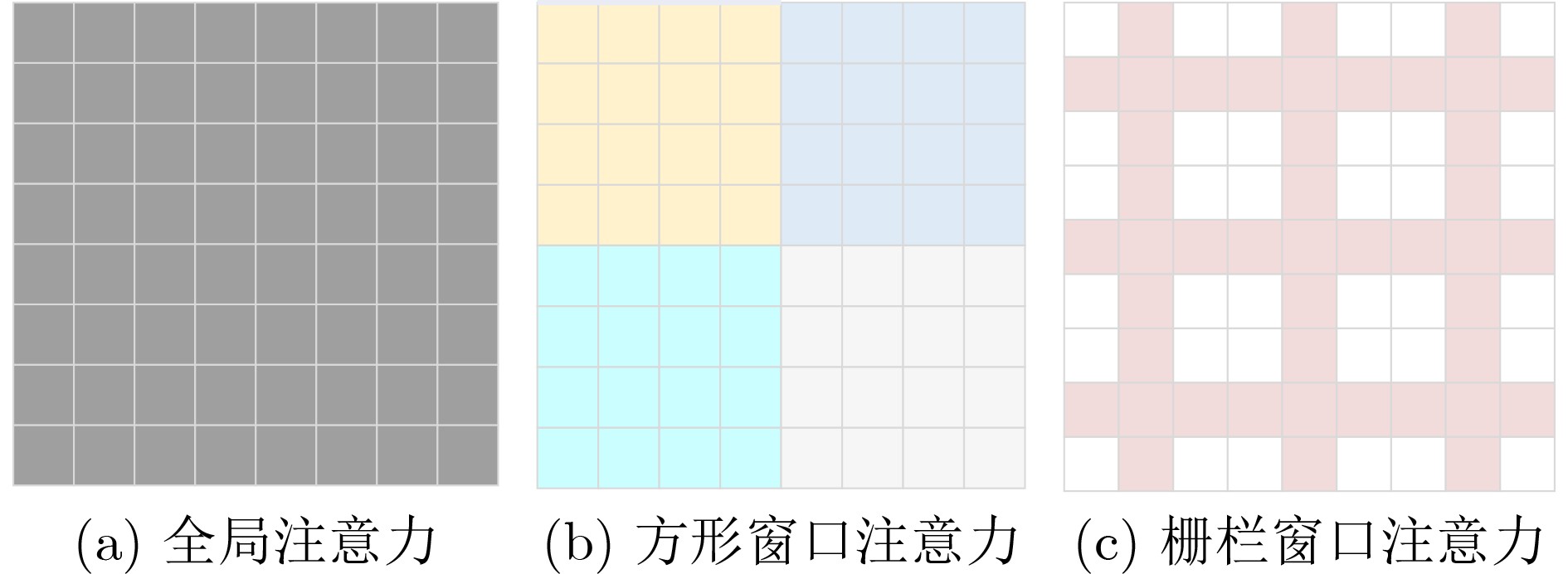
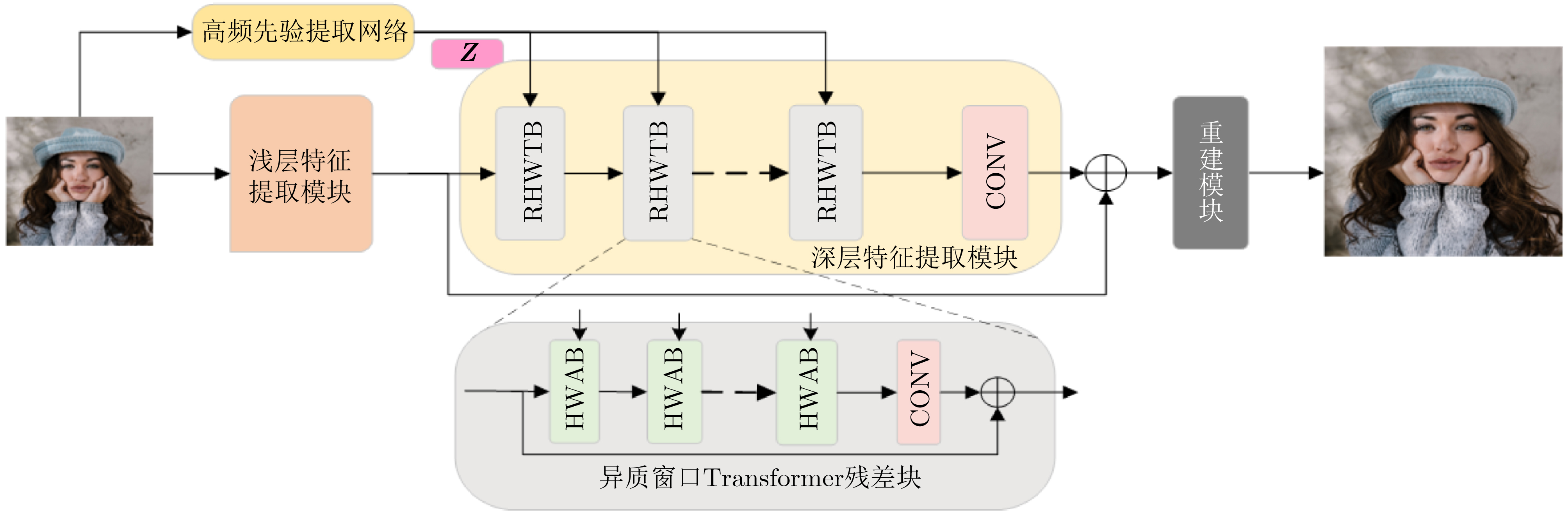
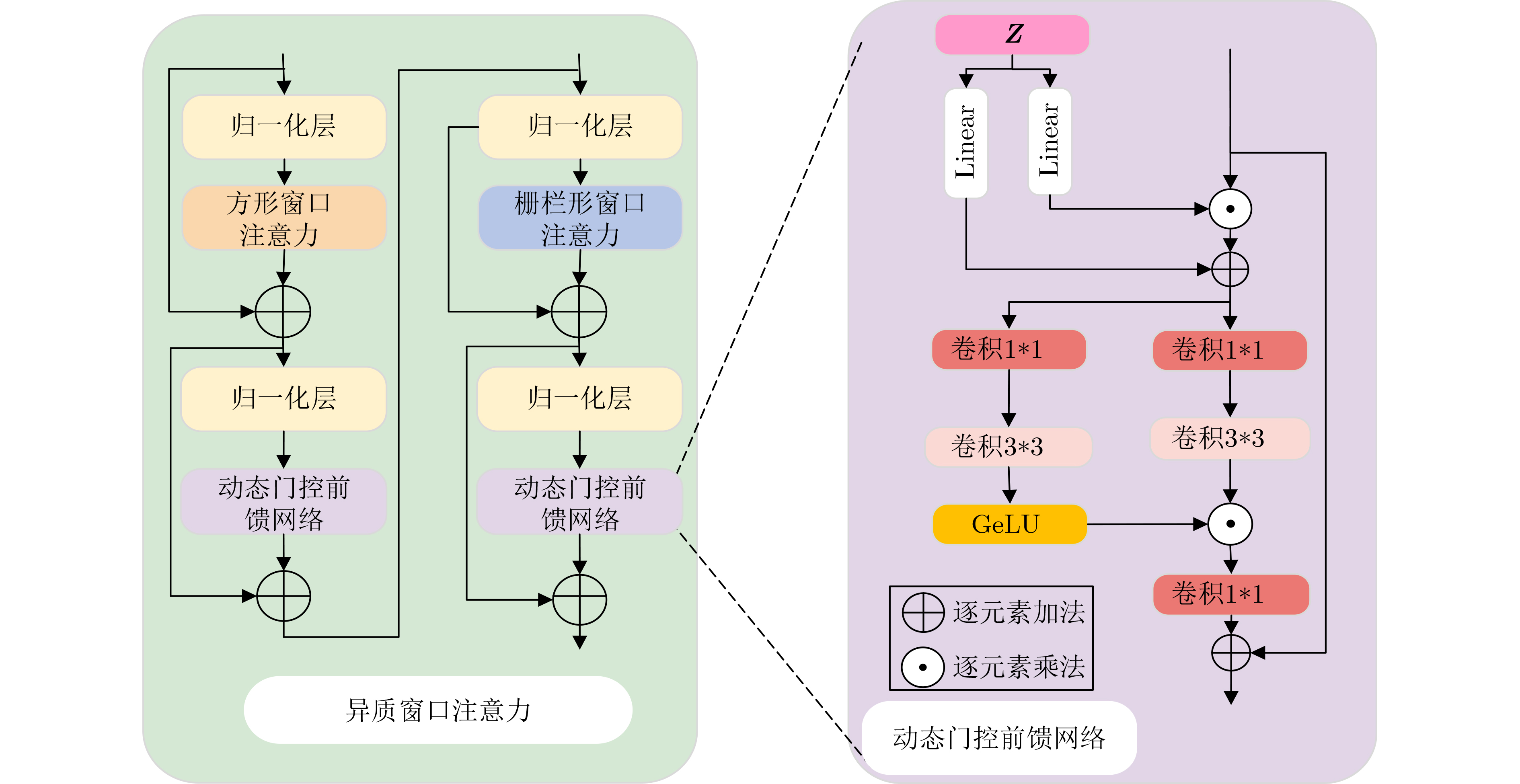
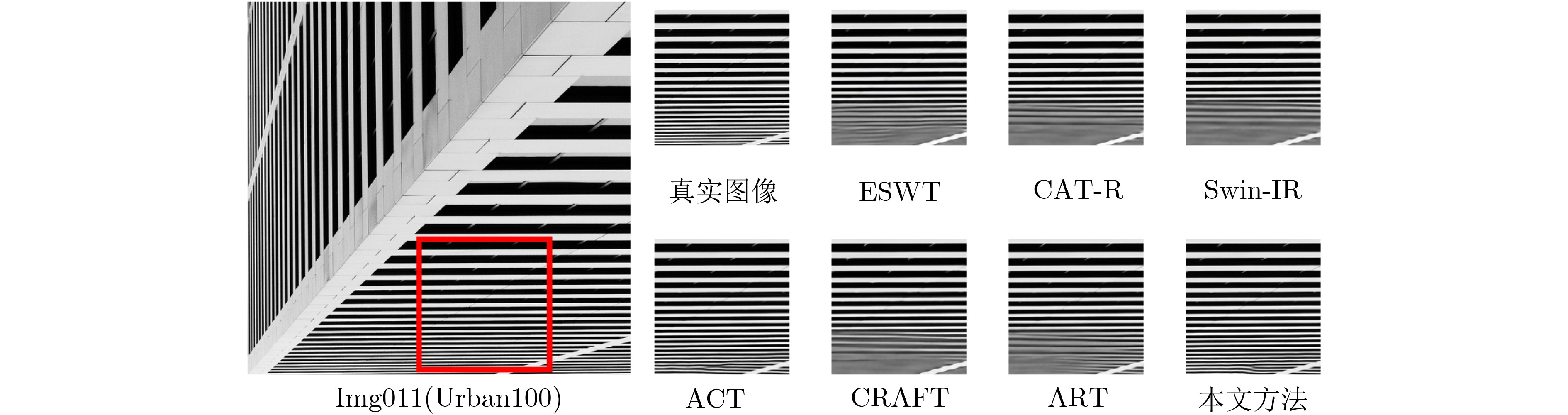
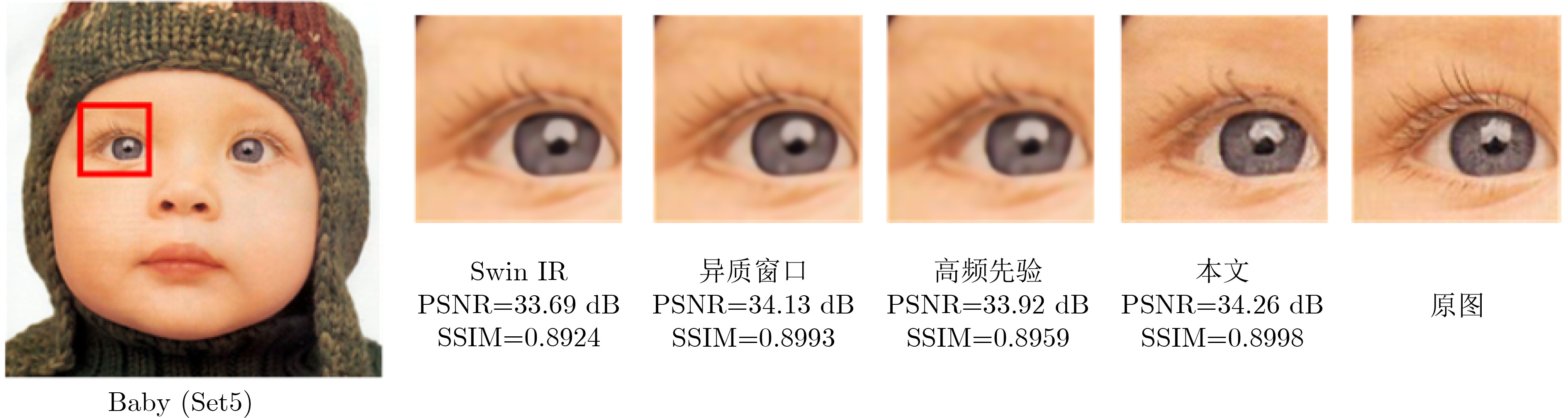
  • In the era of big data, image quality varies greatly, making the reconstruction of high-resolution images from low-quality inputs a critical task in computer vision. Existing super-resolution methods based on window self-attention, such as SwinIR, encounter limitations in receptive field expansion and insufficient ability to capture high-frequency details. These shortcomings reduce their effectiveness in reconstructing fine image structures, thereby necessitating further improvements. To overcome these challenges, this study proposes the Heterogeneous Windows Transformer Network for Image Super-Resolution (HWT-SRNet), a novel architecture built upon SwinIR. By integrating innovative module designs, HWT-SRNet enhances the extraction of high-frequency details while simultaneously expanding the receptive field, offering a more advanced solution for super-resolution tasks.  Methods   Building upon the Swin IR framework, this study incorporates two key modules to optimize super-resolution reconstruction performance:(1) Heterogeneous Windows Transformer Block (HWTB): Traditional window-based self-attention mechanisms suffer from a constrained receptive field, limiting their ability to capture long-range dependencies. To overcome this limitation, HWTB alternates between square windows and pale windows, preserving local feature extraction while significantly expanding the receptive field. This alternating mechanism enables the network to better model both fine-grained details and global structural information, improving the overall image reconstruction quality. The choice of window size and alternation frequency is optimized to trade off between computational efficiency and feature extraction.(2) High-Frequency Prior Extraction Network (HFPEN): Transformer-based super-resolution models often struggle with capturing high-frequency details due to their inherent bias towards low-frequency components. To mitigate this issue, the HFPEN module is introduced to explicitly extract high-frequency prior information from images using a Gaussian Difference of Gaussian (DoG) filter. The DoG filter emphasizes high-frequency details, including edges and textures, by computing the difference between a lightly blurred image (containing mid-frequency information) and a more heavily blurred one (capturing low-frequency information).This high-frequency information is then fused with the heterogeneous window attention mechanism, allowing HWT-SRNet to enhance fine details while maintaining structural coherence. The DoG filter is applied in the spatial domain, enabling the model to effectively capture and reconstruct sharp edges and textures without the need for frequency-domain transformations. This approach ensures that the network can focus on high-frequency features while preserving the overall image structure.  Results and Discussions   To thoroughly assess the effectiveness of HWT-SRNet, we performed experiments on several widely used benchmark datasets, namely Set5, Set14, BSD100, Urban100, and Manga109. Our method was compared with representative state-of-the-art approaches, including ACT, ART, and CAT.,The results demonstrate its superior performance across key evaluation metrics (see Table 1 for detailed comparisons). Specifically, HWT-SRNet achieves improvements in PSNR ranging from 0.10 dB to 0.37 dB compared to baseline models, demonstrating its effectiveness in enhancing image quality. Additionally, structural similarity (SSIM) scores also exhibit consistent improvement, indicating better perceptual quality and more visually pleasing reconstructions. Qualitative results further confirm that HWT-SRNet is capable of restoring sharper edges, preserving textures, and reducing blurring artifacts compared to existing methods. To further validate the contribution of each component in HWT-SRNet, we conducted ablation studies to analyze the impact of the Heterogeneous Windows Transformer Block (HWTB) and the High-Frequency Prior Extraction Network (HFPEN) (see Table 2 for ablation results).These advantages stem from the synergistic effect of heterogeneous window attention mechanisms and high-frequency prior extraction, which enable the network to effectively balance local feature refinement and global contextual understanding. By leveraging the alternating self-attention mechanisms and high-frequency prior extraction, HWT-SRNet provides a highly efficient solution for expanding the receptive field and improving high-frequency detail reconstruction.  Conclusion   Considering the limitations of existing super-resolution algorithms, this paper proposes a novel Heterogeneous Windows Transformer Network (HWT-SRNet), designed to improve image reconstruction quality by addressing challenges in receptive field expansion and high-frequency detail capture. The integration of heterogeneous window attention mechanisms and high-frequency prior feature extraction allows the model to achieve a more effective fusion of local and global features, leading to superior performance in both PSNR and SSIM. Experimental results confirm that HWT-SRNet surpasses existing state-of-the-art methods, providing a more efficient and accurate solution for super-resolution tasks. However, this study does not specifically explore the model's adaptability to noise interference in real-world scenarios. Future research can focus on further optimizing HWT-SRNet’s robustness to noisy and degraded inputs, improving its applicability to practical image restoration tasks in diverse environments. Additionally, the model's performance on specialized datasets, such as medical or satellite images, remains to be explored, which could further validate its generalization capabilities.
  • loading
  • [1]
    DONG Chao, LOY C C, HE Kaiming, et al. Learning a deep convolutional network for image super-resolution[C]. The 13th European Conference on Computer Vision, Zurich, Switzerland, 2014: 184–199. doi: 10.1007/978-3-319-10593-2_13.
    [2]
    DONG Chao, LOY C C, and TANG Xiaoou. Accelerating the super-resolution convolutional neural network[C]. 14th European Conference on Computer Vision, Amsterdam, The Netherlands, 2016: 391–407. doi: 10.1007/978-3-319-46475-6_25.
    [3]
    ZHANG Yulun, LI Kunpeng, LI Kai, et al. Image super-resolution using very deep residual channel attention networks[C]. The 15th European Conference on Computer Vision, Munich, Germany, 2018: 294–310. doi: 10.1007/978-3-030-01234-2_18.
    [4]
    DOSOVITSKIY A, BEYER L, KOLESNIKOV A, et al. An image is worth 16x16 words: Transformers for image recognition at scale[C]. 9th International Conference on Learning Representations, Vienna, Austria, 2021: 1–21. (查阅网上资料, 未找到本条文献出版地信息, 请确认).
    [5]
    LIU Ze, LIN Yutong, CAO Yue, et al. Swin transformer: Hierarchical vision transformer using shifted windows[C]. Proceedings of the 2021 IEEE/CVF International Conference on Computer Vision (ICCV), Montreal, Canada, 2021: 9992–10002. doi: 10.1109/ICCV48922.2021.00986.
    [6]
    LIANG Jingyun, CAO Jiezhang, SUN Guolei, et al. SwinIR: Image restoration using Swin transformer[C]. Proceedings of the 2021 IEEE/CVF International Conference on Computer Vision Workshops (ICCVW), Montreal, Canada, 2021: 1833–1844. doi: 10.1109/ICCVW54120.2021.00210.
    [7]
    CHEN Zheng, ZHANG Yulun, GU Jinjin, et al. Cross aggregation transformer for image restoration[C]. Proceedings of the 36th International Conference on Neural Information Processing Systems, New Orleans, USA, 2022: 1847.
    [8]
    SHI Jinpeng, LI Hui, LIU Tianle, et al. Image super-resolution using efficient striped window transformer[EB/OL]. https://arxiv.org/abs/2301.09869, 2023.
    [9]
    WU Sitong, WU Tianyi, TAN Haoru, et al. Pale transformer: A general vision transformer backbone with pale-shaped attention[C]. Proceedings of the 36th AAAI Conference on Artificial Intelligence, Palo Alto, USA, 2022: 2731–2739. doi: 10.1609/aaai.v36i3.20176. (查阅网上资料,未找到本条文献出版地信息,请确认).
    [10]
    WU Gang, JIANG Junjun, JIANG Kui, et al. Content-aware transformer for all-in-one image restoration[EB/OL]. https://arxiv.org/abs/2504.04869v1, 2025.
    [11]
    ZHANG Jiale, ZHANG Yulun, GU Jinjin, et al. Accurate image restoration with attention retractable transformer[C]. The Eleventh International Conference on Learning Representations, Kigali, Rwanda, 2023: 1–13.
    [12]
    CHEN Zheng, ZHANG Yulun, GU Jinjin, et al. Recursive generalization transformer for image super-resolution[C]. The Twelfth International Conference on Learning Representations, Vienna, Austria, 2024: 1–12.
    [13]
    CHU Shuchuan, DOU Zhichao, PAN J S, et al. HMANet: Hybrid multi-axis aggregation network for image super-resolution[C]. Proceedings of the 2024 IEEE/CVF Conference on Computer Vision and Pattern Recognition Workshops (CVPRW), Seattle, USA, 2024: 6257–6266. doi: 10.1109/CVPRW63382.2024.00629.
    [14]
    YOO J, KIM T, LEE S, et al. Enriched CNN-transformer feature aggregation networks for super-resolution[C]. Proceedings of the 2023 IEEE/CVF Winter Conference on Applications of Computer Vision, Waikoloa, USA, 2023: 4945–4954. doi: 10.1109/WACV56688.2023.00493.
    [15]
    SI Chenyang, YU Weihao, ZHOU Pan, et al. Inception transformer[C]. Proceedings of the 36th International Conference on Neural Information Processing Systems, New Orleans, USA, 2022: 1707.
    [16]
    KORKMAZ C, TEKALP A M, and DOGAN Z. Training generative image super-resolution models by wavelet-domain losses enables better control of artifacts[C]. 2024 IEEE/CVF Conference on Computer Vision and Pattern Recognition (CVPR), Seattle, USA, 2024: 5926–5936. doi: 10.1109/CVPR52733.2024.00566.
    [17]
    韩玉兰, 崔玉杰, 罗轶宏, 等. 基于密集残差和质量评估引导的频率分离生成对抗超分辨率重构网络[J]. 电子与信息学报, 2024, 46(12): 4563–4574. doi: 10.11999/JEIT240388.

    HAN Yulan, CUI Yujie, LUO Yihong, et al. Frequency separation generative adversarial super-resolution reconstruction network based on dense residual and quality assessment[J]. Journal of Electronics & Information Technology, 2024, 46(12): 4563–4574. doi: 10.11999/JEIT240388.
    [18]
    LI Ao, ZHANG Le, LIU Yun, et al. Feature modulation transformer: Cross-refinement of global representation via high-frequency prior for image super-resolution[C]. Proceedings of the 2023 IEEE/CVF International Conference on Computer Vision (ICCV), Paris, France, 2023: 12480–12490. doi: 10.1109/iccv51070.2023.01150.
    [19]
    YAO Hongdou, HAN Pengfei, WANG Xiaofen, et al. Super-resolution via hierarchical attention and detail enhancement transformer network[J]. Optics & Laser Technology, 2025, 188: 112836. doi: 10.1016/j.optlastec.2025.112836.
    [20]
    程德强, 袁航, 钱建生, 等. 基于深层特征差异性网络的图像超分辨率算法[J]. 电子与信息学报, 2024, 46(3): 1033–1042. doi: 10.11999/JEIT230179.

    CHENG Deqiang, YUAN Hang, QIAN Jiansheng, et al. Image super-resolution algorithms based on deep feature differentiation network[J]. Journal of Electronics & Information Technology, 2024, 46(3): 1033–1042. doi: 10.11999/JEIT230179.
    [21]
    寇旗旗, 刘规, 江鹤, 等. 基于多域信息增强的轻量级图像超分辨率网络[J]. 通信学报, 2025, 46(4): 144–159. doi: 10.11959/j.issn.1000-436x.2025059.

    KOU Qiqi, LIU Gui, JIANG He, et al. Lightweight image super-resolution network based on muti-domain information enhancement[J]. Journal on Communications, 2025, 46(4): 144–159. doi: 10.11959/j.issn.1000-436x.2025059.
    [22]
    WANG Xintao, XIE Liangbin, DONG Chao, et al. Real-ESRGAN: Training real-world blind super-resolution with pure synthetic data[C]. Proceedings of the 2021 IEEE/CVF International Conference on Computer Vision Workshops (ICCVW), Montreal, Canada, 2021: 1905–1914. doi: 10.1109/ICCVW54120.2021.00217.
    [23]
    WANG Yufei, YANG Wenhan, CHEN Xinyuan, et al. SinSR: Diffusion-based image super-resolution in a single step[C]. Proceedings of the 2024 IEEE/CVF Conference on Computer Vision and Pattern Recognition, Seattle, USA, 2024: 25796–25805. doi: 10.1109/CVPR52733.2024.02437.
  • 加载中

Catalog

    通讯作者: 陈斌, bchen63@163.com
    • 1. 

      沈阳化工大学材料科学与工程学院 沈阳 110142

    1. 本站搜索
    2. 百度学术搜索
    3. 万方数据库搜索
    4. CNKI搜索

    Figures(7)  / Tables(5)

    Article Metrics

    Article views (52) PDF downloads(8) Cited by()
    Proportional views
    Related

    /

    DownLoad:  Full-Size Img  PowerPoint
    Return
    Return