Advanced Search
Turn off MathJax
Article Contents
HUANG Ruiyang, WU Pengde. Ultra-Low-Power IM3 Backscatter Passive Sensing System for IoT Applications[J]. Journal of Electronics & Information Technology. doi: 10.11999/JEIT250787
Citation: HUANG Ruiyang, WU Pengde. Ultra-Low-Power IM3 Backscatter Passive Sensing System for IoT Applications[J]. Journal of Electronics & Information Technology. doi: 10.11999/JEIT250787

Ultra-Low-Power IM3 Backscatter Passive Sensing System for IoT Applications

doi: 10.11999/JEIT250787 cstr: 32379.14.JEIT250787
  • Accepted Date: 2025-12-01
  • Rev Recd Date: 2025-12-01
  • Available Online: 2025-12-09
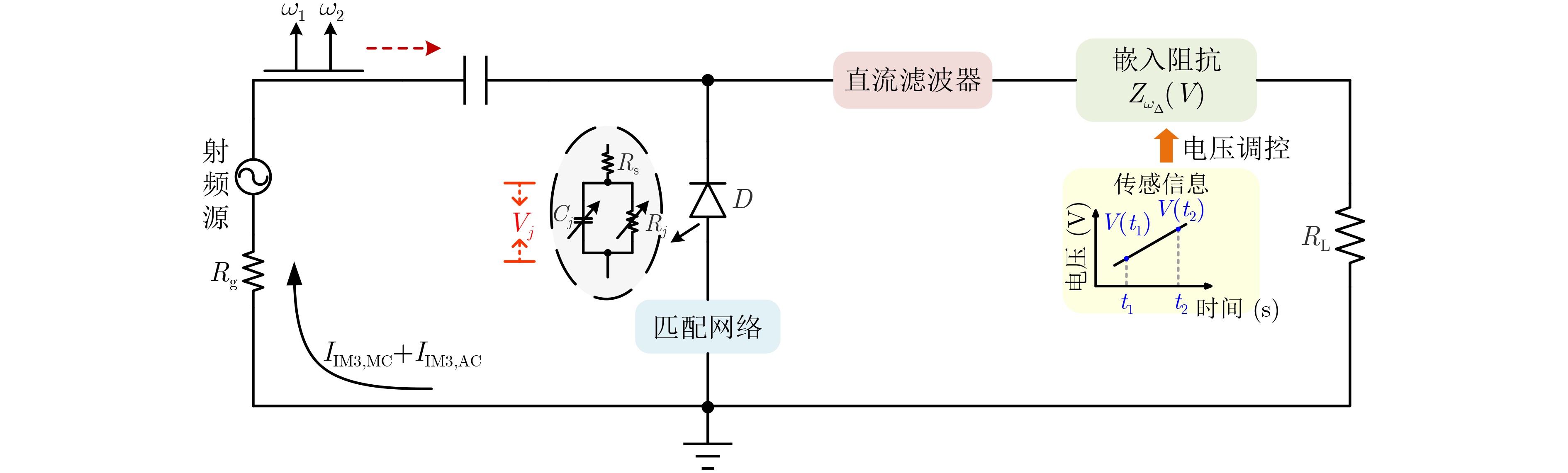
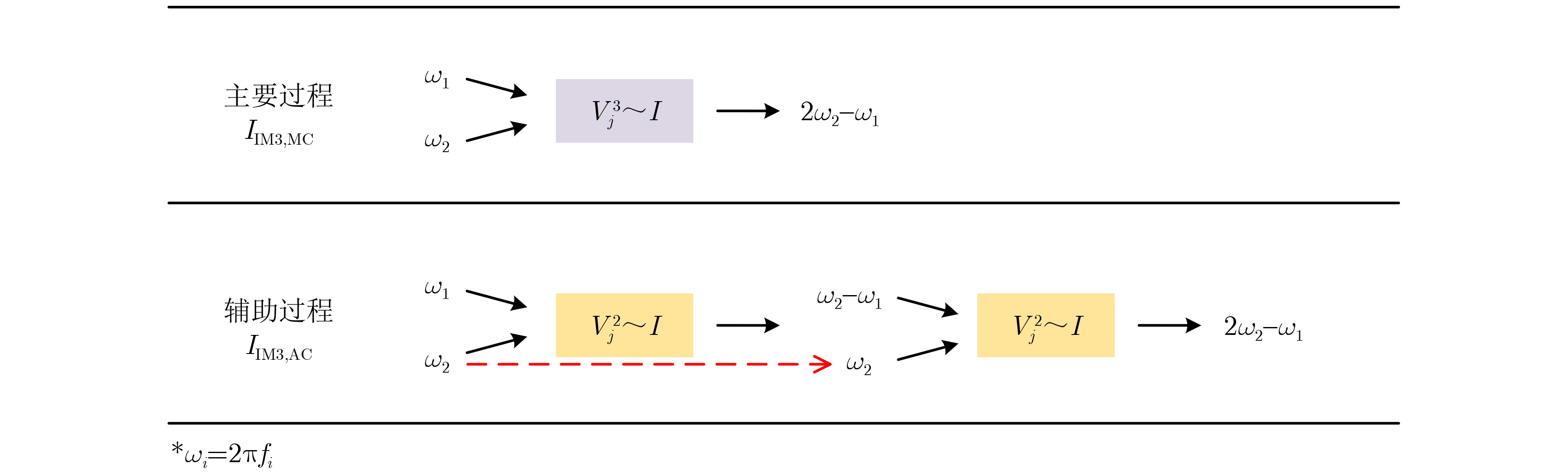
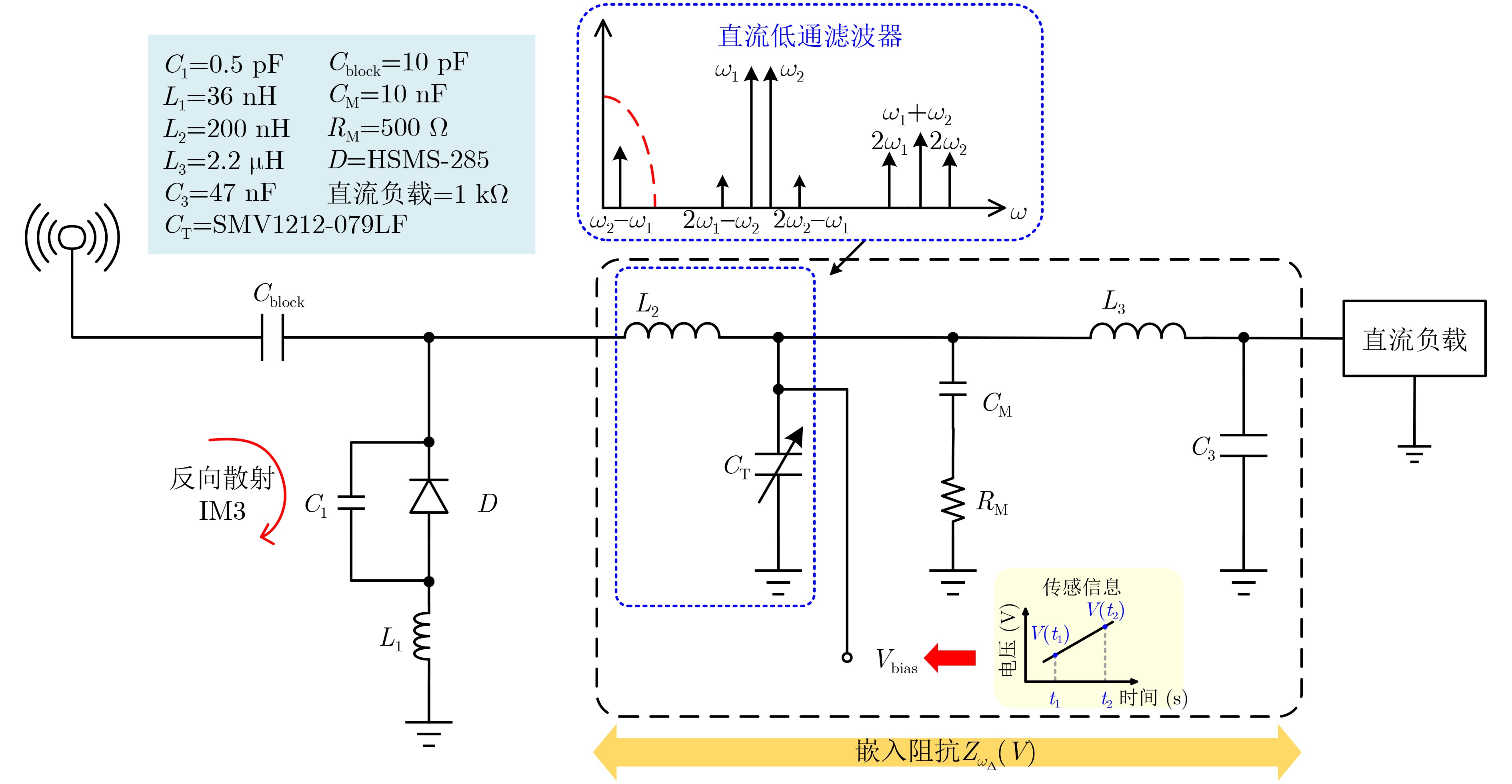
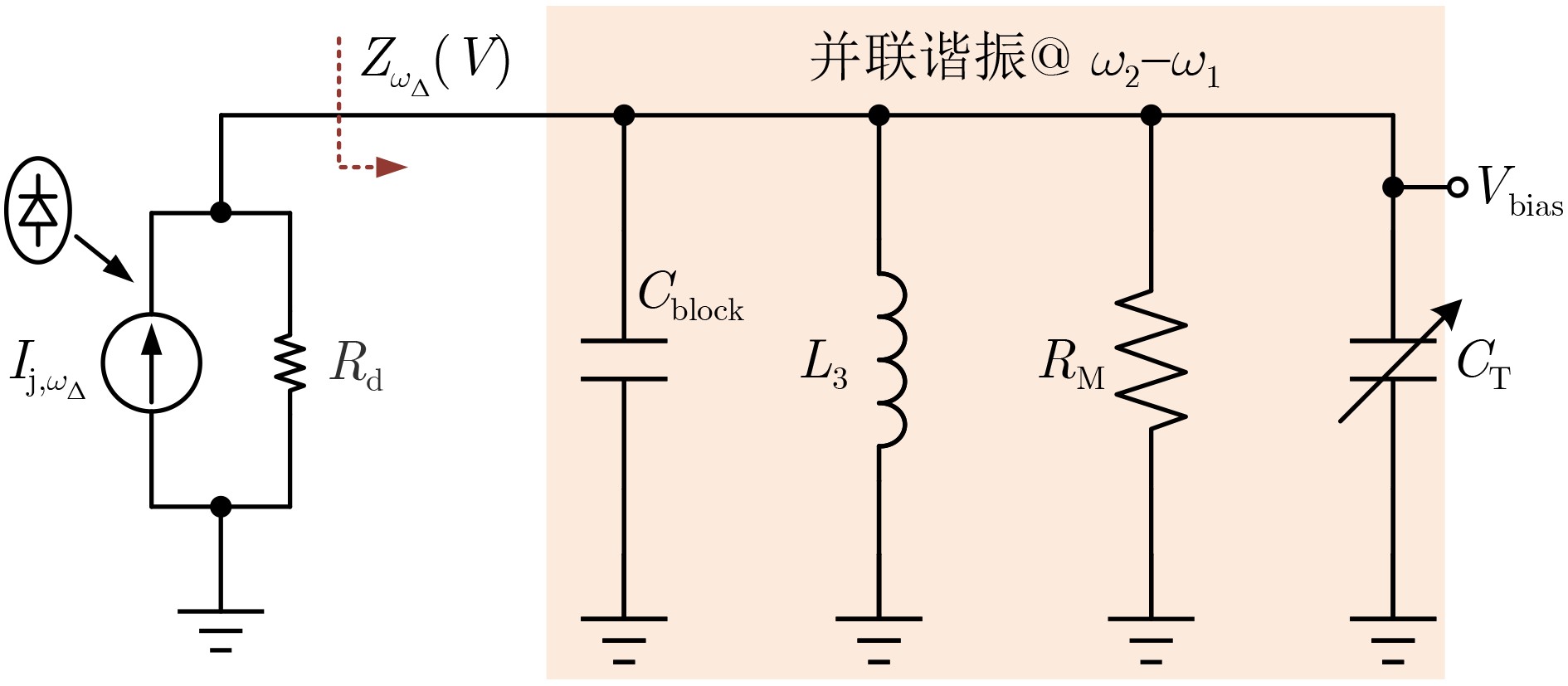
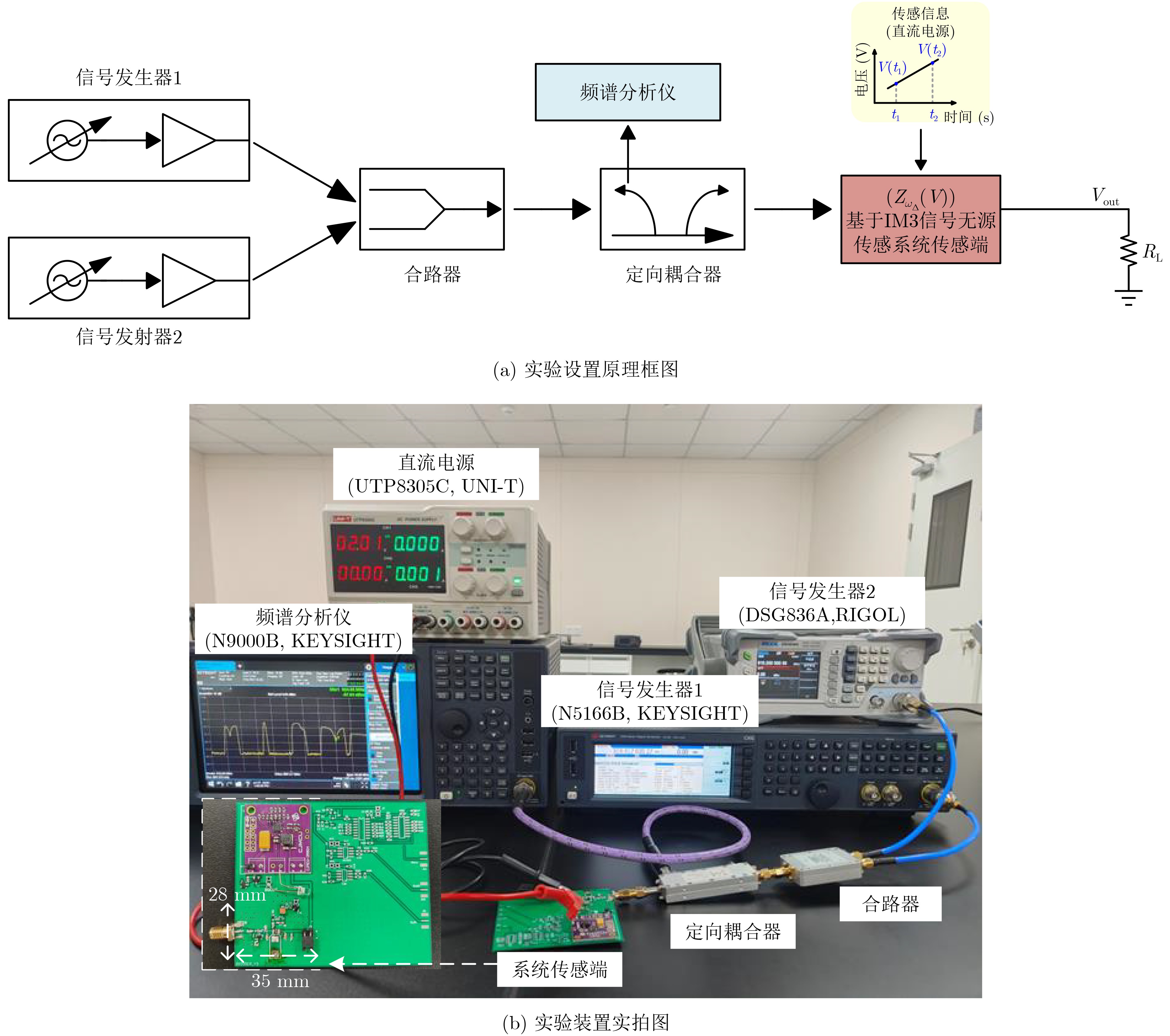
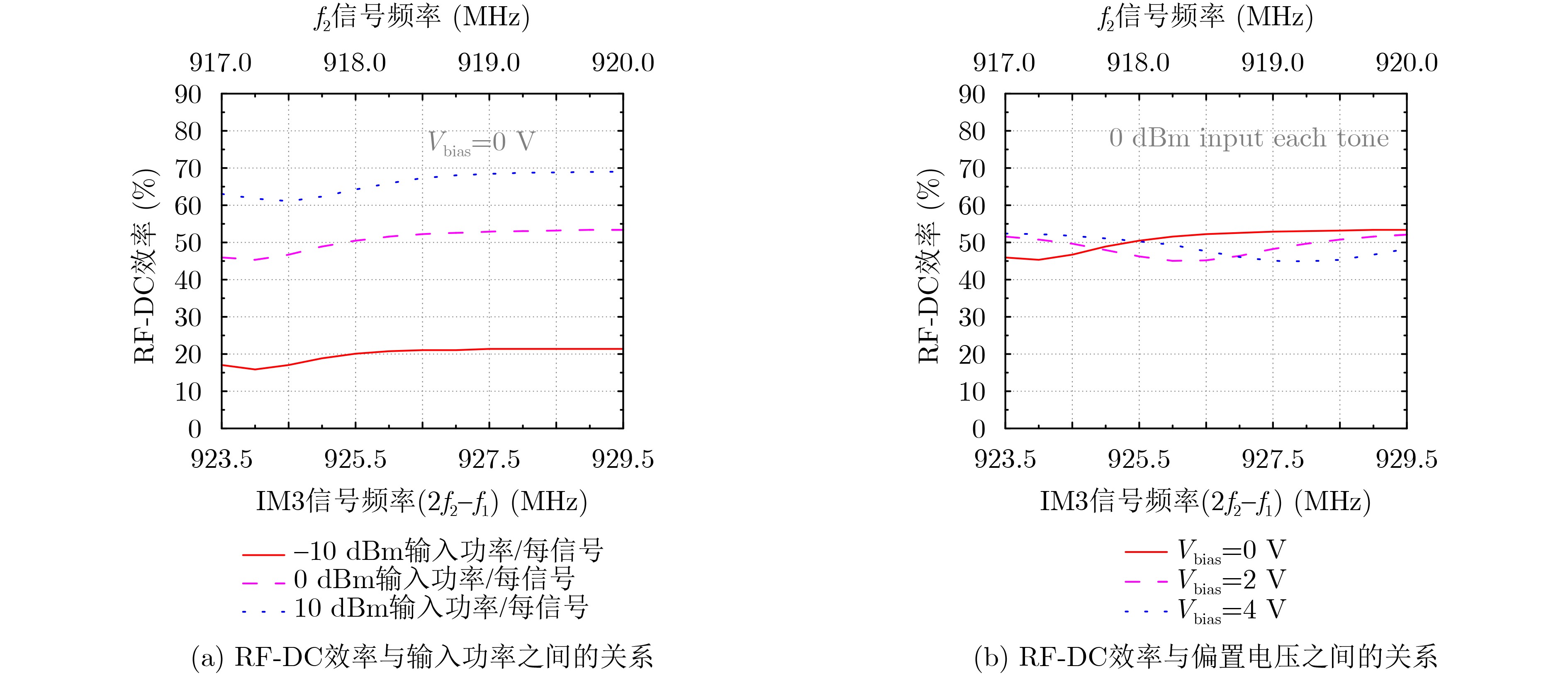
  •   Objective  With the advancement of wireless communication and electronic manufacturing, the Internet of Things (IoT) has progressed remarkably, healthcare, agriculture, logistics, and other fields. The exponential growth of IoT devices brings significant challenges: billions of devices demand enormous cumulative energy, and traditional battery-powered devices require frequent charging, increasing operational costs and exacerbating electronic waste. Thus, innovative energy-saving solutions are crucial for IoT’s sustainable development. Core strategies to address energy and lifecycle constraints involve enhancing energy supply and reducing device power consumption. Energy harvesting (EH) technology enables devices to collect and store solar, thermal, kinetic, and radio frequency (RF) energy for Ambient IoT (AmIoT) applications. However, existing EH technologies have limitations: conventional IoT devices (especially active RF components) consume high power, and insufficient EH efficiency may hinder real-time data transmission. To tackle these issues, this paper proposes a novel IM3 backscatter passive sensing system for direct analog sensing transmission without compromising RF energy harvesting efficiency.  Methods  The third-order intermodulation (IM3) signal is a nonlinear distortion product generated when two fundamental frequency tones are processed by nonlinear devices (e.g., transistors, diodes) in communication systems, with frequencies of 2f1-f2 and 2f2-f1. The core innovation of this work is establishing a controllable functional relationship between sensor information and IM3 signal frequencies, enabling information encoding via IM3 frequencies. A key regulatory component is an embedded impedance module—designed as a parallel resonant tank with resistors, inductors, and capacitors—integrated into the rectifier circuit. Tuning the tank’s resonant frequency selectively adjusts the conversion efficiency from fundamental tones to IM3 signals: aligning with a target IM3 frequency introduces a high-impedance load, reducing that IM3 component’s efficiency, while other IM3 signals remain unaffected. Sensor information dynamically adjusts the module’s resonant frequency by converting the information into a DC voltage applied to a voltage-controlled varactor. By linking sensor information to impedance states, impedance states to IM3 conversion efficiency, and IM3 frequency characteristics to sensor information, the system achieves novel passive sensing.  Results and Discussions  A rectifying transmitter operating in the UHF 900 MHz band was designed and fabricated (Fig. 8). One signal source was fixed at 910.5 MHz, and the other cyclically scanned 917–920 MHz, generating IM3 signals in the 923.5–929.5 MHz range. Both sources had an output power of 0 dBm, with DC voltage as the transmitted sensor information. Experimental results show a power trough in the backscattered IM3 spectrum; as the DC voltage varies 0–5 V, the trough position shifts accordingly (Fig. 9), with an attenuation of over 10 dB throughout, ensuring good resolution (related to the varactor diode’s capacitance ratio). Additionally, the embedded impedance module has little impact on RF-DC efficiency (Fig. 10): at fixed DC voltage, efficiency decreases by 5 basis points at the modulation frequency, independent of input power; under fixed input power, different sampled voltages cause ~5 basis points efficiency reduction at different frequencies. These results confirm the rectifier circuit’s stable efficiency, meeting low-power data transmission requirements.  Conclusions  This paper proposes a novel passive sensing system based on backscattered third-order intermodulation (IM3) signals, enabling simultaneous efficient radio frequency (RF) energy harvesting and sensing readout. It reveals the regulation mechanism between difference-frequency embedded impedance module and backscattered IM3 intensity. Controlled by sensing information, the module correlates sensing data with IM3 intensity for passive readout. Experimental results show the embedded impedance reduces target frequency IM3 intensity by over 10 dB and the RF-DC efficiency decreases by only 5 percentage points during readout. The microwave anechoic chamber tests confirm the error between IM3-parsed bias voltage and measured value is stably within 5%, indicating good stability. This system breaks the coordinated energy-information transmission bottleneck, providing battery-free communication for passive sensor nodes. It extends device lifespan and reduces maintenance costs in ultra-low-power scenarios like wireless sensor networks and implantable medical devices, with significant engineering application value.
  • loading
  • [1]
    JOUHARI M, SAEED N, ALOUINI M S, et al. A survey on scalable LoRaWAN for massive IoT: Recent advances, potentials, and challenges[J]. IEEE Communications Surveys & Tutorials, 2023, 25(3): 1841–1876. doi: 10.1109/COMST.2023.3274934.
    [2]
    SINHA S. State of IoT 2023: Number of connected IoT devices growing 16% to 16.7 billion globally[EB/OL]. https://iot-analytics.com/number-connected-iot-devices-2023/, 2023.
    [3]
    HOPE D. Why your Internet habits are not as clean as you think[EB/OL]. https://blueandgreentomorrow.com/features/why-internet-habits-are-not-as-clean-as-you-think/, 2021.
    [4]
    GLICKMAN C. Green IoT: The shift to practical sustainability[EB/OL]. https://cio.economictimes.indiatimes.com/news/internet-of-things/green-iot-the-shift-to-practical-sustainability/101654205, 2023.
    [5]
    MA Dong, LAN Guohao, HASSAN M, et al. Sensing, computing, and communications for energy harvesting IoTs: A survey[J]. IEEE Communications Surveys & Tutorials, 2020, 22(2): 1222–1250. doi: 10.1109/COMST.2019.2962526.
    [6]
    PECUNIA V, OCCHIPINTI L G, and HOYE R L Z. Emerging indoor photovoltaic technologies for sustainable Internet of Things[J]. Advanced Energy Materials, 2021, 11(29): 2100698. doi: 10.1002/aenm.202100698.
    [7]
    GU Bowen, LI Dong, DING Haiyang, et al. Breaking the interference and fading gridlock in backscatter communications: State-of-the-art, design challenges, and future directions[J]. IEEE Communications Surveys & Tutorials, 2025, 27(2): 870–911. doi: 10.1109/COMST.2024.3436082.
    [8]
    XU Chenren, YANG Lei, and ZHANG Pengyu. Practical backscatter communication systems for battery-free Internet of Things: A tutorial and survey of recent research[J]. IEEE Signal Processing Magazine, 2018, 35(5): 16–27. doi: 10.1109/MSP.2018.2848361.
    [9]
    BLETSAS A, ALEVIZOS P N, and VOUGIOUKAS G. The art of signal processing in backscatter radio for μW (or less) Internet of Things: Intelligent signal processing and backscatter radio enabling batteryless connectivity[J]. IEEE Signal Processing Magazine, 2018, 35(5): 28–40. doi: 10.1109/MSP.2018.2837678.
    [10]
    SUN Xueman, LIU Changjun, CHEN Yidan, et al. Low-power wireless uplink utilizing harmonic with an integrated rectifier–transmitter[J]. IEEE Microwave and Wireless Components Letters, 2021, 31(2): 200–203. doi: 10.1109/LMWC.2020.3043793.
    [11]
    HÜSSEN L, WEI M D, and NEGRA R. Power efficient simultaneous wireless information transception and power reception through an isolation barrier[C]. 2024 IEEE Wireless Power Technology Conference and Expo (WPTCE), Kyoto, Japan, 2024: 872–875. doi: 10.1109/WPTCE59894.2024.10557398.
    [12]
    CHE Dan, LIU Changjun, HE Haoming, et al. Second- and third-harmonic backscatter through a bandstop filter using defected ground structure[J]. IEEE Transactions on Circuits and Systems II: Express Briefs, 2023, 70(11): 4171–4175. doi: 10.1109/TCSII.2023.3279100.
    [13]
    LEE N, LEE D, and OH J. Wideband harmonic backscattering rectifier for energy-efficient localization in wireless power transfer systems[J]. IEEE Microwave and Wireless Technology Letters, 2023, 33(11): 1568–1571. doi: 10.1109/LMWT.2023.3317429.
    [14]
    TANG Xiaoqing, LIU Xin, XIE Guihui, et al. Prototype implementation and experimental evaluation for LoRa-backscatter communication systems with RF energy harvesting and low power management[J]. IEEE Transactions on Communications, 2025, 73(7): 4811–4825. doi: 10.1109/TCOMM.2024.3522052.
    [15]
    TANG Xiaoqing, ZHANG Yunxin, SHAO Xiaodie, et al. Battery-free ultrahigh-frequency wireless temperature sensing tag for IoT applications[J]. IEEE Internet of Things Journal, 2025, 12(18): 37119–37131. doi: 10.1109/JIOT.2025.3586686.
    [16]
    KUO N C, ZHAO Bo, and NIKNEJAD A M. Novel inductive wireless power transfer uplink utilizing rectifier third-order nonlinearity[J]. IEEE Transactions on Microwave Theory and Techniques, 2018, 66(1): 319–331. doi: 10.1109/TMTT.2017.2700274.
    [17]
    QARAGOEZ Y, POLLIN S, and SCHREURS D. Enhanced two-way communication for battery-free wireless sensors: SWIPT with IM3 backscattering[C]. 2022 IEEE/MTT-S International Microwave Symposium - IMS 2022, Denver, USA, 2022: 48–51. doi: 10.1109/IMS37962.2022.9865269.
    [18]
    YANG Changgui, ZHANG Yunshan, CHANG Ziyi, et al. Neural dielet: A 0.4 mm3 battery-less crystal-less neural-recording system on die achieving 1.6 cm backscatter range with 2 mm ×2 mm on-chip antenna[J]. IEEE Transactions on Biomedical Circuits and Systems, 2023, 17(1): 54–66. doi: 10.1109/TBCAS.2022.3232783.
    [19]
    POZAR D M. Microwave Engineering[M]. 4th ed. Hoboken John Wiley & Sons, 2012: 537–538. (查阅网上资料, 未找到本条文献出版地信息, 请确认).
    [20]
    RFM95PW. HOPERF Reliable original manufacturer of IoT key components[EB/OL]. https://www.hoperf.com/modules/lora/RFM95PW.html. (查阅网上资料,未找到本条文献题目和年份信息,请确认).
    [21]
    RFM95W. HOPERF Reliable original manufacturer of IoT key components[EB/OL]. https://www.hoperf.com/modules/lora/RFM95PW.html. (查阅网上资料,未找到本条文献题目和年份信息,请确认).
    [22]
    Texas Instruments. BQ25504 ultra low-power boost converter with battery management for energy harvester applications[EB/OL]. https://www.ti.com/lit/ds/symlink/bq25504.pdf, 2023.
  • 加载中

Catalog

    通讯作者: 陈斌, bchen63@163.com
    • 1. 

      沈阳化工大学材料科学与工程学院 沈阳 110142

    1. 本站搜索
    2. 百度学术搜索
    3. 万方数据库搜索
    4. CNKI搜索

    Figures(12)  / Tables(1)

    Article Metrics

    Article views (40) PDF downloads(2) Cited by()
    Proportional views
    Related

    /

    DownLoad:  Full-Size Img  PowerPoint
    Return
    Return