Advanced Search
Turn off MathJax
Article Contents
ZHAO Bingyan, LIANG Yihuai, ZHANG Zhongxia, ZHANG Wenzheng. Lightweight Dual Convolutional Finger Vein Recognition Network Based on Attention Mechanism[J]. Journal of Electronics & Information Technology. doi: 10.11999/JEIT250380
Citation: ZHAO Bingyan, LIANG Yihuai, ZHANG Zhongxia, ZHANG Wenzheng. Lightweight Dual Convolutional Finger Vein Recognition Network Based on Attention Mechanism[J]. Journal of Electronics & Information Technology. doi: 10.11999/JEIT250380

Lightweight Dual Convolutional Finger Vein Recognition Network Based on Attention Mechanism

doi: 10.11999/JEIT250380 cstr: 32379.14.JEIT250380
Funds:  The Fundamental Research Funds for the Central Universities(2682024CX031)
  • Accepted Date: 2026-01-06
  • Rev Recd Date: 2026-01-06
  • Available Online: 2026-01-15
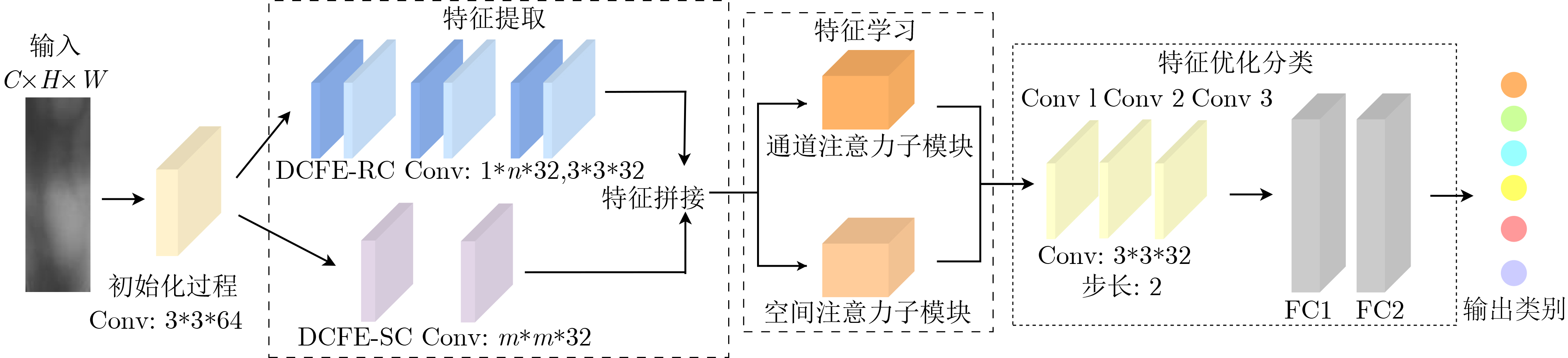
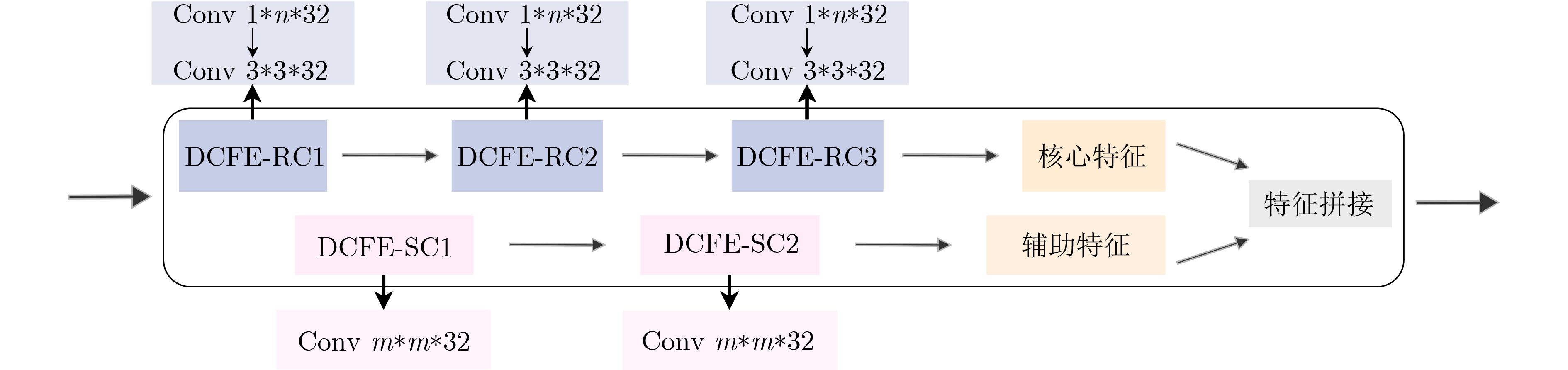
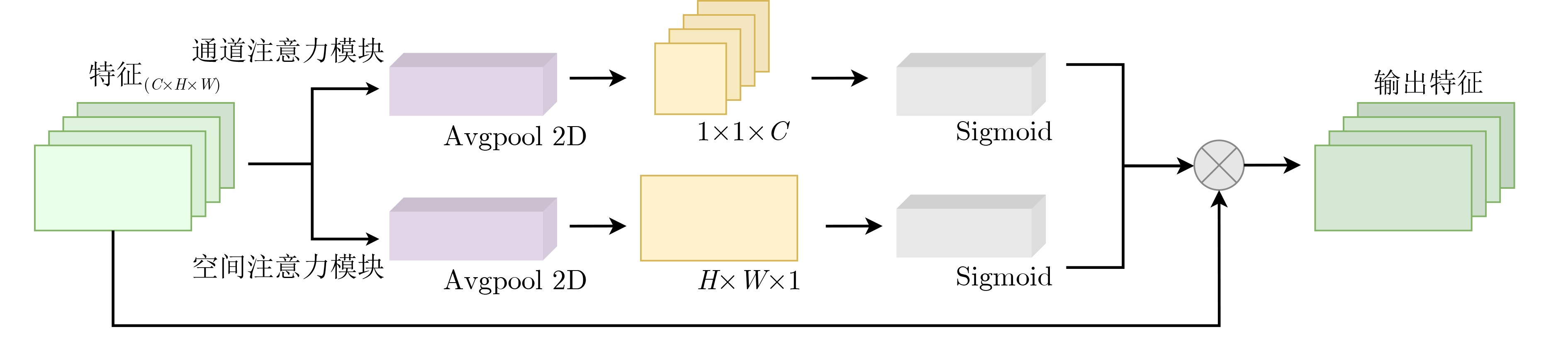
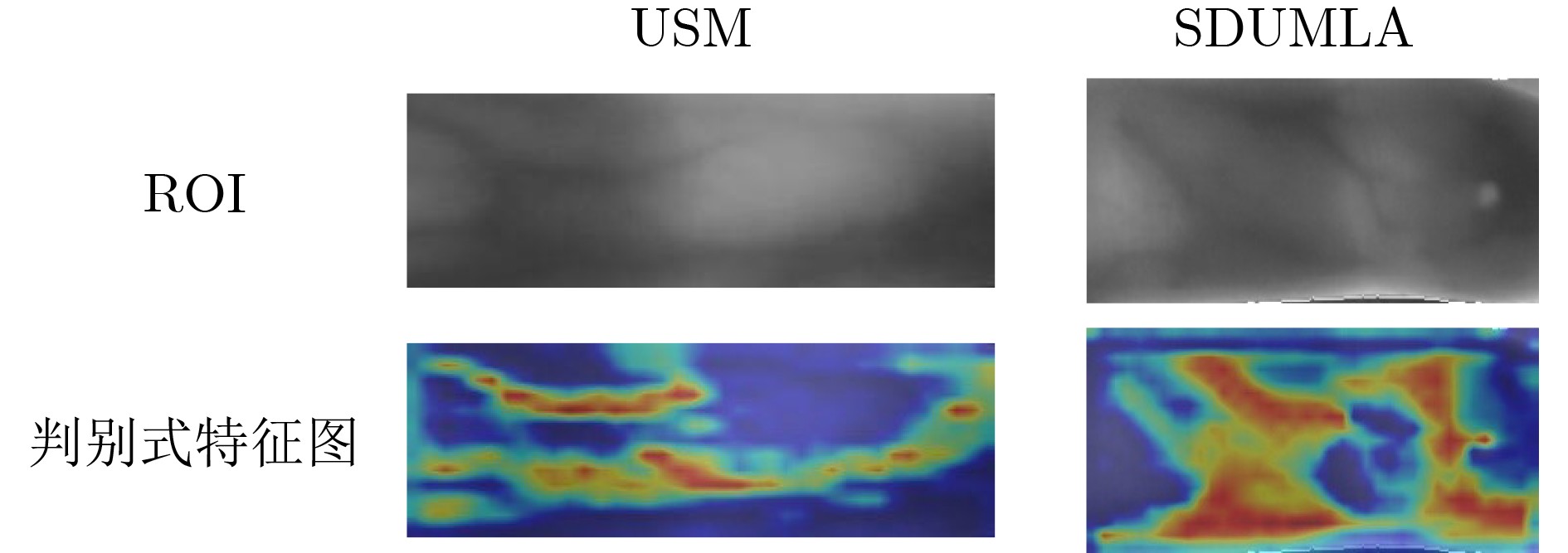
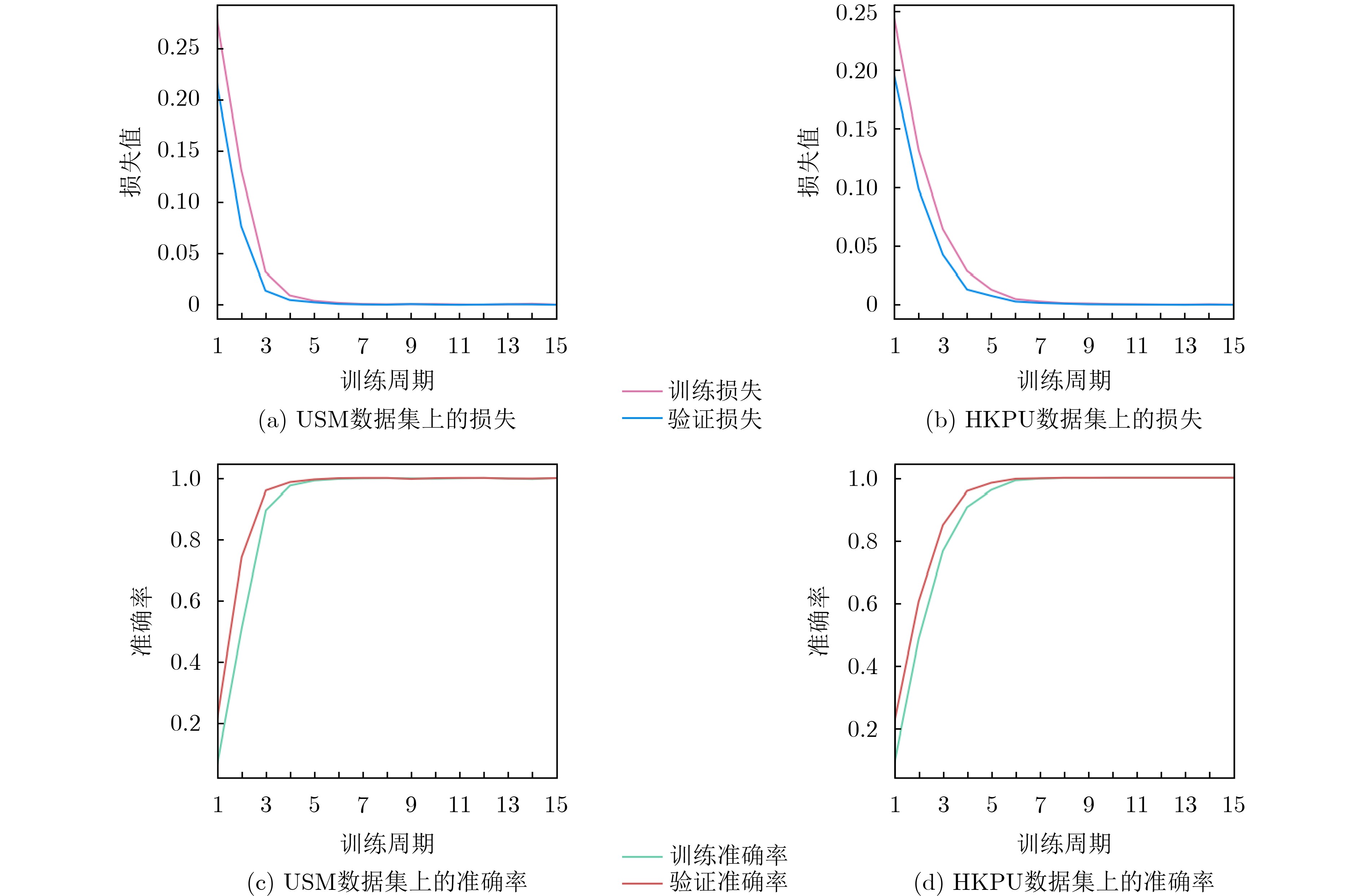
  •   Objective  Finger vein recognition, an emerging biometric authentication technology, has garnered considerable research attention due to its unique physiological characteristics and advantages in in vivo detection. However, the existing mainstream recognition frameworks based on deep learning still face significant challenges: on the one hand, high-precision recognition often relies on complex network structures, resulting in a sharp increase in model parameters, which makes deployment difficult in memory-constrained embedded devices and computing resource-scarce edge scenarios; On the other hand, although model compression technology can reduce the computational cost, it is often accompanied by the attenuation of feature expression ability, resulting in the inherent contradiction between recognition accuracy and efficiency. To address these challenges, a lightweight double convolutional model integrating an attention mechanism is proposed. By designing a parallel heterogeneous convolution module and an attention guidance mechanism, diversified features of images are deeply mined, and recognition accuracy is finally improved while the lightweight characteristics of the model are maintained.  Methods  The proposed network architecture adopts a three-level collaborative mechanism involving "feature extraction, dynamic calibration, and decision fusion". First, a dual convolution feature extraction module is constructed based on normalized ROI images. This module employs a strategy combining heterogeneous convolutional kernels, where rectangular convolutional branches with varying shapes and sizes are utilized to capture vein topological structure characteristics and track vein diameter directions; meanwhile, square convolution branches employ stacked square convolutions to extract local texture details and background intensity distribution characteristics. These two branches operate in parallel with a reduced channel count, forming complementary feature responses through kernel shape differences, which compresses parameter quantities while enhancing feature representation differentiation. Secondly, a parallel dual attention mechanism is designed to achieve two-dimensional calibration through joint optimization of channel attention and spatial attention. Channel dimensions adaptively assign weights to strengthen key discriminative features of vein textures; spatial dimensions construct pixel-level dependency models and dynamically focus on effective discriminative regions. This mechanism adopts a parallel feature concatenation fusion strategy, preserving input structural information while avoiding additional parameter burdens and improving model sensitivity to critical features. Finally, a three-level progressive feature optimization structure is constructed. Initially, multi-scale receptive field nesting is implemented through a convolutional compression module with a stride of 2, gradually purifying primary features during dimensionality reduction; subsequently, dual fully connected layers are employed for feature space transformation. The first layer utilizes ReLU activation to construct sparse feature representations, while the final layer employs Softmax for probability calibration. This structure effectively balances the risks of shallow underfitting and deep overfitting while maintaining forward inference efficiency.  Results and Discussions  The effectiveness and robustness of the proposed network are verified on three publicly available datasets: USM, HKPU and SDUMLA. The Acc metric is employed to evaluate detection accuracy. Experimental results on network recognition performance (Table 1) demonstrate that the proposed method achieves favorable outcomes in finger vein image recognition tasks. The feature visualization heatmaps (Fig. 4, Fig. 6) prove that the model can extract complete vein discrimination features. Visualization results (Fig. 7, Fig. 8) indicate that model loss and accuracy exhibit normal trends during training, with 100% classification performance achieved, thereby validating the reliability and robustness of the proposed approach. Quantitative comparisons (Tables 2 and 3) reveal that the proposed method effectively addresses the imbalance between model complexity and classification performance, demonstrating superior performance across three datasets. Furthermore, ablation studies (Table 4) confirm the efficacy of the proposed module, showing significant improvements in finger vein image recognition performance.  Conclusions  This paper proposes a lightweight dual-channel convolutional neural network architecture incorporating an attention mechanism, comprising three core innovative modules: a dual-convolution feature extraction module, a parallel dual-attention module, and a feature optimization classification module. During feature extraction, long-range venous features and background information are collaboratively encoded through a low-channel parallel architecture, significantly reducing parameter quantities while enhancing inter-individual discriminability. The attention module efficiently captures critical venous features, maintaining feature sensitivity while overcoming the parameter expansion bottleneck of traditional attention mechanisms. The feature optimization classification module employs a progressive feature recalibration mechanism, effectively mitigating the conflicts between underfitting and overfitting during stacked dimensionality reduction. Quantitative experiments demonstrate that the proposed method achieves recognition accuracies of 99.70%, 98.33% and 98.27% on the USM, HKPU and SDUMLA datasets respectively, representing an average improvement of 2.05% compared to existing state-of-the-art methods. When benchmarked against comparable lightweight finger vein recognition approaches, the proposed method reduces parameter scale by 11.35%-60.19%, successfully balancing model lightening and performance enhancement.
  • loading
  • [1]
    LI Yantao, FAN Chao, QIN Huafeng, et al. Deep reinforcement learning-based feature extraction and encoding for finger-vein verification[J]. IEEE Transactions on Emerging Topics in Computational Intelligence, 2025, 9(1): 522–536. doi: 10.1109/TETCI.2024.3398022.
    [2]
    TAN Xiao. Advanced feature extraction algorithms for deep learning in image recognition[C]. 2024 International Conference on Power, Electrical Engineering, Electronics and Control (PEEEC), Athens, Greece, 2024: 1055–1060. doi: 10.1109/PEEEC63877.2024.00195.
    [3]
    HUANG Houjun, LIU Shilei, ZHENG He, et al. DeepVein: Novel finger vein verification methods based on deep convolutional neural networks[C]. 2017 IEEE International Conference on Identity, Security and Behavior Analysis (ISBA), New Delhi, India, 2017: 1–8. doi: 10.1109/ISBA.2017.7947683.
    [4]
    何鑫, 陈迅. 基于改进卷积神经网络的指静脉识别[J]. 计算机工程与设计, 2019, 40(2): 562–566. doi: 10.16208/j.issn1000-7024.2019.02.046.

    HE Xin and CHEN Xun. Finger vein recognition based on improved convolution neural network[J]. Computer Engineering and Design, 2019, 40(2): 562–566. doi: 10.16208/j.issn1000-7024.2019.02.046.
    [5]
    HU Hui, KANG Wenxiong, LU Yuting, et al. FV-Net: Learning a finger-vein feature representation based on a CNN[C]. 2018 24th International Conference on Pattern Recognition (ICPR), Beijing, China, 2018: 3489–3494. doi: 10.1109/ICPR.2018.8546007.
    [6]
    REN Hengyi, SUN Lijuan, REN Jinting, et al. FV-DDC: A novel finger-vein recognition model with deformation detection and correction[J]. Biomedical Signal Processing and Control, 2025, 100: 107098. doi: 10.1016/j.bspc.2024.107098.
    [7]
    BOUCHERIT I, ZMIRLI M O, HENTABLI H, et al. Finger vein identification using deeply-fused convolutional neural network[J]. Journal of King Saud University-Computer and Information Sciences, 2022, 34(3): 646–656. doi: 10.1016/j.jksuci.2020.04.002.
    [8]
    WANG Kaixuan, CHEN Guanghua, and CHU Hongjia. Finger vein recognition based on multi-receptive field bilinear convolutional neural network[J]. IEEE Signal Processing Letters, 2021, 28: 1590–1594. doi: 10.1109/LSP.2021.3094998.
    [9]
    CHAI Tingting, LI Jiahui, PRASAD S, et al. Shape-driven lightweight CNN for finger-vein biometrics[J]. Journal of Information Security and Applications, 2022, 67: 103211. doi: 10.1016/j.jisa.2022.103211.
    [10]
    MOHD ASAARI M S, SUANDI S A, and ROSDI B A. Fusion of band limited phase only correlation and width centroid contour distance for finger based biometrics[J]. Expert Systems with Applications, 2014, 41(7): 3367–3382. doi: 10.1016/j.eswa.2013.11.033.
    [11]
    KUMAR A and ZHOU Yingbo. Human identification using finger images[J]. IEEE Transactions on Image Processing, 2012, 21(4): 2228–2244. doi: 10.1109/TIP.2011.2171697.
    [12]
    FAIRUZ S, HABAEBI M H, and ELSHEIKH E M A. Finger vein identification based on transfer learning of AlexNet[C]. 2018 7th International Conference on Computer and Communication Engineering, Kuala Lumpur, Malaysia, 2018: 465–469. doi: 10.1109/ICCCE.2018.8539256.
    [13]
    NADIR C, ATTALLAH B, and BRIK Y. Finger vein based CNN algorithms for human recognition[C]. 2022 International Conference of Advanced Technology in Electronic and Electrical Engineering, M'sila, Algeria, 2022: 1–6. doi: 10.1109/ICATEEE57445.2022.10093105.
    [14]
    LIU Wenjie, LI Weijun, SUN Linjun, et al. Finger vein recognition based on deep learning[C]. 2017 12th IEEE Conference on Industrial Electronics and Applications (ICIEA), Siem Reap, Cambodia, 2017: 205–210. doi: 10.1109/ICIEA.2017.8282842.
    [15]
    黄艳国, 杨训根, 周满国. 基于感兴趣区域的改进型LBP手指静脉识别[J]. 传感器与微系统, 2023, 42(4): 143–147. doi: 10.13873/J.1000-9787(2023)04-0143-05.

    HUANG Yanguo, YANG Xungen, and ZHOU Manguo. Improved LBP finger vein recognition based on RoI[J]. Transducer and Microsystem Technologies, 2023, 42(4): 143–147. doi: 10.13873/J.1000-9787(2023)04-0143-05.
    [16]
    付华, 李涛, 司南楠. 基于MMNBP的手指静脉识别方法[J]. 传感器与微系统, 2019, 38(5): 45–48. doi: 10.13873/J.1000-9787(2019)05-0045-04.

    FU Hua, LI Tao, and SI Nannan. Finger vein recognition method based on MMNBP[J]. Transducer and Microsystem Technologies, 2019, 38(5): 45–48. doi: 10.13873/J.1000-9787(2019)05-0045-04.
    [17]
    LI Yupeng, LU Huimin, WANG Yifan, et al. ViT-Cap: A novel vision transformer-based capsule network model for finger vein recognition[J]. Applied Sciences, 2022, 12(20): 10364. doi: 10.3390/APP122010364.
    [18]
    LU Zhiying, WU Runhao, and ZHANG Jianfeng. Finger-vein feature extraction method based on vision transformer[J]. Journal of Electronic Imaging, 2022, 31(4): 043010. doi: 10.1117/1.JEI.31.4.043010.
    [19]
    HUANG Yiwei, MA Hui, and WANG Mingyang. Axially enhanced local attention network for finger vein recognition[J]. IEEE Transactions on Instrumentation and Measurement, 2023, 72: 5020210. doi: 10.1109/TIM.2023.3291785.
    [20]
    GUO Zishuo, MA Hui, and LIU Junbo. NLNet: A narrow-channel lightweight network for finger multimodal recognition[J]. Digital Signal Processing, 2024, 150: 104517. doi: 10.1016/j.dsp.2024.104517.
  • 加载中

Catalog

    通讯作者: 陈斌, bchen63@163.com
    • 1. 

      沈阳化工大学材料科学与工程学院 沈阳 110142

    1. 本站搜索
    2. 百度学术搜索
    3. 万方数据库搜索
    4. CNKI搜索

    Figures(8)  / Tables(4)

    Article Metrics

    Article views (71) PDF downloads(5) Cited by()
    Proportional views
    Related

    /

    DownLoad:  Full-Size Img  PowerPoint
    Return
    Return