Advanced Search
Volume 47 Issue 6
Jun.  2025
Turn off MathJax
Article Contents
SU Xin, QIN Zijian, LÜ Jia, QIN Mingyu. Hierarchical Network-Based Multi-Task Learning Method for Fishway Water Level Prediction[J]. Journal of Electronics & Information Technology, 2025, 47(6): 1950-1965. doi: 10.11999/JEIT241003
Citation: SU Xin, QIN Zijian, LÜ Jia, QIN Mingyu. Hierarchical Network-Based Multi-Task Learning Method for Fishway Water Level Prediction[J]. Journal of Electronics & Information Technology, 2025, 47(6): 1950-1965. doi: 10.11999/JEIT241003

Hierarchical Network-Based Multi-Task Learning Method for Fishway Water Level Prediction

doi: 10.11999/JEIT241003 cstr: 32379.14.JEIT241003
Funds:  The National Natural Science Foundation of China (62371181), Changzhou Science and Technology International Cooperation Program (CZ20230029)
  • Received Date: 2024-11-11
  • Rev Recd Date: 2025-04-02
  • Available Online: 2025-04-21
  • Publish Date: 2025-06-10
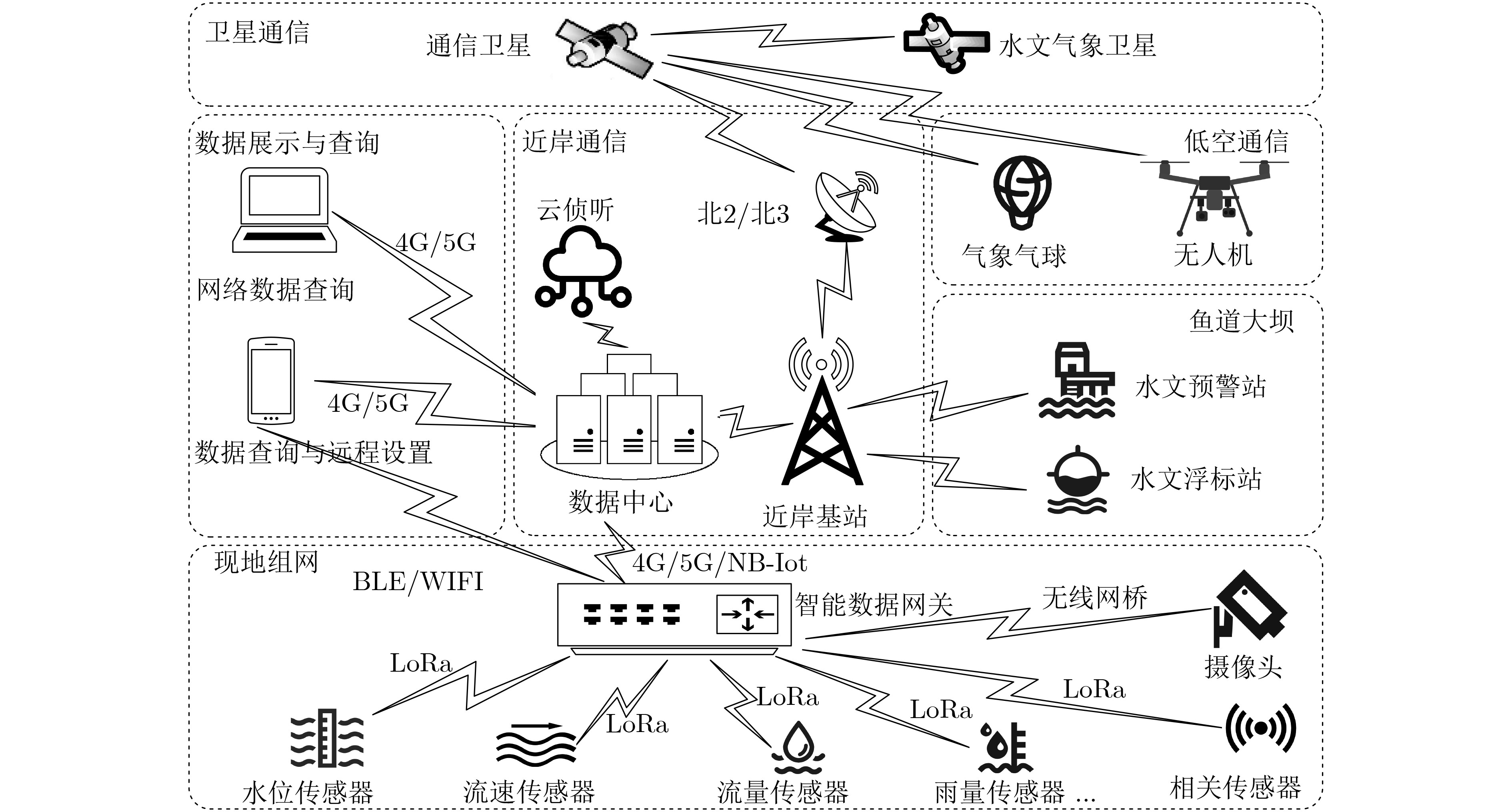
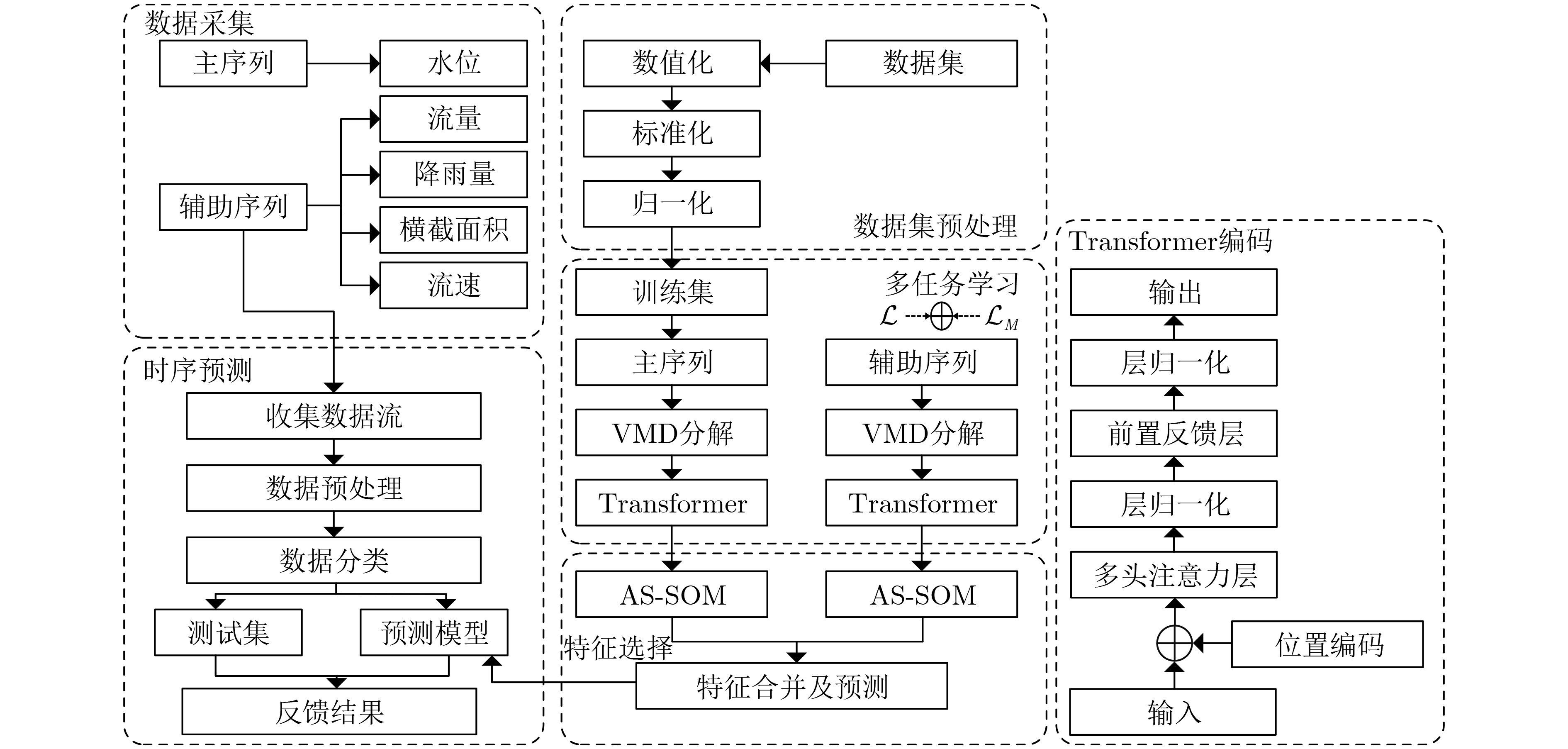
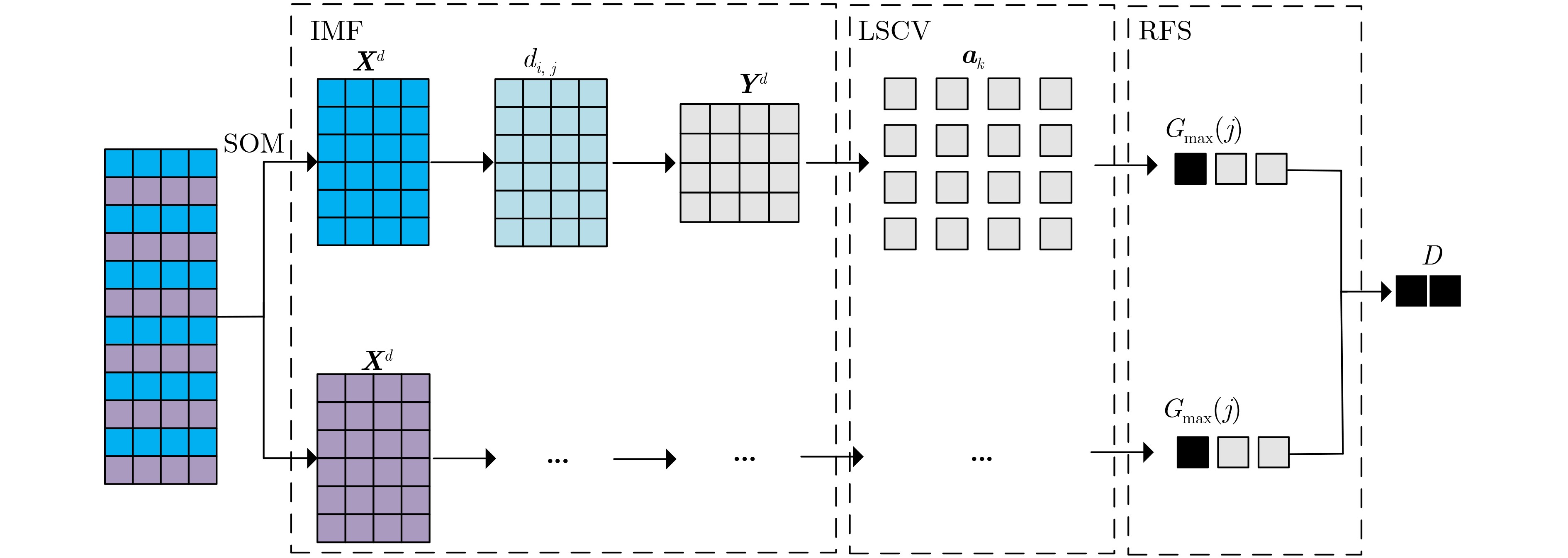
  •   Objective  The construction of dams and other large-scale water infrastructure projects has significant ecological consequences, particularly affecting fish migration patterns. These environmental changes pose substantial challenges to biodiversity conservation and resource management. One of the key challenges is the accurate and real-time prediction of water levels in fish passages, which is essential for mitigating the negative effects of dams on fish migration, maintaining ecological balance, and ensuring the sustainability of aquatic species. Traditional water level monitoring systems often face limitations, such as insufficient coverage, lack of real-time predictive capabilities, and an inability to capture complex temporal dependencies in water level fluctuations, leading to inaccurate or delayed predictions. Furthermore, the processing of long-term, high-dimensional water level data in dynamic environments remains a critical gap in existing systems. To address these issues, this study proposes a Hierarchical Network-based Fish Passage Monitoring System (HNFMS) and a novel Multi-Task (MT) learning model, Adaptive Sequence Self-Organizing Map Transformation based on Variational Mode Decomposition (AS-SOMVT). The HNFMS aims to enhance both the efficiency and coverage of water level monitoring by providing comprehensive and timely data. The AS-SOMVT model employs auxiliary sequences to improve prediction accuracy and manage dynamic, multi-dimensional water level data in real time. Through these innovations, this study aims to enhance fish passage monitoring, mitigate the ecological impact of dam construction on fish migration, and provide a robust tool for ecological conservation and resource management.  Methods  The HNFMS integrates a hierarchical network structure to improve both the efficiency and coverage of water level monitoring. To address the complex temporal dependencies inherent in water level fluctuations, this study introduces the AS-SOMVT MT learning model. This model leverages auxiliary sequences to enhance the ability to capture complex temporal relationships, ensuring accurate water level predictions. The approach enables real-time processing of multi-dimensional water level data, effectively managing the complexity of fluctuating water levels across varying conditions. Additionally, the study incorporates an Auxiliary Sequence Self-Organizing Map (AS-SOM) algorithm to optimize prediction efficiency for long sequences, further enhancing the model’s capacity to process high-dimensional, multi-variate water level data. The model also integrates a Variational Mode Decomposition (VMD) technique, which decomposes complex water level time series into different frequency components. This approach extracts key feature patterns with higher predictive value while filtering out noise and redundant information, improving data quality and enhancing the model’s predictive performance. To increase the robustness of the system, the study incorporates an ensemble of diverse machine learning techniques, including both deep learning models and traditional statistical methods. This ensemble is designed to adapt to varying environmental conditions and ensure robust performance across different situations.  Results and Discussions  The AS-SOMVT model significantly outperforms traditional models in water level prediction accuracy. The integration of auxiliary sequences allows the model to capture complex temporal dependencies more effectively, resulting in more reliable real-time predictions (Fig. 4). Furthermore, the incorporation of VMD improves the model’s ability to remove noise and extract crucial features, enhancing its adaptability to dynamic water level changes in real-world environments. Ablation experiments demonstrate that removing key components, such as feature Relationship modeling (Rel), Attention Pooling (AP), or MT Learning, leads to a substantial decline in model performance. This highlights the essential role these components play in improving predictive accuracy and managing complex patterns. Specifically, the removal of any of these components results in a marked decrease in precision and stability, highlighting the collaborative contribution of these elements within the MT learning framework. In multi-dimensional water level prediction tasks, the AS-SOMVT model performs exceptionally well, especially in dynamic environments. Additionally, the hierarchical structure of the HNFMS substantially enhances monitoring efficiency and coverage, providing more accurate and comprehensive water level data through real-time model adjustments (Fig. 8). In comparative experiments, the AS-SOMVT model consistently outperforms traditional models, particularly in forecasting multi-dimensional water levels, establishing it as a powerful tool for large-scale, real-time monitoring applications (Table 4).  Conclusions  The proposed HNFMS, combined with the AS-SOMVT MT learning model, offers an effective solution for real-time, accurate water level prediction in fish passages. This innovative approach not only enhances the efficiency and coverage of water level monitoring systems but also provides a valuable tool for mitigating the ecological impacts of dam constructions on fish migration. The integration of auxiliary sequences into the MT learning model has proven to be a critical factor in improving predictive performance, opening new opportunities for ecological conservation. As concerns about the ecological impacts of water infrastructure projects grow, the development of more accurate and efficient water level monitoring systems becomes increasingly vital for informing policy decisions, designing fish-friendly structures, and enhancing aquatic ecosystem management. This study presents a scientifically significant and practically necessary solution for promoting sustainable environmental practices. The integration of advanced machine learning techniques, such as MT learning and VMD, ensures the system can handle both short-term and long-term water level prediction tasks, addressing the complexities of environmental dynamics in real time. This research, therefore, makes a significant contribution to the field of environmental monitoring and provides essential insights for the future development of eco-friendly infrastructure.
  • loading
  • [1]
    TAN Junjun, SUN Junjian, WANG Yuanyang, et al. Fish community dynamics following the low-head dam removal and newly installed fish passage in a headstream tributary of Jinsha River, Southwest China[J]. Science of the Total Environment, 2024, 954: 176774. doi: 10.1016/j.scitotenv.2024.176774.
    [2]
    MARSDEN T, BAUMGARTNER L J, DUFFY D, et al. Evaluation of a new practical low-cost method for prioritising the remediation of fish passage barriers in resource-deficient settings[J]. Ecological Engineering, 2023, 194: 107024. doi: 10.1016/j.ecoleng.2023.107024.
    [3]
    CHAUDHARY P, LEITÃO J P, SCHINDLER K, et al. Flood water depth prediction with convolutional temporal attention networks[J]. Water, 2024, 16(9): 1286. doi: 10.3390/w16091286.
    [4]
    WAJID M, ABID M K, RAZA A A, et al. Flood prediction system using IOT & artificial neural network[J]. VFAST Transactions on Software Engineering, 2024, 12(1): 210–224. doi: 10.21015/vtse.v12i1.1603.
    [5]
    徐增熠, 牛文清, 陈慧, 等. 非线性编码叠加调制的两发一收可见光通信系统研究[J]. 物联网学报, 2022, 6(3): 14–22. doi: 10.11959/j.issn.2096-3750.2021.00275.

    XU Zengyi, NIU Wenqing, CHEN Hui, et al. Exploring the nonlinear coded superposed modulation MISO visible light communication system[J]. Chinese Journal on Internet of Things, 2022, 6(3): 14–22. doi 10.11959/j.issn.2096-3750.2021.00275.
    [6]
    白卫岗, 盛敏, 杜盼盼. 6G卫星物联网移动性管理: 挑战与关键技术[J]. 物联网学报, 2020, 4(1): 104–110. doi: 10.11959/j.issn.2096-3750.2020.00149.

    BAI Weigang, SHENG Min, and DU Panpan. Mobility management of the 6G satellite IoT: Challenges and key techniques[J]. Chinese Journal on Internet of Things, 2020, 4(1): 104–110. doi: 10.11959/j.issn.2096-3750.2020.00149.
    [7]
    SU Xin, JIANG Su, and CHOI D. Location privacy protection of maritime mobile terminals[J]. Digital Communications and Networks, 2022, 8(6): 932–941. doi: 10.1016/j.dcan.2021.11.005.
    [8]
    宋毅, 张晗奕, 孙丰, 等. PPNet: 基于预先预测的降雨短时预测模型[J]. 电子与信息学报, 2024, 46(2): 492–502. doi: 10.11999/JEIT230547.

    SONG Yi, ZHANG Hanyi, SUN Feng, et al. PPNet: A precipitation nowcasting model based on pre-prediction[J]. Journal of Electronics & Information Technology, 2024, 46(2): 492–502. doi: 10.11999/JEIT230547.
    [9]
    ZHANG Lincong, ZHANG Mingyang, LIU Xiangyu, et al. 6G Smart fog radio access network: Architecture, key technologies, and research challenges[J]. Digital Communications and Networks, 2024. doi: 10.1016/j.dcan.2024.10.002.
    [10]
    SINYUKOVICH V N, GEORGIADI A G, GROISMAN P Y, et al. The variation in the water level of lake Baikal and its relationship with the inflow and outflow[J]. Water, 2024, 16(4): 560. doi: 10.3390/w16040560.
    [11]
    OKHRAVI S, ALEMI M, AFZALIMEHR H, et al. Flow resistance at lowland and mountainous rivers[J]. Journal of Hydrology and Hydromechanics, 2023, 71(4): 464–474. doi: 10.2478/johh-2023-0023.
    [12]
    ANANDHARUBAN P, LA ROCCA M, and ELANGO L. A novel step function approach for reservoir operation to balance water storage and flood control during extreme rainfall events[J]. Journal of Hydrology, 2024: 130929. doi: 10.1016/j.jhydrol.2024.130929.
    [13]
    LIAO Lingxia, ZHAO Changqing, WANG Jian, et al. Accurate and efficient elephant-flow classification based on co-trained models in evolved software-defined networks[J]. Digital Communications and Networks, 2024. doi: 10.1016/j.dcan.2024.10.017.
    [14]
    GANORA D, EVANGELISTA G, CORDERO S, et al. Design flood hydrographs: A regional analysis based on flood reduction functions[J]. Hydrological Sciences Journal, 2023, 68(2): 325–340. doi: 10.1080/02626667.2022.2153051.
    [15]
    TUFANO R, GUERRIERO L, ANNIBALI CORONA M, et al. Multiscenario flood hazard assessment using probabilistic runoff hydrograph estimation and 2D hydrodynamic modelling[J]. Natural Hazards, 2023, 116(1): 1029–1051. doi: 10.1007/s11069-022-05710-3.
    [16]
    段雪源, 付钰, 王坤. 基于VAE-WGAN的多维时间序列异常检测方法[J]. 通信学报, 2022, 43(3): 1–13. doi: 10.11959/j.issn.1000-436x.2022050.

    DUAN Xueyan, FU Yu, and WANG Kun. Multi-dimensional time series anomaly detection method based on VAE-WGAN[J]. Journal on Communications, 2022, 43(3): 1–13. doi: 10.11959/j.issn.1000-436x.2022050.
    [17]
    ÜNES F, DEMIRCI M, TAŞAR B, et al. Estimating dam reservoir level fluctuations using data-driven techniques[J]. Polish Journal of Environmental Studies, 2019, 28(5): 3451–3462. doi: 10.15244/pjoes/93923.
    [18]
    MOURA R, MENDES A, CASCALHO J, et al. Predicting flood events with streaming data: A preliminary approach with GRU and ARIMA[C]. The 3rd International Conference on Optimization, Learning Algorithms and Applications, Ponta Delgada, Portugal, 2024: 319–332. doi: 10.1007/978-3-031-53025-8_22.
    [19]
    LI Gang, LIU Zhangjun, ZHANG Jingwen, et al. Bayesian model averaging by combining deep learning models to improve lake water level prediction[J]. Science of the Total Environment, 2024, 906: 167718. doi: 10.1016/j.scitotenv.2023.167718.
    [20]
    SHAHABI A and TAHVILDARI N. A deep-learning model for rapid spatiotemporal prediction of coastal water levels[J]. Coastal Engineering, 2024, 190: 104504. doi: 10.1016/j.coastaleng.2024.104504.
    [21]
    ZAKARIA M N A, AHMED A N, MALEK M A, et al. Exploring machine learning algorithms for accurate water level forecasting in Muda river, Malaysia[J]. Heliyon, 2023, 9(7): e17689. doi: 10.1016/J.HELIYON.2023.E17689.
    [22]
    STEFENON S F, SEMAN L O, AQUINO L S, et al. Wavelet-Seq2Seq-LSTM with attention for time series forecasting of level of dams in hydroelectric power plants[J]. Energy, 2023, 274: 127350. doi: 10.1016/j.energy.2023.127350.
    [23]
    VASWANI A, SHAZEER N, PARMAR N, et al. Attention is all you need[C]. The 31st International Conference on Neural Information Processing Systems, Long Beach, USA, 2017: 6000–6010.
    [24]
    STEFENON S F, SEMAN L O, DA SILVA L S A, et al. Hypertuned temporal fusion transformer for multi-horizon time series forecasting of dam level in hydroelectric power plants[J]. International Journal of Electrical Power & Energy Systems, 2024, 157: 109876. doi: 10.1016/j.ijepes.2024.109876.
    [25]
    KOW P Y, LIOU J Y, YANG M T, et al. Advancing climate-resilient flood mitigation: Utilizing transformer-LSTM for water level forecasting at pumping stations[J]. Science of the Total Environment, 2024, 927: 172246. doi: 10.1016/j.scitotenv.2024.172246.
    [26]
    GUO Shaolei, WEN Yihao, ZHANG Xianqi, et al. Monthly runoff prediction using the VMD-LSTM-Transformer hybrid model: A case study of the Miyun Reservoir in Beijing[J]. Journal of Water and Climate Change, 2023, 14(9): 3221–3236. doi: 10.2166/wcc.2023.257.
    [27]
    ULLAH I, ADHIKARI D, SU Xin, et al. Integration of data science with the intelligent IoT (IIoT): Current challenges and future perspectives[J]. Digital Communications and Networks, 2024. doi: 10.1016/j.dcan.2024.02.007.
    [28]
    ULLAH F, ULLAH S, SRIVASTAVA G, et al. IDS-INT: Intrusion detection system using transformer-based transfer learning for imbalanced network traffic[J]. Digital Communications and Networks, 2024, 10(1): 190–204. doi: 10.1016/j.dcan.2023.03.008.
  • 加载中

Catalog

    通讯作者: 陈斌, bchen63@163.com
    • 1. 

      沈阳化工大学材料科学与工程学院 沈阳 110142

    1. 本站搜索
    2. 百度学术搜索
    3. 万方数据库搜索
    4. CNKI搜索

    Figures(8)  / Tables(5)

    Article Metrics

    Article views (2) PDF downloads(0) Cited by()
    Proportional views
    Related

    /

    DownLoad:  Full-Size Img  PowerPoint
    Return
    Return