




Microwave Photonic Dual-Beam Transmit-Receive Shared Beamforming System
-
摘要: 针对传统相控阵雷达在宽带宽角扫描下存在的波束偏移问题,提出了一种基于微波光子的双波束收发共用波束合成系统。该系统采用同一套硬件资源进行收发共用,并基于色散延时和波分复用技术实现了同时双波束扫描。研制了微波光子双波束收发共用波束合成原理样机并进行了8通道波束扫描验证,在15 GHz~26 GHz频率范围内实现了±52°的收发分时和双波束扫描,不存在波束偏移现象,在提高资源利用率的同时提高了波束扩展性。Abstract:
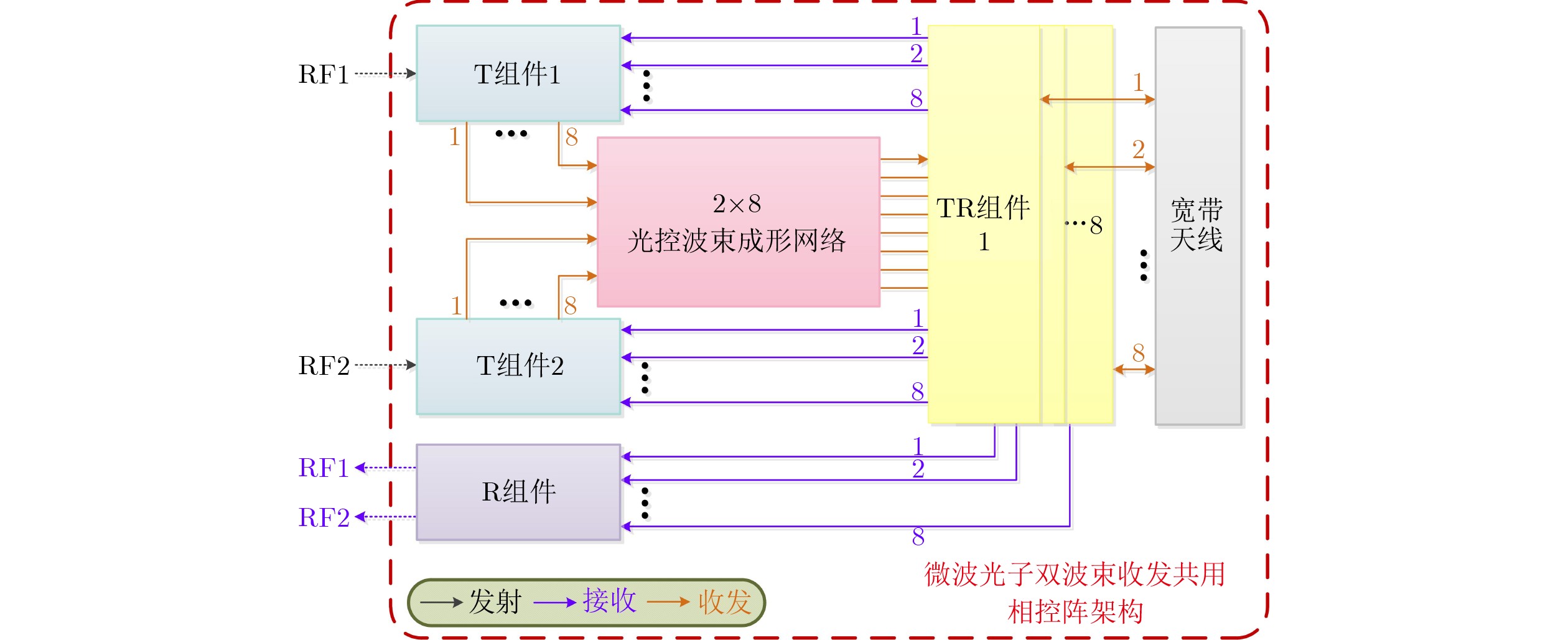
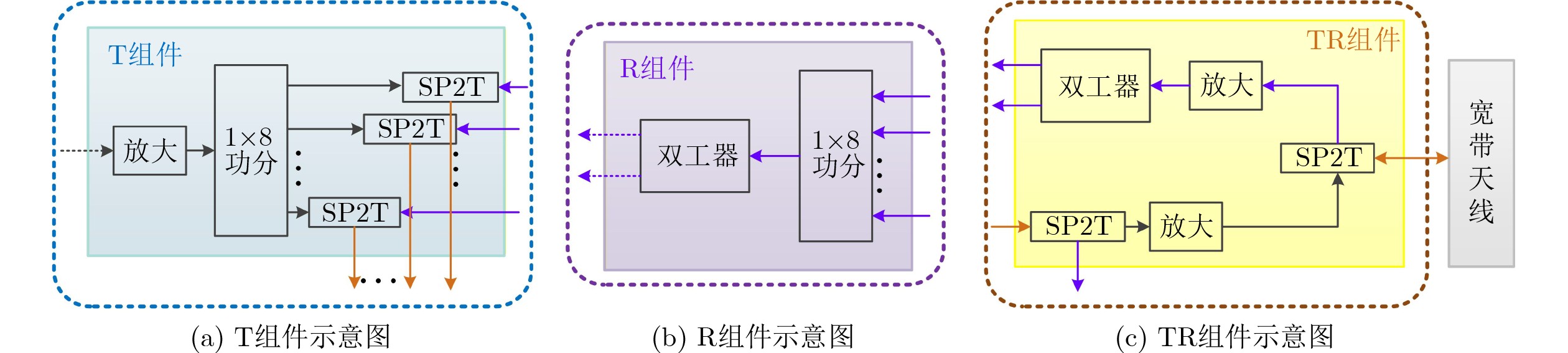
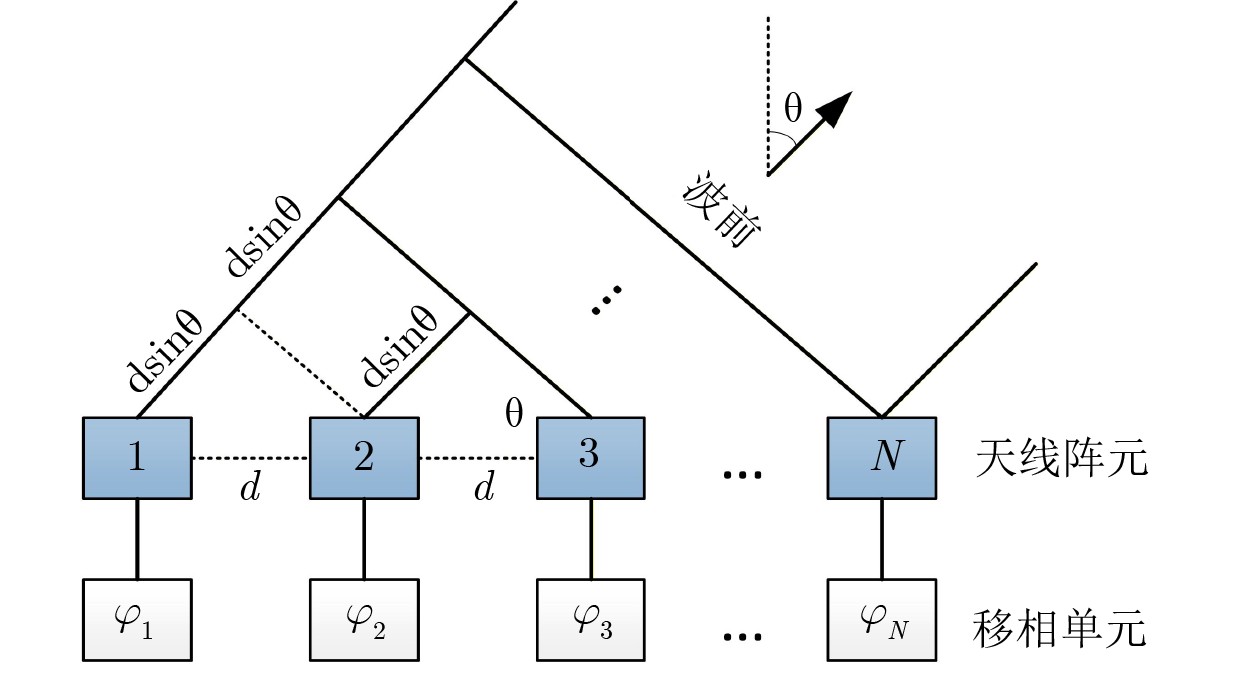
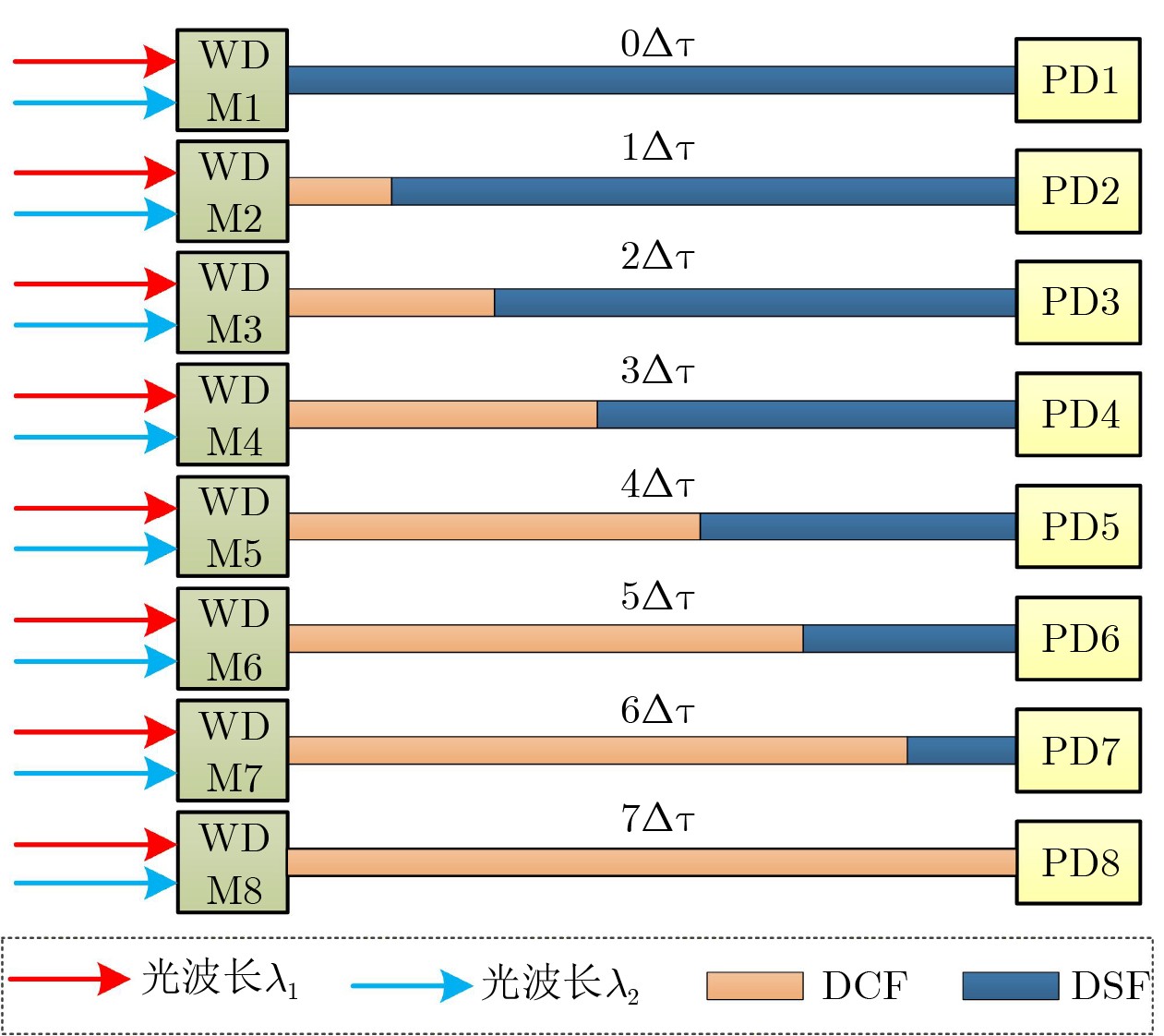
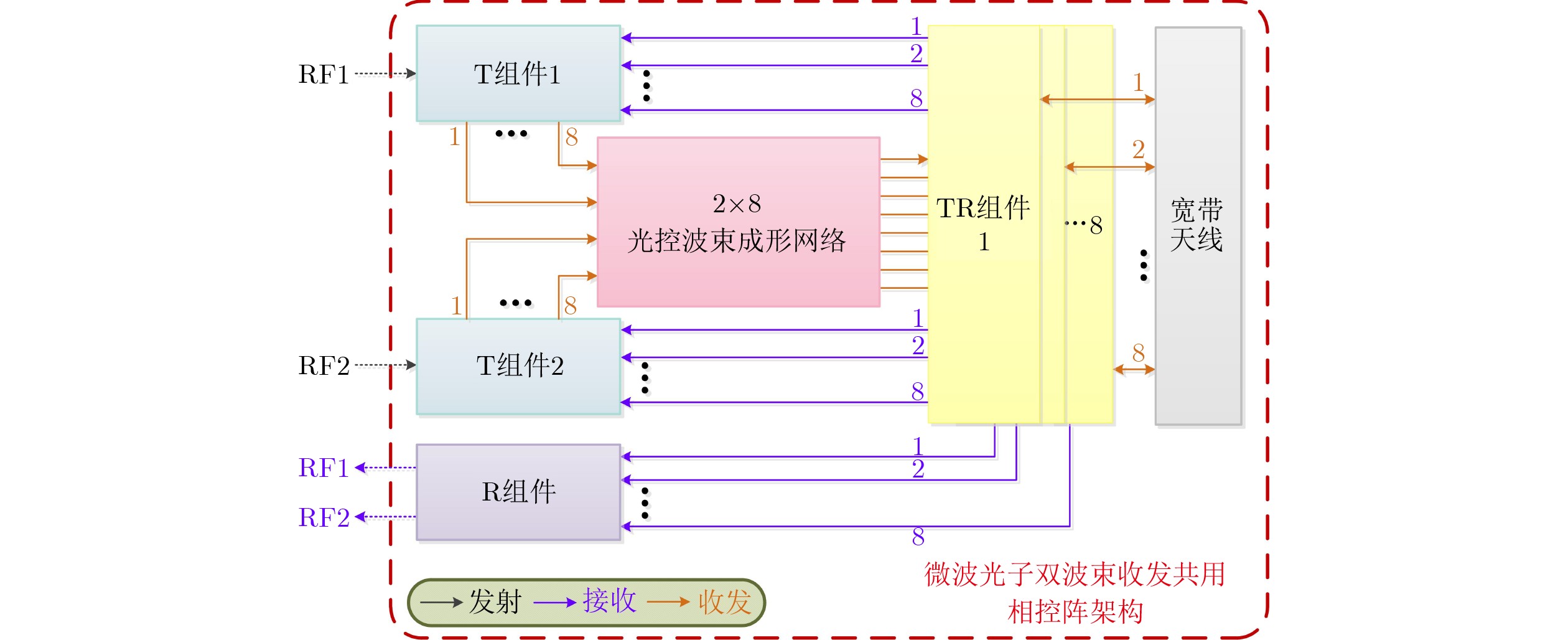
Objective Traditional phased array radar suffers from beam squint during wide-band and wide-angle scanning, a problem that severely constrains the scanning accuracy, real-time performance, and reliability of the radar system, thereby compromising its practical application effectiveness in demanding scenarios such as military reconnaissance, aerospace, and intelligent transportation systems. In military contexts in particular, this limitation makes it difficult for existing radar systems to meet the requirements of modern combat and surveillance for high precision and wide coverage. In view of this, there is an urgent need to develop an innovative beamforming mechanism to overcome the limitations of traditional approaches in terms of hardware resource redundancy, scanning flexibility, and anti-jamming capability. Therefore, a microwave photonic dual-beam transceiver-shared beamforming system is proposed in this paper. By optimizing the hardware architecture and incorporating dispersive delay and wavelength division multiplexing (WDM) techniques, this system achieves simultaneous dual-beam scanning without beam squint, thereby providing critical theoretical support and a technical pathway for enhancing the overall performance of radar systems. Methods The microwave photonic dual-beam transceiver-shared beamforming system consists of three parts: the radio frequency (RF) front-end, the optically controlled beamforming network, and the broadband antenna. In this system, the optically controlled beamforming network adopts a dispersion-based time-delay method, in which two optical signals with different central wavelengths can generate two distinct time delays within the same dispersive medium. Therefore, based on the WDM approach, by properly setting the initial wavelength values and adjusting the wavelengths of two tunable lasers at equal intervals, two sets of independent proportional delays can be obtained, thereby enabling independent control of two beams. Furthermore, by rationally designing the architecture of the receiving, transmitting, and transceiver modules within the RF front-end, and employing strategies such as duplexing and time-division switching, transceiver sharing can be achieved using the same system. Finally, a broadband Vivaldi antenna is employed for the reception and radiation of wide-spectrum signals. In the future, the number of beams can be expanded by increasing the number of optical sources and RF front-end modules. Results and Discussions The microwave photonic dual-beam transceiver-shared beamforming system enables time-division multiplexing of dual-channel transmitting and receiving beamforming based on a single set of hardware. A 2×8 transceiver-shared platform is constructed for experimental validation. Experimental results demonstrate that the system achieves independent dual-beam spatial scanning without beam squint over a frequency range of 15 GHz to 26 GHz, with a scanning coverage of ±52°. In the transmitting state, when Beam 1 operates at a frequency of 22 GHz, the main-to-sidelobe suppression ratio of the radiation pattern is approximately 13 dB for beam steering directions of ±52°, ±30°, and ±4° ( Fig. 11 ). In the transmitting state, when Beam 1 and Beam 2 operate at frequencies of 15 GHz and 26 GHz, respectively, the radiation pattern at a steering direction of 35° exhibits no beam squint (Fig. 12 ), demonstrating wideband operation capability. In the receiving state, with the operating frequencies of Beam 1 and Beam 2 unchanged, the radiation pattern at a steering direction of –42° similarly shows no beam squint (Fig. 13 ).Conclusions This paper employs the same set of hardware resources to achieve dual-beam transceiver-shared beamforming based on dispersion-based delay and WDM technology, and develops a prototype system, thereby addressing the beam squint issue inherent in traditional phased array radar under wideband wide-angle scanning. Experimental results demonstrate that:(1) The optical true time delay method based on the dispersion regime offers real-time tunability, and its combination with WDM technology can effectively expand the number of delay channels;(2) The beamforming system based on optical true time delay exhibits no frequency-dependent beam squint and is capable of wideband (15 GHz–26 GHz) and wide-angle (±52°) operation;(3) The proposed optically controlled beamforming architecture enables time-division switching between transmitting and receiving modes, and dual-beam transmission or dual-beam reception scanning can be achieved through the expansion of optical sources. -
Key words:
- Microwave photonic /
- Phased array /
- Beamforming /
- Dispersion
-
表 1 本方案与已报道部分方案对比
延时
体制工作模式 工作带宽
(GHz)扫描范围
(°)波束
扩展系统
复杂度集成度 成本 功耗 参考文献[7] 光开关 接收/二维 25.35~27.1 ±40 难 高 低 高 高 参考文献[8] 光开关 发射/一维 93 –51~34 难 较高 较高 较高 较高 参考文献[9] 色散光纤+光开关 接收/一维 8~12 ±45 较难 较高 低 较高 低 参考文献[11] 色散光纤+光开关 发射+接收/一维 8~12 ±30 较难 高 低 高 较高 参考文献[13] 色散光纤+光开关 接收/一维 8~12 –40~45 较难 较高 低 较高 较高 本方案 色散光纤 发射+接收/一维 15~26 ±52 易 较低 低 较低 低  下载: 导出CSV
-
[1] 张光义. 相控阵雷达原理[M]. 北京: 国防工业出版社, 2009.ZHANG Guangyi. Principles of Phased Array Radar[M]. Beijing: National Defense Industry Press, 2009. (查阅网上资料, 未找到本条文献页码信息, 请确认). [2] 屈世伟, 汤润之, 王浩同, 等. 超宽带相控阵天线关键技术研究[J]. 微波学报, 2026, 42(1): 1–8. doi: 10.14183/j.cnki.1005-6122.JMW25319.QU Shiwei, TANG Runzhi, WANG Haotong, et al. Research on key technologies of ultra-wideband phased array antennas[J]. Journal of Microwaves, 2026, 42(1): 1–8. doi: 10.14183/j.cnki.1005-6122.JMW25319. [3] 洪伟, 徐俊, 陈继新, 等. 面向6G的最优和次优毫米波大规模波束成形阵列架构[J]. 电子与信息学报, 2025, 47(8): 2405–2415. doi: 10.11999/JEIT250109.HONG Wei, XU Jun, CHEN Jixin, et al. Optimal and suboptimal architectures of millimeter-wave large-scale arrays for 6G[J]. Journal of Electronics & Information Technology, 2025, 47(8): 2405–2415. doi: 10.11999/JEIT250109. [4] 孙磊, 高晖, 于大群, 等. 微波光子技术在雷达相控阵中的应用分析与展望[J]. 微波学报, 2022, 38(5): 65–72. doi: 10.14183/j.cnki.1005-6122.202205011.SUN Lei, GAO Hui, YU Daqun, et al. Analysis and prospects of the engineering appliction of microwave photonics technique in radar phased array[J]. Journal of Microwaves, 2022, 38(5): 65–72. doi: 10.14183/j.cnki.1005-6122.202205011. [5] 潘时龙, 张亚梅. 微波光子雷达及关键技术[J]. 科技导报, 2017, 35(20): 36–52. doi: 10.3981/j.issn.1000-7857.2017.20.004.PAN Shilong and ZHANG Yamei. Microwave photonic radar and key technologies[J]. Science & Technology Review, 2017, 35(20): 36–52. doi: 10.3981/j.issn.1000-7857.2017.20.004. [6] 张程慧, 杨杰, 杨威. 光控波束网络对相控阵天线波束指向影响分析[J]. 火控雷达技术, 2025, 54(1): 61–66. doi: 10.19472/j.cnki.1008-8652.2025.01.010.ZHANG Chenghui, YANG Jie, and YANG Wei. Influence analysis of optical controlled beamforming network on beam direction of phased array antennas[J]. Fire Control Radar Technology, 2025, 54(1): 61–66. doi: 10.19472/j.cnki.1008-8652.2025.01.010. [7] 杨海峰, 仇三山, 柴霖, 等. 基于微波光子的宽带数据接收系统设计与验证[J]. 电讯技术, 2023, 63(9): 1322–1328. doi: 10.20079/j.issn.1001-893x.230414001.YANG Haifeng, QIU Sanshan, CHAI Lin, et al. Design and verification of a bandwidth data receiving system based on microwave photonics technology[J]. Telecommunication Engineering, 2023, 63(9): 1322–1328. doi: 10.20079/j.issn.1001-893x.230414001. [8] LIU Yuan, ISAAC B, KALKAVAGE J, et al. 93-GHz signal beam steering with true time delayed integrated optical beamforming network[C]. 2019 Optical Fiber Communications Conference and Exhibition (OFC), San Diego, USA, 2019: 1–3. [9] 张业斌, 吴彭生, 李琳. 基于光纤色散的X波段光控相控阵波束形成技术[J]. 科技创新与应用, 2018(22): 140–141,143. doi: 10.19981/j.cn23-1581/g3.2018.22.057.ZHANG Yebin, WU Pengsheng, and LI Lin. X-band optically controlled phased array beam-forming technology based on optical fiber dispersion[J]. Technology Innovation and Application, 2018(22): 140–141,143. doi: 10.19981/j.cn23-1581/g3.2018.22.057. [10] YE Xingwei, ZHANG Fangzheng, and PAN Shilong. Compact optical true time delay beamformer for a 2D phased array antenna using tunable dispersive elements[J]. Optics Letters, 2016, 41(17): 3956–3959. doi: 10.1364/OL.41.003956. [11] 张业斌, 王凯, 田朝晖. 基于微波光子收发共用真时延网络的相控阵波束合成[J]. 半导体光电, 2022, 43(3): 609–612. doi: 10.16818/j.issn1001-5868.2022051802.ZHANG Yebin, WANG Kai, and TIAN Chaohui. Phased array beam-forming based on T-R community microwave photonic true time delay network[J]. Semiconductor Optoelectronics, 2022, 43(3): 609–612. doi: 10.16818/j.issn1001-5868.2022051802. [12] CHEN M Y. Hybrid photonic true-time delay modules for quasi-continuous steering of 2-D phased-array antennas[J]. Journal of Lightwave Technology, 2013, 31(6): 910–917. doi: 10.1109/JLT.2012.2236536. [13] 李琳, 吴彭生. 光控相控阵波束接收网络[J]. 现代雷达, 2017, 39(10): 72–74,94. doi: 10.16592/j.cnki.1004-7859.2017.10.014.LI Lin and WU Pengsheng. A beam receiving network of optically controlled phased array antenna[J]. Modern Radar, 2017, 39(10): 72–74,94. doi: 10.16592/j.cnki.1004-7859.2017.10.014. [14] 周中昊, 王凯, 王鹏, 等. 硅基片上集成二维光控多波束形成的研究[J]. 雷达科学与技术, 2022, 20(4): 409–414. doi: 10.3969/j.issn.1672-2337.2022.04.008.ZHOU Zhonghao, WANG Kai, WANG Peng, et al. Research on silicon-based on-chip integration of two-dimensional multi-beam optically controlled beamformer[J]. Radar Science and Technology, 2022, 20(4): 409–414. doi: 10.3969/j.issn.1672-2337.2022.04.008. [15] MARTINEZ-CARRASCO P, HO T H, WESSEL D, et al. Ultrabroadband high-resolution silicon RF-photonic beamformer[J]. Nature Communications, 2024, 15(1): 1433. doi: 10.1038/s41467-024-45743-9. [16] ZHANG Qiang, JI Jun, CHENG Qiman, et al. Two-dimensional phased-array receiver based on integrated silicon true time delay lines[J]. IEEE Transactions on Microwave Theory and Techniques, 2023, 71(3): 1251–1261. doi: 10.1109/TMTT.2022.3214482. [17] INNO. V7金色[EB/OL]. https://www.innoinstrument.com.cn/product-detail/49.html, 2022. [18] EXFO. FVA-3150可变衰减器[EB/OL]. https://www.exfo.com/contentassets/dd7c220ed1ea4815bd619e7aa885b44a/exfo_spec-sheet_fva-3150_chs.pdf, 2017. (查阅网上资料,未找到本条文献年份信息,请确认). [19] 曾国宴, 尹悦鑫, 丁颖智, 等. 一种超宽工作带宽的二氧化硅基可变光衰减器(特邀)[J]. 激光与光电子学进展, 2024, 61(19): 1913017. doi: 10.3788/LOP241568.ZENG Guoyan, YIN Yuexin, DING Yingzhi, et al. An ultra-large bandwidth variable optical attenuator based on silica platform (invited)[J]. Laser & Optoelectronics Progress, 2024, 61(19): 1913017. doi: 10.3788/LOP241568. [20] FAN Changjiang, ZHANG Yunfei, ZHANG Jianbin, et al. A miniaturized tunable optical attenuator with ultrawide bandwidth based on evanescent-field coupling between nanofibers[J]. Scientific Reports, 2024, 14(1): 18503. doi: 10.1038/s41598-024-69407-2. [21] 孙立莹, 陆云龙, 徐俊, 等. 一种应用于有源集成阵列的通道相位自补偿方法[J]. 电子与信息学报, 2026, 48(6): 2448–2458. doi: 10.11999/JEIT251325.SUN Liying, LU Yunlong, XU Jun, et al. A channel phase self-compensation method for active-integrated arrays[J]. Journal of Electronics & Information Technology, 2026, 48(6): 2448–2458. doi: 10.11999/JEIT251325. [22] 汪励恒, 韩震, 秦士敬, 等. 多材料体系异质集成光子技术研究进展(特邀)[J]. 光学学报, 2025, 45(17): 1720008. doi: 10.3788/AOS251182.WANG Liheng, HAN Zhen, QIN Shijing, et al. Research progress of heterogeneous integrated photonic technology for multi-material systems (invited)[J]. Acta Optica Sinica, 2025, 45(17): 1720008. doi: 10.3788/AOS251182. [23] 胡进坤, 郑瑞祺, 黄海坤, 等. 基于光子集成相控阵的多波束通信系统[J]. 空间电子技术, 2026, 23(1): 36–44. doi: 10.3969/j.issn.1674-7135.2026.01.003.HU Jinkun, ZHENG Ruiqi, HUANG Haikun, et al. Multi-beam communication system based on a photonic integrated optical phased array[J]. Space Electronic Technology, 2026, 23(1): 36–44. doi: 10.3969/j.issn.1674-7135.2026.01.003. [24] 高玉龙, 姜力僮, 时统志, 等. 多用户多目标场景下的通信感知一体化加权优化波束形成算法[J]. 电子与信息学报, 2025, 47(4): 921–931. doi: 10.11999/JEIT240644.GAO Yulong, JIANG Litong, SHI Tongzhi, et al. Weighted optimization beamforming algorithm for integrated sensing and communication in multi-user multi-target scenarios[J]. Journal of Electronics & Information Technology, 2025, 47(4): 921–931. doi: 10.11999/JEIT240644. [25] 刘子威, 徐圆圆, 边东明, 等. 卫星物联网容量增强的波束优化设计技术研究[J]. 电子与信息学报, 2025, 47(1): 93–101. doi: 10.11999/JEIT231120.LIU Ziwei, XU Yuanyuan, BIAN Dongming, et al. Research on beam optimization design technology for capacity enhancement of satellite internet of things[J]. Journal of Electronics & Information Technology, 2025, 47(1): 93–101. doi: 10.11999/JEIT231120. -

 下载:




图(14) / 表(1)
计量
- 文章访问数: 10
- HTML全文浏览量: 1
- PDF下载量: 0
- 被引次数: 0
