




Wireless Physical-Layer Multi-Task Foundation Models Toward 6G Embodied Intelligence: Advances, Opportunities, and Challenges
-
摘要: 随着具身智能向机器人、无人系统和多主体协作等场景拓展,主体运动与传播环境变化使6G无线网络面临持续的信道更新、波束管理、无线定位与协同传输需求。机器联觉框架将通信与多模态感知智能联系起来,为分析这些无线需求提供了应用背景。既有物理层学习模型多围绕特定任务和系统配置构建,研究者因而开始探索利用预训练与任务适配复用模型能力。本文从技术路径、文献已评估任务和适配机制三个维度梳理无线物理层基座模型,按预训练权重来源区分直接利用无线数据预训练的无线原生模型与迁移预训练大语言模型权重的物理层方法,并结合仿真和实测数据资源比较两条路径的建模基础。针对无线原生模型,重点分析无线观测的输入表示、预训练目标、相关任务的复用以及观测质量和计算开销;针对基于预训练大语言模型的方法,讨论无线数值输入与主干的映射、任务提示、参数更新及输出接口的协同作用。在此基础上,比较共享表征、任务专用头和上下文示例等机制的适用条件及已有研究的任务覆盖,并以代表模型在共同下游任务和独立传播场景中的实验,辅助分析训练条件、任务表现与运行代价的关系。最后,围绕动态环境适配、跨配置复用、多任务共享与边缘部署讨论后续研究问题,为具身系统中的无线物理层模型构建与评价提供参考。Abstract:
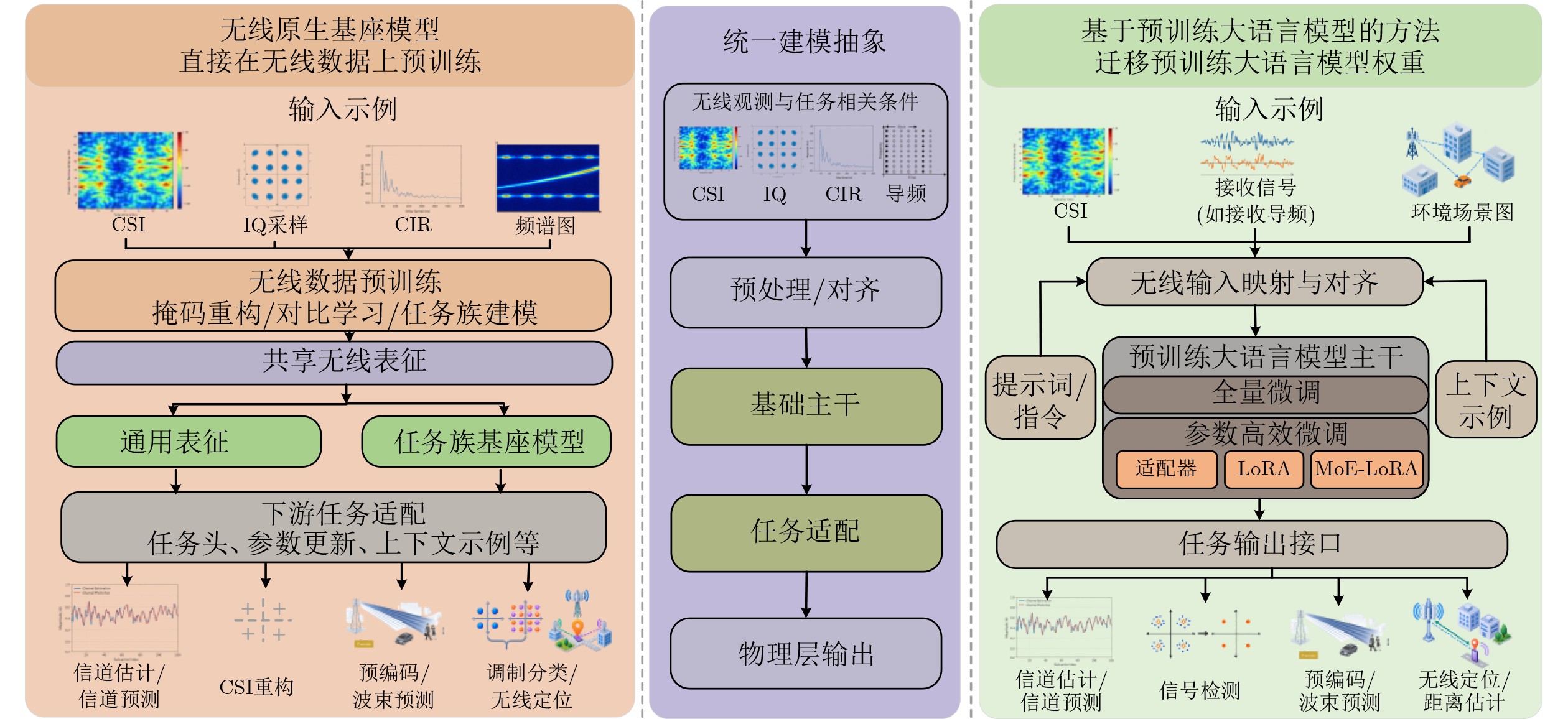
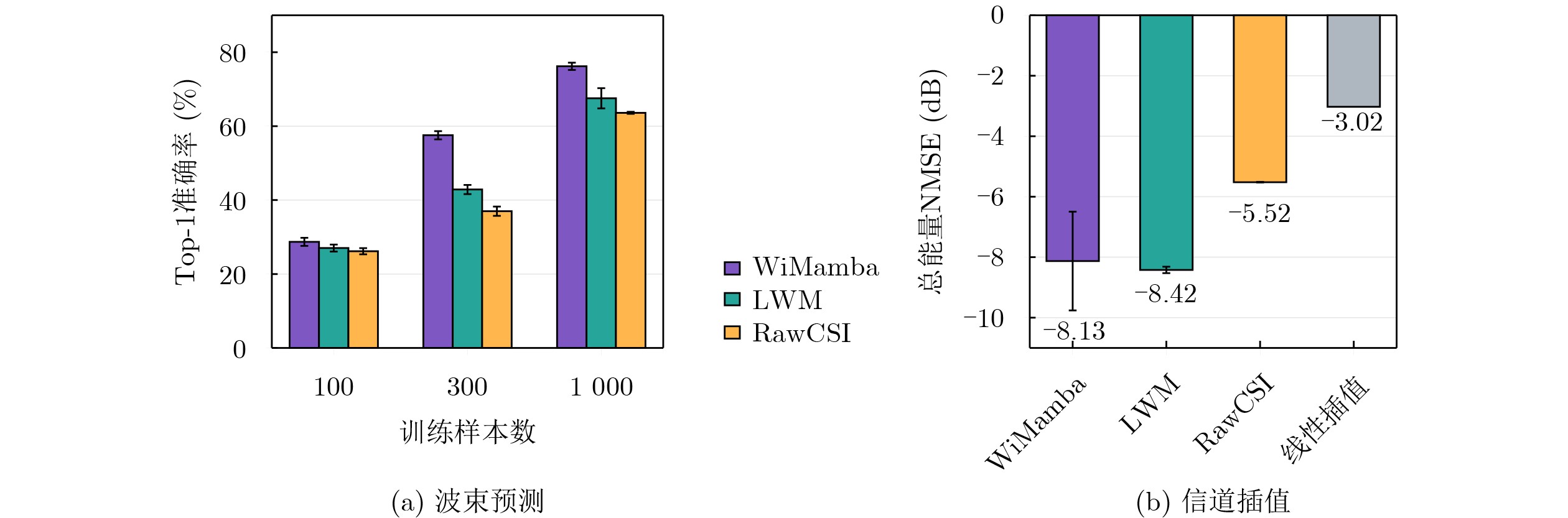
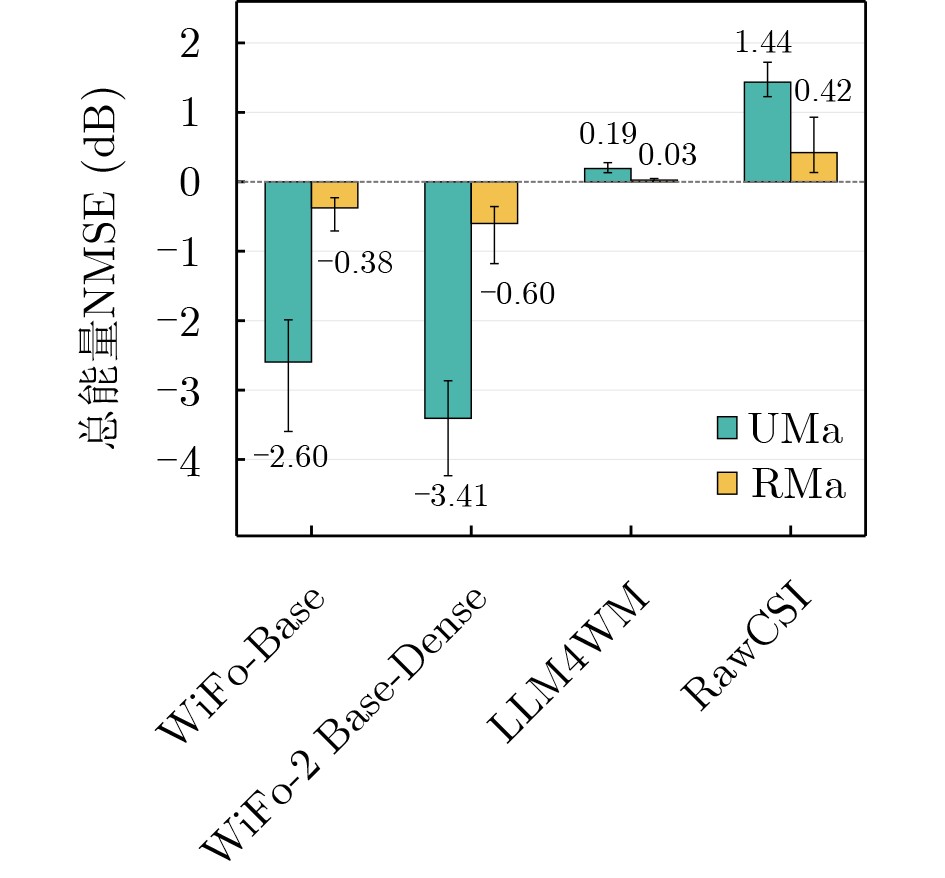
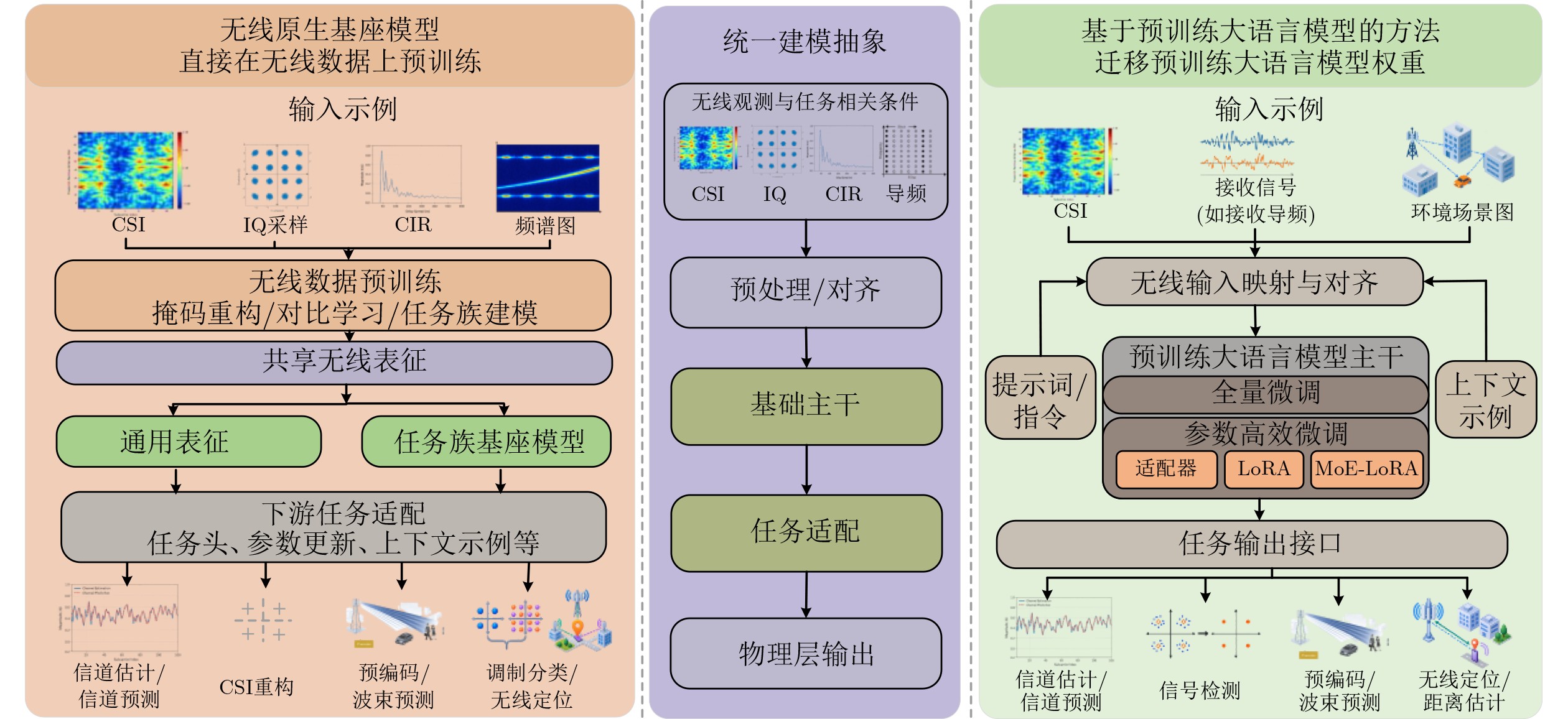
Objective As embodied intelligence expands to robots, unmanned platforms, and collaboration among multiple agents, wireless networks must support information exchange while agents and their surrounding environments continue to change. Agent motion, blockage, and changing access conditions create recurring demands for channel updates, beam management, wireless localization, and coordinated transmission in sixth-generation (6G) systems. The Synesthesia of Machines framework connects communication with intelligent multimodal sensing and provides an application context for understanding these requirements. Existing learning-based physical-layer methods are frequently developed for individual tasks and specific system configurations. Changes in propagation conditions, available observations, or processing objectives may therefore require additional training or model redesign. Wireless physical-layer foundation models have attracted interest as a means of acquiring reusable capabilities through pretraining and connecting them to downstream tasks through adaptation. However, existing studies differ in their backbone architectures, training data, input representations, evaluated tasks, and adaptation requirements. These differences complicate comparisons and make it necessary to distinguish demonstrated capabilities from broader expectations of generalization. This review examines wireless physical-layer foundation models from the perspective of the continuing wireless needs of embodied systems. It aims to clarify their technical pathways, summarize the tasks assessed in existing studies, and explain the mechanisms connecting pretrained representations to downstream processing objectives. Methods The literature is organized along three dimensions: the source of pretrained backbone weights, the tasks evaluated in the original studies, and the mechanisms used for downstream adaptation. Two technical pathways are distinguished. Wireless-native models acquire their backbone capabilities through pretraining on wireless observations, whereas methods based on pretrained large language models transfer existing language-model weights to physical-layer processing. Task coverage is described according to the evidence reported in each study, including channel prediction and estimation, beam selection, localization, signal classification, detection, and precoding. Adaptation mechanisms are examined through task-specific heads, task prompts, parameter updates, and in-context observation–target examples. This framework separates how a model acquires reusable capabilities from how those capabilities are applied to a particular task ( Table 2 ,Fig.1 ). Representative simulation and measurement datasets are reviewed in terms of their observations, labels, propagation conditions, and supported research objectives. Particular attention is given to the relationships among channel measurements, spatial positions, and environmental information, because these relationships influence the capabilities that can be learned and reused (Table 3 ). For wireless-native models, the analysis covers input representations, pretraining objectives, adaptation across tasks and configurations, observation quality, and computational requirements. For methods based on pretrained large language models, it examines numerical input mappings, task specification, parameter-efficient adaptation, and output-interface design. Representative models are then compared through task coverage, reported model scale, inference conditions, and publicly available resources (Tables 5 and6 ). An evaluation framework is summarized around task performance, transfer capability, adaptation cost, deployment cost, and robustness (Table 7 ). Complementary experiments compare representative models on beam prediction, channel interpolation, and temporal channel prediction. These experiments use controlled data splits and training sample counts where applicable, and distinguish testing on public data from fixed-weight evaluation in independently generated propagation scenarios.Results and Discussions Existing studies demonstrate several approaches to reusing model capabilities across wireless physical-layer tasks. Wireless-native models construct representations that retain relevant relationships across time, frequency, and antennas. Pretraining objectives such as masked reconstruction and contrastive learning provide different means of learning channel structure and extracting reusable features. Downstream task heads connect shared representations to specific processing objectives, while observation masks and task conditions can organize related estimation or prediction problems within a common framework. In-context approaches instead use observation–target examples to specify the processing behavior required for a current query, allowing task execution without updating model weights during inference. These mechanisms impose different requirements on labeled data, input length, parameter updates, and task interfaces. Consequently, the availability of a shared backbone does not by itself establish that a model can handle arbitrary wireless tasks or configurations. The scope of reuse should be assessed through the tasks, conditions, and adaptation procedures actually evaluated. The review also identifies observation quality and computational cost as practical constraints. Sparse measurements, noise, interference, and configuration changes affect the information available to the model, while input sequence length, backbone design, and compression strategies influence processing overhead. Methods based on pretrained large language models rely on coordinated wireless input mappings, task prompts, parameter updates, and output interfaces. Their performance must therefore be assessed through the complete processing pipeline rather than inferred from the capabilities of the original language backbone. The complementary experiments further show that model comparisons depend on both the target task and the evaluation conditions. With the specified training sample counts, LWM and WiMamba achieve better mean results than RawCSI on beam prediction and channel interpolation. WiMamba obtains higher beam prediction accuracy, whereas LWM achieves a slightly lower interpolation error and more consistent results across repeated training runs. Differences in inference time provide additional information for selecting a model under processing constraints ( Table 8 ,Fig.6 ). Temporal channel prediction reveals a different aspect of model behavior. On the public test dataset, the task-trained LLM4WM weights achieve the lowest prediction error, while the supervised RawCSI baseline combines a relatively low error with a smaller parameter count and shorter inference time. The directly applied WiFo and WiFo-2 pretrained weights produce higher errors under this particular test condition (Table 9 ). When all model weights remain fixed and evaluation moves to independently generated urban and rural macrocell scenarios, the relative ranking changes. LLM4WM and RawCSI show substantially increased errors, while the two WiFo models obtain lower mean errors in these scenarios (Fig.7 ). These results indicate that favorable performance on a public test dataset does not establish suitability for a new propagation environment. They also show why task performance, training history, adaptation data, runtime cost, and robustness should be considered together.Conclusions Wireless physical-layer foundation models provide multiple mechanisms for reusing learned representations and processing capabilities across downstream objectives. Wireless-native pretraining and the adaptation of pretrained large language models rely on different modeling foundations, and their practical value depends on input design, task interfaces, adaptation procedures, and operating conditions. The reviewed evidence supports continued investigation of shared processing capabilities while emphasizing the need for explicit statements of task coverage and transfer conditions. Four research directions are identified. First, dynamic-environment adaptation should examine how models recognize changes in propagation conditions, incorporate recent observations, and maintain reliable processing during updates. Second, reuse across system configurations requires a clearer understanding of which changes in antenna scale, frequency, bandwidth, and observation structure can be accommodated by existing models and which require additional data or parameter adjustment. Third, multi-task sharing should investigate the relationships among task combinations, shared representations, and competing training objectives to determine when joint processing improves or degrades individual tasks. Fourth, deployment on base stations and edge devices requires joint consideration of prediction accuracy, parameter storage, adaptation overhead, and processing latency. These directions are closely related to the continuing channel updates, beam management, localization, and coordinated transmission required by moving and cooperating embodied agents. Further progress requires evaluation under representative propagation changes and hardware constraints, together with transparent reporting of training conditions and computational costs. This review provides a reference for constructing, comparing, and evaluating wireless physical-layer models within this application context. -
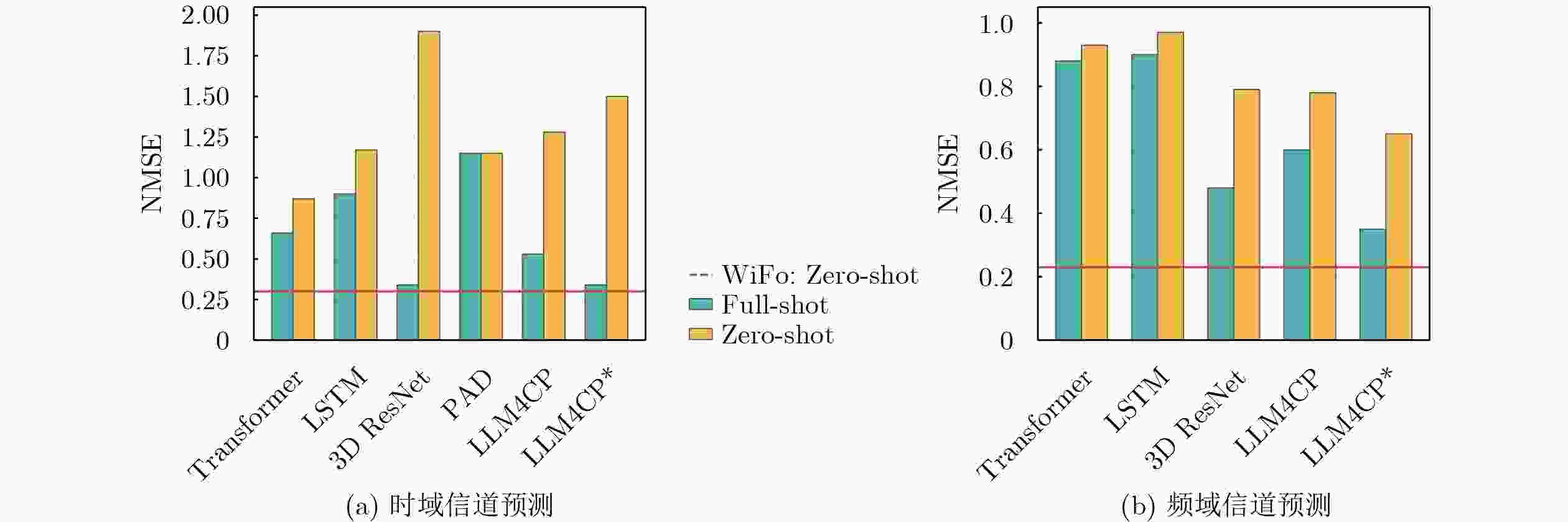
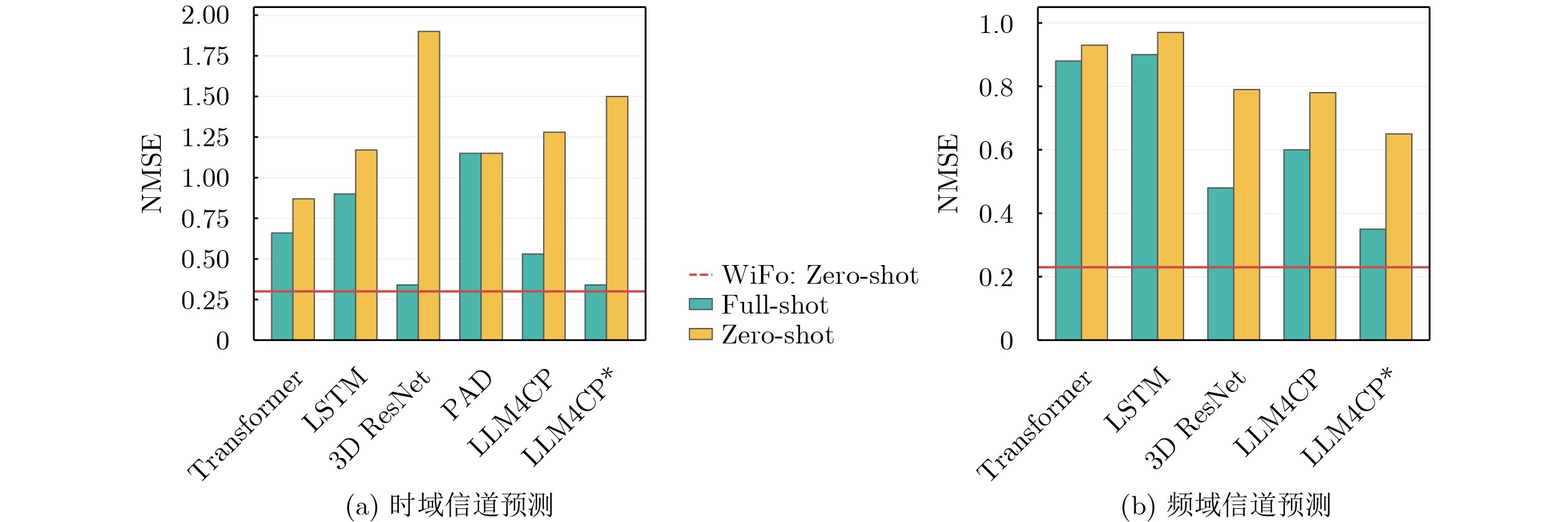
图 2 WiFo在D17数据集上的时域与频域信道预测结果。WiFo以零样本方式应用于未见配置;基线的Full-Shot和Zero-Shot表示各自的训练条件。图中数据来源[12]图4。
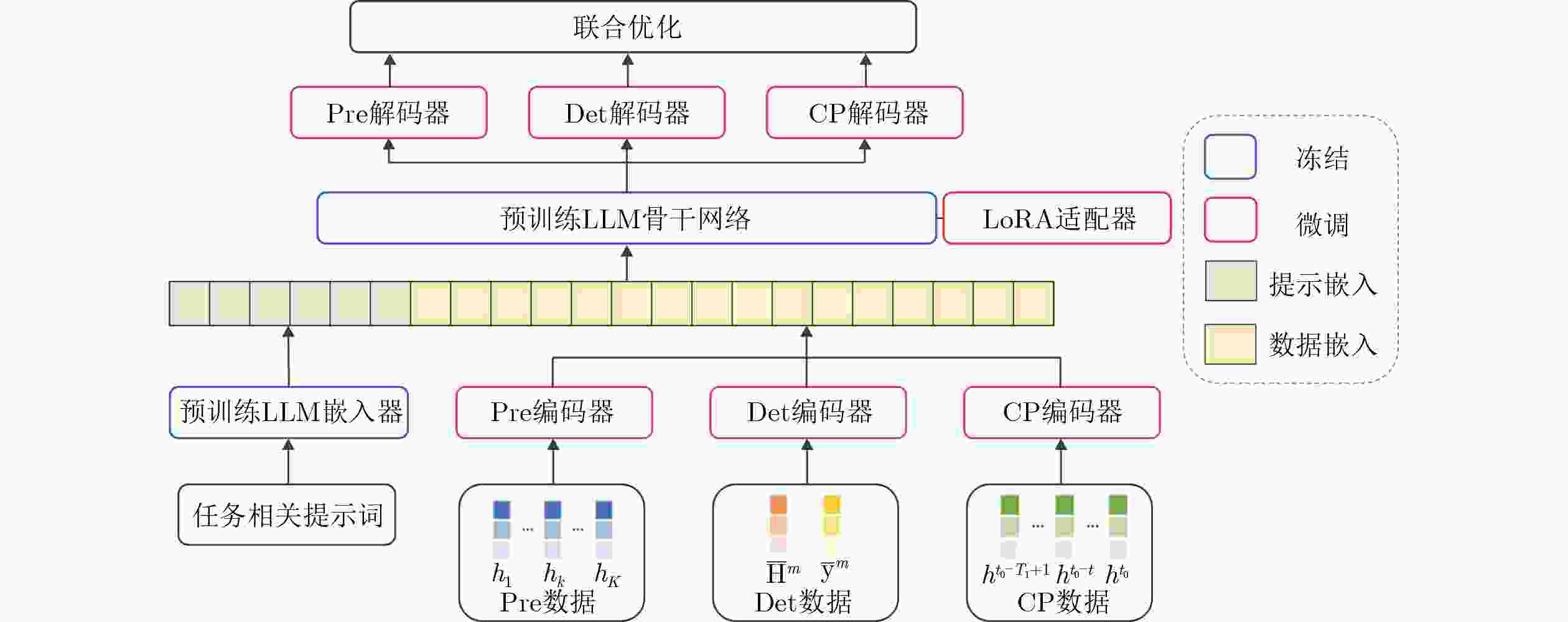
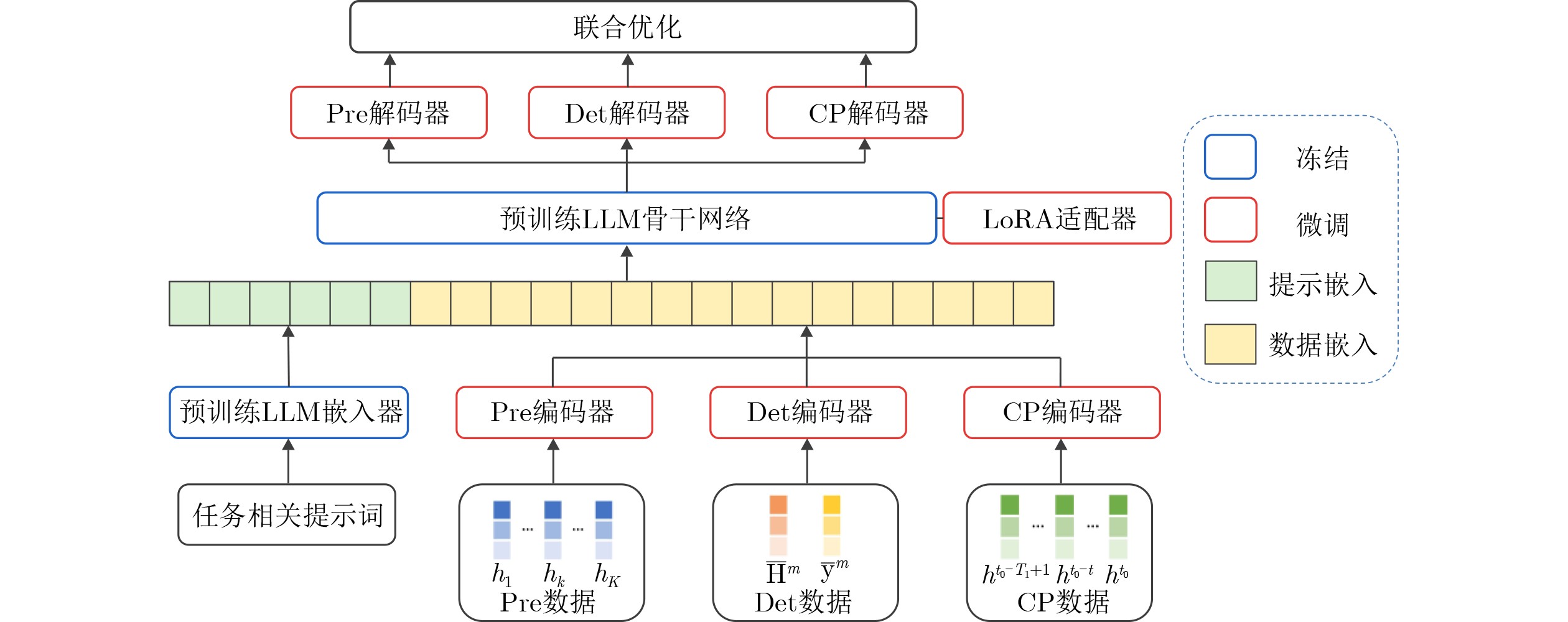
图 4 基于大语言模型的多任务物理层网络框架。Pre、Det和CP分别表示多用户预编码、信号检测和信道预测。蓝框为冻结模块,红框为微调模块;任务提示与专用编码器、解码器共同连接共享主干。模型架构来源[15]图1。
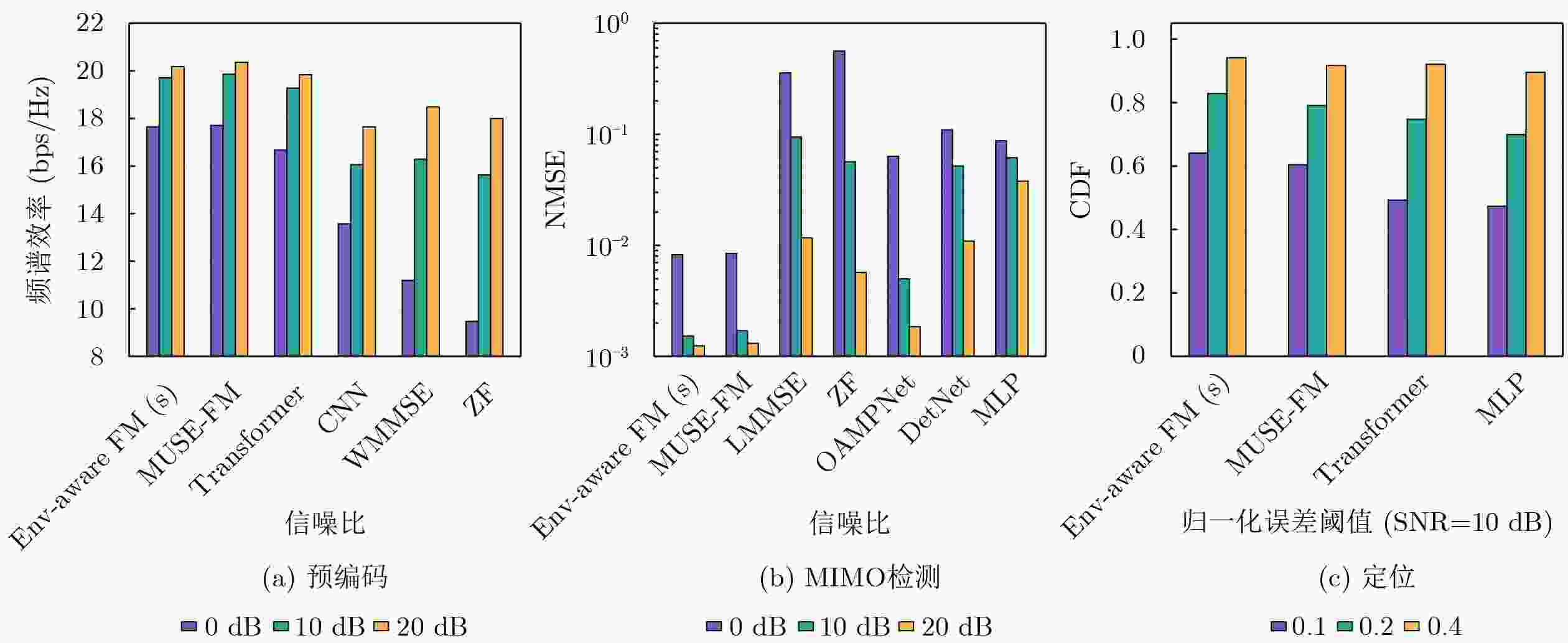
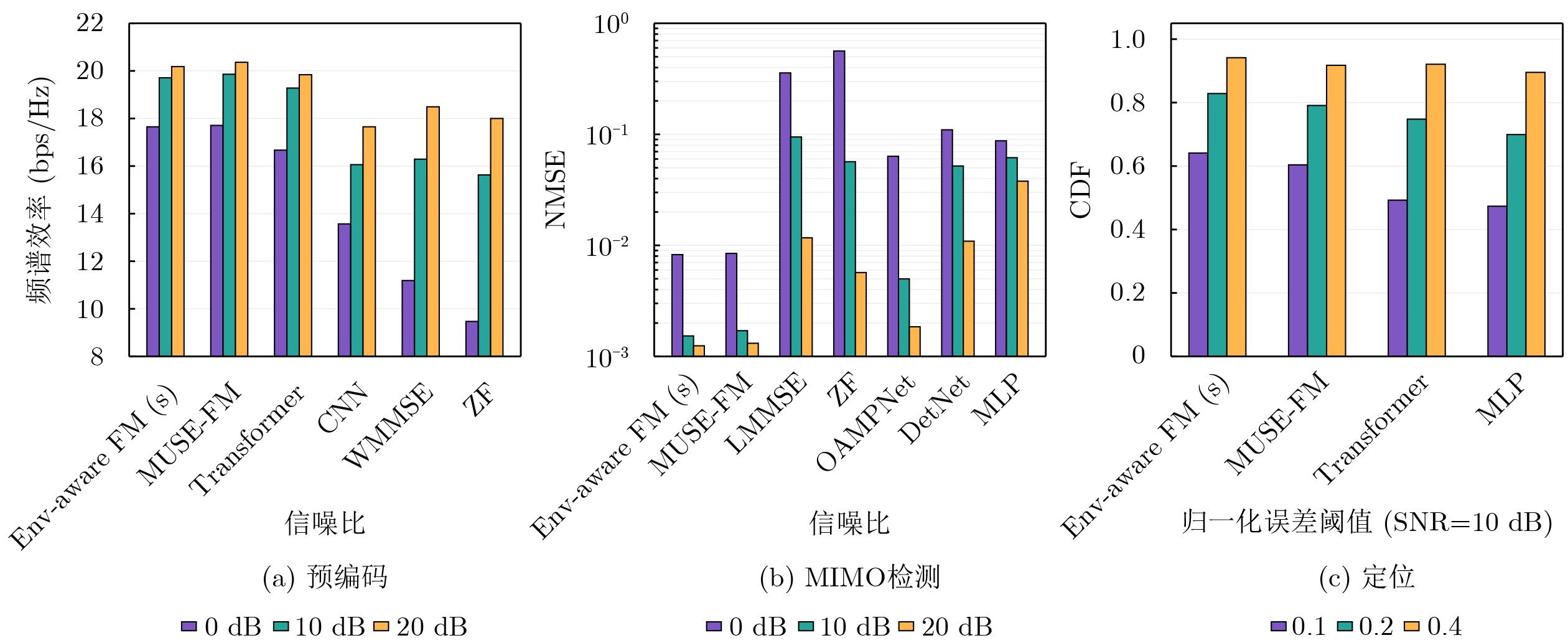
图 5 MUSE-FM在异构物理层任务上的代表性性能。(a)多用户预编码的决策与优化性能;(b)MIMO检测的检测与推断性能;(c)信噪比为10 dB时,归一化定位误差不超过0.1、0.2和0.4的累积概率。图中数据来源于文献[16]图6。
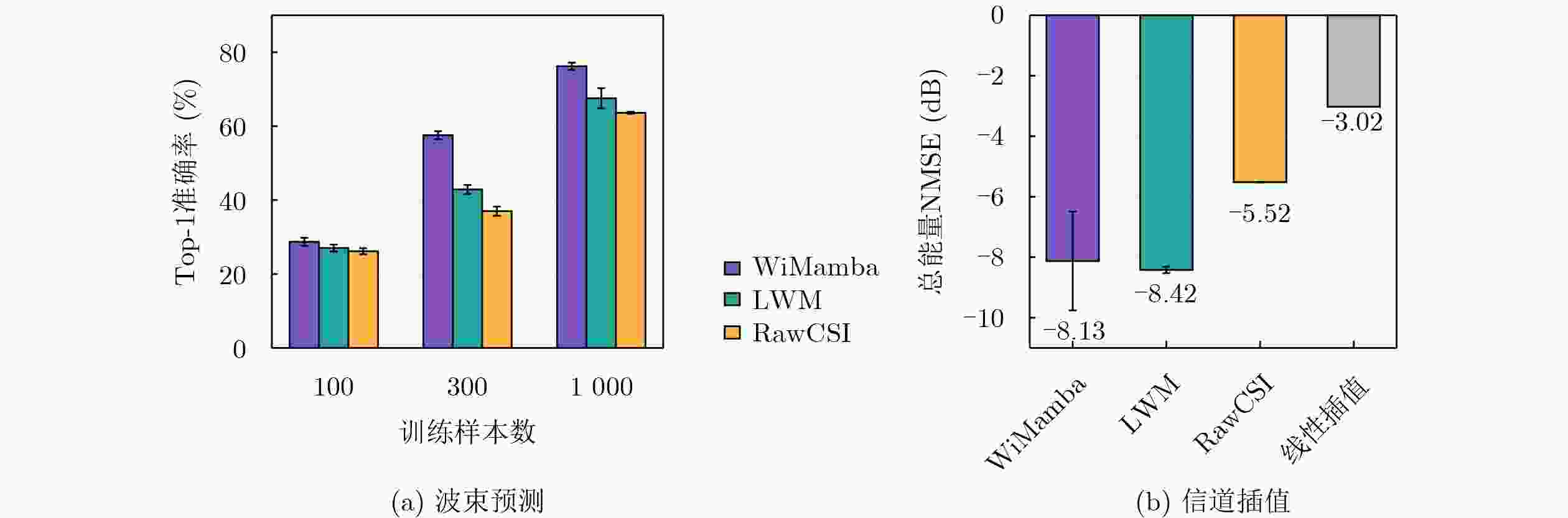
图 6 波束预测与信道插值结果。(a)不同训练样本数下的波束预测Top-1准确率;(b)300条训练样本下的信道插值总能量NMSE。学习模型的结果以三次训练的均值和标准差表示。
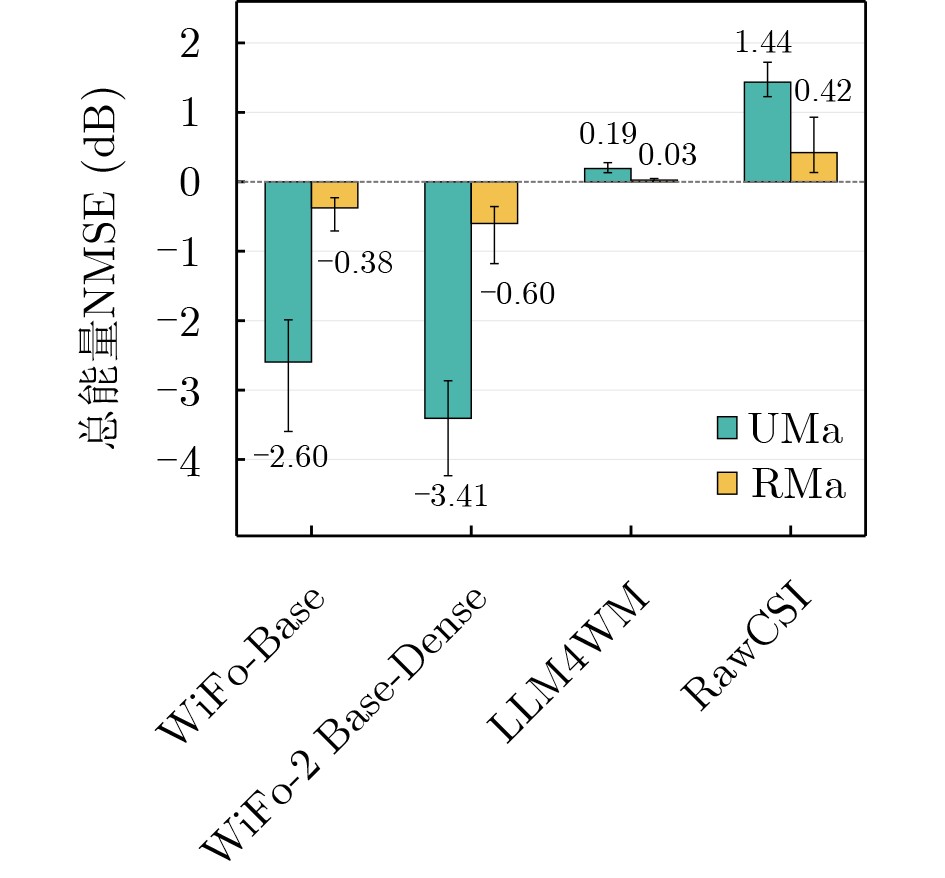
图 7 固定权重模型在UMa与RMa场景中的信道预测结果。每个场景包含400条独立测试轨迹,NMSE由全部轨迹合并计算,误差线表示按轨迹重采样得到的95%区间。0 dB虚线对应零预测。
表 5 代表性无线基座模型及相关适配方法比较
模型 主干来源与结构 主要输入 适配或复用方式 原文已评估的任务与迁移 LWM[35] 无线预训练·Transformer CSI 任务头、局部或全量微调 波束选择、LoS识别;少样本 WiMAE/ContraWiMAE[37] 无线预训练·Transformer CSI 任务头、微调 波束选择、LoS识别、信道估计;
跨场景、少样本WiFo-Base[12] 无线预训练·Transformer CSI 按任务设置的掩码重构 时域/频域信道预测;未见配置、零样本 WiFo-2[39] 无线预训练·Transformer/MoE CSI,可结合图像或符号 掩码重构、任务路由
与任务头信道重构、波束、定位等;
未见配置、少样本WavesFM[25] 无线预训练·ViT CSI、IQ、
频谱任务头;射频分类使用LoRA 信道估计、定位、活动感知、射频分类 WiMamba[42] 无线预训练·双向Mamba CSI 冻结主干、任务头 LoS识别、波束、信道插值、
定位;少样本SpectrumFM[26] 无线预训练·卷积/自注意力 IQ 任务头及微调 调制/无线技术分类、频谱感知、
异常检测;跨场景、少样本ICWLM[13] 无线从头训练·Transformer CSI及上下文示例 上下文示例适配 多用户预编码、信道预测;未见配置 Filter-and-Attend[41] 复用LWM主干并增设信道处理前端 导频CSI 前端适配与任务头 信道预测、定位 LLM4CP[24] 大语言模型预训练·GPT-2 CSI 输入/输出接口适配 TDD/FDD信道预测;跨场景、少样本 LLM4WM[14] 大语言模型预训练·GPT-2 CSI 任务接口与MoE-LoRA 信道估计/预测、波束选择、
距离/损耗估计;跨场景、少样本MUSE-FM[16] 大语言模型预训练·GPT-2 CSI、接收信号、环境图 任务提示驱动的接口、
全量微调信道估计、预编码、检测、译码、定位  下载: 导出CSV
表 2 无线物理层模型的技术路径、已评估任务与适配机制
维度 类别或标签 定义与主要思想 代表工作 技术路径 无线原生基座模型 直接在无线数据上训练主干,学习可复用的信号或信道表征,再通过任务头、
参数更新或上下文示例适配下游任务[12,13,25,26] 基于预训练大语言模型的物理层方法 以预训练大语言模型权重为基础,通过无线输入映射与输出接口接入物理层任务,
并结合任务提示或参数微调完成适配[14–16] 原文已
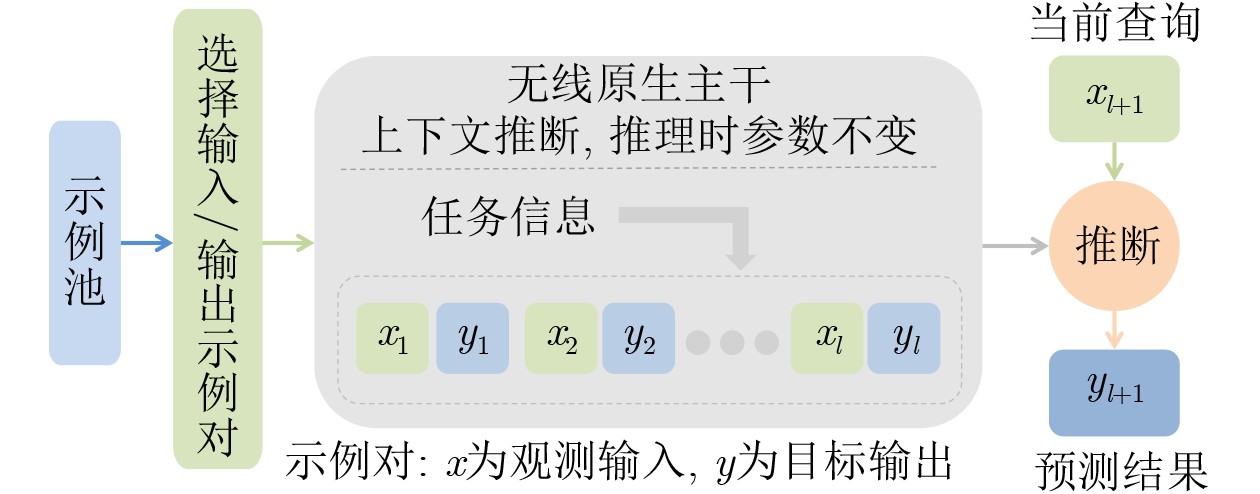
评估任务估计与预测 由导频、历史CSI或部分信道恢复或预测信道信息,包括估计、预测和补全 [12,16,24,25] 信号检测与译码 由接收信号及相关信道信息恢复发送符号或比特 [15,16] 预编码与波束选择 根据无线观测生成预编码参数或选择波束 [13–16] 信号识别与无线定位 识别调制、无线技术或频谱状态,或估计位置 [16,25,26] 适配机制 共享主干与任务专用头 多个任务复用主干表示,通过任务头或专用编码解码模块处理不同输入结构与输出目标 [14,15,25] 任务提示 将任务标识、提示词、指令或提示向量作为输入,引导共享主干处理当前任务,并与相应输出模块配合 [15,16] 参数更新 适配时更新全部主干参数,或仅更新少量已有参数及新增模块,分别对应全量微调与参数高效微调 [14–16,25,26] 上下文示例 将观测及其目标输出组成示例对,与当前查询共同输入预先训练的模型;
推理时利用示例适配查询,不更新模型参数[13]
下载: 导出CSV
表 3 代表性无线数据资源及适用特点
数据资源 数据来源 主要观测与标签 代表任务 适用特点 DeepMIMO[31] 射线追踪仿真 CSI、收发位置 波束选择、信道表征 支持场景与系统配置变化 RadioML2018.01A[32] 调制信号仿真 IQ片段、调制类别 自动调制分类 支持调制与噪声条件比较 WiFo研究数据[12] 统计信道仿真 时频空CSI 时域与频域预测 支持不同CSI配置下的评价 LLM4WM研究数据[14] 统计信道仿真 CSI及多任务目标 信道、波束、距离和损耗相关任务 支持同源多任务比较 DICHASUS[34] 实际测量 分布式阵列CSI;部分数据含位置真值 无线定位、信道表征 反映实际阵列和传播环境 DeepSense6G[17] 实际测量 通信观测、同步感知与位置信息 波束选择、环境辅助无线处理 支持环境与无线观测关联
下载: 导出CSV
表 4 无线任务适配机制及其使用条件
适配机制 主要作用 参数更新 适用条件 主要代价 任务提示 通过任务标识、提示词、指令或
提示向量说明处理目标提示词与指令可固定,
连续提示向量可训练任务信息能够表示为模型输入 提示设计与输入处理开销 参数高效微调 通过适配器、LoRA等方法调整模型表示 保留大部分主干权重,
训练少量参数或新增模块有适配数据,训练资源受限 适配模块的训练与存储开销 全量微调 联合调整主干与任务接口 更新全部主干及相关接口参数 有适配数据及相应训练资源 主干与接口的训练开销 上下文示例 利用观测-目标示例辅助当前查询 推理时不更新模型参数 模型具备示例适配能力,
且可获得配对示例示例获取与额外序列处理开销
下载: 导出CSV
表 6 代表模型的参数规模、推理开销与公开资源
模型 模型规模 适配更新范围 推理性能及条件 公开资源 LWM[35] 0.60 M 任务头、局部或全量微调 / 代码、权重 WiMAE/ContraWiMAE[37] 约0.554 M/0.571 M 任务头、微调 0.237 ms/样本;RTX A4000,
批大小128代码、数据 WiFo-Base[12] 21.60 M 预训练后直接预测 9.66 ms/批;RTX4090,
批大小8,D1代码、权重、数据 WiFo-2-Large[39] 100.86 M 零样本时不更新;
任务适配更新路由与任务头/ 代码 WavesFM[25] 38 M 约1.5 M / / WiMamba[42] 2.5 M 任务头 23.70 ms;RTX3060,4×4分块 代码、权重 LLM4CP[24] 82.87 M 1.73 M 5.84 ms/批;RTX4090 代码、权重、数据 LLM4WM[14] 88.71 M 1.13 M 6.00 ms/批;RTX4090 代码、权重、数据 MUSE-FM[16] 134.44 M 主干全量更新 时延降低48.9%;RTX4090 /
下载: 导出CSV
表 7 无线物理层基座模型的评价框架
评价维度 主要指标 比较条件 任务性能 信道NMSE;波束Top-1;定位MAE/RMSE;检测误差;
译码BER/BLER;预编码和速率相同输入与任务目标;说明信噪比、码本、用户数及误差计算范围 迁移能力 新任务、新配置或新场景中的性能变化 区分训练与测试条件;说明训练标签、参数更新及场景或轨迹划分 适配成本 可训练参数、训练标签数、上下文示例数、更新耗时 相同任务与训练数据量;区分离线训练、在线更新和上下文学习 部署成本 参数规模、激活参数量、推理时间、峰值内存 相同设备、精度、批大小、输入尺寸和计时步骤 鲁棒性 噪声、干扰、运动、遮挡及阵列失配下的性能变化 相同扰动条件;按独立轨迹或场景测试;区分固定模型与在线更新
下载: 导出CSV
表 8 波束预测与信道插值的共同任务比较
模型 波束Top-1/%↑ 插值总能量NMSE/dB↓ LWM 67.56±2.73 –8.42±0.11 WiMamba 76.20±0.98 –8.13±1.63 RawCSI 63.62±0.27 –5.52±0.01 线性插值 / –3.02
下载: 导出CSV
表 9 同一公开测试集上的时域信道预测与运行开销
模型 预测前的训练情况 总能量NMSE/dB↓ 参数规模/M↓ GPU处理时间/ms↓ WiFo-Base 预训练权重直接用于预测 –2.81 21.513 6.879 WiFo-2 Base-Dense 预训练权重直接用于预测 –3.08 16.462 5.765 LLM4WM 已完成相关任务的监督训练 –24.01 92.318 10.634 RawCSI 使用同一数据来源的 23940 条训练样本监督训练–22.19 0.197 0.262
下载: 导出CSV
-
[1] DRIESS D, XIA Fei, SAJJADI M S M, et al. PaLM-E: An embodied multimodal language model[C]. Proceedings of the 40th International Conference on Machine Learning, Honolulu, USA, 2023: 340. doi: 10.5555/3618408.3618748. [2] ZITKOVICH B, YU Tianhe, XU Sichun, et al. RT-2: Vision-language-action models transfer web knowledge to robotic control[C]. Proceedings of the 7th Conference on Robot Learning, Atlanta, USA, 2023: 2165–2183. [3] CHENG Xiang, ZHANG Haotian, ZHANG Jianan, et al. Intelligent multi-modal sensing-communication integration: Synesthesia of machines[J]. IEEE Communications Surveys & Tutorials, 2024, 26(1): 258–301. doi: 10.1109/COMST.2023.3336917. [4] PARK P, ERGEN S C, FISCHIONE C, et al. Wireless network design for control systems: A survey[J]. IEEE Communications Surveys & Tutorials, 2018, 20(2): 978–1013. doi: 10.1109/COMST.2017.2780114. [5] O’SHEA T and HOYDIS J. An introduction to deep learning for the physical layer[J]. IEEE Transactions on Cognitive Communications and Networking, 2017, 3(4): 563–575. doi: 10.1109/TCCN.2017.2758370. [6] YE Hao, LI G Y, and JUANG B H. Power of deep learning for channel estimation and signal detection in OFDM systems[J]. IEEE Wireless Communications Letters, 2018, 7(1): 114–117. doi: 10.1109/LWC.2017.2757490. [7] HE Hengtao, JIN Shi, WEN Chaokai, et al. Model-driven deep learning for physical layer communications[J]. IEEE Wireless Communications, 2019, 26(5): 77–83. doi: 10.1109/MWC.2019.1800447. [8] 张平, 陈岩, 吴超楠. 6G: 新一代移动通信技术发展态势及展望[J]. 中国工程科学, 2023, 25(6): 1–8. doi: 10.15302/J-SSCAE-2023.06.001.ZHANG Ping, CHEN Yan, and WU Chaonan. Six-generation mobile communication: Development trend and outlook[J]. Strategic Study of CAE, 2023, 25(6): 1–8. doi: 10.15302/J-SSCAE-2023.06.001. [9] 刘传宏, 郭彩丽, 杨洋, 等. 面向智能任务的语义通信: 理论、技术和挑战[J]. 通信学报, 2022, 43(6): 41–57. doi: 10.11959/j.issn.1000−436x.2022117.LIU Chuanhong, GUO Caili, YANG Yang, et al. Intelligent task-oriented semantic communications: Theory, technology and challenges[J]. Journal on Communications, 2022, 43(6): 41–57. doi: 10.11959/j.issn.1000−436x.2022117. [10] ALIKHANI S, CHARAN G, and ALKHATEEB A. LWM: A pre-trained wireless foundation model for universal feature extraction[C]. Proceedings of the 2025 IEEE International Conference on Machine Learning for Communication and Networking, Barcelona, Spain, 2025: 1–6. doi: 10.1109/ICMLCN64995.2025.11140266. [11] GULER B, GERACI G, and JAFARKHANI H. Robust channel representation for wireless: A multi-task masked contrastive approach[C]. Proceedings of the 39th Conference on Neural Information Processing Systems, San Diego, USA, 2025. [12] LIU Boxun, GAO Shijian, LIU Xuanyu, et al. WiFo: Wireless foundation model for channel prediction[J]. Science China Information Sciences, 2025, 68(6): 162302. doi: 10.1007/s11432-025-4349-0. [13] WEN Yuxuan, CHEN Xiaoming, ZHANG Maojun, et al. ICWLM: A multi-task wireless large model via in-context learning[J]. IEEE Transactions on Communications, 2026, 74: 3646–3658. doi: 10.1109/TCOMM.2026.3655778. [14] LIU Xuanyu, GAO Shijian, LIU Boxun, et al. LLM4WM: Adapting LLM for wireless multi-tasking[J]. IEEE Transactions on Machine Learning in Communications and Networking, 2025, 3: 835–847. doi: 10.1109/TMLCN.2025.3585845. [15] ZHENG Tianyue and DAI Linglong. Large language model enabled multi-task physical layer network[J]. IEEE Transactions on Communications, 2026, 74: 307–321. doi: 10.1109/TCOMM.2025.3626010. [16] ZHENG Tianyue, GUO Jiajia, DAI Linglong, et al. MUSE-FM: Multi-task environment-aware foundation model for wireless communications[J]. IEEE Transactions on Wireless Communications, 2026, 25: 19791–19806. doi: 10.1109/TWC.2026.3708709. [17] ALKHATEEB A, CHARAN G, OSMAN T, et al. DeepSense 6G: A large-scale real-world multi-modal sensing and communication dataset[J]. IEEE Communications Magazine, 2023, 61(9): 122–128. doi: 10.1109/MCOM.006.2200730. [18] 秦志金, 赵菼菼, 李凡, 等. 多模态语义通信研究综述[J]. 通信学报, 2023, 44(5): 28–41. doi: 10.11959/j.issn.1000−436x.2023105.QIN Zhijin, ZHAO Tantan, LI Fan, et al. Survey of research on multimodal semantic communication[J]. Journal on Communications, 2023, 44(5): 28–41. doi: 10.11959/j.issn.1000−436x.2023105. [19] GUO Jiajia, CUI Yiming, JIN Shi, et al. Large AI models for wireless physical layer[J]. IEEE Communications Magazine, 2026, 64(5): 148–155. doi: 10.1109/MCOM.001.2500505. [20] LIANG Le, YE Hao, SHENG Yucheng, et al. Large language models for wireless communications: From adaptation to autonomy[J]. IEEE Communications Magazine, 2026, 64(5): 140–147. doi: 10.1109/MCOM.001.2500476. [21] VAN HUYNH N, WANG Jiacheng, DU Hongyang, et al. Generative AI for physical layer communications: A survey[J]. IEEE Transactions on Cognitive Communications and Networking, 2024, 10(3): 706–728. doi: 10.1109/TCCN.2024.3384500. [22] ZHANG Han, FARZANULLAH M, GHASSEMI M, et al. Multi-modal data-enhanced foundation models for prediction and control in wireless networks: A survey[J]. IEEE Communications Surveys & Tutorials, 2026, 28: 4359–4393. doi: 10.1109/COMST.2025.3648785. [23] YING Keke, GAO Zhen, YANG Tingting, et al. From specialist to large models: A paradigm evolution towards semantic-aware MIMO[J]. IEEE Communications Magazine, 2026, 64(5): 124–131. doi: 10.1109/MCOM.001.2500496. [24] LIU Boxun, LIU Xuanyu, GAO Shijian, et al. LLM4CP: Adapting large language models for channel prediction[J]. Journal of Communications and Information Networks, 2024, 9(2): 113–125. doi: 10.23919/JCIN.2024.10582829. [25] ABOULFOTOUH A, MOHAMMED E, and ABOU-ZEID H. 6G WavesFM: A foundation model for sensing, communication, and localization[J]. IEEE Open Journal of the Communications Society, 2025, 6: 6792–6807. doi: 10.1109/OJCOMS.2025.3600616. [26] ZHOU Fuhui, LIU Chunyu, ZHANG Hao, et al. SpectrumFM: A foundation model for intelligent spectrum management[J]. IEEE Journal on Selected Areas in Communications, 2026, 44: 4471–4488. doi: 10.1109/JSAC.2025.3644783. [27] LESTER B, AL-RFOU R, and CONSTANT N. The power of scale for parameter-efficient prompt tuning[C]. Proceedings of the 2021 Conference on Empirical Methods in Natural Language Processing, Punta Cana, Dominican Republic, 2021: 3045–3059. doi: 10.18653/v1/2021.emnlp-main.243. [28] HOULSBY N, GIURGIU A, JASTRZEBSKI S, et al. Parameter-efficient transfer learning for NLP[C]. Proceedings of the 36th International Conference on Machine Learning, Long Beach, USA, 2019: 2790–2799. [29] HU E J, SHEN Yelong, WALLIS P, et al. LoRA: Low-rank adaptation of large language models[C]. Proceedings of the Tenth International Conference on Learning Representations, 2022. (查阅网上资料, 未找到本条文献会议地信息, 请确认). [30] BROWN T B, MANN B, RYDER N, et al. Language models are few-shot learners[C]. Proceedings of the 34th International Conference on Neural Information Processing Systems, Vancouver, Canada, 2020: 159. [31] ALKHATEEB A. DeepMIMO: A generic deep learning dataset for millimeter wave and massive MIMO applications[C]. Information Theory and Applications Workshop (ITA), San Diego, USA, 2019]. (查阅网上资料, 未找到本条文献信息, 请确认). [32] O’SHEA T J, ROY T, and CLANCY T C. Over-the-air deep learning based radio signal classification[J]. IEEE Journal of Selected Topics in Signal Processing, 2018, 12(1): 168–179. doi: 10.1109/JSTSP.2018.2797022. [33] 郑庆河, 李秉霖, 于治国, 等. 深度学习使能的自动调制分类技术研究进展[J]. 电子与信息学报, 2025, 47(11): 4096–4111. doi: 10.11999/JEIT250674.ZHENG Qinghe, LI Binglin, YU Zhiguo, et al. Research progress of deep learning enabled automatic modulation classification technology[J]. Journal of Electronics & Information Technology, 2025, 47(11): 4096–4111. doi: 10.11999/JEIT250674. [34] EUCHNER F, GAUGER M, DOERNER S, et al. A distributed massive MIMO channel sounder for “big CSI data”-driven machine learning[C]. WSA 2021: 25th International ITG Workshop on Smart Antennas, French Riviera, France, 2021: 1–6. [35] ALIKHANI S, CHARAN G, and ALKHATEEB A. Large wireless model (LWM): A foundation model for wireless channels[EB/OL]. https://doi.org/10.48550/arXiv.2411.08872, 2025. [36] ZHAO Zijian, MENG Fanyi, LYU Zhonghao, et al. CSI-BERT2: A BERT-inspired framework for efficient CSI prediction and classification in wireless communication and sensing[J]. IEEE Transactions on Mobile Computing, 2026, 25(5): 7241–7257. doi: 10.1109/TMC.2025.3640420. [37] GULER B, GERACI G, and JAFARKHANI H. A multi-task foundation model for wireless channel representation using contrastive and masked autoencoder learning[J]. IEEE Journal on Selected Areas in Communications, 2026, 44: 4489–4504. doi: 10.1109/JSAC.2026.3677157. [38] WEN Weibo, GAO Shijian, ZHANG Haotian, et al. WiFo-E: Wireless foundation model for scalable end-to-end FDD precoding in wireless networks[J]. IEEE Transactions on Network Science and Engineering, 2026, 13: 11185–11203. doi: 10.1109/TNSE.2026.3718685. [39] LIU Boxun, LIU Xuanyu, GAO Shijian, et al. WiFo-2: A generalist foundation model unifies heterogeneous wireless system design[J]. National Science Review, 2026, 13(18): nwag500. doi: 10.1093/nsr/nwag500. [40] YANG Tingting, ZHANG Ping, ZHENG Mengfan, et al. WirelessGPT: A generative pre-trained multi-task learning framework for wireless communication[J]. IEEE Network, 2025, 39(5): 58–65. doi: 10.1109/MNET.2025.3579496. [41] WANG Yuwei, SUN Li, YANG Tingting, et al. Filter-and-attend: Wireless channel foundation model with noise-plus-interference suppression structure[EB/OL]. https://doi.org/10.48550/arXiv.2509.15993, 2026. [42] RAVIV T and SHLEZINGER N. WiMamba: Linear-scale wireless foundation model[C]. IEEE Workshop on Signal Processing and AI for Wireless Communications, Athens, Greece, 2026. [43] ZHANG Haotian, GAO Shijian, and CHENG Xiang. Tiny-WiFo: A lightweight wireless foundation model for channel prediction via multi-component adaptive knowledge distillation[J]. IEEE Wireless Communications Letters, 2026, 15: 1846–1850. doi: 10.1109/LWC.2026.3664439. [44] 游雨欣, 姜兴龙, 刘会杰, 等. TDD OTFS低轨卫星通信系统的LLM信道预测方法[J]. 电子与信息学报, 2025, 47(8): 2535–2548. doi: 10.11999/JEIT250105.YOU Yuxin, JIANG Xinglong, LIU Huijie, et al. LLM channel prediction method for TDD OTFS low-earth-orbit satellite communication systems[J]. Journal of Electronics & Information Technology, 2025, 47(8): 2535–2548. doi: 10.11999/JEIT250105. [45] YU Li, SHI Lianzheng, ZHANG Jianhua, et al. ChannelGPT: A large model toward real-world channel foundation model for 6G environment intelligence communication[J]. IEEE Communications Magazine, 2025, 63(10): 68–74. doi: 10.1109/MCOM.001.2400780. [46] 王泽昊, 朱振华, 谢童欣, 等. 混合专家大语言模型的系统与架构优化技术综述[J]. 电子与信息学报, 2025, 47(11): 4055–4078. doi: 10.11999/JEIT250407.WANG Zehao, ZHU Zhenhua, XIE Tongxin, et al. A survey on system and architecture optimization techniques for mixture-of-experts large language models[J]. Journal of Electronics & Information Technology, 2025, 47(11): 4055–4078. doi: 10.11999/JEIT250407. -

 下载:

计量
- 文章访问数: 13
- HTML全文浏览量: 1
- PDF下载量: 0
- 被引次数: 0
