




A Collaborative Medical Image Encryption Scheme of DNA Coding, Block Cellular Automata, and Memristive Hyperchaos
-
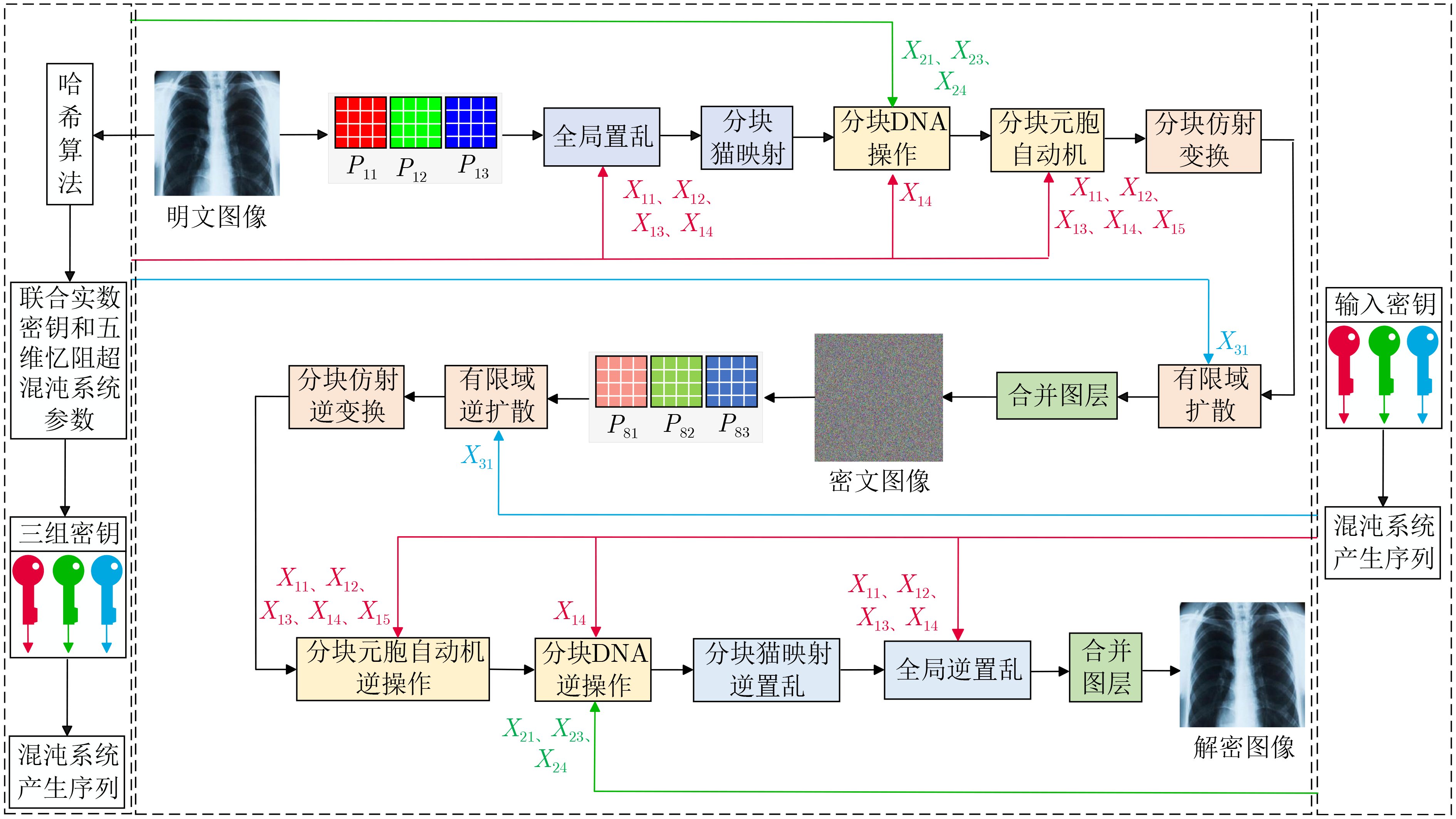
摘要: 针对医学图像在传输与存储过程中的安全防护需求,设计了一种DNA编码、块元胞自动机与忆阻超混沌协同的加密算法。该算法构建了“置乱-扩散-置乱-扩散”的安全架构:首先,利用五维忆阻超混沌系统及三组独立密钥产生序列;其次,采用全局置乱联合分块猫映射完成首次置乱;再次,通过DNA编码运算协同块元胞自动机实现首次扩散;最后,通过分块仿射变换与有限域扩散分别完成二次置乱及二次扩散。与采用全局元胞自动机演化的算法不同,该算法的分块机制使局部数据损坏仅局限于对应子块,显著提升抗噪声和裁剪能力;同时,基于五维忆超混沌系统与三组独立密钥的结构设计,有效扩大了密钥空间。仿真实验进一步证实了该算法的性能:其密钥空间大,密钥敏感性与抗差分攻击能力较强;面对噪声干扰与数据裁剪时,该算法亦表现出良好的鲁棒性与容错能力。因而该算法可为医学影像数据的机密性提供可靠保护。Abstract:
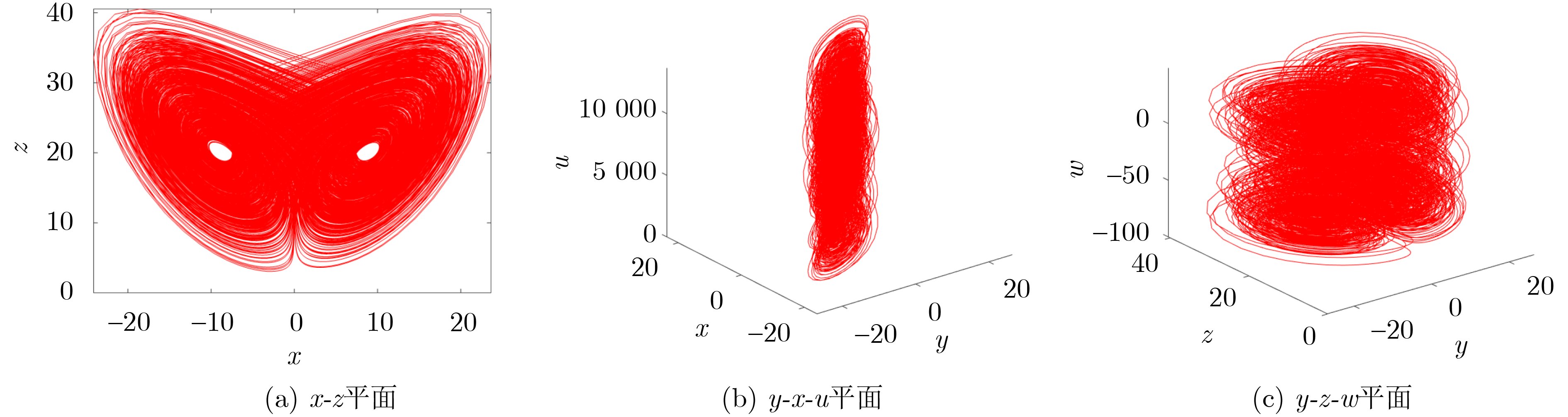
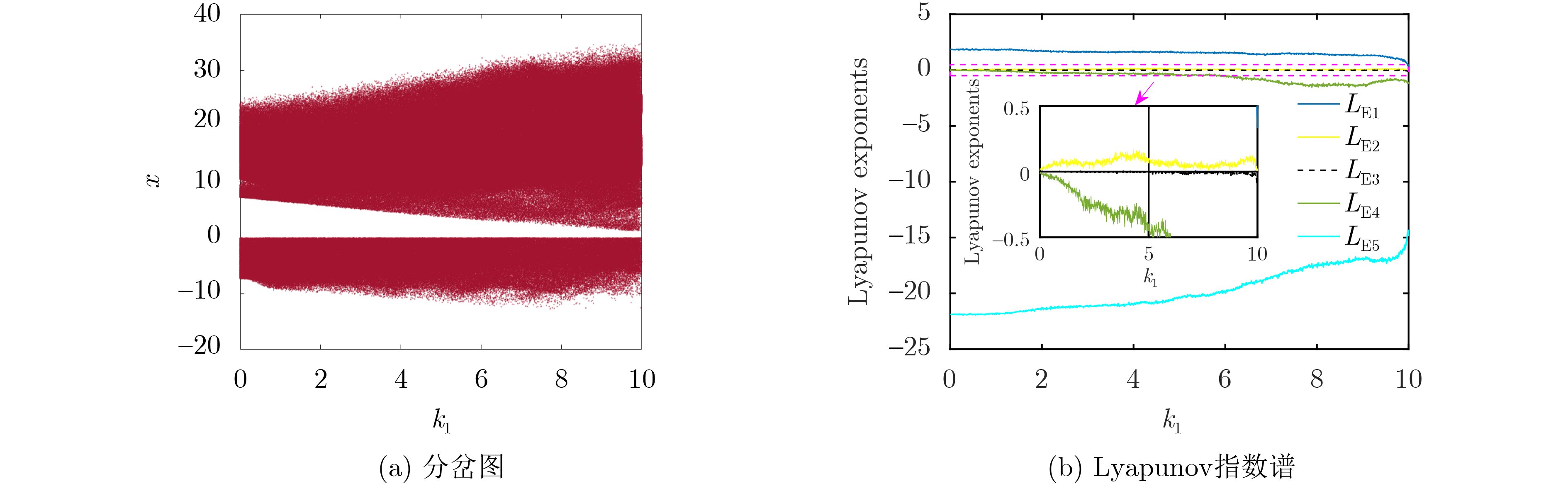
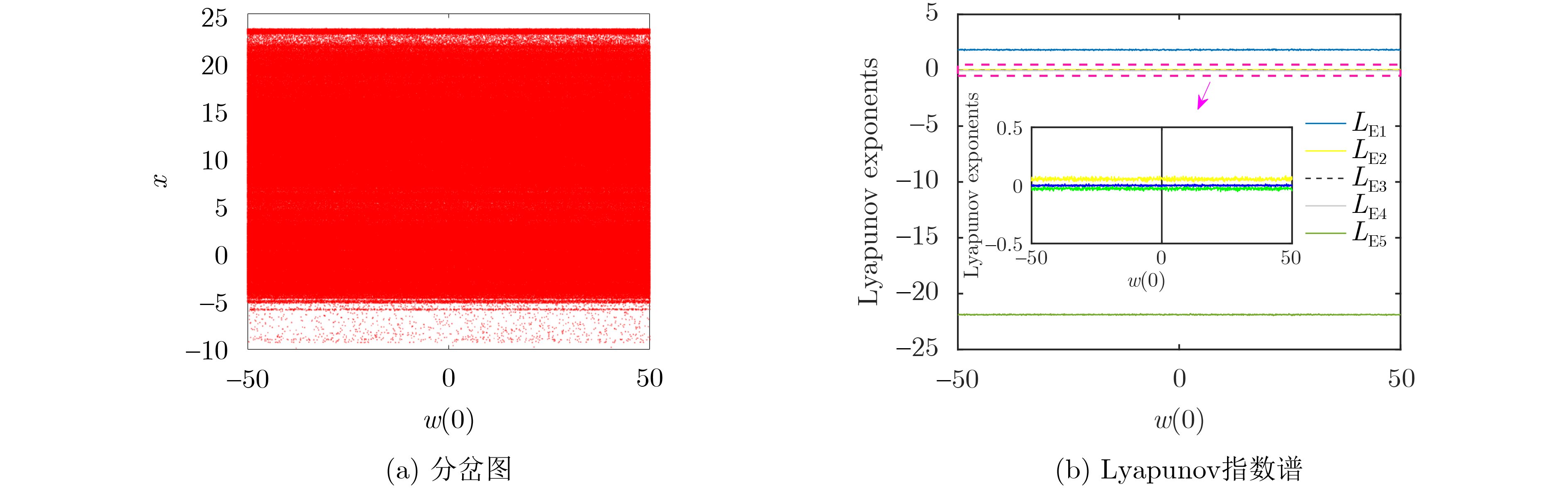
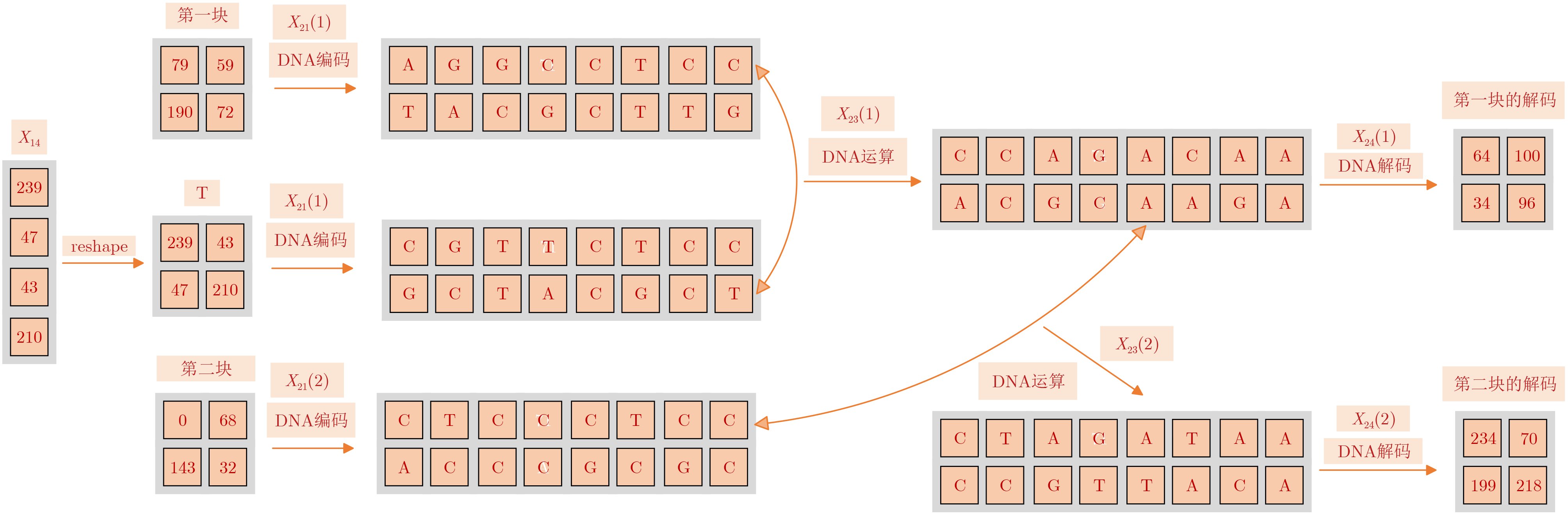
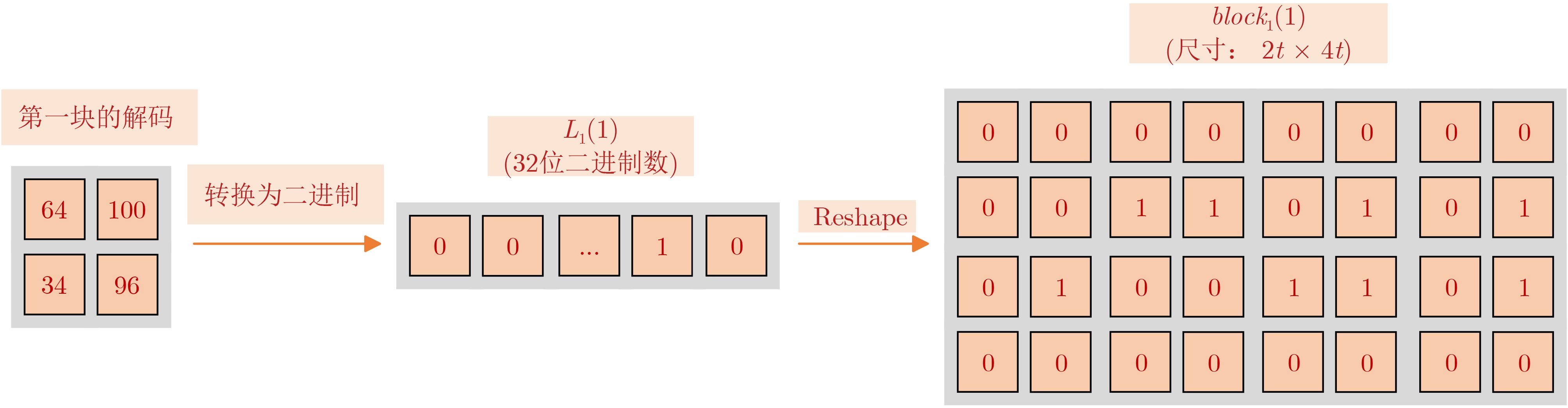
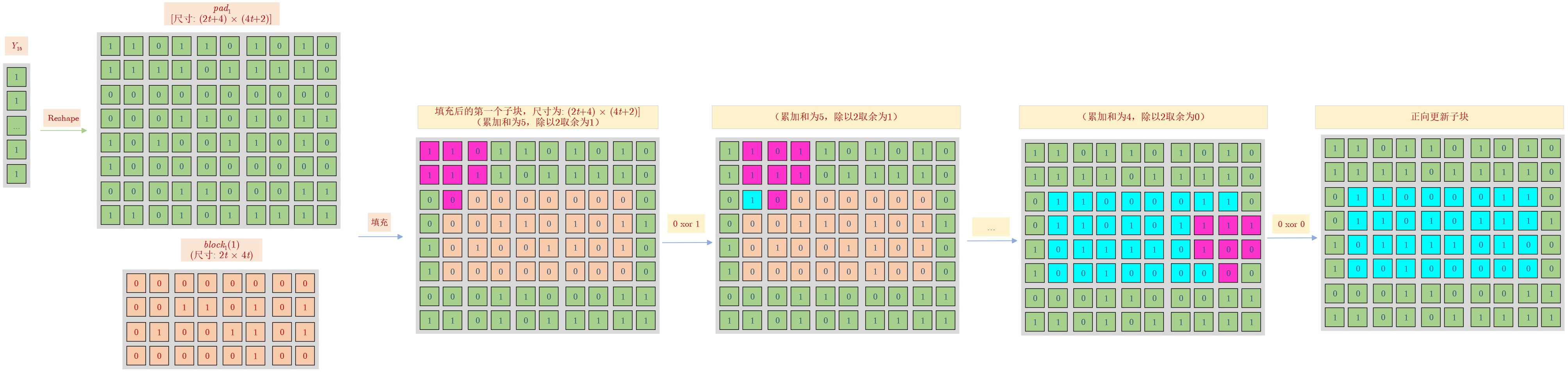
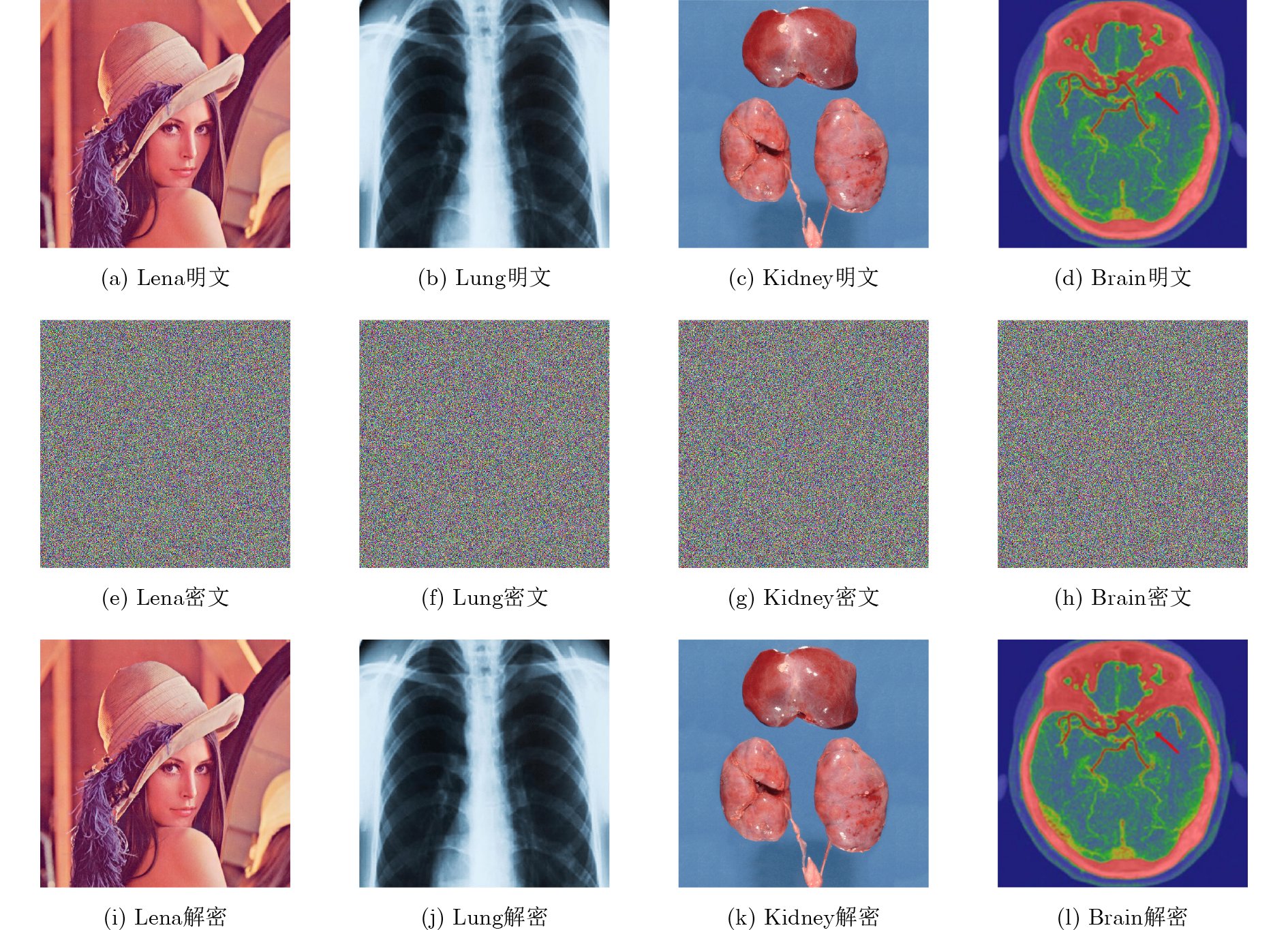
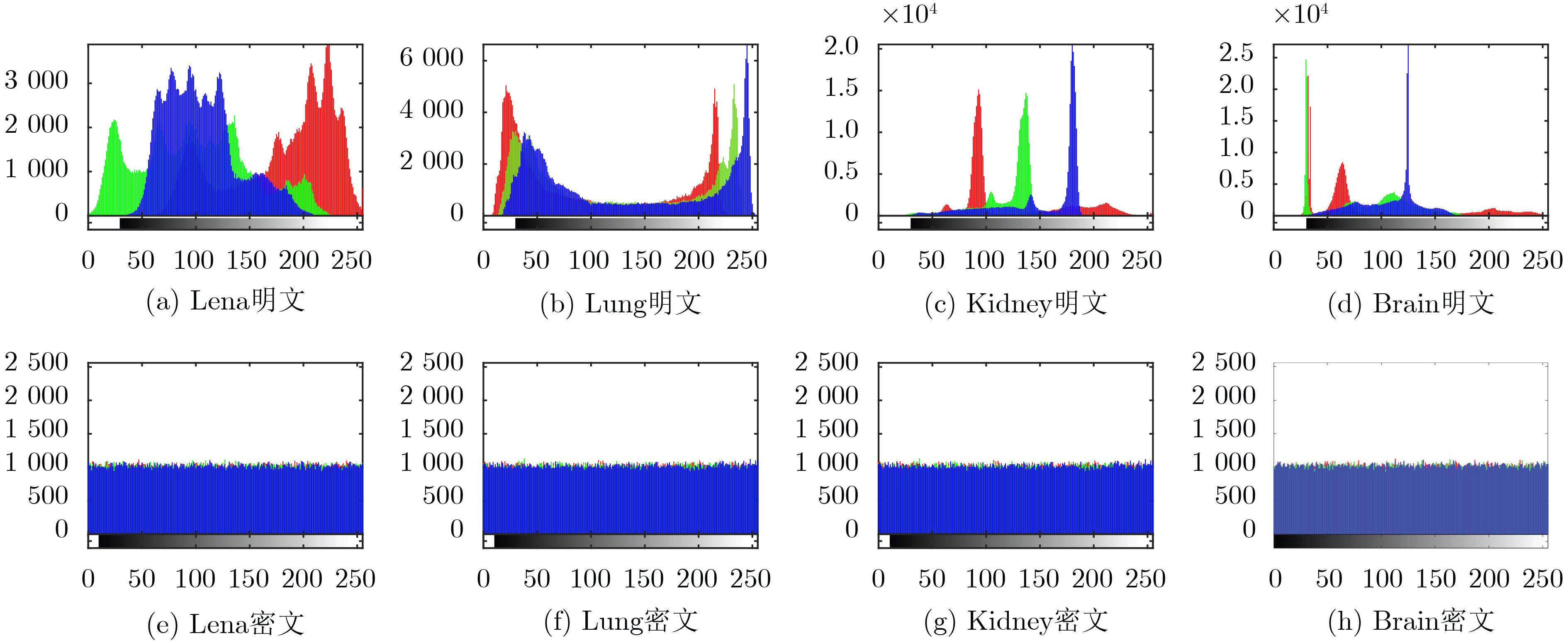
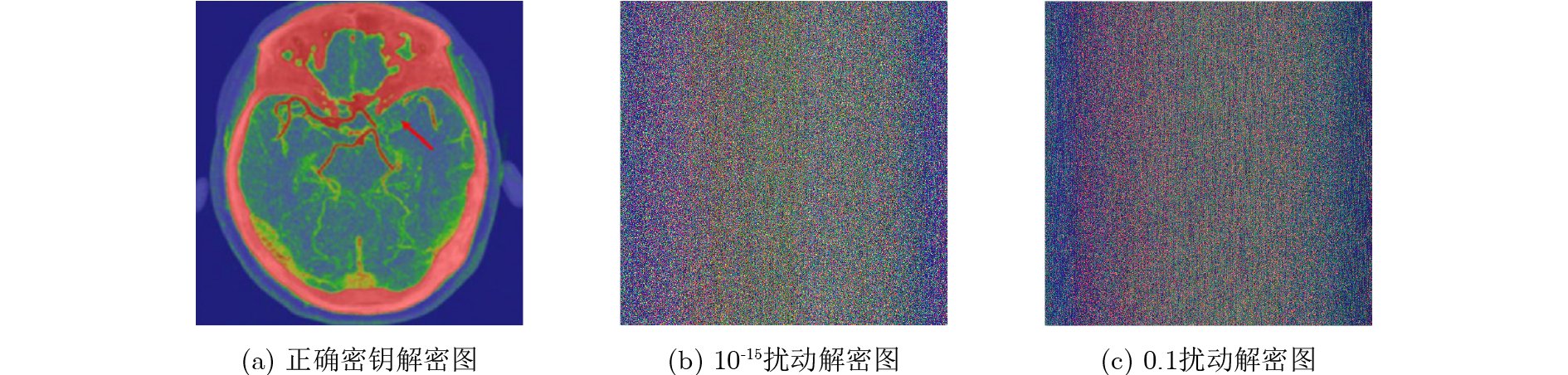
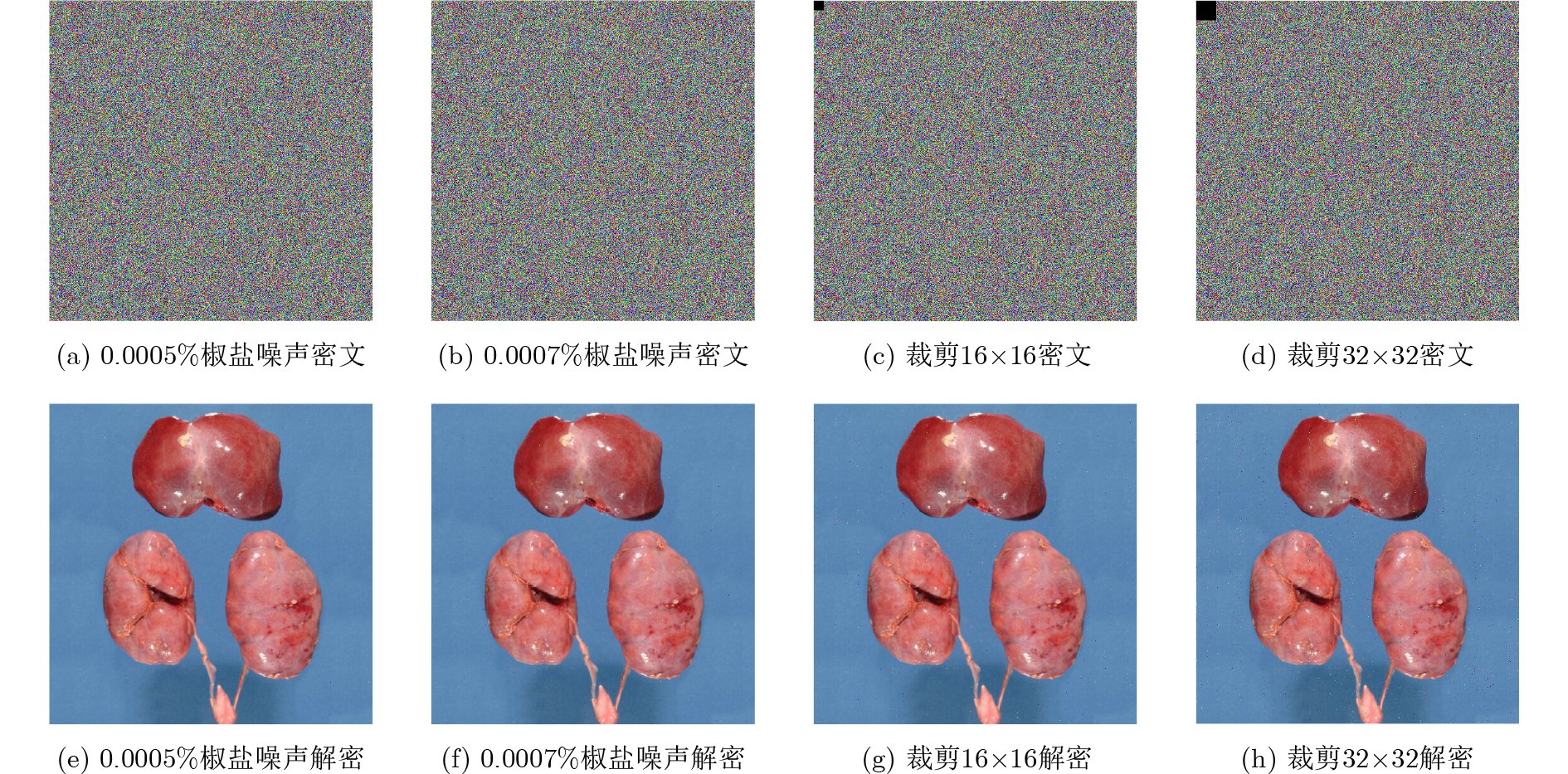
Objective To address the privacy leakage risks of medical images during transmission and storage, and to overcome the shortcomings of existing encryption methods (such as insufficient cropping resistance of cellular automata and limited key space of low-dimensional chaotic systems), this study constructs a medical image encryption scheme based on a five-dimensional hyperchaotic system. The proposed scheme adopts a "scrambling-diffusion-scrambling-diffusion" encryption framework and performs block processing on cellular automata to enhance the security and robustness of the encryption algorithm, thereby providing technical support for data protection in smart healthcare scenarios. Methods First, a magnetron memristor is introduced into the classical Chen chaotic system to construct a five-dimensional dual-memristive hidden hyperchaotic system, and its dynamical behavior is verified through Lyapunov exponent spectra, bifurcation diagrams, and phase space trajectory analysis. Second, based on this system, a "scrambling-diffusion-scrambling-diffusion" encryption framework is designed: the SHA-256 hash algorithm combined with preset key parameters is used to generate the initial values of the chaotic system; global scrambling and block cat mapping are employed to achieve the first round of pixel position scrambling; DNA encoding, operation, and decoding, together with a block cellular automata diffusion mechanism, are used to perform the first round of pixel value transformation; then, block affine transformation is applied for the second round of pixel position scrambling, and diffusion based on the finite field GF(257) is used for the second round of pixel value transformation. Finally, the security performance of the algorithm is evaluated through multiple metrics, including information entropy, chi-square test, correlation analysis, key sensitivity analysis, differential attack resistance testing, as well as cropping and noise attack tests. Results and Discussions Analysis shows that the proposed five-dimensional dual-memristive system exhibits two positive Lyapunov exponents, demonstrating typical hyperchaotic behavior. The encryption algorithm designed based on this system achieves a key space of 2 1495 and is highly sensitive to tiny key perturbations (NPCR of 99.612% and UACI of 33.475% under a 10–15 perturbation), enabling it to effectively resist brute-force. Meanwhile, the average information entropy (7.99933 ), average chi-square value (246.2866 ), and adjacent pixel correlation coefficients (close to 0) of the ciphertext images indicate that the statistical features have been concealed, allowing resistance against statistical attacks. Furthermore, the algorithm possesses outstanding differential attack resistance (average NPCR:99.6096 %, average UACI: 33.479%) along with good robustness against cropping and noise.Conclusions Based on a five-dimensional hyperchaotic system, we construct a medical image encryption scheme that integrates DNA coding and block cellular automata under a dual scrambling-diffusion architecture, and verify its security performance against statistical attacks, differential attacks, cropping, and noise. This study provides a reference for the application of high-dimensional hyperchaos in medical image encryption, and provides practical cases for enhancing the resistance of cellular automata against cropping and noise attacks. -
表 1 卡方值
图像 R通道 G通道 B通道 平均值 标准/$ {\chi }^{2}=0.05 $ Lena 268.0547 233.5293 246.1094 249.2311 √ Lung 219.4941 237.0625 269.3672 241.9746 √ Kidney 261.1504 241.6172 247.8633 250.2103 √ Brain 250.1973 261.5781 252.8652 254.8802 √ Peppers 260.7891 226.4180 218.1934 235.1335 √  下载: 导出CSV
表 2 信息熵
通道 Lena Lung Kidney Brain Peppers R通道 7.9993 7.9994 7.9993 7.9993 7.9993 G通道 7.9994 7.9993 7.9993 7.9993 7.9994 B通道 7.9993 7.9993 7.9993 7.9993 7.9994
下载: 导出CSV
表 3 抗差分攻击测试
图片 NPCR(%) UACI(%) Lena 99.603 33.474 Lung 99.611 33.500 Kidney 99.618 33.490 Brain 99.609 33.481 Peppers 99.607 33.468
下载: 导出CSV
表 6 抗噪声和裁剪测试
算法 抗噪声测试(PSNR) 抗裁剪测试(PSNR) 0.0001 %0.0003 %0.0005 %0.0007 %8×8 16×16 32×32 本文(Kidney) 51.1183 49.8473 43.8562 42.2341 40.5762 36.8018 32.0749 本文(Lena) 53.1029 52.9894 48.3084 45.4511 39.7814 36.0242 31.2345 全局元胞自动机(Lena)[25] 35.9325 34.1874 33.7120 28.6679 18.2841 14.0574 11.7849
下载: 导出CSV
表 7 消融研究
实验 相关性系数 卡方值 信息熵 抗差分攻击 水平方向 垂直方向 对角方向 NPCR UACI 情形1:去除算法中的分块仿射变换 0.0059 0.0071 0.0053 256.4290 7.99927 99.6076 33.4828 情形2:保留算法中的分块仿射变换 0.0049 0.0037 0.0034 246.2859 7.99932 99.6096 33.4826
下载: 导出CSV
表 9 测试数据平均值对比
方法 卡方值 相关性系数 信息熵 抗差分攻击 密钥
空间时间
复杂度水平方向 垂直方向 对角方向 NPCR UACI 本文 246.2859 0.0049 0.0037 0.0034 7.99932 99.6096 33.4826 $ {2}^{1495} $ >O(15×M×N) 比特替换-DNA编码算法[26] 259.5318 0.0053 0.0093 0.0119 7.99930 99.6125 33.6460 $ {2}^{747} $ O(7×M×N) 二维SCML-格密码算法[27] 256.9033 0.0108 0.0071 0.0085 7.99930 99.6065 33.4722 $ {2}^{478} $ NA 超混沌映射-DNA立方体算法[28] 249.3060 0.0030 0.0053 0.0052 7.9988 99.6074 33.4463 $ {2}^{256} $ NA
下载: 导出CSV
表 8 NIST测试
测试项目 P-value 通过比例 通过率 (%) 结果 频率测试 0.904708 198/200 99.00% 通过 块内频率测试 0.021262 199/200 99.50% 通过 游程测试 0.296834 197/200 99.50% 通过 最长游程测试 0.289667 199/200 99.50% 通过 二元矩阵秩测试 0.554420 198/200 99.00% 通过 离散傅里叶变换测试 0.719747 194/200 97.00% 通过 非重叠模板匹配测试(最小) 0.978072 194/200 100.00% 通过 重叠模板匹配测试 0.924076 197/200 98.50% 通过 通用统计测试 0.319084 198/200 99.00% 通过 近似熵测试 0.137282 197/200 98.50% 通过 随机游走测试(最小) 0.059665 117/118 99.25% 通过 随机游走变体测试(最小) 0.462821 114/118 96.60% 通过 序列测试 0.437274 197/200 99.50% 通过 线性复杂度测试 0.093720 196/200 98.00% 通过 累积和测试(前向) 0.350485 198/200 99.00% 通过 累积和测试(后向) 0.296834 199/200 99.50% 通过
下载: 导出CSV
-
[1] ZHANG Wei, XUAN Jingwen, CAI Mingxuan, et al. Impact of patient engagement types on doctors’ service provision in online health communities[J]. Patient Education and Counseling, 2025, 134: 108700. doi: 10.1016/j.pec.2024.108700. [2] WANG Hongyang, JIN Jian, LI Li, et al. Driving online healthcare growth amid the digital divide: How trust in professional signals from doctor biographies shapes patient decisions[J]. Healthcare, 2025, 13(12): 1418. doi: 10.3390/healthcare13121418. [3] HAMILTON D, KOHLI S S, MCBETH P, et al. Low earth orbit communication satellites: A positively disruptive technology that could change the delivery of health care in rural and northern Canada[J]. Journal of Medical Internet Research, 2025, 27: e46113. doi: 10.2196/46113. [4] LUO Min, WANG Pingli, QIU Da, et al. Analysis and application of conditionally symmetric memristive chaotic systems with attractor growth phenomena[J]. Chaos, Solitons & Fractals, 2025, 200: 117027. doi: 10.1016/j.chaos.2025.117027. [5] ABD EL-AZIEM A H, MOHAMED M H, and ABDELHAFEEZ A. High-security image encryption using baker map confusion and extended PWAM chaotic diffusion[J]. Computers, 2026, 15(2): 106. doi: 10.3390/computers15020106. [6] LAI Qiang, WANG Huangtao, ZHAO Xiaowen, et al. Shuffle medical image encryption scheme based on 4D memristive hyperchaotic map[J]. Nonlinear Dynamics, 2025, 113(10): 12289–12307. doi: 10.1007/s11071-024-10692-x. [7] 刘嵩, 李子涵, 邱达, 等. 可控多双涡卷忆阻Hopfield神经网络建模及其动力学分析[J]. 电子与信息学报, 2026, 48(1): 417–428. doi: 10.11999/JEIT250972.LIU Song, LI Zihan, QIU Da, et al. Modeling and dynamic analysis of controllable multi-double scroll Memristor Hopfield neural network[J]. Journal of Electronics & Information Technology, 2026, 48(1): 417–428. doi: 10.11999/JEIT250972. [8] 蔺海荣, 段晨星, 邓晓衡, 等. 双忆阻类脑混沌神经网络及其在IoMT数据隐私保护中应用[J]. 电子与信息学报, 2025, 47(7): 2194–2210. doi: 10.11999/JEIT241133.LIN Hairong, DUAN Chenxing, DENG Xiaoheng, et al. Dual-Memristor brain-like chaotic neural network and its application in IoMT data privacy protection[J]. Journal of Electronics & Information Technology, 2025, 47(7): 2194–2210. doi: 10.11999/JEIT241133. [9] 安新磊, 李治甫, 薛睿, 等. 多涡卷保守混沌系统的构建及在图像加密中的应用[J]. 电子与信息学报, 2025, 47(11): 4470–4481. doi: 10.11999/JEIT250432.AN Xinlei, LI Zhifu, XUE Rui et al. Construction of multi-Scroll conservative chaotic system and its application in image encryption[J]. Journal of Electronics & Information Technology, 2025, 47(11): 4470–4481. doi: 10.11999/JEIT250432. [10] BENKOUIDER K, MAHDAL M, VAIDYANATHAN S, et al. FPGA implementation and voice encryption application of a new hyperchaotic system with high complexity[J]. Scientific Reports, 2026, 16(1): 4485. doi: 10.1038/s41598-025-34605-z. [11] YANG Ningning, ZHANG Tian, WU Chaojun, et al. Modeling and dynamic analysis of a novel Four-Wing Memristive Hyperchaotic system and its application in secure communication[J]. International Journal of Bifurcation and Chaos, 2026, 36(3): 2650031. doi: 10.1142/S0218127426500318. [12] 孙绍泽, 李锦屏, 李新颖. 基于广义忆阻器的Lü超混沌系统分析及其应用[J]. 兰州大学学报(自然科学版), 2023, 59(3): 387–397. doi: 10.13885/j.issn.0455-2059.2023.03.014.SUN Shaoze, LI Jinping, and LI Xinying. Analysis and application of the Lü hyperchaotic system based on generalized memristor[J]. Journal of Lanzhou University (Natural Sciences), 2023, 59(3): 387–397. doi: 10.13885/j.issn.0455-2059.2023.03.014. [13] GAO Yuhui, LIU Jingyi, ZHANG Bo, et al. Image encryption algorithm based on four-dimensional memristor hyperchaotic system and parallel compressive sensing[J]. Nonlinear Dynamics, 2024, 112(22): 20381–20400. doi: 10.1007/s11071-024-10054-7. [14] YU Fei, TAN Bohong, HE Ting, et al. A wide-range adjustable conservative memristive hyperchaotic system with transient quasi-periodic characteristics and encryption application[J]. Mathematics, 2025, 13(5): 726. doi: 10.3390/math13050726. [15] CHONG Zhenglong, WANG Cong, ZHANG Hongli, et al. Image encryption algorithm based on a hybrid model of novel memristive hyperchaotic systems, DNA coding, and hash functions[J]. Complex System Modeling and Simulation, 2024, 4(3): 303–319. doi: 10.23919/CSMS.2024.0015. [16] SUBATHRA S and THANIKAISELVAN V. Enhanced security for medical images using a new 5D hyper chaotic map and deep learning based segmentation[J]. Scientific Reports, 2025, 15(1): 22628. doi: 10.1038/s41598-025-04906-4. [17] BENYAHIA K, KHOBZAOUI A, and BENBAKRETI S. Hybrid image encryption: Leveraging DNA sequencing and Lorenz chaotic dynamics for enhanced security[J]. Cluster Computing, 2025, 28(4): 218. doi: 10.1007/s10586-024-04948-9. [18] WANG Xuedong, LIU Xingbin, and PENG Junwei. A novel image encryption scheme based on a 3D enhanced chaotic map and DNA computing model[J]. Journal of the Franklin Institute, 2025, 362(11): 107790. doi: 10.1016/j.jfranklin.2025.107790. [19] HUANG Li, DING Cong, BAO Zhenjie, et al. A DNA encoding image encryption algorithm based on chaos[J]. Mathematics, 2025, 13(8): 1330. doi: 10.3390/math13081330. [20] SUN Shiji, YANG Wenzhong, YIN Yabo, et al. A color image encryption scheme utilizing a logistic-sine chaotic map and cellular automata[J]. Scientific Reports, 2025, 15(1): 21603. doi: 10.1038/s41598-025-04968-4. [21] ABDUL Y, RAMASAMY V, KUKARAM G, et al. A dynamic image encryption scheme through 2-D cellular automata and chaotic logistic map[J]. Scientific Reports, 2025, 15(1): 36116. doi: 10.1038/s41598-025-21225-w. [22] CHEN Guanrong and UETA T. Yet another chaotic attractor[J]. International Journal of Bifurcation and Chaos, 1999, 9(7): 1465–1466. doi: 10.1142/S0218127499001024. [23] CHEN Mo, REN Xue, WU Huagan, et al. Periodically varied initial offset boosting behaviors in a memristive system with cosine memductance[J]. Frontiers of Information Technology & Electronic Engineering, 2019, 20(12): 1706–1716. doi: 10.1631/FITEE.1900360. [24] CHAI Xiuli, FU Xianglong, GAN Zhihua, et al. A color image cryptosystem based on dynamic DNA encryption and chaos[J]. Signal Processing, 2019, 155: 44–62. doi: 10.1016/j.sigpro.2018.09.029. [25] AN Tingyu, GAO Tao, CHEN Ting, et al. Traffic image encryption based on activation function-type chaotic map and reversible cellular automaton[J]. Expert Systems with Applications, 2025, 269: 126407. doi: 10.1016/j.eswa.2025.126407. [26] YOUSIF S F, ABBOUD A J, and ALHUMAIMA R S. A new image encryption based on bit replacing, chaos and DNA coding techniques[J]. Multimedia Tools and Applications, 2022, 81(19): 27453–27493. doi: 10.1007/s11042-022-12762-x. [27] GAO Mengli, LI Jingqing, DI Xiaoqiag, et al. A blind signature scheme for IoV based on 2D-SCML image encryption and lattice cipher[J]. Expert Systems with Applications, 2024, 246: 123215. doi: 10.1016/j.eswa.2024.123215. [28] LAI Qiang and HUA Hanqiang. Secure medical image encryption scheme for Healthcare IoT using novel hyperchaotic map and DNA cubes[J]. Expert Systems with Applications, 2025, 264: 125854. doi: 10.1016/j.eswa.2024.125854. -

 下载:





图(15) / 表(9)
计量
- 文章访问数: 11
- HTML全文浏览量: 0
- PDF下载量: 0
- 被引次数: 0
