




COMPASS: An Integrated Computing-network Routing Mechanism for Spatiotemporal Mismatch in Computing Power Network
-
摘要: 数字经济推动全球数据量指数级增长,对底层算力基础设施提出严苛挑战。算力网络通过算力与网络融合实现算力资源全局优化调度,但算力资源分布不均与任务到达不平衡性制约其性能。现有路由机制因缺乏计算和网络的全局视角和动态适应能力,导致任务失败率上升、系统负载不均衡。为此,该文提出基于深度强化学习的算力网络智能路由算法COMPASS。COMPASS通过学习任务、网络和计算复杂特征,融合网络拓扑、算力资源状态、任务特性的三维状态表征,采用目标算力节点与路由路径联合动作设计,并引入多目标加权奖励机制优化任务完成时间和失败率等关键指标。为验证方案有效性,该文开发了算力网络路由仿真平台并集成真实网络拓扑。实验表明,COMPASS较传统方法奖励值提升48%,负载均衡性能改善,在任务分布不均衡场景下将任务失败率从27.0%降至9.5%,展现强适应性。Abstract:
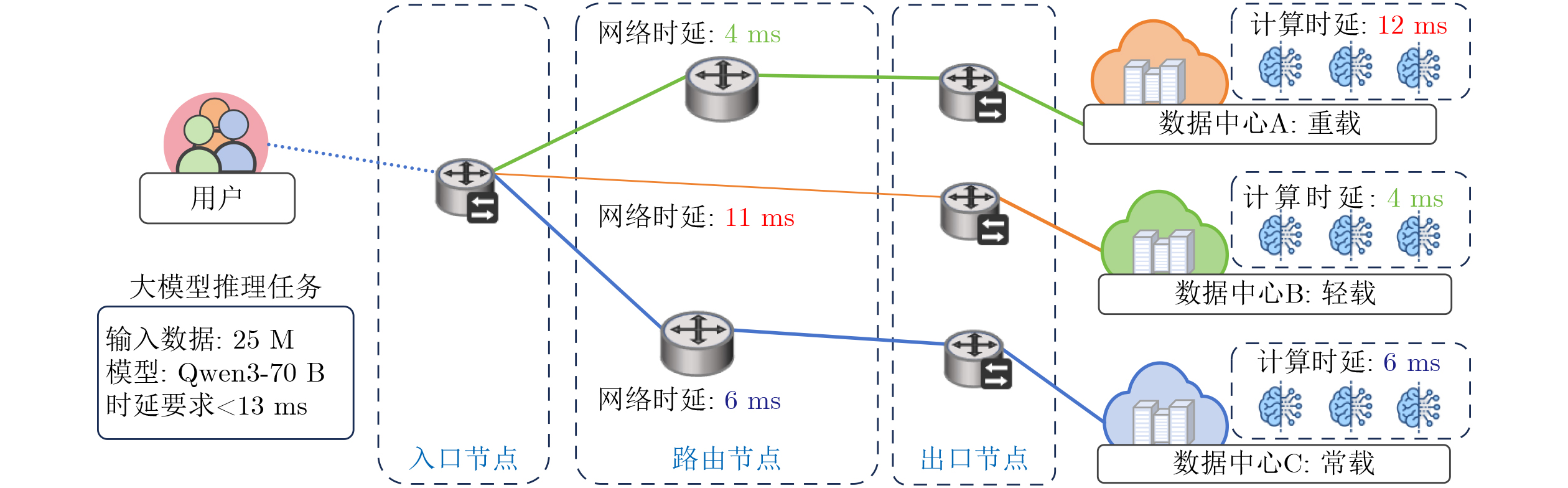
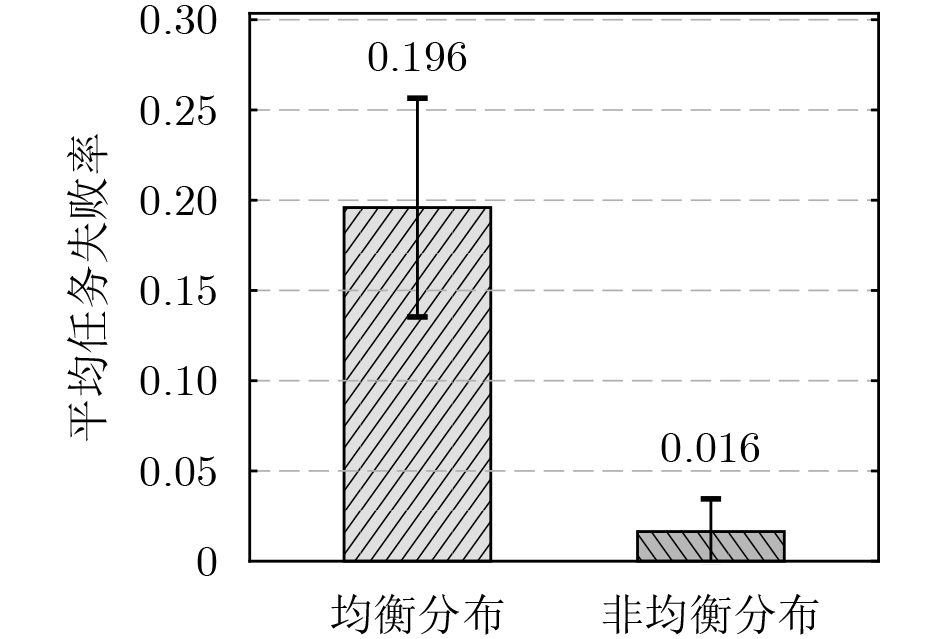
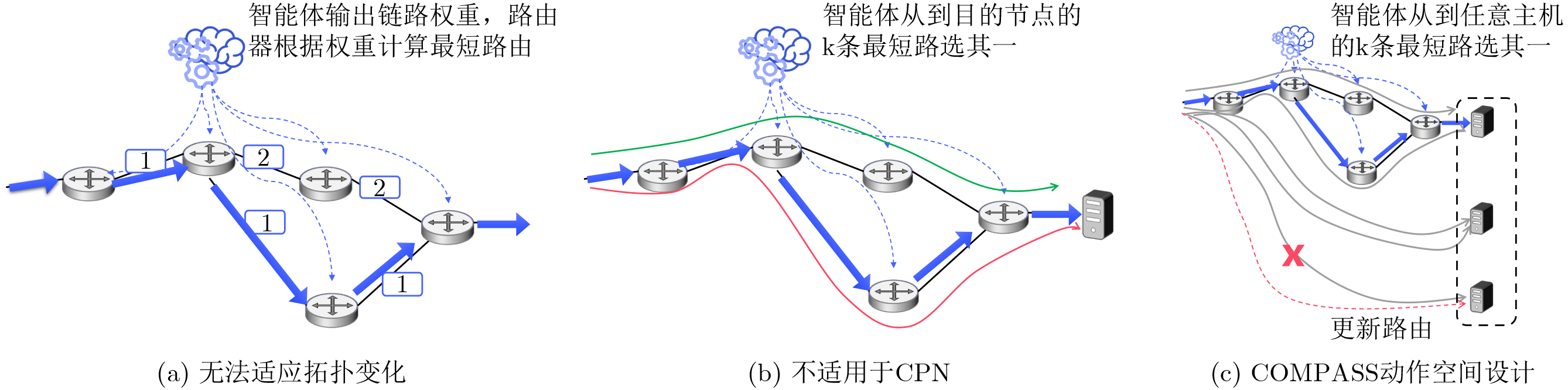
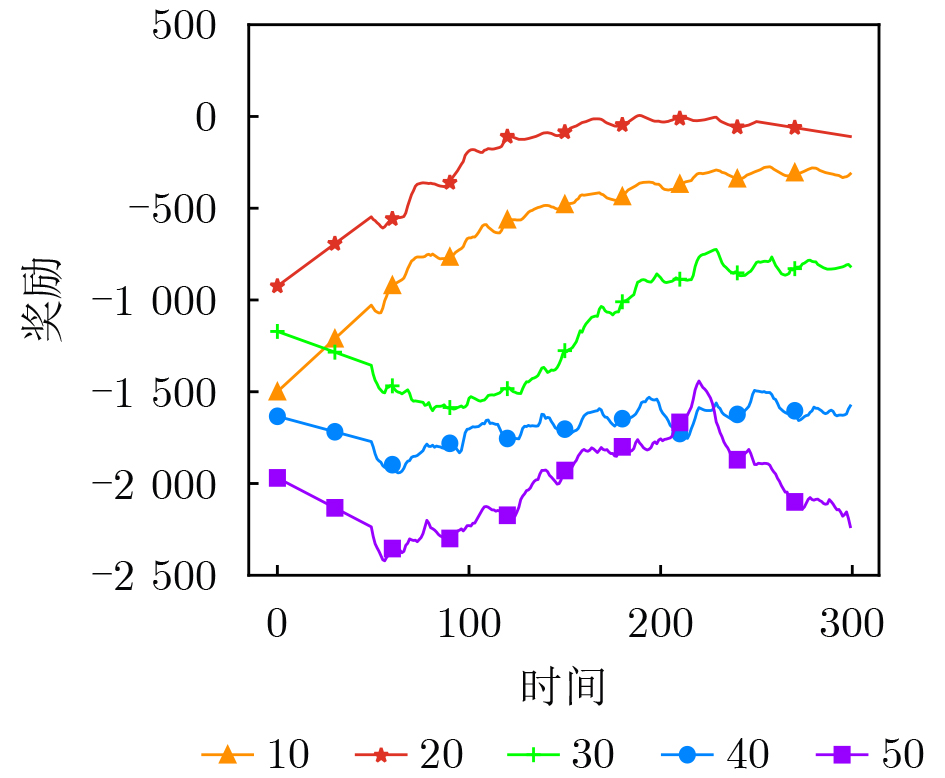
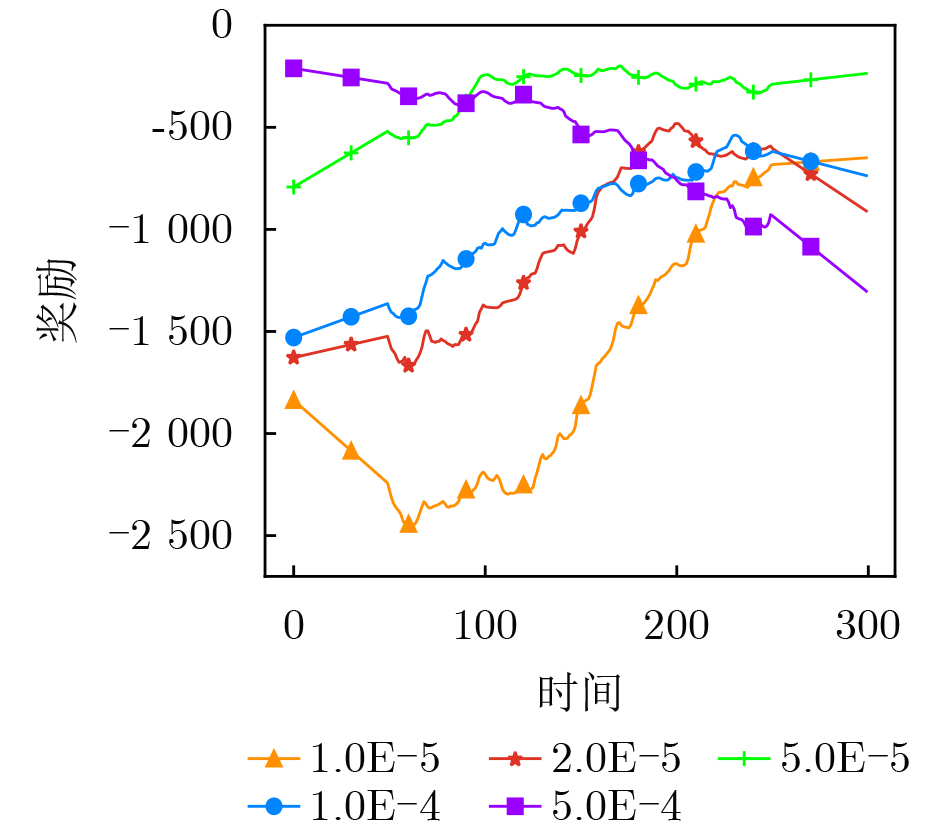
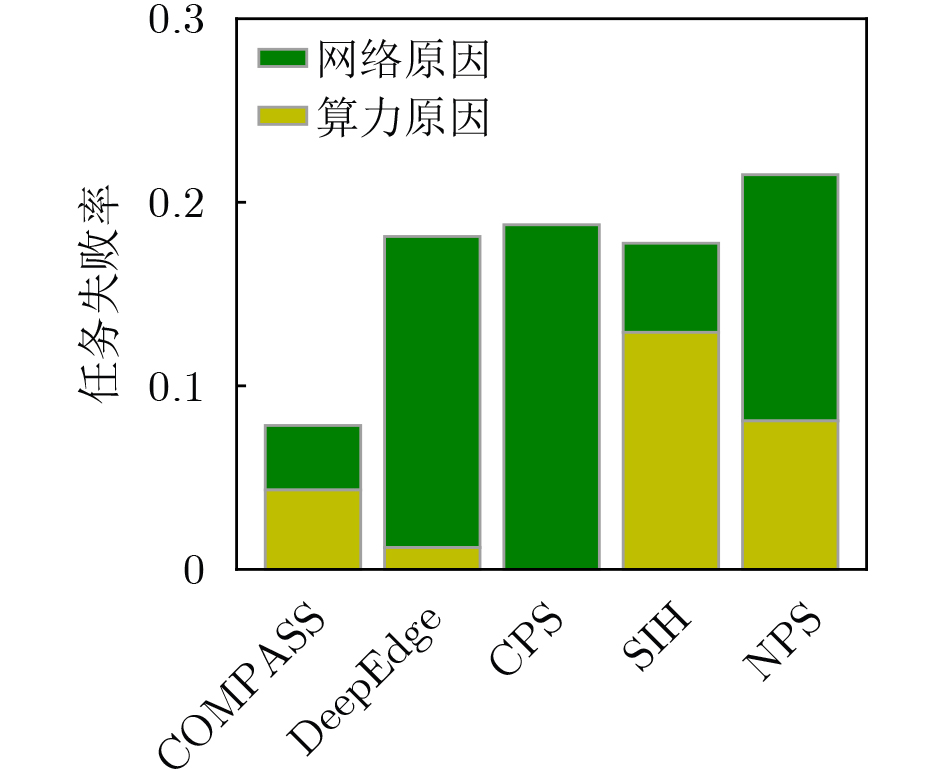
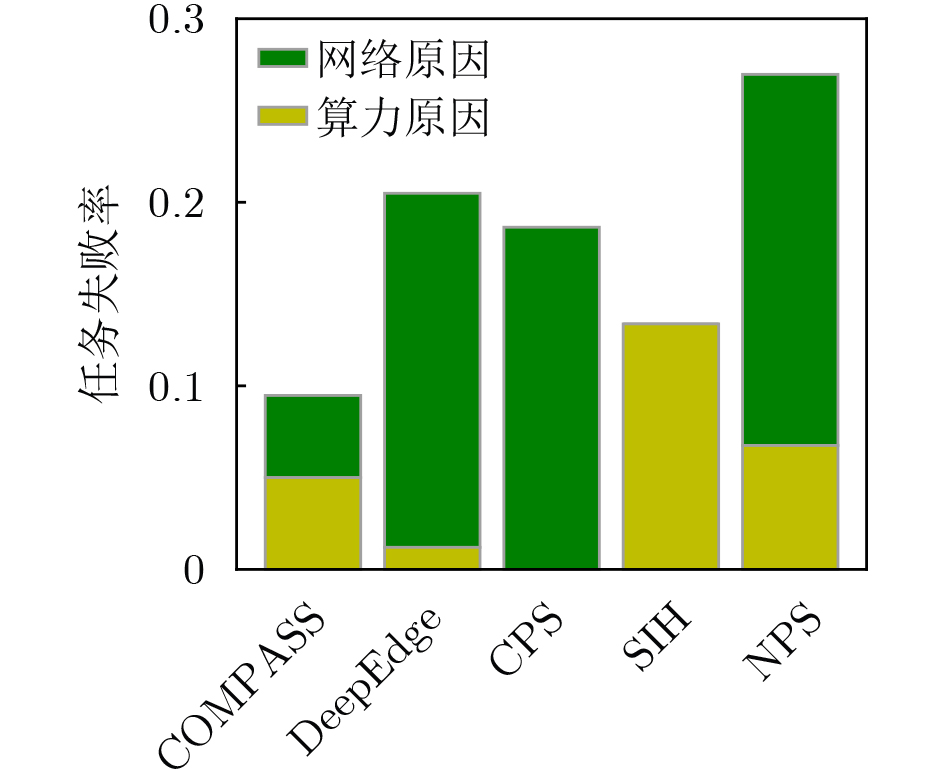
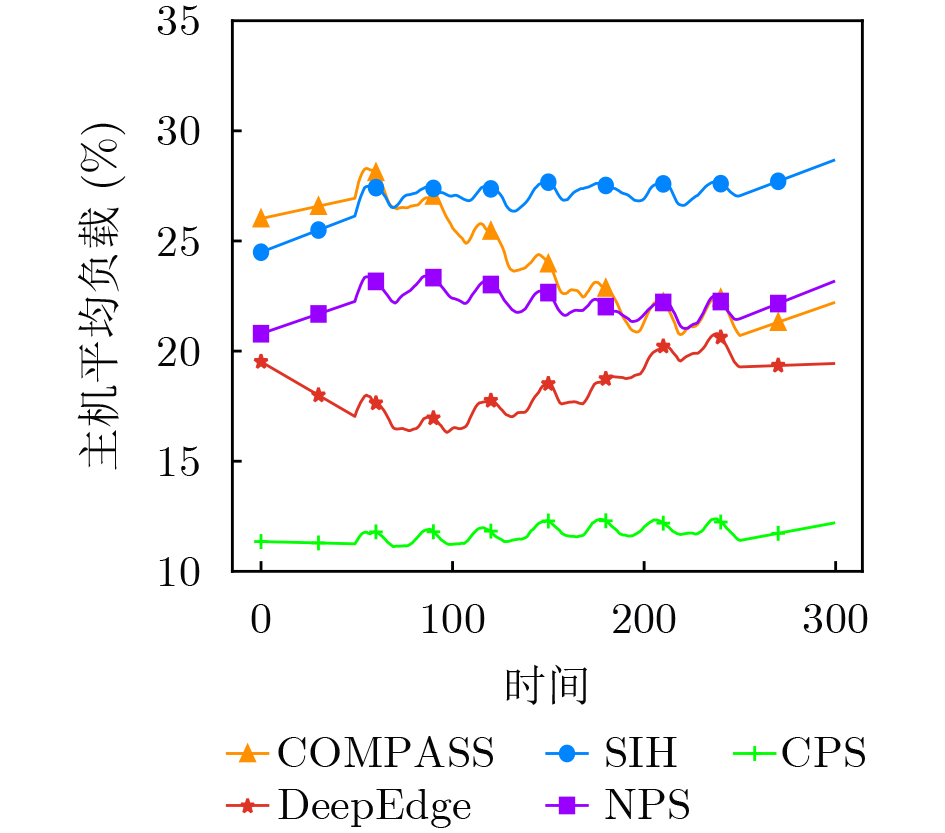
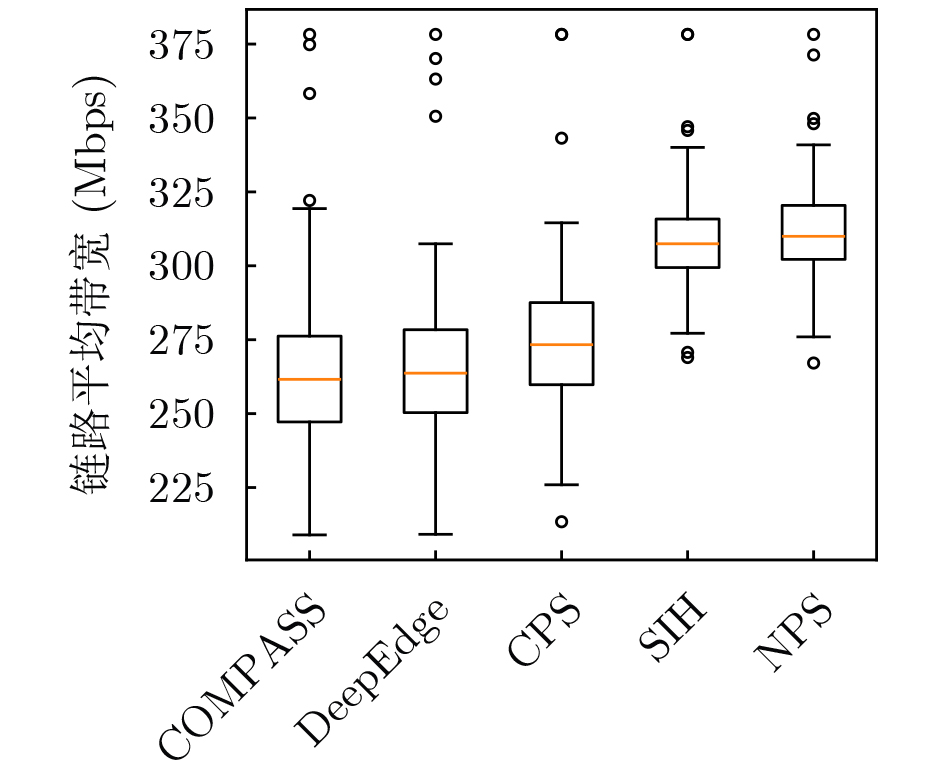
Objective The rapid growth of global data imposes significant challenges on computing infrastructure. However, Computing Power Network (CPN) still suffers from spatiotemporal resource mismatch caused by the separation of network routing and computing task scheduling, as computing resource states and network states are represented in different dimensions. This mismatch leads to suboptimal scheduling decisions and increases task failures by nearly 20% under imbalanced task arrival scenarios compared with uniform task distributions. Moreover, existing Deep Reinforcement Learning (DRL)-based scheduling methods have limited topology adaptability and inflexible action spaces when handling arbitrary computing nodes in CPN. This paper aims to develop an integrated computing-network routing mechanism to address resource mismatch, jointly optimize task failure rates and completion times, and improve the dynamic adaptability and service quality of CPN. Methods First, a centralized software-defined CPN architecture is constructed, and a mathematical model is established for task arrivals, network bandwidth, computing resources, and service times. A multi-objective optimization function is formulated to minimize task failures and total service time. Then, the Double Deep Q-Network (DDQN)-based COMPASS algorithm is proposed with three key designs: (1) a three-dimensional state representation integrating network topology, real-time computing resource status, and task attributes; (2) a joint and truncated action space that couples computing node selection and routing path decisions to reduce exploration complexity; and (3) a multi-objective weighted reward mechanism with higher penalties for task failures to avoid suboptimal strategy convergence. An asynchronous training workflow is further designed to address delayed feedback caused by task execution latency, integrating routing decisions with DRL training. To evaluate the performance, the CNRSim platform is developed based on EdgeCloudSim, incorporating three real backbone network topologies, four task types, and representative benchmark algorithms. Results and Discussions Parameter tuning experiments identify that an action space dimension of 20 ( Fig. 5 ) and a learning rate of 5.0E-5 achieve a balance between convergence speed and final performance (Fig. 6 ). Evaluations on three real backbone network topologies demonstrate that COMPASS outperforms benchmark methods, improving the average reward by 48% (Fig. 7 ) and achieving the lowest cumulative task failure rate (Fig. 8 ). In particular, under imbalanced task distributions, COMPASS reduces the task failure rate from 27.0% to 9.5% (Fig. 9 ). Further analysis on the GEANT2 topology shows that COMPASS achieves better computing node load balancing (Fig. 10 ) and handles more tasks with lower bandwidth utilization (Fig. 11 ). Failure analysis indicates that joint optimization of computing and network resources effectively reduces failures caused by insufficient bandwidth and overloaded computing nodes (Fig. 9 ). Moreover, COMPASS maintains the highest average rewards under dynamic workloads (Table 3 ).Conclusions This paper proposes COMPASS, a DRL-based integrated computing-network routing algorithm, to address performance bottlenecks in CPN caused by spatiotemporal mismatches between resource distribution and task arrivals. By adopting a three-dimensional state representation, joint action design, and a multi-objective reward mechanism, COMPASS enables global collaborative scheduling of computing and network resources. Extensive experiments on the CNRSim platform verify that COMPASS achieves better performance than benchmark methods in terms of reward improvement, task failure reduction, and load balancing, particularly under imbalanced scenarios. This work provides an effective approach for CPN optimization and large-scale distributed resource scheduling. Future work will investigate task fault tolerance and retransmission mechanisms, as well as the combination of COMPASS with emerging intelligent technologies for further optimization. -
Key words:
- Computing Power Network (CPN) /
- Deep Reinforcement Learning (DRL) /
- Routing /
- Scheduling
-
1 为到达算力网络的任务决策路由
In:task Out:route 1:state ← getState() 2:action ← agent.act(state, task) 3:k_path ← network.get_k_route() 4:route ← k_path[action] 5:memory.set(state, action) 6:previousMemory.set_next_state(state)  下载: 导出CSV
2 训练智能体
In:a complete task, service_time 1:isDone ← service_time==-1 ? true ; false 2:reward ← compute_reward(isFailed, serviceTime) 3:state_id ← task.get_state_id() 4:memory.set(state_id, reward, isDone) 5:for m in memory do 6: agent.train(m) 7:end for
下载: 导出CSV
表 1 不同类型任务的属性参数
属性 类型1 类型2 类型3 类型4 任务到达间隔(s) 2 3 20 7 上传数据(KB) 1 500 20 2 500 25 下载数据(KB) 25 1 250 200 1 000 算力使用率(%) 6 2 30 10 出现频率(%) 30 20 20 30
下载: 导出CSV
表 2 实验参数定义
参数名称 取值 参数名称 取值 强化学习折扣因子γ 0.95 更新目标Q网络间隔 10 模型学习率 0.00005 模型的经验池大小 1000000 ε-Greedy策略中ε的渐变率 0.999 式(11)调节奖励下界$ {\alpha }_{1} $ 0 ε-Greedy策略中ε的渐变最小值 0.1 式(11)调节奖励中任务失败率权重$ {\alpha }_{2} $ 10 模型学习的批次大小 4 式(11)调节奖励中服务时间权重$ {\alpha }_{3} $ 1
下载: 导出CSV
表 3 多种任务强度下奖励评估
任务强度 COMPASS DeepEdge Greedy SIH SPFC 200 64.29±61.13 48.94±48.01 54.24±56.89 60.85±44.72 72.04±49.65 500 85.07±125.36 –9.48±151.28 56.37±144.96 –203.27±228.70 –130.89±174.80 1000 –189.97±416.35 – 1331.37 ±773.69– 1337.55 ±917.71– 1913.64 ±1004.45 – 1970.19 ±1066.98 1500 – 3493.29 ±1731.12 – 2565.61 ±1781.74 – 3810.74 ±1604.53 – 5308.04 ±1898.38 – 4831.48 ±1817.08
下载: 导出CSV
-
[1] HE Min, ZHANG Xiaoyu, and WANG Liangmin. U’Dedup: Updatable block-level deduplication scheme over similar data in fog-assisted cloud storage[J]. IEEE Internet of Things Journal, 2025, 12(16): 33348–33362. doi: 10.1109/JIOT.2025.3574851. [2] SUN Yukun, LEI Bo, LIU Junlin, et al. Computing power network: A survey[J]. China Communications, 2024, 21(9): 109–145. doi: 10.23919/JCC.ja.2021-0776. [3] WANG Wenzheng, XIE Renchao, TANG Qinqin, et al. Service anycast forwarding for software defined computing power network[C]. 2025 IEEE Wireless Communications and Networking Conference (WCNC), Milan, Italy, 2025: 1–6. doi: 10.1109/WCNC61545.2025.10978491. [4] TANG Liou, KRISHNAMURTHY P, and ABDELHAKIM M. Is machine learning the best option for network routing?[C]. ICC 2024 - IEEE International Conference on Communications, Denver, USA, 2024: 5425–5430. doi: 10.1109/ICC51166.2024.10622335. [5] HE Qiang, WANG Yu, WANG Xingwei, et al. Routing optimization with deep reinforcement learning in knowledge defined networking[J]. IEEE Transactions on Mobile Computing, 2024, 23(2): 1444–1455. doi: 10.1109/TMC.2023.3235446. [6] YAMANSAVASCILAR B, BAKTIR A C, SONMEZ C, et al. DeepEdge: A deep reinforcement learning based task orchestrator for edge computing[J]. IEEE Transactions on Network Science and Engineering, 2023, 10(1): 538–552. doi: 10.1109/TNSE.2022.3217311. [7] 陈健, 马天瑞, 杨龙, 等. 面向移动边缘计算的协作NOMA安全卸载能耗优化[J]. 电子与信息学报, 2026, 48(2): 534–544. doi: 10.11999/JEIT250606.CHEN Jian, MA Tianrui, YANG Long, et al. Energy consumption optimization of cooperative NOMA secure offload for mobile edge computing[J]. Journal of Electronics & Information Technology, 2026, 48(2): 534–544. doi: 10.11999/JEIT250606. [8] 冯伊凡, 吴畏虹, 孙罡, 等. 天地一体化边缘计算网络服务迁移算法研究[J]. 电子与信息学报, 2026, 48(2): 499–511. doi: 10.11999/JEIT250835.FENG Yifan, WU Weihong, SUN Gang, et al. Service migration algorithm for satellite-terrestrial edge computing networks[J]. Journal of Electronics & Information Technology, 2026, 48(2): 499–511. doi: 10.11999/JEIT250835. [9] LIN Xiao, WU Ruolin, MEI Haibo, et al. A game incentive mechanism for energy efficient federated learning in computing power networks[J]. Digital Communications and Networks, 2024, 10(6): 1741–1747. doi: 10.1016/j.dcan.2023.10.006. [10] SUN Wen, LI Zongjun, WANG Qubeijian, et al. FedTAR: Task and resource-aware federated learning for wireless computing power networks[J]. IEEE Internet of Things Journal, 2023, 10(5): 4257–4270. doi: 10.1109/JIOT.2022.3215805. [11] DI Zheng, LUO Tao, QIU Chao, et al. In-network pooling: Contribution-aware allocation optimization for computing power network in B5G/6G era[J]. IEEE Transactions on Network Science and Engineering, 2023, 10(3): 1190–1202. doi: 10.1109/TNSE.2022.3225292. [12] YU Tiankuo, YANG Hui, YAO Qiuyan, et al. Multi-visual-GRU-based survivable computing power scheduling in metro optical networks[J]. IEEE Transactions on Network and Service Management, 2024, 21(1): 1302–1315. doi: 10.1109/TNSM.2023.3314272. [13] 王钦定, 谭斌, 黄光平, 等. 面向AI计算服务的算网融合轻量化增量部署方法[J]. 电子与信息学报, 2026, 48(2): 512–521. doi: 10.11999/JEIT250663.WANG Qinding, TAN Bin, HUANG Guangping, et al. Lightweight incremental deployment for computing-network converged AI services[J]. Journal of Electronics & Information Technology, 2026, 48(2): 512–521. doi: 10.11999/JEIT250663. [14] 庞冉, 易昕昕, 辛亮, 等. 算力网络路由调度技术研究[J]. 电信科学, 2023, 39(8): 149–156. doi: 10.11959/j.issn.1000-0801.2023163.PANG Ran, YI Xinxin, XIN Liang, et al. Research on routing scheduling technology of computing power network[J]. Telecommunications Science, 2023, 39(8): 149–156. doi: 10.11959/j.issn.1000-0801.2023163. [15] LIN Zhiyi, WANG Lingjie, NING Wenxin, et al. Heuristic-based computing-aware routing for dynamic networks[J]. Electronics, 2025, 14(18): 3724. doi: 10.3390/electronics14183724. [16] FENG Li, XIE Renchao, TANG Qinqin, et al. CaRCS: Joint optimization of computing-aware routing and collaborative scheduling in computing power networks[J]. IEEE Network, 2025, 39(6): 270–278. doi: 10.1109/MNET.2025.3548419. [17] XIE Renchao, FENG Li, TANG Qinqin, et al. Delay-prioritized and reliable task scheduling with long-term load balancing in computing power networks[J]. IEEE Transactions on Services Computing, 2024, 17(6): 3359–3372. doi: 10.1109/TSC.2024.3495500. [18] 中国信息通信技术研究院. 中国算力发展指数白皮书 (2023年)[R]. 2023. (查阅网上资料, 未找到本条文献报告编号信息, 请确认).China Academy of Information and Communications Technology. White paper on China’s computing power development index (2023)[R]. 2023. (查阅网上资料, 未找到本条文献英文翻译信息, 请确认). [19] ZHANG Xinchun, KASHAF A, ZOU Yihan, et al. ResLake: Towards minimum job latency and balanced resource utilization in geo-distributed job scheduling[J]. Proceedings of the VLDB Endowment, 2024, 17(12): 3934–3946. doi: 10.14778/3685800.3685817. [20] ZHOU Cong, ZHAO Baokang, TANG Fengxiao, et al. Dynamic multi-objective service function chain placement based on deep reinforcement learning[J]. IEEE Transactions on Network and Service Management, 2025, 22(1): 15–29. doi: 10.1109/TNSM.2024.3446248. [21] BADAGERI T, HAMDAOUI B, and LANGAR R. Load-balanced multipath routing through software-defined networking[C]. 2024 International Wireless Communications and Mobile Computing (IWCMC), Ayia Napa, Cyprus, 2024: 1068–1073. doi: 10.1109/IWCMC61514.2024.10592316. [22] KIM B, KONG J H, MOORE T J, et al. Deep reinforcement learning based routing for heterogeneous multi-hop wireless networks[C]. MILCOM 2025 - 2025 IEEE Military Communications Conference (MILCOM), Los Angeles, USA, 2025: 618–623. doi: 10.1109/MILCOM64451.2025.11310271. [23] ZHANG Haijun, HUANG Miaolin, ZHOU Huan, et al. Capacity maximization in RIS-UAV networks: A DDQN-based trajectory and phase shift optimization approach[J]. IEEE Transactions on Wireless Communications, 2023, 22(4): 2583–2591. doi: 10.1109/TWC.2022.3212830. [24] CHEN Junyan, HUANG Xuefeng, WANG Yong, et al. ASTPPO: A proximal policy optimization algorithm based on the attention mechanism and spatio-temporal correlation for routing optimization in software-defined networking[J]. Peer-to-Peer Networking and Applications, 2023, 16(5): 2039–2057. doi: 10.1007/s12083-023-01489-7. -

 下载:
下载:



图(11) / 表(5)
计量
- 文章访问数: 222
- HTML全文浏览量: 50
- PDF下载量: 7
- 被引次数: 0
