




A Lightweight Dual-Stream Convolutional Network Feature Fusion Method for UAV RF Recognition
-
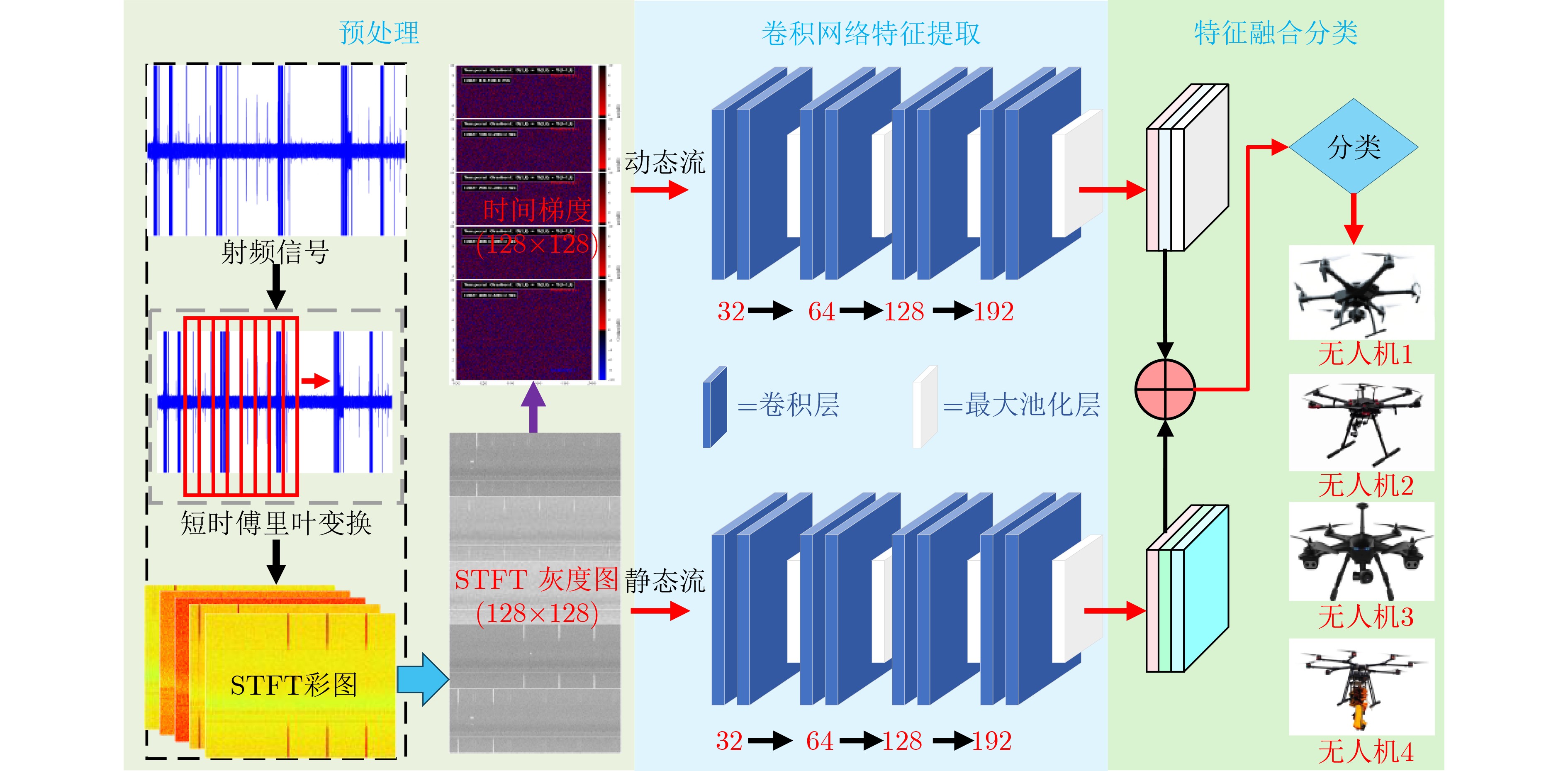
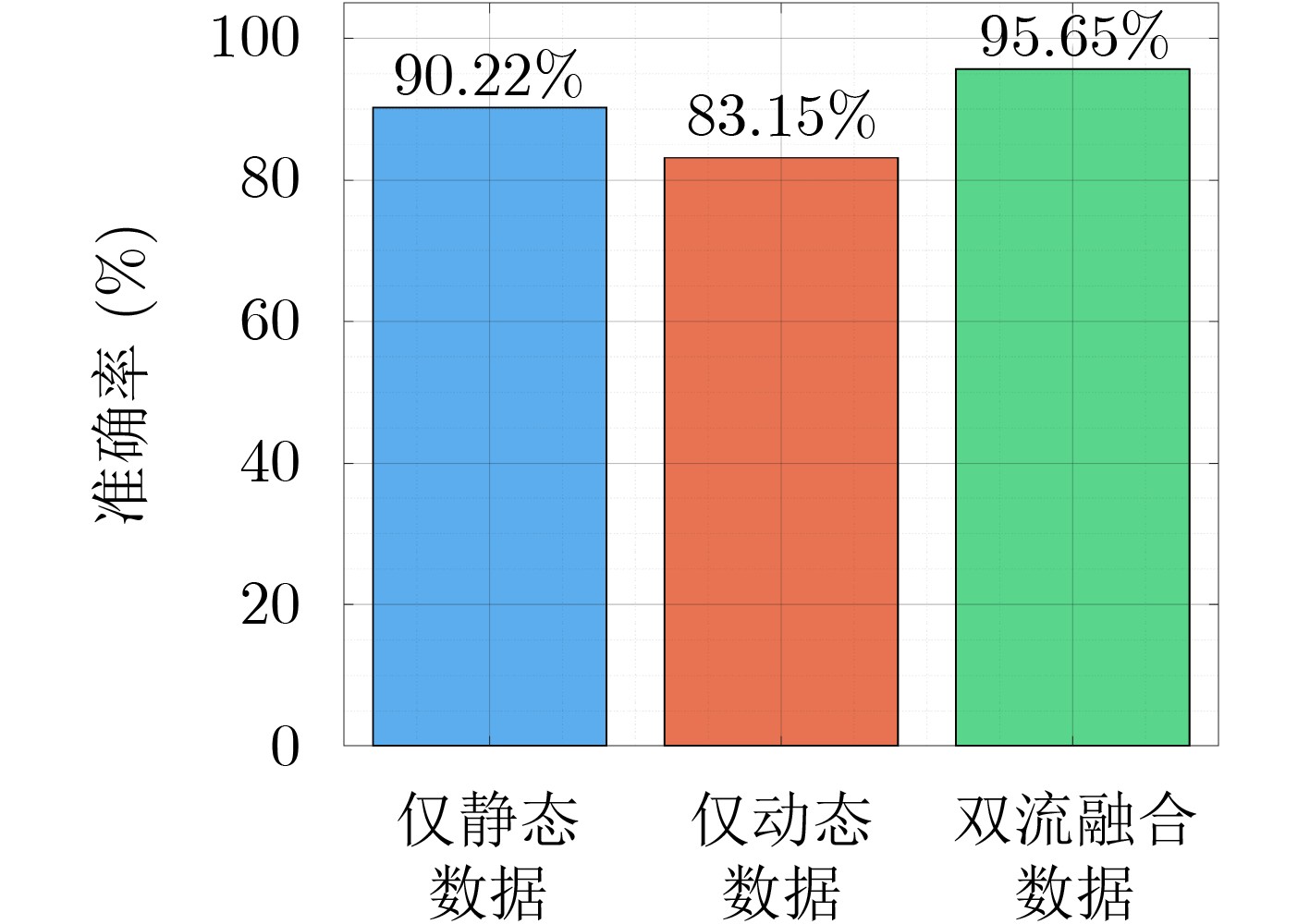
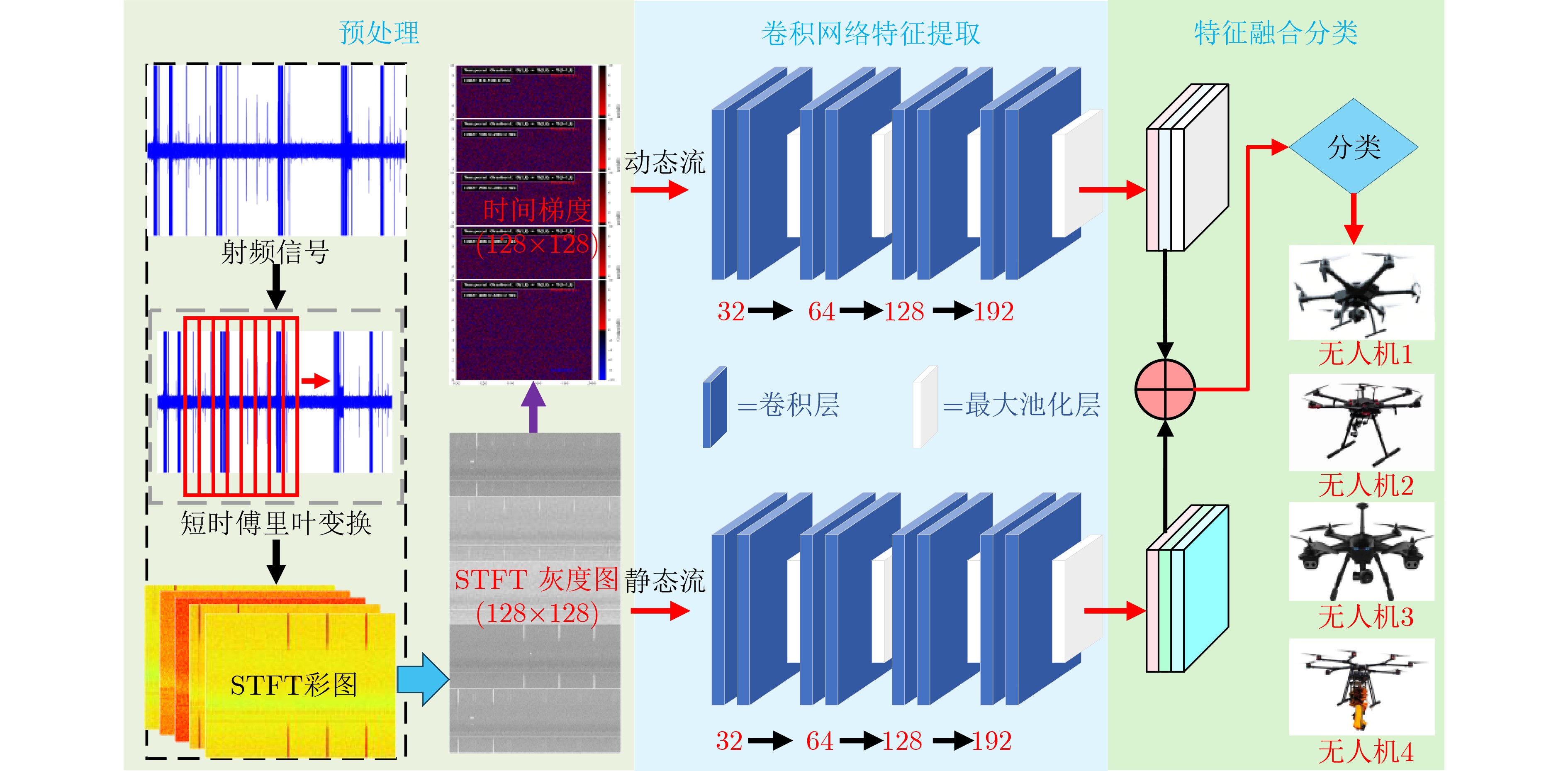
摘要: 针对低信噪比环境下传统射频指纹识别方法特征提取鲁棒性较弱,且现有深度学习模型参数量庞大、无法适配战术边缘设备部署的问题,本文提出一种面向无人机射频识别的轻量化双流卷积网络特征融合方法。该方法构建静态与动态双分支并行架构,依托元素级相加融合策略实现特征互补优化。静态分支以短时傅里叶变换时频图为输入,通过卷积模块提取信号频谱纹理特征;动态分支引入时间梯度一阶差分运算,有效抑制静态背景噪声,提升低信噪比下信号时频特征的表征对比度。基于DroneRF公开数据集的实验结果表明,该方法识别准确率可达95.65%,相较单流网络提升5个百分点,平均信噪比提升1 dB以上;模型参数量仅0.58 M,可满足战术边缘设备实时识别需求。消融实验与特征可视化结果证明,静态频谱特征与动态时间梯度特征的互补特性,是提升无人机射频识别性能的核心关键。Abstract:
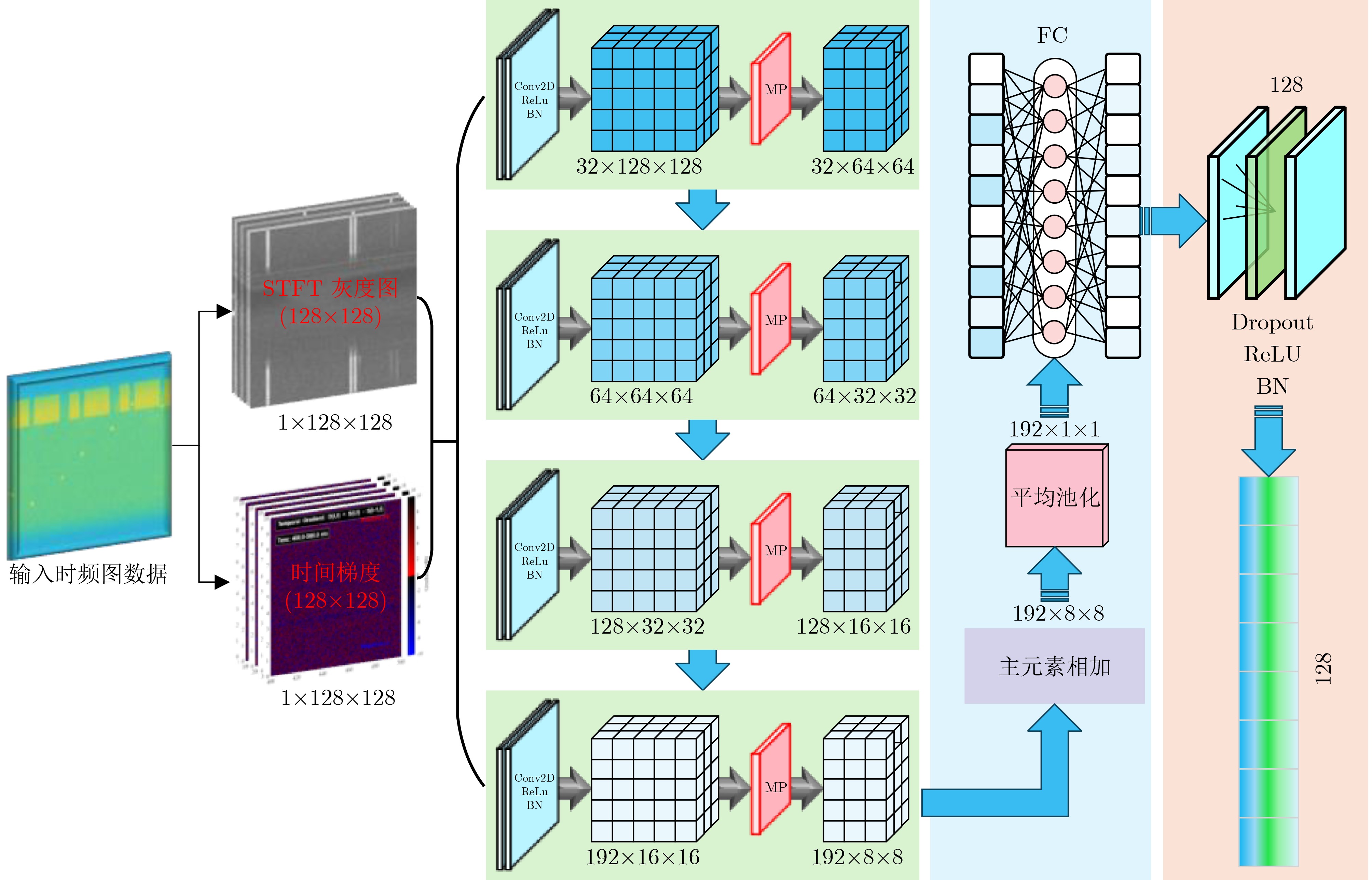
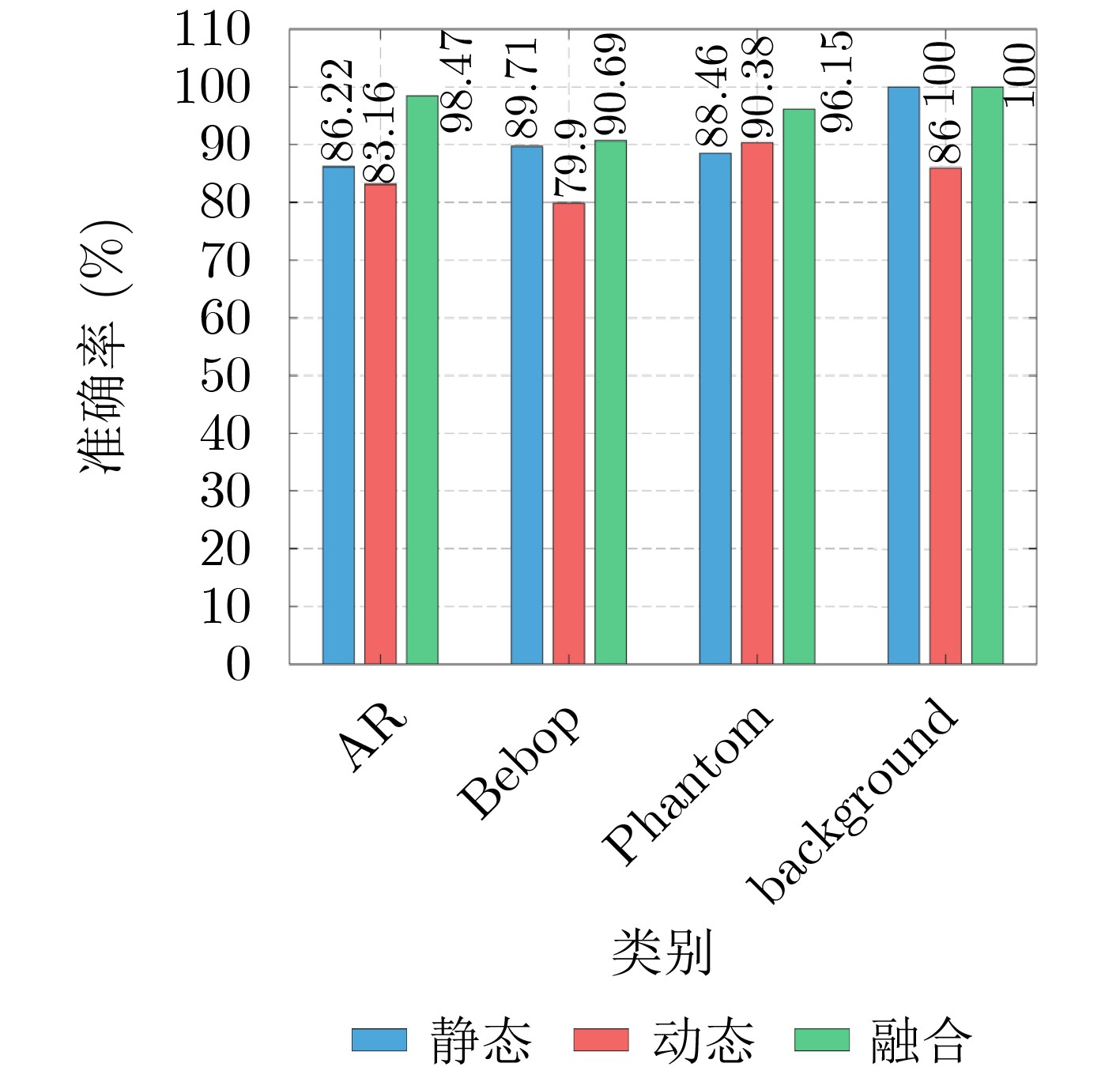
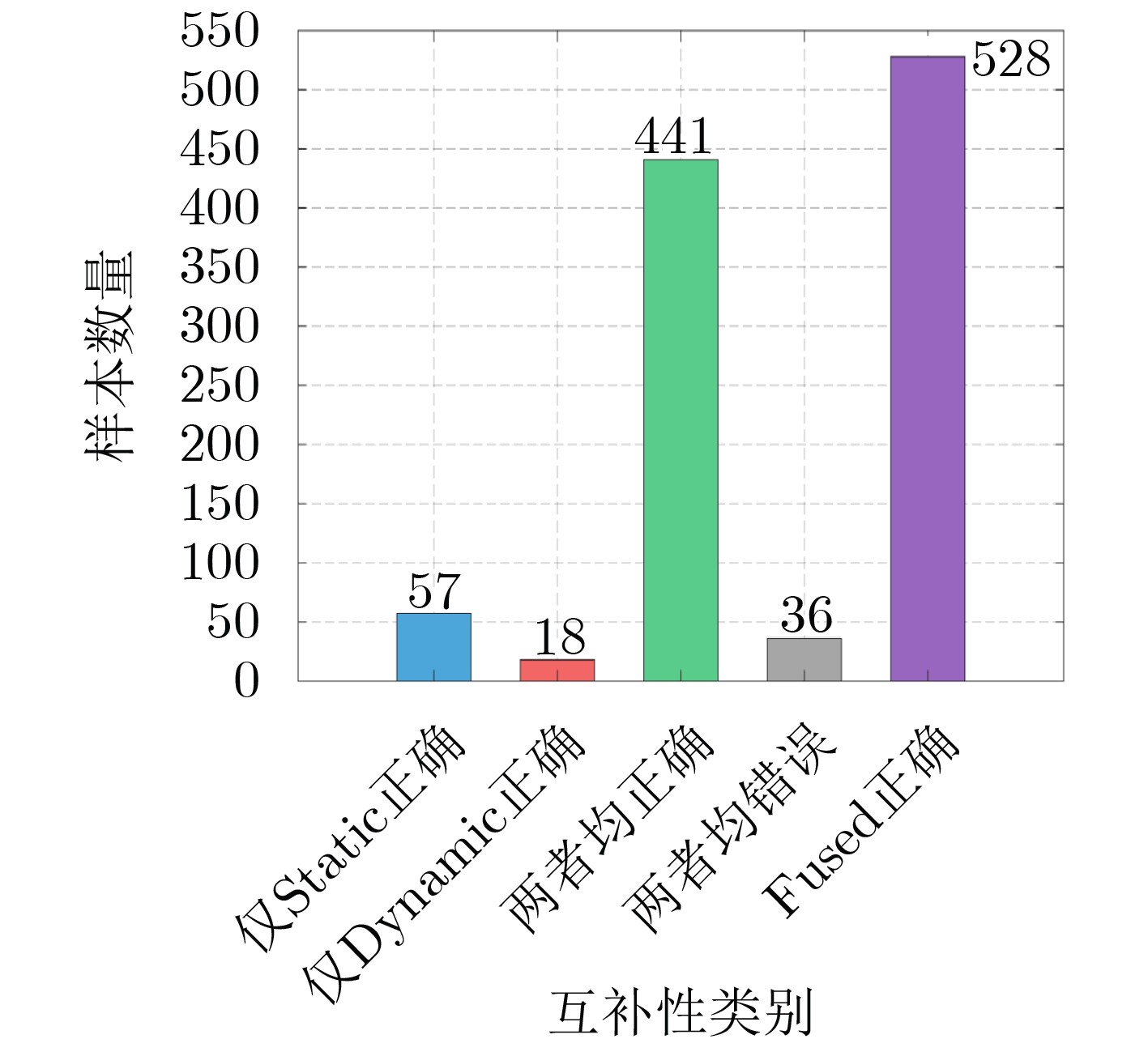
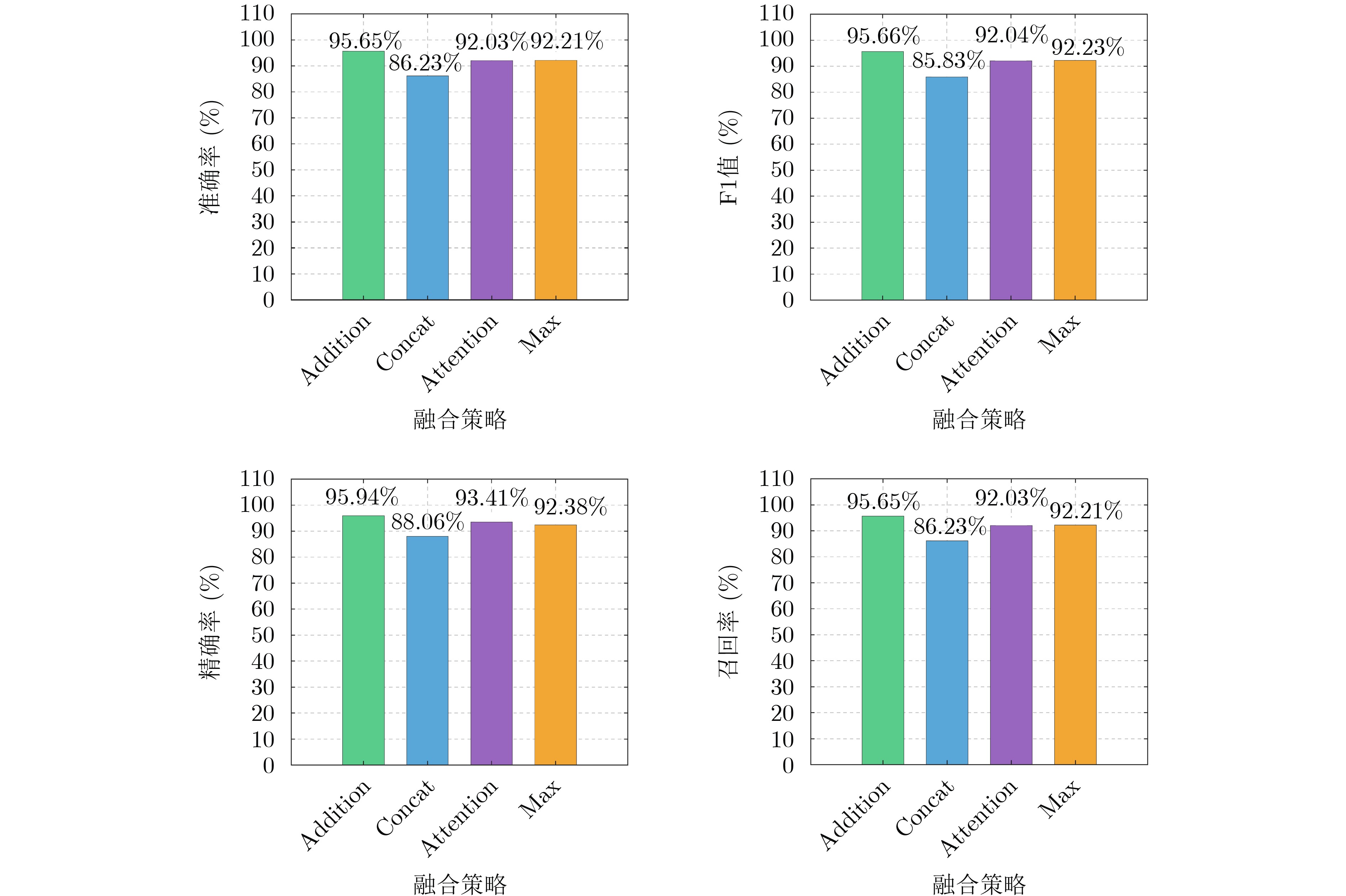
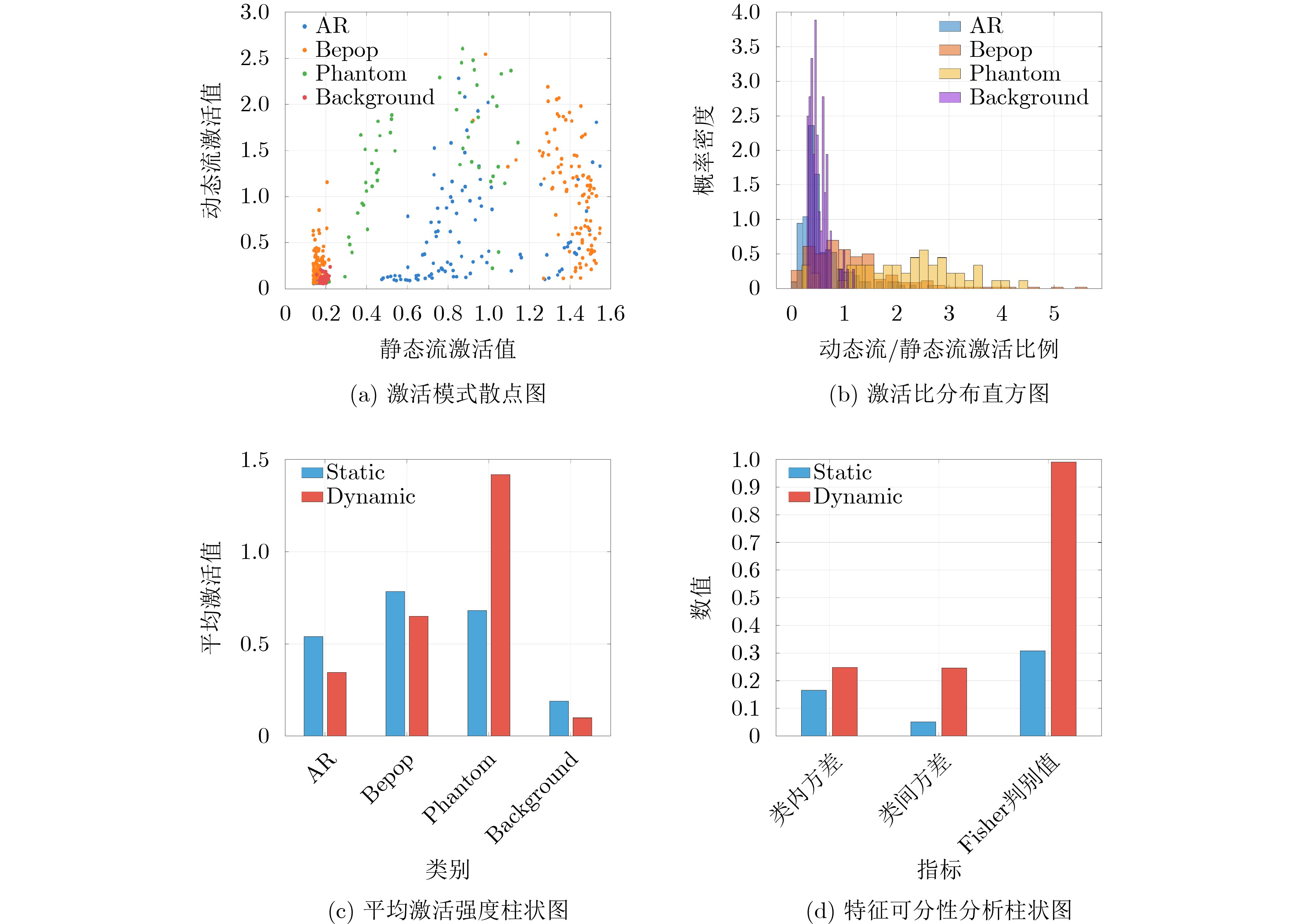
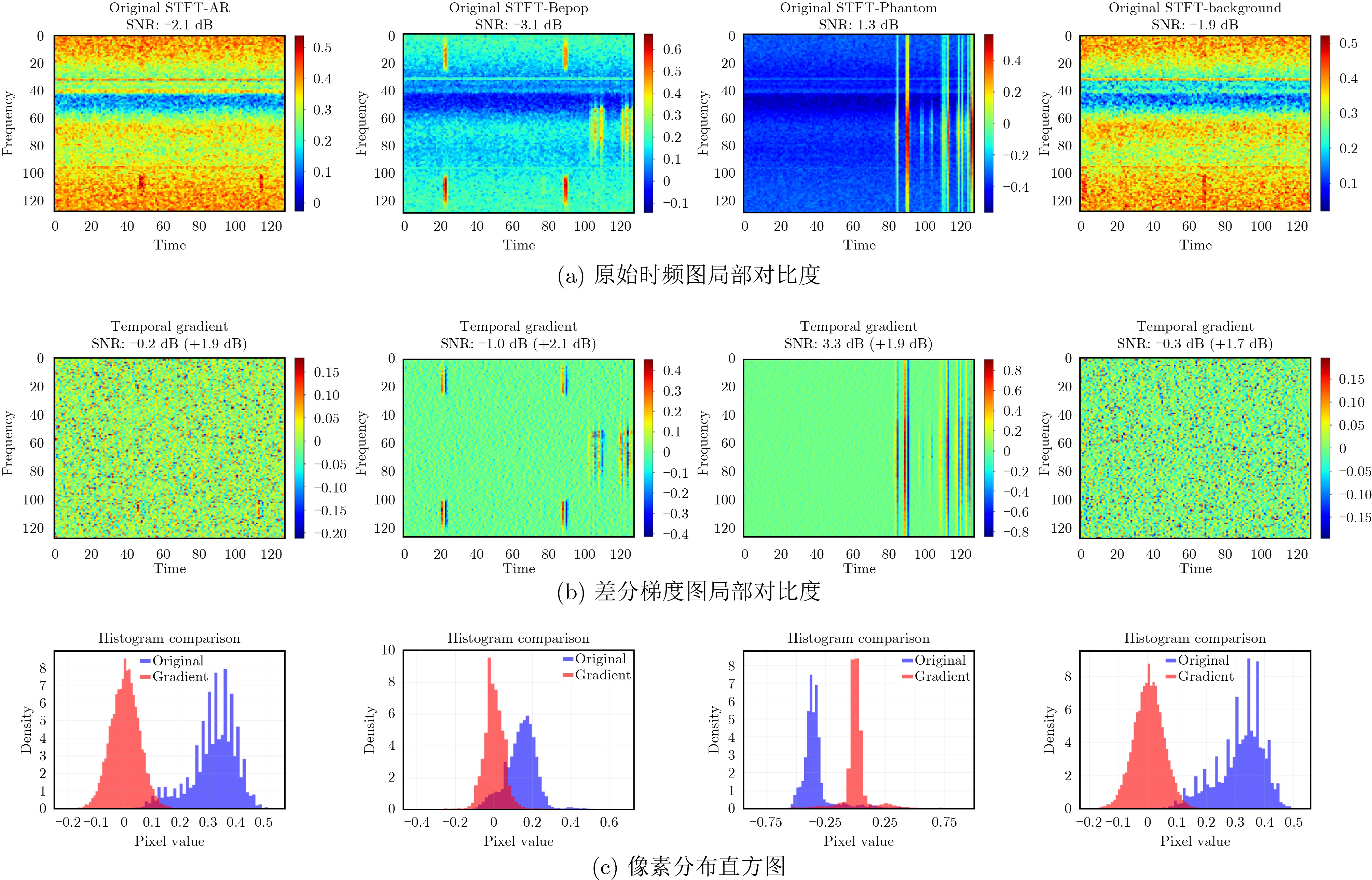
Objective With the rapid proliferation of Unmanned Aerial Vehicles (UAVs) and the escalating demand for airspace security, radio frequency (RF) fingerprint recognition has emerged as a pivotal technology for identifying non-cooperative UAVs. However, existing methods grapple with significant challenges, including poor robustness in low signal-to-noise ratio (SNR) environments and prohibitive computational complexity, which severely hinder their deployment on resource-constrained tactical edge devices. To address these critical limitations, this paper proposes a novel lightweight dual-stream convolutional network tailored for UAV RF recognition. This network is designed to extract static spectral texture features and dynamic temporal gradient features in parallel, complemented by a meticulously crafted lightweight feature fusion strategy. Methods The proposed network architecture is ingeniously designed to process RF signals. The input signal undergoes a Short-Time Fourier Transform (STFT) to generate a two-dimensional spectrogram, which serves as the primary input. The network is bifurcated into two parallel streams: a static stream and a dynamic stream. The static stream is engineered to capture the inherent static spectral patterns and energy distributions within the STFT spectrogram. It comprises a series of stacked convolutional blocks, each integrating convolutional layers, batch normalization, and ReLU activation functions, followed by max-pooling layers to progressively downsample the feature maps and increase the channel depth. Conversely, the dynamic stream is dedicated to enhancing feature discriminability, particularly in low-SNR scenarios. It begins by computing the temporal gradient of the input spectrogram, effectively suppressing static background noise and accentuating dynamic signal variations. This gradient map is then processed by a symmetric set of convolutional blocks, mirroring the structure of the static stream. To maintain model efficiency, an element-wise addition fusion strategy is employed to integrate the features from both streams, ensuring a balance between feature complementarity and computational overhead. The fused features are subsequently fed into a classification head, consisting of an adaptive average pooling layer, dropout layers for regularization, and fully connected layers to produce the final classification output. Extensive experiments are conducted on the publicly available DroneRF dataset, encompassing ablation studies to dissect the contribution of each component, comparative analyses of various fusion strategies, and rigorous evaluations of the model’s lightweight characteristics. Results and Discussions The experimental results unequivocally demonstrate the efficacy of the proposed method. The dual-stream network achieves a remarkable 95.65% accuracy on the test set, representing a substantial 5 percentage point improvement over the best-performing single-stream network. A critical analysis reveals that the temporal gradient operation contributes significantly to this enhancement by improving the average SNR by 1 dB, thereby bolstering feature discriminability in challenging low-SNR environments. Furthermore, the model’s lightweight design is a standout feature, with a mere 0.58 million parameters, making it eminently suitable for deployment on tactical edge devices. Ablation studies and feature visualization analyses provide compelling evidence for the complementary nature of static and dynamic features. The static stream adeptly captures broad spectral contours, while the dynamic stream focuses on fine-grained temporal variations. The element-wise addition fusion strategy proves superior, outperforming other approaches like feature concatenation and attention-based fusion in terms of both performance and computational efficiency, thereby validating the rationale behind the lightweight design. Conclusions This paper presents a comprehensive solution to the challenges of UAV RF recognition in complex environments by proposing a lightweight dual-stream convolutional network. The method effectively enhances recognition accuracy and robustness through the synergistic combination of dual-stream feature extraction and the SNR-enhancing properties of temporal gradient features, all while maintaining a lightweight architecture suitable for edge deployment. The proposed approach offers a significant advancement in the field, providing a robust and efficient solution for UAV identification. Future research endeavors will focus on further enhancing the model’s adaptability to complex electromagnetic environments, incorporating the effects of sensor noise, and extending the framework to multi-UAV cooperative scenarios. -
表 1 仿真实验参数设置
类型 参数名称 参数 类型 参数名称 参数 类型 参数名称 参数 样本 STFT窗函数 Hamming 模型 输入尺寸 1×128×128 训练 Batch Size 32 FFT点数 1024 卷积核 3×3 训练轮数 100 帧移 512 池化 MaxPool2d 优化器 Adam STFT输出尺寸 128×128 激活函数 ReLU 初始学习率 0.0002  下载: 导出CSV
表 2 不同模型性能比较
Model Parameters Accuracy F1-score ITPA (ms) ResNet-18 11.17M 95.11% 0.96 5.49 EfficientNetV1 7.03M 95.65% 0.96 18.60 MobileNetV2 2.23M 93.48% 0.93 11.79 ShuffleNetV2 1.26M 89.86% 0.90 14.50 SqueezeNet 0.73M 94.75% 0.95 8.01 LDSC-Net 0.58M 95.65% 0.96 2.37
下载: 导出CSV
表 3 不同模型的准确率随信噪比变化
SNR/dB Accuracy ResNet-18 EfficientNetV1 MobileNetV2 ShuffleNetV2 SqueezeNet LDSC-Net Static Dynamic 20 89.86 90.95 88.59 82.97 87.65 92.93 90.22 76.45 15 81.52 87.79 83.51 77.93 80.36 91.24 90.22 70.83 10 68.48 70.83 80.25 52.39 65.45 83.88 76.45 49.46 5 54.17 45.41 48.55 42.34 48.50 59.79 57.43 35.69 0 44.75 37.54 39.71 34.24 40.36 40.58 37.50 35.51
下载: 导出CSV
-
[1] CRIOLLO L, MENA-ARCINIEGA C, and XING Shen. Classification, military applications, and opportunities of unmanned aerial vehicles[J]. Aviation, 2024, 28(2): 115–127. doi: 10.3846/aviation.2024.21672. [2] LYU Mingyang, ZHAO Yibo, HUANG Chao, et al. Unmanned aerial vehicles for search and rescue: A survey[J]. Remote Sensing, 2023, 15(13): 3266. doi: 10.3390/rs15133266. [3] QU Chengyi, SORBELLI F B, SINGH R, et al. Environmentally-aware and energy-efficient multi-drone coordination and networking for disaster response[J]. IEEE Transactions on Network and Service Management, 2023, 20(2): 1093–1109. doi: 10.1109/TNSM.2023.3243543. [4] CEVIZ O, SEN S, and SADIOGLU P. A survey of security in UAVs and FANETs: Issues, threats, analysis of attacks, and solutions[J]. IEEE Communications Surveys & Tutorials, 2025, 27(5): 3227–3265. doi: 10.1109/COMST.2024.3515051. [5] OMOLARA A E, ALAWIDA M, and ABIODUN O I. Drone cybersecurity issues, solutions, trend insights and future perspectives: A survey[J]. Neural Computing and Applications, 2023, 35(31): 23063–23101. doi: 10.1007/s00521-023-08857-7. [6] 杨勇, 王雪松, 张斌. 基于时频检测与极化匹配的雷达无人机检测方法[J]. 电子与信息学报, 2021, 43(3): 509–515. doi: 10.11999/JEIT200768.YANG Yong, WANG Xuesong, and ZHANG Bin. Radar detection of unmanned aerial vehicles based on time-frequency detection and polarization matching[J]. Journal of Electronics & Information Technology, 2021, 43(3): 509–515. doi: 10.11999/JEIT200768. [7] 江波, 屈若锟, 李彦冬, 等. 基于深度学习的无人机航拍目标检测研究综述[J]. 航空学报, 2021, 42(4): 524519. doi: 10.7527/S1000-6893.2020.24519.JIANG Bo, QU Ruokun, LI Yandong, et al. Object detection in UAV imagery based on deep learning: Review[J]. Acta Aeronautica et Astronautica Sinica, 2021, 42(4): 524519. doi: 10.7527/S1000-6893.2020.24519. [8] XIE Yuelei, JIANG Ping, GU Yi, et al. Dual-source detection and identification system based on UAV radio frequency signal[J]. IEEE Transactions on Instrumentation and Measurement, 2021, 70: 2006215. doi: 10.1109/TIM.2021.3103565. [9] ZHENG Haolin, GAO Ning, CAI Donghong, et al. UAV individual identification via distilled RF fingerprints-based LLM in ISAC networks[J]. IEEE Wireless Communications Letters, 2025, 14(11): 3769–3773. doi: 10.1109/LWC.2025.3603423. [10] MEDAIYESE O O, EZUMA M, LAUF A P, et al. Hierarchical learning framework for UAV detection and identification[J]. IEEE Journal of Radio Frequency Identification, 2022, 6: 176–188. doi: 10.1109/JRFID.2022.3157653. [11] 唐智灵, 杨小牛, 李建东. 基于顺序统计的窄带通信辐射源指纹特征抽取方法[J]. 电子与信息学报, 2011, 33(5): 1224–1228. doi: 10.3724/SP.J.1146.2010.01058.TANG Zhiling, YANG Xiaoniu, and LI Jiandong. A novel method based on order statistics for extracting fingerprint of narrow band emitter[J]. Journal of Electronics & Information Technology, 2011, 33(5): 1224–1228. doi: 10.3724/SP.J.1146.2010.01058. [12] 唐晓刚, 冯俊豪, 张斌权, 等. 基于射频指纹的卫星测控地面站身份识别方法[J]. 电子与信息学报, 2023, 45(7): 2554–2560. doi: 10.11999/JEIT220804.TANG Xiaogang, FENG Junhao, ZHANG Binquan, et al. Satellite telemetry track and command ground station identification method based on RF fingerprint[J]. Journal of Electronics & Information Technology, 2023, 45(7): 2554–2560. doi: 10.11999/JEIT220804. [13] 吴一全, 童康. 基于深度学习的无人机航拍图像小目标检测研究进展[J]. 航空学报, 2025, 46(3): 30848. doi: 10.7527/S1000-6893.2024.30848.WU Yiquan and TONG Kang. Research advances on deep learning-based small object detection in UAV aerial images[J]. Acta Aeronautica et Astronautica Sinica, 2025, 46(3): 30848. doi: 10.7527/S1000-6893.2024.30848. [14] 蒋伊琳, 尹子茹, 宋宇. 基于卷积神经网络的低截获概率雷达信号检测算法[J]. 电子与信息学报, 2022, 44(2): 718–725. doi: 10.11999/JEIT210132.JIANG Yilin, YIN Ziru, and SONG Yu. Low probability of intercept radar signal detection algorithm based on convolutional neural networks[J]. Journal of Electronics & Information Technology, 2022, 44(2): 718–725. doi: 10.11999/JEIT210132. [15] AL-SA’D M F, AL-ALI A, MOHAMED A, et al. RF-based drone detection and identification using deep learning approaches: An initiative towards a large open source drone database[J]. Future Generation Computer Systems, 2019, 100: 86–97. doi: 10.1016/j.future.2019.05.007. [16] 赵慎, 李广选, 周鲜成, 等. 多无人机射频信号CNN| Triplet-DNN异构网络特征提取与机型识别[J]. 电子与信息学报, 2026, 48(3): 1230–1240. doi: 10.11999/JEIT250757.ZHAO Shen, LI Guangxuan, ZHOU Xiancheng, et al. Multi-UAV RF signals CNN| Triplet-DNN heterogeneous network feature extraction and type recognition[J]. Journal of Electronics & Information Technology, 2026, 48(3): 1230–1240. doi: 10.11999/JEIT250757. [17] 聂伟, 戴琪霏, 杨小龙, 等. 基于多维信号特征的无人机探测识别方法[J]. 电子与信息学报, 2024, 46(3): 1089–1099. doi: 10.11999/JEIT230302.NIE Wei, DAI Qifei, YANG Xiaolong, et al. Unmanned aerial vehicle detection and recognition method based on multi-dimensional signal feature[J]. Journal of Electronics & Information Technology, 2024, 46(3): 1089–1099. doi: 10.11999/JEIT230302. [18] 聂伟, 张中洋, 杨小龙, 等. 基于梅尔倒谱系数的无人机探测与识别方法[J]. 电子与信息学报, 2025, 47(4): 1076–1084. doi: 10.11999/JEIT241111.NIE Wei, ZHANG Zhongyang, YANG Xiaolong, et al. Unmanned aerial vehicles detection and recognition method based on Mel Frequency Cepstral Coefficients[J]. Journal of Electronics & Information Technology, 2025, 47(4): 1076–1084. doi: 10.11999/JEIT241111. [19] 田旭东, 白雪茹, 周峰. 基于稀疏自编码器的空间微动目标融合识别方法[J]. 电子与信息学报, 2023, 45(12): 4336–4344. doi: 10.11999/JEIT221163.TIAN Xudong, BAI Xueru, and ZHOU Feng. Fusion recognition of space targets with micro-motion based on a sparse auto-encoder[J]. Journal of Electronics & Information Technology, 2023, 45(12): 4336–4344. doi: 10.11999/JEIT221163. [20] YENDURI S, GUDAVALLI M, and C G. Optimal transport-based fusion of two-stream convolutional networks for action recognition[J]. Applied Intelligence, 2025, 55(7): 641. doi: 10.1007/s10489-025-06518-x. [21] HE Kaiming, ZHANG Xiangyu, REN Shaoqing, et al. Deep residual learning for image recognition[C]. Proceedings of the 2016 IEEE Conference on Computer Vision and Pattern Recognition (CVPR), Las Vegas, USA, 2016: 770–778. doi: 10.1109/CVPR.2016.90. [22] TAN Mingxing and LE Q V. EfficientNet: Rethinking model scaling for convolutional neural networks[C]. Proceedings of the 36th International Conference on Machine Learning (ICML), Long Beach, USA, 2019: 6105–6114. [23] HOWARD A G, ZHU Menglong, CHEN Bo, et al. MobileNets: Efficient convolutional neural networks for mobile vision applications[J]. arXiv preprint arXiv: 1704.04861, 2017. doi: 10.48550/arXiv.1704.04861. [24] MA Ningning, ZHANG Xiangyu, ZHENG Haitao, et al. ShuffleNet V2: Practical guidelines for efficient CNN architecture design[C]. Proceedings of the 15th European Conference on Computer Vision–ECCV 2018, Munich, Germany, 2018: 122–138. doi: 10.1007/978-3-030-01264-9_8. [25] IANDOLA F N, HAN Song, MOSKEWICZ M W, et al. SqueezeNet: AlexNet-level accuracy with 50x fewer parameters and <0.5MB model size[C]. Proceedings of the 5th International Conference on Learning Representations, Toulon, France, 2017. -

 下载:
下载:

图(8) / 表(3)
计量
- 文章访问数: 462
- HTML全文浏览量: 120
- PDF下载量: 43
- 被引次数: 0
