




Research on Channel Multipath Prediction Based on an Environmental Graph
-
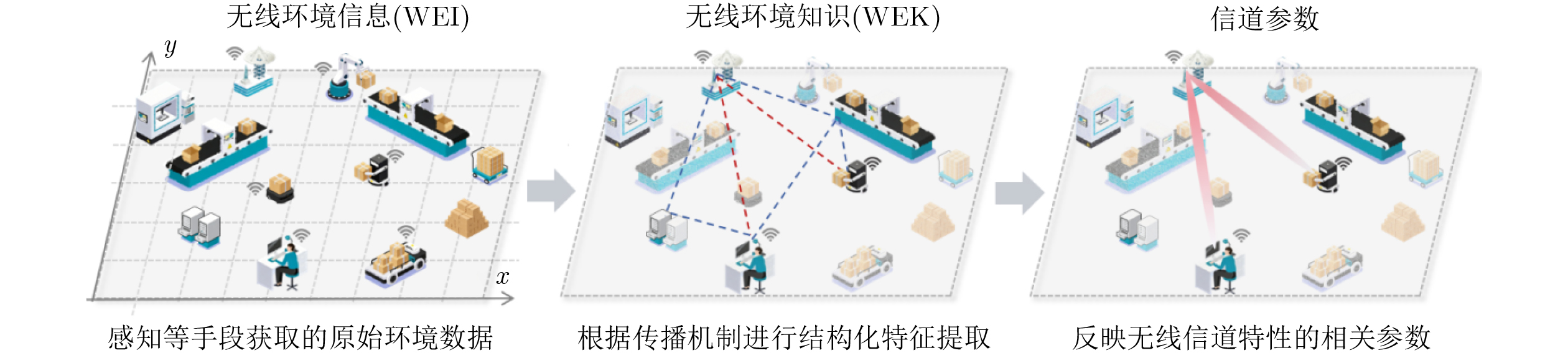
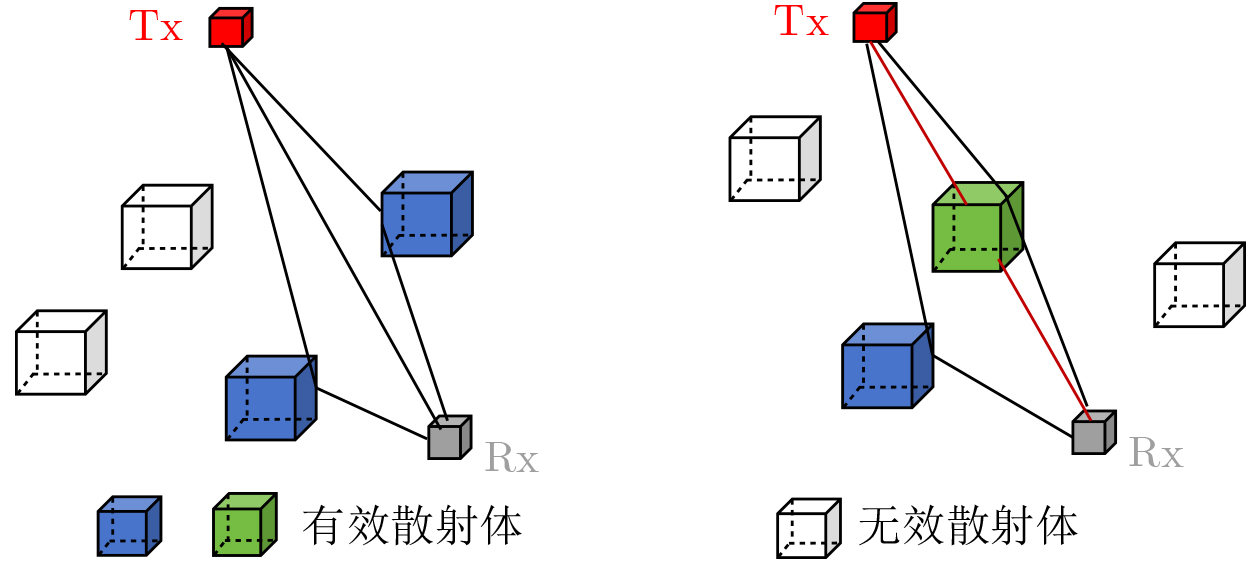
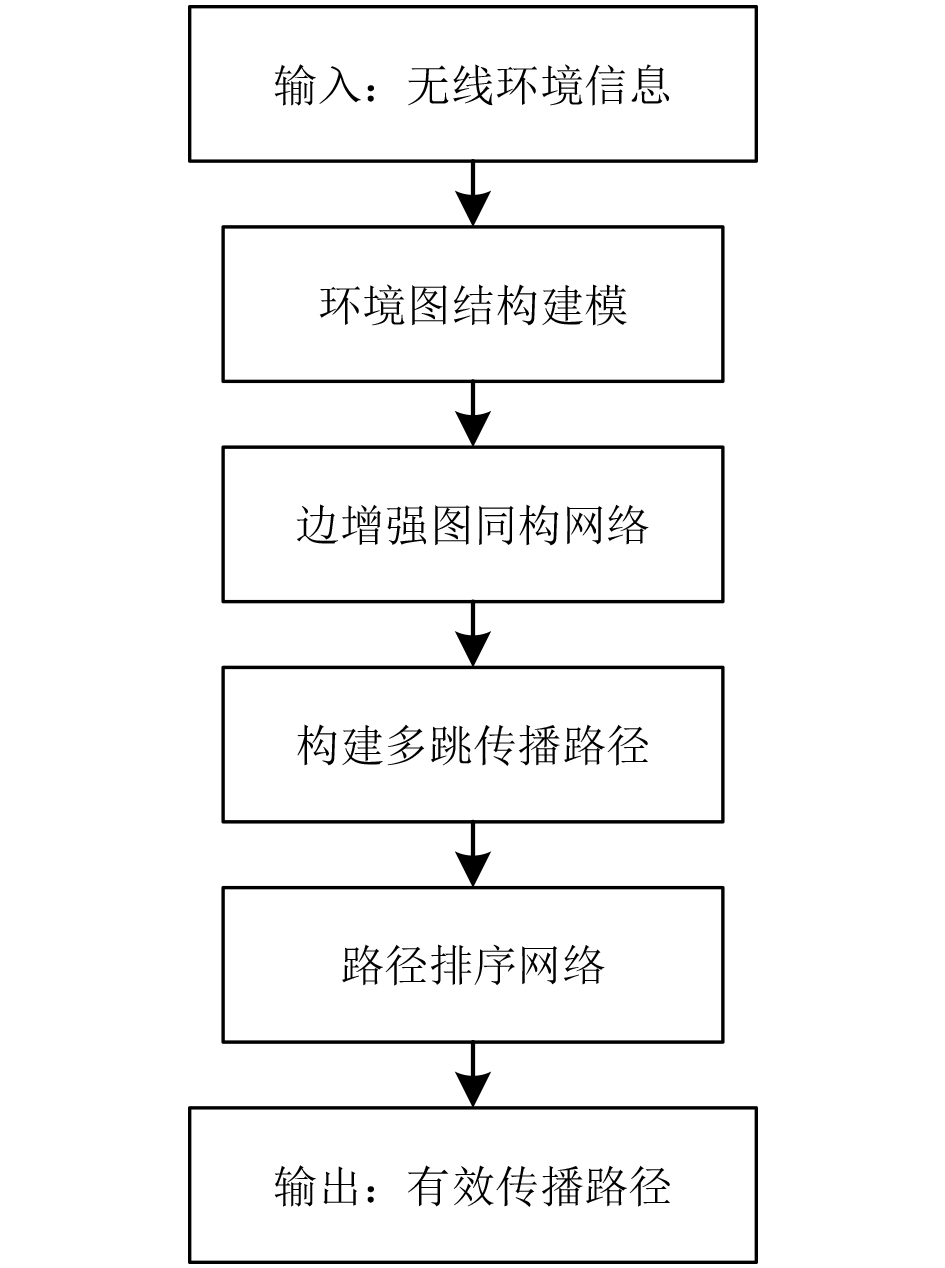
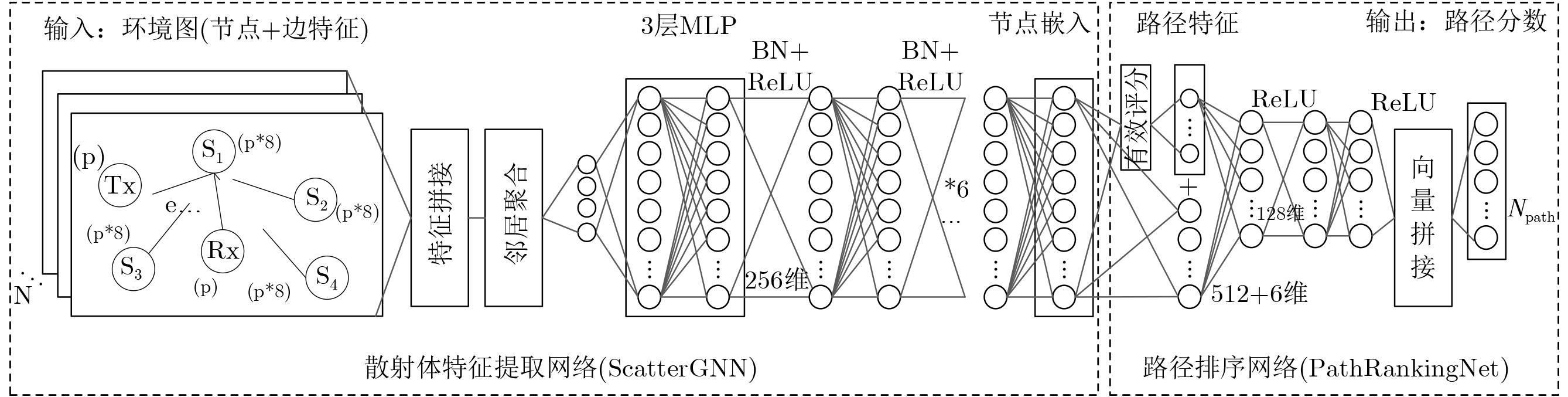
摘要: 面向6G智能空口、智能化网络及AI与通信的深度融合需求,如何从结构化环境信息中提取与传播路径相关的知识,是构建环境驱动信道模型的重要问题。针对传统信道建模方法难以刻画发射端(Tx)、接收端(Rx)与散射体间空间结构及交互关系的局限性,该文提出融合信号传播机制的环境图结构建模方法,将Tx, Rx及散射体抽象为图节点,根据节点间的空间距离与可视性构建边特征,并基于边增强图同构网络(EGIN)学习环境图中的结构关联,实现参与传播的有效散射体检测;进一步根据候选散射体构建单跳与双跳候选路径,设计路径特征学习网络与有效性排序模型,实现候选传播路径预测。该文在单一工业物联网室内仿真场景的
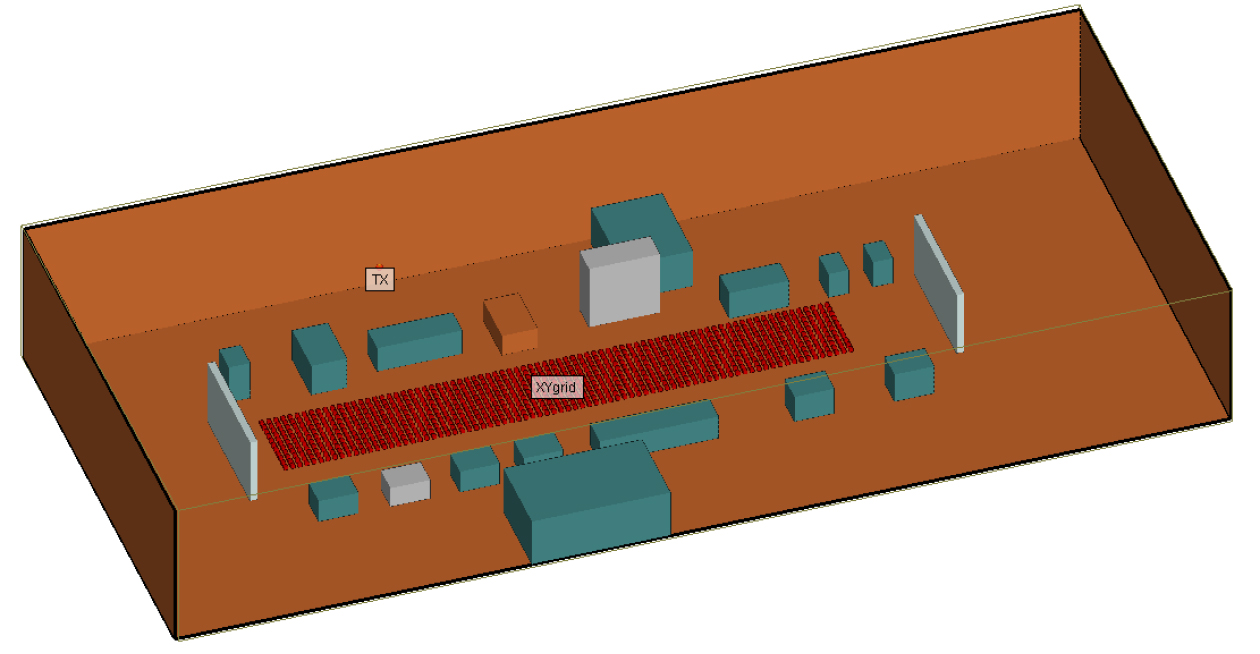
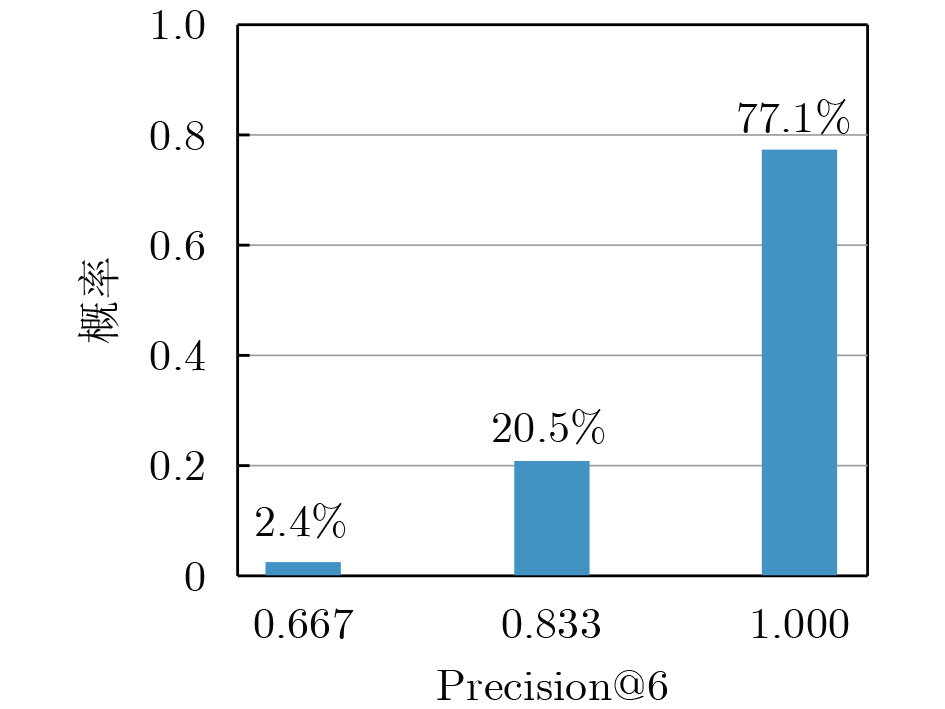
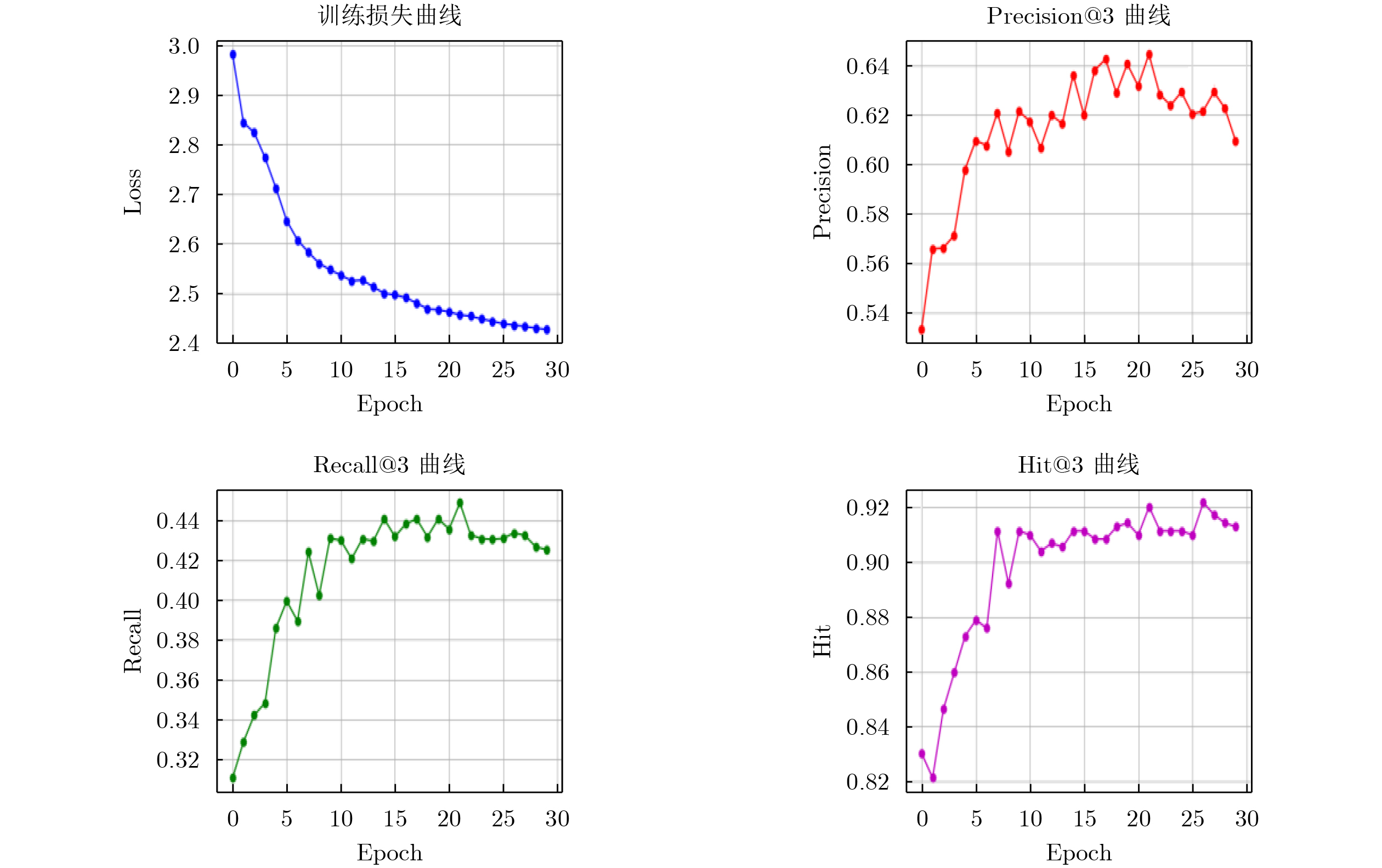
3381 个Rx位置上进行验证,结果表明所提方法能够在该场景内提取与传播路径相关的结构特征,提高有效散射体检测与候选路径排序的准确性。Abstract:Objective Environment-driven channel prediction requires a structured representation that connects physical objects in a propagation environment with the resulting multipath topology. However, conventional data-driven methods generally treat environmental information as unstructured global features and have difficulty representing the interactions among the transmitter (Tx), receiver (Rx), and surrounding scatterers. This study investigates whether an environmental graph can provide an effective intermediate representation for identifying effective scatterers and predicting candidate propagation paths. Methods An environmental graph is constructed by representing the Tx, Rx, and scatterers as graph nodes. Spatial distance and visibility between nodes are encoded as edge features to describe their geometric relationships. A ScatterGNN based on the Edge-aware Graph Isomorphism Network (EGIN) is developed to extract structural features and identify effective scatterers involved in signal propagation. Candidate single- and two-bounce paths are subsequently generated from the detected scatterers. A path-ranking network, PathRankingNet, is then designed to estimate the validity scores of candidate paths and rank them using a Listwise Ranking Loss. The proposed framework is evaluated in a controlled indoor Industrial Internet of Things scenario generated using Wireless InSite. The scenario covers an area of 150 m × 63 m × 22 m and contains 3,381 Rx sampling locations. Results and Discussions For effective scatterer detection, the proposed method achieves an average precision of 0.957 9, while 77.1% of the test samples achieve complete detection of all effective scatterers. For candidate propagation-path prediction, the model converges stably after approximately 30 training epochs. Precision@3 ranges from 0.60 to 0.64, Recall@3 ranges from 0.42 to 0.45, and Hit@3 ranges from 0.90 to 0.92. These results indicate that the environmental graph preserves useful structural information related to propagation-path topology. In particular, the model retains at least one ground-truth propagation path among the three highest-ranked candidates for more than 90% of the test samples. Conclusions The proposed framework provides a graph-based approach for transforming environmental geometry into structured representations of effective scatterers and candidate propagation paths. Rather than replacing ray tracing or channel measurements, the method is intended to reduce the candidate search space before detailed path-parameter calculation or channel reconstruction. The current results demonstrate its feasibility within a single simulated environment and primarily reflect its ability to approximate the propagation-path topology labels generated by Wireless InSite. Further validation using independent environments, measured channel data, and path-level parameters such as power, delay, and complex gain is required before its cross-scenario generalization and practical applicability can be established. -
表 1 训练超参数
参数 值 学习率 1×10⁻³ 训练轮数(Epochs) 30 批次(Batch Size) 1 损失函数(ScatterGNN) BCE With Logits Loss 损失函数(PathRankingNet) Listwise Ranking Loss 优化器 Adam 随机种子 42 数据集分割(训练/测试) 80%~20%  下载: 导出CSV
表 2 核心性能指标
评估指标 初始值(Epoch0) 峰值(对应 Epoch) 稳定值(Epoch 20~29) Precision@3 0.5332 0.6425 (Epoch 17)0.60~0.64 Recall@3 0.3106 0.4489 (Epoch 21)0.42~0.45 Hit@3 0.8301 0.9202 (Epoch 21)0.90~0.92
下载: 导出CSV
表 3 模型复杂度与预测时延
方法 计算环节 参数量 单Rx耗时(ms) 所提模型 散射体检测 2.00 M 11.15 所提模型 路径检测 0.08 M 31.83 所提模型 端到端预测 2.09 M 42.98 ray_tracing 路径求解 - 252.88
下载: 导出CSV
-
[1] 张建华, 王珩, 张宇翔, 等. 6G信道新特性与建模研究: 挑战、进展与展望[J]. 中国科学: 信息科学, 2024, 54(5): 1114–1143. doi: 10.1360/ssi-2023-0355.ZHANG Jianhua, WANG Heng, ZHANG Yuxiang, et al. Channel characteristics and modeling research for 6G: Challenges, progress, and prospects[J]. SCIENTIA SINICA Informationis, 2024, 54(5): 1114–1143. doi: 10.1360/ssi-2023-0355. [2] WANG Heng, ZHANG Jianhua, NIE Gaofeng, et al. Digital twin channel for 6G: Concepts, architectures and potential applications[J]. IEEE Communications Magazine, 2025, 63(3): 24–30. doi: 10.1109/MCOM.001.2400213. [3] WU Yiwen, ZHANG Ke and ZHANG Yan. Digital twin networks: A survey[J]. IEEE Internet of Things Journal, 2021, 8(18): 13789-13804. doi: 10.1360/ssi-2023-0355. [4] WANG Jialin, ZHANG Jianhua, ZHANG Yuxiang, et al. Radio environment knowledge pool for 6G digital twin channel[J]. IEEE Communications Magazine, 2025, 63(5): 158–164. doi: 10.1109/MCOM.003.2400168. [5] WANG Jialin, ZHANG Jianhua, SUN Yutong, et al. Electromagnetic wave property inspired radio environment knowledge construction and artificial intelligence based verification for 6G digital twin channel[J]. Frontiers of Information Technology & Electronic Engineering, 2025, 26(2): 260–277. doi: 10.1631/FITEE.2400464. [6] ZHANG Jianhua, YU Li, LIU Shaoyi, et al. Wireless environmental information theory: A new paradigm toward 6G online and proactive environment intelligence communication[J]. Engineering, 2026, 56: 186–200. doi: 10.1016/j.eng.2025.07.028. [7] ZHANG Jianhua, CAI Yichen, YU Li, et al. Four steps toward 6G AI-enabled air interface: Wireless environmental information sensing, feature, semantics, and knowledge[J]. IEEE Communications Magazine, 2025, 63(8): 56–62. doi: 10.1109/MCOM.001.2400528. [8] ZHANG Na, YU Li, ZHANG Yuxiang, et al. Towards 6G digital twin channel: Wireless environment knowledge online generator as a key enabler[C]. 2025 IEEE/CIC International Conference on Communications in China (ICCC), Shanghai, China, 2025: 1–6. doi: 10.1109/ICCC65529.2025.11149103. [9] 于力, 张建华, 蔡逸辰. 6G数字孪生信道的三个使能技术: 多模态感知、环境知识和大模型[J]. 中兴通讯技术, 2025, 31(4): 19–28. doi: 10.12142/ZTETJ.202504004.YU Li, ZHANG Jianhua, and CAI Yichen. Three enabling technologies for 6G digital twin channel: Multimodal sensing, environment knowledge, and large model[J]. ZTE Technology Journal, 2025, 31(4): 19–28. doi: 10.12142/ZTETJ.202504004. [10] SUN Yutong, ZHANG Jianhua, ZHANG Yuxiang, et al. Environment features-based model for path loss prediction[J]. IEEE Wireless Communications Letters, 2022, 11(9): 2010–2014. doi: 10.1109/LWC.2022.3192516. [11] LIU Fan, CUI Yuanhao, MASOUROS C, et al. Integrated sensing and communications: Toward dual-functional wireless networks for 6G and beyond[J]. IEEE Journal on Selected Areas in Communications, 2022, 40(6): 1728–1767. doi: 10.1109/JSAC.2022.3156632. [12] NAGAI K, FASORO T, SPENKO M, et al. Evaluating GNSS navigation availability in 3-D mapped urban environments[C]. 2020 IEEE/ION Position, Location and Navigation Symposium (PLANS), Portland, USA, 2020: 639–646. doi: 10.1109/PLANS46316.2020.9109929. [13] SEOW C K and TAN S Y. Non-line-of-sight localization in multipath environments[J]. IEEE Transactions on Mobile Computing, 2008, 7(5): 647–660. doi: 10.1109/TMC.2007.70780. [14] WANG Zhonghai and ZEKAVAT S A. Omnidirectional mobile NLOS identification and localization via multiple cooperative nodes[J]. IEEE Transactions on Mobile Computing, 2012, 11(12): 2047–2059. doi: 10.1109/tmc.2011.232. [15] WEI Xinning, PALLEIT N, and WEBER T. AOD/AOA/TOA-based 3D positioning in NLOS multipath environments[C]. 2011 IEEE 22nd International Symposium on Personal, Indoor and Mobile Radio Communications, Toronto, Canada, 2011: 1289–1293. doi: 10.1109/PIMRC.2011.6139709. [16] ZHANG V Y and WONG A K S. Combined AOA and TOA NLOS localization with nonlinear programming in severe multipath environments[C]. 2009 IEEE Wireless Communications and Networking Conference, Budapest, Hungary, 2009: 1–6. doi: 10.1109/WCNC.2009.4917631. [17] DI RENZO M and SONG Jian. Reflection probability in wireless networks with metasurface-coated environmental objects: An approach based on random spatial processes[J]. EURASIP Journal on Wireless Communications and Networking, 2019, 2019(1): 99. doi: 10.1186/s13638-019-1403-7. [18] XU Wenkang, XIAO Yongbo, LIU An, et al. Joint scattering environment sensing and channel estimation based on non-stationary Markov random field[J]. IEEE Transactions on Wireless Communications, 2024, 23(5): 3903–3917. doi: 10.1109/twc.2023.3312451. [19] XIAO Zhuoran, ZHANG Zhaoyang, HUANG Chongwen, et al. C-GRBFnet: A physics-inspired generative deep neural network for channel representation and prediction[J]. IEEE Journal on Selected Areas in Communications, 2022, 40(8): 2282–2299. doi: 10.1109/JSAC.2022.3180800. [20] HUANG Ziwei, BAI Lu, HAN Zengrui, et al. Scatterer recognition for multi-modal intelligent vehicular channel modeling via synesthesia of machines[J]. IEEE Wireless Communications Letters, 2025, 14(7): 1899–1903. doi: 10.1109/LWC.2025.3558059. [21] KIPF T N and WELLING M. Semi-supervised classification with graph convolutional networks[C]. The 5th International Conference on Learning Representations, Toulon, France, 2017. [22] SUN Yutong, ZHANG Jianhua, ZHANG Yuxiang, et al. Environment information-based channel prediction method assisted by graph neural network[J]. China Communications, 2022, 19(11): 1–15. doi: 10.23919/jcc.2022.11.001. [23] LIU Lizhou, CHEN Xiaohui, TANG Zihan, et al. PINN and GNN-based RF map construction for wireless communication systems[C]. 2025 International Conference on Future Communications and Networks (FCN), Belgrade, Serbia, 2025: 1–6. doi: 10.1109/FCN66513.2025.11296780. [24] GENG Yi, SHRESTHA D, YAJNANARAYANA V, et al. Joint scatterer localization and material identification using radio access technology[J]. EURASIP Journal on Wireless Communications and Networking, 2022, 2022(1): 87. doi: 10.1186/s13638-022-02167-7. [25] CAO Zhe, QIN Tao, LIU Tieyan, et al. Learning to rank: From pairwise approach to listwise approach[C]. The 24th International Conference on Machine Learning, Corvalis, USA, 2007: 129–136. doi: 10.1145/1273496.127351. [26] 张兆灵, 于力, 张宇翔, 等. 无线环境知识表示方法研究——工业互联网场景的应用[J]. 移动通信, 2025, 49(5): 63–66,103. doi: 10.3969/j.issn.1006-1010.20250324-0003.ZHANG Zhaoling, YU Li, ZHANG Yuxiang, et al. Research on representation methods for wireless environment knowledge: Application in IIoT scenarios[J]. Mobile Communications, 2025, 49(5): 63–66,103. doi: 10.3969/j.issn.1006-1010.20250324-0003. [27] Remcom Inc. Wireless InSite[CP/OL]. https://www.remcom.com/wireless-insite, 2023. -

 下载:
下载:

图(7) / 表(3)
计量
- 文章访问数: 331
- HTML全文浏览量: 90
- PDF下载量: 17
- 被引次数: 0
