




Accelerated Broadband Electromagnetic Scattering Analysis via ACA-Driven Measurement Matrix Interpolation
-
摘要: 针对目标宽带电磁散射特性分析中待求频点阻抗矩阵重复计算、矩阵方程重复求解的问题,该文提出一种基于压缩感知框架的自适应交叉近似(ACA)驱动测量矩阵插值(MMI)的高效计算方法。该方法首先在最高频率点通过ACA提取主导行索引并全频段复用,实现测量矩阵确定性构建;其次采用MMI技术,通过少量采样频点的低维测量矩阵插值避免完整阻抗矩阵冗余计算;最后对插值后矩阵的远场组再次进行ACA分解,进一步加速矩阵向量积运算,实现传感矩阵的快速构建,将电流系数求解转换成压缩感知模型下超定方程的求解,实现待求频点电流快速求解。研究结果表明,该方法在保证计算精度的前提下,有效提高了测量矩阵的构造效率,显著降低插值的矩阵维数,大幅提升了目标宽带散射分析的效率。Abstract:
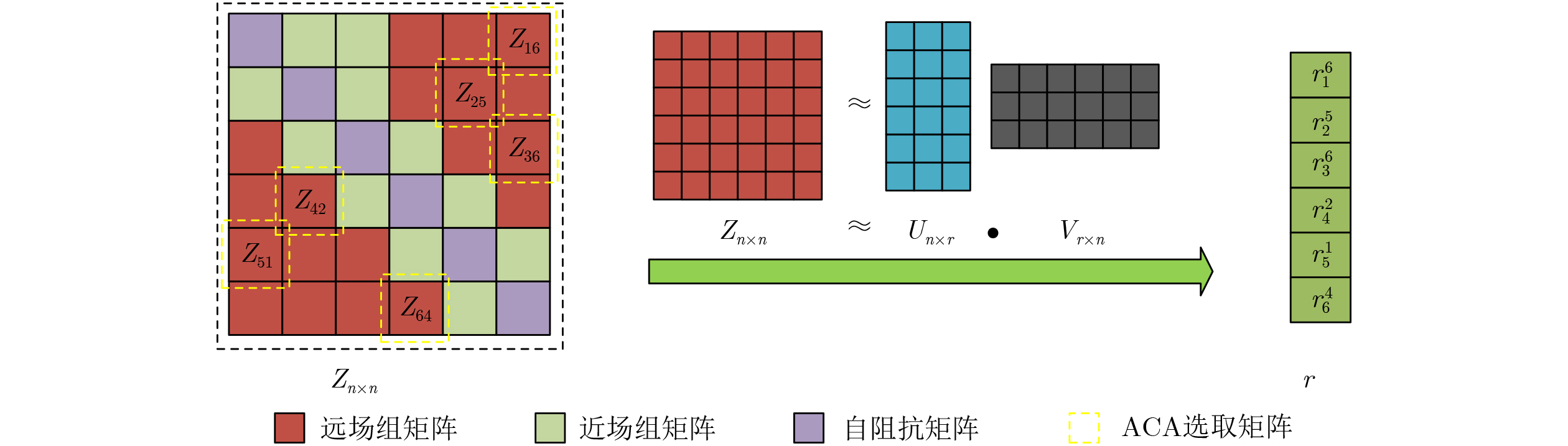
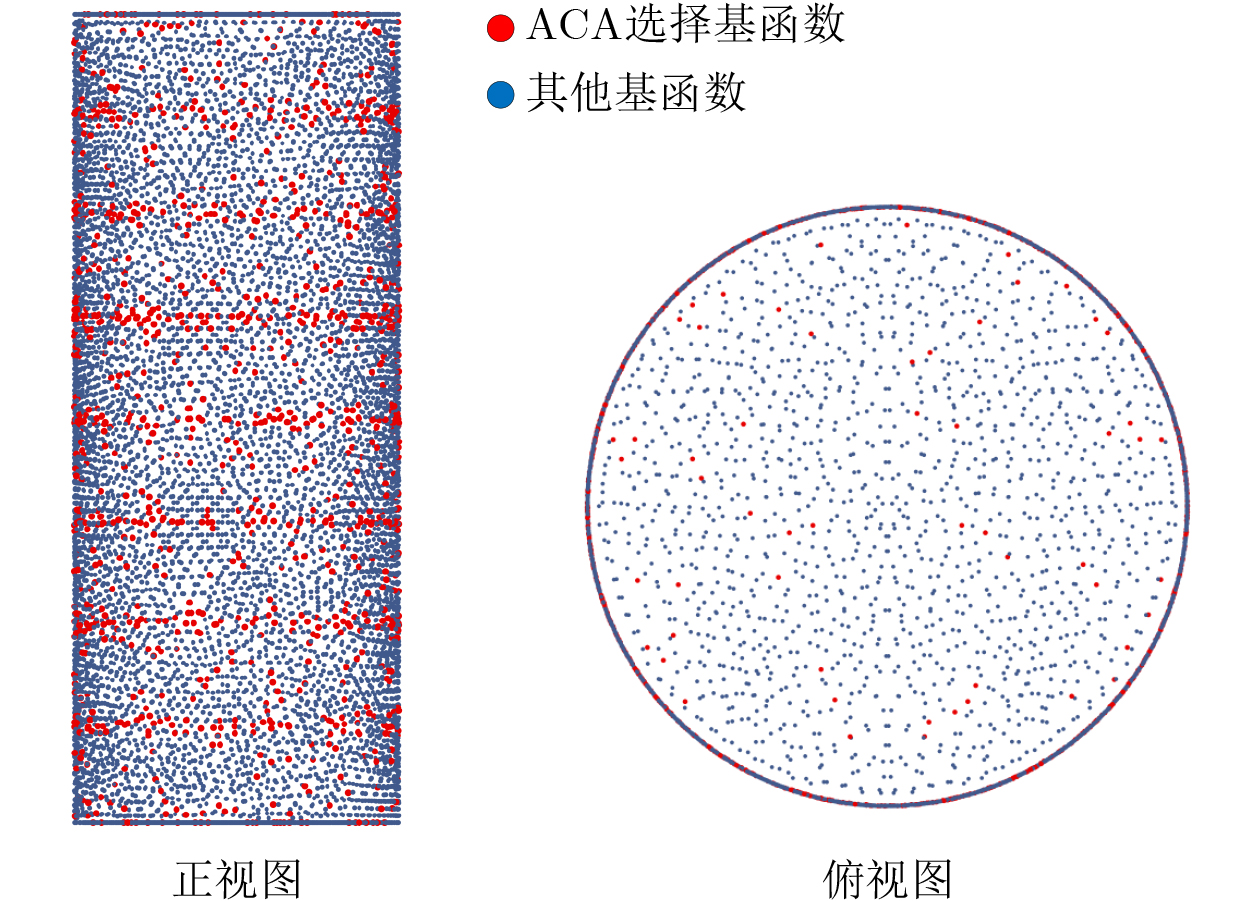
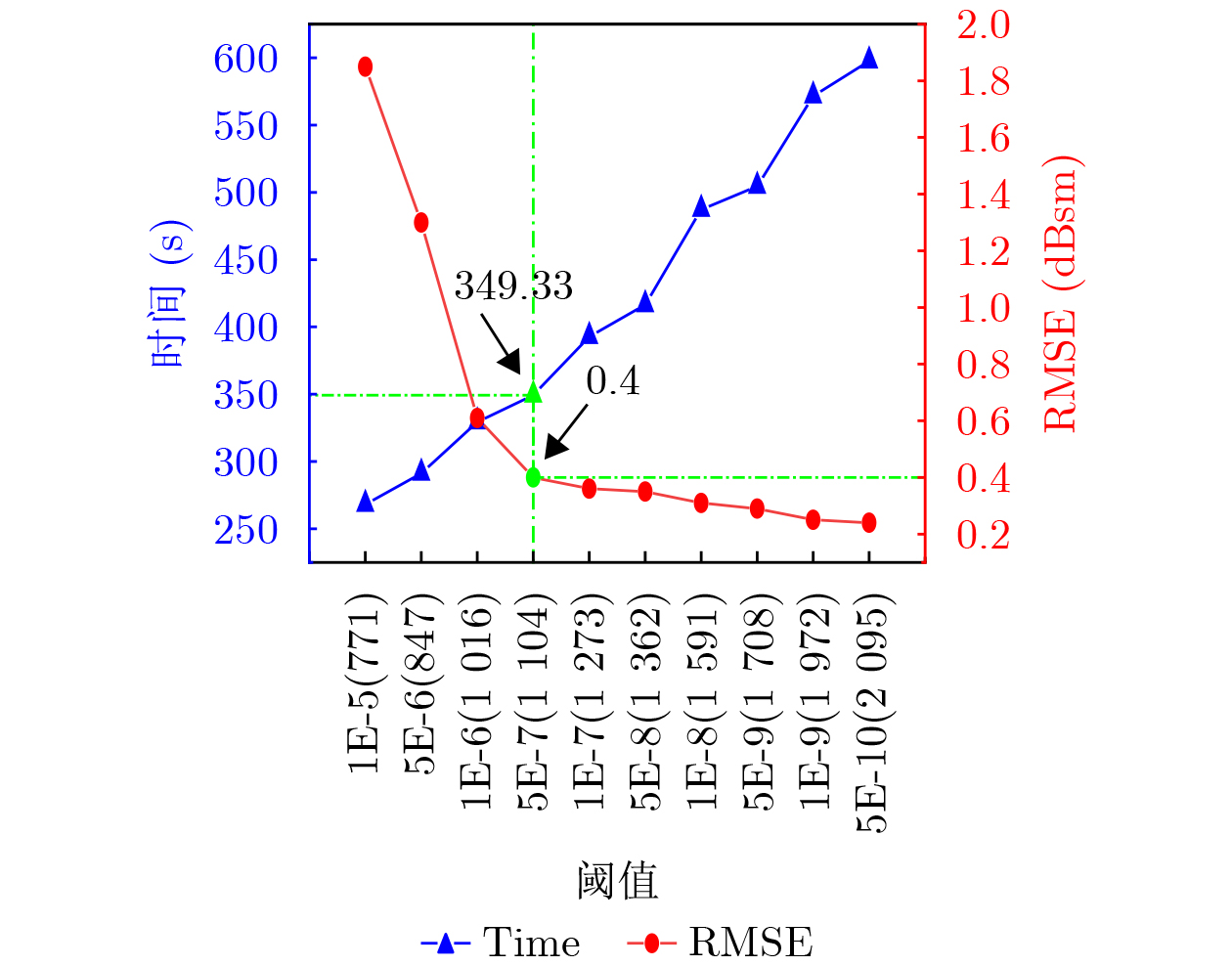
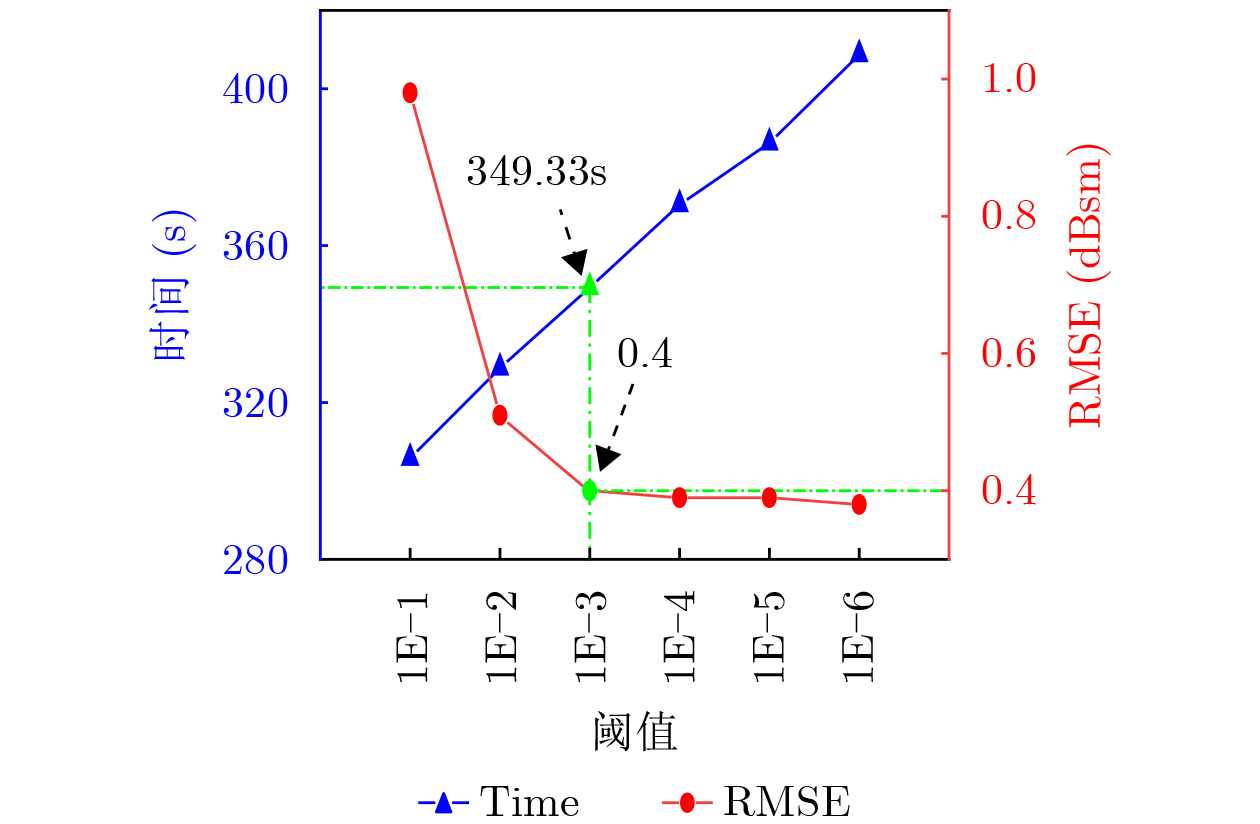
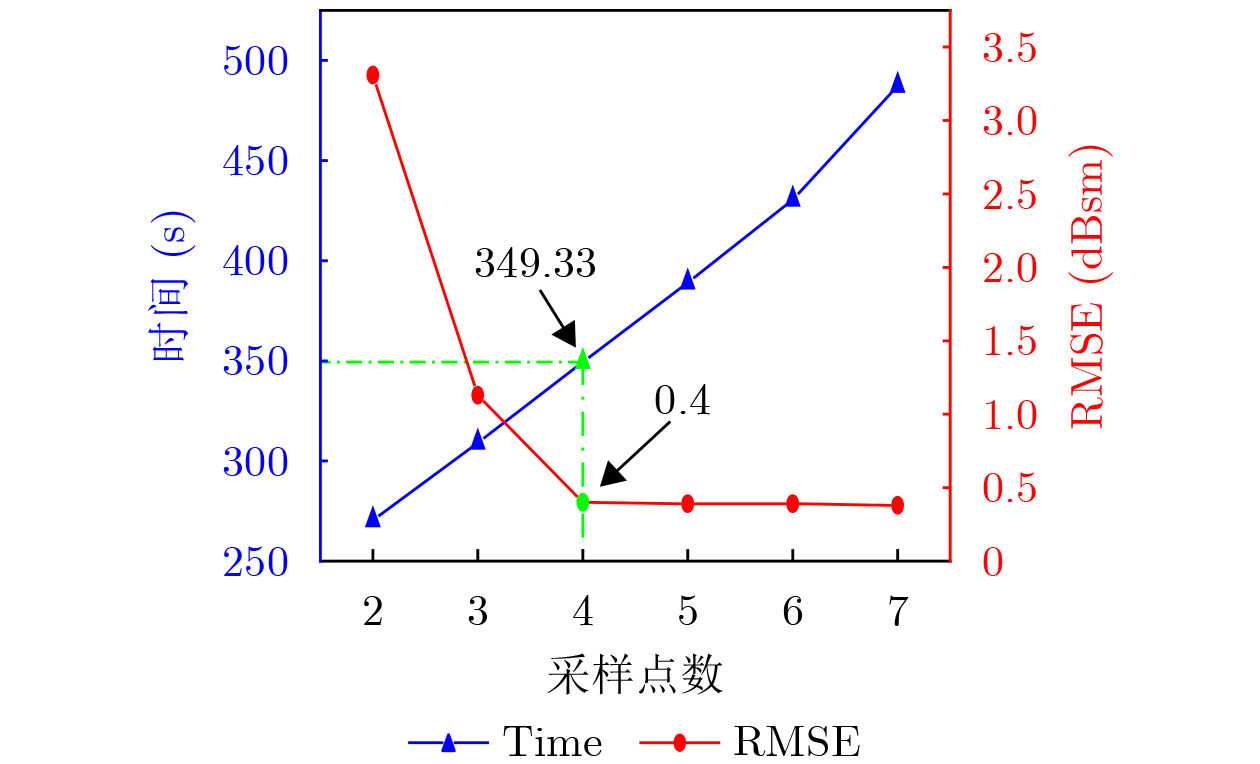
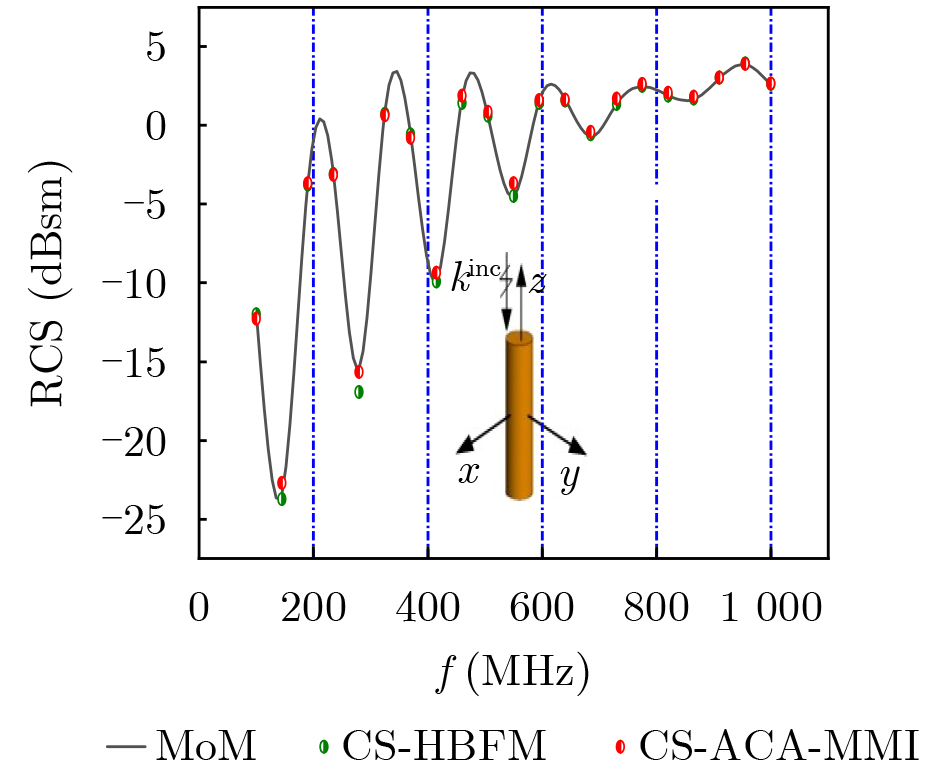
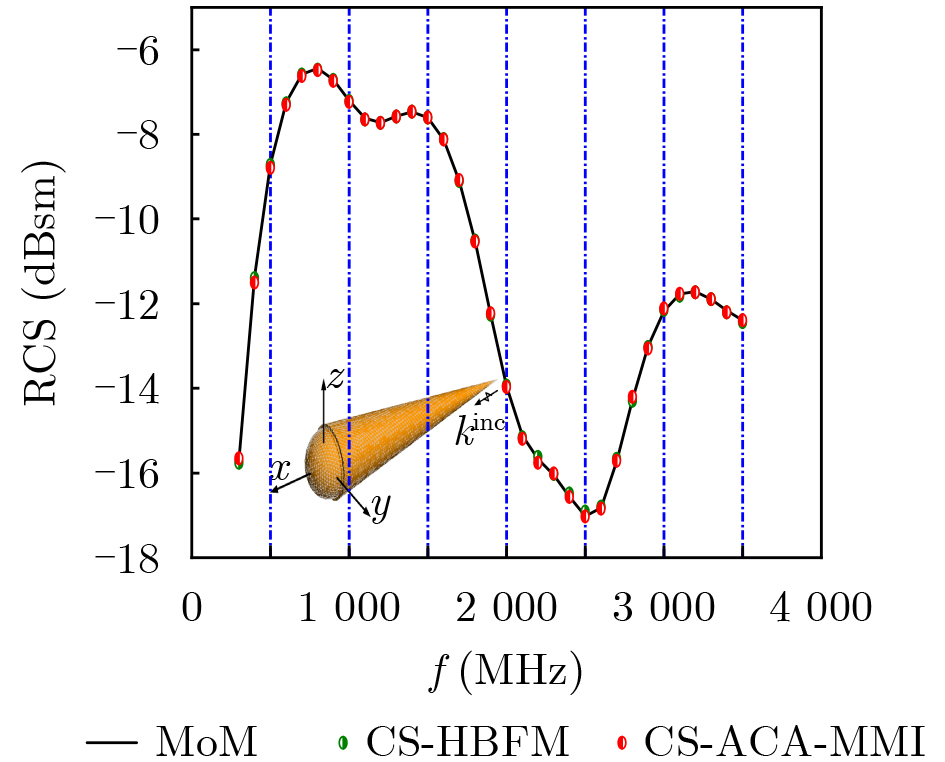
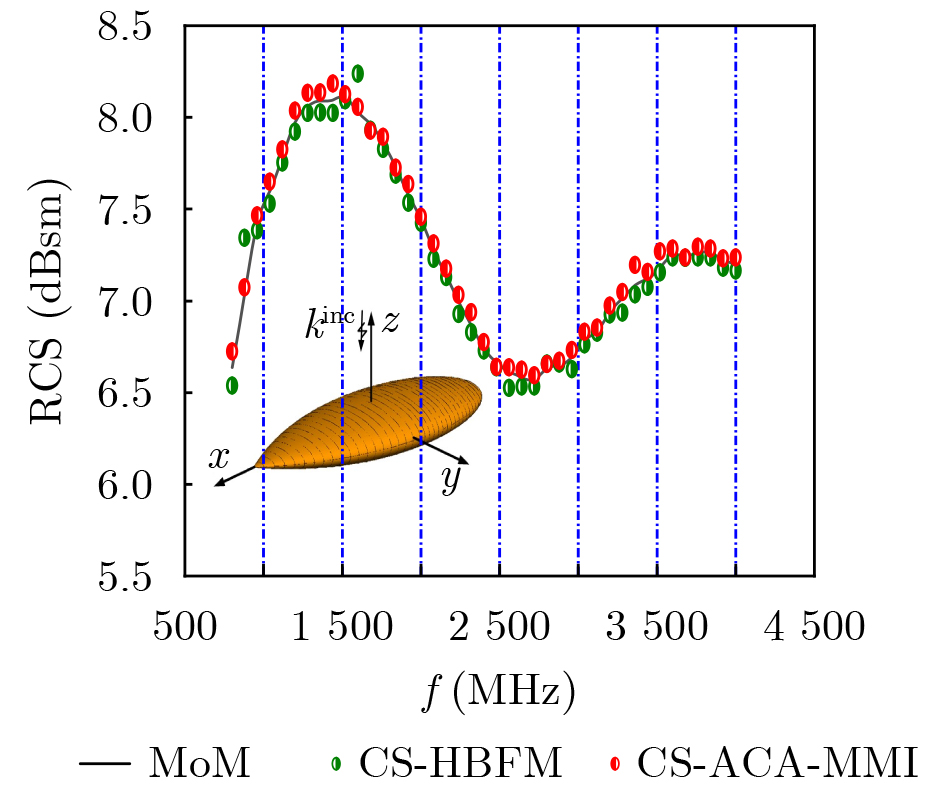
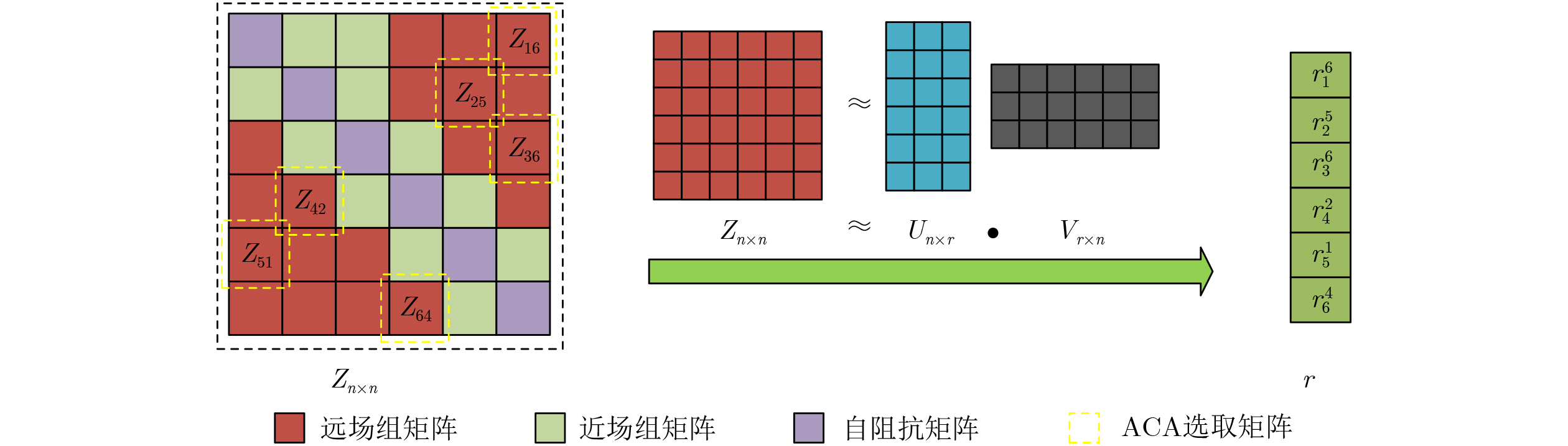
Objective Broadband electromagnetic scattering analysis is widely used in radar target recognition, stealth technology, and microwave imaging. Although the Method of Moments (MoM) provides high computational accuracy, it incurs substantial computational and memory costs for electrically large or geometrically complex targets because full impedance matrices must be constructed and solved. Existing acceleration techniques, including the MultiLevel Fast Multipole Method (MLFMM) and Adaptive Cross Approximation (ACA), reduce the computational burden but still require repeated matrix construction and equation solving at every frequency during wideband analysis. Methods such as Asymptotic Waveform Evaluation (AWE), Model-Based Parameter Estimation (MBPE), and impedance matrix interpolation have been proposed to reduce this redundancy. However, AWE is prone to error accumulation over wide frequency bands, MBPE requires expensive initial sampling, and conventional impedance matrix interpolation still requires the computation of full high-dimensional impedance matrices at the sampling frequencies. More recently, Compressive Sensing Method of Moments (CS-MoM) and its extension, CS-HBFM, have improved wideband analysis by employing Hyper-Basis Functions (HBFs). By constructing Characteristic Mode Basis Functions (CMBFs) only once at the highest frequency, CS-HBFM eliminates repeated basis-function generation. Nevertheless, existing CS-HBFM methods rely on nondeterministic random or uniform sampling, require expensive large-scale matrix-vector products, and repeatedly reconstruct and solve impedance equations throughout the frequency sweep. Methods A CS-ACA-MMI framework is proposed for broadband electromagnetic scattering analysis by combining dual ACA decomposition with Measurement Matrix Interpolation (MMI). First, CMBFs are constructed at the highest frequency, and dominant HBFs are selected according to the Modal Significance (MS) criterion. ACA is then applied to the full impedance matrix to extract deterministic row indices corresponding to the dominant Rao-Wilton-Glisson (RWG) basis functions. These indices are reused throughout the frequency band, eliminating nondeterministic sampling and repeated index extraction. Second, four sampling frequencies are selected using Chebyshev-Lobatto nodes. Low-dimensional measurement matrices are constructed directly from the extracted row indices, avoiding the generation of full high-dimensional impedance matrices. The measurement impedance elements at the sampling frequencies are corrected according to the geometric distance, interpolated to the target frequency, and then restored to the actual measurement impedance elements, thereby eliminating repeated construction of measurement matrices during frequency sweeping. Third, ACA is applied to the far-field component of the interpolated measurement matrix, converting large-scale matrix-vector products into low-dimensional matrix multiplications. The near-field sensing matrix is obtained directly by multiplying the measurement matrix by the basis functions, enabling rapid construction of the complete sensing matrix. Finally, the dense linear system is transformed into an overdetermined system under the compressive sensing framework, and the least-squares method is used to reconstruct the current coefficients, from which the broadband Radar Cross Section (RCS) is calculated. The Root Mean Square Error (RMSE) is used to evaluate numerical accuracy. Three representative targets, namely a cylinder, a slotted cone, and an almond, are analyzed. Broadband RCS, numerical accuracy, total computation time, and single-frequency measurement-matrix memory consumption are compared with those obtained using MoM and CS-HBFM to validate the proposed framework. Results and Discussions Three numerical examples, including a perfect electric conductor cylinder, a slotted cone, and an almond, are used to validate the proposed CS-ACA-MMI framework. The ACA-extracted row indices are concentrated near geometric boundaries and structural junctions, demonstrating the physical validity of the deterministic sampling strategy ( Fig. 2 ). Parametric studies show that appropriate ACA thresholds and four sampling frequencies provide the best balance between computational efficiency and numerical accuracy (Figs. 3 ~5 ). The broadband RCS predicted by the proposed framework agrees closely with the MoM results over the entire frequency band (Figs. 6 ~8 ), and the RMSE remains low, demonstrating high numerical accuracy. Compared with CS-HBFM, the proposed framework reduces the total computation time by 93.4% for the cylinder, 96.7% for the slotted cone, and 80.9% for the almond (Table 2 ). These improvements result from deterministic index reuse, MMI, and dual ACA acceleration, which substantially reduce the computational cost of broadband frequency-sweeping analysis.Conclusions A CS-ACA-MMI framework is proposed by integrating ACA with MMI for efficient broadband electromagnetic scattering analysis. The proposed framework eliminates repeated matrix construction and equation solving during frequency sweeping while overcoming the nondeterministic sampling strategy and the high computational and memory costs of conventional CS-HBFM. Dominant row indices extracted by ACA at the highest frequency provide a deterministic measurement-matrix construction strategy and a stable physical basis for broadband interpolation. By shifting the interpolation target from full impedance matrices to low-dimensional measurement matrices, the computational complexity and redundant matrix construction are substantially reduced. A second ACA decomposition further accelerates sensing-matrix construction by converting large-scale matrix-vector products into low-dimensional matrix multiplications. Numerical results demonstrate that the proposed framework achieves numerical accuracy comparable to that of MoM while reducing total computation time by more than 80% and decreasing single-frequency measurement-matrix memory consumption by up to 65%. Because only the measurement matrices at four sampling frequencies need to be stored, the overall memory requirement is further reduced. -
表 1 两种方法的计算复杂度对比
方法 测量矩阵构建 近场传感矩阵构建 远场传感矩阵构建 CS-HBFM $ O(N_{\mathrm{f}}MN) $ $ O((1-\eta)N\mathrm{_f}MNK) $ $ O(\eta N_{\mathrm{f}}MNK) $ CS-ACA-MMI $ O(4SN) $ $ O((1-\eta)N\mathrm{_f}SNK) $ $ O(\eta N_{\mathrm{f}}RNK) $  下载: 导出CSV
表 2 两种方法的计算时间对比
目标 方法 抽取行数 总时间(s) RMSE(dBsm) 单频点测量矩阵的内存(GB) 圆柱体 CS-HBFM 3001 5285.27 0.46 0.46 CS-ACA-MMI 1104 349.33 0.4 0.16 带缝圆锥 CS-HBFM 4082 34991.7 0.04 0.83 CS-ACA-MMI 2839 1154.52 0.05 0.58 杏仁体 CS-HBFM 17633 180182.5 0.07 15.44 CS-ACA-MMI 13292 34316.2 0.05 11.64
下载: 导出CSV
-
[1] HARRINGTON R F. Field Computation by Moment Methods[M]. New York: Macmillan, 1968: 22–57. [2] CANDES E J, ROMBERG J, and TAO T. Robust uncertainty principles: Exact signal reconstruction from highly incomplete frequency information[J]. IEEE Transactions on Information Theory, 2006, 52(2): 489–509. doi: 10.1109/TIT.2005.862083. [3] 陈新蕾, 邓小乔, 李茁, 等. 金属介质混合目标散射分析的快速偶极子法[J]. 电子与信息学报, 2011, 33(11): 2790–2794. doi: 10.3724/SP.J.1146.2011.00398.CHEN Xinlei, DENG Xiaoqiao, LI Zhuo, et al. Electromagnetic scattering by mixed conducting and dielectric objects analysis using fast dipole method[J]. Journal of Electronics & Information Technology, 2011, 33(11): 2790–2794. doi: 10.3724/SP.J.1146.2011.00398. [4] SONG J M and CHEW W C. Multilevel fast-multipole algorithm for solving combined field integral equations of electromagnetic scattering[J]. Microwave and Optical Technology Letters, 1995, 10(1): 14–19. doi: 10.1002/mop.4650100107. [5] WANG Zhonggen, DONG Dai, GUO Fei, et al. Fast construction of measurement matrix and sensing matrix with dual adaptive cross approximation[J]. IEEE Antennas and Wireless Propagation Letters, 2025, 24(1): 13–17. doi: 10.1109/LAWP.2024.3481498. [6] FANG Xiaoxing, HELDRING A, RIUS J M, et al. Nested fast adaptive cross approximation algorithm for solving electromagnetic scattering problems[J]. IEEE Transactions on Microwave Theory and Techniques, 2020, 68(12): 4995–5003. doi: 10.1109/TMTT.2020.3024732. [7] XU Zhou, WANG Xing, CHEN Lin, et al. Combination of adaptive cross approximation and asymptotic waveform evaluation for efficient analysis of wide-band RCS[J]. IEEE Transactions on Antennas and Propagation, 2025, 73(11): 9648–9653. doi: 10.1109/TAP.2025.3589667. [8] WANG Xiande and WERNER D H. Improved model-based parameter estimation approach for accelerated periodic method of moments solutions with application to the analysis of convoluted frequency selected surfaces and metamaterials[J]. IEEE Transactions on Antennas and Propagation, 2010, 58(1): 122–131. doi: 10.1109/TAP.2009.2036196. [9] NEWMAN E and FORRAI D. Scattering from a microstrip patch[J]. IEEE Transactions on Antennas and Propagation, 1987, 35(3): 245–251. doi: 10.1109/TAP.1987.1144084. [10] LI Weidong, ZHOU Houxing, HONG Wei, et al. An accurate interpolation scheme with derivative term for generating mom matrices in frequency sweeps[J]. IEEE Transactions on Antennas and Propagation, 2009, 57(8): 2376–2385. doi: 10.1109/TAP.2009.2024476. [11] CHEN Xinlei, ZHANG Liyang, GU Changqing, et al. Wideband Sherman-Morrison-Woodbury formula-based algorithm for electromagnetic scattering problems[J]. IEEE Transactions on Antennas and Propagation, 2023, 71(6): 5487–5492. doi: 10.1109/TAP.2023.3263627. [12] 闻建刚, 冯文淑, 等. 无线传感网中的迭代加权最小二乘定位算法[J]. 电子与信息学报, 2025, 47(3): 582–589. doi: 10.11999/JEIT250203.WEN Jiangang, FENG Wenshu, et. al. Iterative weighted least square localization algorithm in wireless sensor networks[J]. Journal of Electronics & Information Technology, 2025, 47(3): 582–589. doi: 10.11999/JEIT250203. [13] SHEN Cunjie, CAO Xinyuan, QI Qi, et al. Underdetermined equation model combined with improved Krylov subspace basis for solving electromagnetic scattering problems[J]. Progress in Electromagnetics Research Letters, 2024, 119: 79–84. doi: 10.2528/PIERL24032101. [14] WANG Zhonggen, LI Chenwei, SUN Yufa, et al. Fast analysis of broadband electromagnetic scattering problems by combining hyper basis functions-based mom with compressive sensing[J]. IEEE Journal on Multiscale and Multiphysics Computational Techniques, 2024, 9: 84–91. doi: 10.1109/JMMCT.2024.3355976. [15] CAO Xinyuan, CHEN Mingsheng, QI Qi, et al. Solving electromagnetic scattering problems by underdetermined equations and Krylov subspace[J]. IEEE Microwave and Wireless Components Letters, 2020, 30(6): 541–544. doi: 10.1109/LMWC.2020.2988166. [16] 王仲根, 唐晓菀, 汪强. 应用改进的主要特征基函数快速计算目标宽角度RCS[J]. 电子与信息学报, 2018, 40(3): 573–578. doi: 10.11999/JEIT170499.WANG Zhonggen, TANG Xiaowan and WANG Qiang. Fast calculation of wide-angel RCS of objects using improved primary characteristic basis functions[J]. Journal of Electronics & Information Technology, 2018, 40(3): 573–578. doi: 10.11999/JEIT170499. [17] DU Ping, TONG Ziwen, LIN Hai, et al. Wideband RCS analysis of finite periodic array in the vicinity of object using modified SSED-CBFM and improved FIR[J]. IEEE Antennas and Wireless Propagation Letters, 2025, 24(6): 1447–1551. doi: 10.1109/LAWP.2025.3539657. [18] OU Mingrui, SUN Yufa, and SHI Chaofan. Compressive sensing enhanced multilevel characteristic basis function method for analyzing electrically large scattering problems[J]. IEEE Antennas and Wireless Propagation Letters, 2024, 23(2): 593–597. doi: 10.1109/LAWP.2023.3330820. [19] TONG Ziwen, DU Ping, and ZHENG Gang. Characteristic modes analysis of finite periodic array with object using entire domain basis function method and ACA[J]. IEEE Antennas and Wireless Propagation Letters, 2025, 24(5): 1149–1152. doi: 10.1109/LAWP.2025.3527927. [20] WANG Zhonggen, NIE Wenyan, and LIN Han. Characteristic basis functions enhanced compressive sensing for solving the bistatic scattering problems of three-dimensional targets[J]. Microwave and Optical Technology Letters, 2020, 62(10): 3132–3138. doi: 10.1002/mop.32432. [21] GAO Yalan, AKBAR M F, and JAWAD G N. Stabilized and fast method for compressive-sensing-based method of moments[J]. IEEE Antennas and Wireless Propagation Letters, 2023, 22(12): 2915–2919. doi: 10.1109/LAWP.2023.3304306. [22] 程伊婷, 董涛, 苏昱玮, 等. 面向通信信号高效接收处理的压缩感知技术综述[J]. 电子与信息学报, 2026, 48(1): 168–182. doi: 10.11999/JEIT250855.CHENG Yiting, DONG Tao, SU Yuwei, et al. A review of compressed sensing technology for efficient receiving and processing of communication signal[J]. Journal of Electronics & Information Technology, 2026, 48(1): 168–182. doi: 10.11999/JEIT250855. [23] BERRIOCHOA E, CACHAFEIRO A, DÍAZ J, et al. A note on the rate of convergence for Chebyshev-Lobatto and Radau systems[J]. Open Mathematics, 2016, 14(1): 156–166. doi: 10.1515/math-2016-0015. -

 下载:
下载:

图(8) / 表(2)
计量
- 文章访问数: 583
- HTML全文浏览量: 231
- PDF下载量: 28
- 被引次数: 0
