




Lightweight Semantic Communication System Driven by User Personalization in UAV Networks
-
摘要: 针对资源受限的无人机(UAV)平台,如何在图像传输过程中实现高效且个性化的语义通信仍面临重要挑战。为此,该文提出一种轻量级个性化UAV语义通信(LPUSC)系统,旨在实现计算开销、传输带宽与个性化需求之间的有效平衡。该系统基于低开销的语义索引交互实现用户个性化内容传输,且无需对新接入用户进行兴趣预训练。首先,针对UAV端计算资源受限的问题,提出的LPUSC系统采用轻量且灵活的语义提取模块,利用YOLO11s实现高效的语义目标识别从而定位用户感兴趣区域,并结合MobileSAM模型实现基于目标框的精准分割,从而提取出个性化的语义内容,兼顾语义提取的轻量化、精准度与个性化。其次,该文构建了高质量语义图像重建的端到端传输网络,针对语义图像特性设计一种面向语义区域的加权混合损失训练策略,有效提升了个性化语义内容的重建质量。仿真结果表明,相较于传统的DeepJSCC和JPEG方法,所提LPUSC在语义图像重建质量上获得了显著提升,包括峰值信噪比分别提高了4.8%和79.5%,结构相似性指数分别提高了1.3%和43%,且在不同信道下保持了良好的鲁棒性。Abstract:
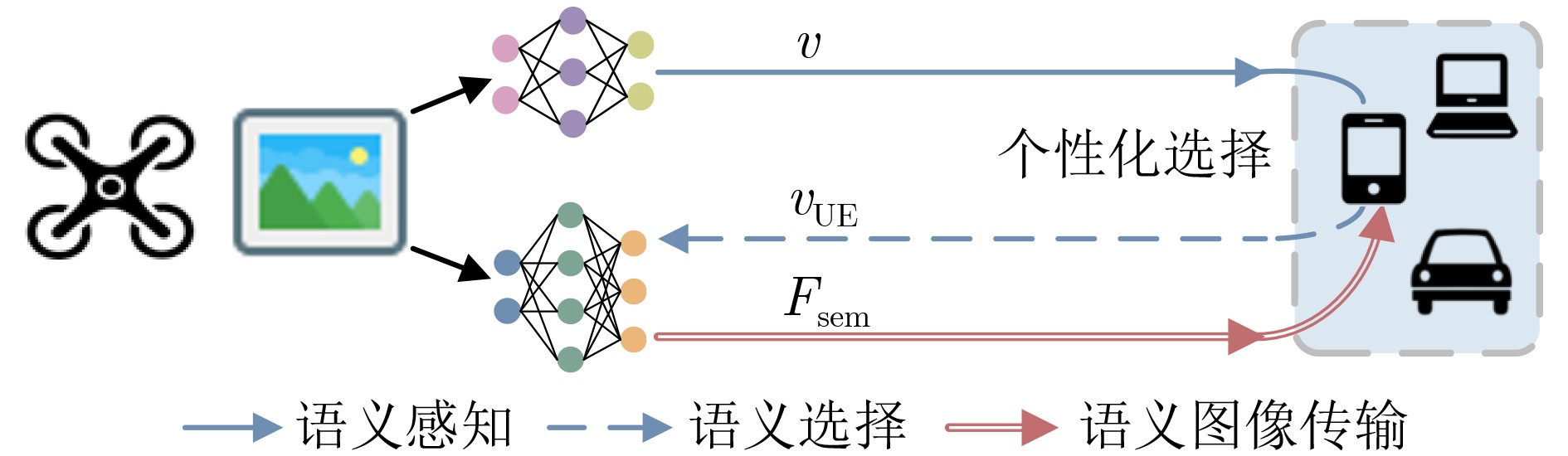
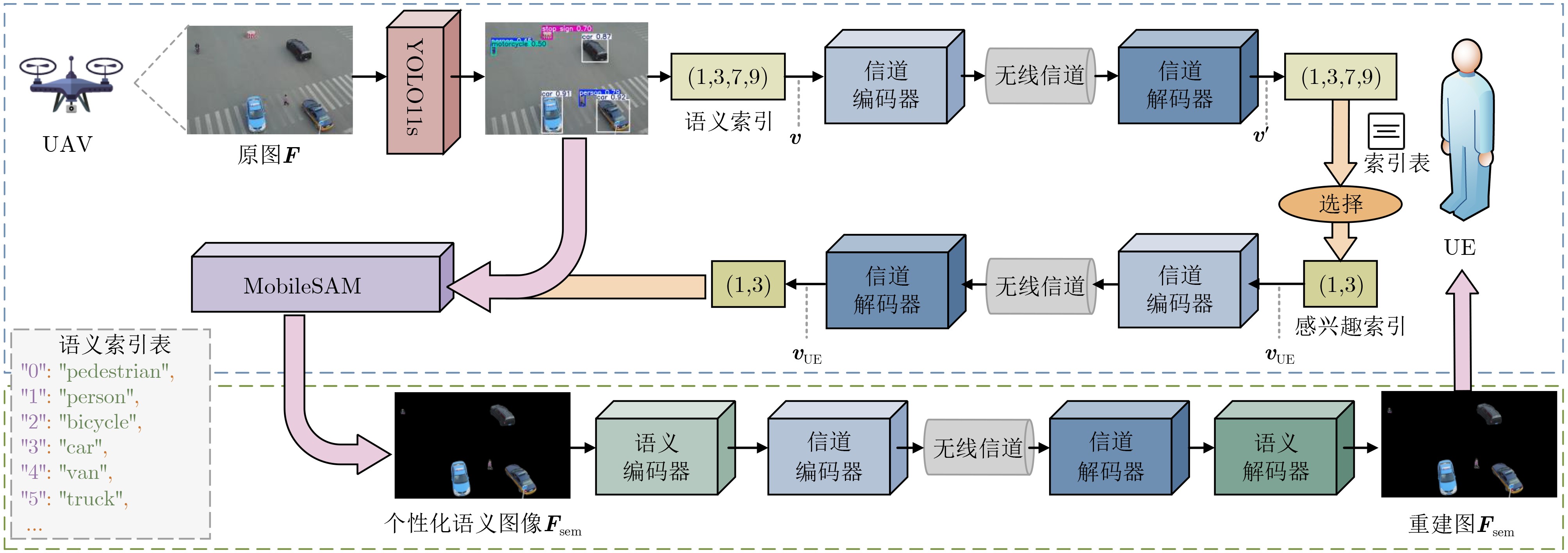
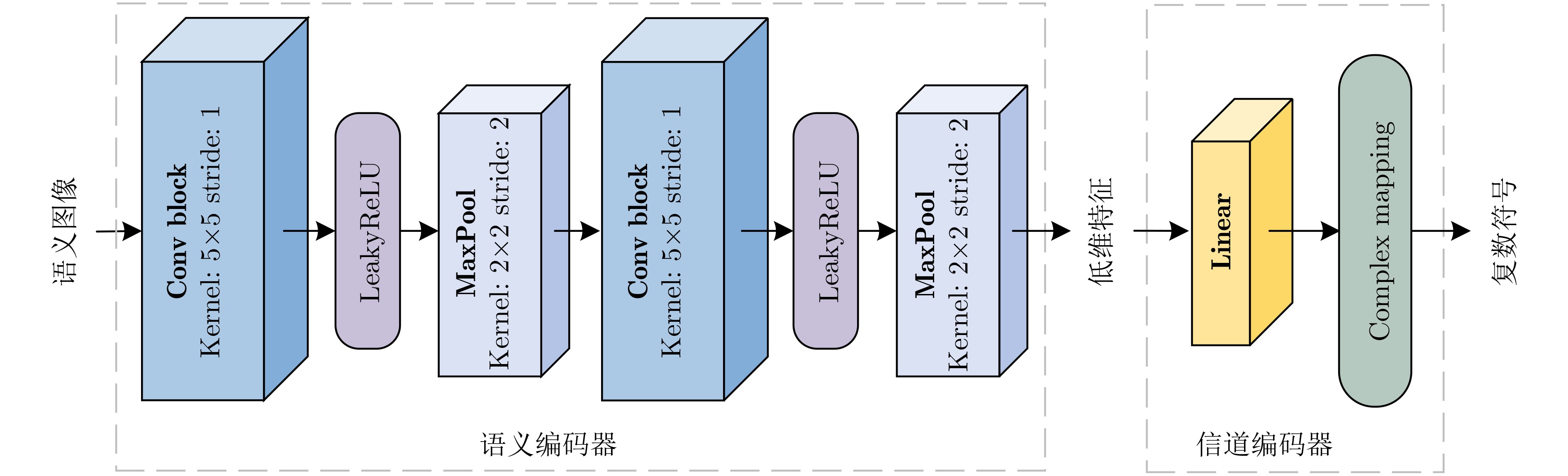
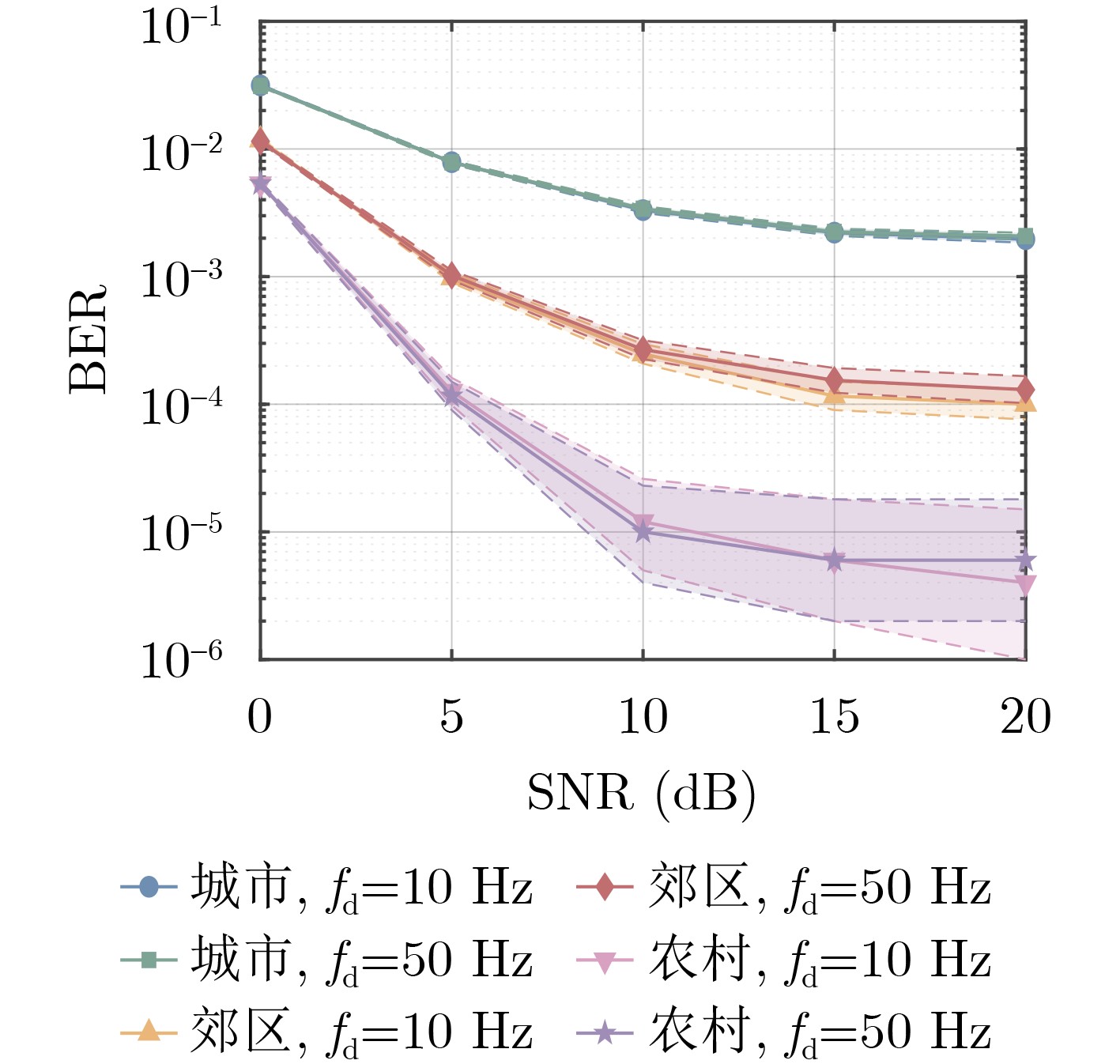
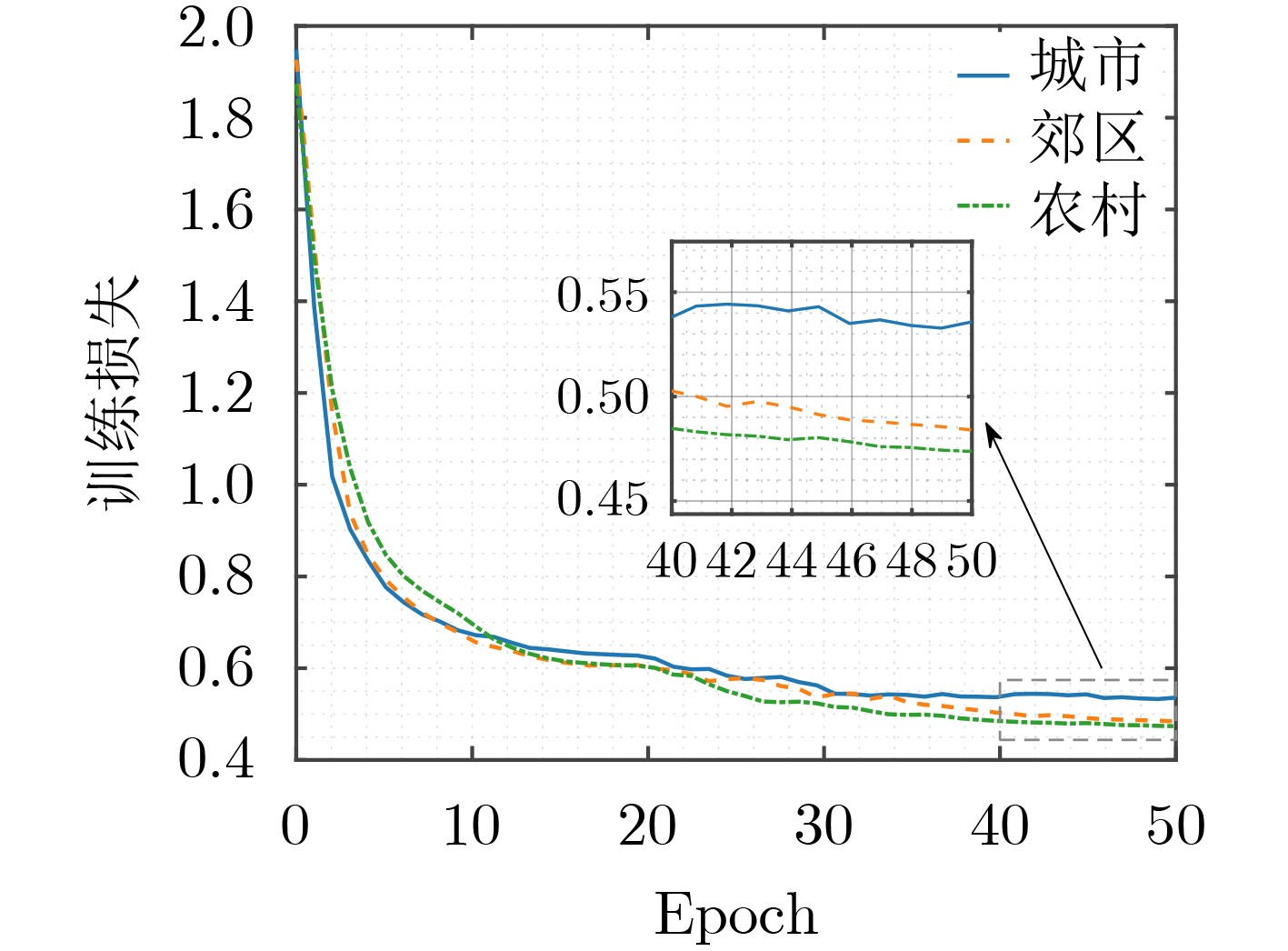
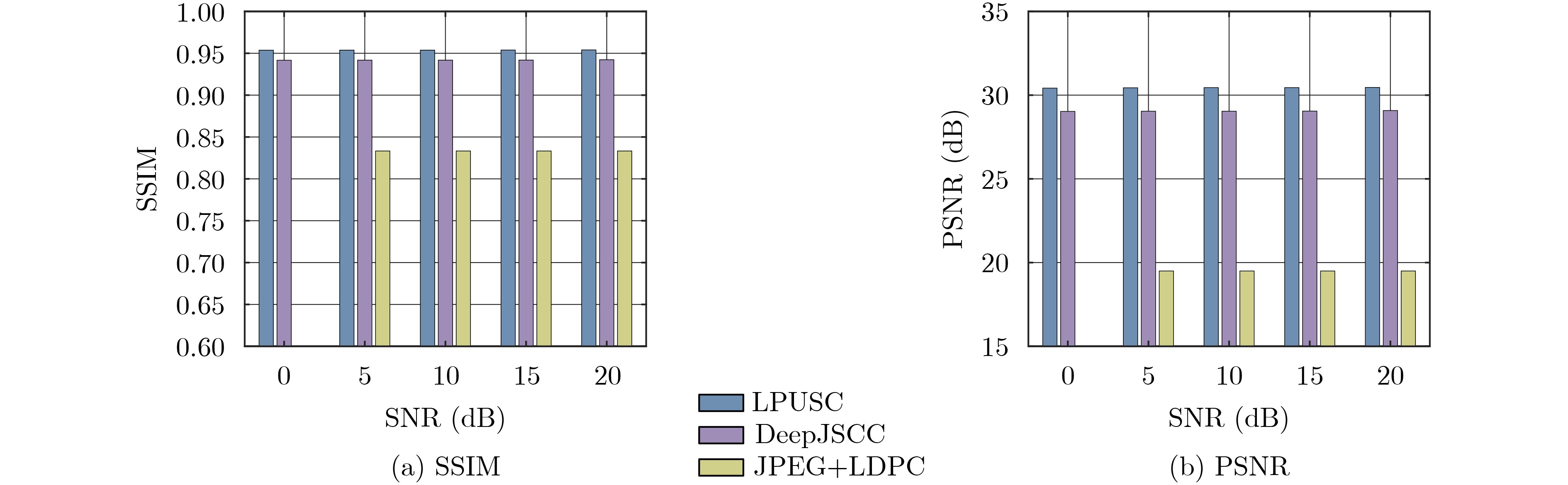
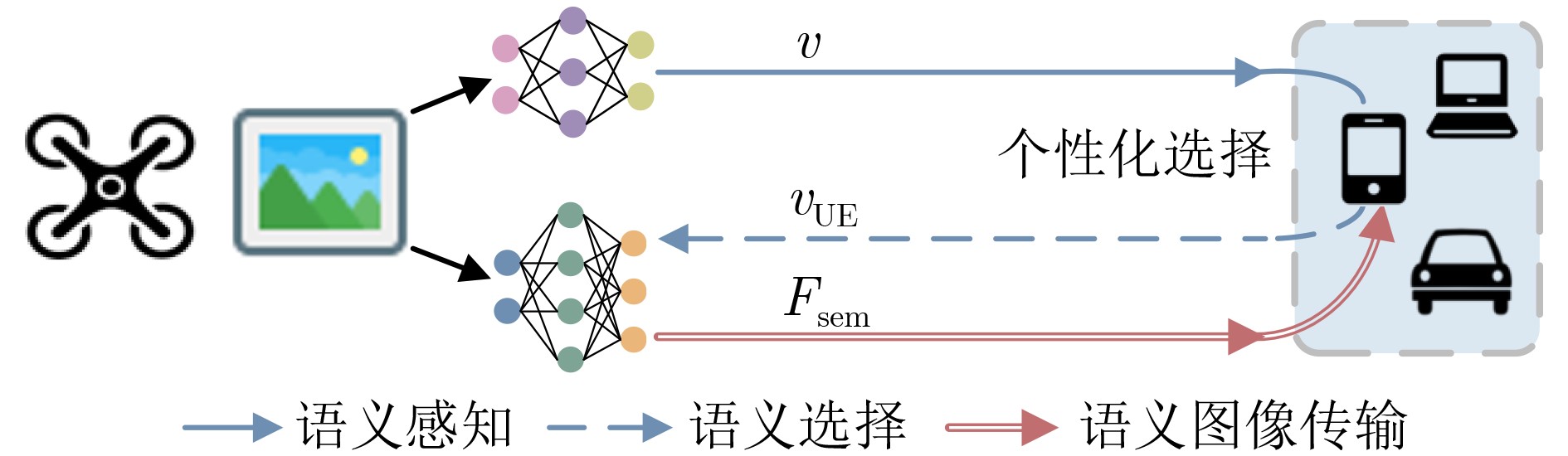
Objective With the rapid development of the low-altitude economy and 6G intelligent networks, Unmanned Aerial Vehicle (UAV) image communication shows strong potential in target reconnaissance, emergency communication, and intelligent inspection. However, conventional pixel-level transmission cannot meet the requirements of efficient, low-latency, and intelligent communication because UAVs are constrained by limited bandwidth, payload capacity, and onboard computational resources. Semantic communication, which transmits only task-relevant information, provides an effective solution for improving communication efficiency in resource-constrained scenarios. However, current studies on UAV image transmission face several challenges. First, fixed network architectures use unified semantic encoding and transmission strategies for all users and cannot adapt to different personalized requirements. Second, new user access usually requires interest pre-training or model fine-tuning, which increases deployment overhead. Third, most models have high computational complexity. To address these issues, this paper proposes the Lightweight Personalized UAV Semantic Communication (LPUSC) system to balance computational cost, transmission bandwidth, and personalized requirements. The system enables personalized transmission through low-overhead semantic index interaction and a lightweight semantic extraction module, without pre-training for new users. A dual-branch end-to-end network is also designed. In this network, the semantic index transmission network works with the semantic image transmission network trained by a weighted hybrid loss function, thereby supporting high-precision and high-quality transmission of personalized semantic images. Methods The proposed LPUSC system adopts a dual-branch architecture for accurate task-driven semantic content transmission. In the semantic index interaction branch, the lightweight object detection model YOLO11s is used to perform semantic perception on UAV-captured visual scenes. Complex image information is compressed into low-dimensional semantic index vectors, which reduces transmission redundancy and communication overhead. On this basis, an end-to-end semantic index transmission network is designed to improve the robustness of semantic index transmission under complex wireless channel conditions. Through the semantic index interaction mechanism, the system accurately identifies targets of user interest and provides prior guidance for subsequent semantic content extraction. In the semantic image transmission branch, the lightweight and high-precision MobileSAM model is adopted for semantic region extraction. This branch uses the target bounding boxes returned by the semantic index interaction branch as box-prompt inputs, enabling pixel-accurate segmentation and extraction of specific semantic targets. To further improve semantic image reconstruction quality, a weighted hybrid loss function is designed. This function integrates Mean Squared Error (MSE), L1-norm loss, Structural Similarity Index Measure (SSIM) loss, gradient loss, perceptual loss, and background suppression loss. These losses jointly optimize pixel accuracy, structural preservation, and fine-detail restoration. Through the joint constraints of multiple loss terms, the proposed system improves semantic region reconstruction and achieves high-quality semantic image transmission. Results and Discussions Simulation results validate the proposed LPUSC system in semantic extraction and end-to-end transmission. For semantic extraction, three schemes are compared: YOLO11s-seg, YOLO11s + Segment Anything Model (SAM), and YOLO11s + MobileSAM ( Fig. 4 ). The results show that the detection-segmentation decoupled architecture achieves better semantic boundary localization accuracy. Combined with the quantitative analysis inTable 1 , the YOLO11s + MobileSAM scheme reduces resource use while maintaining high extraction accuracy. This confirms its suitability for resource-constrained UAV platforms. For end-to-end transmission, the semantic index vector transmission results (Fig. 5 ) show that the Bit Error Rate (BER) decreases monotonically as the Signal-to-Noise Ratio (SNR) increases in all three channel environments. The rural environment achieves the best performance, followed by the suburban and urban environments. These differences are mainly caused by variations in scatterer density and link blockage across environments. The proposed transmission network maintains stable BER under different Doppler frequencies, demonstrating its robustness under dynamic channel conditions. For semantic image transmission, the proposed weighted hybrid loss function shows good training stability (Fig. 6 ), and LPUSC consistently outperforms the Deep Joint Source-Channel Coding (DeepJSCC) and JPEG + Low-Density Parity-Check (LDPC) baselines across the full SNR range (Fig. 7 ). Specifically, LPUSC achieves SSIM and Peak Signal-to-Noise Ratio (PSNR) gains of 1.3% and 4.8% over DeepJSCC, respectively, and gains of 43% and 79.5% over JPEG + LDPC, respectively. These results indicate that the proposed personalized semantic image transmission network achieves high-quality reconstruction and remains robust to channel variations.Conclusions To improve the efficiency and flexibility of UAV image communication, this paper proposes LPUSC, a lightweight personalized semantic communication system. The system uses a dual-branch transmission architecture that integrates lightweight, high-precision object detection and semantic segmentation models. It enables personalized content transmission without interest pre-training. This design satisfies personalized user requirements while maintaining low computational and communication overhead. Simulation results show that the LPUSC system achieves stable and reliable semantic index interaction and outperforms the DeepJSCC and JPEG + LDPC baselines in semantic region reconstruction. The proposed system provides a useful reference for efficient UAV image semantic communication in 6G low-altitude intelligent networks. -
表 1 模型性能对比
任务 模型 mAP50-90 (%) 推理速度 (ms) 参数量(M) FLOPs (B) 目标检测 YOLO8s 44.90 2.66 11.20 28.60 YOLO11s 47.00 2.50 9.40 21.50 YOLO11s-seg 46.6 (box) 2.90 10.10 35.50 语义分割 SAM / 456 615 2976 MobileSAM / 12.00 9.66 42.00  下载: 导出CSV
表 2 信道参数设置
通信环境 $ \alpha $ $ {\alpha }_{\mathrm{shadow}} $ (dB) $ K $ 城市环境 3 6 10 郊区环境 2.2 3 15 农村环境 2 1 30
下载: 导出CSV
-
[1] PEI Jiaming, DAI Minghui, AL-DULAIMI A, et al. Task-oriented communication and optimization framework for 6G non-terrestrial networks: Challenges and solutions[J]. IEEE Communications Magazine, 2025, 63(11): 138–144. doi: 10.1109/MCOM.001.2500162. [2] LIN Yueshan, FENG Wei, CHEN Yunfei, et al. Latency-constrained resource synergization for mission-oriented 6G non-terrestrial networks[J]. IEEE Internet of Things Journal, 2026, 13(12): 26155–26170. doi: 10.1109/JIOT.2026.3676035. [3] CHEN Wanshi, LIU Lingjia, LIU Xiaofeng, et al. Toward standardization of 6G and nextG: Key technologies to enable fundamental enhancements[J]. IEEE Journal on Selected Areas in Communications, 2026, 44: 4333–4365. doi: 10.1109/JSAC.2026.3671338. [4] 王云涛, 苏洲, 高源, 等. 低空智联网架构、安全与优化关键技术[J]. 电子与信息学报, 2026, 48(3): 889–913. doi: 10.11999/JEIT250947.WANG Yuntao, SU Zhou, GAO Yuan, et al. Key technologies for low-altitude intelligent networks: Architecture, security, and optimization[J]. Journal of Electronics & Information Technology, 2026, 48(3): 889–913. doi: 10.11999/JEIT250947. [5] KALEEM Z, ORAKZAI F A, ISHAQ W, et al. Emerging trends in UAVs: From placement, semantic communications to generative AI for mission-critical networks[J]. IEEE Transactions on Consumer Electronics, 2025, 71(3): 7412–7438. doi: 10.1109/TCE.2024.3434971. [6] MENG Siqi, WU Shaohua, ZHANG Jiaming, et al. Semantics-empowered space-air-ground-sea integrated network: New paradigm, frameworks, and challenges[J]. IEEE Communications Surveys & Tutorials, 2025, 27(1): 140–183. doi: 10.1109/COMST.2024.3416309. [7] 钱志鸿, 王义君. 低空经济赋能者: 智能无人机技术体系综述与展望[J]. 电子与信息学报, 2026, 48(1): 1–33. doi: 10.11999/JEIT251246.QIAN Zhihong and WANG Yijun. Intelligent unmanned aerial vehicles for low-altitude economy: A review of the technology framework and future prospects[J]. Journal of Electronics & Information Technology, 2026, 48(1): 1–33. doi: 10.11999/JEIT251246. [8] KANG Xu, SONG Bin, GUO Jie, et al. Task-oriented image transmission for scene classification in unmanned aerial systems[J]. IEEE Transactions on Communications, 2022, 70(8): 5181–5192. doi: 10.1109/TCOMM.2022.3182325. [9] LIU Sai, ZHANG Zhenjiang, and HAN Guangjie. Semantic task offloading and resource allocation in UAV-assisted mobile edge computing network for disaster rescue[J]. IEEE Transactions on Vehicular Technology, 2026. doi: 10.1109/TVT.2026.3665191. [10] CHACCOUR C, SAAD W, DEBBAH M, et al. Less data, more knowledge: Building next-generation semantic communication networks[J]. IEEE Communications Surveys & Tutorials, 2025, 27(1): 37–76. doi: 10.1109/COMST.2024.3412852. [11] YANG Zhaohui, CHEN Mingzhe, ZHANG Zaoyang, et al. Energy efficient semantic communication over wireless networks with rate splitting[J]. IEEE Journal on Selected Areas in Communications, 2023, 41(5): 1484–1495. doi: 10.1109/JSAC.2023.3240713. [12] SONG Xi, ZHOU Fuhui, DING Rui, et al. UAV cognitive semantic communications enabled by knowledge graph for robust object detection[J]. IEEE Transactions on Communications, 2025, 73(8): 6052–6067. doi: 10.1109/TCOMM.2025.3538850. [13] 王文远, 周明宇, 王朝炜, 等. 面向空天地网络的弹性语义通信[J]. 电子与信息学报, 2025, 47(10): 3646–3657. doi: 10.11999/JEIT250077.WANG Wenyuan, ZHOU Mingyu, WANG Chaowei, et al. Resilient semantic communication for space-air-ground networks[J]. Journal of Electronics & Information Technology, 2025, 47(10): 3646–3657. doi: 10.11999/JEIT250077. [14] LIU Shai, YANG Helin, XIE Wanchen, et al. Intelligent semantic communication scheme integrating ISAC for low-altitude intelligent networks[J]. IEEE Transactions on Communications, 2026, 74: 3018–3033. doi: 10.1109/TCOMM.2025.3649924. [15] FAN Jian, REN Pengfei, CHEN Jianrui, et al. Diffusion-based semantic-communication-assisted low-altitude intelligent service for IoT[J]. IEEE Internet of Things Journal, 2025, 12(10): 13568–13580. doi: 10.1109/JIOT.2025.3530462. [16] HU Han, ZHU Xingwu, ZHOU Fuhui, et al. Resource allocation for multi-modal semantic communication in UAV collaborative networks[J]. IEEE Transactions on Communications, 2025, 73(9): 7599–7616. doi: 10.1109/TCOMM.2025.3552303. [17] KANG Jiawen, DU Hongyang, LI Zonghang, et al. Personalized saliency in task-oriented semantic communications: Image transmission and performance analysis[J]. IEEE Journal on Selected Areas in Communications, 2023, 41(1): 186–201. doi: 10.1109/JSAC.2022.3221990. [18] DU Baoxia, DU Hongyang, LIU Haifeng, et al. YOLO-based semantic communication with generative AI-aided resource allocation for digital twins construction[J]. IEEE Internet of Things Journal, 2024, 11(5): 7664–7678. doi: 10.1109/JIOT.2023.3317629. [19] SI Peiyuan, ZHAO Jun, LAM K Y, et al. UAV-assisted semantic communication with hybrid action reinforcement learning[C]. The GLOBECOM 2023–2023 IEEE Global Communications Conference, Kuala Lumpur, Malaysia, 2023: 3801–3806. doi: 10.1109/GLOBECOM54140.2023.10437643. [20] KHUWAJA A A, CHEN Yunfei, ZHAO Nan, et al. A survey of channel modeling for UAV communications[J]. IEEE Communications Surveys & Tutorials, 2018, 20(4): 2804–2821. doi: 10.1109/COMST.2018.2856587. [21] ZHANG Chaoning, HAN Dongshen, QIAO Yu, et al. Faster segment anything: Towards lightweight SAM for mobile applications[J]. arXiv: 2306.14289, 2023. doi: 10.48550/arXiv.2306.14289. [22] BOURTSOULATZE E, KURKA D B, and GÜNDÜZ D. Deep joint source-channel coding for wireless image transmission[J]. IEEE Transactions on Cognitive Communications and Networking, 2019, 5(3): 567–579. doi: 10.1109/TCCN.2019.2919300. -

 下载:
下载:


图(7) / 表(2)
计量
- 文章访问数: 705
- HTML全文浏览量: 295
- PDF下载量: 81
- 被引次数: 0
