




Transfer Learning Aided CNN for Efficient Data Detection in ReRAM with Sneak-Path Interference
-
摘要: 阻变存储器中的SPI会引发不可预测的单元间相关性,显著提高信号检测的复杂度。传统检测方法通常依赖已知的信道噪声状态假设,在实际应用中泛化能力有限。为解决这一问题,提出了三种基于卷积神经网络(CNN)的数据检测方法,无需依赖先验信道信息即可有效建模并抑制干扰:其一,结合约束编码与多层CNN,通过约束编码判断潜路径干扰状态并进行数据恢复;其二,采用双CNN框架,首先利用轻量CNN进行SPI识别,再通过多层CNN实现精细化检测;其三,引入迁移学习机制,在保持检测精度的同时,将所需训练样本规模降低至传统方法的千分之一。仿真结果表明,所提方法在未知信道状态下均实现误码率性能的显著提升,误比特率相比现有算法至少降低一半,逼近性能极限。此外,迁移学习机制的引入将训练样本需求由$ {10}^{6} $组降至$ 1000 $组,减少三个数量级。Abstract:
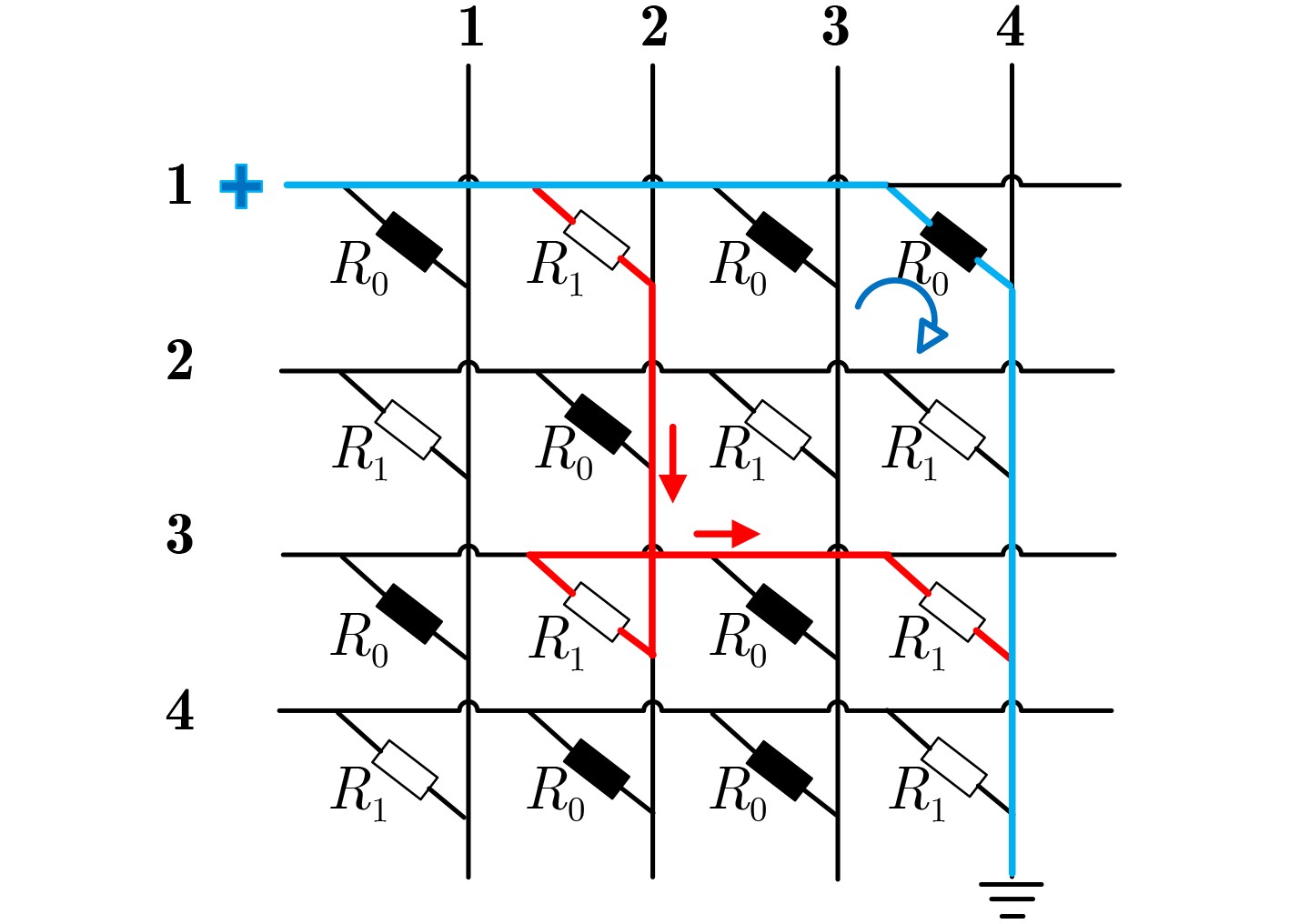
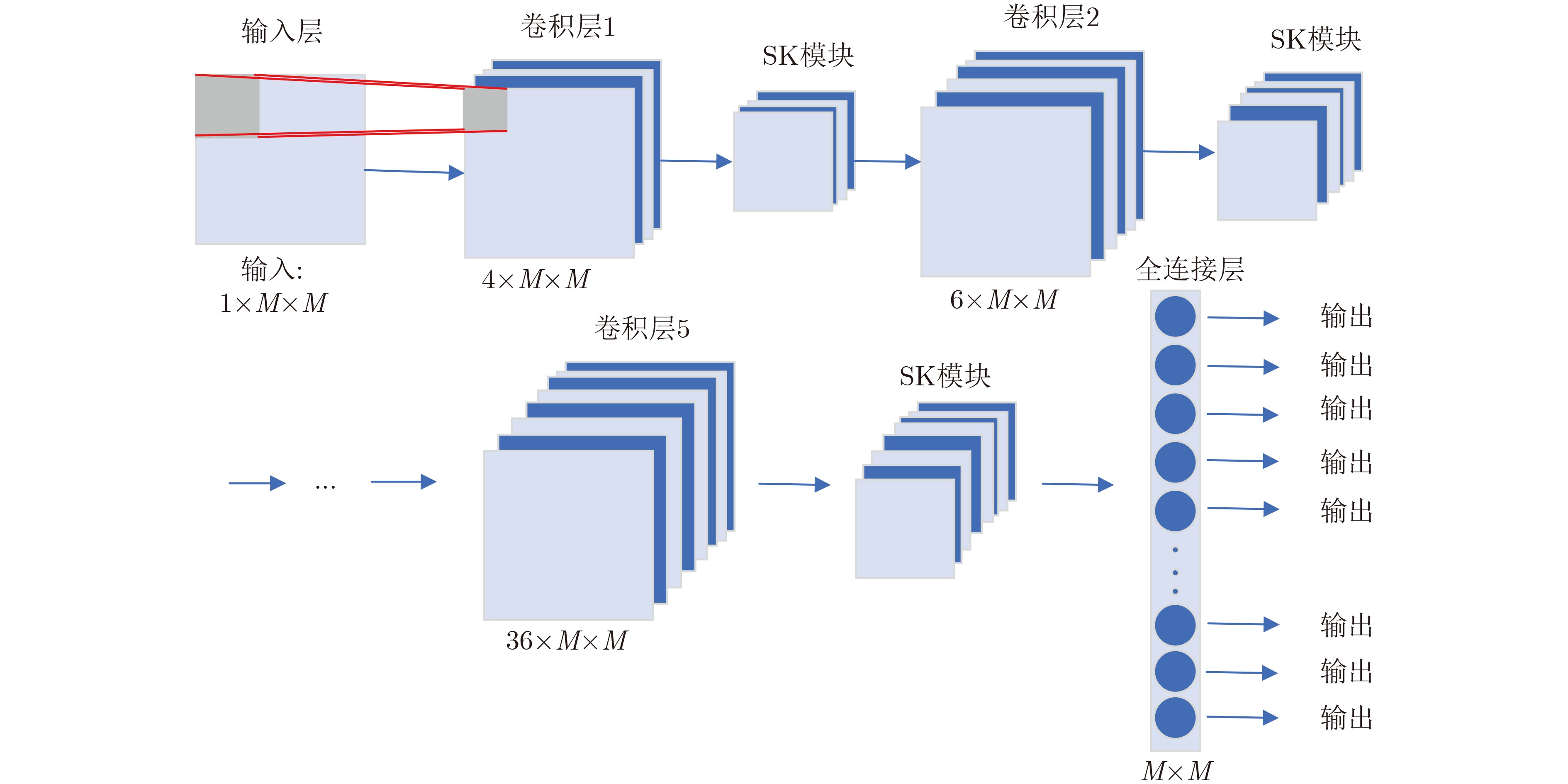
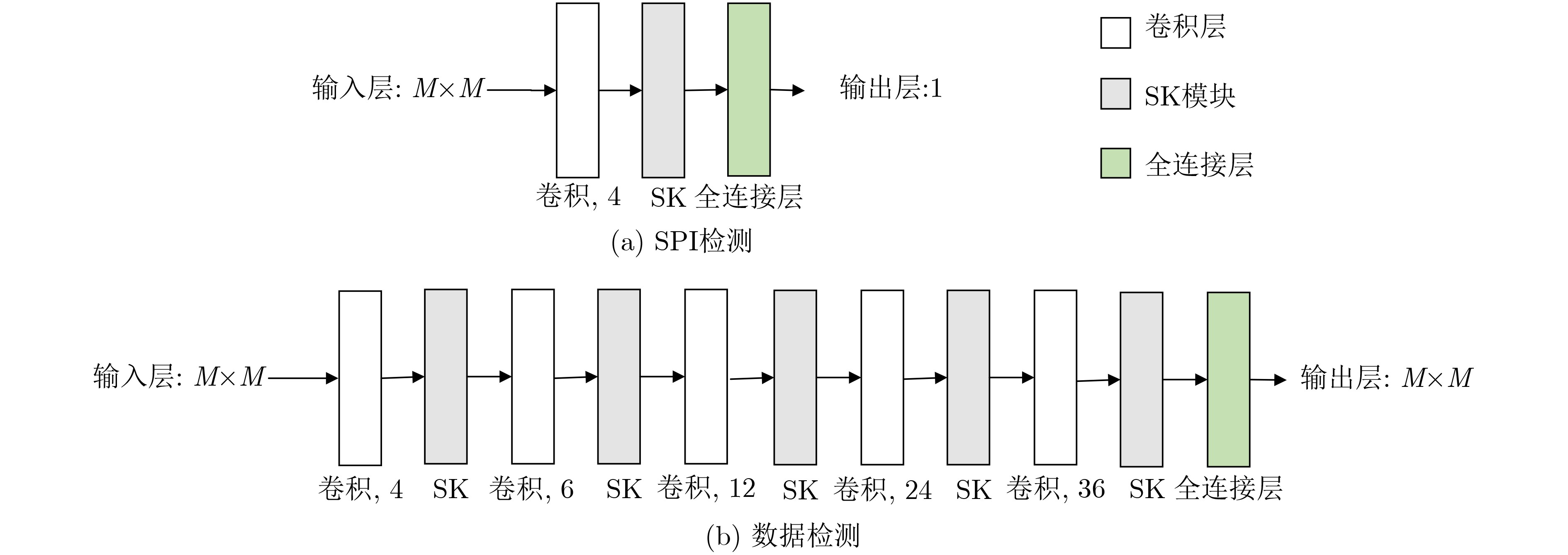
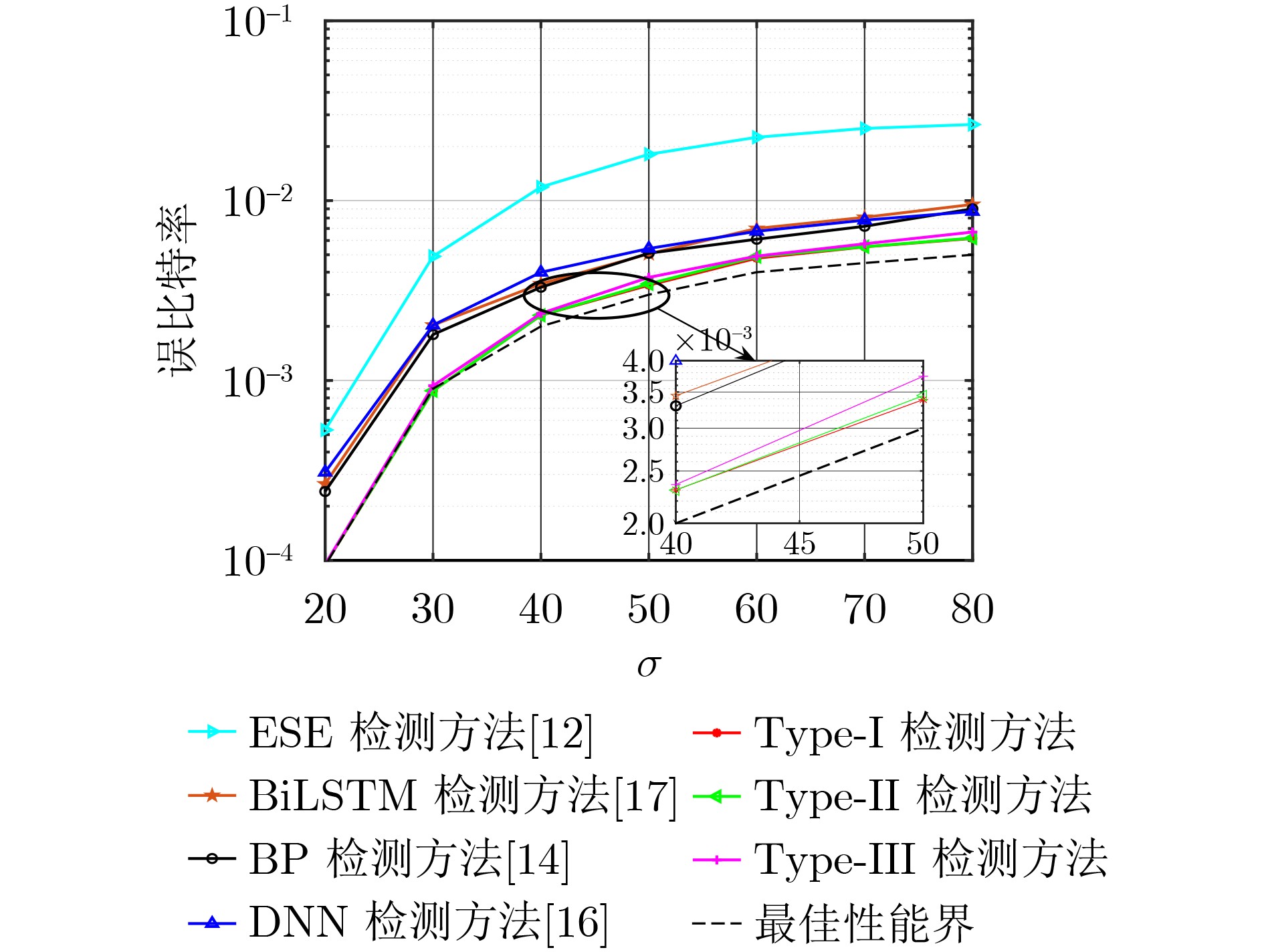
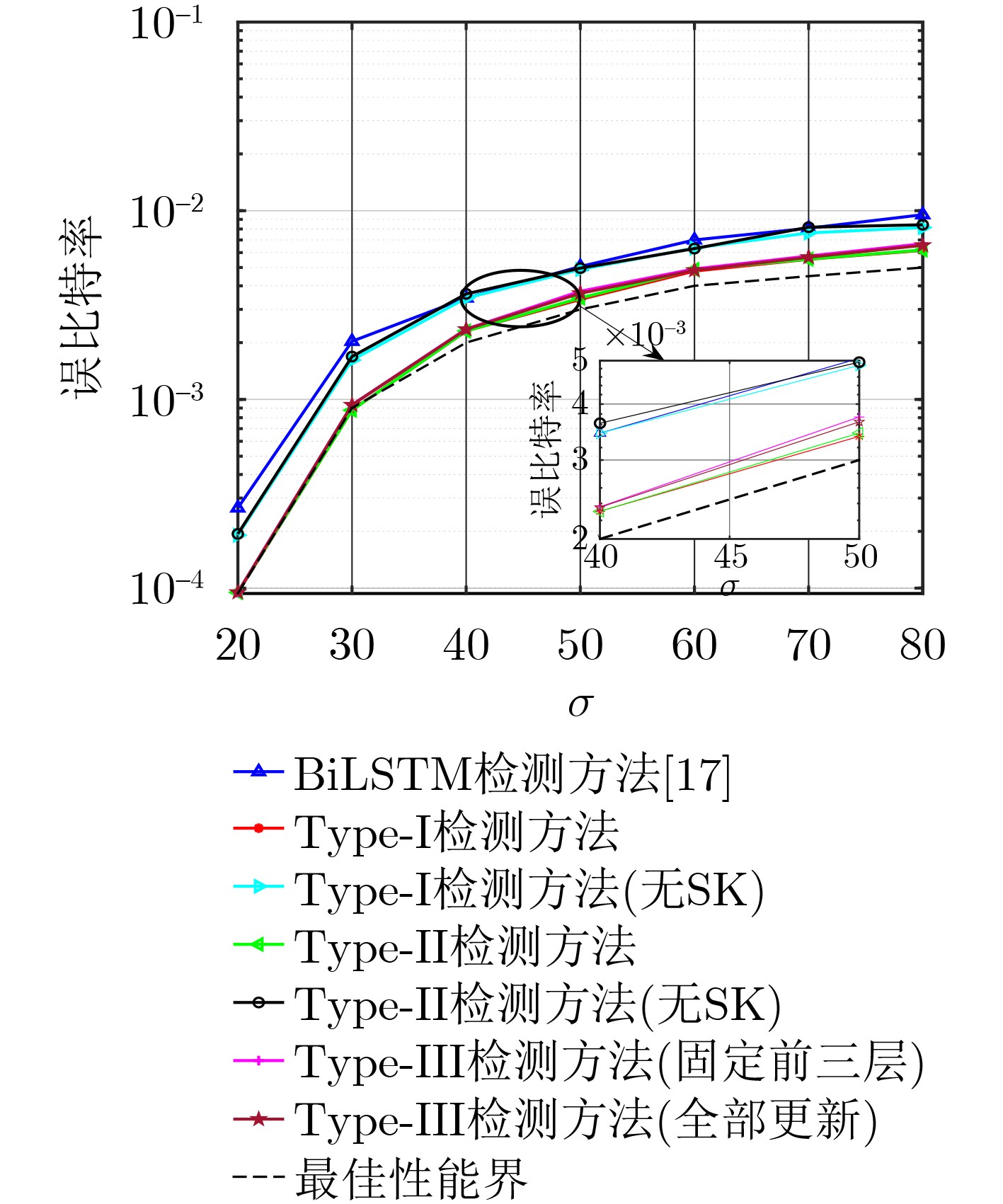
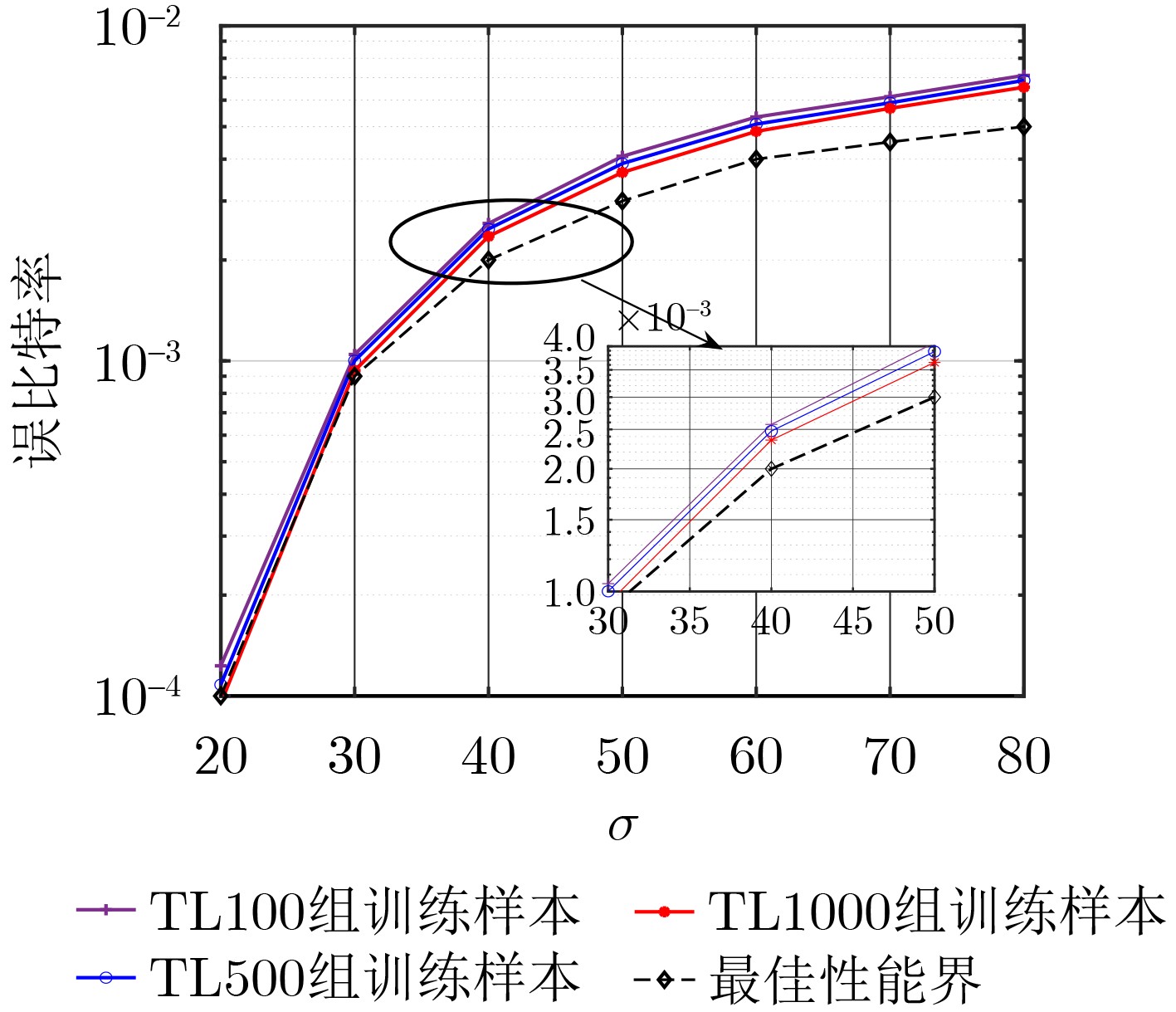
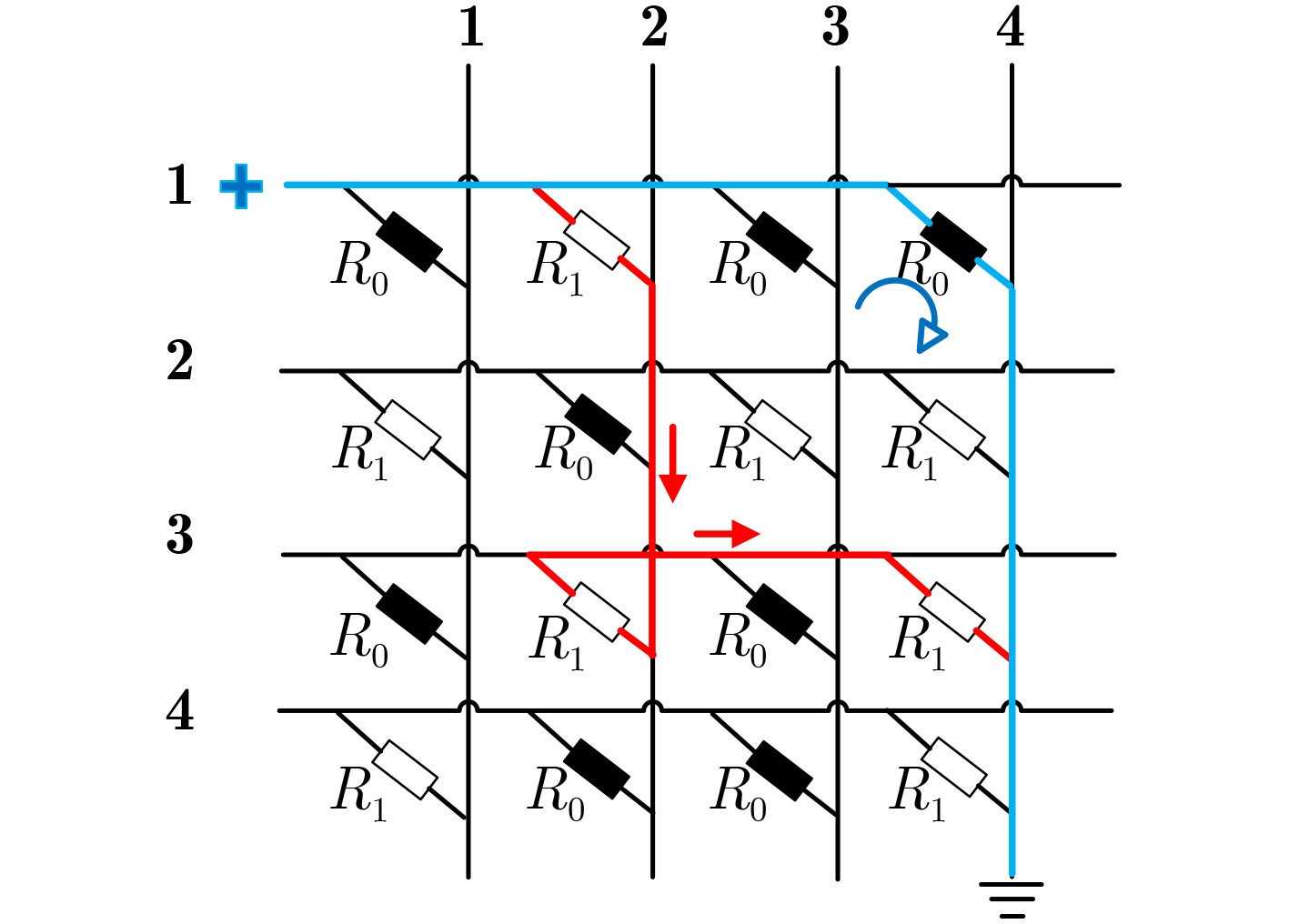
Objective Sneak path interference (SPI) in resistive random-access memory (ReRAM) introduces unpredictable inter-cell correlations, significantly increasing the complexity of signal detection. Traditional detection methods typically rely on assumptions about known channel noise states, resulting in limited generalization capability in practical applications. To address this issue, three data detection methods based on convolutional neural networks (CNNs) are proposed, which can effectively model and mitigate interference without relying on prior channel information: first, a method combining constrained coding with a multi-layer CNN, which uses constrained coding to determine the sneak path interference state and recover data; second, a dual-CNN framework that first employs a lightweight CNN for sneak path interference identification, followed by a multi-layer CNN for refined detection; third, an approach incorporating transfer learning, which maintains detection accuracy while reducing the required training sample size to one-thousandth of that of traditional methods. Simulation results demonstrate that the proposed method achieves superior bit error rate (BER) performance under unknown channel conditions, with a BER reduction of at least half relative to existing algorithms, approaching the theoretical performance limit. Moreover, the integration of transfer learning reduces the required training samples from $ {10}^{6} $ to $ 1000 $, corresponding to a reduction of three orders of magnitude. Methods To address distinct challenges in sneak path interference detection, this paper proposes three methods sequentially:1. The integrated constrained coding aided convolutional neural network (CC-CNN) detection framework effectively addresses the complex inter-cell correlations introduced by sneak path interference. This approach first employs constrained coding to detect the presence of interference and subsequently utilizes a CNN to learn and capture the random correlations under the influence of interference, thereby achieving accurate signal recovery.2. The dual-CNN-based detection method resolves the code rate loss associated with traditional constrained coding. By directly leveraging a CNN to learn and identify sneak path interference patterns from raw data, this method eliminates the need for redundant coding or additional overhead. It ensures high-precision interference detection while preserving the overall code rate performance of the system.3. The transfer learning-based CNN (TL-CNN) detection method overcomes the dependence of high-performance CNNs on large-scale training datasets. By reusing knowledge from pre-trained models, this method enables rapid adaptation to ReRAM signal detection tasks. It significantly reduces the required number of training samples while maintaining high detection accuracy and resource efficiency, thereby enhancing the feasibility of the solution in practical scenarios. Results and Discussions Simulation results demonstrate that the performance of the three proposed methods consistently approaches the theoretical lower bound ( Fig.6 ), outperforming baseline methods such as the Belief Propagation (BP) detector, Deep Neural Network (DNN) detector, and Elementary Signal Estimator (ESE) detector. The two-step network achieves performance comparable to that of the single-step network while successfully avoiding code rate loss. Notably, the transfer learning-aided CNN attains near-optimal BER with only1000 target domain samples, and its performance stabilizes when the sample size exceeds1000 (Fig.7 ), fully validating its data efficiency. The integration of SK modules enables the models to effectively capture SPI-induced spatial correlations, while the transfer learning strategy ensures the models’ robust performance under different noise conditions.Conclusions The crossbar array architecture of ReRAM is susceptible to sneak-path interference during storage operations, leading to reduced data reliability. To address this issue, this paper proposes three deep learning-based detection methods. Type-I integrates constrained coding with a CNN to achieve efficient and fast interference detection. Type-II adopts a two-stage processing approach: it first classifies interference patterns in the memory array and then performs detection specifically on affected units, thereby ensuring high detection accuracy while minimizing coding rate loss. Type-III introduces a transfer learning framework that leverages a pre-trained model from the source domain, significantly reducing the number of training samples required in the target domain and effectively lowering training overhead. Experimental results show that under different noise conditions, all three proposed methods achieve performance close to the theoretical lower bound, providing an effective solution for enhancing the reliability of ReRAM storage systems. -
Key words:
- ReRAM /
- Sneak path interference /
- Data detection /
- Convolutional neural network /
- Transfer learning
-
[1] STRUKOV D B, SNIDER G S, STEWART D R, et al. The missing memristor found[J]. Nature, 2008, 453(7191): 80–83. doi: 10.1038/nature06932. [2] 李源堃, 王泽, 张清天, 等. NAS4CIM: 面向忆阻器存算一体芯片的神经网络结构搜索框架[J]. 电子与信息学报, 2025, 47(12): 4948–4958. doi: 10.11999/JEIT250978.LI Yuankun, WANG Ze, ZHANG Qingtian, et al. NAS4CIM: Tailored neural network architecture search for RRAM-based compute-in-memory chips[J]. Journal of Electronics & Information Technology, 2025, 47(12): 4948–4958. doi: 10.11999/JEIT250978. [3] 李付鹏, 王光义, 刘敬彪, 等. 局部有源忆阻器电路的类生物神经网络存算研究[J]. 电子与信息学报, 2026, 48(2): 866–872. doi: 10.11999/JEIT250631.LI Fupeng, WANG Guangyi, LIU Jingbiao, et al. The storage and calculation of biological-like neural networks for locally active memristor circuits[J]. Journal of Electronics & Information Technology, 2026, 48(2): 866–872. doi: 10.11999/JEIT250631. [4] 刘嵩, 李子涵, 邱达, 等. 可控多双涡卷忆阻Hopfield神经网络建模及其动力学分析[J]. 电子与信息学报, 2026, 48(1): 417–428. doi: 10.11999/JEIT250972.LIU Song, LI Zihan, QIU Da, et al. Modeling and dynamic analysis of controllable multi-double scroll memristor Hopfield neural network[J]. Journal of Electronics & Information Technology, 2026, 48(1): 417–428. doi: 10.11999/JEIT250972. [5] RAJENDRAN G, BASAK D, DEB S, et al. Securing binarized neural networks via PUF-based key management in memristive crossbar arrays[J]. IEEE Embedded Systems Letters, 2025, 17(1): 30–33. doi: 10.1109/LES.2024.3422294. [6] 蔺海荣, 段晨星, 邓晓衡, 等. 双忆阻类脑混沌神经网络及其在IoMT数据隐私保护中应用[J]. 电子与信息学报, 2025, 47(7): 2194–2210. doi: 10.11999/JEIT241133.LIN Hairong, DUAN Chenxing, DENG Xiaoheng, et al. Dual-memristor brain-like chaotic neural network and its application in IoMT data privacy protection[J]. Journal of Electronics & Information Technology, 2025, 47(7): 2194–2210. doi: 10.11999/JEIT241133. [7] ZIDAN M A, FAHMY H A H, HUSSAIN M M, et al. Memristor-based memory: The sneak paths problem and solutions[J]. Microelectronics Journal, 2013, 44(2): 176–183. doi: 10.1016/j.mejo.2012.10.001. [8] WANG T J, LI Chengying, SHIH P A, et al. Development of fully ZnO-based 16 × 16 1S1R RRAM crossbar array and performance investigations[J]. IEEE Transactions on Electron Devices, 2025, 72(4): 1702–1708. doi: 10.1109/TED.2025.3539650. [9] BAO Shengyu, WANG Zongwei, YANG Yuhang, et al. Advancing toward 4F2 1T1R RRAM with local NAND-gate and isolation scheme[J]. IEEE Transactions on Electron Devices, 2025, 72(5): 2327–2333. doi: 10.1109/TED.2025.3554165. [10] BEN-HUR Y and CASSUTO Y. Detection and coding schemes for sneak-path interference in resistive memory arrays[J]. IEEE Transactions on Communications, 2019, 67(6): 3821–3833. doi: 10.1109/TCOMM.2019.2897762. [11] CHEN Zehui, SCHOENY C, and DOLECEK L. Pilot assisted adaptive thresholding for sneak-path mitigation in resistive memories with failed selection devices[J]. IEEE Transactions on Communications, 2020, 68(1): 66–81. doi: 10.1109/TCOMM.2019.2948332. [12] SONG Guanghui, CAI Kui, ZHONG Xingwei, et al. Performance limit and coding schemes for resistive random-access memory channels[J]. IEEE Transactions on Communications, 2021, 69(4): 2093–2106. doi: 10.1109/TCOMM.2021.3051413. [13] LI Panpan, CAI Kui, SONG Guanghui, et al. Sneak Path interference-aware adaptive detection and decoding for resistive memory arrays[J]. IEEE Communications Letters, 2022, 26(9): 2032–2036. doi: 10.1109/LCOMM.2022.3186324. [14] SUN Ce, CAI Kui, SONG Guanghui, et al. Belief propagation based joint detection and decoding for resistive random access memories[J]. IEEE Transactions on Communications, 2022, 70(4): 2227–2239. doi: 10.1109/TCOMM.2022.3156074. [15] SONG Guanghui, CAI Kui, SUN Ce, et al. Near-optimal detection for both data and sneak-path interference in resistive memories with random cell selector failures[J]. IEEE Transactions on Communications, 2022, 70(2): 836–850. doi: 10.1109/TCOMM.2022.3140459. [16] ZHONG Xingwei, CAI Kui, SONG Guanghui, et al. Constrained coding and deep learning aided threshold detection for resistive memories[J]. IEEE Communications Letters, 2022, 26(4): 803–807. doi: 10.1109/LCOMM.2022.3148292. [17] MEI Zhen, JU Minghui, CAI Kui, et al. Meta-transfer learning-based few-shot data detection for resistive memory channels[C]. 2025 IEEE Information Theory Workshop (ITW), Sydney, Australia, 2025: 638–643. doi: 10.1109/ITW62417.2025.11240479. [18] LI Panpan, SONG Guanghui, CAI Kui, et al. Across-array coding for resistive memories with sneak-path interference and lognormal distributed resistance variations[J]. IEEE Communications Letters, 2021, 25(11): 3458–3462. doi: 10.1109/LCOMM.2021.3111218. [19] DAI Bin, CAI Kui, MEI Zhen, et al. Polar code construction for resistive memories with sneak-path interference[J]. IEEE Communications Letters, 2024, 28(8): 1765–1769. doi: 10.1109/LCOMM.2024.3413754. [20] PANG Qike, MA Zheng, and TANG Xiaohu. Unreliability normalization weighted bit-flipping algorithms of LDPC decoding for ReRAM systems[J]. Science China Information Sciences, 2024, 67(12): 229304. doi: 10.1007/s11432-024-4228-3. [21] KONG Lingjun, QI Yingnan, LIU Haiyang, et al. Sneak path-aware reliability-based iterative majority-logic decoding algorithms for LDPC codes in ReRAM systems[J]. IEEE Communications Letters, 2025, 29(9): 2018–2022. doi: 10.1109/LCOMM.2025.3584075. [22] SONG Guanghui, GAO Meiru, LI Ying, et al. Performance analysis and code design for resistive random-access memory using channel decomposition approach[J]. IEEE Transactions on Information Theory, 2026, 72(1): 358–373. doi: 10.1109/TIT.2025.3638148. [23] SHI Zhifang, FANG Yi, BU Yingcheng, et al. Convolutional neural network (CNN)-based detection for multi-level-cell NAND flash memory[J]. IEEE Communications Letters, 2021, 25(12): 3883–3887. doi: 10.1109/LCOMM.2021.3112908. [24] ZHANG Lei and GAO Xinbo. Transfer adaptation learning: A decade survey[J]. IEEE Transactions on Neural Networks and Learning Systems, 2024, 35(1): 23–44. doi: 10.1109/TNNLS.2022.3183326. [25] MEI Zhen, CAI Kui, SHI Long, et al. Deep transfer learning-based detection for flash memory channels[J]. IEEE Transactions on Communications, 2024, 72(6): 3425–3438. doi: 10.1109/TCOMM.2024.3357616. [26] SONG Guanghui, WANG Junqi, GAO Meiru, et al. Probability distribution of sneak path rate in resistive random-access memory arrays[C]. 2025 IEEE International Symposium on Information Theory (ISIT), Ann Arbor, USA, 2025: 1–6. doi: 10.1109/ISIT63088.2025.11195609. [27] LI Xiang, WANG Wenhai, HU Xiaolin, et al. Selective kernel networks[C]. 2019 IEEE/CVF Conference on Computer Vision and Pattern Recognition (CVPR), Long Beach, USA, 2019: 510–519. doi: 10.1109/CVPR.2019.00060. [28] NGUYEN C T, VAN HUYNH N, CHU N H, et al. Transfer learning for wireless networks: A comprehensive survey[J]. Proceedings of the IEEE, 2022, 110(8): 1073–1115. doi: 10.1109/JPROC.2022.3175942. -

 下载:
下载:

图(6) / 表(1)
计量
- 文章访问数: 247
- HTML全文浏览量: 158
- PDF下载量: 12
- 被引次数: 0
