




Non-Terrestrial Network Architecture and Key Technologies for Civil Aviation
-
摘要: 面向全球覆盖、高速移动、低延迟、高可靠的民用航空通信需求,近些年来正在蓬勃发展的非地面网络(NTN)显得愈加重要。在此背景下,该文回顾了面向民用航空的NTN技术发展历程,并追踪了国内外对民航NTN网络技术研究的最新动态。为了实现NTN网络更好服务我国民用航空这一美好愿景,分别介绍了NTN网络中的组网架构,接入和移动性管理以及新型资源管控等关键技术。首先建立了以低轨卫星与高空平台为枢纽的按需隔离的NTN组网框架,随后提出了以星历图为表征的接入和移动性管理技术,最后针对新型智能衍生的算存资源提出了面向民用航空的NTN网络资源管控方案。最后,该文也对面向民用航空的NTN网络关键技术的未来发展提出了展望。Abstract:
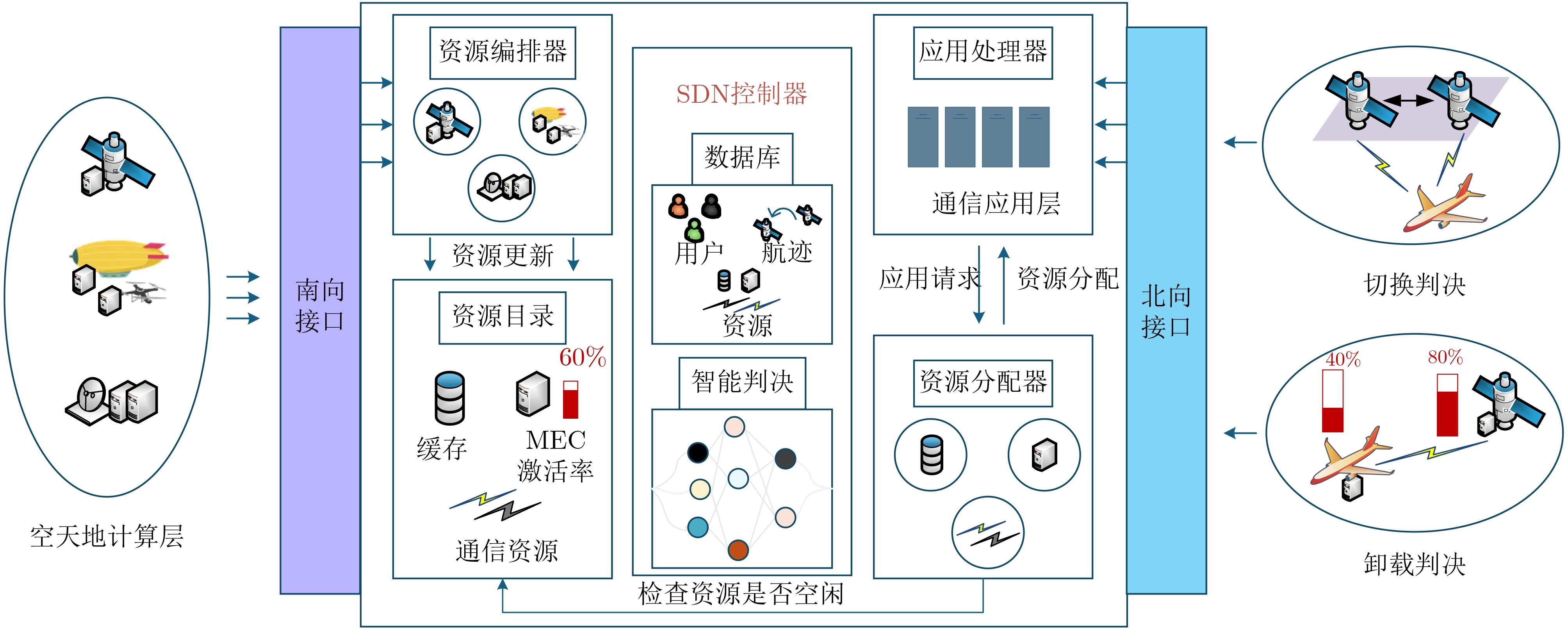
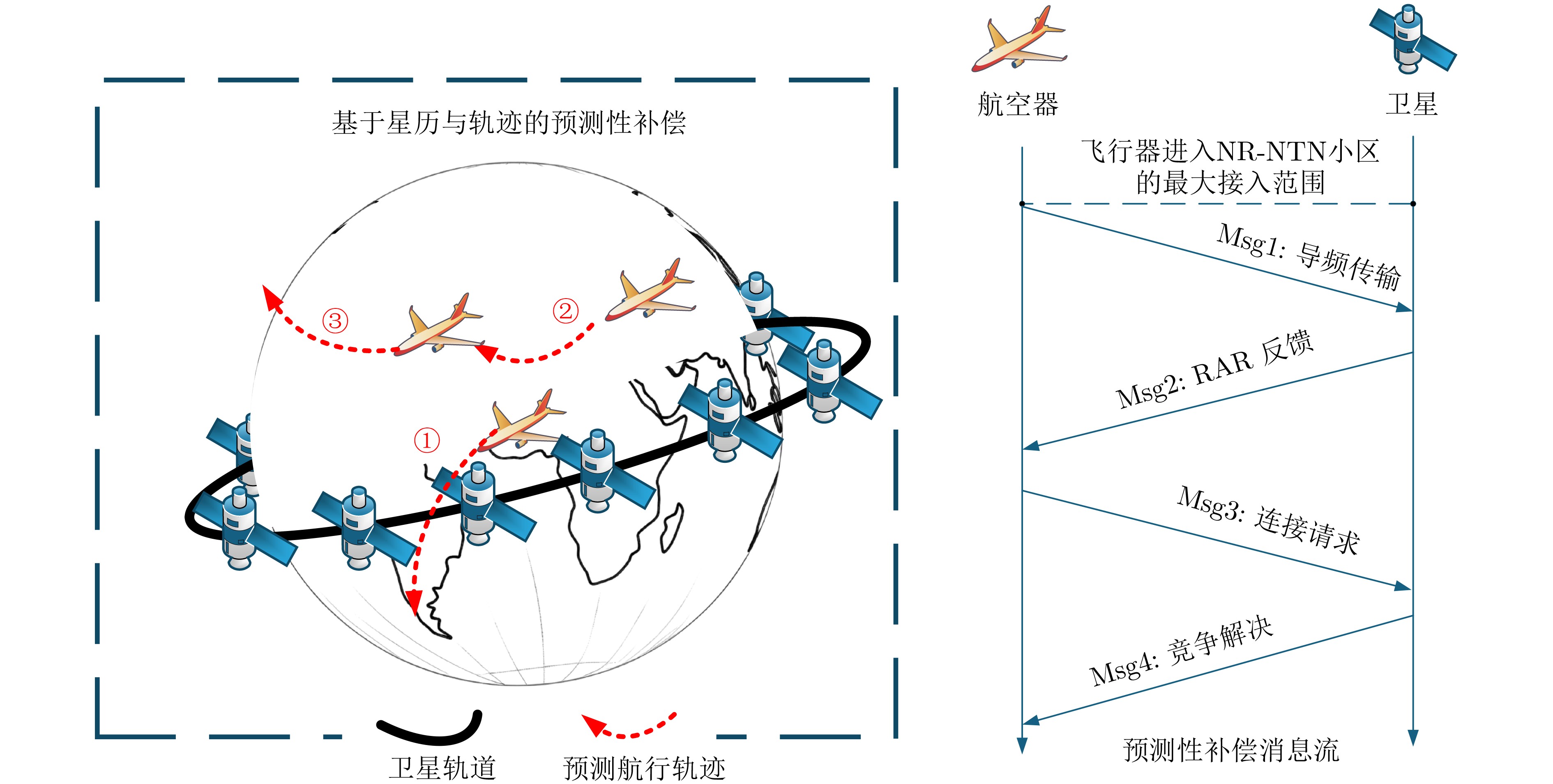
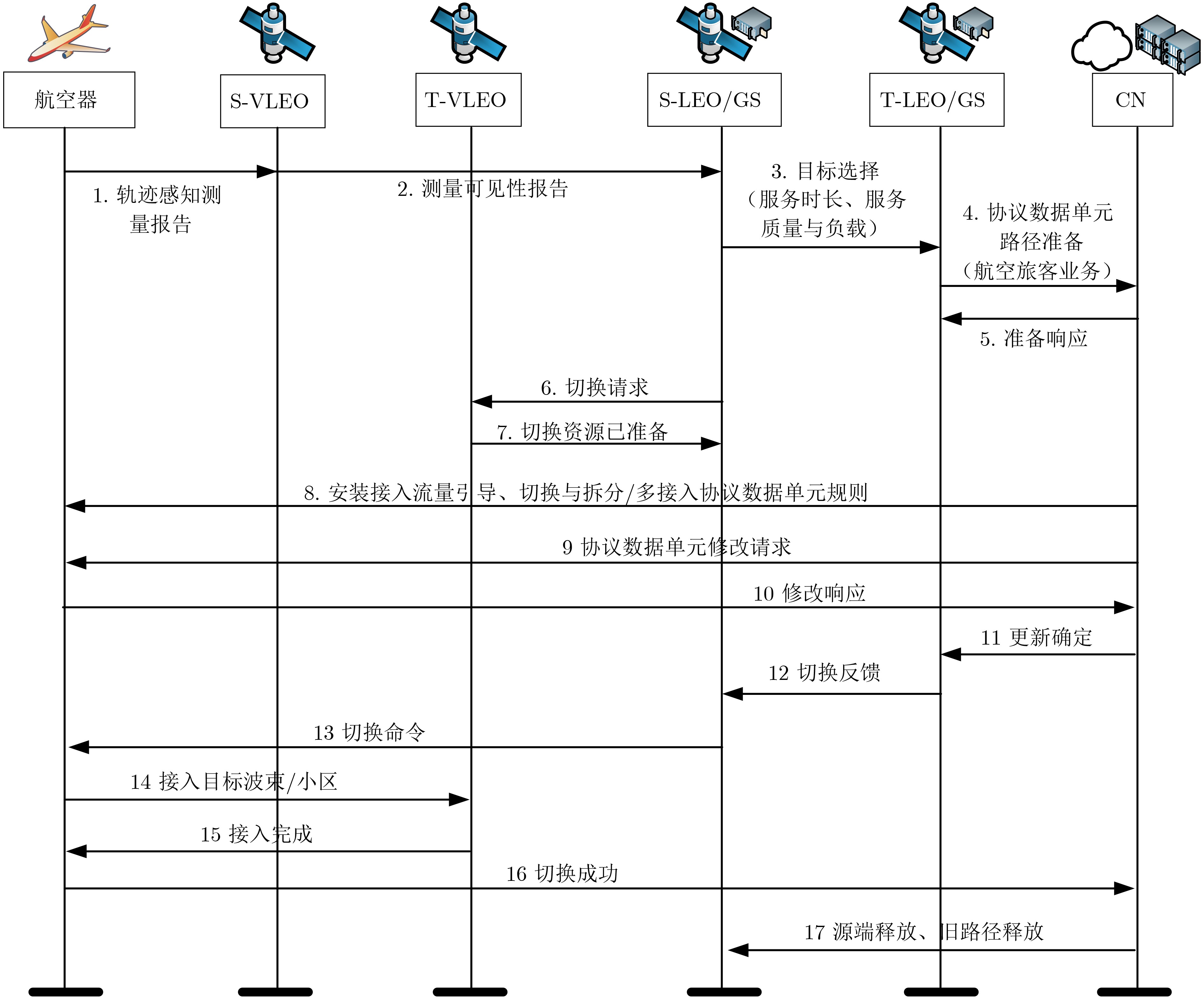
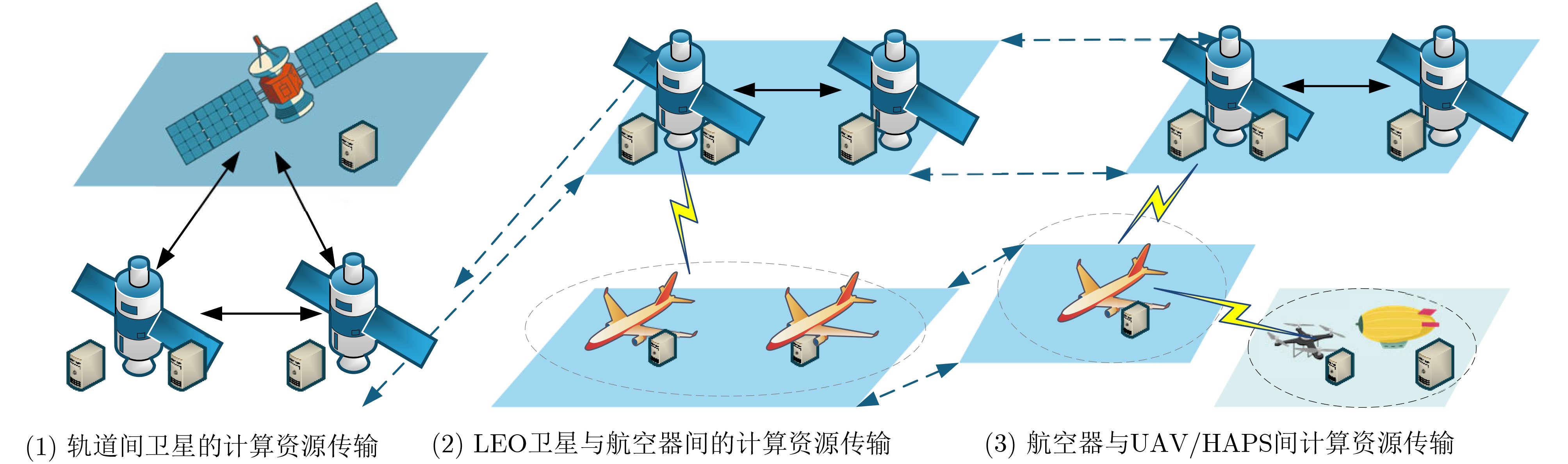
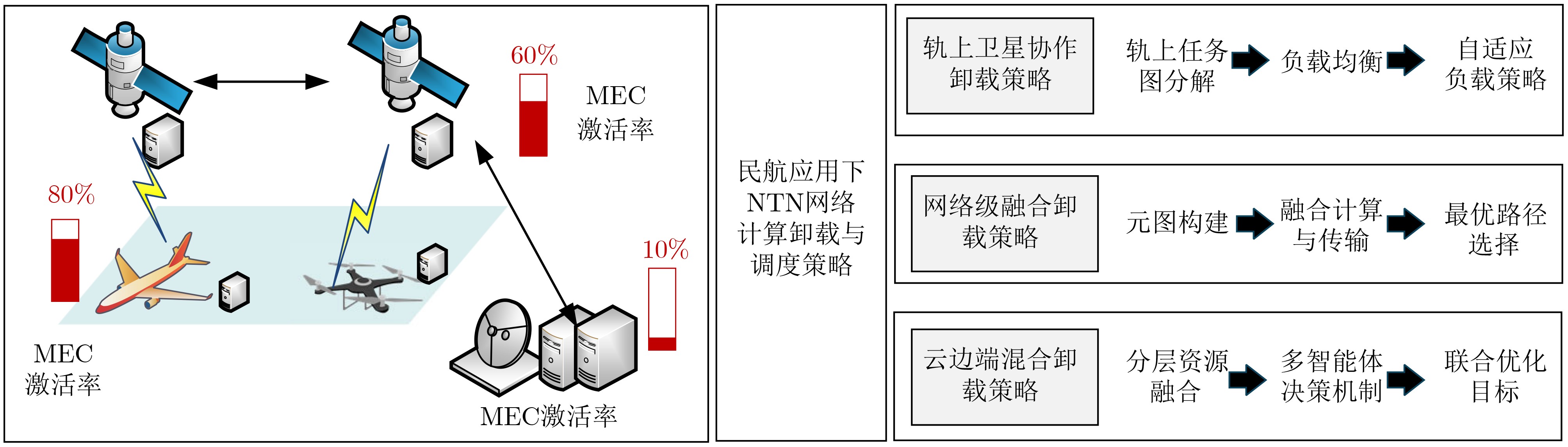
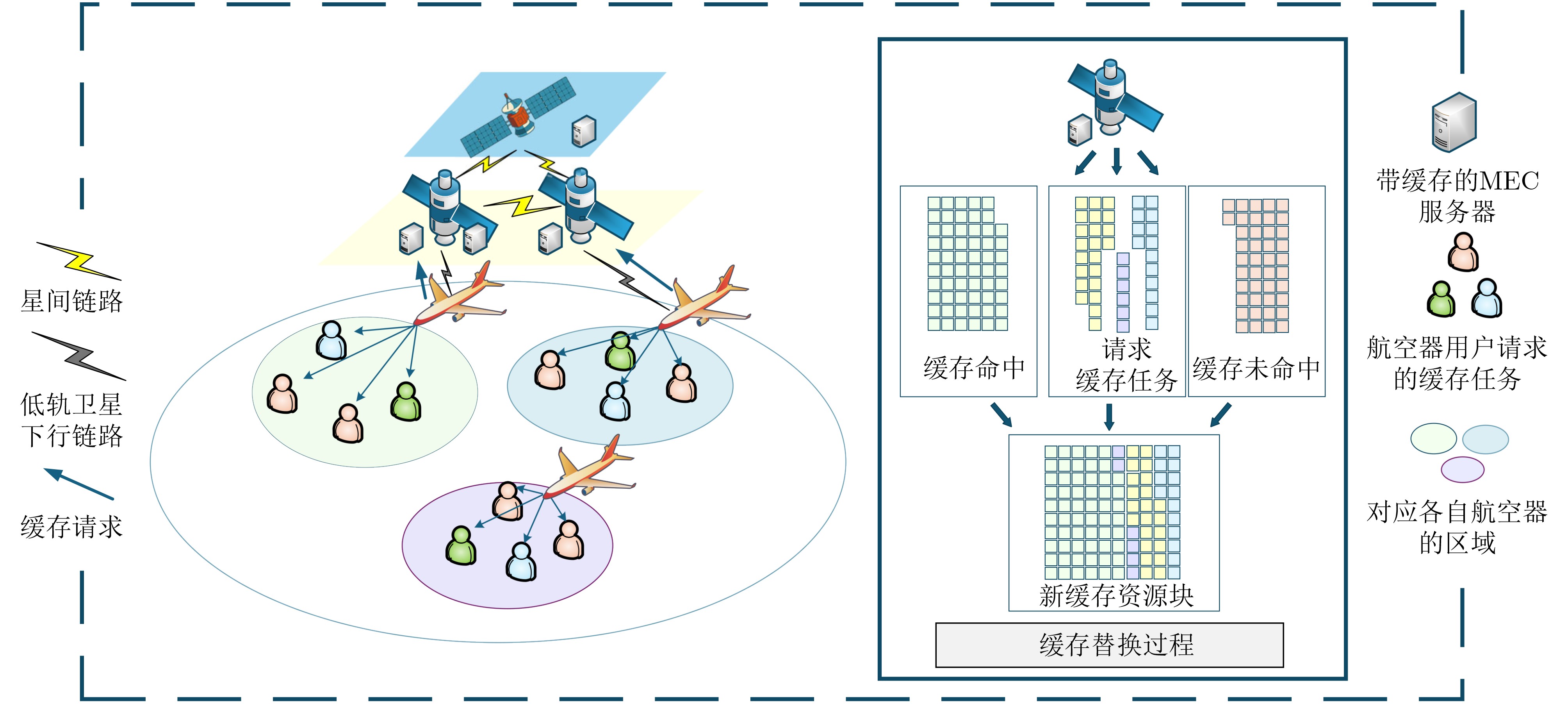
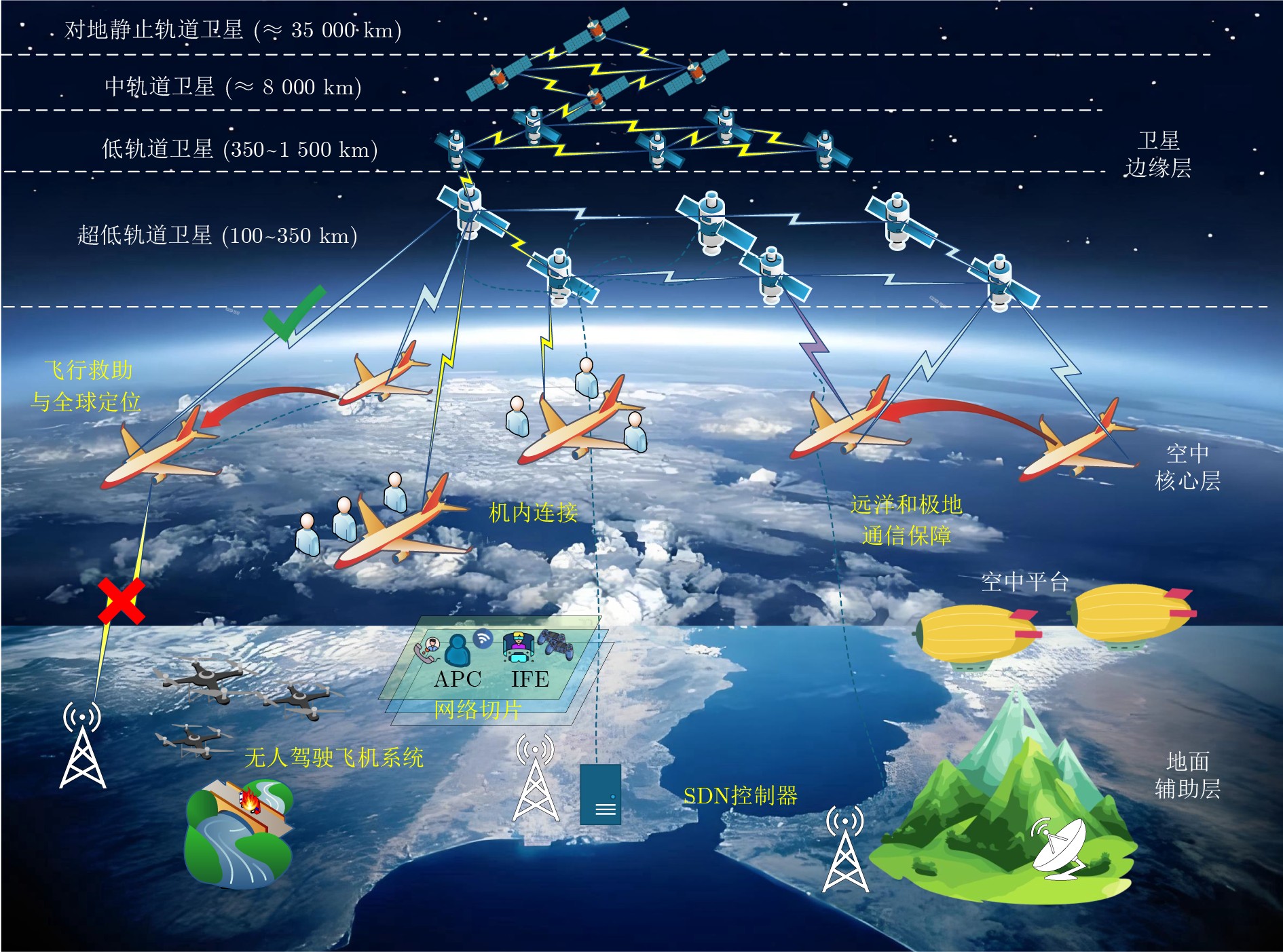
Significance Civil aviation communication systems are entering a new stage of development driven by the rapid growth of global air transportation, the increasing demand for intelligent air traffic management, and the continuous expansion of in-flight connectivity services. Traditional civil aviation communication systems mainly rely on high frequency radio, high frequency radio, terrestrial air-to-ground links, and conventional satellite communication systems. These technologies have supported aircraft operation, air traffic control, airline operational communication, and low-rate data transmission for a long time. However, they still face limitations when applied to future civil aviation scenarios characterized by global coverage, high-speed mobility, low latency, high reliability, and service diversification. Particularly, terrestrial networks are difficult to deploy in transoceanic routes, polar regions, deserts, mountains, and remote airspace, while traditional geostationary satellite systems suffer from large propagation delay and limited capacity. Current systems cannot fully meet the requirements of continuous aircraft access, real-time flight monitoring, engine health data transmission, aviation safety communication, and passenger broadband services. Non-Terrestrial Networks (NTNs) provide a promising technical path for overcoming these limitations. By integrating GEOstationary satellites (GEO), Medium Earth Orbit satellites (MEO), low Earth orbit satellites (LEO), Very Low Earth Orbit satellites (VLEO), High-Altitude Platform Stations (HAPS), Unmanned Aerial vehicles (UAV), electric Vertical Take Off and Landing (eVTOL), and terrestrial infrastructures, NTN can construct a multi-layer air-space-ground integrated communication system. Such a system is able to provide continuous coverage, flexible deployment, resilient connectivity, and differentiated service support for civil aviation. NTN is becoming an important enabling technology for future civil aviation communication systems and for the digital and intelligent transformation of the aviation industry. Progress This paper reviews the development of NTN technologies for civil aviation and summarizes key research progress from three aspects: network architecture, access and mobility management, and resource management and scheduling. (1) We propose an aviation-oriented NTN networking framework composed of three layers: the satellite edge layer, the airborne core layer, and the terrestrial assistance layer. The satellite edge layer includes GEO, MEO, LEO, and VLEO satellites connected through inter-satellite links. GEO satellites are suitable for wide-area broadcasting and non-real-time services, MEO satellites can support navigation and intermediate-delay services, LEO satellites are suitable for low-latency and high-capacity broadband access, and VLEO satellites can further reduce propagation delay for future near-real-time aviation applications. The airborne core layer includes civil aircraft, HAPS, UAVs, and eVTOL platforms. HAPS can act as a regional relay, edge computing node, or software-defined control carrier, while UAVs and eVTOL platforms can provide flexible low-altitude coverage, emergency communication, and local access support. The terrestrial assistance layer consists of terrestrial base stations and gateway stations, which support air-to-ground communication and satellite-terrestrial interconnection. Civil aviation services can be divided into air traffic control and air traffic management services, airline operational control services, and airline passenger communication or in-flight entertainment services. Through network slicing, these heterogeneous services can be logically isolated and managed over a shared air-space-ground infrastructure. In congestion, rain attenuation, or shortened visibility-window scenarios, safety slices should be protected with the highest priority, while passenger service slices can be rate-limited, buffered, or degraded. (2) We analyze the characteristics of NR-NTN access and air-to-ground direct access in civil aviation. NR-NTN can provide continuous coverage for oceanic, polar, desert, and remote flight routes through satellites or HAPS, while air-to-ground direct access can provide low-latency and high-rate links in areas where terrestrial base stations can be deployed. However, aircraft differ significantly from ordinary terrestrial terminals because their flight trajectory, altitude, speed, and route are highly predictable. Therefore, the key issue in aviation NTN access is not only how to execute random access, but how to predict the access window, timing compensation, frequency offset, and target access node before the aircraft enters the coverage area. By using satellite ephemeris, Global Navigation Satellite System information, aircraft trajectory, and velocity parameters, civil aircraft can predict satellite visibility and pre-compute timing advance, scheduling offset, and Doppler compensation before initiating access. This transforms random access from a passive response process into a proactive and predictive access process, thereby improving access certainty and synchronization stability in highly dynamic aviation scenarios. For mobility management, a signaling interaction process for aircraft handover is designed. Based on trajectory prediction and satellite visibility prediction, the network can select a target satellite or gateway with longer residence time and better service capability. Before the aircraft reaches the handover boundary, the source and target network sides can complete context preparation, user-plane path preparation, radio resource reservation, and protocol data unit session update. When the handover condition is triggered, the aircraft performs random access to the target satellite or beam and then switches the user-plane path. This “prediction–preparation–fast handover” mechanism can reduce service interruption and maintain session continuity. For safety-critical traffic, priority and isolation policies should remain consistent and auditable throughout session preparation, handover execution, and path switching. (3)We discuss computing and caching resource management in civil aviation NTN. As onboard computing capability is limited and aviation applications generate increasing computing demands, NTN can provide mobile edge computing and caching services through LEO satellites, HAPS, UAVs, and inter-satellite cooperation. The paper introduces several computing offloading modes, including on-orbit satellite collaborative offloading, network-level integrated offloading, and cloud-edge-terminal hybrid offloading. These mechanisms can support tasks such as aviation monitoring, trajectory analysis, intelligent inference, and in-flight service optimization. In addition, caching mechanisms such as onboard satellite caching, inter-satellite cooperative caching, and named-data-networking-based content caching can improve content delivery efficiency and service continuity. Cache placement should consider content popularity, regional demand prediction, visibility windows, cache prefetching, and cooperative cache sharing among different satellite layers. Conclusions NTN can effectively complement traditional civil aviation communication systems by filling coverage gaps in remote and oceanic airspace, enhancing service continuity, and supporting differentiated aviation services. The proposed aviation-oriented NTN architecture integrates multi-orbit satellites, HAPS, UAVs, civil aircraft, and terrestrial infrastructures into a unified framework. The on-demand isolated slicing mechanism can provide differentiated protection for ATC/ATM, AOC, and APC/IFE services. Ephemeris-map-assisted access and predictive mobility management can improve access reliability and reduce handover interruption in high-speed aviation scenarios. Computing offloading and cooperative caching further enhance the ability of NTN to support intelligent and data-intensive aviation applications. Prospects Future civil aviation NTN should evolve toward deeper integration of low-altitude networks, space networks, and terrestrial networks. Cross-domain topology visualization, link-state sharing, policy distribution, and programmable logical networks are essential for improving controllability and scalability. In mobility management, integrated cross-domain handover mechanisms should be developed to cope with satellite beam switching, terrestrial cell handover, and air-to-air relay reconstruction. In resource management, communication, navigation, computing, and caching resources should be jointly scheduled and transformed according to aviation service requirements. With continuous advances in NTN architecture, network slicing, predictive access, mobility management, computing offloading, and caching, NTN is expected to provide more efficient, stable, and intelligent communication support for civil aviation and to promote the digital transformation of future air transportation systems. -
Key words:
- Civil aviation /
- Non-Terrestrial Networks (NTN) /
- Network slicing /
- Mobility management /
-
表 1 本文缩略词汇总表
缩略词 英文全称 中文全称 AOC Airline Operational Control 航空公司运行控制 APC Airline Passenger Communication 航空乘客通信 ATC Air Traffic Control 空中交通管制 ATG Air-To-Ground 空对地 ATM Air Traffic Management 航空交通管理 COO Computing-On-Orbit 在轨计算 GEO GEOstationary orbit 地球静止轨道 GNSS Global Navigation Satellite System 全球导航卫星系统 HAPS High Altitude Platform Station 高空平台 IFE In-Flight Entertainment 机上娱乐 ISL Inter-Satellite Link 星间链路 LEO Low Earth Orbit 低地球轨道 MEC Mobile Edge Computing 移动边缘计算 MEO Medium-Earth Orbit 中地球轨道 NDN Named Data Networking 命名数据网络 NTN Non-Terrestrial Networks 非地面网络 PIT Pending Interest Table 待处理兴趣表 QoS Quality of Service 服务质量 UAV Unmanned Aerial Vehicle 无人机 VLEO Very Low Earth Orbit 极低地球轨道 eVTOL electric Vertical TakeOff
and Landing电动垂直起降飞行器  下载: 导出CSV
-
[1] International Air Transport Association (IATA). IATA long-term air transport passenger demand projections[EB/OL]. https://www.iata.org/en/publications/economics/reports/iata-long-term-air-transport-passenger-demand-projections, 2026. [2] 中国民用航空局. 2025年全国民用运输机场生产统计公报[EB/OL]. https://www.ccaonline.cn/jichang/jctop/1162239.html, 2026. Civil Aviation Administration of China (CAAC). Statistical communique on the operations of civil transport airports in 2025[EB/OL]. https://www.ccaonline.cn/jichang/jctop/1162239.html, 2026. [3] GUO Dongyue, ZHANG Jianwei, YANG Bo, et al. Multi-modal intelligent situation awareness in real-time air traffic control: Control intent understanding and flight trajectory prediction[J]. Chinese Journal of Aeronautics, 2025, 38(6): 103376. doi: 10.1016/j.cja.2024.103376. [4] TEMME M M, GLUCHSHENKO O, NÖHREN L, et al. Innovative integration of severe weather forecasts into an extended arrival manager[J]. Aerospace, 2023, 10(3): 210. doi: 10.3390/aerospace10030210. [5] WANG Wenjin, ZHU Yiming, WANG Yafei, et al. Toward mobile satellite internet: The fundamental limitation of wireless transmission and enabling technologies[J]. Engineering, 2025, 54: 42–51. doi: 10.1016/j.eng.2025.07.007. [6] BOEING. The New Era of inflight connectivity is here: Connexion by Boeing and Lufthansa announce the world premiere of airborne internet[EB/OL]. https://boeing.mediaroom.com/2004-05-11-The-New-Era-of-Inflight-Connectivity-Is-Here-Connexion-by-Boeing-and-Lufthansa-Announce-the-World-Premiere-of-Airborne-Internet, 2026. [7] 陈东, 仲小清, 邓恒, 等. 宽带卫星通信网络技术发展态势与发展建议[J]. 前瞻科技, 2022, 1(1): 86–93. doi: 10.3981/j.issn.2097-0781.2022.01.008.CHEN Dong, ZHONG Xiaoqing, DENG Heng, et al. Development trend and suggestions of broadband satellite communication networks[J]. Science and Technology Foresight, 2022, 1(1): 86–93. doi: 10.3981/j.issn.2097-0781.2022.01.008. [8] LI Ke, ZHAO Dixian, CHEN Zhihui, et al. K-/Ka-band shared-aperture integrated phased array for satellite ground terminals[J]. IEEE Transactions on Antennas and Propagation, 2025, 73(8): 5548–5558. doi: 10.1109/TAP.2025.3562755. [9] 孙洁. 万米高空享受高速上网[EB/OL]. https://news.cctv.com/2021/08/27/ARTIgqOSmY1oEEl9J18aISCR210827.shtml, 2021.SUN Jie. Enjoy high-speed internet access at 10, 000 meters altitude[EB/OL]. https://news.cctv.com/2021/08/27/ARTIgqOSmY1oEEl9J18aISCR210827.shtml, 2021. [10] ÖZMEN S, HAMZAOUI R, and CHEN Feng. Survey of IP-based air-to-ground data link communication technologies[J]. Journal of Air Transport Management, 2024, 116: 102579. doi: 10.1016/j.jairtraman.2024.102579. [11] BILEN T, CANBERK B, and DUONG T Q. Digital twin evolution for hard-to-follow aeronautical Ad-Hoc networks in beyond 5G[J]. IEEE Communications Standards Magazine, 2023, 7(1): 4–12. doi: 10.1109/MCOMSTD.0001.2200040. [12] European Union Agency for the Space Programme. IRIS2[EB/OL]. https://www.euspa.europa.eu/eu-space-programme/secure-satcom/iris2, 2025. [13] STARLINK. Network Update[EB/OL]. https://www.starlink.com/updates/network-update, 2026. [14] Ministry of Science and ICT. Korea takes the first step towards the low-earth orbit satellite communications era[EB/OL]. https://kntec.se/2024/06/17/korea-takes-the-first-step-towards-the-low-earth-orbit-satellite-communications-era/, 2024. [15] Space Compass. Successful demonstration of data communication to a smartphone via HAPS flying in the stratosphere at an altitude of approximately 20km above Kenya[EB/OL]. https://space-compass.com/news/000073.html, 2025. [16] TELESAT. Telesat Lightspeed LEO Network[EB/OL]. https://www.telesat.com/leo-satellites/, 2025. [17] AIRBUS. Low earth orbit satellite constellation: Connecting people all over the globe[EB/OL]. https://www.airbus.com/en/products-services/space/telecommunications-and-navigation-satellites/low-earth-orbit-satellite-constellation, 2025. [18] BOEING. Two Boeing-Built O3b mPOWER satellites successfully launch, enhancing SES constellation[EB/OL]. https://investors.boeing.com/investors/news/press-release-details/2025/Two-Boeing-Built-O3b-mPOWER-Satellites-Successfully-Launch-Enhancing-SES-Constellation/default.aspx, 2025. [19] 中华人民共和国工业和信息化部. 卫星互联网低轨10组卫星成功发射[EB/OL]. https://www.miit.gov.cn/jgsj/wgj/gzdt/art/2025/art_598184eb583d4078a33fc612b87b8206.html, 2025.Ministry of Industry and Information Technology of the People’s Republic of China. Successful Launch of the 10th Group of LEO Satellite Internet Satellites[EB/OL]. https://www.miit.gov.cn/jgsj/wgj/gzdt/art/2025/art_598184eb583d4078a33fc612b87b8206.html, 2025. [20] 新华网. 我国成功发射千帆极轨06组卫星[EB/OL]. https://www.news.cn/tech/20250123/6ffdeed8f32942d7ac30b7d4205ccaba/c.html, 2025.Xinhua Net. China successfully launches the Qianfan Polar-Orbit 06 Satellite Group[EB/OL]. https://www.news.cn/tech/20250123/6ffdeed8f32942d7ac30b7d4205ccaba/c.html, 2025. [21] 中央网络安全和信息化委员会办公室. 中国民航开启空中上网业务[EB/OL]. https://www.cac.gov.cn/2014-07/23/c_1111763207_3.htm, 2014.Office of the Central Cyberspace Affairs Commission. China’s civil aviation launches in-flight internet service[EB/OL]. https://www.cac.gov.cn/2014-07/23/c_1111763207_3.htm, 2014. [22] JANG H D, VARVELLO M, RAMAN A, et al. From GEO to LEO: First look into Starlink in-flight connectivity[C]. The 2025 ACM Internet Measurement Conference, Madison, USA, 2025: 952–962. doi: 10.1145/3730567.376449. [23] 中国卫通集团股份有限公司. 中国卫通推出航空器客舱卫星宽带通信服务[EB/OL]. http://www.chinasatcom.com/n782724/n782804/c790469/content.html, 2013.China Satcom Group Co. , Ltd. China Satcom launches satellite broadband communications service for aviation passenger aircraft[EB/OL]. http://www.chinasatcom.com/n782724/n782804/c790469/content.html, 2013. [24] 3GPP. Study on New Radio (NR) to support non-terrestrial networks[R]. 3GPP TR 38.811 v15.4. 0, 2020. [25] 3GPP. Solutions for NR to support Non-Terrestrial Networks (NTN)[R]. 3GPP TR 38.821 v16.1. 0, 2021. [26] HU Chenbo, ZHANG Ruichen, LI Bo, et al. Generative AI-empowered secure communications in space–air–ground integrated networks: A survey and tutorial[J]. IEEE Communications Surveys & Tutorials, 2026, 28: 4156–4194. doi: 10.1109/COMST.2025.3646700. [27] 徐可馨, 隆克平, 陆阳, 等. 可重构智能超表面辅助的非地面网络安全传输与轨迹优化[J]. 电子与信息学报, 2025, 47(2): 296–304. doi: 10.11999/JEIT240981.XU Kexin, LONG Keping, LU Yang, et al. Joint secure transmission and trajectory optimization for reconfigurable intelligent surface-aided non-terrestrial networks[J]. Journal of Electronics & Information Technology, 2025, 47(2): 296–304. doi: 10.11999/JEIT240981. [28] 苏昭阳, 刘留, 艾渤, 等. 面向低轨卫星的星地信道模型综述[J]. 电子与信息学报, 2024, 46(5): 1684–1702. doi: 10.11999/JEIT230941.SU Zhaoyang, LIU Liu, AI Bo, et al. Survey of satellite-ground channel models for low earth orbit satellites[J]. Journal of Electronics & Information Technology, 2024, 46(5): 1684–1702. doi: 10.11999/JEIT230941. [29] 3GPP. TS 38. 300 V17. 16. 0: NR; NR and NG-RAN overall description; Stage-2[S/OL]. Sophia Antipolis: ETSI, 2026. [30] RAGO A, GUIDOTTI A, AMATETTI C, et al. Innovative multi-layer approaches for 6G integrated terrestrial and non-terrestrial networks[J]. IEEE Communications Standards Magazine, 2025, 9(2): 39–47. doi: 10.1109/MCOMSTD.2025.3569018. [31] MEDINA-ACOSTA G A, KHAN T A, MUNGARA R K, et al. 3GPP Release-19 physical layer enhancements for NR NTN and NB-IoT NTN[J]. IEEE Communications Standards Magazine, 2026, 10(1): 130–136. doi: 10.1109/MCOMSTD.2025.3641819. [32] 石会鹏, 郭丁, 牟瑞硕, 等. 低轨卫星通信系统跳波束图案设计算法[J]. 电子与信息学报, 2025, 47(3): 612–622. doi: 10.11999/JEIT240596.SHI Huipeng, GUO Ding, MU Ruishuo, et al. The beam hopping pattern design algorithm of low earth orbit satellite communication system[J]. Journal of Electronics & Information Technology, 2025, 47(3): 612–622. doi: 10.11999/JEIT240596. [33] ICAO. ICAO 9718-1-2018 Handbook on radio frequency spectrum requirements for civil aviation Volume I: ICAO spectrum strategy, policy statements and related information[S]. Montreal: ICAO, 2021. [34] ZHANG Qinzhao, WANG Jue, GAO Ruifeng, et al. Network deployment for ATG communications: A cell-free approach under the hybrid satellite-terrestrial network architecture[J]. IEEE Systems Journal, 2024, 18(1): 702–712. doi: 10.1109/JSYST.2024.3350677. [35] ZHAO Jingjing, ZHU Yanbo, CAI Kaiquan, et al. Multiple-antenna aided aeronautical communications in air-ground integrated networks: Channel estimation, reliable transmission, and multiple access[J]. IEEE Wireless Communications, 2024, 31(2): 105–111. doi: 10.1109/MWC.014.2200414. [36] PAPA A, VON MANKOWSKI J, VIJAYARAGHAVAN H, et al. Enabling 6G applications in the sky: Aeronautical federation framework[J]. IEEE Network, 2024, 38(1): 254–261. doi: 10.1109/MNET.132.2200526. [37] ITU. Handbook on Small Satellites[M]. Geneva: ITU Publications, 2023. [38] 3rd Generation Partnership Project (3GPP). NTN overview[EB/OL]. https://www.3gpp.org/technologies/ntn-overview, 2026. [39] KELLERMANN T, CENTELLES R P, and CALVERAS A. UE context dissemination in sparse LEO constellations for 5G/6G cellular IoT in store and forward operation[J]. IEEE Open Journal of the Communications Society, 2025, 6: 2539–2555. doi: 10.1109/OJCOMS.2025.3556318. [40] LOU Zhengying, BELMEKKI B E Y, and ALOUINI M S. HAPS in the non-terrestrial network nexus: Prospective architectures and performance insights[J]. IEEE Wireless Communications, 2023, 30(6): 52–58. doi: 10.1109/MWC.004.2300198. [41] ICAO. Doc9896–2025 Manual on ATN using internet protocol suite (IPS) standards and protocols[S]. Montreal, Canada: International Civil Aviation Organization (ICAO), 2025. [42] EUROCONTROL. Future communications infrastructure and multilink for the long term (FCI)[R]. Brussels, Belgium, 2025. [43] LI Jihao, LI Hewu, LAI Zeqi, et al. SkyCastle: Taming LEO mobility to facilitate seamless and low-latency satellite internet services[C]. IEEE INFOCOM 2024-IEEE Conference on Computer Communications, Vancouver, Canada, 2024: 541–550. doi: 10.1109/INFOCOM52122.2024.10621390. [44] MUKHTAR H, SCHAUB R, and EROL-KANTARCI MMUKHTAR H, SCHAUB R, and EROL-KANTARCI M. SkyNetPredictor: Network performance prediction in avionic communication using AI[C]. 2025 IEEE Symposium on Computers and Communications (ISCC), Bologna, Italy, 2025: 1–6. doi: 10.1109/ISCC65549.2025.11326442. [45] BAKTAYAN A A, ZAHARY A T, SIKORA A, et al. Computational offloading into UAV swarm networks: A systematic literature review[J]. EURASIP Journal on Wireless Communications and Networking, 2024, 2024(1): 69. doi: 10.1186/s13638-024-02401-4. [46] CHEN Qian, GUO Zheng, MENG Weixiao, et al. A survey on resource management in joint communication and computing-embedded SAGIN[J]. IEEE Communications Surveys & Tutorials, 2025, 27(3): 1911–1954. doi: 10.1109/COMST.2024.3421523. [47] 刘秉坤, 常锴, 成婕妍, 等. 6G星地融合网络: 需求、挑战与关键技术[J]. 移动通信, 2025, 49(6): 2–10. doi: 10.3969/j.issn.1006-1010.20250507-0004.LIU Bingkun, CHANG Kai, CHENG Jieyan, et al. 6G satellite-terrestrial integrated network: Requirements, challenges and key technologies[J]. Mobile Communications, 2025, 49(6): 2–10. doi: 10.3969/j.issn.1006-1010.20250507-0004. [48] Seamless Air Alliance. For aviation connectivity[EB/OL]. https://www.seamlessalliance.com/wp-content/uploads/seamless-ntn.pdf, 2024. [49] 金舰, 柴菲. 5G通信技术在民航领域的应用现状及展望[J]. 通信世界, 2025(22): 33–35. doi: 10.13571/j.cnki.cww.2025.22.017.JIN Jian and CHAI Fei. Application status and prospects of 5G communication technology in the civil aviation field[J]. Communication World, 2025(22): 33–35. doi: 10.13571/j.cnki.cww.2025.22.017. -


 下载:
下载:

图(7) / 表(1)
计量
- 文章访问数: 688
- HTML全文浏览量: 369
- PDF下载量: 85
- 被引次数: 0
