




Adaptive Neural Network-Based PAC Code Decoding Method for LEO Satellite Communication
-
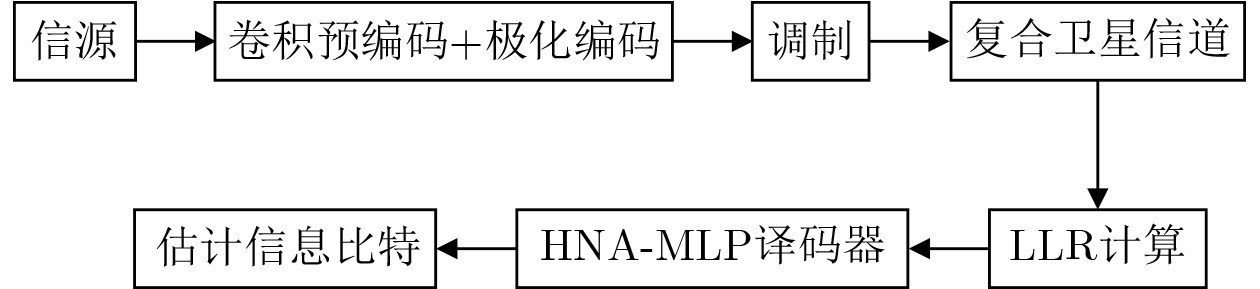
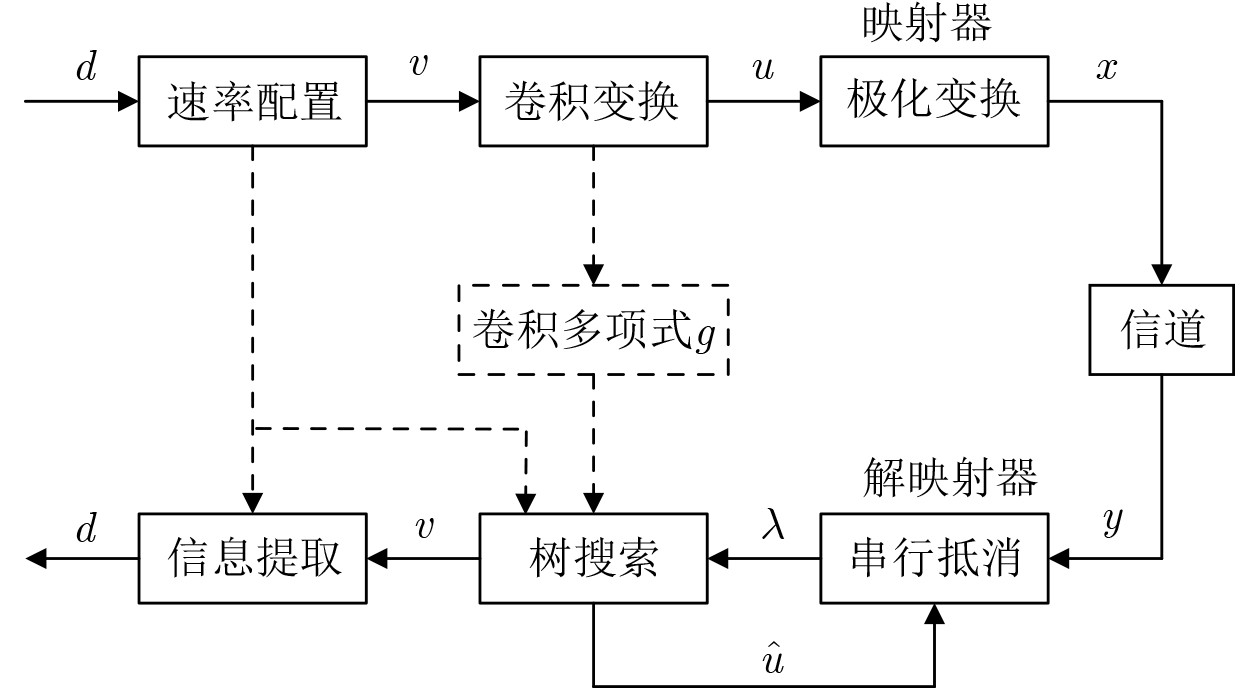
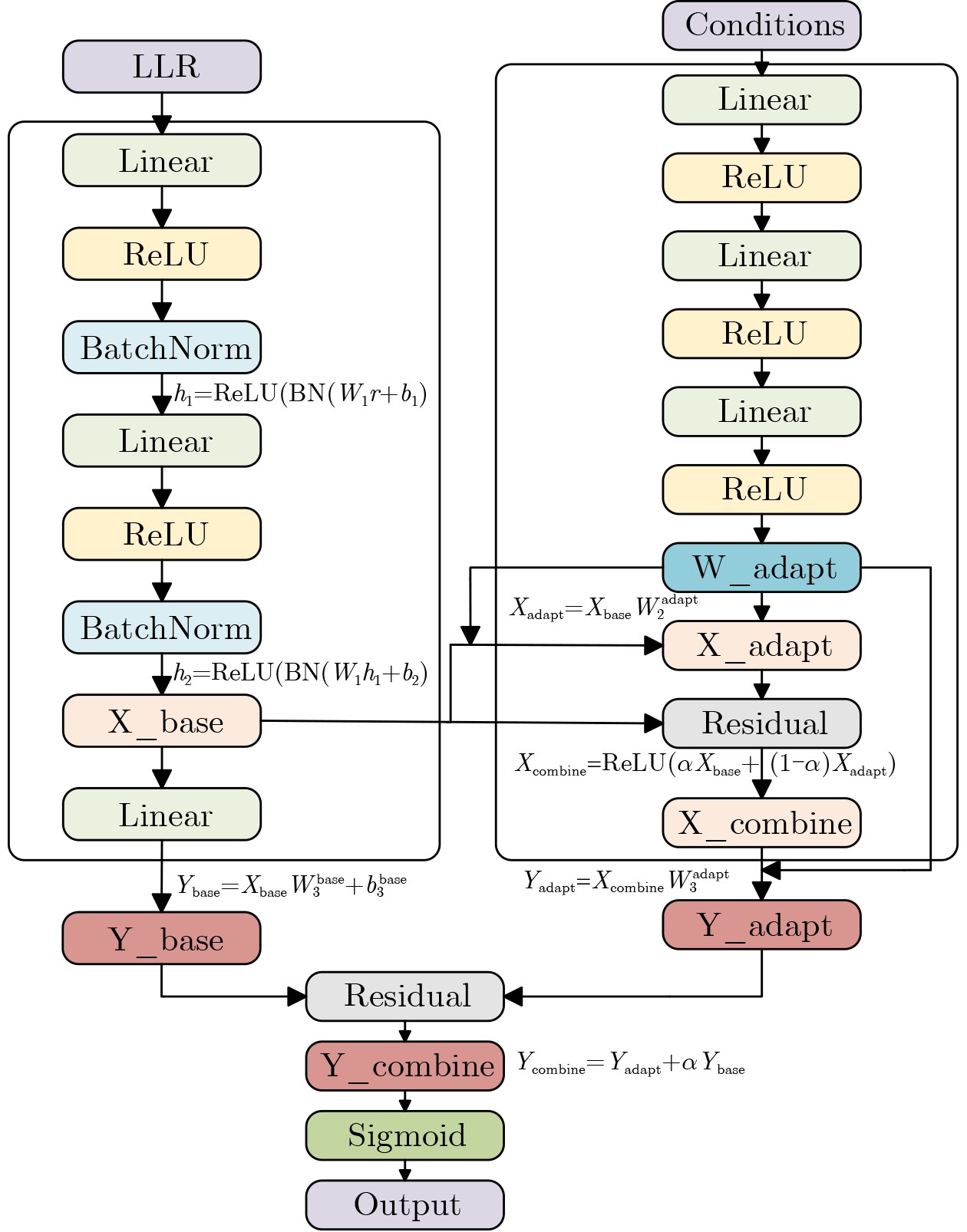
摘要: 极化调整卷积码相当于极化码和卷积码的级联结构,在极化码的基础上显著提高了纠错性能,尤其在中短码下优势明显。针对高动态、强衰减的低轨卫星通信信道,传统的神经网络译码器难以适应复杂多变的信道环境。在本文中,我们提出了一种基于超网络的自适应多层感知机(HNA-MLP)极化调整卷积(PAC)码译码框架,该方案通过超网络分支对信道状态信息(CSI)生成主网络权重和偏置参数,再采用主网络对输入信号进行特征提取和译码,以实现不同信道条件下的自适应网络重构。我们将所提出的框架应用于不同衰落、多普勒频移和雨衰程度下的PAC码误码率(BER)的译码优化,通过计算加权交叉熵损失并反向传播优化网络参数,以最小化误码率。该方法为具有高适应性、低译码时间的卫星通信PAC码铺平了道路。仿真结果表明,所提出的自适应超网络译码在不同的降雨强度、信噪比和多普勒频移范围内,表现优于连续消除列表(SCL)译码、两阶段自适应循环冗余校验辅助的SCL(TA-SCL)译码以及其他神经网络译码。Abstract:
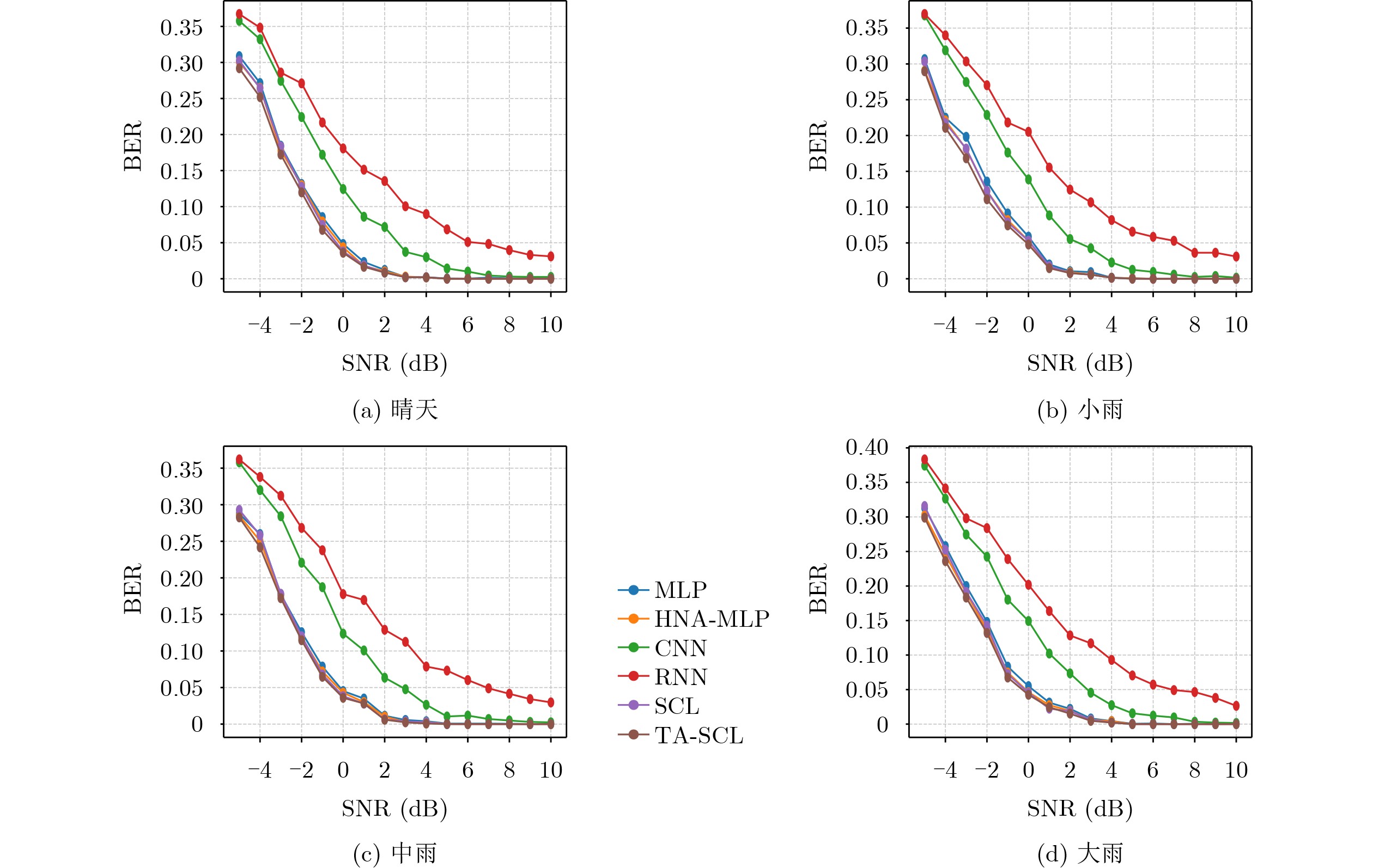
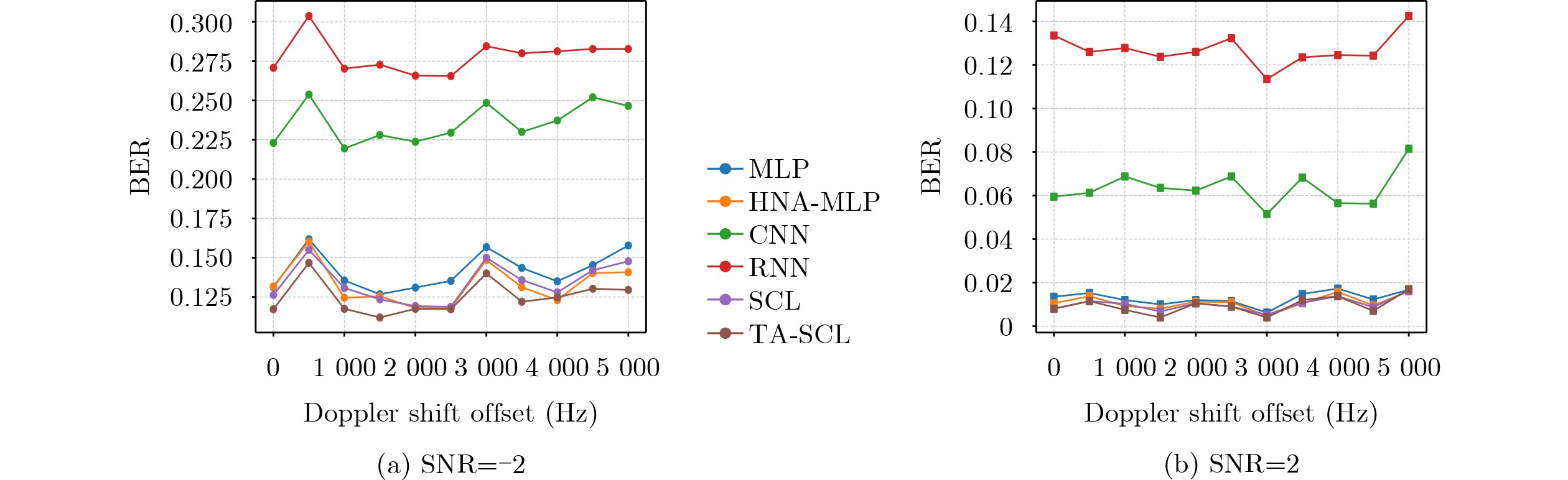
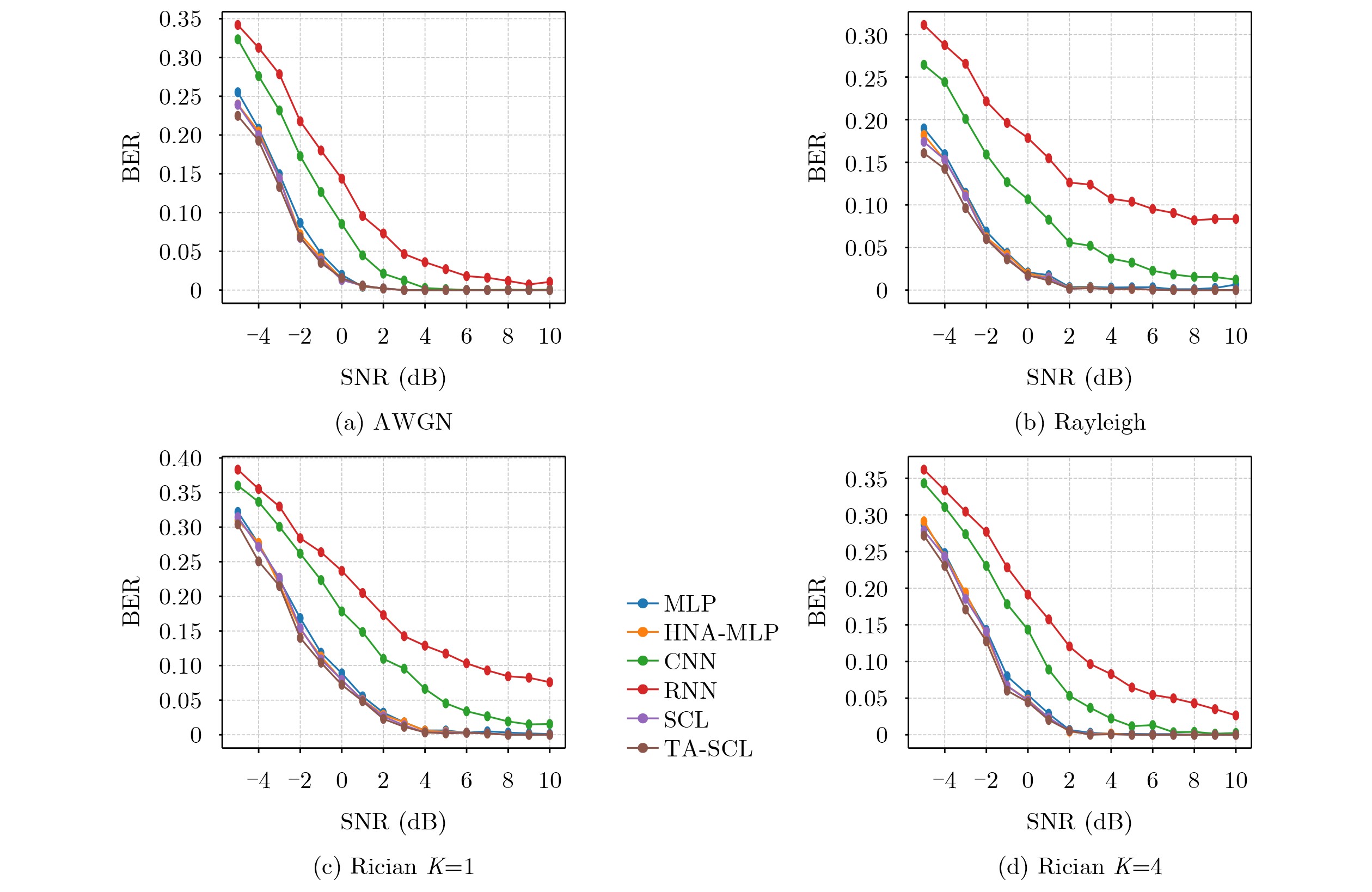
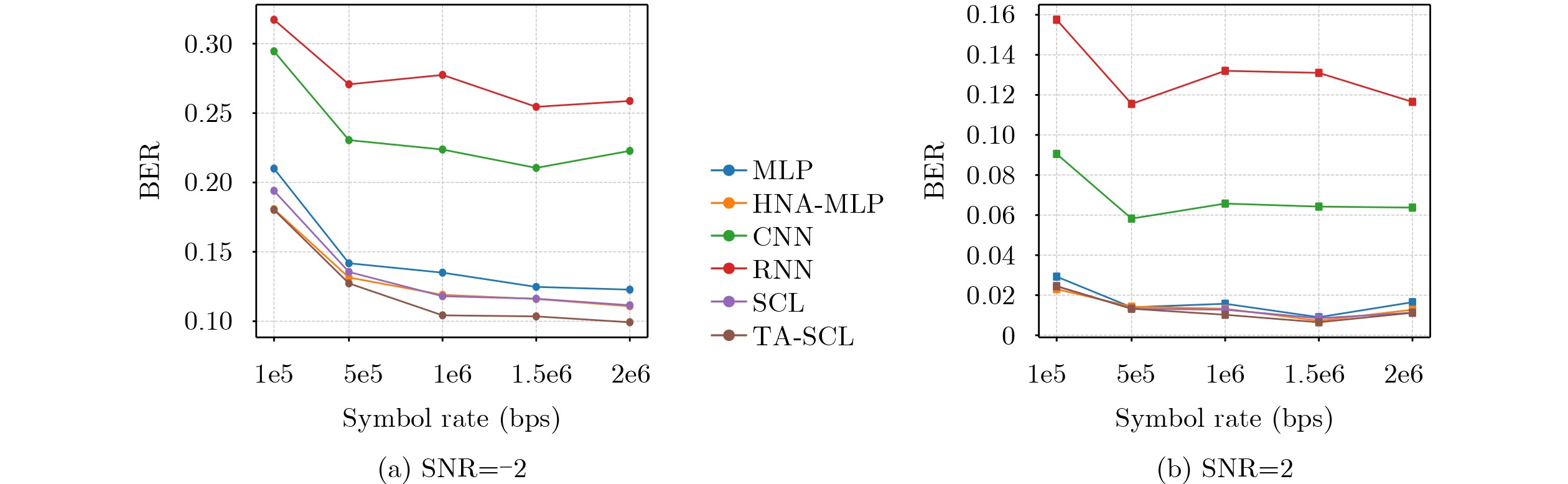
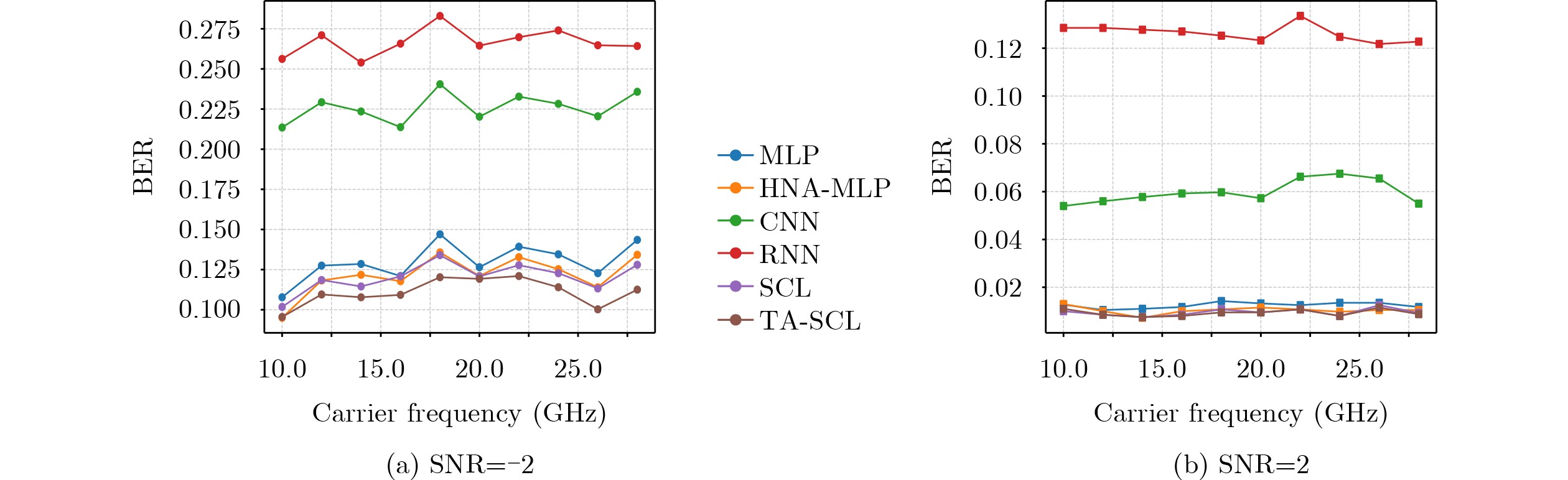
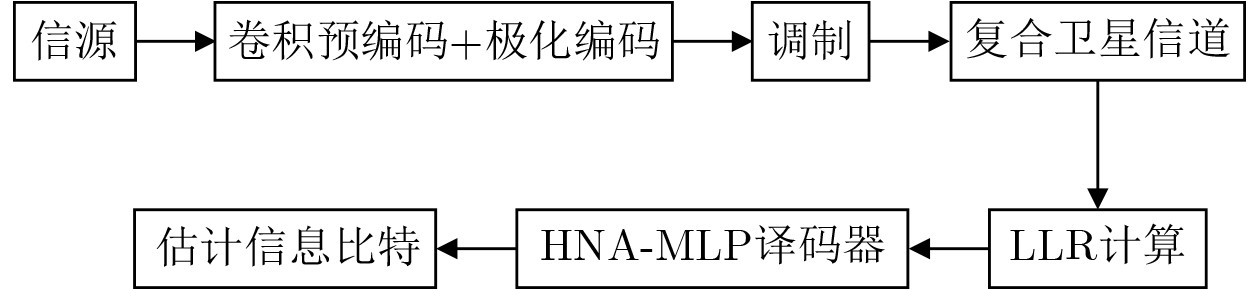
Polarization-Adjusted Convolutional (PAC) codes, which are essentially a concatenated structure of polar codes and convolutional codes, significantly enhance error correction performance compared to polar codes, demonstrating particular advantages under short to moderate code lengths. Aimed at the highly dynamic and strongly attenuated channels of Low Earth Orbit (LEO) satellite communications, traditional neural network-based decoders often struggle to adapt to such complex and variable channel environments. In this paper, we propose an adaptive PAC code decoding framework based on a Hypernetwork-assisted Multi-Layer Perceptron (HNA-MLP). This framework generates the weights and biases of the main network through a hypernetwork branch conditioned on Channel State Information (CSI). The main network then performs feature extraction and decoding on the input signal, enabling adaptive network reconfiguration under varying channel conditions. We apply the proposed framework to optimize the Bit Error Rate (BER) of PAC codes under different levels of fading, Doppler shift, and rain attenuation. By calculating the weighted cross-entropy loss and backpropagating to optimize network parameters, the framework aims to minimize the BER. This method paves the way for PAC code decoding in satellite communications with high adaptability and low latency. Simulation results demonstrate that the proposed adaptive hypernetwork decoding outperforms successive cancellation list (SCL) decoding, two-stage adaptive CRC-aided SCL (TA-SCL) decoding, and other neural network-based decoders across a range of rainfall intensities, signal-to-noise ratios (SNRs), and Doppler shifts. Objective Targeting the characteristics of high dynamics and strong attenuation in LEO satellite communication channels, this paper aims to address the issue that traditional fixed-structure neural network decoders struggle to adapt in real time to complex and changing channel environments, resulting in limited decoding performance. The goal is to design a PAC code decoding scheme with high adaptability and low decoding latency. Methods This paper proposes a Hypernetwork-based Adaptive Multilayer Perceptron (HNA-MLP) decoding framework for Polarization Adjusted Convolutional (PAC) codes. The core of this framework is a weight generation mechanism driven by Channel State Information (CSI), which adopts a dual-branch structure: one branch is used for feature extraction, and the other is used to generate an adaptive feature matrix. By feeding real-time CSI into the hypernetwork, the decoder parameters are dynamically adjusted, enabling adaptive tuning according to different fading, Doppler shift, and rain attenuation conditions. During the optimization process, training is performed by calculating the cross-entropy loss with the goal of bit-level accuracy, thereby minimizing the system's bit error rate. Results and Discussions Simulation results demonstrate that within specific signal-to-noise ratio and Doppler shift ranges, the proposed adaptive hypernetwork decoding scheme significantly outperforms traditional SCL decoding and other non-adaptive neural network decoders in terms of Bit Error Rate (BER) performance. This indicates that the CSI-driven dynamic weight generation mechanism can effectively capture the changing characteristics of the channel, enabling the decoder to maintain stable performance in highly dynamic environments. Additionally, by avoiding complex manual feature recomputation, this method also exhibits advantages in decoding time, verifying its potential for engineering applications. Conclusions This paper addresses the challenges of highly dynamic and strongly attenuated LEO satellite communication channels by proposing a Hypernetwork-based Adaptive Multilayer Perceptron (HNA-MLP) decoding framework for Polarization Adjusted Convolutional (PAC) codes. The proposed framework achieves adaptive adjustment of decoder parameters through a weight generation mechanism driven by Channel State Information (CSI). The method is evaluated through multi-scenario simulation experiments, and the results show that: (1) Within the ranges of medium-to-high rain intensity, low signal-to-noise ratio, and high Doppler shift deviation, the proposed adaptive hypernetwork decoding scheme significantly outperforms traditional SCL decoders and TA-SCL decoders in terms of Bit Error Rate (BER) performance; (2) Through the CSI-driven dynamic weight generation mechanism, the proposed decoder effectively adapts to various conditions including different fading, Doppler shift deviations, carrier frequencies, symbol rates, signal-to-noise ratios, and rain attenuation, maintaining stable performance across diverse channel environments; (3) In terms of complexity and decoding efficiency, although the proposed decoder does not surpass some neural network decoders in parameter count and inference speed, it exhibits lower overall computational complexity, and achieves decoding speed improvements of approximately 5.37 times and 2.08 times over the SCL and TA-SCL schemes, respectively. Furthermore, this study is conducted under ideal CSI assumptions; future work will incorporate CSI estimation errors, sensor noise, and hybrid fading in real flight environments, and evaluate the feasibility of GPU platform deployment, so as to enhance the practicality and robustness of the algorithm. -
Key words:
- LEO satellite communication /
- Channel decoding /
- Hypernetwork /
- Adaptive MLP /
- Deep learning
-
表 1 不同算法的平均译码时间
译码算法 MLP HNA-MLP CNN RNN SCL (L=2) SCL (L=4) SCL (L=8) SCL (L=16) TA-SCL 平均时间(ms) 0.231 0.888 0.331 0.323 1.668 3.147 4.767 7.502 1.850  下载: 导出CSV
-
[1] ALVES H, MAHMOOD N H, LÓPEZ O L A, et al. 6G resilience-white paper[R]. 6G Research Visions, No. 15, 2025. [2] 游雨欣, 姜兴龙, 刘会杰, 等. TDD OTFS低轨卫星通信系统的LLM信道预测方法[J]. 电子与信息学报, 2025, 47(8): 2535–2548. doi: 10.11999/JEIT250105.YOU Yuxin, JIANG Xinglong, LIU Huijie, et al. LLM channel prediction method for TDD OTFS low-earth-orbit satellite communication systems[J]. Journal of Electronics & Information Technology, 2025, 47(8): 2535–2548. doi: 10.11999/JEIT250105. [3] ARIKAN E. Channel polarization: A method for constructing capacity-achieving codes for symmetric binary-input memoryless channels[J]. IEEE Transactions on Information Theory, 2009, 55(7): 3051–3073. doi: 10.1109/TIT.2009.2021379. [4] ROWSHAN M, BURG A, and VITERBO E. Polarization-adjusted convolutional (PAC) codes: Sequential decoding vs list decoding[J]. IEEE Transactions on Vehicular Technology, 2021, 70(2): 1434–1447. doi: 10.1109/TVT.2021.3052550. [5] ZHANG Shunwai and LIU Hong. RIS-assisted DF relay system based on PAC codes for short packet communication[J]. IEEE Communications Letters, 2026, 30: 263–267. doi: 10.1109/LCOMM.2025.3636940. [6] FANO R. A heuristic discussion of probabilistic decoding[J]. IEEE Transactions on Information Theory, 1963, 9(2): 64–74. doi: 10.1109/TIT.1963.1057827. [7] ARIKAN E. Channel polarization: A method for constructing capacity-achieving codes for symmetric binary-input memoryless channels[J]. IEEE Transactions on Information Theory, 2009, 55(7): 3051–3073. doi: 10.1109/TIT.2009.2021379. [8] TAL I and VARDY A. List decoding of polar codes[C]. 2011 IEEE International Symposium on Information Theory Proceedings, St. Petersburg, Russia, 2011: 1–5. doi: 10.1109/ISIT.2011.6033904. [9] BENGIO Y. Learning deep architectures for AI[J]. Foundations and Trends® in Machine Learning, 2009, 2(1): 1–127. doi: 10.1561/2200000006. [10] DAI Jingxin, YIN Hang, LV Yansong, et al. Performance evaluation of PAC decoding with deep neural networks[C]. 2025 IEEE International Symposium on Broadband Multimedia Systems and Broadcasting (BMSB), Dublin, Ireland, 2025: 1–6. doi: 10.1109/BMSB65076.2025.11165584. [11] HA D, DAI A M, and LE Q V. HyperNetworks[C]. International Conference on Learning Representations (ICLR), Toulon, France, 2017. [12] ROYCHOWDHURY P, SINGH Y P, and CHANSARKAR R A. Dynamic tunneling technique for efficient training of multilayer perceptrons[J]. IEEE Transactions on Neural Networks, 1999, 10(1): 48–55. doi: 10.1109/72.737492. [13] PUSHPARAJESH V, SINGH S, and GUPTA R. Satellite communications performance analysis in the presence of atmospheric attenuation and rain fading[C]. 2024 3rd International Conference for Advancement in Technology (ICONAT), GOA, India, 2024: 1–6. doi: 10.1109/ICONAT61936.2024.10774711. [14] ITU-R. Recommendation ITU-R P. 838–2 Specific attenuation model for rain for use in prediction methods[S]. Geneva: ITU, 1992. [15] GUPTA H, SRIVASTAVA N, and BORMAN L. Stochastic channel modeling for flat fading in non-terrestrial narrowband systems[C]. 2025 3rd International Conference on Communication, Security, and Artificial Intelligence (ICCSAI), Greater Noida, India, 2025: 1042–1048. doi: 10.1109/ICCSAI64074.2025.11064139. [16] XU Rongchi, CHEN Hao, LIU Ling, et al. Path metric range and LLR-based design of polar codes and PAC codes for SCL decoding[J]. IEEE Communications Letters, 2025, 29(2): 338–342. doi: 10.1109/LCOMM.2024.3516939. [17] CHIU M C and SU Yisheng. Design of polar codes and PAC codes for SCL decoding[J]. IEEE Transactions on Communications, 2023, 71(5): 2587–2601. doi: 10.1109/TCOMM.2023.3263225. [18] SABER H, GE Yiqun, ZHANG Ran, et al. Convolutional polar codes: LLR-based successive cancellation decoder and list decoding performance[C]. 2018 IEEE International Symposium on Information Theory (ISIT), Vail, USA, 2018: 1480–1484. doi: 10.1109/ISIT.2018.8437733. [19] TRIFONOV P and MILOSLAVSKAYA V. Polar codes with dynamic frozen symbols and their decoding by directed search[C]. 2013 IEEE Information Theory Workshop (ITW), Seville, Spain, 2013: 1–5. doi: 10.1109/ITW.2013.6691213. [20] ZHU Hongfei, CAO Zhiwei, ZHAO Yuping, et al. Learning to denoise and decode: A novel residual neural network decoder for polar codes[J]. IEEE Transactions on Vehicular Technology, 2020, 69(8): 8725–8738. doi: 10.1109/TVT.2020.3000345. [21] LIU Yusha and SIMEONE O. HyperRNN: Deep learning-aided downlink CSI acquisition via partial channel reciprocity for FDD massive MIMO[C]. 2021 IEEE 22nd International Workshop on Signal Processing Advances in Wireless Communications (SPAWC), Lucca, Italy, 2021: 31–35. doi: 10.1109/SPAWC51858.2021.9593238. [22] 刘晓敏, 余梦君, 乔振壮, 等. 面向多源遥感数据分类的尺度自适应融合网络[J]. 电子与信息学报, 2024, 46(9): 3693–3702. doi: 10.11999/JEIT240178.LIU Xiaomin, YU Mengjun, QIAO Zhenzhuang, et al. Scale adaptive fusion network for multimodal remote sensing data classification[J]. Journal of Electronics & Information Technology, 2024, 46(9): 3693–3702. doi: 10.11999/JEIT240178. [23] 职为梅, 常智, 卢俊华, 等. 面向不平衡图像数据的对抗自编码器过采样算法[J]. 电子与信息学报, 2024, 46(11): 4208–4218. doi: 10.11999/JEIT240330.ZHI Weimei, CHANG Zhi, LU Junhua, et al. Adversarial Autoencoders oversampling algorithm for imbalanced image data[J]. Journal of Electronics & Information Technology, 2024, 46(11): 4208–4218. doi: 10.11999/JEIT240330. [24] XIA Chenyang, FAN Youzhe, and TSUI C Y. A two-staged adaptive successive cancellation list decoding for polar codes[C]. IEEE International Symposium on Circuits and Systems (ISCAS), Sapporo, Japan, 2019: 1–5. doi: 10.1109/ISCAS.2019.8702103. [25] HOCHREITER S and SCHMIDHUBER J. Long short-term memory[J]. Neural Computation, 1997, 9(8): 1735–1780. doi: 10.1162/neco.1997.9.8.1735. [26] HOANG N D. Automatic impervious surface area detection using image texture analysis and neural computing models with advanced optimizers[J]. Computational Intelligence and Neuroscience, 2021, 2021(1): 8820116. doi: 10.1155/2021/8820116. [27] SUBRAMANIAN S and GANAPATHIRAMAN V. Zeroth Order GreedyLR: An adaptive learning rate scheduler for deep neural network training[C]. 2023 IEEE 4th International Conference on Pattern Recognition and Machine Learning (PRML), Urumqi, China, 2023: 593–601. doi: 10.1109/PRML59573.2023.10348370. -

 下载:
下载:

图(9) / 表(1)
计量
- 文章访问数: 150
- HTML全文浏览量: 32
- PDF下载量: 7
- 被引次数: 0
